
Prepared and compiled by MALIK MERCHANT
Pakistan, under the leadership of Prime Minister Shehbaz Sharif, has drawn worldwide attention to its diplomatic efforts to secure peace talks between arch-enemies Iran and the USA in Islamabad. As the BBC reports, “Rarely has Pakistan found itself at the heart of such significant international diplomacy.”
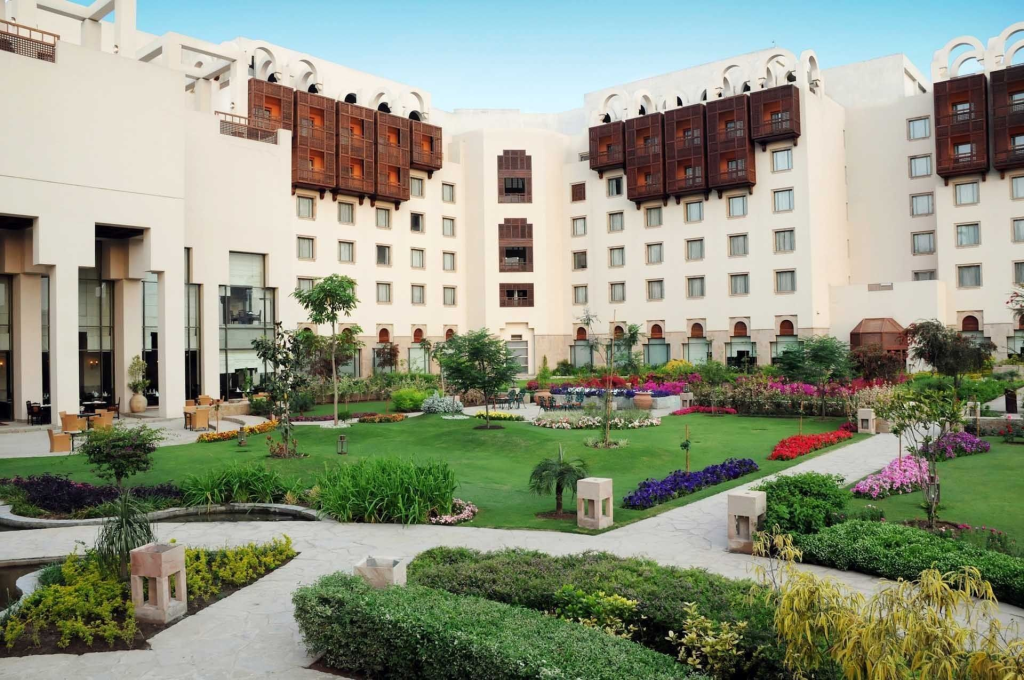
The venue at the centre of attention is Serena Islamabad, which has drawn worldwide coverage since its management ordered visitors to vacate the hotel for an “important event.” Indeed, as several media outlets reported, this order came from Pakistan’s government notice to Serena, which cited an official legal or governmental authority for the requisition. The hotel notice stated, “We would like to inform you that the government of Pakistan has requisitioned our hotel for an important event that will last from tonight (April 8 – approx.) until Sunday evening. In this regard, unfortunately, according to the instructions of the government, you need to leave the hotel before 17:00 tonight.”
While the exact location of the peace talks remained secret, it has now been confirmed that they are indeed taking place at Serena Islamabad. According to the BBC, reporters from around the world have been assigned a designated area outside the hotel for reporting.
What’s the background to the Islamabad Serena? We take you back to 2008, when the Serena Islamabad was inaugurated by President Pervez Musharraf on March 11 in the presence of His Late Highness Aga Khan IV (d. February 4, 2025), marking a US$29 million investment by the Aga Khan Fund for Economic Development (AKFED), an agency within the Aga Khan Development Network (AKDN), in an underexploited sector of Pakistan’s economy.
Characterising the importance of the hotel in a speech on the occasion, President Pervez Musharraf (d. February 5, 2023) said that it was not “a matter of creating facilities for accommodation, catering and leisure alone,” but that “the project adds to the existing infrastructure that strengthens the economy also in terms of employment generation and income generation.” He went on to compliment AKFED and its subsidiary, Tourism Promotion Services “for making a very valuable contribution to private investment and employment opportunities in Pakistan, other than through beautification of Islamabad city itself.” “The project,” he said, “ is indeed a symbol of trust and confidence in the capital city.”
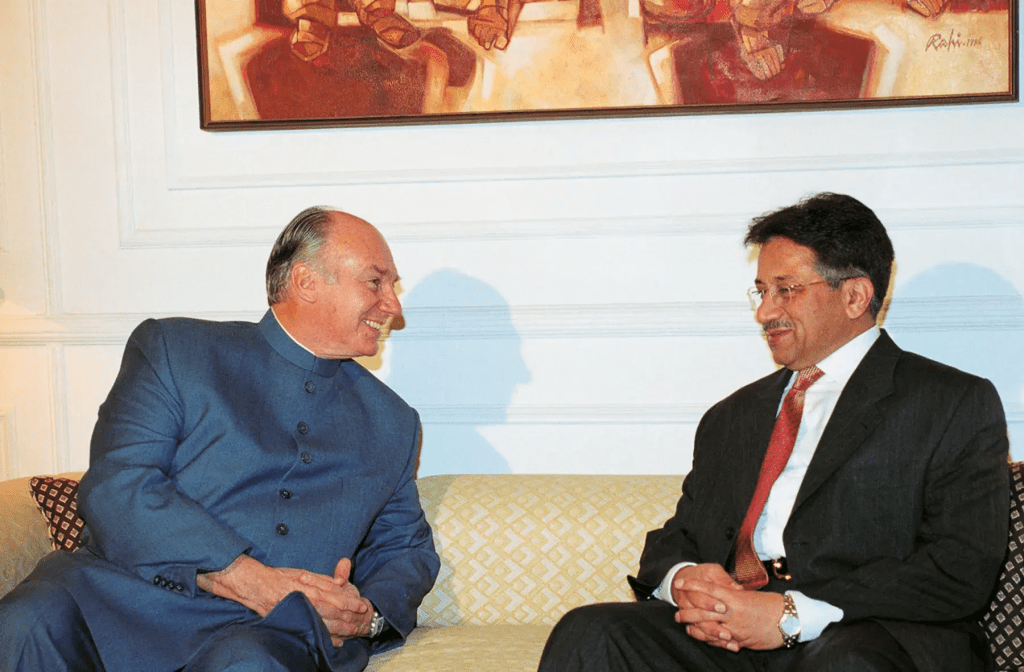
In his remarks, the late Aga Khan took the opportunity to highlight aspects of tourism’s contribution beyond the foreign exchange that it generates and the stimulus to sectors of the economy such as agriculture, light industry, handicrafts, construction, furniture and textiles. Situating the Islamabad Serena Hotel and the investment in tourism within AKFED’s approach to challenges prevailing in the economies of Pakistan and the region, the Aga Khan interestingly expressed his intentions for AKFED to become more involved in the reconstruction of Afghanistan and in economic development in Iran.
Looking to the potential and capacity for growth of the industry, the Aga Khan pointed to the need for Pakistan to consider a review of its overall transport infrastructure and for levels of service to become more internationally competitive. The Aga Khan thought that Pakistan might wish to look closely at institutions specialised in educating for the tourism industry with courses at university level covering topics such as “environmental protection and management, cultural history, pluralism in traditions and beliefs, road and air transport and their integration and rationalisation and the specifics of hotel management.”
One of the enduring achievements of such an institution, the Aga Khan hoped, would be their ability to “teach students to recognise that all peoples are equally worthy.” “By doing so,” he said, such institutions “become powerful forces for promoting pluralistic harmony.”
An important mandate of Serena Hotels worldwide is its Culture Diplomacy Initiative, including its Crafts Festival which commits to preserving cultural heritage and empowering communities. Through its extensive programs, Serena Hotels has long supported the development of sustainable tourism and cultural preservation, providing platforms for artisans and entrepreneurs to thrive.
At each hotel, the policy is to minimise the impact on the local environment while maximising the socio-economic benefits to the local economy. Serena Hotels prioritise hiring and training local residents for employment at all levels of the organisation, awareness of local cultures, reinvigorate artisanal and craft industries and contribute to national heritage. Serena Hotels also support literacy and early learning opportunities, and promote health, safety and wellbeing through the Serena Wellness programme and Serena Clinics.
The Serena in Islamabad has been built to the highest standards of construction and design, using indigenous materials, all crafted by hand, ranging from hand-hewn marble to specially carved furniture, traditionally woven fabrics, and thousands of square feet of individually hand-painted wooden ceiling panels. The hotel elegantly disguises the most advanced levels of technology, service, and safety in the country’s hospitality industry today.
Within each of its 105 luxurious rooms, the décor and furnishings follow a consistent theme of Swati or Punjabi traditions but also include interactive television and on-line internet access facilities. Its facilities include six quality restaurants, a grand ballroom accommodating upto 1000 people, full business and conference facilities, a modern health club with leisure facilities and an outdoor pool. Set in six acres of landscaped gardens on several levels, the premises are cleared to withstand seismic disturbances well over 7.5 on the Richter scale.
Date posted: April 11, 2026.
__________________
 Simerg - Insights from Around the World