The Holy Qur’an, Laylat al-Qadr and Forgiveness

Readings for Laylat al-Qadr

I. The Noble Qur’an

An ornate Arabic manuscript featuring gold script on a blue background, likely containing religious text.
Please click for “The Noble Qur’an – An Inexhaustible Well-Spring of Inspiration and Knowledge” by His Highness the Aga Khan

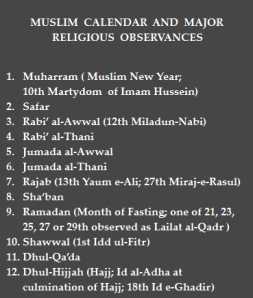
Laylat al-Qadr, the Night of Power, marks the night in which the Holy Qur’an was first revealed to the Prophet Muhammad (SAWS) by Allah. There are different traditions regarding the exact night, but it is almost unanimous that the blessed night occurs in one of the last ten odd nights of the month of Ramadan. The Shia Imami Ismaili Muslims celebrate the night on the 23rd of the month (May 15 for 2020), with many Jamats worldwide spending the whole night in prayer and supplication, this year in the confines of their homes due to Covid-19. The Holy Qur’an refers to the spiritual barakah this night offers in the following five verses of Surah al-Qadr:

“We have indeed revealed this (Message) in the Night of Power:
And what will explain to thee what the night of power is?
The Night of Power is better than a thousand months.
Therein come down the angels and the Spirit by Allah’s permission, on every errand:
Peace!…This until the rise of morn!” —  97:1-5

Our first reading for Laylat al-Qadr thus reflects on the Holy Book, which His Highness the Aga Khan referred to as an “inexhaustible well-spring of inspiration” in a speech he delivered in London. Please click The Noble Qur’an –  An Inexhaustible Well-Spring of Inspiration and Knowledge for the speech excerpts.

~~~~~~~~~~~~

II. Forgiveness

A historic Ismaili pilgrim's supplication for forgiveness, featuring a heartfelt plea for grace and mercy, presented in an ornate text format.
Please click for “Seeking the Forgiveness of the Imam of the Time”.

Laylat al-Qadr is also a good time to ask for forgiveness, and a second piece by Ismailignosis explains the significant practice of forgiveness among the Ismailis, with the discussion primarily focusing on the act of seeking forgiveness from the Imam of the Time. Please click Seeking the Forgiveness of the Imam of the Time: A Short Explanation.

A Note to Readers: Please click Table of Contents for links to all articles published on this blog since March 2009. Subscribe to this Website via the box near the top right of this page.

Last updated: May 14, 2020.

_____________

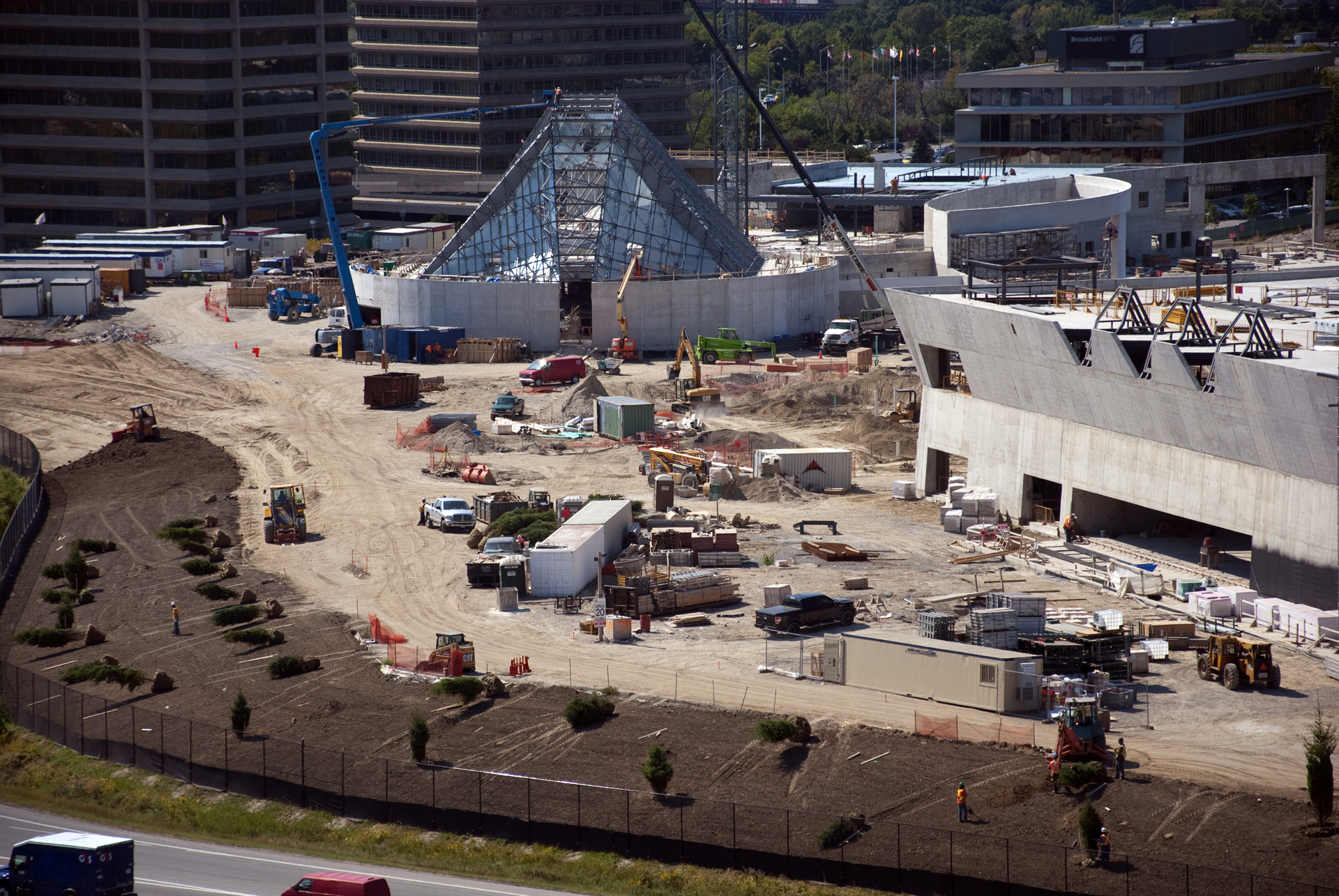
“Why I am Excited About the Aga Khan Museum, the Ismaili Centre and Their Park” – Winning Essays

A Note from the Publisher/Editor: We offer our congratulations to Emmanuel Iduma of Nigeria and Zohra Nizamdin of the USA on winning their respective categories for the essay, “Why I am Excited About the Aga Khan Museum, the Ismaili Centre and Their Park.” We received a total of twenty entries for this topic.

The winners will receive the prizes as outlined in the original announcement, 2011 Simerg Essay Writing Contest. We thank everyone who participated in this competition as well as the judges for dedicating their valuable time towards this important initiative. It is hoped that the Al-Mahdiya contest (named after the first Fatimid Capital in North Africa) will become an annual event and that participation will increase over time. The winners of the essay “Why I Like This Photo” will be announced at the end of August, 2011.

Please click links below to read essays

WINNER CATEGORY 1: EMMANUEL IDUMA, NIGERIA

 “Why I am Excited About the Aga Khan Museum, The Ismaili Centre and Their Park” by Emmanuel Iduma

WINNER CATEGORY 2: ZOHRA NIZAMDIN, USA

 “Why I am Excited About the Aga Khan Museum, The Ismaili Centre and Their Park” by Zohra Nizamdin

~~~~~~~~~~~~~~

Previous post: An Incredible ‘Yellowstone’ Experience: Part 1 – Salt Lake City

An Incredible ‘Yellowstone’ Experience: Part 1 – Salt Lake City

“FOR THE BENEFIT AND ENJOYMENT OF THE PEOPLE”

The Incredible Yellowstone National Park

A Must Visit Park For You and Your Family

By Malik and Nurin Merchant

The Grand Canyon of Yellowstone National Park. Please click for article. Photo: Nurin Merchant. Copyright.

~~~~~~~~~~

A Note to Readers: Please scroll down or click Home page for other recent posts and click What’s New for links to all articles published on this blog since March 2009. Subscribe to this Website via the box near the top right of this page.

Previous post: The Fountain Pen and its Fatimid Origins

The Fountain Pen and its Fatimid Origins

The first reference of a fountain pen can be found from an Egyptian Fatimid dynasty manuscript dating to 969 CE. The instrument was described in the manuscript as a pen which would write without the need of an inkpot. The instrument described appears to meet each of the modern criteria for a fountain pen.

The Fountain Pen and its Fatimid Origins

Please click for article.

~~~~~~~~~~

A Note to Readers: Please scroll down or click Home page for other recent posts and click What’s New for links to all articles published on this blog since March 2009. Subscribe to this Website via the box near the top right of this page.

Previous post: Imamat in Ismaili Qasidas

Imamat in Ismaili Qasidas

In Celebration of His Highness the Aga Khan’s Recent Visit to East Africa

His Highness the Aga Khan recently completed a highly successful visit to East Africa where he met his Ismaili followers in private gatherings, in what is termed as a didar (or lit. glimpse), as well as had high profile meetings and engagements with different leaders of East African countries. Some of the Ismaili community related functions as well as public events have been well covered by official Websites such as www.theismaili.org and www.akdn.org and we invite our readers to click the links for reports, speeches, photographs and videos. As usual, the blog http://Ismailimail.wordpress.com continues to provide by far the most comprehensive links to all that is Ismaili related and we strongly recommend our readers to visit the blog.

Simerg sought to provide a totally different perspective of His Highness the Aga Khan’s visit in the context of what a didar means and represents to an Ismaili. We hope readers found the short excerpts – a total of 35 – in our 7 part series meaningful and inspiring. As East African Ismailis continue to reflect about the visit, and the joy and peace the Imam’s didar brought to each individual’s heart, mind and spirit, we felt we should conclude with some thoughts about the Imamat with a few qasidas from Ismaili literature. Of course, it is our fervent hope and supplication that Mawlana Hazar Imam will, inshallah, travel worldwide to meet his other Ismaili murids in the near future. We shall endeavour to provide more perspectives on the Imamat and the didar when the visits to other areas take place. Ismaili literature is replete with reflections on the central role the Imam plays in the life of the Shia Imami Ismaili Muslim community, and there is no shortage of material on the subject. In the meantime we are grateful to our readers for their constant support, encouragement and good wishes.

Thank you.

Abdulmalik Merchant
Publisher/Editor
www.simerg.com
simerg@aol.com

ASPECTS OF IMAMAT IN ISMAILI QASIDAS

1. NASIR KHUSRAW, 12TH CENTURY

Rachael Kohn: Well Khusraw himself was something of a religious seeker. He seems to have even read about other religions as well as philosophy. What faction or what tradition of Islam did he align himself with?

Alice Hunsberger: He was very well educated and did look at lots of different religions. At some point in his life, he had a spiritual awakening, and in one place he tells it as a dream, and in another its a more journey — like kind of story. He finally found the truth and the peace in faith that he was seeking in the Ismaili faith, that is a branch of the Shi’ites. He believes that what God sent down is the external, and that the internal meaning is what needs to be brought out and that needs an Imam, an interpreter….interview link provided below.

UNDER HAZRAT ALI’S PROTECTION

The springtime of a friend of ‘Ali
is always full of the efflorescence of ‘Ali;

None deserves eminence and praise among
the people except he who befriends ‘Ali.

The heart of every Shi’i is protected
from Satan in the fortress of ‘Ali;

As ‘Ali is from the Prophet’s family
the true Shi’i belongs to the family of ‘Ali.

‘Ali’s cave is of knowledge, not stone
for stone does not befit the glory of ’Ali;

The clouds of ta’wil do not shed their droplets
except on the trees and seed-fields of ‘Ali.

Husayn and Hasan, the Prophet’s reminders
were none other than the reminders of ‘Ali;

Truly no one can be saved from the fire
unless he comes under the protection of Ali.

* * *

2. EVERLASTING GUIDANCE
by Nizar Quhistani

“Salvation is to be found in the Imam of the Time. I found the essence of faith in obedience to the command of his representative. I have given up everything except that contained in the Quranic verse ‘offspring, one of the other’. Ever since I found the Imamate, permanently in human form, I have known no other guide than the living, everlasting Imam, For in his command, I have found peace in both the worlds.”

The necessity of a living Imam in every age according to the changing needs and circumstances of people is echoed in the following lines:

“My lover appears in different forms, Because for each period there comes a new guidance; One after the other, there follows another Qaim Imam Ali.”

* * *

3. POEMS ON IMAM AL-MU’IZZ
by al-Andalusi, 10th century

About the composer, al-Andalusi: As was customary with most ruling Muslim dynasties, the Fatimids maintained a staff of a few professional poets, who performed important roles in the court rituals and public ceremonials. The most famous of the court poets was Muhammad ibn Hani al-Andalusi, who entered the service of the Fatimids in 958 during the reign of Imam al-Mu’izz after fleeing Muslim Spain, where his verses in support of batini (Ismaili) philosophy incurred the hostility of the Umayyad rulers. He served Imam al-Mu’zz in Mansuriya and then accompanied him on his journey to Egypt. But he was killed on the way by an enemy. Imam Mu’izz was saddened by this incident, and remarked that Ibn Hani was one of the greatest poets to have served him. Ibn Hani left behind a Diwan of 246 pages in which most of the poems are in praise of Imam Mu’izz and the Fatimid Dynasty. His extreme love for the Imam is shown in the following compositions.

i. THE GLORY OF OUR TIME

O Mu’izz li-Din Allah!
the outstanding glory
and greatness of our time
is surely due to you

By you is the universe
honoured and allotted
its provisions, epochs
and respites of time

When the turbid depths
were purified for you
the waters became sweet
and mouths became fragrant.

Your qualities are beyond
the tongue’s description
beyond what the truthful
and the garrulous say

God has bestowed on you
the book and His grace
but alas, my verses
are not worthy of you!

**

ii. THE IMAM OF THE RIGHTEOUS

Command what you will
not what the fates ordain
for you are the one
the overpowering one

You are the one, the heir
to Muhammad’s legacy
and your helpers are like
those who supported him

You are the one of whom
glad tidings were given
by learned men in their
books and traditions

You are the one, Imam
of the righteous, by whom
tyranny and disbelief
are wholly subdued

You are the one, Imam
whose love and affection
salvation is forseen
and our burdens removed

You are the one on whose
intercession we depend
when tomorrow brings forth
the Day of Resurrection

***

4. THE SWORD OF ‘ALI
by Nasir Khusraw, 12th century

The Qur’an and the pure
sword of Haydar – these are
the two foundations of
the faith of Muhammad.

For he, ‘Ali, stood with
his sword Dhu’l-faqar*,
drawn in every battle on the
right hand of Muhammad.

Ali’s rank in the faith
was like Aaron to Moses,
for he was both the peer
and companion of Muhammad.

On the Day of Resurrection
Aaron and Moses will kiss
the mantle of ‘Ali and
the sleeve of Muhammad.

Muhammad’s religion was
like a dense forest;
‘Ali was the lion in
the forest of Muhammad.

_____

Footnote:

*The sword of the first Shia Imam, Hazrat ‘Ali. The name is also commonly transliterated as Dhu al-Fiqar, Dhulfiqar, Zulfiqar etc. The scimitar is one of the oldest and best known symbols of Islam, and is particularly important to the Shī‘a, Alevis and Sufis. By most accounts, Muhammad presented Zulfiqar to a young ‘Alī at the Battle of Uhud. During the battle, ‘Alī struck one of the fiercest adversaries, breaking both his helmet and his shield. Seeing this, Muhammad was reported to have said “La fata illa Ali, la saif illa Zulfiqar” (“There is no hero but ‘Ali and no sword except Zukfiqar”). Source: http://en.wikipedia.org/wiki/Zulfiqar

***

5. AL-MUSTANSIR’S BLESSED FACE
by Muayyad al-Din Shirazi, 12th century

Peace be upon Muhammad, the chosen,
the one who intercedes in the hereafter.

Peace be upon Ali, the beloved,
and those descended from him, the radiant stars.

Peace be upon you, O Sovereign Lord
of Cairo, and all their gain abides with you.

I sacrifice my soul to Mustansir,
who is supported by the legions of heaven.

I bear witness that it is your blessed face
which illumines the faces of your followers.

You are the custodian of the fountain of life,
and may the fountain of your enemies perish!

Date ‘Imamat in Ismaili Qasidas’ posted: Sunday July 31, 2011.

~~~~~~~~~~~~~

REFERENCES:

1. For Ms. Kohn’s complete interview with Dr. Hunsberger, please click Voices: Alice Hunsberger on Nasir Khushraw – Poet of Substance (on this Website). Poem from Shimmering Light: An Anthology of Ismaili Poems, ed. Faquir M. Hunzai and Kutub Kassam, pub. I. B. Tauris in association with The Institute of Ismaili Studies (IIS), 1997.

2. Adapted from The Ismailis in the Middle Ages: A History of Survival, a Search for Salvation by Shafique N. Virani, Hardcover – May 3, 2007). See » Ismailis in Middle Ages.

3, 4 and 5. Poetry source: Shimmering Light: An Anthology of Ismaili Poems, ed. Faquir M. Hunzai and Kutub Kassam, pub. I. B. Tauris in association with The Institute of Ismaili Studies, 1997. Article on Andalusi compiled from Shimmering Lights and Muhammad ibn Hani al-Andalusi, a famous court poet during the Fatimid era by Mahmoud Darwish. To download the latest catalogue of IIS publications, please click IIS 2010 Catalogue.

_______

For “Didar Series” posts please click:

A Note to Readers: Please scroll down or click Home page for other recent posts and click What’s New for links to all articles published on this blog since March 2009. Subscribe to this Website via the box near the top right of this page.

Preparing for Mawlana Hazar Imam’s Didar: Short Essential Readings (VII) – Imamat in Ismaili Ginanic Literature

SHORT ESSENTIAL READINGS VII

Please click: Preparing for Mawlana Hazar Imam’s Didar: Short Essential Readings (VII) – Imamat in Ismaili Ginanic Literature

His Highness the Aga Khan pictured in a traditional outfit during his visit to Pakistan in 1976. Photo credit: Ilm, Special Pakistan visit Supplement.

For other “Didar Series” posts please click:

~~~~~~

A Note to Readers: Please scroll down or click Home page for other recent posts and click What’s New for links to all articles published on this blog since March 2009. Subscribe to this Website via the box near the top right of this page.

Preparing for Mawlana Hazar Imam’s Didar: Short Essential Readings (VI) – The Merciful Glance, The Manifest Imam, Jawhar’s Devotion, Love for the Imam and True Faith

SHORT ESSENTIAL READINGS VI

Please click: Preparing for Mawlana Hazar Imam’s Didar: Short Essential Readings (VI) – The Merciful Glance and other readings

A portrait of His Highness the Aga Khan. Jehangir Merchant Collection.

For other “Didar Series” posts please click:

A Note to Readers: Please scroll down or click Home page for other recent posts and click What’s New for links to all articles published on this blog since March 2009. Subscribe to this Website via the box near the top right of this page.

Preparing for Mawlana Hazar Imam’s Didar: Short Essential Readings (V) – Ya Ali Khuba Mijalas, Patience, Beatific Vision, Fatima’s Progeny and Ships of Salvation

SHORT ESSENTIAL READINGS V

Please click: Preparing for Mawlana Hazar Imam’s Didar: Short Essential Readings (V) – Ya Ali Khuba Mijalas and other readings

His Highness Aga Khan in a portrait picture taken in 1982 on the occasion of his silver jubilee.

For other “Didar Series” posts please click:

A Note to Readers: Please scroll down or click Home page for other recent posts and click What’s New for links to all articles published on this blog since March 2009. Subscribe to this Website via the box near the top right of this page.

Preparing for Mawlana Hazar Imam’s Didar: Short Essential Readings (IV) – Aab-i Shifa, Nur of Imamat, Obedience, Beneficient & Supplication

SHORT ESSENTIAL READINGS IV

Please click: Preparing for Mawlana Hazar Imam’s Didar: Short Essential Readings (IV) – Aab-i Shifa and other readings

Mawlana Hazar Imam pictured at the Olympia Hall, London, during his weeklong visit to the United Kingdom Jamat in September 1979. Photo: Jehangir Merchant Collection.

For other “Didar Series” posts please click:

A Note to Readers: Please scroll down or click Home page for other recent posts and click What’s New for links to all articles published on this blog since March 2009. Subscribe to this Website via the box near the top right of this page.

Preparing for Mawlana Hazar Imam’s Didar: Short Essential Readings (III) – Ode on Imam’s Essence, Cosmic Necessity, Ismu’l Azam, Quhistani, Venti

SHORT ESSENTIAL READINGS III

Please click: Preparing for Mawlana Hazar Imam’s Didar (III) – An Ode on Imam’s Essence and other readings

Mawlana Hazar Imam pictured at the Olympia Hall, London, during his weeklong visit to the United Kingdom Jamat in September 1979. Seated next to him on the stage are Mukhi Noordin Jivraj and Kamadia Nizar Dhanani. Photo: Jehangir Merchant Collection.

For other “Didar Series” posts please click:

A Note to Readers: Please scroll down or click Home page for other recent posts and click What’s New for links to all articles published on this blog since March 2009. Subscribe to this Website via the box near the top right of this page.