
Introduced by MALIK MERCHANT
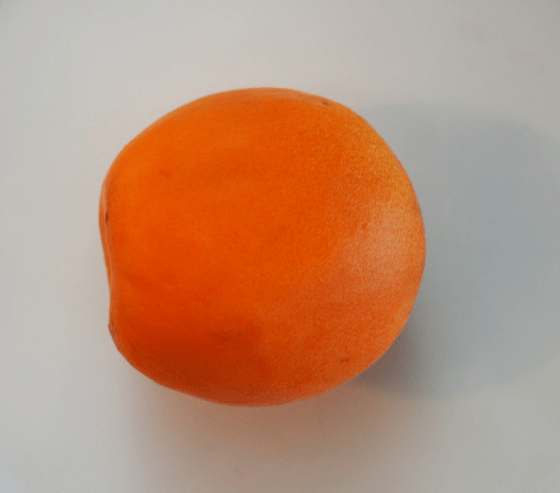
On one of my regular visits to Toronto’s St Lawrence Market in June 2021, I picked up a bagful of large apricots. I published a photograph of the largest apricot in the lot and other interesting and exciting moments from my week.
About the apricot, I wrote: “With energy from consuming a large sweet apricot, the size of a peach, that I bought from St Lawrence Market …. I spent an hour or so at the [Aga Khan] Park.” My article continued: “Imagine supermarkets all around North America offering a fruit from Hunza, where it is grown in abundance. Fair-traded organic apricots from HUNZA, the labels on the fruit shelf would read. We find New Zealand kiwis, South African oranges, Australian apples, Moroccan and Spanish clementines, Mexican ataulfo mangoes and many other tropical fruits from Latin American countries. Now, how about apricots from Hunza! Imagine its impact on the livelihood of farmers and their families in the Northern regions of Pakistan!”
Moreover, apricot lovers in North America — and other parts of the world — would delight in consuming fruit from the exotic and enchanting Hunza Valley.
~~~~~~~
A new partnership model spreads apricots from the Karakoram Mountains in Hunza to the rest of the world
More than three years later, my heart jumped with joy as I read a piece describing IFAD’s public-private-producer partnership (4Ps) to make Hunza-grown apricots reach the rest of the world from the high mountain passes. This inspiring initiative, a beacon of hope and a potential game-changer for the future of agriculture and apricot farmers in Hunza, is part of IFAD’s unwavering long-term commitment to transforming rural communities. IFAD has been transforming rural communities for almost 50 years, and believes that “a better future starts in rural areas.” Please read Getting good grades: apricot farmers in the Hunza Valley strive for the best, which describes this inspiring initiative.
If extended to other parts of Pakistan, such as Chitral, and Central Asian countries, such as Afghanistan and Tajikistan, the initiative could not only improve the livelihood of farmers who cultivate this vital crop but also create numerous job opportunities. The apricot, a versatile fruit, can be consumed fresh, processed into dried apricots, jams, jellies, or used in juice and other products. The apricot kernels yield oil, which is used in cosmetics and other applications, such as press cake, which can be further processed as animal feed, fertilizer, and other industrial applications.
Story continues below
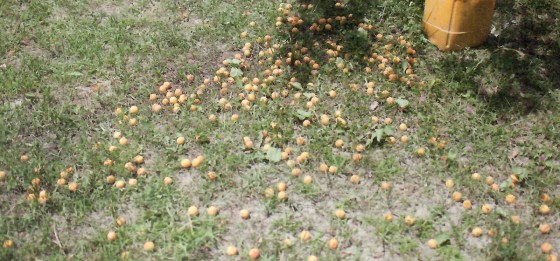
My search for Hunza apricots in North America led me to One Green World, a family-owned and operated nursery in Portland, Oregon. This unique nursery offers a diverse range of food plants and their companions worldwide, including the rare and unique Hunza apricot. The nursery states on its website that the Hunza apricot is a precious variety from northwest Pakistan, where it grows wild in the Hunza Valley. It describes the fruit as delectably sweet and tender, and fully ripe apricots as a unique, tasty treat. The bloom time for these apricots is March, and they ripen in June or July. Don’t miss the chance to experience the seasonal availability of Hunza Apricots at One Green World.
I hope this story of the Hunza Apricot will inspire Jamati institutions and the Aga Khan Development Network to seek ways to collaborate with the brokers of the 4P initiative to encourage the farmers further. Similarly, Ismaili-owned grocery chains and stores can work together to import this delicious fruit and its byproduct and make it widely available across North America, contributing to the economic well-being of Hunza and its beautiful people.
WATCH A VIDEO ABOUT HOW IFAD IS TRANSFORMING APRICOT FARMERS AND A RURAL COMMUNITY IN HUNZA
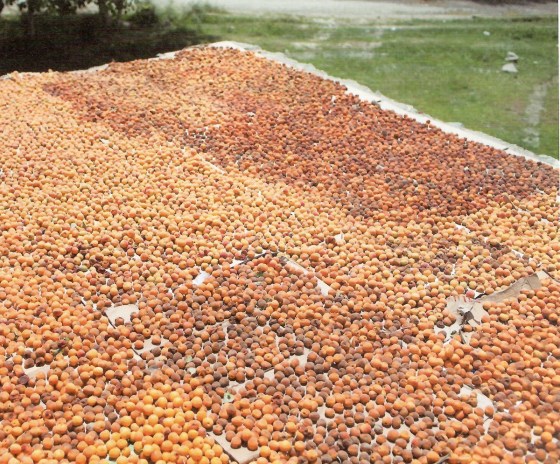
The featured photo at the top of the post: July in the valley of Vanch in the Pamirs. Entire orchards, rooftops and large rocks are covered with apricots drying in the sun. Photograph: © With Our Own Hands, page 244.
Date published: May 16, 2025.
Last updated: May 18, 2025 (formatting and typos).
_______________
 Simerg - Insights from Around the World
Thank you, Mr. Malik, for your message and clarification. I believe it would be a fantastic opportunity to market both fresh and dried apricots in Canada. The apricots from Hunza are completely organic and are primarily dried in the sunlight. I understand that AKRSP was a pioneering nonprofit that introduced the community to the concept of cash crop switching, which aligns with traditional farming practices in the region.
Over the years, much has changed in the area. Unfortunately, the local people have not fully benefited from their natural resources, such as eco-tourism, adventure tourism, and agriculture. Apricots are a key resource in Hunza and throughout Gilgit-Baltistan. A friend of mine from Australia attempted to import apricot plants from Hunza but was unsuccessful due to quarantine laws. It will be interesting to see how it works in the case of Canada.
Dear Mr. Malik Merchant, Thank you for highlighting the apricot business and export from Hunza Valley. There is no doubt that Hunza Valley produces some of the finest apricots. As a resident of Hunza and a lover of apricots, I have tasted various types from all over the Hunza Valley, as well as the Gilgit-Baltistan region, Turkey, New Zealand, and the United States, particularly California.
While I am not familiar with apricot farming in Canada, I firmly believe that the apricots from Hunza are the best. However, the size and color of the apricots you mentioned do not appear to match those from Hunza. I might be mistaken, but if the apricot is indeed from Hunza Valley, its seed should be sweet. If it tastes bitter, then it likely isn’t from Hunza.
Thank you for your letter. Yes the photograph of the apricot I have posted is not of an apricot from Hunza. I will clarify that in my caption. I appreciate your comment. Apricots grow in the provinces of British Columbia and the Niagara region of Ontario – which I particularly like because of their sweetness. I am looking forward to ordering a case of Hunza apricots from Portland once they arrive there in summer. There may be restrictions of fresh food import into Canada from the USA.