
Editor’s note: On Friday, July 9, 2026, I attended the Generations Jamatkhana in Calgary, where an excerpt from a Farman Mubarak by Mawlana Hazar Imam, His Highness the Aga Khan, was read. This Farman, delivered during the students’ Didar in Toronto on March 31, 2026, advised us to explore our personal and family histories by asking questions such as “Who are you? Who are your parents? Who are your grandparents?” Mawlana Hazar Imam urged the young members of the community to speak with our elders to learn about our background (see page 41 of the Farman Mubarak book, from the Canada visit, March 26-31, 2026, available at Jamatkhana literature counters).
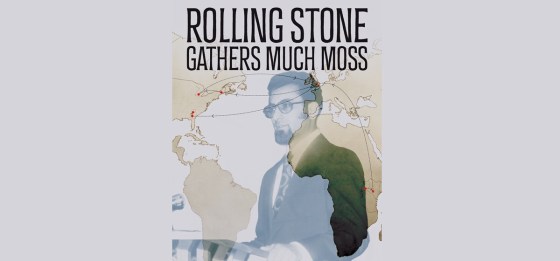
At once, my beloved friend Nizar Motani’s book, featured below as part of the Ismaili Authors Series, came to mind. As Nizar says, he hopes that his book, with the intriguing title Rolling Stone Gathers Much Moss, will inspire others to write about their families and life stories and to preserve family history before it is lost. In the series — see the list below — we have featured several Ismaili authors who have written informative, rich autobiographies. Aside from learning about our personal histories, Mawlana Hazar Imam has asked us to develop a habit of reading books. In this regard, we welcome the institutional initiative titled Gift of Reading, a collective pledge from the Canadian Ismaili community to Mawlana Hazar Imam in anticipation of his upcoming visit to Western Canada from July 24-26, 2026.
We value the insights of Ismaili authors worldwide and invite you to contribute to this ongoing series by submitting responses to our questions. Please see the details HERE. For any queries, please email Malik at mmerchant@simerg.com.
____________
Ismaili Authors Series: Rolling Stone Gathers Much Moss by Nizar A. Motani
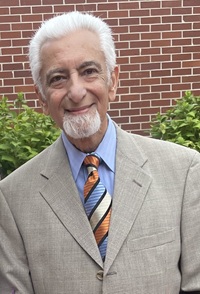
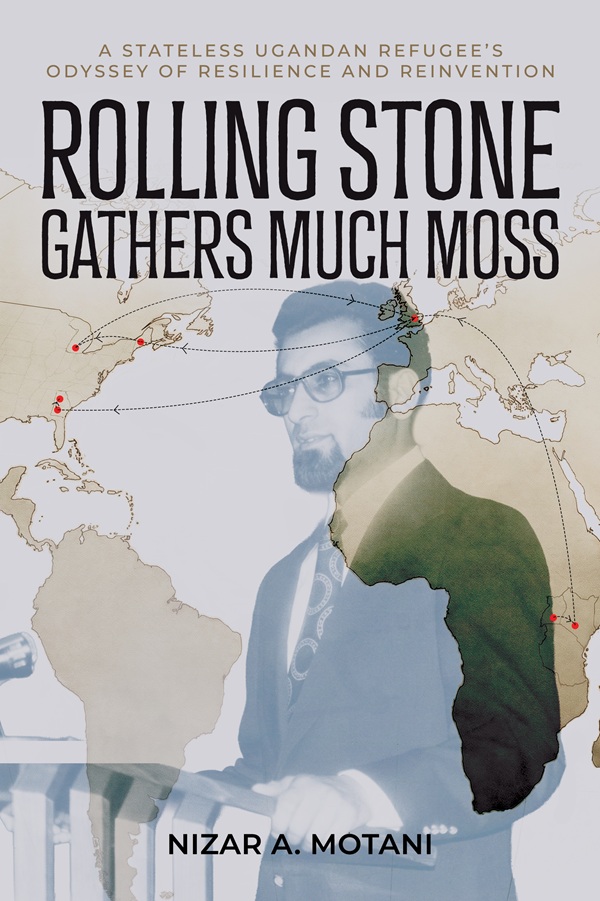
Simerg: What is behind the naming of the title Rolling Stone Gathers Much Moss: A Stateless Ugandan Refugee’s Odyssey of Resilience and Reinvention?
Nizar Motani: The main title is a play on the proverb, “a rolling stone gathers no moss,” which suggests that constant change prevents one from putting down roots or achieving lasting success. My life has been the opposite. Despite being expelled from Uganda and experiencing many relocations and career changes, I ultimately settled in Atlanta, Georgia, where I built a fulfilling personal and professional life, showing that even a rolling stone can gather plenty of moss!
Simerg: Why would you want me or my family members to read the book and what will we learn?
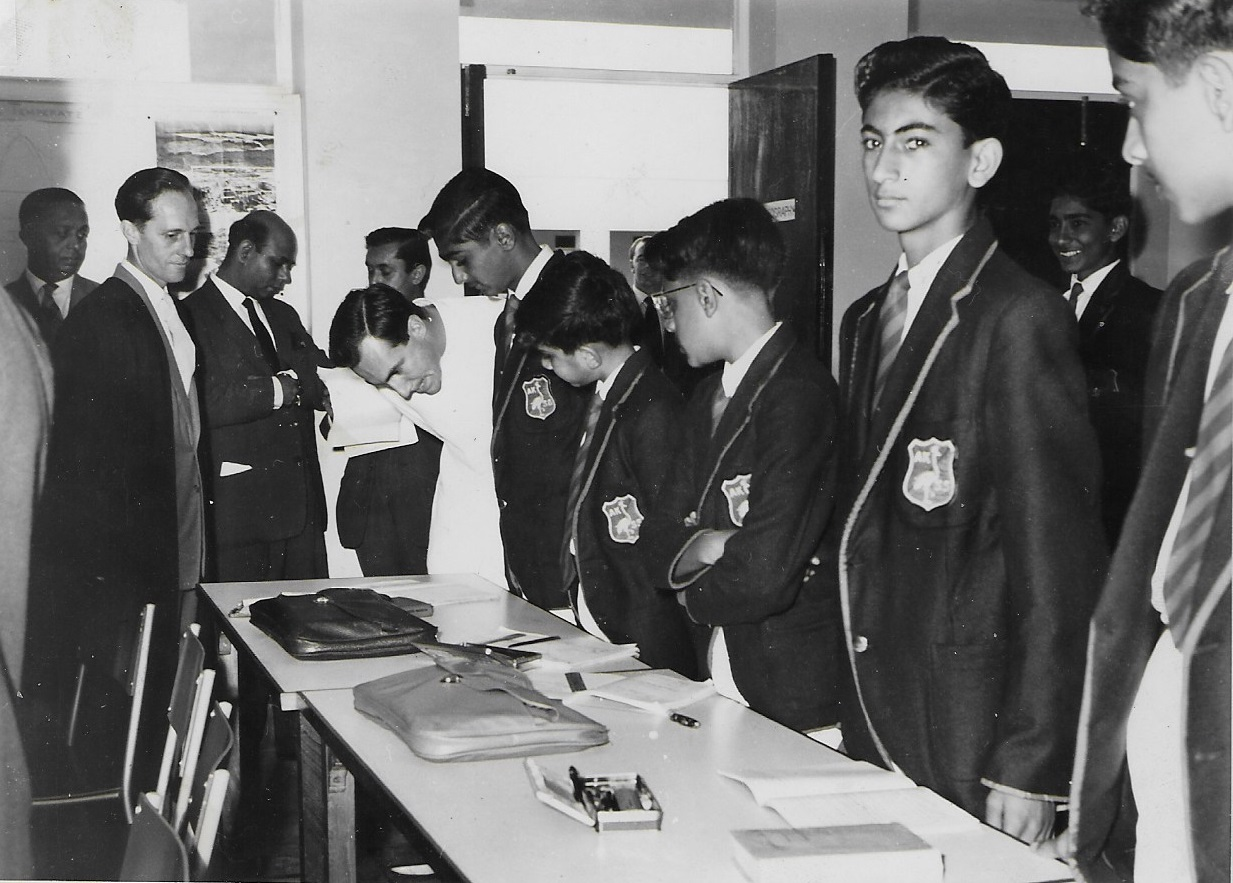
Motani: I hope the book inspires others to write about their own families and life stories, and to preserve family history before it is lost. It reflects resilience in the face of the Ugandan expulsion and other life challenges, including periods of instability through several moves and changes in profession, and the gradual process of building a more settled and rewarding life. It highlights themes of charity, community involvement, and the importance of friendship and social connections. As I have humorously related several major foolish mistakes and devoted an entire chapter to my positive approach to health issues, there are some valuable lessons for readers. I also offer a rare perspective on colonialism, drawing on my background as an academic historian who navigated the middle tier in a tri-racial colonial society. Finally, a collection of photographs is included throughout the book, which I hope helps bring the story to life and make it even more enjoyable to read.
Story continues below
~~~~~~~~
Exile did not break and has not broken Nizar. Nor has it broken many of us of his generation. Instead, we have accepted it as an opportunity to contribute on a global scale. This, I think, is the message, the heritage and the value of Nizar’s autobiography — Professor Austin Bukenya, Makerere University, former columnist of the Nairobi-based Daily Nation.
~~~~~~~
Simerg: What inspired you to write the book?
Motani: I have enjoyed writing since my school days, when my teachers first encouraged me. Later, my Ph.D. supervisor at the University of London’s School of Oriental and African Studies (SOAS), the renowned Africanist Professor Roland Oliver, remarked that I had a considerable gift for writing in the English language. Over the years, I wrote articles and book reviews, including reviews of memoirs, which eventually led me to realize it was time to write my own. I wanted to preserve both my family’s remarkable history and the story of my own eight-decade journey before more of the people who held those memories passed away—and before my own advancing age and health challenges made the task more difficult. As friends and potential readers also began to leave us, I felt an even greater urgency to write. The COVID-19 pandemic provided the time and opportunity to finally begin my memoir.
Simerg: How can one purchase the book ?
Motani: The book can be purchased on AMAZON in paperback and e-book formats.
Simerg: How did you find a publisher for the book?
Motani: Based on a recommendation from a fellow academic whom I previously worked with, I initially contracted with an assisted self-publishing service, but later switched to self-publishing independently through Amazon Kindle Direct Publishing which offered more control, flexibility, and faster time to publication.
Simerg: Did you hire an editor, an illustrator or did you do all the work by yourself?
Motani: My son Abdul and my brother Azeem dedicated significant time to editing the book, and they worked with a professional for the cover design.
Story continues below
Simerg: Which was your first book, and how many have you written?
Motani: In 1977, my Ph.D. thesis was published as an academic monograph for scholarly audiences, but this memoir is my first book written for a general readership. I had a stellar eight-year lecturing career as a history professor at two well-respected universities (Bowdoin College and Western Michigan University) in the United States. As a result of my impressive presentations at major academic conferences, I was invited to contribute chapters to books by several distinguished professors. Over the years, I have also written numerous papers, articles, and book reviews that appeared in various publications, as well as on this website and its sister website, Barakah. These works are detailed in the appendix of my book, which also includes the full text of three of my articles on Uganda.
Simerg: How long did it take you to write the book — from start to finish?
Motani: I began writing notes in 2021 during the COVID-19 pandemic and, with much procrastination, continued writing over the next few years. As I am not very tech-savvy, I relied on my son to help transform the material into a book, including organizing, editing, and other general production work. Given the scale of the task and his full-time job, progress was gradual at times. The book was finally published in June of 2026.
Date posted: July 10, 2026.
Last updated: July 10, 2026.
______________
About the author: Born and raised in Uganda before its independence from colonial Britain, Nizar A. Motani has conducted extensive research on “Uga-Indians” and earned a Ph.D. in African history from the University of London School of Oriental and African Studies (SOAS), just before the 1972 expulsion of Asians from Uganda, which rendered him stateless. A timely offer brought him to the United States as a professor, where he eventually became a citizen. Over time, he transitioned from academia to business and finance, demonstrating the same rigor and creativity that marked his scholarly work. A talented writer, storyteller, and speaker, Dr. Motani is especially known for his dynamic and captivating style. Friends and colleagues alike admire his quick wit, outrageous anecdotes, and unforgettable sayings, which bring both humour and insight to every conversation. Dr. Motani and his wife, Yasmin, are now retired in Atlanta, Georgia, where they have resided since 1989.
________________
Links to the Ismaili Authors’ Series (in chronological sequence, oldest article first)
- “Justice Bertha Wilson Pushes the Boundaries of Humanity” by Shamas Nanji (featured on February 10, 2021, series start date)
- “Little One, You Are The Universe” by Zeni Shariff (February 25, 2021)
- “Memoirs of a Muhindi” by Mansoor Ladha (March 6, 2021, and see also 15, 21 and 27 by the same author)
- “To Be One With God: Seven Journeys to the Meaning of Life” by Shafeen Ali (March 25, 2021)
- “Invisible Birthmarks” by Alnasir Rajan (April 13, 2021)
- “IN THE NAME OF JUSTICE – Portrait of a ‘Cowboy’ Judge” by Azmina Suleman (April 28, 2021)
- “RSVP Rice and Stew Very Plenty” by Nazlin Rahemtulla (May 28, 2021)
- “Coughdrops” by Nargis Fazal (June 12, 2021)
- “The Roots and the Trees” by Nizar Sultan (June 25, 2021)
- “Faith and Ethics: The Vision of the Ismaili Imamat” by M. Ali Lakhani (July 4, 2021)
- “Nairobi Days” by Shelina_Shariff Zia (July 21, 2021)
- “Shine Brighter” by Shairoz Lakhani (December 8, 2021)
- “This is My Life” by Naznin Rahemtulla Hébert (February 26, 2022)
- “Humanizing Medicine – Making Health Tangible” by Dr. Azim Jiwani (March 9, 2022)
- “A Portrait in Pluralism: Aga Khan’s Shia Ismaili Muslims” by Mansoor Ladha (June 8, 2022, and see also 3, 21 and 27 by the same author)
- “Malaria Memoirs: My Life Journey as a Public Health Doctor in Tanzania” by Dr Zul Premji (June 30, 2022)
- “Monkey Tales and Other Short Stories” by Mahmoud Hirji (September 10, 2022)
- “Bloom! A Story of Diversity and Understanding” by Shamim Murji (October 27, 2022)
- “Cooking with Mom” by Rozina Ramji (November 7, 2022)
- “SPARK: Journey from Success to Significance” by Azim Jamal (July 17, 2023)
- “Off the Cuff” by Mansoor Ladha (August 3, 2023, and see also 3, 15 and 27 by the same author)
- “Mehndi Boy” by Zain Bandali (November 18, 2023)
- “All the Russ Without the Fuss” by Reeshma Haji (March 2, 2024)
- “al-Risalah al-Bahirah (The Epistle on the Radiance)” by Abu Ya’qub al-Sijistani, translated by Boustan Hirji (April 3, 2024)
- “Namirembe Road” by Salim Rahemtulla (August 3, 2024)
- “Swim or Climb: Max’s Swimming Dilemma” by Maya Shariff (October 4, 2024)
- “Aga Khan: Bridge Between East & West” by Mansoor Ladha (November 14, 2024, and see also 3, 15, and 21 by the same author)
- “Passage to East Africa” by Shenaz Shamji (April 3, 2025)
- “No Man’s Land” by Amin Gulgee (April 22, 2025)
- “Recreation Club Institute: History and Illustrated Glimpses of Service Holders” by Chhotubhai Khanderia (August 20, 2025)
- “Luminaries of the Islamic Golden Age” by Mohamed Bhanji (January 6, 2026)
- “Rolling Stone Gathers Much Moss: A Stateless Ugandan Refugee’s Odyssey of Resilience and Reinvention” by Nizar Motani (July 10, 2026)
_________________
Before departing this website please take a moment to review Simerg’s Table of Contents for links to hundreds of thought provoking pieces on a vast array of subjects including faith and culture, history and philosophy, and arts and letters to name a few. Also visit Simerg’s sister websites Barakah, dedicated to His Highness the Aga Khan, and Simergphotos. Simerg’s editor Malik Merchant may be reached via email at mmerchant@simerg.com. You can also stay updated by following Malik on Facebook, X, LinkedIn and Instagram, and by subscribing to Simerg at the top right of this page.


 Simerg - Insights from Around the World