Simerg is an independent initiative dedicated to Ismaili Muslims, the Aga Khan — their Hereditary Imam — and the Ismaili Imamat, and Islam in general through literary readings, photo essays and artistic expressions
Last June, Aniza Meghani of the UK conducted an exclusive interview with Amin Gulgee for Simerg during her visit to Karachi. The interview includes a selection of outstanding works of art by Amin and provides an excellent introduction to his artistic background. We invite our readers to read Aniza’s excellent piece. The last few weeks have seen the release of Gulgee’s first monograph, “No Man’s Land,” published on March 25, 2025. We are delighted to feature the monograph as part of our continuing series of books by Ismaili authors. We follow a similar Q/A format as our earlier presentations of books, which are listed chronologically below, ensuring our readers are always up to date with our series in an organized manner. We encourage Ismaili authors from around the world to participate in this series, regardless of when their books were published. See details of the series HERE and submit your responses to Simerg’s editor, Malik, at mmerchant@simerg.com.
Amin Gulgee on his monograph “No Man’s Land”
Simerg: What constitutes your book No Man’s Land? Why would you want me to read it, and what will we learn from it?
Amin Gulgee: This is the first monograph dedicated to my career as an artist and curator. Spanning over three decades, my multifaceted practice unfolds through a tapestry of techniques and themes. I invite readers to immerse themselves in the intertwined layers of my work. Featuring insightful essays from esteemed figures across the contemporary creative landscape — curators, novelists, artists, academics, and critics — this volume illuminates my artistry from myriad perspectives. I feel honored to include an essay by the late Dr. Oleg Grabar, a preeminent Islamic art historian, who wrote an essay for the catalogue of a solo exhibition I had at Galeri Petronas in Kuala Lumpur in 2008. Also included is a Q and A by Dr. Maryam Ekthiar, a senior curator at the Met, who asked me challenging questions. From spirituality to politics, from the universal to the particular, my trajectory attempts to navigate the complexities of my existence and invites contemplation on the depths of our collective consciousness. Spanning my diverse career, from my early work in jewelry to my sculptures, installations, paintings, performances and curatorial projects, this volume offers a comprehensive insight into the breadth and depth of my artistic journey. Illustrated with over 300 meticulously selected images and QR codes unlocking access to videos and catalogues, No Man’s Land immerses readers in a visual odyssey through my creative practice.
Simerg: What is behind the name and title of the book?
Gulgee: I chose the title No Man’s Land because I feel that my path occupies this liminal space.
Story continues below
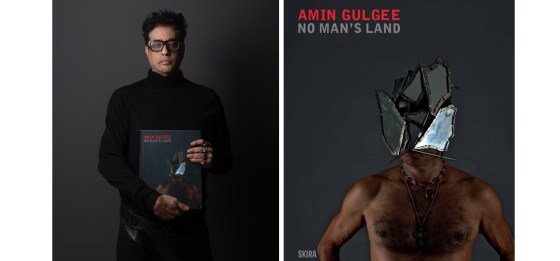
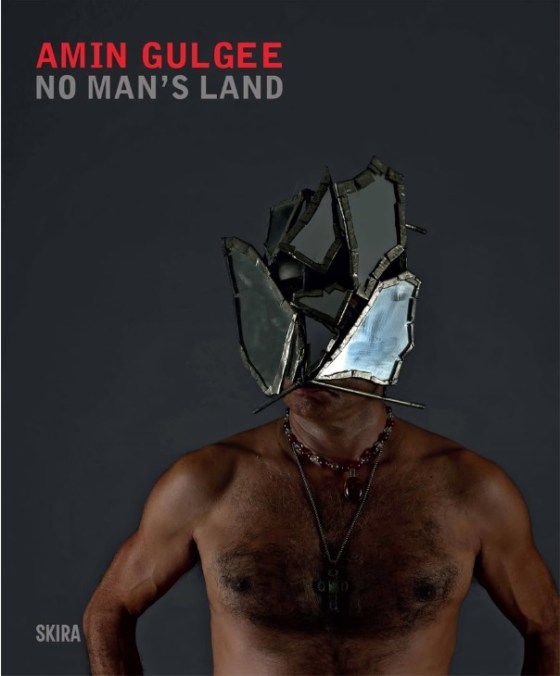
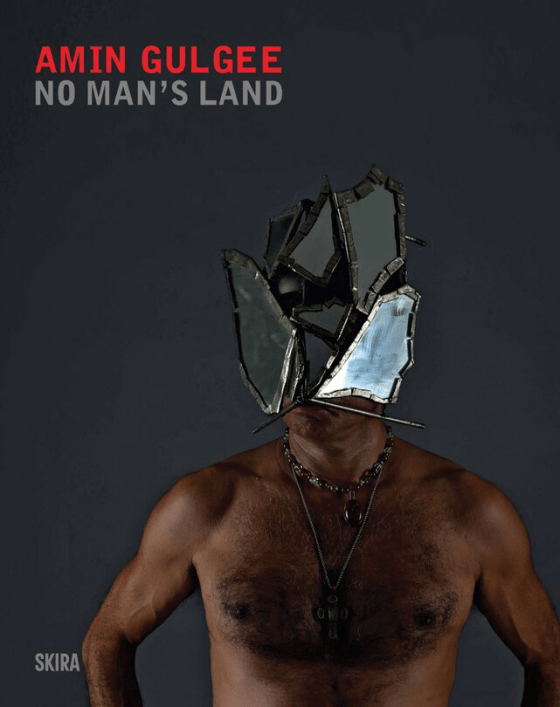
Front cover of Amin Gulgee’s “No Man’s Land,” edited by John McCarry, published by SKIRA, March 25, 2025, Hardcover, 416 pp.
Simerg: How did you find a publisher for this book?
Gulgee: I was introduced to the prestigious publication house Skira, based in Milan, by the late Italian curator Paolo de Grandis. I was well aware of Skira because they had published books on Picasso and Matisse, among many other artists. I had known Paolo since 1998, when I first participated in “OPEN”, an exhibition of installation and sculpture that he established in Venice. Later, in 2017, when I was appointed Chief Curator of the inaugural Karachi Biennale, I invited him to be a guest curator. He included works by Yoko Ono and Michelangelo Pistoletto, among others. In 2018, he and Claudio Crescentini curated my solo shows at the Galleria d’Arte Moderna and Mattatoio, both in Rome. When the book was nearing completion, I asked if he would know any publishers who might be interested in my monograph, and he suggested Skira. I sent them a few chapters and I was thrilled when they accepted to take the project on. I then collaborated with Skira’s team over the next seven months to finalize the project. They were all tremendous to work with.
Story continues below
__________________
Reflections on Amin Gulgee and his monograph No Man’s Land
“Both as a practitioner and as a curator Amin Gulgee’s storytelling is fluid, both creating and dispelling unease. Amin Gulgee explores the vastness of the Universe as the backdrop for those narratives…Contemplating spiritual goals, while confronting the insecurities and displacements of our existence, [he] calls for constant negotiation and inventiveness.” — Salima Hashmi, art historian and artist, in “Fearless,” an afterword to Amin Gulgee’s book.
~~~~~~~
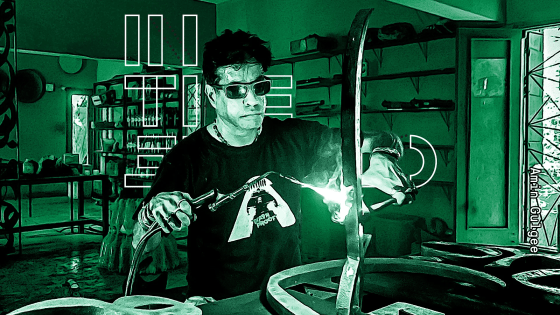
“Amin Gulgee defies easy categorisation: he’s a metal sculptor, a curator, and one of Pakistan’s most innovative and cherished artists, the beating heart of his home city of Karachi’s creative scene. His metalwork is as dramatic and eccentric as Amin is. He’s in your face, uncompromising, a living and breathing performance piece” — Excerpt from BBC Documentary podcast, “In the Studio: Amin Gulgee — Heavy metal” (listen to podcast HERE).
~~~~~~~
“Amin’s art explores the unexpected. Whether it’s connections or the stories illustrated, he doesn’t follow a norm…Whilst being so different can pose its own challenges, instead, it makes Amin’s work deeply personal and unique to him. It’s also meant, from the start of his career, he’s had a strong sense of self-confidence in embracing uniqueness — Excerpt from “Amin Gulgee: Going against the norm” in The Ismaili.
________________
Simerg: Did you hire an editor or designer or did you do all the work yourself?
Gulgee: The editor of the book is John McCarry, who was a classmate of mine at Yale. He has written for National Geographic as well as many other publications. He has also published two other books. He is the coordinator of the Amin Gulgee Gallery and edits all its publications. I chose Kiran Ahmad as my designer, as she is one of the most sought-after book designers in Pakistan. I have worked with her many times in the past; however, this monograph was a truly daunting task. We spent over two years trying to make sense of my journey. Her perseverance and her commitment to her craft are commendable. Also, she can make me laugh!
Simerg: What inspired you to do this monograph?
Gulgee: The last time I saw my mother was on December 13, 2007. She had come over to my place in the afternoon since it was the birthday of Prince Karim Aga Khan IV. She brought with her a painting by my father, which she presented to me as a gift. “Look at this, Amin,” she exclaimed. “These are the colors of life!” She then sat me down and said, “I want you to do three things for me: one, give up smoking; two, do a book on your work; and three — I don’t remember now, but it will come to me.” She sadly never had the chance to state her third demand. However, in 2020 I had my last delicious cigarette, and in 2022, I decided to start working on my monograph.
Simerg: How long did it take you to complete your monograph and what were the difficulties?
Gulgee: I live in the moment and I do not like looking back. When I finally came to the decision to fulfill my late mother’s wishes, I was trepidatious. John and I had decided that we would approach writers and let them choose any angle of my trajectory that engaged them. We chose to reprint only two essays — the one by Oleg Grabar and another by Dr. Kishwar Rizvi, who is the Robert Lehman Professor in the History of Art, Islamic Art and Architecture at Yale University. The rest of the ten essays were to be new writing on my practice. We were both delighted by the essays that came in. As far as the images are concerned, since my trajectory began in predigital, archaic times, my early work was documented on slides. When I asked my young technical advisor how can I digitize them, he asked me, “What is a slide?” This, of course, made me feel like a dinosaur! But we got the painstaking job done. Then, there was the challenge of organizing my trajectory, which Kiran and I did in sections. It took two years and I am so very grateful for all the support I received along the way.
Date posted: April 22, 2025.
______________
Links to the Ismaili Authors’ Series (in chronological sequence, oldest article first)
Before departing this website please take a moment to review Simerg’s Table of Contents for links to hundreds of thought provoking pieces on a vast array of subjects including faith and culture, history and philosophy, and arts and letters to name a few. Also visit Simerg’s sister websites Barakah, dedicated to His Highness the Aga Khan, and Simergphotos. Simerg’s editor may be reached via email at mmerchant@simerg.com.

 Simerg - Insights from Around the World