
Inna lillahi wa inna ilayhi raji’un
“Surely we belong to God and to Him we return” — Holy Qur’an, 2:156
“Life is a great and noble calling, not a mean and grovelling thing to be shuffled through as best as we can but a lofty and exalted destiny” — Mawlana Sultan Mahomed Shah, His Highness the Aga Khan III (1877-1957), 48th Imam of the Shia Imami Ismaili Muslims.
Compiled and prepared by MALIK MERCHANT
Update, February 17, 2024: Funeral ceremony for Zawahir Moir will take place at North London Jamatkhana, Saturday February 17, 2024; Fateha will be recited at 10:45 AM. Samar and Zyarat ceremonies at North London Jamatkhana.
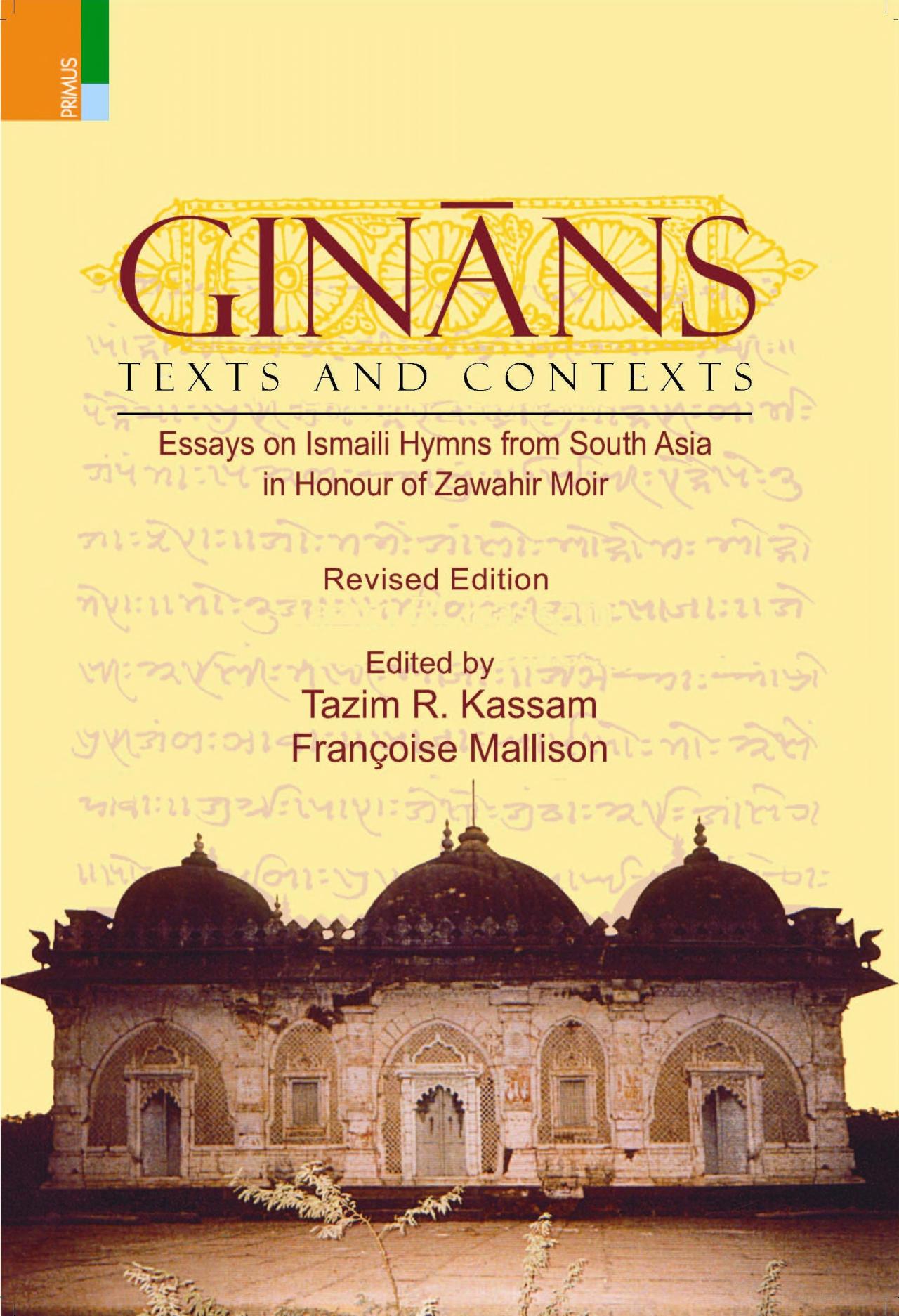
This short tribute to Zawahir Moir includes material from Wafi A. Momin’s piece “A Bio-bibliography of Zawahir Moir” which was published in Ginans: Texts and Contexts — Essays on Ismaili Hymns from South Asia in Honour of Zawahir Moir“, edited by Tazim R. Kassam and Françoise Mallison (Primus Books, New Delhi, 2007, revised edition 2010).
It is with heartfelt sadness to inform readers that Huzur Mukhiani Zawahir Moir, one of the most distinguished and pioneering scholars of Ismaili Ginans (Hymns), passed away in London, United Kingdom, on February 9, 2024, at the age of 90.
Born in Karachi in 1933, Zawahir Noorally (as she was known before marriage) grew up with a passion for Ginans from an early age. After completing her early education, Zawahir completed her first Master’s degree in Islamic history from Karachi University in 1958. Subsequently, she was awarded a scholarship by Mawlana Shah Karim al-Hussaini Hazar Imam, His Highness the Aga Khan, to continue her studies in London, and thus became the first Ismaili from Pakistan to undertake Islamic studies abroad. For four years (1960-64), Zawahir pursued a second M.A. at the School of Oriental and African Studies (SOAS), University of London, completing her research on the modern period of Ismaili history, focusing on the Imamat of Aga Khan I, Mawlana Shah Hasan Ali Shah.
She returned to Pakistan and joined the Ismailia Association (now the Ismaili Tariqah and Religious Education Board), where she was a Research Associate for nearly 15 years. Ismaili readers in the early 1970’s would especially remember Zawahir for contributing to the Ismailia Association for Pakistan’s 1973 publication Great Ismaili Heroes, a 160 page booklet, highlighting the lives of 33 Ismaili historical figures spanning 1000 years.
In 1979, Zawahir moved permanently to London, where a year later she married Martin Moir, then archivist and deputy director of the India Office Library and Records. In 1982, she joined the academic faculty of The Institute of Ismaili Studies, where she worked for three years.
Article continues below
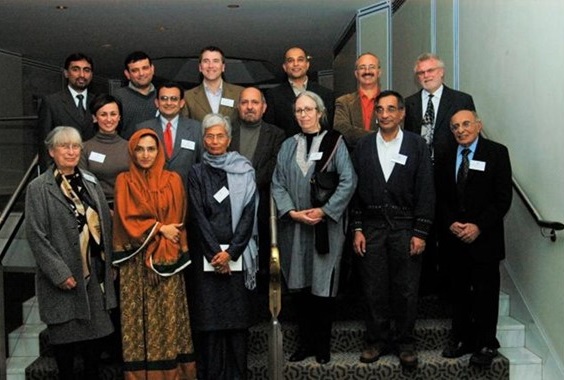
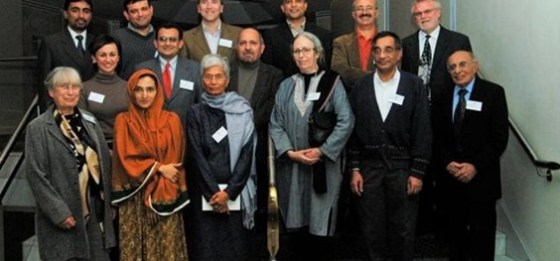
Within the field of Ismaili studies, Zawahir’s interests were much kindled by one of the foremost modern authorities on Ismailism, Wladimir Ivanow (1886-1970), with whom she had been in constant correspondence since 1958, and whom she met during a visit to Iran in 1966. During her sojourn at the Ismailia Association, in 1975, Zawahir participated in an international conference of Ismaili leaders and scholars — a conference that led to the establishment of The Institute of Ismaili Studies in London. Also, while at the Ismailia Association, Zawahir prepared a catalogue of the collection of Khojki manuscripts that had been collected from the Ismaili communities in Punjab and Sind, and which represented the largest known corpus of Satpanth Ismaili literature. She continued working on this collection when it was transferred to The Institute of Ismaili Studies, London, painstakingly cataloguing the manuscripts over a period of three years. Although this catalogue remains unpublished, it has been an invaluable source for scholars.
Article continues below
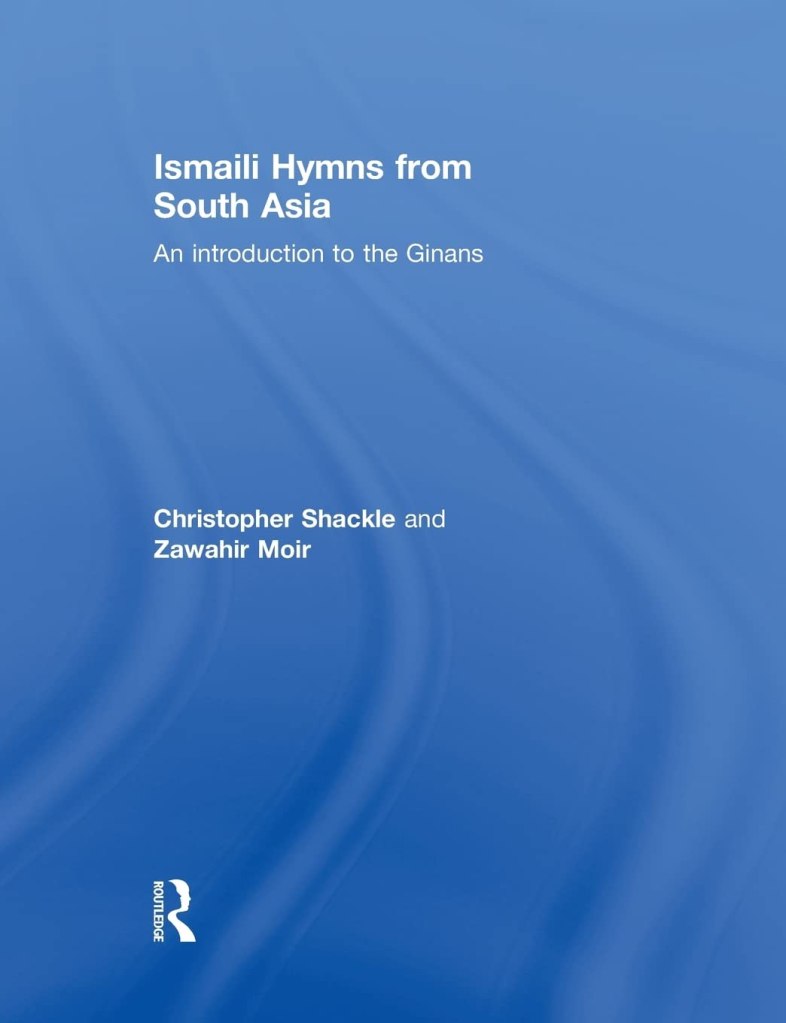
For over thirty years, since the mid-1980s, Zawahir collaborated closely with scholars working in the field of South Asian literatures and cultures. In 1992, she co-authored with Christopher Shackle Ismaili hymns from South Asia: An introduction to the Ginans, and continued to present papers on various aspects of Satpanth Ismailism and Ginanic literature, as well as encouraging and inspiring students to this field of Ismaili studies.
In the foreword to the collection of essays presented in her honour, Christopher Shackle writes: “The passing of years has encouraged an ever greater regard for her unique combination of personal and professional qualities. Beneath a delightful self-deprecation, she possesses the extraordinary devotion to her subject characteristic of the best private scholars, which is both the envy and the shame of those of us who cannot avoid the compromises of professional academic employment. To the extraordinarily wide and deep knowledge of the Ginans she first gained through family inheritance, she has added a remarkably sustained programme of subsequent study, especially of the historical aspects of the Ginans and of their complex manuscript record….She has continued with this personal programme to develop with a wonderfully youthful willingness to explore new avenues and lines of inquiry….Even though at times she had had to face serious discouragement and adversity,……her enthusiasm for the study of the Ginans has never been dimmed.”
Article continues below
Zawahir Moir’s passing has certainly dimmed the study of the Ginans. However, her encouragement, enthusiasm and commitment to the study of the Ginans, it is hoped, will be an inextinguishable candle guiding the way for researchers and students.
As Professor Ali Asani of Harvard University himself noted, “Many of the seeds of my scholarship on Ginan literature were planted by the pioneering work of Zawahir Moir and I shall always be grateful to her for her encouragement early in my career.”
Date posted: February 13, 2024.
Last updated: February 17, 2024.
_____________________
We invite you to submit your condolences, memories and tributes to Zawahir Moir by completing the feedback form below or by clicking on LEAVE A COMMENT. Should you encounter technical issues or difficulties in submitting your comment, please submit it via email to mmerchant@simerg.com (subject Zawahir Moir).
IMPORTANT NOTE: Simerg invites Ismaili families to submit obituaries and tributes to deceased members of their families, whether they passed away recently or in the past. Please review PASSINGS on how to prepare and submit your tribute.
 Simerg - Insights from Around the World