
Compiled and prepared by MALIK MERCHANT
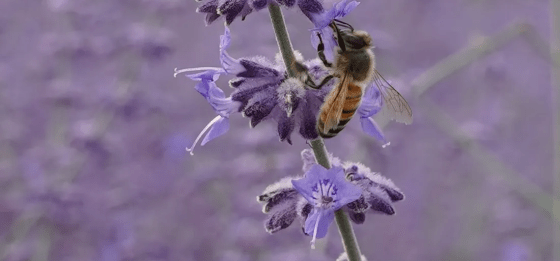
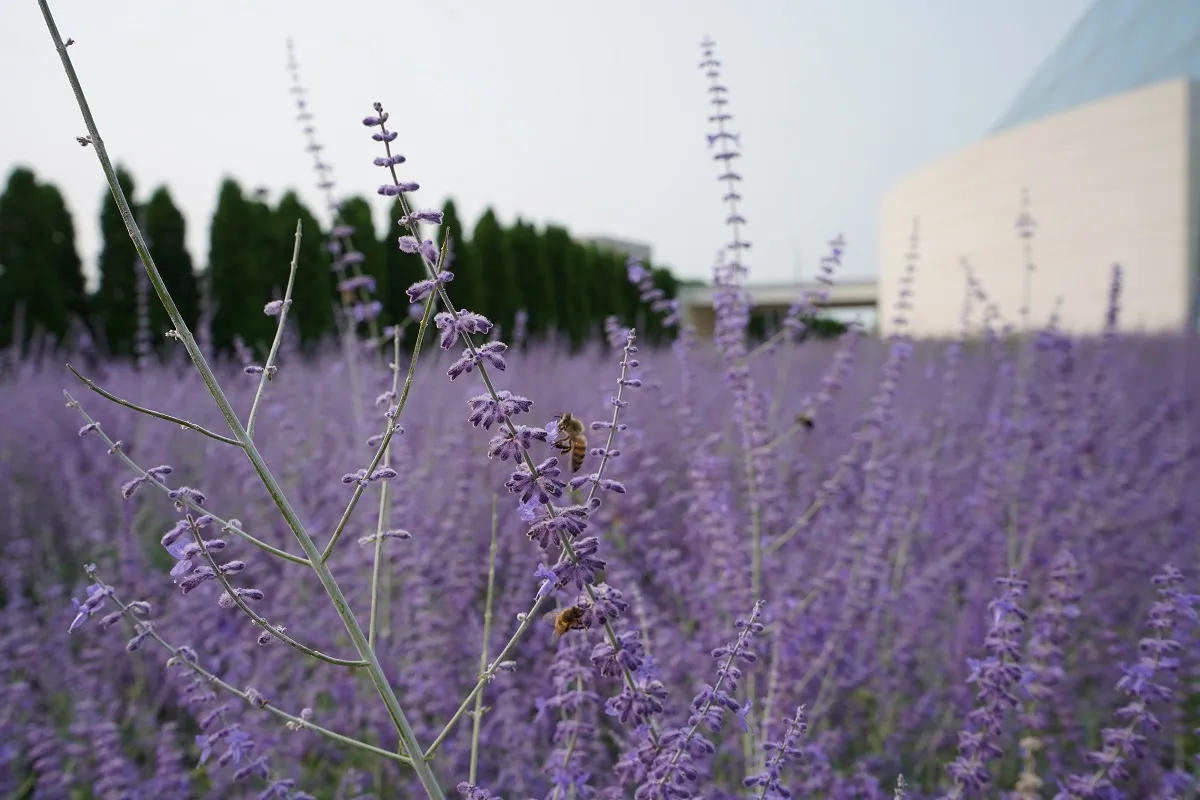
During my stay in Toronto between 2018-2021, the Aga Khan Park became my primary getaway place as it was so close from where I lived. The spring, summer and autumns months were particularly exciting as the park attracted lots of wildlife (see our stunning photo essays on The Hawk and The Birth of Goslings.) The sage and lavender plants in front of the Kaaba facing niche of the Ismaili Jamatkhana building attracted bees for pollination during the warm and sunny summer days. My daughter Nurin, on one of her visits to Toronto, captured some magnificent photographs of the bees. After relocating to Alberta, I read that the province produces nearly 40 million pounds of honey each year making it the fifth largest honey producing region in the world. There are 1,400 beekeepers in Alberta, managing over 300,000 bee colonies. Of course, the vast amount of honey produced is made possible by the alfalfa and clover nectar that is plentiful in the province.
Amazingly, of the 114 chapters or suras in the Qur’an, several are named after animals and insects. Examples are: Al-Baqarah (Chapter 2, The Calf, The Cow), Al-Anam (6, The Cattle), An-Nahl (16, The Bees), An-Naml (27, The Ant), An-Ankabut (26, The Spider), and Al-Feel (105, The Elephant). Many other chapters are named after objects or events in nature and the universe, including The Daybreak, The Earthquake, The Fig Tree, The Bright Morning Hours, The Night, The Sun, The Constellations, The Moon and so on.
Over time, we will endeavour to highlight the verses in the Qur’an that speak of God’s bountiful creation but we begin with the Bees and the Ants. These two insects are regarded as industrious, and they are also disciplined. They work together to support their colonies.
God speaks of The Bees in the following verses from chapter 16:
“And thy Lord revealed unto the bees, saying: ‘Take unto yourselves, of the mountains, houses, and of the trees, and of what they are building. Then eat of all manner of fruit, and follow the ways of your Lord easy to go upon.’
“Then comes there forth out of their bellies a drink of diverse hues wherein is healing for men. Surely in that is a sign for a people who reflect” — Quran, 16:68-69 (translation by A. J. Arberry, see Corpus Qur’an.)
In these verses, mankind is told about the healing power found in the different coloured honey made by the hard-working bees. The teamwork and level of organisation that goes into its production — because a single bee can’t make honey on its own — should serve us as an example on the importance of working and living together in the spirit of one-humanity.
The bees are venerated for their diligence and sacrifices. The importance that Islam holds for the insect is mentioned again in the following hadith (tradition) of the Prophet Muhammad (peace be upon him and his family):
“By the one in whose hand my soul is, the believer is like a bee which eats that is pure and wholesome and lays that which is pure and wholesome. When it lands on something, it doesn’t break or ruin it.”
Although chapter 27 in the Qur’an is called “The Ant”, there is only one verse that specifically mentions the hard-working ant. It is part of the story of Prophet Sulaiman (Solomon), who was gifted with the ability to speak and understand the language of animals, birds and insects.
The Qur’an tells of his encounter with the smallest of creatures as follows:
“….When they [Soloman’s army] came on the Valley of Ants, an ant said, ‘Ants, enter your dwelling-places, lest Solomon and his hosts crush you, being unaware!’
“But he smiled, laughing at its words, and he said, ‘My Lord, dispose me that I may be thankful for Thy blessing wherewith Thou hast blessed me and my father and mother, and that I may do righteousness well-pleasing to Thee; and do Thou admit me, by Thy mercy, amongst Thy righteous servants’.” — Qur’an, 27:18-19 (translation by A. J. Arberry, see Corpus Qur’an.)
The Prophet couldn’t hold back a smile as he heard the ant talk, and he thanked God for the many favours bestowed upon him, including his ability to understand and avoid trampling over the homes of the ants.
These verses and stories illustrate the importance Islam places on all God created life forms.
This compiled piece includes excerpts from a special feature article Creatures of the Quran: Insects and bug that was published in UAE’s The National News.
Date posted: August 13, 2023.
__________________
 Simerg - Insights from Around the World
Thank you for this article, Malik! Really enjoyed!