

Deepening love and feeling the presence of the Noor of Mawlana Hazar Imam: A personal reflection on the Salawat
The messages on Tohfa — a gift to the Imam of the Time — from the Ismaili leadership of India, including the Vice President of the Aga Khan Council of India, and Chairpersons of six National Ismaili Institutional Boards, addressed many important themes that Mawlana Hazar Imam, His Highness the Aga Khan, has emphasized during his visits to the Jamat (Ismaili community) around the world. The leadership presented his recommendations as gifts from the Jamats in India to the Imam during his upcoming visit. These include caring for the environment, reducing the time we spend on our mobile devices, cultivating a habit of reading, moving our bodies, and strengthening our faith through constant reminders, among others. The Tohfa that the leadership spoke of are commitments, one at a time or in combination, that every Jamati member should seek to make as everyone’s active participation is vital. They could, as they suggested, take place before, during, and after his visit to India from September 9 to 15, 2026, when he is expected to grace the Jamat with Didars at various locations.
At the start of his address, the Chairman of the Ismaili Tariqah and Religious Education Board for India (ITREB) asked, ‘Do you want to experience true, lasting happiness and find meaningful purpose in your lives?’
This question invites many responses. I wish to share my perspective to make Mawlana Shah Rahim Hazar Imam’s Didar truly meaningful for the Jamat in India. Typically, remembering Allah and the Imam of the Time through daily prayers, heartfelt supplications, participation in ITREB programs with Waezes in Jamatkhanas, and recitation of special Zikr prayers, Ginans, Qasidas, and Qur’anic verses are powerful ways to prepare ourselves to receive Mawlana Hazar Imam.
Still, I want to offer a personal reflection to bring joy to the Didar, helping us feel more spiritually connected and eager in the days leading up to his arrival, and to deepen our sense of the Noor’s profound presence as Mawlana Hazar Imam enters the Didar hall, walks through the Jamat, takes his seat on the stage, and continues to bless the Jamat with his Didar until – and indeed – beyond his departure, as well as to feel his constant presence in our lives.
With the announcement of Mawlana Hazar Imam’s visit to Western Canada and the Didar in Calgary on the afternoon of Friday, July 24, 2026, I committed to returning to my daily practice of reciting Salawat, which I had maintained for years. Since the late 1950s, and for more than 60 years, I have been blessed with the physical presence, or Didar, of Mawlana Shah Karim about 15 times. Like all the Imams before him, he was the bearer of the Noor of Hazrat Ali. Our beloved 50th Imam, Mawlana Shah Rahim, carries the same Noor, as he beautifully expressed in his Farman in Calgary, and as explained in our piece on the Motif of his first Didar to Jamats worldwide. I wanted to feel the same awe and tangible presence of the Noor of Imamat during the Didar with Mawlana Shah Rahim as I had during Mawlana Shah Karim’s time. Of course, we have been taught – and accepted – that the Noor is everlasting and will remain with each Imam until the Day of Judgement. And this is where the recitation of the Salawat showed its greatest impact! I can personally reveal that, just as I felt the beautiful presence of the Noor of Imamat during Mawlana Shah Karim’s time, my heart felt the same presence during my first Didar of Mawlana Shah Rahim in Calgary on the afternoon of July 24.
Story continues below

We all recite the Salawat on specific occasions, as a congregation, on Chandraat (the night of the New Moon), and during prayers for deceased members of the Jamat. Perhaps many of us leave it at that. If you’re one such person and are new to this practice or haven’t been consistent, I recommend starting with just a few Salawat recitations daily. You might be surprised at how quickly that number grows in the days that follow.
I encourage all your family members, including young children, to adopt this practice. Sit together as a family and spend a minute or two reciting 10-15 Salawat; at least start with one. Notice the difference it will make in your lives and in your love for the Imam before, during, and after the Didar. Make it a regular practice, both at home and in the Jamatkhana. Remain seated for a few moments after the second Dua is complete, or return to the seating position later, before leaving the Jamatkhana, and recite the Salawat.
While listening to geets and songs honouring Mawlana Hazar Imam is enjoyable and entertaining, it’s important to cultivate a disciplined habit of reciting Salawat. You can sit on the floor or in a chair if sitting on the floor is uncomfortable. As I mentioned earlier, start with a few, say 11 beads in your Tasbihs (42 seconds), then stretch to 33 (2 minutes and a few seconds), and work up to 100 (approx. 7 minutes) or more!
I sincerely hope — and am confident — that this recitation of Salawat will bring you and your family true, lasting happiness, a meaningful purpose, and courage in your lives as your love for Hazar Imam grows. The Imam’s love for us is unbounded, and we should seek to reciprocate it. The Salawat will foster a visible, tangible presence of the Imam-of-the-Time in your daily life and at the upcoming Didar in India. The importance of reciting the Salawat was instilled in me by my beloved late father, Jehangir, who served Ismaili institutions, the Imam of the Time, and the Jamat for decades. I deeply miss him and cherish him for the love of the Imam of the Time that he helped instill in my heart.
I am pleased to present an adapted version of Shiraz Pradhan’s excellent piece on the significance of the Salwaat, which originally appeared on this website in November 2017.
________________
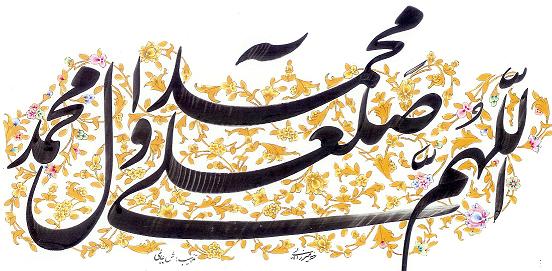
Allahumm-a Sall-i ‘Ala Muhammad-in Wa Al-i Muhammad
By SHIRAZ PRADHAN
Whenever Mawlana Hazar Imam graces us with Didar, his arrival and his presence are greeted with the soul-soothing hum of the recitation of the Salawaat:
“Allahumm-a Sall-i ‘Ala Muhammad-in Wa Al-i Muhammad,” meaning “O, Allah shower thy choicest blessings upon Muhammad and the progeny of Muhammad.”
This has been our tradition for centuries. The question arises: Why do we seek blessings upon the Prophet and his progeny?
When the verse of the Holy Qur’an (33:56) “Lo! Allah and His angels shower blessings upon (salloona ‘ala) the Prophet. O you who believe! Ask blessings upon him (salloo ‘alayhi) and salute him with a worthy salutation,” was revealed some of the companions of the Prophet asked him about it: “O Messenger of God, we know already how to greet you; but how should we invoke blessings upon you?”
The Prophet replied:
“You should say, ‘O God, bless Muhammad and his progeny (aal), even as you blessed Abraham and his progeny [O God], you are truly praiseworthy, great in glory’.” [1]
Further reinforcement of this invocation of blessing upon the Prophet and his progeny comes in the verse “Say: I ask you no reward (arjan) except love of the ‘near of kin (al-qurba)’. ” — 42:23
The key concept that emerges here is that of reward (arjan).
To understand this, we have to look at the fact that the Prophet was sent as a mercy to mankind as attested in the verse:
“And we have sent you not, except as mercy to the world.” — 21:107
What then is the reason for asking the ummah to seek blessing upon the Prophet and his progeny? And what is the reason for the expectation of a reward?
In reality the reward that the Prophet is asking, namely the love for the Prophet and his progeny, is not for his own benefit, but rather, for the benefit of the ummah (Muslim community) itself. And here in lies the elegance and efficacy of the Salawat that we recite. Imam Al-Baqir explains this by citing a verse in which Allah tells the Prophet:
“Say, whatever I ask you with regard to my reward, it is [actually] for you. I rely for my reward on no one except God and He is witness to everything.” — 34:47
Several Ginans sing about the joys and delights when the Imam graces his murids with his physical Didar. In one of these Ginans we come across this concept of “reward”. A verse in Pir Sadardin’s Ginan Aji Sham kun avanta jo kahe reads:
Transliteration
Sami ke gale me haar hai, heera manek jaddi ya,
Jis re bhave tan ku dete hai,
Saheb hai dil daariya…
Translation
The beloved has a necklace of diamonds and pearls,
He showers these on who so ever he chooses
The beloved’s generosity knows no bounds.
In the joyful assemblage of Imam’s holy presence and Didar, not only does the Imam shower the “reward” of jewels of blessings upon the murids, but the recitation of the Salawat opens the gate of mercy and every recitation of the Salawat multiplies these blessings many many many fold. A tradition from Shia sources refers to the blessings of reciting Salawat as follows:
“Whoever sends ten Salawats upon Muhammad and his family, God and His angels will send him a hundred salutations, and whoever sends a hundred Salawats upon Muhammad and his family, God and His angels will send him a thousand.“
The promise of reward goes even further. When a murid places his hands under the hand of the appointed spiritual authority of the time, Imam-e-Zaman, in an act of allegiance (bay‘at), “he indeed pledge his allegiance to Allah” (innama yubayi‘auna’lla). And thus, fulfilment of this bay’at merits nothing less than a great reward as promised by the verse 48:10 of the Qur’an that whosoever fulfils his bay’at with Allah shall merit a greater reward (arjan azim).
The first act of fulfilment of the bay’at is the declaration of the love for the Prophet and his progeny which is affirmed by the recitation of the Salawat. And its continuous recitation is a demonstration of this love between the murid and the Imam and the continuous shower of the jewels that Ginan Aji Sham kun avaanta jo kahe alludes to.
Date posted: August 30, 2026.
Note: A version of this post appears on Simerg’s sister website, Barakah, which is dedicated to His Highness the Aga Khan.
_____________
Reference:
[1]. Fatimid-Isma‘ili book of law, Da‘a’im al-Islam (Pillars of Islam) by Qadi Nu’man.

About the author: Shiraz Pradhan, a regular contributor to Barakah and its sister website, Simerg, is an international consulting engineer, author, and long‑time researcher of the Ginan tradition. He serves as Chairperson of the Association for the Study of Ginans, an international organisation dedicated to preserving and advancing Ginan scholarship. His interests span the Vedas, Judeo‑Christian history, and Sufism, reflecting his broad engagement with spiritual traditions. His forthcoming book, “Amrapuri: Exploring the Evolution of Nizari Ismaili Satpanth through the Prism of Ginan Literature,” brings together years of dedicated study.

