Simerg is an independent initiative dedicated to Ismaili Muslims, the Aga Khan — their Hereditary Imam — and the Ismaili Imamat, and Islam in general through literary readings, photo essays and artistic expressions
Last June, Aniza Meghani of the UK conducted an exclusive interview with Amin Gulgee for Simerg during her visit to Karachi. The interview includes a selection of outstanding works of art by Amin and provides an excellent introduction to his artistic background. We invite our readers to read Aniza’s excellent piece. The last few weeks have seen the release of Gulgee’s first monograph, “No Man’s Land,” published on March 25, 2025. We are delighted to feature the monograph as part of our continuing series of books by Ismaili authors. We follow a similar Q/A format as our earlier presentations of books, which are listed chronologically below, ensuring our readers are always up to date with our series in an organized manner. We encourage Ismaili authors from around the world to participate in this series, regardless of when their books were published. See details of the series HERE and submit your responses to Simerg’s editor, Malik, at mmerchant@simerg.com.
Amin Gulgee on his monograph “No Man’s Land”
Simerg: What constitutes your book No Man’s Land? Why would you want me to read it, and what will we learn from it?
Amin Gulgee: This is the first monograph dedicated to my career as an artist and curator. Spanning over three decades, my multifaceted practice unfolds through a tapestry of techniques and themes. I invite readers to immerse themselves in the intertwined layers of my work. Featuring insightful essays from esteemed figures across the contemporary creative landscape — curators, novelists, artists, academics, and critics — this volume illuminates my artistry from myriad perspectives. I feel honored to include an essay by the late Dr. Oleg Grabar, a preeminent Islamic art historian, who wrote an essay for the catalogue of a solo exhibition I had at Galeri Petronas in Kuala Lumpur in 2008. Also included is a Q and A by Dr. Maryam Ekthiar, a senior curator at the Met, who asked me challenging questions. From spirituality to politics, from the universal to the particular, my trajectory attempts to navigate the complexities of my existence and invites contemplation on the depths of our collective consciousness. Spanning my diverse career, from my early work in jewelry to my sculptures, installations, paintings, performances and curatorial projects, this volume offers a comprehensive insight into the breadth and depth of my artistic journey. Illustrated with over 300 meticulously selected images and QR codes unlocking access to videos and catalogues, No Man’s Land immerses readers in a visual odyssey through my creative practice.
Simerg: What is behind the name and title of the book?
Gulgee: I chose the title No Man’s Land because I feel that my path occupies this liminal space.
Story continues below
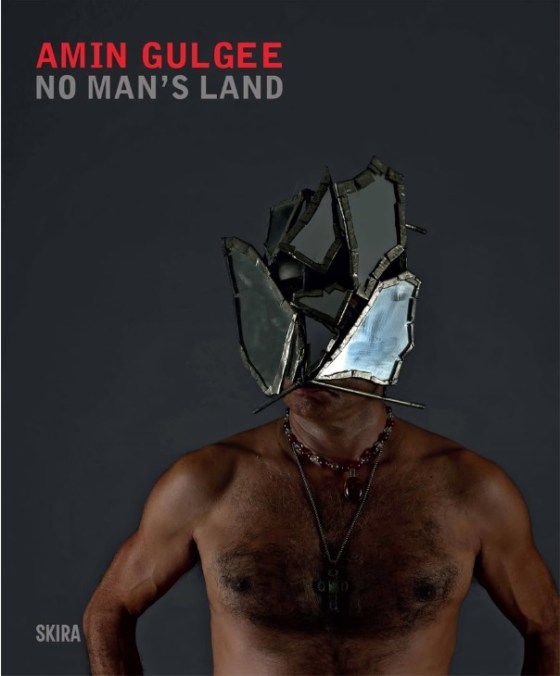
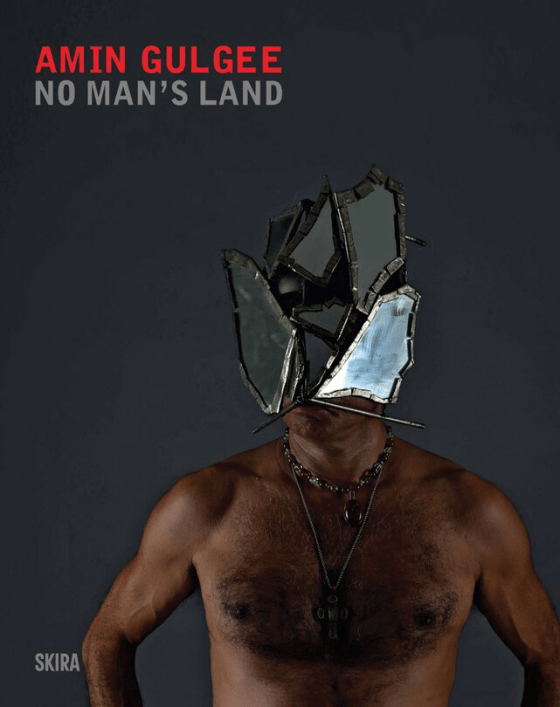
Front cover of Amin Gulgee’s “No Man’s Land,” edited by John McCarry, published by SKIRA, March 25, 2025, Hardcover, 416 pp.
Simerg: How did you find a publisher for this book?
Gulgee: I was introduced to the prestigious publication house Skira, based in Milan, by the late Italian curator Paolo de Grandis. I was well aware of Skira because they had published books on Picasso and Matisse, among many other artists. I had known Paolo since 1998, when I first participated in “OPEN”, an exhibition of installation and sculpture that he established in Venice. Later, in 2017, when I was appointed Chief Curator of the inaugural Karachi Biennale, I invited him to be a guest curator. He included works by Yoko Ono and Michelangelo Pistoletto, among others. In 2018, he and Claudio Crescentini curated my solo shows at the Galleria d’Arte Moderna and Mattatoio, both in Rome. When the book was nearing completion, I asked if he would know any publishers who might be interested in my monograph, and he suggested Skira. I sent them a few chapters and I was thrilled when they accepted to take the project on. I then collaborated with Skira’s team over the next seven months to finalize the project. They were all tremendous to work with.
Story continues below
__________________
Reflections on Amin Gulgee and his monograph No Man’s Land
“Both as a practitioner and as a curator Amin Gulgee’s storytelling is fluid, both creating and dispelling unease. Amin Gulgee explores the vastness of the Universe as the backdrop for those narratives…Contemplating spiritual goals, while confronting the insecurities and displacements of our existence, [he] calls for constant negotiation and inventiveness.” — Salima Hashmi, art historian and artist, in “Fearless,” an afterword to Amin Gulgee’s book.
~~~~~~~
“Amin Gulgee defies easy categorisation: he’s a metal sculptor, a curator, and one of Pakistan’s most innovative and cherished artists, the beating heart of his home city of Karachi’s creative scene. His metalwork is as dramatic and eccentric as Amin is. He’s in your face, uncompromising, a living and breathing performance piece” — Excerpt from BBC Documentary podcast, “In the Studio: Amin Gulgee — Heavy metal” (listen to podcast HERE).
~~~~~~~
“Amin’s art explores the unexpected. Whether it’s connections or the stories illustrated, he doesn’t follow a norm…Whilst being so different can pose its own challenges, instead, it makes Amin’s work deeply personal and unique to him. It’s also meant, from the start of his career, he’s had a strong sense of self-confidence in embracing uniqueness — Excerpt from “Amin Gulgee: Going against the norm” in The Ismaili.
________________
Simerg: Did you hire an editor or designer or did you do all the work yourself?
Gulgee: The editor of the book is John McCarry, who was a classmate of mine at Yale. He has written for National Geographic as well as many other publications. He has also published two other books. He is the coordinator of the Amin Gulgee Gallery and edits all its publications. I chose Kiran Ahmad as my designer, as she is one of the most sought-after book designers in Pakistan. I have worked with her many times in the past; however, this monograph was a truly daunting task. We spent over two years trying to make sense of my journey. Her perseverance and her commitment to her craft are commendable. Also, she can make me laugh!
Simerg: What inspired you to do this monograph?
Gulgee: The last time I saw my mother was on December 13, 2007. She had come over to my place in the afternoon since it was the birthday of Prince Karim Aga Khan IV. She brought with her a painting by my father, which she presented to me as a gift. “Look at this, Amin,” she exclaimed. “These are the colors of life!” She then sat me down and said, “I want you to do three things for me: one, give up smoking; two, do a book on your work; and three — I don’t remember now, but it will come to me.” She sadly never had the chance to state her third demand. However, in 2020 I had my last delicious cigarette, and in 2022, I decided to start working on my monograph.
Simerg: How long did it take you to complete your monograph and what were the difficulties?
Gulgee: I live in the moment and I do not like looking back. When I finally came to the decision to fulfill my late mother’s wishes, I was trepidatious. John and I had decided that we would approach writers and let them choose any angle of my trajectory that engaged them. We chose to reprint only two essays — the one by Oleg Grabar and another by Dr. Kishwar Rizvi, who is the Robert Lehman Professor in the History of Art, Islamic Art and Architecture at Yale University. The rest of the ten essays were to be new writing on my practice. We were both delighted by the essays that came in. As far as the images are concerned, since my trajectory began in predigital, archaic times, my early work was documented on slides. When I asked my young technical advisor how can I digitize them, he asked me, “What is a slide?” This, of course, made me feel like a dinosaur! But we got the painstaking job done. Then, there was the challenge of organizing my trajectory, which Kiran and I did in sections. It took two years and I am so very grateful for all the support I received along the way.
Date posted: April 22, 2025.
______________
Links to the Ismaili Authors’ Series (in chronological sequence, oldest article first)
Before departing this website please take a moment to review Simerg’s Table of Contents for links to hundreds of thought provoking pieces on a vast array of subjects including faith and culture, history and philosophy, and arts and letters to name a few. Also visit Simerg’s sister websites Barakah, dedicated to His Highness the Aga Khan, and Simergphotos. Simerg’s editor may be reached via email at mmerchant@simerg.com.
“In my calligraphic work, I use one line from the Quran. I repeat it over the years. The line in this work is from the Iqra Ayat, which states ‘God taught man what he did not know’ in the naskhi script. This is a line that I have used repeatedly over the last three decades. My challenge has been how to translate it into sculpture.” — Amin Gulgee
By ANIZA MEGHANI
Algorithm II, 2015, Copper, 37.7 x 29.2 x 31 inches. Artist: Amin Gulgee.
No one can miss Amin Gulgee’s home from a distance with its rooftop adorned with a mosaic of mult-coloured glass, tile and terra cotta. No doubt a tourist attraction. As I entered Amin’s gallery on the ground floor, I was stepping into a world of pure copper sculpted into Quranic words. When sunlight caught his sculptures, they reflected shadows on the walls that seemed to dance in spiritual twirls. We made our way to his living room on the first floor, up the steel staircase with copper railings, designed by the artist himself. I noticed a photograph of his late father’s lapis mosaic portrait of Sir Sultan Mahomed Shah hanging on the wall just before we entered his private quarters.
Amin told me a story about this piece: “That was one of my father’s works from the 1970s,” he said. “I grew up with it. I remember one day when I was a kid, the Aga Khan came to our house in KDA. He spent time with my parents, and he loved the portrait. Of course, my father said, ‘Your Highness, we will gift this to you.’ Imam responded, ‘No, you will not gift this to me. You must tell me how much you are charging for it.’ I remember when my parents took the mosaic portrait to the Aga Khan, they were feeling sad about parting with it. But what I truly remember most was that the Aga Khan refused to accept it as a present. How fantastic is that? Imagine the respect he had for the artist and his work!”
As I sat and drank mid-morning ginger tea, I could see from Amin’s balcony the courtyard that connected his home with that of his late parents. His parents, of course, were the renowned artist, Ismail Gulgee, and his wonderful wife, Zaro. How I miss them dearly! Here I was, once again, at his home, reflecting upon a family friendship that has spanned over three decades.
I met Amin when both father and son had a joint exhibition at the Ismaili Centre in London in 1994. Zaro-Aunty took my hand and walked me across the social hall, where Amin was surrounded by his sculptures and a display of his handmade jewellery. She proudly introduced me to him. “Aniza, this is my son, Amin; he is an artist, too. He makes sculpture.” I was drawn to his jewellery and nickel-plated copper sculptures in kufic with large crystal stones set within. Tall and handsome, with shoulder-length hair, he showed me his beautiful collection.
Now as I sat in his living room, reflecting on that day, I was mesmerised by his father’s work adorning the walls and wondered whether Amin’s own creativity had been sparked by it. My mind raced with this and many other questions.
Perforated Egg, 2018 Copper, 27 x 16 x 16 inches. Artist Amin Gulgee.
Amin was born in Karachi, Pakistan and studied at the Karachi American School from kindergarten to the twelfth grade. He went on to do his bachelor’s degree from Yale University in the United States. I asked whether he was inspired to study art history because of his father. He replied, “Although both my parents were liberal, they didn’t want me to be an artist. I agreed with them as I saw how difficult the life of an artist can be. I didn’t think I had the courage to be an artist. Wishing to be the good South Asian boy, I majored in economics at Yale.”
However, when his classmate Dominique Malaquais took him for his first art history class freshman year, it was the beginning of a journey that made him realise that this is what he wanted to do. Economics was simply too “boring” to endure! This art history class was a study of Baroque gardens, which inspired him to take even more art history classes and to pursue a double major in art history and economics. He wanted to write his senior thesis on Moghul gardens, but at that time it was “problematic”, as there was no Islamic art history department at Yale. He was advised to do his thesis on European gardens instead, but Amin’s heart was set on writing about the Shalimar Gardens in Lahore, constructed by the Moghul Emperor Shah Jahan between 1641 and 1642.
Char Bagh II, 2003, Copper, 37 x 37 x 35 inches. Artist: Amin Gulgee.
With help from his late father’s connections in the art world, Amin was introduced to Dr Oleg Garbar, the renowned authority on Islamic art and Harvard’s first Aga Khan Professor of Islamic Art and Architecture. Dr Garbar agreed to be Amin’s secondary advisor. (His primary adviser at Yale was Dr Judith Colton, an expert on European gardens of the 17th to 19th centuries.) Amin’s senior thesis, “A Walk Through Shalimar: A Char-Bagh Garden of 17th Century Mughal India Seen as a Manifestation of Imperial Divine Right”, went on to win the Conger Goodyear Fine Arts Award from Yale’s art history department.
Amin was spiritually drawn towards exploring Islamic art as a result. A new journey of his life began when he embarked upon a career not as a painter like his father, but as a sculptor. I asked him if he kept his first art piece. He emphatically replied, “No! I am not sentimental!”
I was curious about what gave him inspiration to create his artwork. He explained, “All my work is personal. Everything relates to me at a certain point in my life.”
Iqra
I wanted to further explore his creative mind, how art evolves within it. What made him tick? Did he get up in the middle of the night to sketch out an idea, or write it down? Where did it all come from? So, I pointed to a tall sculpture. Amin talked me through it: “In my calligraphic work,” he explained, “I use one line from the Quran. I repeat it over the years. The line in this work is from the Iqra Ayat, which states ‘God taught man what he did not know’ in the naskhi script. This is a line that I have used repeatedly over the last three decades. My challenge has been how to translate it into sculpture. I like the idea of repetition. For me it becomes intellectually, aesthetically and conceptionally challenging to keep the same line in the same script, but to vary its physical form. I explored this idea in a solo shown that I called ’7’. I chopped the line into seven portions and rearranged them. There was nothing legible anymore as the letters were no longer in their original order. ‘7’ was co-curated by the late Paolo De Grandis and Claudio Crescentini and was held at the Museum of Modern Art in Rome, a short walk from the Spanish Steps. My installation was shown in the courtyard of the museum, which had once been a cloister.”
I asked him why he was drawn to this particular Quranic line. He replied, “It’s personal. It’s spiritual and I do not wish to share this. You must remember it’s private for me.”
I respected his answer. As in life, spiritual moments are personal and cannot be shared. I kind of understood. Correction: I understood him totally.
Cosmic Chapati, Unknown Centre, 2011, Copper, 35 x 35 x 2 inches. Artist: Amin Gulgee.
~~~~~~~
Another line Amin has used repeatedly is from the Surah-e-Rehman, which asks, “Which of the favours of God can one deny?” in new style kufic. (He has not created a work around this since 2008, however.) In this series as well, you can no no longer read the line. Amin explains, “You can only read the text in sculptures where I use the phrase Al-Hamdulillah (Praise be to God), which I render in the square kufic script. These are geometric, architectonic works.”
Amin stopped making his art jewellery in 2007. Although he called it jewellery, these gold-plated organic forms embellished with crystal and semi-precious stones were more like wearable sculpture. There was a relationship between his jewellery and his larger sculptures as he sometimes used these smaller works to work out ideas that might develop into bigger pieces. These were his sketches, in a way.
Embrace, 1999, Copper and rock crystals, 34 x 25 x 24 inches. Artist. Amyn Gulgee.
We got talking about Amin’s work as a curator. It began, he said, in the late 1990s, when he curated an art festival at the Sheraton Hotel in Karachi (now the Mövenpick). In the old days, the lobby was a place where young people used to hang out drinking coffee all day, “trying to be fancy”, as Amin put it. Being a semi-public space, it appealed to Amin as a venue to organise an exhibition that he would call Urban Voices. Amin curated four iterations of the group art show, which juxtaposed the work of recent graduates from the city’s art schools with that of established artists. The money generated from the sales of the artwork from these events went towards a scholarship at the prestigious National College of Arts in Lahore.
Rung I, 1994, Copper, rock crystals, and glass, 24 x 15 x 9 inches. Artist: Amin Gulgee.
In 2000, Amin inaugurated the Amin Gulgee Gallery on the ground floor of his newly built home in Clifton, a seaside neighbourhood. About once a year, he has opened up the space for large-scale, thematic shows of his contemporaries. (John McCarry, whom Amin met at Yale, is the coordinator of this artist-led space.) Amin explained, “Lahore is where all the art institutions are. Karachi is where the commercial galleries are. We wanted to do exhibitions without any kind of commercial point of view.”
The Bird Rickshaw, 2004 Copper, 84 x 100 x 42 inches. Artist: Amin Gulgee.
Having had many years of experience curating shows, Amin was approached in 2015 by Niilofur Farrukh, now the CEO of the Karachi Biennale, who asked him whether he would like to be the Chief Curator of its first edition in 2017. Amin readily accepted the challenge, despite the nascent biennial’s severe lack of funding. Amin began the task of creating a team of Karachi-based millennials, none of whom had any experience in curating a large art event. It included Zeerak Ahmed, Humayun Memon and Sara Pagganwala, all of whom had their own art practices.
The team worked collectively and tirelessly. With minimal financial backing but huge ambitions, the team was able to gather 182 artists from around the world, including Yoko Ono and Michelangelo Pistoletto, a key figure in Italy’s Arte Povera movement. There were twelve locations throughout the city to show their work. The whole process took two years. Six months prior to the opening, Amin invited Zarmeene Shah, who is now the director of graduate studies at the Indus Valley School of Art and Architecture in Karachi, to come on board in an advisory role as curator-at-large. The biennial –Pakistan’s first — was no easy task, but Amin and his team pulled off an outstanding event.
Perforated Wall I, Love Letter. 2014, Copper, 24 x 12 x 1 inches. Artist: Amin Gulgee.
I asked Amin how he envisions the future for artists in Pakistan. He replied, “I was born in the art scene. The scene has become much bigger now. I wish my parents were alive to see it! Now there is a Lahore Biennale as well as a Karachi Biennale. When I did my first show, there was only one gallery of note, Ali Imam’s Indus Gallery. Now we have more than 50 galleries in Karachi alone.” Amin is expanding his non-commercial gallery while also renovating his father’s adjoining museum. When I visited in May of 2024, building work was still in progress. The din of construction resounded in the connecting courtyard below. The aim is to open his parents’ former home as a small, private museum in 2025.
Amin has also been busy compiling a monograph on his work. It will be published in the spring of 2025 by Skira, a Milan-based publisher of art books that has brought out books on Picasso and Matisse as well as of important contemporary artists. Amin commented, “It’s a real honour for me that they have chosen my book to print. I am not nostalgic or sentimental, therefore the process of looking back has been hard.” He added with a laugh, “I’m just so happy that the two-year process of compiling it is now coming to an end!”
~~~~~~~
Amin Gulgee
“I think it’s very important that we record our own history and not wait around for someone abroad to do it for us. We must take control of our own narrative. I put all my documentation on my website (www.gulgeeamin.com). It is all free and downloadable. You will find a whole section of catalogues, not only on my work but on my curatorial projects, which discuss a whole variety of issues.” — Amin Gulgee
~~~~~~~
Ascension III, 2018, Copper, 88 x 27 x 27 inches. Artist: Amin Gulgee.
This led us to the topic of documentation of Pakistani art in general. Every show he curates, whether at his gallery or elsewhere, is accompanied by either a physical or electronic catalogue, and often a video and webinar as well. “Documentation is extremely important,” he explained. “When I compile a catalogue of a show I’ve curated, I not only write about the artists and the exhibition, but I also invite outside writers to contribute essays about issues and concerns they have about Pakistan in general. So, these become free platforms to express ideas. For example, Niilofur Farrukh and I co-curated a show at my gallery on the 1970s in Pakistan. This led to a book called Pakistan’s Radioactive Decade: An Informal Cultural History of the 1970s co-edited by me, Niilofur and John McCarry that was published by Oxford University Press in 2019. After the secession of Bangladesh, Pakistan swung from democratic liberalism to Islamist military rule. Those early democratic years saw a boom in cultural expression, whether it was in the visual arts, literature, film or music. This book included essays as well as Q and As with Pakistanis who helped forge the cultural life of Pakistan in that most pivotal of decades. I think it’s very important that we record our own history and not wait around for someone abroad to do it for us. We must take control of our own narrative. I put all my documentation on my website (www.gulgeeamin.com). It is all free and downloadable. You will find a whole section of catalogues, not only on my work but on my curatorial projects, which discuss a whole variety of issues.”
The Iron Horn, 203, Iron, 71 x 77 x 24 inches. Artist: Amin Gulgee.
I asked Amin what advice he would give to someone wishing to be an artist today. He laughed his booming laugh and answered: “Choose something else, sweatheart! Being an artist is so difficult. It’s easier doing something else. However, if you really want to do it, then be prepared to pay your pound of flesh. Follow your dreams as you don’t know how long you are going to live. Just be prepared. It’s a strange, strange way of making a living.”
Has it been an enjoyable journey being an artist for him? Amin replied, “Aniza, I am free. I am grateful. I am now an old man! I have done exactly what I wanted to do in my life.”



 Simerg - Insights from Around the World