Simerg is an independent initiative dedicated to Ismaili Muslims, the Aga Khan — their Hereditary Imam — and the Ismaili Imamat, and Islam in general through literary readings, photo essays and artistic expressions
After an abnormally mild December across much of Canada, winter is finally coming with a bang across most regions of the country starting Wednesday, January 10, 2024. Temperatures in Edmonton, which has not seen any snow, and Calgary are expected to plunge to lows ranging between -16C to -32C!
The centuries-old apricot soup (Bataring Daudo) from Hunza is what you want on your dining table to warm you up during the winter season, and for that we have turned to Aysha Imtiaz’s special feature article on the BBC website. Aysha writes: “The deceptively simple soup, has been nourishing Pakistan’s Hunza community for centuries and is perhaps the purest celebration of the fruit and the Hunza ideology.”
Shahzadi, who runs the Hunza Food Pavilion in Karimabad, Hunza’s capital, says: “The Hunza diet is instinctively reliant on fruit — fresh in the summer and dried in the winter. Simple, fuss-free food [means a] simple, fuss-free life.” She adds: “This soup has been used for centuries because it wards off colds and is nutrient dense.”
Note: Dried apricots, one of the 3 ingredients mentioned in the recipe, are easily available from small and large grocery stores across Canada, the Bulk Barn being one of them. You will also find large varieties of organic dried apricots in ethnic stores around the country.
~~~~~~~~~~
The Apricot
The cure for a weakened heart is apricot, The medicine for a bad mood is apricot, Fresh or dried, don’t eat too much, Drink its juice when you don’t feel well. (ode from With Our Own Hands, page 245).
~~~~~~~~~~
IN THE PAMIRS, THE APRICOT IS A SECOND FRUIT FROM PARADISE
The following piece by Tahmina Saodatkadamova is excerpted from the beautiful volume With Our Own Hands by Frederik van Oudenhaven and Jamila Haider. The unique award winning book was featured in Simerg a number of times, and reviewed by Nairobi’s Shariffa Keshavjee. The book was a sell-out on our website when we offered it to our readers on two occasions.
By TAHMINA SAODATKADAMOVA Dean of the Faculty of Biology, Khorog State Univeristy
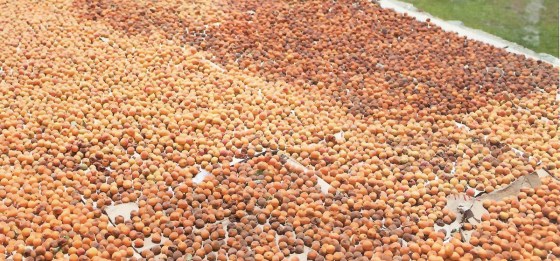
Also from paradise according to local lore, the apricot is the Pamirs’ second fruit [after mulberries]. Where mulberries speak of necessity and ‘bread’, the apricot is the luxurious topping, very much a sign of wealth. Not very different from its role in the diet of the people of Hunza who use the fruit, its seed and oil in many different dishes and who attribute the near-mythical age to which they live to its many qualities, apricots play a very significant role in the food of the Pamirs.
More than 300 varieties, many of the unique to the Pamirs, have been identified by scientists.
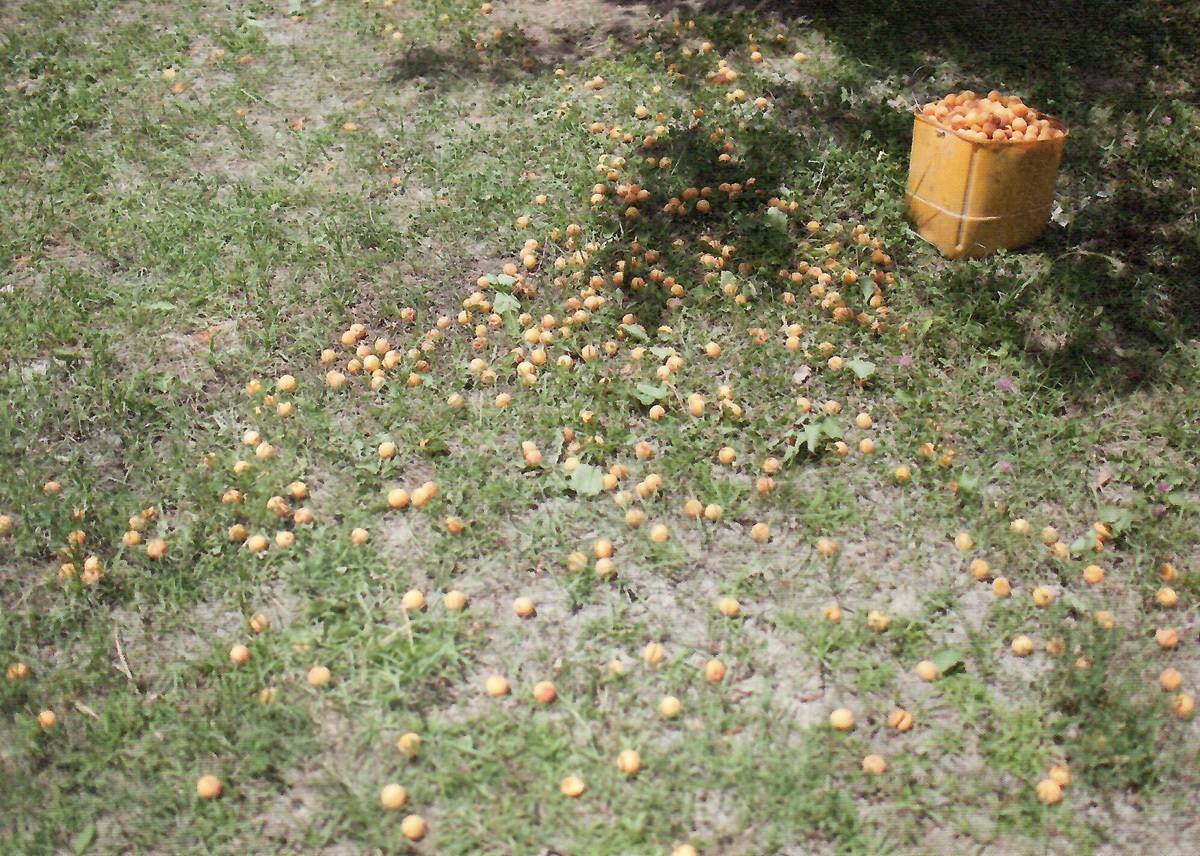
Judging from wood fragments found in Stone Age graves, it is possible that the first apricot trees that arrived, thousands of years ago, took root as wild trees and were eventually brought into cultivation by the farmers of the Western Pamirs. Even now, groves of wild apricot trees can be seen on dry mountain slopes among enormous boulders. Of all the fruit trees in the Pamirs, they are best able to withstand drought.
In the Pamirs, apricots grow at altitudes of 1,600 to 3,000 metres above sea level. Here, the strong rays of the sun, the stark cold, the dry air and soil, and the care of many generations of farmers have made the apricot unique. Like mulberries and other fruit and berries growing in these mountains, the apricots are filled with flavour and are rich in vitamins and antioxidants. This is why local fruit varieties play such an important part in Pamiri folk medicine.
February 14th, Valentine’s Day, and Mother’s Day are the most significant days for the flower industry. Still, there is almost an entire season — and not just a day — in Canada and the USA where the pumpkin remains the king in indoor and outdoor markets and at numerous events celebrating corn and pumpkin harvests. In fact, Calgary and other cities acround Canada including Edmonton, Milton, Burnaby and Ottawa are hosts to “Pumpkins After Dark“, Canada’s award-winning outdoor fall event that feature over 10,000+ hand-carved pumpkins.
The pumpkin is associated with Thanksgiving in Canada (2nd Monday in October) and the USA Thanksgiving (4th Thursday in November), and is one of the most popular desserts served during the holiday. In between, on Halloween Day, October 31, pumpkin heads are put to scary uses through creative works of art. Aside from the pumpkins’ use in decorations and artistics works, the fruit is used in restaurants in North America, such as Starbucks, Tim Horton, McDonalds and many others for special pumpkin chais, coffees and desserts.
Story continues below
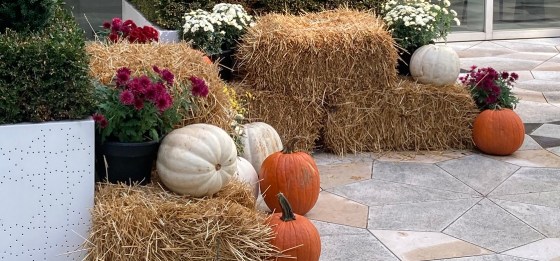
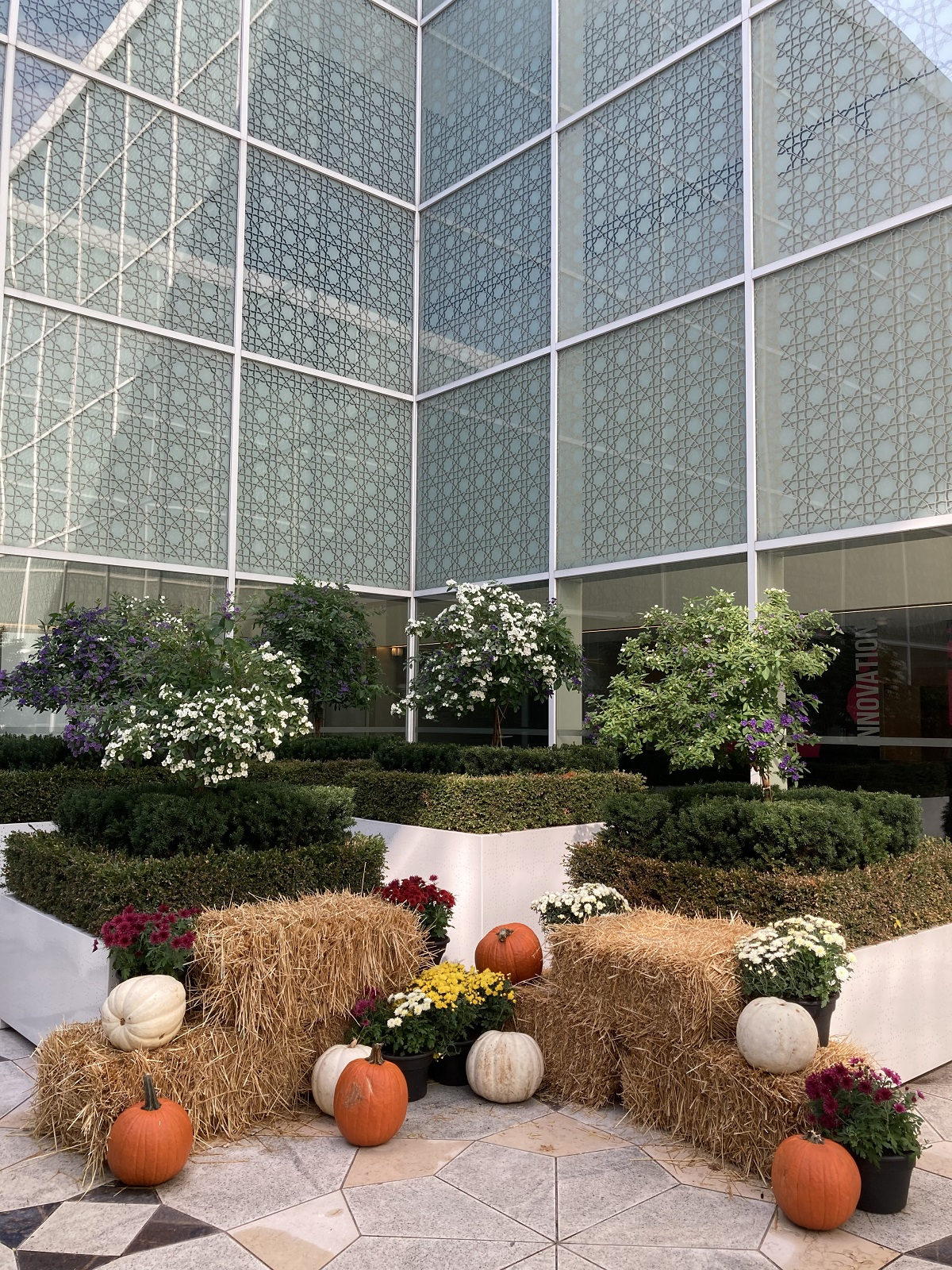
Aga Khan Museum Toronto Courtyard decorated with pumpkins, October 23, 2020. Photograph: Malik Merchant / Simerg.
My real interest on the health benefits of the pumpkin was drawn when I saw the large fruit decoratively laid out at the Aga Khan Museum’s coutyard during the pumpkin season some three years ago. I then wondered whether the fruit was mentioned anywhere in Islamic literature and, to my amazement, I read that the Prophet Muhammad (may peace be upon him and his progeny) was fond of pumpkins. I am pleased to include a small selection of adaptations from readings that I found.
“I saw the Prophet being served with soup and containing gourd (pumpkin or squash) and cured meat, and I saw him picking and eating the pieces of gourd.” — Bukhari Volume 7, Book 65, Number 348.
It is related that a sailor once invited Prophet Muhammad to eat some food that he had prepared. Anas bin Malik, a companion of the Prophet, noted that the Prophet was served barley bread and a soup with pumpkin in it. The Prophet keenly ate the pumpkin around the dish, and from that day Anas made it his favourite food. Traditions also note that whenever a a dish of bread, meat and broth was presented to the Prophet and it contained pumpkin, the Prophet would pick up the pumpkin because he really liked it, and made the heart strong. Other Muslim traditions note that the pumpkin increases brain function and brain strength.
Ibn Ridwan, in a medical treatise written during the Fatimid period, recommended the pumpkin as a diet for healthy living along with several other fruits and vegetables such as celery, carrots, lentils and cucumbers.
Interestingly, there is also a general consensus among researchers and scholars about the Arabic word yaqteen that is mentioned in the Holy Qur’an. They say that it refers to the pumpkin — a food that nourished and helped heal Prophet Yunus, after he was cast into the wilderness while he was sick (see Qur’an, 37:144-146, at Corpus Quran English Translation).
The website healthline mentions that pumpkin is rich in vitamins, minerals and antioxidants, and is incredibly healthy. Moreover its low calorie content makes it a weight-loss-friendly food. It goes on to add that “its nutrients and antioxidants may boost your immune system, protect your eyesight, lower your risk of certain cancers and promote heart and skin health.”
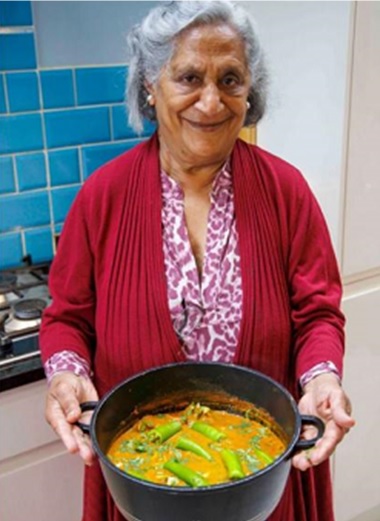
Khatoon Noonan presents her dish “Pickling Mutton Curry” which won Cook for the King competition to celebrate the coronation of King Charles III. Photograph: University of the 3rd Age (u3a).
By SHIRAZ PRADHAN (special to Simerg)
During the Coronation of Queen Elizabeth II on June 2, 1953, Khatoon Noonan was in primary school at the small village of Kumi in Uganda. Being a British protectorate, Uganda had a public holiday and Kumi had a fair to attend and a village party to celebrate the Queen’s Coronation. During the party, Khatoon’s mother dearly called by all as ‘Maa’ had cooked her eclectic dishes for the invited dignitaries including the District Commissioner and local Saza Chiefs. Even in those days, Maa’s culinary fame was recognized far and wide, especially her pickling dishes.
Little had Khatoon dreamt that in the 21st century, in May 2023, she would have the singular accolade of being the winner of Nationwide “Cook for the King” competition to commemorate the coronation of King Charles III in her adopted home of London. Her mouth-watering winning entry is an epitome of Khoja Ismaili Fusion cooking.
Aptly named “Pickling Mutton Curry,” Khatoon cleverly blended fragrant and environmentally friendly spices and local ingredients with meat favoured by King Charles to encourage local farming community. These were some of the stringent requirement of the u3a competition. The judges, some of whom are from national TV and culinary talk-show, had rave reviews about her creation which has attracted national attention.
A career bio-chemist Khatoon was a natural cook, given her deep interest in chemistry. Her childhood interest in cooking were encouraged by observing her mother and two elder sisters in the kitchen, feeding a growing family of ten children, granny and a regular stream of travellers and guests who would drop-by (there being no eateries in the village or vicinity.) Besides the Khoja Ismaili cuisine from native Kathiawad, being the family staple, Swahili East-Africa costal and Gujarati vegetarian cuisines figured prominently in Khatoon’s family. This was rounded-off with adaptation of fragrant local, fresh Ugandan products which unlocked natural flavours a thousand-fold. Khatoon absorbed all this knowhow like a sponge.
Always a brand-ambassador of Khoja Ismaili cooking, Khatoon’s experimentation with fusion of Ismaili cuisine with other cuisine began when she attended the remote St. Mary’s Convent at Namagunga, Uganda, for her A-levels. The cheery-nuns were her companions and mentors and she started to blend Western and Middle-Eastern cuisines with her native Ismaili cooking. The results were stunning. The honing of these experimental efforts continued through her undergraduate at Makerere and later at Newcastle University where she was studying for her post-graduate in bio-chemistry. Uprooted from Uganda, Khatoon had to now adopt her cooking with English ingredients. But she was well-equipped with the skill-sets and this would set the stage for the later phase of her life.
Always eager to share her skill and cooking with other, Khatoon wrote several cook books, her magnum opus being, “My Life through Food”, packed with recipes handed-down from generation to generation but moderated with local ingredients to unlock the fragrance and aromas of meats and vegetables. She regularly runs a South Asian cooking demonstration classes in her kitchen under the umbrella of u3a (University of the Third Age).
The Crowning Jewel to Khatoon’s life came when she participated in u3a’s “Cook for the King.” All her skill, knowledge and years of experimentation came to fruition with her winning entry “Pickling Mutton Curry”, a simple enough dish fit for a King.
Date posted: May 7, 2023.
________________
Feedback
Simerg welcomes your feedback on Khatoon Noonan’s crowning achievement. Please click on Leave a comment. Your letter may be edited for length and brevity, and is subject to moderation.
About the contributor
Shiraz Pradhan
About the contributor: Shiraz Pradhan, in parallel with his work as an international engineering consultant, has contributed for several years to furthering religious education among the Shia Ismaili Muslim community in the UK, Canada, USA and Japan. He is the author of several articles published on this website and was a regular contributor to UK’s flagship Ismaili magazine, Ilm. Currently he is concluding the script of a full-length play of the 10th Century trial of the Sufi Saint Mansur al-Hallaj in Baghdad based on historical facts. He is also the Chairperson for the Association for the Study of Ginans (ASG), an organization that has in recent years established close collaborations with institutions around the world, hosted several Ginan conferences, online webinars and Ginan mehfils.
Further reading
u3a Cook for the King — a competition to celebrate the coronation of King Charles III — has crowned its winner. To celebrate the coronation, u3a members were challenged to create Coronation recipes Fit for a King, while considering sustainability and the UK’s partnership with the Commonwealth. The winner, Khatoon Noonan, drew on her Ugandan, Indian and British heritage to prepare the winning dish ….READ MORE
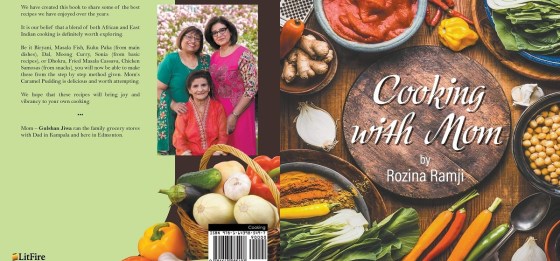
“Be it briyani, masala fish, kuku paka (from main dishes), dal, moong curry, sonia (from basic recipes), or dhokra, fried masala cassava, chicken samosas (from snacks), you will now be able to make these from the step-by-step method given. Mom’s Caramel Pudding is delicious and worth attempting” — Excerpt from back cover, “Cooking with Mom”, by Rozina Ramji
Simerg: What is behind the naming of the title of the book?
Rozina Ramji: To leave a legacy of my Mom’s cooking which the family has enjoyed for decades. Cooking has been a big part of our family culture and I have memories of the ladies (Grandmas, Aunts, and Mom) all cooking together, sharing techniques and conversing with each other. The cookbook was to cook with Mom and sharing time with her. I didn’t want to lose Mom’s recipes. The book is a great way to thank Mom and honour her and, thus, the title “Cooking with Mom.”
Simerg: Why would you want me or my family members to read the book, and what will we all learn from it?
Rozina: You’ll learn about the key recipes from African/Indian blend as well as common foods that are usually served in most homes that come from East Africa. With the step-by-step method to the recipe and the photos, anyone wishing to cook will easily create it.
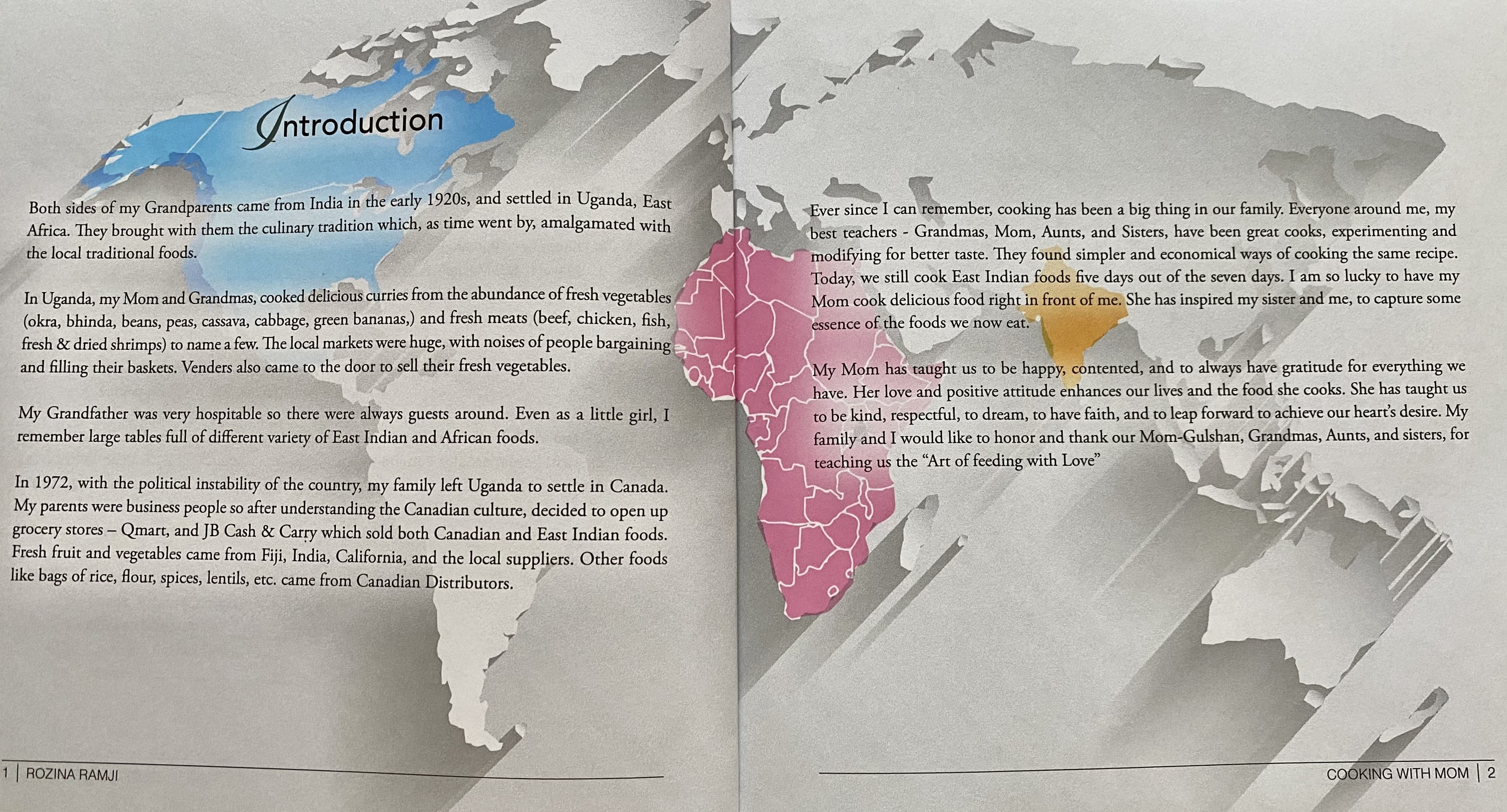
[The editor recommends that readers read Rozina Ramji’s beautiful and inspiring introduction to “Cooking with Mom” – see image, below, and click on it for enlargement]
Rozina Ramji’s introduction to “Cooking with Mom.” Photograph: Rozina Ramji, Edmonton. Please click on image for enlargement
Simerg: What inspired you to write Cooking with Mom?
Rozina: I remember my son and daughter asking me to make chicken samosas and shrimp curry that my Mom makes. I realized that it didn’t turn out like Mom’s. It’s at that point I decided I wanted to cook with Mom and learn about the ingredients, the steps to each recipe and any tips and tricks she could share.
In this way and with the backing of my children and other younger members of my family, I decided to write Cooking with Mom. It is fully illustrated, and I think even novices and those who find cooking somewhat daunting will be inspired to start cooking with the recipes I have provided in the book. I also invite expert cooks who specialize in other forms of cooking — Canadian, North American as well as ethnic — to explore and to try some of recipes that I have provided.
~~~~~~~~~~~~~~~
Article continues below
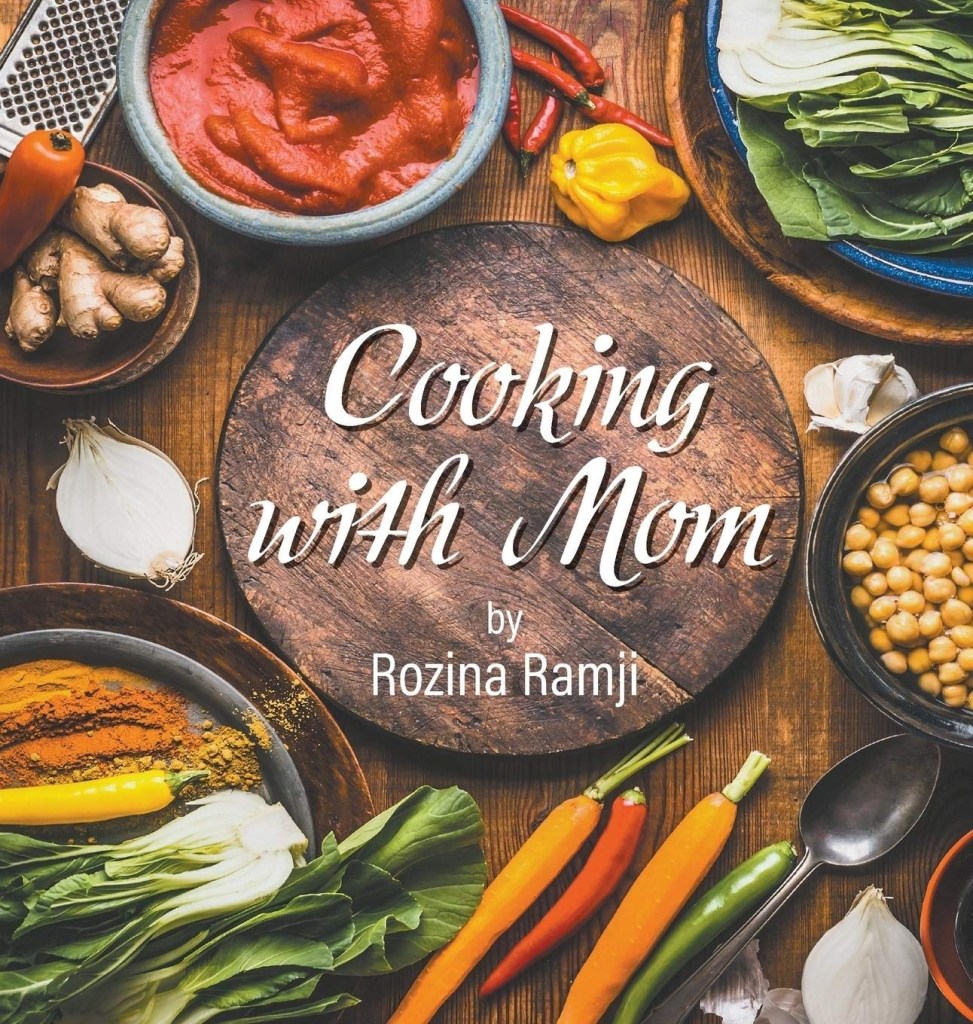
Cover page of Rozina Ramji’s book “Cooking with Mom.” Published by Litfire, September 2018, 122 pp. Available as paperback and hardcover.
Praise for Cooking with Mom
“The Cooking with Mom cookbook is one of the most interesting in my home library! The recipes are easy to understand, and the pictures are very helpful; they depict not only the finished dishes but also key steps in the preparation process. Packed with 41 recipes, the book is divided into 7 categories covering the gamut of Indian cuisine: main dishes, curries, rice dishes, east Indian bread, snacks, sweet things and drinks. I love the chicken biryani and my husband is wild about this particular recipe. My husband is not the most proficient person in the kitchen, but he did a credible job with the kheer (rice pudding.) We both enjoy Indian food and can’t wait to try out more of the recipes. Whether you’re an accomplished meal maker or a just a novice starting out in Indian cuisine, you won’t go wrong with this book!” — Joan Sinclair
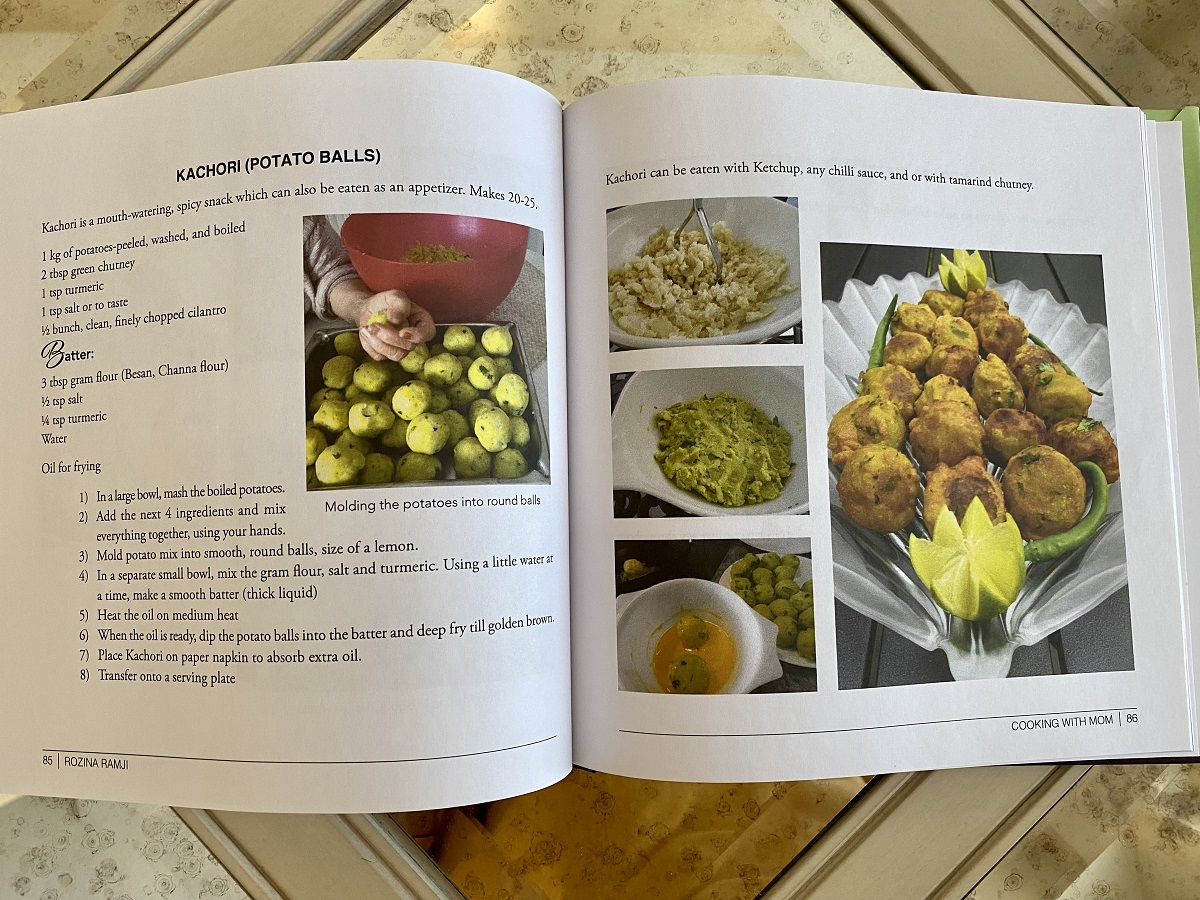
A 2-page spread from Rozina Ramji’s “Cooking with Mum” illustrating how to make the famous East African kachori (potato balls). Photograph: Rozina Ramji, Edmonton.
~~~~~~~~~~~~~~~~~~~~~~
Simerg: How can I purchase the book and what are its available formats?
Rozina: First of all, Cooking with Mom can be ordered directly from the publisher Litfire. You can also acquire it from major on-line stores such as Amazon, Indigo and Barnes and Nobles, among many other booksellers. The book is available both in paperback and hardcover.
Simerg: How did you find a publisher for the book?
Rozina: I was making inquiries about publishing and happened to talk to someone from LitFire publishing. They were very encouraging and told me about the support they provide. I felt comfortable.
Simerg: Did you hire an editor, an illustrator or did you do all the work by yourself?
Rozina: While I was cooking with my Mom, I took photos of everything and wrote down every recipe. Then the family tried to create food while following the recipe and asked questions. In this way, I tried my best to perfect the steps. My sister Bilkis along with my husband Alnasir helped with the book’s editing.
Simerg: Which was your first book and how many have you written?
Rozina:Cooking with Mom is my first book. I would love to write a sequel with other delicious recipes not included in the first.
Simerg: How long did it take you to write Cooking with Mom from start to finish and to begin marketing it?
Rozina: It took a year. I had been wanting to write a cookbook with Mom for several years but this dream only materialized in 2018.
Simerg: Tell us something more about your book.
Rozina: The cookbook has mouthwatering recipes that are not difficult to make like biryani, masala fish, dal, vegetable curries and then snacks like chicken samosas, dhokras, kebabs, sweet thaplas etc. Some drinks that are popular like kadho, lassi, sherbets and masala chai are also included. This is a book everyone will be able to follow, and those who do not cook will say that they now love to cook.
Date posted: November 11, 2022.
_______________
Get your own copy of Rozina Ramji’s Cooking with Mom. Order it from the publisher Litfire or other major on-line stores such as Amazon, Indigo and Barnes and Nobles. We welcome feedback from our readers. Please click LEAVE A COMMENT. Your letter may be edited for length and brevity and is subject to moderation.
_______________
ABOUT THE AUTHOR
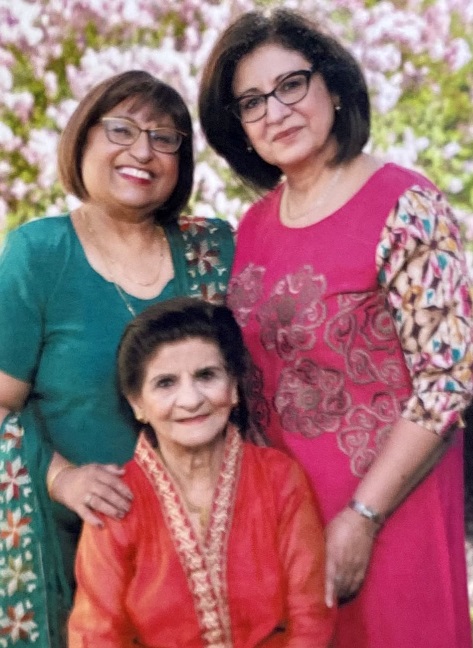
Rozina Ramji (left), and sister Bilkis Jiwa with their mom Gulshan Jiwa (centre).
Born and raised in Uganda, Rozina Ramji was pursuing her higher secondary education in the UK, when her parents, Pyarali and Gulshan Jiwa, were forced to flee Uganda following Idi Amin’s 1972 decree expelling South Asians from the country. Rozina’s parents settled in Edmonton and went on to open grocery stores that, among other items, sold ethnic groceries from around the world. Rozina joined her parents in Edmonton in 1973 and pursued a degree majoring in Education at the University of Alberta. She then commenced a long career in teaching with the Edmonton Public School Board, where she taught general subjects as well as math/science to students from SK to Grade 12. At the same time, she became engaged within her Ismaili Muslim community by volunteering in Ismaili institutions in numerous capacities, including giving Baitul Ilm (BUI) classes to Ismaili children and youth. Also, Rozina and her husband Alnasir were appointed to officiate as Kamadiani and Kamadia of the Edmonton Ismaili Headquarters Jamatkhana. She has two children; her son is a doctor while her daughter has completed her master’s program in Dispute Resolution. Indeed, it was at her children’s insistence that Rozina decided to write “Cooking with Mom” and she remains grateful to them for their inspiration.
______________
Calling all Ismaili Authors
We encourage Ismaili writers to introduce their books in a similar format as has been done in the post above. Please also see the series launch article and submit your responses to Malik at mmerchant@simerg.com. All submissions will be acknowledged. If a writer has published multiple books, each book will be highlighted in a separate article, and not combined with other books into one post. All writers should include a brief profile with a portrait photo.
_______________
Links to the Ismaili Authors’ Series (in chronological sequence, oldest article first):
Before departing this website please take a moment to review Simerg’s Table of Contents for links to hundreds of thought provoking pieces on a vast array of subjects including faith and culture, history and philosophy, and arts and letters to name a few. Also visit Simerg’s sister websites Barakah, dedicated to His Highness the Aga Khan, and Simergphotos.


 Simerg - Insights from Around the World