Simerg is an independent initiative dedicated to Ismaili Muslims, the Aga Khan — their Hereditary Imam — and the Ismaili Imamat, and Islam in general through literary readings, photo essays and artistic expressions
Nature — and some of the best in the world — is so close to Calgary. But it need not be just nature. In Drumheller, we have a magnificent dinosaur museum — the Royal Tyrrell, where you are genuinely illuminated about Dinosaurs and the Universe! Banff’s Whyte Museum of the Canadian Rockies has beautifully curated permanent and temporary exhibits. The Banff Arts Centre is a must-visit place for its art gallery and learning programs, concerts in the theatre and the amphitheatre located by the MacLab Bistro, which serves excellent food with stunning views of the mountains. This past week, I enjoyed taking a friend from Ottawa to Drumheller, Banff National Park and the beautiful Aga Khan Garden, part of the University of Alberta Botanic Garden, near Edmonton. Please click HERE or on the Horsethief Canyon picture shown below for photographs of our trip.
L to R: Nick and Heather from Syracuse, New York State, and Azli and Scott from Edmonton, Alberta, are pictured at the Storm Mountain Lookout Point after releasing my vehicle from deep snow and ice. They had the same smiles and warmth throughout the time they fought to get my car out of the snow — they never showed a moment of frustration. Their unassuming line was, “No worries”. March 9, 2024, Photograph: Malik Merchant/Simergphotos.
By MALIK MERCHANT
Who can spend 90 minutes of their precious time when they have to make it back home the same evening hundreds of kilometres away or fly the following day to their destination thousands of miles away? Moreover, they have unfinished sightseeing to complete during the remainder of a glorious afternoon. Two beautiful couples from Syracuse, New York, and Edmonton, Alberta, did precisely that as they devoted precious time and energy to helping me out of a mess I got into on the Bow Valley Parkway. Without their help, my trip to Banff, even with all the beautiful picture-taking I did, would have been in ruins and likely one I would soon wish to forget. Nick, Heather, Scott, and Azli made an act of kindness that I will never forget! READ MY STORY.
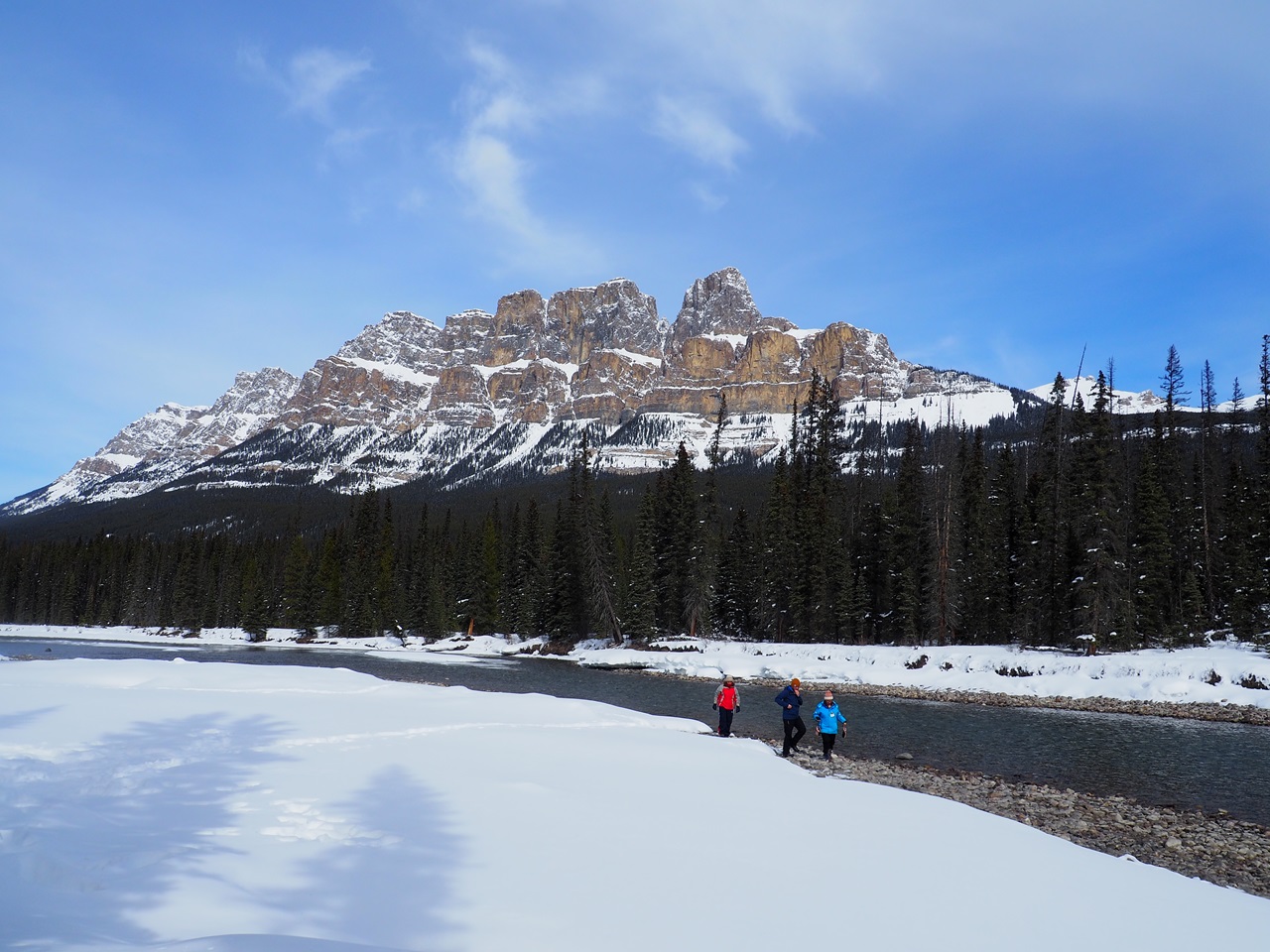
A view of Castle Mountain from the Bow River, where it meets Hwy 93 (Banff-Windermere Parkway). Please click on the photo for the story in our photoblog.
The University of Alberta’s 80 acre Botanic Garden in Parkland County near Edmonton, consists of cultural gardens, nature spaces, and other special collections. Having visited the Botanic Garden during spring, summer, and autumn, Malik Merchant decided to embrace the Botanic Garden’s call to visit the garden in winter. He spent hours walking around the Aga Khan and Japanese Gardens as well as the beautiful greenhouse rooms on Sunday, December 28, 2024. Please click HERE or on the photo below for Malik’s report and photographs.
The Talar buiding, Aga Khan Garden, January 28, 2024. Please click on image to view Malik Merchant’s beautiful photographs.
After an abnormally mild December across much of Canada, winter is finally coming with a bang across most regions of the country starting Wednesday, January 10, 2024. Temperatures in Edmonton, which has not seen any snow, and Calgary are expected to plunge to lows ranging between -16C to -32C!
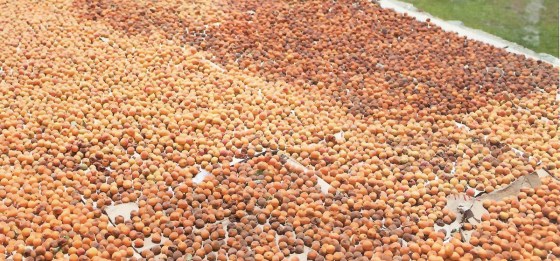
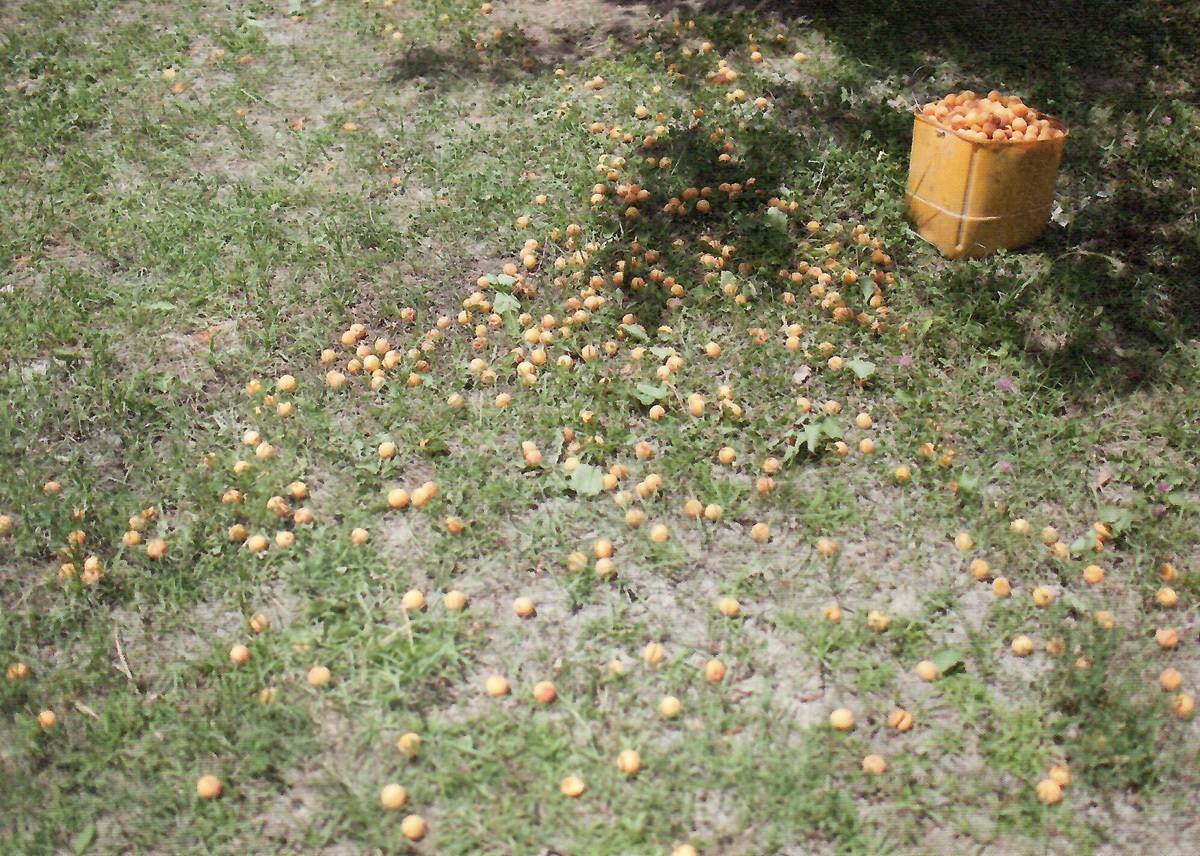
The centuries-old apricot soup (Bataring Daudo) from Hunza is what you want on your dining table to warm you up during the winter season, and for that we have turned to Aysha Imtiaz’s special feature article on the BBC website. Aysha writes: “The deceptively simple soup, has been nourishing Pakistan’s Hunza community for centuries and is perhaps the purest celebration of the fruit and the Hunza ideology.”
Shahzadi, who runs the Hunza Food Pavilion in Karimabad, Hunza’s capital, says: “The Hunza diet is instinctively reliant on fruit — fresh in the summer and dried in the winter. Simple, fuss-free food [means a] simple, fuss-free life.” She adds: “This soup has been used for centuries because it wards off colds and is nutrient dense.”
Note: Dried apricots, one of the 3 ingredients mentioned in the recipe, are easily available from small and large grocery stores across Canada, the Bulk Barn being one of them. You will also find large varieties of organic dried apricots in ethnic stores around the country.
~~~~~~~~~~
The Apricot
The cure for a weakened heart is apricot, The medicine for a bad mood is apricot, Fresh or dried, don’t eat too much, Drink its juice when you don’t feel well. (ode from With Our Own Hands, page 245).
~~~~~~~~~~
IN THE PAMIRS, THE APRICOT IS A SECOND FRUIT FROM PARADISE
The following piece by Tahmina Saodatkadamova is excerpted from the beautiful volume With Our Own Hands by Frederik van Oudenhaven and Jamila Haider. The unique award winning book was featured in Simerg a number of times, and reviewed by Nairobi’s Shariffa Keshavjee. The book was a sell-out on our website when we offered it to our readers on two occasions.
By TAHMINA SAODATKADAMOVA Dean of the Faculty of Biology, Khorog State Univeristy
Also from paradise according to local lore, the apricot is the Pamirs’ second fruit [after mulberries]. Where mulberries speak of necessity and ‘bread’, the apricot is the luxurious topping, very much a sign of wealth. Not very different from its role in the diet of the people of Hunza who use the fruit, its seed and oil in many different dishes and who attribute the near-mythical age to which they live to its many qualities, apricots play a very significant role in the food of the Pamirs.
More than 300 varieties, many of the unique to the Pamirs, have been identified by scientists.
Judging from wood fragments found in Stone Age graves, it is possible that the first apricot trees that arrived, thousands of years ago, took root as wild trees and were eventually brought into cultivation by the farmers of the Western Pamirs. Even now, groves of wild apricot trees can be seen on dry mountain slopes among enormous boulders. Of all the fruit trees in the Pamirs, they are best able to withstand drought.
In the Pamirs, apricots grow at altitudes of 1,600 to 3,000 metres above sea level. Here, the strong rays of the sun, the stark cold, the dry air and soil, and the care of many generations of farmers have made the apricot unique. Like mulberries and other fruit and berries growing in these mountains, the apricots are filled with flavour and are rich in vitamins and antioxidants. This is why local fruit varieties play such an important part in Pamiri folk medicine.
“That Which Defeats” (Kileme) is what the Wachagga people traditionally called Mount Kilimanjaro. Whereas the deceptively gentle slope of Africa’s highest elevation looks easier to climb than steeper peaks, it regularly defeats physically fit individuals equipped with 21st-century gear and supported by teams of guides, porters and cooks. 30,000 eager souls from around the world attempt to scale “Kili” annually but altitude sickness, dehydration, and exhaustion prevent many from reaching the summit. The dormant volcano’s most powerful weapon is psychological — it tricks the human mind into surrendering. Compared to the 90% success of those leaving from the Mount Everest Base Camp, only 45% from Kilimanjaro’s Base Camp make it to the top. Around ten people die on Kili every year.
In pushing themselves to their extremes climbers become sharply aware of their relationship with nature and life itself. The attempt’s enormous exertion involves an intense engagement of the entire human being — body, mind and spirit — regardless of whether one reaches the summit. The words of Aga Khan III, Imam Sultan Mohamed Shah, resonate with this experience:
“Struggle is the meaning of life; defeat or victory is in the hands of God. But struggle itself is man’s duty and should be his joy.”
Dedicated and persistent striving enables perceptions of deep, concealed truths about oneself.
Today, as I gaze at Vancouver’s North Shore Mountains, my thoughts turn back to December 1973 when Kilimanjaro itself taught me how to ascend it. Fifty years later, I still strive to understand the enigmatic experience during which the mountain forced a humbling introspection. Kili crushed my 17-year-old self’s delusions and repositioned my attitude towards nature to make the ascent possible. The event became a landmark on life’s uneven terrain and a point of re-orientation during times of difficulty.
Stumbling Upon Arrival
Eruptive activity 2.5 million years ago in the Great Rift Valley began forming the world’s highest free-standing mountain above sea level. Three volcanic cones, Kibo, Mawenzi and Shira, crown the colossus that geographically covers 1,000 square kilometres and from base to summit holds five eco-climatic zones (cultivation, forest, heather-moorland, alpine desert, and arctic).
Article continues below
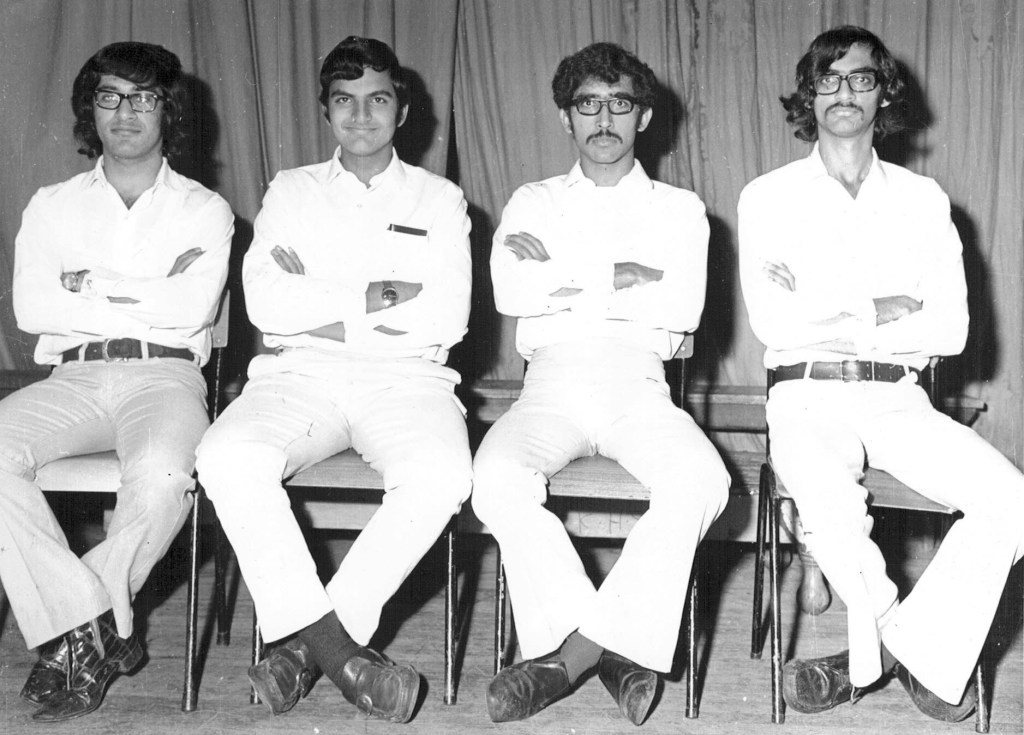
Students from Aga Khan High School, Nairobi, who attended the Outward Bound Mountain School of East Africa in 1973 and 1974. From left, Karim H. Karim, (author of this piece), Mahmud Mitha, Nashir Abdulla, and Amin Ahmed. Photograph: Karim H. Karim collection.
Mountains hold a universal mystique and to some, they beckon as a personal challenge. Aga Khan High School, which I attended in Nairobi, had held annual mountain-climbing trips for senior students, but these ventures had been discontinued by the time I reached the upper levels.
Some students looked to the Outward Bound Mountain School of East Africa, whose brochure said that its strenuous 23-day courses, including Kilimanjaro climbs, were “based on a spiritual foundation” and as an opportunity for self-discovery through self-discipline, teamwork and “man-management.” The school’s motto, “To Serve, To Strive and Not To Yield” is adapted from the line in Tennyson’s poem Ulysses, whose original wording reads: “To serve, to strive, to find and not to yield.” Ironically, it was “to find” that was vital to my Outward Bound experience.
Article continues below
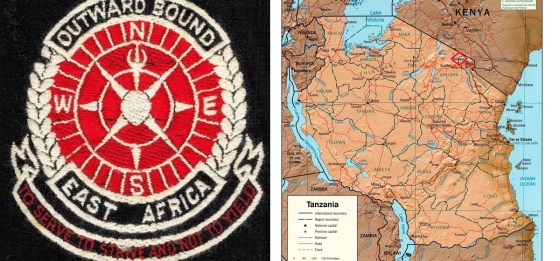
Outward Bound badge (left) with the motto “To Serve to Strive and Not to Yield” and Outward Bound pin. Photographs: Karim H. Karim collection.
Alexander Pope, another poet, famously remarked that “fools rush in where angels fear to tread.” How foolish I was, never having climbed so much as a hill or gone camping, to think that I would tackle Africa’s highest mountain. Whereas my athletic performance in my early secondary years had been above average, the high school’s physical education program was non-existent at upper levels. I had become used to the comfortable and spoiled life of a middle-class South Asian teenager in a household where African servants did most of the physical labour. Even the doctor who provided my fitness certificate to attend Outward Bound was somewhat skeptical, but that did not spoil my dream of reaching Africa’s summit.
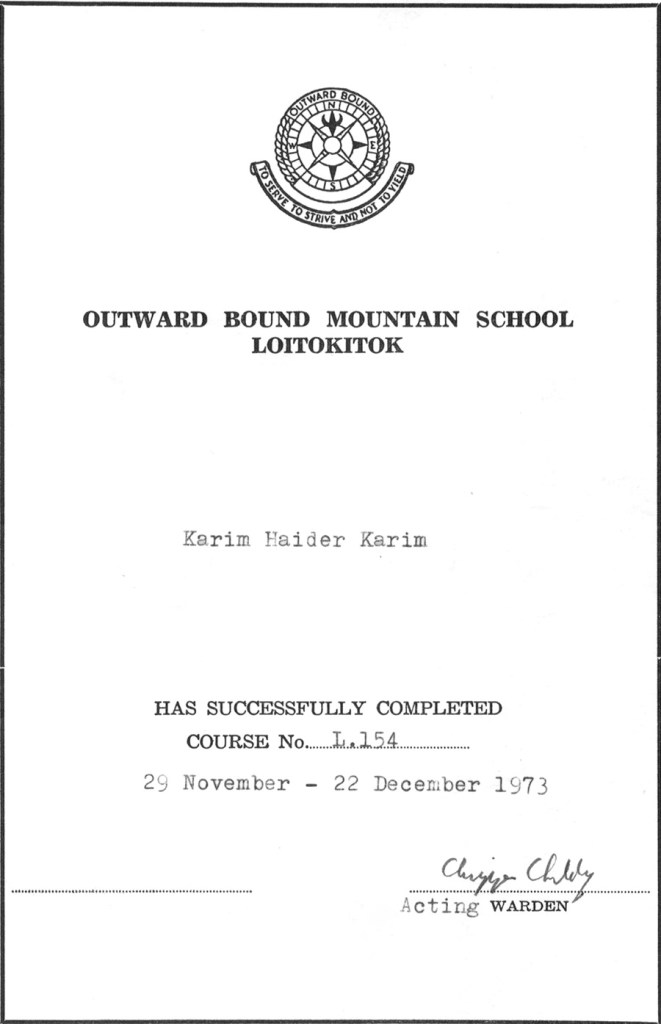
The Outward Bound campus occupied 27 acres on the Kenyan side of the Kilimanjaro rain forest near the small town of Loitokitok in Maasai country — a bumpy four-hour bus ride from Nairobi. Excited would-be mountaineers were dropped off for Course L154 held from November 29 to December 22, 1973. The contingent was met by instructors who told us to embark immediately on a cross-country run. I jogged along with the group but, after a while, could not keep up with the bigger, fitter colleagues. My lungs strained, and though I strove to push myself it wasn’t long before I found myself gasping on the ground. The goal to be at the mountain’s top had stumbled at its base. I looked up at Kilimanjaro and the large Kibo peak seemed to be mocking me.
Article continues below; click on map for enlargement
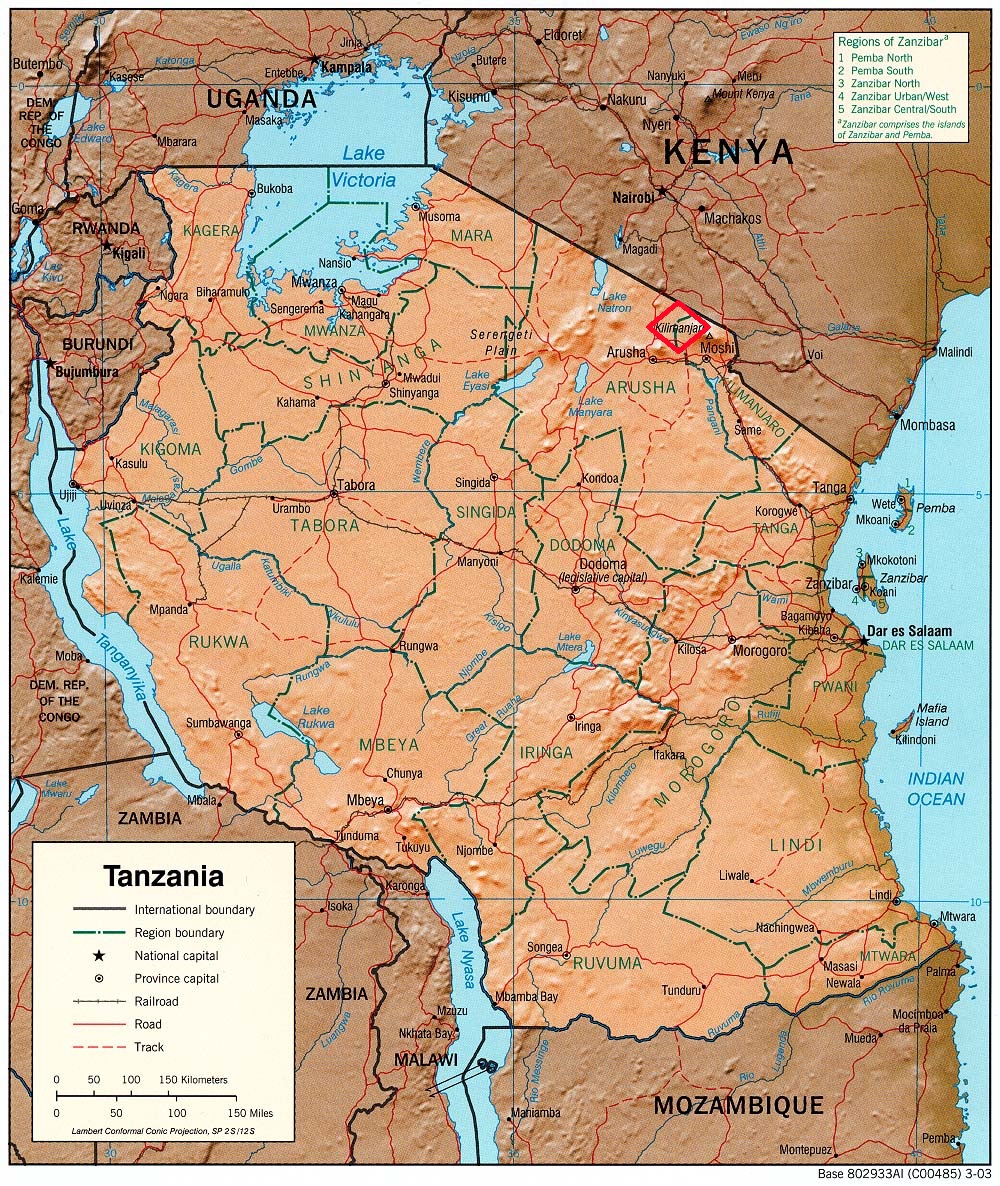
Tanzania map (Shaded Relief), 2003, Perry-Castañeda Library Map Collection. Simerg has added an annotation — the location of Mt Kilimanjaro in Tanzania is shown with an orange diamond. The mountain is very close to the Kenya border. The approximate distance from the small town of Loitokitok (not shown) in Kenya, where the Outward Bound Mountain School of East Africa was located, to Kilimanjaro is 140 km. Please click on map for enlargement.
Students were assigned dormitories according to designated “patrols.” Kenya, Uganda and Tanzania had been allocated 20 participants each, but something was lost in translation and the Tanzanian coordinator sent 60. Rather than send 40 back, the British warden decided to let all stay and the course was hurriedly reconfigured into two sections, whose activity schedules were staggered. Consequently, students in my section were given little preparatory training before they were sent up the mountain for the Solo Expedition. This did not bode well.
The Pangs of Failure
The course’s students were all Africans except for three South Asians and most of the instructors came from the US with a few from Tanzania and Uganda. Additional patrols were formed due to the unexpectedly large contingent and assistant instructors were put in charge of some patrols including mine. Participants were assigned responsibilities; I was appointed quartermaster, responsible for distributing supplies.
Article continues below
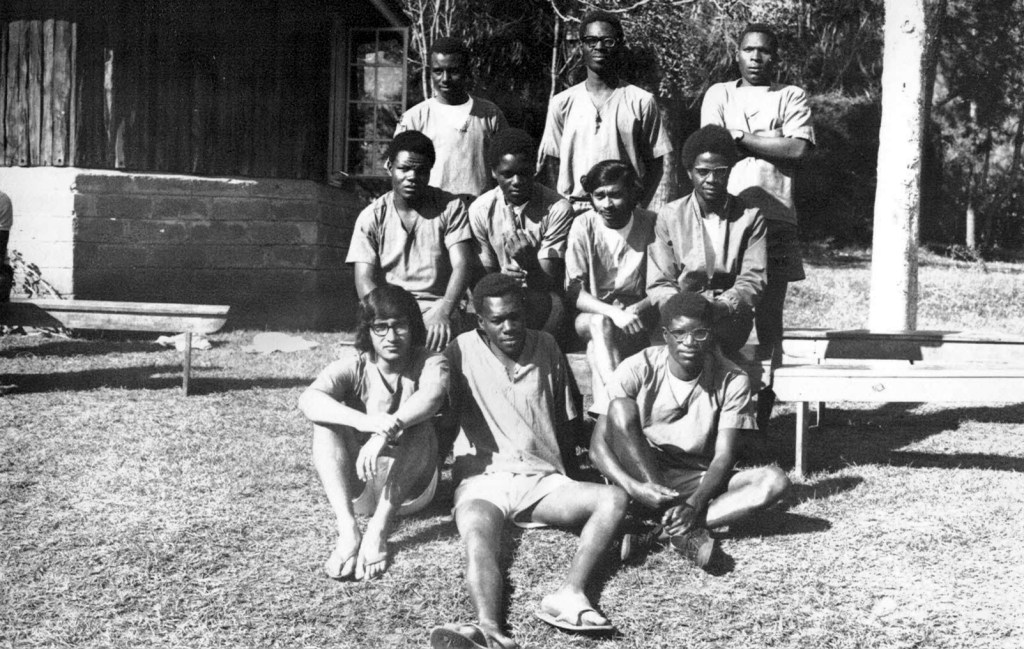
Group photo of the Nelion Patrol, with Karim H. Karim sitting at the bottom left. Photograph: Karim H. Karim collection.
The Solo Expedition involved a trek up to the altitude of 12,000 feet where each student spent a night alone on the mountainside. This major activity was normally scheduled for the course’s fifth day, but our section had to embark two days early. Nonetheless, we excitedly started our trek up Kilimanjaro, crossing the border into Tanzania, going past farms and into the rain forest. As the heat and humidity pressed on us in the early morning, a blur of black and white fur suddenly appeared on tall trees — it was a Colobus monkey swinging over us. We wondered how many other animals watched our contingent passing through their territory.
Vegetation became sparser and the air got thinner and cooler as we climbed higher into the heather-moorland zone. Rucksacks felt heavier at the sharper incline and feet began to slip on the rocky terrain. Most carried around 40 pounds of weight but I had unthinkingly over-packed mine and was taking frequent breaks, which slowed the patrol down. Then, without saying a word, one person took my bag and distributed several of its contents among the patrol as I, the quartermaster, sat on a rock feeling very embarrassed. (I learned later that such an experience was not uncommon in Outward Bound courses.)
The patrol reached its destination in the late afternoon. We were to spend the night alone on the rocky slope half a kilometre from one another. Each student had only a few food supplies, three matchsticks and a well-worn sleeping bag. The instructor designated our respective spots on the mountainside, and I resolved to put the day’s humiliation aside to make the best of the situation.
Article continues below
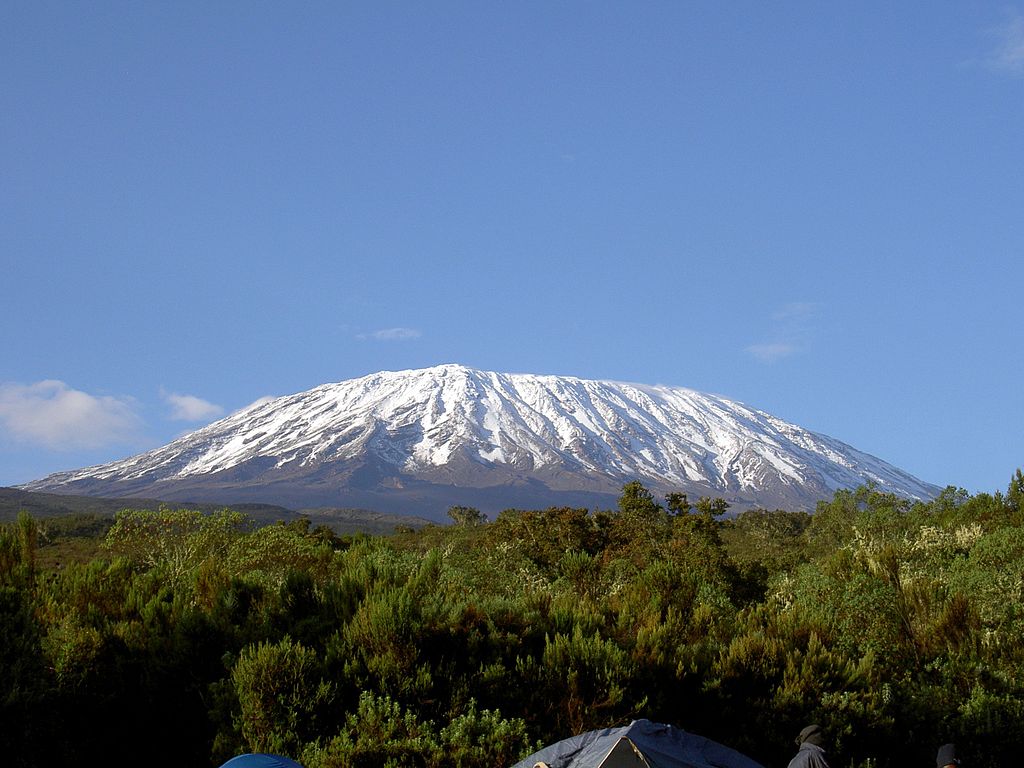
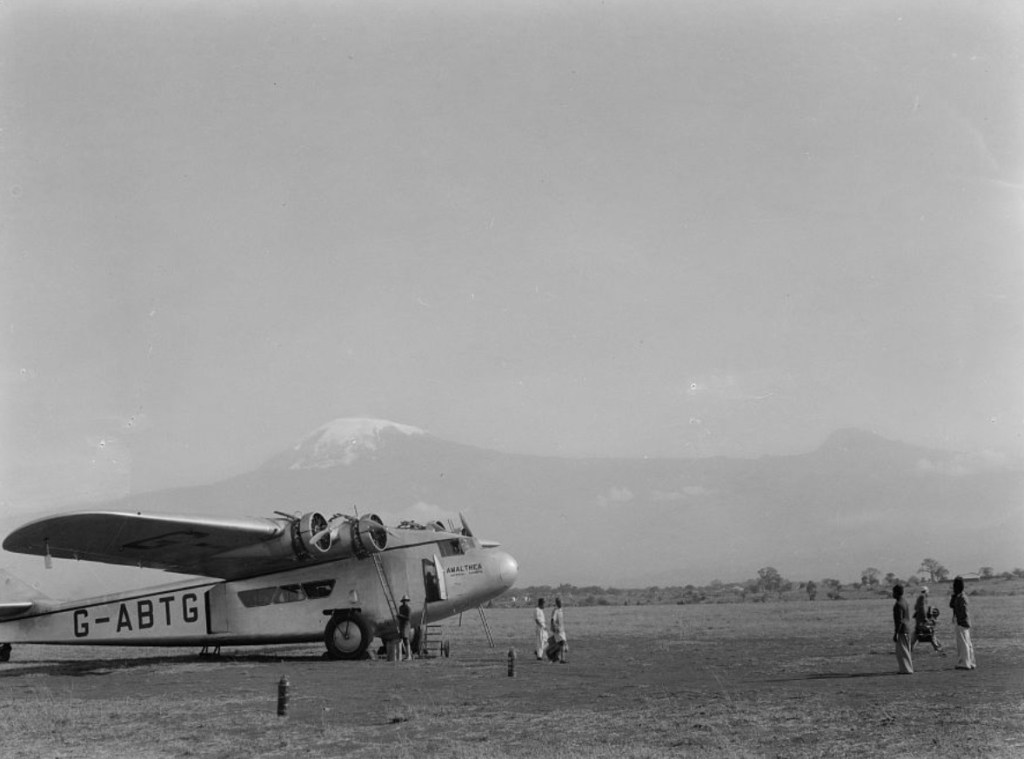
Snow-capped Kibo peak of Kilimanjaroat left with the Mawenzi peak at right, picturedin 1936 from a landing ground near Moshi, Tanzania (then Tanganyika). The plane was en route to Arusha. Photograph: Matson (G. Eric and Edith) Photograph Collection, US Library of Congress.
Looking upwards, Kibo’s snowy peak gleamed closer than ever before and on the other side was the vast mountainside sloping downwards. It was getting dark, and I set to gathering firewood. Never having made a campfire in my life, I diligently assembled a pile of sticks that would warm me in the night. With the wood and kindling arranged in a neat pile, the fire was all set to be lit. The evening sky was clear except for the small clouds that were swiftly riding up the mountain and through my small campsite. I struck the first match and put it to paper to start the fire. The flame fizzled out as soon as it touched the kindling. No matter, I told myself — there are two more left. The second match also went out at the paper. Only one remained. My hands trembled and I began to pray. But no success again. What went wrong? I realized that I had been foiled by the innocent-looking clouds that had moistened the kindling. My spirits dampened as I set to spend the night on the cold and desolate mountainside with no fire to warm me or my food. The hazy half-moon also gave no comfort. I looked up at Kibo and it seemed to be laughing at me again.
When the patrol reassembled the following morning for the descent, it became apparent that almost everyone had had a difficult time. We trudged downhill, arriving at the school late in the evening. My confidence was severely depleted, and I was overcome with a sense of failure. Many Outward Bound participants experienced mental distress at this stage of the course, but the possibility of escape from the isolated school was slim. The bus came to Loitokitok once a week and communication with the rest of the world was only by a ham radio in the warden’s office. “Warden” indeed! We had found ourselves to be in a prison.
Daybreak at the school began with a cross-country run followed immediately by a plunge into the freezing swimming pool. This rapid hot-cold transition increased the body’s haemoglobin to enhance oxygen intake at high altitude. Participants engaged for some two weeks in various forms of training and activities (which are amply described in the book Kilimanjaro Outward Bound by Salim Manji). The anticipation of the impending climb to Kili’s summit was constantly in our minds and from time to time, we stared at the peak in the distance, wondering about the challenges that it would hurl at us as we attempted to scale it.
The Final Expedition
Sixty students and instructors set out in the week before Christmas for the Final Expedition, taking the Rongai Route on Kilimanjaro’s northern face as we had for the Solo Expedition. Private sector package trips along this way took six to seven days. On Outward Bound’s schedule, the climbers carrying their own loads endeavoured to reach the summit on the third morning and return to the school after spending another day descending.
The course’s activities were designed to toughen students physically and mentally, but a sense of failure from the previous ascent weighed heavily on me. Nonetheless, the aspiration to make it to the top was still very much alive. I had figured out how to climb better and gained more confidence as we rose above the level of the Solo Expedition, but the going got harder as the oxygen thinned. Ultraviolet exposure at high altitude peeled the skin off my face. Objects looked and felt strange. The alpine desert zone, strewn with sharp-edged reddish rocks, appeared like terrain on Mars. An airliner flying near the peak to give passengers a closer view seemed like a surreal sight. I asked a senior instructor during a break whether it was physical or mental preparation that was more important for the climb. He replied that “mental fitness helps you draw on untapped physical resources.” I gazed at Kibo and it seemed to smile.
Article continues below
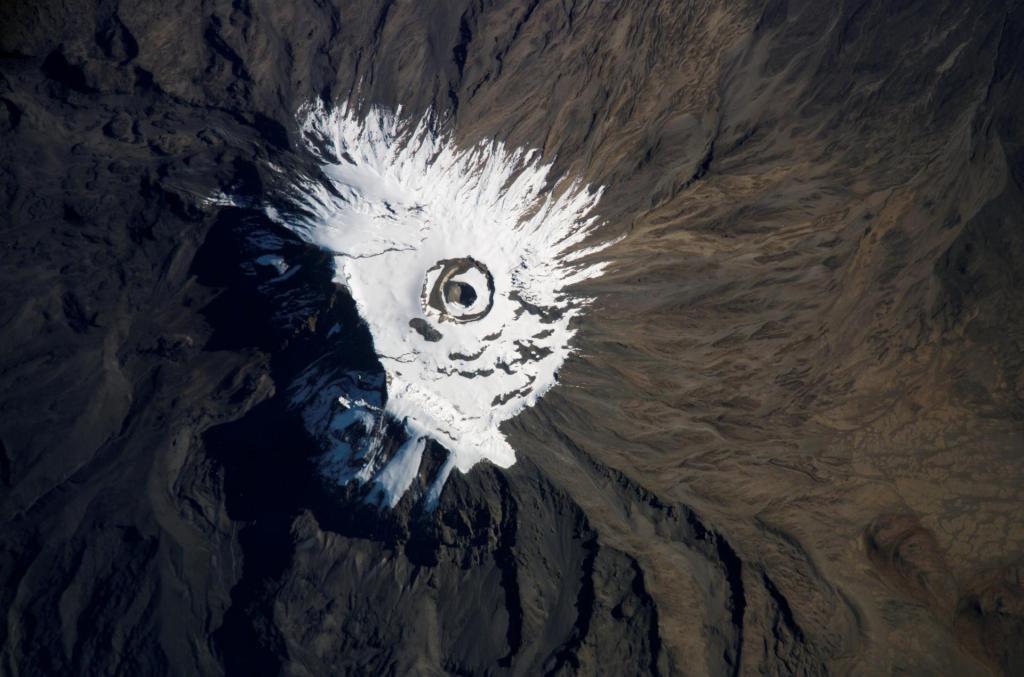
This image taken by EO-1’s Advanced Land Imager (ALI) on Jan. 20, 2017, shows snowcap of the volcanic Mount Kilimanjaro. Photograph: NASA’s Earth Observatory.
We reached the base camp on the second afternoon. The large, rugged Outward Bound Hut sat on the desolate rocky saddle between Kibo and Mawenzi peaks at 15,469 ft (4,715 m), where the barren environment’s only visible life was our group. It became dark and cold quickly as the sun passed behind the mountainside, which was now an enormous presence. We slipped into our sleeping bags early as the remaining 4,000 ft ascent was to begin at 2 am. It seemed that we had hardly slept when the instructors roused us. I noticed in the dim light that some water that had spilled from a container near my head and had frozen on the floorboards.
Scaling at nighttime is a vital tactic to improve the chances of reaching Kibo’s summit. Many climbers fail because the slope’s convex shape makes the summit seem closer than it really is. The mountain’s cap remains hidden by the terrain’s curve and as hikers approach what they think is the top they realize that there is more to go. The disappointment hits people repeatedly, and they feel increasingly disheartened. It is in this way that Kili mentally defeats many able mountaineers who make it this far. Attempting the final ascent in pitch dark helps prevent climbers from succumbing to Kibo’s deception.
It was impossible to walk straight up the slope as feet sank into screes — the masses of loose, little stones that cover the peak — so we snaked on the slope in long zig-zag lines. After some time, several colleagues began to fall prey to severe altitude sickness, dehydration, or exhaustion and were forced to turn back. Others pushed on. We had been hiking for four hours under the starry sky when it started becoming brighter and the sun inevitably rose. Looking up, we saw the visible edge of the mountain meet the sky and imagined that we were close to the summit. But this was a mirage: despite walking on and on we would just not arrive. The curve ball that Kibo was throwing at us played havoc with our minds and deeply frustrated climbers surrendered one after another.
Article continues below
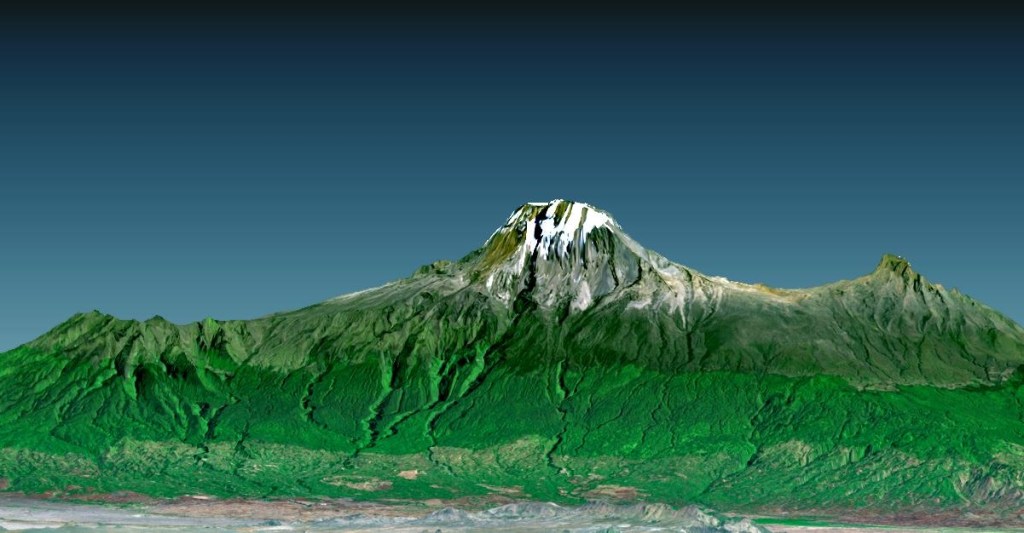
This 3-D perspective view of Mount Kilimanjaro was generated using topographic data from the Shuttle Radar Topography Mission (SRTM), a Landsat 7 satellite image, and a false sky. The topographic expression is vertically exaggerated two times. Landsat has been providing visible and infrared views of the Earth since 1972. Date Acquired: February 21, 2000 (Landsat 7).
One-third of the group remained. It was harder to lift our legs because our boots were partially buried in the screes, and we advanced only one step for every three steps that we took. I looked up to find Kibo’s snowcap, but it was not visible from our location on the slope. How close was it? How much more to go? I prayed to find a way for me to reach the goal. To serve, to strive, to find and not to yield.
My mind appeared to slide into a kind of trance and the pain, the exhaustion and the endless climb’s futility slipped out of consciousness. Nothing seemed to matter. I even disconnected with the aim of reaching the top. Nevertheless, the body continued to move forward — but with little awareness of motion. One foot went in front of the other, on and on and on. It seemed that the intense struggle had dimmed the perception of physical agony and mental anguish, and my being had found a way to ignore completely the urge to stop.
When body and mind recede, spirit comes to the fore. Kilimanjaro had battered me for almost three weeks, putting the body through punishing challenges and the mind through deep feelings of frustration and failure. It seemed that I had asked the instructor the wrong question about physical or mental preparation on the previous day because the mountain regularly defeated people with superior physical and mental training. It turns both body and mind into one’s enemies. How was it then that I had survived to this point? It seemed that Kilimanjaro itself was the instructor that had shown me gradually, through a series of defeats, how to tackle the biggest challenge. The failures of body and mind had induced me to look for a way beyond them. Instead of trying to conquer the mountain, I had to have the humility to learn from it. Rather than obey my own body and mind’s command to surrender, my being instead had to turn to nature and bow to it. With that submission, Kili itself lifted me.
It felt like an anti-climax to arrive at Gilman’s Point after what seemed to be an interminable journey. Standing at 18,885 ft (5,756 m) it is one of Kilimanjaro’s three summits, the other two being Uhuru and Stella. With my name written in the book kept in a wooden box, I continued with the remaining climbers towards Uhuru Point, the mountain’s highest spot (19,341 ft / 5,895 m), which was 139 meters higher than Gilman and a 5.5 km trek around Kibo’s volcanic rim. My mind continued in a trance-like state. Although I had never previously been near snow, I did not even notice it around me on the Arctic-zone summit. My body seemed to have reached extreme limits, but it kept walking. At one point, when an instructor helped me up after I had collapsed with utter fatigue onto a boulder, my frame immediately resumed walking as if it were a programmed machine.
Thick clouds had gathered ahead on the volcano’s ridge. Instructors assessed it too dangerous to continue and decided that the group had to turn back. There must have been some human emotion left in me because I felt the disappointment of not reaching Uhuru, even though climbers making it to Gilman are formally considered to have scaled Kilimanjaro. The descent took one day and there were blisters on the soles of my feet by the time we made it to the school. Many were surprised to hear that I had made it to the summit.
Article concludes below
On the course’s last day, students went on a final daybreak run and plunge, the warden presented certificates and we said our goodbyes. My mind tried to process the Outward Bound experience on the bus trip back to Nairobi, but it was overwhelmed. Kilimanjaro had put me through a profoundly humbling process of self-realization. I seemed to be in a state of shock, from which it took months to recover. Half a century later, I have finally been able to write about the 23 days in 1973 that made a life-long impact.
Date posted: December 27, 2023.
_______________________
We welcome feedback from our readers. Please click LEAVE A COMMENT. Your letter may be edited for length and brevity and is subject to moderation.
Karim H. Karim
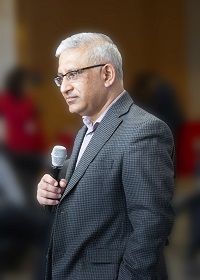
About the author: Karim H. Karim is Chancellor’s Professor at Carleton University. He is an award-winning author and the Government of Canada has honoured him for his public service. Dr. Karim has served as director of Carleton’s School of Journalism & Communication and its Centre for the Study of Islam as well as of the Institute of Ismaili Studies. His publications can be accessed at Academia.edu.
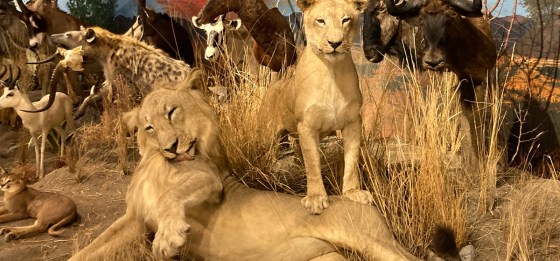
Malik Merchant spends a thrilling day in Sundre watching wild horses and then visiting the Sundre & District Museum, featuring Chester Mjolsness World of Wildlife. For Malik, the museum display bring back memories of wildlife he had seen in East Africa’s top national parks more than 50 years ago. The museum is open year round and also features local history. Sundre is a short 75 minute drive from Calgary. Please also visit the Museum Website for opening hours — the museum is open year-round — and other information.
Malik Merchant rejuvenates himself by visiting parks within the city of Calgary and on his day trips to the Kananaskis and Banff. His latest visit to Banff was on Friday, November 24, 2023. See his new pictures by clicking on the photo below or click WOW Moments in Banff. Also, visit his exciting and informative photoblog Simergphotos.
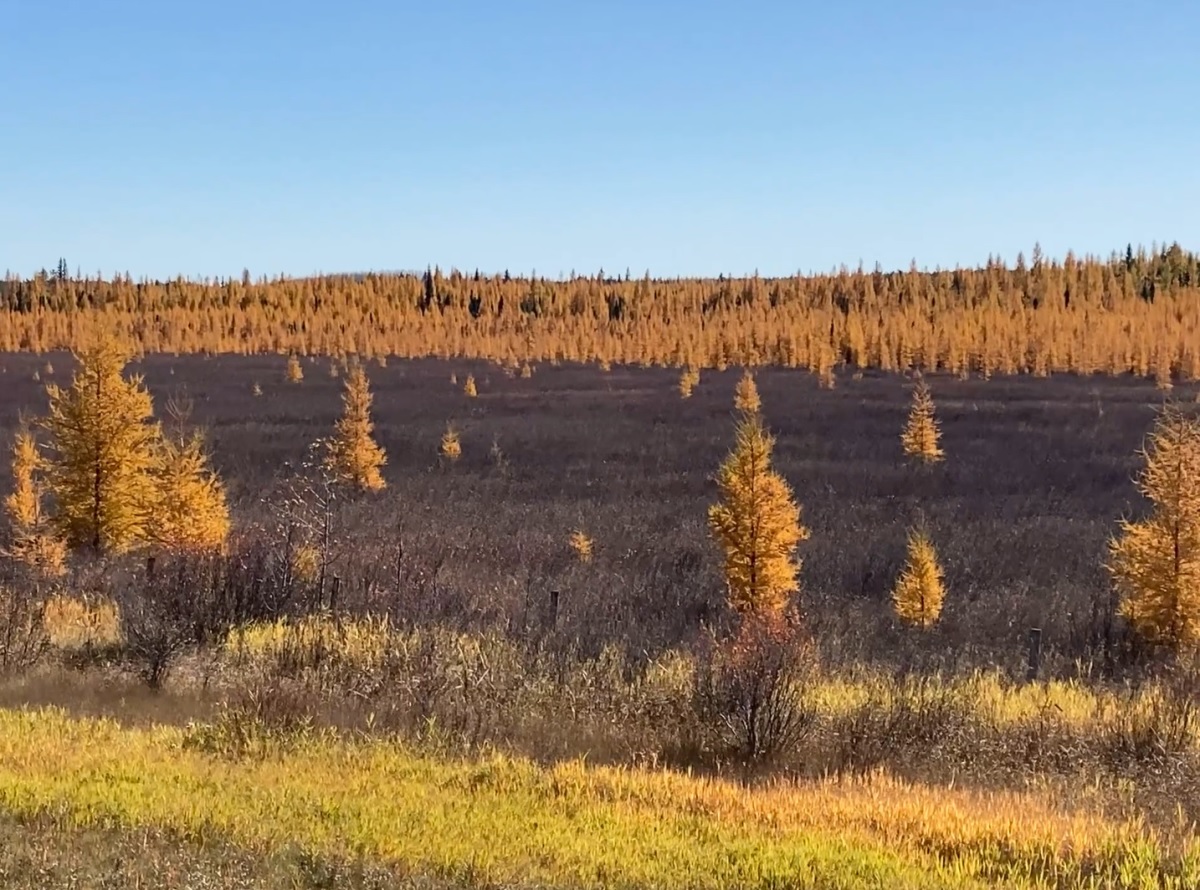
Larch trees along Alberta Hwy 12. Photograph: Malik Merchant/Simerg Photos.
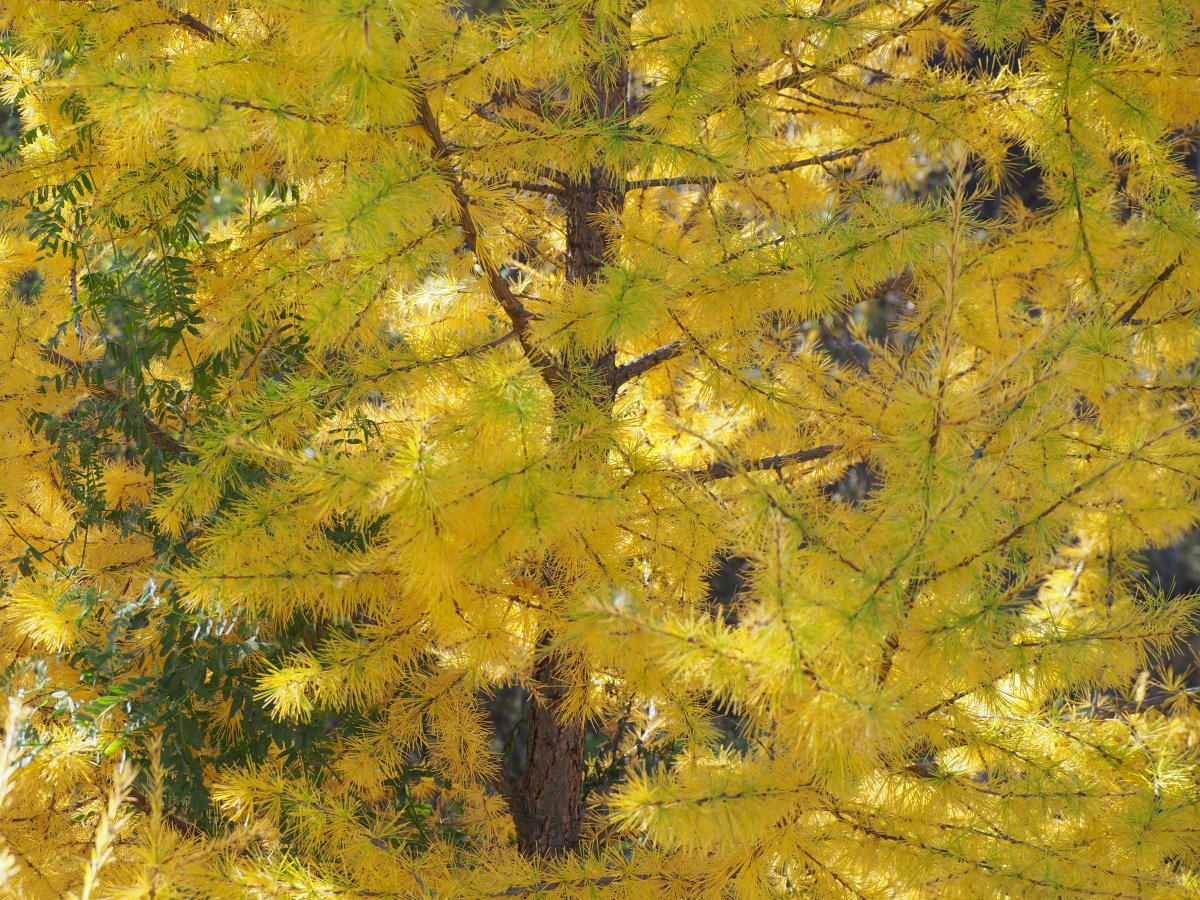
What a beautiful tree the larch tree is all year round. In autumn, larches in Alberta’s Rocky Mountains put on a spectacular show as their needles turn from green to golden yellow. The foliage attracts thousands of visitors from within Alberta and around the world. Found mostly at higher elevations, it often requires some hiking to see the spectacular LARCH autumn show from close range. However, I came across planted larch trees in Calgary’s Baker and Confederation Parks, and a week ago at the University of Alberta’s Botanic Garden in Edmonton — the focus of my visit was the Aga Khan Garden, a gift to Alberta by His Highness the Aga Khan, the 49th Hereditary Imam of the Ismaili Muslims. I might also note that I ran into large fields of larch trees as I took to Nordegg via Highways 12 and 11 (David Thompson Highway). Click Among the Larches to see my photos of foliage at the Aga Khan Garden. I also have other photo essays of my memorable trips to Alberta’s extraordinary parks and heritage sites and I invite you to see them on my beautiful photo blog.
Close-up, larch tree at Aga Khan Garden, University of Alberta Botanic Garden. Please click on image for autumn foliage photographs.
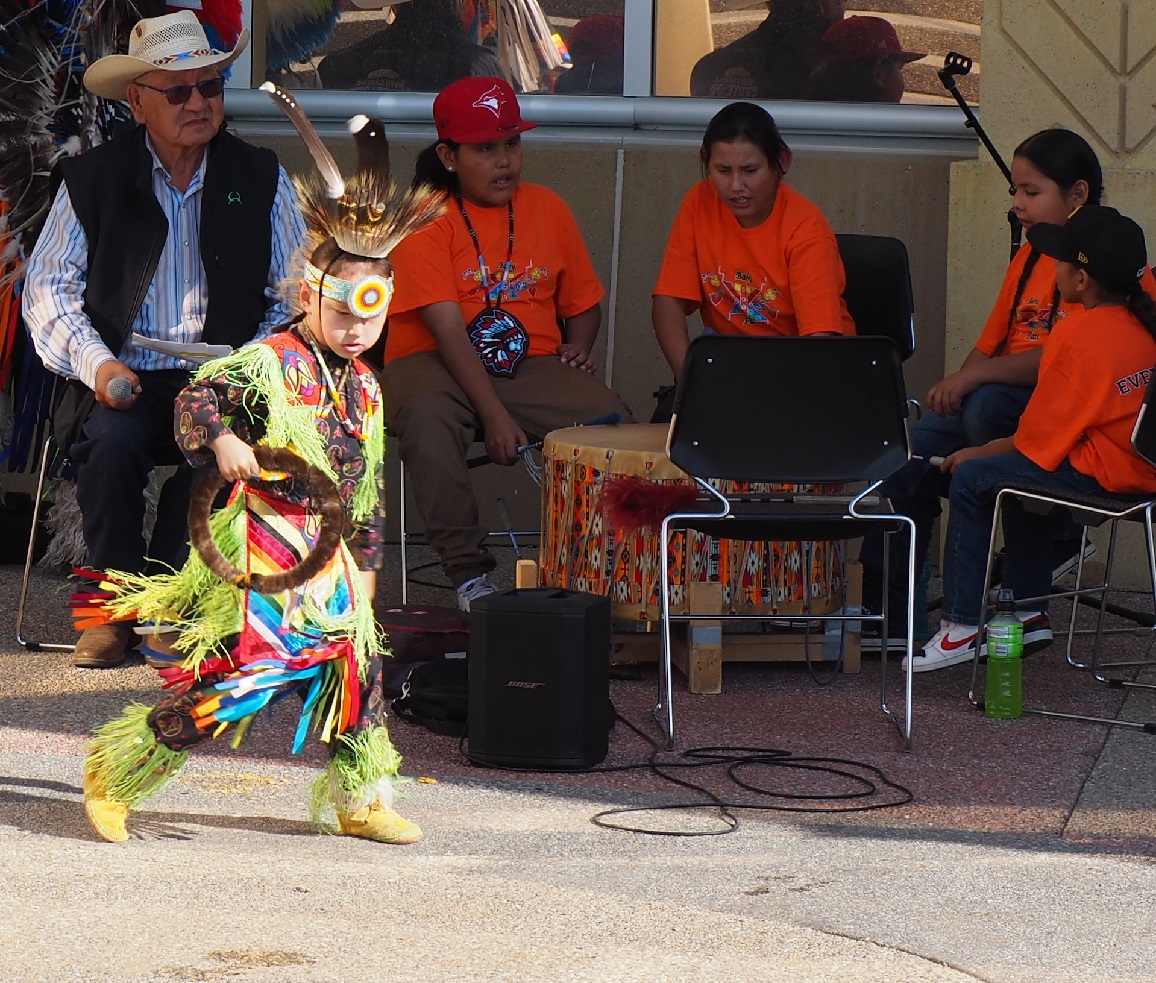
On Friday, September 22, 2023, Blackfoot Crossing, the Historic Site of the signing of Treat No. 7, held a special commemoration event to celebrate the 146th year of the signing with traditional activities that included drum beating and dancing by the children and youth of The Siksika People — also known as The Blackfoot. Malik Merchant drove down to the stunning site overlooking the Bow River. While he enjoyed the traditional activities as well as a BBQ lunch — all free on Commemoration Day — he was impressed and inspired by the exhibits in the beautifully curated museum dedicated to showcasing the history and culture of The Blackfoot.
Story continues below
A traditional dance performance by a young child to the tune of traditional drum beating by children and youth of the Siksika Nation. Please click on image for full report and more photographs.
~~~~~~~
A view of the valley and Bow River from Blackfoot Crossing’s lookout point. Please click on photo for full report and more photographs.
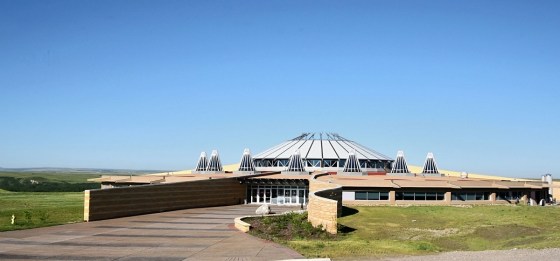
The Historical Park is just over an hours drive from Calgary and one cannot fail to admire and be impressed by the central building’s architecture that has tipis and tipi shaped structures incorporated into its design. The centre includes a cafeteria, a gift shop, a beautiful little theatre as well as an amphitheatre. The lookout point is 300 metres from the building and there is also a paved trail leading to see tipi tents and other interesting features of the area. Please click HERE or on the images below to view Malik’s full report and photographs. Also click Blackfoot Crossing Historical Park Website for more information about the unique heritage site. Plan a day to visit and learn about the history and culture of the Siksika First Nations People as well as to enjoy the beautiful natural surroundings and easy trails for the entire family.
~~~~~~~
A view of Blackfoot Crossings beautiful museum dedicated to the Siksika First Nations. Please click on photo for full report and more photographs.
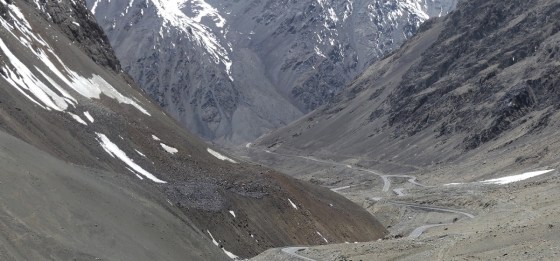
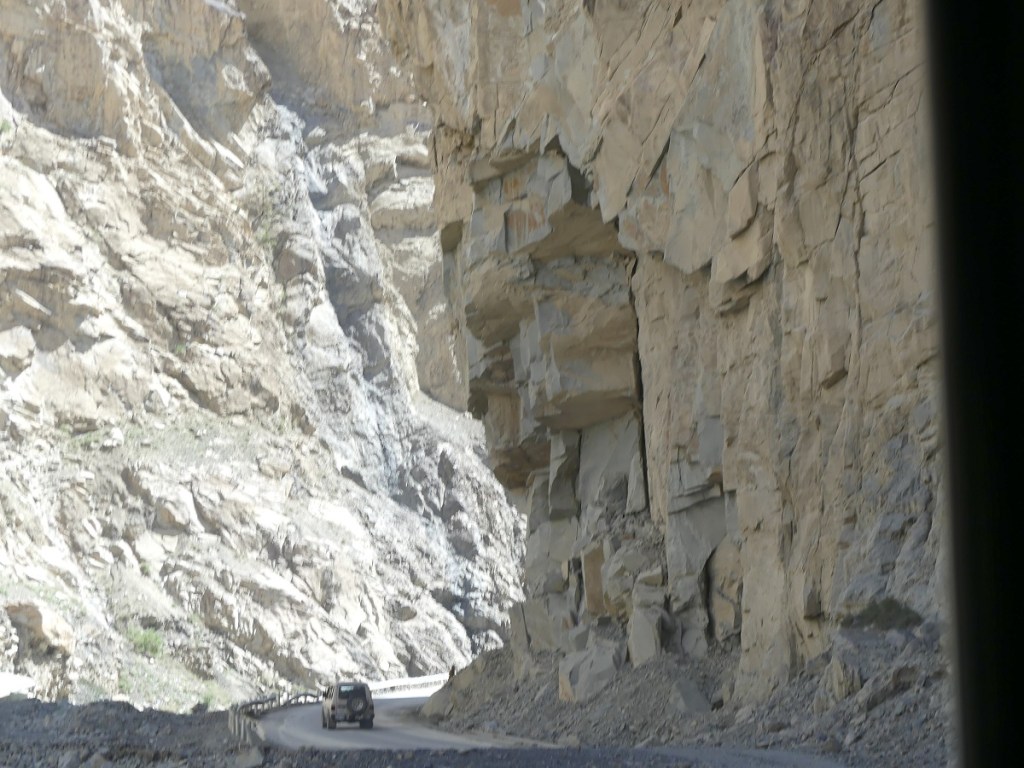
The Karakoram Highway (KKH) cuts through some of the most astounding rock faces on the planet. Often coined the “Eighth Wonder of the World”, it’s a road trip of dreams, yet few have ever heard of it, or how it came to be. The highway stretches for 1,300 km from Pakistan to China, but Samantha Shea was particularly drawn to the 194km stretch of the highway that runs through the Hunza Valley, a region surrounded by the Karakoram Mountains that give the highway its name.
“This impossibly beautiful section is where you can see pristine glaciers, alpine lakes and snow-capped peaks right from the comfort of your ride. However, as alluring as the journey is, it’s the incredible people and traditions of the Hunza Valley that make this part of the highway so special….Hunza is known for being the most liberal region, in part due to the predominance of Ismailism, a moderate sect of Islam known for promoting tolerance and women’s rights. Education and sports are encouraged for girls, and many go on to study at university and beyond.” READ MORE ON BBC TRAVEL







 Simerg - Insights from Around the World