
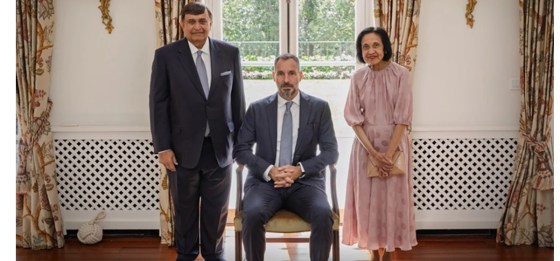
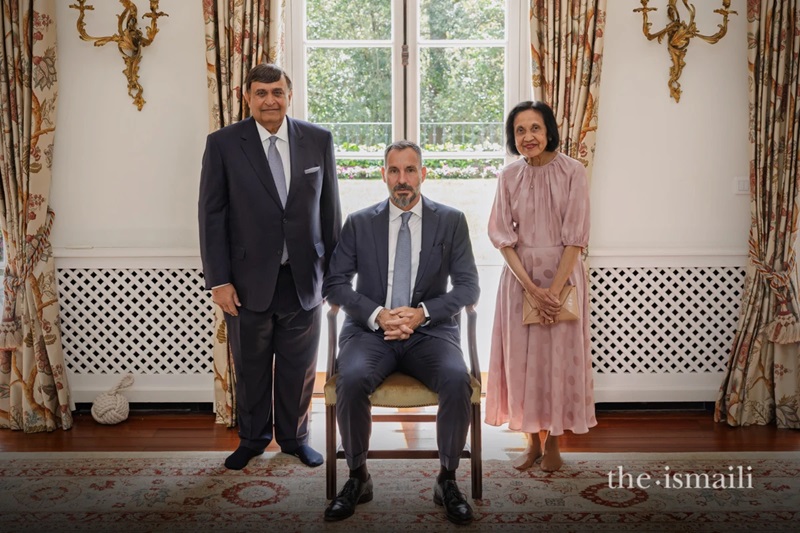
[As Mawlana Hazar Imam, His Highness the Aga Khan, confers the title of Diwan on Shafik Sachedina at his residence in Lisbon on May 4, 2025, a significant event that was announced through a Talika (Holy written message) read out on the same evening in Ismaili Jamatkhanas around the world, we present Alnoor Merchant’s exploration of its use in Islamic and Ismaili history, rooted in a rich historical context. Please also read our exclusive tribute to Diwan Shafik in Barakah, which includes excerpts from Mawlana Hazar Imam’s Talika of May 4, and a selection of photographs highlighting Diwan Shafik’s immeasurable services to the Imam-of-the-Time over the past several decades — Ed.]
Compiled by ALNOOR JEHANGIR MERCHANT
Besides referring to a collection of poetry or prose, the term diwan (divan in Persian) may be defined as meaning a register or a collection of records. Within an administration context, the term first meant a register for troops, and later it was used for office. During the Umayyad and Abbasid periods, various diwans were established: diwan al-jund (register for fighting forces), diwan al-kharaj (register for taxes), diwan al-rasa’il (register for correspondence), etc. These diwans were most often under a wazir (vazir in Persian).
During the Fatimid period, the diwan al-rasa’il came to be known as the diwan al-insha’; its head was the sahib diwan al-insha’ or ra’is (head) and was addressed as al-shaykh al-ajall (Excellency). The diwan al-jund was called the diwan al-jaysh, and there was a bureau known as the diwan al-majalis (diwan of the Council) where all the administration was concentrated. In Iran, the term diwan was generally used to mean the central government in general, in which sense it was also more specifically known as the divan-i a‘la, and fell within the purview of the vazir; during the Qajar period, the chief official of the divan-i a‘la was the sadr-i a‘zam (chief minister).
A significant change occurred during the Mughal period in India: the head of the department of revenue and finance came exclusively to be known as the diwan. Indeed, during the reign of the Mughal emperor Akbar, the word wazir was seldom used, having been replaced by the term diwan, which had come to denote a person rather than an institution or a government department. During the Mughal period, the diwan performed multifarious duties. He was not only responsible for the disposal of revenue papers but also drafted urgent royal letters and farmans. He had to submit revenue collection and expenditure returns to the emperor who was in this way kept informed of the finances of the State. He allocated duties to all high dignitaries on first appointment and received regular reports from them. Later, in some of the princely states of India, the chief minister came to be known as the Diwan.
It is, most likely, in this context, that the term diwan was adopted in the modern period of Ismaili history, and came to be applied to an individual. The first individual to be invested with the title of Diwan was Muhammad Ibrahim Rawjee, who served as the President of the Aga Khan Federal Council for India from 1934 to 1958. Imam Sultan Mahomed Shah, our 48th Imam, appointed him as the legal advisor for all Ismaili Councils in India in 1935 and, in March 1935, referred to Wazir (at that time) Muhammad Rawjee as “my Chief Minister”. In 1936, the Imam bestowed upon him the title of Diwan; Diwan Rawjee passed away in 1965. The second individual to be invested with the title of Diwan by Imam Sultan Mahomed Shah was Count Ghulam Hussain Muhammad Jindani; this was through a telegraphic message on 29th December, 1948, which read:
“Occasion Imamate record, I confer on you for all your great services title Dewan for first time given in Africa.”
Diwan Jindani passed away in 1983.
During the Silver Jubilee of Mawlana Shah Karim Shah, our 49th Imam bestowed the title of Diwan on Count Sir Eboo Pirbhai in London, on 7th July, 1983. In his Farman, the Imam said:
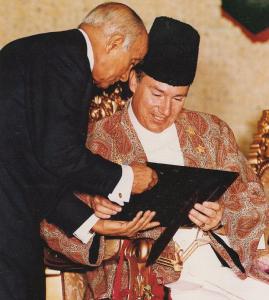
“The second thing I wish to do today is to recognise in an exceptional manner in front of the Jamat, the services of a member of the Jamat who has served my grandfather, who has served me, and who has served the Jamat consistently for more than fifty years, taking even personal risks at times of crisis in the developing world, extending to the Jamat all the benefit of his time and wisdom; and I have decided to give the title of Diwan to Count Sir Eboo Pirbhai. This is also a symbol, because the Imam is saying to the Jamat that the Imam wishes to recognise publicly, exceptional service by a very young man.”
Diwan Pirbhai passed away in January 1990.
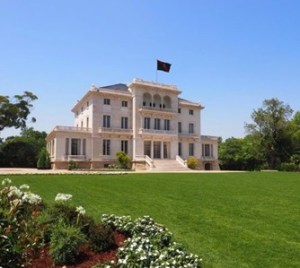
On 11th July 2018, Mawlana Shah Karim Shah officially designated the Henrique de Mendonca Palace in Lisbon as the Seat of the Ismaili Imamat, and declared that it be known as the “Diwan of the Ismaili Imamat.” This reflects, in one way, the dual nature of the nomenclature Diwan as being applicable in both an institutional and an individual context.
Date posted: May 5, 2025.
_________________

About the author: Alnoor Jehangir Merchant is a librarian, curator and independent researcher based in London. Between 1987 and 2012 – a period extending nearly twenty-five years — Alnoor was instrumental in developing the collections of the Library of The Institute of Ismaili Studies (IIS), London, acquiring and cataloguing materials — rare books, manuscripts, documents, coins — relating to all aspects of Ismaili studies; these are now part of the Ismaili Special Collections Unit (ISCU). Alnoor served as Head of the IIS Library from 2009 to 2012.
Besides his extensive experience in Library operations, Alnoor played a significant role, over nearly two decades, in the acquisition of artefacts and manuscripts for the Ismaili Imamat, a majority of which are presently housed at the Aga Khan Museum, Toronto.
Over the past decade, with his wide-ranging knowledge and understanding of Islamic studies and the cultures of Islam, Alnoor has advised museums, libraries and private individuals on artworks, manuscripts, rare books and coins relating to the Islamic world. Besides his research interests on various aspects of Ismaili history and material culture, Alnoor continues to be involved with work for the Ismaili Imamat and its institutions.
 Simerg - Insights from Around the World