
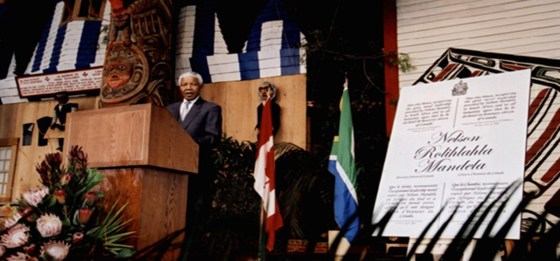
By DR. MOHAMED (MO) FAZAL MANJI
“During Nelson Mandela’s visit to the King Faisal Hospital in Riyadh, Saudi Arabia, one thing became very obvious: He chose first to shake hands with the cleaners (who were preparing for his visit) and the waiters (at the dinner reception in his honour) instead of the Royalty or high-ranking administrative personalities” — Mohamed Manji.
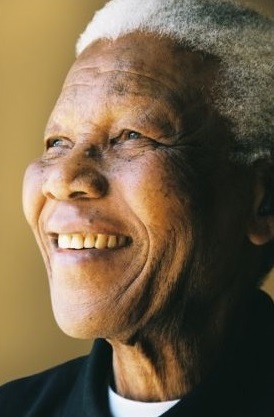
December 5, 2024, will mark the 11th anniversary of Nelson Rolihlahla Mandela’s death, and I would like to take this occasion to record my meeting with him in November 1994.
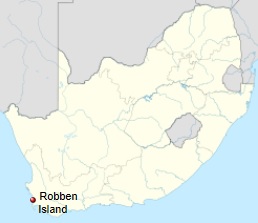
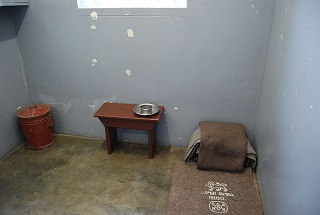
First, I would like to underline the pivotal role Canada played in securing the release of Nelson Mandela, who had spent 27 years in prison, including 18 years at Robben Island. His release marked the definitive end of the long, dark era of apartheid in South Africa. The former Prime Minister of Canada, Brian Mulroney (d. February 2024), vividly remembered his first phone call with Nelson Mandela on February 12, 1990, a day after his release from prison. Mandela told him:
“I am honoured by your call, as the attitude of Canada is well-known. We regard you as one of our great friends because of the solid support we have received from you and Canada over the years. When I was in jail, having friends like you in Canada gave me more joy and support than I can say. There could have been no greater tangible evidence of friendship than your concern for me and my family and the strong action you and the Government of Canada took while I was in jail to help us defend the interests of the new South Africa we want to build.”
Just four months after his release from prison, Mandela made his first trip to Canada in 1990, a journey that was not just a visit but a testament to the respect and admiration he commanded. He became the last foreign dignitary who wasn’t a head of state to address Parliament, a unique honour that underscored his global influence.
Mandela’s return to Canada in 1998 as President of the Republic of South Africa, again speaking to Parliament, further solidified his status as a revered leader.
Story continues below
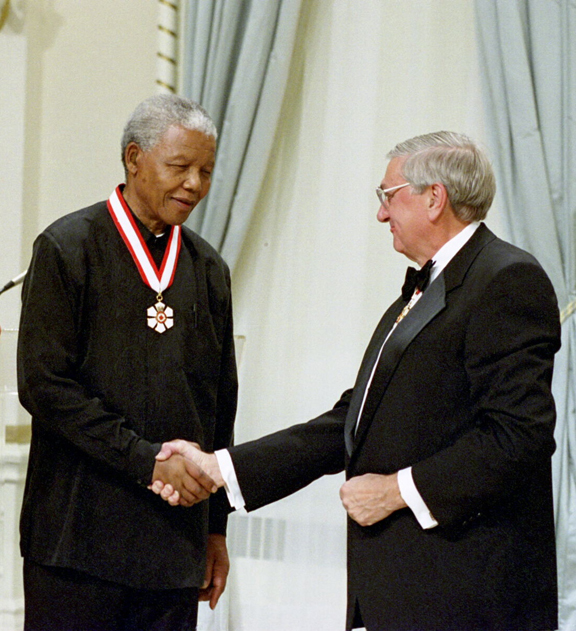
During the visit he was invested as an Honorary Companion of the Order of Canada by the Late Right Honourable Roméo LeBlanc, 25th Governor General of Canada, on September 24, 1998. Mr. Mandela’s citation read:
“He is a universal symbol of triumph over oppression who has inspired people everywhere to work peacefully to end intolerance and injustice. A towering figure in the transition from apartheid to democracy in South Africa, he has emerged as one of this century’s greatest statesmen and humanitarians, recognized the world over for his dignity, moral strength, and integrity. His lifelong struggle for freedom, justice, and equality guarantee his presence in the history books of generations to come.”
Mandela stepped down as President of the African National Congress (ANC) in 1997 and gave his final speech to the South African Parliament on March 29, 1999, when it adjourned before the 1999 general election. He retired as President in June 1999.
Story continues below
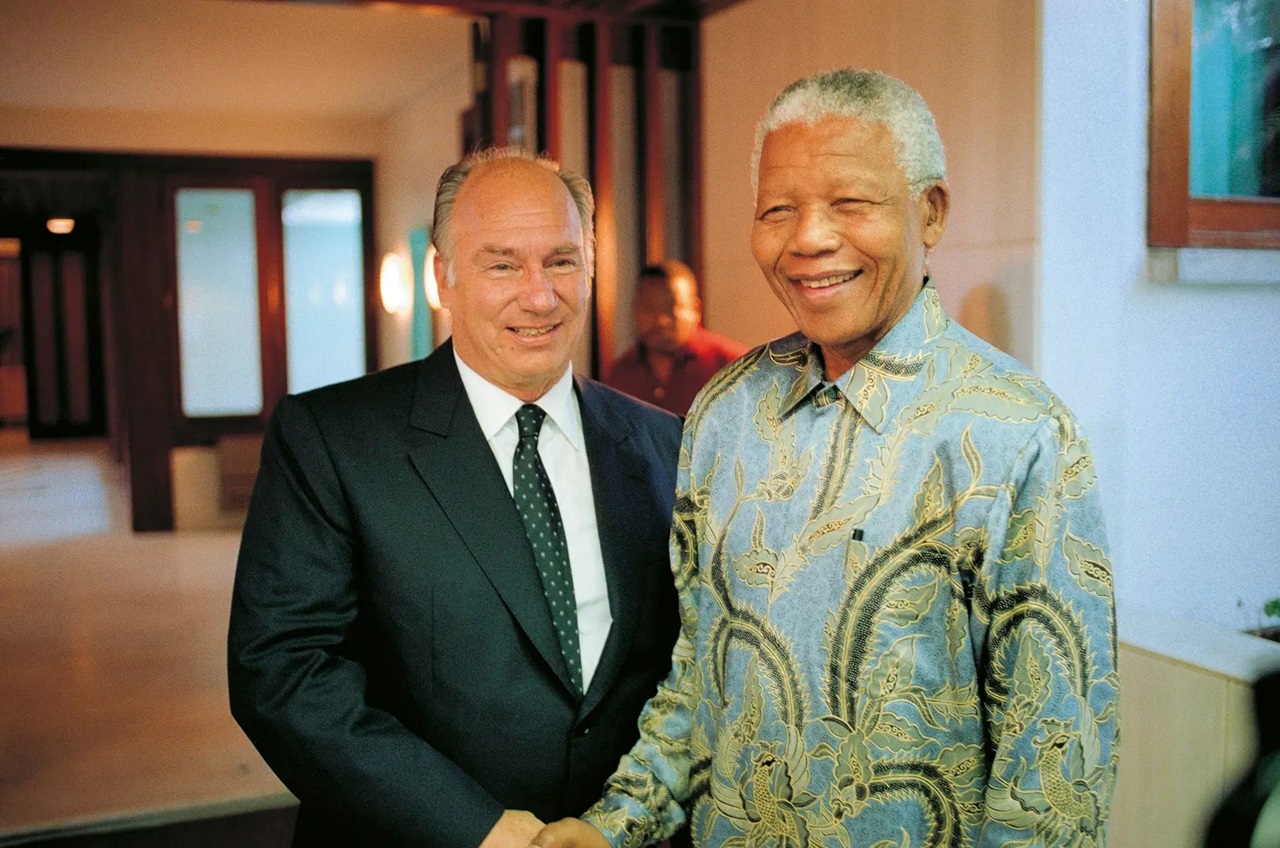
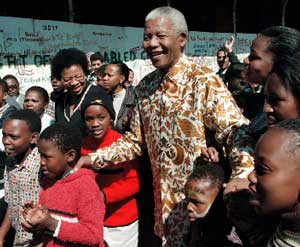
On November 17, 2001, Nelson Mandela began a three-day visit to Canada by attending a ceremony to rename a Toronto public school after him. He and his wife, Graça Machel, later received honorary degrees from Toronto’s Ryerson University. On November 19, Canada made Nelson Mandela an honorary citizen. In the following years, he was joined as Canada’s Honorary citizen by Tenzin Gyatso, the 14th Dalai Lama, and His Highness the Aga Khan, 49th Imam of the Shia Ismaili Muslims.
Nelson Mandela died on December 5, 2013, at 95.
With tributes pouring in from around the world, then-Prime Minister Stephen Harper of Canada issued the following statement:
“With the death of Nelson Mandela, the world has lost one of its great moral leaders and statesmen. Mr. Mandela was imprisoned for 27 years by the former Government of South Africa, for his part in the struggle that would ultimately end the system of apartheid. Despite his long years of captivity, Mr. Mandela left prison with a heart closed to calls for a settling of scores. Instead, he was filled by a longing for truth and reconciliation and for an understanding between all peoples. He demonstrated that the only path forward for the nation was to reject the appeal of bitterness. His forbearance was legendary: his magnanimity spared all South Africans incalculable suffering.”
“Even after his death, Nelson Mandela has done what no one else seemingly could — bring Canada’s past and present political leadership together, in one space, for a single cause — if only for a few hours.
“Prime Minister Stephen Harper and three of his predecessors — Jean Chrétien, Brian Mulroney and Kim Campbell — sat in close quarters as they winged their way to South Africa in the elaborate front cabin of a government Airbus” [to attend Mandela’s memorial.]
On Thursday, July 17, 2014, Ottawa’s then Mayor, Jim Watson, hosted over two hundred specially invited guests at City Hall at the launch of the Nelson Mandela Square. Appropriately located across from the Human Rights monument on Elgin Street, Nelson Mandela Square stands as a testimony to the resilience of the human spirit in the face of adversity, a legacy of immense magnitude by the former President of South Africa.
My Handshake with Nelson Mandela
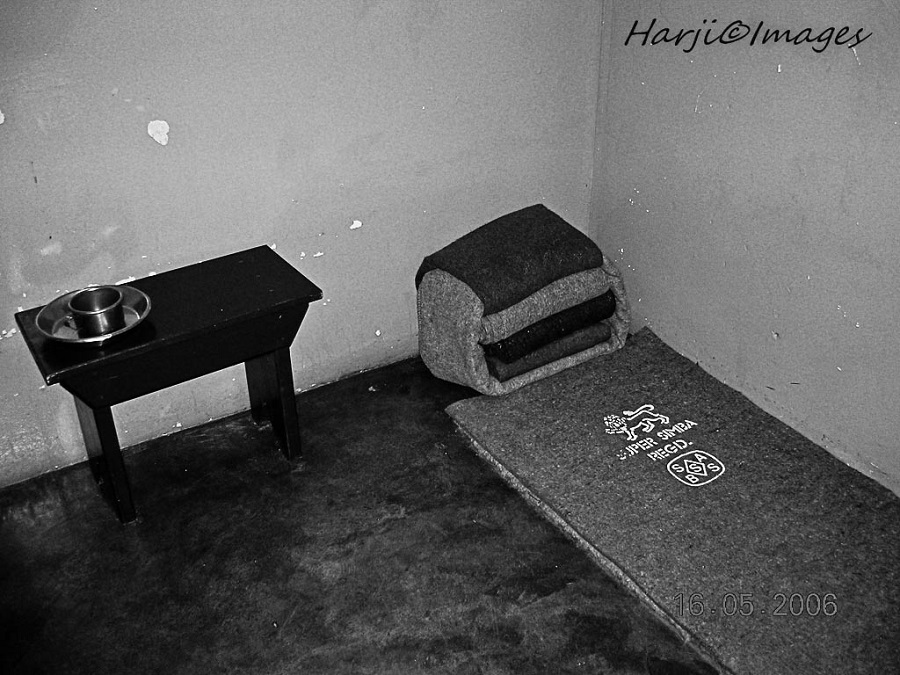
The late President was just seven months into his Presidency when I was privileged and humbled to shake unique HANDS, hands which crushed rocks in a prison quarry on an island called Robben Island in South Africa, where he was held as a prisoner for 18 years. The Hands were big, like the person himself. The handshake was firm but very comforting like a father shaking his child’s hands. These hands were of NELSON MANDELA, a prisoner who became the President of his Country, South Africa. It did not stop there, as he became a person who ended up belonging to the World.
I was working as a Consultant Radiation Oncologist at King Faisal Specialist Hospital & Research Center in Riyadh, Saudi Arabia, at that time. I was with the receiving group from King Faisal Specialist Hospital & Research Center. Upon his release from the prison. Mr Mandela visited Saudi Arabia as part of a tour of the countries in Africa and abroad.
Story continues below
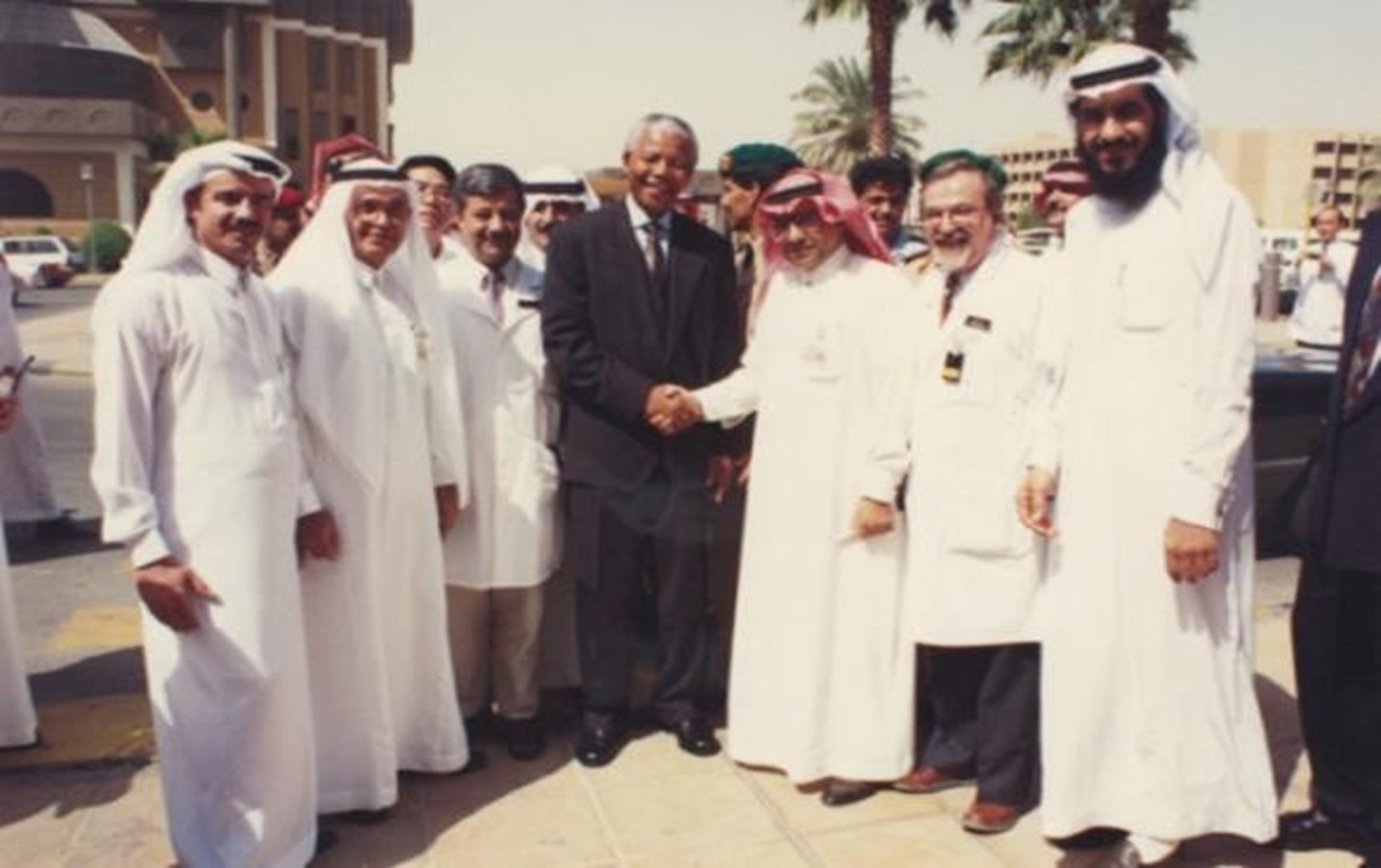
During this visit to the King Faisal Hospital in Riyadh, Saudi Arabia, one thing became very obvious: He chose first to shake hands with the cleaners (who were preparing for his visit) and the waiters (at the dinner reception in his honor) instead of the Royalty or high-ranking administrative personalities. Secondly, wherever he went, his presence brought “purity” and a sense of civility. It sure was a precious visit for me.
His death eleven years ago sure was a big loss for the world. May God Bless his memory and keep him in peace.
Date posted: December 1, 2024.
Last updated: December 2, 2024 (added photographs/citations)
________________
Featured image: The photograph at the top of the post is that of Nelson Mandela delivering a speech at a ceremony in 2001 at the Canadian Museum of Civilization (renamed the Canadian Museum of History in 2012), where he became an honorary citizen of Canada. Photograph: Canadian Heritage/Government of Canada website.
About the author: Dr. Mohamed Fazal Manji, MD, DMRT, DABRT, FRCPC, originally from Mbeya, Tanzania, is a cancer specialist. He is a Consultant Radiation Oncologist at BC Cancer Agency of British Columbia, Canada, and a Clinical Associate Professor at the University of British Columbia. Among his previous contributions to Simerg and Barakah are:



 Simerg - Insights from Around the World