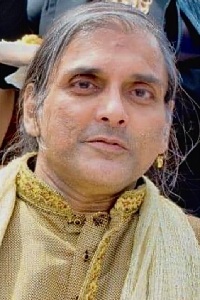
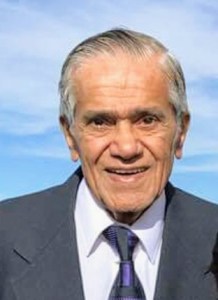
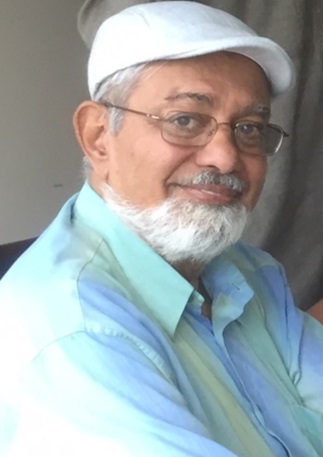
Simerg invites Ismaili families to submit tributes to their family members who have passed away during the Covid-19 pandemic

By MALIK MERCHANT
(Publisher-Editor, Simerg, Barakah, and Simergphotos)

The tributes may be submitted for passings due to Covid-19 or any other cause

Some years ago, Simerg launched PASSINGS where Ismailis around the world were invited to submit obituaries or tributes to honour members of their families who had passed away, irrespective of the time frame. Over the past few years, we have seen a trickle of these obituaries and tributes flowing in, and we have graciously published them to the comfort of several family members.

Today, the coronavirus pandemic has brought great sadness to families who have lost family members during the past two months. Like other places of worship, Jamatkhanas in North America, the UK, Europe and many other parts of the world, have remained closed since around the middle of March. Whether the death has been due to Covid-19 or other illnesses, funeral, burial and post-burial ceremonies and rites have been vastly compromised, with limited number of family members and friends being permitted to attend the mourning ceremonies, both before and immediately after the person has been buried.

Restrictions have even prevented family members from being close to their loved ones during their times of illness and during the final moments of their lives. Often, the death of the individual is unknown to many due to Jamatkhana closures, as special prayers for the soul of the deceased (known as samar, which takes place in many parts of the world where the deceased is known through family and friends) can no longer be conducted. With all of these elements missing, many families who have lost their beloved have not experienced a sense of closure with respect to the loved ones that have left them.

Most recently, as readers might be aware, Simerg paid a loving tribute to Missionary Amirali Gillani. His closest family members were deeply comforted by the condolences that they were offered by friends, relatives as well as well-wishers from around the world, who made contact by phone and emails. Many submitted tributes to Missionary Amirali Gillani in the comments section of this website. We went on to report about the extraordinary funeral and burial ceremonies that took place in Toronto for the long serving and well-known Ismaili missionary.

Today, we announce a special weekly series in which we will publish tributes to deceased Ismailis or individuals who are members of Ismaili families who have passed away during the coronavirus pandemic.

The tribute that you pen is not restricted to deaths caused by Covid-19. It will be to anyone who is part of an Ismaili family and who has died from any cause – Covid-19 or otherwise – during the coronavirus pandemic. This opportunity to submit tributes is being offered to Ismaili families around the world in the spirit of the ONE JAMAT that we are, under the leadership and loving care of Mawlana Hazar Imam, His Highness the Aga Khan.

Please email the tribute (preferably 75-100 words in length), along with the deceased family member’s portrait photo (if available, in jpeg format), to Malik Merchant at simerg@aol.com. You MUST include your full name and phone number where you can be reached. Anonymous tributes will not be accepted.

The Toronto Star article The Lives They Lived will help you in developing a comprehensive tribute, and Simerg’s editor will always be available to provide his assistance in formulating a good tribute, so long as you provide good information about the deceased.

Kindly note that Simerg’s tribute will be for ALL deceased Ismailis and members of Ismaili families who have passed away during the pandemic due to Covid-19 and other causes. Again, please send your tribute to Simerg@aol.com.

We hope to commence the series of tributes on Friday, May 22, 2020. In addition to English, we will also accept tributes written in French, Portuguese and Spanish with their corresponding English translations, provided by you (you may use Google translate, if you wish).

Date posted: May 17, 2020.
Last updated: May 18, 2020 (added note about submitting tributes in French, Spanish, and Portuguese).

Before departing this website please take a moment to review Simerg’s Table of Contents for links to hundreds of thought provoking pieces on a vast array of subjects including faith and culture, history and philosophy, and arts and letters to name a few.

_________________________

Malik Merchant

Malik Merchant is the founding publisher/editor of Simerg (2009), Barakah (2017) and Simergphotos (2012). A former IT consultant, he now dedicates his time to small family projects and other passionate endeavours such as the publication of this website. He is the eldest son of the Late Alwaez Jehangir Merchant (1928-2018) and Alwaeza Maleksultan Merchant, who both served Ismaili Jamati institutions together for several decades in professional and honorary capacities. His daughter, Nurin Merchant, is a veterinarian. He may be contacted at Simerg@aol.com.

We welcome feedback/letters from our readers. Please use the feedback box which appears below. If you don’t see the box please click Leave a comment. Your comment may be edited for length and brevity, and is subject to moderation. We are unable to acknowledge unpublished letters.

The Funeral of Missionary Amirali Gillani in the Midst of Covid-19 Restrictions

Inna lillahi wa inna ilayhi raji’un
“Surely we belong to God and to Him we return” — Holy Qur’an, 2:156

Ismaili Missionary Amirali Gillani Simerg tribute
Missionary Amirali Gillani passed away on April 8, 2020, and was buried in Toronto on April 14. Photo: Family Collection.

A Safe and Dignified Funeral

By MALIK MERCHANT
(Publisher-Editor, Simerg, Barakah, and Simergphotos)

On Tuesday April 14, 2020, Missionary Amirali Gillani’s shrouded body rested inside a grey coloured coffin in the funeral hall of the Scarborough Jamatkhana. He had passed away from cancer on April 8 at the age of 75.

Only the missionary’s peaceful face was in view. The rest of his body which was covered in the white shroud, was under the coffin cover. The coffin did not rest on the floor. It had been placed on a strong roll away frame. Volunteers recited the Salwat in unison continuously, and gave comfort to the small size of mourners, a limit imposed by the Bereavement Authority of Ontario.

There were a total of 16 mourners in attendance for the funeral’s two separate viewing opportunities and the funeral rites. One viewing, including the funeral rites, was for immediate family members, and the second viewing was for other family members and friends. In both the viewings the mourners sat in groups of 4 in two rows in front of the body, keeping the required physical distance. At a normal funeral, there would have been several hundred in attendance. A dilsoji — a condolence gathering a day or two ahead of the funeral — would have attracted a large Ismaili crowd from across Toronto.

Missionary Gillani’s funeral became the first funeral to be made available for online viewing via a dedicated Youtube channel. The viewing was offered, following a trial period, to very close family members who could not physically be at the funeral due to provincial restrictions limiting gatherings to 5 or 10.

Wearing a face mask and gloves on their hands, each of the persons who had come to missionary Gillani’s funeral presented himself or herself beside the coffin, a meter or two away. In solitude, the mourner would spend between 60 to 80 seconds in contemplation, before giving way to the next person. Other Jamati funerals taking place during the Covid-19 pandemic have similar rules and restrictions in place.

Once the viewing and giving of last respects had ended, and the funeral rites were completed, the Muslim funeral procession prayer La Ilaha Illallah Muhammadur Rasulullah commenced. In a normal funeral, men line up in the large foyer of the Jamatkhana to touch or momentarily hold the coffin on their shoulders, uttering prayers for the soul of the deceased before it is transferred to a hearse. However, here there was no one in the foyer of the Jamatkhana. It was empty. The body was wheeled by the Mukhi, volunteers and male mourners into the hearse parked outside, for its 22 km journey to its final resting place — the picturesque Elgin Mills Cemetery.

A view of Elgin Mills Cemetery. Photo: Mount Plesant Group

At the gate of the cemetery, a guard verified each arriving guest against the list of names that he had been given by the Ismaili funeral committee. He guided the arriving mourners to Section 16 of the cemetery. At the site, there were only a few scattered cars, no more than eight. The hearse carrying the body then arrived. This time, instead of wheeling the coffin, as the ground gradient and conditions presented challenges, the volunteers carefully carried it to the grave. Mourners followed and gathered around the coffin, keeping a safe physical distance between one another. The Mukhisaheb of Scarborough Jamatkhana and a family member then each took a heap of soil in a spade, and spread it across the coffin. The Surah Ikhlas was recited (Ch. 112; Translation: “In the name of God, the Gracious, the Merciful. Say: He is God, the One. God, the Absolute. He begets not, nor was He begotten. And there is nothing comparable to Him”).

Normally the crowd would wait to see the body lowered into the grave, while continuing to recite Salwats and other prayers. Two volunteers would then descend into the grave to ensure its proper placement, stability and also conduct some last rites.

Physical distancing prevented that from occurring and the mourners returned to their cars. Using the same soil that had been been dug up to create the 6 foot deep grave, a tractor arrived to fill it. Once the on-site staff had completed their task of filling the grave and removing wooden planks and other objects around it, we were each handed incense sticks as we walked back to the burial site. Water was then poured on top of the freshly replaced soil by a family member and the Mukhisaheb of Scarborough Jamatkhana. We then honoured and paid respect to the missionary by placing the lit incense sticks we had been given over the top of the missionary’s final resting place.

All ten of us stepped back about 40 metres, and a Fateha for the deceased was then recited. We were standing in rows and kept our safe 2 metre distance from one another. During the recitation of the Fateha, my attention was suddenly drawn to two doves that landed 25 metres to my left. Their sounds in the midst of the Fateha being recited were beautiful and joyous to hear. Only Allah understands the language of birds, animals and insects, as well as everything that has life on this earth. A second Fateha was then recited for all of the deceased members of the Jamat. By then, the birds had flown away.

Mukhisaheb then gave everyone special blessings for attending the burial, and also prayed for the soul of the deceased. As much as we would have loved to, we left the site without shaking hands of the family and embracing them. We consoled them by placing our hands on our hearts, befitting the Islamic ethics of gratitude, humility and affection.

It was a different kind of a funeral to attend. However the dignity of the entire funeral ceremony was preserved. The Jamat has to thank the burial committee for the professionalism with which they are carrying out this extraordinary and noble service to bring comfort and peace to the mourning families and their friends, amid the Covid-19 pandemic. Their communication in every respect was outstanding, and emails and telephone calls received prompt attention.

As I headed back home, I thought of the two birds that had landed nearby as the Fateha for Missionary Gillani was being recited. They conveyed to me a profound message: Missionary Amirali Gillani had been ushered into the abode of peace.

Date posted: April 15, 2020.
Last updated: April 15, 2020 (10 AM ET: additional material added; factual corrections; typos).

____________________________

We received several tributes to Amirali Gillani when we first announced his death. They may be read by clicking HERE. Further tributes as well as your reactions with regard to recent passings during the Covid-19 pandemic, and how you and your family members dealt with the situation amid the challenges you faced, may be submitted by completing the feedback form below. If the form does not show, please click Leave a comment. Your comment may be edited for length and brevity, and is subject to moderation. We are unable to acknowledge unpublished letters.
Before departing this website please take a moment to review Simerg’s Table of Contents for links to hundreds of thought provoking pieces on a vast array of subjects including faith and culture, history and philosophy, and arts and letters to name a few.

Passings: Missionary Amirali Gillani (1944 – 2020)

Inna lillahi wa inna ilayhi raji’un
“Surely we belong to God and to Him we return” — Holy Qur’an, 2:156

“Life is a great and noble calling, not a mean and grovelling thing to be shuffled through as best as we can but a lofty and exalted destiny.” — Mawlana Sultan Mahomed Shah, His Highness the Aga Khan III (1877-1957), 48th Imam of the Shia Imami Ismaili Muslims.

Portrait Ismaili Missionary Amirali Gillani of Arusha and Toronto
Missionary Amirali Gillani (July 15, 1944 – April 8, 2020). Photo: Family Collection

By MALIK MERCHANT
(Publisher-Editor Simerg, Barakah, and Simergphotos)

It is with deep sadness that I inform readers of the passing away of Missionary Amirali Gillani on Wednesday, April 8, 2020 at Toronto’s North York Hospital after a brave and long battle with cancer. He was 75. I learnt of his death from a family member earlier this morning through a text message.

Born in Arusha, Tanzania, he served Jamati institutions in both professional and honorary capacities for several decades, contributing his wisdom until the very last moments of his life. He travelled widely, and finally made his home in Toronto, Canada. Missionary Saheb is survived by four children and five grandchildren.

On April 1, 2020, exactly a week ago, he texted me from the hospital: “Ya Ali Madad. Hope you are well. I am in North York Hospital and my health has deteriorated. With affection, Missionary.” I wanted to visit him but the current state of restrictions in place prevented me from going to the hospital. I responded with a prayer for his strength and courage, and with the hope that I would see him out of the hospital soon. He replied: “Ya Ali Madad. Deeply touched by your prayers. I need His compassion to accept His Will with ease and pleasure. Ya Moula. Affectionately Missionary.” They were profound words.

An articulate missionary with a superb command of the English language, Amirali Gillani was always far ahead of his time in his vision of providing religious education to the Jamat. His ideas more than 50 years ago — and I am referring to the late 1960’s — of utilizing multi media and other technological trends of the day, including the power of TV as well as audio visual concepts, were highly impressive. My late dad, Jehangir Merchant, admired him for his brilliant mind as well as incredible foresight and ingenuity. Alas, we were simply not prepared or ready, even to think about his ideas!

As a close family friend, he would visit my parents whenever institutional duties or personal projects brought him to Dar es Salaam. His contemporaries with whom he graduated in the Waezin program in Pakistan in the 1960’s were Alwaez Nizar Chunara and Alwaez Amirally Mawji, and they would often accompany him.

My most recent — and unforgettable — memory of him was when I spent a couple of hours at his humble apartment in Toronto. A very large portrait of Mawlana Hazar Imam adorned one of the walls, and he had told me a few days earlier before I went to his home, that I would feel the Imam’s presence in his apartment. That I certainly did, not only because of the portrait but also by Missionary Saheb’s overpowering faith, love and affection for Mawlana Hazar Imam. This pulled him through some of the most difficult times in the past few years.

This is a sad moment for the family, especially coming at a time when many of us want to pay our personal respects and be at his funeral, and simply can’t because of the restrictions that are in place due to the novel coronavirus. We convey our deepest heartfelt condolences to members of Missionary Gillani’s family for strength and courage to face his great loss. Our prayers are with them at this time of bereavement.

We pray that Missionary Amirali Gillani rest in eternal peace. Amen.

Date posted: April 8, 2020.

____________________

We invite you to submit your condolences, memories and tributes to Amirali Gillani by completing the feedback form below or by clicking on Leave a comment.

Simerg invites Ismaili families to submit obituaries and tributes for deceased members of their families. For guidelines, please click Passings.

Before departing this website please take a moment to review Simerg’s Table of Contents for links to hundreds of thought provoking pieces on a vast array of subjects including faith and culture, history and philosophy, and arts and letters to name a few.

Passings: Nazeer Ladhani (1947-2020)

Nazeer Ladhani, AKDN, Aga Khan Foundation, University of Central Asia, Simerg, Passings
Nazeer Aziz Ladhani. Photo: Via The Globe and Mail, courtesy of the family.

Prepared by MALIK MERCHANT
(Publisher-Editor Simerg, Barakah, and Simergphotos)

[Includes material from multiple sources; a new addendum to the obituary has been added on March 8, 2020, following a feedback from Nazir Kassamali of Edmonton, who joined Nazeer Ladhani’s team at the University of Central Asia (UCA). We thank Kassamali for his input, which shows the significance of Nazeer Ladhani’s contribution at UCA at a critical juncture of its development path. – Ed.]

Simerg has learnt with profound sadness the untimely death of Nazeer Aziz Ladhani at the age of 72, in Nairobi, Kenya. According to an extensive obituary dedicated to him in The Globe and Mail, one of Canada’s most widely read and respected newspapers, Nazeer passed away in his sleep on February 19, 2020. Written by Ian Smillie and published under the title “International development agency CEO Nazeer Aziz Ladhani had a mischevious energy” (subscription may be required to read piece), the obituary is a tribute to the exceptional individual he was and the magnificent services he rendered to the Aga Khan Development Network and its numerous agencies in Canada, Asia and Africa.

Guy Pfeffermann, a long time friend of Nazeer, notes on the website of Global Business School Network (GBSN), that “I loved Nazeer. He was a gentle man, and one of the most learned I ever met on almost any subject. People loved to listen to him speak. In 2014 he sat on a panel of business school deans and other outstanding academics at the prestigious Online Education Berlin conference. He spoke last, and the participants were so enraptured by his Renaissance Man discourse that they just didn’t want to leave; the next group who had booked the room had to wait outside until, reluctantly, he let the audience go.”

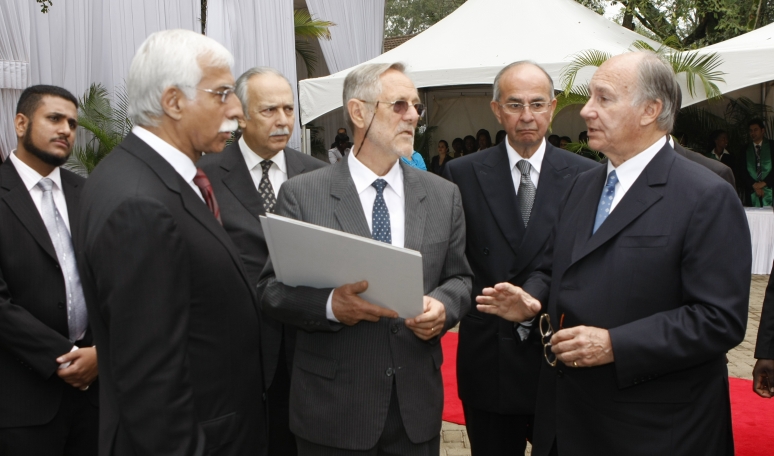
Mawlana Hazar Imam, His Highness the Aga Khan discusses architectural plans with Firoz Rasul, President of the Aga Khan University (AKU), Ambassador Saidullah Khan Dehlavi, Chairman of the AKU Board of Trustees, Trevor Andrews, Managing Director of Planning Systems Services Limited, and Nazeer Ladhani (2nd from right), Project Director of the AKU Graduate School of Media and Communications. Photo: AKDN / Ejaz Karmali.

Nazeer Ladhani’s Contribution to the Ismaili Imamat

Nazeer Ladhani worked in many senior roles with the Aga Khan Development Network and its agencies. He was the Project Director for Graduate Professional Education for Aga Khan University in East Africa, which includes the Graduate School of Media and Communications (see photo, above). He also served as the Director General of the University of Central Asia, a unique, internationally chartered higher university focused on the development of mountain societies, with purpose-built world class residential campuses in Naryn, Kyrgyzstan, and Khorog, Tajikistan and (future) Tekeli in Kazakhstan. Nazeer will be fondly remembered in Canada as the founding Chief Executive Officer of Aga Khan Foundation Canada (AKFC), which he led from start-up to a premier private international development agency in Canada. While at AKFC, Ladhani led efforts to establish the Global Centre for Pluralism in Canada.

Nazeer was born on August 20, 1947 in Tanganyika (now Tanzania) to a farming family. He went on to earn an agricultural diploma in animal husbandry from the famous Egerton University in Kenya. He then completed a series of designated accounting certificate programs, and also pursued an Executive Program at the Stanford University Graduate School of Business. He later earned an MBA from INSEAD, the prestigious business school at Fontainebleau, just outside Paris.

Nazeer leaves behind his wife, Gulabi; daughters, Noor Niyar and Aliya Begum Ladhani; sisters, Zinat Remtulla and Naseem Fazal; and brother, Mushtaq Ladhani. We convey our deep sympathy and condolences to them as well as the entire Ladhani family and to all his colleagues, friends and acquaintances around the world.

Through the services he rendered to Imamat institutions for four decades, Nazir has impacted the lives of millions of people around the world, making a positive difference in their livelihood, well-being and growth. His work will also ensure sustainable growth in communities impacted by the work of the Aga Khan Development Network and Aga Khan Foundation Canada, which holds the annual World Partnership Walk in numerous cities across Canada.

We pray that Nazeer’s soul may rest in eternal peace.

Addendum to Nazeer Ladhani’s Obituary

[Following our publication of Nazeer Ladhani’s obituary, above, we received the following details from Edmonton’s Nazir Kassamali who joined Nazeer Ladhani’s University of Central Asia (UCA) management team as the Director of Finance and Administration. We are pleased to incorporate Kassamali’s feedback into this post, as it reflects Nazeer Ladhani’s outstanding accomplishments at the UCA during the short time he stayed there. He was indeed on an important mission and performed his duties admirably! – Ed.]

By NAZIR KASSAMALI

First of all, I pay my deep respects to Nazeer Ladhani and convey my deep condolences to his family on his recent passing, and pray for the eternal peace of his soul.

I wish to add further to the obituary that has been presented here with respect to his short stint at the UCA whose Administrative Office was in Bishkek, Kyrgyzstan.

During his assignment as the Director General of the University of Central Asia, a unique, internationally chartered higher university focused on the development of mountain societies, with purpose-built world class residential campuses in Naryn, Kyrgyzstan, and Khorog, Tajikistan and (future) Tekeli in Kazakhstan, Nazeer accomplished significant progress which is explained below.

In a meeting in New York, discussion came up about the slow progress of the of University subsequent to the signing of the Agreement with the respective governments, namely, Kazakhstan, Kyrgyzstan and Tajikistan. There were significant issues that were not being addressed to meet the vision of the newly created University. Mawlana Hazar Imam, His Highness the Aga Khan, asked Nazeer Ladhani to takeover the management of the University and address the issues and provide solutions so that the three campuses and core curricula are built on a solid foundation.

Under Nazeer’s leadership and guidance, the UCA team achieved:

• Protocols following the agreements were approved and ratified by the acts of Parliaments of the three countries. This gave recognition equivalent to that of International NGOs such as United Nations which included Diplomatic status of the University, diplomatic license plates for the vehicles, ease of movements of the University employees across the three campuses and trilateral work permits. Government departments and senior employees were educated of the status of the University of Central Asia. This recognition of the UCA status made it easier to work with the Government officials of the three countries.
• Three Schools of Continuing Education and vocational training (SPCE) were built and opened. Full enrollments were accepted across the three campuses during Nazeer’s tenure and first cohorts graduated during the Golden Jubilee of Mawlana Hazar Imam;
• Administrative and support staff were hired and trained;
• Financial, Human Resources and Campus enrollment Systems, business processes and procedures were implemented;
• Campus designs of the three Campuses were completed with the Japanese Architects, Arata Sasaki;
• Cadastral surveying of the University lands allocated by the three governments were completed and delivered;
• For Khorog Campus in Gorno Badakhshan Autonomous Oblast (GBAO), Tajikistan, alternative land and compensations were allocated to the families who were residing inside the University boundary. This took a lot of persuasion and working with the local leaders and the three layers of Governments;
• Vocational schools to train brick layers, plasterers, carpenters and painters were established with the grant from US Aid which Nazeer was instrumental in acquiring; and
• Incorporation of the Aga Khan Humanities Programme into the UCA’s curriculum.

It takes over three to four decades for a University to achieve the Global standards of recognition and Nazeer Ladhani made an outstanding contribution to give it a solid foundation.

Date posted: March 5, 2020.
Last updated: March 8, 2020 (addendum to obituary).

________________________

We invite you to submit your condolences, memories and tributes to Nazeer Ladhani by completing the feedback form below. If form does not show, please click on LEAVE A COMMENT. Alternatively, you may submit your comment for publication to simerg@aol.com; Subject: Nazeer Ladhani.

Simerg offers to all its Ismaili readers around the world an opportunity to submit memorials to honour and celebrate the lives of beloved members of their families who have physically departed this world. For guidelines, please click Passings.

Passings: Mahebub Mohamed Juma Rupani (1941 – 2020)

Mahebub Rupani, Passings Simerg
Mahebub Rupani (1941 – 2020) pictured with his wife, Dolatkhanu, in 2014. Photo: Mahebub Rupani Family Collection.

With great sadness, the family of Mahebub Mohamed Juma Rupani announces his passing on January 18, 2020, at the age of 79 after a sudden illness while visiting his relatives in Rajkot, India. The funeral and zyarat ceremonies for Mahebub took place in Ottawa, Canada, on January 27, 2020.

Beloved husband to Dolatkhanu Rupani, devoted father, loving grandfather and a cherished member of an extensive global family, Mahebub possessed a calm, kind, peaceful and generous soul that was valued in both his professional and personal life.

Mahebub Rupani (1941-2020), Ottawa, Passings, Simerg.
Mahebub Rupani (1941-2020) and his wife Dolatkhanu pictured in 2007 with their sons Tareeq (back row, left) and Qayad (second from right); grandchildren Azra, Laila and Adrik; and daughters-in-law Debbie and Neziera. Photo: Mahebub Rupani Family Collection.

Born in Zanzibar, East Africa, Mahebub dedicated much of his professional life to the insurance industry, mostly at the Jubilee Insurance Company in Mombasa and Nairobi, in Kenya. He then moved to Portugal where he served with the Aga Khan Ismaili Council for Portugal. During his stay in Lisbon, he ran a small business and helped with the planning for Lisbon’s Ismaili Centre. He also served as the Honorary Secretary for the Council in Portugal.  

Mahebub Rupani (1941-2020), Ottawa, Simerg Passings.
Mahebub Rupani (d. January 18, 2020) pictured in a more recent photo taken in 2019 with members of his family. Back row (l to r) are son Qayad, daughters-in-law Neziera and Debby, and son Tareeq. Seated (l to r) are grandson Azra, wife Dolatkhanu, granddaughter Laila, MAHEBUB RUPANI, and grandson Adrik. Photo: Mahebub Rupani Family Collection.

Mahebub subsequently moved to Canada where he upgraded his executive skills in the insurance industry with a Diploma in Computer Science from the DeVry Institute. Upon retiring, Mahebub worked with the Aga Khan Ismaili Council for Ottawa. A senior Jamati member described Mahebub’s contribution as, “…integral to the formation of what we now know as Canada’s Ismaili Institutions in Ottawa today”.

 We pray that Allah rest his soul in peace.

Date posted:  February 18, 2020.

_______________________

We invite you to submit your condolences, memories and tributes to Mahebub Rupani by completing the feedback form below or by clicking on LEAVE A COMMENT. Your comment for publication may also be submitted to simerg@aol.com; Subject: Mahebub Rupani.

Simerg offers to all its Ismaili readers around the world an opportunity to submit memorials to honour and celebrate the lives of beloved members of their families who have physically departed this world. For guidelines and more information please click Passings.

Sultan Jessa: Noble Ismaili Muslim, Great Journalist and Recipient of Order of Canada Passes Away

Veteran journalist Sultan Jesssa receiving Canada's Highest Honour
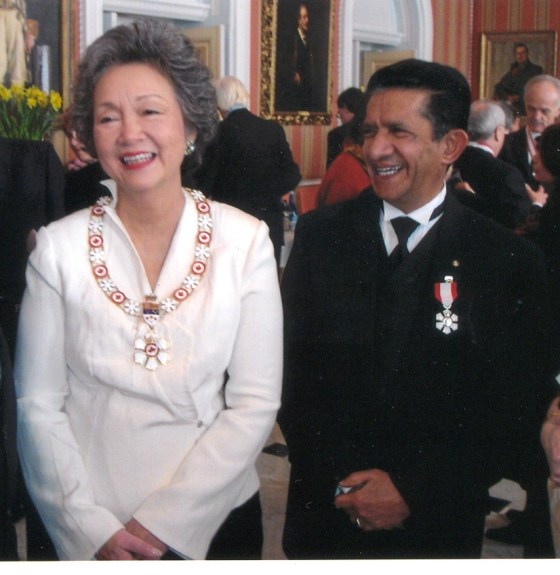
Sultan Jessa with Her Excellency Adrianne Clarkson, the former Governor General of Canada, at the event in 2005 marking the presentation to him of Canada’s highest honour, the Order of Canada. Photo: Sultan Jessa Collection, Montreal.

Sultan Jessa: A Model Canadian Citizen

By MALIK MERCHANT
(Publisher-Editor, Simerg, Barakah and Simergphotos)

On August 15, 2019 at 1:15 PM, I received an article for publication from my beloved friend Sultan Jessa with a kind note that said:

Dear Malik, Feel free to use it if you find this appropriate. Sultan.

I simply replied,

Sultan: Will review.

Little did I know that exactly a week later, on August 22, he would pass away! I was having lunch at Fairview Mall in Toronto, when a note was sent to me that said, “Sultan just passed away this morning.” The email simply would not open on my Iphone, and I learnt about the sad news a few hours later on my notebook.

His funeral ceremonies will be held today, Saturday August 24, at 10 AM at Montreal’s Headquarters Jamatkhana. Samar and ziarat prayers in his remembrance will follow in the evening at the Jamatkhana.

Sultan Jessa of Montreal with his wife and daughters
Flashback to 1990: Sultan and Rosila with daughters Yasmin (left) and Anaar. Photo: Sultan Jessa Collection, Montreal.

Four years ago, in 2015, I spent an entire day with Sultan and his wife Rosila at their home in Montreal. I learnt a lot about Sultan’s extraordinary life as well as his dedication to his family. I was fortunate to interview him and I published it under a special piece entitled The Sultan of Hard Work and Sacrifice: Veteran Ismaili Journalist Sultan Jessa, Order of Canada, is a Model Canadian Citizen For All to Emulate.

Their warmth and affection when I visited their home was incredible, and I cannot forget Sultan’s generosity when he unconditionally presented me a carefully preserved envelope containing memorable photos of His Highness the Aga Khan that had been taken by his former colleague at Kenya’s Daily Nation, Azhar Choudry. I was deeply touched.

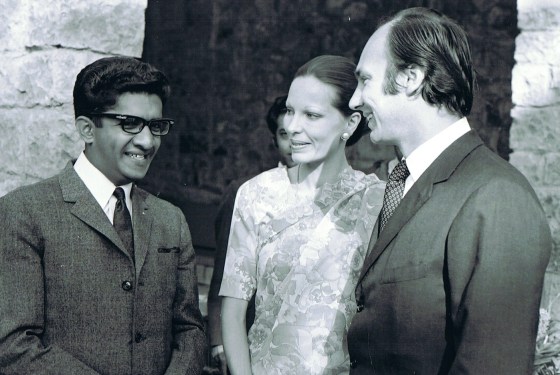
Sultan Jessa with Mawlana Hazar Imam and Begum Salimah
His Highness the Aga Khan and Begum Salimah with Sultan Jessa at the bungalow of the late Diwan Sir Eboo Pirbhai during their 1972 visit to Kenya. Photo: Azhar Chaudary. Sultan Jessa Collection, Montreal.

At this painful time of bereavement, we convey our heartfelt condolences to his wife Rosila, their two daughters Anaar and Yasmin, and all the members of Sultan’s family, and pray for their strength and courage. We also pray that Allah may rest Sultan’s soul in eternal peace.

We invite our readers to record their condolences and tributes honouring Sultan Jessa’s memorable life at Leave a comment.

Date posted: August 23, 2019.
Last updated: August 24, 2019.

__________________

To read tributes that readers have left for Sultan Jessa or to post one please click Leave a comment.
[Before leaving this page, please take a moment to visit Simerg’s Table of Contents for links to a vast and rich collection of articles published on this blog as well as its two sister blogs Barakah and Simergphotos.]

Passings: Salim Dawood – a Fantastic and Inspiring Math Teacher at Dar es Salaam’s Aga Khan Boys Primary School

By MALIK MERCHANT
(Publisher-Editor, Simerg, Barakah and Simergphotos
 AND proud student of Mr. Salim Dawood)

Mr. Dawood was a brilliant and dedicated Maths teacher who taught us with passion and instilled in us a great deal of confidence in the subject. He often spent hours after school to help students who were struggling with the subject — and really Maths has always been a challenge for thousands of young people.

Mr. Dawood was also a great sportsman. As a cricketer, he also captained the Young Ismailis (later Young Cricketers), the sister team of Aga Khan Club (later Dar Cricketers). My late dad, Alwaez Jehangir, enjoyed playing under Salim’s captainship. They both also played under Firoz Kassam, Dinno Bhatia and Shiraz Abdulla. Mr. Dawood bowled medium pace and scored freely as a batsman.

I have a fond recollection. One day after a school recess game (with a tennis ball), when I was in Standard 7, he asked how the game against Standard 8 went and someone told him I scored 50 (over 2 days of recess time). He called me to the front of the packed class and handed me a 10 shilling note! I was gratified. He jokingly remarked that had he been bowling I wouldn’t have managed the 50. Agree!

Above all, Mr. Dawood was a magnificent Math teacher who instilled in us a love for the subject and gave us a solid foundation to build on.

Mr. Salim Kassamali Dawood will remain in my heart and thoughts forever. My thoughts are with everyone in his family as well as his students, fellow teachers, and members of the Jamat wherever he served after leaving Tanzania.

I pray that his soul may rest in eternal peace.

(We invite you to submit your condolences, memories and tributes to Salim Dawood by completing the feedback form below or by clicking on COMMENT. Should you encounter difficulties submitting your feedback below, please email it for publication to simerg@aol.com.

Date posted: July 22, 2019.
Last updated: July 24, 2019.

_____________

Simerg offers to all its Ismaili readers around the world an opportunity to submit memorials to honour and celebrate the lives of beloved members of their families who have physically departed this world. For guidelines and more information please click Passings.

Kutub Kassam served Ismaili Imamat Institutions as curriculum developer, editor, writer and researcher for 40 years

“It is my sad duty to inform you of the passing away of our colleague Kutub Kassam. He served IIS [Institute of Ismaili Studies] and the Jamat most faithfully for more than thirty years. May his soul rest in peace” — Dr. Farhad Daftary, Director, IIS, London, England, March 25, 2019.

Kutub Kassam (1944-2019)

By ABDULMALIK MERCHANT
Publisher-Editor, Simerg, Barakah and Simergphotos

It is with deep sadness that Simerg records the passing away of Kutubdin (Kutub) Aladin Kassam, on March 24, 2019 in London, England, at the age of 75 after serving Ismaili Imamat institutions for 40 years. Of these, he spent 35 years at the Institute of Ismaili Studies for which he was congratulated and recognized by Prince Rahim Aga Khan during the Institute’s 40th anniversary celebration held in London in November 2017.

Kutub’s funeral services were held on Tuesday, March 26, 2019, at the West London Jamatkhana. He was then buried at Brookwood cemetery in Surrey, following which post burial ceremonies of samar and zyarat were conducted for his departed soul at London’s North West Jamatkhana.

Kutub Kassam was born on January 21, 1944 in Mombasa, Kenya, and received his Bachelor of Arts Degree from the University of East Africa at a ceremony held at the University College Nairobi in 1967.  

In Kenya, he contributed in developing an international curriculum on religious education for the global Ismaili community. He wrote an insightful piece about the challenges of creating the new International Religious Education Program (IREP) in a special commemorative issue celebrating sixty years of Ismaili education in Kenya.

In 1982, Kutub commenced his long tenure with the Institute of Ismaili Studies in London, where his first task was to coordinate the activities of the newly established Education Unit (later Department of Education). In that capacity, Kutub was responsible for overseeing the development of the Primary Talim materials.

From 1993 onwards, until his retirement in 2018, Kutub played the role of a researcher and senior editor where he provided invaluable input to scholars who were completing their books. He left his imprint in almost every publication that the IIS published during the past 25 years.

The pivotal role that Kutub played at the IIS as a senior editor was noted with affection by several authors in their book forewords or prefaces, showing how much they respected him for his analysis and insightful suggestions for improving their works before they got published.  

For example, Dr. Aziz Esmail, author of A Scent of Sandalwood: Indo-Ismaili Religious Lyrics wrote: “Kutub Kassam helped the work through, in the final stage, by applying his meticulous regard for the conventions of language, his feel for poetry, and his fine appreciation of the subject, to the text of the work. My thanks are due to him for the sustained effort he put in, and the suggestions he made for the improvement, in several places, of the penultimate text.”

Reza Shah-Kazemi, author of Justice and Remembrance: the Spirituality of Imam Ali thanked Kutub for going beyond the normal editing of the text by contributing to its intellectual content which resulted in a significantly improved text. Mohamed Keshavjee, a member of the Board of the IIS and author of Islam, Sharia and Alternative Dispute Resolution praised Kutub for meticulously reading his manuscript and suggesting extra sources for the book.

The late Peter Willey, one of the earliest contemporary scholars on the Alamut period and author of the highly readable work Eagle’s Nest: Ismaili Castle in Iran and Syria complimented by noting that Kutub was his “ever-patient and judicious editor at The Institute of Ismaili Studies who has always been a tower of strength.” The Vancouver based Amyn Sajoo, author of  Civil Society in the Muslim World: Comparative Perspectives, said he had benefited from Kutub Kassam’s “pragmatic insights and encouragement, which on more than one occasion helped keep the project on track.”

In addition to leaving his imprint in almost every IIS publication,  Kutub himself co-authored and edited Shimmering Light (1996) and An Anthology of Ismaili Literature (2008). 

Kutub’s influence was felt beyond the confines of the IIS. Al Noor Kassum, a prominent Ismaili leader in Tanzania, recognized Kutub’s contribution to his memoirs Africa’s Winds of Change: Memoirs of an International Tanzanian in the following terms: “….I am heavily indebted to Kutub Kassam for the highly professional input that he has provided in every chapter of the book with in-depth analysis that could only have been done by someone of his calibre. I am truly, truly grateful to him because, as a result, I have learnt a great deal, too.”

Aside from providing editorial expertise to authors, Kutub was himself a prolific writer and contributed rich literary articles and poems that appeared in numerous Ismaili publications around the world.

As our tribute to an inspiring and illuminating Ismaili individual of the modern times who served the Imamat for four decades, we bring you this beautiful poem by Kutub that we discovered in the Commemorative Issue 1977-1978: Celebrating Sixty Years of Ismaili Education in Kenya. 

Come, who will walk with me?

By KUTUB KASSAM
(1944-2019)

Come, who will walk with me?
A path there is over hills and dales,
Through avenues of purple, green and gold;
It pauses not where the thickets press,
Nor hesitates
To plunge into the forest gloom.

A place there is concealed
Of leaf and bough and tender grass,
Where the enraptured birds sing and dance;
In the still waters of pool appears
The sky inverted,
That conceals deeper depths.

Come, will you walk with me?
Leave all cares and sorrows behind;
All ambition, ornament and pride renounce;
Property, wealth, work, all abandon:
Come companion,
Put on your wings and let us fly.

Away from this world of
Fever and fret and fear of death,
This wretched city where men toil oppressed
And the memories of innocence drown
Where even the best
Lack compassion or conviction;

To another world where
Man and bird and beast dwell free
In accordance with love, beauty and truth,
Where birth and death, sun and moon
Declare the life
A continuous spiritual ecstasy.

Kutub Kassam’s impact on Ismaili Jamats through his work at the Institute of Ismaili Studies in London will last for generations and he will be deeply missed.

We join the Director and staff of the Institute of Ismaili Studies in praying for the eternal peace of the soul of Kutub Kassam. We convey our heartfelt  condolences to Kutub’s family members, colleagues and friends around the world.

Date posted: March 25, 2019.
Last updated: April 1, 2019 (updated portrait photo of the Late Kutub Kassam).

_______________

Readers who wish to express condolences and share memories of Kutub Kassam may do so by clicking on LEAVE A COMMENT. Alternatively, if you have difficulties using the feedback feature, please send your comment by email to Simerg@aol.com (Subject: Kutub Kassam), and we will publish it on your behalf.

Simerg offers to all its Ismaili readers around the world an opportunity to submit memorials to honour and celebrate the lives of beloved members of their families who have physically departed this world. For guidelines and more information please click Passings.

Shirin Mohamedali Khimji (1935 – 2019): A Remarkable Ismaili Widow and Woman of Faith and Character

Portrait of Shirin Khimji

A portrait of Shirin Mohamedali Khimji (1935-2019). Photo: (Late) Shirin Mohamedali Khimji Family Collection.

Inna lillahi wa inna ilayhi raji’un
“Surely we belong to God and to Him we return” — Holy Qur’an, 2:156

“Life is a great and noble calling, not a mean and grovelling thing to be shuffled through as best as we can but a lofty and exalted destiny.” — Mawlana Sultan Mahomed Shah, His Highness the Aga Khan III (1877-1957), 48th Imam of the Shia Imami Ismaili Muslims.

By GHALIB SUMAR

Shirin Mohamedali Khimji of Kutch, Dodoma and Toronto, passed away peacefully at Sunnybrook Hospital in Toronto on February 6, 2019. She was the much-loved wife of late Mohamedali Khimji, father of Sadrudin, Moez, Rosmin and Tazim, grandmaa to Nisara, Abida, Fayaz, Sameer, Juliana, Adam, Arif and Ghalib and great grandmaa to Nasiha. The last rites were held at Scarborough Jamatkhana on February 9, 2019 and she was later buried the same day at Elgin Mills Cemetery in Richmond Hill.

Born on March 5, 1935 in Kutch Mundra, Gujarat, India, Maa, as we fondly called her, was raised in an impoverished town and got married to the only love of her life, her husband, the late Mohamedali Khimji in 1949. Her first child, Sadrudin, was born in 1951 and following the guidance of the late Imam Sultan Mahomed Shah, they decided to move to Kimamba, a small town outside of Dar es Salaam, Tanzania in July 1951 by ship.

20170514_093818_Portrait of Family

Shirin M. Khimji with her husband Late Mohamedali Khimji and children Moez, Sadrudin and Rosmin. Tazim, the 4th child, was not born yet. Photo: (Late) Shirin Mohamedali Khimji Family Collection.

A few years later on November 14, 1956, when she was only 21, her husband passed away due to heart complications and she lived courageously and selflessly as a widow, raising and blossoming the lives of her four children and several grandchildren throughout her lifetime.

There are many thoughts and recollections that come to mind as we honour and celebrate the life of Maa, a transcendent soul which enlightened the lives of many everyday. Maa always looked after the well-being of others before herself and because of that she was able to build an inclusive and welcoming community wherever she lived.

3_Shirin Khimji

Shirin M. Khimji having an enjoyable moment with her four children: Tazim, Sadrudin, Rosmin and Moez. Photo: (Late) Shirin Mohamedali Khimji Family Collection.

From approximately 1973 to 1983, as an assistant matron at the Aga Khan Boarding Hostel in Dar es Salaam, she transformed and improved the lives of her boarders and earned their respect and trust due to her humble deeds. Maa ensured the rooms were cleaned and was responsible for preparing the daily and weekly menu which included popular Ismaili East African dishes such as kuku paka, ugali and daal bhajia to name a few.

Following her migration to Canada, she continued to serve and enrich the community in numerous ways. For example, at 1420 Victoria Park Avenue, a well-known seniors housing building in Toronto with a significant Ismaili senior population, she once again brought the community together by serving meals and looking after her friends. Maa was remembered for her dedication in feeding those who kept rojo (fast) and would make 150 parathas to ensure those who kept the fast were fed properly. I remember her telling me that there was a big sawab (spiritual reward or blessing) in feeding members  who had observed the fast.

One of Maa’s favourite memories was being able to spend quality time with her children and grandchildren. She would call all her children and grandchildren on an almost daily basis and always inquired about their whereabouts and well-being.

Family Collage 2 Shirin Khimji

A collage of photos representing Shirin M. Khimji with members of her family at various times during her lifetime. Photos: (Late) Shirin Mohamedali Khimji Family Collection. Collage by Simerg.

I was truly fortunate to build a strong and loving bond with her and in October 2017, Mawlana Hazar Imam visited Dar es Salaam for his Diamond Jubilee visit and celebrations. Maa was blessed to have seen the Golden, Diamond and Platinum Jubilees of Imam Sultan Mahomed Shah and the Silver, Golden and Diamond Jubilees of Mawlana Hazar Imam.

We had talked about the Jubilees in detail on several occasions and we decided that we would bring her back home to celebrate Mawlana Hazar Imam’s Diamond Jubilee in Tanzania. We were able to make that dream a reality. Maa was extremely happy to be back in Tanzania and to see old acquaintances and friends she had not seen for over 30 years.

A crowning moment and memory of the Diamond Jubilee that will forever be etched in our hearts was when Mawlana Hazar Imam’s motorcade was passing by Dar es Salaam’s Upanga Jamatkhana and Maa was yearning to welcome and see her beloved Imam. A few moments later, he waved to her and the countless Ismailis who just wanted a glimpse of their Imam.

5_Shirin Khimji_Collage

Shirin M. Khimji on her final trip to Dar es Salaam, Tanzania, with her grandson Ghalib and two daughters Rosmin and Tazim. Photo: (Late) Shirin Mohamedali Khimji Family Collection.

Maa was a selfless individual and she impacted innumerable lives through her humble actions, words and deeds. She prayed for the well being of others everyday until her last breath. Throughout her 84 years of life, Maa brought smiles and laughter to everyone that knew her. 

Our beloved Maa’s luminous legacy and impact will be felt for years and generations and her values of integrity, kindness, generosity, looking after the needy as well as selfless service to the community wherever she lived will always be admired by all.

Her entire life truly epitomized the meaning of ‘selfless service’ and her wise words and counsel are forever illuminated in our hearts, thoughts and prayers. She will always be remembered for her noble actions and deeds as well as an unflinching devotion to community harmony. She touched people of all ages throughout her life, and will be held in the utmost of respect and deep admiration. 

The passing away of our late Maa, Shirin Mohamedali Khimji, is a difficult moment for the family. Today, the family would like to celebrate the physical life of Maa, who most sincerely dedicated her life to the Ismaili Imamat and Jamats worldwide, and we express our humble shukrana to Mawlana Hazar Imam.

May her soul forever and eternally rest in peace. Ameen.

Date posted: March 5, 2019.

_________________

We welcome tributes and messages of condolence for the late Shirin Mohamedali Khimji. Please complete the feedback form below or click LEAVE A COMMENT.

About the writer: Ghalib Sumar is the beloved grandson of Maa, the late Shirin Mohamedali Khimji. Born and raised in Toronto, he is now located in Calgary and volunteers his time extensively on the Communications & Publications Portfolio of the Aga Khan Council for Canada. He holds a Bachelor of Arts and a Bachelor of Health Studies degrees and is a communications and marketing professional.

We graciously publish tributes to honour deceased member(s) of your family. Please see Simerg Invites Obituaries / Tributes to Honour Past / Recent Deceased Ismailis. The feature is provided free of charge. 

Simerg Invites Obituaries / Tributes to Honour Past / Recent Deceased Members of Ismaili Muslim Families

Passings
Top portion of image shows plaque commemorating Ismailis who were killed in a WWII raid in Burma. Bottom half is a surreal image by Sarite Sanders of Aswan’s Fatimid cemetery.

HONOURING LIVES LIVED

By MALIK MERCHANT
Publisher-Editor, Simerg, Barakah and Simergphotos

Simerg offers to all Ismaili Muslim families around the world an opportunity to submit memorials to honour and celebrate the lives of their deceased family members (Ismaili or non-Ismaili.) The memorials may be submitted in the form of (1) a simple short notice or (2) a tribute of up to 1,000 words. The memorial may be for any Ismaili or a member of an Ismaili family who has died recently or at any time since 1950 (or even earlier). This is a FREE listing.

Substance of the Notice and Tribute

1. NOTICE: The simplest kind of tribute is a notice announcing the death of the person. This short notice may be followed by a longer tribute at a later date as described in (2) below. The following is an example of the contents of a notice:

“[Name of Deceased], author and playwright, died peacefully at home in [city], on [date]. He was the much-loved husband of [spouse name], father of [children], guardian and grandfather. The last rites were held in [name of Jamatkhana or place of worship] on [date] and he was later buried on [date] at [name and city of cemetery]. Post funeral religious ceremonies were conducted at [name of Jamatkhana, place of worship or funeral home]. It was the wish [of the deceased or the deceased family] that monetary contributions in his honour be made to [organization, hospital, cause etc.].”

2. TRIBUTE: The purpose of the tribute will be to celebrate the person’s life. It will start with the same basic information you put in the notice (1, above), and goes on to add details about the person’s life: hometowns, jobs, family members, and personal interests activities as well as community services and awards. Anecdotes may be included from the person’s life to help family members, readers and future generations to reflect on the life of the individual. The universal tale, as is well-known, lies in specific examples and for this reason we are inviting you to write a tribute of up to 1,000 words in length.

For very good examples of short notices as well as tributes see your local newspapers or click The Globe and Mail. They will assist you in constructing appropriate notices and tributes.

Here is a selection of tributes we have published on Simerg:

  1. A beautiful story from September 7, 1979: “I want Ginan,” Mawlana Hazar Imam, His Highness the Aga Khan, tells Mukhi Nurdin Jivraj during his final 7-day meeting with UK’s Ismaili Muslims
  2. Award Winning Ismaili Journalist Salim Jiwa Passes Away in Vancouver, Aged 73
  3. Aitmadi Dr. Aziz Rajabali Kurwa, Long Serving Ismaili Leader, Passes Away in Calgary, Aged 91
  4. Passings: Vazirbanoo Amina Anil Ishani (1947 – 2024) – An Esteemed Homeopath, Educator, and Playwright and Producer of Drama on the Ismaili Giant Nasir Khushraw
  5. Zawahir Moir, Distinguished Scholar of Ismaili Literature, Passes Away in London at the Age of 90
  6. Memorial Bench Tributes to Deceased Ismailis Buried at Calgary’s Rocky View Garden of Peace Cemetery
  7. Vazir Amirali Bhatia, Former UK Aga Khan Council President, Passes Away at the Age of 91
  8. Salim Harji, a Devoted Family Man, Beloved Friend to Thousands and an Inspiring and Dedicated Ismaili Volunteer, Passes Away in Calgary at the Age of 70
  9. Farida Shahsultan Hassam: A Multi-Talented, Courageous and Devoted Murid of Mawlana Hazar Imam, Passes Away in Toronto After Prolonged Illness (1943-2022)
  10. A Tribute to a Great and Long-Serving Ismaili Missionary, Alwaeza Gulshan S. Alidina, As She Passes Away in Toronto at the Age of 93
  11. Kurbanali Kassamali Mulji (1935-2022)
  12. Vazir Hon. Al Noor (Nick) Kassum (1924-2021)
  13. Alwaez Nizar Chunara (1940 – 2021)
  14. A Tribute to Late Nurbanu Abdulrasul Rashid (1923-2019) of Zanzibar and Toronto
  15. Zarina Bhatia (d. July 2021): A Tribute to a Noble Ismaili Social Anthropologist from Birmingham, UK, Who Became One of My Truest Friends
  16. Dr. Vali Jamal (d. July 11, 2021)
  17. Jehangir Tejani (1946 – 2021)
  18. Sadru Velji – Our Beloved Nana
  19. A Visit to the Ismaili Cemetery at the Victory Memorial Park: I Bid Farewell to My Mum, “Mrs. Merchant,” and Pay My Deep Respects to My Beloved Dad and Other Deceased Members of the Jamat
  20. A Poem in Memory of Mrs. Merchant
  21. Alwaez Rajwani’s Very Special Bond with Mrs and Mr Merchant
  22. Mrs. Merchant (d. January 21, 2021): Reflections on a Funeral During the Year of Covid-19 as Ismaili Community Bids Goodbye to a Very Popular Teacher and Missionary
  23. Mrs. Merchant: Excerpts From Tributes Celebrating Her Life; Alwaeza’s Funeral To Be Held On Thursday, February 4
  24. “Mrs. Merchant” – Alwaeza Maleksultan Jehangir – Passes Away at 89
  25. Alwaez Rai Sultanali Mohamed (1927 – 2020)
  26. Tributes to Ismailis who have passed away during the Covid-19 pandemic: Issue no. 2 of a multipart series
  27. Alijah Mohamed Hamir Pradhan, Inspiration Behind the Ismaili Jamatkhana in Iringa, Tanzania
  28. The melodious life and legacy of Shamshu Jamal (1936 – 2019)
  29. Tributes to Ismailis who have passed away during the Covid-19 pandemic: Issue no. 1 of a multipart series
  30. Remembering Ismailis we have lost since Jamatkhana closures and during the coronavirus pandemic
  31. The Funeral of Missionary Amirali Gillani in the Midst of Covid-19 Restrictions
  32. Missionary Amirali Gillani (1944 – 2020)
  33. Nazeer Ladhani (1947-2020)
  34. Mahebub Mohamed Juma Rupani (1941 – 2020)
  35. Sultan Jessa: Noble Ismaili Muslim, Great Journalist and Recipient of Order of Canada Passes Away
  36. Salim Dawood – a Fantastic and Inspiring Math Teacher at Dar es Salaam’s Aga Khan Boys Primary School
  37. Kutub Kassam served Ismaili Imamat Institutions as curriculum developer, editor, writer and researcher for 40 years
  38. Shirin Mohamedali Khimji (1935 – 2019): A Remarkable Ismaili Widow and Woman of Faith and Character
  39. Nazil Kara (1957-2018): An Ordinary and Extraordinary Satpanthi Woman
  40. “Life of Jehangir” – includes historical photographs of Mawlana Hazar Imam
  41. My last moments with my loving Papa
  42. Alwaez Jehangir Merchant (1928 – 2018)
  43. A Eulogy for My Mom, by Amyn Naran
  44. Izzat Muneyb remembered through her poetic reflections on Prophet Muhammad, the Prophet’s Mosque in Madinah and the London Ismaili Centre
  45. Salim-el-azhar Ebrahim
  46. Alijah Zulfikarali Khoja
  47. Laila Lokhandwalla Through Her Loving Golden Jubilee Tribute to Mawlana Hazar Imam
  48. Roshan Thomas – Acting in the Path of God By Jalal Jaffer
  49. Mohammed Ibrahim Ali (d. March 15, 2014)
  50. Noorunisa Maherali (1929 – 2015): A Remarkable Ismaili Woman of Faith and Character
  51. John Nuraney (1937 – 2016)
  52. Nazarali Bapa: An Iron Craftsman Who Made a Spinning Wheel for Mahatma Gandhi
  53. A True Account of How Three Ismaili “Shaheeds” Lost Their Lives in a Tragic Accident in 1925 Near Kilosa, Tanganyika
  54. Rai Hussein Khanmohammed of Burma
  55. Ameer Kassam Janmohamed (1931-2014)
  56. Mohezin Tejani: Brilliant Author, Humanitarian and Global Nomad Dead at 61

Submission Rules

Each submission must specify your relationship with the deceased person, as well as include your full name, mailing address and the phone number where you may be contacted — this is for verification purposes. Along with your short notice or tribute, we ask you to submit the celebrated person’s photo. For tributes, we will accept up to 4 additional photos which have a direct relevance to the person’s life that you have described. Images should be in JPG format.

Anonymous pieces will not be accepted for publication, although the editor may at his discretion allow author anonymity once the tribute has been approved for publication. Please submit the notice or tribute in PDF, Text or Word format to mmerchant@simerg.com. You may, alternatively, incorporate the material within your email. The editor will contact you with the draft copy once the piece has been finalized for publication. 

The 48th Ismaili Imam, Mawlana Sultan Mahomed Shah Aga Khan (1877 -1957) said in his Memoirs that “life is a great and noble calling.” It is the life that was celebrated about which we are asking you to reflect and write about, in the form of a short notice or a longer tribute.

Date posted: February 28, 2019.
Last updated:
January 19, 2025 (new tribute, Nurdin Jivraj.)

______________

The editor welcomes tributes honouring your deceased family members. Please send them to Malik Merchant at mmerchant@simerg.com.

We welcome feedback/letters from our readers. Please use the LEAVE A REPLY box which appears below. Your feedback may be edited for length and brevity, and is subject to moderation. We are unable to acknowledge unpublished letters.

Please visit our Home page for links to most recent posts. For links to articles posted on this Web site since its launch in March 2009, please click TABLE OF CONTENTS.

Sign-up for blog subscription at top right of this page.