Simerg is an independent initiative dedicated to Ismaili Muslims, the Aga Khan — their Hereditary Imam — and the Ismaili Imamat, and Islam in general through literary readings, photo essays and artistic expressions
A stunning view of the Indian Ocean from the roof-top of the Bagamoyo Jamatkhana. Please click for home page of Simerg’s Photo Blog. Photo: Shariffa Keshavjee, Nairobi, Kenya. Copyright.
The following posts have been added to Simerg’s new photo blog since September 21, 2012. They are revised versions of photo essays that appeared on this website previously.
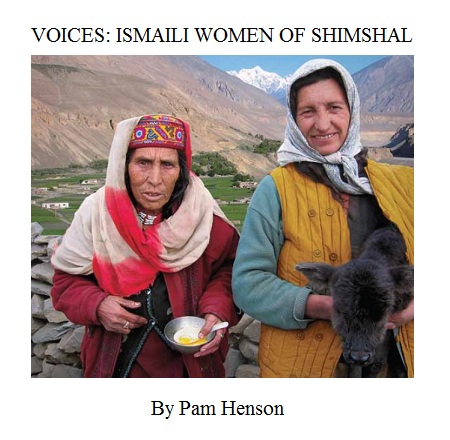
“I don’t read or write but I am very interested in animal husbandry and I have always worked hard on the farm. It was my dream for my children to be educated so I worked hard and provided for their education…” — Guljon Bibi
This is a fascinating collection of autobiographical tales told by women from the Ismaili village of Shimshal, in the remote Karakoram mountains. On the eastern border of Pakistan, the women of Shimshal live peaceful lives of extreme hardship and good-humoured tolerance.
Originally aired on PBS to a word-wide audience exceeding 150 million people
“CANDID, THOUGHTFUL AND VISUALLY STUNNING” – Los Angeles Times
Prophet Muhammad (s.a.s) changed world history in 23 years and continues to shape and inspire the lives of more than 1.4 billion Muslims around the world.
Simerg is pleased to make available for its readers around the world a link to the film, Muhammad: Legacy of a Prophet, that was originally aired on PBS to a world-wide audience exceeding 150 million people. The internet age is a blessing of our time that, through outstanding movies such as this, we are able to learn more about the wonderful and noble qualities of Prophet Muhammad. In his Presidential Address to the Seerat Conference in 1976, His Highness the Aga Khan had asked:
“In the face of this changing world, which was once a universe to us and is now no more than an overcrowded island, confronted with a fundamental challenge to our understanding of time, surrounded by a foreign fleet of cultural and ideological ships which have broken loose, I ask, ‘Do we have a clear, firm and precise understanding of what Muslim Society is to be in times to come?’ And if as I believe, the answer is uncertain, where else can we search then in the Holy Qur’an, and in the example of Allah’s last and final Prophet?”
His Highness continued:
“The Holy Prophet’s life gives us every fundamental guideline that we require to resolve the problem as successfully as our human minds and intellects can visualise. His example of integrity, loyalty, honesty, generosity both of means and of time, his solicitude for the poor, the weak and the sick, his steadfastness in friendship, his humility in success, his magnanimity in victory, his simplicity, his wisdom in conceiving new solutions for problems which could not be solved by traditional methods, without affecting the fundamental concepts of Islam, surely all these are foundations which, correctly understood and sincerely interpreted, must enable us to conceive what should be a truly modern and dynamic Islamic Society in the years ahead.”
Some of these examples from the Prophet’s life come alive through this ground-breaking PBS film, which takes the viewers from the ancient Arabian sites where Prophet Muhammad’s story unfolded to the homes, mosques, and workplaces of some of America’s estimated seven million Muslims. The Los Angeles Times called the film “a candid, thoughtful, flowing, visually stunning film,” while The Catholic News Service commented that the Prophet’s biography offers viewers fresh insights into the spiritual foundations of Islam.
Simerg is grateful to Daniel Tutt of upf.tv for facilitating the showing of the film though this website. We strongly encourage all the viewers to watch the complete film, if not in one seating then by watching the timed segmented clips which will open at the bottom of the viewing window. We are sure you will enjoy this film. Please click:
Readers who wish to watch a preview of the film and other selected clips before viewing the full-length movie are invited to click http://www.muhammadfilm.tv or on the following image:
Please click for links to full length movie and excerpts
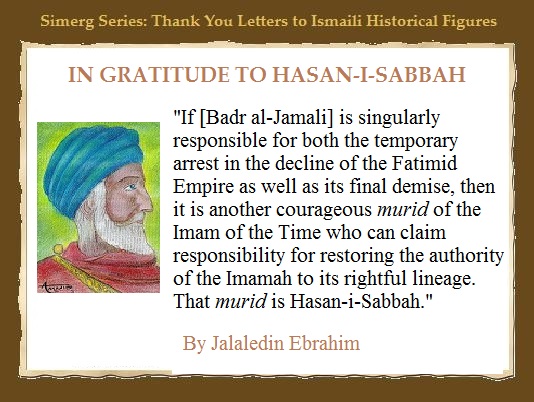
“…[Hasan-i-Sabbah] is officially welcomed by representatives of the Imam because of his referral by the chief dai of Persia. There is no evidence of an official meeting with the Imam of the Time, but there is also no evidence that he does not receive a glimpse of the Imam. But even if that is not possible to substantiate, he certainly has the opportunity to make a pragmatic and sagacious assessment of the Fatimid political system…” Continue readingThanking Ismaili Historical Figures: Hasan-i-Sabbah
“…..The Islam that the scholars of Timbuktu taught the world was (and remains) a profoundly humanist tradition. On humble wooden boards…children learned the words that Muslims believe to be God’s verbatim speech, and with it a deep respect for Him, and His most noble creation, the children of Adam….” says Rudolph Ware in an excellent piece in the Huffington Post. But, as Ware notes, Timbuktu has for some months been under siege from a radical group calling itself Ansar Dine (“Protector of the Faith”).
In our piece, with links to the Huffington Post and other articles on the subject, Jocelyne Sambira of AfricaRenewal explains what is going on in Northern Mali’s City of Saints…..”Using hoes, pick-axes and chisels, they [Ansar Dine] hammered away at the two earthen tombs until they were completely destroyed.” Read more….Timbuktu Under Siege.
Djinguereber mosque in Timbuktu. Members of the group Ansar Dine have destroyed some of the mosque’s mausoleums, along with other holy shines in the ancient northern city. Photo: Wikipedia.
Three gold quarter dinars of the Fatimid Imam-Caliph al-Hakim were among the Fatimid objects found in a shipwreck in Turkey. Please visit Simerg’s new photo blog. Click on image. Photo credit: Institute of Nautical Archaeology.
The auspicious day for the Didar of Hazrat Imam Sultan Mahomed Shah finally arrived, and words are inadequate to express the joy and thrill that I felt within myself. Students came in turns to present their wonderful recitals before the Jamat. I was dressed in my lovely white dress, and as my name was called out I went up on the stage and stood before the mike to present the poem that I had learnt and practiced so well. Just as I finished my recitation, there was a deafening ovation from the Jamat, accompanied with the resounding claps and shouts of “once more, once more”…..Read More
Simerg is pleased to announce the creation of a separate blog dedicated to photographs and photo essays. While many of the pieces may at first appear (or have appeared) on Simerg.com, an adapted version with a greater emphasis on the photo content will be created in the new sister blog http://simergphotoblog.wordpress.com/.
Click to visit the photoblog
The new blog is being launched with Muslim and Nevin Harji’s highly acclaimed piece about Jerusalem, Ali M Rajput’s unique photos of Alamut, photos of the discovery of Fatimid artefacts in an 11th century shipwreck as well as a photo essay about His Highness the Aga Khan and the Ismaili community. The new blog will be a treasure trove of superb photos and photo essays from around the world, and will please photo enthusiasts everywhere. Please click on http://simergphotoblog.wordpress.com/ to visit the blog.
Introduction: This photo essay is about two Aga Khan Development Network (AKDN) Agencies that have won the prestigious Ashden Awards for improving the quality of life in Northern Pakistan. The Aga Khan Planning and Building Services, Pakistan (AKPBS, P) and the Aga Khan Rural Support Programme, Pakistan (AKRSP, P), won the awards in 2011 and 2004 respectively and Simerg is pleased to produce a brief account of the work of the two agencies along with a collection of related photographs, reproduced with the kind permission of the Ashden Awards. Readers are also invited to click on links provided at the end of this piece to watch a very informative and interesting presentation (just under 6 minutes in length) about the AKPBS project.
~~~~~~~~~~~~~~
I
Aga Khan Planning and Building Service, Pakistan: Winner of the 2011 Ashden International Award for Avoided Deforestation
Warming homes, saving trees
“A proper home can bridge that terrible gap between poverty and a better future” – His Highness the Aga Khan
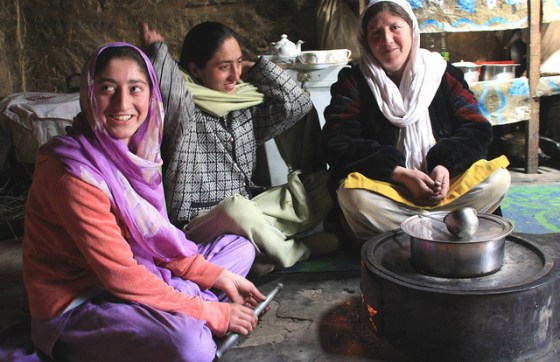
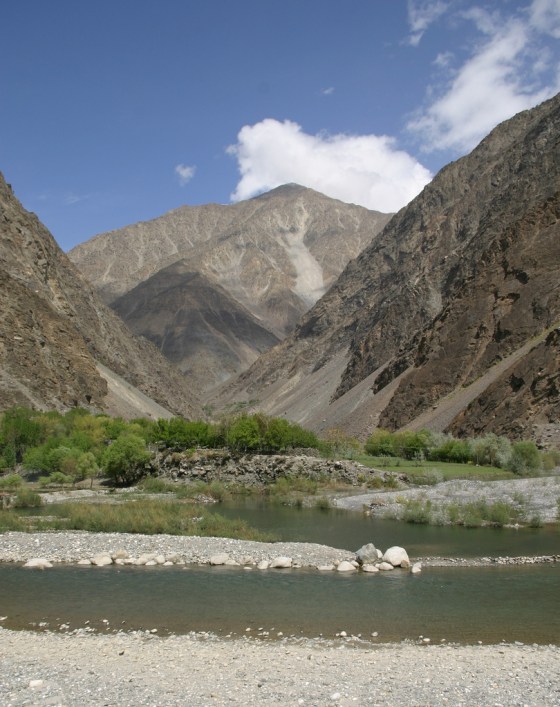
The Hindu Kush and Karakoram mountains lie in Northern Pakistan. Winters in the mountains are harsh and natural disasters are part of life. Lack of gas supply pushes almost all rural households in the region to use wood-burning stoves and open fires or simple wood-burning stoves indoors for cooking and heating.
Over 14 years ago, the Aga Khan Planning and Building Service (AKPBS) began a concerted drive to make homes in North Pakistan warmer, and reduce the use of wood. Based on the Aga Khan’s belief that: “A proper home can bridge that terrible gap between poverty and a better future,” the programme has done just that for over 240,000 people.
Today over 100 ‘resource people’ work in their own villages promoting energy-efficient products. A US$80 package could include floor insulation, an efficient cook stove with a chimney to let smoke out, a water heater, and a roof hatch window that cuts out draughts and lets in light, also fresh air when needed.
~~~~~~~~~~~~~~~~~
The Basic Features of the Stove
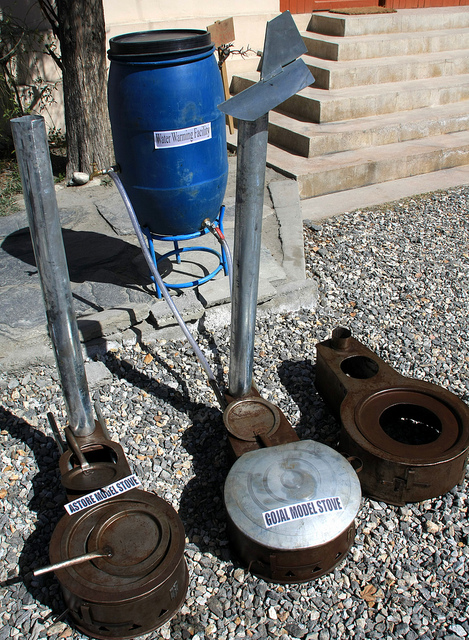
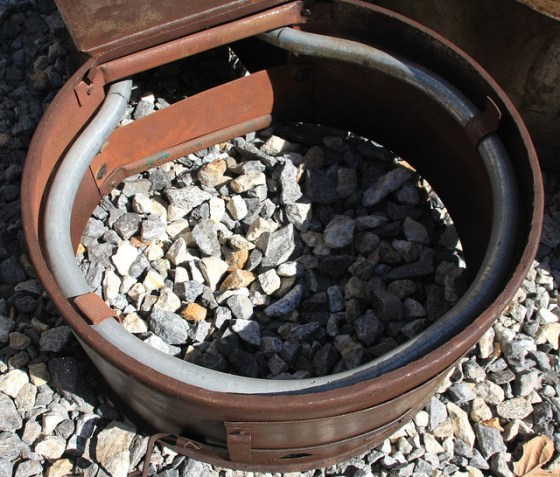
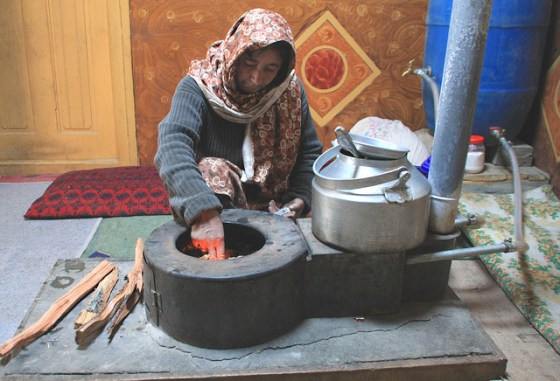
Stove designs vary in detail from region to region,to suit local cooking requirements, but all have the same basic features. The stove is made from sheet metal and can be used for two cooking pots at the same time,while seated on the floor. Wood is added to the combustion chamber through a side door,which is then closed to limit airflow. A chimney takes the smoke out of the room. Insulated tiles are sometimes used around the stove body to cut heat loss and improve cooking efficiency during the summer, then removed for the four to seven winter months when room heating is needed.
The stove was tested by Aprovecho Research Centre in 2008, and meets the Shell Foundation benchmarks for an ‘improved ’stove. A number of changes that would improve its energy efficiency have been tried, but do not suit stove users or else add too much to the cost.
Water-warming facilities use a metal pipe that runs around the inside rim at the top of the stove. Water in the pipe is heated by the burning wood, and circulates by natural convection to a 150-litre plastic storage barrel. Water is heated while cooking takes place, so additional wood is not needed. A tap in the barrel provides water at a suitable temperature for washing clothes or dishes, or to fill pots for boiling on the stove. The storage barrel is generally not insulated, because the water does not need to reach a very high temperature
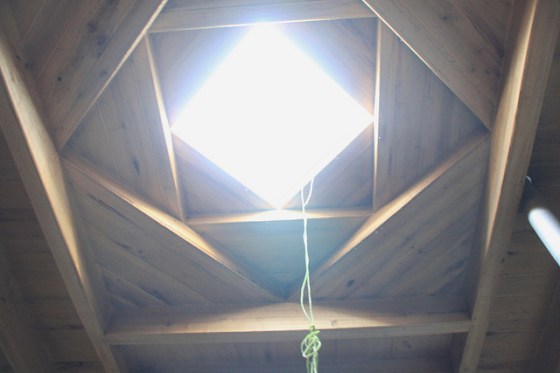
Roof hatch windows are made from toughened glass mounted in a wooden frame. The window fits into the hole in the roof that was previously needed to take smoke out of the house. A cord is used to open and close the window, to provide ventilation particularly in the short, hot summer. The roof hatch windows play a very important role in retaining heat inside the house during cold winters.
“Now there’s no trouble with rain or dust or flies – we just open the hatch if it’s too hot and close it if it’s too cold. It’s as simple as that.” Bibi Navida Khan, Hunza Valley.
A detailed study of the health and social impacts of using the energy-efficient stoves and water-warming facilities was undertaken by the Aga Khan University Hospital during the winters of 2008 and 2009. The study revealed that carbon monoxide concentrations were reduced by 44% in homes that used the AKPBS,P products, while the small particulates (PM2.5 concentrations), the major pollutants that damage health were reduced by 70%.
Women using the products noticed that there was less smoke in their homes, and that the house and cooking utensils stayed cleaner. They also found that food cooked in less time, and the house warmed up more quickly.
Other benefits were reported to the Ashden judge who visited households. Insulated floors were found to be much more comfortable to sit on, and being able to close up the roof vent greatly reduced heat loss and draughts. Having a supply of hot water ‘on tap’ was particularly appreciated. It saves time – for instance, not having to heat water first thing in the morning before prayers – and improves hygiene.
The impact is huge, both professionally and personally. People, especially the women, have more time for earning money, notably with increased production of Shu, the local woollen cloth. And they are healthier and safer, with more time to learn and to relax. Their world has become larger. As one villager says: ‘Children have heard about things like trains and planes. Now they can see them on the television.”
By 2014, AKPBS wants to have secured carbon finance to help provide energy-efficient products to a further 17,000 households, and to have extended the programme to other countries in the Himalayas.
__________________
II
Aga Khan Rural Support Programme, Pakistan: Winner of the 2004 Ashden Awards
Micro-hydro power for remote mountain villages
Remoteness from a regular supply of electricity has many costs. For the scattered and isolated villagers of the Hindu Kush mountains of Pakistan, those costs can be measured not only by low incomes, but by poor health and safety as pinewood sticks and costly kerosene lamps make a precarious substitute for the lack of electricity.
But the villagers are not without power provided by environmental surroundings. Rivers are abundant in the area. Recognising this, the Aga Khan Rural Support Programme (AKRS, P) set about funding and building micro hydro power plants by involving the villagers from the outset. Local committees were set up to manage installation and maintenance, including pricing. Villagers were encouraged to participate in the work.
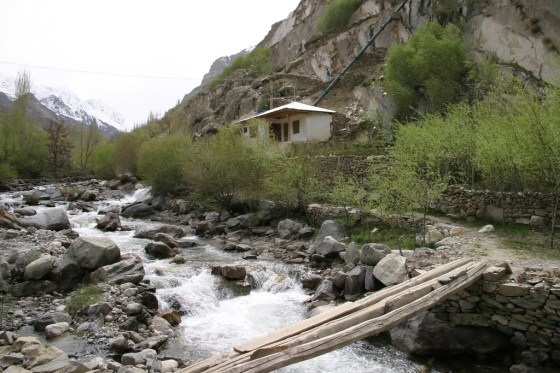
The top of the channel drop supplying the micro-hydro plant at Garam Chasma, in Pakistan’s Hindu Kush, a few miles from the Afghan border. (Photo credit: Martin Wright)
These plants supplied electricity to about 175,000 people in the Chitral District and the North-West Frontier Province. Electric lighting has replaced expensive and polluting kerosene lamps and dirty pine resin torches. It has given children the invaluable chance to study during the evenings, while their parents can generate much-needed income through increased production of clothes and handicrafts.
A house in the village of Rumbur, Chitral, lit by electricity from a local micro-hydro plant. (Photo: Ashden Awards, credit: Martin Wright)
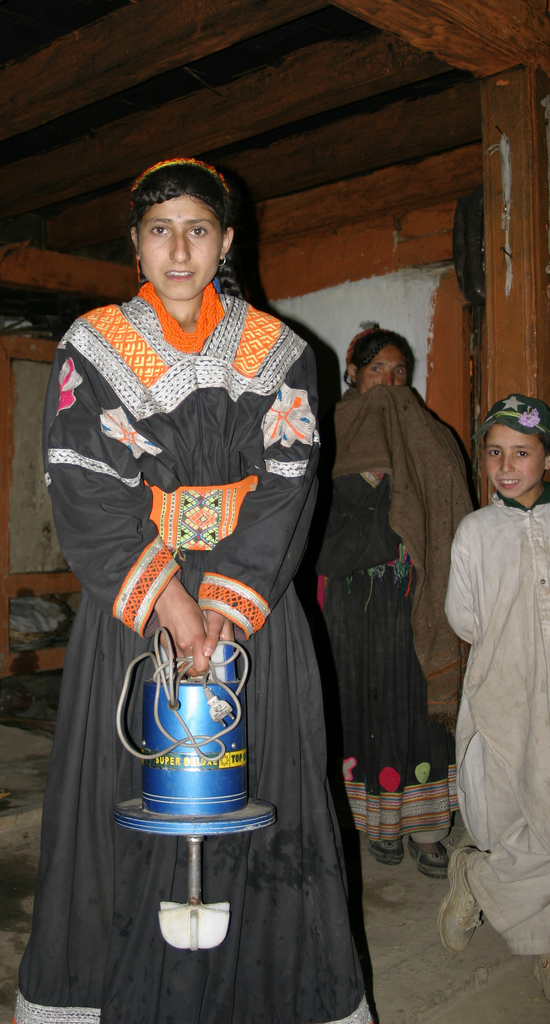
But there are health and safety benefits too, like being able to avoid deadly scorpion stings at night. In addition to providing better lighting the villagers have also begun to value the use of radio, television and appliances like electric butter churner. Their world has become larger. As one villager says: “Children have heard about things like trains and planes. Now they can see them on the television.”
The progress to date has been impressive. By 2010, a total of 204 hydro systems had been installed in Chitral province and about 20 elsewhere, supplying electricity for lighting and household appliances.
The plan is for larger plants to support cooking and heating, and two new programmes under development will reach a further 350 villages, funding permitting.
















 Simerg - Insights from Around the World