Simerg is an independent initiative dedicated to Ismaili Muslims, the Aga Khan — their Hereditary Imam — and the Ismaili Imamat, and Islam in general through literary readings, photo essays and artistic expressions
On June 9, 2025, the Aga Khan Award for Architecture (AKAA) announced 19 shortlisted projects for the 2025 Award cycle, a selection made with utmost care and expertise by an independent Master Jury, which meticulously reviewed 369 projects nominated for the 16th Award Cycle (2023-2025). Established by Mawlana Shah Karim, His Late Highness Prince Karim Aga Khan IV, the 49th Hereditary Imam of the Ismaili Muslims, in 1977, the Award identifies and encourages building concepts that successfully address the needs and aspirations of communities in which Muslims have a significant presence.
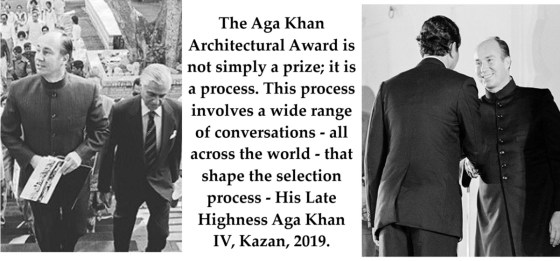
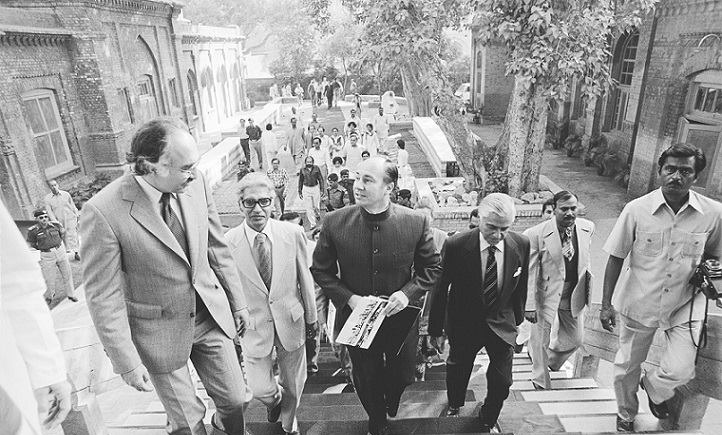
Flashback: Mawlana Shah Karim, His Late Highness Aga Khan IV, arrives for the inaugural ceremony of the Aga Khan Award for Architecture held on October 23. 1980, in Lahore, Pakistan. Photograph: AKDN / Christopher Little.
~~~~~~
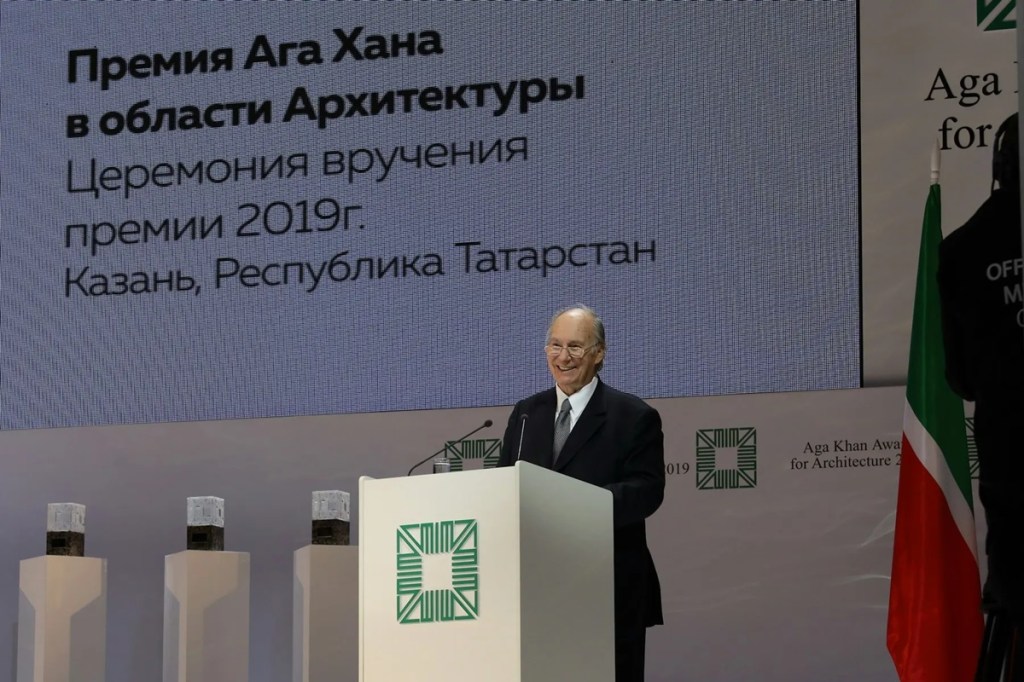
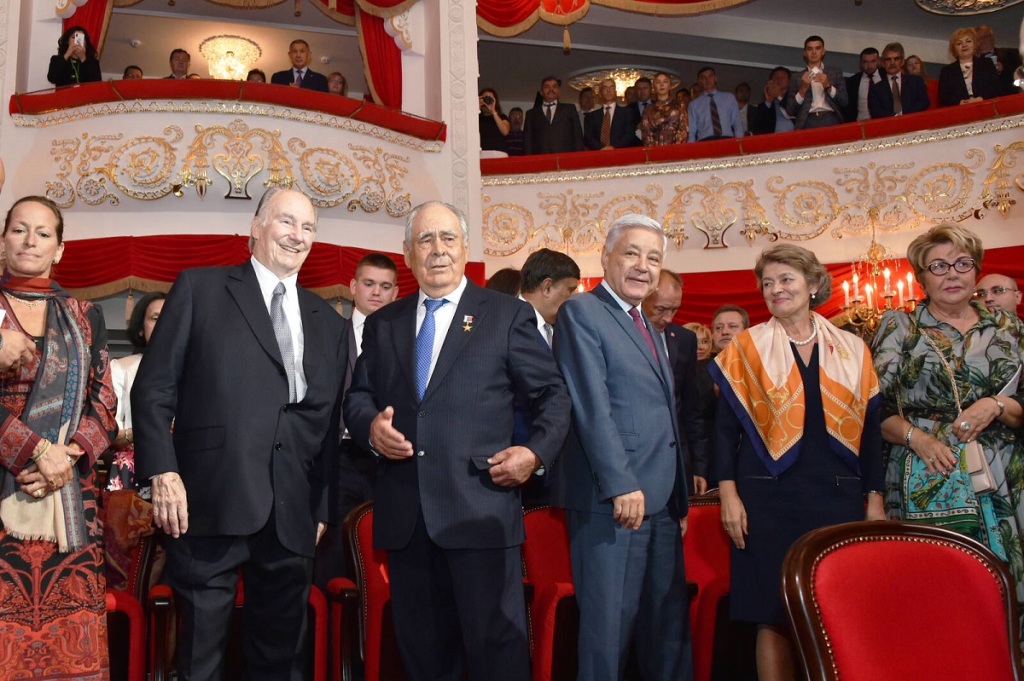
Mawlana Shah Karim, His Late Highness Aga Khan IV, delivering his speech at the Aga Khan Award for Architecture ceremony, Kazan, Tatarstan, September 13, 2019. This was the last Award ceremony he attended in person. In 2022, at the Award Ceremony and seminars held in Muscat, Oman, he was represented by his brother, Prince Amyn and his children, Princess Zahra and Prince Hussain. Photograph: AKDN. Please read speech HERE.
Since its launch 48 years ago, with the first award ceremony taking place in Lahore, Pakistan, on October 23, 1980, 128 projects have received the award, and nearly 10,000 building projects have been documented. The AKAA’s selection process emphasizes architecture that not only provides for people’s physical, social and economic needs, but that also stimulates and responds to their cultural aspirations.
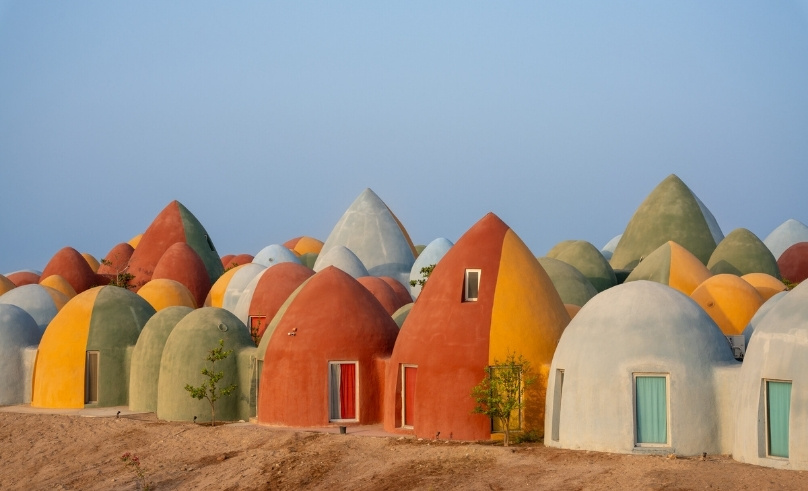
Majara Complex and Community Redevelopment, Hormuz Island, Iran. Please click on the image for the Cairo Scene article.
Salma Ashrat Thabit, writing for Cairo Scene, says that “the 2025 Aga Khan Award for Architecture shortlist is here, and the Middle East is in the spotlight. From Egypt’s revived markets to Iran’s vibrant domes, these standout projects offer fresh visions of culture and community.” Please read Salma’s piece Cairo Scene: Middle Eastern Marvels.
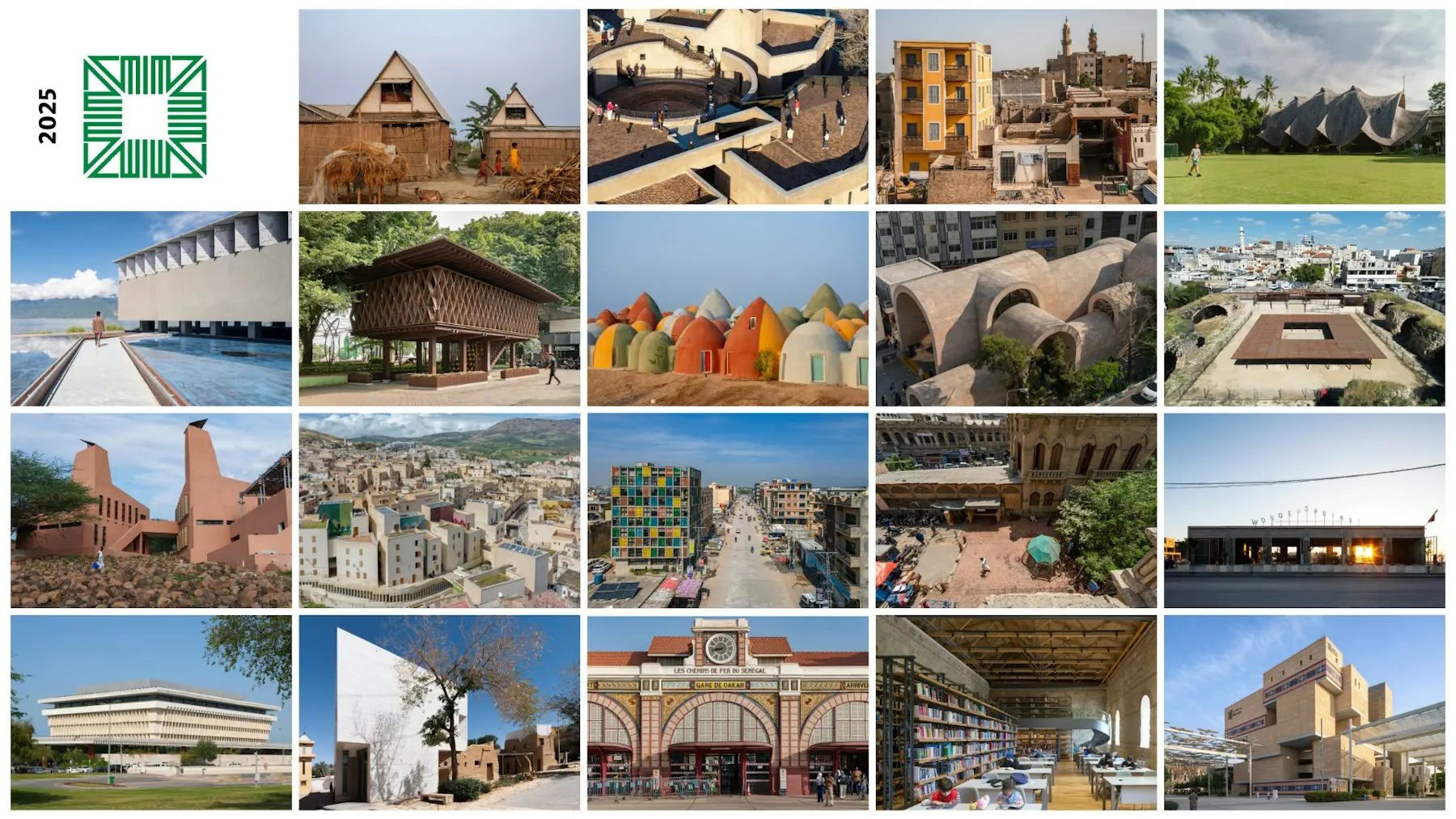
A collage of 19 projects shortlisted for the 2025 Aga Khan Award for Architecture. Please click on the image for overviews and descriptions of the projects on the AKDN website.
The AKDN website provides a comprehensive overview with links to detailed descriptions of the 19 shortlisted projects from Bangladesh to China to Kenya to Türkiye to the United Arab Emirates. Please click Aga Khan Award for Architecture 2025 shortlist.
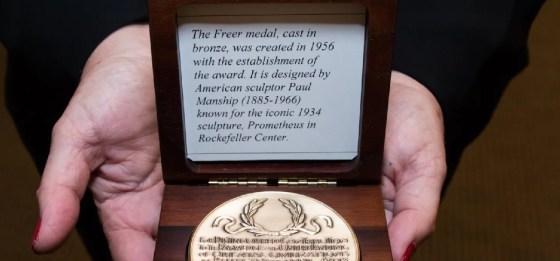
The National Museum of Asian Art has announced its 2023 recipients of the Freer Medal, a lifetime achievement award that honors individuals who have substantially contributed to the understanding of the arts of Asia throughout their career. This year, the institution’s centennial, the honor will go to Vidya Dehejia, the Barbara Stoler Miller Professor Emerita of Indian and South Asian Art at Columbia University, and Gülru Necipoğlu, the Aga Khan Professor and Director of the Aga Khan Program for Islamic Architecture at Harvard University’s History of Art and Architecture Department. They will be honored for their lifetime work in South Asian art and arts of the Islamic world, respectively. The medal will be presented to Dehejia April 28 and to Necipoğlu Oct. 27.
Named after the museum’s founder, Charles Lang Freer, the Freer Medal has been awarded 14 times since its inception in 1956. This is the first time that a scholar of South Asian and another of Middle Eastern descent will receive the award. Only two other women have previously received the Freer Medal: It was awarded to Dame Jessica Rawson, professor of Chinese art and archaeology at the University of Oxford, in 2017 and to Stella Kramrisch, Czech art historian and leading specialist on South Asian art, in 1985.
“The Freer Medal is an important way in which our museum encourages and exemplifies excellence in Asian art scholarship,” said Chase F. Robinson, Dame Jillian Sackler Director of the Arthur M. Sackler Gallery and Freer Gallery of Art, the National Museum of Asian Art. “We are pleased to recognize the enormous contributions that these scholars have made to their fields. It is long overdue that women of Middle Eastern and Asian heritages receive the Freer Medal. The museum congratulates Vidya Dehejia and Gülru Necipoğlu on this award during the landmark occasion of our centennial.”
About Gülru Necipoğlu
Gülru Necipoğlu. Photograph: Via National Museum of Asian Art
Necipoğlu earned her doctorate from Harvard University in 1986 and has served there as the Aga Khan Professor and Director of the Aga Khan Program for Islamic Architecture since 1993. She holds a Bachelor of Arts from Wesleyan University and a Master of Arts from Harvard University. Necipoğlu specializes in the arts and architecture of the pre-modern Islamic lands, with a focus on the Mediterranean world and the cross-cultural and artistic exchanges between the Ottoman, Safavid and Mughal empires in the 16th and 17th centuries. Grounded in rigorous archival research, her multi-disciplinary studies have addressed the aesthetic interconnections of Byzantium and Renaissance Europe, pre-modern architectural practices and the role and function of ornament in the Islamic world and beyond, offering new and highly original perspectives on the arts and architecture of the region. Throughout her illustrious career, Necipoğlu has also trained and mentored numerous students, who have continued to transform the field.
Since 1993, Necipoğlu has also served as editor of Muqarnas: An Annual on the Visual Cultures of the Islamic World and its supplements, the pre-eminent publication in the field, which has transformed the study of the arts and architecture of the Islamic world. Her own publications comprise studies in monumental architecture to intricate designs on portable objects and have changed the understanding of the arts of the Islamic world. They include Architecture, Ceremonial and Power: The Topkapı Palace (1991), The Topkapı Scroll–Geometry and Ornament in Islamic Architecture (1995), The Age of Sinan: Architectural Culture in the Ottoman Empire (2005, 2011), Treasures of Knowledge: An Inventory of the Ottoman Palace Library (1502/3–1503/4) (2 vols, 2019, coeditors Cemal Kafadar and Cornell H. Fleischer), The Arts of Ornamental Geometry: A Persian Compendium on Similar and Complementary Interlocking Figures (2017), A Companion to Islamic Art and Architecture, in the Wiley-Blackwell Companions to Art History (coeditor F. Barry Flood, 2017) and Histories of Ornament: From Global to Local (coeditor Alina Payne, 2016).
In recognition of her distinguished scholarly career, Necipoğlu is an elected member of the British Academy, the American Philosophical Society, the American Academy of Arts and Sciences and the Centro Internazionale di Studi di Architettura Andrea Palladio in Vicenza, Italy.
_____________
Oleg Grabar: One of 14 Previous Recipients of the Freer Medal , was Instrumental in Founding Harvard’s Aga Khan Program for Islamic Architecture
The following piece about Oleg Grabar includes material from a memorial meeting held by Harvard’s Faculty of Arts and Sciences on May 1, 2012. Co-incidentally, we are publishing this piece almost 12 years to the day of Grabar’s death on January 8, 2011.
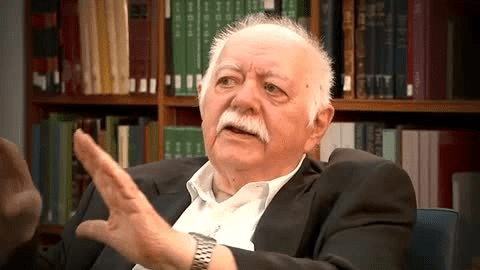
Oleg Grabar. Photograph: Archnet
Among the fourteen previous recipients of the Freer Medal is Professor Oleg Grabar (1929-2011), who received the eleventh presentation of the medal on April 5, 2001. A special award booklet dedicated to Professor Grabar was published and can be downloaded by clicking HERE.
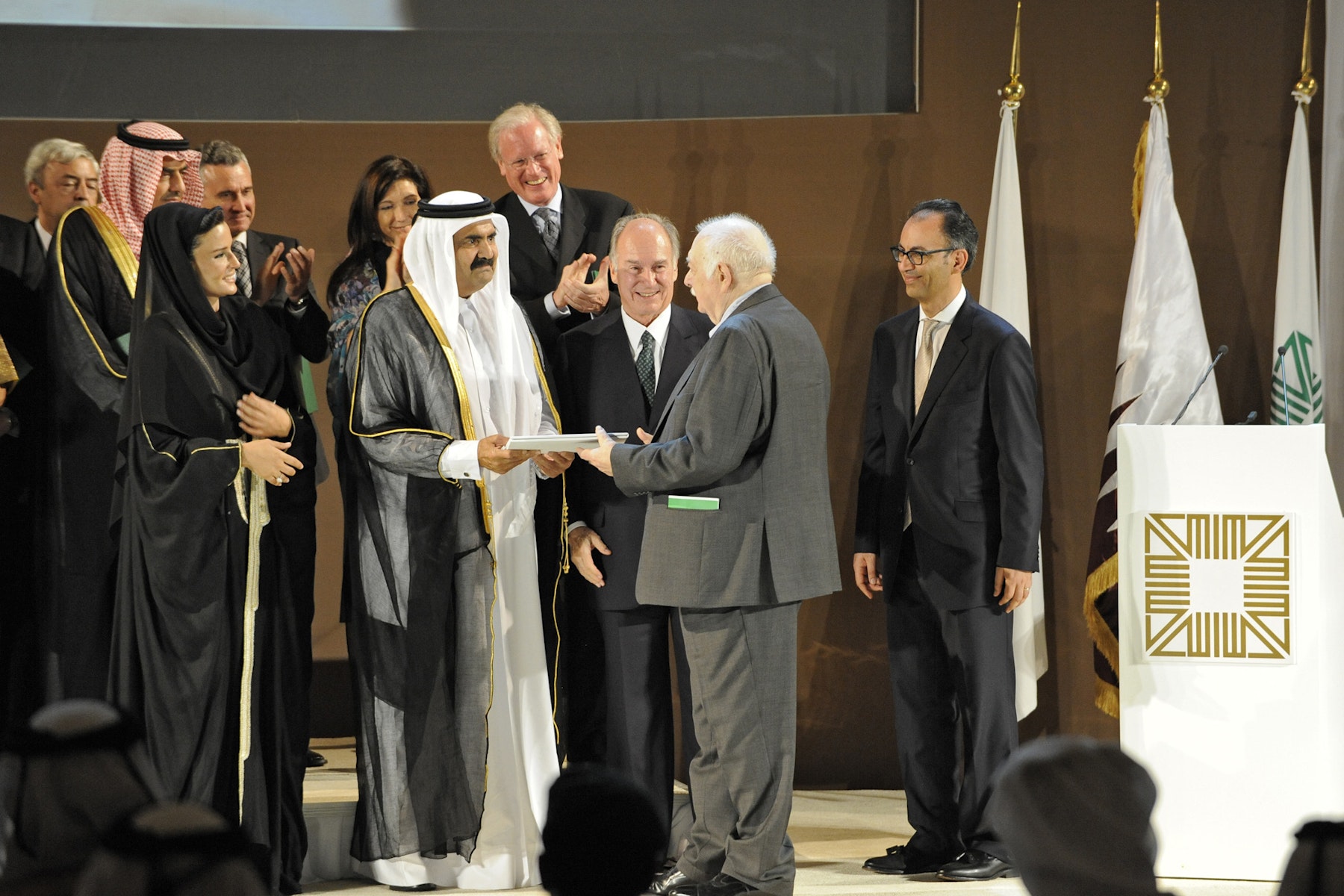
On November 24, 2010, at the Aga Khan Award for Architecture ceremony held in Qatar, His Highness the Aga Khan presented the Chairman’s Award to Professor Oleg Grabar in recognition of his lifetime contribution to the field of Islamic art and architecture. Less than two months later, on January 8, 2011, Oleg Grabar passed away at his home in Princeton, New Jersey, at the age of eighty-one.
Professor Grabar was recognized by the Islamic art and architecture community as one of the field’s most influential and insightful scholars. He was professor emeritus of the School of Historical Studies at the Institute for Advanced Study, and Aga Khan Professor, Emeritus, at Harvard University.
Professor Grabar, who taught in the Harvard Department of Fine Arts (now History of Art and Architecture) for twenty-one years (1969–1990), was instrumental in founding Harvard’s Aga Khan Program for Islamic Architecture. There are few, if any, Islamicists who have not profited from the scholarly contributions of this extraordinary man, who was larger-than-life. He was the first Aga Khan Professor of Islamic Art at Harvard (1980–1990) — a position now held as mentioned in the previous section above by Gülru Necipoğlu — and subsequently joined the faculty of the Institute for Advanced Study in Princeton, where he remained active in research and publication until his second retirement in 1998, and over the following thirteen years as well. Grabar’s continuing post-retirement intellectual productivity and capacity to inspire were officially recognized when he received His Highness the Aga Khan’s Chairman’s Award in Doha, Qatar, in 2010.
Please click on photo for enlargement
His Highness Sheikh Hamad bin Khalifa Al Thani, the then Emir of Qatar, presents a certificate to Professor Oleg Grabar who was awarded the Chairman’s Award in recognition of his lifetime contribution to the field of Islamic art and architecture, as Her Highness Sheikha Moza bint Nasser and His Highness the Aga Khan look on. The Award ceremony took place in Qatar November 24, 2010. Photograph: AKDN/Gary Otte.
Date posted: January 6, 2023.
__________________
REVIEW SIMERG’S TABLE OF CONTENTS AND VISIT ITS SISTER WEBSITES
Before departing this website, please take a moment to review Simerg’s Table of Contents for links to hundreds of thought-provoking pieces on a vast array of subjects including faith and culture, history and philosophy, and arts and letters to name a few. Also visit Simerg’s sister websites Barakah, dedicated to His Highness the Aga Khan, and Simergphotos. The editor may be reached via email at mmerchant@simerg.com.
The material in this post has been compiled from the official websites of the Ministry of Information of the Sultanate of Oman — see link to October 23 story “HH Sayyid Theyazin to Patronize over Aga Khan Award Distribution Ceremony on 31 October” — and the Aga Khan Development Network (AKDN). Please visit the Music Awards and Architecture Awards pages at AKDN.
Map of the Sultanate of Oman, shaded white (2016), surrounded by Saudi Arabia, UAE and Yemen. The Gulf of Oman separates the Sultanate from the Islamic Republic of Iran. Credit: Perry-Castañeda Library, Map Collection, University of Texas.
The 2022 Aga Khan Award for Architecture and Aga Khan Music Awards
His Highness Sayyid Theyazin bin Haitham Al Said, Minister of Culture, Sports and Youth, will preside over the distribution of Aga Khan Award for Architecture (AKAA) at the Royal Opera House Muscat (ROHM) on October 31, 2022. The AKAA on June 2, 2022, announced 20 shortlisted projects for the 15th edition of the Award cycle. The projects will compete for a share of the US$ 1 million prize, one of the largest in architecture. The 20 shortlisted projects were selected by an independent Master Jury from a pool of 463 projects nominated for the 15th Award Cycle (2020-2022).
The event marks the 45th anniversary of the award, which was established by Mawlana Hazar Imam, His Highness the Aga Khan, in 1977. The first AKAA ceremony was held in 1980 at the Shalimar Gardens in Lahore, Pakistan.
The ceremonies, scheduled at the ROHM, will be held in the presence of ministers, undersecretaries, a selection of Omani architects and musicians and about 250 international guests — in addition to members of the Awards Steering Committee, the jury, candidates and winners of the Architecture and Music Awards.
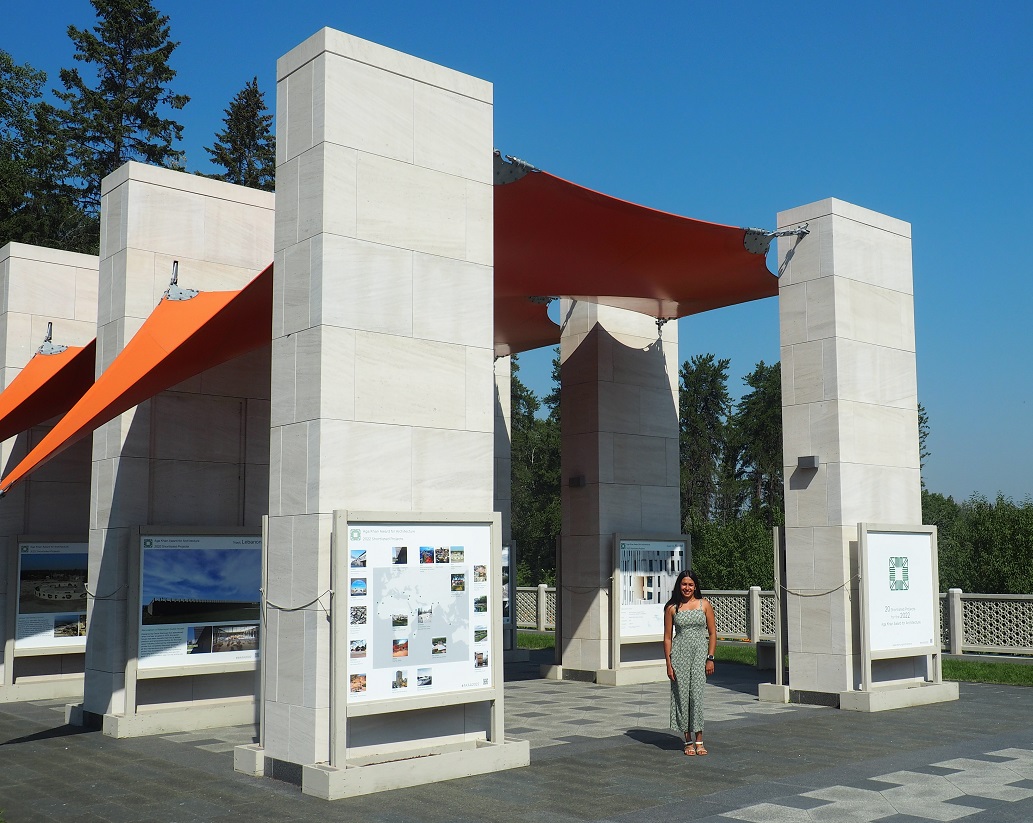
Nurin Merchant poses in front of the Talar Building during her visit in August 2022 to the Aga Khan Gardens in Edmonton. Twenty shortlisted projects for the 2022 Aga Khan Award for Architecture were beautifully showcased on Talar’s large pillars. Photograph: Malik Merchant/Simerg.
Coinciding with the presentation of the AKAA will be the award ceremony for the 2nd edition of the Aga Khan Music Awards. The Aga Khan Awards for Music was established in 2018 by Mawlana Hazar Imam and is administered by a Steering Committee co-chaired by Mawlana Hazar Imam and his younger brother Amyn Aga Khan.
This is the first time that two award ceremonies are being held together at one location. The distribution of the music awards will be attended in a number of related events by His Highness Sayyid Bilarab bin Haitham Al Said and His Highness Sayyid Kamil bin Fahd Al Said.
Laureates of the 2022 Aga Khan Music Awards. Photograph: AKDN.
Sayyid Said bin Sultan Al Busaidi, Undersecretary of the Ministry of Culture, Sports and Youth for Culture gave the following statement: “The distribution of the Aga Khan Awards for Architecture and Music 2022 in the Sultanate of Oman offers a variety of opportunities to academic researchers, musicians and architects. It will enable them to learn about new and outstanding areas highlighted by the awards. It will allow them to be in touch with winners from different countries of the world and the protocols associated with the awards. It will also expand the Omani cultural scene integration with various countries of the world and consolidate social awareness about participation in these international awards. The hosting of the events provides a true manifestation of Oman’s vision to become a destination for art, literature and culture.”
Busaidi further added that the follow-up of the event via media platforms will highlight Oman’s economic and scholarly domains, thus achieving one of the most important pillars of the country’s cultural strategy, which targets cultural openness to the world and the global propagation of the Omani cultural identity.
Date posted: October 24, 2022. Last updated: October 25, 2022 (external links added, see below)
_____________________
Related articles:
For explanations of the two logos featured at top of this post, please visit:
Simerg welcomes your feedback. Your email will not be shown, and you may choose to remain anonymous. Please click Leave a comment. Your letter may be edited for length and brevity and is subject to moderation.
REVIEW SIMERG’S TABLE OF CONTENTS AND VISIT ITS SISTER WEBSITES
Before departing this website please take a moment to visit Simerg’s Table of Contents for links to almost 2000 pieces published since the website was created in 2009. Also visit Simerg’s two sister websites Barakah, dedicated to His Highness the Aga Khan, and Simergphotos. Barakah’s editor may be reached at mmerchant@simerg.com. Malik may be followed @Facebook and @Twitter.
His Highness the Aga Khan at Kazan Kremlin. Please click for complete coverage of visit to Tatarstan.
A note from Publisher/Editor Malik Merchant
Simerg’s sister website Barakah is dedicated to Mawlana Hazar Imam — His Highness the Aga Khan — members of his family, and the Ismaili Imamat. It currently contains more than 170 interesting visual and textual pieces on the subject. There are 2 posts you should see about his visit to Tatarstan last week. Please click on:
Tabiat Pedestrian Bridge, Tehran, one of 6 projects to win the 2016 Aga Khan Award for Architecture. Photo: Aga Khan Trust for Culture/Barzin Baharlouie. Please click on photo for special report.







 Simerg - Insights from Around the World