Simerg is an independent initiative dedicated to Ismaili Muslims, the Aga Khan — their Hereditary Imam — and the Ismaili Imamat, and Islam in general through literary readings, photo essays and artistic expressions
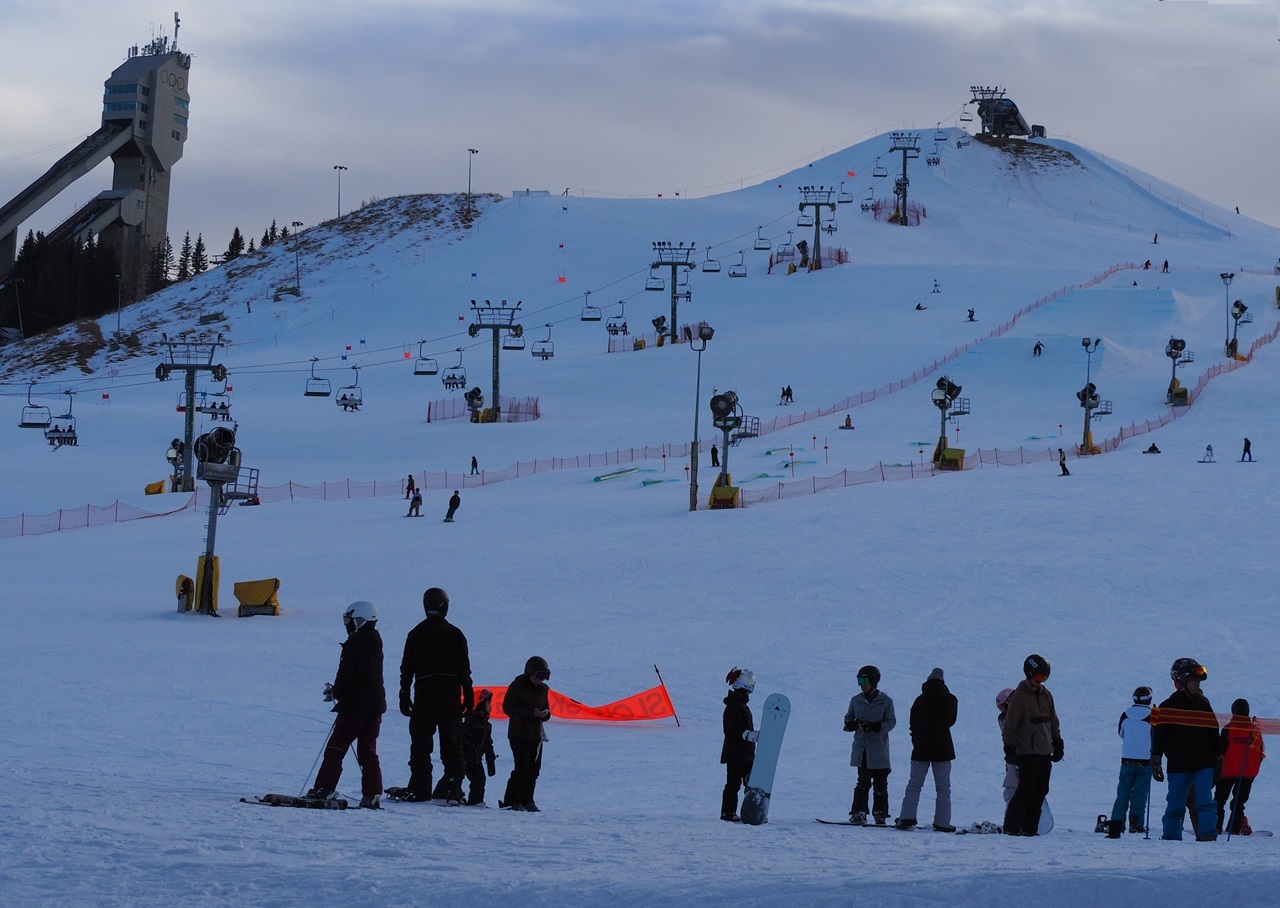
Calgary’s Olympic Park is a mere 14 km from downtown, making it a convenient and accessible destination for both tourists and locals. This unique venue hosted many winter events during the XV Olympic Games held in 1988, including bobsleigh, luge, Nordic combined, ski jumping, and freestyle skiing. On the first day of winter in Calgary, December 21, 2024, the weather was surprisingly mild, with a temperature of around 4°C (39 °F).
I was again at the Farmer’s Market West, packed with Christmas shoppers. Driving to the market, I could see the Olympic Park in all its glory as skiers descended the slopes. Everyone was at the Market to enjoy the Christmas ambiance with music, decorated shops, and fabulous food. The atmosphere was lovely as I grabbed a bag of large pomegranates and enjoyed a Montreal-style sesame seed vegetarian bagel. Sharing a large table in the market with others, one lady observed: “You don’t have to go to Banff or Lake Louise to ski; you can enjoy the Olympic Park just as much, especially when you have a family.”
As I stepped out of the Market, I once again saw the Olympic Park, and I could not help but drive to its base to take a few photographs and pick one as the photo of the day! Calgarians and visitors, please enjoy the Olympic Park during winter. Its facilities make it remarkable and an excellent spot for a day of thrilling winter activities that will excite you and your entire family. It is a great training ground for beginner skiers before they head to the slopes in Banff and Lake Louise, and it’s a perfect family outing.
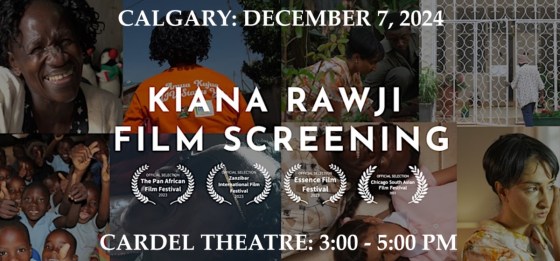
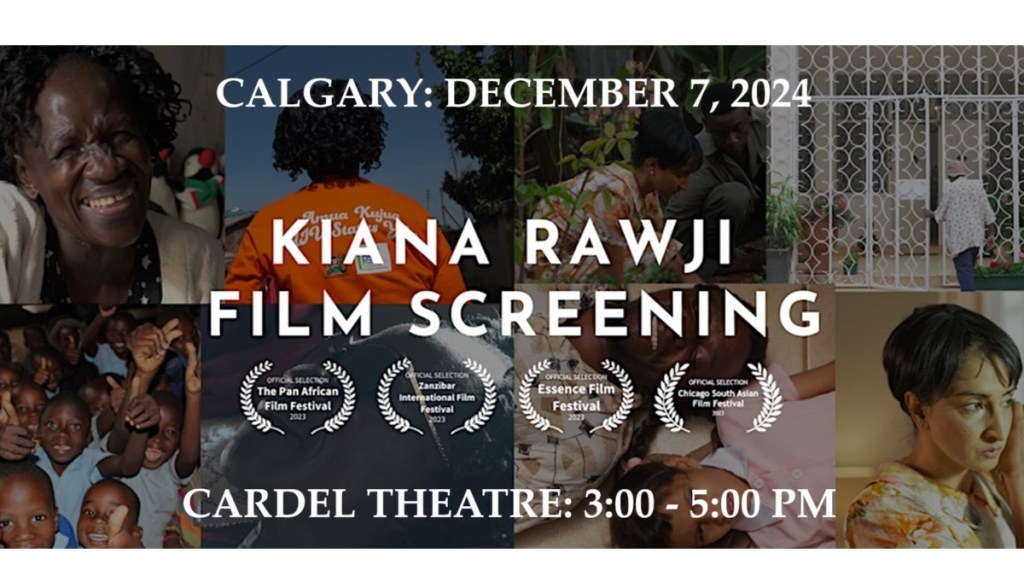
Award-winning filmmaker Kiana Rawji has returned to her hometown to screen her two highly acclaimed films at Calgary’s Cardel Theatre at 180 Quarry Park Blvd on December 7 from 3:00 to 5:00 PM. A few tickets are left, and they can be secured at https://rawjifilms.eventbrite.com.
The movies “Inside Job” and “Mama of Manyatta,” both shot in Kenya, mark an essential milestone in Kiana’s career as a passionate filmmaker. This is a unique opportunity to witness Kiana’s exceptional career in filmmaking (read our earlier post HERE). The screening will be followed by an engaging Q&A session with the filmmaker herself, making this event a significant highlight in Calgary’s 2024 calendar.
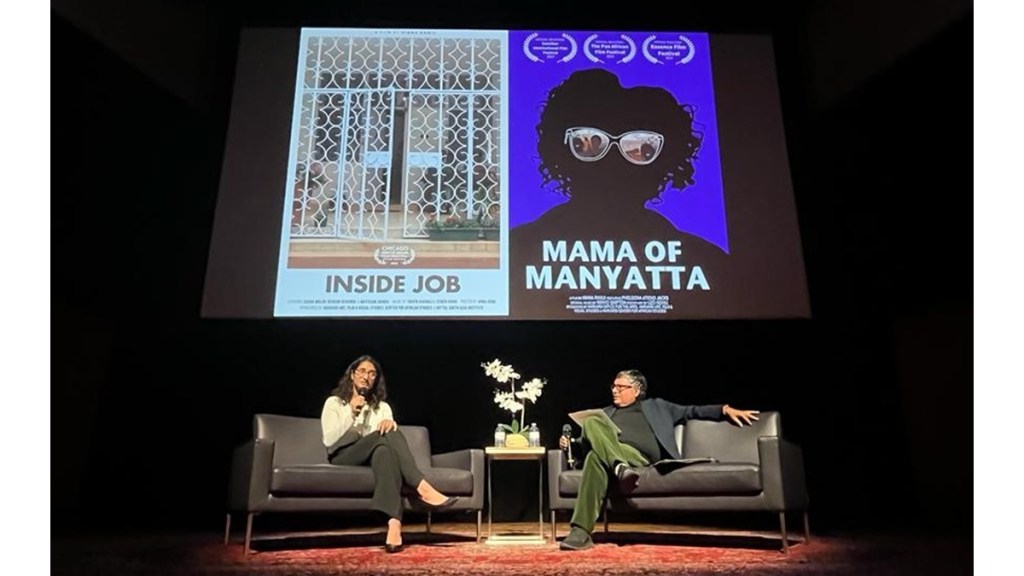
Kiana Rawji engages with the audience in the Nanji Family Foundation Auditorium at the Aga Khan Museum, Toronto, in October 2023.
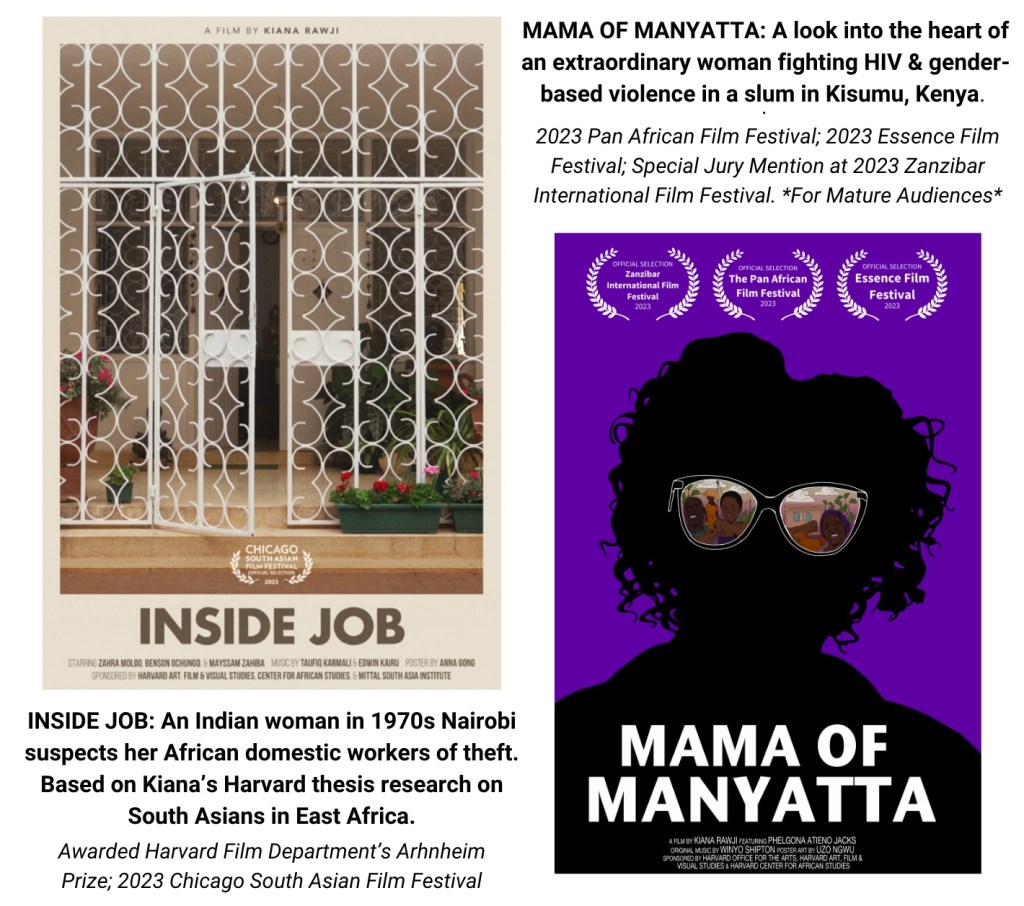
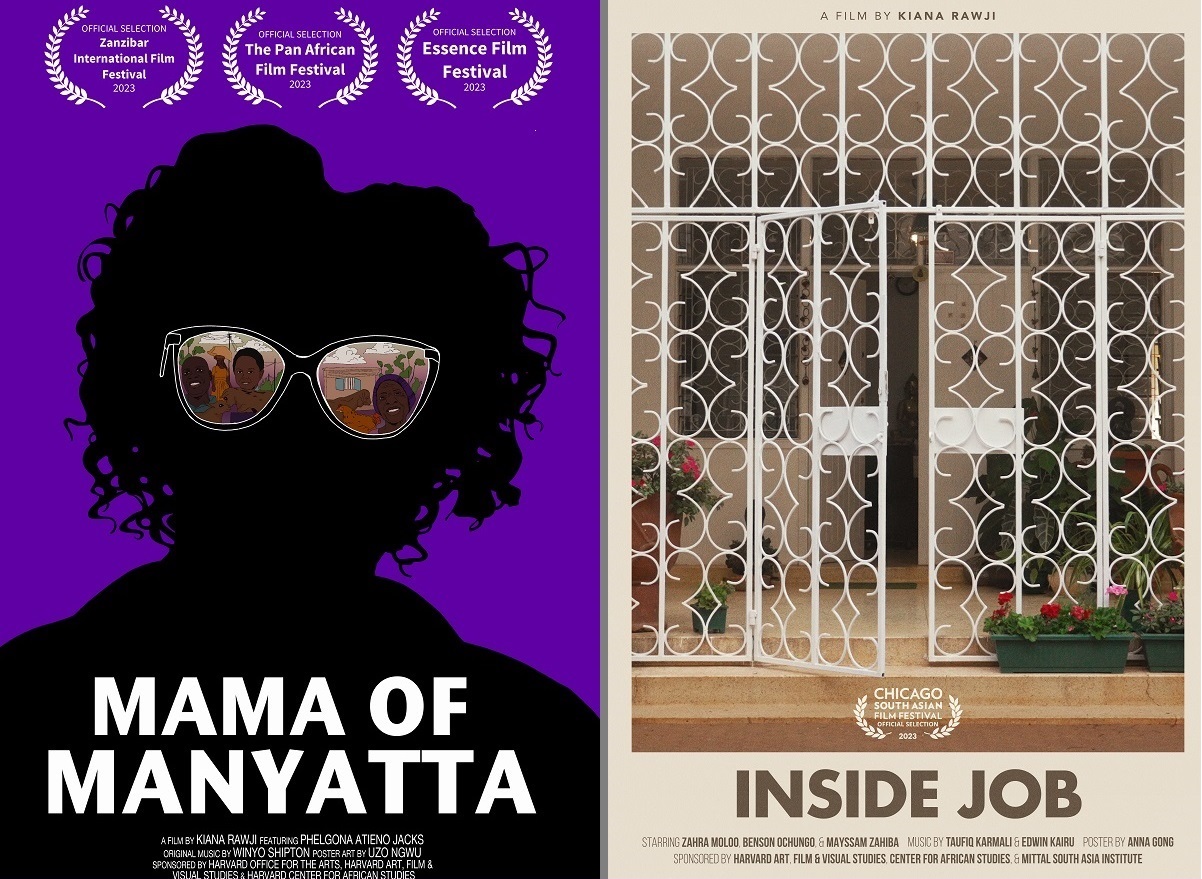
MAMA OF MANYATTA is a touching portrait of a woman fighting HIV and gender-based violence in a Kenyan slum. The film has been widely acclaimed, screening at the 2023 Pan African Film Festival, Essence Film Festival & Zanzibar International Film Festival, and receiving a Special Jury Mention.
INSIDE JOB is a fictional reconstruction of the lives of South Asians in Kenya in the 1970s. The film received the Harvard Film Department’s Arnheim Prize for most outstanding interdisciplinary project & premiered at the 2023 Chicago South Asian Film Festival.
The two films made their Canadian debut in October 2023 in the Nanji Family Foundation Auditorium at the Aga Khan Museum in Toronto to a packed and appreciative audience.
Event Summary and Tickets
What: Kiana Rawji Film Screening — Inside Job and Mama of Manyatta
I am thrilled to inform Calgarians and readers across Alberta about an event we have all eagerly anticipated. Calgary’s own, the young award-winning filmmaker Kiana Rawji, has organized a showing of her highly acclaimed films, Mama of Manyatta and Inside Job, which made their Canadian debut to a packed audience at the Aga Khan Museum in Toronto on October 15, 2023.
Kiana Rawji
The excitement is palpable as these films, created by our very own Kiana, are set to grace our city on Saturday, December 7 at Calgary’s Cardel Theatre at 180 Quarry Park Blvd. The films mark an essential milestone in Kiana’s career as a passionate filmmaker and an exciting and unique moment in the city’s 2024 calendar.
Cardel Theatre is small and will fill up quickly, so get your tickets now at EVENTBRITE. Following the screening, Kiana will conduct an in-person Q&A.
~~~~~~
The Films
Kiana describes the making of the films in her insightful interview below.
~~~~~~
Profile: Kiana Rawji
Kiana Rawji (www.kianarawji.com) is an award-winning Calgarian filmmaker who graduated from Harvard College with a concentration in Film and History & Literature. As an Ismaili Muslim woman and daughter of East African Asian immigrants, she is drawn to stories around diasporas, pluralism, and social justice. Her TEDx talks on Islam and the Cosmopolitan Ethic have reached 150,000+ people worldwide.
Kiana’s 2021 documentary, LONG DISTANCE, about migrant workers at an Albertan meat plant, won the Grand Jury Prize for Best Alberta Short Film at the 2021 Calgary International Film Festival.
Her 2023 documentary, MAMA OF MANYATTA, has been widely acclaimed, screening at the 2023 Pan African Film Festival, Essence Film Festival & Zanzibar International Film Festival, and receiving a Special Jury Mention. This film follows an extraordinary woman fighting HIV & gender-based violence in a Kenyan slum.
Kiana’s 2023 fiction film, INSIDE JOB, has also garnered attention. It is about an Indian woman who suspects her African domestic workers of stealing jewelry in 1970s Nairobi. The film received the Harvard Film Department’s Arnheim Prize for most outstanding interdisciplinary project & premiered at the 2023 Chicago South Asian Film Festival.
In 2023, INSIDE JOB & MAMA OF MANYATTA screened at the Unseen Nairobi theater in Kenya and the Nanji Family Foundation Auditorium at the Aga Khan Museum in Toronto. The sold-out Aga Khan Museum screening opened with remarks by Dr. Zainub Verjee, an accomplished writer, critic, curator, artist, and appointee of the honourable Order of Canada. “When I previewed these works,” Dr. Verjee explained in her introductory remarks, “I was really moved by its poetry. But more importantly, what struck me was its feminist ethos.”
The screening was followed by a moderated Q&A in which Kiana discussed her films’ historical, political, and social-justice underpinnings and her aim to grapple with the consequences of power and inequality in our lives.
“The screening of Inside Job and Mama of Manyatta [at the Aga Khan Museum] on October 15, 2023, was an inspiring event which gave those in attendance an early peek into the work of a gifted filmmaker with tremendous promise who will undoubtedly continue to make a real and meaningful difference through her films” — excerpt from review by Ali N. Alibhai
In Calgary, on December 7th, in addition to sharing her impactful work — and creating awareness around the social issues with which she artistically and intellectually engages — Kiana will share insights into the rigorous research and cosmopolitan ethos that drive her work.
~~~~~~
Tickets
INSIDE JOB and MAMA OF MANYATTA will be screened at Calgary’s Cardel Theatre from 3-5pm on Saturday, December 7th, 2024.
The theatre is small and will fill up quickly, so get your tickets now at this Eventbrite link.
The screening will be followed by an in-person Q&A with Kiana.
~~~~~~~~~
Sponsor and Support Kiana Rawji
Kiana Rawji welcomes sponsors who wish to support the event in Calgary and her continued work in film. Please contact her or submit your sponsorship via an e-transfer to kianarawjifilms@gmail.com. This budding young artist will appreciate any contribution.
~~~~~~~~~
Interview
“I strive to tell stories that recognize diversity, complexity, and nuance, while connecting people through universal, human experiences. I’m especially interested in topics surrounding migration, diasporas, and identity” — Kiana Rawji
Kiana Rawji engages with the audience at the Aga Khan Museum, Toronto, in October 2023.
To acquaint our Calgary and Alberta readers with Kiana’s work and what inspires her, we present an abridged version of our interview before her films premiered in Toronto (click HERE for the full interview.)
Simerg: Can you tell us about how you got into filmmaking?
Kiana Rawji: Throughout high school, I had been interested in the intersection between storytelling and social justice, and I had pursued that through writing and public speaking. Filmmaking was always a hobby of mine growing up, but I never even considered it as an academic or career path. When I got to Harvard, I took a class called Social Justice and the Documentary Film in my first year and I was drawn to film as a provocative medium to raise awareness, evoke empathy, and elevate marginalized voices. After I made my first short film in that class, I never looked back.
At Harvard, I pursued a joint concentration because through History & Literature, I could learn about the very histories, in all their nuance and complexity, that would inform the stories I want to tell through film. Inside Job was a perfect example of that.
Simerg: Where did the idea for Inside Job come from?
Kiana: The film was largely based on my own family history — my parents and grandparents grew up in Nairobi, but before that my family traces back to Gujarat, India. I knew I wanted to make a film set in the 1970s Kenya, during a period of exacerbated racial tensions, due to the rise of ethnocentric nationalism in the region. I was particularly interested in the ways “Africans” and “Indians”/“Asians” perceived and interacted with each other. Since society was so racially segregated though, I realized the most common realm of interracial interaction and intimacy was in the household; virtually all brown households employed black domestic “servants”. What was all the more interesting was that, despite the deeply entrenched taboo that restricted social contact between brown women and black men in particular, these two types of people consistently interacted on a daily basis through the domestic labor relationship. I started to wonder how larger cultural norms and boundaries as well as political tensions were both reinforced and transcended in such close quarters.
Interview continues below
Kiana Rawji’s fs Mama of Manyatta and Inside Job will be screened at the Cardel Theatre in Calgary on Saturday, December 7, 2024. For tickets, click EVENTBRITE.
So I decided to explore that dynamic through oral history research. I interviewed many East African Asian women who lived through the 70s, as well as black African domestic workers. These interviews informed my whole script, from the subtleties of the dialogue to the core elements of the plot. I decided to focus on the theme of theft because of how much it came up in my interviews, and how symbolic it was; it was clear that both sides felt the other had stolen something from them. South Asians in East Africa felt that their own homes, along with properties, businesses, etc., were stolen from them when they were largely expelled from the region in the 70s. At the same time, native East Africans felt that “Asians” had stolen all the wealth and land in the first place. Both were stuck in a colonial system of inequality and a highly racialized socioeconomic hierarchy that lasted well beyond the colonial period.
____________
“It doesn’t take much to start. You don’t need fancy equipment or huge amounts of funding — all you need is a camera (which could be your phone) and a good story” — Kiana Rawji
____________
Simerg: What was most difficult about filming Inside Job?
Kiana: Well, the effort to make a period film in a foreign country in under a week with a budget under $10,000 was a huge challenge in itself. But I was able to find an incredible, talented cast and crew to achieve this and make it all easier.
The biggest challenge I faced was trying to get it right. I was recreating a history that I hadn’t lived through. I studied Swahili at Harvard and that helped but I don’t even speak or understand Gujarati. But the way I addressed that challenge was to consult a lot of experts.
____________
“When it comes to filmmaking around social issues, I’ve learned that stories of injustice and adversity are incomplete without the stories of resilience and endurance that invariably exist alongside them” — Kiana Rawji
____________
Simerg: As for your other film, Mama of Manyatta, how did that come about? How did you come to meet the subject, Phelgone Jacks?
Kiana: A few years before I made the film, my older sister Zahra had met Mama Phelgone through a Harvard College summer global health program that connected students with local NGOs and CBOs. Mama Phelgone worked on removing stigma around those affected by HIV/AIDS in Kisumu. After spending some time with Mama Phelgone, Zahra told me there was a story there that I had to tell. The next summer (summer 2019), when I went to Kisumu and met Phelgone myself, I instantly agreed that hers was a story that needed to be told. Her community-centered approach to creating impact was remarkable, and she, herself, was one of the most generous, compassionate, and dedicated people I have ever met.
Twenty years ago, Phelgone founded a community-based organization fighting HIV/AIDS and gender-based violence in the slum of Manyatta in Kisumu. She was a mother figure to Manyatta’s young and old; she built an Early Childhood Development Center outside her home, hosted safe-sex workshops for teenage girls, counseling sessions for women survivors, and more. Though she helped people work through immense trauma, what was most remarkable about Mama Phelgone (as she was affectionately known in Manyatta) was that she cultivated strength and joy wherever she went, through prayer, song, and dance. She was, in her own words, an “ambassador of hope.”
Rather than the all-too-common narrative of the suffering African poor, I wanted Mama of Manyatta to present a portrait of African empowerment and leadership.
Soon after I shot Mama of Manyatta in 2022, Mama Phelgone was diagnosed with metastatic cancer. She passed away in the middle of my post-production. Though I was deeply saddened, my drive to preserve a remarkable life and legacy only intensified. Through my film, I hope Phelgone’s story continues to inspire change.
____________
“I decided I didn’t want to be a filmmaker who hides behind her lens, observing, recording, then leaving. I want to be the kind who knows when to stop being a fly on the wall and start engaging — when to be a friend, not just a filmmaker. When artists get proximate to their subjects — which sometimes requires those precious interactions unmediated by a camera lens — opening their souls and immersing themselves in the lives of others, the product is more meaningful and fulfilling for everyone involved” — Kiana Rawji
____________
Simerg: What were some of the most memorable moments from the production/filming of Mama of Manyatta?
Kiana: There were so many — it was such a joy and a privilege to be included in the circle of warmth and love that Mama Phelgone radiated.
But there is one moment in particular that stuck with me. It was in the middle of a workshop on gender-based-violence; Phelgone was helping a group of women — survivors of sexual assault –prepare for upcoming post-election violence and the risk it posed to women in the community, including themselves. I remember that, when Phelgone sensed the air in the room growing heavy, she suggested a dance break.
And so they got up, they played music, they danced, they smiled, and they laughed.
Phelgone and the women beckoned for me to join them. But the filmmaker in me was so keen to capture every detail of this moment — the rhythmic body movements, the courageous smiles, the unbridled laughter. Something unexpected and beautiful could happen any second, and if my camera wasn’t rolling. But that day, I realized that sometimes you also miss things when the camera is rolling. After filming the women dancing for a few minutes, I decided to set down my camera and join them. They showed me some moves, I was awful, they laughed at me, Ilaughed at me, and it was wonderful. I went into that shoot believing in the power of the camera, but I came out of it having also learned the power of putting it down.
Simerg: What inspires you? What drives your creative process?
Kiana: My intersecting identities as a South Asian Muslim woman and child of immigrants from East Africa inform the stories I want — and need — to tell.I strive to tell stories that recognize diversity, complexity, and nuance, while connecting people through universal, human experiences. I’m especially interested in topics surrounding migration, diasporas, and identity.
My creative process is driven by compassion, curiosity and collaboration. It begins with passion and personal investment in a story, followed by detailed research and engagement with real people and real stories.
Simerg: What is your advice to aspiring filmmakers?
Kiana: It doesn’t take much to start. You don’t need fancy equipment or huge amounts of funding — all you need is a camera (which could be your phone) and a good story. There are so many resources online. I taught myself how to use film editing software and write film scripts on the Internet. It just takes initiative and passion, and if you have those two things, you’re off to the races. I always remember what my idol, Ava DuVernay, said once when giving advice to filmmakers starting out. She said something along the lines of ‘don’t wait for something precious.’ Just begin. It doesn’t need to be the perfect, most eye-grabbing, world-changing idea. Everything you make will help you learn, and you’ll only get better. Just begin by telling stories you care about.
~~~~~~~~~
Event Summary
What: Kiana Rawji Film Screening — Inside Job and Mama of Manyatta
Support and Sponsor Filmmaker: Kiana Rawji welcomes sponsors who wish to support the event in Calgary and her continued work in film. The young artist will appreciate any contribution. Please contact her or submit your sponsorship via an e-transfer to kianarawjifilms@gmail.com.
Date posted: November 26, 2024.
Correction: The featured image in the original version mistakenly highlighted November 7, 2024, as the event date. The image has been corrected to reflect the correct event date, December 7, 2024. The editor apologizes for the error.
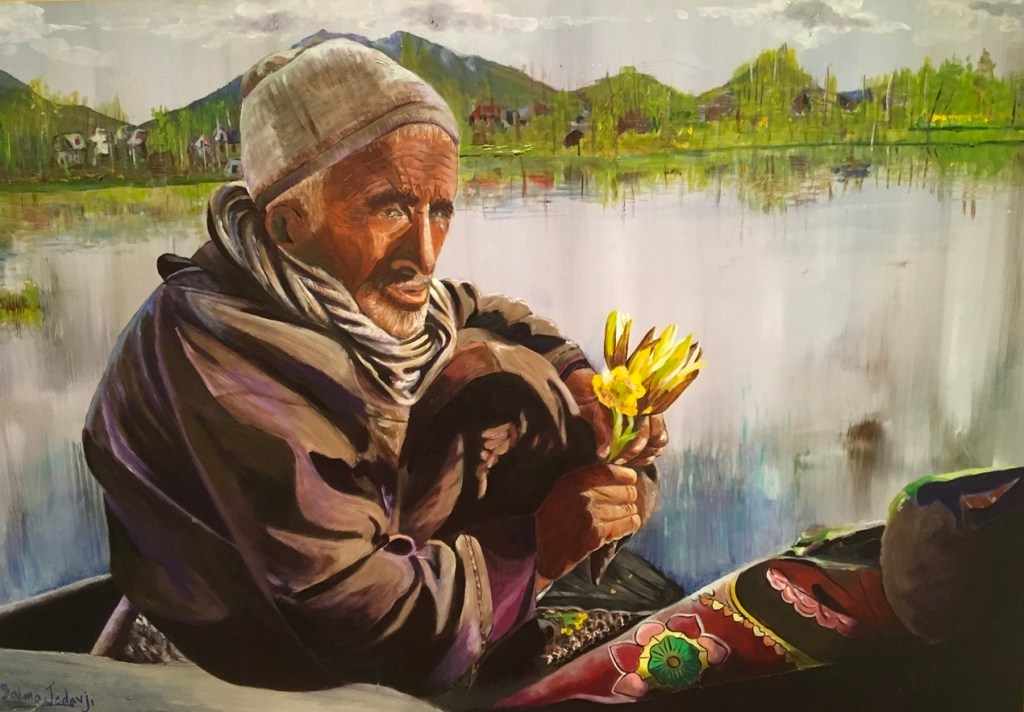
I first became aware of Salma Jadavji’s fascinating artwork when she and her husband, Taj, invited me to their Calgary home. I humbly gifted them several back issues of Ilm magazine published by the Ismaili Tariqah and Religious Education Board for the UK under my late dad Jehangir’s editorship, which I had as duplicates, which they graciously accepted. After a fantastic meal, I was privileged to get a closer look at Salma’s incredible and inspiring works of art. The Jadavji home is genuinely artistic! The visit was not just enjoyable but also a memorable experience. I am thrilled that she accepted my invitation to present a selection of her artwork for Simerg’s series on Ismaili Artistic Expressions.
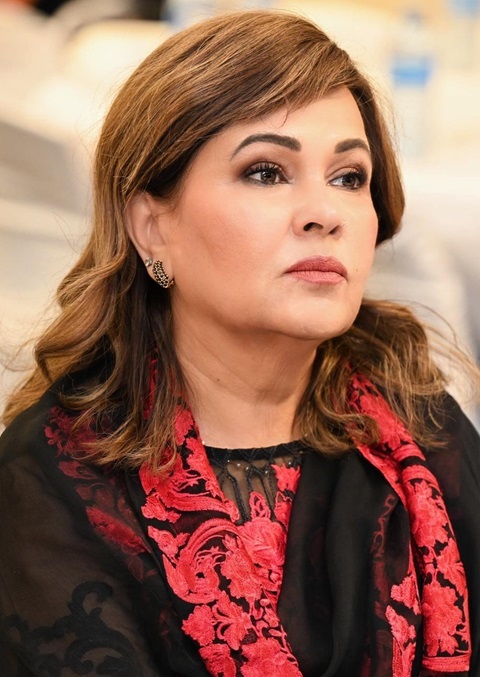
Calgary-based Ismaili artist Salma Jadavji.
Salma was born and raised in Pakistan. She was always interested in arts and crafts but ended up in medical school and became a doctor in 1975. She got married to Dr. Taj Jadavji and moved to Canada in 1976. In 1992, Salma discovered she had a hidden talent: She could paint. This discovery opened a new chapter in her life. She started experimenting with different mediums and styles and has never looked back. Salma loves to paint, especially Islamic calligraphy. She has taught calligraphy to Ismaili Muslim students attending the Baitul Ilm (BUI) program, and her passion for art inspires others. Salma’s art has catalyzed the Ismaili community unity by curating art exhibitions that have benefited various charitable causes, making a tangible difference. Notably, her contributions to the Aga Khan Foundation exhibitions have been significant, raising funds to address the root causes of poverty and inequality.
Through her career as an artist, Salma has also sought to bring together the South Asian community and the broader Calgary community, fostering a spirit of philanthropy and cultural appreciation. This has promoted a deeper understanding and celebration of South Asian art and culture, creating a sense of belonging and inclusion for all.
Aside from her artwork, Salma has been a radio host for the last 12 years for a weekly radio show, Salaam Namaste Calgary. She has broken many traditional gender barriers as a woman of colour in the media and art world and paved a pathway for many females to come forward.
Salma’s art is not just a form of expression but a powerful tool that has connected her with the community on many different levels. Her Islamic Calligraphy and the message of peace Islam promotes, as well as her works of the Rockies and picturesque landscapes around Alberta, have left a lasting impact. This post showcases Salma’s passion for art, through which she inspires the community as an artist and a great art leader. Once you have viewed her paintings on this page, please visit her website with the theme, “Let me take you on an artistic journey.” Indeed! Click Salma Jadavji.
________________
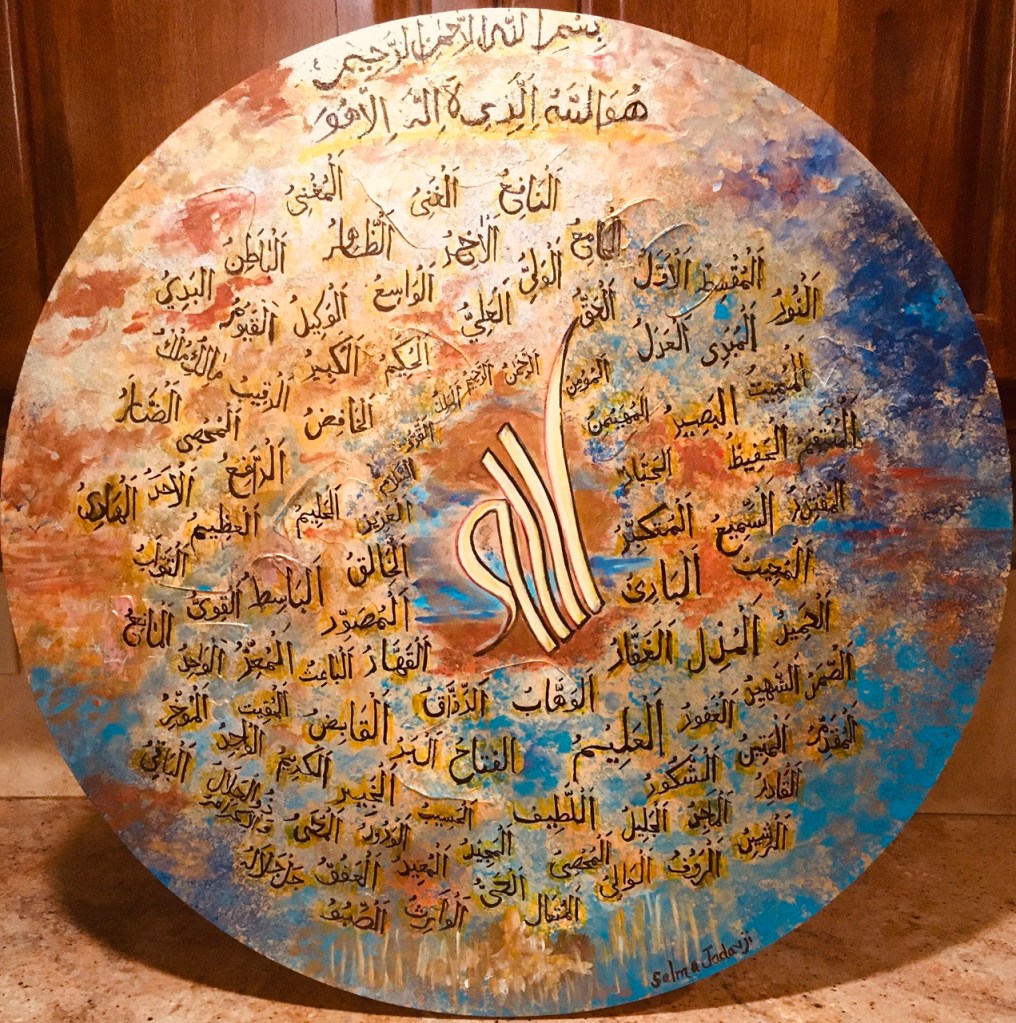
Beautiful names of Allah
Beautiful names of Allah, Oil on Canvas, 24″ diameter, 2022, sold in auction for $3000.00 to aid Shaukat Khanum Hospital, Karachi. Art by Salma Jadavji.
~~~~~~
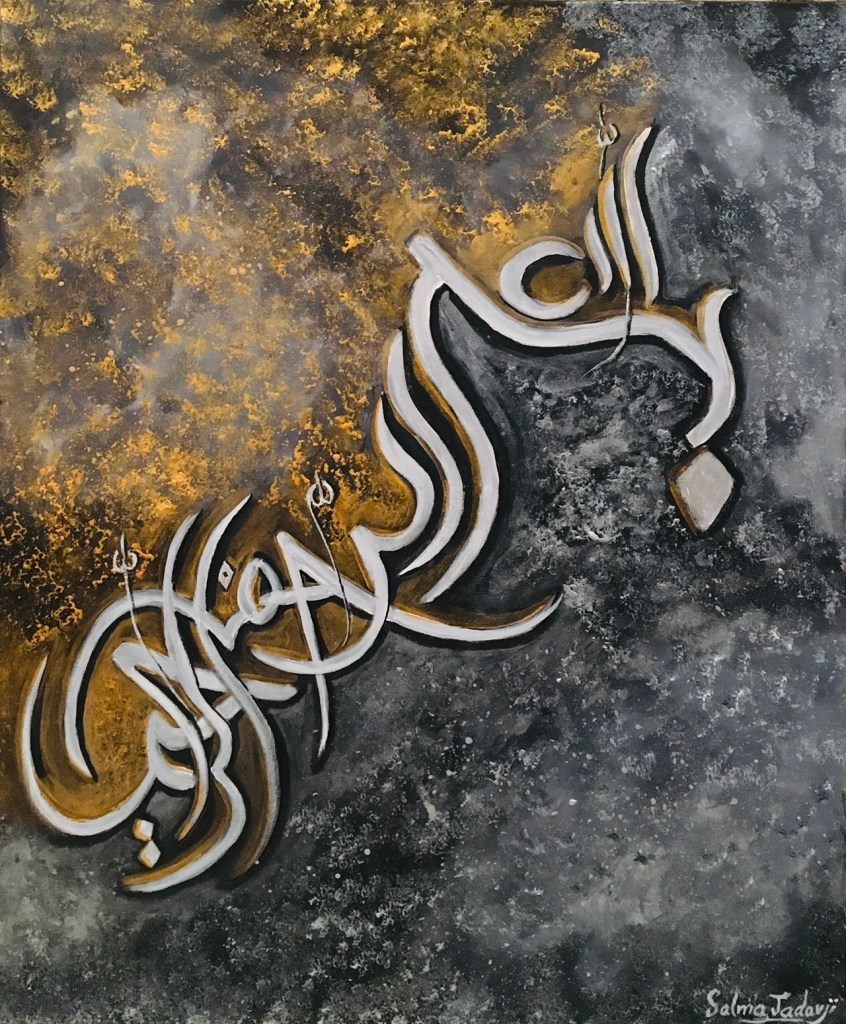
Bismillah-ir-Rahman-ir-Rahim
Bismillah-ir-Rahman-ir-Rahim, Acrylic on Canvas, 40″ x 30″, 2022. Art by Salma Jadavji.
~~~~~~
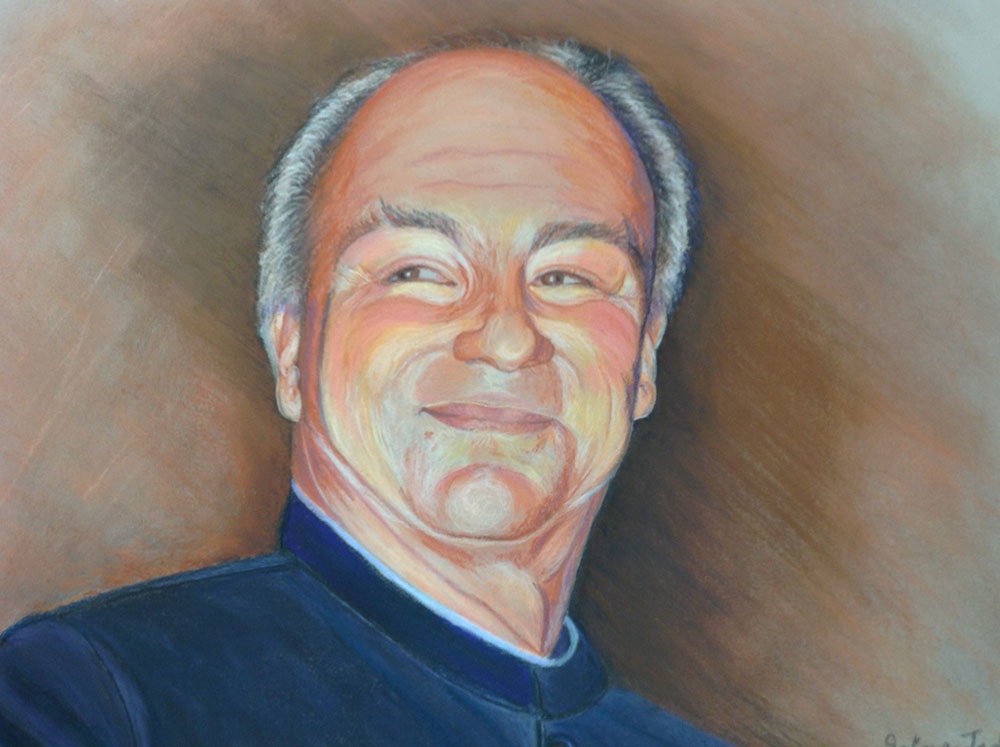
Mawlana Hazar Imam
Mawlana Hazar Imam, Pastels, 30″ x 24″, 2017. Art by Salma Jadavji.
~~~~~~
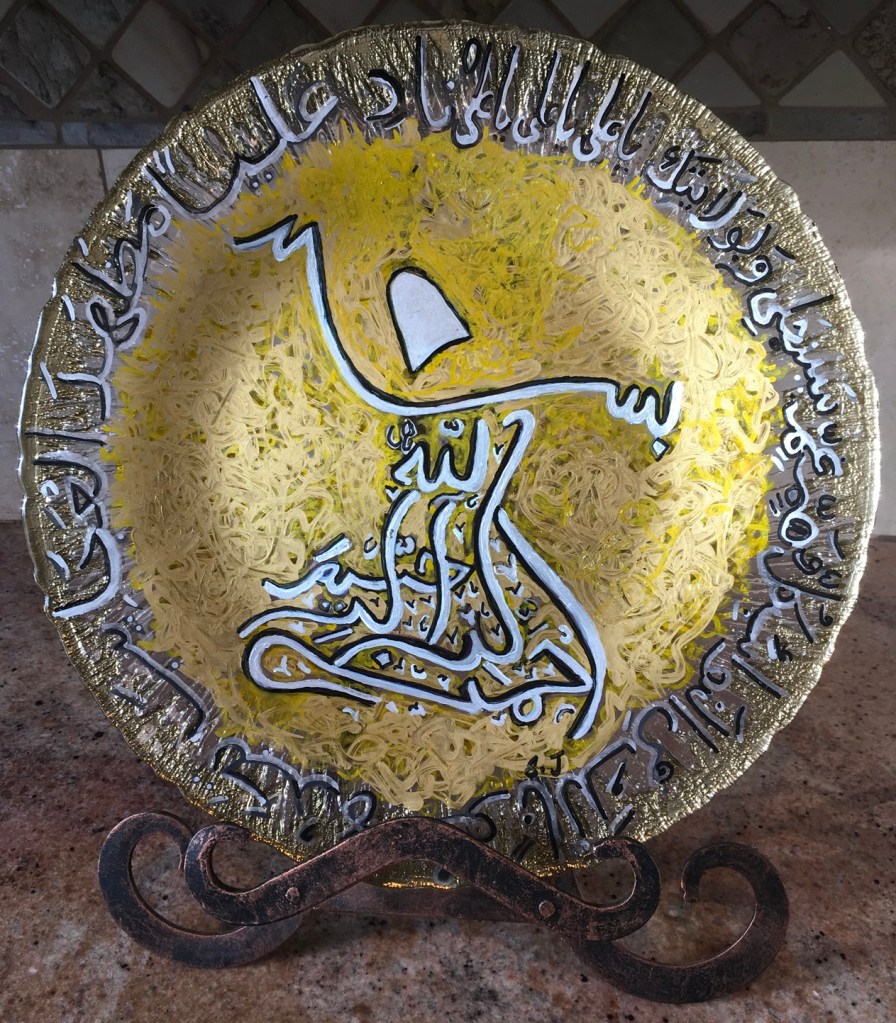
Nad-e-Ali
Nad-e-Ali, Acrylic, 12″ diameter, 2023. Art by Salma Jadavji.
~~~~~~
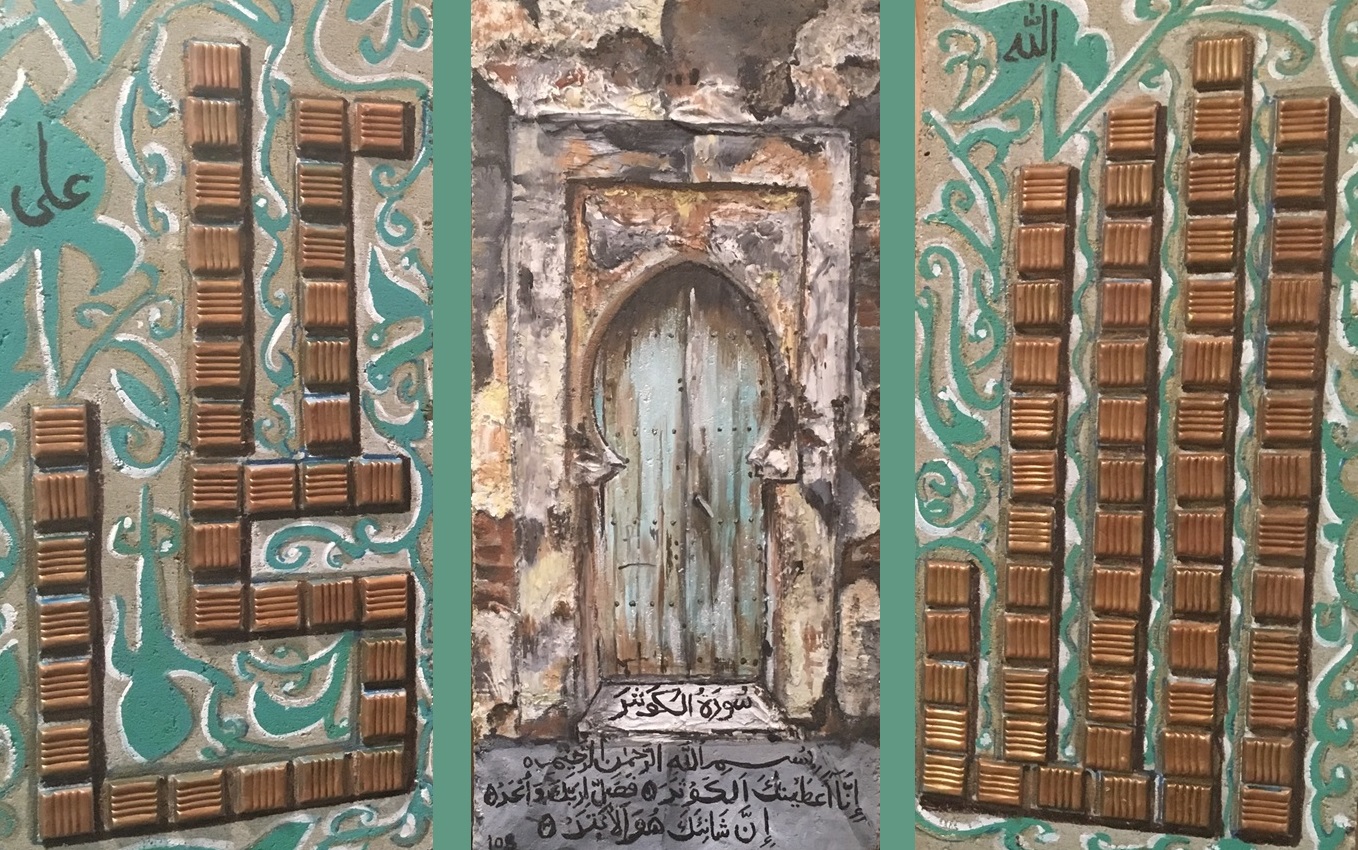
Heavenly Abode
Heavenly Abode, Mixed Media, 11″ x 17″, a three-panel display of tiled artwork depicting (left) Ali; (centre) Qur’anic verses 108:1-3, “In the Name of Allah, the Most Gracious, Most Merciful Indeed, We have granted you (O Muhammad) Alkausar. So pray to your Lord and sacrifice. Indeed, your enemy is the one cut off (from the root); and (right) Allah. The panels were displayed at the Diamond Jubilee Art Exhibition in 2018 as one exhibit (not exactly as shown). Art by Salma Jadavji, Calgary
~~~~~~
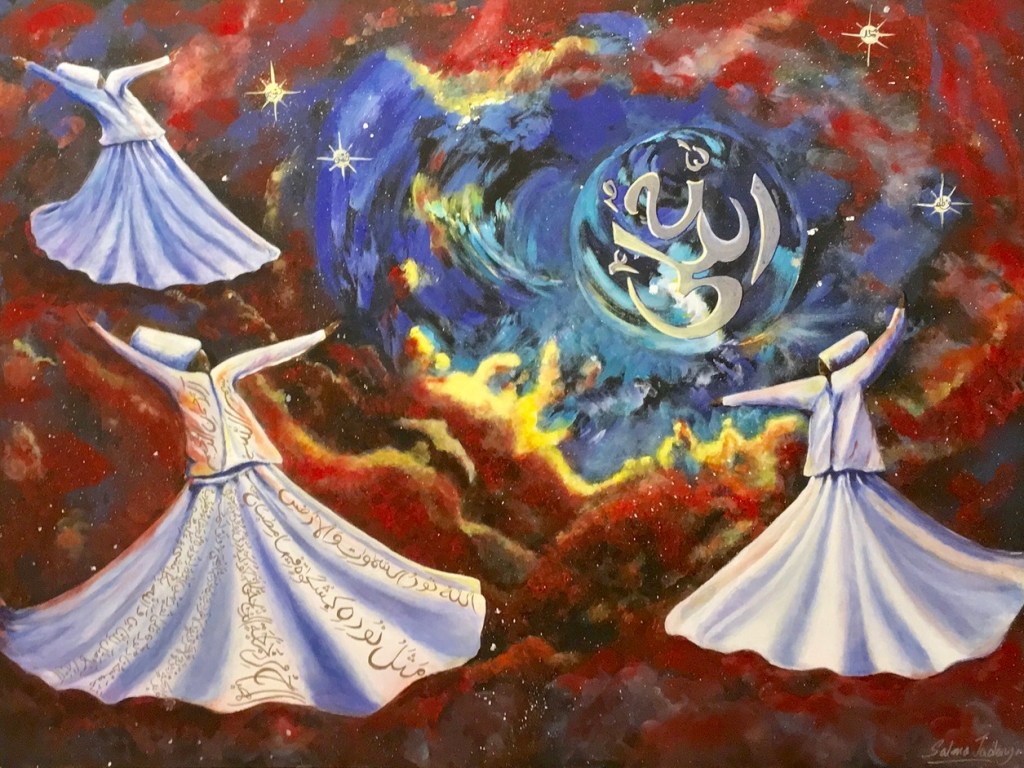
Lost in Spiritual Galaxy
Lost in Spiritual Galaxy, Acrylic, 60″ x 36″, 2021, donated to the Aga Khan Museum to raise funds for the annual Lapis Gala. Art by Salma Jadavji.
~~~~~~
My Paradise
My Paradise, Oil on Wood Board, 30″ x 24″, 2016. Art by Salma Jadavji.
~~~~~~
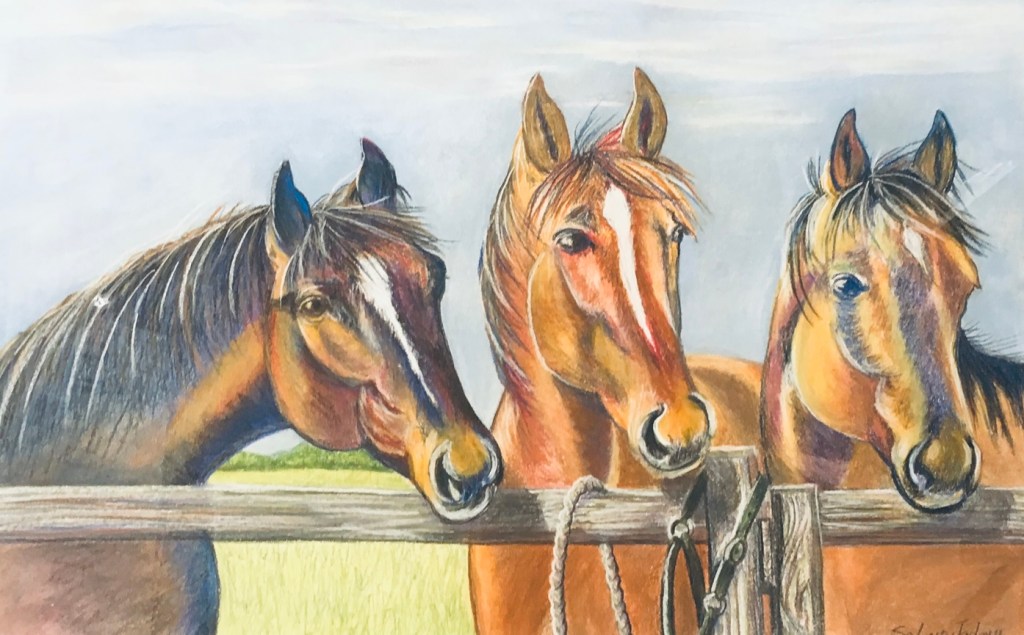
Three in a Row
Three in a Row, Pastels, 30″ x 24″, 2016 for the Aga Khan Foundation World Partnership Walk. Art by Salma Jadavji.
Date posted: November 21, 2024.
________________
We invite you to visit Salma Jadavji’s Website to view more of her artwork. We welcome feedback/letters from our readers. Please click LEAVE A COMMENT. Your feedback may be edited for length and brevity and is subject to moderation. We are unable to acknowledge unpublished letters.
The editor invites Ismaili artists to submit a selection of their paintings and other works of art for publication in Simerg. Please submit images of no more than 8 objects in Jpeg (1200 x 900) and your profile to the editor, Malik, at mmerchant@simerg.com.
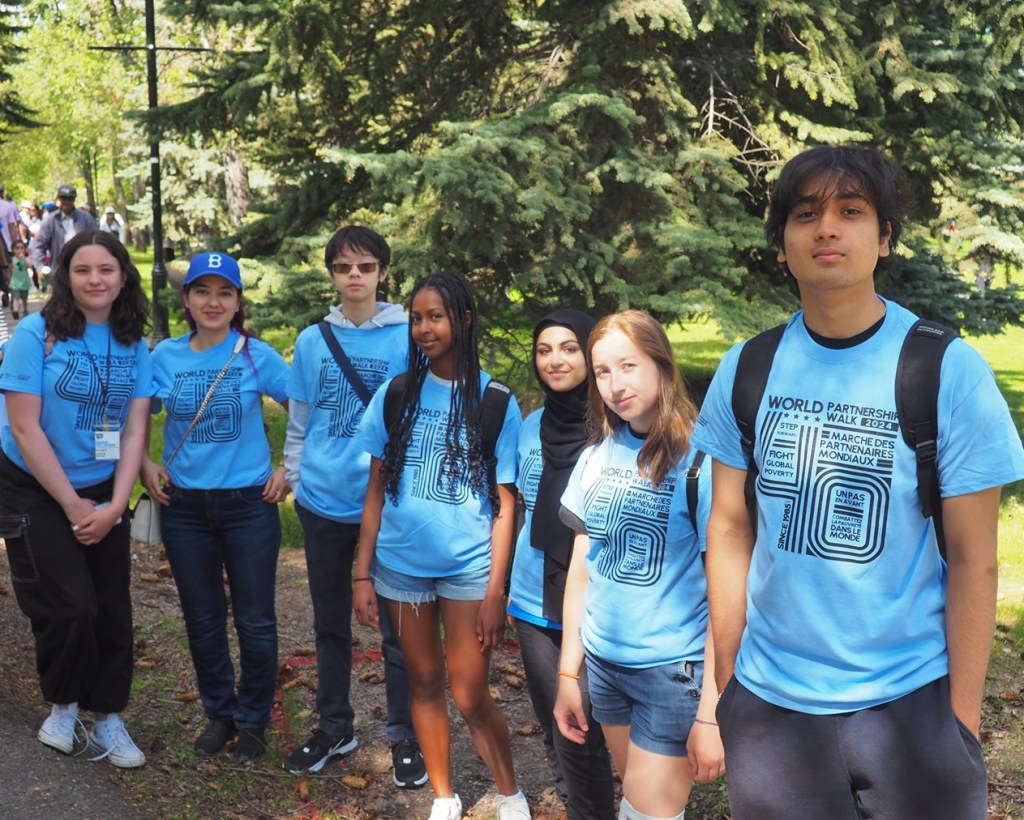
The “physical” World Partnership Walk (WPW) returned to Calgary downtown’s beautiful Prince’s Island Park after COVID-19 had turned it into a virtual event from 2020 onwards. The Walk in Edmonton was held on the grounds of the Alberta Legislature. The presence and participation of youth as walkers, volunteers, and entertainers were particularly heartwarming. The Ismaili community’s discipline and organization of the walk were truly admirable. The Walk was a special day for 11-year-old Izmir Kassam of Calgary whose goal was to collect $40,000 on the 40th anniversary of the Walk. Please see our WPW pictorial coverage HERE or click on the photo below.
Please click on photo for World Partnership Walk story.
From Running for Earthquake Victims to Acting as an Advocate for Education for Girls, Izmir Kassam Has Participated in 25 Races Since the Age of 4 and Raised Thousands of Dollars
11-year-old Izmir Kassam, a fifth-grade student in Calgary, Alberta, Canada, aims to raise $40,000 by running 40 km in honour of the 40 years of the World Partnership Walk (WPW) that is scheduled to take place on Sunday, June 2, 2024, at Calgary downtown’s beautiful Prince’s Island Park.
TThe WPW is an initiative of Aga Khan Foundation Canada (AKFC), an agency within the vast Aga Khan Development Network dedicated to improving the quality of life of those in need, mainly in Asia and Africa, irrespective of their origin, faith, or gender. The AKDN’s multifaceted development approach aims to help communities and individuals become self-reliant. In Canada, the AKFC has partnered with the Government of Canada, Canadian institutions, and individual Canadians on hundreds of programs to tackle the root causes of poverty and inequality. One of its fund raising programs, the WPW, has united Canadians of all ages across the country for 40 years to fight global poverty. The WPW is Canada’s largest public movement in support of global development.
Story continues below
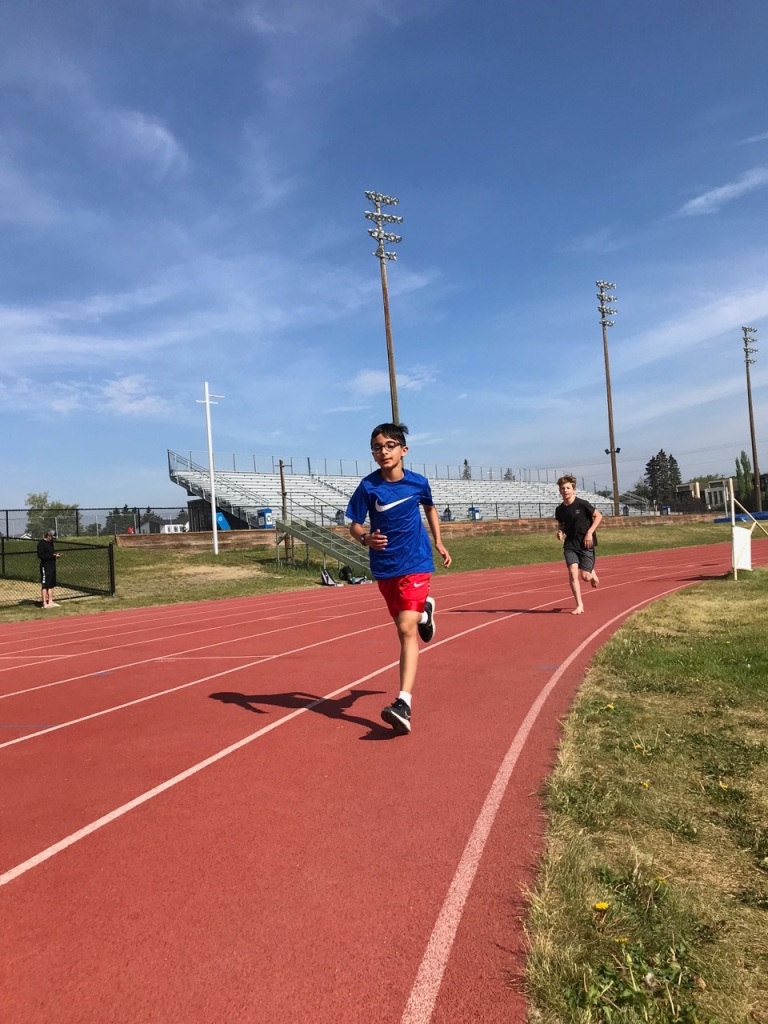
Izmir Kassam running the final 10 km in 10x10km run for earthquake relief in Turkey and Syria at the Glenmore Athletic Park, Calgary, June 10, 2023. Photograph: Izmir Kassam.
While hundreds at Sunday’s Walk will be walking, Izmir will be running! Izmir’s love for running has led him to conquer various distances, from 10 km races to half marathons and even 100 km. Since starting to run at 4, Izmir has completed over 25 races. Despite the lack of distance running competitions for students of his age, he boldly races with adults, often finishing in the top 5% to 10% of runners.
“We are so glad that Izmir chose the Humanitarian Coalition for his fundraising initiative. We re all in awe of his dedication and commitment” — Catherine Dufour
When he was 8 years old, Izmir watched the withdrawal of the US from Afghanistan and the takeover by the Taliban, with graphic images of Afghans hanging onto the moving front wheels of planes taking off, making a desperate last attempt to leave a country doomed to abject poverty and total suppression of freedoms. He learnt subsequently about the ban on girls’ education that the Taliban placed immediately upon taking over the rule of Afghanistan.
Izmir, upon discovering that girls his age in Afghanistan were denied the right to education, was not just saddened but deeply empathetic. He had a newborn sister then and could not imagine her growing up without an education. The thought was unbearable. This profound empathy for the girls’ plight fueled his determination to transform his passion for running into a campaign for girls’ education in Afghanistan. That year, he completed a half marathon of 21 km, raising a significant $ 2,000 to support Canadian Women for Women in Afghanistan (CW4WAfghan). His inspiring effort was recognized in a Calgary Herald story titled Young Runner Going the Distance for Afghan Girls.
Story continues below
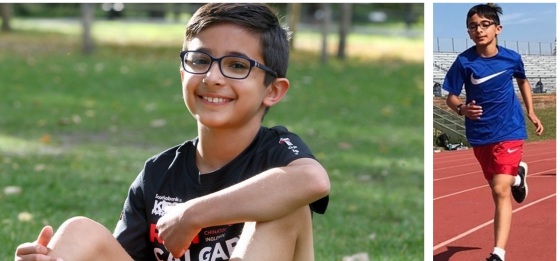
Eight-year-old Izmir Kassam poses for a photo at Sandy Beach Park in Calgary, SW, before his September 17, 2021, run to raise money for Canadian Women for Women in Afghanistan. Photograph: Brendan Miller/Postmedia.
~~~~~~~
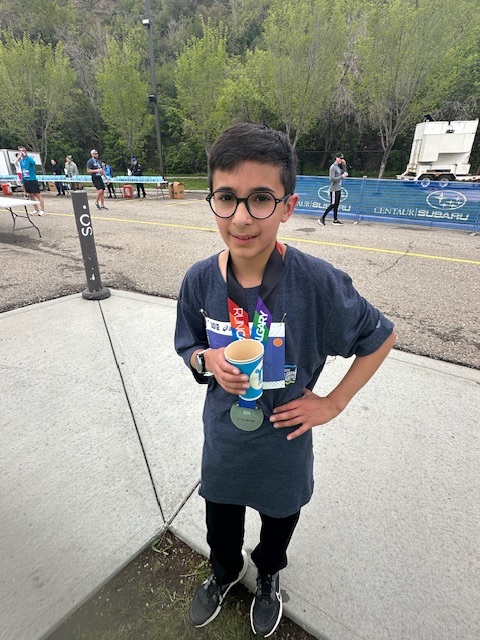
Izmir Kassam with medal after finishing the 10 km race in The Calgary Servus Marathon held on May 26, 2024, at Enmax Park, Calgary. His time was 43.20 minutes. Photograph: Izmir Kassam.
In 2023, on his tenth birthday, a powerful earthquake hit Turkey and Syria. This earthquake resulted in over 50,000 deaths and over 250,000 buildings being damaged or destroyed in the region. That morning, after seeing the images of the devastation the earthquake caused, Izmir was spurred into action again! He took on the challenge of running 100 kilometres (ten runs of 10 kilometres each) to raise money via the Humanitarian Coalition. This Canadian charity unites top aid organizations in responding to global crises.
Story continues below
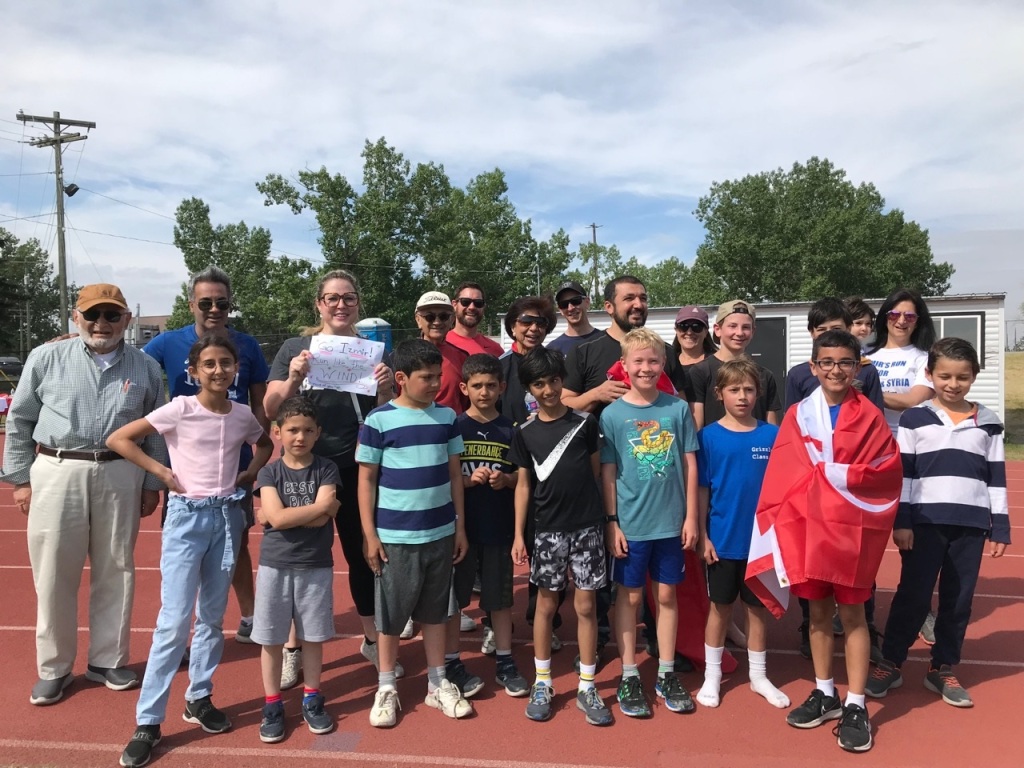
Izmir Kassam, shown wrapped in a Canadian Flag, with members of the Calgary Turkish community, friends, and family after the final 10 km run (out of 100 km) for earthquake relief in Turkey and Syria at the Glenmore Athletic Park, Calgary, June 10, 2023. Photograph: Izmir Kassam.
With the added support of government matching, Izmir raised $30,000, and his fundraising efforts were recognized by His Excellency Kerim Uras, the Ambassador of the Republic of Türkiye to Canada. Catherine Dufour of the organization Humanitarian Coalition commented, “We are so glad that Izmir chose the Humanitarian Coalition for his fundraising initiative. We are all in awe of his dedication and commitment.”
“Women and girls should have the opportunities and freedoms my sister and I have in Canada. No girl should grow up without an education or the freedom to be who she wants” — Izmir Kassam
The Aga Khan Development Network’s mandate is to work in challenging places where peace and stability are not always present. Infrastructure is often limited to help ensure that all women have a chance to harness their potential, have decent lives, and contribute to their communities. Izmir’s dedication to advancing this commitment is unwavering. He eloquently states women and girls should “have the opportunities and freedoms my sister and I have in Canada. No girl should grow up without an education or the freedom to be who she wants.”
Inspired also by his great aunt Mehrun Hassanali’s work with the World Partnership Walk, who was instrumental in its founding 40 years ago, Izmir decided to commemorate the WPW’s 40th anniversary by running 40 kilometres (four 10-kilometre runs).
His culminating run of the 10 final kilometres will take place on June 2 at the Calgary WPW event. He aims to complete the run within 40 minutes. The fundraising target for this 40th WPW Anniversary run is $40,000, and Izmir invites others to join him in this worthy cause.
Through this website, I invite readers to support Izmir and others like him in Calgary and around Canada, trying to raise money to support the Aga Khan Foundation’s annual World Partnership Event. In Izmir’s case, he aims to raise $40,000 to help eliminate global poverty. If 400 people donated $100 each, Izmir would reach his goal of $40,000. He also welcomes the support of other individuals to help him reach the target. Please click 2024 WORLD PARTNERSHIP WALK – IZMIR KASSAM
Story concludes below
World Partnership Walk setting. A view of Prince’s Island Park in downtown Calgary, the venue for the 40th WPW to be held Sunday, June 2, 2024. Photograph: Brenden Matthews via Wikimedia.
And to all Calgarians and visitors to Calgary, please come to the beautiful Prince’s Island Park on June 2 and watch Izmir cross the finish line. The Park is located in Calgary downtown on 4 St. and 1 Ave. S.W.
Inna lillahi wa inna ilayhi raji’un “Surely we belong to God and to Him we return” — Holy Qur’an, 2:156.
“Life is a great and noble calling, not a mean and grovelling thing to be shuffled through as best as we can but a lofty and exalted destiny” — Mawlana Sultan Mahomed Shah, His Highness the Aga Khan III (1877-1957), 48th Imam of the Shia Imami Ismaili Muslims.
It is with deep sadness that I inform readers that Aitmadi Dr. Aziz Rajabali Kurwa of Mumbai, India, London, England, and Calgary, Canada, passed away peacefully in Calgary on Wednesday, March 13, 2024, at the age of 91. Dr. Kurwa’s wife, Aitmadibanoo Shirin Aziz Kurwa (d. December 2016), and his two brothers, Ramzan and Mohammedally, predeceased him.
Surviving Dr. Kurwa are his three children and their respective spouses, six grandchildren, and two great-grandchildren. They are daughter Khadeeja and her husband Steven Emmerson, and their two children, Adam and Daniel; daughter Laila and her husband Rahim Arstall and their two children, Nadia and Karim; and son Dr. Habib Kurwa and his wife Farzana and their two children, Khalil and Hassan. Laila’s daughter Nadia is Dr. Kurwa’s granddaughter, and with her husband Bob, they have two children, Rohan and Remi, making Dr. Kurwa a great-grandfather. Also surviving Dr. Kurwa is his younger brother, Dr. Badru Kurwa, an ophthalmologist in California.
Aitmadi Dr. Aziz Kurwa’s funeral will take place at Calgary’s South Jamatkhana on Saturday, March 16, 2024, at 11 AM. The funeral will be preceded by a dilsoji (condolences) to family members at the same Jamatkhana on Friday, March 15, after the evening ceremonies.
Article continues below
Aitmadi Dr. Aziz Rajabali Kurwa (d. March 13, 2024, aged 91)
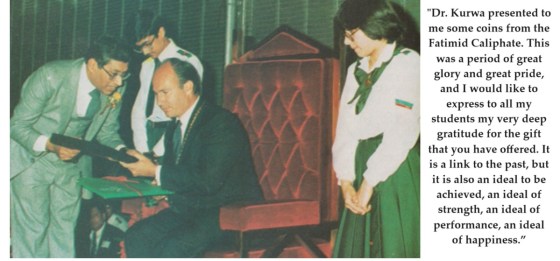
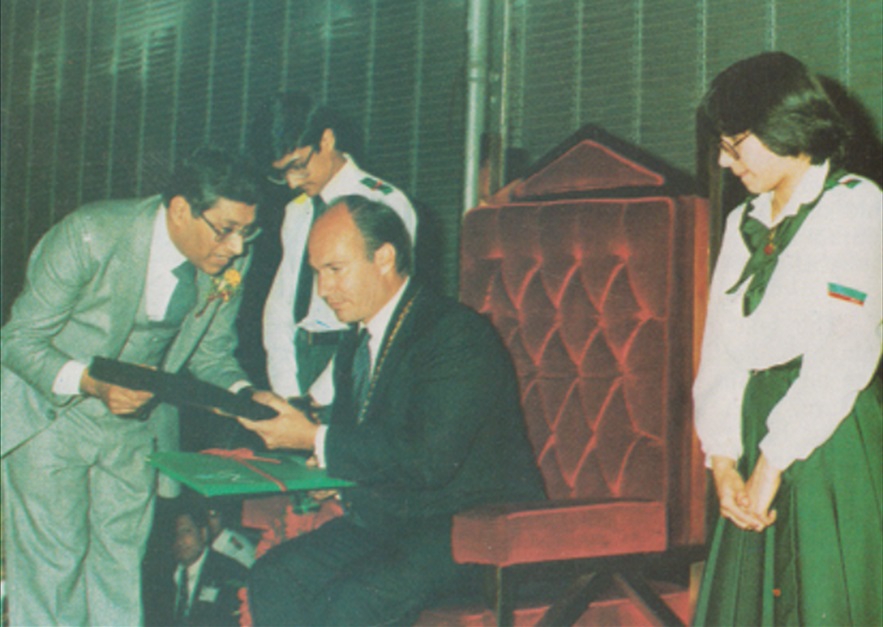
Dr. Aziz Kurwa was an exceptional and dedicated Ismaili leader who left an indelible mark on the community by pursuing excellence and implementing transformative programs and ideas in the United Kingdom. As someone who, with my late parents Alwaez Jehangir and Alwaeza Malek Merchant, served under Dr. Kurwa’s leadership as the President of the Ismailia Association for the United Kingdom (now known as the Ismaili Tariqah and Religious Education Board or ITREB), I have fond and special memories as I think of him. Still, there is one that was extraordinarily special. It is of the day in London, England, when he presented a framed set of 3 Fatimid coins to Mawlana Hazar Imam, His Highness the Aga Khan, at a student gathering in Olympia Hall during his weeklong visit in September 1979 to the Ismaili Jamat (community). Mawlana Hazar Imam looked at the gift with deep interest and admiration and responded as follows:
“Dr. Kurwa earlier, presented to me some coins from the Fatimid Caliphate. This was a period of great glory and great pride, and I would like to express to all my students my very deep gratitude for the gift that you have offered. It is a link to the past, but it is also an ideal to be achieved, an ideal of strength, an ideal of performance, an ideal of happiness.” (Excerpt from Ilm, Volume 4, Number 3).
Following the presentation, Dr. Kurwa brought the gift to the Ismaili Association’s literature counter for display for the benefit of the Jamat. This first-ever presentation of Fatimid coins to Mawlana Hazar Imam during his 22 years of Imamat from 1957 to 1979 raised the Jamat’s interest in the glory of the Fatimid Empire.
Article continues below
London, September 1979: Mawlana Hazar Imam, His Highness the Aga Khan, is seen receiving the report of the Ismailia Association’s Activity and a framed set of 3 Fatimid Gold Dinars from the President of the Association, Dr. Aziz Kurwa. The students Mukhi and Mukhiani are standing on either side in a volunteer’s uniform. Photo: Ilm magazine.
Aziz Rajabali Kurwa was born in Mumbai on December 1, 1932, and studied there until his medical graduation. He became involved with services to the Ismaili community at a very young age. As a college student, he helped revive a student society under the new name of Ismaili Students Education Society (ISES). The committee then undertook several initiatives, including organizing an arts and crafts exhibition in the city. Prince Aly Khan, who was then visiting Mumbai, very graciously accepted the committee’s invitation to inaugurate the exhibition.
Article continues below
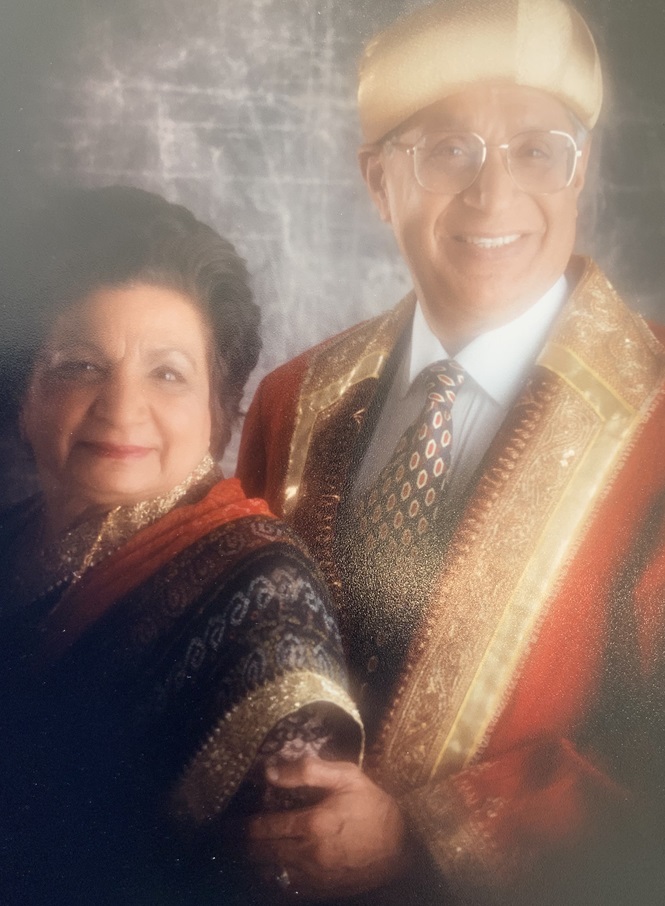
Aitmadi Aziz Kurwa and Aitmadibanoo Shirin Kurwa. Photograph: Habib Kurwa family collection.
Dr. Kurwa arrived in England in 1958. With his solid medical background from India, he went on to specialize as a dermatologist, obtaining FRCP(Edinburgh) and FRCP(London). Before Dr. Kurwa relocated to London, where he opened a dermatology clinic in the city’s famous medical district, Harley Street, he pursued his ambition of serving the Ismaili Jamat in Birmingham. He became the Mukhi (leader of the congregation) of the Jamat in 1970 and, together with his counterpart and other members of the Jamat, assisted in settling many Ismailis who arrived in the Midlands area as refugees from Uganda after their 1972 expulsion by Idi Amin.
Article continues below
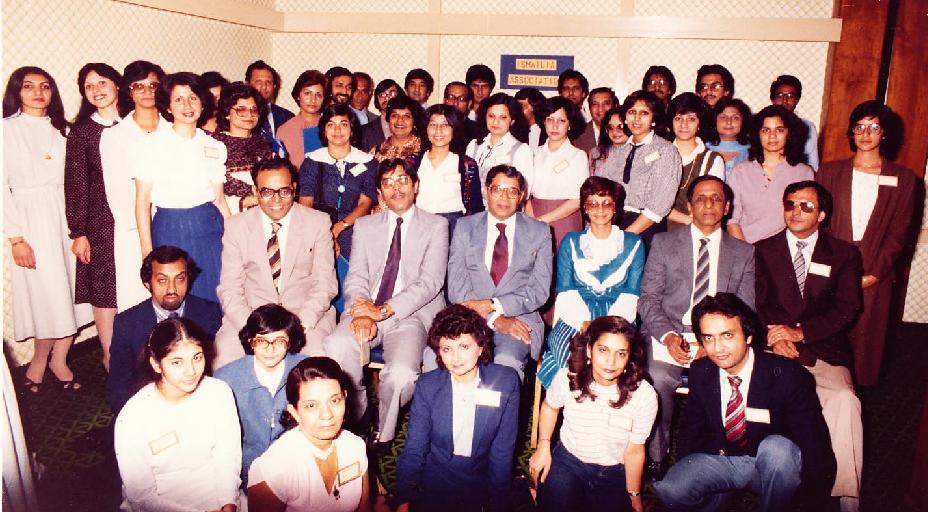
Dr. Aziz Kurwa, President of the Ismaili Association for the U.K. between 1979 and 1985, is seated third from left and is pictured with the members, staff, and teachers who served under him. Photograph: Jehangir Merchant Family Collection.
When he opened his dermatology practice in London’s Harley Street, Dr. Kurwa continued to set his sights on serving the Ismaili community. He established a Jamatkhana in Purley, Surrey, and in 1979, he was appointed President of the Ismailia Association for the United Kingdom by Mawlana Hazar Imam.
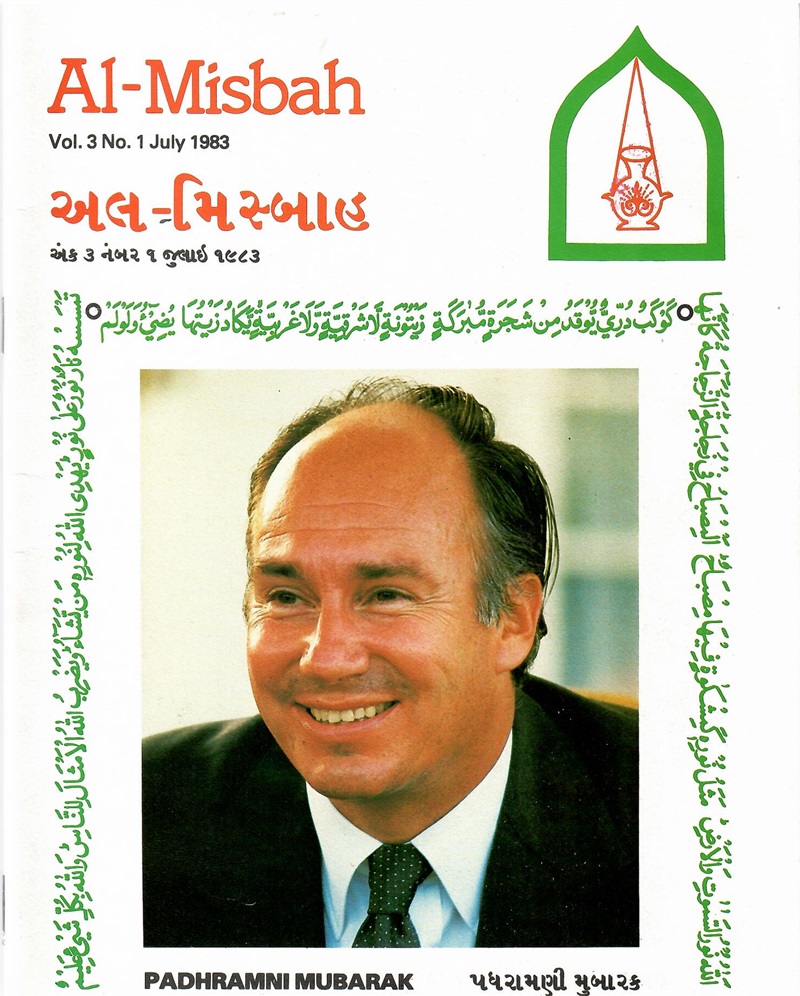
As a visionary leader, he introduced the concept of Baitul Ilm, an Ismaili religious education program for children and youth, which continues to shape the U.K. and other worldwide Ismaili communities. He also championed the distribution of high-quality religious material in cassettes to remote Jamats in the U.K. He created a bilingual religious magazine, Al-Misbah, containing easy-to-follow religious material, stories for children, and readings for the Gujarati-speaking members of the Jamat.
~~~~
Article continues below
The bi-lingual Gujarati-English Al-Misbah magazine was launched in the UK during Dr. Aziz Kurwa’s term as the President of the Ismailia Association for the UK.
His support for adult education and the growth of the literature and library portfolios further underscored his commitment to the community. Waezin (sermon) activities grew multifold throughout the U.K. as did children’s activities and participation in the Jamatkhanas. Dr. Kurwa also ensured that missionaries in the U.K. would regularly travel to the widespread European Jamats to support their religious activities and interests. The highly acclaimed Ilm magazine, established in 1975, continued to prosper with increasing circulation in the U.K. and abroad. Such was the magazine’s reputation that in 1980, the magazine’s editor, my dad Jehangir, was invited by the Aga Khan Award for Architecture to attend the first Award Ceremony in Lahore. Sadly, he was unable to go.
After completing his two terms as the President of the Ismaili Association, Mawlana Hazar Imam, in 1986, chose him to be one of the resident governors of the Institute of Ismaili Studies in London, which Dr. Kurwa proudly served until 1995.
Article continues below
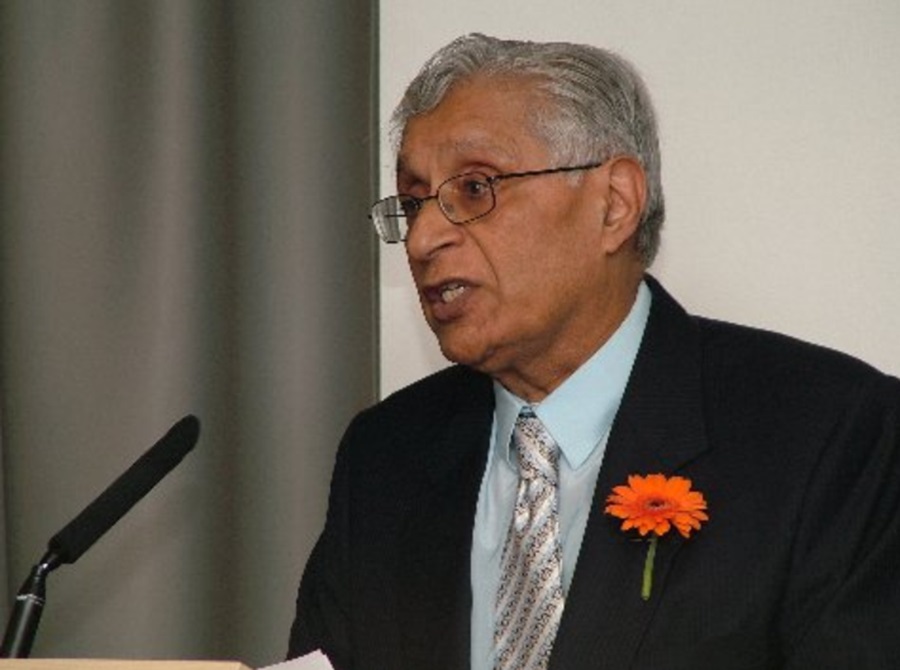
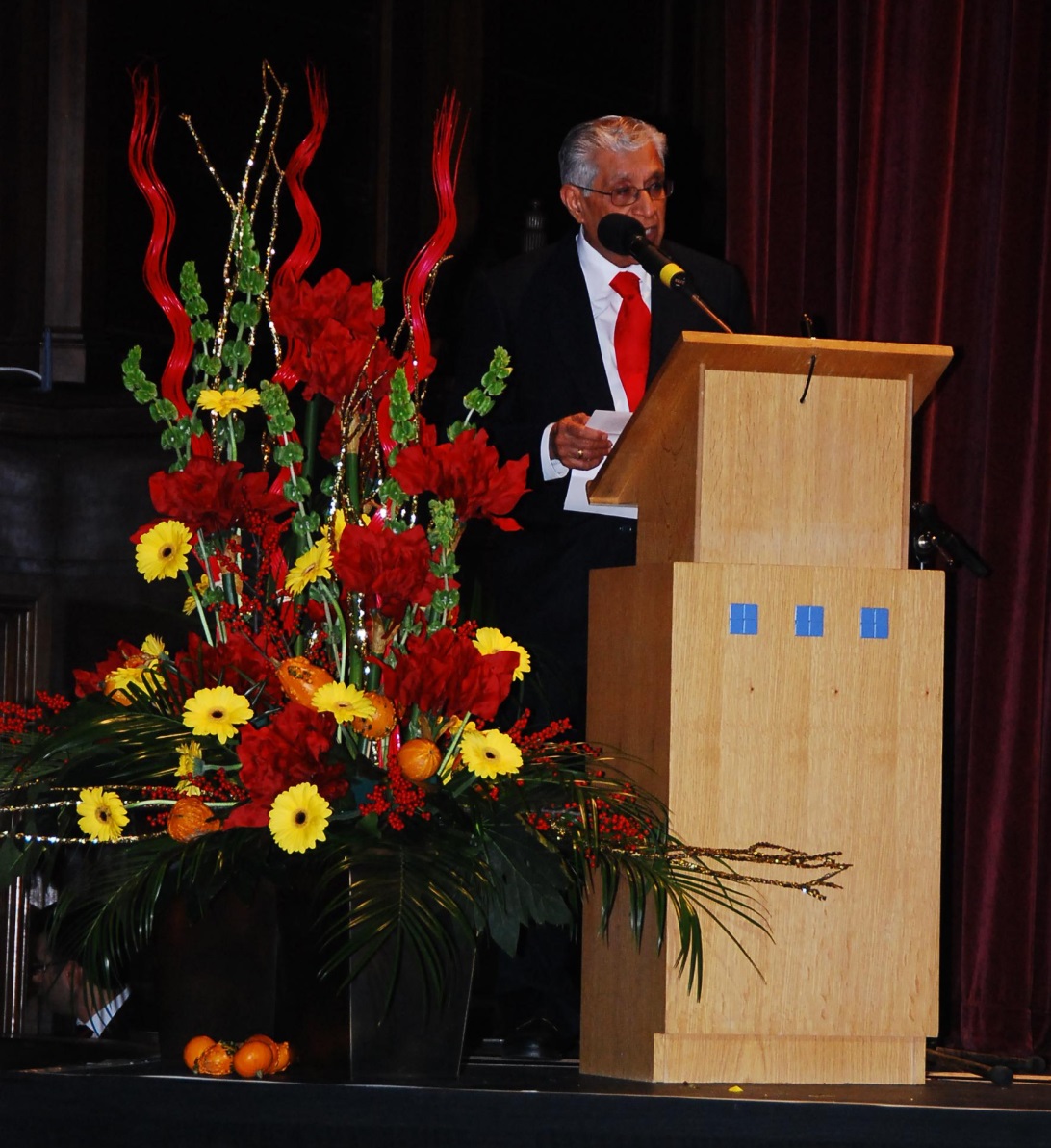
Dr. Aziz Kurwa, producer and director of “The Festival of Poetic Expressions” speaking at the event which was held by the Ismaili Council for the UK in London, Manchester and Germany to commemorate the Golden Jubilee of Mawlana Hazar Imam, His Highness the Aga Khan Aga Khan.
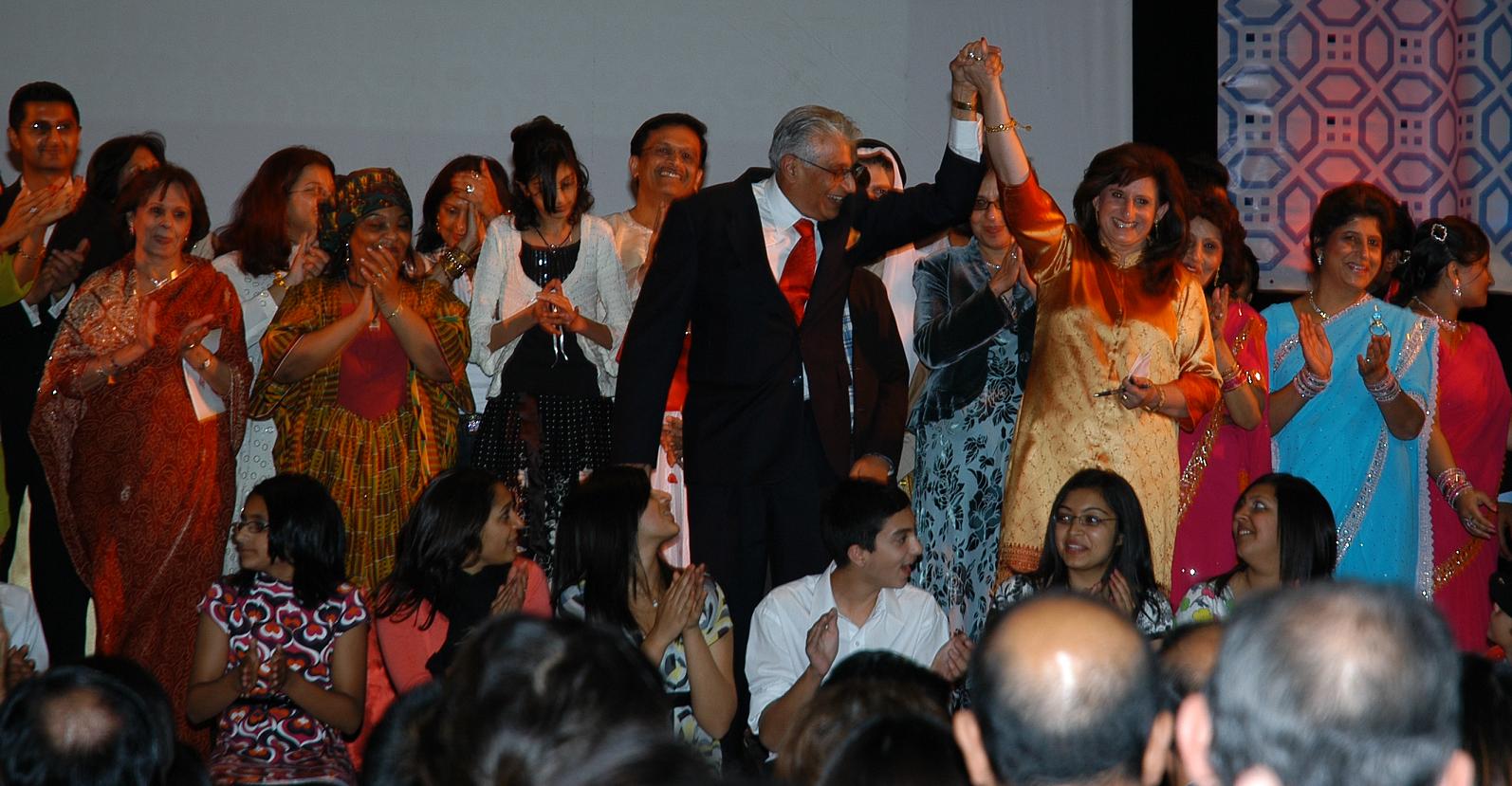
Dr. Aziz Kurwa celebrates at the conclusion of “The Festival of Poetic Expressions” which was held by the Ismaili Council for the UK in London, Manchester and Germany to commemorate the Golden Jubilee of Mawlana Hazar Imam, His Highness the Aga Khan Aga Khan.
Dr. Kurwa continued relentlessly to participate in other activities within the community. He contributed in creating the Health Care Professional’s Association and reviving the Ismaili Seniors Club. His passion for the Baitul Ilm religious education program led him to organize poetry sessions for Ismaili children and seniors, the success of which led to the Festival of Poetic Expressions as a Golden Jubilee programme. The event was staged in London, Manchester and Germany. He invited Simerg to publish the poems on the website, which we proudly did. Dr. Kurwa also served as a member of the Executive Committee of The Association For The Study Of Ginans, a private initiative.
In his article on Volunteering at the Dawn of Imamat, Dr. Kurwa wrote: “In whatever position in the Jamat, in my heart, I am devoted to voluntary service, and in this article, I am making an effort to recognise that volunteer services have existed since the inception of Islam and Inshallah will continue to flourish in the Jamat as long as Imam-e-Zaman wishes it to be.”
Article concludes below
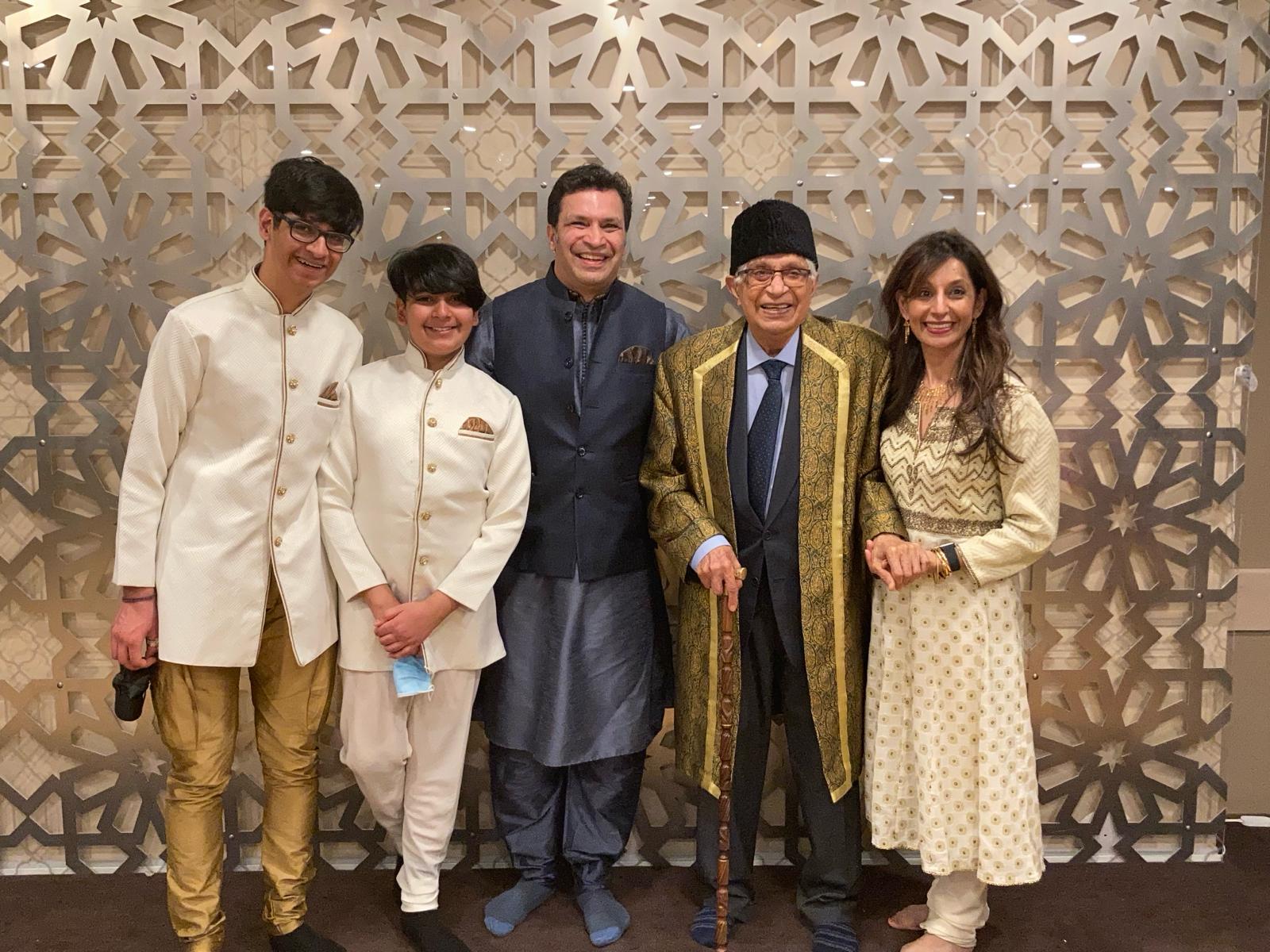
All smiles as Aitmadi Dr. Aziz Kurwa is pictured with his son Dr. Habib Kurwa and his wife Farzana and their two children Khalil and Hassan. Photograph: Habib Kurwa family collection.
Dr. Kurwa moved to Calgary, Canada, in 2017 following the demise of his beloved and wonderful wife, Aitmadibanoo Shirin Aziz Kurwa, in December 2016. He cherished the beautiful moments with his loving son, Dr. Habib Kurwa, and his family. I was honoured to visit my former president and to meet him in Jamatkhanas. My wish to see him on Thursday, March 14, 2024, at 3:30 PM never materialized. A day earlier, on March 13, Habib texted me mid-morning, “Ya Ali Madad – Dad passed away this morning.”
Allah most graciously granted Aitmadi Aziz Kurwa a peaceful, happy and healthy life — a life that was filled with service to the Ismaili community, its institutions and the Imam-of-the-Time
He was an extremely rare Ismaili leader who returned to serve the Jamat at the grassroots level in any capacity as long as it enabled him to contribute to the community’s upliftment.
Aitmadi Aziz Rajabali Kurwa was a gallant, humble leader and a devoted murid of Mawlana Hazar Imam. We pray that his soul may rest in eternal peace. Ameen. We further pray that his family may face this immense loss with great courage and fortitude.
Date posted: March 14, 2024. Last updated: March 15, 2024 (reformatting and typos.)
__________________________
We invite you to submit your condolences, memories, and tributes to Aitmadi Dr. Aziz Kurwa by completing the feedback form below or clicking Leave a comment. Should you encounter technical issues or difficulties submitting your comment, please send it via email to mmerchant@simerg.com (subject Aziz Kurwa).
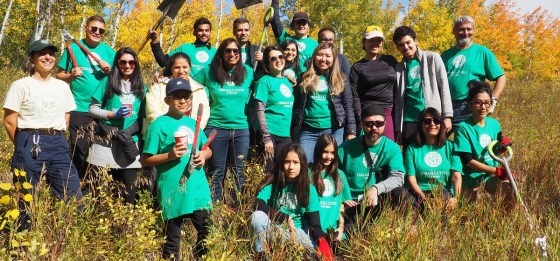
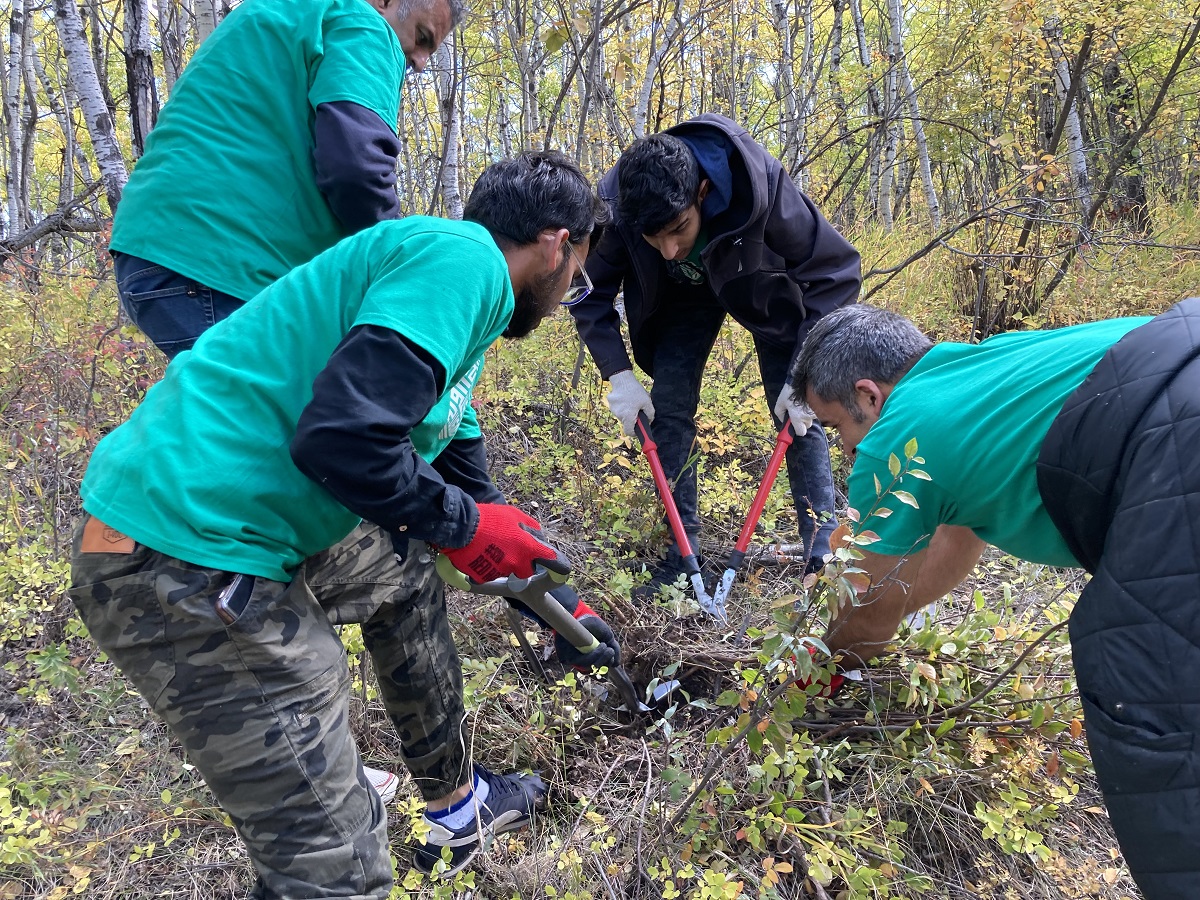
Guided by Dylann Golbeck, Coordinator of the Invasive Plants Program at the Weaselhead/Glenmore Park Preservation Society, Ismaili Civic Day volunteers participated in pulling out more than 100 invasive plants from a section of the Weaselhead Flats Natural Environment Park in SW Calgary on Sunday, September 24, 2023. Thousands of Ismailis around the world participated in unique ways in the annual Ismaili Civic Day weekend to contribute to local communities where they live. This year’s theme was Environmental Stewardship. For full story and photographs, please click ISMAILI CIVIC DAY CALGARY
Ismaili Civic Day volunteers pull out invasive plants from a Calgary Park. Please click on photograph for full story.
Malik Merchant’s recent walk around a Calgary pond led him to a floating nest built by a pair of beautiful Red-necked Grebes. Two days later, one egg out of four hatched and Malik saw the new born grebette’s first day of life in the new world. Below is one of four videos that he took. To see Malik’s collection of photographs and more videos of his stunning day at the pond, please visit his beautiful PHOTOBLOG.
For more stunning videos and photographs please click HERE
Simergphotos, a sister website of Simerg, is dedicated to photographs. Since his relocation to Alberta from Ontario, Malik has visited a number of Alberta’s magnificent national and provincial parks. Here are a few of his many pieces:
Inna lillahi wa inna ilayhi raji’un “Surely we belong to God and to Him we return” — Holy Qur’an, 2:156
“Life is a great and noble calling, not a mean and grovelling thing to be shuffled through as best as we can but a lofty and exalted destiny” — Mawlana Sultan Mahomed Shah, His Highness the Aga Khan III (1877-1957), 48th Imam of the Shia Imami Ismaili Muslims.
UPDATE, JANUARY 19, 2024: I am grieved to learn — and inform readers — of the passing of Late Salim Harji’s son, Rahim, earlier today in Calgary at the age of 41 after a brief illness. We offer our prayers that his soul may rest in eternal peace. Ameen. We also offer prayers for the courage and fortitude of his mother, Shirin, and sister, Farah, to face this immense loss that takes place only six months after the demise of Salim.
Rahim’s funeral ceremonies will be held at noon on Thursday, January 25, at Calgary’s Westwinds Jamatakhana, followed by samar and zyarat (special prayers for the soul) the same evening at the Jamatkhana.
The following is the original tribute honouring Salim Harji shortly after he passed in Calgary on July 13, 2023, at the age of 70.
JULY 18, 2023: Just over 2 weeks ago, Salim and his wife Shirin had invited me to their place like they had done a number of times since my arrival in Calgary in 2022. My simple gift to them on that day was a booklet of Eid stamps that was released by Canada Post in May of this year.
Then, on Tuesday, July 11, 2023, on the auspicious occasion of Mawlana Hazar Imam His Highness the Aga Khan’s 66th Imamat Day anniversary, I was on my way to Headquarters Jamatkhana. It was around 7:15 pm. As I took the exit, just 500 metres from the Jamatkhana, I found myself unable to change lanes due to a traffic jam on McKnight Blvd. I had two lanes to cross and I did not take the chance. I hoped for a U-turn further away but I did not see one, and I drove to Westwinds Jamatkhana instead, ten minutes away.
After the lengthy Jamathana ceremony, that included a beautiful and inspiring Talika (written letter) of blessings from Mawlana Hazar Imam, along with new appointments to Ismaili Institutions across Canada, I saw Salim waving his hands to me through a large crowd in the Jamatkhana’s social hall, from about 7 metres. There, with his lovely wife Shirin, who had earlier recited the traditional Ginan Amar Te Ayo — it is recited whenever new appointments related to Jamatkhana officials are made — I finished my hot cup of chai. We talked about going to Kananaskis this week (week of July 17). Shirin mentioned she would prepare a picnic basket for the outing. But the trip was not to be. Forty-eight hours later, on Thursday night, July 13, Shirin called me: “I’ve very bad news. Salim just passed away”. I was speechless and in utter shock.
I owe it to the traffic jam, which forced me to drive to Westwinds Jamatkhana and meet him for the last time on Imamat Day. Apparently, he passed away inside the Jamatkhana with the paramedics unable to revive him. Earlier, that fateful evening, he had opened the Jamatkhana! He passed away serving the Imam-of-the-Time and his spiritual children, and just before his body was taken away, the key of the Jamatkhana was retrieved from his volunteer’s blazer.
Salim Harji (1952-2023) in the uniform of the Ismaili Volunteers. Photograph: Salim Harji family collection.
Salim was a devout murid of Mawlana Hazar Imam and an exceptional volunteer. Over the last few days, since his death, the family has been receiving phone calls from around the world — even from individuals the family never met or knew — expressing their condolences; and many have mentioned how Salim had helped them out during his lifetime — hidden service that was not even known to his closest family members.
Shirin and her children are coping with the tragic death well. She is a woman of strength, courage and faith — she regularly attends Jamatkhana in the morning and evening. Her support for her husband over the years has been remarkable. I have watched their relationship since I was a young boy of 15; it blossomed into a happy marriage that lasted for more than 40 years! For the past couple of days, I have witnessed nothing but love between members of the family who have travelled from across Canada and abroad. The two children, Rahim and Farah, and their families have provided tremendous support to their mum.
Born on August 3, 1952, in Dar es Salaam, Tanzania (then Tanganyika), Salim completed his education at the Aga Khan School before proceeding to London, England in 1971/2, where he got married to Shirin. They migrated to Canada. While Shirin pursued her career in accounting, Salim went on to open a very successful business in printing. They raised two children, Rahim and Farah.
Salim was a jovial individual. He loved life. We called him Elvis in Dar es Salaam. In Calgary, he was known as “Stan the Man”. He participated and gave his support to Ismaili institutions as a volunteer in numerous capacities. He was also a Scout leader. He was passionate about serving and also, if my memory serves me right, helped in building award winning floats that represented the Ismaili Muslim community in the iconic world renowned annual Stampede Parade.
Predeceased by his parents Mr. Jadavji Harji and Mrs. Remti Harji and his older brother Amin, Salim leaves behind his wife Shirin and two grown-up children Rahim and Farah as well as his siblings Firoz, Shiraz, Shemim, Shanaz, Nasreen and Aziz and their families. His entire family and the thousands of friends he made throughout his life will deeply miss his joyful presence. They will be inspired by the wonderful memories of friendship and his genuine concern for everyone he knew.
For me personally, Salim and Shirin have offered me the best support I would wish for during my recent settlement in Calgary. Their home has always been open to me. My daughter Nurin recollects our stay at their home some 16 years ago during our holiday in Alberta, when the couple and their daughter Farah looked after us so well, and Farah treated her like her younger sister.
Salim and I were not yet teenagers when our parents, in a hat-drawn lottery process, were offered ownership to their respective apartments in a newly built Ismaili Housing Society, the Islamabad Flats, on Cameron Road (later changed to United Nations Road.) That was way back in 1963. Our friendship never faltered and we have loved each other for 60 years.
As is customary during any funeral, members of the community are asked to forgive any mistakes committed by the deceased person during his or her lifetime. I went through our friendship and could not recall one instance in his friendship with me when he made a mistake. As a cricketer, he dismissed me a few times but that was because of his superior bowling and my mistakes while batting! He never ever hurt me.
His funeral in Calgary on Monday, July 17, 2023, at the Westwinds Jamatkhana was attended by many hundreds including members of the local Ismaili leadership, the Ismaili scouts and volunteers. The burial took place at the Rocky View Garden of Peace Cemetery. The temporary plaque on his grave adorned with rose stems and the sweet and sacred smell of agharbati (incense sticks) read:
“Bismillahir Rahmanir Rahim. In Loving Memory of Salim Harji “Stan the Man”, August 3, 1952 — July 13, 2023. Innalilahi Wa Inna Ilahi Rajiun.”
Indeed, Salim’s beautiful soul has returned to its original abode — in the presence of Allah’s Noor (Light). May his soul rest in eternal peace, Ameen. And may his family have the courage and fortitude to face this immense loss. They are all in our thoughts and prayers.
Date posted: July 18, 2023. Last updated: January 19, 2024 (announcement of the passing of Rahim Salim Harji)
____________________
We invite you to submit your condolences and tributes to Salim Harji in the comments box below or by clicking on LEAVE A COMMENT.
IMPORTANT NOTE: Simerg invites Ismaili families to submit obituaries and tributes to deceased members of their families, whether they passed away recently or in the past. Please review PASSINGS on how to prepare and submit your tribute.








 Simerg - Insights from Around the World