
Introduced by MALIK MERCHANT
We invite our readers to click HERE for a brief background information and the history of Ismaili Constitutions over the past 120 years.
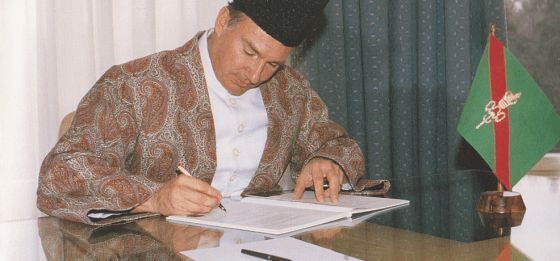
This post presents the Preamble of the Ismaili Constitution, a significant document ordained in 1986 by His Highness the Aga Khan. This introductory succinct statement delves into the principle of Imamat succession, a vital and essential aspect of Ismaili history, culture, and tradition over the past 1400 years since the designation of Hazrat Ali as the successor of Prophet Muhammad (May peace be upon him and his family). It also discusses the permanency of the spiritual bond between the Imam-of-the-Time and his followers, who now live in more than 35 countries, forming a global community of Ismaili Muslims. This community is diverse, with members from different cultural, linguistic, and ethnic backgrounds, yet united in their faith and allegiance to the Imam. There are approximately 200,000 Ismaili Muslims in North America, contributing to this global presence of 12 million Ismailis.
The present 49th Imam of the Ismaili Muslims, His Highness Prince Karim Aga Khan, like all his predecessors, is a figure of deep respect and affection for his followers. They address him as Mawlana Hazar Imam (Our Lord, the present living Imam) with a sense of reverence. He succeeded to the throne of Imamat at the remarkable age of twenty, when he was still a student at Harvard University, by the will of his grandfather, Mawlana Sultan Mahomed Shah, His Highness the Aga Khan III. His grandfather reigned the Ismaili community (Jamat) as their 48th Imam for an impressive 72 years, from August 17, 1885, to July 11, 1957, leaving behind a weighty legacy. The will made the succession clear. It stated:
“Ever since the time of my first ancestor Ali, the first Imam, that is to say over a period of thirteen hundred years it has always been the tradition of our family that each Imam chooses his successor at his absolute and unfettered discretion from amongst any of his descendants whether they be sons or remoter male issue. In view of the fundamentally altered conditions in the world in very recent years due to the great changes which have taken place including the discoveries of atomic science I am convinced that it is in the best interests of the Shia Moslem Ismailian Community that I should be succeeded by a young man who has been brought up and developed during recent years and in the midst of the new age and who brings a new outlook on life to his office as Imam. I appoint my grandson Karim, the son of my son Aly Salomone Khan to succeed to the title of Aga Khan and to be the Imam and Pir of all my Shia Ismailian followers.”
Although the will was read on July 12, 1957, the new Imam instantly became the Imam. In a TV interview with an American reporter during his installment ceremonies in East Africa, Prince Karim stated:
“The [installation] ceremony is a public installation of the Imam. The Ismailis pay homage to the Imam and that is when you are recognised by the world at large as the Imam. Officially, as soon as one Imam passes away, his successor takes on from the very minute the Imam has passed away.” [A clip of the interview was available on Nanowisdoms, but the resourceful website containing the Aga Khan’s speeches and interviews is currently inactive and unavailable.]
This instantaneous succession underlines the principle of the Unity of Imamat, that is, the Ismaili belief and understanding that each Imam is the same Bearer of the Nur (Light) of Imamat, irrespective of his own age or the time he lives in. Ismaili Imams, missionaries, poets and scholars have articulated this belief throughout Ismaili history. The 33rd Imam, Abd al-Salam, who lived in the 15th century, said:
“The Imam’s true face is to be perceived with the eyes of the heart. He has thousands of physical habitations, but his true home is traceless; He has had a thousand names, but all of them refer to one reality.”
The present Imam, in his address to his community in Karachi on the occasion of his 28th birthday in December 1964, said:
“For hundreds of years, my spiritual children have been guided by the Rope of Imamat; you have looked to the Imam of the Age for advice and help in all matters and through your Imam’s immense love and affection for his spiritual children, his Noor has indicated to you where and in which direction you must turn to obtain spiritual and worldly satisfaction.”
With these preliminary thoughts, we now provide the text of the Preamble from the Ismaili Constitution.
The Preamble of the Ismaili Constitution

A) The Shia Imami Ismaili Muslims affirm the shahādah lā ilāha illa-llāh, Muhammadur rasulu-llāh, the Tawhid therein and that the Holy Prophet Muhammad (s.a.s.) is the last and final Prophet of Allah. Islam, as revealed in the Holy Quran, is the final message of Allah to mankind, and is universal and eternal. The Holy Prophet (s.a.s.) through the divine revelation from Allah prescribed rules governing spiritual and temporal matters.
(B) In accordance with Shia doctrine, tradition, and interpretation of history, the Holy Prophet (s.a.s.) designated and appointed his cousin and son-in-law Hazrat Mawlana Ali Amiru-l-Mu’minin (a.s), to be the first Imam to continue the Ta’wīl and Ta‘līm of Allah’s final message and to guide the murids, and proclaimed that the Imamat should continue by heredity through Hazrat Mawlana Ali (a.s) and his daughter Hazrat Bibi Fatimat-az-Zahra, Khātun-i-Jannat (a.s).
(C) Succession of Imamat is by way of Nass, it being the absolute prerogative of the Imam of the time to appoint his successor from amongst any of his male descendents whether they be sons or remoter issue.
(D) The authority of the Imam in the Ismaili Tariqah is testified by Bay‘ah by the murid to the Imam which is the act of acceptance by the murid of the permanent spiritual bond between the Imam and the murid. This allegiance unites all Ismaili Muslims worldwide in their loyalty, devotion and obedience to the Imam within the Islamic concept of universal brotherhood. It is distinct from the allegiance of the individual murid to his land of abode.
(E) From the time of the Imamat of Hazrat Mawlana Ali (a.s), the Imams of the Ismaili Muslims have ruled over territories and peoples in various areas of the world at different periods of history and, in accordance with the needs of the time, have given rules of conduct and constitution in conformity with the Islamic concepts of unity, brotherhood, justice, tolerance and goodwill.
(F) Historically and in accordance with Ismaili tradition, the Imam of the Time is concerned with spiritual advancement as well as improvement of the quality of life of his murids. The imam’s ta‘lim lights the murid’s path to spiritual enlightenment and vision. In temporal matters, the Imam guides the murids, and motivates them to develop their potential.
(G) Mawlana Hazar Imam Shah Karim al Hussaini, His Highness Prince Aga Khan, in direct lineal descent from the Holy Prophet (s.a.s.) through Hazrat Mawlana Ali (a.s.) and Hazrat Bibi Fatima (a.s), is the Forty-Ninth Imam of the Ismaili Muslims.
(H) By virtue of his office and in accordance with the faith and belief of the Ismaili Muslims, the Imam enjoys full authority of governance over and in respect of all religious and Jamati matters of the Ismaili Muslims.
(I) It is the desire and Hidāyat of Mawlana Hazar Imam that the constitutions presently applicable to the Ismaili Muslims in different countries be superseded and that the Ismaili Muslims worldwide be given this constitution in order better to secure their peace and unity, religious and social welfare, to foster fruitful collaboration between different peoples, to optimise the use of resources, and to enable the Ismaili Muslims to make a valid and meaningful contribution to the improvement of the quality of life of the Ummah and the societies in which they live.
Date posted: November 19, 2024.
_______________
 Simerg - Insights from Around the World
The Preamble of the new Ismaili Constitution is a significant document that clarifies the principles of succession and the vital role of the Imam. It emphasizes the unique authority of the Imam in guiding the Ismaili community, ensuring continuity and spiritual leadership. This framework strengthens the community’s identity and unity while fostering a deeper understanding of their faith and traditions. The emphasis on the hereditary nature of the Imamat highlights the historical significance and the enduring bond between the Imam and his followers, reinforcing their commitment to spiritual and social welfare.