
Inna lillahi wa inna ilayhi raji’un
“Surely we belong to God and to Him we return” — Holy Qur’an, 2:156
“Life is a great and noble calling, not a mean and grovelling thing to be shuffled through as best as we can but a lofty and exalted destiny.” — Mawlana Sultan Mahomed Shah, His Highness the Aga Khan III (1877-1957), 48th Ismaili Imam.

A loving tribute by THE FAMILY OF HUZUR MUKHI SADRUDIN KASSAMALI HASSAM
Huzur Mukhi Sadrudin Kassamali Hassam was born in Zanzibar on August 15, 1936, and passed away peacefully on December 26, 2024, at the age of 88 in the company of his loving family in London, U.K. He leaves behind his beloved wife, Huzur Mukhiani Roshan (Habiba) Hassam, his two daughters, Farah Hassam and Salima Hassam Ladha, his son-in-law, Alim Ladha, and two precious granddaughters, Sophia Noor Ladha and Alisha Noor Ladha.
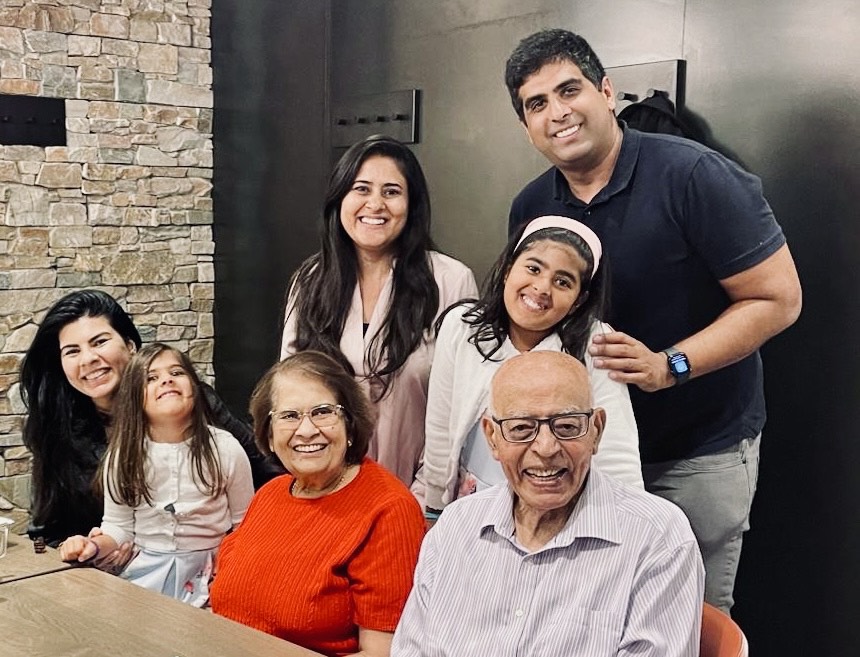
Sadrudin was fondly known as Mr. Hassam by his students and Sadrubhai by colleagues and others. Mr. Hassam grew up in the rich culture of Zanzibar. He showed academic achievement at school as a young boy. He went on to train as a professional teacher for two years at the Teachers Training College in Nairobi, Kenya where he graduated in 1956.
After graduating, he returned to Zanzibar, where he was the Honorary Secretary for the Aga Khan Sports Club. He also started teaching at the Aga Khan School of Zanzibar.
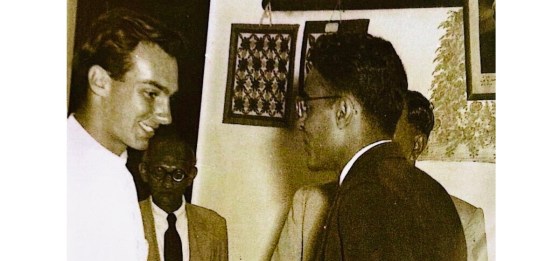
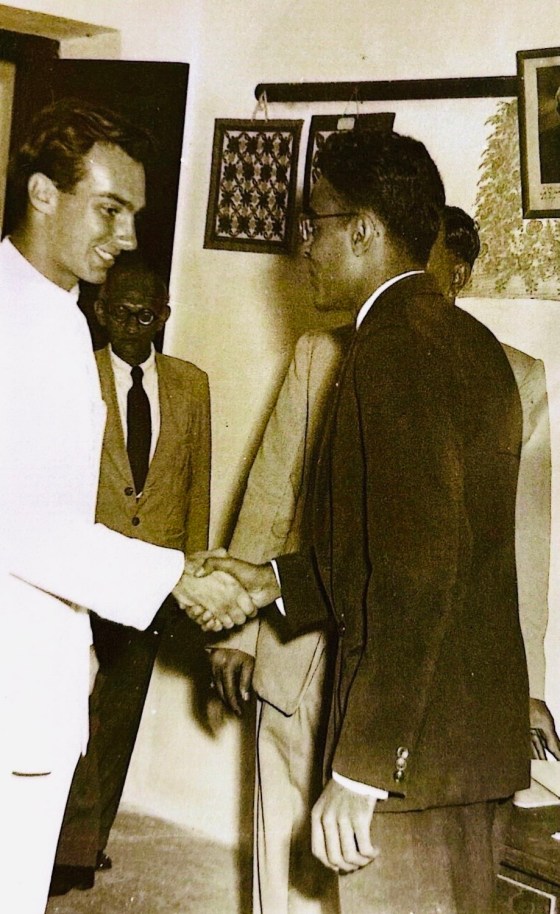
It was here that Mawlana Shah Karim Al-Hussaini Aga Khan IV (A.S.) visited his school and entered the classroom where Mr. Hassam was teaching. This very special, unexpected encounter would change the trajectory of Mr. Hassam’s professional career and life forever. Mawlana Shah Karim asked Mr. Hassam if he had furthered his studies enough, and after Mr. Hassam replied, “No Khudavind, I have not,” he was graciously offered a scholarship to study a Master of Arts (M.A.) in Islamic History at University of Edinburgh, Scotland. This inspirational moment is captured in a black and white photo where both are 21 years old and shaking hands as Mr. Hassam humbly accepts the Aga Khan scholarship.
This life-shaping opportunity was the catalyst for Mr. Hassam’s vast and long-spanning career as an experienced educationist. He evolved into various specialised roles and committed to honorary services within the Ismaili institutions. He served the community and his students to the best of his professional abilities with the same level of commitment, passion, gratitude, humility, and knowledge-sharing in all his work endeavours until he gracefully retired from the Institute of Ismaili Studies (IIS) in London, U.K. at the age of 84 in 2020.
He had graduated from the University of Edinburgh with an M.A. majoring in Islamic History and European History and subsidiaries in English, Latin and Philosophy. In addition to fluently speaking and writing in Kiswahili and Gujarati, he learnt French, German, Arabic, and Persian and held distinction certifications in Maths and Geography from the University of London. He also learnt to read Khojki (Sindhi) script in his early years, which would prove to be an important and unique skill in the latter years of his career at the IIS. While working towards his M.A., he simultaneously qualified in Writing and Editing with the British American School of Writing, another skill he would utilise throughout his career.
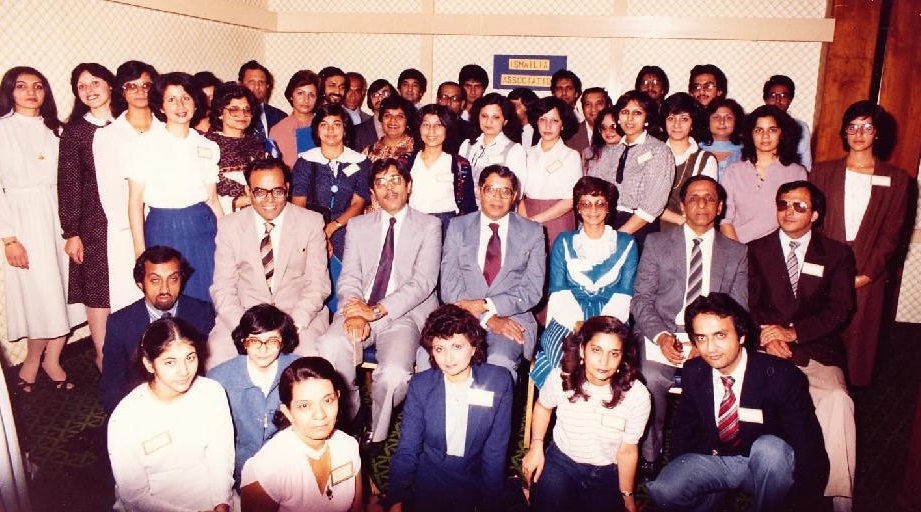
In the early years of his career, after graduating with his M.A., he taught History, English and Religious Education in secular secondary schools in Edinburgh (1965-72). He then moved back to Tanzania and taught at the Aga Khan School of Commerce and then at the Aga Khan Mzizima Secondary School, Dar-es-Salaam, where he was Head of History and subsequently Deputy Headmaster (1973-1981). Simultaneously, he was also the Religious Education Officer of the Ismaili curriculum for Ismaili students for 10 years, which also involved him conducting a number of courses on Ginans and Gujarati in the manpower training programmes in Tanzania. Additionally, he was the Honorary Secretary of the Ismailia Association for Tanzania and Honorary Secretary of the Aga Khan Sports Club for Tanzania and loved to play tennis. At the Ismailia Association for Tanzania, he trained religion teachers. He participated as an educationist in the Religious Education Conferences at Nairobi, held under the auspices of the Ismailia Association for Kenya, to plan the International Curriculum for Religious Education for the worldwide Ismailis. In his time in Tanzania worked closely with Al-waez Abu-ali Missionary and edited his materials.
In 1981, he moved with his family to London, U.K., to accept a role that would be a long-standing position as the Religious Education Officer with Ismailia Association (now known as the Ismaili Tariqah and Religious Education Board, ITREB) U.K.
~~~~~~~
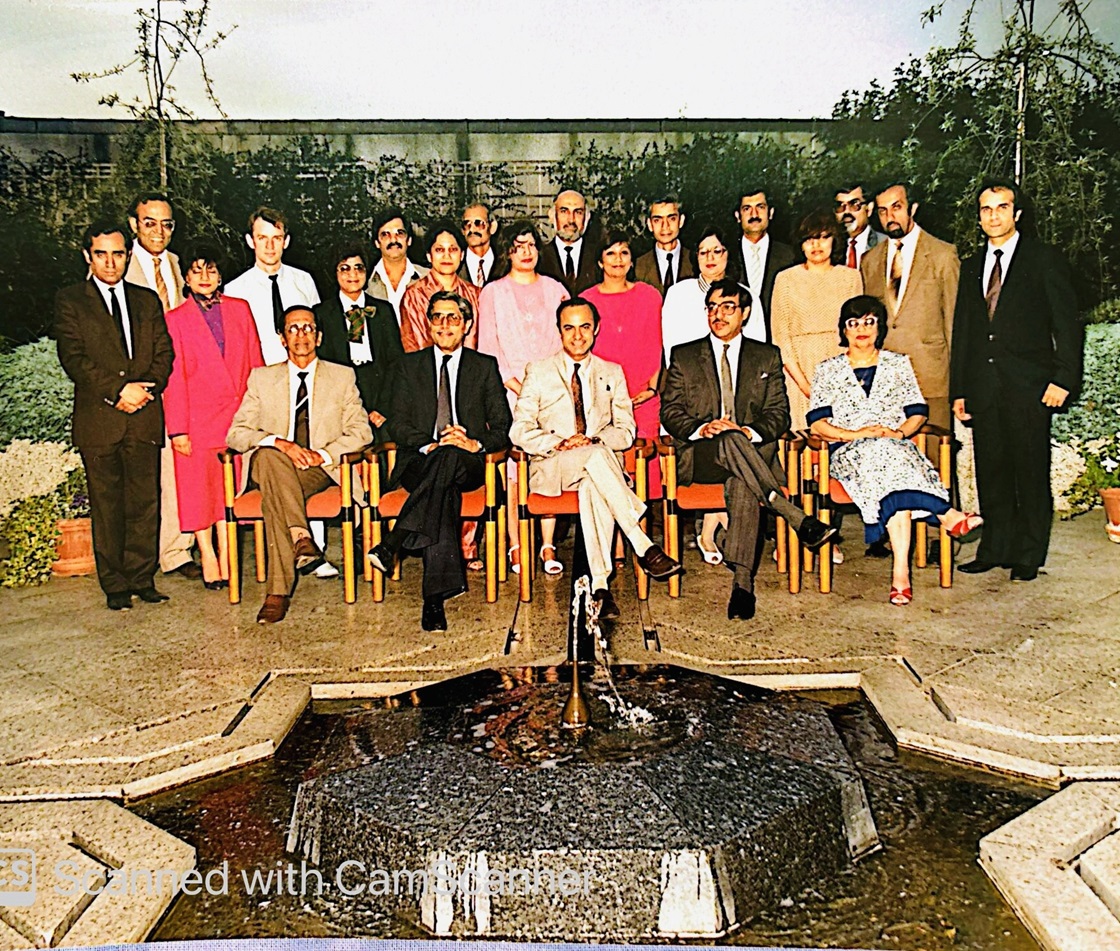
It was at the ITREB, U.K., where he worked on a variety of projects amongst high-esteemed colleagues including Al-waez Jehangir Merchant, Al-waeza Malek Merchant, Al-waez Saddrudin Fattoum, Al-waez Bashir Ladha, Al-waez Gulam Abbas, Dr. Farouk Topan, Al-waez Faqir Muhammed Hunzai, Al-waeza Rashida Hunzai, Amin Keshawji and Aziz Khoja to name but a few.
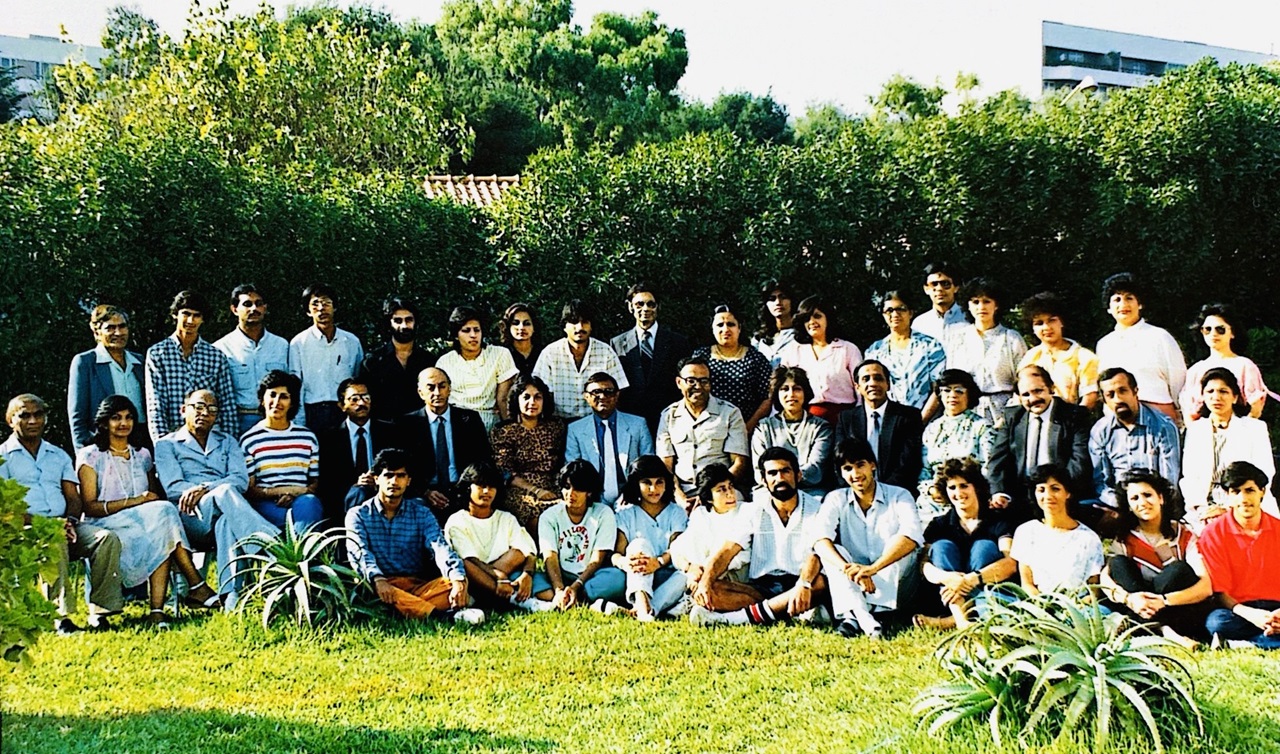
One of his initial roles was to identify Baitul Ilm religious education locations around the U.K., set them up and oversee them. His primary duties included training volunteer teachers, especially in Ismaili History and Ginans, directing the courses for teachers and preparing instructional material for the programmes, teaching secondary students, and providing critique to draft curriculum plans and materials from IIS U.K. He also wrote articles for Al-Misbah and Ilm, which are reproduced on this website. He wrote a book on the Alamut period of Ismaili history for secondary students. Mr. Hassam directed and conducted, with the team, teacher training programmes in London, Birmingham, Leicester, Edinburgh, and Amsterdam and also, in 1985, conducted a 17-day teacher training course for the Ismailia Association of Portugal. He was invited to IIS (U.K.) to lecture to the M.A. graduates on a few festival Ginans and identify manuscripts in Khojki and other Indic scripts. He also prepared a curriculum to teach Ginans more systematically to co-relate with the curriculum for primary 4 and 5. He also conducted many short courses in Ginan and Gujarati in the manpower training programmes in U.K. and Portugal. In 1994, before Mawlana Shah Karim’s visit with the UK Jamat, he was responsible with Al-waez Mohamed Ladak for identifying from over a hundred candidates, selecting and training 26 groups to recite verses of Ginans in the presence of Mawlana Shah Karim during his mulaqat with the Jamat.
~~~~~~~
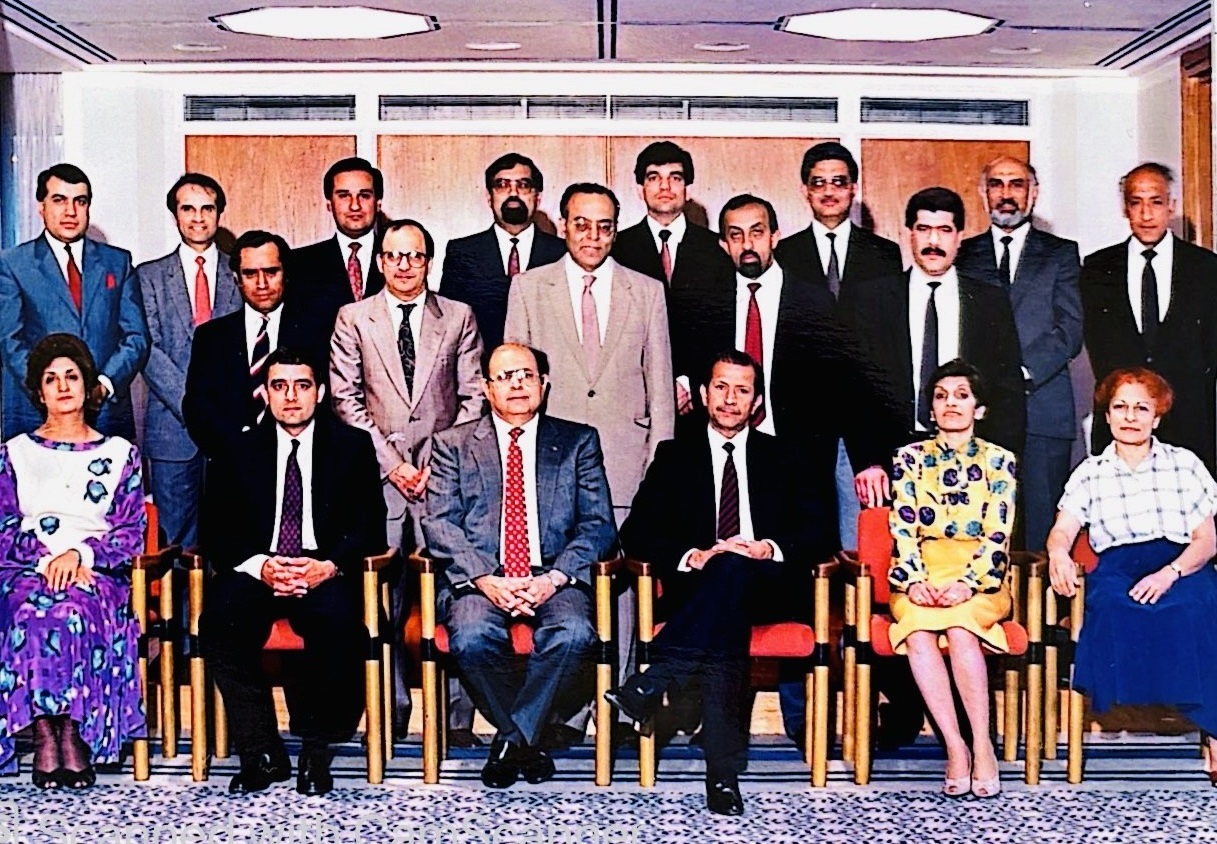
In subsequent years at the IIS in London, he was involved in several research projects, which gave him access to and exposure to the Khojki and Gujarati manuscripts in the library. He worked on cataloguing various special and heritage materials in Indic languages (Gujarati, Urdu and Khojki script). His knowledge of the Indic languages and familiarity with Arabic and Persian allowed him to examine and catalogue many materials in these languages, many of which are featured through the Institute’s special collections catalogue.
He used his knowledge of Indic languages to also develop (in his spare time) reading materials for students to learn the Gujarati and Khojki languages so that students and researchers could better understand ginan literature and our cultural traditions and religious practices, which are rooted in South Asia for a large number of Ismailis. As such, students and researchers at IIS have benefited immensely from his knowledge and expertise. The IIS provided a Gujarati keyboard for him to use as it was an appropriate tool in some of his written materials. He has written a number of articles on the festival and other Ginans for Ilm and lectured on these to graduate students. These are now available online at simerg.com. He has authored ‘Ginans – Understanding and Appreciation Made Easy,’ a book based on his long teaching experience at different levels on the Ginans and the Ginanic literature. He has also authored ‘Mastering Gujarati and Khojki Scripts’ a book aiming to enable learners (for example Baitul Ilm and Ginan teachers, Waezeen, IIS alumni, GIPISH and STEP graduates who want to pursue an M.A. or Doctorate on Ginanic literature or socio-cultural aspects of Ismailis) to read fluently and understand the printed books in Gujarati and Khojki and hand-written manuscripts. He felt this to be important because studying the primary sources and languages of the Indo-Pakistan subcontinent and African countries is essential to truly understand the history and culture of these areas.
Mr. Hassam’s enriching experience and love for learning and teaching have left a lasting impact on many students and colleagues. Their fond memories, compliments of his kind, gentle nature, and heartfelt gratitude for his contributions are a testament to his service. We offer our humble shukrana for his lifetime of dedicated service to the Imam-of-the-Time and the Ismaili Jamat and its institutions. He leaves behind a rich and enduring legacy.
Date posted: March 25, 2025.
____________________
We welcome your condolences and tribute to Huzurmukhi Sadrudin Kassamali Hassam. Please click LEAVE A COMMENT



 for inviting us to participate in funeral ceremony. Her soul has merged with the Noor. It is time for spiritual happiness. May Mawla accept all your wonderful sewa. Stay safe, healthy, happy, united and continue your wonderful family tradition of spiritually intellect sewa in humility. Love to all.


 Simerg - Insights from Around the World