July 11, 2023: The 66th Anniversary of the Aga Khan’s Ascension as the 49th Hereditary Imam of the Shia Ismaili Muslim Community

Featured photograph shown at top of post: A flashback to the Golden Jubilee of the Aga Khan during his visit to Vancouver in 2008 when he signed his book “Where Hope Takes Root” for the former Premier of British Columbia, Gordon Campbell. Photograph: © The Vancouver Sun.

Artistic Greeting Cards by Karim Ismail, Brief Notes on the Imamat and the Aga Khans, and an Explanation and Recitation of a Celebratory Ismaili Ginan (Hymn)

Compiled and prepared by MALIK MERCHANT

Simerg and its sister websites, Barakah and Simergphotos, convey heartiest felicitations to Ismailis and friends of the Ismaili community in Canada and around the world on the auspicious occasion of His Highness Prince Karim Aga Khan’s 66th Imamat Day anniversary which falls on July 11, 2023. The Aga Khan succeeded to the Hereditary Throne of Imamat on July 11, 1957 at the age of 20 upon the death of his grandfather, Mawlana Sultan Mahomed Shah Aga Khan III, whose reign of 71 years as the 48th Imam is the longest in the 1400 year history of the Shia Ismaili Muslims.

Yesterday, on July 10, 2023, we presented a unique collection of pages from the Tanganyika Standard newspaper that reported on the death of the late Aga Khan and the succession and enthronement of his grandson Prince Karim. For July 11, we present a series of beautiful works of Imamat related calligraphies created over the years by Toronto’s Karim Ismail, including one for 2023 which is shown below.
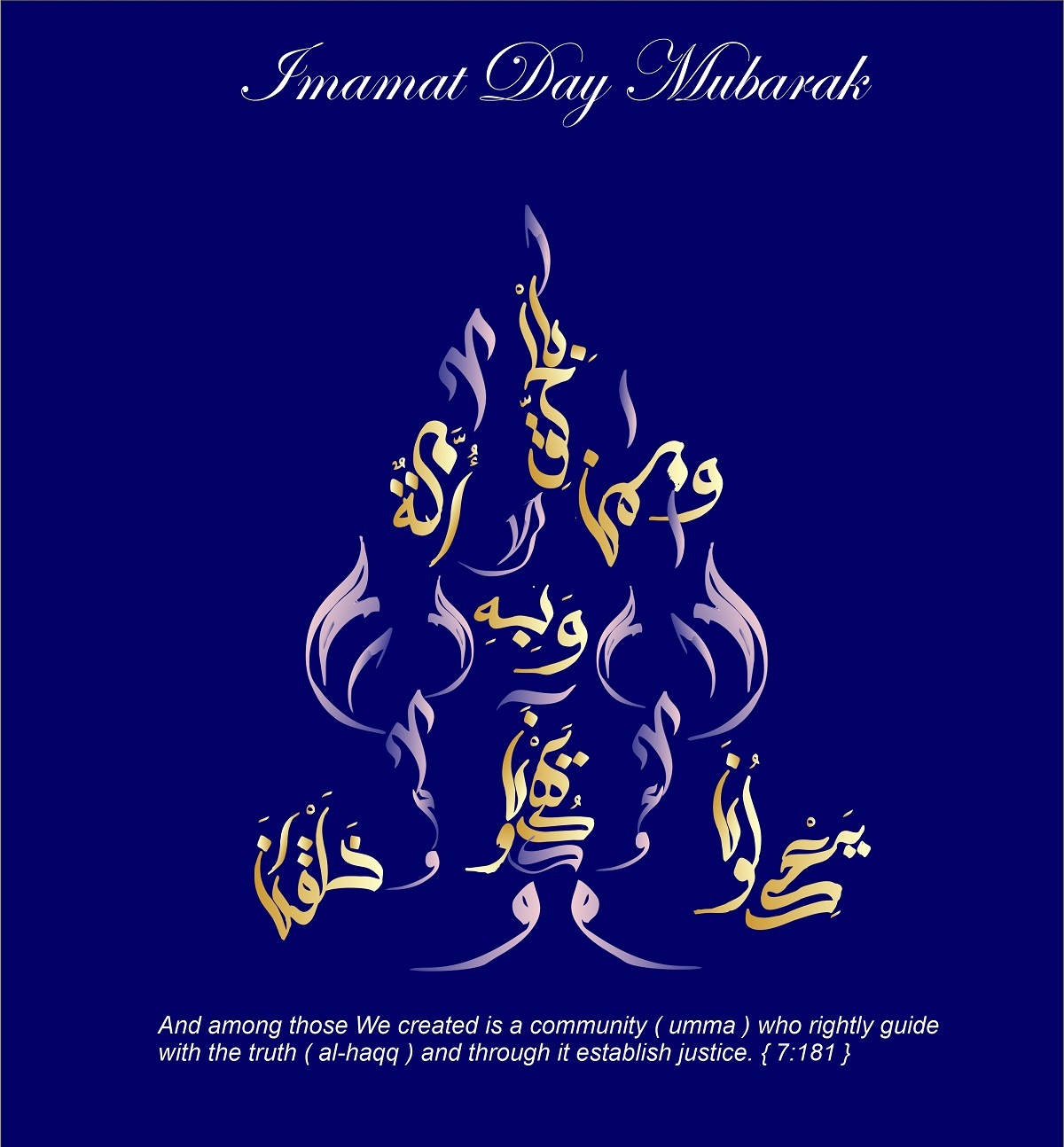
Aga Khan Imamat Day Card 2023 by Karim Ismail Simerg
Inspiration for the calligraphy was drawn from the book “The Master and the Disciple” in which the ayat (7:181) is quoted, and which relates to the Imams. The book is an early Islamic spiritual Dialogue by Ja’far b. Munsur al-Yaman. In this section of the book two characters are involved in a dialogue. One is an Ismaili da’i by the name of Salih and a knowledgeable Mullah called Abu Malik. After some time the dialogue turns to the concept of Divine Justice where Salih refers to 7:181 several times. The Ismaili da’i explains to Abu Malik (who has gained the surname of Cube of scholars) that God’s act of justice towards His servants is through just witnesses (7:181). Salih uses the Arabic word adl to also mean witness (7:181). In Shi’i and especially Ismaili understanding, these just witnesses are the Imams (Ahl al-bayt). Upon hearing this, Abu Malik exclaims, ‘By my life, this is the very foundation of justice!’. He now understands that God’s justice is by means of the just witnesses mentioned in 7:181.

According to well-known Muslim traditions, the Prophet Muhammad (May peace be upon him and his family) said:

“I am leaving amongst you two weighty things after me, the Qur’an and my Progeny (ahl al-bayt). Verily, if you hold fast to them both you will never go astray. Both are tied with a long rope and cannot be separated till the Day of Judgement.” (Muslim, Vol. II, pg. 279).

The Prophet appointed Hazrat Ali to be his successor as the Imam in a pivotal gathering during his return to Medina from his final pilgrimage to Mecca. The Aga Khan, who is respectfully addressed by the Ismailis as Mawlana Hazar Imam (our Lord the present/living Imam), is the 49th Hereditary Imam in direct succession of Imams since Imam Ali.

In the Ismaili Ginan (hymn) Girbah Vali, attributed to the Ismaili missionary Pir Sadr al-Din, the Pir says:

“If the Imam did not have his feet on this earth for even a moment, then the world, moon, sun would vanish and nothing would exist, neither the heaven nor the earth.”

This notion of the cosmic necessity of an Imam, expressed by the Pir, is also found in famous traditions of the Prophet Muhammad (cited in “The Divine Guide in Early Shi’ism,”  pp 125-131):

“The earth cannot be devoid of an Imam; without him, it could not last an hour,” and also: “If there were only two men left in the world, one of them would be the Imam.” 

The calligraphies that Toronto’s Karim Ismail has created for Imamat Day over the past few years, are inspired by Qur’anic phrases that in Shia tradition refer to the Imam, and we are happy to include all the calligraphies that he has contributed to the website since 2020.

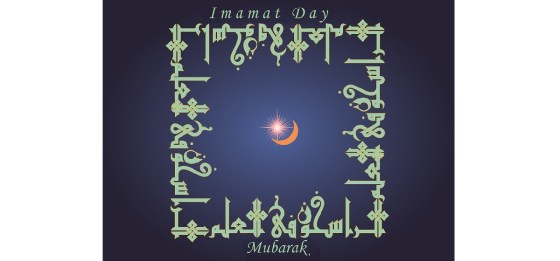
Calligraphy with the Qur'anic phrase Al-rasikhul fi'l-ilm (Those well grounded in knowledge); by Karim Ismail Toronto.
The Qur’anic phrase Al-rasikhun fi’l-ilm (Those firmly rooted in knowledge) in Fatimid Kufi script on all 4 sides of the art work. The Fatimids were rulers of North Africa and Egypt from the 10th through the 12th centuries. The Fatimid Imams or Caliphs were ancestors of the current Aga Khan.
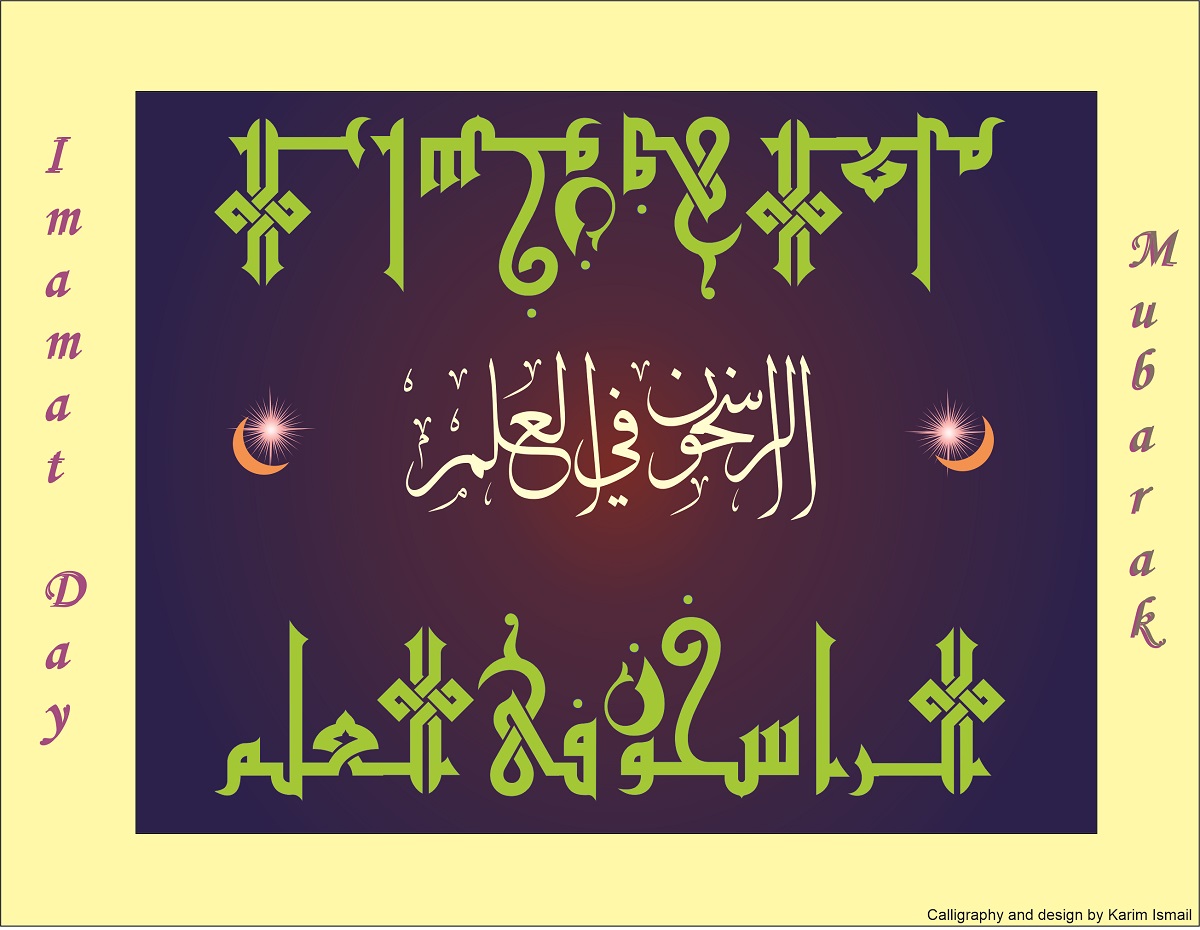
Calligraphy with the Qur'anic phrase Al-rasikhul fi'l-ilm (Those well grounded in knowledge); by Karim Ismail Toronto.
The Qur’anic phrase Al-rasikhun fi’l-ilm (Those firmly rooted in knowledge) on top and bottom of the art work in Fatimid Kufi script; the centre of the art work has the same phrase in Thuluth script. Calligraphy and design by Karim Ismail, Toronto.
Imamat Day Card by Karim Ismail Simerg and Barakah His Highness the Aga Khan Mawlana Hazar Imam Prince Karim
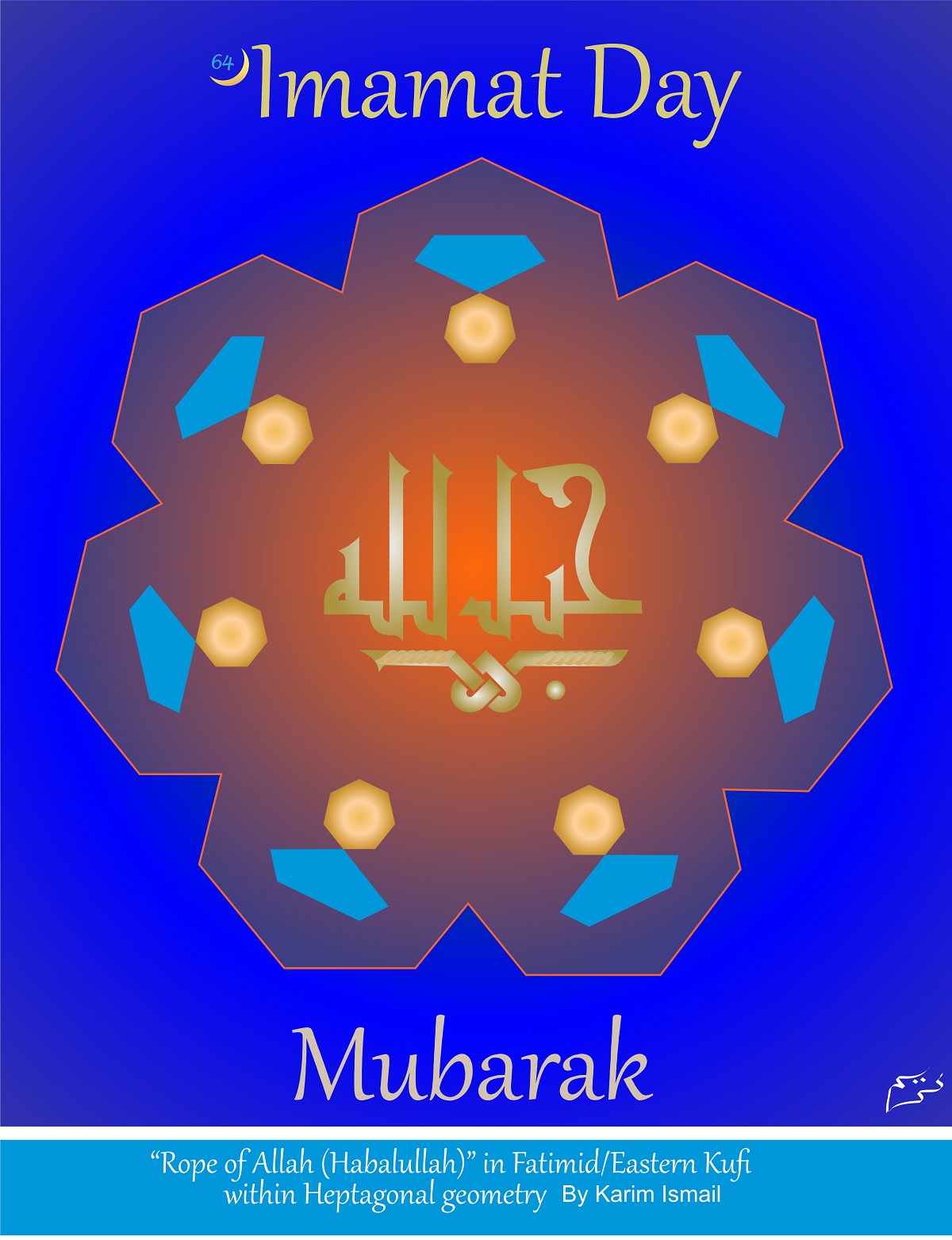
In Shi’i tradition, “The Rope of Allah” (Qur’an 3:103) refers to the “Ahl al Bayt” — the Imams from the House of the Prophet Muhammad (S.A.S). This important tradition appears in the card within heptagonal geometry (seven-sided polygon) about which the (Late) Karl Schlamminger, creator of extraordinary designs and distinctive calligraphies for the Ismaili Centres in London, Lisbon and Toronto, observed as follows in an essay for Arts & The Islamic World (volume 3, number 3, page 25-26): “The floor of the outer entrance hall [of the Ismaili Centre London] has an open ended pattern in heptagonal form which rises at the focus of the room to create a fountain: such a pattern in such space is of course a completely classical Islamic response — but I have never heard of a heptagonal pattern anywhere in Islamic architecture. “The number seven symbolizes for Ismailis the values of its essential philosophy — but has never been used in an architectural context. Here the sevenness of the design is no superficial effigy or naturalistic picture of an idea, but — as always in Islam — is expressed in geometry (literally: measurement of the earth).”
Imamat Day Calligraphy, Simerg
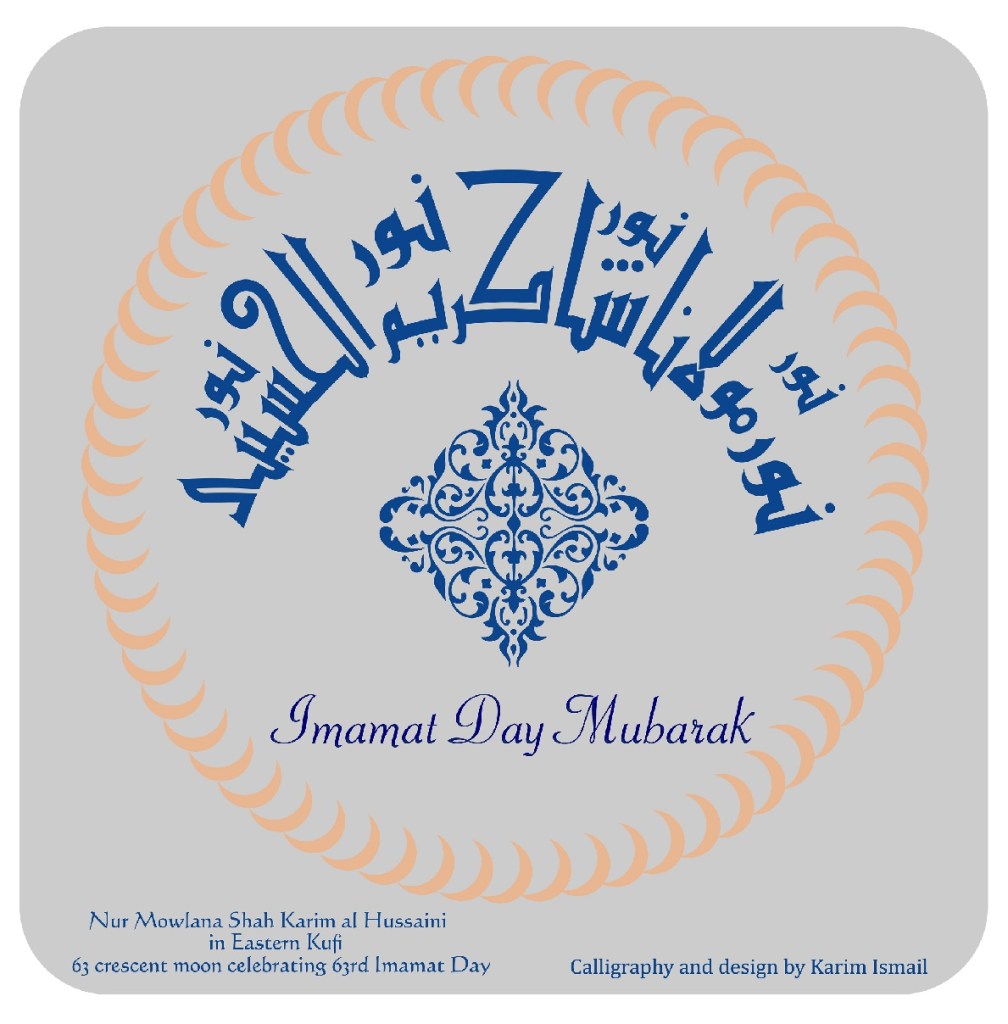
Calligraphy by Karim Ismaili on the auspicious occasion of Mawlana Hazar Imam’s 63rd Imamat Day Anniversary.

_______________________

The Aga Khans

From the day the Prophet Muhammad (May peace be upon him and his family) passed away on June 8, 632, and Hazrat Ali became the first Imam on the Divine Commandment that the Prophet had received at Ghadir Khumm, there have been forty-nine Ismaili Imams in continuous Hereditary Succession, spanning a period of 1391 years in Islamic history.
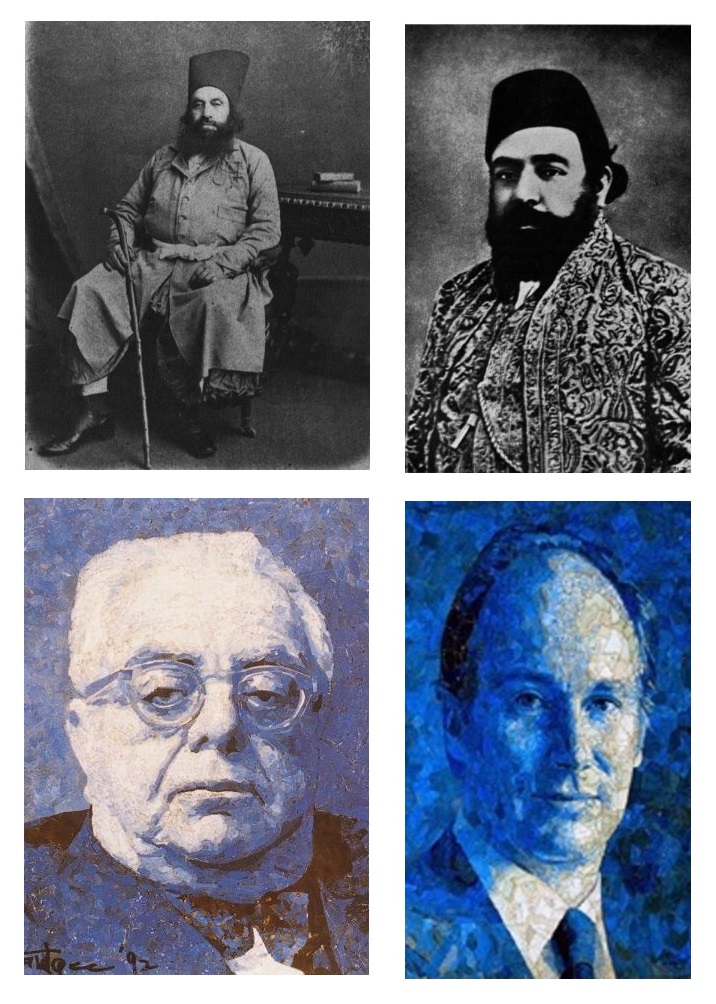
Four images depicting prominent historical figures related to the Ismaili community. The top left image shows a seated man with a cane, the top right features a man in traditional attire, the bottom left displays a portrait of an older man with glasses, and the bottom right presents a stylized portrait of a contemporary leader.
Upper row: Imam Shah Hassanali Shah (Aga Khan I) and Imam Shah Ali Shah (Aga Khan II). Lower row: Imam Sultan Mahomed Shah (Aga Khan III) and Mawlana Shah Karim Al Hussaini (Aga Khan IV). Total reign of the four Imams 203 years from 1817 to current year (2021). Longest reign Aga Khan III, 71 years; followed by Aga Khan I and Aga Khan IV, each 64 years.

The current Aga Khan and his immediate three predecessors have reigned the Ismaili community for a total of 207 years or 14.9 % of the entire span of Imamat, as follows:

1. Mawlana Shah Karim Al Hussaini Hazar Imam (His Highness the Aga Khan IV, Imam from 1957 – Current, 66 years, he became the 49th Imam at the age of 20); 
2. Imam Sultan Mahomed Shah (His Highness the Aga Khan III, Imam from 1885 – 1957, Imam for 71 years, he became the 48th Imam at the age of 7 years);
3. Imam Shah Ali Shah (Aga Khan II, 1881 – 1885, Imam for 4 years, he became the 47th Imam at the age of 51 years); and
4. Imam Shah Hassanali Shah (Aga Khan I, 1817 – 1881, Imam for 66 years, he became the 46th Imam at the age of 13 years).

This 207 year period of the reign of 4 successive Ismaili Imams accounts for more time than does the entire Fatimid period, reigned by 8 Imams from Imam Mehdi (11th Imam, North Africa) to Imam Mustansir bi Allah (18th Imam, Cairo).

On that historical and interesting statistical fact, we convey to members of the Ismaili community around the world as well as friends and supporters of the community Imamat Day Mubarak. We also pray for the fulfillment of our readers’ wishes and that everyone’s lives are filled with barakah (happiness) and success. We particularly wish families with young children and youth success in their studies. On this auspicious day, we also pray that the souls of the deceased may rest in eternal peace and that their family members may find strength and courage to overcome the grief over the loss.

_______________________

An Explanation and Recitation of the Ismaili Celebratory Ginan Ya Ali Khuba Mijalas

Editor’s note: This is a very condensed, yet comprehensive, post on the munajat, Ya Ali Khuba Mijalas that is recited in many Ismaili Jamatkhanas around the world for the auspicious celebration of Imamat Day. For the complete version, which offers much more in terms of the Ginan’s history, composition, style, and explanation with a glossary, please click Original article.

By SADRUDIN K. HASSAM

INTRODUCTION

Popular tradition has it that the Munajat, Ya Ali Khuba Mijalas, was first recited during the enthronement ceremony of the 48th Imam, Mawlana Sultan Mahomed Shah, His Highness the Aga Khan III, which took place at Aga Hall at Mazagon Road in Mumbai in September 1885. Another tradition says that the recitation first took place when the young Imam met his followers at the main Ismaili Jamatkhana in Mumbai, known as the Darkhana. In any case, the munajat became very much part of the Ismaili tradition in many parts of the world to recite it in jamati gatherings (mijalas) to commemorate the enthronement of their 48th Imam Sultan Muhammad Shah, the late Aga Khan III (1877 – 1957). Continuing with this tradition, this Munajat, with slight variations, is now recited on the occasion of the anniversary of the ascension of Mawlana Shah Karim al-Hussaini (His Highness the Aga Khan IV) as the 49th Ismaili Imam.  July 11th, 2023 marks his 66th Imamat anniversary.

The Arabic word Munajat is formed from the root word na-ja-wa which means ‘to converse secretly’ or ‘confidentially’. From the context of the Ginanic literature of the Ismailis, the term Munajat would be equivalent to venti (supplication). Apart from conveying this basic idea of venti, the term Munajat also has the connotation of conveying mubaraki (greetings) and adoration or reverence to a holy person, in this case the Ismaili Imam.

The complete Munajat has eight stanzas of four lines each, the chopai. At the end of each stanza there is a warani (refrain) of four lines which ends with the words ‘Mubarak hove’. This refrain is repeated at the end of each stanza for collective recitation and participation of the Jamat.

EXPLANATION

It is not an easy task to explain and translate a Ginan or Qasida from one language to another. For this Munajat which is a blend of several languages and is suffused with deep feelings and sublime supplication, the task becomes even more daunting. A conscious effort has been made to be as close to the original as possible and we hope that this explanation will impart our readers with some understanding about Ya Ali Khuba Mijalas.

VERSE ONE

Transliteration

Ya Ali Khuba Mijalas Zinat Karake
Farasha Bichhai Gali,
Aan Baithe Hay Takht-Ke Upar
Shah Karim Shah Vali

Refrain

Aaj Raj Mubarak Hove,
Noor Ain Alikun Raj Mubarak Hove,
Shah Aal-e Nabi Kun Raaj Mubarak Hove,
Hove Hove Aaj Raj Mubarak Hove.

Explanation

O Ali! In the fair assembly,
gloriously adorned with carpets spread on the floor,
Our Lord Shah Karim sits on the takht,
our Lord Shah Karim our Guardian.

Refrain

Today blessed be your rule
Oh the light of Ali’s eye,
Blessed be your rule
Shah, the descendant of the Holy Prophet,
Blessed be your rule today
Blessed be your rule today.

VERSE TWO

Transliteration

Ya Ali Didar Lenekun Aye Shah Teri,
Hindi Jama-et Sari,
Sijada Baja Kar Najaran Deve
Jan Apniku Vari…. Aaj.

Explanation

O Ali! To be blessed with didar (glimpse of the Imam)
your whole Indian jamat have assembled.
They prostrate and they offer nazrana (homage)
devoting their lives to you.

VERSE THREE

Transliteration

Ya Ali Tera Nasiba Roje Awal-Se,
Deta Haire Kamali,
Shah Sultan Shah Ke Mukhamen Se Nikala,
Shah Karim Shah Vali….Aaj

Explanation

O Ali! Your fortune from the very first day (right from the beginning)
has bestowed perfection upon you,
Hazrat Imam Shah Sultan Muhammad Shah declared that
Mawlana Shah Karim is the Lord and the Guardian.

VERSE FOUR

Transliteration

Ya Ali Shah Kahun To Tujakun Baja Hay,
Bakhta Bulanda Peshani,
Chhoti Umarmen Aali Marataba,
Taluki Hay Nishani….Aaj

Explanation

O Ali! To call you Lord is your due.
Your fortune and greatness is evident on your forehead.
Your exalted status at the young age
is a sign of greatness.

VERSE FIVE

Transliteration

Ya Ali Takhta Ne Chhatra Tujakun Mubarak,
Zaheraji-Ke Piyare,
Abul Hasan Shah Karani So Teri
Jannat Aap Sanvare….Aaj

Explanation

O Ali! May your throne and canopy (exalted position) be blessed,
the dear one of Fatimatuz Zahra.
O Mawla Ali! All this is because of your glorious deeds.
Paradise is embellished by your presence.

VERSE SIX

Transliteration

Ya Ali Takht ne Chhatra sunake tere
Falakase Barase Nooran,
Moti Tabaka Hathunmen Lekar,
Shah KunVadhave Huran….Aaj

Explanation

O Ali! At the news of your Takht Nashini (Takhta ne Chhatra)
the heavens shower Light,
with trays of pearls in their hands,
the houris (chaste heavenly maidens) greet the Lord.

VERSE SEVEN

Transliteration

Ya Ali Maheman Khanemen Momankun Jab
La-i ‘Id Musal-le
Shamsi Jo Salavat Pada Kar
Marafat-Ki Khushiyali….Aaj

Explanation

In the guest-house when the celebration
of your Takht Nashini takes place,

the momins celebrate like ‘Id.
They recite the Shamsi prayer, the salwat,
and they experience the ecstasy of spiritual enlightenment.

VERSE EIGHT

Transliteration

Ya Ali Teri Mubarak Badike Khatar,
Sayyad Karte Munajat,
Shah Najaf Tere Pushta Panah
Tere Dushman Hove Fanah….Aaj

Explanation

O Ali! To offer greetings,
the Sayyads make their humble supplication (munajat)
O Ali, the Lord of Najaf, may your progeny be protected
and your enemies be destroyed.

~~~~~~~~~~~

Recitation of the Munajat by Shamshu Bandali Haji

iconic reciter of Ismaili Ginans Alwaez Shamshu Bandali Haji
A rare portrait of the late Ismaili missionary Shamshu Bandali Haji from his early years. Photograph: Shamshu Bandali Haji Family Collection.

Recitation by Late Shamshu Bandali Haji. Audio Credit: http://ginans.usask.ca/

Date posted: July 11, 2023.

___________________

FEEDBACK

Simerg welcomes your feedback. Please complete the LEAVE A REPLY form below or click on Leave a comment Your letter may be edited for length and brevity, and is subject to moderation.

CONTRIBUTORS

Karim Ismail portrait for Barakah
Karim Ismail

Originally from Uganda, Karim Ismail lived in England before settling in Canada. By profession, he is a Pharmacist (retired).  It was in England, in 1986, that he came across the artwork of a German Muslim, Karl Schlamminger (1935-2017), at the Ismaili Centre London. Karl’s artwork on calligraphy and geometrics, had a profound effect on Karim. He is frequently seen conducting calligraphy workshops for children at the Aga Khan Museum in Toronto. Karim is also active on the literature counter at the Ismaili Centre Toronto.

A smiling man posing in front of a backdrop of mountains and trees.
Malik Merchant

Malik Merchant is the founding publisher and editor of Barakah (2017) as well as its two sister websites Simerg (2009) and Simergphotos (2012). See full profile HERE

Before departing this website please take a moment to review Simerg’s Table of Contents for links to hundreds of thought provoking pieces on a vast array of subjects including faith and culture, history and philosophy, and arts and letters to name a few. Also visit Simerg’s sister websites Barakah, dedicated to His Highness the Aga Khan, and Simergphotos.
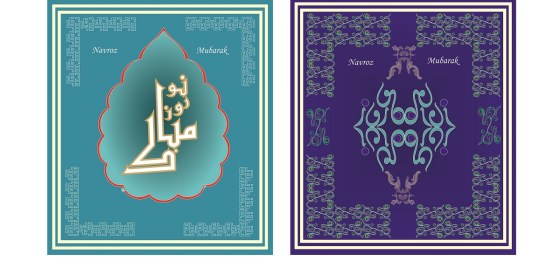
Navroz Mubarak to all our readers around the world

By MALIK MERCHANT

The publisher and editor of Simerg and its two sister websites, Simergphotos and Barakah, along with his family members, wishes all readers Navroz Mubarak with a prayer that the coming year bring with it joy and happiness in all our lives, that all our aspirations are fulfilled and that there may be peace and prosperity all around.

For our Ismaili readers, we quote the following timeless blessing in a Talika (written holy message) sent by Mawlana Hazar Imam, His Highness the Aga Khan, on March 21, 2021. He said:

“I send my most affectionate loving blessings for mushkil-asan, and for my Jamat’s wellbeing, good health, safety and security. I also give my best loving blessings for barakah in your spiritual and material lives, and for the fulfilment of all your wishes.”

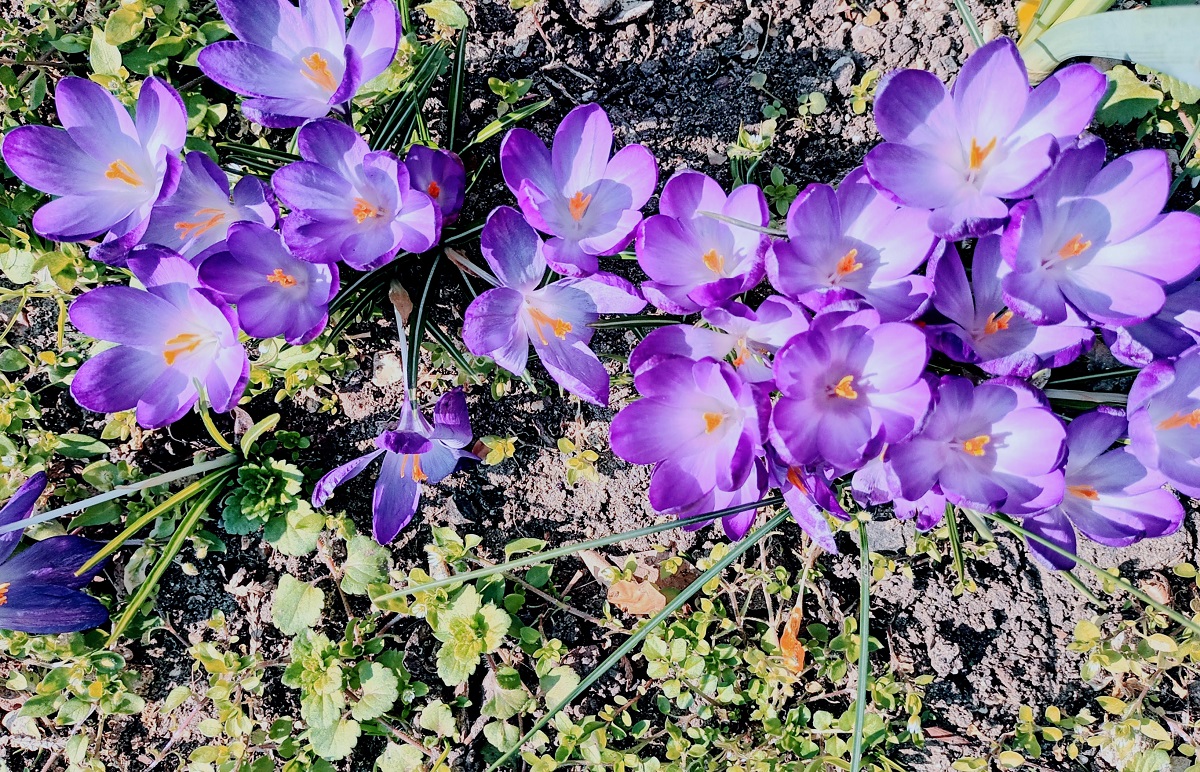
For this most auspicious occasion falling on March 21, 2023, we present below two beautiful calligraphies in Eastern Kufi and Diwani script prepared by Toronto based Ismaili artist Karim Ismail. We also present a special new article on Navroz by Mohez Nato of France, who submitted the following lovely photograph of Crocus sativus or saffron crocus growing in his garden.

FLOWERS AND CALLIGRAPHY

Please click on images for enlargement

A cluster of purple crocus flowers blooming on a garden bed, surrounded by green leaves and soil.
Crocus sativus or saffron crocus in Mohez Nato’s garden at his home in Paris. Read his Navroz article HERE. Photograph: Mohez Nato.

~~~~~~~~~~~~~~

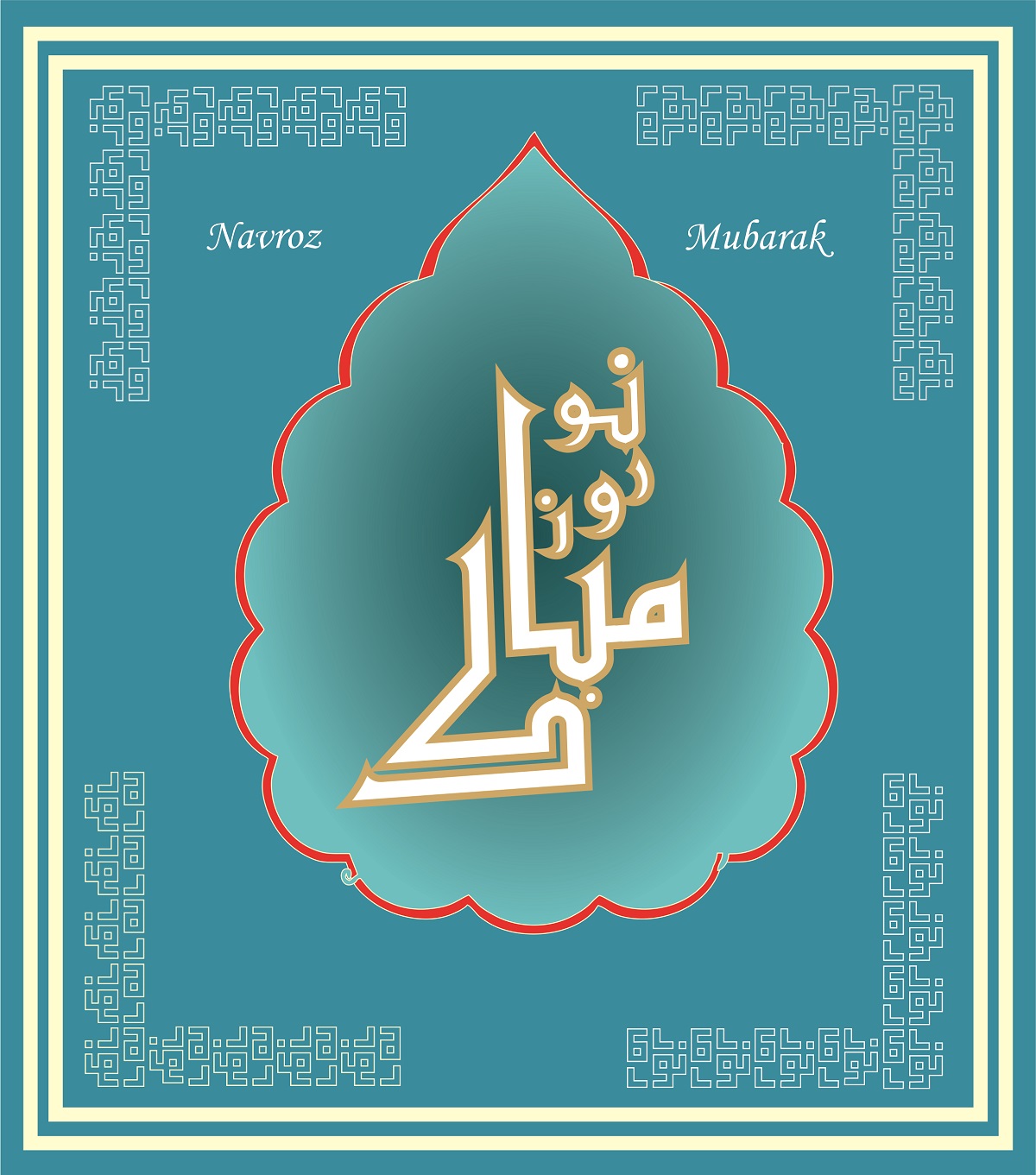
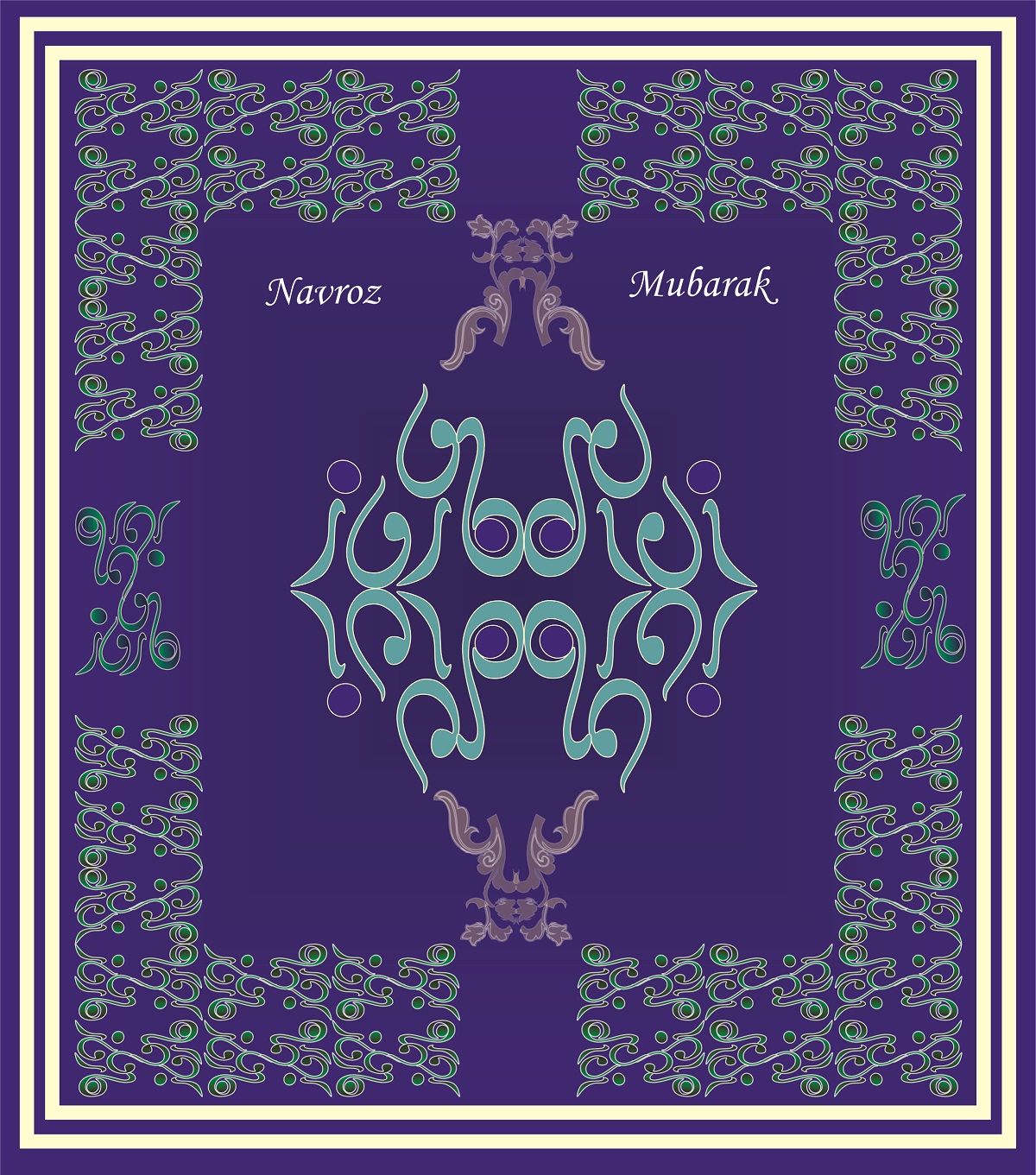
Calligraphy Navroz and Navroz Mubarak in square and eastern Kufi by Toronto's Karim Ismail.
Calligraphy Navroz and Navroz Mubarak in square and eastern Kufi by Toronto’s Karim Ismail.

~~~~~~~~~~~~~~

Calligraphy Navroz in Diwani script by Toronto's Karim Ismail.
Calligraphy Navroz in Diwani script by Toronto’s Karim Ismail.

Date posted: March 21, 2023.
Last updated: March 22, 2023 (link to full Talika added, typos.)

_____________

Karim Ismail Calligraphy, Ismaili artist simerg and barakah
Karim Ismail

Originally from Uganda, Karim Ismail lived in England before settling in Canada. By profession, he is a Pharmacist (retired).  It was in England, in 1986, that he came across the artwork of a German Muslim, Karl Schlamminger (1935-2017), at the Ismaili Centre London. Karl’s artwork on calligraphy and geometrics, had a profound effect on Karim. He is frequently seen conducting calligraphy workshops for children at the Aga Khan Museum in Toronto. Karim is also active on the literature counter at the Ismaili Centre Toronto.

Before departing this website, please take a moment to review Simerg’s Table of Contents for links to hundreds of thought-provoking pieces on a vast array of subjects including faith and culture, history and philosophy, and arts and letters to name a few. Also visit Simerg’s sister websites Barakah, dedicated to His Highness the Aga Khan, and SimergphotosThe editor may be reached via email at mmerchant@simerg.com.

Artistic Greeting Cards in Arabic Scripts for His Highness the Aga Khan’s 65th Imamat Day Revolve Around a Phrase from the Qur’an

By KARIM ISMAIL
with MALIK MERCHANT

Simerg and its sister websites, Barakah and Simergphotos, convey heartiest felicitations to Ismailis and friends of the Ismaili community in Canada and around the world on the auspicious occasion of His Highness the Aga Khan’s 65th Imamat Day anniversary (July 11, 2022). He succeeded to the Throne of Imamat on July 11, 1957 at the age of 20 upon the death of his grandfather, Mawlana Sultan Mohamed Shah Aga Khan III, whose Imamat (spiritual leadership) of 71 years is the longest in the 1400 year history of the Shia Ismaili Muslims.

According to well-known Muslim traditions, the Prophet Muhammad (S.A.S) said:

“I am leaving amongst you two weighty things after me, the Qur’an and my Progeny (ahl al-bayt). Verily, if you hold fast to them both you will never go astray. Both are tied with a long rope and cannot be separated till the Day of Judgement.” (Muslim, Vol. II, pg. 279).

The Prophet appointed Hazrat Ali (A.S.) to be his successor as the Imam, and His Highness the Aga Khan, who is respectfully addressed by the Ismailis as Mawlana Hazar Imam, is the 49th Hereditary Imam in direct succession of Imams since Imam Ali.

In the Ismaili Ginan (hymn) Girbah Vali, attributed to the Ismaili missionary Pir Sadr al-Din, the Pir says:

“If the Imam did not have his feet on this earth for even a moment, then the world, moon, sun would vanish and nothing would exist, neither the heaven nor the earth.”

The notion of the cosmic necessity of an Imam, expressed by the Pir, is also found in famous traditions of the Prophet Muhammad (cited in “The Divine Guide in Early Shi’ism,”  pp 125-131):

“The earth cannot be devoid of an Imam; without him, it could not last an hour” and also “If there were only two men left in the world, one of them would be the Imam.” 

The two calligraphies that Karim Ismail has created express another important notion of the Imam based on the Qur’anic phrase: Al-rasikhun fi’l-ilm (those firmly rooted in knowledge). According to the Ismaili Baitul Ilm Secondary Curriculum, Volume 1, produced by the Institute of Ismaili Studies in London, the phrase, in the Shia tradition, is understood to be referring to the Imam descended from the Prophet’s family.

The first calligraphy has the Qur’anic phrase Al-rasikhun fi’l-ilm in Fatimid Kufi script on all the 4 sides of Karim Ismail’s artwork. The Fatimids were rulers of Egypt and North Africa in the 10th through the 12th centuries. The Fatimid Imams or Caliphs were ancestors of the current Aga Khan.

Calligraphy with the Qur'anic phrase Al-rasikhul fi'l-ilm (Those well grounded in knowledge); by Karim Ismail Toronto.
The Qur’anic phrase Al-rasikhun fi’l-ilm (Those firmly rooted in knowledge) on all 4 sides of the art work. Calligraphy and design by Karim Ismail. Toronto.

The second calligraphy, shown below, has the same phrase on the top and bottom borders in Fatimid Kufi script, as above. The centre has the same phrase in Thuluth script. We sincerely thank Karim Ismail for conceiving these pieces of art for Imamat Day.

Calligraphy with the Qur'anic phrase Al-rasikhul fi'l-ilm (Those well grounded in knowledge); by Karim Ismail Toronto.
The Qur’anic phrase Al-rasikhun fi’l-ilm (Those firmly rooted in knowledge) on top and bottom of the art work in Fatimid Kufi script; the centre of the art work has the same phrase in Thuluth script. Calligraphy and design by Karim Ismail, Toronto.

We wish all our readers a very Happy Imamat Day, with prayers for everyone’s good health, strength in Iman (faith), family unity and the fulfillment of all our wishes. May we fulfill the aspirations that Mawlana Hazar Imam has of each one of us of staying on the path of Sirat al Mustaqim (the Straight Path), excelling in our studies and endeavours, and keeping the right balance between our material and spiritual lives.

As we celebrate Mawlana Hazar Imam’s 65th Imamat Day, may we always remain under his guidance, loving care and protection. Ameen.

Date posted: July 11, 2022.

___________________

FEEDBACK

Simerg welcomes your feedback. Please complete the LEAVE A REPLY form below or click on COMMENT. Your letter may be edited for length and brevity, and is subject to moderation.

CONTRIBUTORS

Karim Ismail portrait for Barakah
Karim Ismail

Originally from Uganda, Karim Ismail lived in England before settling in Canada. By profession, he is a Pharmacist (retired).  It was in England, in 1986, that he came across the artwork of a German Muslim, Karl Schlamminger (1935-2017), at the Ismaili Centre London. Karl’s artwork on calligraphy and geometrics, had a profound effect on Karim. He is frequently seen conducting calligraphy workshops for children at the Aga Khan Museum in Toronto. Karim is also active on the literature counter at the Ismaili Centre Toronto.

A smiling man sitting outdoors in front of a mountain landscape, surrounded by trees.
Malik Merchant

Malik Merchant is the founding publisher and editor of Barakah (2017) as well as its two sister websites Simerg (2009) and Simergphotos (2012). His interest for literature and community publications began in his childhood years in Tanzania through the work of his late parents Jehangir (d. May 2017, aged 89) and Malek Merchant (d. January 2021, also 89), who both devoted their lives to the service of the Ismaili community, its institutions and the Imam-of-the-Time, His Highness the Aga Khan, as missionaries and religious education teachers. In the UK, Malik edited the flagship Ismaili magazine, ILM, with his father. A resident of Ontario since 1983, he relocated to Alberta in January 2022. He has an animal loving daughter Dr. Nurin Merchant; she is a vet and practices in Ontario. Malik can be contacted by email at mmerchant@simerg.com. He can also be reached — and followed — @twitter and @facebook.

Before departing this website please take a moment to review Simerg’s Table of Contents for links to hundreds of thought provoking pieces on a vast array of subjects including faith and culture, history and philosophy, and arts and letters to name a few. Also visit Simerg’s sister websites Barakah, dedicated to His Highness the Aga Khan, and Simergphotos.