Simerg is an independent initiative dedicated to Ismaili Muslims, the Aga Khan — their Hereditary Imam — and the Ismaili Imamat, and Islam in general through literary readings, photo essays and artistic expressions
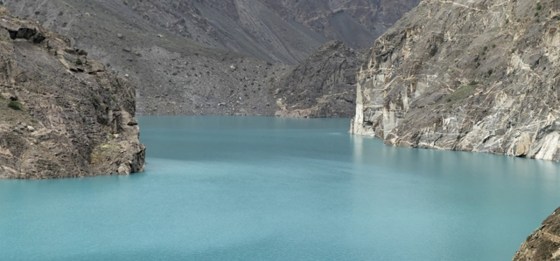
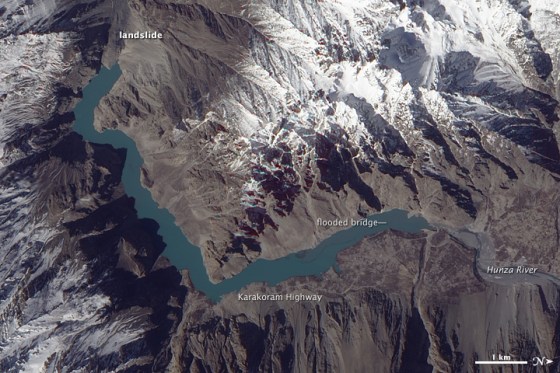
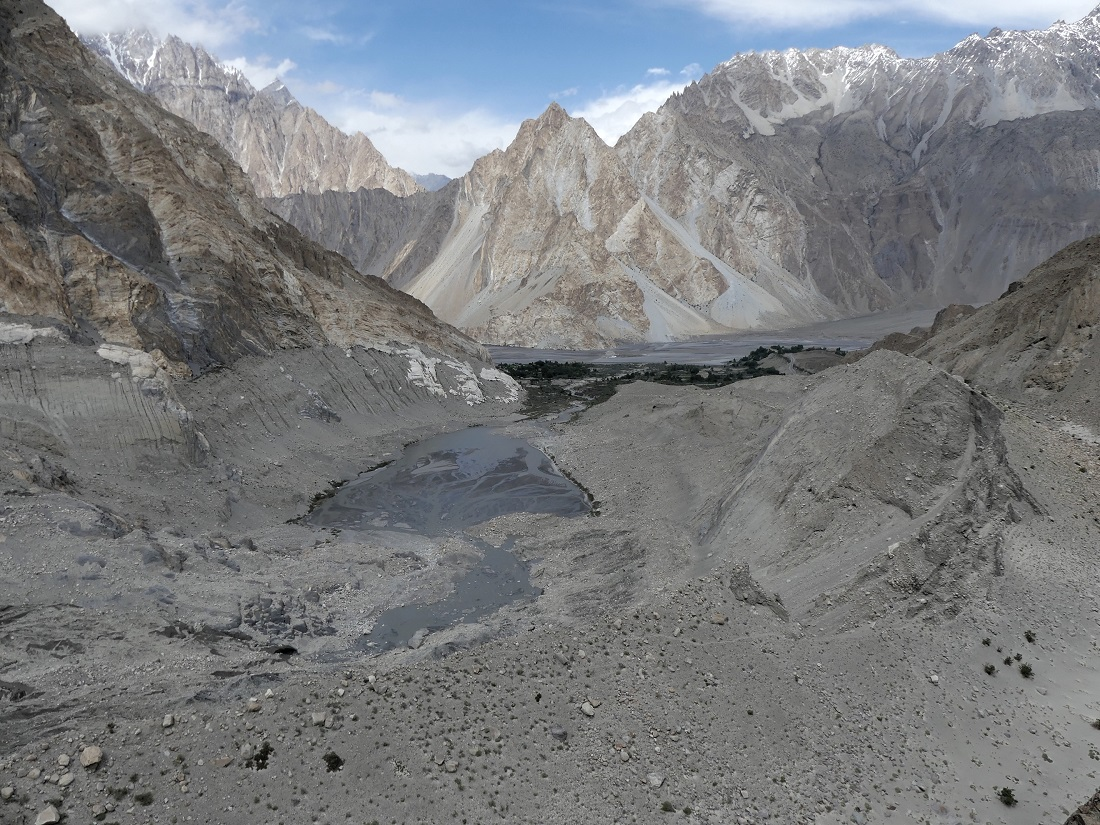
On the unsuspecting day of January 4, 2010, a rockslide, 1,200 meters long, 350 meters wide, and 125 meters high, struck the Hunza River in Attabad, a small community in the Hunza Valley of northern Pakistan, forming Attabad Lake, also known as Lake Gojal (please click on the the link to learn about the scale of the destruction as observed by NASA’s Earth Observing satellite and scientists Jeffrey Kargel and Gregory Leonard).
Story continues below
On January 4, 2010, a landslide occurred in the Hunza Valley of northern Pakistan. The initial disaster buried the village of Attabad, destroying 26 homes and killing 20 people. As the weeks passed, the problems compounded because the landslide did more than destroy a village. It also blocked the Hunza River, creating a long lake, now known as Attabad Lake, which inundated several villages and submerged a significant section of the Karakoram Highway.
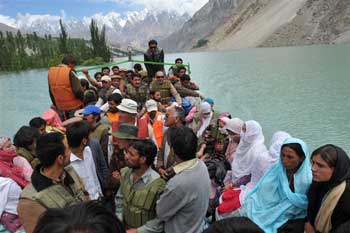
Travelers and locals cram into boats and ferries for the two-hour crossing of the new Attabad Lake formed by a rockslide in 2010. Photograph: M. Pearson / ShelterBox).
~~~~~~~~
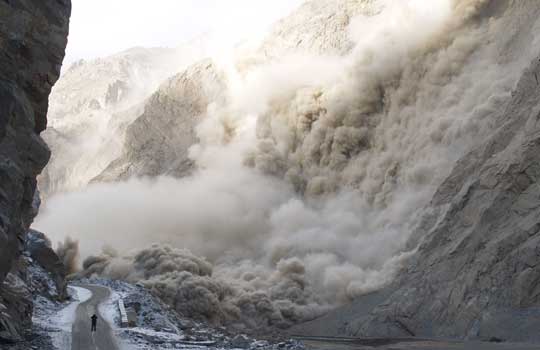
A man stands in the middle of the Karakoram Highway while rocks tumble down into the Hunza River in Pakistan’s Gojal region. The rockslide dammed the river, creating Attabad Lake (also known as Lake Gojal), which submerged eleven miles of the Karakoram Highway and isolated several villages. Photograph: I. Ali Shimshal / Pamir Times).
The initial mass movement of rock, in a sudden and unexpected event, buried the village of Attabad, destroying 26 homes and killing 20 people. It also submerged several villages and 22 kilometres of the strategic Karakoram Highway, which links Pakistan and China. Tens of thousands of people were suddenly displaced or cut off from overland connections with the rest of the country, highlighting the immediate impact on the affected residents.
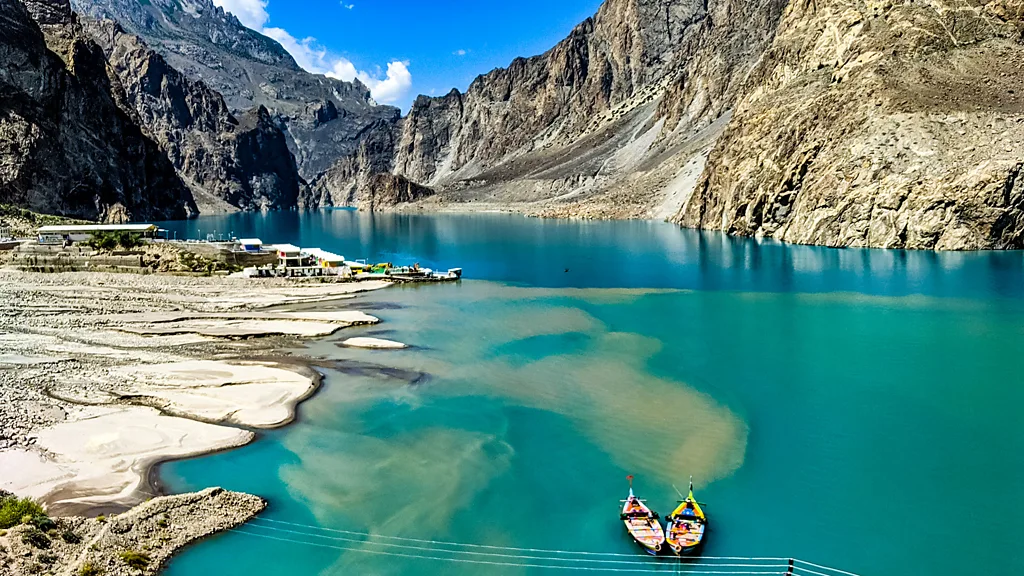
Aysha Imtiaz, in her recent BBC article, highlights the transformation of the Hunza River into a breathtaking lake, which she writes is a must-visit spot in Hunza. Despite its tragic origins, Attabad Lake has become a beacon of hope, providing a rare source of economic opportunity and a lifeline for the local population. A robust system of women entrepreneurs has emerged, leading the way in selling handicrafts and food items, and the community is rebuilding stronger than ever. Please read Aysha’s excellent piece on BBC.
Formed by a massive landslide, Attabad lake is now a popular spot for boating, fishing and adventure sports, and hikers marvel at the beauty of the lake as they see it from high-up. Photograph: Getty Images, via BBC. Please click HERE or on image for BBC article by Aysha Imtiaz.
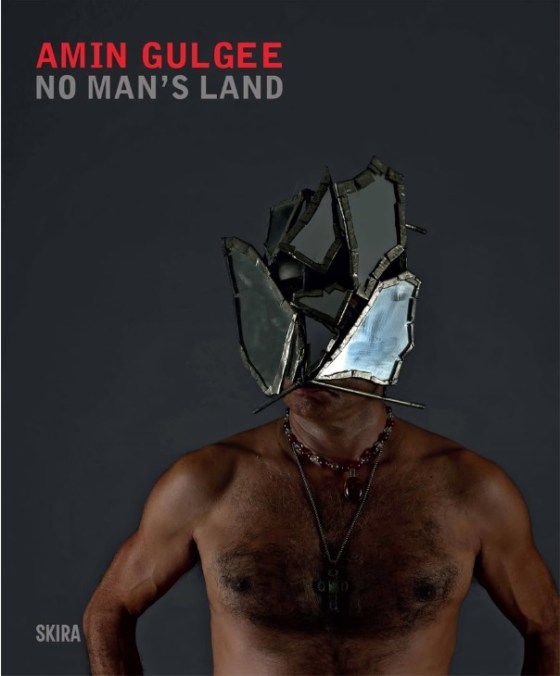
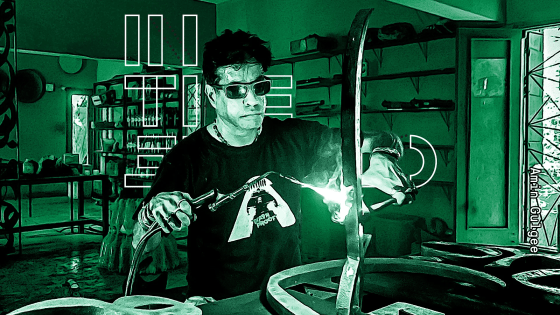
Last June, Aniza Meghani of the UK conducted an exclusive interview with Amin Gulgee for Simerg during her visit to Karachi. The interview includes a selection of outstanding works of art by Amin and provides an excellent introduction to his artistic background. We invite our readers to read Aniza’s excellent piece. The last few weeks have seen the release of Gulgee’s first monograph, “No Man’s Land,” published on March 25, 2025. We are delighted to feature the monograph as part of our continuing series of books by Ismaili authors. We follow a similar Q/A format as our earlier presentations of books, which are listed chronologically below, ensuring our readers are always up to date with our series in an organized manner. We encourage Ismaili authors from around the world to participate in this series, regardless of when their books were published. See details of the series HERE and submit your responses to Simerg’s editor, Malik, at mmerchant@simerg.com.
Amin Gulgee on his monograph “No Man’s Land”
Simerg: What constitutes your book No Man’s Land? Why would you want me to read it, and what will we learn from it?
Amin Gulgee: This is the first monograph dedicated to my career as an artist and curator. Spanning over three decades, my multifaceted practice unfolds through a tapestry of techniques and themes. I invite readers to immerse themselves in the intertwined layers of my work. Featuring insightful essays from esteemed figures across the contemporary creative landscape — curators, novelists, artists, academics, and critics — this volume illuminates my artistry from myriad perspectives. I feel honored to include an essay by the late Dr. Oleg Grabar, a preeminent Islamic art historian, who wrote an essay for the catalogue of a solo exhibition I had at Galeri Petronas in Kuala Lumpur in 2008. Also included is a Q and A by Dr. Maryam Ekthiar, a senior curator at the Met, who asked me challenging questions. From spirituality to politics, from the universal to the particular, my trajectory attempts to navigate the complexities of my existence and invites contemplation on the depths of our collective consciousness. Spanning my diverse career, from my early work in jewelry to my sculptures, installations, paintings, performances and curatorial projects, this volume offers a comprehensive insight into the breadth and depth of my artistic journey. Illustrated with over 300 meticulously selected images and QR codes unlocking access to videos and catalogues, No Man’s Land immerses readers in a visual odyssey through my creative practice.
Simerg: What is behind the name and title of the book?
Gulgee: I chose the title No Man’s Land because I feel that my path occupies this liminal space.
Story continues below
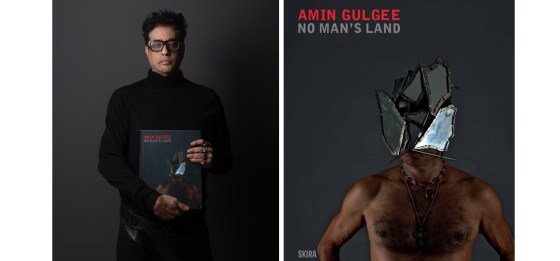
Front cover of Amin Gulgee’s “No Man’s Land,” edited by John McCarry, published by SKIRA, March 25, 2025, Hardcover, 416 pp.
Simerg: How did you find a publisher for this book?
Gulgee: I was introduced to the prestigious publication house Skira, based in Milan, by the late Italian curator Paolo de Grandis. I was well aware of Skira because they had published books on Picasso and Matisse, among many other artists. I had known Paolo since 1998, when I first participated in “OPEN”, an exhibition of installation and sculpture that he established in Venice. Later, in 2017, when I was appointed Chief Curator of the inaugural Karachi Biennale, I invited him to be a guest curator. He included works by Yoko Ono and Michelangelo Pistoletto, among others. In 2018, he and Claudio Crescentini curated my solo shows at the Galleria d’Arte Moderna and Mattatoio, both in Rome. When the book was nearing completion, I asked if he would know any publishers who might be interested in my monograph, and he suggested Skira. I sent them a few chapters and I was thrilled when they accepted to take the project on. I then collaborated with Skira’s team over the next seven months to finalize the project. They were all tremendous to work with.
Story continues below
__________________
Reflections on Amin Gulgee and his monograph No Man’s Land
“Both as a practitioner and as a curator Amin Gulgee’s storytelling is fluid, both creating and dispelling unease. Amin Gulgee explores the vastness of the Universe as the backdrop for those narratives…Contemplating spiritual goals, while confronting the insecurities and displacements of our existence, [he] calls for constant negotiation and inventiveness.” — Salima Hashmi, art historian and artist, in “Fearless,” an afterword to Amin Gulgee’s book.
~~~~~~~
“Amin Gulgee defies easy categorisation: he’s a metal sculptor, a curator, and one of Pakistan’s most innovative and cherished artists, the beating heart of his home city of Karachi’s creative scene. His metalwork is as dramatic and eccentric as Amin is. He’s in your face, uncompromising, a living and breathing performance piece” — Excerpt from BBC Documentary podcast, “In the Studio: Amin Gulgee — Heavy metal” (listen to podcast HERE).
~~~~~~~
“Amin’s art explores the unexpected. Whether it’s connections or the stories illustrated, he doesn’t follow a norm…Whilst being so different can pose its own challenges, instead, it makes Amin’s work deeply personal and unique to him. It’s also meant, from the start of his career, he’s had a strong sense of self-confidence in embracing uniqueness — Excerpt from “Amin Gulgee: Going against the norm” in The Ismaili.
________________
Simerg: Did you hire an editor or designer or did you do all the work yourself?
Gulgee: The editor of the book is John McCarry, who was a classmate of mine at Yale. He has written for National Geographic as well as many other publications. He has also published two other books. He is the coordinator of the Amin Gulgee Gallery and edits all its publications. I chose Kiran Ahmad as my designer, as she is one of the most sought-after book designers in Pakistan. I have worked with her many times in the past; however, this monograph was a truly daunting task. We spent over two years trying to make sense of my journey. Her perseverance and her commitment to her craft are commendable. Also, she can make me laugh!
Simerg: What inspired you to do this monograph?
Gulgee: The last time I saw my mother was on December 13, 2007. She had come over to my place in the afternoon since it was the birthday of Prince Karim Aga Khan IV. She brought with her a painting by my father, which she presented to me as a gift. “Look at this, Amin,” she exclaimed. “These are the colors of life!” She then sat me down and said, “I want you to do three things for me: one, give up smoking; two, do a book on your work; and three — I don’t remember now, but it will come to me.” She sadly never had the chance to state her third demand. However, in 2020 I had my last delicious cigarette, and in 2022, I decided to start working on my monograph.
Simerg: How long did it take you to complete your monograph and what were the difficulties?
Gulgee: I live in the moment and I do not like looking back. When I finally came to the decision to fulfill my late mother’s wishes, I was trepidatious. John and I had decided that we would approach writers and let them choose any angle of my trajectory that engaged them. We chose to reprint only two essays — the one by Oleg Grabar and another by Dr. Kishwar Rizvi, who is the Robert Lehman Professor in the History of Art, Islamic Art and Architecture at Yale University. The rest of the ten essays were to be new writing on my practice. We were both delighted by the essays that came in. As far as the images are concerned, since my trajectory began in predigital, archaic times, my early work was documented on slides. When I asked my young technical advisor how can I digitize them, he asked me, “What is a slide?” This, of course, made me feel like a dinosaur! But we got the painstaking job done. Then, there was the challenge of organizing my trajectory, which Kiran and I did in sections. It took two years and I am so very grateful for all the support I received along the way.
Date posted: April 22, 2025.
______________
Links to the Ismaili Authors’ Series (in chronological sequence, oldest article first)
Before departing this website please take a moment to review Simerg’s Table of Contents for links to hundreds of thought provoking pieces on a vast array of subjects including faith and culture, history and philosophy, and arts and letters to name a few. Also visit Simerg’s sister websites Barakah, dedicated to His Highness the Aga Khan, and Simergphotos. Simerg’s editor may be reached via email at mmerchant@simerg.com.
“I urge you to imagine the loneliness of being unseen, the despair of being unheard, and the pain of being forgotten. Now imagine that world being yours. If you can’t walk in our shoes, try to walk beside us. Offer a hand, a voice, or even just a moment of empathy….The “Straight Path” requires all strands of society to come together to care for society’s most vulnerable” — Ghulam Baig, CEO, Gilgit-Baltistan Goodwill Movement
The concept of the “Straight Path” (Sirat-Al Mustaqeem) represents a journey guided by justice, compassion, and equity — principles that urge us to care for society’s most vulnerable. This path transcends spiritual growth, calling for a community where everyone is uplifted and included. The Ismaili Imamate’s focus on social work and community development through Jamati Institutions and the Agencies of the Aga Khan Development Network consistently reminds murids of these values.
Yet, in the rush of modern life, we often lose sight of those left behind: the elderly, the disabled, and the sick — the most vulnerable among us. While many indulge in comfort, countless others struggle in silence.
A Global and Local Perspective on Suffering
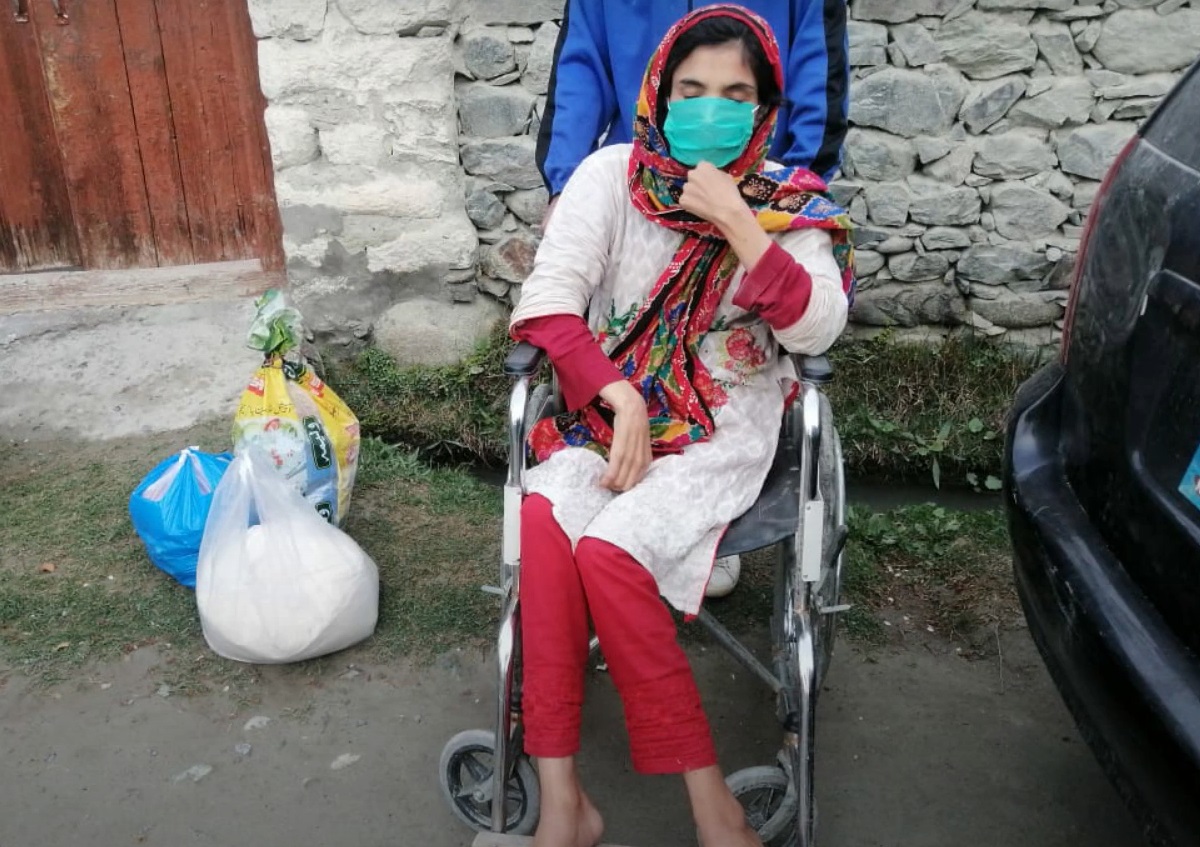
When we think of suffering, images of famine, poverty, or war often come to mind — realities associated with regions like Africa. Yet suffering also exists in less visible forms. One of these is the struggle for inclusion. In Gilgit-Baltistan, particularly in areas like Hunza and Yasin, disabled individuals live on the margins, yearning for equal rights and opportunities. Their pleas for dignity, inclusion, and opportunity are often drowned out by societal indifference.
During my time at a community college, the COVID-19 pandemic offered space to reflect on societal norms, especially regarding disability in Gilgit-Baltistan. While organizations like Aga Khan Focus for Habitat, KADO, and other local disability-focused groups have made progress, these efforts remain limited compared to the inclusivity and accessibility seen in more developed regions.
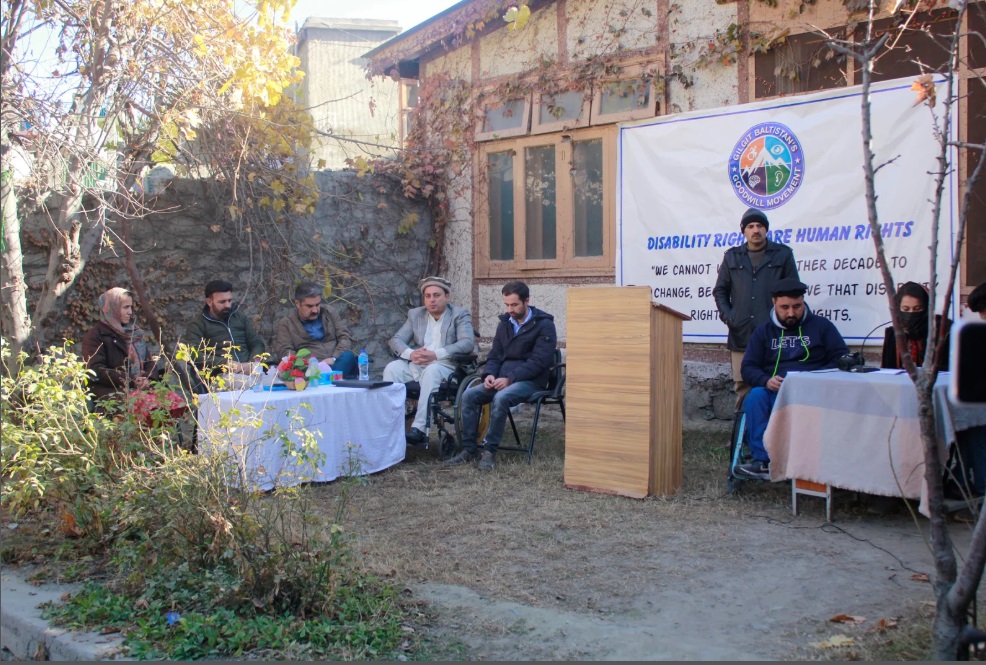
Through my organization, the Gilgit-Baltistan Goodwill Movement (GBGM), we are addressing these challenges. Guided by the values of justice, compassion, and equity, GBGM strives to improve the lives of disabled individuals through initiatives such as:
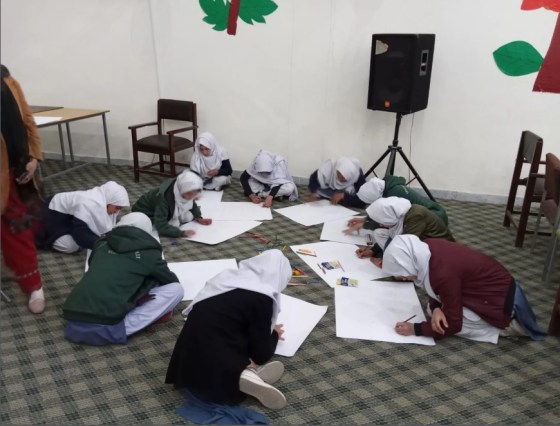
Vocational and Life Skills Training: Free programs equip individuals with tools for independent living.
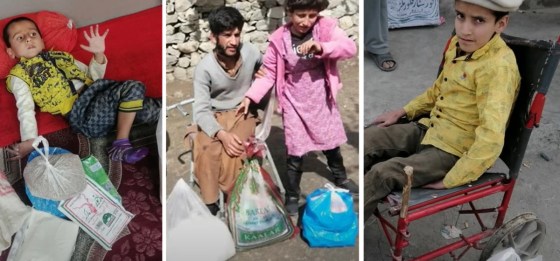
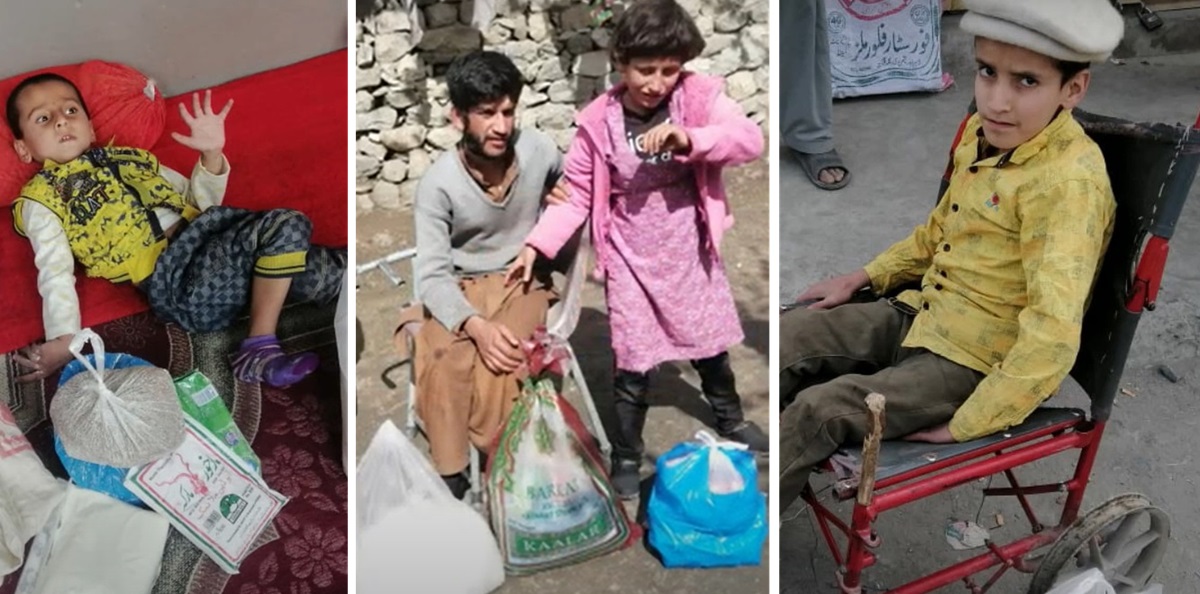
Assistive Devices: Wheelchairs, hearing aids, and other essential devices improve mobility and quality of life.
Healthcare Support: Free medicines and personalized healthcare services are provided to those in need.
Financial Aid: Economic challenges are alleviated with support for essentials like food and shelter.
Advocacy and Awareness: Campaigns and outreach efforts aim to eliminate stigmas and foster acceptance.
Our website, www.gbgoodwillmovement.com, showcases stories of resilience and transformation, demonstrating the profound impact of these initiatives.
Stories of Change
One of our beneficiaries shared:
“As a disabled woman, I had limited opportunities within my community. The Goodwill Movement not only supported me but also empowered other women, fostering gender inclusion in society. Today, I help others as a teacher in an additional support needs school in Gilgit.”
Another student remarked:
“I learned from Goodwill and now apply these skills at KIU Gilgit. Thank you, Goodwill Movement. I had no other options, but your one-on-one support five days a week changed my life.”
These testimonials highlight that disabled individuals are often excluded from active participation in Gilgit’s culture but can thrive with the right support.
Challenges Persist
~~~~~~
~~~~~~
~~~~~~
Despite significant strides, challenges remain:
Infrastructure: Public spaces often lack accessibility.
Barriers to Mobility: Ramps, elevators, and accessible transportation are scarce.
Educational Gaps: Inclusive education resources are insufficient.
Healthcare Access: Affordable, quality healthcare is often out of reach.
Social Stigma: Deep-seated prejudices continue to marginalize disabled individuals.
These obstacles, while significant, are not insurmountable. Addressing them requires collective action and a commitment to compassion, justice, and equity.
Working for the Disabled Jamati Members
While the GB Goodwill Movement maintains impartiality regarding religion and gender, most of our students have been from the Ismaili Jamat in regions such as Hunza, Ghizer, Yasin, Chilas, and various villages across Gilgit.
Story continues below after messages
_______________________________________________
SUPPORT AND APPRECIATION FOR GHULAM BAIG AND HIS GILGIT-BALTISTAN GOODWILL MOVEMENT
The following is an excerpt from Lyn Patterson, Ghulam Baig’s Mathematics Teacher at Ashton — formerly Ashcraig — Secondary School, Glasgow, Scotland:
From early on in his secondary school career Muhammad impressed me with his determination to overcome the challenges presented by his disability (cerebral palsy) and to succeed as far as possible in his studies. His willingness to work hard was clear from a young age and increased even more as he matured. He developed a real understanding of the barriers to learning experienced by students with a range of disabilities. His fellow students in Ashcraig included young people with conditions such as Muscular Dystrophy, Spina Bifida, visual and hearing impairments, and autism spectrum disorders. Muhammad always displayed an interest in classmates and an empathy towards them. It therefore does not surprise me to see that he has now founded the GBGM devoted to improving the lives of disabled people. Muhammad demonstrated a clear commitment to equality and diversity issues, speaking passionately about such topics.
~~~~~~
The following is an excerpt from the Dhanani Family of the USA, with family members supporting the initiative living in Georgia, California, and Texas:
We have known GBGM’s leadership for over three years and have financially facilitated some of their activities in support of their mission. During this period, we have found the leadership to be very conscientious in executing their duties and accomplishing GBGM’s goals. We are really impressed with their desire to raise awareness about the challenges faced by the DA population, especially in the GB area. They have worked hard to lobby the federal, state and local governments in Pakistan in support of their DA activities. We were fortunate to have met some of their leadership and staff during our visit to GB in September 2022. The visit provided further evidence of their commitment to DA population and reaffirmed our own desire to continue to work with them for a foreseeable future.
~~~~~~
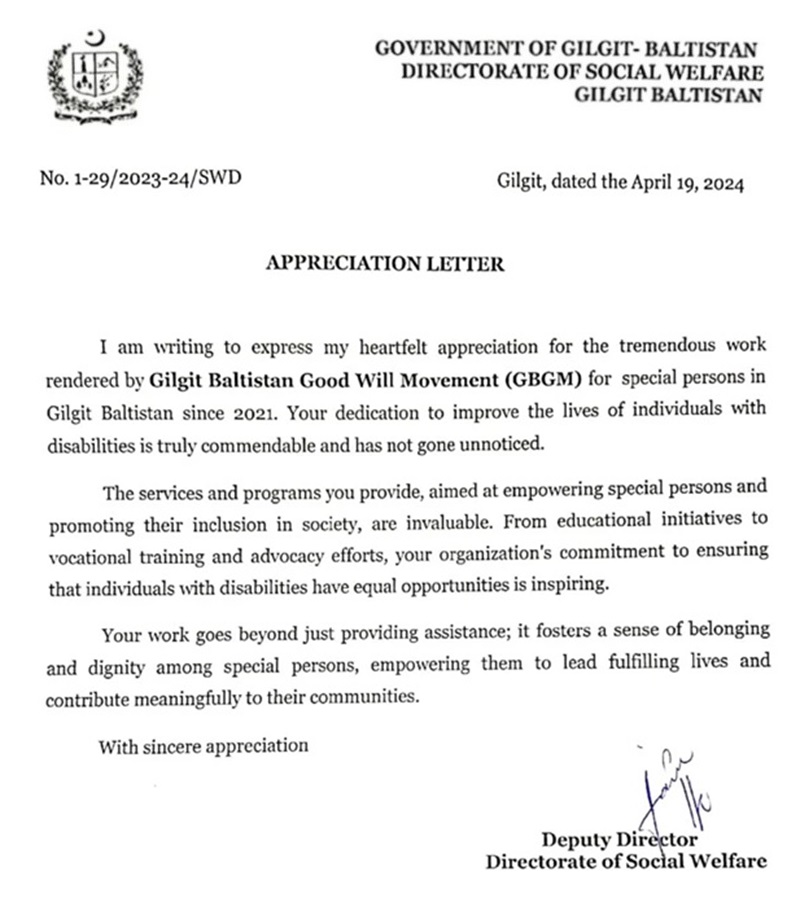
The following is a message from the Government of Gilgit-Baltistan:
_______________________________________________
A Call to Action
Returning to the West, I hoped my experiences in the social care sector would inspire support for the disabled community within the Jamat. While responses have been minimal, the Dhanani Family of the USA has been a notable exception, providing instrumental support for many of our initiatives. In April 2025, GBGM has an exciting project lined up. With the Dhanani family members, we will do a face-to-face project to contribute to the disability community in parts of Gojal, Upper Hunza, Yasin, and Ghizer.
To the readers, I urge you to imagine the loneliness of being unseen, the despair of being unheard, and the pain of being forgotten. Now imagine that world being yours. If you can’t walk in our shoes, at least try to walk beside us. Offer a hand, a voice, or even just a moment of empathy. Whether through financial contributions, volunteering, or spreading awareness, your support can make a tangible difference.
Building an Inclusive Society
The “Straight Path” requires all strands of society to come together, each contributing unique skills and perspectives. Just as a plumber and a surgeon serve different roles, we all have a part to play in building a more inclusive world. Let us follow this path to ensure that no voice goes unheard, no individual unseen, and no life unlived to its fullest potential.
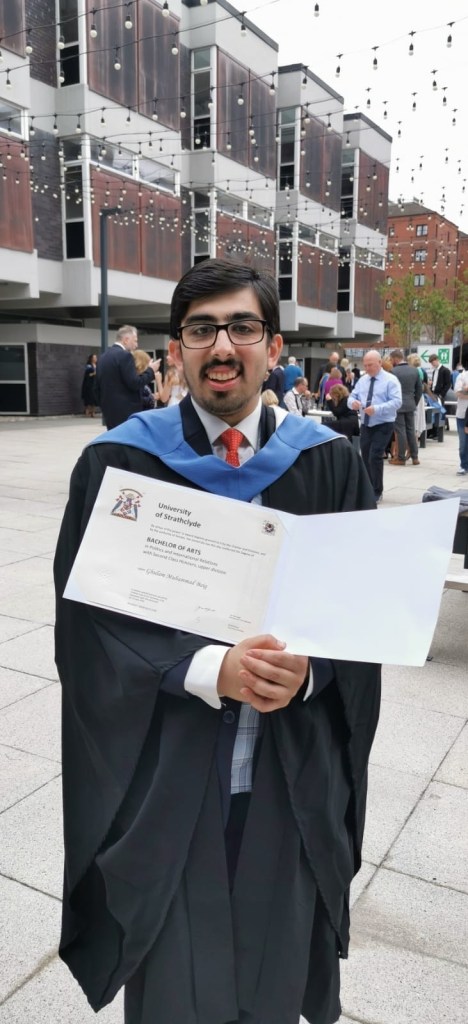
About the author: Ghulam Muhammad Baig, originally from the Hunza Valley in Northern Pakistan’s Gilgit-Baltistan region, received primary and secondary schooling in the UK with his parent’s support. He completed his university studies with an honours degree in Politics and International Relations from the University of Strathclyde in Glasgow, Scotland. Being disabled himself with Cerebral palsy, Ghulam was deeply moved by the plight of the disabled community in his home region, especially during COVID-19 pandemic. They were grappling with severe challenges, including a lack of basic facilities such as healthcare, education, and employment. This realization fueled his lifelong commitment to work for the Disabled or Differently Abled Community of Gilgit-Baltistan. He created the Gilgit-Baltistan Goodwill Movement (GBGM), of which he is the CEO.
Despite the closure of educational institutions during the first year of the pandemic, Ghulam remained proactive on social media. His efforts led to the formation of a large team of volunteers, including prominent disabled activists of Gilgit-Baltistan, such as Sehrish Kanwal Farhan Baig, Abrar Ahmed, Mumtaz Ali, Abdul Hakeem, Mustafa Kamal, Najeeba, Khushan Bano, and Ali Ahmed.
Recognizing the disparity in opportunities available to others in similar circumstances, Ghulam passionately advocates for the rights and well-being of persons with disabilities in Pakistan’s Gilgit-Baltistan region. With the support of his team, he is using his education and experience to improve the lives of disabled individuals in his home region.
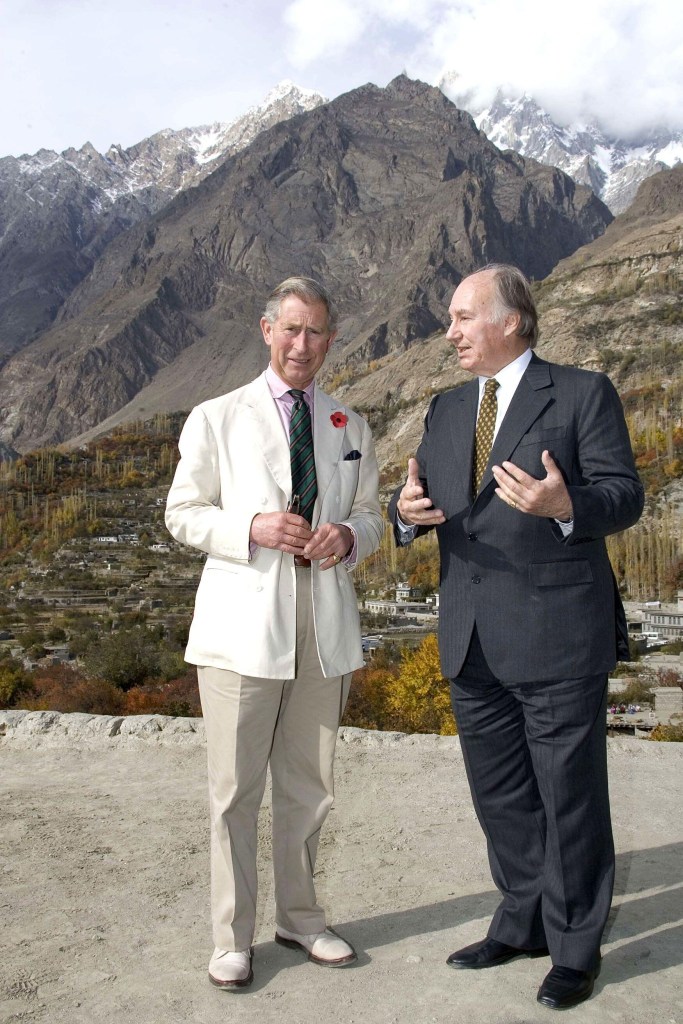
In 1954, at the invitation of the Mir of Hunza, a revered figure in the region, Mishal Husain’s grandfather, Shahid Hamid, made a journey to the northern reaches of Pakistan. He wrote: “Hunza is situated among a congress of great mountains, a concentration of lofty peaks, many of them unnamed, where the greatest folding of the Earth’s surface is to be found.”
Guided and inspired by her grandfather’s travelogue “Karakoram Hunza: The Land of Just Enough,” Mishal Husain, a BBC journalist and presenter of the ‘Today’ programme, embarked on a personal journey with her family, following in her grandfather’s footsteps. Precisely 70 years after her grandfather’s, she shares her unique experience in the Financial Times of London travel section. Please click Mishal Husain: Recreating my grandparents’ epic journey into remotest Pakistan.
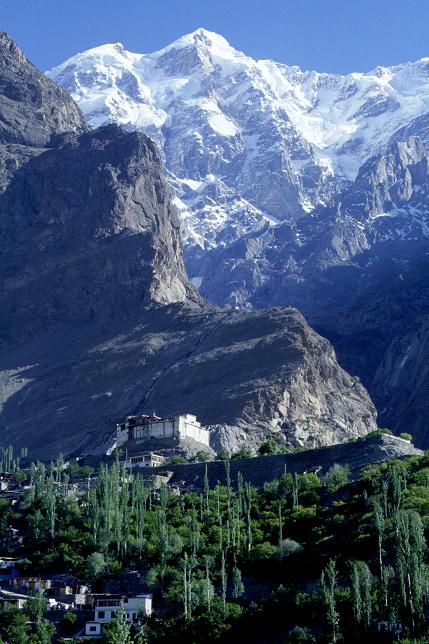
In her piece, Mishal notes: “I reached Hunza after dark and walked through a small bazaar to our hotel, the Serena Altit Fort Residence — the first of three heritage properties we’d visit. All have been restored through projects led by the Aga Khan Fund for Economic Development, and being able to stay in such places allows the visitor to appreciate the history of the region’s people and their craftsmanship alongside its natural beauty.” Please click FT Travel: Mishal Husain in Hunza.
Credits: The featured image at the top of the post is from Mishal Husain’s piece in the Financial Times. The two photos in the body of this post were published on this website earlier; they relate to some of the places Mishal visited in Hunza.
“In my calligraphic work, I use one line from the Quran. I repeat it over the years. The line in this work is from the Iqra Ayat, which states ‘God taught man what he did not know’ in the naskhi script. This is a line that I have used repeatedly over the last three decades. My challenge has been how to translate it into sculpture.” — Amin Gulgee
By ANIZA MEGHANI
Algorithm II, 2015, Copper, 37.7 x 29.2 x 31 inches. Artist: Amin Gulgee.
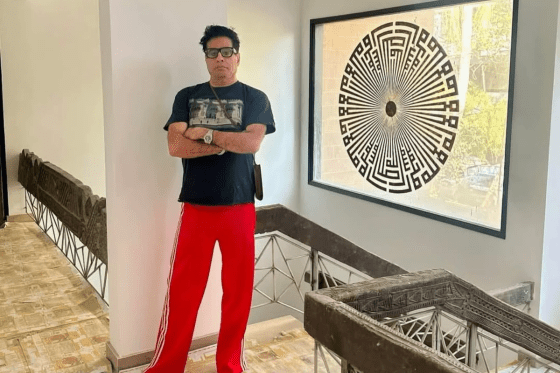
No one can miss Amin Gulgee’s home from a distance with its rooftop adorned with a mosaic of mult-coloured glass, tile and terra cotta. No doubt a tourist attraction. As I entered Amin’s gallery on the ground floor, I was stepping into a world of pure copper sculpted into Quranic words. When sunlight caught his sculptures, they reflected shadows on the walls that seemed to dance in spiritual twirls. We made our way to his living room on the first floor, up the steel staircase with copper railings, designed by the artist himself. I noticed a photograph of his late father’s lapis mosaic portrait of Sir Sultan Mahomed Shah hanging on the wall just before we entered his private quarters.
Amin told me a story about this piece: “That was one of my father’s works from the 1970s,” he said. “I grew up with it. I remember one day when I was a kid, the Aga Khan came to our house in KDA. He spent time with my parents, and he loved the portrait. Of course, my father said, ‘Your Highness, we will gift this to you.’ Imam responded, ‘No, you will not gift this to me. You must tell me how much you are charging for it.’ I remember when my parents took the mosaic portrait to the Aga Khan, they were feeling sad about parting with it. But what I truly remember most was that the Aga Khan refused to accept it as a present. How fantastic is that? Imagine the respect he had for the artist and his work!”
As I sat and drank mid-morning ginger tea, I could see from Amin’s balcony the courtyard that connected his home with that of his late parents. His parents, of course, were the renowned artist, Ismail Gulgee, and his wonderful wife, Zaro. How I miss them dearly! Here I was, once again, at his home, reflecting upon a family friendship that has spanned over three decades.
I met Amin when both father and son had a joint exhibition at the Ismaili Centre in London in 1994. Zaro-Aunty took my hand and walked me across the social hall, where Amin was surrounded by his sculptures and a display of his handmade jewellery. She proudly introduced me to him. “Aniza, this is my son, Amin; he is an artist, too. He makes sculpture.” I was drawn to his jewellery and nickel-plated copper sculptures in kufic with large crystal stones set within. Tall and handsome, with shoulder-length hair, he showed me his beautiful collection.
Now as I sat in his living room, reflecting on that day, I was mesmerised by his father’s work adorning the walls and wondered whether Amin’s own creativity had been sparked by it. My mind raced with this and many other questions.
Perforated Egg, 2018 Copper, 27 x 16 x 16 inches. Artist Amin Gulgee.
Amin was born in Karachi, Pakistan and studied at the Karachi American School from kindergarten to the twelfth grade. He went on to do his bachelor’s degree from Yale University in the United States. I asked whether he was inspired to study art history because of his father. He replied, “Although both my parents were liberal, they didn’t want me to be an artist. I agreed with them as I saw how difficult the life of an artist can be. I didn’t think I had the courage to be an artist. Wishing to be the good South Asian boy, I majored in economics at Yale.”
However, when his classmate Dominique Malaquais took him for his first art history class freshman year, it was the beginning of a journey that made him realise that this is what he wanted to do. Economics was simply too “boring” to endure! This art history class was a study of Baroque gardens, which inspired him to take even more art history classes and to pursue a double major in art history and economics. He wanted to write his senior thesis on Moghul gardens, but at that time it was “problematic”, as there was no Islamic art history department at Yale. He was advised to do his thesis on European gardens instead, but Amin’s heart was set on writing about the Shalimar Gardens in Lahore, constructed by the Moghul Emperor Shah Jahan between 1641 and 1642.
Char Bagh II, 2003, Copper, 37 x 37 x 35 inches. Artist: Amin Gulgee.
With help from his late father’s connections in the art world, Amin was introduced to Dr Oleg Garbar, the renowned authority on Islamic art and Harvard’s first Aga Khan Professor of Islamic Art and Architecture. Dr Garbar agreed to be Amin’s secondary advisor. (His primary adviser at Yale was Dr Judith Colton, an expert on European gardens of the 17th to 19th centuries.) Amin’s senior thesis, “A Walk Through Shalimar: A Char-Bagh Garden of 17th Century Mughal India Seen as a Manifestation of Imperial Divine Right”, went on to win the Conger Goodyear Fine Arts Award from Yale’s art history department.
Amin was spiritually drawn towards exploring Islamic art as a result. A new journey of his life began when he embarked upon a career not as a painter like his father, but as a sculptor. I asked him if he kept his first art piece. He emphatically replied, “No! I am not sentimental!”
I was curious about what gave him inspiration to create his artwork. He explained, “All my work is personal. Everything relates to me at a certain point in my life.”
Iqra
I wanted to further explore his creative mind, how art evolves within it. What made him tick? Did he get up in the middle of the night to sketch out an idea, or write it down? Where did it all come from? So, I pointed to a tall sculpture. Amin talked me through it: “In my calligraphic work,” he explained, “I use one line from the Quran. I repeat it over the years. The line in this work is from the Iqra Ayat, which states ‘God taught man what he did not know’ in the naskhi script. This is a line that I have used repeatedly over the last three decades. My challenge has been how to translate it into sculpture. I like the idea of repetition. For me it becomes intellectually, aesthetically and conceptionally challenging to keep the same line in the same script, but to vary its physical form. I explored this idea in a solo shown that I called ’7’. I chopped the line into seven portions and rearranged them. There was nothing legible anymore as the letters were no longer in their original order. ‘7’ was co-curated by the late Paolo De Grandis and Claudio Crescentini and was held at the Museum of Modern Art in Rome, a short walk from the Spanish Steps. My installation was shown in the courtyard of the museum, which had once been a cloister.”
I asked him why he was drawn to this particular Quranic line. He replied, “It’s personal. It’s spiritual and I do not wish to share this. You must remember it’s private for me.”
I respected his answer. As in life, spiritual moments are personal and cannot be shared. I kind of understood. Correction: I understood him totally.
Cosmic Chapati, Unknown Centre, 2011, Copper, 35 x 35 x 2 inches. Artist: Amin Gulgee.
~~~~~~~
Another line Amin has used repeatedly is from the Surah-e-Rehman, which asks, “Which of the favours of God can one deny?” in new style kufic. (He has not created a work around this since 2008, however.) In this series as well, you can no no longer read the line. Amin explains, “You can only read the text in sculptures where I use the phrase Al-Hamdulillah (Praise be to God), which I render in the square kufic script. These are geometric, architectonic works.”
Amin stopped making his art jewellery in 2007. Although he called it jewellery, these gold-plated organic forms embellished with crystal and semi-precious stones were more like wearable sculpture. There was a relationship between his jewellery and his larger sculptures as he sometimes used these smaller works to work out ideas that might develop into bigger pieces. These were his sketches, in a way.
Embrace, 1999, Copper and rock crystals, 34 x 25 x 24 inches. Artist. Amyn Gulgee.
We got talking about Amin’s work as a curator. It began, he said, in the late 1990s, when he curated an art festival at the Sheraton Hotel in Karachi (now the Mövenpick). In the old days, the lobby was a place where young people used to hang out drinking coffee all day, “trying to be fancy”, as Amin put it. Being a semi-public space, it appealed to Amin as a venue to organise an exhibition that he would call Urban Voices. Amin curated four iterations of the group art show, which juxtaposed the work of recent graduates from the city’s art schools with that of established artists. The money generated from the sales of the artwork from these events went towards a scholarship at the prestigious National College of Arts in Lahore.
Rung I, 1994, Copper, rock crystals, and glass, 24 x 15 x 9 inches. Artist: Amin Gulgee.
In 2000, Amin inaugurated the Amin Gulgee Gallery on the ground floor of his newly built home in Clifton, a seaside neighbourhood. About once a year, he has opened up the space for large-scale, thematic shows of his contemporaries. (John McCarry, whom Amin met at Yale, is the coordinator of this artist-led space.) Amin explained, “Lahore is where all the art institutions are. Karachi is where the commercial galleries are. We wanted to do exhibitions without any kind of commercial point of view.”
The Bird Rickshaw, 2004 Copper, 84 x 100 x 42 inches. Artist: Amin Gulgee.
Having had many years of experience curating shows, Amin was approached in 2015 by Niilofur Farrukh, now the CEO of the Karachi Biennale, who asked him whether he would like to be the Chief Curator of its first edition in 2017. Amin readily accepted the challenge, despite the nascent biennial’s severe lack of funding. Amin began the task of creating a team of Karachi-based millennials, none of whom had any experience in curating a large art event. It included Zeerak Ahmed, Humayun Memon and Sara Pagganwala, all of whom had their own art practices.
The team worked collectively and tirelessly. With minimal financial backing but huge ambitions, the team was able to gather 182 artists from around the world, including Yoko Ono and Michelangelo Pistoletto, a key figure in Italy’s Arte Povera movement. There were twelve locations throughout the city to show their work. The whole process took two years. Six months prior to the opening, Amin invited Zarmeene Shah, who is now the director of graduate studies at the Indus Valley School of Art and Architecture in Karachi, to come on board in an advisory role as curator-at-large. The biennial –Pakistan’s first — was no easy task, but Amin and his team pulled off an outstanding event.
Perforated Wall I, Love Letter. 2014, Copper, 24 x 12 x 1 inches. Artist: Amin Gulgee.
I asked Amin how he envisions the future for artists in Pakistan. He replied, “I was born in the art scene. The scene has become much bigger now. I wish my parents were alive to see it! Now there is a Lahore Biennale as well as a Karachi Biennale. When I did my first show, there was only one gallery of note, Ali Imam’s Indus Gallery. Now we have more than 50 galleries in Karachi alone.” Amin is expanding his non-commercial gallery while also renovating his father’s adjoining museum. When I visited in May of 2024, building work was still in progress. The din of construction resounded in the connecting courtyard below. The aim is to open his parents’ former home as a small, private museum in 2025.
Amin has also been busy compiling a monograph on his work. It will be published in the spring of 2025 by Skira, a Milan-based publisher of art books that has brought out books on Picasso and Matisse as well as of important contemporary artists. Amin commented, “It’s a real honour for me that they have chosen my book to print. I am not nostalgic or sentimental, therefore the process of looking back has been hard.” He added with a laugh, “I’m just so happy that the two-year process of compiling it is now coming to an end!”
~~~~~~~
Amin Gulgee
“I think it’s very important that we record our own history and not wait around for someone abroad to do it for us. We must take control of our own narrative. I put all my documentation on my website (www.gulgeeamin.com). It is all free and downloadable. You will find a whole section of catalogues, not only on my work but on my curatorial projects, which discuss a whole variety of issues.” — Amin Gulgee
~~~~~~~
Ascension III, 2018, Copper, 88 x 27 x 27 inches. Artist: Amin Gulgee.
This led us to the topic of documentation of Pakistani art in general. Every show he curates, whether at his gallery or elsewhere, is accompanied by either a physical or electronic catalogue, and often a video and webinar as well. “Documentation is extremely important,” he explained. “When I compile a catalogue of a show I’ve curated, I not only write about the artists and the exhibition, but I also invite outside writers to contribute essays about issues and concerns they have about Pakistan in general. So, these become free platforms to express ideas. For example, Niilofur Farrukh and I co-curated a show at my gallery on the 1970s in Pakistan. This led to a book called Pakistan’s Radioactive Decade: An Informal Cultural History of the 1970s co-edited by me, Niilofur and John McCarry that was published by Oxford University Press in 2019. After the secession of Bangladesh, Pakistan swung from democratic liberalism to Islamist military rule. Those early democratic years saw a boom in cultural expression, whether it was in the visual arts, literature, film or music. This book included essays as well as Q and As with Pakistanis who helped forge the cultural life of Pakistan in that most pivotal of decades. I think it’s very important that we record our own history and not wait around for someone abroad to do it for us. We must take control of our own narrative. I put all my documentation on my website (www.gulgeeamin.com). It is all free and downloadable. You will find a whole section of catalogues, not only on my work but on my curatorial projects, which discuss a whole variety of issues.”
The Iron Horn, 203, Iron, 71 x 77 x 24 inches. Artist: Amin Gulgee.
I asked Amin what advice he would give to someone wishing to be an artist today. He laughed his booming laugh and answered: “Choose something else, sweatheart! Being an artist is so difficult. It’s easier doing something else. However, if you really want to do it, then be prepared to pay your pound of flesh. Follow your dreams as you don’t know how long you are going to live. Just be prepared. It’s a strange, strange way of making a living.”
Has it been an enjoyable journey being an artist for him? Amin replied, “Aniza, I am free. I am grateful. I am now an old man! I have done exactly what I wanted to do in my life.”
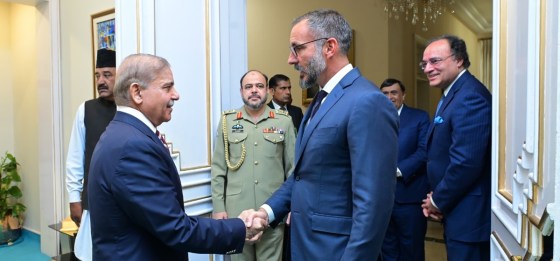
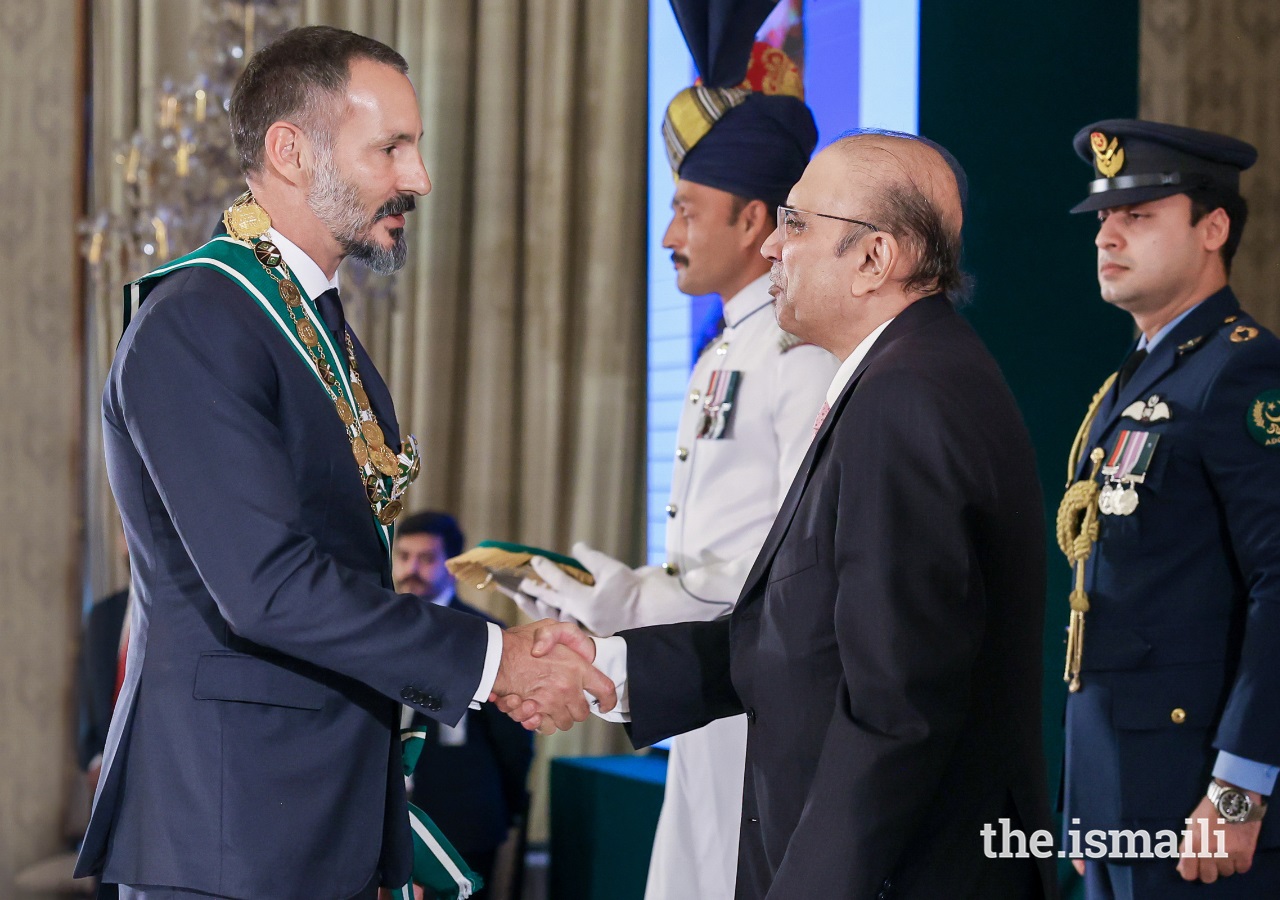
Barakah, our sister website, dedicated to His Highness the Aga Khan, the 49th Hereditary Imam of the Ismaili Muslims, has a special page covering news related to the Aga Khan and his family members. Prince Rahim, his oldest son, concluded his five-day visit to Pakistan on June 10, 2024, with a meeting with the Pakistan Prime Mnister Shehbaz Sharif (see featured photo, top of post). On June 7, the Prince was awarded Pakistan’s Highest Civilian Order by the President of Pakistan, Asif Ali Zardari.
The President of Pakistan, Asif Ali Zardari, congratulates Prince Rahim Aga Khan after conferring on him the Nishan-i-Pakistan on June 7, 2024, at a ceremony held at Aiwan-e-Sadr, the President’s official residence in Islamabad. Photograph: AKDN/Akbar Hakim. Please click on the photo for more coverage of the event and other events since the beginning of 2024.
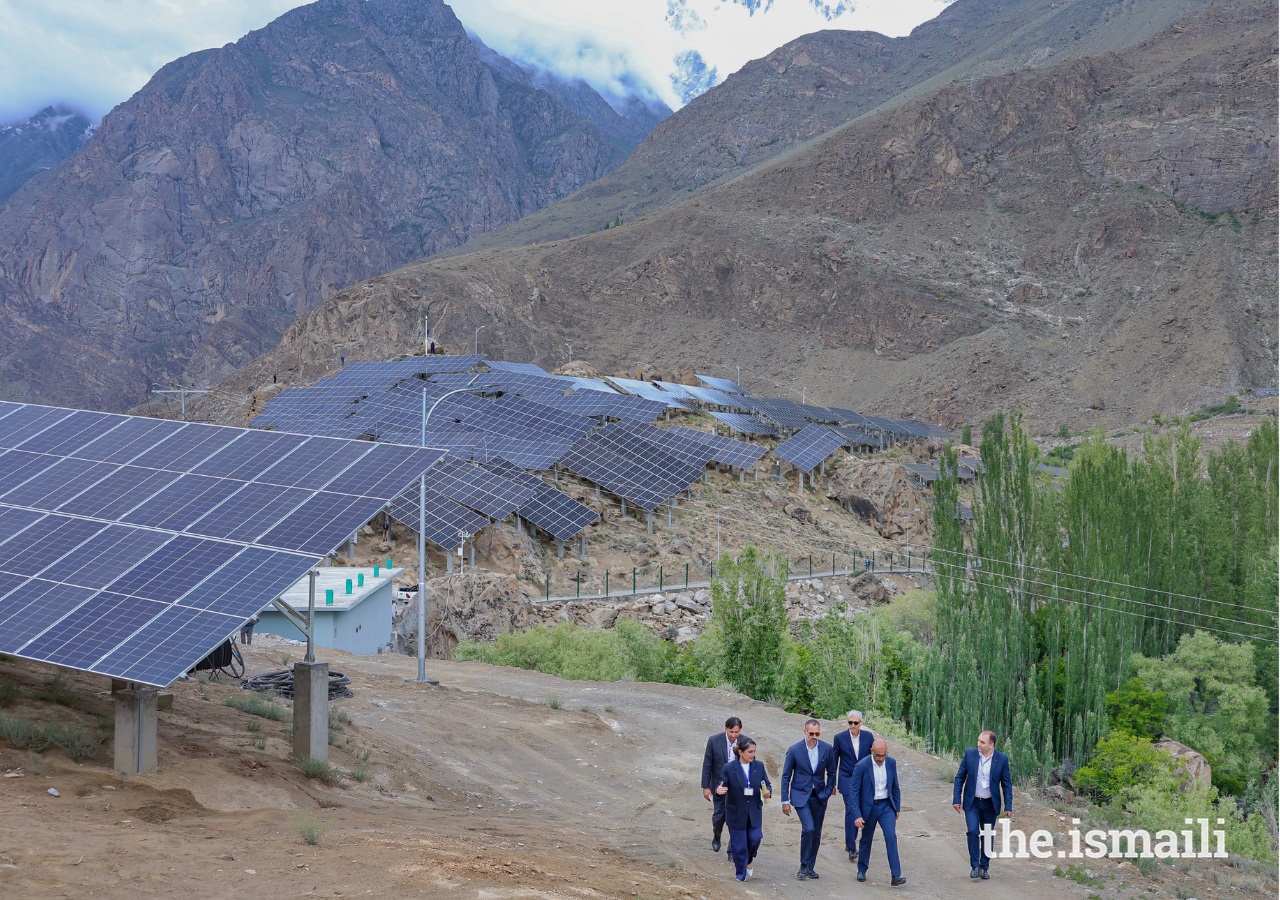
Prince Rahim then visited Hunza to launch projects related to the development of Solar Power Plants and a high-tech Software Park, visited the 800-year-old restored historic fort of Altit and saw the completion of the five-star Hotel Serena. On June 9, he inaugurated the new Headquarters of HBL Microfinance Bank in Gilgit.
Prince Rahim Aga Khan climbs up Duiker Hill to get a bird’s eye view of the areas that will benefit from the expansion of the power plant in Hunza. Please click on the image for this and other stories. Photograph: AKDN/Akbar Hakim.
Prince Rahim’s sister, Princess Zahra, visited the Aga Khan Development Network’s work in Hunza and Chitral between May 22 and 26.
On May 11, their aunt, Princess Yasmin Aga Khan hosted the highly successful Rita Hayworth Gala in Chicago. This remarkable event, which raised nearly US $900,000, is a shining example of how collective efforts can make a significant difference in supporting the Alzheimer’s Association’s care, support, and research programs.
Visit Barakah for news, insightful and inspirational articles about the Aga Khan and the Ismaili Imamat.
Date posted: June 7, 2024. Last updated: June 10, 2024.
Carpentry is traditionally considered a man’s job in Pakistan, but a few brave women are changing that mindset, from carving unique wooden utensils to building an entire house. In two short films, VOA and BBC Urdu Services spoke to several women who wanted to hammer home the point that not only are women integral to their community and the economy, they can also build things as well as men.
Video 1: Women Carpenters in Pakistan by VOA Urdu Service
“Carpentry is considered a man’s work in Pakistan and women are often discouraged from doing it. Wherever women go, they face issues that affect their honour, religion, culture, and social norms. However, when they step out and do something in order to take care of their family, then they realize that their honour, religion, culture and everything is still in place” — Excerpt from the video below, which has been reproduced from the VOA website. Bezhan Hamdard narrates the report in English.
The following story by Benazir Samad is reproduced from the Voice of America (VOA) website. The VOA article, dated March 23, 2024, originated from VOA’s Urdu Service. Please note that the photographs and the Brief Profile within the body of the story are not part of the original VOA article; Simerg has reproduced the photos from Suriya Bibi’s Official Facebook Page.
Historic Win Shatters Stereotypes, Empowers Women in Pakistani Politics
“Sometimes, I had to walk kilometers on foot when there were no roads for vehicles. Despite facing these difficulties and even being unwell at times, I remained dedicated to connecting with people and meeting voters. The support of women who walked with me provided comfort and bolstered my determination throughout this demanding campaign” — Suriya Bibi.
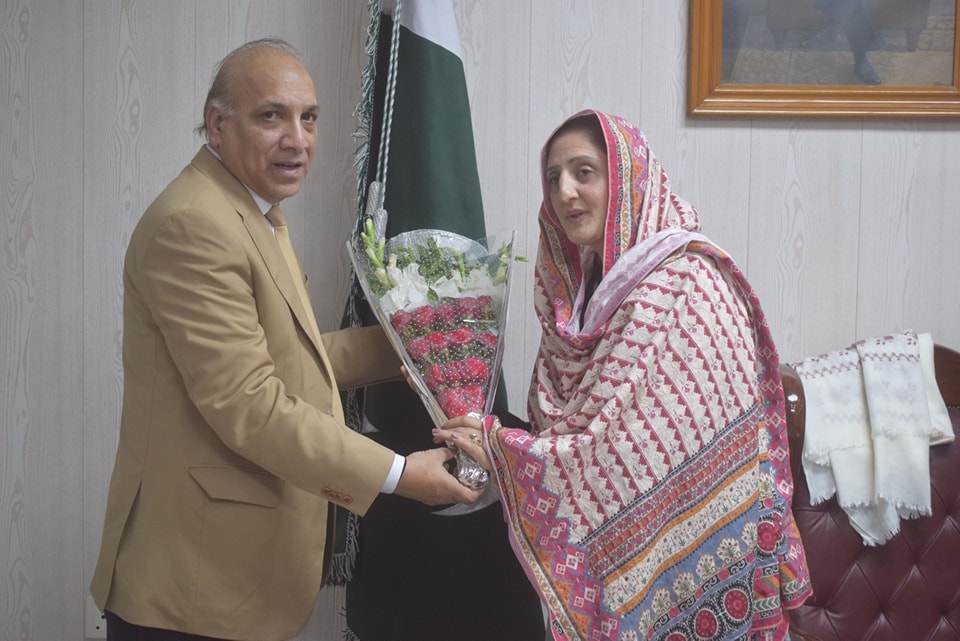
(Former) Aga Khan Ismaili Council President for Peshawar, Imtiaz Sahib, presents a bouquet of flowers to Suriya Bibi as he pays his respects at her office chamber following her election victory. Photograph:Official Facebook Page of Suriya Bibi.
By BENAZIR SAMAD, VOA
When Suriya Bibi was running for a seat earlier this year on the Khyber Pakhtunkwa provincial assembly, she faced numerous challenges beyond being a woman and hailing from a minority sect in Pakistan’s remote district of Chitral.
Another obstacle appeared when the Election Commission randomly assigned a hen symbol as her identifier on ballot papers — such symbols are tools to aid illiterate voters. In January, Pakistan’s Supreme Court barred her political party, Pakistan Tehreek-e-Insaf, or PTI, from using the cricket bat symbol associated with former Prime Minister Imran Khan.
The hen symbol inadvertently perpetuated the stereotype that women in Chitral were better suited for poultry farming than politics. Her opponents capitalized on their good luck, ridiculing her and mocking the symbol’s association with domesticity.
In a phone interview with VOA, Bibi said that there was no shame in poultry farming and rejected the attempt to diminish her worth based on her election symbol.
History Made
Bibi made history in early February by becoming the first woman from Chitral district to secure an assembly seat through a direct election rather than assuming a seat reserved for women, as is customary in the region. Not only did she clinch victory in the PK-1 constituency in Chitral with a decisive majority, but she also ascended to the position of deputy speaker in the Khyber Pakhtunkhwa assembly.
In Pakistan, where women’s involvement in governance is often restricted, Bibi encountered obstacles while navigating and challenging traditional norms to carve out her place in male-dominated politics.
According to social critic and feminist writer Sabahat Zakariya, Bibi belongs to the rare category of women parliamentarians who have secured their positions through open seats without relying on the political influence or lineage of male family members.
“Currently, all the big female names in Pakistani politics are scions of big feudal or industrial political families,” Zakariya said. “In that, Suriya Bibi’s achievement is not just unique for Chitral but also [for] all of Pakistan.”
VOA story continues below
_____________________
BRIEF PROFILE: SURIYA BIBI
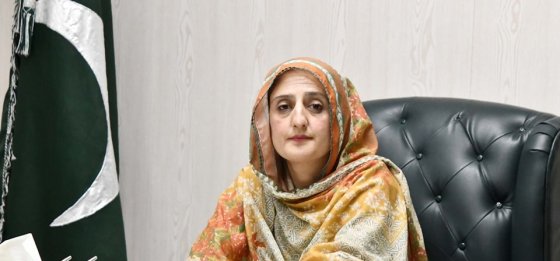
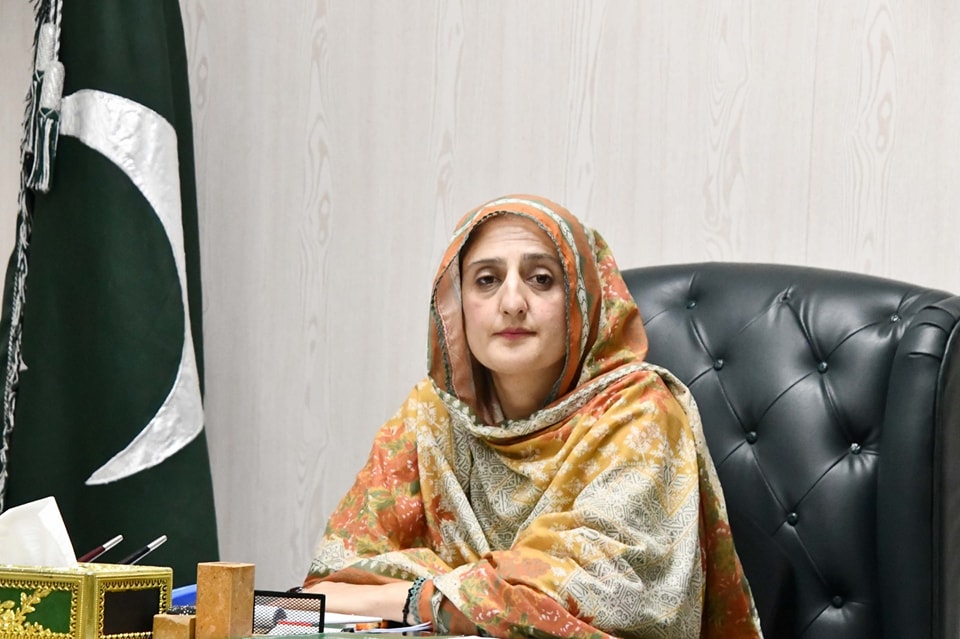
Suriya Bibi. Photograph: Official Facebook Page of Suriya Bibi.
Suriya Bibi hails from the Chitral District of Khyber Pakhtunkhwa, Pakistan’s 4th largest province in the country’s northwest, with Peshawar as its capital. Chitral District is situated in the north of Khyber Pakhtunkhwa province. She earned a master’s degree in Urdu (M.A Urdu) in 2002, after which she became involved in the socio-economic development of the population with a particular focus on the promotion of education among women and their social upliftment through organizations such as the Aga Khan Rural Support Program and Biyar Local Support Organization. Concurrently, she became engaged in politics with the Pakistan Tehreek-e-Insaf (PTI) party, where she has been the Vice President of PTI Malakand Division since 2007. Suriya Bibi is the first female member elected to a general seat in the history of Chitral. (Profile condensed from Provincial Assembly Khyber Pakhtunkhwa.)
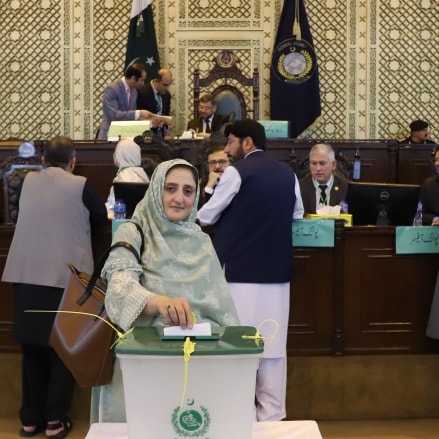
Suriya Bibi casts her vote in the Khyber Pakhtunkwa Assembly during the Pakistan presidential election held in March 2024. Photograph: Official Facebook Page of Suriya Bibi.
__________________________
Campaigning in Rough Terrain
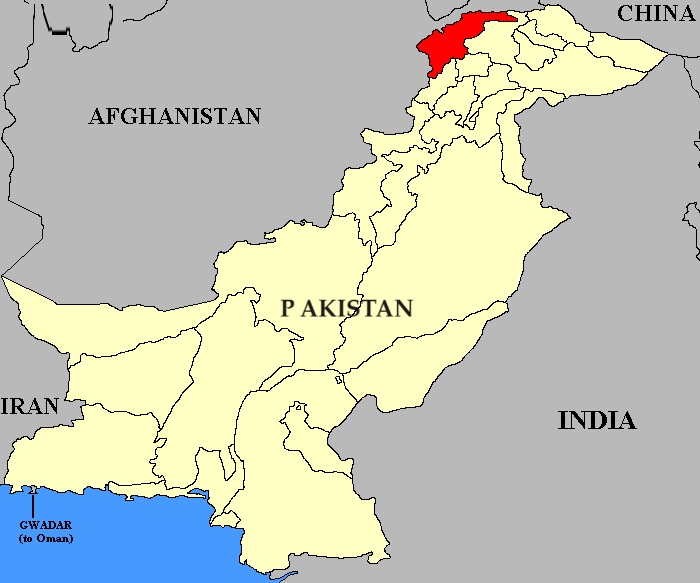
The remote District of Chitral (red) in Pakistan. Map adapted from Wikipedia.
Bibi also reflected on how the severe winters and the daunting terrain of the Hindukush mountains presented yet another challenge to her campaign.
Dilapidated roads and inadequate infrastructure made reaching the remote areas of her constituency difficult. Spanning approximately 210 kilometers (about 130 miles), the upper Chitral PK-1 district encompasses the farthest village, Broghil, which borders the Badakhshan province of Afghanistan.
“Sometimes, I had to walk kilometers on foot when there were no roads for vehicles,” she said. “Despite facing these difficulties and even being unwell at times, I remained dedicated to connecting with people and meeting voters. The support of women who walked with me provided comfort and bolstered my determination throughout this demanding campaign.”
VOA story continues below
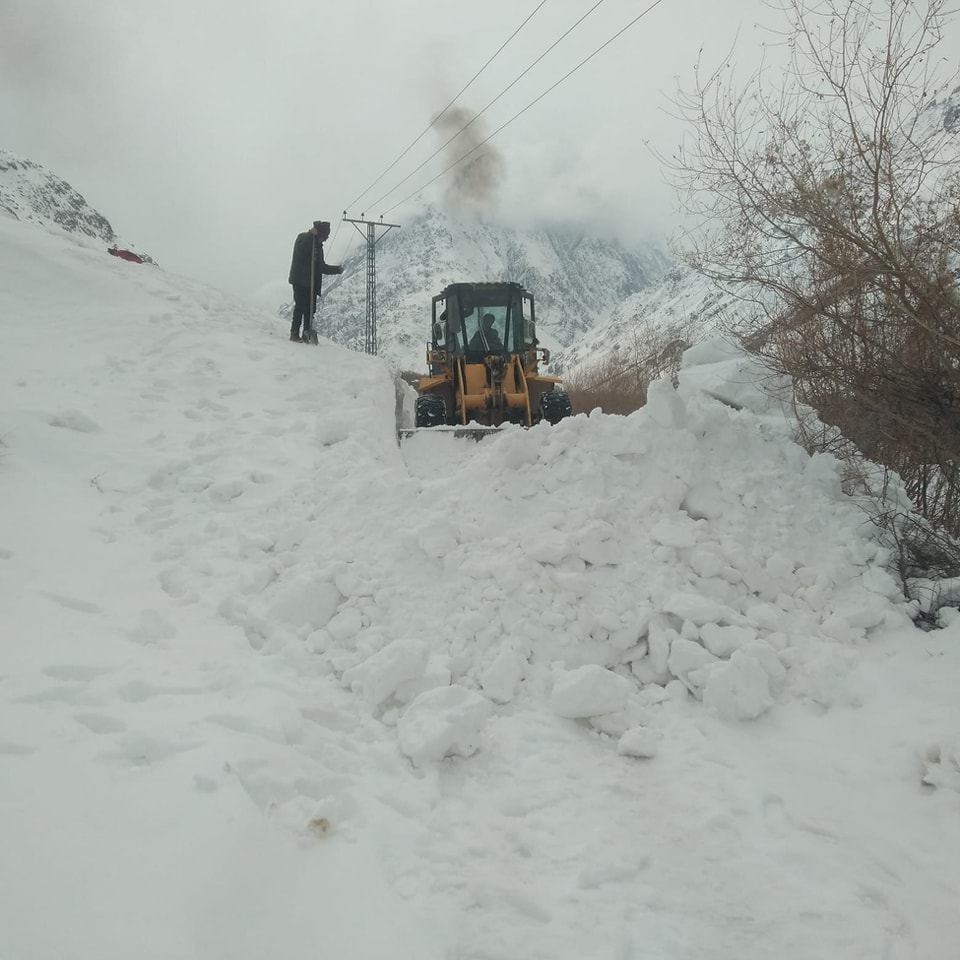
Rough terrain in Chitral as snow clearance is underway following heavy snowfall; Photograph: Official Facebook Page of Suriya Bibi.
Bibi grew up with both her father and a grandfather engaged in local politics and knew that she, too, wanted to be a politician.
“Despite my family’s support for another party, I made an independent choice and joined Pakistan Tehreek-e-Insaf, PTI party, [which means] ‘Pakistan movement for justice,’ in 2007,” she said.
“Joining politics, I initially faced resistance and received criticism for participating in protests and rallies, as it wasn’t common for women in the conservative region like Chitral to break through a male-dominated field like politics.”
Starting as a grassroots worker, Bibi began by mobilizing women at the village level, then represented Chitral as a female leader and then became the vice president of PTI Malakand Division. So, she ascended through the ranks within her party before getting a nomination to run for election from the party.
In the recent election, Bibi’s constituency was predominately female. Women voters surpassed men in supporting her, giving Bibi 35,377 votes, compared with the 30,345 votes from men.
In Chitral, where no local woman had previously secured an electoral victory and where her opponents wielded greater financial resources, Bibi initially doubted her chances.
“Men establish connections, friendships, and network with party officials, gaining exposure and influence,” she said. “However, as a woman, I couldn’t do the same. Despite these challenges and cultural norms, I only had dedication and the unwavering support of my family, particularly my husband. He consistently encouraged me when I was nominated to run for the seat, urging me to take it up as a challenge.”
VOA story continues below
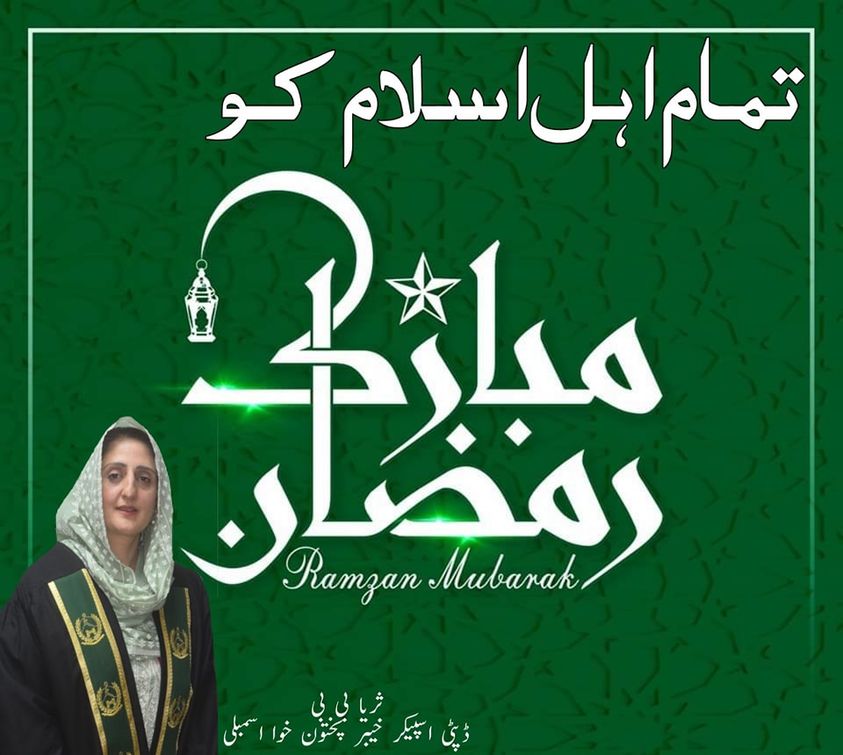
Ramzan Mubarak greeting from Suriya Bibi. Photograph: Official Facebook Page of Suriya Bibi.
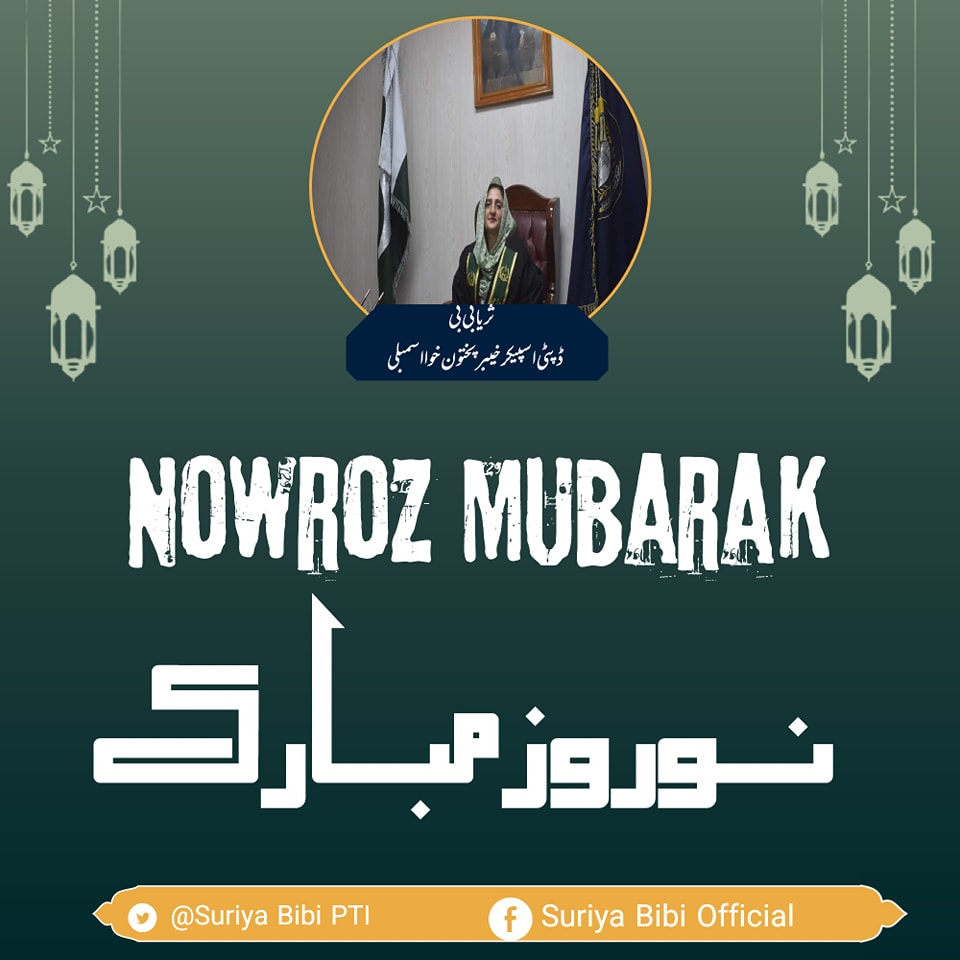
Navroz Mubarak greeting from Suriya Bibi. Photograph: Official Facebook Page of Suriya Bibi.
Speaking about her plans, Bibi said her focus would be on tackling property rights issues for women and prioritizing girls’ education. Given her background as an educator, she eagerly anticipates establishing a nursing school in the region, recognizing that young women who pursue nursing careers often must move far from their families.
Aspiring female students have begun approaching her about internship opportunities in her office, she said, reflecting a shift in the perception that politics are exclusively dominated by powerful men.
She said her political journey shows how even an ordinary middle-class woman like herself can ascend to great heights in the realm of politics.
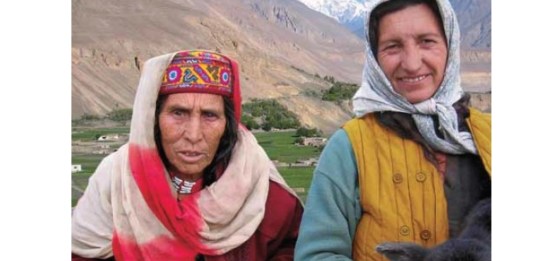
BBC’s special news article dated November 25, 2023, is about Pakistan’s Wakhi shepherdesses in Shimshal who have, over many generations, taken their flocks annually to high pastures, where they prepare dairy products to barter while their animals graze during the warmer season. The income they generated has been pivotal in transforming their community, helping to pay for healthcare, education, and the first road out of their valley.
However, the BBC’s article that includes stunning photos and a short film, does not provide any cultural information about the Wakhi people, and those who live in the Shimshal valley.
According to Wikipedia, “The Wakhi predominantly adhere to Nizari Ismaili Shia Islam, which is regarded as their ethnic religion and are followers of the Aga Khan.”
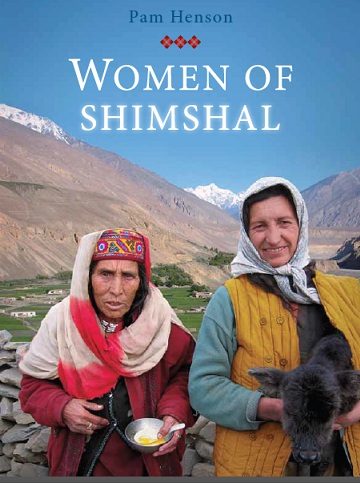
In 2012, Simerg published a special 3-part series entitled Remarkable Tales of Ismaili Women of Shimshal. The articles for the series were excerpted from “Women of Shimshal” with the permission of the book’s author, Pam Henson, a New Zealand educator and trekker, who visited the region 4 times. Pam dedicated her 2010 book “to the women of Shimshal village who have hosted me, treated me as one of the family, and shared the riches of their lives with me.”
The cover page of “Women of Shimshal” by Pam Henson. Simerg’s special series on Remarkable Tales of Ismaili Women was excerpted from Pam’s book.
We invite you to read Simerg’s fascinating series as a prelude to the BBC article. The special short film that is included in BBC news was produced by Farhat Javed. It features Afroze-Numa, one of Shimshal’s last shepherdesses; she has been profiled with other women from around the world in BBC’s 100 Women List.
_________________________
SHIMSHAL IN BRIEF
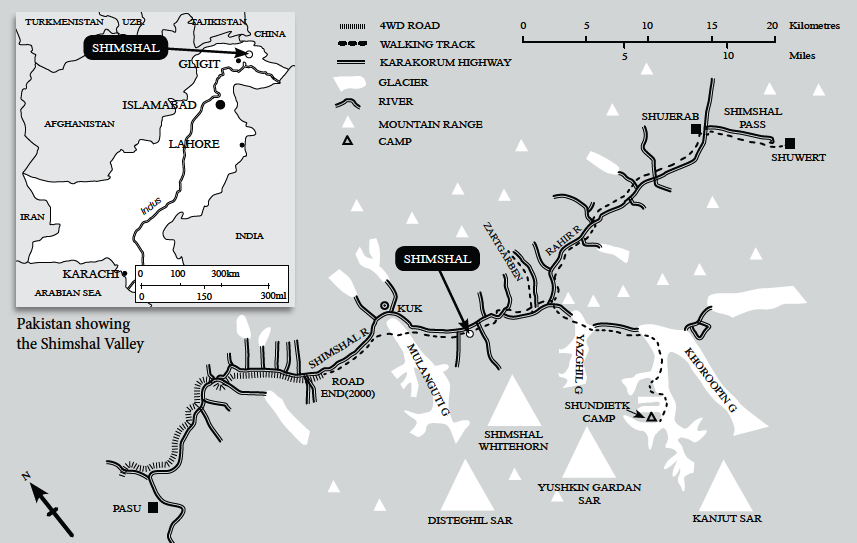
Shimshal is a remote Ismaili village which lies at an altitude of 3,100 metres above sea level, and is the highest settlement in the Hunza Valley of Pakistan. It is surrounded by innumerable, fascinating and awe-inspiring peaks, glaciers, alpine meadow and trekking routes. It is the bordering village that connects Gilgit-Baltistan province of Pakistan with China. The village of about 2000 devout Ismailis was inaccessible by road until October 2003, when a new road from the Karakoram Highway at Passu was constructed with the mutual cooperation of the Aga Khan Rural Support Programme, the Government of Pakistan and the local community. — Simerg’s special series on Remarkable Tales of Ismaili Women of Shimshal
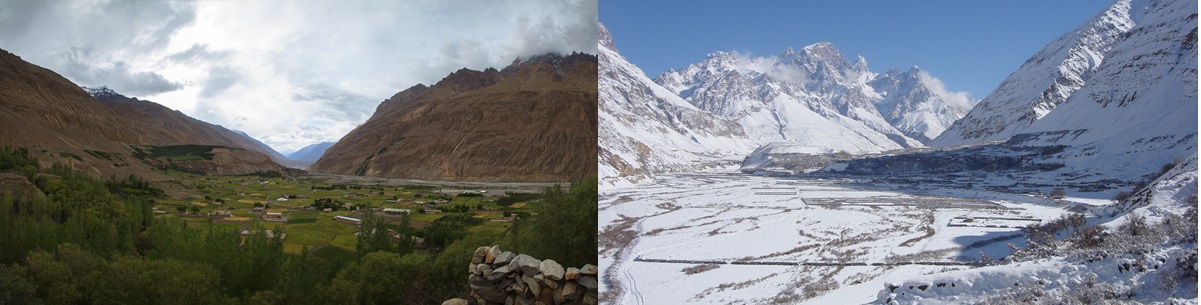
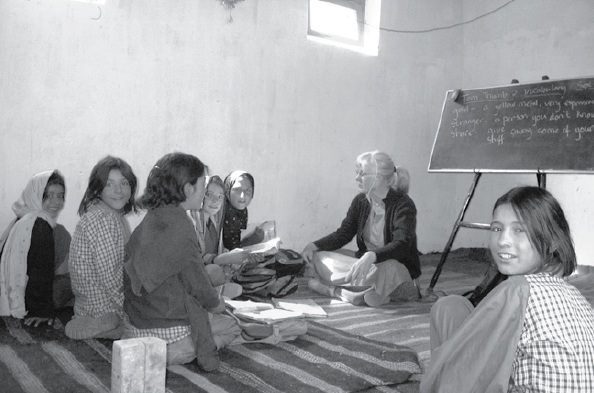
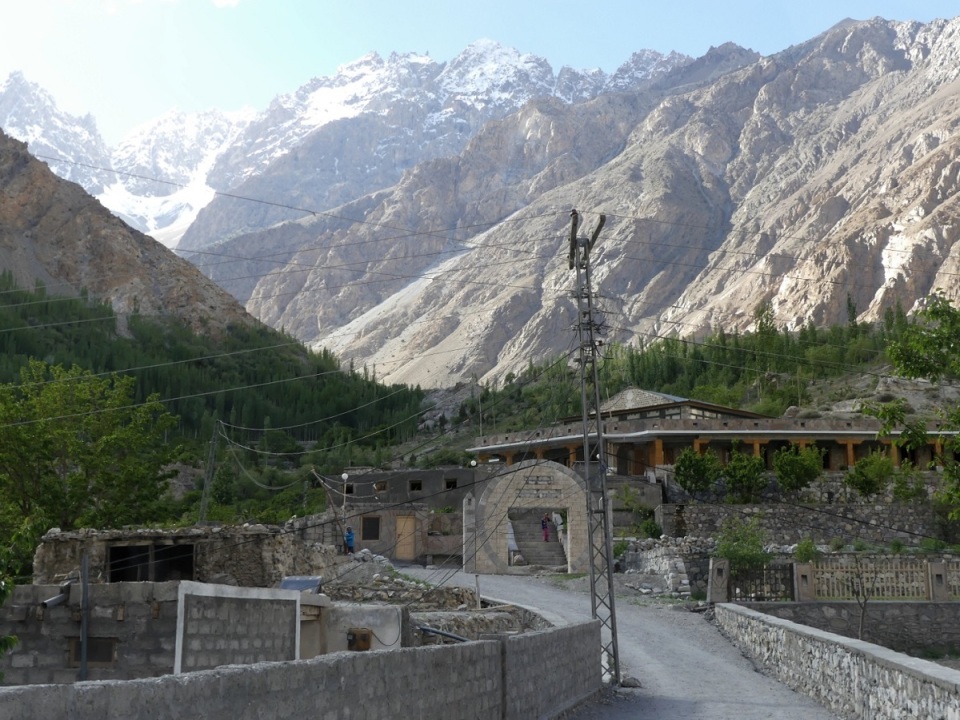
In a fascinating 5 part travelogue of his trip to China and Pakistan, Ali Karim dedicated an entire post to the Ismailis of Northern Hunza. His visits to the villages of Passu and Khyber left Ali and his wife Dilshad speechless. They noted, “The experience was overwhelming, as were the sights! The Ismailis of Khyber village and Passu showed us that you can symbolically scale and even climb above the highest of peaks through goodness, warmth and generosity.” Please read Ali’s piece Ismailis of Remote Northern Hunza Rise High Above the Tallest Peaks.
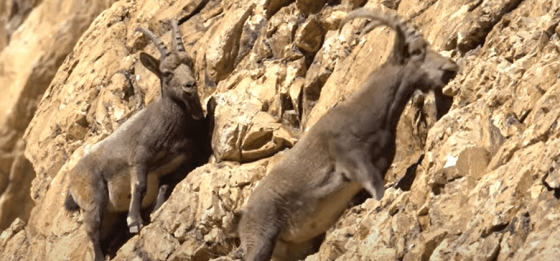
Interestingly, just this past week, the media in Pakistan reported a story about Nyal Mueenuddin, wildlife filmmaker for World Wildlife Fund (WWF) Pakistan and Imtiaz Ahmed, a local photographer, spotting a herd of about 50 Himalayan ibex including females along with their yearlings near Khyber village. We located the beautiful short film on Youtube, which every member of your family, young and old alike, will love watching. The short film follows photos of Khyber Village and Passu from Ali Karim’s must read article.
A version of this post also appears at Simergphotos.
We welcome feedback from our readers. Please complete the LEAVE A REPLY form below or click Leave a comment. Your letter may be edited for length and brevity, and is subject to moderation. Before departing this website please take a moment to review Simerg’s Table of Contents for links to hundreds of thought provoking pieces on a vast array of subjects including faith and culture, history and philosophy, and arts and letters to name a few.








 Simerg - Insights from Around the World