Simerg is an independent initiative dedicated to Ismaili Muslims, the Aga Khan — their Hereditary Imam — and the Ismaili Imamat, and Islam in general through literary readings, photo essays and artistic expressions
“As you build your lives, for yourselves and others, you will come to rest upon certain principles. Central to my life has been a verse in the Holy Quran which addresses itself to the whole of humanity. It says: ‘Oh Mankind, fear your Lord, who created you of a single soul, and from it created its mate, and from the pair of them scattered abroad many men and women. I know of no more beautiful expression about the unity of our human race — born indeed from a single soul.” — The Aga Khan, excerpt from an address to both the Houses of the Canadian Parliament, February 27, 2014, see featured photo at top of post.
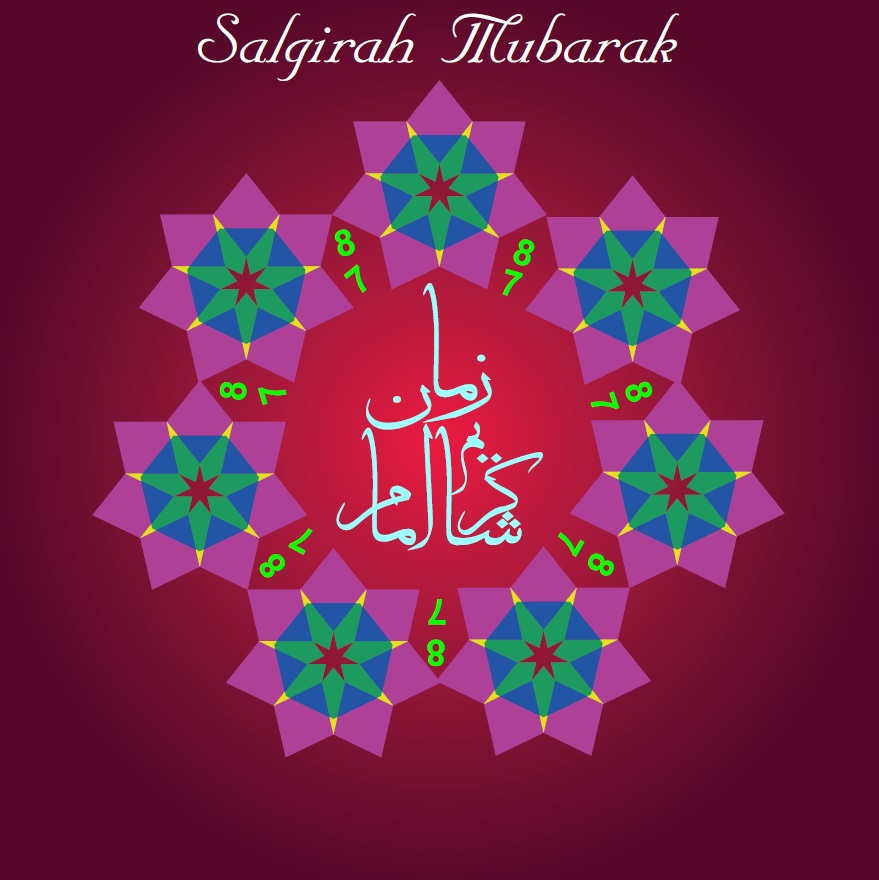
A calligraphy by Toronto’s Karim Ismail depicting the 87th birthday of His Highness the Aga Khan, the 49th Hereditary Imam of the Ismaili Muslims. Please clik on image for special post.
On December 13, 2023, Ismaili Muslims around the world mark the 87th birthday of their Imam, His Highness the Aga Khan. Simerg’s sister website Barakah presents a special post for the birthday. Please click The Benevolent Imam.
At the age of 87, the current Aga Khan is the oldest living Imam in Ismaili history. On July 11, 2023, he celebrated his 66th Imamat Day, still 5 years away from the record breaking 71 years of his predecessor, Aga Khan III (d. July 11, 1957), who began his reign at the age of seven in August 1885. Canada is home to more than 100,000 Ismailis and the Aga Khan’s projects include the beautiful Aga Khan Garden in Edmonton — part of the University of Alberta’s Botanic Garden — and the Aga Khan Museum in Toronto, two iconic Ismaili Centres in Toronto and Vancouver, and the Global Centre for Pluralism in Ottawa. In Calgary, the Ismailis host the annual stampede breakfast which is open to the entire public. Thousands attend and enjoy this annual event.
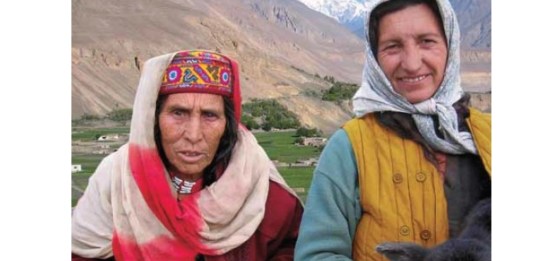
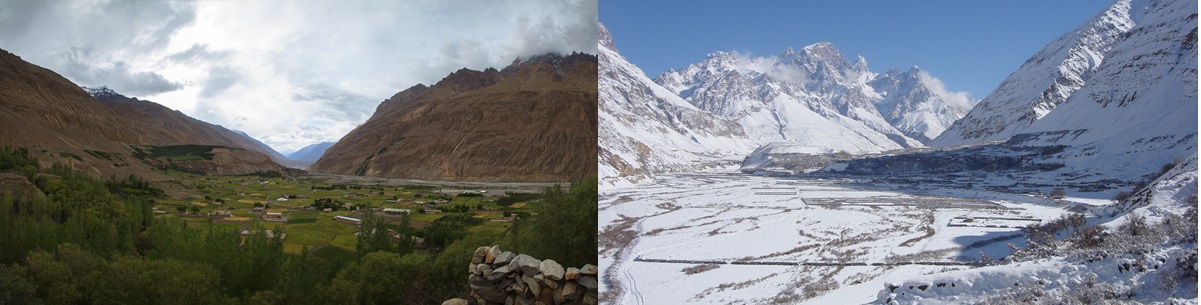
BBC’s special news article dated November 25, 2023, is about Pakistan’s Wakhi shepherdesses in Shimshal who have, over many generations, taken their flocks annually to high pastures, where they prepare dairy products to barter while their animals graze during the warmer season. The income they generated has been pivotal in transforming their community, helping to pay for healthcare, education, and the first road out of their valley.
However, the BBC’s article that includes stunning photos and a short film, does not provide any cultural information about the Wakhi people, and those who live in the Shimshal valley.
According to Wikipedia, “The Wakhi predominantly adhere to Nizari Ismaili Shia Islam, which is regarded as their ethnic religion and are followers of the Aga Khan.”
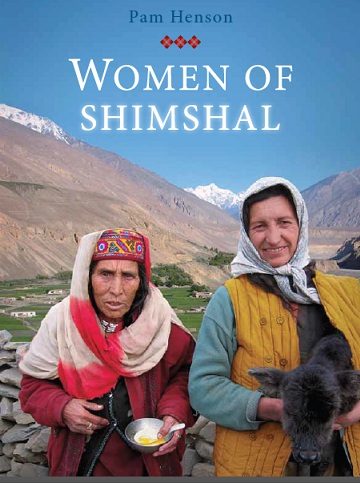
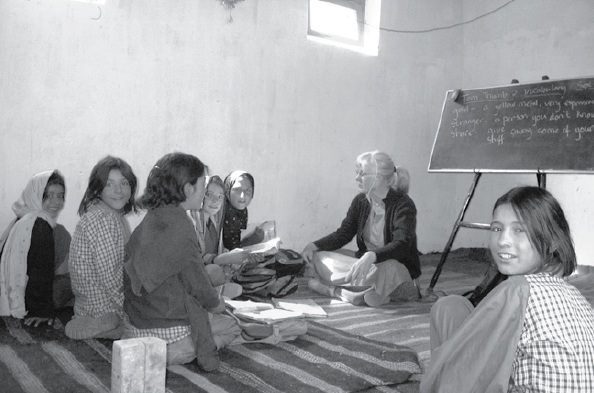
In 2012, Simerg published a special 3-part series entitled Remarkable Tales of Ismaili Women of Shimshal. The articles for the series were excerpted from “Women of Shimshal” with the permission of the book’s author, Pam Henson, a New Zealand educator and trekker, who visited the region 4 times. Pam dedicated her 2010 book “to the women of Shimshal village who have hosted me, treated me as one of the family, and shared the riches of their lives with me.”
The cover page of “Women of Shimshal” by Pam Henson. Simerg’s special series on Remarkable Tales of Ismaili Women was excerpted from Pam’s book.
We invite you to read Simerg’s fascinating series as a prelude to the BBC article. The special short film that is included in BBC news was produced by Farhat Javed. It features Afroze-Numa, one of Shimshal’s last shepherdesses; she has been profiled with other women from around the world in BBC’s 100 Women List.
_________________________
SHIMSHAL IN BRIEF
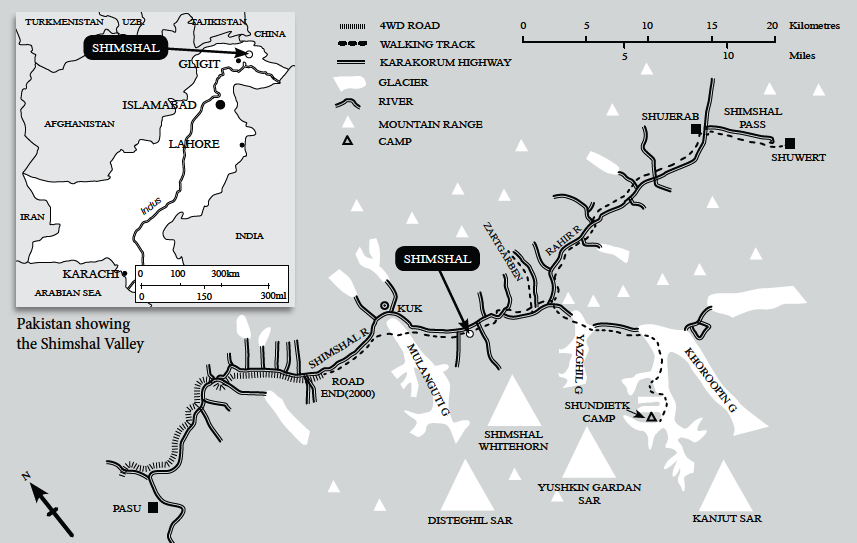
Shimshal is a remote Ismaili village which lies at an altitude of 3,100 metres above sea level, and is the highest settlement in the Hunza Valley of Pakistan. It is surrounded by innumerable, fascinating and awe-inspiring peaks, glaciers, alpine meadow and trekking routes. It is the bordering village that connects Gilgit-Baltistan province of Pakistan with China. The village of about 2000 devout Ismailis was inaccessible by road until October 2003, when a new road from the Karakoram Highway at Passu was constructed with the mutual cooperation of the Aga Khan Rural Support Programme, the Government of Pakistan and the local community. — Simerg’s special series on Remarkable Tales of Ismaili Women of Shimshal
Malik Merchant rejuvenates himself by visiting parks within the city of Calgary and on his day trips to the Kananaskis and Banff. His latest visit to Banff was on Friday, November 24, 2023. See his new pictures by clicking on the photo below or click WOW Moments in Banff. Also, visit his exciting and informative photoblog Simergphotos.
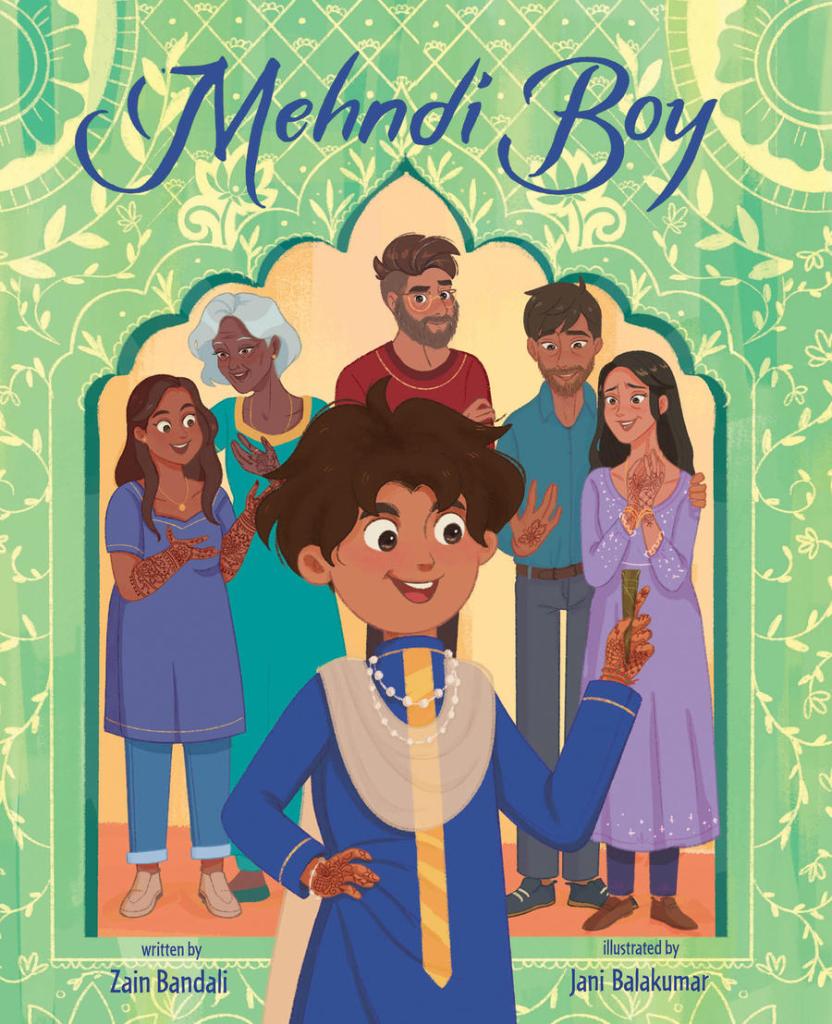
Simerg’s introduction of “Books by Ismaili Authors” continues with Zain Bandali’s recently published book “Mehndi Boy”. We follow the same Q/A format as our earlier presentations of books that are listed chronologically below. We encourage Ismaili authors from around the world to participate in this series, regardless of when their books were published. See details of the series HERE and submit your responses accordingly to Simerg’s editor, Malik, at mmerchant@simerg.com.
****************
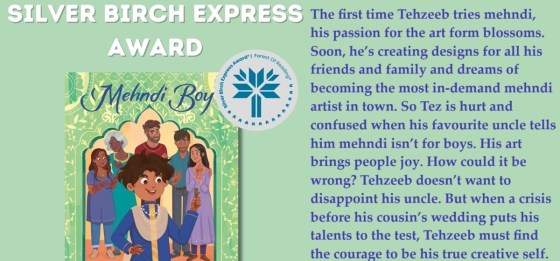
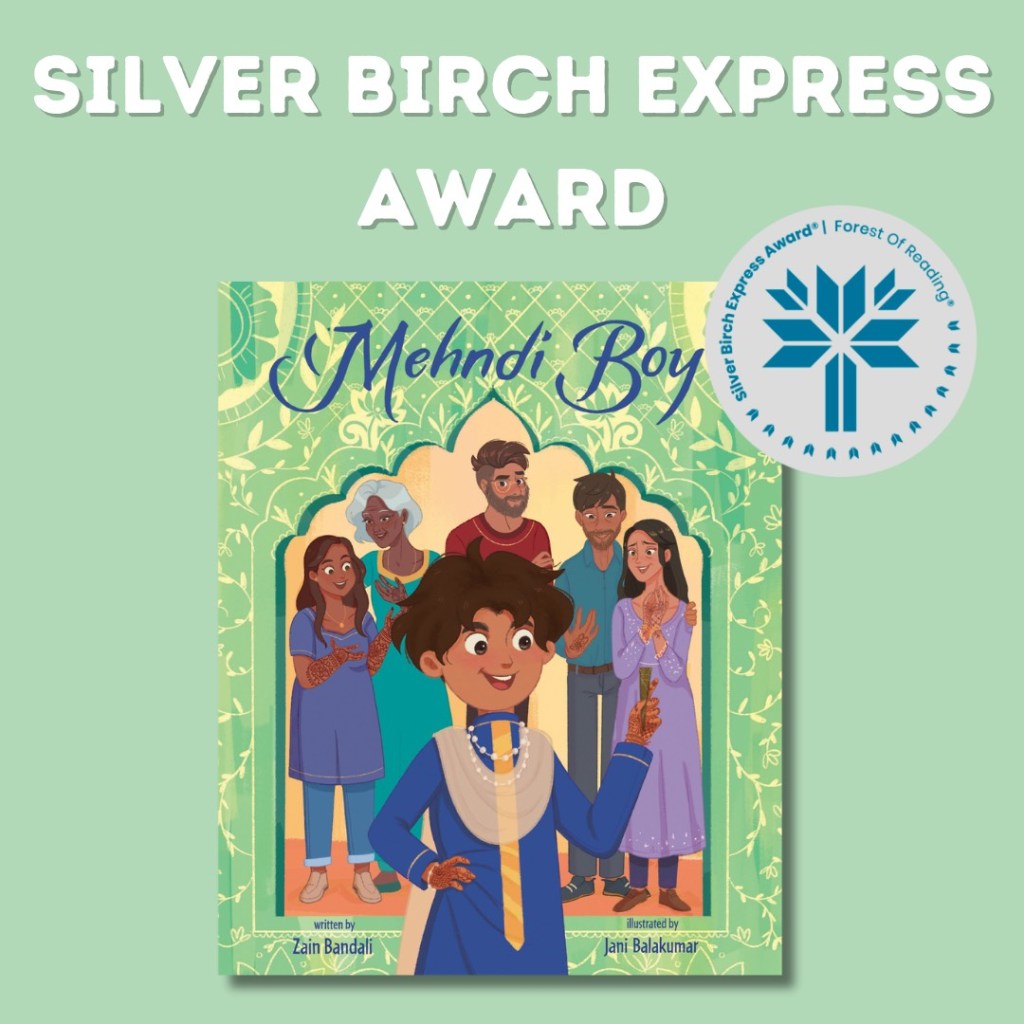
“My debut book was nominated for the Silver Birch Express Award, which is a part of The Forest of Reading®, which is Canada’s largest recreational reading program and offers ten reading programs to encourage a love of reading in people of all ages. This means that grade 3 and 4 students across Canada will get to read MEHNDI BOY” — Author Zain Bandali
Simerg’s Interview with Ismaili Author Zain Bandali
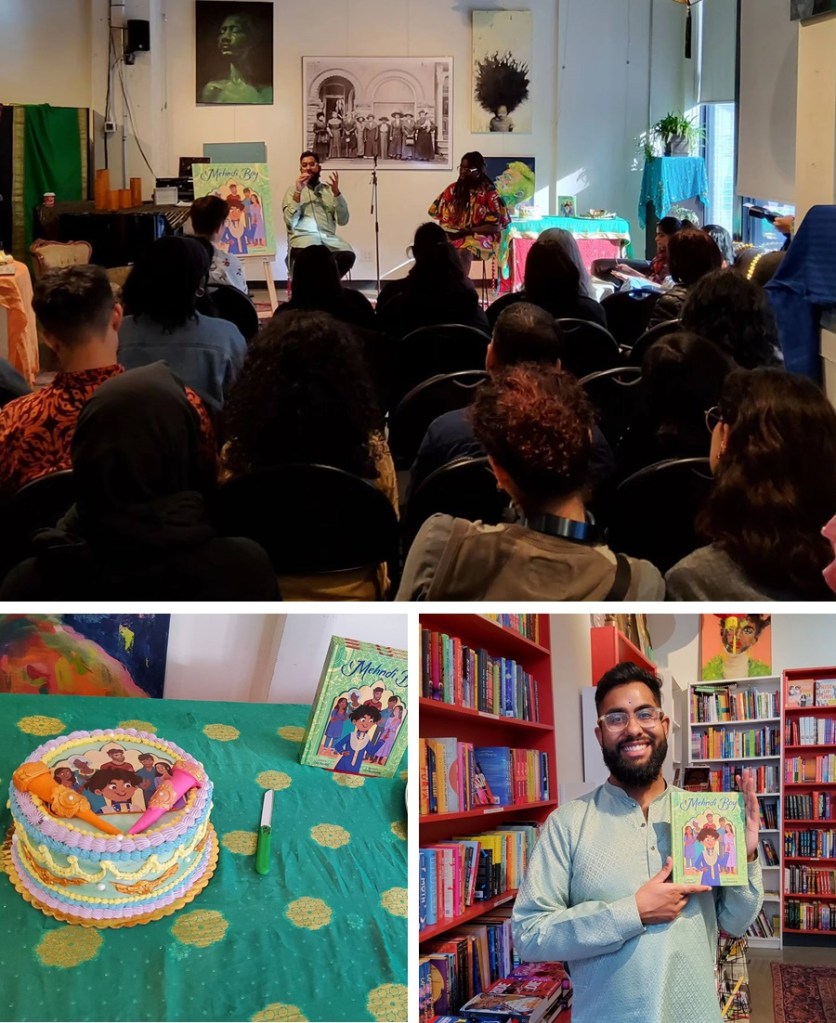
Zain Bandali and emcee Maya Homevoh speak to attendees at the Mehndi Boy launch at A Different Booklist in Toronto; Zain Bandali proudly poses with his newly published early reader chapter book Mehndi Boy; and book launch attendees enjoy Mehndi Boy inspired cake and mehndi cone party favors. Photograph: Zain Bandali.
Simerg: What is behind the naming of the title of the book?
Zain Bandali: I wanted to juxtapose “mehndi” [also known as henna], with something that we often don’t associate with the artform: boys. Mehndi Boy refers not only to the main character Tehzeeb, who becomes fascinated with applying henna on his friends and family, but also serves as an invitation for boys to dare to dream and express themselves on their own terms.
Simerg: Why would you want me or my family members to read the book, and what will we all learn from it?
Bandali: Mehndi Boy is an illustrated chapter book meant for early readers aged 6-11. However, adults would certainly enjoy reading it as it is filled with Ismaili, East African, and South Asian “easter eggs” — hidden features, from illustrations to phrases in the text that are in Kutchi, Gujarati, and Swahili.
Mehndi Boy boasts a full glossary of these various terms and concepts, and would make an excellent opportunity for children to sit with their elders and go through these references — some they may be familiar with and some might be brand new!
Simerg: What inspired you to write the book?
Bandali: Growing up, I was often discouraged to put mehndi on during Khushialis [major Ismaili festivals], weddings, and other festivities. The only reason? I was a boy. This rationale never quite sat right with me, so I chose not to pay much heed to it or let it stop me.
Despite the raised eyebrows of uncles at Jamatkhana, I’d grab mehndi cones when they were distributed and practice on myself. Was I any good? That’s debatable. But, I was able to reclaim a part of my history, heritage, and femininity that was buried deep inside of me.
Over the past few years, I’ve been asked to apply mehndi during Navroz, Imamat Day, and Salgirah celebrations at my local Jamatkhana. Doing mehndi for children, aunties, and elders in the Jamat became an act that deepened the connection to my community and has been an honour for me to do.
Interview continues below
“Mehndi Boy” written by Zain Bandali, illustrations by Jani Balakumar, published by Annick Press, October 2023; 100 pages, available in hardback, softback, and Kindle.
…..Continued
Bandali: It was this binding energy of mehndi, of expression, resilience, and community that inspired me to write Mehndi Boy and invite the next generation to dream — dreams where boys are encouraged to express themselves as they see fit — and like painting or drawing, mehndi is perceived just like any other artform.
Simerg: How can I purchase the book and what are its available formats?
Bandali: Mehndi Boy was published on October 24th, 2023. Please visit the Annick Press website where you can either buy it online or place an order for Mehndi Boy from your preferred local bookstore. The book can also be purchased at Amazon, Indigo, and Barnes and Noble. It is currently available in the following formats: hardcover, softcover, and Kindle.
Interview continues below
__________________________
Mehndi Boy Selected Reviews
Zain Bandali’s “Mehndi Boy” published October 2023, to high acclaim.
“[A] fast-paced chapter book, replete with vibrant illustrations . . . This would be a lovely read-aloud, taking readers on an emotional journey along with Tehzeeb.” — Booklist
“Bandali gently and compassionately offers readers a chance to see how to be true to yourself as they follow Tez on his journey.” — The Globe and Mail
“Delightful . . . the world needs more ‘mehndi boys!’” — Vivek Shraya, author of The Boy and the Bindi and God Loves Hair
“I was totally charmed by it.” — Ali Sethi, musician and author
__________________________
Simerg: How did you find a publisher for the book?
Bandali: As a debut author, this is my first time being published beyond the occasional poem. In March of 2021, I submitted a brief outline of Mehndi Boy to the Annick Press Mentorship Program, a mentorship program designed to support writers from groups historically excluded from children’s book publishing in North America. Here, I developed the outline into a manuscript and was later offered a contract with Annick Press. All in all, the process took about 2 years.
Simerg: Did you hire an editor, an illustrator or did you do all the work by yourself?
Bandali: Annick Press was able to secure Jani Balakumar, an incredibly talented artist who brought my vision expertly to life. Jani is a Tamil-Canadian illustrator and 2D animator residing in Toronto, Canada. She has a bachelor’s in animation from Sheridan College where she honed her craft.
Simerg: Would you like to offer further information about your book?
Bandali: I am pleased to share that my debut book was also nominated for the Silver Birch Express Award, which is a part of the The Forest of Reading®, which is Canada’s largest recreational reading program and offers ten reading programs to encourage a love of reading in people of all ages. This means that grade 3 and 4 students across Canada will get to read Mehndi Boy, a major milestone in my life. I might also note that Booklist, a publication of the American Library Association, called Mehndi Boy a “fast-paced chapter book, replete with vibrant illustrations” and said, “This would be a lovely read-aloud, taking readers on an emotional journey along with Tehzeeb.”
In Mehndi Boy, I wanted to tell a story that questions stubborn gender norms in a kid-friendly way by drawing from my Indo-Tanzanian and Ismaili Muslim identity. It touches on themes of self esteem, anxiety and perfectionism, and the trials of navigating a relationship with an uncle who doesn’t understand his nephew’s artform. It is a story for my inner child — a story that I wish existed when I was younger.
Date posted: November 18, 2023.
_______________
A Request to all Our Readers: Please Support Zain Bandali
Be sure to support new author Zain Bandali on the debut of his book Mehndi Boy. Please visit the Annick Press website where you can either buy Mehndi Boy online or place an order for the book from your preferred local bookstore. The book can also be purchased at Amazon, Indigo, and Barnes and Noble. It is currently available in the following formats: hardcover, softcover, and Kindle.
About the Author
Zain Bandali
Zain Bandali is an unapologetic author, poet, and diversity advocate. His poetry can be found in multiple publications, and his spoken word has graced stages across his home province of Ontario, Canada. In 2020, he was awarded the Upkar Arora Social Impact Leadership Scholarship for his work creating a grassroots community initiative while an undergrad at the University of Waterloo. Even in his day job as an HR professional at a leading financial corporation, Zain strives to bring the values of diversity, equity, and inclusion to everything he does. He is an avid vegetable gardener but cannot always stomach the chili peppers he grows.
We welcome feedback from our readers. Please click Leave a comment. Your letter may be edited for length and brevity and is subject to moderation.
Calling all Ismaili Authors
We encourage Ismaili writers to introduce their books in a similar format as has been done in the post above. Please also see the series launch article and submit your responses to Malik at mmerchant@simerg.com. All submissions will be acknowledged. If a writer has published multiple books, each book will be highlighted in a separate article, and not combined with other books into one post. All writers should include a brief profile with a portrait photo.
_______________
Links to the Ismaili Authors’ Series (in chronological sequence, oldest article first)
Before departing this website please take a moment to review Simerg’s Table of Contents for links to hundreds of thought provoking pieces on a vast array of subjects including faith and culture, history and philosophy, and arts and letters to name a few. Also visit Simerg’s sister websites Barakah, dedicated to His Highness the Aga Khan, and Simergphotos.
Note to readers: The program commences in the YouTube video below shortly after the 22-minute mark with Omar Sachedina, the Chief News Anchor and Senior Editor for CTV’s national evening newscast CTV National News, acting as the emcee. Princess Zahra Aga Khan, who is a Board Member of the Global Centre for Pluralism, presented the prizes on behalf of her father, His Highness the Aga Khan, the Chairman of the Board. This was the 4th edition of the Award which is held every 2 years. A report and photographs of the event will be shared later with our readers on our sister blog Barakah, which is dedicated to the Aga Khan.
Editor’s note: On November 12, 2023, a day after the publication of the article “A Legacy of Lost Heritage” below, Simerg received a communique from ITREB in Karachi, via an Ismaili institutional leader, providing further details on the extent of the damage to the Ismaili institution’s Central library located in Karachi. According to the communique, the damage was more limited than initially thought and reported in our piece. In particular, the more than 200 manuscripts are completely safe because of protective measures taken to ensure their safekeeping. The Gujarati and Khojki-language magazines were previously moved to a different location within the library and were also saved. While a significant number of other materials in the library were damaged due to heat, smoke and water, rather than completely destroyed, they may be recoverable to some degree.
Simerg sincerely hopes that the majority of important objects and documents in the ITREB library remain in their original state and that those that were damaged are recoverable. We also hope that proper fire safety rules are in place to avoid such incidents from taking place in the library as well as Ismaili institutional buildings, especially the older ones, around the world. As noted in a UNESCO Study, the cost of restoring documents and books damaged in a library fire is substantially greater than what would be spent to store the materials under the best fire protection conditions.
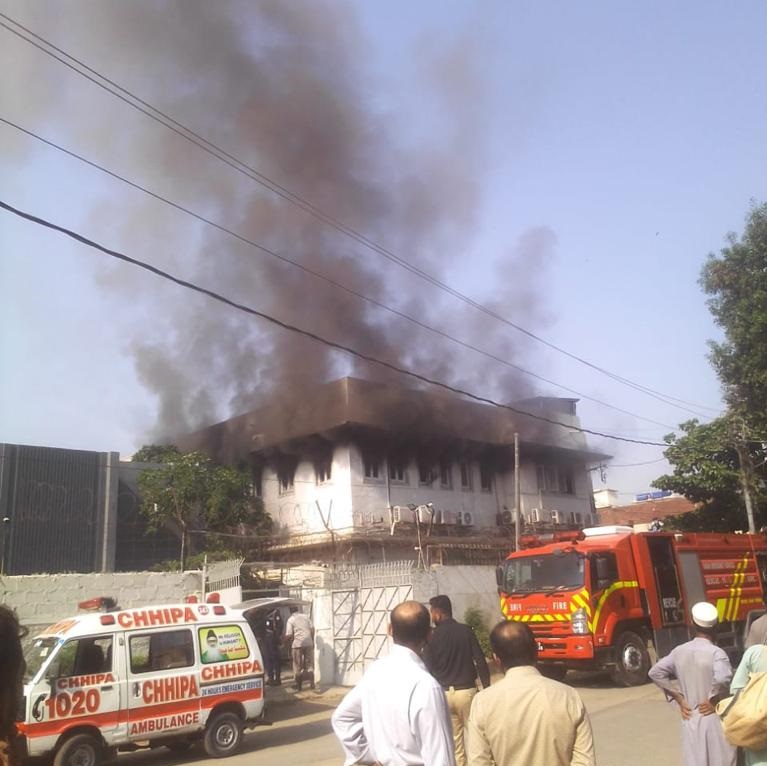
On the morning of November 2nd, 2023, at 9:15am local time, the National ITREB (Ismaili Tariqah and Religious Education Board) building for Pakistan located in the Garden East district of Karachi caught on fire. Fortunately, no one was hurt in the blaze. However, it quickly became apparent there would be another casualty.
Story continues below; click on images for enlargements
Smoke billows from a fire on November 2, 2023, at the ITREB building in Karachi, Pakistan, housing an important library collection of tens of thousands of printed materials, photographs, memorabilia, audiovisual materials, and manuscripts.
Located within the building was an important library housing tens of thousands of printed materials, photographs, memorabilia, audiovisual materials and manuscripts. The fire destroyed much of the collection. What wasn’t burnt or singed by the fire was then subject to water damage as firetrucks attempted to extinguish the blaze which was fed by the thousands of pages of flammable material in the building.
In the context of the Central ITREB Library located in Karachi, the local history, writing and output of the Khoja Jamats in particular, and more broadly of the Jamats of the Indian Subcontinent and to a lesser extent Eastern Africa and Northern Pakistan were preserved in the portion of the collection that focused on the contemporary period. In this post, I have included some gems of materials that I was able to capture on some of my journeys as an homage to the library and its role in my own archival research and being able to cobble together a social and religious history of the Ismailis.
Story continues below
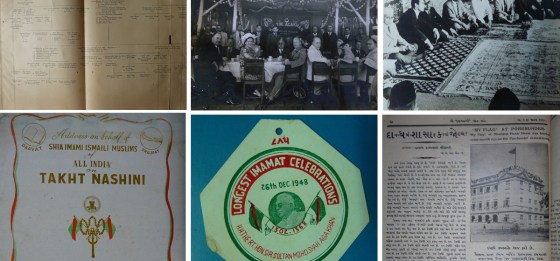
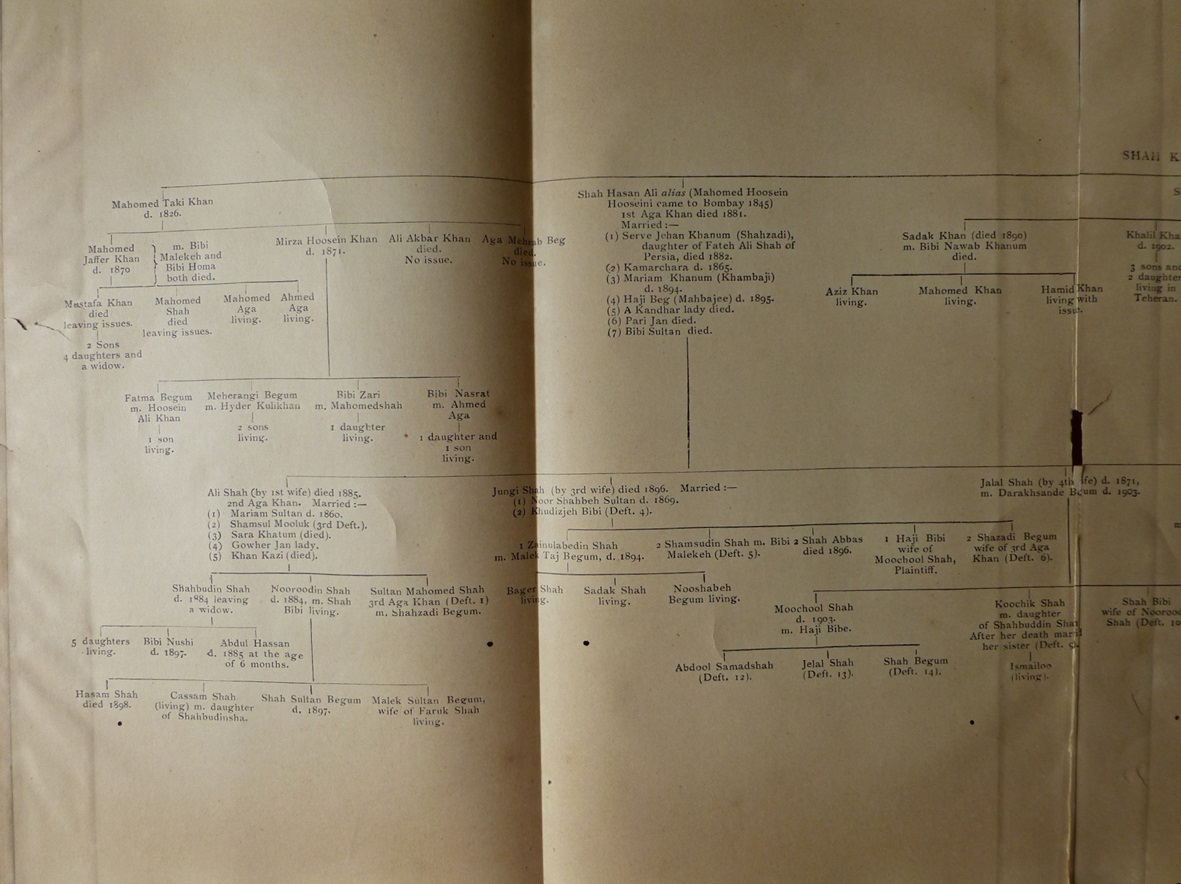
One section of the foldout outlining the family tree of the 46th Imam, Shah Hasan Ali Shah (d. 1881), that formed part of book of the judgement made by Justice Russell who proceeded over what became known colloquially as the Haji Bibi Case. In this section of the family tree, some of Imam Hasan Ali Shah’s siblings, wives, children, and their relations are listed. The case lasted from February 3, 1908 to August 7, 1908 and until that point was the longest ever trial in Bombay’s High Court.
~~~~~~
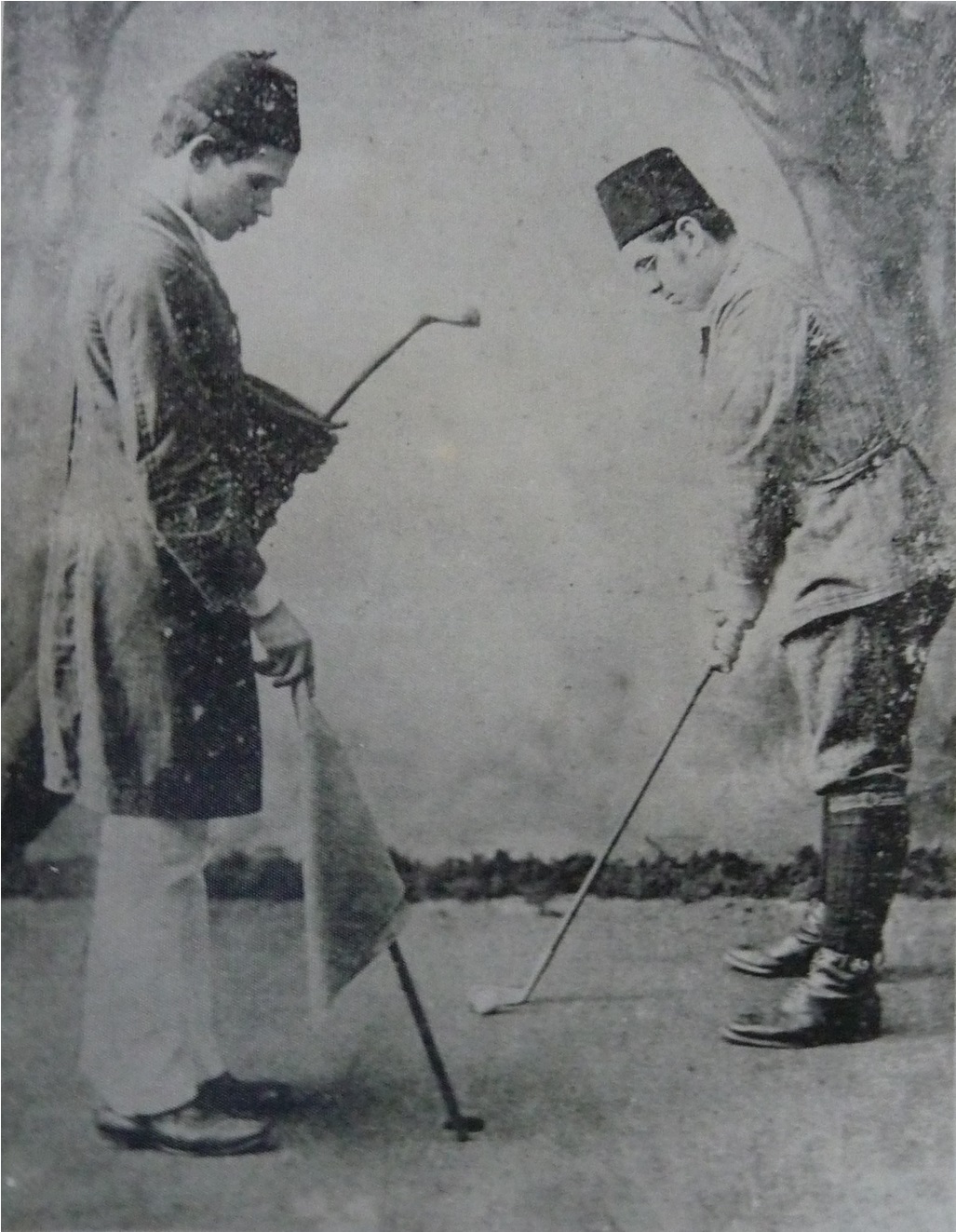
Photograph of Imam Sultan Mahomed Shah, His Highness the Aga Khan, playing golf in his youth.
~~~~~~
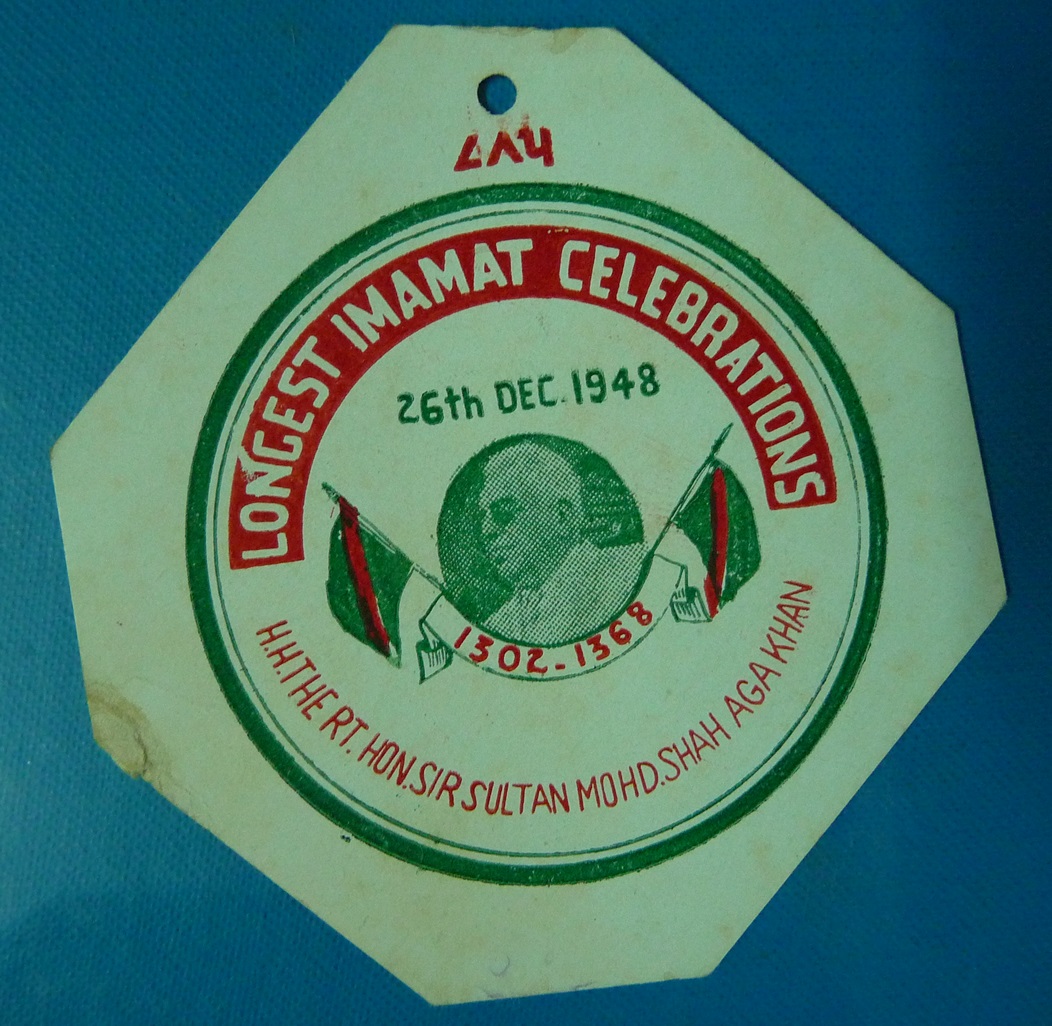
Souvenir produced to mark the occasion of the milestone reached by Imam Sultan Mahomed of the longest-ever Imamat in 1948 after surpassing 63 years as Imam of the Ismailis at the age of 71 years. The 48th Imam died nine years later on July 11, 1957, at the age of 79 having been the Imam for 71 years. He became the Imam in August 1885 at the age of 7.
While assessing the full extent of the damage is still an ongoing process, a number of items were able to be saved including a unique collection of Khojki manuscripts which were housed in fire retardant boxes. When I first heard about the tragedy the next day, I was devastated to learn of the loss of such a treasure trove of materials so important to better understanding the history of the Ismaili community. I had had the opportunity to consult the library on several occasions during my visit to Karachi over the years, including on my last visit in 2013. I was amazed from my first visit in 2006 at the breadth and richness of the collection and easily lost myself for hours and days within the library perusing its shelves, flipping through the pages of its meticulously organized items and often feeling a sense of delight at a personal discovery of a publication or image I was unaware of or that shed important light on a question I’d been pondering.
Story continues below
A picture of the first Muslim Baronet in British India, Sir Karimbhoy Ibrahim published in one of the earlier Ismaili periodical publications, Ismaili Sitaro in July 1910.
~~~~~~
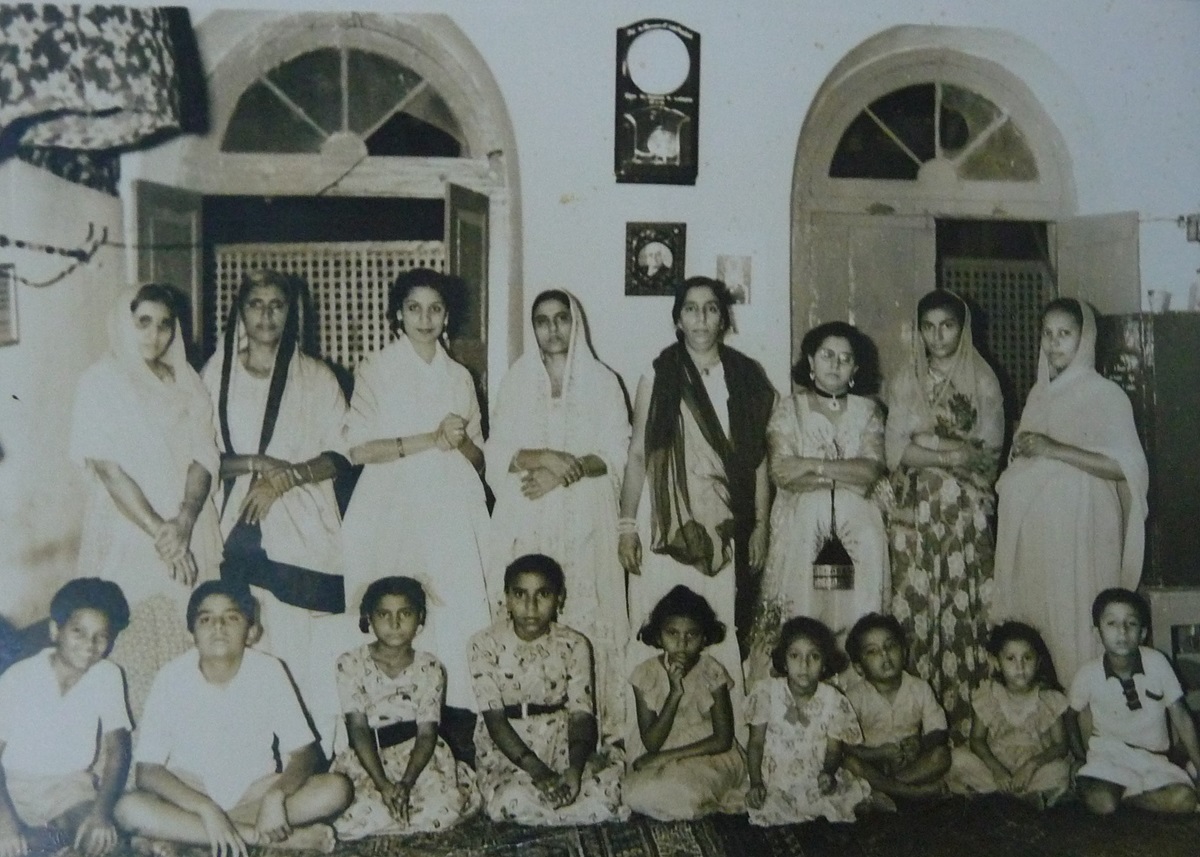
Photograph of women and children of the Ismaili Jamat in Aden, Yemen.
~~~~~~
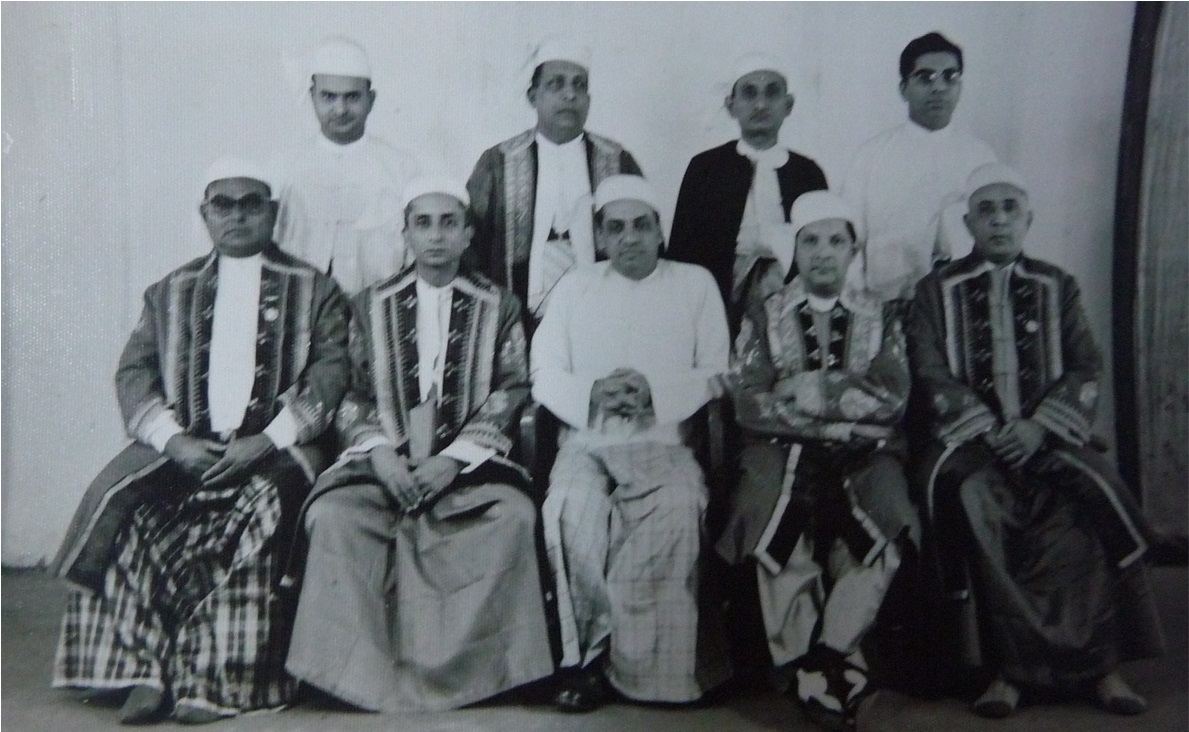
Photograph of members of the Ismaili Supreme Council, Burma 1958.
My own research interests were in the printed collection of the library in English and Gujarati including the photographic documentation of the community in the Indian Subcontinent and around the world. I had taken the opportunity to photograph umpteen works so that I could consult them in more detail and at my leisure once I returned to my home and now I realize the singular importance of those acts of documenting the legacy of the production of individual Ismailis and of Ismaili communities and institutions around the world. Much of ITREB’s Central Library collection owes a debt to Ismailis in Karachi, Pakistan, and around the world who donated materials including photographs as well as the library’s role in actively obtaining and safeguarding those materials.
Story continues below
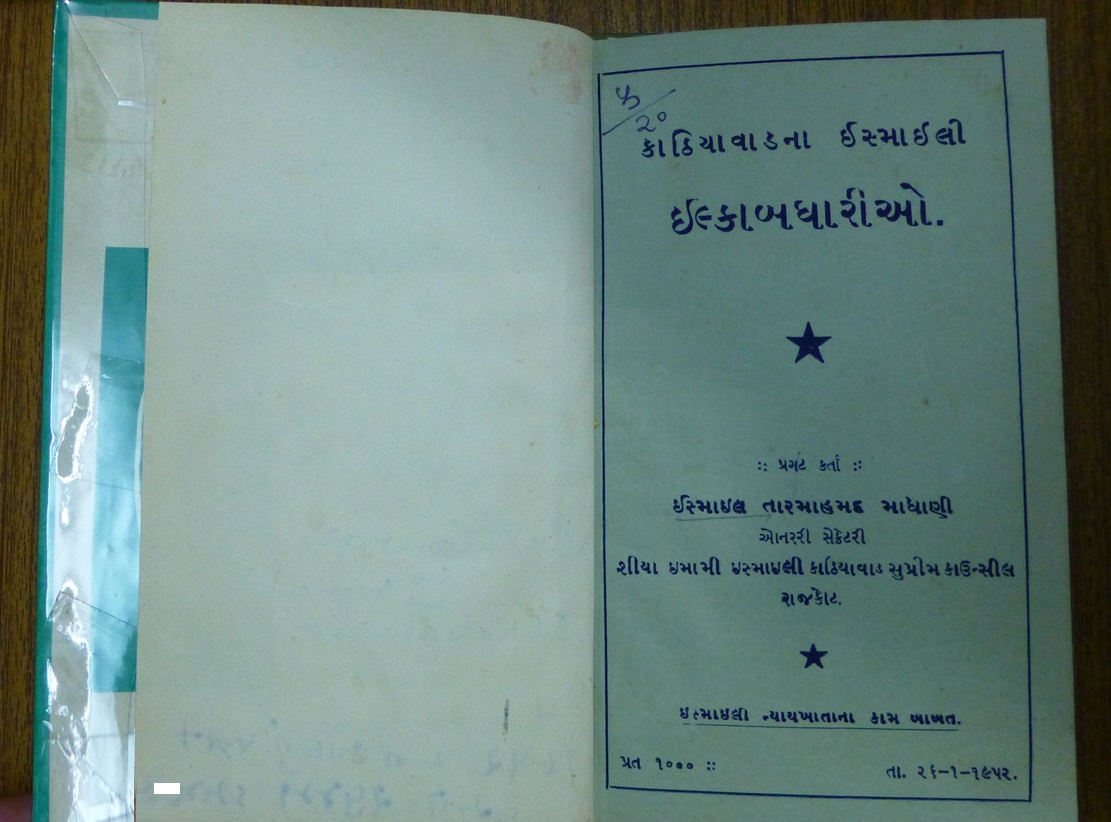
Cover page of the Kathiawadana Ismaili Ilkabadhara’o, Ismaili Census of Kathiawar published by Ismail Tarmahmad Madhani, Honorary Secretary of the Imami Ismaili Kathiawar Supreme Council Rajkot, 1952.
The Importance of Local Libraries
Since the establishment of The Institute of Ismaili Studies in London in 1977, a central repository of the community has been under development and many familial, local, institutional and national collections have been kindly donated to the IIS for safekeeping, preservation, digitization with the larger mandate of providing resources for research. However, before that, the guardians of these materials were often personal collectors, families and smaller institutions such as The Ismaili Society and Ismailia Associations, the predecessors of the now-ITREBs as well as local Jamatkhana libraries. In fact, it was because of these collections, not necessarily large-scale libraries, that scholars such as Wladimir Ivanow, Husayn Hamdani, Asaf Fyzee, Jawad Muscati and many now celebrated Nizari Ismaili authors, scholars, khalifas and waezeen of current and previous generations were able to make breakthroughs in their understanding of the Ismaili past and had source materials for their research.
Story continues below
The cover page of the Constitution of the Ismailia Association of West Pakistan from 1950.
~~~~~~
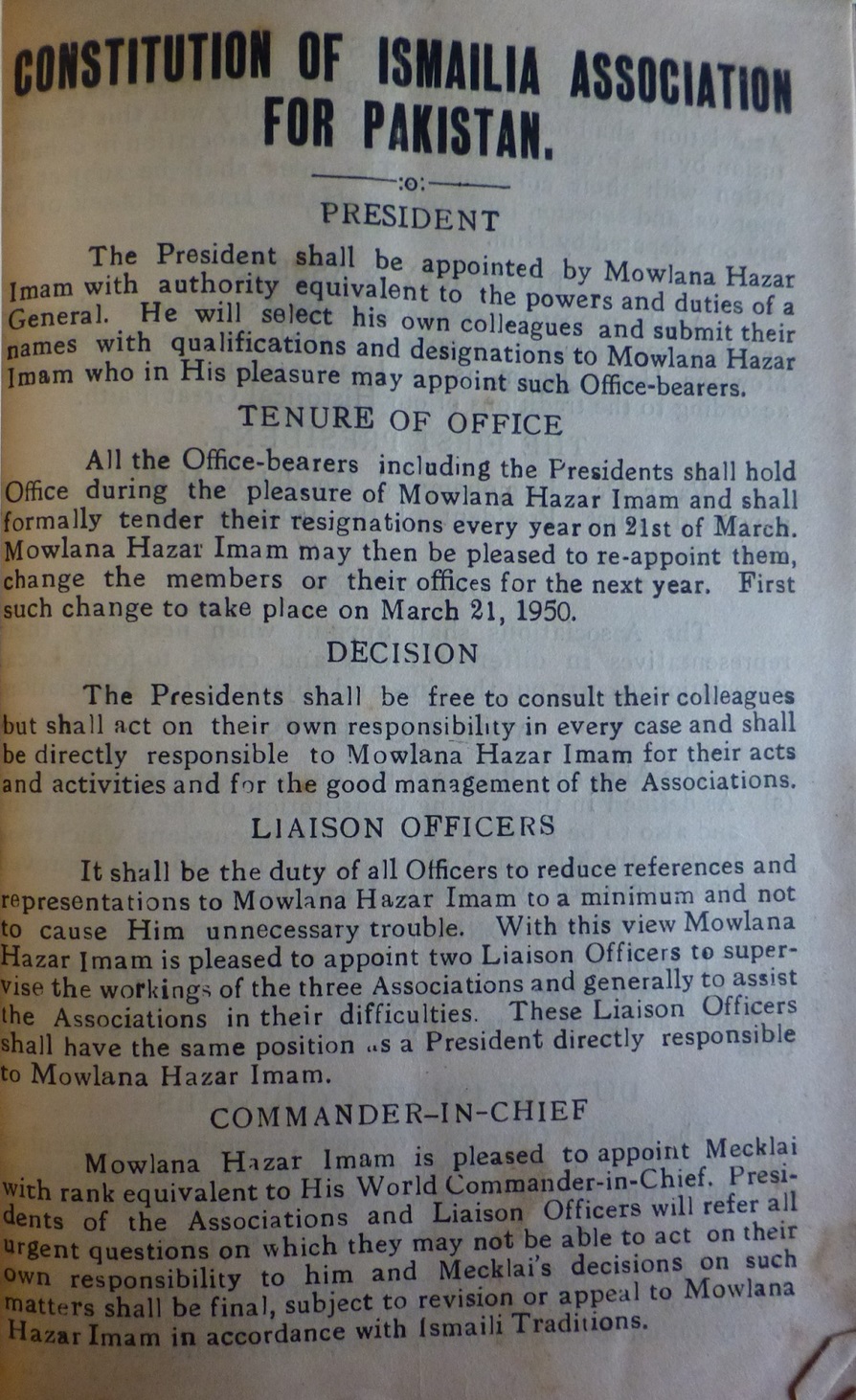
The opening page of the Constitution of the Ismaili Association of West Pakistan from 1950 outlining the system, structure, and rules that were to be abided by for members of the Ismailia Association of West Pakistan (in contrast to the jurisdiction of East Pakistan, which eventually became Bangladesh).
The importance of these regional libraries, especially for local researchers, cannot be underestimated. Throughout my travels over the past 25 years to areas where Ismailis live or once lived, its has often been the works preserved in individual homes, in smaller institutional collections and in local and regional Jamatkhana libraries that have provided some of the most unique documents and witnesses to history; and it is through them that have come the greatest insights and breakthroughs. Large institutional collections such as those of national libraries or of learned societies have become more accessible as they digitize their collections, but it is our debt to local institutions that cannot be underestimated.
Story continues below
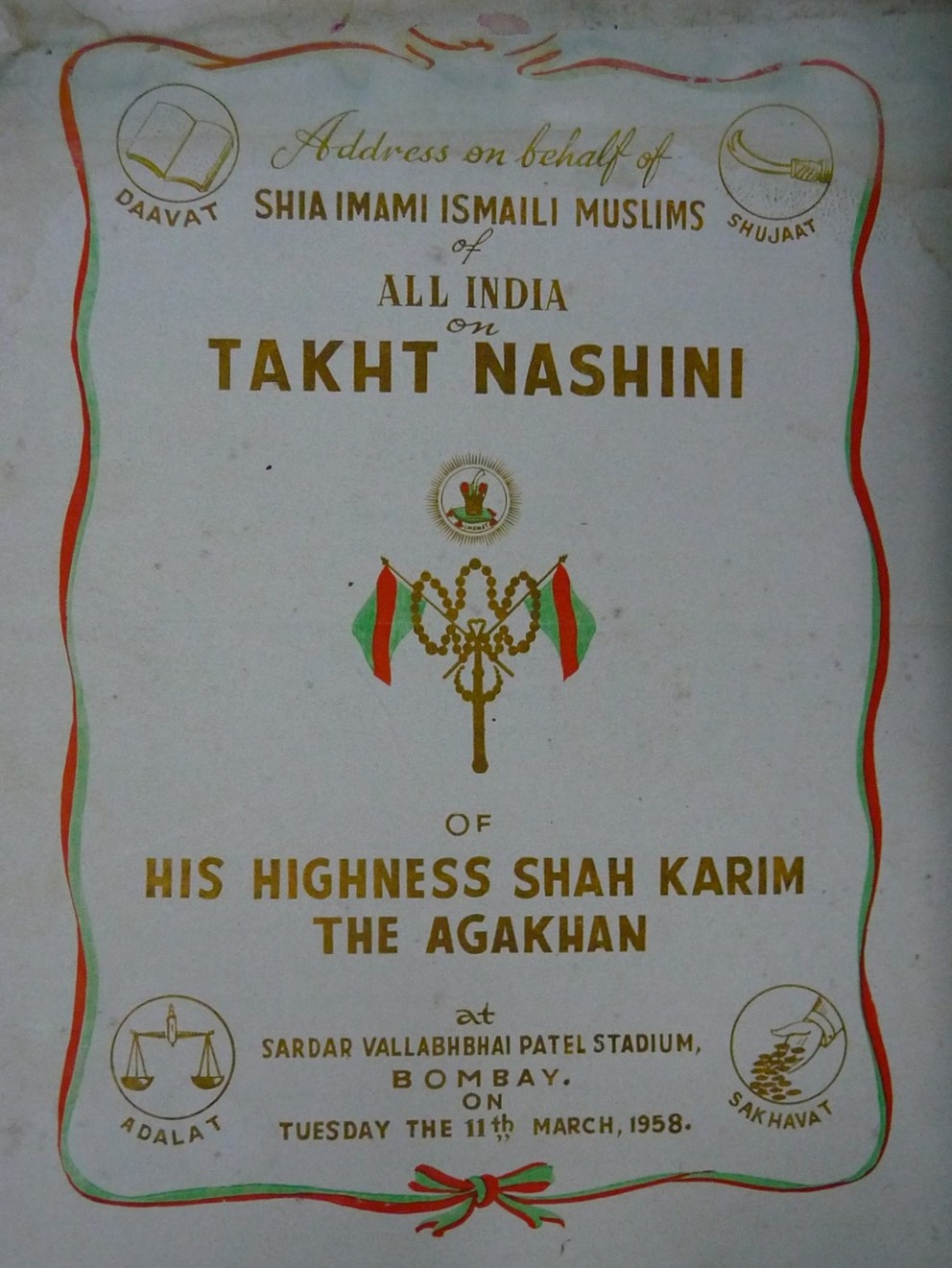
Cover of the Souvenir of Mawlana Hazar Imam’s Takht Nashini (accession ceremony to the office of Imamat) in Bombay in 1958.
~~~~~~
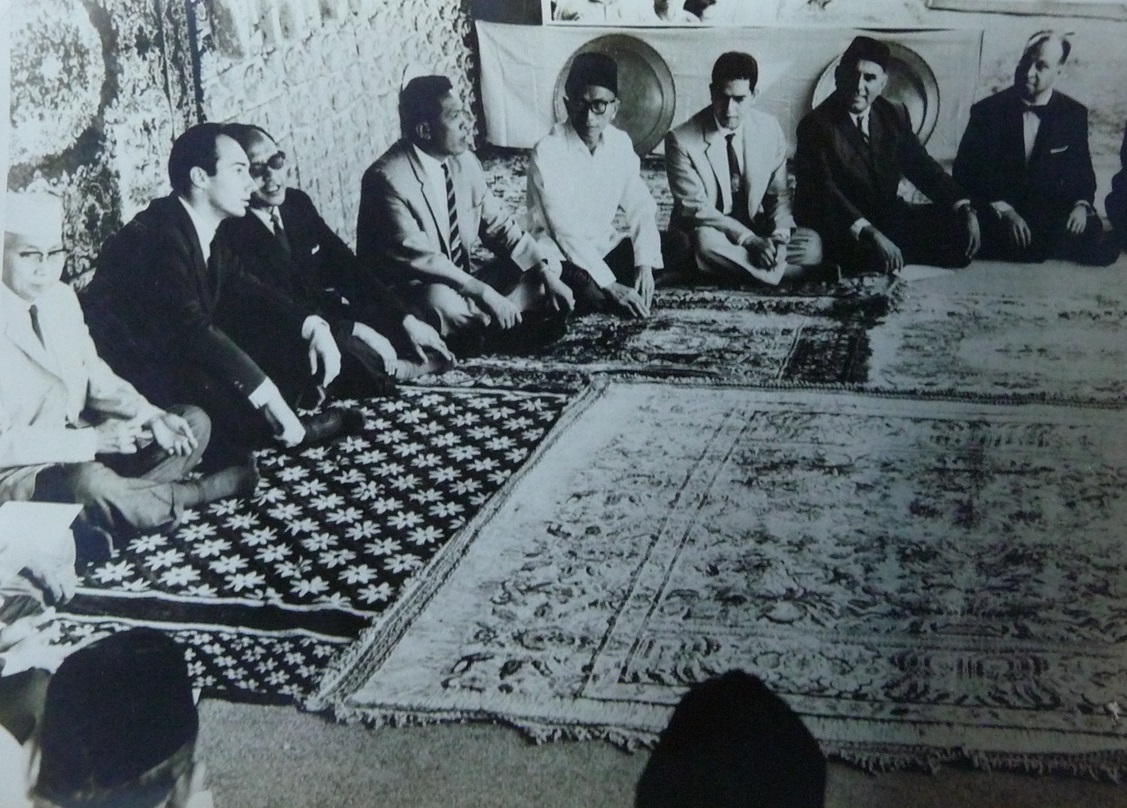
Mawlana Hazar Imam at a meeting with the leadership of Mindanao University and Kalimul Islam Colleges, Philippines during his visit in 1963. The information on the back of the photo reads: “Kamilul Islam Colleges Convocation Function in Honour of H.R.H. Prince Karim Aga Khan. The Aga Khan is seen sitting in the Philippine Native style flanked by Dr. Antonio Isidro, President of Mindanao State University on his right and Honourable Ahmed Domocao Alanto President of Colleges on his left. In the picture also are seen Mr. Amirali Fancy on his extreme left (back to camera) and Captain Amirali Currim second from the right, both wearing Philippine caps, who accompanied H.R.H on Philippine tour as his ministers”.
~~~~~~
Local institutions, including Jamatkhanas, throughout the world have often preserved innumerable documents, manuscripts, published works, photographs and even newspaper cuttings which shed light on one of the least understood and most complex periods of Ismaili history — the last few hundred years. As Jamats in local environments fell under the dominion of various empires and rulers, and later national governments, local histories become increasingly important for understanding how Ismaili communities have come to be where they are today.
Story continues below
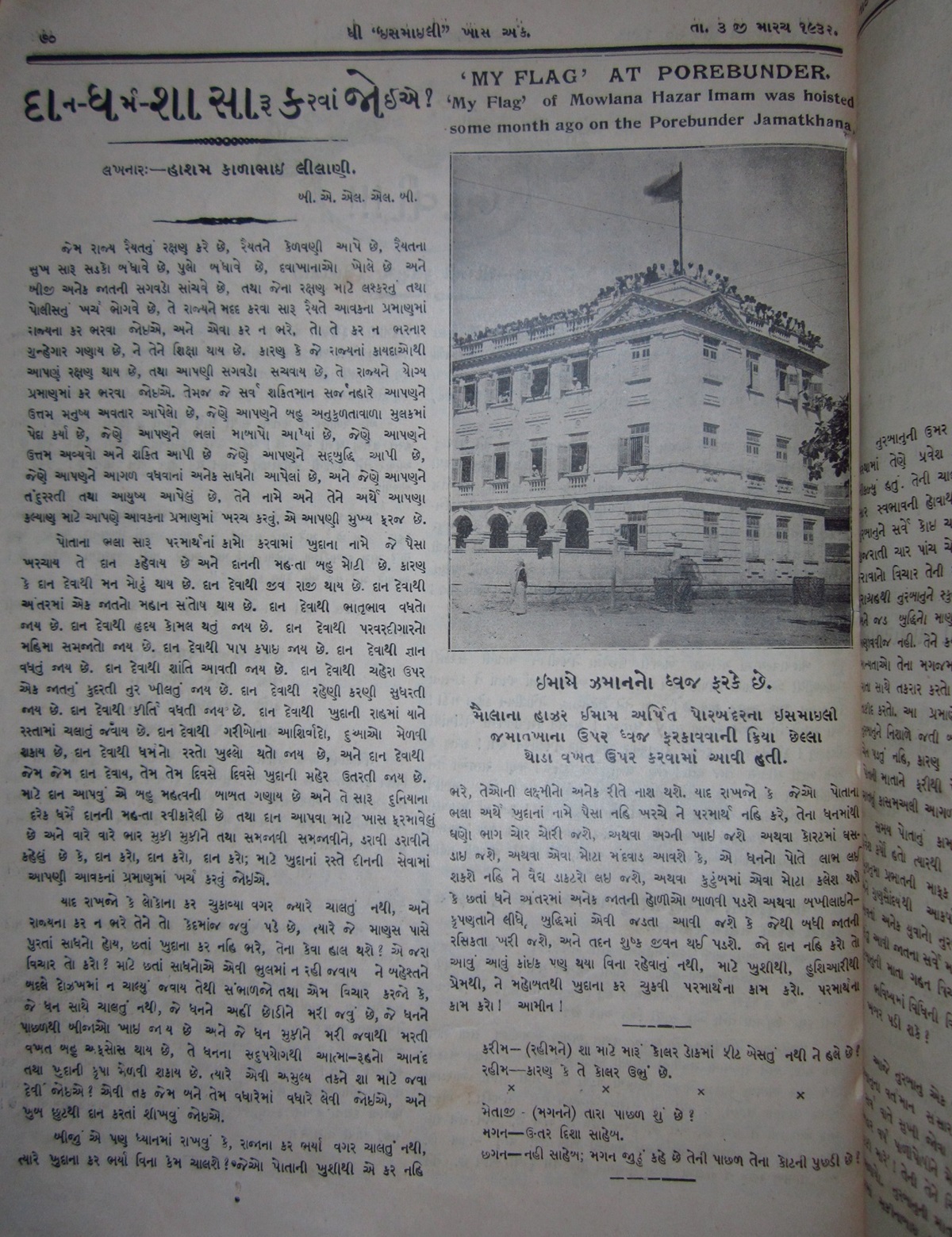
A page from The Ismaili magazine, March 3rd, 1932 edition showing a photograph of the newly raised “My Flag” at Porbander Jamatkhana.
Furthermore, since the early 1980s as part of the global processes of standardization and institutionalization, the focus of important publications such as local Ismaili magazines have shifted the majority of their spotlights to the Imam, his family and the work of Imamat institutions where previously the magazines also included much more detail, output on the production and development of Ismaili communities through the lens of the local and told from the ground-up. While there has been many things gained in the centralization of the Ismaili magazines, one of the most notable losses has been the capturing of stories of the ground realities, literary output, reflections of individual Ismailis and the vibrancy and details of the local development of Ismaili communities.
Story continues below
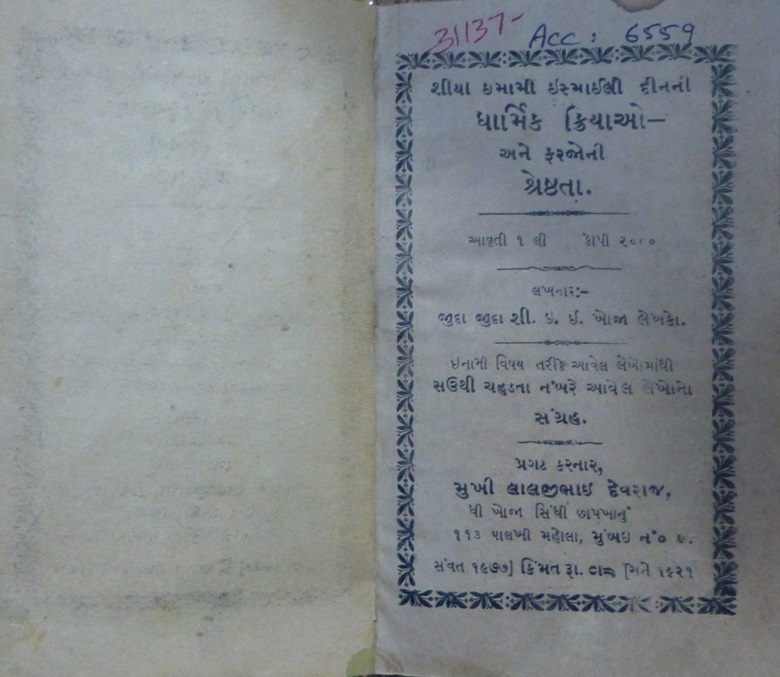
The cover of a text on religious ceremonies by Mukhi Laljibhai Devraj published by a Sindhi press in Mumbai in 1921.
~~~~~~
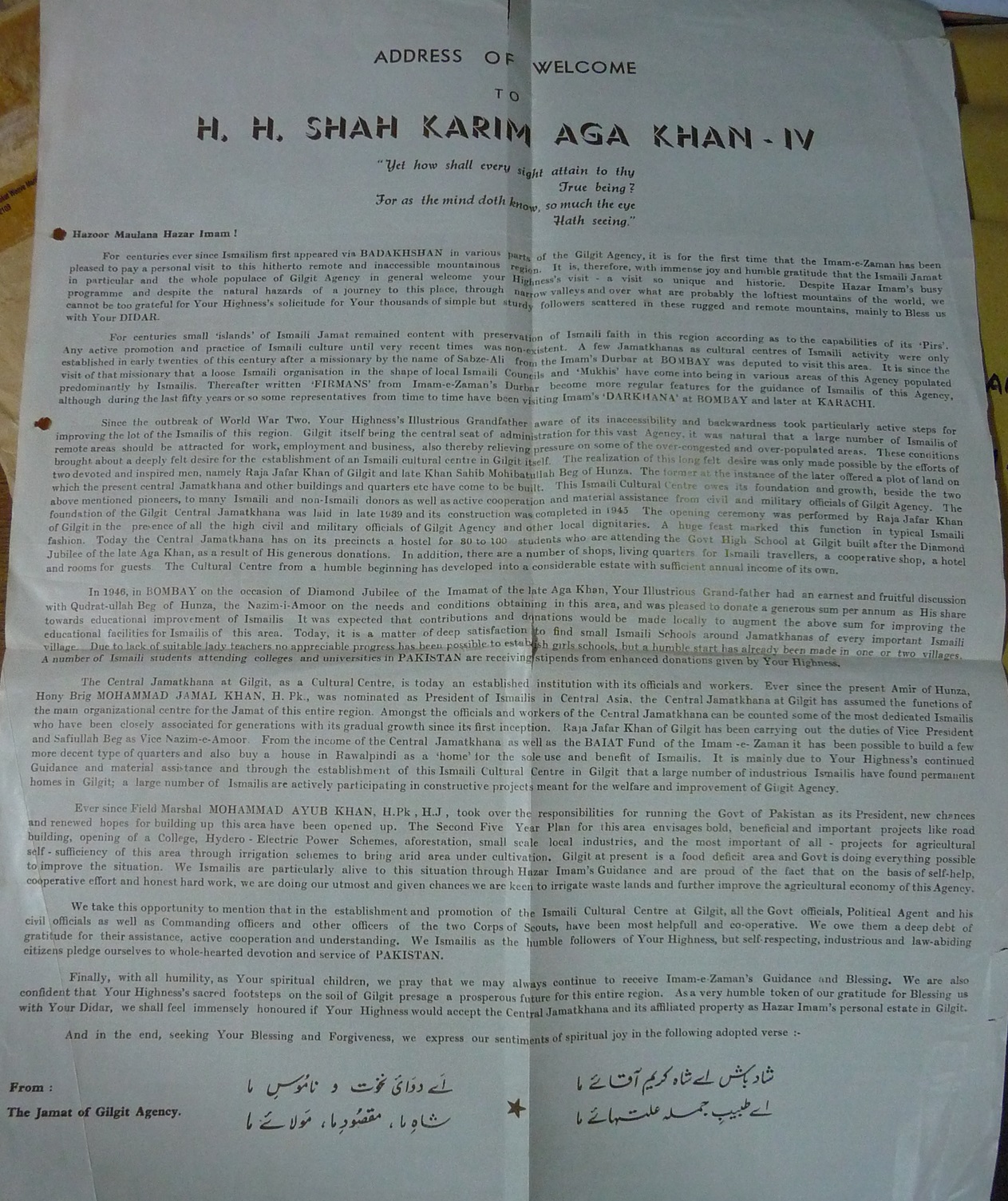
Address of Welcome offered to Mawlana Shah Karim Hazar Imam, His Highness the Aga Khan, on the occasion of his first visit to the Gilgit Agency in October 1960.
~~~~~~
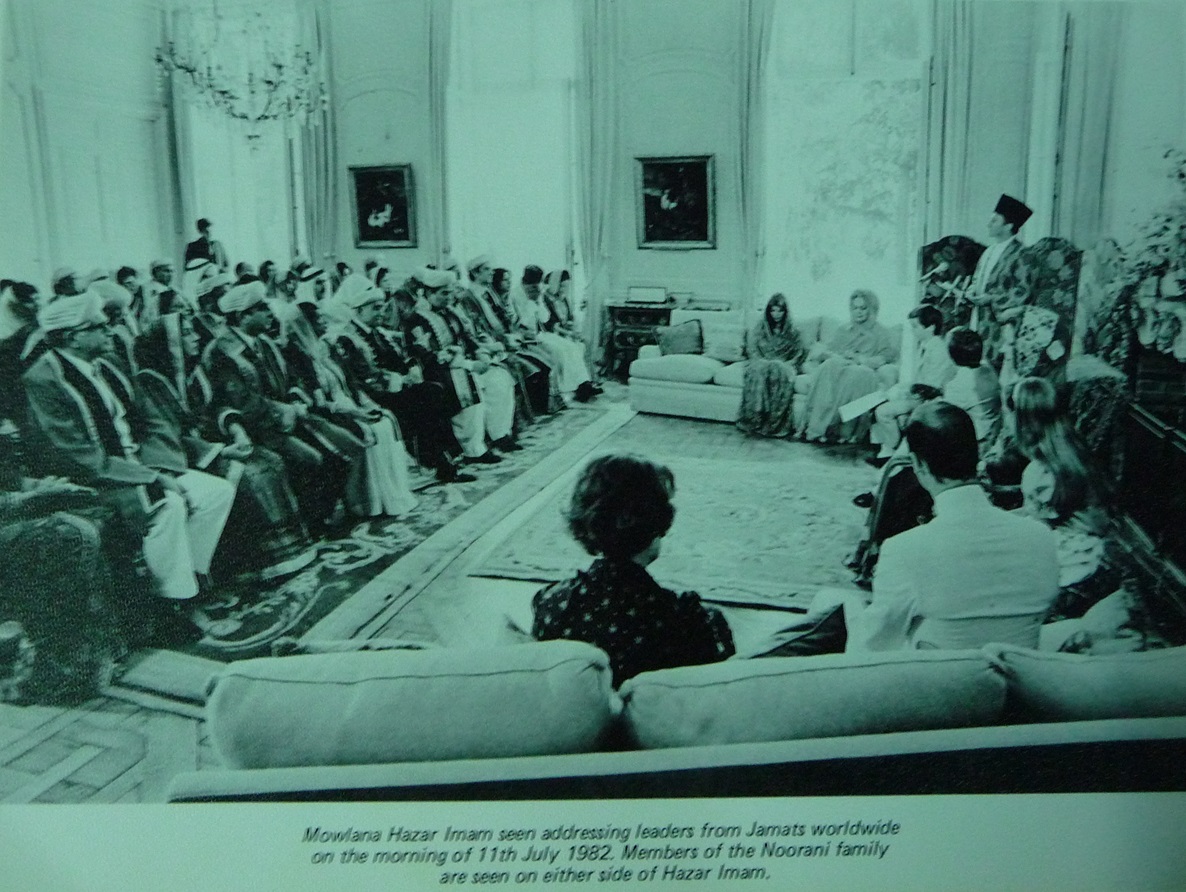
Mawlana Hazar Imam, His Highness the Aga Khan, addressing leaders of the global Jamat in the presence of his family on July 11, 1982, the occasion of his Silver Jubilee as the 49th Imam of the Ismaili Muslims.
I wrote this short piece with the hopes that it would be an homage or memorial of sorts to the Central ITREB Library Pakistan and to encourage families and small institutions to safeguard their collections for the benefit of the community in the service of documenting its past. We must also remember that just as important, however, is to preserve the present for future generations.
Date posted: November 11, 2023. Last updated: November 13, 2023 (see editor’s note at top of page).
__________________
About the author: Rizwan Mawani has a background in Anthropology and Religious Studies and is the author of Beyond the Mosque: Diverse Places of Muslim Worship (I. B. Tauris in association with The Institute of Ismaili Studies, 2019). Rizwan has written for a wide variety of audiences and his work has appeared in academic publications, encyclopedias as well as the Wall Street Journal and The Huffington Post. Rizwan was previously Website Content Editor and Research Coordinator in the Department of Constituency Studies at The Institute of Ismaili Studies. His current research focuses on the past two centuries of global Ismaili history with a focus on the Jamatkhana and its development during that period.
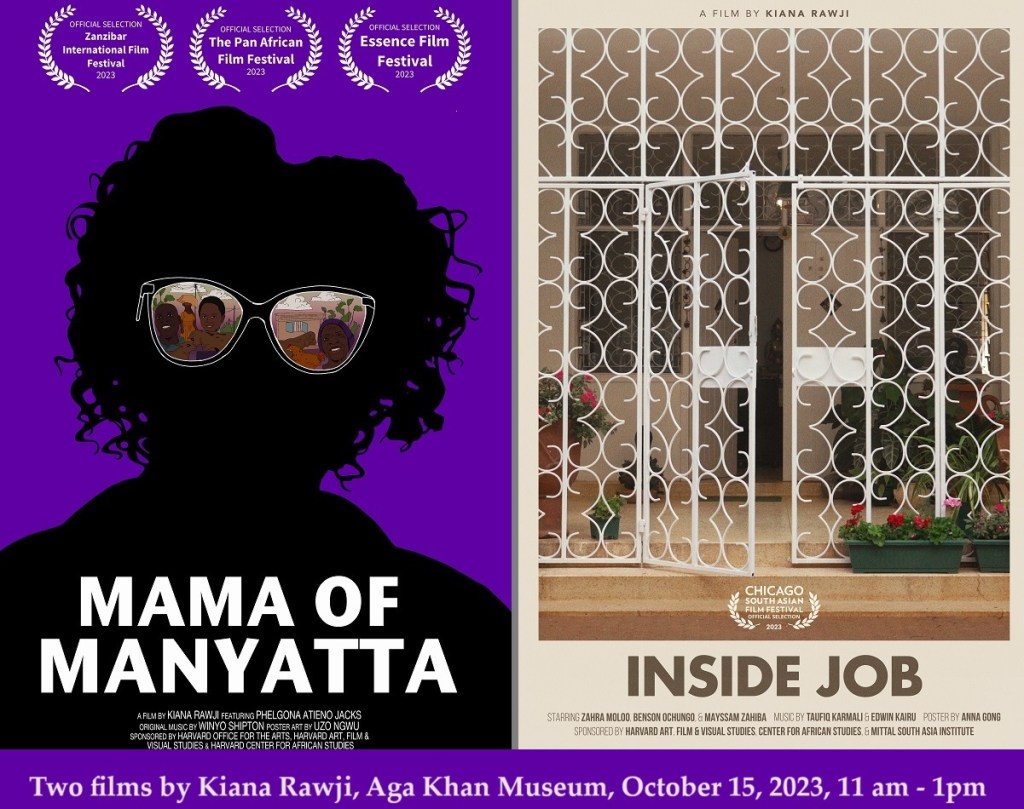
On October 15th, 2023, two extraordinary films — Inside Job and Mama of Manyatta — made by a remarkable young artist, Kiana Rawji, screened at the Nanji Family Foundation Auditorium at the Aga Khan Museum in Toronto with resounding success. In the packed auditorium of over 200 people on a Sunday afternoon, the event evoked laughter, tears, and in the end, a well-deserved standing ovation. I had the honour and privilege of serving as the emcee for the event, and thoroughly enjoyed seeing both films which explored vastly different issues albeit in the same East African country where I was born and lived until the age of seven. I found Inside Job especially thought-provoking and it resonated with me very powerfully as it examined important themes with which my own family would have grappled around the time that we left Kenya in 1972. I found myself deeply moved and indeed very emotional after the screening of Mama of Manyatta in which Rawji very skillfully tells a story of hope, resilience, compassion and the truly incredible journey of a community leader and mother figure working tirelessly for social justice.
Inside Job is a fictional film about an Indian woman who, when preparing to leave her home in 1970s Kenya, loses a piece of jewelry and suspects that one of her African domestic workers stole it. Mama of Manyatta is a short documentary film about Phelgone Jacks, an extraordinary woman fighting HIV and gender-based violence in a Kenyan slum.
Zainub Verjee giving her opening remarks
The event began with opening remarks made by Dr. Zainub Verjee, an accomplished writer, critic, curator, contemporary artist, and public intellectual, as well as an accomplished leader in the arts and culture sector. “When I previewed these works,” Dr. Verjee said, “I was really moved by its poetry. But more importantly, what struck me was its feminist ethos.” She continued to speak about the importance of films made with a political consciousness and the role of artists and filmmakers as imperative witnesses and narrators. Dr. Verjee asserted, “It takes moral courage to tell a story. It takes moral courage to act and to speak for the public good. To speak for the oppressed. To speak for a society, to speak for peace, to speak for pluralism, and to speak for making this world a better place.”
The screening of the two films was followed by a Q&A moderated by Narendra Pachkhédé, a trained filmmaker who practiced as a multidisciplinary artist, curator, programmer, critic and writer. Remarking on Rawji’s films that screened, Pachkhédé reflected, “In both these works, the story emerges as a site of micropolitics, albeit in different ways. Inside Job cleverly frames the power relations within this interracial narrative, and yet stays clear of dipping into a sentimental tone… And how those boundaries are drawn that keeps just the right distance between the subject and the perspective and the mood of the film: the pacing… While Mama of Manyatta defines how communities of care are formed.”
Kiana Rawji in conversation with Narendra Pachkhédé following the screening of her two short films at the Aga Khan Museum Toronto, October 15, 2023.
When asked about what drew her to filmmaking in the first place, Kiana reflected on the first film class she ever took, out of sheer curiosity, during her first year at Harvard: it was a course at MIT called Social Justice and the Documentary Film taught by filmmaker and Professor Vivek Bald. This class opened her eyes in more ways than one. Kiana explained that it was her realization of the power of film to engage with social justice issues combined with the discovery of her passion for it that propelled her into the practice. She explained, “I absolutely loved the process; I learned so much about myself, about others, about the world around me… I loved holding a camera, I loved interviewing people, I loved the research… something clicked for me, and I realized this is what I want to do, and I haven’t looked back since.”
Inside Job, a film by Kiana Rawji premirred with Mama of Manyatta on Sunday, October 15, 2023, at the Aga Khan Museum, Toronto.
Rawji discussed various elements of the films and what inspired them both. With Inside Job, it was important to her to shed light on history through the lens of those often unheard in the archives, impacted by colonialism. “If you think about what gets counted in the history books,” she said, “it’s so rare to have a Harvard research project about a woman’s life in the kitchen. But that’s what I was really interested in from a very academic, intellectual standpoint, and from an emotional standpoint — I wanted to know what life was like, because that’s what you need to make a film and create the world.” She was interested in how intertwined racial and socioeconomic hierarchies constructed during the colonial era affected daily, intimate relationships between black and brown East Africans in the household; how cultural norms could be both reinforced and transcended behind closed yet porous doors.
Mama of Manyatta, a film by Kiana Rawji premiered with Inside Job on Sunday, October 15, 2023, at the Aga Khan Museum Toronto.
With Mama of Manyatta, Rawji similarly sought to give voice to those overlooked in society and to change the narrative. She asserted, “There is so much resistance in resilience, in joy, in dignity. And these are all things that Phelgone was cultivating every day, despite that hardship and the trauma that she was witnessing and helping people move through.” Rawji did not want to create another narrative of the suffering African poor, and instead, wanted to tell a story of African self-empowerment, endurance, and resilience.
Kiana Rawji engages with the audience.
On the topic of race and its role in her work, Rawji referenced a historian who influenced her own thinking early on at Harvard, teaching her that, though race is a social construct and is not “real,” the consequences of it are real and cannot be ignored. Rawji explained that her own films strive to “tackle the consequences of race – the ways that the constructions we have of each other, and systems of oppression that are based on race, are affecting people in their daily lives, whether it’s in Manyatta or in an East African Asian home in 1970s Nairobi. And I think the implications are always there, looming, and it’s about how we move through what race has caused in our societies.”
It was a real pleasure to have the opportunity to watch these two wonderful and very well-made films by such a talented, up-and-coming young artist. What Rawji has so ably done, through both Inside Job and Mama of Manyatta, is teach us about history from a truly unique perspective. She has given us so much to think about in the profoundly moving way that she gives voice to the forces of resilience, community, and hope. The screening of Inside Job and Mama of Manyatta on October 15 was an inspiring event which gave those in attendance an early peek into the work of a gifted filmmaker with tremendous promise who will undoubtedly continue to make a real and meaningful difference through her films.
Date posted: November 1, 2023.
______________________
We welcome feedback from our readers. Please click LEAVE A COMMENT. Your letter may be edited for length and brevity and is subject to moderation.
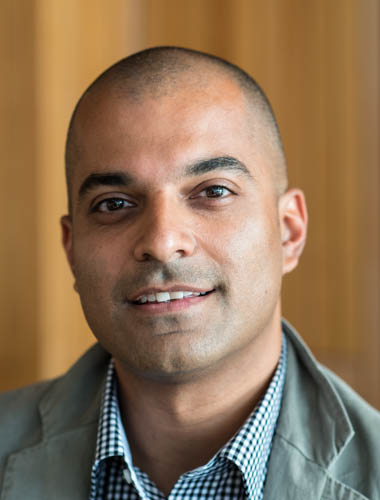
Aly Alibhai
About the author: Aly N. Alibhai has a Bachelor of Commerce degree from the University of British Columbia’s Sauder School of Business and obtained a Juris Doctor degree from the Faculty of Law at the University of Windsor. He has worked in different capacities as a lawyer, adjudicator and public sector executive at different levels of government in Canada and has an extensive and longstanding history of community service and engagement in the governance of a host of different not-for-profit and civil society organizations. Currently, Mr. Alibhai serves as an executive with Ontario Public Service as theDirector of the Child, Youth and Family Services Act Review Branch in the Strategic Policy Division of the Ministry of Children, Community and Social Services and is the Vice-Chair of the Board of Directors of Bellwoods Centres for Community Living Inc. in Toronto, a member of the Board of Directors of Rooftops Canada/Abri International, and a member of the Complaints Committee for the Human Resources Professionals Association of Canada.
~~~~~~
Kiana Rawji
About the filmmaker: Kiana Rawji is an award-winning filmmaker from Calgary, Alberta, and daughter of South Asian immigrants from Kenya. She recently graduated summa cum laude from Harvard College studying Film and History & Literature. Through film, she tries to amplify social issues and drive cultural change; from independent theatres to Oscar-qualifying film festivals, her films have screened across Canada, the USA, and East Africa. Kiana’s TEDx talks on Islam and the Cosmopolitan Ethic have reached over 150,000 people worldwide. She has a website www.kianarawji.com and you can stay tuned for upcoming opportunities to view Kiana’s films and stay updated on her future work by following her on Instagram @kianarawjifilms.
February 14th, Valentine’s Day, and Mother’s Day are the most significant days for the flower industry. Still, there is almost an entire season — and not just a day — in Canada and the USA where the pumpkin remains the king in indoor and outdoor markets and at numerous events celebrating corn and pumpkin harvests. In fact, Calgary and other cities acround Canada including Edmonton, Milton, Burnaby and Ottawa are hosts to “Pumpkins After Dark“, Canada’s award-winning outdoor fall event that feature over 10,000+ hand-carved pumpkins.
The pumpkin is associated with Thanksgiving in Canada (2nd Monday in October) and the USA Thanksgiving (4th Thursday in November), and is one of the most popular desserts served during the holiday. In between, on Halloween Day, October 31, pumpkin heads are put to scary uses through creative works of art. Aside from the pumpkins’ use in decorations and artistics works, the fruit is used in restaurants in North America, such as Starbucks, Tim Horton, McDonalds and many others for special pumpkin chais, coffees and desserts.
Story continues below
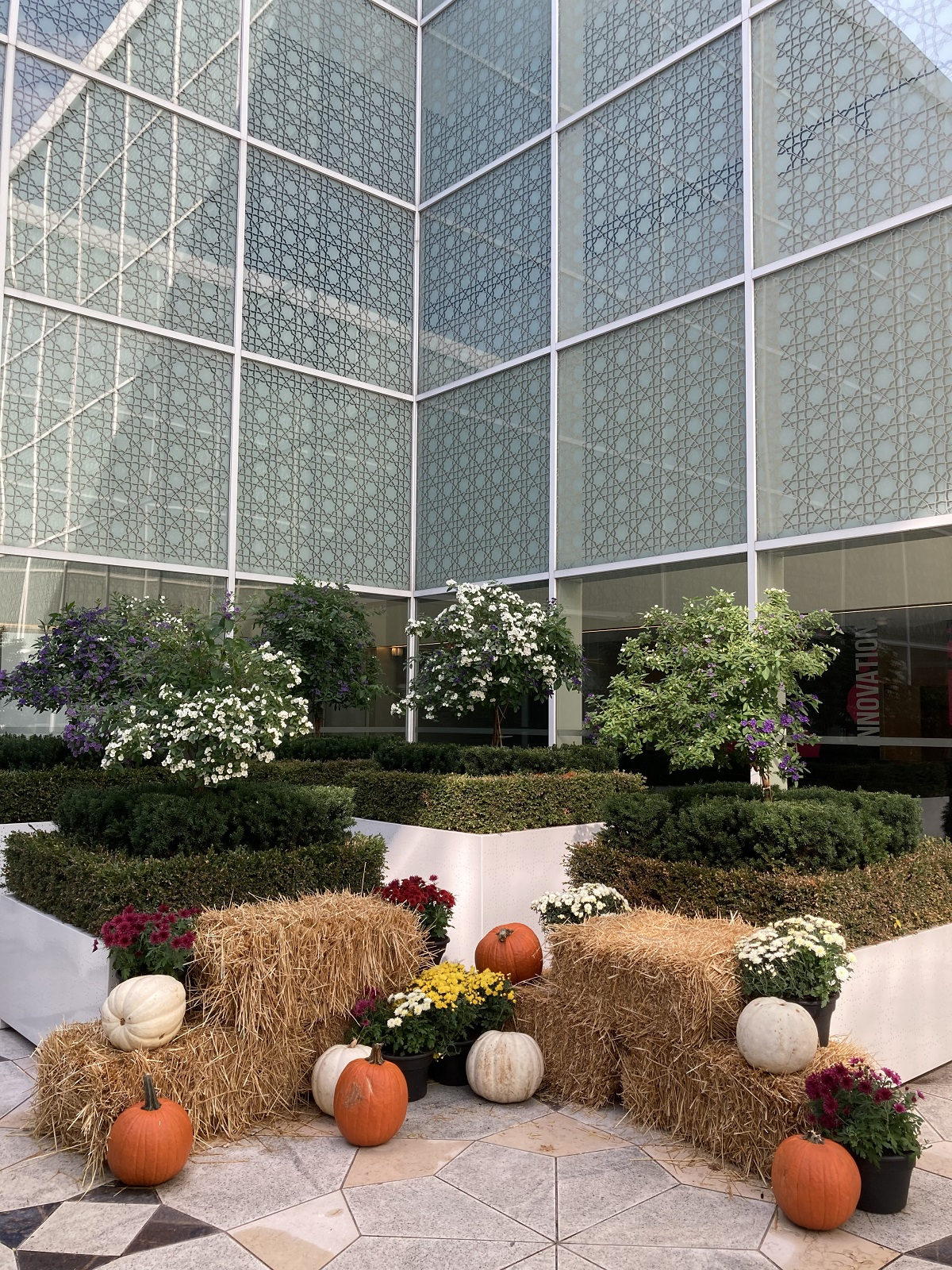
Aga Khan Museum Toronto Courtyard decorated with pumpkins, October 23, 2020. Photograph: Malik Merchant / Simerg.
My real interest on the health benefits of the pumpkin was drawn when I saw the large fruit decoratively laid out at the Aga Khan Museum’s coutyard during the pumpkin season some three years ago. I then wondered whether the fruit was mentioned anywhere in Islamic literature and, to my amazement, I read that the Prophet Muhammad (may peace be upon him and his progeny) was fond of pumpkins. I am pleased to include a small selection of adaptations from readings that I found.
“I saw the Prophet being served with soup and containing gourd (pumpkin or squash) and cured meat, and I saw him picking and eating the pieces of gourd.” — Bukhari Volume 7, Book 65, Number 348.
It is related that a sailor once invited Prophet Muhammad to eat some food that he had prepared. Anas bin Malik, a companion of the Prophet, noted that the Prophet was served barley bread and a soup with pumpkin in it. The Prophet keenly ate the pumpkin around the dish, and from that day Anas made it his favourite food. Traditions also note that whenever a a dish of bread, meat and broth was presented to the Prophet and it contained pumpkin, the Prophet would pick up the pumpkin because he really liked it, and made the heart strong. Other Muslim traditions note that the pumpkin increases brain function and brain strength.
Ibn Ridwan, in a medical treatise written during the Fatimid period, recommended the pumpkin as a diet for healthy living along with several other fruits and vegetables such as celery, carrots, lentils and cucumbers.
Interestingly, there is also a general consensus among researchers and scholars about the Arabic word yaqteen that is mentioned in the Holy Qur’an. They say that it refers to the pumpkin — a food that nourished and helped heal Prophet Yunus, after he was cast into the wilderness while he was sick (see Qur’an, 37:144-146, at Corpus Quran English Translation).
The website healthline mentions that pumpkin is rich in vitamins, minerals and antioxidants, and is incredibly healthy. Moreover its low calorie content makes it a weight-loss-friendly food. It goes on to add that “its nutrients and antioxidants may boost your immune system, protect your eyesight, lower your risk of certain cancers and promote heart and skin health.”
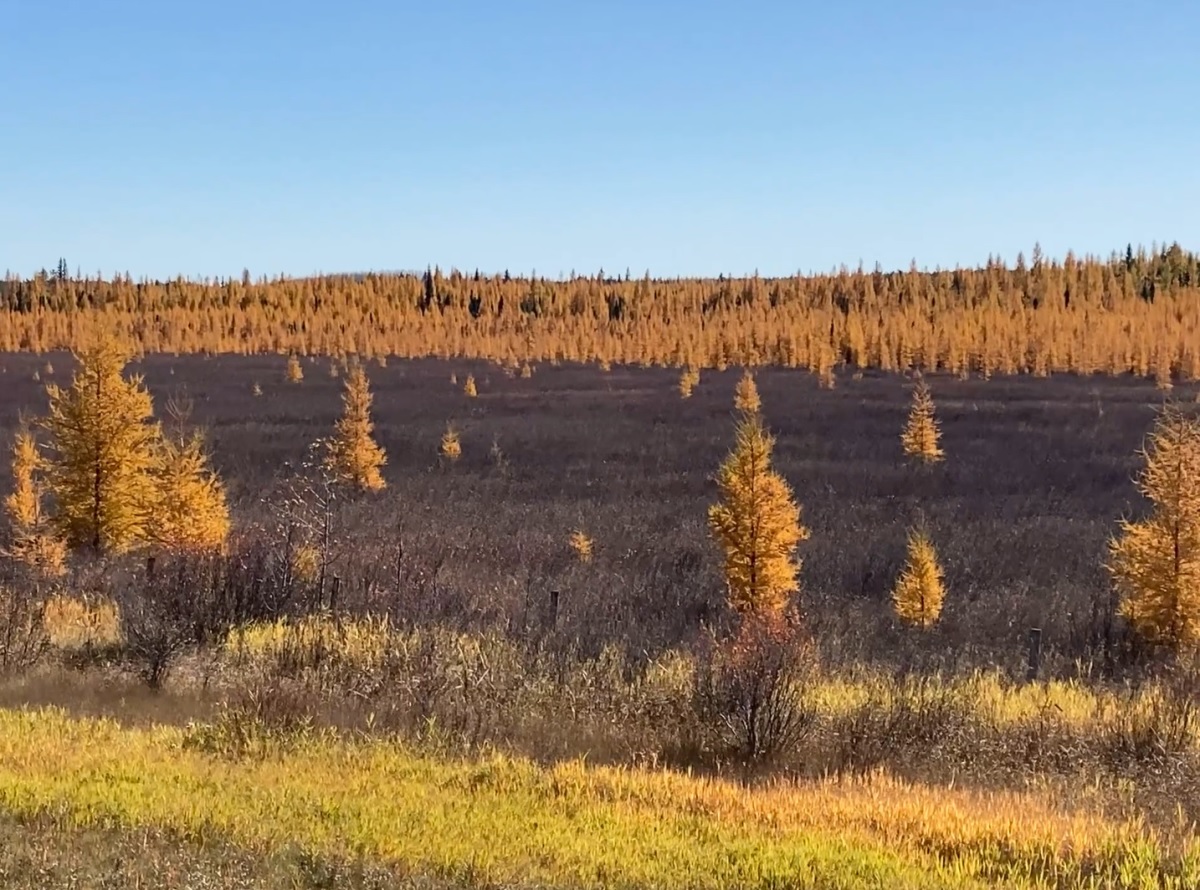
Larch trees along Alberta Hwy 12. Photograph: Malik Merchant/Simerg Photos.
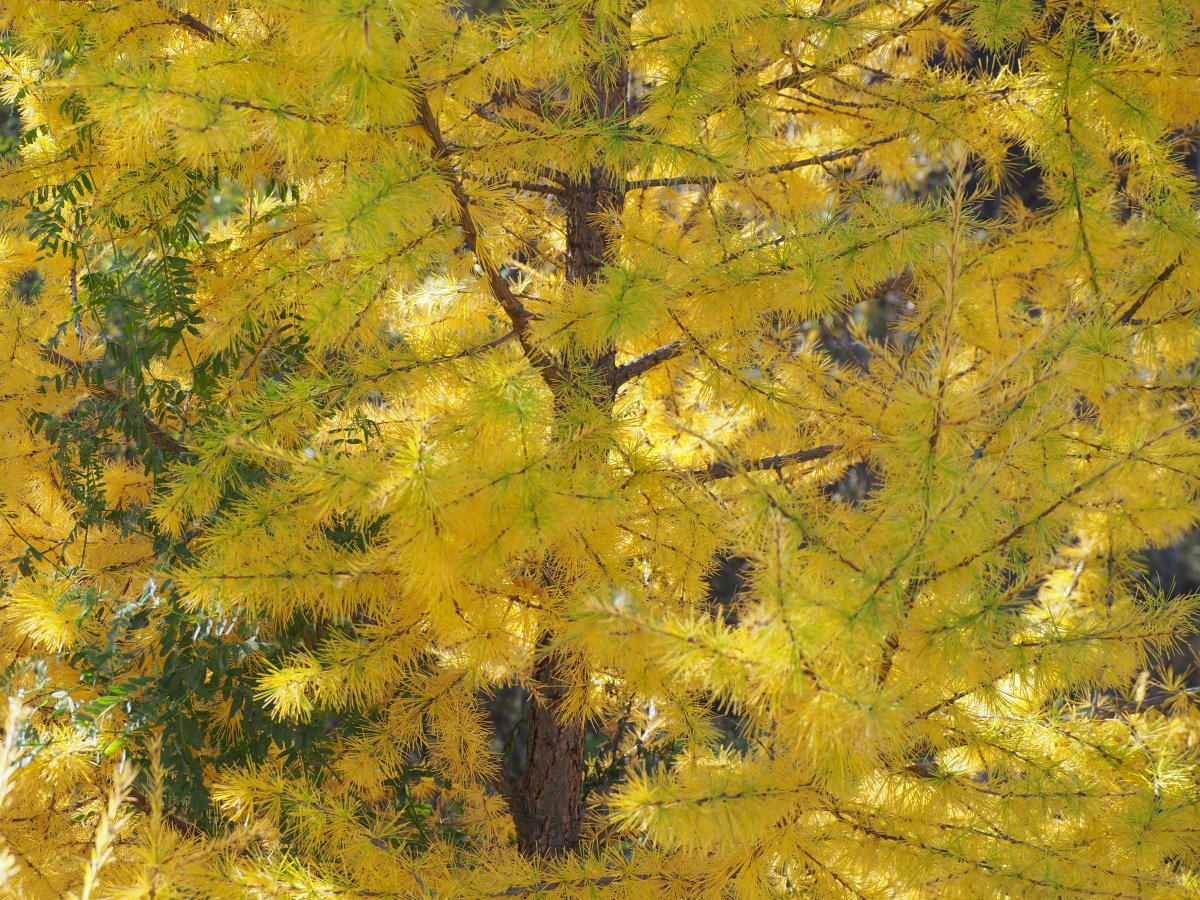
What a beautiful tree the larch tree is all year round. In autumn, larches in Alberta’s Rocky Mountains put on a spectacular show as their needles turn from green to golden yellow. The foliage attracts thousands of visitors from within Alberta and around the world. Found mostly at higher elevations, it often requires some hiking to see the spectacular LARCH autumn show from close range. However, I came across planted larch trees in Calgary’s Baker and Confederation Parks, and a week ago at the University of Alberta’s Botanic Garden in Edmonton — the focus of my visit was the Aga Khan Garden, a gift to Alberta by His Highness the Aga Khan, the 49th Hereditary Imam of the Ismaili Muslims. I might also note that I ran into large fields of larch trees as I took to Nordegg via Highways 12 and 11 (David Thompson Highway). Click Among the Larches to see my photos of foliage at the Aga Khan Garden. I also have other photo essays of my memorable trips to Alberta’s extraordinary parks and heritage sites and I invite you to see them on my beautiful photo blog.
Close-up, larch tree at Aga Khan Garden, University of Alberta Botanic Garden. Please click on image for autumn foliage photographs.
We are pleased to announce that a generous sponsor has donated a limited number of tickets for students, seniors (75+), newcomers, and any others for whom cost is a barrier to Kiana Rawji’s Film Screening in the Nanji Family Foundation Auditorium at the Aga Khan Museum on Sunday, October 15, 2023. Those identifying with these categories may use the promo code KRFILMS2023. The link to obtain tickets is https://krfilms.eventbrite.com/. When the screen is displayed, click on the icon Get Tickets; it will take you to the check-out screen where you can enter the promo code KRFILMS2023. The cost of the ticket, CA$22.63, will be waived and you will get a free ticket provided tickets are still available.
The two films screening on October 15th are:
Inside Job: A short fictional film about an Indian woman who, when preparing to leave her home in 1970s Kenya, loses a piece of jewelry and suspects one of her African domestic servants stole it; and
Mama of Manyatta: A short documentary about an extraordinary woman fighting HIV and gender-based violence in a Kenyan slum.
Kiana recently gave us an EXCLUSIVE INTERVIEW where she told us about her work and what inspires her. We now invite you to watch her two short films at the Aga Khan Museum in Toronto on Sunday, October 15.
Purchase Tickets at Eventbrite for Kiana Rawji’s Film Screening at the Aga Khan Museum, October 15, 2023, 11 AM – 1 PM
Click on https://krfilms.eventbrite.com/ or on the image below to obtain your tickets. If cost is a barrier, use the Promo Code KRFILMS2023 to acquire a free ticket; Kiana wants everyone who wants to attend to be able to attend the screening of her films. Tickets are limited!
Please click on image to purchase tickets at Eventbrite. If cost is a barrier, enter promo code KRFILMS2023 at checkout for a free ticket.
Date posted: October 14, 2023.
____________________
Kiana Rawji
Kiana Rawji is an award-winning filmmaker from Calgary, Alberta, and daughter of South Asian immigrants from Kenya. She recently graduated summa cum laude from Harvard College studying Film and History & Literature. Through film, she tries to amplify social issues and drive cultural change; from independent theatres to Oscar-qualifying film festivals, her films have screened across Canada, the USA, and East Africa. Kiana’s TEDx talks on Islam and the Cosmopolitan Ethic have reached over 150,000 people worldwide. Please click https://krfilms.eventbrite.com/ to attend her two short film screenings at the Aga Khan Museum on Sunday, October 15, 2023.













 Simerg - Insights from Around the World