Simerg is an independent initiative dedicated to Ismaili Muslims, the Aga Khan — their Hereditary Imam — and the Ismaili Imamat, and Islam in general through literary readings, photo essays and artistic expressions
Open your doors and let the honeyed fragrance of Spring, Enter your household while the seraphic birds sweetly sing, All life is born again now that the gruelling winter is done, Raise hands and praise Allah under the melting rays of the sun.
Navroz Mubarak, the New Year begins, We welcome it with wonder and repent for our sins, Three hundred million of us over three thousand years, Jubilantly celebrate with sacred songs and with cheers.
A new chapter to read, a new seed to plant, For abundance and prosperity a sacred prayer we chant. On Navroz we strengthen bonds and our families unite, Exchanging human values, our wishes with foresight.
Envisioning the New Year to bring with it Peace, And for all calamities and ill health to immediately cease. We dance and we sing sacred Ginans from our Pirs Qasidas and Garbis unite and cohere.
In harmony with Nature we must strive to exist, If not pandemics like COVID-19 will sadly persist, But if we take it in stride as a hard lesson learned We will appreciate the respect that Nature truly yearned.
We all share a common fate and must aim to erase, All discrimination and hatred and truly embrace, Love, tolerance and respect for all of mankind, So that cultural diversity will not be undermined.
We pray for global peace and international cooperation For we are all in the Ummah from nation to nation. Let nothing divide us and bring us to fight, Let us instead hold and value for tomorrow is in sight.
What was dead becomes alive, let the festivities begin, Intricate henna designs are dyed on our skin, We receive our roji and take our Navroz wishes, For barakat and abundance and we enjoy festive dishes.
It is that time of year, tulips spring out from the soil A hearty true effort from a burdensome winter’s toil, Shadowed they waited for this day to emerge, Colors in splendour they burst and they surge.
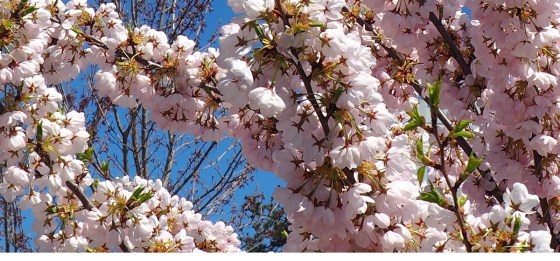
Spring blossoms are shedding their soft petals in few, The buds are just opening thinly covered in dew, Moist raindrops with sunlight the perfect combination, To bring creation forth in a renewing sensation.
Take notice of Kudrat and all the miracles of Mawla, His Bounty is Ever-Present, Al-Hamdu l’illah. The Spring breeze whispers through the meadows and the trees, And there is flitting and buzzing of butterflies and bees.
The animals all awaken from a dazed winter’s sleep, The goats, the chickens and the sheep, The horses, the donkeys, the rabbits, and the squirrels, All the animals arise for the Navroz’ precious pearls.
So arise and awaken to the Navroz, our New Year, And welcome all customs with good heart and good cheer, United we stand and divided we fall, The Ummah prevails and respectfully unites us all.
Farah Tejani graduated with her Bachelor of Arts in English Literature and her Master of Fine Arts in Creative Writing from the University of British Columbia in May of 1997 and earned top Honors for her Thesis on Short Fiction. She has published a collection of short stories “Make Your Own Chai, Mama’s Boy!” dealing with different dilemmas South Asians face. Farah also wrote and co-directed her stage play, “Safeway Samosas,” which won “The Best of Brave New Playwrights Award” in July 1995. Her short story , “Too Hot” won third place in the “Canada-Wide Best Short Fiction Award” and was read at The Vancouver Writers Festival. Currently, Farah is working on Childrens’ stories and a collection of poetry called, “Elastic Embrace” to be published in 2021.
We welcome feedback from our readers. Please complete the LEAVE A REPLY form below or click Leave a comment. Your letter may be edited for length and brevity, and is subject to moderation.
Please also read Farah’s previous contributions to Simerg and its sister website Barakah by clicking on the following links:
Before departing this website please take a moment to review Simerg’s Table of Contents for links to hundreds of thought provoking pieces on a vast array of subjects including faith and culture, history and philosophy, and arts and letters to name a few. Also visit Simerg’s sister websites Barakah, dedicated to His Highness the Aga Khan, and Simergphotos.
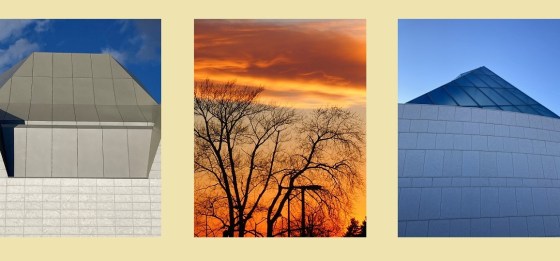
Please click HERE or on image below for spectacular photos of the sky and the Aga Khan Park grounds as captured by Malik Merchant during his recent walk through his favourite space in Toronto
All ablaze as the sinking sun lights up the horizon and the sky west of Aga Khan Park and Ismaili Centre. Click on image for more photos. Photo: Malik Merchant/Simerg. Camera: Olympus E-M10, 14-42mm.
Murghab’s installation represents a 50 percent increase in daytime electricity – meaning communities are now able to pursue activities throughout the day, children can attend heated schools, and homes have power and heat during the long and bitterly cold winter months.
Most of the material for this post has been obtained from an article prepared by USAID, with additional material and photographs from AKDN and AKF USA
Arriving in the Murghab district of Tajikistan’s Pamir region feels like one may have landed on the far side of the moon. The Pamir Mountains are among the highest in the world, and home to remote villages and communities living above 3,600 meters/11,800 feet. The area is dry, arid, and bitterly cold. Temperatures between November and March regularly plummet to -50 degrees Celsius/-58 degrees Fahrenheit.
Due to the topography, communities and villages are not connected to a national electricity grid and for decades lived without a reliable or secure power supply. In Murghab, communities relied on subsistence farming and households had almost no ability to cook, see at night, read, study, or pursue commerce and industry.
During the Soviet era, over 70 percent of the region’s energy was provided by dirty diesel generators fueled by Russian-controlled imports. After the fall of the Soviet Union, not a single diesel-operated power plant remained in operation. In 2002, only 13 percent of Murghab households had access to electricity – those that did experienced frequent interruptions.
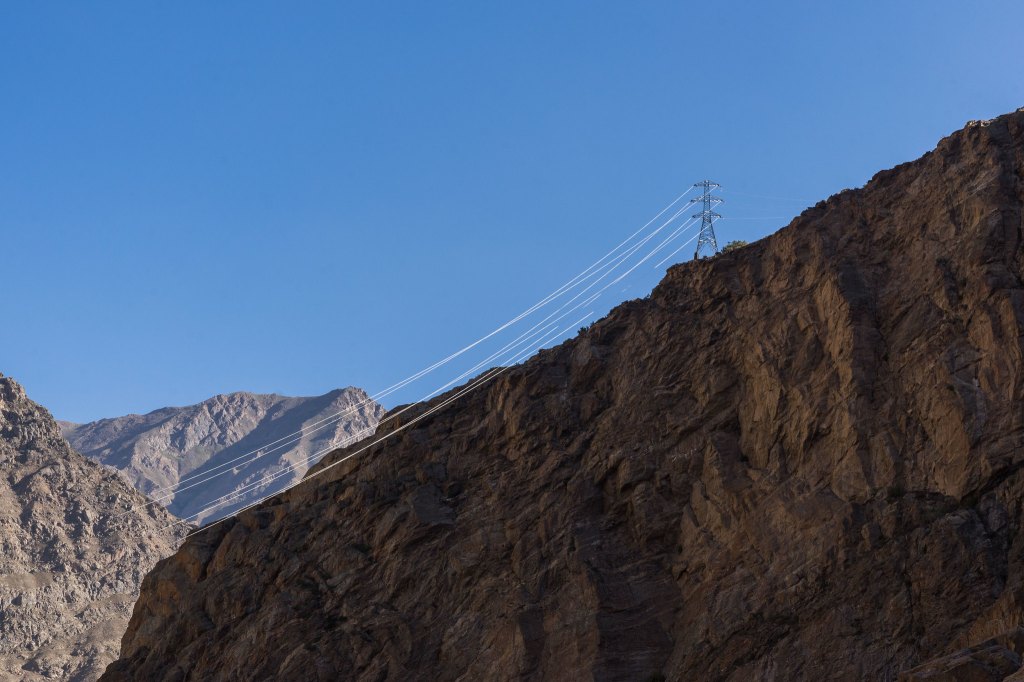
By implementing hydropower plant projects and reducing transmission losses from 39 percent in 2006 to 10 percent (in 2018), Pamir Energy supplies reliable, clean, affordable electricity to 96 percent of the population of Badakhshoni Kuhi in Eastern Tajikistan. Photo: AKDN / Christopher Wilton-Steer
That same year, The Aga Khan Fund for Economic Development (AKFED), formed Pamir Energy in a public-private partnership that included the Government of Tajikistan. Pamir Energy has invested around $37 million to repair and rehabilitate the electrical infrastructure of Gorno-Badakhshan Autonomous Province (GBAO) and expand capacity. In the wake of these efforts, over 86 percent of the region’s inhabitants and 96% of households in Eastern Tajikistan now have access to electricity. Subsidies ensure that even the poorest households can access power.
Murghab’s harsh climate makes water-powered generation challenging. During the winter months the rivers freeze, consequently hydro-power plants are unable to provide power to Murghab communities. To meet this challenge, USAID supported a pilot project to build a solar power plant that can provide Murghab’s communities with electricity during the winter.
USAID’s Power the Future project partnered with the Government of Tajikistan and Pamir Energy to install the 200 kilowatt (kW) Murghab solar power plant – the country’s largest utility-operated solar power plant and the highest in Central Asia.
Most importantly, the Murghab solar power plant operates in parallel with another renewable energy source, the existing Tajikistan hydro-power plant. These two clean energy plants will ensure that nearby villages and communities have access to regular electricity supply all year round.
Mawlana Hazar Imam His Highness the Aga Khan visits Murghab, Badakhshan, on May 26, 1995. Photo: The Ismaili.
When the Murghab project kicked-off in January 2020, COVID-19 was reportedly contained in China and had not reached the scale of a global pandemic. As the project began ramping up in March, the world turned upside down as states of emergency and lockdowns were ordered all around the world.
“It seemed like anything that could have gone wrong, went wrong,” remembers Markus Straslicka, a project manager with USAID’s Power the Future project who oversaw installation of the Murghab solar power plant.
In addition to the COVID-19 pandemic’s disruption to manufacturing and supply lines and closure of international borders, Markus faced a unique challenge: his team didn’t know what the Murghab site looked like. Due to its incredibly remote location, Murghab has limited internet – inhabitants rely on SMS messages to communicate with the outside world. Since Markus had almost no eyes on the ground, he had to plan for every eventuality and trust the Pamir Energy team waiting for him at the site.
As it turns out, USAID’s Power the Future had the perfect partner. “The Pamir Energy team were extremely competent, hardworking and supportive, despite this being their first experience with solar technology. We were lucky to have them,” says Markus.
To guarantee the project’s success, USAID’s Power the Future team worked hand-in-hand with the Pamir Energy team to install and commission the Murghab solar power plant. Through this unique partnership, Pamir Energy learned how to independently operate the Murghab plant. They also gained the skills, know-how, and capability to build solar power plants throughout the region – helping Tajikistan meets it commitment to providing its citizens with reliable clean energy.
“This is a very special day for us to run the first solar power plant in the country as a utility! The USAID team has done an outstanding job,” said Daler Jumaev, recently appointed Minister of Energy and Water Resources of the Republic of Tajikistan and outgoing CEO of Pamir Energy.
The Pamir Energy company is based in the high mountains of eastern Tajikistan, where it is common to have bitter winters and, increasingly, earthquakes, avalanches and mudslides. The area is also socially complex, bordering China, the Kyrgyz Republic and Afghanistan. Photo: AKDN/Christopher Wilton-Steer
The USAID Power the Future and Pamir Energy team commissioned the Murghab solar power plant on October 28, 2020, and the plant began providing electricity to the region’s communities the same day.
The regional government of the GBAO celebrated this landmark achievement at an opening ceremony on November 11 with representatives from the Tajik central and regional governments, USAID, the Aga Khan Foundation, and Pamir Energy. As noted by the Governor of GBAO, Yogdor Fayzov, Murghab signifies the first of many solar power plants that will be built to electrify remote areas of Tajikistan.
“The construction of a solar power plant in the remote Murghab region with USAID’s support is a significant step in providing electricity to the residents of this mountainous region,” said Yodgor Fayzov, Chairman of the regional GBAO government.
The positive impacts of access to regular power for the people of Murghab cannot be underestimated. Before Murghab’s installation, businesses could not fully operate during the winter due to power interruptions. Murghab’s installation represents a 50 percent increase in daytime electricity – meaning communities are now able to pursue activities throughout the day, children can attend heated schools, and homes have power and heat during the long and bitterly cold winter months.
Additionally, households no longer need to spend long hours finding firewood to cook meals. USAID’s partnership with the Government of Tajikistan brought stability and prosperity to Murghab and paved the way for full electrification of the Pamir region.
In 2017, Pamir Energy won the 2017 International Ashden Award for Increasing Energy Access for its work bringing hydro power to 220,000 people in East Tajikistan and 35,000 people in North Afghanistan, as well as to many businesses, schools, and health centres.
Date posted: March 15, 2021. Last updated: June 23, 2024 (corrected link to USAID article)
Featured image at top of post: The Murghab solar power plant is now entirely operational. Photo: Markus Straslicka for USAID.
__________________
Further notes:
In 2012 with funding from the U.S. Agency for International Development (USAID), the Aga Khan Foundation USA started the Cross-Border Energy project to expand Pamir Energy’s reach across the border to Afghanistan’s remote Shugnan District. This program has helped to multiply electricity use thereby nearly eightfold and helps establish infrastructure for regional growth. Communities that never have had access to electricity before are now able to experience an improved quality of life and in turn, regional trade and cooperation have increased.
Compiled and Adapted by MALIK MERCHANT from the NASA Website
The largest asteroid to pass by Earth this year will approach within about 2 million kilometers (1.25 million miles) of our planet on March 21, the National Aeronautics and Space Administration (NASA) said on Thursday March 11, 2021.
Discovered 20 years ago and named 2001 FO32, the asteroid is at the smaller end of the scale, but it will still be the largest asteroid to pass this close to our planet in 2021. The last notably large asteroid close approach was that of 1998 OR2 on April 29, 2020. While 2001 FO32 is somewhat smaller than 1998 OR2, it will be three times nearer to Earth.
Though 2001 FO32 has been classified as “potentially hazardous asteroid” in terms of the distance from earth in astronomical terms, NASA has said that there is no threat of a collision with our planet now or for centuries to come. “We know the orbital path of 2001 FO32 around the Sun very accurately, since it was discovered 20 years ago and has been tracked ever since,” said Paul Chodas, director of the Center for Near Earth Object Studies (CNEOS), which is managed by NASA’s Jet Propulsion Laboratory (JPL) in Southern California.
Over 95% of near-Earth asteroids the size of 2001 FO32 or larger have been discovered, tracked, and cataloged. None of the large asteroids in the catalog has any chance of impacting Earth over the next century, and it is extremely unlikely that any of the remaining undiscovered asteroids of this size could impact Earth, either. Still, efforts continue to discover all asteroids that could pose an impact hazard. The more information that can be gathered about these objects, the better mission designers can prepare to deflect them if any were to threaten Earth in the future.
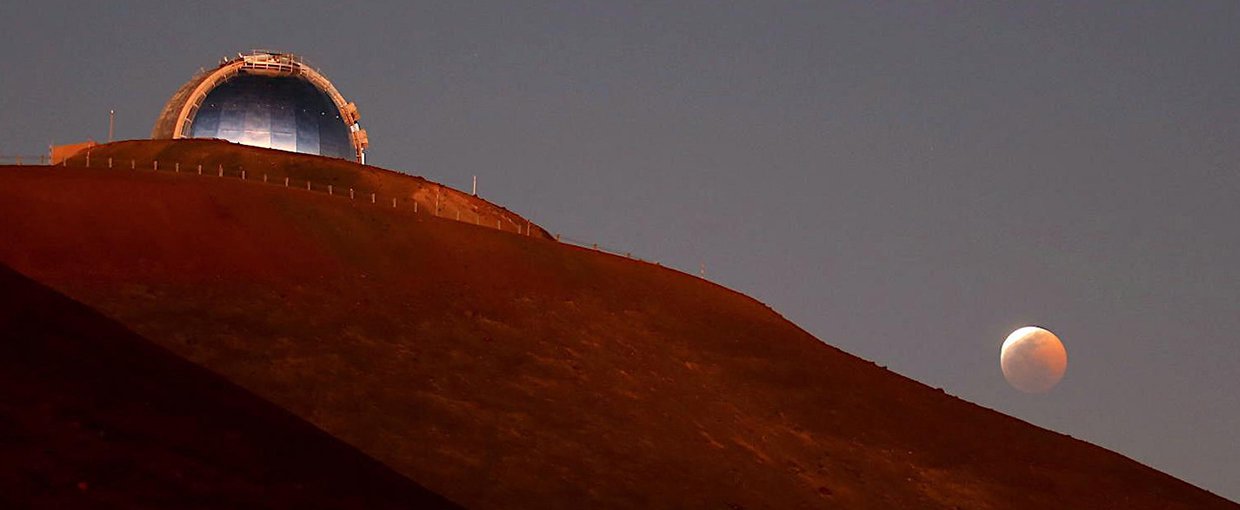
The NASA Infrared Telescope Facility telescope during a lunar eclipse. The Facility is one of the telescopes that makes up the Maunakea Observatories on the Big Island of Hawai’i. The Facility provides vital and unequaled capabilities in planetary research while supporting NASA’s flight missions and Strategic Goal for Planetary Science. Maunakea is a place of immense reverance and cultural importance within the indigenous Hawaiian community. Photo credit: UNIVERSITY OF HAWAI’I.
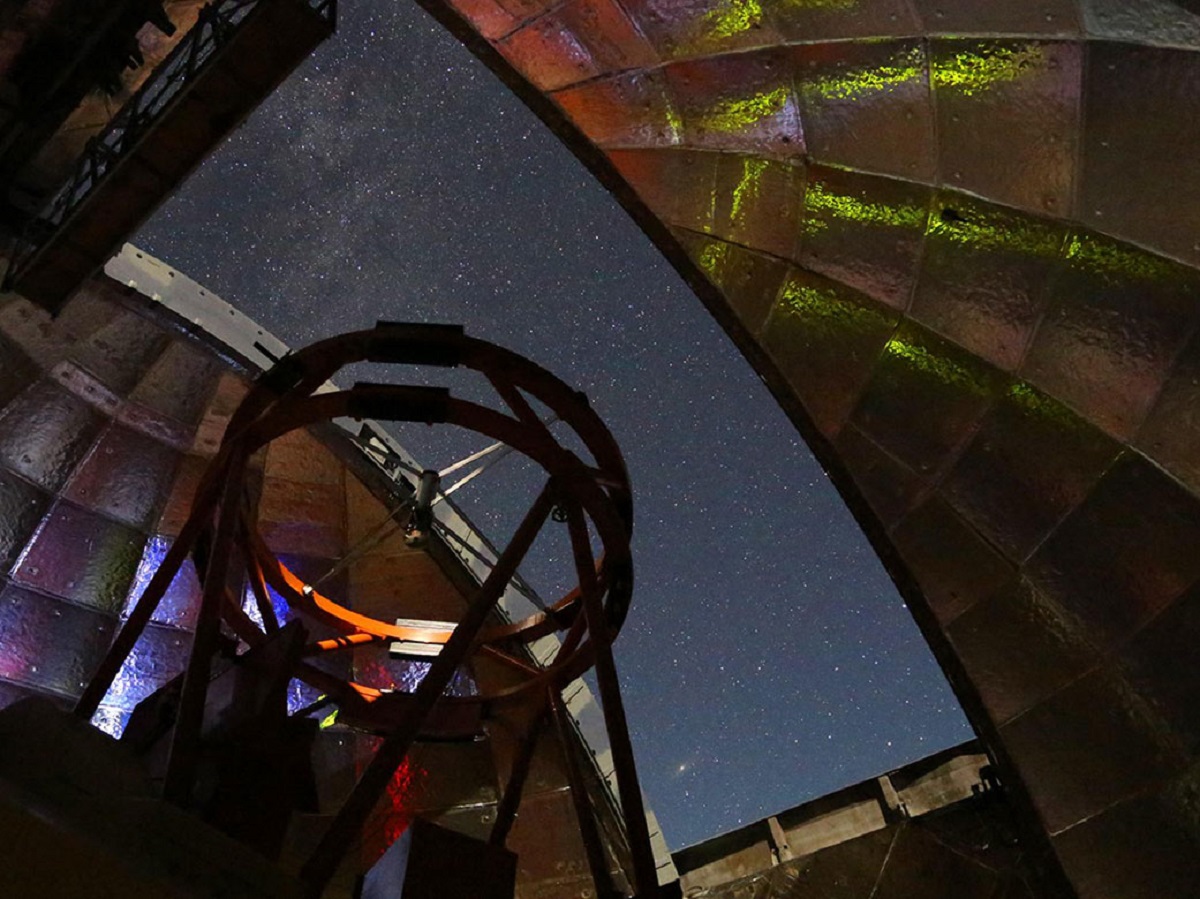
This photo shows the view from inside the dome of NASA’s Infrared Telescope Facility during a night of observing. The 3.2-meter (10.5-foot) telescope atop Hawaii’s Mauna Kea will be used to measure the infrared spectrum of asteroid 2001 FO32. Photo Credit: UH/IfA
Follow up observations have suggested that 2001 FO32 is estimated to be about 1 km in diameter and between 440 to 680 meters wide. During its approach next weekend, 2001 FO32 will pass by at about 124,000 kph (77,000 mph) – faster than the speed at which most asteroids encounter Earth. The reason for the asteroid’s unusually speedy close approach is its highly inclined and elongated (or eccentric) orbit around the Sun (see photo at top of post).
The asteroids close encounter with our planet will present a valuable scientific opportunity for astronomers. Observations dating back 20 years revealed that about 15% of near-Earth asteroids comparable in size to 2001 FO32 have a small moon, said Lance Benner, principal scientist at JPL. Currently little is known about this object, so the very close encounter provides an outstanding opportunity to learn a great deal about this asteroid. The March 21 encounter will provide an opportunity for astronomers to get a more precise understanding of the asteroid’s size and albedo (i.e. how bright, or reflective, its surface is), and a rough idea of its composition.
After its brief visit, 2001 FO32 will continue its lonely voyage, not coming this close to Earth again until 2052, when it will pass by at about seven lunar distances, 2.8 million kilometers or 1.75 million miles.
Date posted: March 13, 2021.
Featured image at top of post: A diagram depicting the elongated and inclined orbit of 2001 FO32 as it travels around the Sun (white ellipse). Because of this orbit, when the asteroid makes its close approach to Earth on March 21, 2021, it will be traveling at an unusually fast speed of 124,000 kph (77,000 mph). Photo Credit: NASA/JPL-Caltech.
__________________
Before departing this website please take a moment to review Simerg’s Table of Contents for links to hundreds of thought provoking pieces on a vast array of subjects including faith and culture, history and philosophy, and arts and letters to name a few. Also visit Simerg’s sister websites Barakah, dedicated to His Highness the Aga Khan, and Simergphotos.
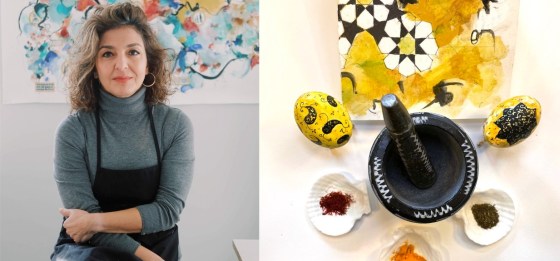
A hands-on workshop designed for sixteen years and older will be conducted on Saturday, March 13, 2021 from 1-3 pm (Eastern Time USA/Canada) by Sayeh (Saya) Behnam, an Iranian American artist based in northern Virginia who works with materials from nature, such as flowers, spices (saffron, turmeric), teas, and minerals to paint decorative eggs and postcards with Persian motifs. No art experience or specialized materials are needed for this workshop; the participants will make their supplies during the workshop from items commonly found at home.
The program is part of the event series Nowruz: A Persian New Year Celebration organized by the Smithsonian’s Asian Art Museum, and is made possible by the Jahangir and Eleanor Amuzegar Persian Cultural Celebrations Fund. Please register for the event by clicking HERE. One registration per household. A Zoom link and a list of suggested materials will be sent to registered participants ahead of the workshop. Enjoy this fun-filled event organized by one of the world’s leading museum institutions – the Smithsonian in Washington DC.
Date posted: March 11, 2021.
Featured image at top of post is credited to Saya Behnam (via Smithsonian)
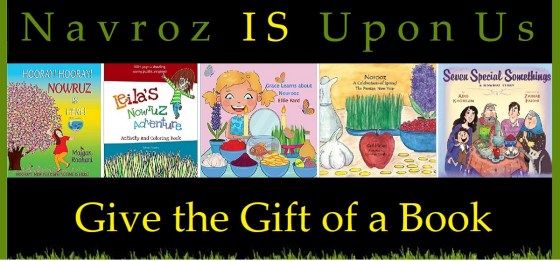
With March 21, 2021 only ten days away, Simerg is pleased to compile this list of Navroz books for children. The books will give families opportunities to experience the different aspects of the great cultural tradition of Navroz. All the books listed here can be delivered as early as next week!
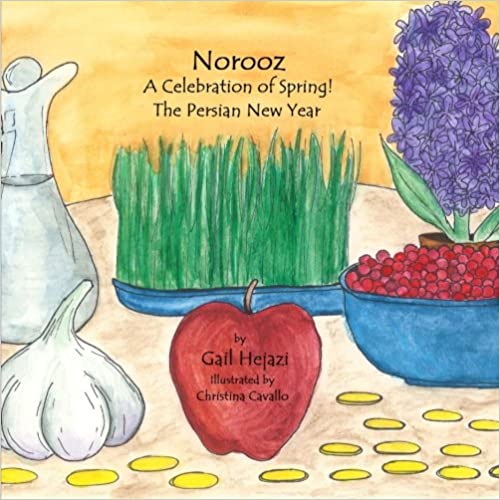
This book, like others listed below, receives a high score on Amazon. Gail Hejazi, a teacher in Princeton, New Jersey, was inspired to write this book when her daughter was in kindergarten and the teacher invited parents to come in and share their holiday traditions with the class. One reviewer notes that the book is engaging and gives the reader a chance to read and experience all aspects of Persian New Year. Check out the book at Amazon.ca and other worldwide Amazon websites including Amazon.com. Book available for delivery in North America within days with Prime membership (30 day free trial available)! For the UK, please click HERE.
_______________________
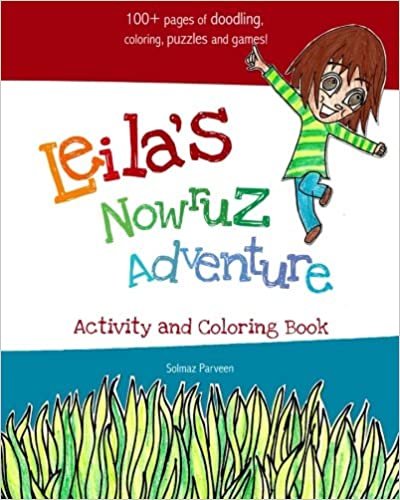
Paperback, 110 pages, English.
Nowruz, also Navroz, Norooz, Nawruz, Noruz etc. is a time to freshen your home, plant new seeds, cook a feast, give gifts to friends, and welcome the brand-new year! The book invites you to learn about and celebrate the Persian New Year with Leila and her family. Normally celebrated by more than 300 million people across Central and Southern Asia as well as all around the world, our celebrations of Nowruz in 2021 are going to be limited due to Covid-19 restrictions that are in force around the world, preventing open family and community gatherings as in the past. This book by Solmaz Parveen, a second generation Persian American who has a long-standing obsession with puzzles and games, is a fun activity book that in these times will allow family members to explore the traditions surrounding Nowruz while encouraging creativity and learning. The book has over 100 pages filled with word and number games, drawing and doodling activities, mazes, coloring pages, and more. Check out book at Amazon.ca and other worldwide Amazon websites including Amazon.com. Book available for delivery in North America within days!
_______________________
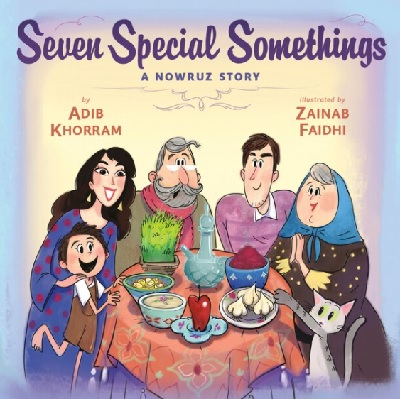
40 pages, Hardcover, Penguin Young Readers Group, English.
New for 2021, this picture book celebrating Persian New Year and the tradition of Haft-Seen is by Missouri based award-winning author Adib Khorram. Haft-seen is a Nowruz tradition in Iran where families gather around a specially prepared holiday table to make wishes for the coming months. The book is illustrated by Zainab Faidhi, a conceptual artist, illustrator, animator, and architect whose work includes the feature film The Breadwinner, which was nominated for an Academy Award for Best Animated Feature. The book is available at the Chapters-Indigo website as well as at Amazon.ca and its worldwide websites including Amazon.com. Book available for delivery in North America within days!
_______________________
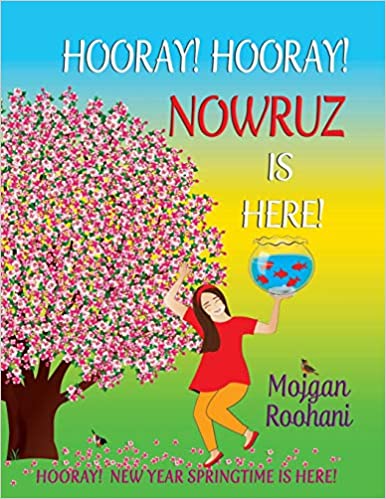
36 pages, Kindle, Paperback, English.
Graphic designer Mojgan Roohani’s passion for children’s books gradually took her deeper and deeper into the realms of storytelling and book illustration. The idea for her book published in 2018 was in her mind for many years and evolved from Nowruz to Nowruz as her children grew up and passed from preschool to kindergarten to elementary school and beyond! They and their teachers always wanted something cultural and colorful to share in the classroom along with one of the activities such as decorating eggs or preparing to grow a dish of green shoots! So Mojgan felt great joy that she finally was able to complete her labor of love! Check out the book at Amazon.ca and other worldwide websites including Amazon.com. Book available for delivery in North America within days!
_______________________
33 pages, Paperback, large print, English
Ellie Frad explains the Persian ancient ceremony of the Nourooz for children age 3-5 through Grace, a character who loves to learn about everything. In this book, Grace gets familiar with Haft-seen, a Nourooz tradition in Iran where families gather around a specially prepared holiday table to make wishes for the coming months. Items on the table refer to new life and renewal, and they are based around the number seven. Grace seeks to learn about the elements of Haft-seen and the book also teaches its readers a few words in the Farsi language. The book has been recommended for toddlers because of its nice pictures, and some have found it adorable to read it out aloud. Check out the book at Amazon.ca and other worldwide websites including Amazon.com. Book available for delivery in North America within days!
Date posted: March 11, 2021.
_______________________
Do you have a book to recommend for Navroz that is not listed in this post? Please submit your recommendations by completing the feedback form below or by clicking on Leave a comment.
Before departing this website please take a moment to review Simerg’s Table of Contents for links to hundreds of thought provoking pieces on a vast array of subjects including faith and culture, history and philosophy, and arts and letters to name a few. Also visit Simerg’s sister websites Barakah, dedicated to His Highness the Aga Khan, and Simergphotos.
This is the 3rd in our series “Books by Ismaili Authors.” The two previous books highlighted were Little One, You Are the Universe by Toronto’s Zeni Shariff and Justice Bertha WilsonPushes the Boundaries of Humanity by Edmonton’s Shamas Nanji. We ask each author to introduce their book(s) to our readers by answering a series of short questions. In this post, award winning journalist Mansoor Ladha of Calgary, Canada, responds on his book “Memoirs of a Muhindi.”
****************
Simerg: What is behind the naming of the title of the book?
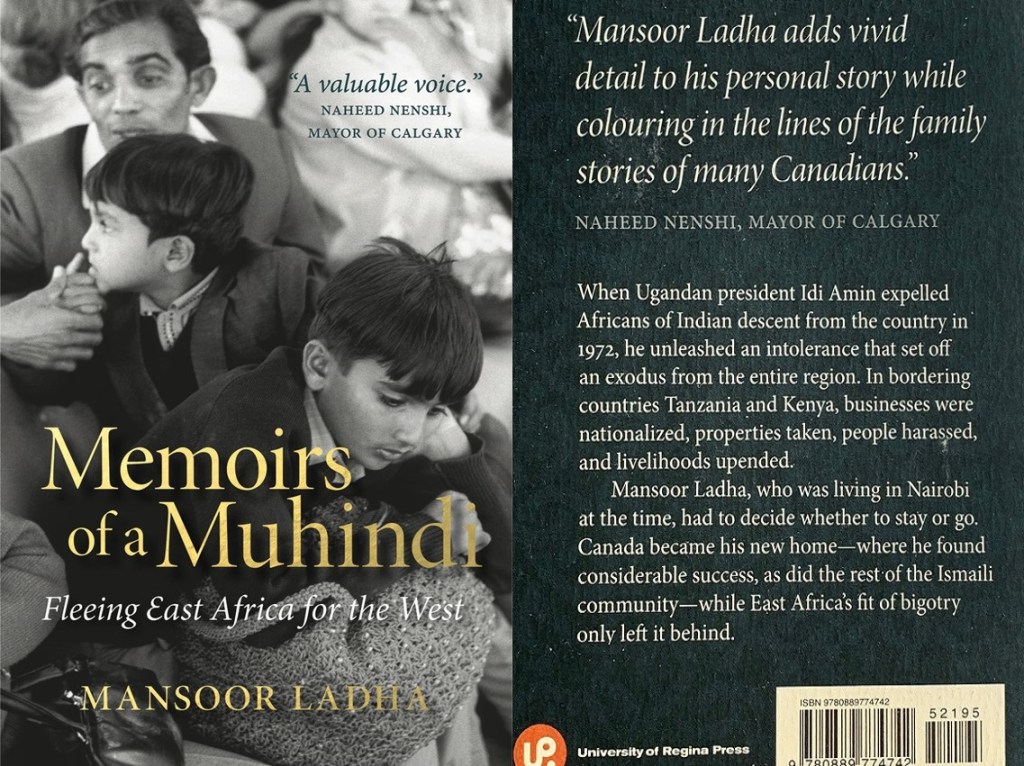
Mansoor Ladha:Memoirs of a Muhindi is a story of a descendant of immigrants, brown in colour, living in a black society (Tanzania), who later became a brown immigrant living in a white society (Canada). The book, which has been endorsed by Calgary Mayor Naheed Nenshi, sheds light on the experiences felt by immigrants, the challenges of cross-cultural differences, the hurt of discrimination, and other hardships of displacement. It has received favourable reports from the media and literary journals.
Simerg: Why would you want me or my family members to read the book, and what will we all learn from it?
Ladha: For those who lived in East Africa, the book is a historical document, providing memories of life during pre and post-colonial Africa. For those not born during the time, it describes what their parents went through before they came to Canada. This is the story of Ismailis who migrated from India to Africa to the west. Many immigrants, including myself experienced discrimination in Africa as well as in Canada. This book contains several interesting episodes and is a valuable, well-written historical document which should be on everyone’s book shelf.
Simerg: What inspired you to write the book?
Ladha: Western writers who have published books on Africa have neglected to describe contributions made by South Asians. As a South Asian journalist, I was prompted to publish a book depicting the prevailing political situation, how Asians adapted to the changing political landscape and their contributions in developing African nations.
Article continues below
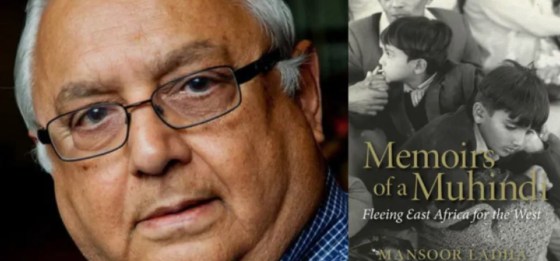
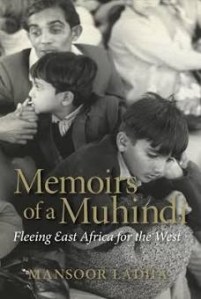
Front and back cover of Mansoor Ladha’s book “Memoirs of a Muhindi” published by University of Regina Press. 2017, 288 pp, available in hardcover and kindle editions.
Simerg: How can I purchase the book and what are its available formats?
Ladha: The book is available from Amazon.ca in hardcover and kindle and from Chapter/Indigo or can be ordered from any neighbourhood book store. You can also buy it at Amazon.com as well as Amazon’s affiliated websites worldwide. Signed copies are available at a special reduced price from mlpublish@shaw.ca but postage is extra.
Simerg: How did you find a publisher for the book?
Ladha: There are two types of book publishers. First type will not accept any submissions from an author unless the query comes through a literary agent. Second type are those who will accept manuscripts directly from authors, without an agent. It is very difficult to get a literary agent interested in a submission. There are authors whose submissions have been rejected by 20 literary agents; and this is not considered to be unusual. I researched for publishers who will accept unagented submissions and was fortunate to get University of Regina Press interested in publishing my book.
Those authors who have not been successful to get their books published through a traditional publisher can resort to get their books published by self-publishing companies. You do not have to pay anything if your book is published by traditional publishers while one has to pay the entire cost when self-publishing.
“Mansoor’s is a brilliant story teller and he writes very simply. I loved his narration of the Dar University days, Nyerere, his work, discrimination etc. For me the greatest contribution Mansoor has made in his memoir is the last sentence on page 249. “I do not want to be a dweller of several lands, accepted by none.”….I was actually teary as I read Mansoor’s cry for a homeland based on UNIVERSAL HUMANITY. That is a powerful message given Eric Hobsbawm’s statement: “Our world risks both explosion and implosion. It must change.” The world must be our collective homeland. Mansoor has given us some message to live for.” — Dr. Willy Mutunga, D.Jur,SC,EGH, Former Chief Justice/President, Supreme Court of Kenya
Simerg: Did you hire an editor, an illustrator or did you do all the work by yourself?
Ladha: Once your book is accepted for publication, the publishing company would send a contract for you to sign. Under the contract, they would provide all editorial services, including a graphic designer until the book is published. The editor would suggest some revisions/alterations and seek your approval until the final document is ready. Same would go for the designer. I was fortunate in that as a copy editor on daily newspapers my job has been to correct and edit stories of reporters. Hence, this background helped me to send clean, edited submission to publishers.
“Ladha has written Memoirs of a Muhindi with a universal audience in mind. Immigrants can learn perhaps how to avoid the pitfalls of settling in a new country, and employers can learn different ways so that they can treat immigrants with fairness and equality,” he says. “One should be able to learn from past incidents and derive positive policies for future use.”– Margaret Anne Fehr, Prairie books NOW
Simerg: Which was your first book and how many have you written?
Ladha: My first book was Portrait in Pluralism: Aga Khan’s Shia Ismaili Muslims published by Detselig. Memoirs of a Muhindi: Fleeing East Africa for the West is my second book. I was also among a group of journalists and scholars invited to contribute a chapter in a book called “The Story that Brought Me Here” published by Brindle & Glass.
Simerg: How long did it take you to write Memoirs of a Muhind — from start to finish and to begin marketing it?
Ladha: I had written bits and pieces of the above book when I was a full time publisher of Morinville Mirror and Redwater Tribune newspapers. However, I concentrated in completing it full time after my retirement from active newspapering and working diligently for about four months. I was fortunate in publishing both my books with traditional publishers, unagented, and so the publishers also took marketing duties in sending books to Amazon, Chapters/Indigo and other publishers. One main piece of advice I would like to offer is that no one but you, as the author, must try to promote your book through your contacts, friends, relatives and colleagues. My third book has been accepted by a Toronto literary agent for publication this year and I am working on my first novel.
Date posted: March 6, 2021.
_______________________
Mansoor Ladha
Mansoor Ladha has held senior editorial positions as a copy editor in Canada (Edmonton Journal & Calgary Herald), features editor (The Standard in Dar es Salaam, Tanzania), copy editor (Daily Nation, Nairobi, Kenya) and was the only owner/publisher of colour of a mainstream English newspaper in Canada for 25 years. Since retiring, he has been travelling around the world as a travel writer on assignments and has published travel features in leading Canadian newspapers and magazines. He has numerous awards to his credit including being a Citizen of the Year in the Town of Morinville, Alberta; Silver Quill Award by the Alberta Weekly Newspapers for distinguished service to newspapers as well as Canada’s Caring Canadian Award for “outstanding and selfless contribution to your community and Canada” by the Governor General of Canada. He has most recently completed another non-fiction book and a novel, both of which are scheduled to be published in 2021. Ladha was also contributor to Simerg’s highly acclaimed series I Wish I’d Been There with a remarkable piece His Name is Jawhar.
_____________________
We encourage Ismaili writers to introduce their books in a similar format as Mansoor Ladha, Zeni Shariff and Shamas Nanji have done in their respective interviews. Please also see the series launch article and submit your responses to Malik at Simerg@aol.com. All submissions will be acknowledged. If a writer has published multiple books, each book will be highlighted in a separate article, and not combined with other books into one post. All writers should include a brief profile with a portrait photo.
We welcome feedback from our readers. Please complete the LEAVE A REPLY form below or click Leave a comment. Your letter may be edited for length and brevity, and is subject to moderation.
Before departing this website please take a moment to review Simerg’s Table of Contents for links to hundreds of thought provoking pieces on a vast array of subjects including faith and culture, history and philosophy, and arts and letters to name a few. Also visit Simerg’s sister websites Barakah, dedicated to His Highness the Aga Khan, and Simergphotos.
Malik Merchant sights the daytime moon as he drives along the Don Valley Parkway, and immediately heads to the Aga Khan Park, the Ismaili Centre and the Aga Khan Museum to enjoy nature at its best. Please read article in Simergphotos.
Nearly three and a half billion people worldwide use some sort of social media regularly. Should there be some sort of regulation of content on those platforms? Greta Van Susteren, host of Voice of America’s (VOA) feature program Plugged in with Greta Van Susteren, examines the issues surrounding social media with New York Times opinion columnist Kara Swisher and Jillian York from the Electronic Frontier Foundation. The program was first aired on VOA February 24, 2021.
To watch the program at source as well as to download the program’s audio and transcript versions, please click HERE — Ed.
Before departing this website please take a moment to review Simerg’s Table of Contents for links to hundreds of thought provoking pieces on a vast array of subjects including faith and culture, history and philosophy, and arts and letters to name a few.
Just over a month ago, on January 26, 2021, we lost our beloved Nana at the age of 87.
He was big-hearted and one of the funniest people I’ve ever met. My Dad tells us that when we were born, our grandfather was so excited, he came over and played with us everyday, and as we grew, he was someone we joked with all our lives.
Instead of telling us he loved us very much, Nana used to say he loves us “magar” (crocodile) much.
When Nana’s Alzheimers set in about 5 years ago, this aspect of his personality somehow stayed. People were often surprised he had this disease because he made jokes and was still funnier than the rest of us.
Even as Nana lost his memory, he somehow was able to remember anything that had to do with my grandmother, Nani. When he started going to the Adult Day Care every week, (which he used to call “Chakula ya Bure” (“food for free” in Swahili), he pocketed half his sandwich to bring home for my grandmother.
I wish I knew more of the thousands of stories Nana had to tell. I remember him telling me once how his mother passed away when he was little. He seemed really attached to her. Times were hard for him and his five siblings after that, but his stories were still so mischievous and Nana-spirited. He told us once that when he was a kid he snuck into the movies and said his Dua after the lights went down because he felt bad it was Jamatkhana time. That was our Nana.
One thing about Nana is how much his faith in things bigger than himself seemed to sustain him through a lifetime. Maybe that’s what helped him be able to give so much to other people. His license plate when we were growing up even used to say “Seva” (meaning service). When you saw that license plate in the parking lot, you knew it was our Nana.
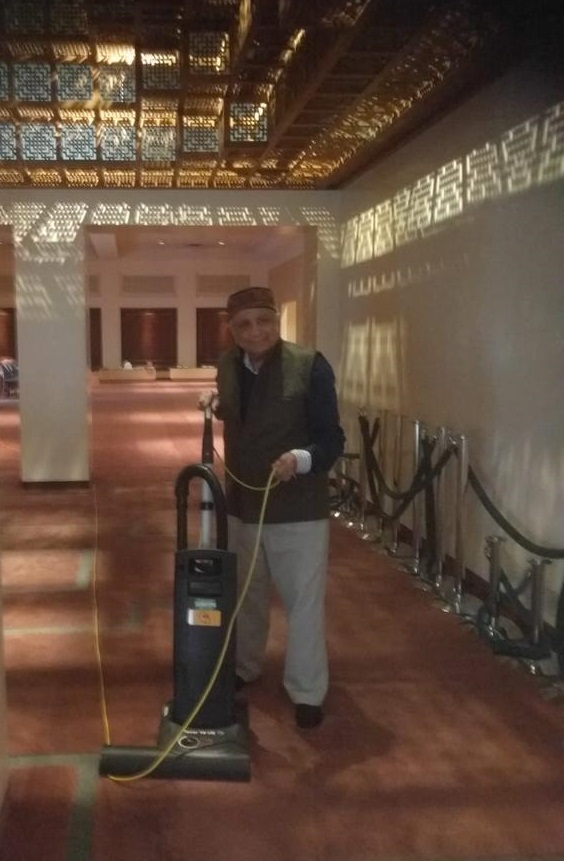
When Nana came to Canada from Tanzania in the 1970s, he opened a drycleaners with my grandmother, served as one of the first Mukhis of the no-longer-existent Jamatkhana on East Hastings Street, and also spent a huge percentage of his life vacuuming the Jamatkhana — volunteer work he considered an honor and did quietly for many, many, many, years, well into his eighties until Jamatkhanas were closed due to Covid-19. He had a kind of generosity that doesn’t exist in a lot of people generally, and is fading even more with our generation.
One summer about 10 years ago, I brought ‘Where the Sidewalk Ends’ by Shel Silverstein to Nana’s house and read them aloud to him. Shel Silverstein’s poems remind me of Nana. Since Nana had the kind of heart that loved to laugh, he liked and understood them right away, and I’ll always remember how he lit up to how full of wonder and light they were, like so much of him. We’ll miss you Nana.
Love you “magar” much. Zahida, Shehin, Husein and Alisha
Your Nanabapa [referring to tribute by grandchildren, above], my Papaji, was indeed a special and unique human being. While growing up, I didn’t have my grandparents around, so I lived vicariously through you all.
What a blessing that he was part of our lives for a long time. With his wit and positivity, he made spending time with him some of the happiest moments for me. I don’t know too many Dads who would agree to do many things that I would make him do!
For example, Tuesday senior’s chair yoga at Darkhana. Even during his Alzheimers, he would take a lot of pride following the exercises properly, asking, “Am I doing this correctly?”.
Or come with me on Thursdays for vacuum Seva at the Burnaby Lake Jamatkhana. The group of ladies were surprised that at his stage, he was so passionate about volunteering. They welcomed him openly often giving him the chance to say Dua before sharing food. After, he would call my Mom and say proudly how he did a good job.
He spoke “pure” Swahili and would recall words that even Mom might have forgotten when he tried to teach me. His lesson would always accompany a long Swahili tale. He’d say “haraka, haraka, haina barakha”, elaborating the saying, basically meaning “haste is waste” or “if you are going to offer me chai with one hand then offer me a snack with the other mkono (hand),” another saying in Swahili.
The greatest gift that he gave me is hanging out with me for long periods. The many videos are memories that will be treasured of such a unique Dad.
When we decided to turn down the Long Term Care spot, I had the opportunity to spend practically every day with Nana and with Nani. I am grateful to you grandkids and especially to Salim for not only supporting this but encouraging it. Salim often says that he felt blessed to have a Dad once again in his life after his Dad passed away in 1983. Nana, for all of us, you brought happiness into our home as there was always laughter when you were around.
Dad, Bwana Kubwa, we love you very much. Your daughter Nasreen
_______________________
A Personal Tribute to Mukhi Sadrudin Velji
By MALIK MERCHANT
My late parents, Jehangir Merchant (d. May 2018) and Malek Merchant or Mrs. Merchant (d. January 2021) had a special friendship with the family of Mukhi Sadru Velji, who passed away in Vancouver on January 26, 2021, just five days after my mum’s demise.
Mrs. Sakerkhanu Velji (Mukhianima) and my mum talked to each other everyday. These daily phone calls continued until the very last day of my mum’s life. The Velji family inspired my mother, and felt that a family member was indeed around in the absence of her children who were thousands of kilometres away. If my parents were unwell or an incident had occurred that left me worried, Mukhianima would ease my anxiety, and assured me that she, Sadrubhai as well as her daughters Nasreen, Shellina and Zahra would always be there for my parents.
article continues below
Malek Merchant (d. January 2021) cuts the birthday cake for her husband Jehangir (d. May 2018) as he celebrates his 89th birthday on December 13, 2017 surrounded by family friends Sadru Velji (d. January 2021) and his wife Sakerkhanu. The Velji family were pillars of strength for the Merchants. Photo: Nasreen Rahemtulla.
The Veljis became an integral part of the family, and their kindness, generosity and affection is etched in my memory. I visited them regularly during my stays in Vancouver. During my previous two month visit to Vancouver, Nasreen, gave me her new car to use for several weeks. Anything cooked at their place would find a way to my mum’s table, 18 kms away. They also paid regular visits to my dad when he was unwell, and Nasreen would find a way to have my father recite her favorite ginans.
I watched the funeral ceremony of Sadrubhai with deep emotion — my mum’s was scheduled to be held on the following day. I would have liked to have been present for both of them but circumstances did not allow me to fly to Vancouver. It is so gratifying that technology has allowed us to participate in the ceremonies from afar during the Covid-19 pandemic. I shed tears as the coffins for the two funerals were being led to the hearse. It was a very sad moment.
I convey my deepest condolences to Mukhianima and her family and pray that Sadrubhai’s soul may rest in eternal peace and that the family be granted strength and courage to bear the loss.
I had witnessed with my own eyes how Mukhianima and her children as well as grand children provided Sadrubhai the support, inspiration and courage that he needed during the most difficult period in his life. My special prayers that Allah shower His choicest blessings on the entire family for their dedication to a beloved husband, father and nana who will also be remembered by everyone who knew him here in Canada and around the world.
Date posted: March 1, 2021. Last updated: March 3, 2021 (daughter Nasreen’s tribute added).
_________________
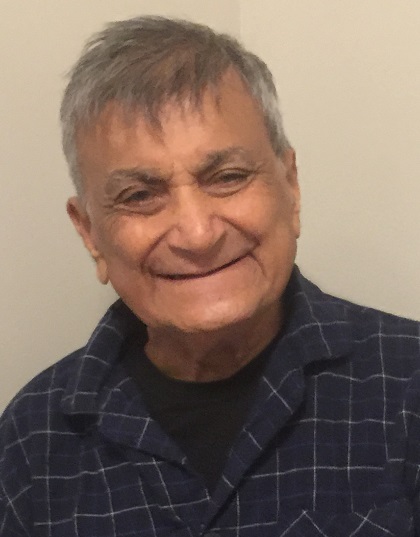
We invite you to submit your condolences, memories and tributes to Sadrudin Velji. To pen your reflection please click on his profile photo shown below or click on Leave a Comment.
Simerg invites Ismaili families to submit obituaries and tributes for deceased members of their families. For guidelines, please click Passings.
Before departing this website please take a moment to review Simerg’s Table of Contents for links to hundreds of thought provoking pieces on a vast array of subjects including faith and culture, history and philosophy, and arts and letters to name a few.











 Simerg - Insights from Around the World