Simerg is an independent initiative dedicated to Ismaili Muslims, the Aga Khan — their Hereditary Imam — and the Ismaili Imamat, and Islam in general through literary readings, photo essays and artistic expressions
Inna lillahi wa inna ilayhi raji’un “Surely we belong to God, and to Him we return” — Holy Qur’an, 2:156
“Life is a great and noble calling, not a mean and grovelling thing to be shuffled through as best as we can, but a lofty and exalted destiny.” — Mawlana Sultan Mahomed Shah, His Highness the Aga Khan III (1877-1957), 48th Ismaili Imam.
***
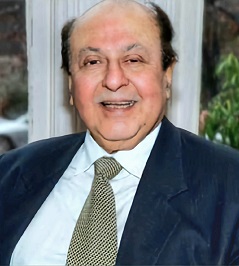
A TRIBUTE TO AHAMED ISMAIL (1942 – 2025)
Prepared by MALIK MERCHANT (The family of AHAMED ISMAIL and FAROUK VERJEE contributed to the tribute)
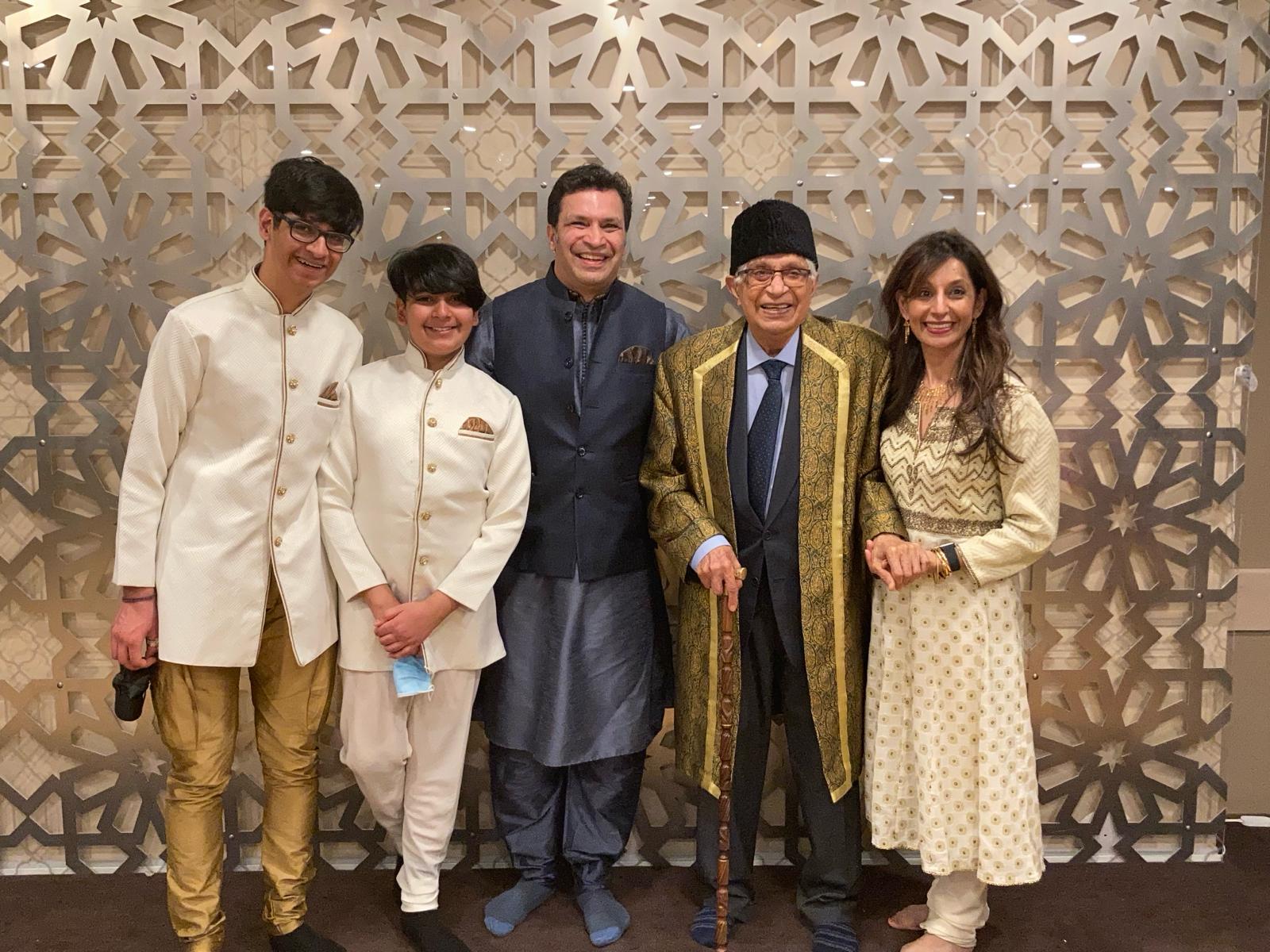
It is with deep sadness that we announce the passing of Ahamed Ismail of Vancouver, Canada, on December 5, 2025, at age 83. He is survived by his wife, Nasim; his son, Aly, and his wife, Sarah; his daughter, Feyzi, and his grandchildren, Adam, Alysa, and Latifa.
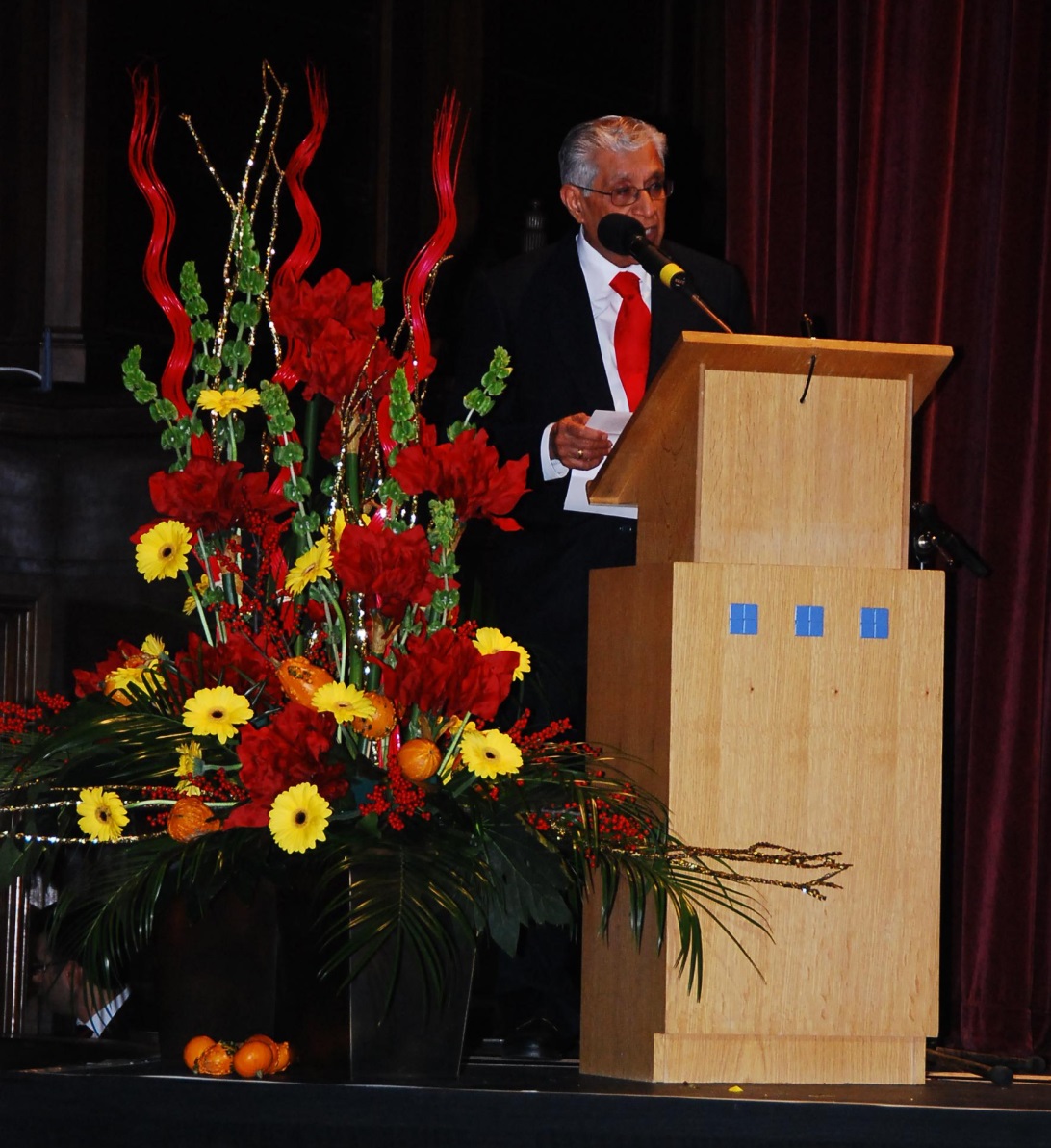
Ahamed was born on March 8, 1942, and grew up in Musoma, Tanzania. In 1956, he moved to Dar es Salaam for further studies. A defining moment during this period came when his religious education teacher, Karim Master, selected him to recite Qur’anic verses before Mawlana Shah Karim during the Imam’s second visit to Dar es Salaam in 1957, the first being for his ceremonial installation (Takht-nishini).
Ahamed Ismail is seen reciting Qur’anic verses during the opening of the Aga Khan School in Dar es Salaam, Tanzania, with the school’s patron, Mawlana Shah Karim, His Late Highness Aga Khan IV, standing next to him. Photograph: Ahamed Ismail Family Collection. Click HERE for the story.
This event was a profoundly meaningful and happy moment in Ahamed’s life. When he shared his inspiring story with the editor, Malik Merchant, during their meeting in Vancouver, it left a lasting memory on him. Malik’s rich memory of Ahamed is that of a devout murid of the Imam-of-the-Time, demonstrating purity of heart and thought, and being very humble and sincere.
Upon completing his studies, Ahamed returned to Musoma, where he pursued a career in banking. He was then promoted and transferred to Dar es Salaam, where he married Nasim in 1970 in the presence of Mawlana Shah Karim.
In June 1972, Ahamed moved with his wife to Vancouver, where the Ismaili population was only 50 people at the time. Immigrants faced many challenges finding suitable jobs, but with his background in banking and a sound secondary education, Ahamed was able to secure a job with CIBC within a month and progressed in the banking industry to become the branch manager of Van City’s main branch, the largest credit union in Vancouver, where one of his roles was to approve mortgages. Highly regarded by his community, he was sought out for advice on financial and mortgage matters.
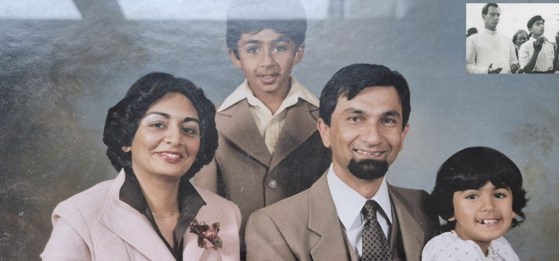
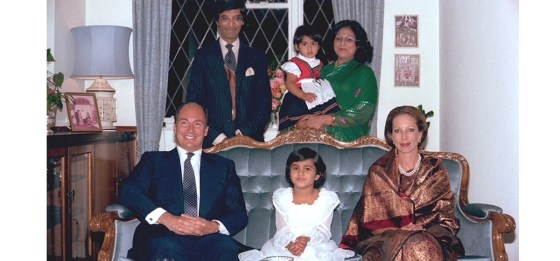
Ahamed Ismail and his wife, Nasim, with their children, Aly and Feyzi, in a photo taken in the 1980s. Photograph: Ahamad Ismail Family.
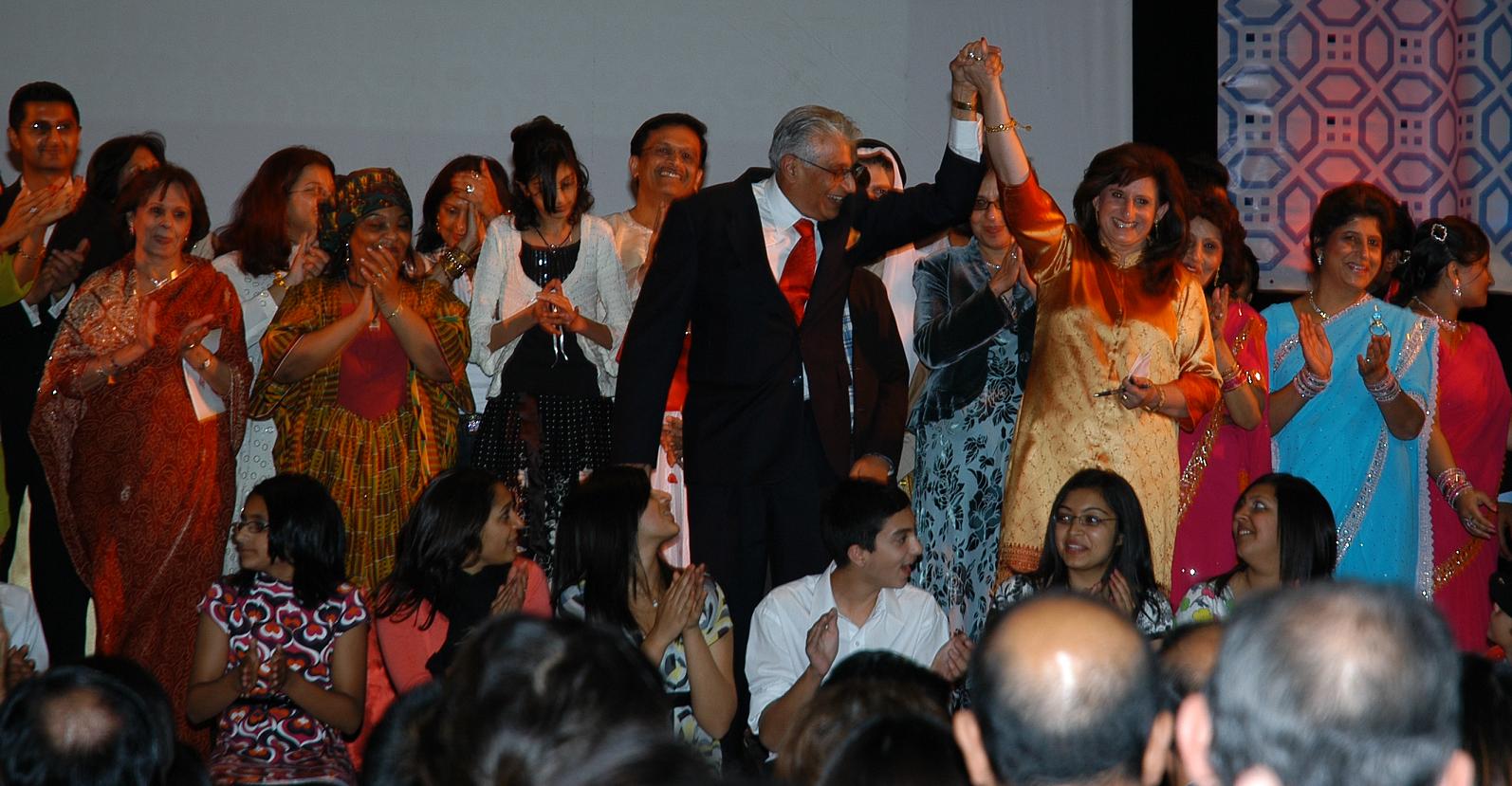
Seeing the potential of Ahamed as a highly motivated and talented individual who could serve the Ismaili community well in an administrative capacity, the newly appointed President of the Aga Khan Council for Canada, Farouk Verjee, and the Hon. Secretary, Bashir Jaffer, enlisted Ahamed into the Council for Canada, which at the time was headquartered in Vancouver. Ahamed did excellent work in his position under the Council’s inspiring leadership. Unassuming in his role, Ahamed played a vital role in the construction and opening phases of the Ismaili Centre in Burnaby. His dedication and efforts were instrumental in preparing for the momentous historic opening ceremony on August 23, 1985, which was graced by Prime Minister Brian Mulroney and Mawlana Shah Karim. The same evening, Mawlana Shah Karim declared to the delight of the Jamath of some 20,000 at BC Place that it would henceforth be the Darkhana — the chief among all Jamatkhanas — of Canada.
Story continues below
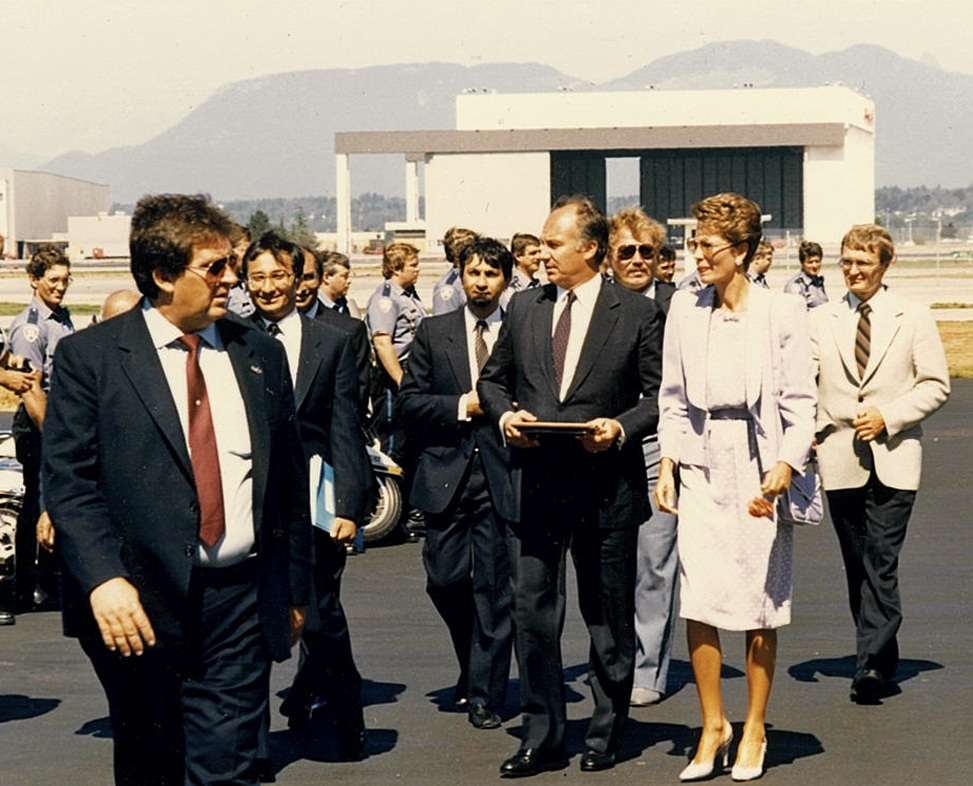
Ahamed Ismail (in beard) is seen following Mawlana Shah Karim, His Late Highness Aga Khan IV, accompanied by Princess Salimah, after he arrives in Vancouver for the historic opening ceremony of the Ismaili Centre, Vancouver, in August 1985. Farouk Verjee, the President of the Aga Khan Council for Canada, is seen walking beside Mawlana Shah Karim at left. Photograph: Farouk Verjee Collection.
When Mawlana Shah Karim was departing Vancouver, President Farouk Verjee humbly requested that Mawlana Shah Karim formally appoint Ahamed as CEO of the Aga Khan National Council, highlighting the strategic importance of the role. Mawlana Shah Karim immediately agreed, making Ahamed the first CEO of the Aga Khan National Council of Canada, a milestone for the Ismaili institution.
At the end of Verjee’s term as Aga Khan Council President, Ahamed and Bashir Jaffer accompanied him to his final and most significant meeting at Aiglemont, France, with Mawlana Shah Karim, reflecting on the meaningfulness of their leadership and service. As Verjee notes, “We were very privileged to serve the House of Hazrat Ali during the early years of our settlement in Canada.”
Story continues below
Farouk Verjee, left, the President of the Aga Khan Council for Canada, introduces Ahamed Ismail to Mawlana Shah Karim, His Late Highness Aga Khan IV, as he departs Vancouver after the opening ceremony of the Ismaili Centre. At President Verjee’s humble request, Mawlana Shah Karim formally appointed Ahmed Ismail as the CEO of the Aga Khan National Council. Photograph: Farouk Verjee Collection.
In May 1987, Mawlana Shah Karim made the significant decision to relocate the Aga Khan National Council’s headquarters to Toronto, marking a substantial shift in its history. A few months later, in August 1987, Ahamed moved there with his family. He worked tirelessly, sincerely, and with dedication. Still, his term with the Council ended in a major disappointment for him and his family, who had uprooted their lives in Vancouver to relocate to Toronto. He then joined Revenue Canada (now known as the Canada Revenue Agency or CRA) and, with his wife, became an Investment Executive at ScotiaMcLeod and an associate at First Associates.
In 2005, while still in Toronto, Ahamed was diagnosed with Parkinson’s, which led him to leave his job. His wife also left her position, and they began working as travel agents from home at a much slower pace due to his illness.
In 2011, Ahamed moved back to Vancouver with his wife to be with his son, Aly, and his first grandchild, Adam. His life was deeply rooted in family, and he cherished these moments, spending his last 14 years in peace and happiness, surrounded by the love of his family and friends. He managed Parkinson’s well and, with strength and grace, inspired everyone around him.
However, his health took a turn for the worse. On November 28, 2025, he experienced some severe internal bleeding, which damaged his intestines, and he left this world a week later, on December 5. The news of his passing saddened all those who knew him and worked with him. Abdul Rahemtulla, the Chair of the Edmonton Ismaili Administrative Committee in the 1980s, described Ahamed as a kind, calm, and intelligent gentleman, a good listener, and someone with whom he had the pleasure of working.
The Ismaili community has lost a giant of a leader, a pure-hearted, sincere, and humble individual whose qualities of compassion and humility left a lasting impression. His funeral at the Burnaby Lake Jamatkhana on December 11, attended by hundreds of community members and friends, and his burial at Victory Memorial Cemetery in White Rock, reflect the community’s respect and gratitude for his life.
We pray that Ahamed Ismail’s soul may rest in eternal peace and that his family continues to find strength and courage to face the significant loss of their beloved husband, father and grandfather. Ameen.
Date posted: December 26, 2025.
~~~~~~~~~~
We invite our readers to express condolences and tributes to Ahamed Ismail. Please click LEAVE A COMMENT.
Inna lillahi wa inna ilayhi raji’un “Surely we belong to God and to Him we return” — Holy Qur’an, 2:156.
“Life is a great and noble calling, not a mean and grovelling thing to be shuffled through as best as we can but a lofty and exalted destiny” — Mawlana Sultan Mahomed Shah, His Highness the Aga Khan III (1877-1957), 48th Imam of the Shia Imami Ismaili Muslims.
It is with deep sadness that I inform readers that Aitmadi Dr. Aziz Rajabali Kurwa of Mumbai, India, London, England, and Calgary, Canada, passed away peacefully in Calgary on Wednesday, March 13, 2024, at the age of 91. Dr. Kurwa’s wife, Aitmadibanoo Shirin Aziz Kurwa (d. December 2016), and his two brothers, Ramzan and Mohammedally, predeceased him.
Surviving Dr. Kurwa are his three children and their respective spouses, six grandchildren, and two great-grandchildren. They are daughter Khadeeja and her husband Steven Emmerson, and their two children, Adam and Daniel; daughter Laila and her husband Rahim Arstall and their two children, Nadia and Karim; and son Dr. Habib Kurwa and his wife Farzana and their two children, Khalil and Hassan. Laila’s daughter Nadia is Dr. Kurwa’s granddaughter, and with her husband Bob, they have two children, Rohan and Remi, making Dr. Kurwa a great-grandfather. Also surviving Dr. Kurwa is his younger brother, Dr. Badru Kurwa, an ophthalmologist in California.
Aitmadi Dr. Aziz Kurwa’s funeral will take place at Calgary’s South Jamatkhana on Saturday, March 16, 2024, at 11 AM. The funeral will be preceded by a dilsoji (condolences) to family members at the same Jamatkhana on Friday, March 15, after the evening ceremonies.
Article continues below
Aitmadi Dr. Aziz Rajabali Kurwa (d. March 13, 2024, aged 91)
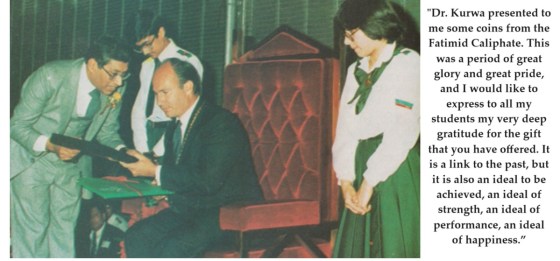
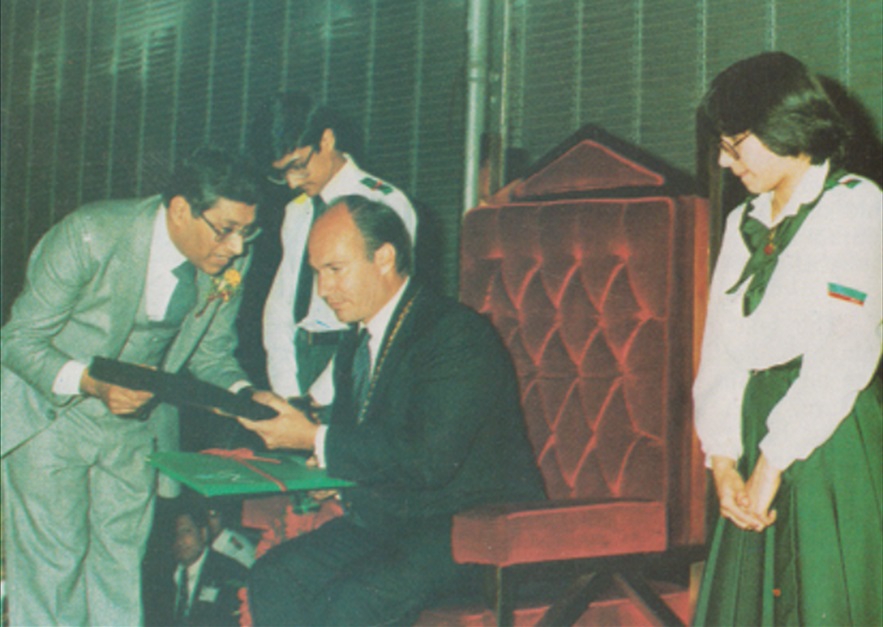
Dr. Aziz Kurwa was an exceptional and dedicated Ismaili leader who left an indelible mark on the community by pursuing excellence and implementing transformative programs and ideas in the United Kingdom. As someone who, with my late parents Alwaez Jehangir and Alwaeza Malek Merchant, served under Dr. Kurwa’s leadership as the President of the Ismailia Association for the United Kingdom (now known as the Ismaili Tariqah and Religious Education Board or ITREB), I have fond and special memories as I think of him. Still, there is one that was extraordinarily special. It is of the day in London, England, when he presented a framed set of 3 Fatimid coins to Mawlana Hazar Imam, His Highness the Aga Khan, at a student gathering in Olympia Hall during his weeklong visit in September 1979 to the Ismaili Jamat (community). Mawlana Hazar Imam looked at the gift with deep interest and admiration and responded as follows:
“Dr. Kurwa earlier, presented to me some coins from the Fatimid Caliphate. This was a period of great glory and great pride, and I would like to express to all my students my very deep gratitude for the gift that you have offered. It is a link to the past, but it is also an ideal to be achieved, an ideal of strength, an ideal of performance, an ideal of happiness.” (Excerpt from Ilm, Volume 4, Number 3).
Following the presentation, Dr. Kurwa brought the gift to the Ismaili Association’s literature counter for display for the benefit of the Jamat. This first-ever presentation of Fatimid coins to Mawlana Hazar Imam during his 22 years of Imamat from 1957 to 1979 raised the Jamat’s interest in the glory of the Fatimid Empire.
Article continues below
London, September 1979: Mawlana Hazar Imam, His Highness the Aga Khan, is seen receiving the report of the Ismailia Association’s Activity and a framed set of 3 Fatimid Gold Dinars from the President of the Association, Dr. Aziz Kurwa. The students Mukhi and Mukhiani are standing on either side in a volunteer’s uniform. Photo: Ilm magazine.
Aziz Rajabali Kurwa was born in Mumbai on December 1, 1932, and studied there until his medical graduation. He became involved with services to the Ismaili community at a very young age. As a college student, he helped revive a student society under the new name of Ismaili Students Education Society (ISES). The committee then undertook several initiatives, including organizing an arts and crafts exhibition in the city. Prince Aly Khan, who was then visiting Mumbai, very graciously accepted the committee’s invitation to inaugurate the exhibition.
Article continues below
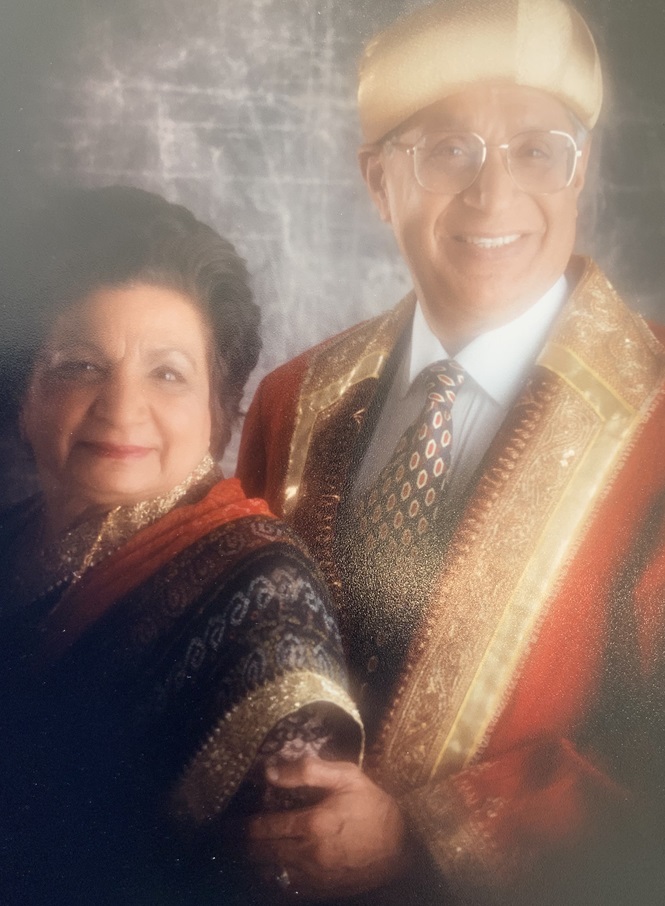
Aitmadi Aziz Kurwa and Aitmadibanoo Shirin Kurwa. Photograph: Habib Kurwa family collection.
Dr. Kurwa arrived in England in 1958. With his solid medical background from India, he went on to specialize as a dermatologist, obtaining FRCP(Edinburgh) and FRCP(London). Before Dr. Kurwa relocated to London, where he opened a dermatology clinic in the city’s famous medical district, Harley Street, he pursued his ambition of serving the Ismaili Jamat in Birmingham. He became the Mukhi (leader of the congregation) of the Jamat in 1970 and, together with his counterpart and other members of the Jamat, assisted in settling many Ismailis who arrived in the Midlands area as refugees from Uganda after their 1972 expulsion by Idi Amin.
Article continues below
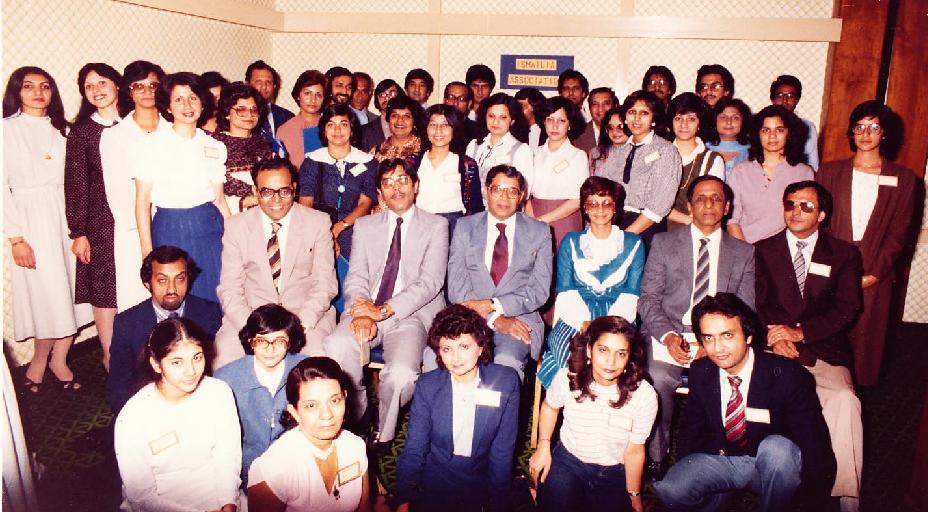
Dr. Aziz Kurwa, President of the Ismaili Association for the U.K. between 1979 and 1985, is seated third from left and is pictured with the members, staff, and teachers who served under him. Photograph: Jehangir Merchant Family Collection.
When he opened his dermatology practice in London’s Harley Street, Dr. Kurwa continued to set his sights on serving the Ismaili community. He established a Jamatkhana in Purley, Surrey, and in 1979, he was appointed President of the Ismailia Association for the United Kingdom by Mawlana Hazar Imam.
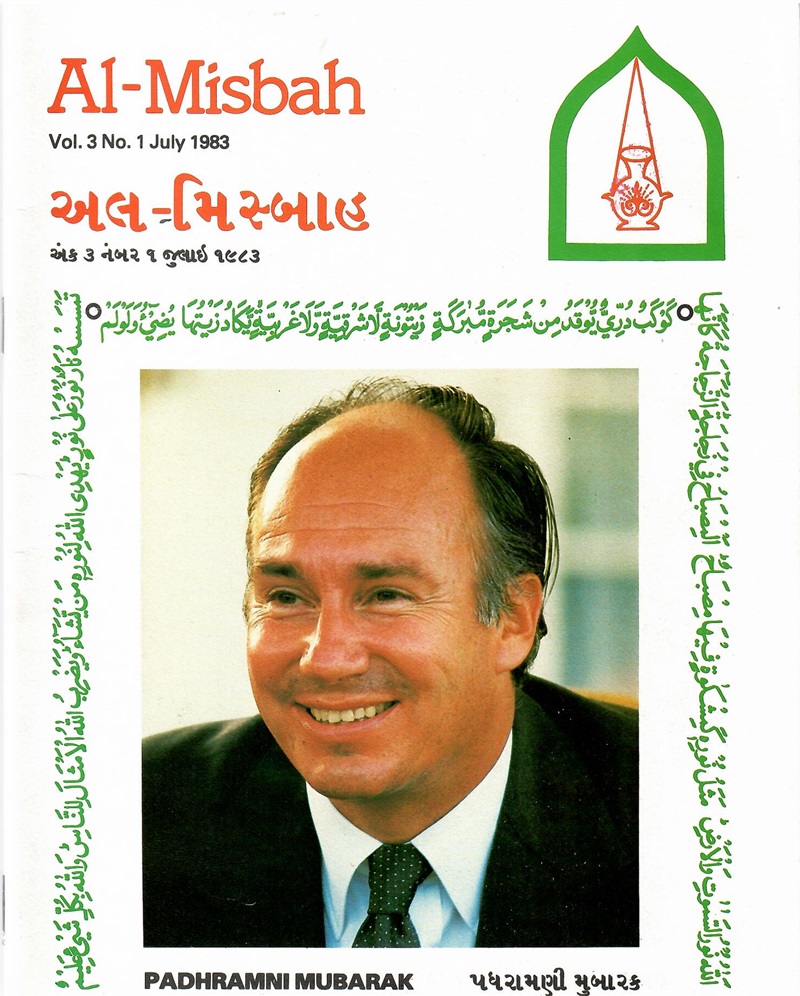
As a visionary leader, he introduced the concept of Baitul Ilm, an Ismaili religious education program for children and youth, which continues to shape the U.K. and other worldwide Ismaili communities. He also championed the distribution of high-quality religious material in cassettes to remote Jamats in the U.K. He created a bilingual religious magazine, Al-Misbah, containing easy-to-follow religious material, stories for children, and readings for the Gujarati-speaking members of the Jamat.
~~~~
Article continues below
The bi-lingual Gujarati-English Al-Misbah magazine was launched in the UK during Dr. Aziz Kurwa’s term as the President of the Ismailia Association for the UK.
His support for adult education and the growth of the literature and library portfolios further underscored his commitment to the community. Waezin (sermon) activities grew multifold throughout the U.K. as did children’s activities and participation in the Jamatkhanas. Dr. Kurwa also ensured that missionaries in the U.K. would regularly travel to the widespread European Jamats to support their religious activities and interests. The highly acclaimed Ilm magazine, established in 1975, continued to prosper with increasing circulation in the U.K. and abroad. Such was the magazine’s reputation that in 1980, the magazine’s editor, my dad Jehangir, was invited by the Aga Khan Award for Architecture to attend the first Award Ceremony in Lahore. Sadly, he was unable to go.
After completing his two terms as the President of the Ismaili Association, Mawlana Hazar Imam, in 1986, chose him to be one of the resident governors of the Institute of Ismaili Studies in London, which Dr. Kurwa proudly served until 1995.
Article continues below
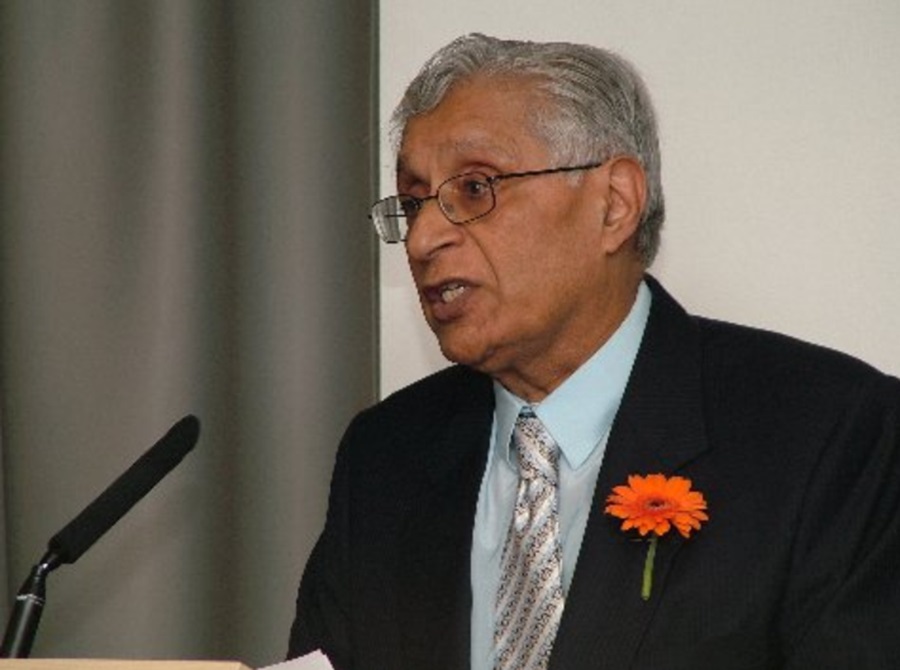
Dr. Aziz Kurwa, producer and director of “The Festival of Poetic Expressions” speaking at the event which was held by the Ismaili Council for the UK in London, Manchester and Germany to commemorate the Golden Jubilee of Mawlana Hazar Imam, His Highness the Aga Khan Aga Khan.
Dr. Aziz Kurwa celebrates at the conclusion of “The Festival of Poetic Expressions” which was held by the Ismaili Council for the UK in London, Manchester and Germany to commemorate the Golden Jubilee of Mawlana Hazar Imam, His Highness the Aga Khan Aga Khan.
Dr. Kurwa continued relentlessly to participate in other activities within the community. He contributed in creating the Health Care Professional’s Association and reviving the Ismaili Seniors Club. His passion for the Baitul Ilm religious education program led him to organize poetry sessions for Ismaili children and seniors, the success of which led to the Festival of Poetic Expressions as a Golden Jubilee programme. The event was staged in London, Manchester and Germany. He invited Simerg to publish the poems on the website, which we proudly did. Dr. Kurwa also served as a member of the Executive Committee of The Association For The Study Of Ginans, a private initiative.
In his article on Volunteering at the Dawn of Imamat, Dr. Kurwa wrote: “In whatever position in the Jamat, in my heart, I am devoted to voluntary service, and in this article, I am making an effort to recognise that volunteer services have existed since the inception of Islam and Inshallah will continue to flourish in the Jamat as long as Imam-e-Zaman wishes it to be.”
Article concludes below
All smiles as Aitmadi Dr. Aziz Kurwa is pictured with his son Dr. Habib Kurwa and his wife Farzana and their two children Khalil and Hassan. Photograph: Habib Kurwa family collection.
Dr. Kurwa moved to Calgary, Canada, in 2017 following the demise of his beloved and wonderful wife, Aitmadibanoo Shirin Aziz Kurwa, in December 2016. He cherished the beautiful moments with his loving son, Dr. Habib Kurwa, and his family. I was honoured to visit my former president and to meet him in Jamatkhanas. My wish to see him on Thursday, March 14, 2024, at 3:30 PM never materialized. A day earlier, on March 13, Habib texted me mid-morning, “Ya Ali Madad – Dad passed away this morning.”
Allah most graciously granted Aitmadi Aziz Kurwa a peaceful, happy and healthy life — a life that was filled with service to the Ismaili community, its institutions and the Imam-of-the-Time
He was an extremely rare Ismaili leader who returned to serve the Jamat at the grassroots level in any capacity as long as it enabled him to contribute to the community’s upliftment.
Aitmadi Aziz Rajabali Kurwa was a gallant, humble leader and a devoted murid of Mawlana Hazar Imam. We pray that his soul may rest in eternal peace. Ameen. We further pray that his family may face this immense loss with great courage and fortitude.
Date posted: March 14, 2024. Last updated: March 15, 2024 (reformatting and typos.)
__________________________
We invite you to submit your condolences, memories, and tributes to Aitmadi Dr. Aziz Kurwa by completing the feedback form below or clicking Leave a comment. Should you encounter technical issues or difficulties submitting your comment, please send it via email to mmerchant@simerg.com (subject Aziz Kurwa).
Inna lillahi wa inna ilayhi raji’un “Surely we belong to God and to Him we return” — Holy Qur’an, 2:156.
“Life is a great and noble calling, not a mean and grovelling thing to be shuffled through as best as we can but a lofty and exalted destiny” — Mawlana Sultan Mahomed Shah, His Highness the Aga Khan III (1877-1957), 48th Imam of the Shia Imami Ismaili Muslims.
We are deeply sad to record the passing of (Vazirbanoo) Amina Anil Ishani in Nairobi, Kenya, on February 9, 2024, at the age of 77. Her funeral was held on February 13, 2024, in Nairobi, Kenya. Amina is survived by her husband (Vazir) Anil Ishani, her daughters Shaheen Ishani and Karina Govindji, son-in-law Rizwan Govindji and grandchildren Iman, Zahra, Ziyana, Khalil and Zaki.
Amina led a very rich and purposeful life of honorary service to the Ismaili Muslim community in the UK and Kenya. Professionally, she was a Classical Homeopath for 3 decades after completing her studies at the London School of Classical Homeopathy in 1990.
On a personal level, I initially knew of Amina Ishani mainly through her husband Anil, who assumed important leadership roles in the Ismaili Community including as a member of the Board of Governors of the Institute of Ismaili Studies, Chairman of Aga Khan Foundation (UK), Convenor of the Constitution Review Committee, President of the Aga Khan National Council for the UK and Chairman of the Leaders International Forum. All these appointments were made by Mawlana Hazar Imam, His Highness the Aga Khan. For his decades of service to the Ismaili community, he was bestowed with the title of Vazir in 1973.
Mawlana Hazar Imam, His Highness the Aga Khan, and Begum Salimah Aga Khan, pictured in 1979 with Vazir Anil and Vazirbanoo Amina Ishani and their two daughters Shaheen and Karina at their residence “Nurabad”. Photograph: Ishani Family Collection.
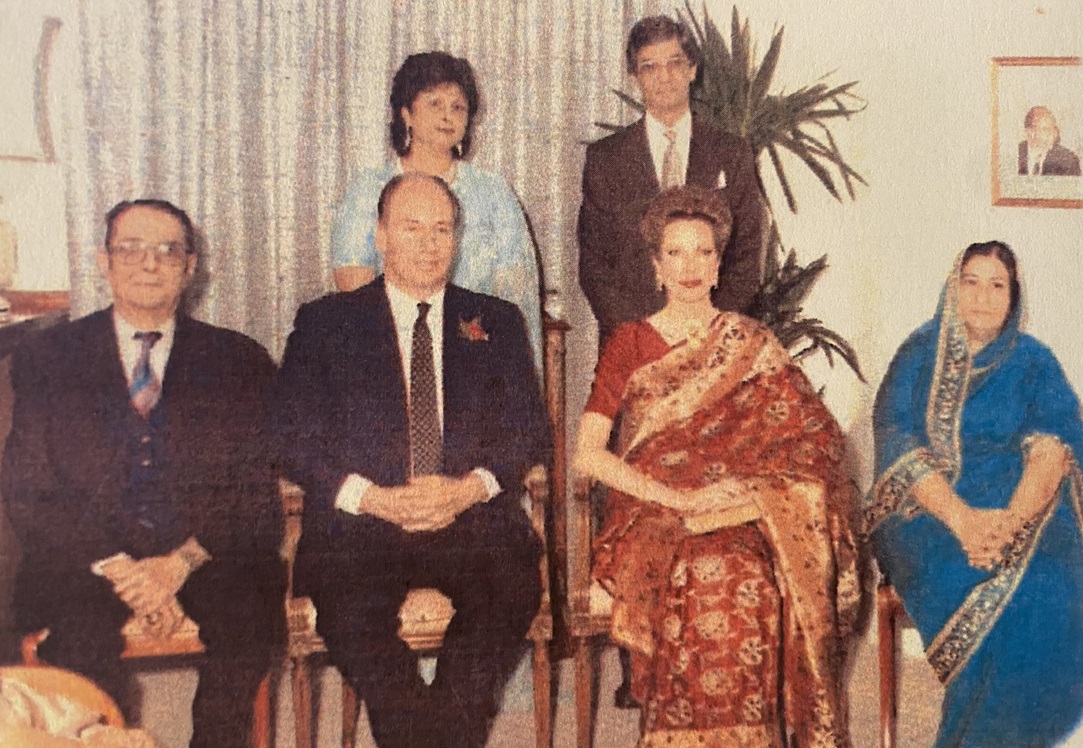
Mawlana Hazar Imam, His Highness the Aga Khan, pictured in 1985 with Vazir Anil and Vazirbanoo Amina and her parents at the “Nurabad” residence. Photograph: Ishani Family Collection.
The magnificent work that Amina Ishani did for the Ismaili community began unfolding for me in 2011 when she connected with me by sending me the full script of a play on the Ismaili intellectual giant Nasir Khusraw, along with a full video of the play entitled “The Ruby Shines On” that had been shown to audiences in Kenya. For me, this was a singularly important contribution to Simerg; it was a moment of special pride to be able to host a finely produced play of an outstanding historical personality such as Nasir Khushaw. Amina generously provided the entire script of the play to be downloaded for others around the world to create their productions in their local areas, if they so chose.
Although her profile revealed the work she had done for Ismaili Institutions, the full extent of her contribution to the UK Ismaili community became known to me when I spent time with my parents in Vancouver. My late parents — Jehangir and Malek Merchant — described Vazirbanoo’s dedication and dynamism in all aspects of her services to the Jamat (community). They had worked hand in hand with Amina for the religious education development of Ismaili children in the UK. For example, before nursery provision in Bait-ul-Ilm’s existed, Amina led a pilot for Nursery Religious education in the UK and she participated in the ongoing teacher development program as well as mentored religious education teachers in the UK. She was also actively engaged in the UK in the formation of Misbah-al-Ilm. In addition to writing the script and producing Nasir Khushraw’s play, “The Ruby Shines On”, she wrote scripts — as well as produced and directed — many other plays including “And Then There Was Light — Light upon Light”, “The Conference of the Birds”, “Keeping a Promise”, “Kingdom of Animals” and “Bilal”. Through these plays, that linked her creativity with spirituality, she was able to touch the hearts of many hundreds of Jamati members who attended these productions. Her plays were performed in Kenya after she moved there in 1997. Also during her time in Nairobi, she provided invaluable support as Anil Ishani took up the role of Resident Representative of the Aga Khan Development Network for Kenya between 1998 – 2007.
Vazir Anil and Vazirbanoo Amina Ishani. Photograph: Ishani Family Collection.
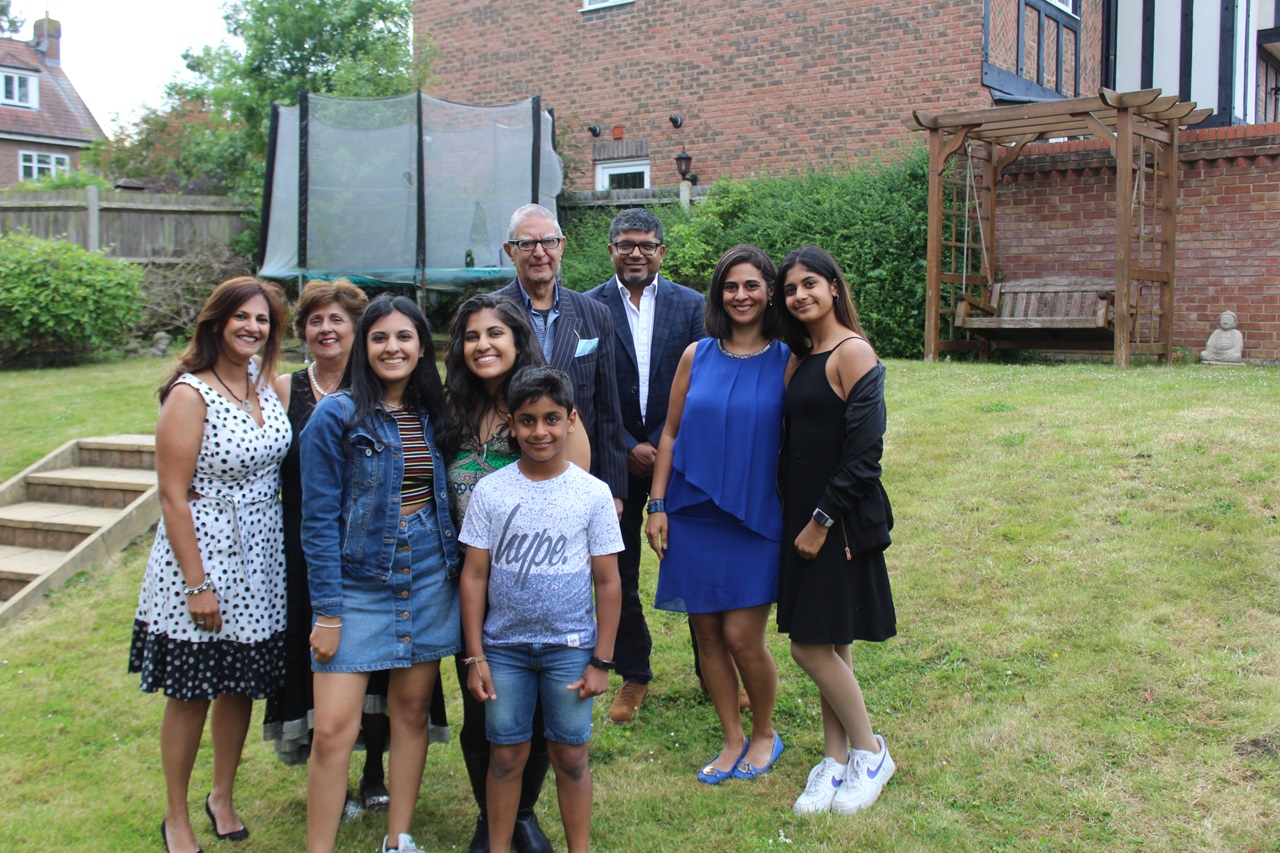
Anil and Amina Ishani pictured with their family members in a photo taken in 2019. Photograph: Ishani Family Collection.
Amina, born on January 13, 1947, was daughter of late Ebrahim and Ashraf Patel. She grew up in Mumbai and moved to Nairobi after her marriage to Anil Ishani in 1970. Later during the same year, she moved to the UK. She completed a BA Hons degree in French and Philosophy and her interest in Homeopathy led her to study Classical Homeopathy at the London School of Classical Homeopathy. Amina began practicing as a Classical Homeopathy in 1990 and continued doing so for the next 30 years. She and her husband moved back to Kenya in 1997 where she led homeopathy children’s clinics and became a lecturer of Homeopathic medicine.
Amina’s interests were varied. She studied cooking, beauty therapy, counselling, Spanish, took singing and piano lessons and later learned Bridge (3 levels.) As an educator, she gave engaging talks on the philosophy of Du’a (the Ismaili prayer) in Kenya and Dubai, Indian Cooking and Women’s empowerment. She also created a recipe book during the Covid-19 lockdown that circulated globally. Amina loved to travel, had a deep thirst for learning and knowledge sharing and was an avid wildlife and nature lover.
Amina Ishani leaves behind a legacy of service to the Ismaili community as well as the communities where she resided. Her impact was enormous and we express our gratitude to her for the wonderful and inspirational work that she did during her lifetime.
We convey our deep condolences to Vazir Anil and his family on the passing of their beloved Vazirbanno Amina. We pray that her soul may rest in eternal peace, and that the family faces her loss with courage and fortitude.
Date posted: March 08, 2024.
_________________
We invite you to submit your condolences, memories and tributes to Vazirbanoo Amina Anil Ishani by completing the feedback form below or by clicking on LEAVE A COMMENT. Should you encounter technical issues or difficulties in submitting your comment, please send it via email to mmerchant@simerg.com (subject Amina Ishani).
Inna lillahi wa inna ilayhi raji’un “Surely we belong to God and to Him we return” — Holy Qur’an, 2:156
“Life is a great and noble calling, not a mean and grovelling thing to be shuffled through as best as we can but a lofty and exalted destiny.” — Mawlana Sultan Mahomed Shah, His Highness the Aga Khan III (1877-1957), 48th Imam of the Shia Imami Ismaili Muslims.
Amirali Alibhai Bhatia (b. March 18, 1932), a long-serving education administrator in the Imamat institutions of Mawlana Hazar Imam, His Highness the Aga Khan, in Tanzania and the UK, as well President of the Aga Khan Council for the UK from the late 1970s until the early 1980s, has died in London, England, at the age of 91.
Mr. Bhatia was bestowed with the title of Vazir by Mawlana Hazar Imam during his tenure as the President of the UK Aga Khan Council. Mr. Bhatia also served as member of the Board of Governors of the Institute of Ismaili Studies, which was created by Mawlana Hazar Imam on December 13, 1977.
Article continues below
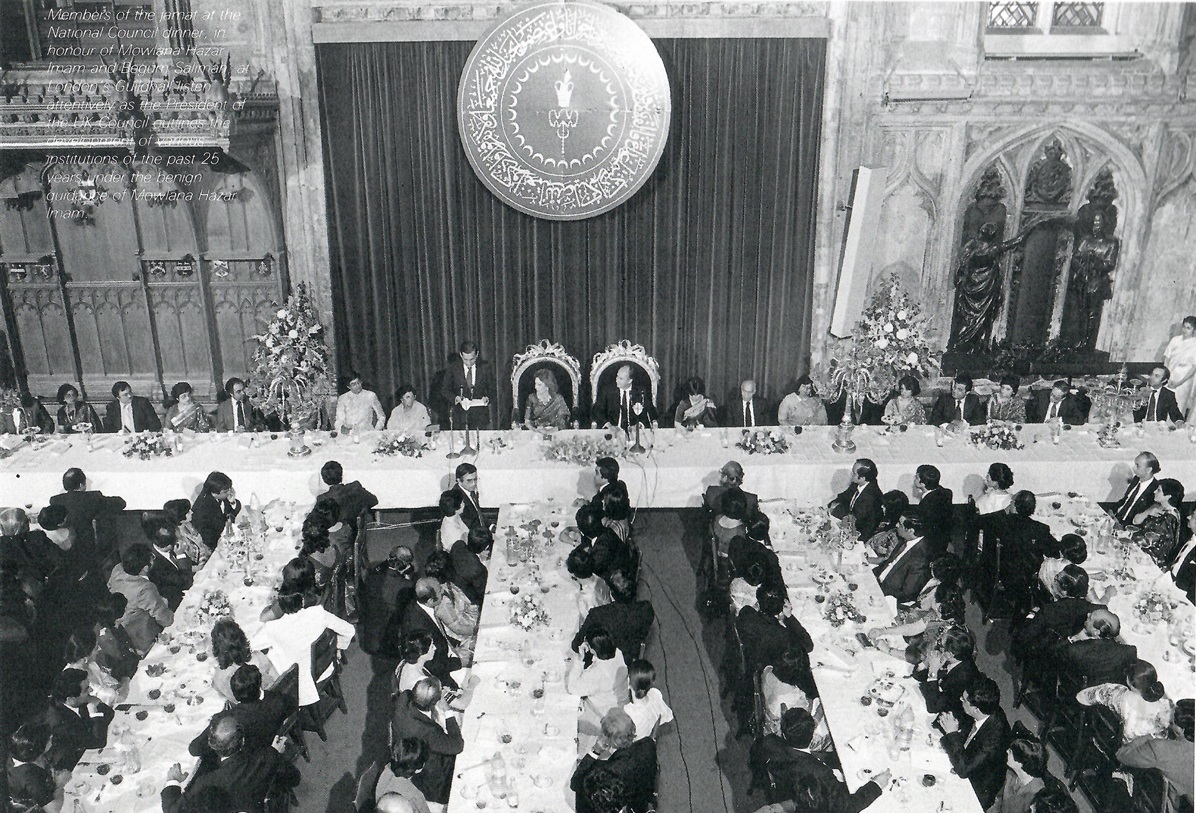
Mawlana Hazar Imam, His Highness the Aga Khan, and Begum Salimah look on as Vazir Amir Bhatia, President of His Highness the Aga Khan Shia Imami Ismaili Council for the UK, addresses members of the community at the Aga Khan Council dinner in honour of Mawlana Hazar Imam’s Silver Jubilee visit to the UK in July 1983. Photograph: Ismaili Forum, December 1983.
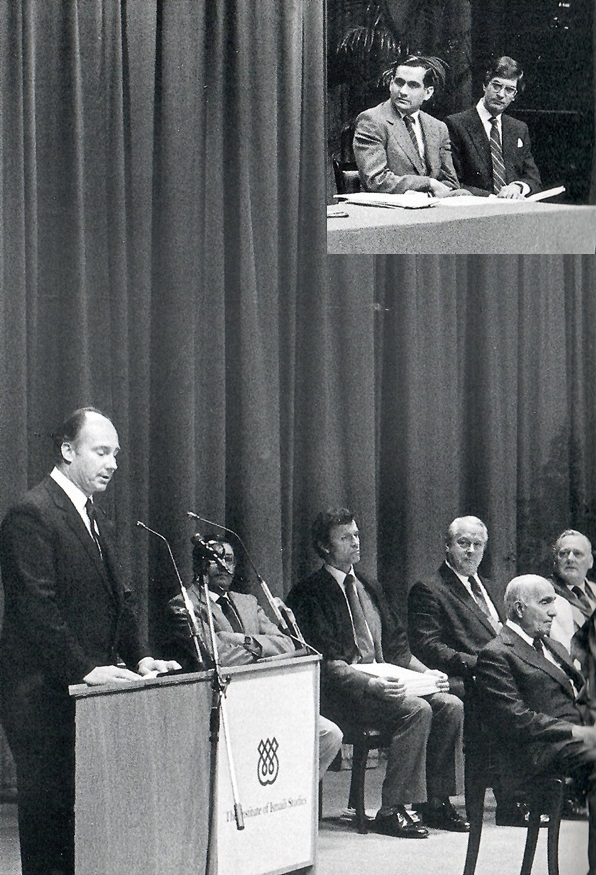
Mawlana Hazar Imam, His Highness the Aga Khan, addresses the new graduates at the University of London Institute of Education during his Silver Jubilee visit to the UK in July 1983. Seated in front row is Diwan Sir Eboo Pirbhai. Looking on, in the inset picture, are Amir Bhatia, President of the UK Aga Khan Council, and Anil Ishani, both of whom were members of the Board of Governors of the Institute of Ismaili Studies. Photograph: Ismaili Forum, December 1983.
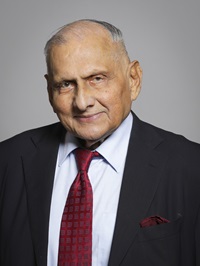
Mr. Bhatia was awarded the Order of the British Empire (OBE) in 1997 for his numerous contributions in the UK, and was amongst the 15 peers appointed from 3000 nominations to the House of Lords in 2001 during Tony Blair’s term as the Prime Minister of the UK. He then took his seat in the House of Lords (The House of Lords is the upper chamber of the United Kingdom’s parliament. The members of the House of Lords are not elected by the public, but are appointed by the monarch, appointed by the Prime Minister, or are hereditary peers. To become a lord in the House of Lords, one can be appointed as a life peer by the monarch on the advice of the Prime Minister.)
Mr. Bhatia was thereafter referred to as Lord Bhatia and actively contributed in the House (see excerpts from 3 of his more than 150 oral statements, below). He ceased to be a member of the House of Lords in 2023 due to non-attendance. Several years earlier, in 2010, Lord Bhatia was mired in a controversy when he was found to have broken the House’s expense rules. He was suspended from the House of Lords for eight months. Aside from this and another similar controversy a few years later, and his indifference to an important sister Ismaili Institution in the 1980s, Vazir Bhatia was an outstanding administrator, and a very organizerd, hard-working and conscientious leader. In one of his speeches made at an event in London attended by the editor during the mid 1970s, Vazir Bhatia spoke about his role as Tanzania’s education administrator. He said that when he assumed the position, he studied all the files from the mid 1930s onwards to learn about the developments that had taken place in the education sector within the Ismaili community. The late Vazir was meticulous in all his undertakings.
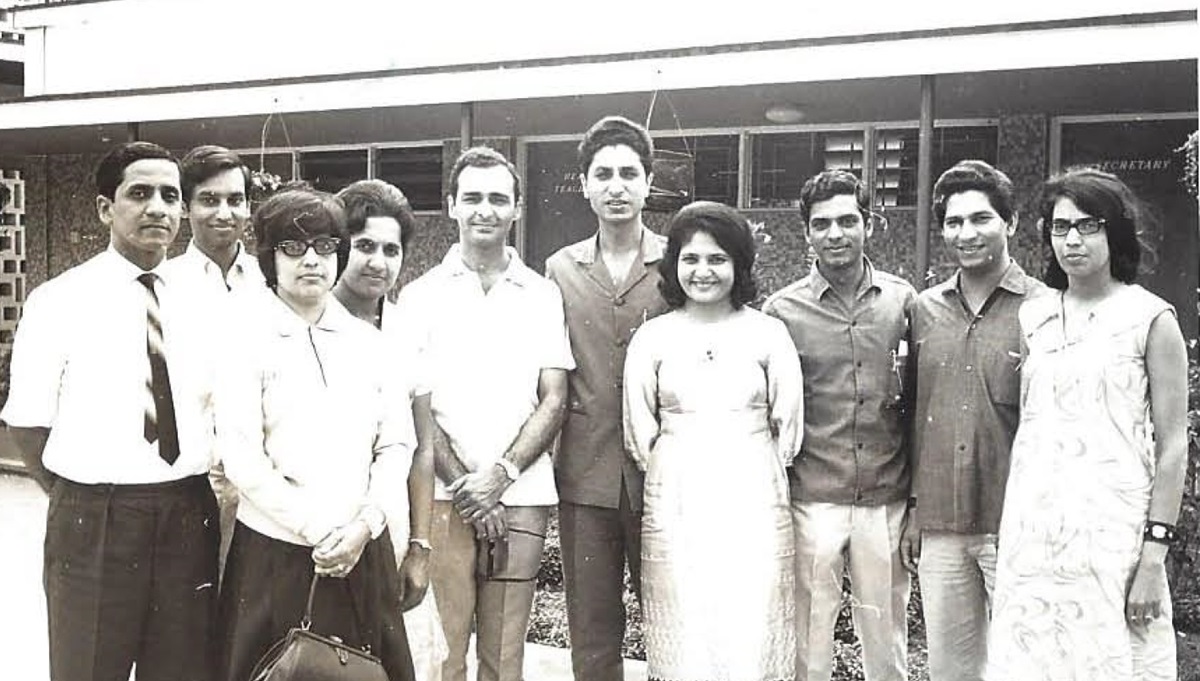
Mr. and Mrs. Merchant are pictured in front at left in this photograph submitted to Malik Merchant, editor of Simerg, by Lord Bhatia. Other recognizable faces in the photograph are Mr. Dina and Mr. and Mrs. Hasni Remtulla. Photograph: Lord Bhatia.
In recent years, Lord Bhatia was in touch with the editor of Simerg, commending him on his 3 websites, and also spoke to his mother, Mrs Merchant (d. 2021), to convey his condolences when her loving husband, Jehangir, died in 2018. To the editor’s surprise, Lord Bhatia shared a picture of Mr and Mrs Merchant when they were teachers at the Aga Khan Girls Secondary School in Dar es Salaam. Lord Bhatia wrote: “Dear Malic (sic): Here are some photos of your parents. I thought you would like them as you may not have them.” Indeed, I had never seen the photos before, and will treasure them for the rest of my life.
A very compact summary of Mr. Bhatia’s services is posted on the website of United Religions Initiative (URI). Readers are also invited to read an article published in 2004 in the UK Muslim magazine, Emel, entitled A Week in the Life of Lord Bhatia.
We convey our deepest condolences to the family of Vazir (Lord) Amirali Bhatia and pray that his soul may rest in eternal peace. Ameen.
We invite our readers to offer their condolences and tributes to Lord Bhatia by clicking on LEAVE A COMMENT
As part of this brief tribute, Simerg researched the UK Parliamentary Hansard and found transcripts of some 167 spoken statements made by Lord Bhatia between 2013 and 2121 on a wide range of subjects. We have excerpts from 3 statements that are important to our readers; they show Lord Bhatia’s insights into important issues of the day.
My Lords, I thank the noble Lord, Lord Elton, for initiating this timely debate on the persecution of people of faith in this century.
There are a number of national and international treaties on this subject; I will not repeat them because the noble Lord has already referred to them. Despite that, these treaties continue to be violated.
When I was introduced to the House of Lords, I took my oath with a Holy Koran and quietly started with the word “Bismillah”, meaning, “In the name of Allah, most beneficent and most merciful”. I have never differentiated between faiths. As a Muslim, my closest friends have been Hindus, Sikhs, Christians, Buddhists, Jews and those of no faith. The Holy Koran, in surah 2, says: “The Apostle believeth in what hath been revealed to him from the Lord, as do the men of faith. Each one of them believeth in God, His angels, His books and His apostles. ‘We make no distinction (they say) between one or another of His apostles’”.
As an ex-trustee of Oxfam, I met another trustee, Ansel Harris, and we became very good friends; our children and spouses became good friend as well. We travelled together to Israel, India and the Middle East. We learnt about the practice of each other’s faiths and shared each other’s jokes and stories. Ansel and his wife Lea were to attend my introduction to the House of Lords—but Ansel had another appointment, with his maker.
I attended the funeral and saw very little difference between Muslim and Jewish rituals. A few weeks later, there was a memorial service in Hampstead Town Hall. I was asked to speak and made my speech. Chief Rabbi Jonathan Sacks was present, and after a few days he wrote an article in the Times. I have deposited the full article in the Library, but will quote a few sentences:
“At the memorial service recently, one of the speakers was Lord Bhatia, whom he had come to know through his work for Oxfam. It was clear from the tone of his tribute that the two men shared a moral vision and had been close friends.
“What held them together, one a passionate Jew, the other a no less committed Muslim? The short answer is that they cared for something larger than their respective faith communities … When they saw disease, poverty and despair, they didn’t stop to ask who was suffering; they acted.
“They knew that tears are a universal language, and help a universal command. They saw faith not as a secluded castle but as a window onto a wider world. They saw God’s image in the face of a stranger, and heard His call in the cry of a starving child.
“Does faith make us great or does it make us small? On this question, much of the future of our world depends. Jews, Christians and Muslims can live together in friendship, so long as we never forget those things that transcend religious differences – of which human suffering is one.
“When we focus, not on ourselves, but on those who need help, our separate journeys converge and we become joint builders of a more gracious world”.
To conclude, whenever someone attacks Christians, I feel that they have attacked my faith. This is my contribution to this important debate. The world will be a better place if attacks on any faith are dealt with by the full force of the law. These attacks on faith are made by a small number of people who, in the name of their faiths or for political or personal gain, attack other faiths.
My Lords, the statement made by the Prime Minister on 3 June 2013 is correct and has been echoed by the leaders of the Labour Party and the Lib Dems. Terrorism and extremism has existed in people from all faiths and religions. The important thing to understand is that such terroristsform a very small part of the faith groups.
If one looks at the Muslim communities in Britain, there is a huge silent majority who abhor violence in the name of their religion. They are peace-loving British citizens who practise their faith and contribute to the welfare of their own communities, the wider communities and the United Kingdom. They oppose the attacks on innocent civilians. No religion advocates violence. Those who commit violence should be dealt with by the police and other law-enforcing agencies.
Turning to Islam as a faith community, I wish to say that Islam, although it is the fastest-growing faith in the world, is little understood or not understood at all in the West. There is a deficit of understanding of Islam. Islam is a peaceful faith and occasionally, like all other faiths, it is hijacked by a handful of radicalised people for their own perverted personal or political reasons and ambitions. Islam reveres all the prophets — Christ, Moses, Abraham and others. Muslims are shocked when the prophets are ridiculed or abused on the altar of freedom of speech and expression.
Freedom of expression is a democratic right, but it carries responsibility. Our democracy is based on the rule of law, and those who break the law should be dealt with in the courts. Our courts are independent and magistrates and judges ensure that justice is not only delivered but seen to be done.
Turning to the Muslim community in Britain, I ask the Minister whether more could be done to support newly arrived spouses and partners from different parts of the world who come to join their families. In order to integrate them into the wider communities, they need to learn English. There are thousands of Muslim women who need to learn English to be able to communicate with the wider community and participate in civic society. They also need to be able to communicate with their own children who go to school. I believe that English and the ability to use a computer with internet connectivity are the two tools that will bring such isolated groups of women from the margins to the mainstream.
English and computers will enable the mothers to understand what their children are doing with their computers when they return home from school. Are they doing their homework, or are they playing computer games or chatting with undesirable people? The Minister should consider talking to some of the charities who work with these isolated groups of women to explore how additional funding could be given to those charities to help these isolated groups of women.
My Lords, this year’s International Women’s Day is like no other. As countries and communities start to slowly recover from a devastating pandemic, we have the chance to finally end the exclusion and marginalisation of women and girls. Women must have the possibility to play a full part in shaping the pivotal decisions being made right now, as countries respond to and recover from the pandemic. These choices will affect the well-being of people and the planet for generations to come.
To do this, we must break down the deep-seated historic, cultural and socioeconomic barriers that prevent women taking their seat at the decision-making table, while ensuring that resources and power are more equitably distributed. However, having a seat at the table also leads to problems. The question is whether the women are heard or not. Unless the table has equal numbers of men and women, having a seat will not work.
Different countries have different attitudes to women. Disappointingly, there is a known attitude in some families that, if a girl is born, it is considered as a problem. Science now enables families to find out early in pregnancy whether it is a boy or a girl. The women are often encouraged, and in some cases forced, to abort. I came across an article written by a prominent lady researcher in India. She talked about a family who had a boy and a girl; as they grew up, the girl related to the researcher: “If you look at me or my mother, we are both weak and not in good health. My father and brothers are very healthy. If they are ill, the best doctors or hospitals are used. If I or my mother are ill, only the local untrained person is called in. At mealtimes, my brother and father are served first. My mother and I get the leftovers”.
Unless such attitudes are dealt with, women will always be second-class citizens in their families –and unless legislation is in force, things will not change. I hope that this International Women’s Day will highlight such problems and get Governments to give equal rights to women.
Date posted: January 16, 2024.
____________________
We invite our readers to offer their condolences and tributes to Vazir Amir Bhatia by clicking on LEAVE A COMMENT. If you encounter a technical issue submitting your comment, please email it to mmerchant@simerg.com, Subject Lord Bhatia.
As thousands of Ugandan-Asian refugees prepare to mark the 50th anniversary of their arrival in Canada later this year after being ousted from Uganda, John Halani will be remembered as the man who helped scores of them resettle in Greater Vancouver, writes award winning journalist and acclaimed author Fabian Dawson in a special column published on May 9, 2022 in the New Canadian Media.
Bestowed the title of Rai by Mawlana Hazar Imam, His Highness the Aga Khan, during the Golden Jubilee Year for his devoted services to the Ismaili community, Halani passed away on May 2 at the age of 85, as his fellow Muslims, were celebrating the Eid ul-Fitr at the end of Ramadan.
A leader in Canada’s Shia Imami Ismaili Muslim community, Halani, was the Honorary Consul for Uganda in British Columbia for more than two decades. “He built bridges with his passion for helping others,” said Sam Hirji, a Vancouver-based printer, who was part of the exodus from Uganda, some 50 years ago. “For us Ismailis’ he was the go-to-guy for any and all community projects,” Hirji told New Canadian Media.
Farouk Verjee, a past president of His Highness the Aga Khan Ismaili Council for Canada, said, ““He lived to help others and was a consummate community volunteer from his early days in Uganda and later here in Vancouver with the Immigrant Services Society.”
John Halani’s funeral ceremonies will take place at the Burnaby Lake Jamatkhana on Tuesday, May 10, at 11:45 AM.
Readers are invited to submit condolences and tributes to John Halani in the comments box below or by clicking on Leave a comment.
Simerg invites Ismaili families to submit obituaries and tributes to deceased members of their families, whether they passed away recently or in the past. Please review PASSINGS on how to prepare and submit your tribute.
Before departing this website please take a moment to review Simerg’s Table of Contents for links to hundreds of thought provoking pieces on a vast array of subjects including faith and culture, history and philosophy, and arts and letters to name a few. Also visit Simerg’s sister websites Barakah, dedicated to His Highness the Aga Khan, and Simergphotos. Simerg’s editor Malik may be reached at mmerchant@simerg.com.
Born in Kisumu, Kenya, to Rabhiabai and Kassam Janmohamed on June 6, 1931, Ameer Kassam Janmohamed was kind and generous and true to the responsibilities he had to his family and friends, his faith and the noble causes he undertook in public life from his youthful days. His long time service to the Rotarians was particularly significant.
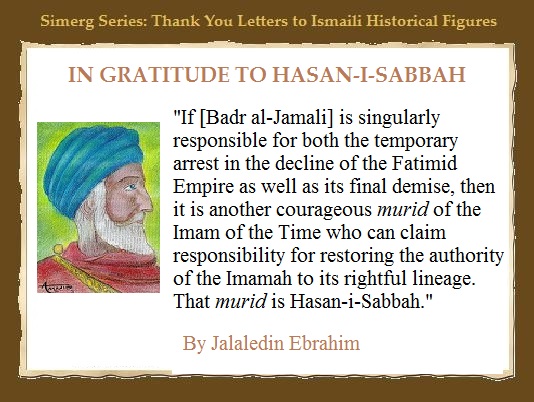
“…[Hasan-i-Sabbah] is officially welcomed by representatives of the Imam because of his referral by the chief dai of Persia. There is no evidence of an official meeting with the Imam of the Time, but there is also no evidence that he does not receive a glimpse of the Imam. But even if that is not possible to substantiate, he certainly has the opportunity to make a pragmatic and sagacious assessment of the Fatimid political system…” Continue readingThanking Ismaili Historical Figures: Hasan-i-Sabbah








 Simerg - Insights from Around the World