
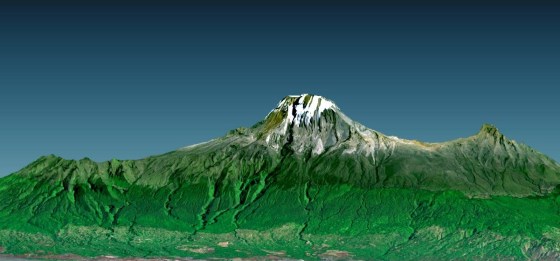
I chanced upon this excellent article by Professor Karim through shear serendipity, while explaining to my daughter about obstacle courses. She had just gone through a 10K run at the International Raceway in Mechanicsville, Maryland, which included rock climbing, and scaling a tall wall. I conveyed to her that I had done all that stuff, and then some, in the 23 days I had spent at the Outward-bound Mountain School, Loitokitok in the early 1970’s. It was then, thanks to Google maps, that I was able to revisit the sprawling compound of well-manicured lawns, that sits close to the base of the indomitable Mt Kilimanjaro.
The exhilarating experience one gets during the preparation and climb to the “roof of Africa”, which is, euphemistically, what Mt Kilimanjaro is, remains ingrained in every participant who has undertaken this task.
Like Prof Karim, I arrived on the scene, as an18-year old, raw in every sense, post ordinary level high school, but with the hope and vibrant energy and curiosity of a kid let loose in a candy store. Thanks to our indefatigable Geography teacher at Kigezi College, Butobere, in Kabale, Uganda, Mr. Richard White, I had had the benefit of climbing a few medium tall mountains, such as the 12,000-foot Mt Sabinyo, an extinct volcano in south-western Uganda, but, this had neither given me the preparation, nor the resilience required to attack and conquer the deceptively gentle giant.
I had been lucky enough to be the only kid among ten applicants, who had successfully passed both the doctor’s physical and endurance tests. I would later join a group of other students from Uganda, that included a former classmate of mine, who later became Prime Minister of Uganda. Mr John Patrick Amama Mbabazi was Uganda’s Prime Minister from 2011 to 2014.
Arriving at Loitokitok near the foot of Mt Kilimanjaro in early December 1971, most of us were young and naive, experiencing life away from our home environment for the first time. We became part of the larger group of students drawn from the other two East African countries (Kenya & Tanzania) at the time, in all, constituting perhaps, 200 in number. I can recall a few students like Job, from Alliance High School in Nairobi, who was in my team. There were others from Sitarehe High School, whose names have since faded from my lousy memory. The instructors were mostly Kenyan and Tanzanian military officers, since this facility was used as training ground for those countries’ military personnel.
Although the training during the first two weeks was extremely rigorous, including such activities as a daily 2-kilometer run, rock-climbing, ziplines, and scaling high walls, we were all told to keep our eyes on the prize, the ascent to the top of the giant yonder, which we could see clearly from the campus. We also got baptism by fire, like the day I was pushed into the freezing swimming pool by one of the instructors, early in the morning, only to turn around and throw a tire tied to a rope at me, after gulping a few mouthfuls. That incident alone inspired me to learn how to swim long afterwards. We even participated in a marathon run, that meandered through parts of the Masai Mara, teaming with our four-legged neighbors. When that time for the climb finally arrived, we were given the mountain gear we needed, (so we thought), and we embarked on the challenge, beginning with the “solo night”. Each one of us was assigned a bushy area, which was your turf, on which to build shelter and prepare a meal for the night. With the minimum 3 match sticks given to you, it required a lot of dexterity and perseverance to get that fire going. I was luckier than Prof Karim, in that I managed to kindle the fire and make dinner. Not everyone was that successful in that act. Not having a hot meal on that severely cold night condemned one to begin the 5 am climb on empty, the first cardinal sin for a mountaineer. The night itself was interspersed with false alarms from kids who got scared out of their wits, after hearing, or simply imagining they heard noises of approaching animals.
Story continues below
~~~~~~~
We started around 5 am in the morning, with the goal of reaching Mawenzi peak by late afternoon, to give us sufficient time to rest and reboot for the final destination to the roof. However, along the way, a number of kids suffered mountain sickness that pushed one almost into delirium, as the oxygen in the atmosphere got thinner. But that put extra loads on the backs of those who still had a semblance of normalcy, thereby slowing the pace altogether. But finally, we made it to Mawenzi peak, after experiencing a dusting of snow, which added a layer of misery to our already debilitated bodies. We crowded ourselves into round tin huts for the night, in groups of 10 per hut. The body heat generated by crowding helped in ameliorating the severe weather conditions experienced on top of the mountain, unless of course your sleeping bag was in direct contact with the metal, in which case you shivered all night. I still consider it one of the coldest nights I have ever experienced.
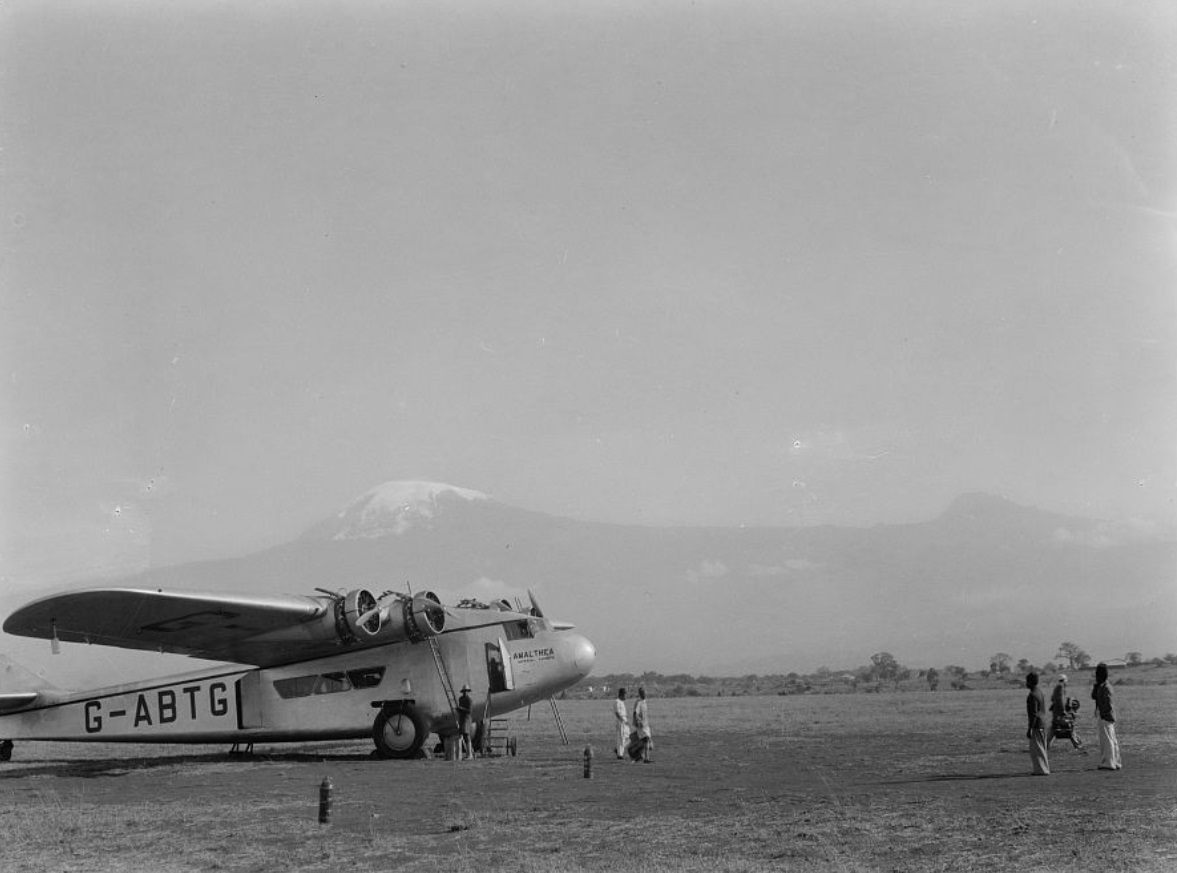
At around 2 O’clock, we were awakened to get ready to embark on the journey to the ultimate prize, getting to Kibo peak. We scrambled to boil water for tea, which we needed during those frigid temperatures. In the process, we learned that water boils at much lower temperatures at high altitudes, to a point where you could dip your finger into hot water without getting it scalded. Later, as I attended Makerere University in Kampala, Uganda, I found myself narrating this experience to a bunch of students at Kitante High School, where I moonlighted as a physics teacher. Walking north along the saddle between Mawenzi and Kibo, we formed a single file and followed our instructors. Once the sun came out, the bright rays blinded us as they reflected on the layer of ice and snow that blanketed the top of the mountain, which was a much thicker icecap then than exists today.
Still, we soldiered on seemingly getting closer towards Kibo, which looked deceptively close and yet perpetually elusive. By this time, our bodies were numb with the blistering cold air, and our feet swollen from stepping in the wet slit combination of ice and the snow dusting that had fallen overnight. The layers of clothing we had carried with us, including hand gloves, and balaclavas for the heads were no doubt proving inadequate for the climatic conditions most of us had ever faced. No wonder the Chaga had called the mountain “Kileme”, that which defeats. At about 10 am, we met the group which had approached the climb from the north and headed to Kibo directly. Our instructors and theirs went into some brief dialogue we were not privy to, and when they emerged, they announced, much to our chagrin, that we would all turn around and embark on our descent. There were many protests among us, but the instructors squashed all that, military-style, attempting to convince us that we had achieved our overall objective of fulfilling the school’s mantra of, “To Serve, to Strive, and never to Yield”, although our group never reached Kibo peak. I remain unpersuaded to this day.
Story continues below
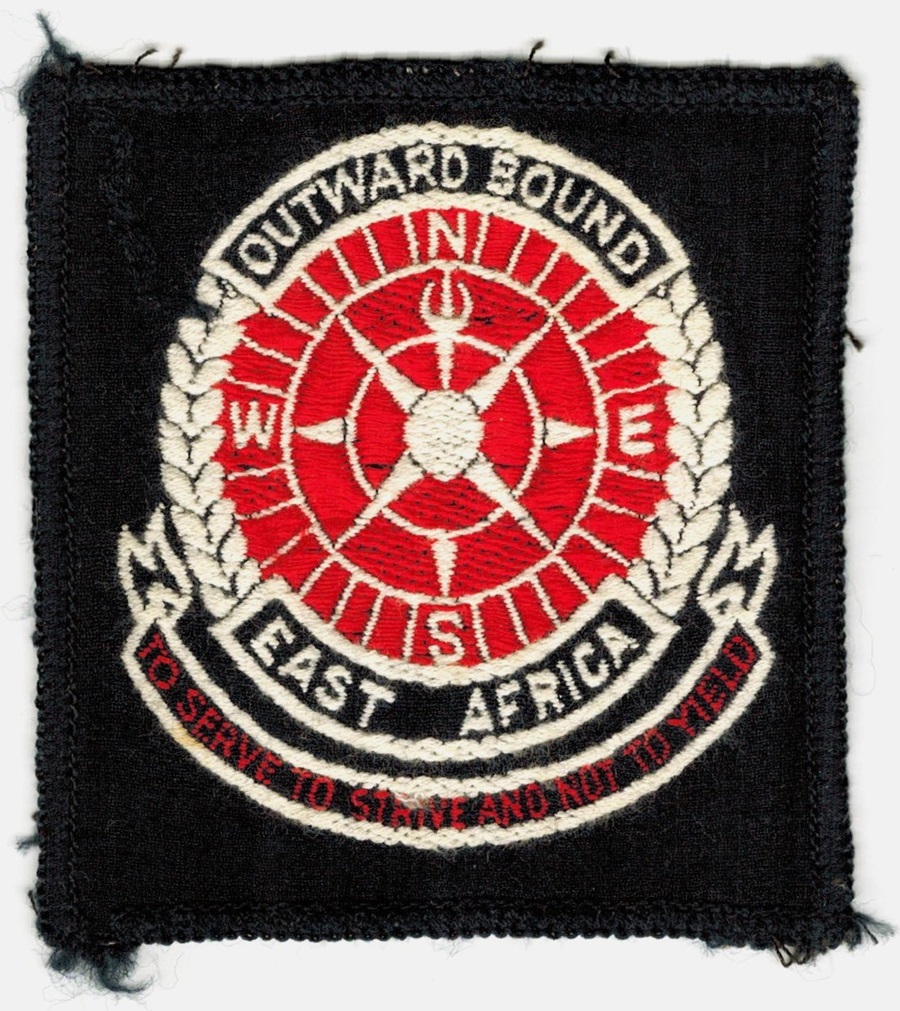
It took us the rest of the day to descend the gentle giant, because those of us who still had some stamina left, were burdened with helping the unfortunate ones whose lungs could not suck in enough oxygen to keep them moving on their own (including the former PM). That evening, exhausted as we were, there were ceremonies at the Outward-Bound Mountain School, to mark the closure of Course 127. The following morning, we said our goodbyes to the friends we had made, and headed back to our domiciles, armed with the irreplaceable satisfaction of one who has accomplished what once appeared to be Mission Impossible.
Climbing Mt Kilimanjaro will forever remain one of my greatest achievements, a story I am proud to tell anyone willing to listen.
Thank you, Prof Karim, for sharing your heart-warming experience with us, and rekindling a smoldering fire.
Date posted: September 25, 2024.
Featured image at the top of post: The 3-D perspective view of Mount Kilimanjaro was generated using topographic data from the Shuttle Radar Topography Mission (SRTM), a Landsat 7 satellite image, and a false sky. The topographic expression is vertically exaggerated two times. Landsat has been providing visible and infrared views of the Earth since 1972. Date Acquired: February 21, 2000 (Landsat 7).
__________________
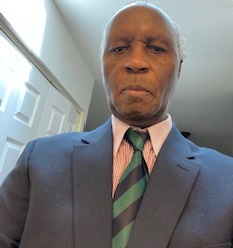
About the author: Nick Ngazoire Nteireho was born in Rukungiri District, Western Uganda. He obtained a bachelor’s degree in economics from Makerere University’s Institute of Statistics and Applied Economics. Escaping Uganda during the turmoil of Idi Amin’s brutal regime, he settled in Washington DC, pursued graduate degrees at George Washington and American Universities in Washington DC, USA, followed by a long career at the World Bank in Washington DC, where he worked on economic research involving models and forecasting. He later joined Fairfax County’s Department of Tax Administration, where he worked as a Senior Commercial Real Estate Appraiser for a decade.
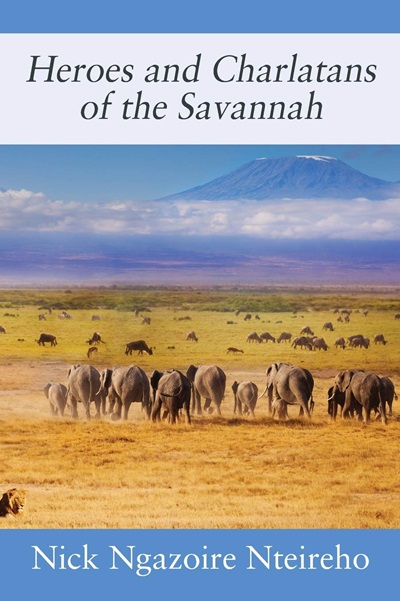
He has published three books. His latest, titled “Heroes and Charlatans of the Savannah”, traces the Genesis of Sub-Sahara African countries Independence, and is available on Amazon as a paperback and Kindle editions.
Nick Nteireho lives in Fairfax County, Virginia, with his wife with whom they have two adult children.

 Simerg - Insights from Around the World