
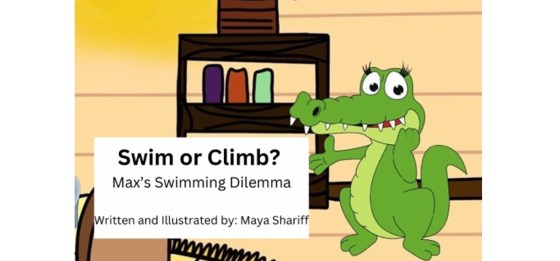
Simerg’s introduction of “Books by Ismaili Authors” continues with a story by 16-year-old Maya Shariff. We follow the same Q/A format as our earlier presentations of books, which are listed chronologically below. We encourage Ismaili authors worldwide to participate in this series, regardless of when their books were published. See details of the series HERE and submit your responses to Simerg’s editor, Malik, at mmerchant@simerg.com.
Simerg’s Message to Young Ismaili Muslim Writers: If a story you have presented in your school — whether in the classroom, a special event, or a newsletter — has received high marks from your teacher, please consider the opportunity to share it with a broader audience by submitting it for publication on this website, with the consent of your parents and school teacher. Maya Shariff’s submission and story below are good examples for your consideration. Note that Maya has published her book as a paperback and has a YouTube read-along presentation. Please submit your responses to the standard questions — see below — with the story to Simerg’s editor, Malik, at mmerchant@simerg.com.
****************
I want to bring awareness to peer pressure and the importance of being able to express yourself from a very young age. My goal is to try to bring awareness to kids about what peer pressure is in hopes that when they are being pressured to do anything they are uncomfortable doing, that they able to voice their feelings and are not afraid to do so — Maya Shariff, Dallas, Texas.
Simerg: What is behind the name and title of the book?
Maya Shariff: The title of my book is “Swim or Climb? Max’s Swimming Dilemma.” The Character in the book has a choice of either doing what he loves to do, which is climbing, or choosing what his friends want him to do so he can fit in like the rest of the kids.
Simerg: Why would you want me or my family to read the book, and what will we learn from it?
Maya: From my research before I started this project I found by talking with many parents, children, and teachers, that peer pressure begins at a very young age. There is a stigma that peer pressure only happens in middle and high school. However, it happens at a very young age when kids are not aware that they are pressuring someone to do something of their liking and the other person may not know how to properly respond and stand up for themselves. Reading this book will give an example of peer pressure at a young age and show children how to stand up to it and be confident in themselves.
Simerg: What inspired you to write the book?
Maya: I want to bring awareness to this topic of peer pressure and the importance of being able to express yourself from a very young age. From my experience as someone who was peer pressured and from conversing with younger kids under the age of 10, peer pressure starts at an age as young as kindergarten. My goal is to try to bring awareness to kids about what peer pressure is in hopes that when they are being pressured to do anything they are uncomfortable doing, that they are able to voice their feelings and are not afraid to do so.
Interview continues below
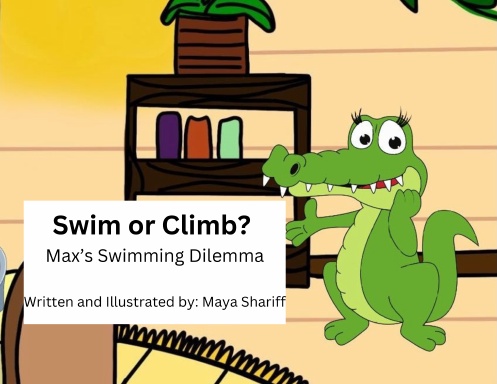
Paperback Edition of Maya’s Book
__________________
YouTube Read-Along Presentation By Maya Shariff
_____________________________
Simerg: How can I purchase the book, and what are its available formats?
Maya: You can purchase the book’s paperback edition through the Lulu website; all proceeds from the sale go to the Girl Scouts Organization. I also have a read-along audiobook version on YouTube for kids that you can watch above.
Simerg: Did you hire an editor or an illustrator, or did you do all the work by yourself?
Maya: This is a self-published book through Lulu. My IB English teacher approved all the content, and I wrote and hand-drew my illustrations.
Simerg: Which was your first book, and how many have you written?
Maya: This is my first self-published book.
Simerg: How long did it take you to write the book — from start to finish?
Maya: Writing the book and content approval took about a month. Illustrations took 6 months. This book is not to be marketed as it’s a Gold Award Project. Having the book on this website will create a greater awareness of this issue to young children, and the activities at the end of the book will assist the kids in comprehension and understanding of the topic “peer pressure.”
Simerg: Tell us something more about your book (and its primary character).
Maya: Max and Jack come across an ad in the local newspaper for a swimming competition. They meet a girl named Crystal who loves to swim. Max feels pressured to learn how to swim to fit in. Will Max be influenced by Crystal’s behavior? Or will he resist being peer pressured? I, therefore, invite you to join in the reading of “Swim or Climb? Max’s Swimming Dilemma,” as we discover an example of peer pressure.
Date posted: October 4, 2024.
_______________
About the Author

Maya Sharif, a sixteen-year-old high school student at Plano East Senior High School in Plano, near Dallas, Texas, is a Girl Scout Cadette with Troop #167. Her passion project, Peer Pressure, reflects her commitment to making a difference. Her book, “Swim or Climb? Max’s Swimming Dilemma”, is a powerful tool in raising awareness about peer pressure at young ages, helping children understand its implications and learn to resist it. Maya’s future is bright, with aspirations to pursue a career in the healthcare sector. In her free time, she enjoys running track, binge-watching Netflix, and spending time with her family. She lives in Dallas.
Calling all Ismaili Authors
We encourage Ismaili writers to introduce their books in a similar format as has been done in the post above. Please also see the series launch article and submit your responses to Malik at mmerchant@simerg.com. All submissions will be acknowledged. If a writer has published multiple books, each book will be highlighted in a separate article, and not combined with other books into one post. All writers should include a brief profile with a portrait photo.
_______________
Links to the Ismaili Authors’ Series (in chronological sequence, oldest article first)
- “Justice Bertha Wilson Pushes the Boundaries of Humanity” by Shamas Nanji (featured in Simerg on February 10, 2021, series start date)
- “Little One, You Are The Universe” by Zeni Shariff (February 25, 2021)
- “Memoirs of a Muhindi” by Mansoor Ladha (March 6, 2021, and see also 15 and 21 by the same author)
- “To Be One With God: Seven Journeys to the Meaning of Life” by Shafeen Ali (March 25, 2021)
- “Invisible Birthmarks” by Alnasir Rajan (April 13, 2021)
- “IN THE NAME OF JUSTICE – Portrait of a ‘Cowboy’ Judge” by Azmina Suleman (April 28, 2021)
- “RSVP Rice and Stew Very Plenty” by Nazlin Rahemtulla (May 28, 2021)
- “Coughdrops” by Nargis Fazal (June 12, 2021)
- “The Roots and the Trees” by Nizar Sultan (June 25, 2021)
- “Faith and Ethics: The Vision of the Ismaili Imamat” by M. Ali Lakhani (July 4, 2021)
- “Nairobi Days by Shelina_Shariff Zia (July 21, 2021)
- “Shine Brighter” by Shairoz Lakhani (December 8, 2021)
- “This is My Life” by Naznin Rahemtulla Hébert (February 26, 2022)
- “Humanizing Medicine – Making Health Tangible” by Dr. Azim Jiwani (March 9, 2022)
- “A Portrait in Pluralism: Aga Khan’s Shia Ismaili Muslims” by Mansoor Ladha (June 8, 2022, and see also 3 and 21 by the same author)
- “Malaria Memoirs: My Life Journey as a Public Health Doctor in Tanzania” by Dr Zul Premji (June 30, 2022)
- “Monkey Tales and Other Short Stories” by Mahmoud Hirji (September 10, 2022)
- “Bloom! A Story of Diversity and Understanding” by Shamim Murji (October 27, 2022)
- “Cooking with Mom” by Rozina Ramji (November 7, 2022)
- “SPARK: Journey from Success to Significance” by Azim Jamal (July 17, 2023)
- Off the Cuff by Mansoor Ladha (August 3, 2023, and see also 3 and 15 by the same author)
- Mehndi Boy by Zain Bandali (November 18, 2023)
- All the Russ Without the Fuss by Reeshma Haji (March 2, 2024)
- al-Risalah al-Bahirah (The Epistle on the Radiance) by Abu Ya’qub al-Sijistani, translated by Boustan Hirji (April 3, 2024)
- Namirembe Road by Salim Rahemtulla (August 3, 2024).
- Swim or Climb: Max’s Swimming Dilemma by Maya Shariff (October 4, 2024).
_______________________
Before departing this website please take a moment to review Simerg’s Table of Contents for links to hundreds of thought provoking pieces on a vast array of subjects including faith and culture, history and philosophy, and arts and letters to name a few. Also visit Simerg’s sister websites Barakah, dedicated to His Highness the Aga Khan, and Simergphotos. Simerg’s editor may be reached via email at mmerchant@simerg.com.


 Simerg - Insights from Around the World