Simerg is an independent initiative dedicated to Ismaili Muslims, the Aga Khan — their Hereditary Imam — and the Ismaili Imamat, and Islam in general through literary readings, photo essays and artistic expressions
Author Archives: Malik Merchant, Editor
Founding publisher and editor of www.barakah.com, www.simerg.com and www.simergphotos.com.
“All men, rich and poor, must aid one another materially and personally. This fraternity is absolute, and it comprises men of all colours and all races: black, white, yellow, tawny; all are the sons of Adam in the flesh and all carry in them spark of the Divine Light. Everyone should strive to see that this spark be not extinguished but rather developed to that full Companionship-on-High.” — Aga Khan III in a message to commemorate his Platinum Jubilee
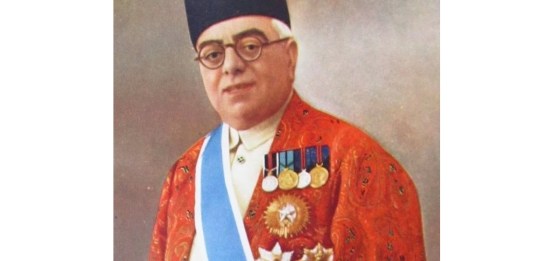
Born on November 2, 1877, Aga Khan III became the 48th Hereditary Imam of the Shia Ismaili Muslims at seven! He led his worldwide community for an astonishing 72 years until his death on July 11, 1957, when he designated his grandson, Prince Karim Aga Khan, the 49th Imam.
Prince Karim said of his grandfather: “On 2nd November 1877, my beloved grandfather was born here in Karachi. Through 72 years of Imamat, he guided his spiritual children to happiness and prosperity….Many, many memories come to our minds as we think of him. He achieved in his life, for our community, that which could only have been accomplished normally in a period of many generations. The tributes that the world has paid him bear honest testimony to his great life and work.”
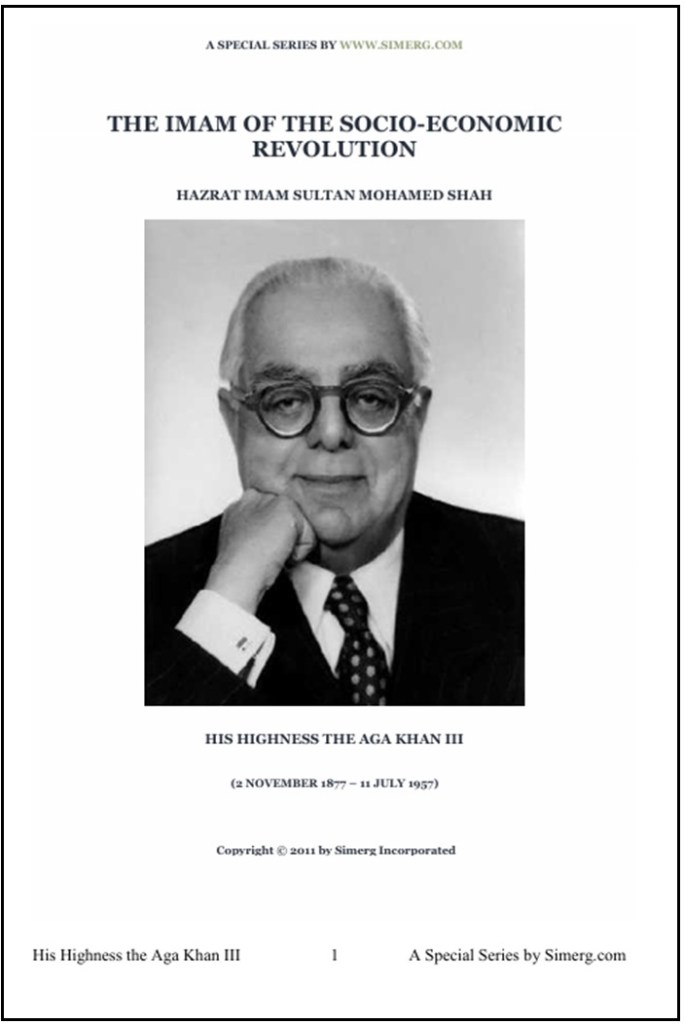
Cover page of Simerg’s publication The Imam of the Socio-Economic Revolution. Please click on the image to download the PDF file.
Simerg presents a 191-page booklet providing highlights and glimpses of his life. Please click HERE or on the cover page image posted on this page.
Passion, dedication, hard work, and commitment to an incredible cause — finding a cure for Alzheimer’s! That person is Princess Yasmin Aga Khan, who has raised over US $87 million during the past 40 years since her mother, Rita Hayworth, died from Alzheimer’s.
Alzheimer’s and other forms of dementia are not just distant issues. They are prevalent in our own communities. In the USA, approximately 7 million people are affected; in Canada, the number is 750,000. These numbers highlight the urgent need for awareness and action. In 2022, Alzheimer’s disease alone was identified as the ninth leading cause of all deaths in Canada.
Just Imagine a world without Alzheimer’s! That is the vision behind naming the Alzheimer’s Association’s annual IMAGINE BENEFIT event in New York. The most recent gala, held on October 23, 2024, brought together over 300 guests and raised US $1.2 million.
Inna lillahi wa inna ilayhi raji’un “Surely we belong to God, and to Him we return” — Holy Qur’an, 2:156
“Life is a great and noble calling, not a mean and grovelling thing to be shuffled through as best as we can but a lofty and exalted destiny.” — Mawlana Sultan Mahomed Shah, His Highness the Aga Khan III (1877-1957), 48th Ismaili Imam.
A TRIBUTE TO SALIM JIWA & HIS DEVOTED WIFE MINA & FAMILY
The late Salim Jiwa (d. September 2024) with his wife Mina. Photograph: Jiwa Family Collection.
By FAROUK B.K.S. VERJEE
Salim Sadrudin Jiwa passed away in Vancouver in September 2024 at the age of 73. He leaves behind his devoted wife, Mina, and 3 children.
Salim, born on the shores of Lake Victoria in Bukoba, Tanzania, began his journalism career in Dar es Salaam, the Capital. This was a significant time for Tanganyika, which was newly independent and faced a scarcity of local journalists. In this urgent context, ambitious Salim quickly made his mark. President Nyerere wanted local journalists to write their aspirations for a multi-racial, African Socialist society. His vision was reflected in his diverse cabinet, which included Amir Jamal, an Ismaili, as his Minister of Finance and a European Bryson, as his Minister of Agriculture, showcasing the inclusivity of his leadership.
Nyerere’s policy of African Socialism followed the Arusha Declaration of February 5, 1967, which, over the years, resulted in nationalizing businesses and individual properties. These measures unsettled many in the Indian and expatriate business communities.
For young Salim, Canada was a welcoming choice. He could apply for his status from within Canada, and with freedom of speech, as a journalist, he could write as he pleased.
He never went back.
Starting with the Province Newspaper, the second largest daily in British Columbia (BC), as a minority immigrant, he faced the usual challenge of no “Canadian experience.” His relentless ambition, determination, and sharp humour made him a daring crime reporter. His drive is a testament to what can be achieved with sheer determination. Crime reporters get hardened over time.
He reported on a murder in the posh British Properties in West Vancouver.
A daughter-in-law was killed by her father-in-law, leaving behind a daughter of 4 months.
Salim and his wife Mina stepped forward and adopted her to give the young baby a loving home and an escape from the terrible family trauma.
At his well-attended funeral in September, I met some of Salim’s retired colleagues from the Province Newspaper. I thanked them for coming and told them I had met Salim in 1975 when he was a cub reporter. His colleagues remarked that Salim was no cub; he was a Lion!
In 1985, the bombing of Air India Flight 182 over the Atlantic took over 329 lives, 90 of whom were children. The flight had originated from Toronto and had suspected links to the Khalistan Movement. To this day, it remains the largest terrorist event in Canadian history.
After a $100 Million prosecution, this crime remains unresolved. A memorial marks this horrendous tragedy in Vancouver’s Stanley Park, bearing the names of all the victims. Salim wrote a bestseller, Death of Air India Flight 182.
In his book’s dedication, he writes: “This book is dedicated to the 329 victims of the sabotage of Air India Flight 182 and the two victims of the Narita bomb, as well as their families. Also to the Royal Canadian Mounted Police for their extraordinary work, members of the Canadian Security Intelligence Service, who must remain in the shadows, and investigators in the United Kingdom, Ireland, Japan, the USA and India. Finally, to my wife and children for all their help.”
Fabian Dawson the former Deputy Editor of the Province expressed the following sincere and heartfelt tribute to Salim:
“Salim was larger than life character in the newsroom. He was well respected, funny and always armed with a pun.”
Fabian worked alongside Salim for almost three decades. He continued:
“Throughout his career, Salim’s ability to build rapport with sources, from law enforcement to the families affected by tragedy, was legendary….his ability to connect with people on a human level made him not only a remarkable journalist but also a cherished friend to many. Salim’s presence in the newsroom was influential as it will be unforgettable.”
Story continues below
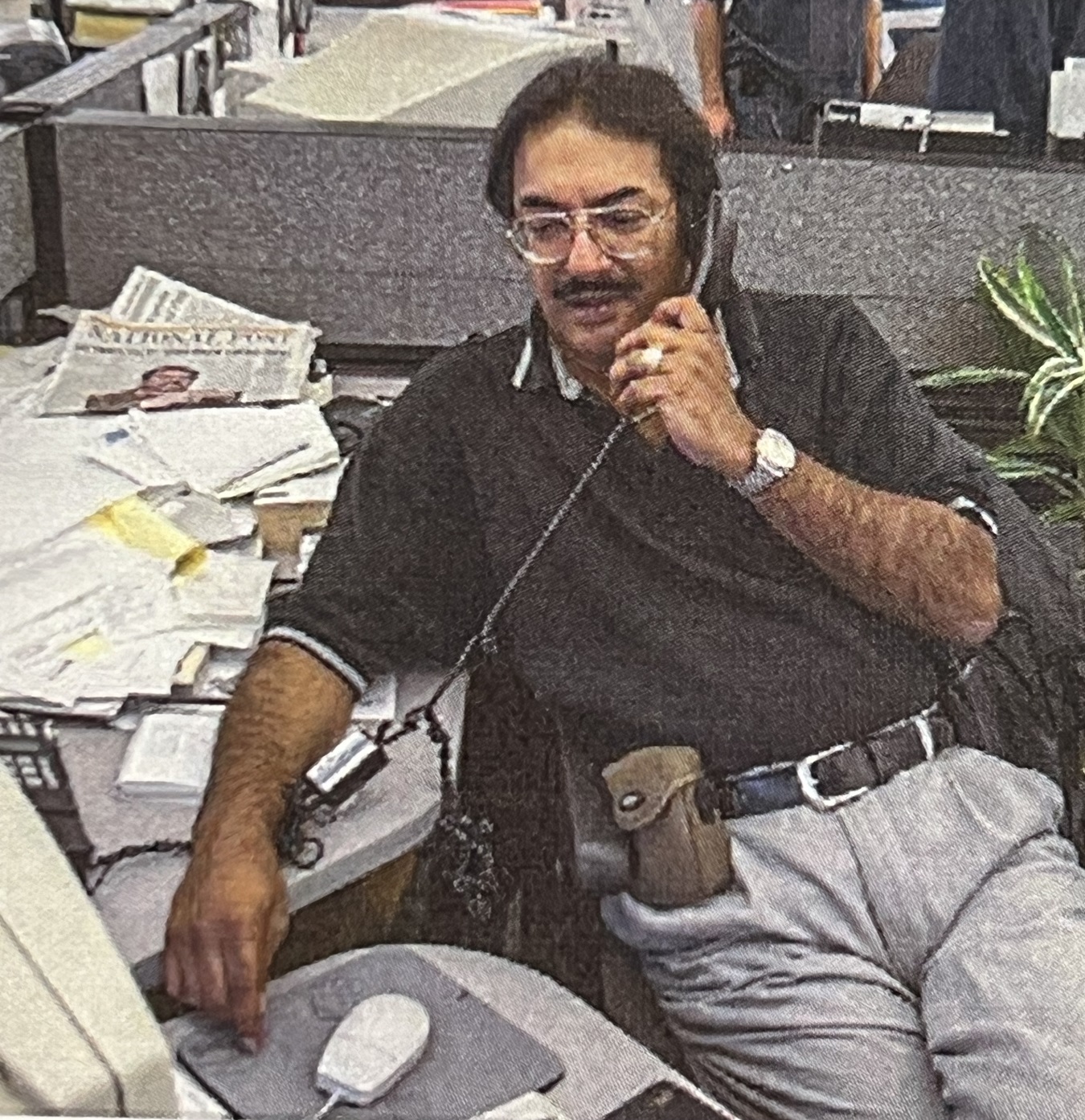
Salim Jiwa at his desk at The Province, Vancouver’s daily newspaper, first published in 1898. Photograph: Via Jiwa Family Collection.
As the Honorary Secretary of the Aga Khan Council for Western Canada in 1975, we were wary and very shy of the media. Salim was very pushy about asserting our Ismaili identity, as most had arrived here stateless, impoverished, with a loss of identity, and in culture shock.
~~~~~~
“At his well-attended funeral in September, I met some of Salim’s retired colleagues from the Province Newspaper. I thanked them for coming and told them I had met Salim in 1975 when he was a cub reporter. His colleagues remarked that Salim was no cub; he was a Lion!” — Farouk Verjee
~~~~~~
Salim was a big man with a huge heart. He did not mind stepping on toes to get his job done. He was gentle with my toes and most cooperative, as was his other colleague, publisher Promod Puri, the founder of the weekly Link Newspaper, which covers the broadest spectrum of the South Asian Communities news and social and political activities in BC. The paper continues to thrive today.
Salim’s contribution to our Just Society has been enormous but rarely acknowledged in the larger community.
His peers awarded him the prestigious Jack Webster Award for excellence in legal journalism. He also received the MacMillan Bloedel’s Annual Journalism Award for outstanding writing, journalistic initiative, public service, and contribution to the understanding of important issues.
Salim in in his last days left the following message to his family:
“I have had a full and beautiful life, and I have done everything one could wish for far and beyond any anticipation in my life. I have no regrets about the way I have lived my life. I have supreme affection for Mina, Farouk, Hafeez, Alyia, and my children’s wives.
Story continues below
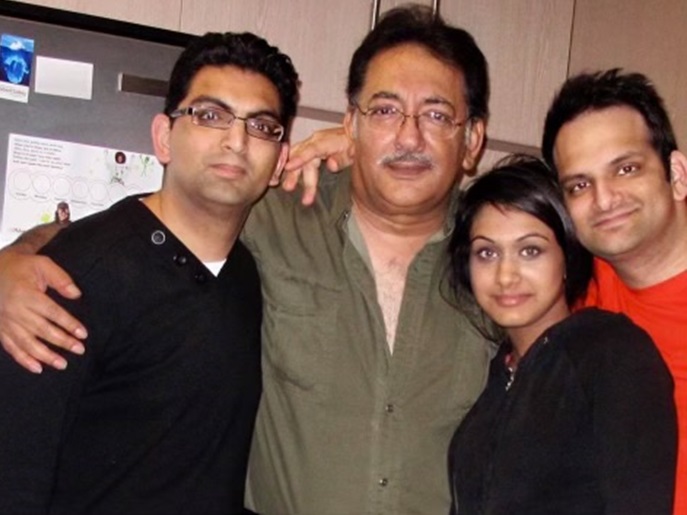
Salim Jiwa with his children Farouk, Hafeez, and Alyia. Photograph: Jiwa Family Collection.
“My grandchildren have been a source of love and joy. My sisters, my mother, and my father have loved me. No regrets people. Enjoy your lives, as I have mine. Do good to all. Be generous, be fair, help the less fortunate and act with justice towards all.”
Salim, you are greatly missed by your family, friends and colleagues. Rest in Peace. Brother, Ameen.
Indeed, I may conclude that by their inspiring examples, Salim and Mina are the unsung heroes and heroines of the Ismaili Jamat. They have also served the larger community as outstanding, exemplary citizens.
Date posted: October 24, 2024. Last update: October 31, 2024 (added text of Salim Jiwa’s dedication in his book and an image of the cover page).
Correction: In an earlier version of this post, we misstated Fabian Dawson as the former publisher of The Province. He was the deputy editor.
_______________
Condolence messages: We invite readers to submit their condolences, memories and tributes to Salim Jiwa by clicking LEAVE A COMMENT.
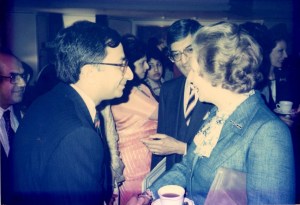
Farouk Verjee, left, with Baroness Margaret Thatcher (1925 – 2013) at the opening of the Ismaili Centre London, April 24, 1985.
About the writer: Farouk B.K.S. Verjee served as the Honorary Secretary of His Highness the Aga Khan Shia Imami Ismaili Council for Canada for 5 years from 1979-1984. He then became the Council’s President until 1987. His terms of office saw the foundation laying ceremony of the Ismaili Jamatkhana and Centre (a Silver Jubilee Project) by the Honourable Henry Bell-Irving, Lieutenant-Governor General of British Columbia, as well as its opening in 1985 by Canada’s Prime Minister, Brian Mulroney (d. February 2024). Both the ceremonies took place in the presence of Mawlana Hazar Imam, His Highness the Aga Khan, and his family members.
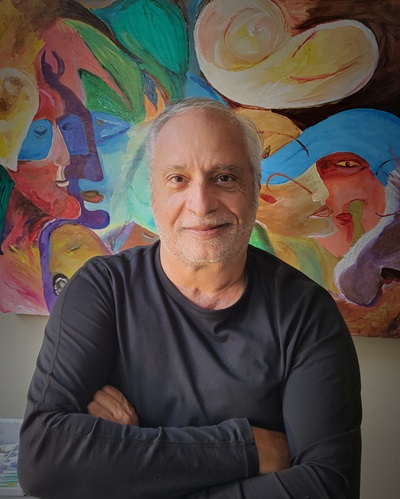
I am a self-taught artist from Tanzania based in Vancouver/Burnaby, Canada. I am retired and work from home in my studio. My art is inspired by vibrant landscapes and diverse wildlife. I try and capture them in my paintings. I also enjoy exploring abstraction and the human figure in my work. I like using vibrant colours in my art because I want to engage the viewer in a brighter way of seeing and experiencing life. I view these images through the artistic lens, looking at every angle, shape, and ray of light as a direct receptacle for creation.
Canadian Ismaili artist Mehboob Rajwani
I have exhibited works at the Roundhouse Community Centre organized by the Aga Khan Ismaili Council for Canada and various local exhibitions, including the Vancouver Outsider Arts Festival and Ismaili Center Vancouver. Recently, my artwork was accepted for display in Dubai for the Global Encounters 2025. My art piece, “Baobab Buffaloes,” was published in a book by Taslim Samji, “Kampala to Canada.” My work has also been published in the Artany Magazine, U.K.
I am enrolled at Emily Carr University of Arts and Design to demonstrate my commitment to art. I am glad to share a few of my art pieces through this forum in Simerg, which highlights the work of Ismaili Muslim artists worldwide.
Dadimaa
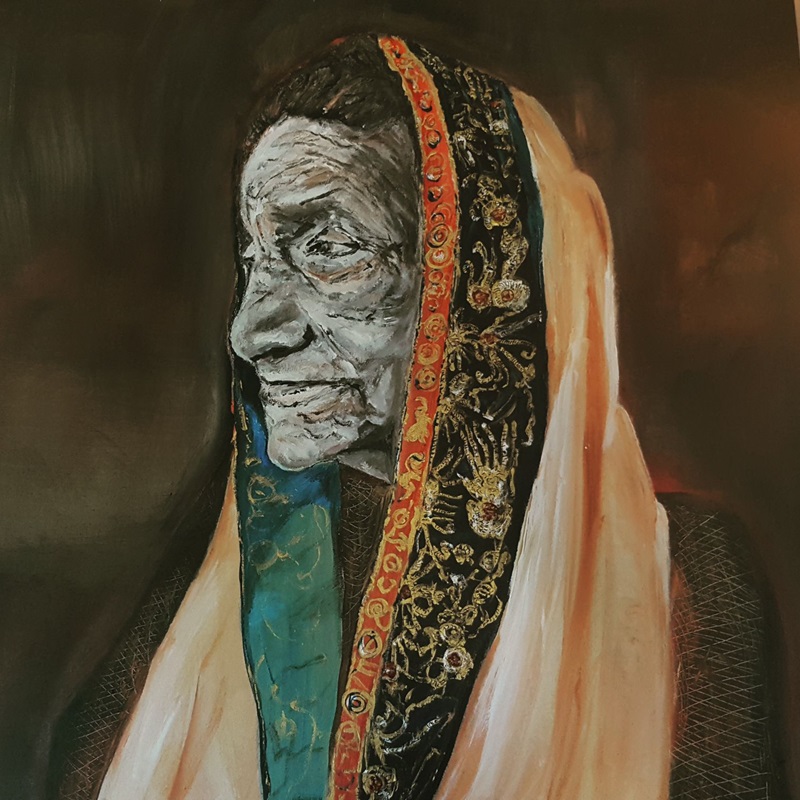
Dadimaa, Acrylic on Canvas,30″ x 30″, July 2017, painting by Mehboob Rajwani
This portrays the ever-knowing grandmother. Though she may be shrouded in elegant brocade, her face shows what lies beneath. Her eyes carry the weight from years of life. Guile imbues her profile as wisdom unravels itself from a loom of knowledge. The intricacies of her wins and losses, light and darkness, defeats and accomplishments, are captured in this still singular moment. She has been left and loved, witnessed wars, and seen the world shift like a handful of sand slipping between her fingers. Where there is pain, one finds Allah giving her strength and His compassion to forge ahead into the present, no longer lost but found. This painting was inspired by a photograph of Sultan Bhaloo’s grandmother.
______________________
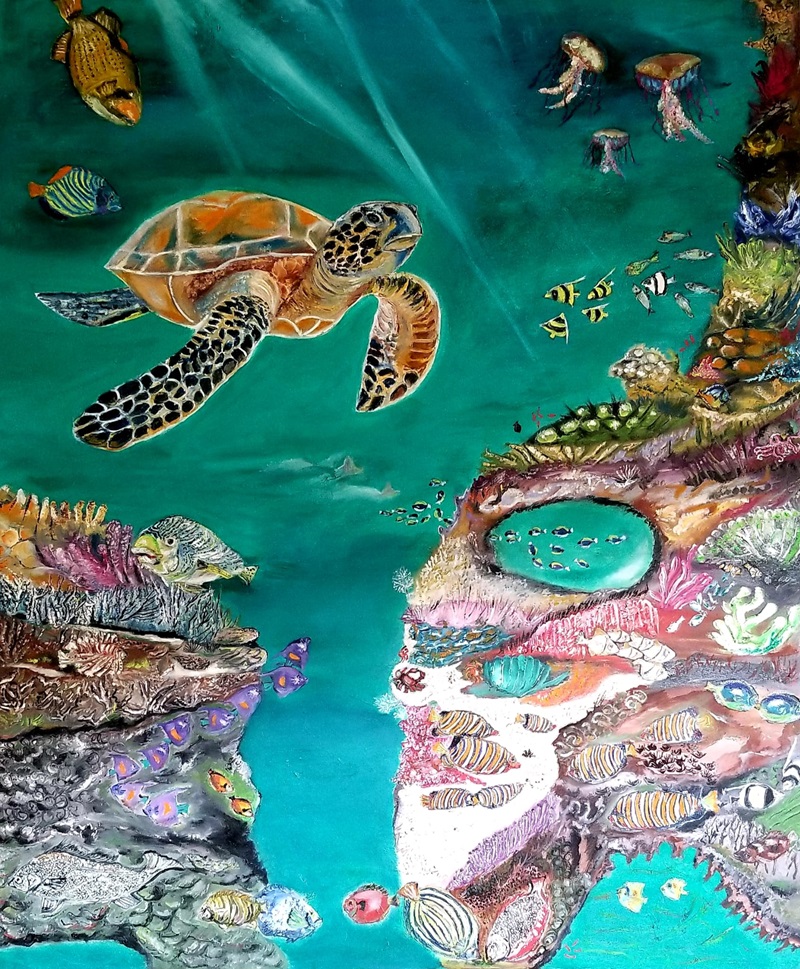
Vanishing Paradise
Vanishing Paradise, Oil, 48″ x 60″, January 2024, painting by Mehboob Rajwani.
All of us have an opportunity to save the natural world in one way or another. They say we fall in love with nature in different ways. For some, it is beholding orcas leaping out of the ocean, a heron silently stalking fish in a lagoon at dawn, the tragic joy of a salmon run. Thus, representing all of nature in its fragility. As such, I have created an underwater ocean floor to bring awareness for the beauty and splendour of the diverse species and coral that are unfortunately facing extinction.
I used oil paints to create an imaginative multi-coloured reef in an aquamarine background with a swimming turtle, exotic fish, and other colourful species. This work also depicts the gradual extinction of coral as it becomes dead and bleached, thus reducing the number of inhabitants.
My goal is to show the ocean’s importance as our home and the need to care for it as such. “In the existential quest to save the future, we need loving, persuasive leaders to save Earth,” says environmentalist Calvin Sandborn.
______________________
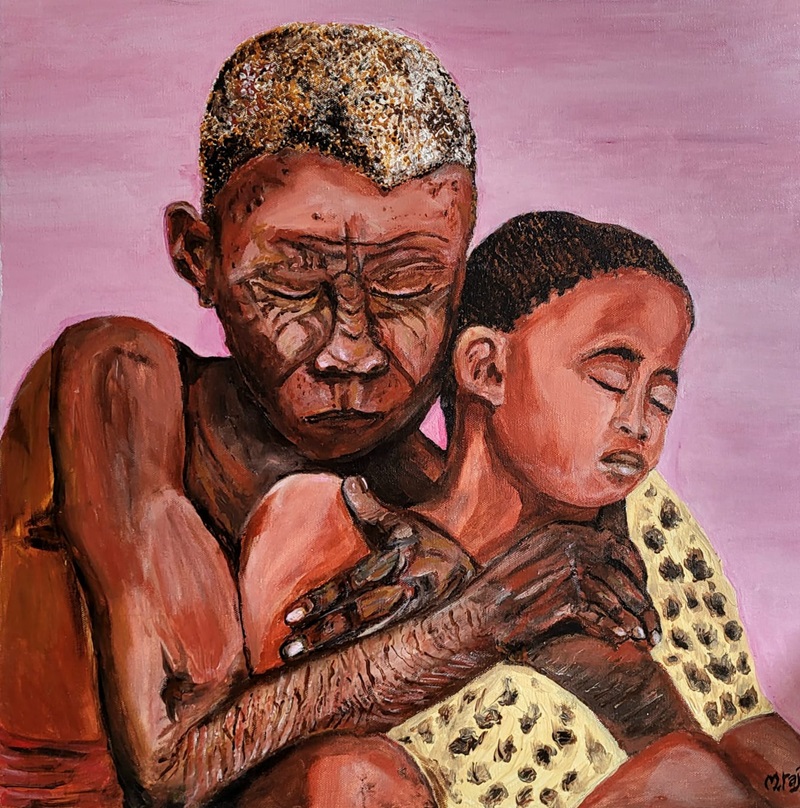
Let Me Protect You
Let Me Protect You, Acrylic on Canvas, 26″ x 26″, 2023, painting by Mehboob Rajwani.
This piece depicts a loyal grandmother and child embracing in a moment of shared love.
______________________
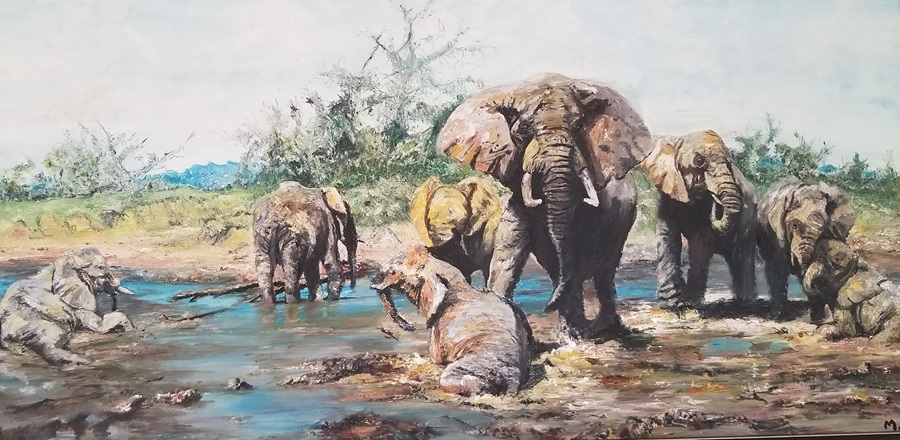
Elephants in Mud
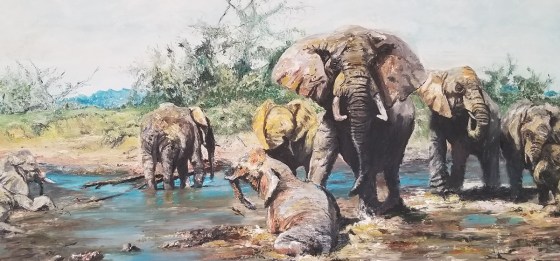
Elephants in Mud, Oil, 30″ x 60″, 1977, by Mehboob Rajwani
This piece is sentimental to me as it is the first one of my works done in Canada. It reminds me of the wildlife memories I left behind in Africa. It took me some time as I painted it slowly, creating each elephant at a time. It displays the mother and calves enjoying playing in the mud, washing each other’s backs with their long trunks and being protective and caring. Their proximity to the water hole offers sustenance and a desirable cooling effect. Their unique ability to remember is poignant and touching, as they remain with their herd for years. Elephant mothers are fiercely nurturing and protective. As a result, nature has so much to teach us about family, love and caring for one another. At a time when poachers are prevalent, it is important to celebrate and protect these beautiful creatures. This piece has been selected by Global Encounters 2025 for exhibition in Dubai.
______________________
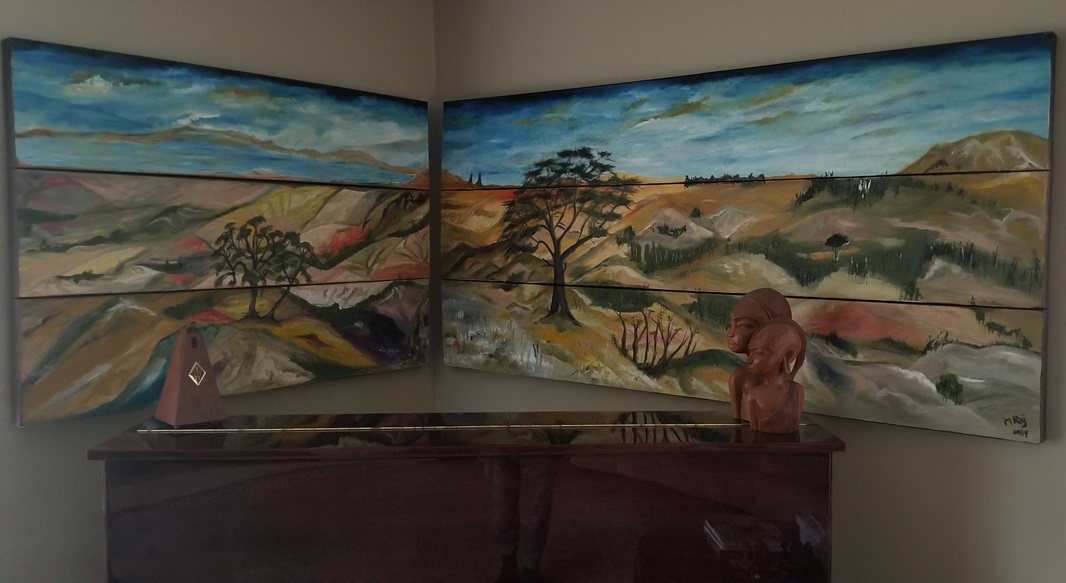
Dreamscape
Dreamscape, Oil, series of two paintings, 33” X 47″ and 33” x 70”, paintings by Mehboob Rajwani,
This painting represents The Okanagan Desert and is the common name for a semi-arid shrubland located in the southern region of the Okanagan Valley in British Columbia. It is centered around the city of Osoyoos and is the only semi-arid shrubland in Canada. Part of this ecosystem is called the Nk’mip Desert by the Osoyoos Indian Band. It is one of the most endangered ecosystems in Canada.
The artistic vision of this work is to show the dry arid hills’ breadth and the land’s scope, which still maintain their beauty despite their fragility. The hills are dream-like to me, representing waves that could go on for miles and miles, yet looking stark and even lost because of their lack of vegetation. I have added robust colours to this imaginary scape to bring out the vividness of the land as it may have been at one time in the past. I have used six-panel canvases to bring the segments in unison. When placed together as one painting, they symbolically mark the fragmented nature of this piece and the possibility of wholeness in nature.
______________________
Mardi Gras
Mardi Gras, Acrylic on Canvas, 30″ x 66″, painting by Mehboob Rajwani.
Mardi Gras is celebrated with faces depicting masks of love, hate, despair, and hope. The intricacies of bright colours and festivities demonstrate my representation of humanity. By bringing all cultures together and blending them into one another, Mardi Gras creates a peaceful symbol of unification and celebration. Here, difference is encouraged and complementary to the final vision.
Date posted: October 22, 2024. Last updated: October 23, 2024.
Corrections: (1) Taslim Samji was misspelled as Talim, and (2) it was incorrectly mentioned that Sultan Bhaloo took photographs of the paintings displayed here. A portrait of Bhaloo’s grandmother inspired Mehboob Rajwani’s painting Dadimaa. The corrections are reflected in our latest update.
__________________
We welcome feedback/letters from our readers. Please click Leave a comment. Your feedback may be edited for length and brevity and is subject to moderation. We are unable to acknowledge unpublished letters.
The editor invites Ismaili artists to submit a selection of their paintings and other works of art for publication in Simerg. Please submit images of no more than 8 objects in Jpeg (1200 x 900) and your profile to the editor, Malik, at mmerchant@simerg.com.
In his Talika (written message) to his Ismaili Muslim followers, His Highness the Aga Khan, the 49th Hereditary Imam of the Ismaili Muslims and direct descendant of the Prophet Muhammad (may peace be upon him and his family), mentioned that his family members at his request had assumed additional responsibilities to assist him in important areas of his work. The Aga Khan’s younger brother, Prince Amyn, his eldest child, Princess Zahra, and his three sons, Prince Rahim, Prince Hussain and Prince Aly Muhammad, have responded magnificently to the Imam’s call, showing a united front in their efforts.
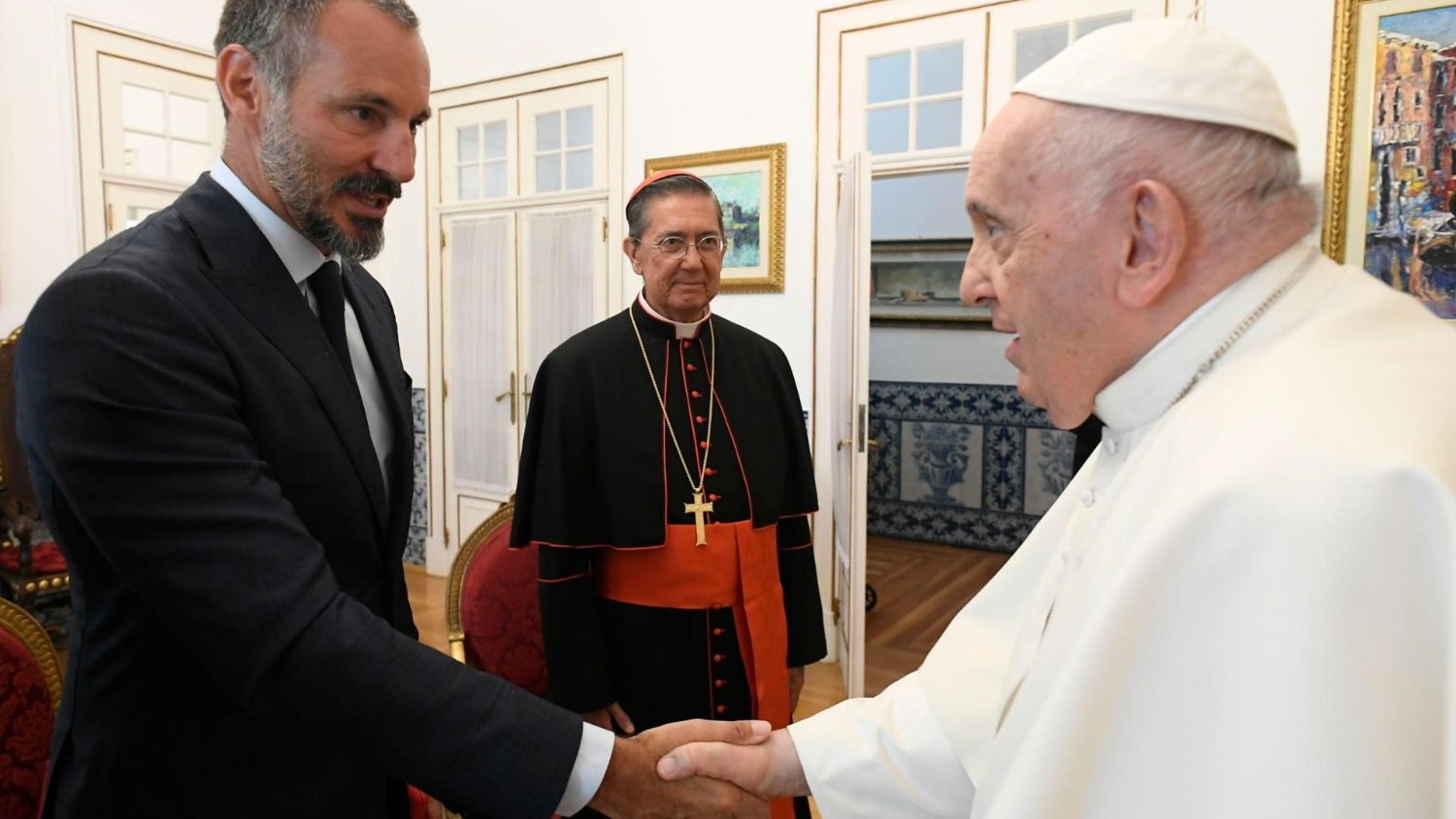
Pope Francis warmly greeted Prince Rahim Aga Khan during their private audience in Lisbon, Portugal, on August 4, 2023. The Pope was visiting Lisbon for World Youth Day. Photograph: Vatican News. Please click on the image for Prince Rahim’s articles.
They have travelled worldwide to review the work of the Ismaili Imamat and attended significant events related to the expansion and development of ongoing and new projects. Prince Rahim, a graduate of Brown University, celebrated his 53rd birthday on October 12, 2024, and he is arguably perhaps the busiest among all family members. Our sister website highlights 53 years of his life through a two-part series. Please read Prince Rahim Aga Khan (1971-2021) and Prince Rahim Aga Khan (2022-2024).
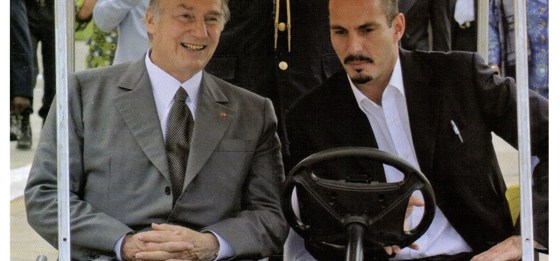
Featured photo at the top of post: Prince Rahim, in the company of his father, His Highness the Aga Khan, visited an Aga Khan Development Network (AKDN) project in Abidjan, Ivory Coast, in 2008.
Date posted: October 12, 2024. Last updated: October 22, 2024.
Simerg’s introduction of “Books by Ismaili Authors” continues with a story by 16-year-old Maya Shariff. We follow the same Q/A format as our earlier presentations of books, which are listed chronologically below. We encourage Ismaili authors worldwide to participate in this series, regardless of when their books were published. See details of the series HERE and submit your responses to Simerg’s editor, Malik, at mmerchant@simerg.com.
Simerg’s Message to Young Ismaili Muslim Writers: If a story you have presented in your school — whether in the classroom, a special event, or a newsletter — has received high marks from your teacher, please consider the opportunity to share it with a broader audience by submitting it for publication on this website, with the consent of your parents and school teacher. Maya Shariff’s submission and story below are good examples for your consideration. Note that Maya has published her book as a paperback and has a YouTube read-along presentation. Please submit your responses to the standard questions — see below — with the story to Simerg’s editor, Malik, at mmerchant@simerg.com.
****************
I want to bring awareness to peer pressure and the importance of being able to express yourself from a very young age. My goal is to try to bring awareness to kids about what peer pressure is in hopes that when they are being pressured to do anything they are uncomfortable doing, that they able to voice their feelings and are not afraid to do so — Maya Shariff, Dallas, Texas.
Simerg: What is behind the name and title of the book?
Maya Shariff: The title of my book is “Swim or Climb? Max’s Swimming Dilemma.” The Character in the book has a choice of either doing what he loves to do, which is climbing, or choosing what his friends want him to do so he can fit in like the rest of the kids.
Simerg: Why would you want me or my family to read the book, and what will we learn from it?
Maya: From my research before I started this project I found by talking with many parents, children, and teachers, that peer pressure begins at a very young age. There is a stigma that peer pressure only happens in middle and high school. However, it happens at a very young age when kids are not aware that they are pressuring someone to do something of their liking and the other person may not know how to properly respond and stand up for themselves. Reading this book will give an example of peer pressure at a young age and show children how to stand up to it and be confident in themselves.
Simerg: What inspired you to write the book?
Maya: I want to bring awareness to this topic of peer pressure and the importance of being able to express yourself from a very young age. From my experience as someone who was peer pressured and from conversing with younger kids under the age of 10, peer pressure starts at an age as young as kindergarten. My goal is to try to bring awareness to kids about what peer pressure is in hopes that when they are being pressured to do anything they are uncomfortable doing, that they are able to voice their feelings and are not afraid to do so.
Interview continues below
Paperback Edition of Maya’s Book
“Swim or Climb? Max’s Swimming Dilemma” by Maya Shariff, with notes Mrugakshi Kulkarni; self-published through Lulu, July 12, 2024; paperback, 20pp. See below for a read-along version on YouTube.
__________________
YouTube Read-Along Presentation By Maya Shariff
_____________________________
Simerg: How can I purchase the book, and what are its available formats?
Maya: You can purchase the book’s paperback edition through the Lulu website; all proceeds from the sale go to the Girl Scouts Organization. I also have a read-along audiobook version on YouTube for kids that you can watch above.
Simerg: Did you hire an editor or an illustrator, or did you do all the work by yourself?
Maya: This is a self-published book through Lulu. My IB English teacher approved all the content, and I wrote and hand-drew my illustrations.
Simerg:Which was your first book, and how many have you written?
Maya: This is my first self-published book.
Simerg: How long did it take you to write the book — from start to finish?
Maya: Writing the book and content approval took about a month. Illustrations took 6 months. This book is not to be marketed as it’s a Gold Award Project. Having the book on this website will create a greater awareness of this issue to young children, and the activities at the end of the book will assist the kids in comprehension and understanding of the topic “peer pressure.”
Simerg: Tell us something more about your book (and its primary character).
Maya: Max and Jack come across an ad in the local newspaper for a swimming competition. They meet a girl named Crystal who loves to swim. Max feels pressured to learn how to swim to fit in. Will Max be influenced by Crystal’s behavior? Or will he resist being peer pressured? I, therefore, invite you to join in the reading of “Swim or Climb? Max’s Swimming Dilemma,” as we discover an example of peer pressure.
Date posted: October 4, 2024.
_______________
About the Author
Maya Sharif, a sixteen-year-old high school student at Plano East Senior High School in Plano, near Dallas, Texas, is a Girl Scout Cadette with Troop #167. Her passion project, Peer Pressure, reflects her commitment to making a difference. Her book, “Swim or Climb? Max’s Swimming Dilemma”, is a powerful tool in raising awareness about peer pressure at young ages, helping children understand its implications and learn to resist it. Maya’s future is bright, with aspirations to pursue a career in the healthcare sector. In her free time, she enjoys running track, binge-watching Netflix, and spending time with her family. She lives in Dallas.
Calling all Ismaili Authors
We encourage Ismaili writers to introduce their books in a similar format as has been done in the post above. Please also see the series launch article and submit your responses to Malik at mmerchant@simerg.com. All submissions will be acknowledged. If a writer has published multiple books, each book will be highlighted in a separate article, and not combined with other books into one post. All writers should include a brief profile with a portrait photo.
_______________
Links to the Ismaili Authors’ Series (in chronological sequence, oldest article first)
Before departing this website please take a moment to review Simerg’s Table of Contents for links to hundreds of thought provoking pieces on a vast array of subjects including faith and culture, history and philosophy, and arts and letters to name a few. Also visit Simerg’s sister websites Barakah, dedicated to His Highness the Aga Khan, and Simergphotos. Simerg’s editor may be reached via email at mmerchant@simerg.com.
I chanced upon this excellent article by Professor Karim through shear serendipity, while explaining to my daughter about obstacle courses. She had just gone through a 10K run at the International Raceway in Mechanicsville, Maryland, which included rock climbing, and scaling a tall wall. I conveyed to her that I had done all that stuff, and then some, in the 23 days I had spent at the Outward-bound Mountain School, Loitokitok in the early 1970’s. It was then, thanks to Google maps, that I was able to revisit the sprawling compound of well-manicured lawns, that sits close to the base of the indomitable Mt Kilimanjaro.
The exhilarating experience one gets during the preparation and climb to the “roof of Africa”, which is, euphemistically, what Mt Kilimanjaro is, remains ingrained in every participant who has undertaken this task.
Like Prof Karim, I arrived on the scene, as an18-year old, raw in every sense, post ordinary level high school, but with the hope and vibrant energy and curiosity of a kid let loose in a candy store. Thanks to our indefatigable Geography teacher at Kigezi College, Butobere, in Kabale, Uganda, Mr. Richard White, I had had the benefit of climbing a few medium tall mountains, such as the 12,000-foot Mt Sabinyo, an extinct volcano in south-western Uganda, but, this had neither given me the preparation, nor the resilience required to attack and conquer the deceptively gentle giant.
I had been lucky enough to be the only kid among ten applicants, who had successfully passed both the doctor’s physical and endurance tests. I would later join a group of other students from Uganda, that included a former classmate of mine, who later became Prime Minister of Uganda. Mr John Patrick Amama Mbabazi was Uganda’s Prime Minister from 2011 to 2014.
Arriving at Loitokitok near the foot of Mt Kilimanjaro in early December 1971, most of us were young and naive, experiencing life away from our home environment for the first time. We became part of the larger group of students drawn from the other two East African countries (Kenya & Tanzania) at the time, in all, constituting perhaps, 200 in number. I can recall a few students like Job, from Alliance High School in Nairobi, who was in my team. There were others from Sitarehe High School, whose names have since faded from my lousy memory. The instructors were mostly Kenyan and Tanzanian military officers, since this facility was used as training ground for those countries’ military personnel.
Although the training during the first two weeks was extremely rigorous, including such activities as a daily 2-kilometer run, rock-climbing, ziplines, and scaling high walls, we were all told to keep our eyes on the prize, the ascent to the top of the giant yonder, which we could see clearly from the campus. We also got baptism by fire, like the day I was pushed into the freezing swimming pool by one of the instructors, early in the morning, only to turn around and throw a tire tied to a rope at me, after gulping a few mouthfuls. That incident alone inspired me to learn how to swim long afterwards. We even participated in a marathon run, that meandered through parts of the Masai Mara, teaming with our four-legged neighbors. When that time for the climb finally arrived, we were given the mountain gear we needed, (so we thought), and we embarked on the challenge, beginning with the “solo night”. Each one of us was assigned a bushy area, which was your turf, on which to build shelter and prepare a meal for the night. With the minimum 3 match sticks given to you, it required a lot of dexterity and perseverance to get that fire going. I was luckier than Prof Karim, in that I managed to kindle the fire and make dinner. Not everyone was that successful in that act. Not having a hot meal on that severely cold night condemned one to begin the 5 am climb on empty, the first cardinal sin for a mountaineer. The night itself was interspersed with false alarms from kids who got scared out of their wits, after hearing, or simply imagining they heard noises of approaching animals.
Story continues below
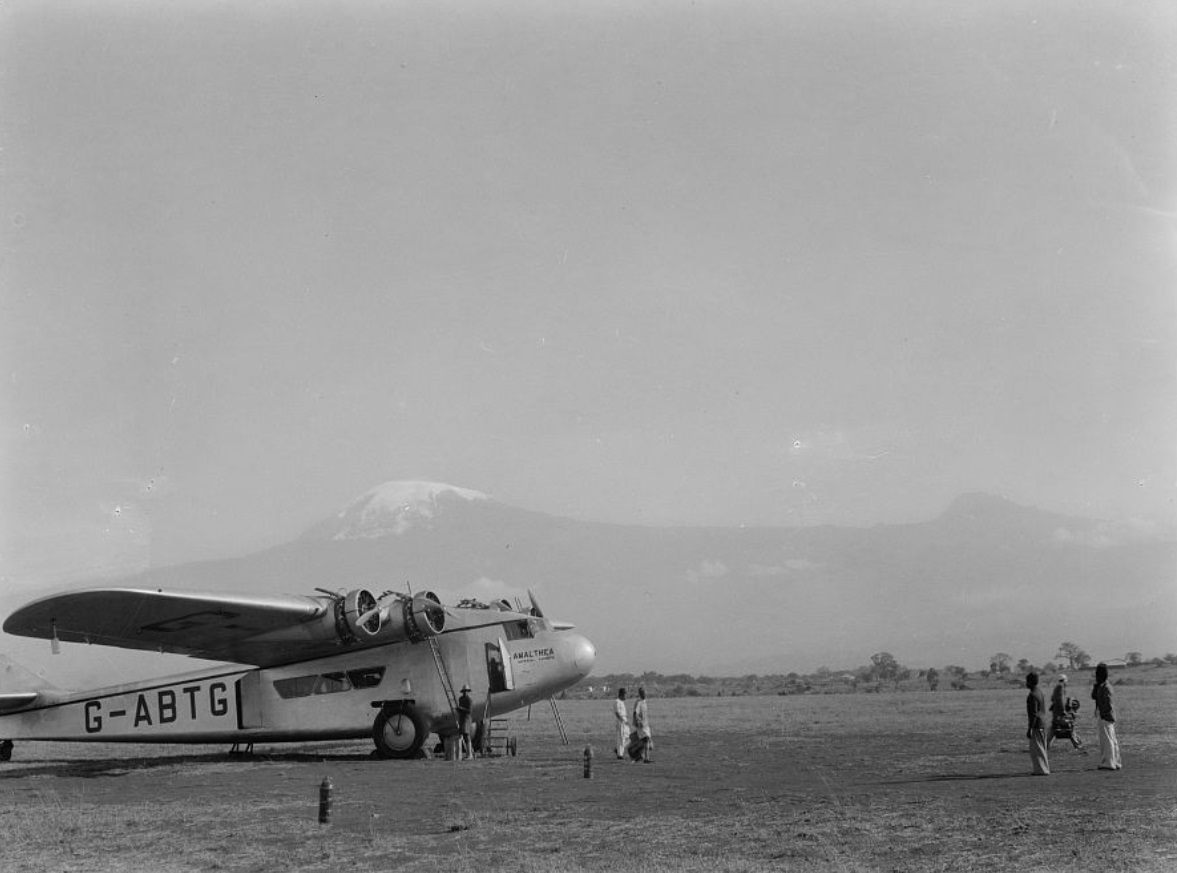
Snow-capped Kibo peak of Kilimanjaro at left with the Mawenzi peak at right, pictured in 1936 from a landing ground near Moshi, Tanzania (then Tanganyika). The plane was en route to Arusha. Photograph: Matson (G. Eric and Edith) Photograph Collection, US Library of Congress.
~~~~~~~
We started around 5 am in the morning, with the goal of reaching Mawenzi peak by late afternoon, to give us sufficient time to rest and reboot for the final destination to the roof. However, along the way, a number of kids suffered mountain sickness that pushed one almost into delirium, as the oxygen in the atmosphere got thinner. But that put extra loads on the backs of those who still had a semblance of normalcy, thereby slowing the pace altogether. But finally, we made it to Mawenzi peak, after experiencing a dusting of snow, which added a layer of misery to our already debilitated bodies. We crowded ourselves into round tin huts for the night, in groups of 10 per hut. The body heat generated by crowding helped in ameliorating the severe weather conditions experienced on top of the mountain, unless of course your sleeping bag was in direct contact with the metal, in which case you shivered all night. I still consider it one of the coldest nights I have ever experienced.
At around 2 O’clock, we were awakened to get ready to embark on the journey to the ultimate prize, getting to Kibo peak. We scrambled to boil water for tea, which we needed during those frigid temperatures. In the process, we learned that water boils at much lower temperatures at high altitudes, to a point where you could dip your finger into hot water without getting it scalded. Later, as I attended Makerere University in Kampala, Uganda, I found myself narrating this experience to a bunch of students at Kitante High School, where I moonlighted as a physics teacher. Walking north along the saddle between Mawenzi and Kibo, we formed a single file and followed our instructors. Once the sun came out, the bright rays blinded us as they reflected on the layer of ice and snow that blanketed the top of the mountain, which was a much thicker icecap then than exists today.
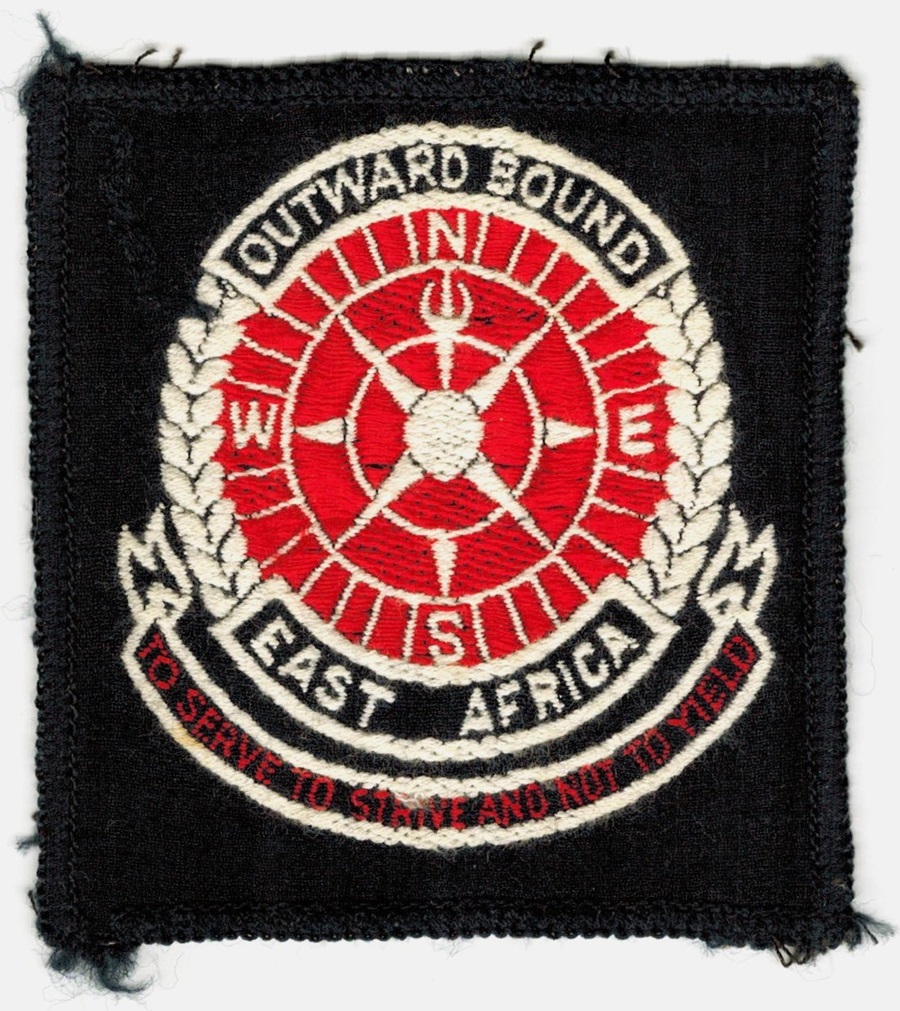
Still, we soldiered on seemingly getting closer towards Kibo, which looked deceptively close and yet perpetually elusive. By this time, our bodies were numb with the blistering cold air, and our feet swollen from stepping in the wet slit combination of ice and the snow dusting that had fallen overnight. The layers of clothing we had carried with us, including hand gloves, and balaclavas for the heads were no doubt proving inadequate for the climatic conditions most of us had ever faced. No wonder the Chaga had called the mountain “Kileme”, that which defeats. At about 10 am, we met the group which had approached the climb from the north and headed to Kibo directly. Our instructors and theirs went into some brief dialogue we were not privy to, and when they emerged, they announced, much to our chagrin, that we would all turn around and embark on our descent. There were many protests among us, but the instructors squashed all that, military-style, attempting to convince us that we had achieved our overall objective of fulfilling the school’s mantra of, “To Serve, to Strive, and never to Yield”, although our group never reached Kibo peak. I remain unpersuaded to this day.
Story continues below
Outward Bound badge with the motto “To Serve to Strive and Not to Yield”. Photograph: Karim H. Karim collection.
It took us the rest of the day to descend the gentle giant, because those of us who still had some stamina left, were burdened with helping the unfortunate ones whose lungs could not suck in enough oxygen to keep them moving on their own (including the former PM). That evening, exhausted as we were, there were ceremonies at the Outward-Bound Mountain School, to mark the closure of Course 127. The following morning, we said our goodbyes to the friends we had made, and headed back to our domiciles, armed with the irreplaceable satisfaction of one who has accomplished what once appeared to be Mission Impossible.
Climbing Mt Kilimanjaro will forever remain one of my greatest achievements, a story I am proud to tell anyone willing to listen.
Thank you, Prof Karim, for sharing your heart-warming experience with us, and rekindling a smoldering fire.
Date posted: September 25, 2024.
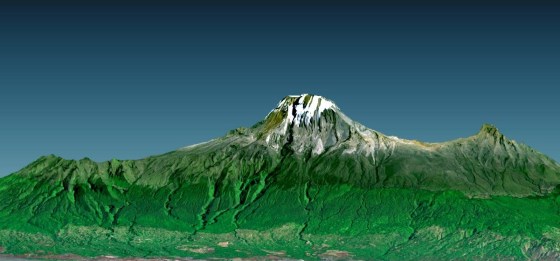
Featured image at the top of post: The 3-D perspective view of Mount Kilimanjaro was generated using topographic data from the Shuttle Radar Topography Mission (SRTM), a Landsat 7 satellite image, and a false sky. The topographic expression is vertically exaggerated two times. Landsat has been providing visible and infrared views of the Earth since 1972. Date Acquired: February 21, 2000 (Landsat 7).
__________________
About the author: Nick Ngazoire Nteireho was born in Rukungiri District, Western Uganda. He obtained a bachelor’s degree in economics from Makerere University’s Institute of Statistics and Applied Economics. Escaping Uganda during the turmoil of Idi Amin’s brutal regime, he settled in Washington DC, pursued graduate degrees at George Washington and American Universities in Washington DC, USA, followed by a long career at the World Bank in Washington DC, where he worked on economic research involving models and forecasting. He later joined Fairfax County’s Department of Tax Administration, where he worked as a Senior Commercial Real Estate Appraiser for a decade.
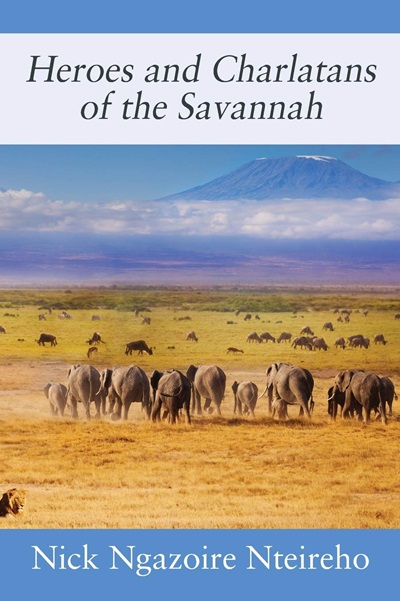
He has published three books. His latest, titled “Heroes and Charlatans of the Savannah”, traces the Genesis of Sub-Sahara African countries Independence, and is available on Amazon as a paperback and Kindle editions.
Nick Nteireho lives in Fairfax County, Virginia, with his wife with whom they have two adult children.
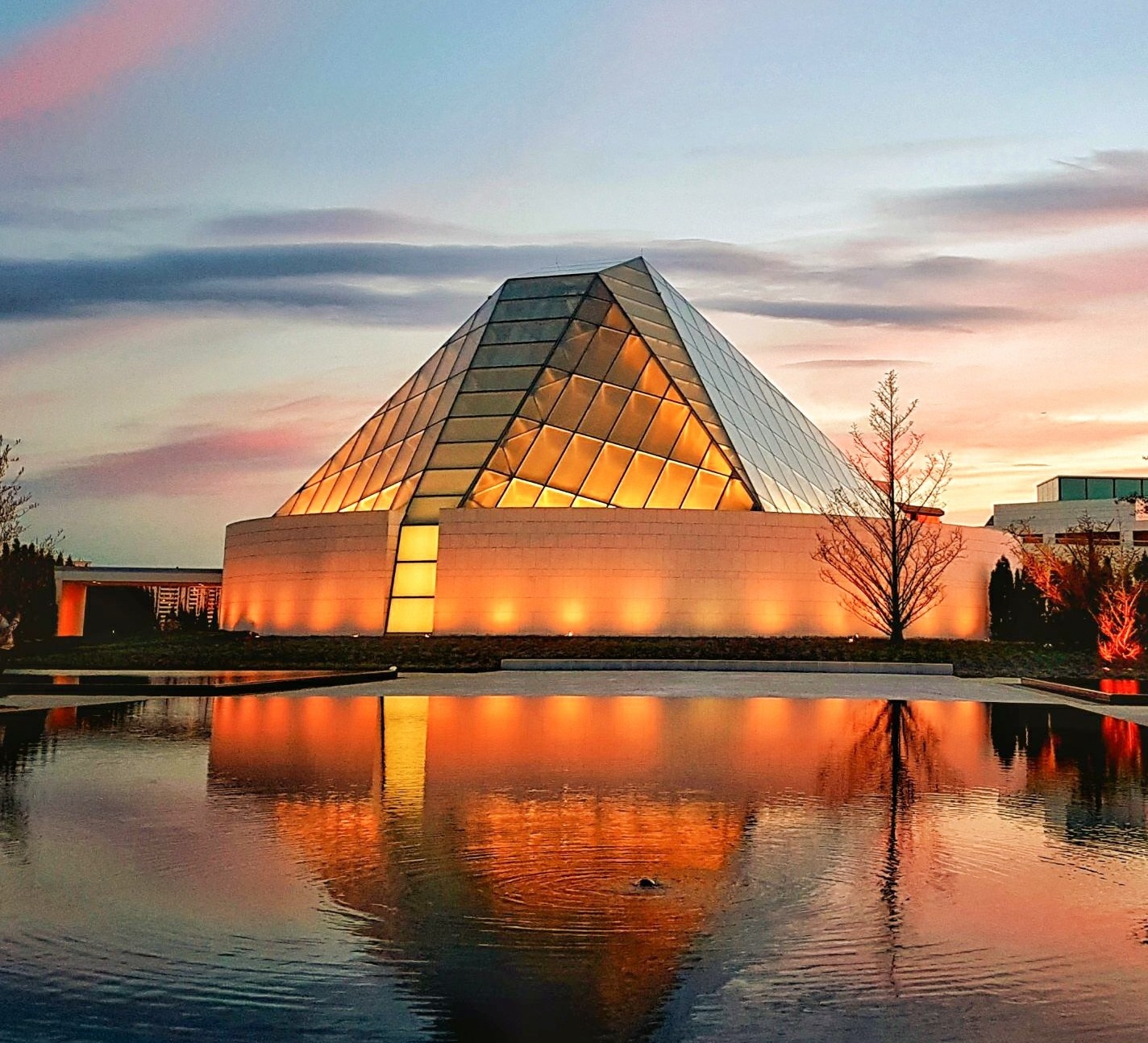
The Jamatkhana Dome, Ismaili Centre Toronto, 49 Wynford Drive. Photograph: The Ismaili.Please click on the image for the Centre’s 10th anniversary pictorial essay.
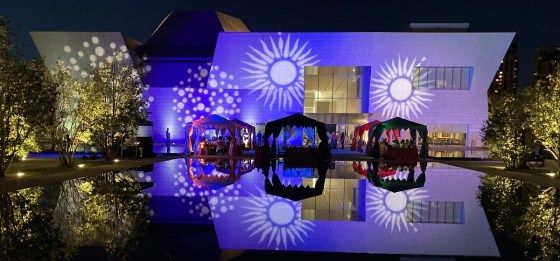
Since their inauguration by former Canadian Prime Minister Stephen Harper and His Highness the Aga Khan in mid-September 2014, the Ismaili Centre Toronto and the Aga Khan Museum have become among the most beloved buildings explored by the public during the Doors Open Toronto held every May. The buildings, with their mission to promote cultural understanding, have consistently attracted thousands of visitors for their incredible artistic and architectural features and the rich collection of artifacts housed in the Museum. The Ismaili Centre’s domed Jamatkhana, a unique architectural marvel, is a sight to behold. Its remarkable features, under which Ismaili Muslims congregate for prayers daily, make it one of the most distinctive buildings in the country. Watching the building from the Don Valley Parkway when the dome is lit at night is a truly breathtaking experience.
As the buildings celebrate their 10th anniversary, we present two posts that will give our readers a glimpse of these fascinating projects. Please click on THE ISMAILI CENTRE and THE AGA KHAN MUSEUM.
Did you know that you can book a one-hour free tour of the Ismaili Centre (77 Wynford Drive, Toronto) online? This is a fantastic opportunity to delve into the architectural and cultural wonders of this unique building. Please click HERE to get more details about an Ismaili Centre tour. If a window is not available, please send an email to tours.toronto@iicanada.net. For information on visiting the Aga Khan Museum (77 Wynford Drive, Toronto), please go to http://agakhanmuseum.org.
Plan your visit today and experience these iconic buildings’ cultural and architectural wonders.
The Aga Khan Museum, 77 Wynford Drive, Toronto. Photograph: Malik Merchant/Simerg. Please click on the image for the Museum’s 10th anniversary pictorial essay.
We were so humbled to honour Princess Zahra, and it was an inspiration to hear about the many projects in healthcare and education that she and the Aga Khan Development Network have spearheaded globally. Through her work, Princess Zahra is building hope and trust in a world where both are greatly needed — Bonna Kol, President of Asia Society Texas Center. READ MORE
As Princess Zahra Aga Khan, eldest child of His Highness the Aga Khan, 49th Hereditary Imam of the Ismaili Muslims, celebrates her 54th birthday on September 18, we present pictorial highlights of her life from 1970 to 2024. Please read MORE.
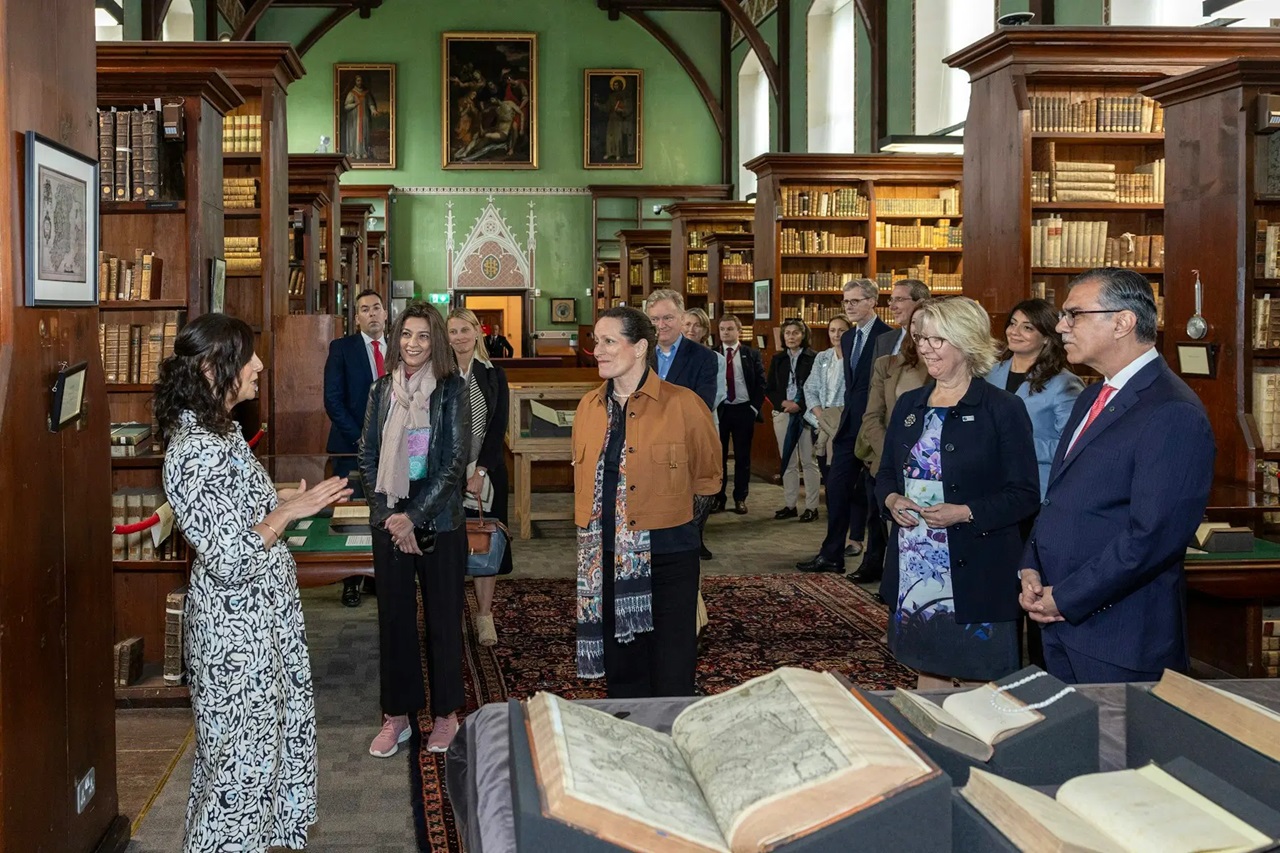
Princess Zahra Aga Khan (centre) gets a tour of Ireland’s Maynooth University while signing a Memorandum of Understanding between the University and Aga Khan University. This first-of-its-kind partnership between AKU and an Irish university will promote collaboration in research, student and staff mobility, and knowledge exchange in mutual expertise and development areas. Photograph: Maynooth University via AKDN.
On May 28, 2010, Prime Minister Stephen Harper and His Highness the Aga Khan, the 49th Hereditary Imam of the Ismaili Muslims, performed the foundation ceremony of three projects: the Aga Khan Museum, the Ismaili Centre Toronto, and their Park. Just over four years later, on September 12, 2014, the Prime Minister and His Highness inaugurated the two iconic buildings — the Park was inaugurated in the spring of 2015 — which have become an intrinsic part of Toronto’s cultural landscape. These buildings, with their unparalleled architectural and artistic wonders, have captivated the hearts of thousands during the Toronto Doors Open, inspiring them to appreciate the beauty and creativity that went into their design. Click HERE or on the photo below for stories and photographs of this unique cultural landmark in Canada’s largest city.
The Aga Khan Museum, Wynford Drive, Toronto. The Ismaili Centre Toronto is directly across from the Museum, with the Aga Khan Park dividing the two iconic buildings built by His Highness the Aga Khan. Please click on the image for the story and photographs.
_______________________
The 10th anniversary of the Aga Khan Museum coincides with the 87th birthday of Prince Amyn Aga Khan, younger brother of His Highness the Aga Khan. We honour the Prince through a special post. Please click HERE or on the photo below