

Murghab’s installation represents a 50 percent increase in daytime electricity – meaning communities are now able to pursue activities throughout the day, children can attend heated schools, and homes have power and heat during the long and bitterly cold winter months.
Most of the material for this post has been obtained from an article prepared by USAID, with additional material and photographs from AKDN and AKF USA
Arriving in the Murghab district of Tajikistan’s Pamir region feels like one may have landed on the far side of the moon. The Pamir Mountains are among the highest in the world, and home to remote villages and communities living above 3,600 meters/11,800 feet. The area is dry, arid, and bitterly cold. Temperatures between November and March regularly plummet to -50 degrees Celsius/-58 degrees Fahrenheit.
Due to the topography, communities and villages are not connected to a national electricity grid and for decades lived without a reliable or secure power supply. In Murghab, communities relied on subsistence farming and households had almost no ability to cook, see at night, read, study, or pursue commerce and industry.
During the Soviet era, over 70 percent of the region’s energy was provided by dirty diesel generators fueled by Russian-controlled imports. After the fall of the Soviet Union, not a single diesel-operated power plant remained in operation. In 2002, only 13 percent of Murghab households had access to electricity – those that did experienced frequent interruptions.
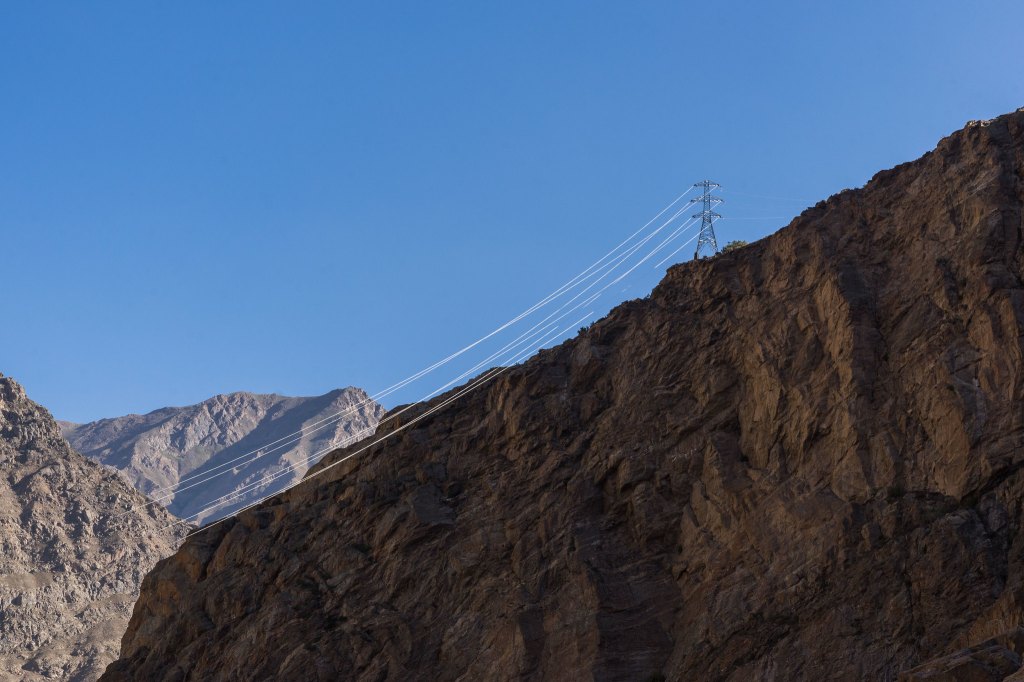
That same year, The Aga Khan Fund for Economic Development (AKFED), formed Pamir Energy in a public-private partnership that included the Government of Tajikistan. Pamir Energy has invested around $37 million to repair and rehabilitate the electrical infrastructure of Gorno-Badakhshan Autonomous Province (GBAO) and expand capacity. In the wake of these efforts, over 86 percent of the region’s inhabitants and 96% of households in Eastern Tajikistan now have access to electricity. Subsidies ensure that even the poorest households can access power.
Murghab’s harsh climate makes water-powered generation challenging. During the winter months the rivers freeze, consequently hydro-power plants are unable to provide power to Murghab communities. To meet this challenge, USAID supported a pilot project to build a solar power plant that can provide Murghab’s communities with electricity during the winter.
USAID’s Power the Future project partnered with the Government of Tajikistan and Pamir Energy to install the 200 kilowatt (kW) Murghab solar power plant – the country’s largest utility-operated solar power plant and the highest in Central Asia.
Most importantly, the Murghab solar power plant operates in parallel with another renewable energy source, the existing Tajikistan hydro-power plant. These two clean energy plants will ensure that nearby villages and communities have access to regular electricity supply all year round.

When the Murghab project kicked-off in January 2020, COVID-19 was reportedly contained in China and had not reached the scale of a global pandemic. As the project began ramping up in March, the world turned upside down as states of emergency and lockdowns were ordered all around the world.
“It seemed like anything that could have gone wrong, went wrong,” remembers Markus Straslicka, a project manager with USAID’s Power the Future project who oversaw installation of the Murghab solar power plant.
In addition to the COVID-19 pandemic’s disruption to manufacturing and supply lines and closure of international borders, Markus faced a unique challenge: his team didn’t know what the Murghab site looked like. Due to its incredibly remote location, Murghab has limited internet – inhabitants rely on SMS messages to communicate with the outside world. Since Markus had almost no eyes on the ground, he had to plan for every eventuality and trust the Pamir Energy team waiting for him at the site.
As it turns out, USAID’s Power the Future had the perfect partner. “The Pamir Energy team were extremely competent, hardworking and supportive, despite this being their first experience with solar technology. We were lucky to have them,” says Markus.
To guarantee the project’s success, USAID’s Power the Future team worked hand-in-hand with the Pamir Energy team to install and commission the Murghab solar power plant. Through this unique partnership, Pamir Energy learned how to independently operate the Murghab plant. They also gained the skills, know-how, and capability to build solar power plants throughout the region – helping Tajikistan meets it commitment to providing its citizens with reliable clean energy.
“This is a very special day for us to run the first solar power plant in the country as a utility! The USAID team has done an outstanding job,” said Daler Jumaev, recently appointed Minister of Energy and Water Resources of the Republic of Tajikistan and outgoing CEO of Pamir Energy.

The USAID Power the Future and Pamir Energy team commissioned the Murghab solar power plant on October 28, 2020, and the plant began providing electricity to the region’s communities the same day.
The regional government of the GBAO celebrated this landmark achievement at an opening ceremony on November 11 with representatives from the Tajik central and regional governments, USAID, the Aga Khan Foundation, and Pamir Energy. As noted by the Governor of GBAO, Yogdor Fayzov, Murghab signifies the first of many solar power plants that will be built to electrify remote areas of Tajikistan.
“The construction of a solar power plant in the remote Murghab region with USAID’s support is a significant step in providing electricity to the residents of this mountainous region,” said Yodgor Fayzov, Chairman of the regional GBAO government.
The positive impacts of access to regular power for the people of Murghab cannot be underestimated. Before Murghab’s installation, businesses could not fully operate during the winter due to power interruptions. Murghab’s installation represents a 50 percent increase in daytime electricity – meaning communities are now able to pursue activities throughout the day, children can attend heated schools, and homes have power and heat during the long and bitterly cold winter months.
Additionally, households no longer need to spend long hours finding firewood to cook meals. USAID’s partnership with the Government of Tajikistan brought stability and prosperity to Murghab and paved the way for full electrification of the Pamir region.
In 2017, Pamir Energy won the 2017 International Ashden Award for Increasing Energy Access for its work bringing hydro power to 220,000 people in East Tajikistan and 35,000 people in North Afghanistan, as well as to many businesses, schools, and health centres.
Date posted: March 15, 2021.
Last updated: June 23, 2024 (corrected link to USAID article)
Featured image at top of post: The Murghab solar power plant is now entirely operational. Photo: Markus Straslicka for USAID.
__________________
Further notes:
In 2012 with funding from the U.S. Agency for International Development (USAID), the Aga Khan Foundation USA started the Cross-Border Energy project to expand Pamir Energy’s reach across the border to Afghanistan’s remote Shugnan District. This program has helped to multiply electricity use thereby nearly eightfold and helps establish infrastructure for regional growth. Communities that never have had access to electricity before are now able to experience an improved quality of life and in turn, regional trade and cooperation have increased.










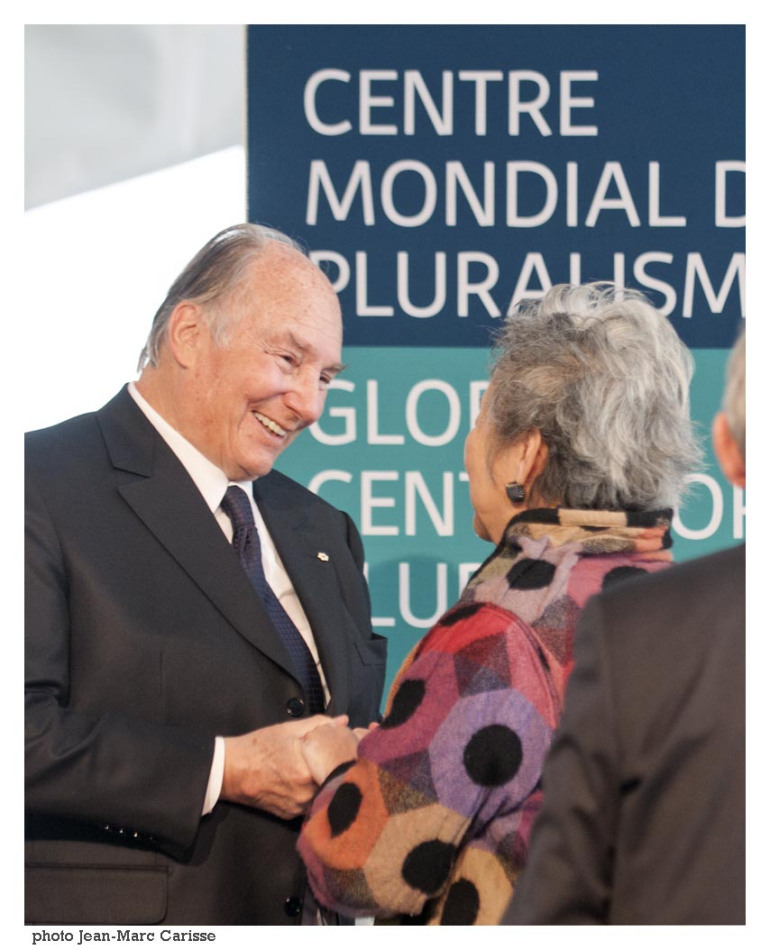
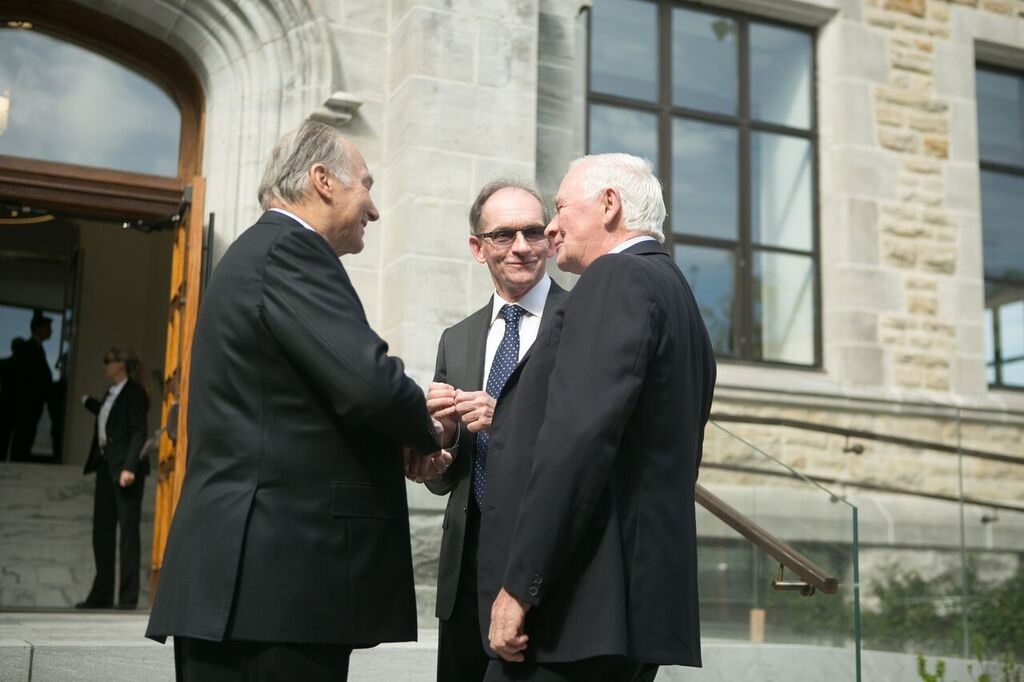

 “The Prophet Muhammad taught: ‘The doors of goodness are many…..enjoining good, forbidding evil, removing harm from the road, listening to the deaf, leading the blind, guiding one to the object of his need, hurrying with the strength of one’s legs to one in sorrow who is asking for help, and supporting the feeble with the strength of one’s arms — all these are charity prescribed for you. Your smile for your brother is charity’. And the Aga Khan has accepted this hadith as a personal job description”….
 “It was an unforgettable scene and took place in one of the state rooms of Government House where the Aga Khan was guest of the Colonial Governor at that time. The Ismaili leaders were seated, as is their custom, cross-legged in a semi-circle around their young Imam and the two factions elaborated their different points of view. To a non-Muslim the arguments were difficult to follow, but it was clear to me that a strong difference of opinion existed and that the Aga Khan would be called upon to resolve a ticklish point of theological doctrine.”
 “Clearly, if any person or entity can restore Islam to its rightful place, it would be AKDN under the enlightened, visionary, and revolutionary, global leadership of the 49th hereditary Imam of the Shia Ismaili Muslims and his successors. The Aga Khan has been called a “Prince without a Princedom,” yet he has been treated by dozens of nations as a “visiting head of state” with his red and green Imamat flag flying on his car and beside the host countries’ flags at official functions.” ….
 “In this vast tapestry of the interaction of Muslims with each other, and with other cultures and faiths, there is one tradition that unfailingly continues the progressive heritage of classical Islam — profoundly intellectual, open, tolerant, pacific — and in particular one leader who has made it especially attuned to the many difficulties of the world today. That would be Ismailism and its revered Imam, the current Aga Khan IV”
 Simerg - Insights from Around the World