Simerg is an independent initiative dedicated to Ismaili Muslims, the Aga Khan — their Hereditary Imam — and the Ismaili Imamat, and Islam in general through literary readings, photo essays and artistic expressions
On June 9, 2025, the Aga Khan Award for Architecture (AKAA) announced 19 shortlisted projects for the 2025 Award cycle, a selection made with utmost care and expertise by an independent Master Jury, which meticulously reviewed 369 projects nominated for the 16th Award Cycle (2023-2025). Established by Mawlana Shah Karim, His Late Highness Prince Karim Aga Khan IV, the 49th Hereditary Imam of the Ismaili Muslims, in 1977, the Award identifies and encourages building concepts that successfully address the needs and aspirations of communities in which Muslims have a significant presence.
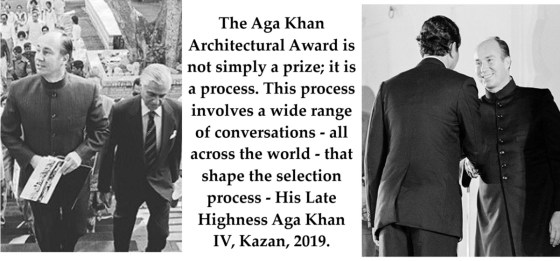
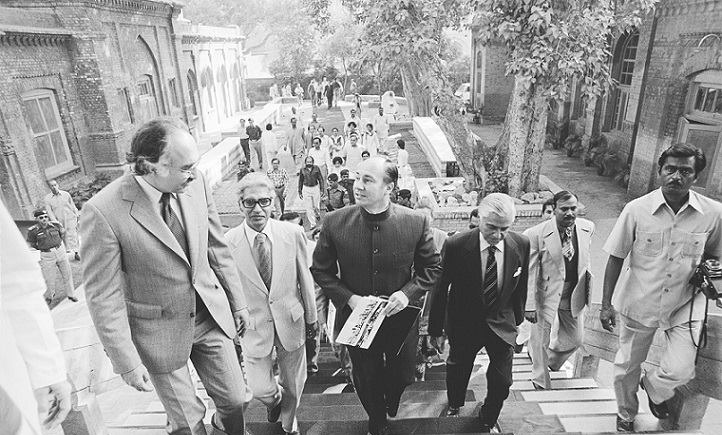
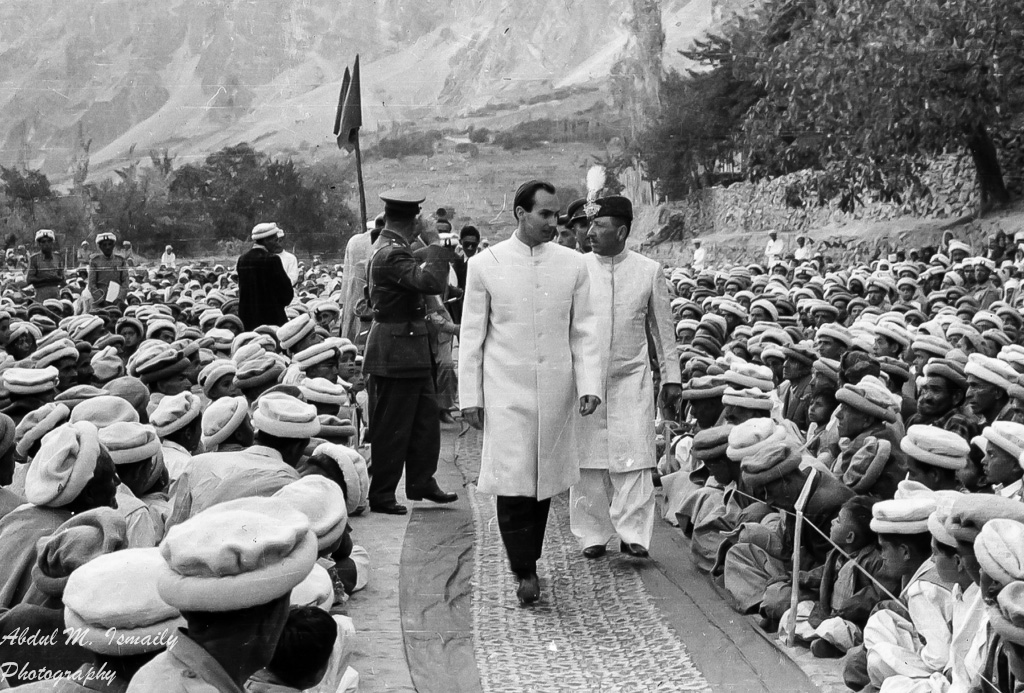
Flashback: Mawlana Shah Karim, His Late Highness Aga Khan IV, arrives for the inaugural ceremony of the Aga Khan Award for Architecture held on October 23. 1980, in Lahore, Pakistan. Photograph: AKDN / Christopher Little.
~~~~~~
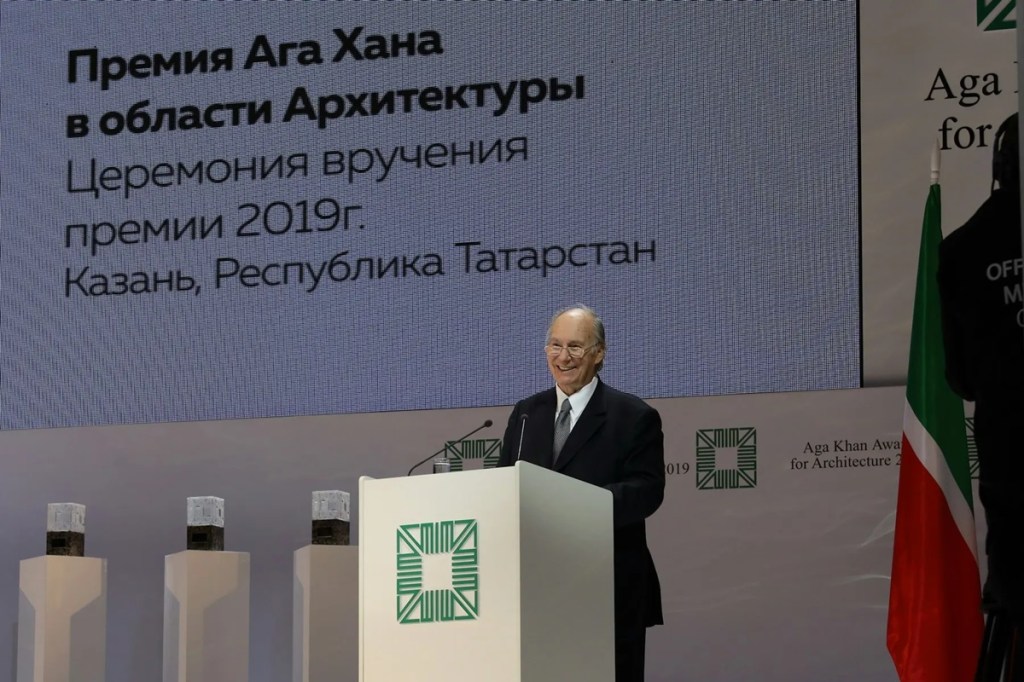
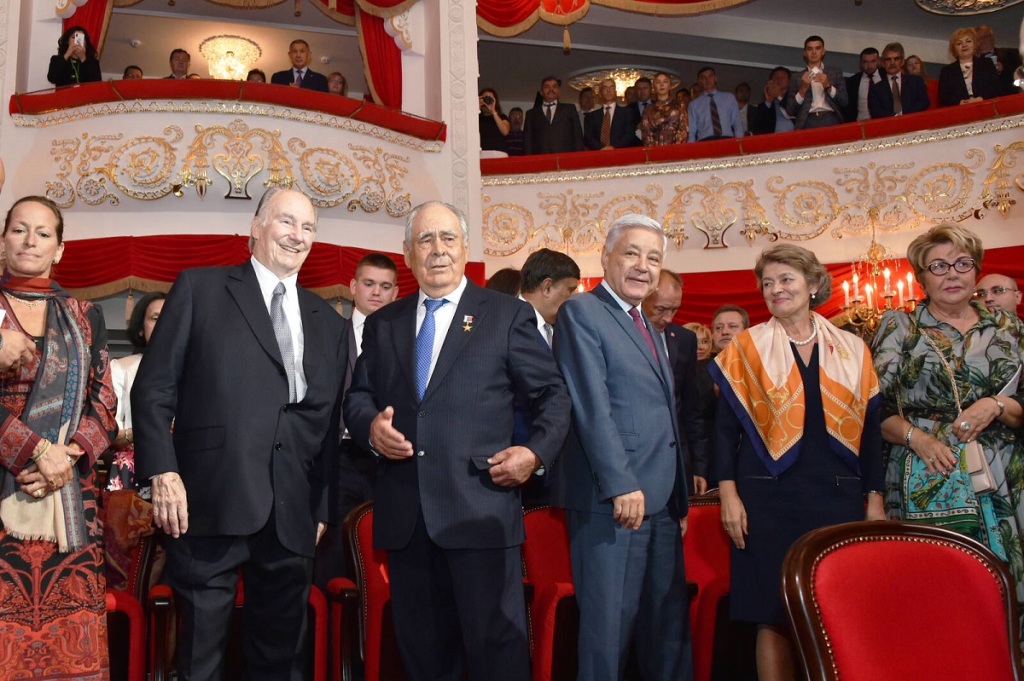
Mawlana Shah Karim, His Late Highness Aga Khan IV, delivering his speech at the Aga Khan Award for Architecture ceremony, Kazan, Tatarstan, September 13, 2019. This was the last Award ceremony he attended in person. In 2022, at the Award Ceremony and seminars held in Muscat, Oman, he was represented by his brother, Prince Amyn and his children, Princess Zahra and Prince Hussain. Photograph: AKDN. Please read speech HERE.
Since its launch 48 years ago, with the first award ceremony taking place in Lahore, Pakistan, on October 23, 1980, 128 projects have received the award, and nearly 10,000 building projects have been documented. The AKAA’s selection process emphasizes architecture that not only provides for people’s physical, social and economic needs, but that also stimulates and responds to their cultural aspirations.
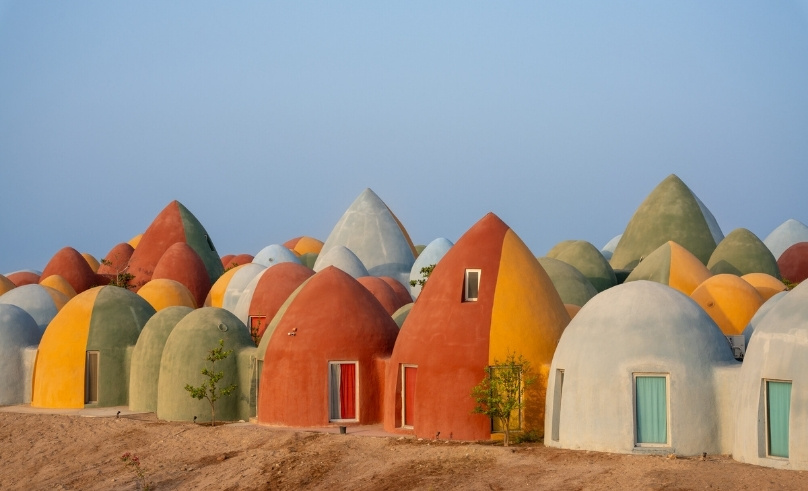
Majara Complex and Community Redevelopment, Hormuz Island, Iran. Please click on the image for the Cairo Scene article.
Salma Ashrat Thabit, writing for Cairo Scene, says that “the 2025 Aga Khan Award for Architecture shortlist is here, and the Middle East is in the spotlight. From Egypt’s revived markets to Iran’s vibrant domes, these standout projects offer fresh visions of culture and community.” Please read Salma’s piece Cairo Scene: Middle Eastern Marvels.
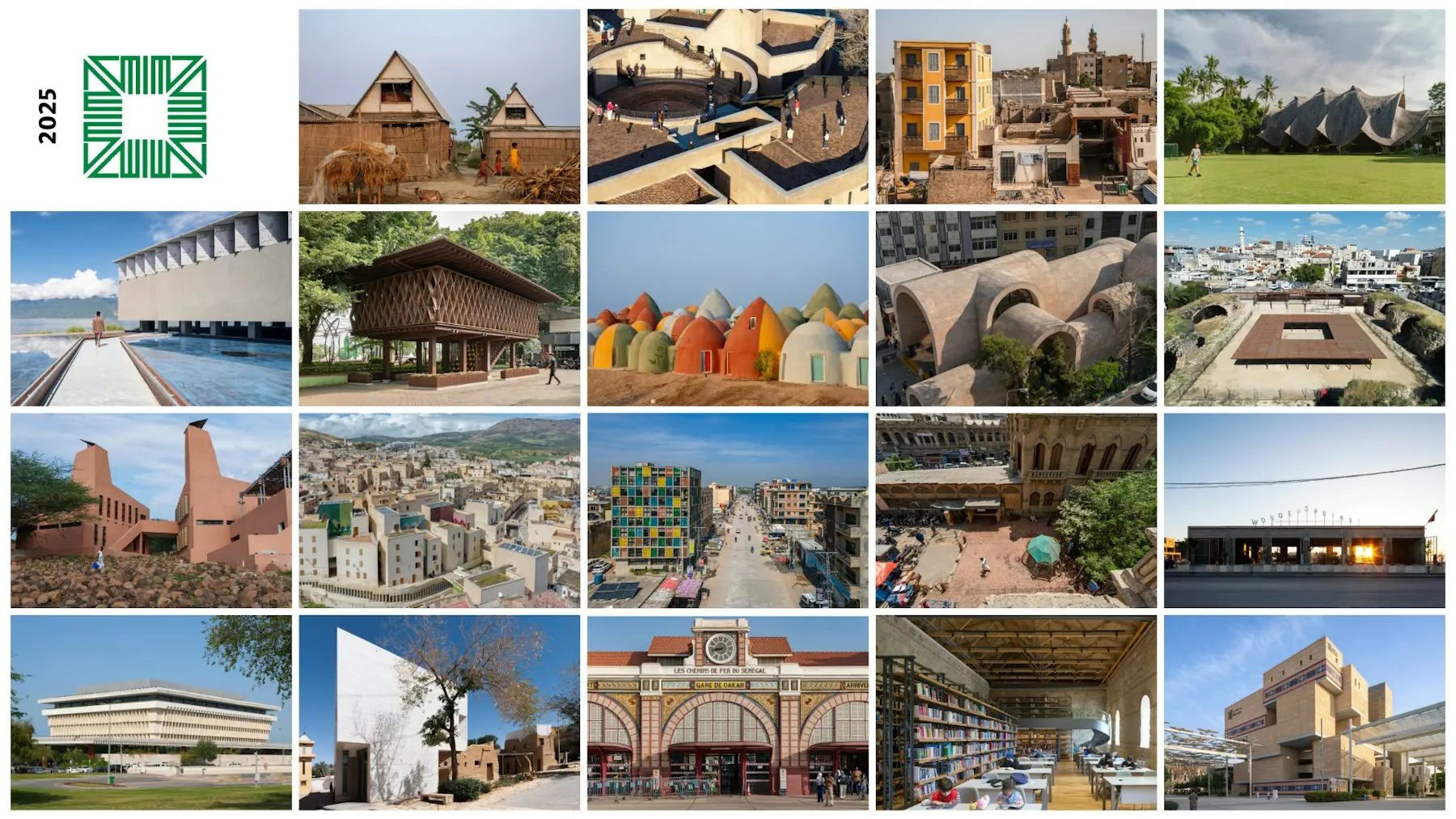
A collage of 19 projects shortlisted for the 2025 Aga Khan Award for Architecture. Please click on the image for overviews and descriptions of the projects on the AKDN website.
The AKDN website provides a comprehensive overview with links to detailed descriptions of the 19 shortlisted projects from Bangladesh to China to Kenya to Türkiye to the United Arab Emirates. Please click Aga Khan Award for Architecture 2025 shortlist.
Over twenty years ago I, a Christian, began a journey to learn about my Muslim neighbours.
Throughout this process of learning, there was one individual — arguably the most impactful world leader without a country of his own — who, as a Muslim, taught me more about being a good Christian than I ever would have expected. In his humble, earnest way, he used his influence to be a powerful force for good, not just for those whom he lived his entire life to guide and protect but for all the rest of us as well.
The Aga Khan and Ismaili Muslims
This quietly powerful, beautiful soul is, of course, the 49th Hereditary Imam of Nizari Ismaili Muslims, Mawlana Shah Karim Al Hussaini, His Highness the Aga Khan. He passed away in Lisbon, Portugal, on February 4, 2025, at the age of 88, thus becoming the longest-lived Imam in the 1400-year history of the Shia Imami Ismaili Muslims, whose first Imam was Ali, the cousin and son-in-law of Muhammad.
Mawlana Hazar Imam (our Lord, the Imam of the Time), as Ismailis address their reigning Imam, was their protector and guide for 67 years, filled with parental love for all his followers around the world, a profoundly inspiring world leader — but for me, a Christian, he was my hero.
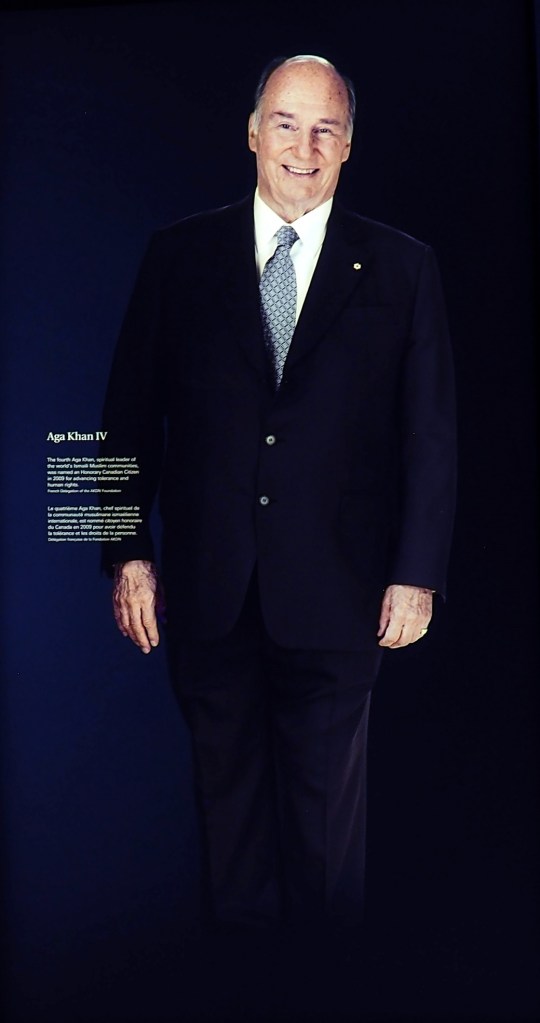
A life-size depiction of Mawlana Shah Karim, His Highness the Aga Khan, (d. February 4, 2025, aged 88) exhibited at the Canadian Museum for Human Rights in Winnipeg, Manitoba. The exhibit appears with depictions of other Honorary Canadian Citizens on a floor dedicated to “Turning Points of Humanity.” Photograph (of the exhibit taken July 2017): Malik Merchant / Barakah.
In his guidance to the world Nizari community living in more than 35 countries, with over 200,000 having made their homes in North America over the past fifty years, he not only spoke to immediate worldly concerns but encouraged his followers to show compassion and understanding; to volunteer, educate, and be educated; to support and empower women, and those who historically have little voice; to be good citizens of whatever country around the world they might find themselves in; and to be powerful examples of pure charity to everyone encountered. Prince Karim’s support of Nizari Ismailis was without bounds, and his charity and caring towards the world at large were without measure.
Shortly after his grandfather’s passing and his installation as the 49th Imam on July 11, 1957, Prince Karim delivered Takht-nishini (ceremonial installation) addresses internationally in Africa and South Asia — messages immediately impactful for their time and still profoundly relevant today.
He spoke to the promise of electronic education and cheaply distributed power, admonishing them to make wholesome use of these advancements while maintaining their faith.
“The most significant thing about the atomic age is the new and unbounded sources of energy which are released for the use of mankind. In Europe and America today, power stations are springing up which need no coal, nor oil, nor water power to run them. They feed themselves. This is close to the secret of perpetual motion. In my life time, it is almost certain that such atomic power stations will be exported, very likely to countries like Tanganyika. From them will flow the energy which will create new towns, railways, factories and all the foundations of modern industrial progress — Dar-es-Salaam, October 19, 1957 [1].
“The years of development and change which lie ahead are certain to throw up many new problems. We should not be afraid of these. You will surely surmount them if you stand by your faith and meet your difficulties in the spirit of humility and tolerance that your religion demands of us. This is especially important for the younger generations who will have to carry the future on their shoulders” — Nairobi, October 22, 1957 [1].
“The faith by which we live is the only sure guarantee that our problems will be surmounted. The younger people among you must be especially aware of this. Only the faith of your fathers will enable you to live in peace.” — Dar-es-Salaam, October 19, 1957 [1].
He talked about the need to find our spiritual center and work together as we navigate rapidly evolving technological landscapes.
“Never before in the history of man has there been such an age of technological progress… It is most important for the future of this country that the various races face these changes together” — Nairobi, October 22, 1957 [1].
Mawlana Shah Karim, His Highness the Aga Khan, at his Takht-nishini, in Nairobi, Kenya, 1957. Photograph: 25 Years in Pictures, Volume 1, Islamic Publications, 1983, London.
He spoke on contests of skill where every participant does their best and succeeds; that competition and respect are not mutually exclusive.
“You must work together with mutual forbearance and with respect for each other. Only thus shall we achieve the harmony and happiness which is necessary for the true advancement of our faith.” — Kampala, October 25, 1957 [1].
He declared that technological success and community development are tools to benefit everyone.
“As a community, our Faith will always preserve our special identity, but there should be nothing exclusive in what you do…There is no reason why our traditions and our faith should stop us from moving with our times, nor in fact why we should not lead our fellowmen to new spheres of knowledge and learning.” — Karach, January 23, 1958 [1].
He spoke to the power that compassion, understanding, and service have within a spiritually powerful minority community.
“With humility, tolerance, and respect for each other, by honest work and straight dealings, you will earn the true friendship of you fellows… By the way you conduct your daily lives, by the compassion you show your fellow men and women, and above all by your faith in God — you will ultimately be judged” — Bombay, March 11, 1958 [1].
Through living his own life, he transformed mine!
O mankind, indeed We have created you from male and female and made you peoples and tribes that you may know one another. Indeed, the most noble of you in the sight of Allah is the most righteous of you — Surah Al-Hujurat (49:13).
For me, Prince Karim Al-Hussani, Aga Khan IV, will always stand as a unique global figure, an exemplary world leader who effortlessly combined his spiritual role as the 49th hereditary Imam of the Nizari Ismaili Muslims with his transformative contributions to education, culture, and development.
A sign etched on a mountain to welcome Mawlana Shah Karim, His Highness the Aga Khan to Pasu in the Hunza region of Gilgit-Baltistan, Pakistan; November 1987. Photo: Faqir Ullah Khan.
~~~~~~~~
In a setting of spectacular natural beauty, Mawlana Shah Karim, His Highness the Aga Khan addresses Ismailis and non-Ismaili Muslims in Ishkashim during his first historic visit to Badakhshan in Tajikistan; May 27, 1995. Photograph: The Ismaili.
Remarkable Aspects of Leadership
For a period longer than my lifetime he led a community of millions across the world, guided by the principles of Islam while expanding his work to improve the quality of life for countless individuals, regardless of their faith or background. This perspective — anchored in faith but outward-facing and inclusive — defined his leadership and shaped his vision for a more compassionate and interconnected world.
Central to this vision was a unique worldview he termed “empathic pluralism,” the idea that humanity’s differences should be viewed not as sources of division but as opportunities for mutual enrichment. In one of his most profound observations, Prince Karim stated, “The world needs an architecture of generosity, one that speaks to a global ethic of respect and compassion.” [2] More than the design of physical structures, this “architecture” extended to encompass the systems, institutions, and relationships forming the very foundations of human society.
Cultures across the globe are grappling with complex challenges: rising inequality, deepening cultural divides, and the rapid erosion of both natural and cultural heritage. Though diverse in nature, these crises share a common thread — they require responses prioritizing empathy, resilience, and cooperation. Prince Karim’s work provided a blueprint for addressing these issues, tempering spiritual guidance with practical, sustainable solutions which strengthen communities and foster understanding.
Indeed, Allah orders justice and good conduct and giving to relatives and forbids immorality and bad conduct and oppression. He admonishes you that perhaps you will be reminded –Surah An-Nahl (16:90).
In my eyes, the most remarkable aspect of his leadership was his ability to bridge faith and reason. As a spiritual leader, he inspired millions of Ismailis through teachings emphasizing ethical conduct, introspection, and commitment to social welfare. Yet his initiatives extend far beyond his community, addressing universal concerns and building institutions that continue to serve as models of inclusivity and excellence. Whether funding hospitals and schools in remote areas or revitalizing cultural landmarks that hold meaning for widely diverse communities, his efforts reflected a holistic understanding of humanity’s shared destiny.
He continuously emphasized that understanding one’s heritage and connecting with cultural expressions — through art, music, and architecture — strengthens both individuals and communities alike. The Aga Khan Museum in Toronto perfectly documents this commitment and understanding.
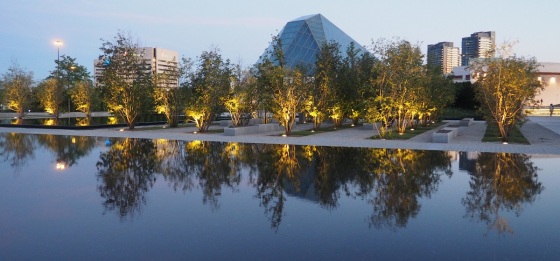
A view of the Aga Khan Museum during the annual Toronto Open Doors event, May 27, 2023. Photograph: Malik Merchant/Barakah.
~~~~~~~~~
Treasures at the Aga Khan Museum Toronto. From the upper floor, one can see permanent and loaned exhibits, such as the Wagner Garden Carpet, Burrell Collection, Glasgow, Scotland. Photograph: Malik Merchant / Simerg.
The exhibits housed within its walls celebrate the artistic and intellectual contributions of Muslim civilizations spanning the globe, providing a space where visitors from all walks of life can explore and appreciate our shared human history. Reflecting on this purpose, he noted that such sites are “places where people from every background can experience the wisdom and beauty of Muslim cultures.” [2] A world standard of contemporary museology and conservatorship, the entire project underscores his broader vision of cultural dialogue as catalyst for empathy and mutual respect.
This showcase of international art was not conceived for just one group or community, but for the world. The Prince’s philosophy of unceasing kindness, consideration, and thoughtfulness is evident across his wide range of initiatives in architecture, spirituality, education, and philanthropy internationally. Together, they form a cohesive vision seeking tirelessly to heal divisions and inspire a deeper sense of global solidarity.
Pluralistic Vision for Architecture
Allah is the Light of the heavens and the earth. The example of His light is like a niche within which is a lamp…Surah An-Nur (24:35)
This vision for the world becomes particularly vivid when considering his contributions to physical architecture. For Prince Karim, architecture was far more than the design of buildings; it is a profound expression of values and aspirations. His belief that “architecture is a bridge to cultural dialogue” [1] emphasizes the transformative potential of thoughtfully designed spaces. In his view, architecture nurtures empathy, fosters inclusion, and celebrates diversity — all of which are essential to a world where only pluralistic solutions can truly resolve complex problems.
As he once said, “The spaces we build must reflect the diversity of those who occupy them and encourage coexistence. Architecture is a bridge to cultural dialogue.” [2] This perspective guided his work in architecture and urban development for decades, shaping physical environments of social harmony and cultural diversity.
The Humayun Tomb, the resting place of the second Mughal emperor and a precursor to the Taj Mahal, forms a backdrop in this picture taken during the inauguration ceremony on September 18, 2013 which was attended by the Chief Guest, the Prime Minister of India, Dr Manmohan Singh, Mawlana Shah Karim, His Highness the Aga Khan, the Minister of Culture, Chandresh Kumari Katoch, Chairman Ratan Tata of the Sir Dorabji Tata Trust and Prince Hussain Aga Khan. Photograph: Prime Minister’s Office (GODL-India), GODL-India , via Wikimedia Commons.
Through the Aga Khan Trust for Culture (AKTC), he spearheaded projects that restored significant landmarks while revitalizing the surrounding communities. In places like Islamic Cairo and the historic cities of Northern Pakistan, these initiatives preserve cultural heritage and serve as catalysts for social and economic development. These efforts are grounded in his conviction that “cultural preservation is as essential to a people’s spirit as food is to their bodies.” [2] By linking preservation with community engagement, Prince Karim demonstrated how architecture can simultaneously honour the past and empower the future.
Recognizing the urgent need for environmentally sensitive design, the projects he supported often integrated green technologies and sustainable practices. In urban spaces, this might mean prioritizing water conservation, using locally sourced materials, or creating public parks that enhance both environmental and social well-being. These initiatives addressed the practical demands of a changing climate and reflected his broader belief in stewardship and responsibility toward future generations.
There shall be no compulsion in [acceptance of] the religion. The right course has become clear from the wrong — Surah Al-Baqarah (2:256)
Underlying all these efforts was his commitment to pluralism. The Aga Khan IV consistently emphasized architecture should celebrate diversity, stating, “Architecture that embraces diversity creates not only beautiful spaces but also peaceful communities.” [2] For him, the physical environment is a reflection of society’s values — or should be — and inclusive design serves as a powerful tool for promoting understanding and coexistence. His architectural projects, whether cultural museums, educational institutions, or restored historic sites, embody this principle, offering spaces where people from all walks of life are given space to come together in mutual respect.
Architecture, in Prince Karim’s view, is not merely about creating physical spaces but about shaping environments which inspire understanding and cooperation. This principle of building for the future extends naturally into his approach to education, where cultivating minds and hearts becomes the foundation for fostering ethical leadership and global citizenship.
Education and Knowledge
Say, ‘Are those who know equal to those who do not know?’ — Surah Az-Zumar (39:9)
For Prince Karim, education was not merely about imparting knowledge but about cultivating minds and hearts to create effective and nurturing leaders in our rapidly evolving world. Education should be holistic, fostering intellectual curiosity, ethical reasoning, and cultural awareness. He observed, “An education that emphasizes both the mind and the heart…will empower young people to create positive change.” [3] Education should be a transformative force capable of addressing global challenges while enriching individual lives and inspiring future leaders.
President Chissano of Mozambique and Princess Zahra Aga Khan look on as Mawlana Shah Karim, His Highness the Aga Khan, addresses dignitaries at the foundation laying ceremony of the Aga Khan Academy Maputo on June 25, 2004. Photograph: The Ismaili USA, December 13, 2004.
~~~~~~~~
Mozambique’s President Filipe Nyusi and Portugal’s President Marcelo Rebelo de Sousa unveil the inaugural plaque of the Aga Khan Academy Maputo, as Prince Rahim, who succeeded as the 50th Imam on February 4, 2025, looks on. Photograph: Akbar Hakim/IPL
The Aga Khan Academies are a network of schools located in diverse cultural settings, each committed to nurturing future leaders who value pluralism and social responsibility. These schools emphasize a rigorous academic curriculum alongside lessons in ethical leadership, preparing students not only to excel in their chosen fields but also to contribute meaningfully to society at large. Reflecting on this mission, he remarked, “Education should be an opening of the mind to the rich diversity of human experience” [3], underscoring his belief in the power of education to build bridges across cultural and intellectual divides.
The University of Central Asia Naryn campus in the Kyrgyz Republic lies on the banks of the Naryn River, surrounded by the Tien Shan mountain range. Photograph: AKDN.
Another cornerstone of Prince Karim’s educational vision was his focus on post-colonial societies, where the legacies of imperialism include painfully fractured identities and profoundly limited opportunities. Through initiatives like the University of Central Asia and the Aga Khan University, he sought to address these challenges by creating institutions which blend global standards with local relevance. These universities prioritize research and teaching directly tied to the needs of the communities they serve, fostering a sense of agency and self-determination.
Education should not only elevate individuals but also empower entire communities, particularly in a world where globalization often threatens to homogenize identities. By integrating cultural literacy into educational frameworks, Prince Karim fostered a sense of pride and belonging while encouraging cross-cultural empathy.
Read in the name of your Lord who created. Created man from a clinging substance. Read, and your Lord is the most Generous — Who taught by the pen — Taught man that which he knew not — Surah Al-Alaq (96:1-5).
His vision for education also extended to global ethics. In a time of increasing polarization and ethical dilemmas posed by technological and social change, he called for education systems worldwide to prioritize moral reasoning and empathy. His institutions place a strong emphasis on teaching integrity, respect for diversity, and responsibility toward others, reflecting his understanding that intellectual achievements are hollow without a foundation of ethical principles.
The Prince’s educational institutions and initiatives actively work to increase access to education for women and marginalized groups, and recognize that equitable education is a prerequisite for truly sustainable development. These efforts echo his broader belief in the transformative potential of empowering all individuals, regardless of gender or socioeconomic background.
The transformative power of education lies not only in the knowledge it imparts but also in its ability to nurture creativity and cultural pride. These values resonated deeply with Prince Karim’s work devoted to supporting the arts, where he championed the preservation of heritage alongside present innovation, bridging the past and present.
Empathic Pluralism in the Arts
God is beautiful and loves beauty — Hadith Qudsi, Prophet Muhammad, Saheeh Muslim
The arts are a universal language — a means of expressing the human spirit and fostering understanding across cultures. Throughout his leadership, the Aga Khan championed the preservation and celebration of artistic traditions while encouraging contemporary forms of expression resonating with modern audiences. The arts are an integral part of human development, a tool for cultural dialogue and empathy — as he stated: “Art is a universal language that has the power to build bridges where words cannot.”
Mawlana Shah Karim, His Highness the Aga Khan, meeting musicians from the Kyrgyz Republic. The troupe was brought to the Smithsonian Folklife Festival held in Washington, DC, in 2002 by the Aga Khan Trust for Culture. Photograph: AKDN/Zahur Ramji
The Aga Khan Music Initiative is one of the most compelling examples of his vision. Through this initiative traditional music from Central and South Asia, the Middle East, and North Africa is preserved and revitalized, ensuring that these rich cultural legacies are passed down to future generations. The initiative goes far beyond preservation; it supports innovation as the initiative encourages collaborations between traditional and contemporary artists. This dynamic approach ensures that these traditions remain relevant in a changing world, inspiring new audiences and fostering a deeper appreciation of cultural diversity.
Stamps issued by the Sultanate of Oman to commemorate the Aga Khan Award for Architecture and the Aga Khan Music Awards, October 2022.
More than just a repository of objects, the Aga Khan Museum mentioned earlier is a space where visitors actively explore the shared history and interconnectedness of humanity. Through its exhibits, performances, and educational programs, the museum brings the relevance of art forward into the contemporary space — while encouraging dialogue and a dynamic exchange of ideas with other cultures. The Aga Khan described the museum as “a place where art and history come together to foster mutual understanding.” [2] This ethos of inclusivity underscores every one of the Prince’s artistic initiatives, all designed to invite reflection and inspire respect for diversity.
He who created seven heavens in layers. You do not see in the creation of the Most Merciful any inconsistency…Surah Al-Mulk (67:3-4).
Secretary of State Madeleine Albright and President Bill Clinton with Mawlana Shah Karim, His Highness the Aga Khan, at the first White House conference on culture and diplomacy convened by President and Mrs. Clinton on November 28th, 2000. The Aga Khan was among the distinguished panelists invited to advise the president and secretary of state on the role of culture in foreign policy. Photograph: Official White House Photo.
Arts are essential to resilience. Prince Karim often spoke about the role of cultural expressions in providing communities with a sense of identity and continuity, particularly in times of upheaval. When traditions are preserved and celebrated they serve as anchors, helping individuals and communities alike to navigate change. This perspective is particularly relevant in a globalized world where many traditional practices face the risk of extinction. In the Prince’s eyes, the arts are not merely luxuries or entertainment but vital elements of human survival and flourishing.
While his efforts often focused on Muslim cultures, they were never exclusive. In encouraging artistic dialogue across traditions, he demonstrated that the arts have a unique ability to transcend boundaries and bring people together. Whether it is musical collaboration between Central Asian and Western artists or museum exhibits juxtaposing Islamic and European art, his initiatives remind us of the shared threads connecting all of humanity.
Philanthropy, Social Impact, and Community Resilience
Whoever saves one [life] – it is as if he had saved mankind entirely — Surah Al-Ma’idah (5:32)
Prince Karim’s commitment to fostering pluralism and preserving cultural heritage is inseparable from his broader vision of social impact. His work in philanthropy demonstrated the same principles of empathy and inclusivity that shaped his approach to education, architecture, and the arts. While the arts nurture the soul and build bridges of understanding, philanthropy addresses the practical realities of building stronger, more resilient communities. For Prince Karim these endeavors are complementary, working together as a holistic strategy to uplift humanity.
One of the defining characteristics of the Aga Khan’s philanthropy was its emphasis on long-term sustainability. Standing apart from traditional charity models, the focus is instead on enabling communities to achieve self-reliance.
He said, “True philanthropy is about empowering people to help themselves.” [4] This guiding principle underpins the work of the Aga Khan Development Network (AKDN), a sprawling network of institutions and programs addressing everything from health and education to economic development and environmental sustainability.
(Late) Kofi Annan, former UN Secretary-General, presents the Champion for Global Change Award to Mawlana Shah Karim, His Highness the Aga Khan, at a special gala dinner held in New York on October 18, 2017. Photo: The Ismaili/Akbar Hakim/Mairaj Manji.
The AKDN’s work is vast in scope but deeply localized in its execution, tailoring each initiative to the specific needs of the communities it serves. In regions recovering from conflict or grappling with systemic poverty, the AKDN projects create opportunities for employment, education, and healthcare, while also investing in infrastructure supporting long-term growth. This strategy is evident in the AKDN’s investments in East Africa, Central Asia, and South Asia, where initiatives not only dramatically improved living conditions but also strengthened social cohesion.
Healthcare is a cornerstone of his philanthropic mission. Hospitals and clinics established under the AKDN are recognized worldwide for their excellence and accessibility, often serving marginalized populations who might otherwise lack any access to quality care. These institutions reflected his belief that health is a fundamental human right and a prerequisite for broader societal progress. By combining world-class medical care with community outreach and preventative programs, these initiatives continue to improve both individual and collective well-being.
Mawlana Shah Karim, His Highness the Aga Khan, during one of his visits to the site of the Al-Azhar Park, in Cairo.
~~~~~~~
In the 1980’s the Aga Khan turned his attention to a site in Cairo, where garbage had been dumped for more than 500 years and was nearly 25 feet deep. After more than 15 years of work masterminded by his Trust for Culture, his vision has transformed the derelict site into a sequence of formal gardens filled with groves of fruit and flowering trees, fountains and an artificial lake studded with a modern lakeside café and a central allee of royal palms lines a path that has views of Islamic Cairo’s minarets and domes. Atop the dump site sit three new sunken reservoirs that provide invisible succor and a children’s playground and other special features. Shown in the image are: the 1992 park site, Al Darassa municipal dump (top left); on going work in shaping the Al-Azhar Park site in 1999 (top right); and the completed Al-Azhar Park which was inaugurated in 2005. Photos: Aga Khan Trust for Culture via Archnet.
~~~~~~~~~~
Mawlana Shah Karim, His Highness the Aga Khan, welcomes Prince Charles, The Prince of Wales, and The Duchess of Cornwall to Al-Azhar Park in 2006 at the beginning of their official 2-week to Egypt, Saudi Arabia and India. Photo: AKDN/Gary Otte.
The AKDN’s philanthropy also emphasized the importance of resilience in the face of environmental and economic challenges. Projects restoring cultural landmarks, such as the restoration of Humayun’s Tomb in India or the Al-Azhar Park in Cairo, served multiple purposes: preserving heritage while creating jobs and revitalizing urban spaces. These initiatives exemplify the Prince’s view that cultural and economic development are deeply interconnected, and both are essential for sustainable progress.
Underlying all of these efforts is the principle of pluralism. The Aga Khan consistently argued diversity is a strength, not a weakness, and his philanthropic projects reflected this belief. Whether promoting cross-cultural dialogue through the arts or fostering inclusive growth through development initiatives, his work embodied a profound respect for the unique contributions of every community. He noted, “Pluralism is not simply a concept but a necessity for peace.” [5] A perspective particularly relevant in a world where divisions often seem to outweigh connections.
Universal Values: Connecting Vision with Broader Global Concerns
And of His signs is the creation of the heavens and the earth and the diversity of your languages and your colors. Indeed, in that are signs for those of knowledge — Surah Ar-Rum (30:22)
While deeply rooted in the traditions of the Ismaili Muslim community, Prince Karim’s vision spoke to universal values that resonate across cultural, religious, and national boundaries. His emphasis on pluralism, empathy, and resilience reflected a profound understanding of the interconnected challenges facing humanity. From addressing social inequalities to fostering environmental stewardship, his work transcended the particulars of any one community, offering lessons and solutions relevant to the world at large.
Mawlana Shah Karim, His Highness the Aga Khan, and Norway’s Minister for International Development, Ms. Hilde F. Johnson, sign a Memorandum of Understanding between the AKDN and the Government of Norway, to enhance collaboration on development issues and programmes in Africa, Central and South Asia; April 6, 2005, Oslo, Norway. Photograph: AKDN / Gary Otte.
Righteousness is not that you turn your faces toward the east or the west, but [true] righteousness is [in] one who believes in Allah, the Last Day, the angels, the Book, and the prophets…Surah Al-Baqarah (2:177)
Dr. Friedemann Greiner, Director and Chairman of the Jury (left), presents the Tolerance Award 2006 to Mawlana Shah Karim, His Highness the Aga Khan, as the then-German Minister of Foreign Affairs Dr Frank-Walter Steinmeier (right) looks on; May 2006. Photograph: AKDN/Zahur Ramji.
One of the most compelling aspects of Prince Karim’s vision was his ability to bridge the material and the spiritual. While his work often addressed practical needs — such as healthcare, education, and infrastructure — it was deeply informed by both ethical and spiritual considerations. He argued that “faith should be a source of hope, not division,” a sentiment highlighting the potential of religious values to inspire positive change in a fractured world. His leadership exemplified this philosophy, demonstrating how faith can be a unifying force transcending differences and fostering shared purpose.
His belief that “education should be an opening of the mind to the rich diversity of human experience” [3] underscored his commitment to fostering global citizens who are both informed and compassionate.
Ultimately, the Aga Khan’s vision was about creating a world where differences are seen as opportunities for enrichment rather than barriers to progress. His initiatives offered a model for addressing some of the most pressing issues of our time, from inequality and cultural polarization to environmental degradation. By combining empathy, practicality, and a deep respect for humanity’s shared heritage, he demonstrated that it is possible to build a future both inclusive and sustainable.
His universal values continue to offer a beacon of hope for a world in search of unity and resilience.
Inspiring Ethical Leadership and Global Solidarity
So by mercy from Allah, [O Muhammad], you were lenient with them. And if you had been rude [in speech] and harsh in heart, they would have disbanded from about you — Surah Al-Imran (3:159)
Synergos Founder and Chairperson Peggy Dulany presenting the David Rockefeller Bridging Leadership Award to Mawlana Shah Karim, His Highness the Aga Khan in London on October 22, 2012. Photo: AKDN/JMB Photographic Ltd
Prince Karim’s life and work reflect a rare combination of visionary leadership and grounded pragmatism. As a spiritual leader, he inspired his followers with values rooted in compassion, justice, and the pursuit of knowledge. As a global leader, he applied these principles to initiatives which address head-on the most immediate and pressing challenges of our time, offering solutions resonating far beyond his immediate community. This dual role positioned him as a bridge between spiritual ideals and worldly realities, demonstrating that leadership rooted in ethical principles can foster solidarity and resilience on a global scale.
He repeatedly emphasized that leaders must strive to understand and address the needs of those they serve, saying, “Leadership is not about power but about responsibility.” [3] In prioritizing service over authority, the Prince modelled leadership that seeks to empower rather than dominate, fostering collaboration and mutual respect.
Mawlana Shah Karim, His Highness the Aga Khan, receives the inaugural Adrienne Clarkson Prize for Global Citizenship in Toronto, Canada, on September 21, 2016. The prize recognises an individual who has, through thought and dialogue, encouraged approaches and strategies that strive to remove barriers, change attitudes, and reinforce the principles of tolerance and respect. Photo: AKDN/Lisa Sakulensky.
His emphasis on solidarity is evidenced in his approach to global challenges. Prince Karim recognized that issues such as inequality, environmental degradation, and cultural polarization cannot be addressed in isolation. Instead, they require collective action and a willingness to transcend narrow interests for the greater good. He argued that “our survival depends on collaboration, not competition” [2], a sentiment underscoring his commitment to fostering partnerships and alliances across sectors and borders.
Prince Karim Al-Hussaini’s leadership inspired individuals to take personal responsibility for creating positive change. Through his speeches, writings, and projects, he tirelessly encouraged people to reflect on their own roles as stewards of their communities and the planet. By emphasizing that small, collective actions can lead to significant impact, he inspired a path forward that is both practical and hopeful.
Mawlana Shah Karim, His Highness the Aga Khan, is presented the World Monument Fund’s Hadrian Award on October 25, 1996 by David Rockefeller. In the keynote speech at the presentation ceremony, Cyrus Vance, former US Secretary of State, noted Aga Khan’s lifelong labour in improving the lives of Islamic peoples worldwide and his commitment to preserving and renewing societies. Photograph: The Ismaili Canada, July 1997, print edition.
The contributions of this singular individual, an Olympic skier who chose to study and help his friends rather than live frivolously, offer profound lessons for individuals and institutions alike. As we reflect on his enduring legacy, it becomes clear that his vision was not just a roadmap for his community but a source of inspiration for all the world.
Then shall the King say unto them on his right hand, Come, ye blessed of my Father, inherit the kingdom prepared for you from the foundation of the world: for I was an hungred, and ye gave me meat: I was thirsty, and ye gave me drink: I was a stranger, and ye took me in: naked, and ye clothed me: I was sick, and ye visited me: I was in prison, and ye came unto me.
Then shall the righteous answer him, saying, Lord, when saw we thee an hungred, and fed thee? or thirsty, and gave thee drink? When saw we thee a stranger, and took thee in? or naked, and clothed thee? Or when saw we thee sick, or in prison, and came unto thee?
And the King shall answer and say unto them, Verily I say unto you, Inasmuch as ye have done it unto one of the least of these my brethren, ye have done it unto me — Matthew 25:34-40, KJV
So race to [all that is] good.Surah Al-Baqarah (2:148)
Through his initiatives in architecture, the arts, education, and development, he demonstrated that honoring the past need not come at the expense of embracing the future. Instead, he showed that these forces can complement and support one another, creating solutions both innovative and deeply rooted in cultural and ethical values. His projects, from the Aga Khan Museum to the revitalization of historic urban centers around the world, serve as living testaments to this philosophy, embodying a balance urgently needed in today’s world.
His legacy continues to remind us of the strength which comes from embracing differences and seeking common ground. Whether through volunteering, fostering cross-cultural understanding, or advocating for sustainability, his vision continues to offer pathways for meaningful contribution.
I am a Christian, and the late Prince Karim Al-Hussaini, Aga Khan IV, was Muslim. We come from different backgrounds and world views, but we are both Children of the Book. I have quoted from one of my most favorite books in the world, the Illustrious Qur’an, and my perspective is shaped in large part by another which I was introduced to first, the Holy Bible. As a Christian, I have looked to the Aga Khan and his works as encouragement — inspiring me in my own demonstrations of compassion, empathy, and caring.
This Muslim has managed to make me a better Christian.
Prince Karim once remarked, “To be an architect of a better world requires both compassion and courage.” [2] These words are the essence of his leadership. His life’s work will continue to serve as a powerful reminder that unity is not only possible but is absolutely essential — and that by working together with empathy and integrity, we will create a brighter future for all.
A version of this post appears on our sister website Barakah, which is dedicated to His Highness the Aga Khan
______________________
About the author: Andrew Kosorok is an artist, educator, and bridge-builder. An art glass designer, sculptor, and university instructor, he is also a pluralist chaplain and a writer. Andrew examines the Christian/Muslim interface looking for opportunities to use art and the creative process to deepen friendships, encourage exploration, and build community. He writes: “Art is the language which communicates outside of words — it allows us to embrace our similarities and celebrate those wonderful elements which make each of us unique. At the heart of every faith tradition is the knowledge we are all intentionally made different by a wisely governing Creator; understanding these differences is a fundamental part of building a wonderful future for humanity.” Andrew is the author of the books 99 Names: A Christian’s Exploration of the Names of God from the Qur’an and United Design Principles in Islamic Architecture During Safavid Era in Kerman City: A perspective to Gestalt laws (with Drs. Mina Safizadeh and Fatemeh Khozael), as well as a growing series of books exploring world views and regional folklore.
______________________
Simerg welcomes your tributes to Mawlana Shah Karim Shah, His Highness the Aga Khan. Please click Leave a comment If you encounter problems, email the comments to mmerchant@simerg.com. We want to reassure you that we respect your privacy and that your published comment will never reveal your email address. For recent and older posts, please visit our HOME PAGE.
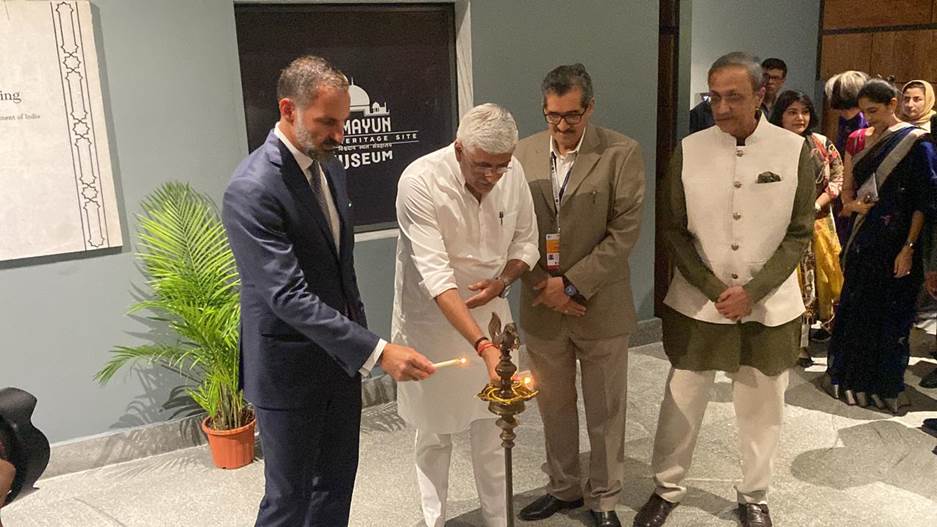
Prince Rahim Aga Khan and India’s Minister of Culture and Tourism, Shri Gajendra Singh Shekhawat, perform a lamp-lighting ceremony to formally inaugurate the Humayun Tomb World Heritage Site Museum in New Delhi on July 29, 2024. Photograph: PIB/Government of India.
India’s Minister of Culture and Tourism, Shri Gajendra Singh Shekhawat, inaugurated the sprawling 100,000 square feet state-of-the-art Humayun’s Tomb World Heritage Site Museum at the Humayun’s Tomb, a UNESCO World Heritage site in New Delhi, on July 29, 2024. The museum, equipped with the latest technology and innovative design, promises an immersive and enlightening experience for all visitors.
The inauguration event was graced by the presence of Prince Rahim Aga Khan, the oldest son of Mawlana Hazar Imam, His Highness the Aga Khan, the Ismaili Muslims’ 49th Hereditary Imam in direct lineal descent of the Prophet Muhammad (may peace be upon him and his family). Ismailis number 12 million worldwide, and Canada’s highly organized and respected Ismaili community has more than 100,000 members. The Ismaili Imamat’s projects in Canada include the iconic Aga Khan Museum in Toronto, the beautiful Aga Khan Garden in Edmonton and the Global Centre for Pluralism in Ottawa.
The Humayun Tomb Museum, a facility of the Archaeological Survey of India designed and built in collaboration with the Aga Khan Trust for Culture (AKTC), is a significant step in preserving India’s rich cultural heritage. It opened to visitors on July 30, 2024. Please click HERE to read a report on the opening ceremony on our sister website, Barakah.
Tweet
Hon'ble Minister for Culture & Tourism, Shri @gssjodhpur , along with Prince Rahim Aga Khan, and other key dignitaries from Ministry of Culture, ASI inaugurated the state-of-the-art Humayun’s Tomb #WorldHeritageSite Museum in New Delhi. pic.twitter.com/NkJruGDeRQ
— Archaeological Survey of India (@ASIGoI) July 29, 2024
The Aga Khan’s gift to Alberta is the Aga Khan Garden at the University of Alberta Botanic Garden in the outskirts of Edmonton. If you are in Edmonton, spend a day visiting the vast Botanic Garden that also includes the Indigenous Garden, Kurimoto Japanese Garden and the Patrick Seymour Alpine Garden. In the past year, I have made two trips to see the Aga Khan Garden. Please see my first post HERE and the second one with my daughter HERE (combined with visits to Waterton Lakes National Park and the Kananaskis).
Thousands of miles away in bustling Cairo, where the Aga Khan’s ancestors, the Fatimids, built one of the oldest universities in the world, the Al-Azhar, the Aga Khan one day, in the 1980’s, walked through a centuries old dumpsite. He decided to build a park on top of the site and after years and years of effort the dump site became one of the most beautiful parks in the world. Montreal based photographer Muslim Harji recently visited Egypt and began a special series of 4 exclusive photo essays with Street Foods of Cairo. We now present his 2nd photo essay and it is dedicated to the Al-Azhar Park.
The Edinburgh International Culture Summit held virtually from August 24-26, 2020 brought together the world’s leading minds in the fields of culture, the sciences and politics to discuss issues which effect nations around the world. Cameron Rashti, the Director of Aga Khan Historic Cities Programme, Aga Khan Trust for Culture, was one of the participants and reflected on “Culture in Vibrant Communities” providing interesting insights into the goal and purpose of the Aga Khan Historic Cities programs in Central Asia, the Middles East, South Asia, and Africa.
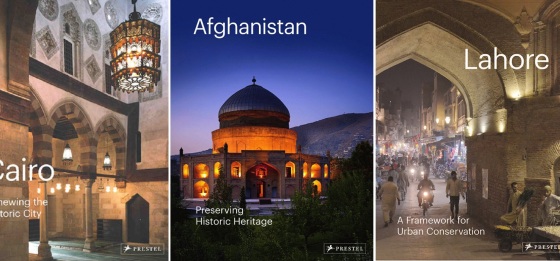
Cameron Rashti joined the Aga Khan Trust for Culture (AKTC) in 1994. A graduate of Dartmouth College, Pratt Institute and Columbia University, he is a registered architect in the USA and the UK. Prior to joining the Trust, he held senior positions on major architectural and urban redevelopment projects in New York (1979-89) and in London (1989-94), as Vice President of Perkins & Will International. On behalf of AKTC, Rashti oversees a portfolio of diverse urban conservation and redevelopment projects in historic cities and heritage sites across the Middle East, Central and South Asia, and the Far East and teams of dedicated professionals in each location. He has served since 2010 as Delegate of the President of the Foundation of Chantilly, mandated with the safeguarding and redevelopment of the Domaine de Chantilly. Rashti has coordinated and contributed to a series of publications produced with Prestel on the Aga Khan Historic Cities Programme’s work and development models.
________________________
Before departing this website please take a moment to review Simerg’s Table of Contents for links to hundreds of thought provoking pieces on a vast array of subjects including faith and culture, history and philosophy, and arts and letters to name a few. Also visit Simerg’s sister websites Barakah, dedicated to His Highness the Aga Khan, and Simergphotos.
The Aga Khan Museum in Toronto reopens to the public on Saturday, June 27, 2020. As a passionate supporter of the Museum, Simerg’s Malik Merchant decides to visit the grounds on the penultimate day of the reopening to take some pictures. Please click on image below or Aga Khan Museum Reopening Countdown Photos
Please click on photo for Aga Khan Museum countdown to reopening.
His Highness the Aga Khan at Kazan Kremlin. Please click for complete coverage of visit to Tatarstan.
A note from Publisher/Editor Malik Merchant
Simerg’s sister website Barakah is dedicated to Mawlana Hazar Imam — His Highness the Aga Khan — members of his family, and the Ismaili Imamat. It currently contains more than 170 interesting visual and textual pieces on the subject. There are 2 posts you should see about his visit to Tatarstan last week. Please click on:
Tabiat Pedestrian Bridge, Tehran, one of 6 projects to win the 2016 Aga Khan Award for Architecture. Photo: Aga Khan Trust for Culture/Barzin Baharlouie. Please click on photo for special report.
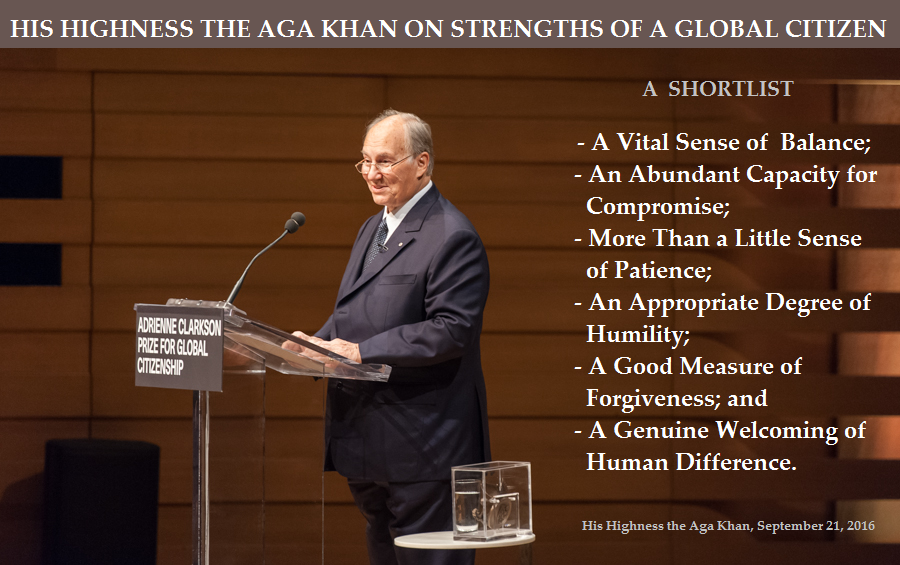
Photo: The Ismaili/Lisa Sakulensky. Copyright. Note: Superimposition of text on photo by Simerg.
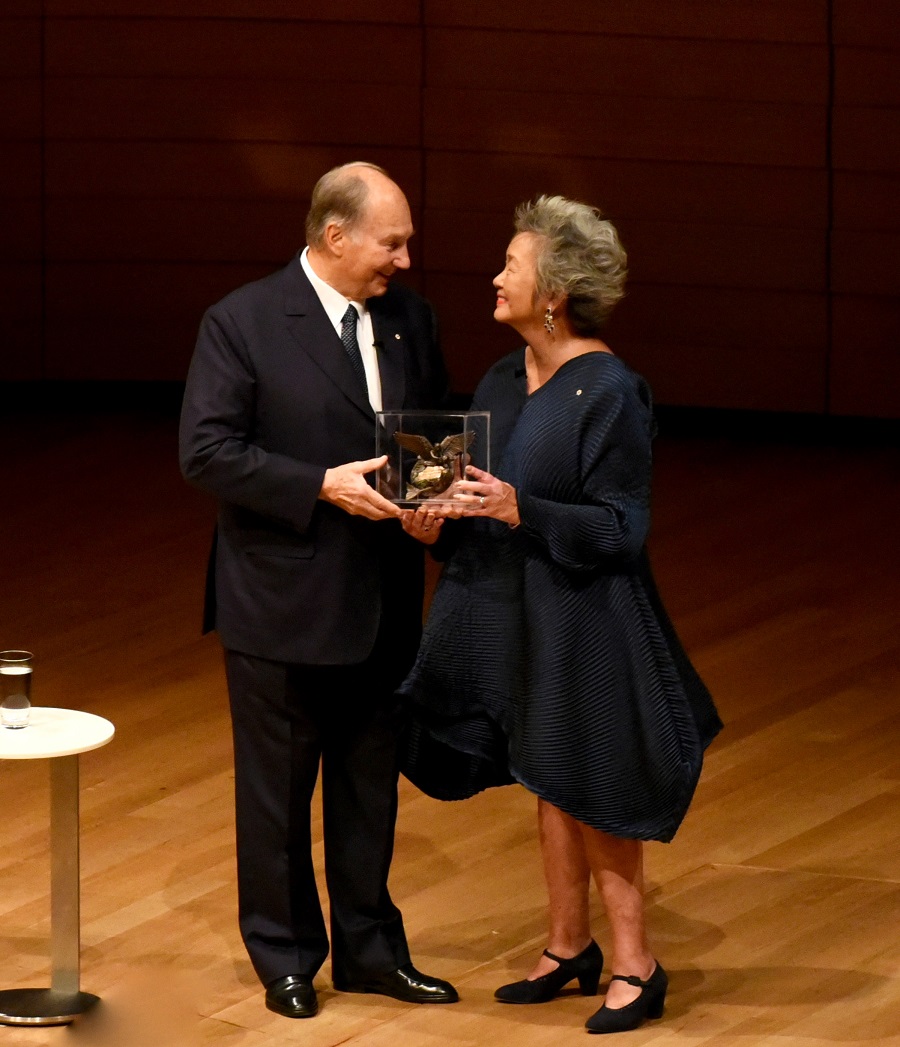
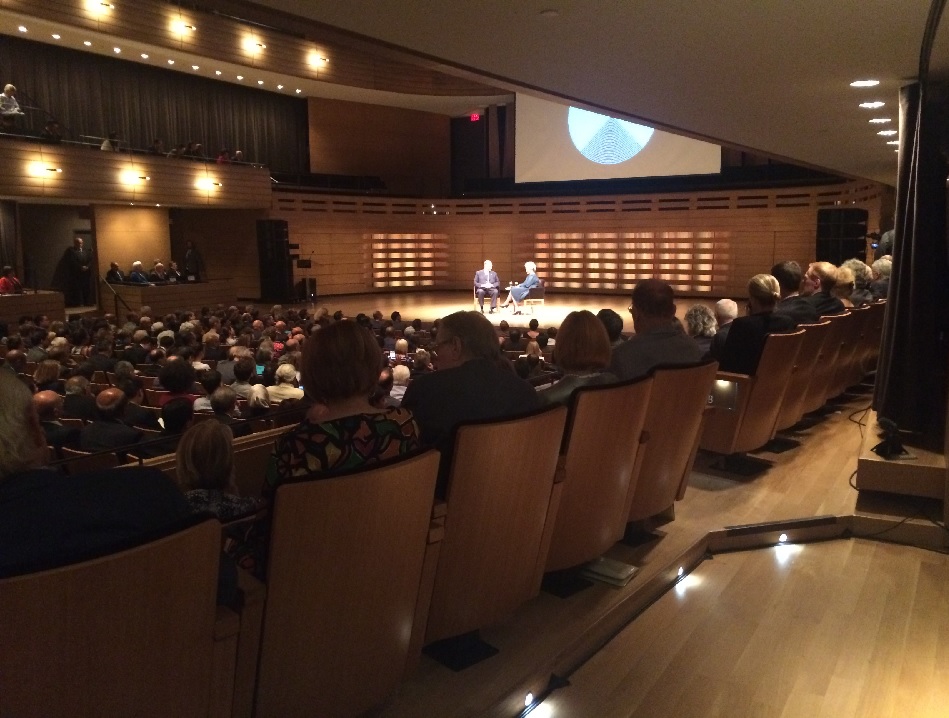
There were many cherishable and memorable moments on Wednesday, September 21, 2016, at Koerner Hall in Toronto when the inaugural Adrienne Clarkson Prize for Global Citizenship was presented to His Highness the Aga Khan. World renowned vocalist and songwriter Rufus Wainwright welcomed the audience with a wonderful rendition of Leonard Cohen’s song Hallelujah. We were reminded by Rufus that September 21 also marked Cohen’s birthday – his 82nd. A video of Prime Minister Justin Trudeau’s congratulatory message to His Highness Aga Khan received a big applause from the packed auditorium hall, as did the actual presentation of the unique award to His Highness by Madame Clarkson. This was followed by her welcome speech and the 49th Ismaili Imam’s words of wisdom.
The Rt. Hon. Adrienne Clarkson, Canada’s 26th Governor General from 1999-2005, awarding the inaugural Adrienne Clarkson Prize for Global Citizenship to His Highness the Aga Khan, 49th Imam of Ismaili Muslims, in Toronto on September 21, 2016. Photo: The Ismaili/Vazir Karsan. Copyright.
But of all the absorbing moments that the event offered, there was one defining moment in Mawlana Hazar Imam’s speech that I took to my heart. In concluding his speech, Mawlana Hazar Imam defined what it takes for each one of us to be a Global Citizen. He said:
“These are just a few thoughts as I look to the future of Global Citizenship. The challenges, in sum, will be many and continuing. What will they require of us?
“A short list might include these strengths: a vital sense of balance, an abundant capacity for compromise, more than a little sense of patience, an appropriate degree of humility, a good measure of forgiveness, and, of course, a genuine welcoming of human difference.”
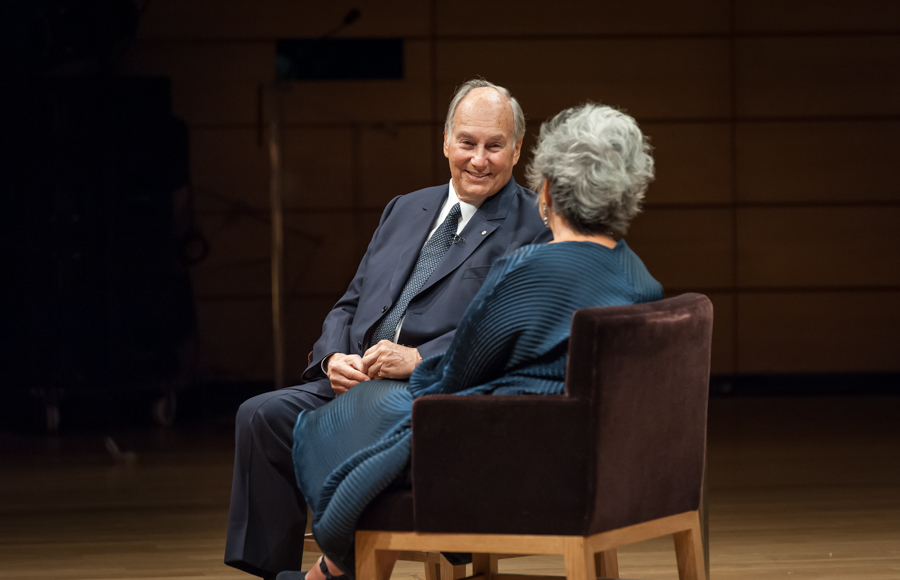
It was with reference to this last sentence that Madame Clarkson then began her conversation with Mawlana Hazar Imam. The following is a transcript that Simerg has prepared from an audio recording of the event, and we invite our readers to view the video of the wonderful event through the links that we have provided at the bottom of this page.
TRANSCRIPT OF THE CONVERSATION (Prepared by Simerg from an audio recording)
His Highness the Aga Khan and the Rt. Hon. Adrienne Clarkson in conversation following the presentation of the Global Citizenship Award to the Ismaili Imam on September 21, 2016, in Toronto. Photo: The Ismaili/Lisa Sakulensky. Copyright. Ismaili.
Adrienne Clarkson: Thank you so much for those words. They are so well thought out, and over the years as we have known each other, I am always impressed by your deep sense of humane commitment and feeling that you have when you talk about things like forgiveness, and that, that is part of what we are as a society……One of the things I am very interested in, and I think everybody here is interested too, is in the fact that you put so much faith in Canada; that you have put institutions in Canada, like the Global Centre for Pluralism in Ottawa….And you have also put the Imamat in Ottawa. And when I think about it, I think: Is that because in 1972, we welcomed so many Ismailis. Is that the beginning of it, or is there something else about us: Is it that you are a secret fan of Mackenzie King.
Mawlana Hazar Imam: No, I think the answer to that is that as I look at the world around us, and I ask myself what would define countries where I would like to see my community reside. The first word that comes to my mind is countries of opportunity. And I believe Canada is one of the greatest countries of opportunity.
Adrienne Clarkson: I think that is true, and certainly the Ismaili community in Canada has made the most of the opportunities which all people who come to this country have. And that is the reason why I think people understand once they get here: that there lives are going to be different. And that is one of the interesting things too about what you talk about to the Jamat, to the community. And I think something that people should realise in the rest of Canada that you have your community, and it is very important; but that you emphasise how important it is to be part of the world outside your community. And why do you do that?
Mawlana Hazar Imam: Well, I have to go back to 1957. In 1957, many of the countries where my community was living were colonies. And those countries needed to go through the process of independence, needed to find the pathways forwards towards peace, towards development. And I have asked myself: How do countries achieve that? And if you go back to 1957, you look at the map of our world, and you try to define where all these countries that have now become independent, have created opportunity; I think one has to say that that has not been very successful.
Adrienne Clarkson: What have been the barriers? What are the barriers?
Mawlana Hazar Imam: Oh, I think there is a multitude of barriers. First of all, I suppose national resources would be a major issue. The second would be the level of human ability within a given country, whether it has a human ability to develop its resources, to build opportunity. So in that sense we are looking at processes of change. And they have occurred; they have occurred. There are today countries of opportunity which either did not exist or one would not have thought of as being countries of opportunity in 1957 when my grandfather died.
Adrienne Clarkson: And that has changed.
Mawlana Hazar Imam: That has changed.
Adrienne Clarkson: Well, you have had a lifetime of opportunity to see that. It is very rare to meet somebody who has had such an effect on the world, not only on a group of people, but in the world. Because that is what you have made it in sixty years. Next year will be your sixtieth anniversary as the Imam. And in sixty years, you have seen development, you have made development happen, you made resources available to places where there were absolutely no resources. And in doing that, it cannot have been easy to decide where that would happen, to decide who would be the collaborators, to bring along people who could understand and have the capacity to help with that development. How did you go about doing that?
Mawlana Hazar Imam: [I think] what you try to do is look at circumstances on an on-going basis. And then you work through what I would call predictability, and you try to project into the future what countries have the ability to follow the path of peace and development. And where there are situations which are potentially difficult, and that, of course, is something which changes practically every day; and, of course, it has changed a lot since 1957.
Adrienne Clarkson: And they did not teach you that at Harvard.
Mawlana Hazar Imam: I am not sure what they taught me at Harvard.
Adrienne Clarkson: We all wonder what we learned at university and how that was relevant to anything that we are doing today. But I think what is interesting in what you have been saying over the last, particularly over the last decade in your speeches, in your writings is that ignorance that we have. And I am always struck by the fact that we are, we speak out of such ignorance in a so-called western developed world, particularly about Islam. We do not know the varieties of the Muslim world at all, we seem not to be even interested in it, and the more people shout about it, the worse it becomes, because it is as though we shut out everything that could be various, that could be different, that could have any kind of nuance in it. How do you mitigate against that?
Mawlana Hazar Imam: I think probably the first step would be to extract from Islamic history, from Islamic philosophy the great names, the great thinkers, the great astronomers, the great scientists, the great medical figures, who have influenced global knowledge. I remember courses which taught general humanities. And those general humanities caused one to read in French, or Italian, or German, or English. Arabic! Never heard of it; Urdu! Never heard of it; Farsi! We do not even know what that is. So, it was a frightening vacuum in general education at the time. And I think that that vacuum has had terrible results.
Adrienne Clarkson: No, of course it has. It is ridiculous. I mean, we met only a few years ago, William Polk who was the first translator of the great epic Bedouin poem. And to think that only practically in the 21st century did we have access to that in translation is frightening, almost. A lacunae of knowledge. Not even accessible to us in any way.
Mawlana Hazar Imam: And that I think is one of the really serious issues – is that the cultures of Islam, of the Islamic world are not present in global cultural (let us say, how would I call it) presence.
Adrienne Clarkson: Well, of course, you have given us an enormous gift to Toronto in the Aga Khan Museum and the Jamatkhana, which is now virtually in the geographic centre of Metropolitan Toronto. And I think by those wonderful Islamic gardens with the pools of water, but using native Canadian trees, and native Canadian plants. I always think of you as somebody with a motto of: No idea too big, no detail too small. Because I know how you look at everything: you know, the grouting in the marble, the bulbs that will be planted, the colours of the bulbs. And, of course, that is an enriching thing for you to have that detail in your life, but also I think it enriches us. And when I think of the role that beauty and culture play in the message that you have to the world, I think we are enormously grateful to you…..
His Highness the Aga Khan and the Rt. Hon. Adrienne Clarkson in conversation following the presentation of the Global Citizenship Award to the Ismaili Imam. on September 21, 2016 in Toronto. Photo: Simerg.
(The Rt. Hon. Adrienne Clarkson then went on to describe the restoration work carried out by the Aga Khan Trust for Culture at the Humayun Gardens in New Delhi and the Babur Gardens in Kabul as well as the creation of Cairo’s new Al-Azhar Park from a site that had been used for many centuries as a landfill. The description is being skipped here. – Editor).
Adrienne Clarkson……..Why do you think beauty is so important to us, even when there are so many other needs around?
Mawlana Hazar Imam: Well, I think, all faiths express themselves in some cultural form or the other. And Islam is a faith which has expressed itself in cultural manifestations over centuries in different parts of the world. And I think it is very important that those manifestations should be seen and should be, I hope, admired, and that they should inspire young people who are talented young architects, land planners, whatever it may be. So that they can inspire their own buildings with a sense of continuity, but of our time. And I think it is very important that we not try to plagiarise history. (Laughter). I would get a, what would it be, a D or an E at Harvard for plagiarization.
Adrienne Clarkson: Well, of course, when you restore things or you make things new, you have to always avoid that. You have to say I am making something new. And that does not seem to fill you with any kind of fear.
Mawlana Hazar Imam: No, I think that every people in every given time should be encouraged to express themselves. And I remember that when the Pyramid was built in the Louvre, in the courtyard of the Louvre, there was immense debate as to whether this was appropriate or not. Well, it is there!
Adrienne Clarkson: Yes, yes, it is there. When we look at the world today….The rise of the Hard Right, of the really almost Fascist movements, reminds us sadly of times in the 1930s, and we have to really watch that because all that is to raise fear in people. And once fear rules people, they become blinded to all kinds of things. How do you deal with that? How do we deal with the fear?
Mawlana Hazar Imam: I think in this particular case, the issue is whether these countries have been willing to prepare themselves for this situation. Canada is a country that has permanent preparation. It is the way the country thinks. It welcomes people to come from outside, it has the institutions to support them when they arrive. It helps them integrate into Canadian society. That is not true of many western European countries, because they are facing economic constraint, because there are social tensions in various European countries also. Northern Europe does not speak the same language as Southern Europe, nor do they face the same problems. So I think we are living at a time when there are real difficulties, and my sense is that they are going to have to be analysed and solutions are going to have to be found. Because the movement of people is not going to stop. I do not see that stopping. It is driven by a number of factors, and I think in many of the countries which are sending people to Europe today, are dealing with populations who are seeking opportunity. There is a great sense of lack of opportunity. Opportunity is next door, it is not (around).
Adrienne Clarkson: (You know) When you were named as Imam in your grandfather’s will, he said he felt that he had to appoint somebody who was a young man, a man who was born in the atomic age, that is, the age of the 20th and 21st century. Has that influenced the way you think of things? Do you think of things in terms of a kind of millennial way, because you were appointed so young and you took on those duties so young. You knew you were expected to do something different. That is implicit in that will.
Mawlana Hazar Imam: Right. At the time and even today, many of the questions that I ask myself and that I discuss with members of my community is medium- and long-term projecting. Where are we going? And are we going in the right direction in various countries? Are we being equitable in relation to the demography of the community? Are we over-committing in certain parts of the world and under-committing in others? Are there circumstances in regions which make it impossible for our institutions to function? Or, on the contrary, are there countries that would welcome them? So we are looking at, let’s say, a semi-global situation on an on-going basis. So, in that sense, we are looking at how to plan. And planning, I think, in our case requires institutional initiative. We need to get our institutions in place before people decide to move.
Adrienne Clarkson: Well, that is the point. You are there before!
Mawlana Hazar Imam: We try.
Adrienne Clarkson: You are there before, because you have to then predict and you have to then say we are going to be out front, and when the tide is ready we will have the port built, so that the ships can arrive. How do you do that?
Mawlana Hazar Imam: You pray that Idi Amin never comes back!
Adrienne Clarkson: Yes. Well, let’s hope that that was only once in a hundred years, at least. But the idea of a threat to so many people comes up over and over again. I mean we know more about it now, because we have instant communications. So we know when whole groups are threatened, when things happen like that. But, you know, the ignorance that I talked about earlier is almost terrifying. That people do not understand the Muslim world whatsoever. And they do not understand, as you touched on in your speech, they do not understand the differences in the Muslim world. They have never read the Koran, they would not think of reading it or taking a study course in it. And I think that sort of thing really means that ignorance is promulgated and continued. And then, you know when very careless media add to that, then you really do not understand. Also, the other thing that I always like to point out is that Islam is six hundred years younger than Christianity. So, Christians should think, you know, what was Christianity like in the 15th century. And who was talking then? And how were they divided? It is very interesting to think of it in the cycles of history, as opposed to, just thinking, it is now and we are all the same and we are all equal, etc. We are not, really, because we have different heritages.
Mawlana Hazar Imam: That is true, but there was also a lot of inter-faith communication in the Middle Ages.
Adrienne Clarkson: That is right. The inter-faith communication is..
Mawlana Hazar Imam: A great deal [of inter-faith communication], particularly in the field of mystic faith.
Adrienne Clarkson: Mysticism!
Mawlana Hazar Imam: Yes.
Adrienne Clarkson: Linking Sufism and so on with Christian mysticism.
Mawlana Hazar Imam: Yes. Personal search.
Adrienne Clarkson: Why have we lost that?
Mawlana Hazar Imam: Probably, the requirements of modern life.
Adrienne Clarkson: Can we do anything about it? Should we be trying? Is that one of the things we should be trying, besides thinking of development, besides thinking of, you know, creating universities and schools. Can we do that?
Mawlana Hazar Imam: I think we need to reflect over is generosity in society. Our faith, the faith of Islam teaches generosity. But, I think it is very important that generosity should be part of public psyche.
Adrienne Clarkson: And that means being brought up with it.
Mawlana Hazar Imam: Means being brought up with it. Means recognising those in need of help. Means creating institutions to deliver that help. And, obviously, in poor countries, it is very difficult to achieve. But it should be a goal.
Adrienne Clarkson: Well, the problem is that the gap between rich and poor is growing and growing and growing, and not just in the developing world, but in the developed world. That is one of the real problems now for us, I think, as a society in the West is that disparity between the haves and have-nots. And the more that grows, the more unjust society becomes. And there seems to be very little that people want to do about that, very little that they really want to do about it. And things become charity. Charity is not the right way to go about it; development is the right vehicle now, surely.
Mawlana Hazar Imam: Yes. Well, in the faith of Islam the best charity is to give, to enable an individual or a family to become independent of their economic destiny. That is known as the best charity.
Adrienne Clarkson: How often is it? Does it happen?
Mawlana Hazar Imam: I honestly do not know. I would have to ask our bankers.
Adrienne Clarkson: As a final thing, I would like to ask you: What do you really think will happen now in the medium term for our future as we see Britain wanting to leave Europe, as we see the rise of very hard Right in the European countries, as we see what is happening in the United States, which is hardly even mentionable. What can we hope for now? How can we as individuals who really want to make things better, as we are faced with all of this, how does it happen, for us now?
Mawlana Hazar Imam: I think we have to offer rational people, options. I think it is very important to put in front of public opinion, good options. Alternatives.
Adrienne Clarkson: Different ways of behaviour.
Mawlana Hazar Imam: Different ways of behaving.
Adrienne Clarkson: And how do we do that? How do we make that? Is that through education? Is that through incentives? What is it? How is it done?
Mawlana Hazar Imam: I think it is through men and women coming forward to take positions of leadership. I think it is institutions who need to engage, rather than let the field open to anything. And, I have been very impressed since 1957 in developing countries, when elections had to be held or were held in circumstances where you would assume that the population did not have access to the information they would have, in our view, needed to express themselves rationally and competently. Well, I got it wrong. They are very, very wise. Public wisdom is not dependent on education.
Adrienne Clarkson: You are practically talking about Jung’s collective unconscious there. Is that, that there is a kind of wisdom that people share.
Mawlana Hazar Imam: Yes.
Adrienne Clarkson: Because of their common humanity.
Mawlana Hazar Imam: Because of the common humanity. Because of the common circumstance in which they are living.
Adrienne Clarkson: But does that bring us hope – as, you know, a collection of your speeches as ‘Where Hope Takes Root”. Is that where hope will take root?
Mawlana Hazar Imam: Yes. I believe so. But it means that decision makers have to be responsive.
Adrienne Clarkson: Well, it is very discouraging often when you look at the people who are elected in public office in different countries and the countries seem to vote for people that will harm them the most. Often, this is the most discouraging when you see in a democratic situation, even in free ones, where people will vote for something that is going to really harm them, and they do not seem to realise that it is very, very difficult, very difficult even because we have freedom of the press, we have enormous freedoms, particularly in North America and most of Europe. We have all those freedoms and yet we are in the dilemma that we are…Does that come back to the individual and their ability to do things?
Mawlana Hazar Imam: I think it comes back to the way the individual, or the family, rather than the individual, evaluate their position in society at a given time. Ultimately, the basic issue is: How does a family feed itself and educate the children, generation after generation? It is that clear, it is that important. And if society is able to provide that for the totality of the population in a given country, that is already a very sound foundation. But that is a condition sine qua non for a country to move ahead. If you have pockets of poverty, if you have populations or groups of populations who are marginalised, you are looking at a series of issues that one year are going to blow up. The predictability of crisis, in my view, in Third World countries is much higher than people would believe.
Adrienne Clarkson: You could predict them.
Mawlana Hazar Imam: You can predict them.
Adrienne Clarkson: Then why do not we avert them?
Mawlana Hazar Imam: Ah, that is a different question. I think predicting them is something that you can do, averting them does depend on a lot of different issues. That is not always easy.
Adrienne Clarkson: Thank you so much, Your Highness.
Mawlana Hazar Imam: Thank you. Thank you.
~~~~~~~
STATEMENT BY ANNA WILLIAMS, SCULPTOR OF THE MEDAL PRESENTED TO HIS HIGHNESS THE AGA KHAN
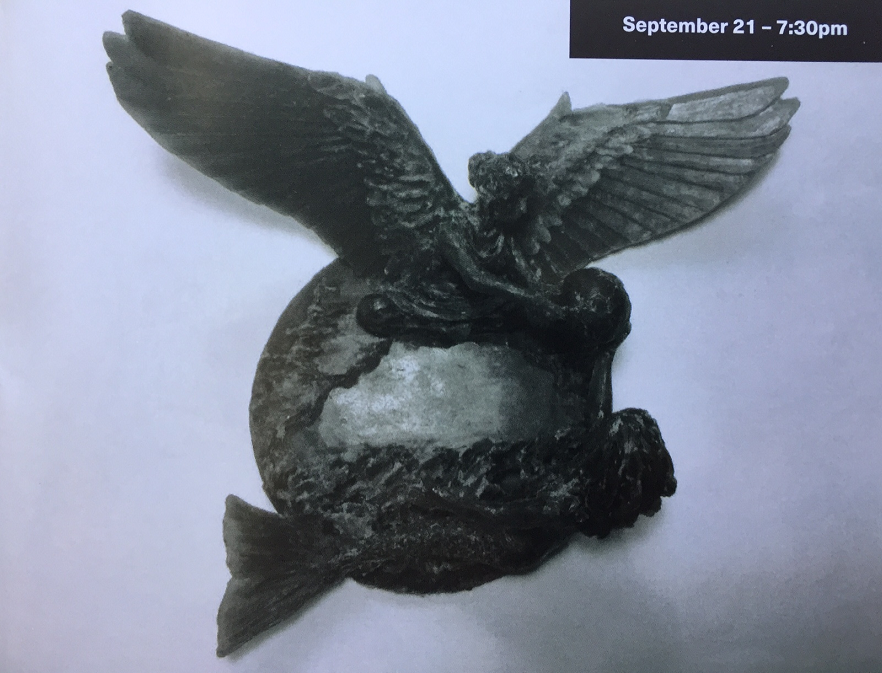
The medal presented to His Highness the Aga Khan for the Adrienne Clarkson Prize for Global Citizenship was sculpted by Anna Williams. The photo and her statement (below) are from the program booklet “Six Degrees Citizen Space 2016,” published by 6DegreesTO.com.
“Adrienne Clarkson asked me to create a medal for the Prize for Global Citizenship. I had the idea of bringing together the world of creation with that of the great mythological winged deities. Sedna is the Inuit goddess from whom all creatures of the sea spring. Atlanta, Nike, Lilith and the winged bearers of souls in Norse lore, the Valkyrie, each exist in an imperfect world. But through their strength, intelligence, independence, and compassion, they have created an iconography of champions and dissenters. Each in their own way is unyielding and stands apart as they chart a new course against buffeting waves. In the narrative of this medal, Sedna the creator emerges from the waves to pass a vulnerable world to the outstretched arms of our winged guardian.” — Anna Williams, sculptor.
Date posted: September 22, 2016. Last updated: September 23, 2016, 15:25 (new photos added, completion of interview transcript and artist statement for Global Citizenship Medal).










 Simerg - Insights from Around the World