The Verses of the ‘Immaculate Conception’ of Jesus in the Qur’an and their Impression on a Christian Emperor by Barnaby Rogerson

Muhammad, who could do nothing to alleviate the suffering of his small embattled community of believers, at last advised some of his followers to leave sacred Mecca and take refuge elsewhere. He said to them: “If you were to go to Abyssinia, it would be better for you until such time as God shall relieve you from your distress.” The Quraysh of Mecca, rather than celebrate their departure, grew irritated by this development. They dispatched a delegation to the ruler of Axsum where the Quraysh delegation planned to slander the new faith in the eyes of a Christian king, and so expedite their expulsion….Read More

The Altar of the Nativity, beneath which is the star marking the spot where tradition says the Virgin Mary gave birth to Jesus. Photo: Muslim Harji, Montreal, PQ. Copyright. Please click on image for Barnaby Rogerson's piece.

The Altar of the Nativity, beneath which is the star marking the spot where tradition says the Virgin Mary gave birth to Jesus. Photo: Muslim Harji, Montreal, PQ. Copyright. Please click on image for Barnaby Rogerson’s piece.
Historical Illustrations: Ibn Sina and his Canon of Medicine @ Simergphotos

One of the most famous exponents of Muslim universalism and an eminent figure in Islamic learning was Ibn Sina, known in the West as Avicenna (981-1037). For a thousand years he has retained his original renown as one of the greatest thinkers and medical scholars in history. His most important medical works are the Qanun (Canon) and a treatise on Cardiac drugs…..The enduring respect in the 21st century for a book written a millennium earlier is testimony to Ibn Sina’s achievement….”

Historical Images: Ibn Sina and His Canon of Medicine

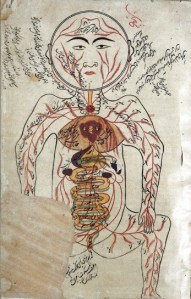
Arteries and Viscera -  depiction in Avicenna's Canon of Medicine). Please click for historical images. Credit" Wellc ome Images. Copyright.

Arteries and Viscera – depiction in Avicenna’s Canon of Medicine. Please click on image for article. Credit: Wellcome Images. Copyright.

Historical Images: Thomas Jefferson’s Copy of the Qur’an @Simergphotos

The latest weekly historical illustration at Simergphotos is that of a rare copy of an English translation of the Qur’an which was acquired over two centuries ago by Thomas Jefferson, one of America’s Founding Fathers as well as its 3rd President. This was the 2-volume set on which US Muslim Congressman Keith Allison rested his hand for the oath to the office on January 4, 2007. Please click Historical Images: President Thomas Jefferson’s Copy of the Qur’an or on the following image:

Keith Ellison, the first Muslim ever elected to the US Congress, took his oath of office on January 4, 2007 by placing his hand on Thomas Jefferson's copy of the Qur'an. Please click for Historical Illustrations."

Keith Ellison, the first Muslim ever elected to the US Congress, took his oath of office on January 4, 2007 by placing his hand on Thomas Jefferson’s copy of  the Qur’an. Please click for “Historical Images.”

America’s Founding Fathers and Islam by James Hutson

The US Library of Congress contains the papers of 23 presidents, from George Washington to Calvin Coolidge. Manuscript Division Chief James Hutson draws upon the papers of Washington, Thomas Jefferson and other primary documents to discuss the relationship of Islam to the new nation.

Please click: America’s Founding Fathers and Islam: A Brief Discussion Based on Documents at the Library of Congress

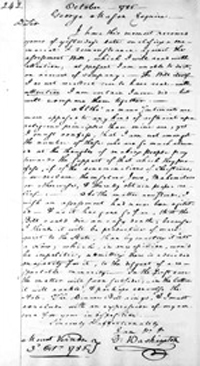
George Washington's 1785 letter wherein he declared that he would welcome "Mohometans" to Mount Vernon if they were "good workmen. Image credit: Library of Congress. Please click for article

George Washington’s 1785 letter wherein he declared that he would welcome “Mohometans” to Mount Vernon if they were “good workmen.” Image credit: Library of Congress. Please click for article

The Hajj by Naser-e Khosraw, from Michael Wolfe’s “One Thousand Roads to Mecca”

IN PART III OF NASER-E KHOSRAW’S TRAVELS

“….The tallest mountain near Mecca is Abu Qubays, which is round like a dome, so that if you shoot an arrow from the foot of the mountain it reaches its top.…Having come into the city, you enter the Haram Mosque, approach the Ka’ba, and circumambulate….. always keeping the Ka‘ba to your left [shoulder]. Then you go to the corner containing the Black Stone, kiss it, and pass on….”

Naser-e Khosraw’s Pilgrimages to Mecca

A bird’s-eye view of the Ka’ba crowded with pilgrims. The photo is from the archives of the US Library of Congress and was created by American Colony (Jerusalem), Photo Dept., in 1910. Please click for article by Naser-e Khosraw.

________________
Previous posts in the four-part series (the above is Part III):

Naser-e Khosraw’s Pilgrimages to Mecca: From “One Thousand Roads to Mecca” Edited by Michael Wolfe (Part I)
Naser-e Khosraw in Fatimid Cairo: From “One Thousand Roads to Mecca” Edited by Michael Wolfe (Part II

A Story from ‘Pyara Imam ni Pyari Wato’: Historical Memories by Sairab Abuturabi and Jaferali Bhalwani

Loving Tales of our Beloved Imams: (I) Farazdaq’s Praise and Support of Imam Zainul Abideen (a.s.)

“…This tale belongs to ages past. It goes back to the era of Hazrat Imam Zainul Abideen (a.s.), our third Imam, from whose veins was to ensue the Divine Line of the Imams. He was the Imam who, on the battlefield of Karbala, received the nass of Imamat from his father, Hazrat Imam Hussain (a.s.) with the blessing: “Through you the line of Imamat will continue till the Day of Judgment…”

Please click for story