Simerg is an independent initiative dedicated to Ismaili Muslims, the Aga Khan — their Hereditary Imam — and the Ismaili Imamat, and Islam in general through literary readings, photo essays and artistic expressions
Category Archives: Literary Readings from Ismaili History
In his Talika (written message) to his Ismaili Muslim followers, His Highness the Aga Khan, the 49th Hereditary Imam of the Ismaili Muslims and direct descendant of the Prophet Muhammad (may peace be upon him and his family), mentioned that his family members at his request had assumed additional responsibilities to assist him in important areas of his work. The Aga Khan’s younger brother, Prince Amyn, his eldest child, Princess Zahra, and his three sons, Prince Rahim, Prince Hussain and Prince Aly Muhammad, have responded magnificently to the Imam’s call, showing a united front in their efforts.
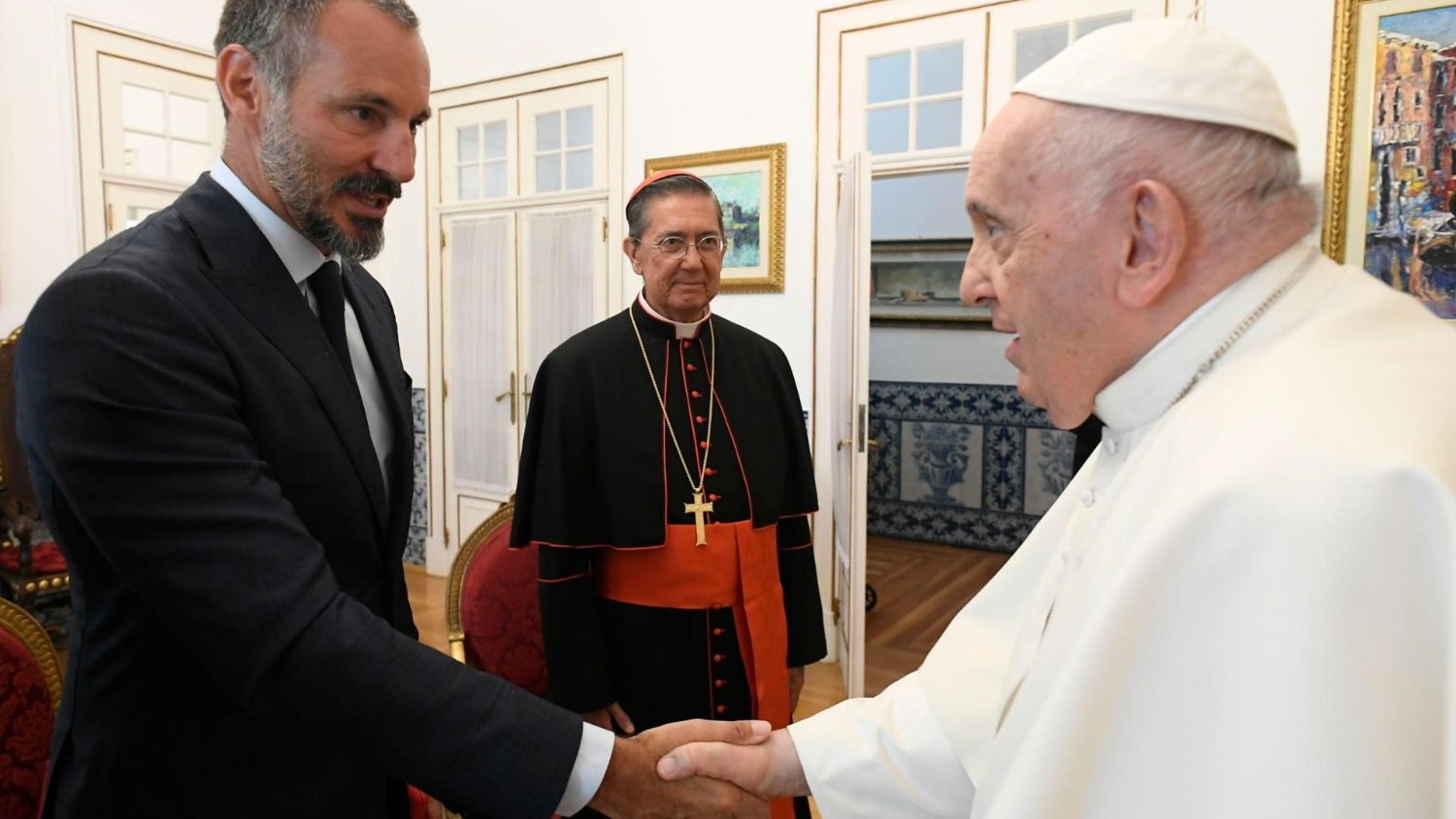
Pope Francis warmly greeted Prince Rahim Aga Khan during their private audience in Lisbon, Portugal, on August 4, 2023. The Pope was visiting Lisbon for World Youth Day. Photograph: Vatican News. Please click on the image for Prince Rahim’s articles.
They have travelled worldwide to review the work of the Ismaili Imamat and attended significant events related to the expansion and development of ongoing and new projects. Prince Rahim, a graduate of Brown University, celebrated his 53rd birthday on October 12, 2024, and he is arguably perhaps the busiest among all family members. Our sister website highlights 53 years of his life through a two-part series. Please read Prince Rahim Aga Khan (1971-2021) and Prince Rahim Aga Khan (2022-2024).
Featured photo at the top of post: Prince Rahim, in the company of his father, His Highness the Aga Khan, visited an Aga Khan Development Network (AKDN) project in Abidjan, Ivory Coast, in 2008.
Date posted: October 12, 2024. Last updated: October 22, 2024.
“Ultimately, the art of teaching is a mission. Those who embark upon the journey of teaching seek to transform individuals and communities, inspired by a sense of purpose” — Mawlana Shah Karim Hazar Imam, His Highness the Aga Khan, 2008, Dhaka, Bangladesh.
The late South African statesman and leader Nelson Mandela said, “Education is the most powerful weapon you can use to change the world.” This profound statement underscores the transformative power of education, inspiring us to believe in its potential to shape a better future. Martin Luther King Jr. also emphasized the importance of education, stating that it teaches one to think intensively and critically.
Education is a powerful tool for building intelligence and character when done right. Teachers are the key figures in this process, guiding students to acquire knowledge, competence, and virtue. The Aga Khan’s quote on teachers further underscores their crucial role.
In the 1940s, 50s, and 60s, Mbeya, a small town situated in the Southern Highland region of Tanganyika (now known as Tanzania), was blessed with dedicated and enthusiastic teachers who changed the lives of many children of Indian origin who had moved to East African countries from India in the late 19th and early 20th Centuries to towns such as Mbeya.
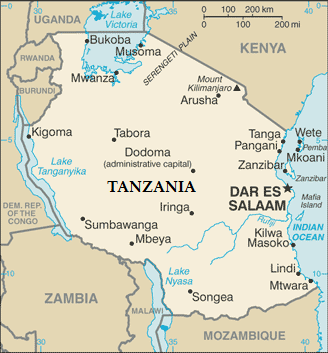
A UN map showing significant towns and cities in Tanzania, including Mbeya neighbouring Zambia in the south-west of Tanzania.
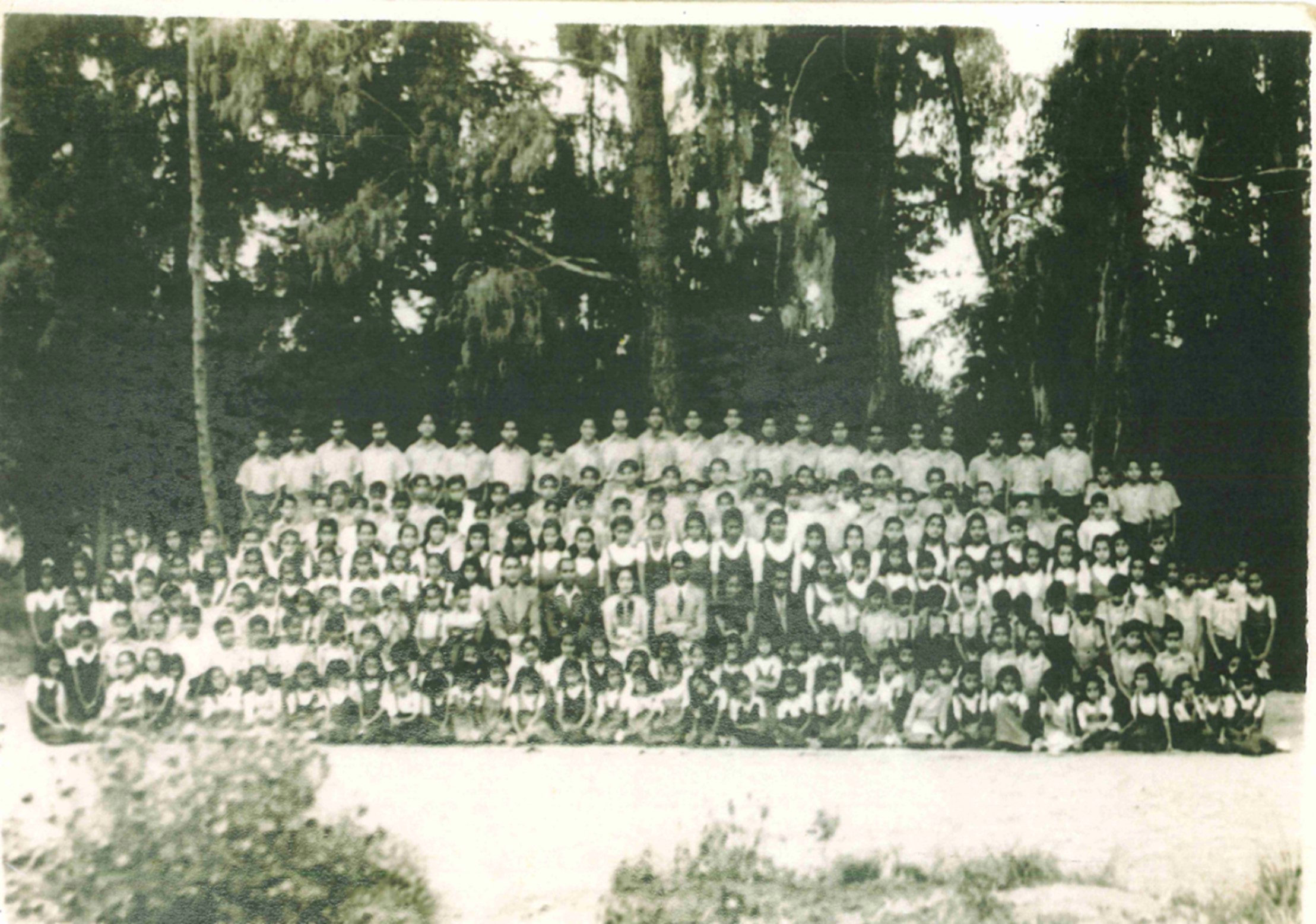
During the British colonial time, separate European, Indian and native African Schools were established. The Colonial Government funded the schools for the Europeans and Africans; the Asians (or Indians from South Asia), on the other hand, had to build their own education and schooling system. This was a community effort, funded with donations from the community and fees collected from the students. In the 1940s and early 1950s, Indian Public School, a primary school, was the first such teaching institution in Mbeya for the Indian community. The medium of instruction was Gujarati. After primary education, the students continued their education in Dar es Salaam.
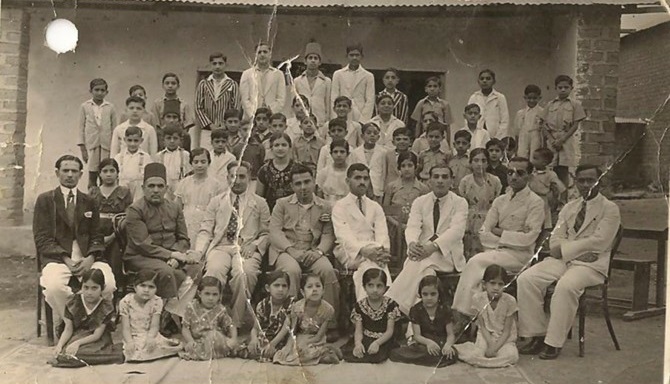
A photo of staff and students of the Indian Public School from around the late 1940s. Among those in the photograph are Haji Yusufmia (wearing hat), Mr. Hassam Somani, Mr. Sadru Bhanji Jiwa, Mr. Gulamhussein Mukadum, Mr. Hassanali Dhanani and other teachers.Photograph: Dr. Mohamed Manji collection.
~~~~~~~
Indian Public School teachers Mr Almeida, Mr Lohar, Mr Jagirdar, Mr. Hassanali Abdulla Walji and Vigiabenji Talavia. Photograph: Dr. Mohamed Manji collection.
~~~~~~
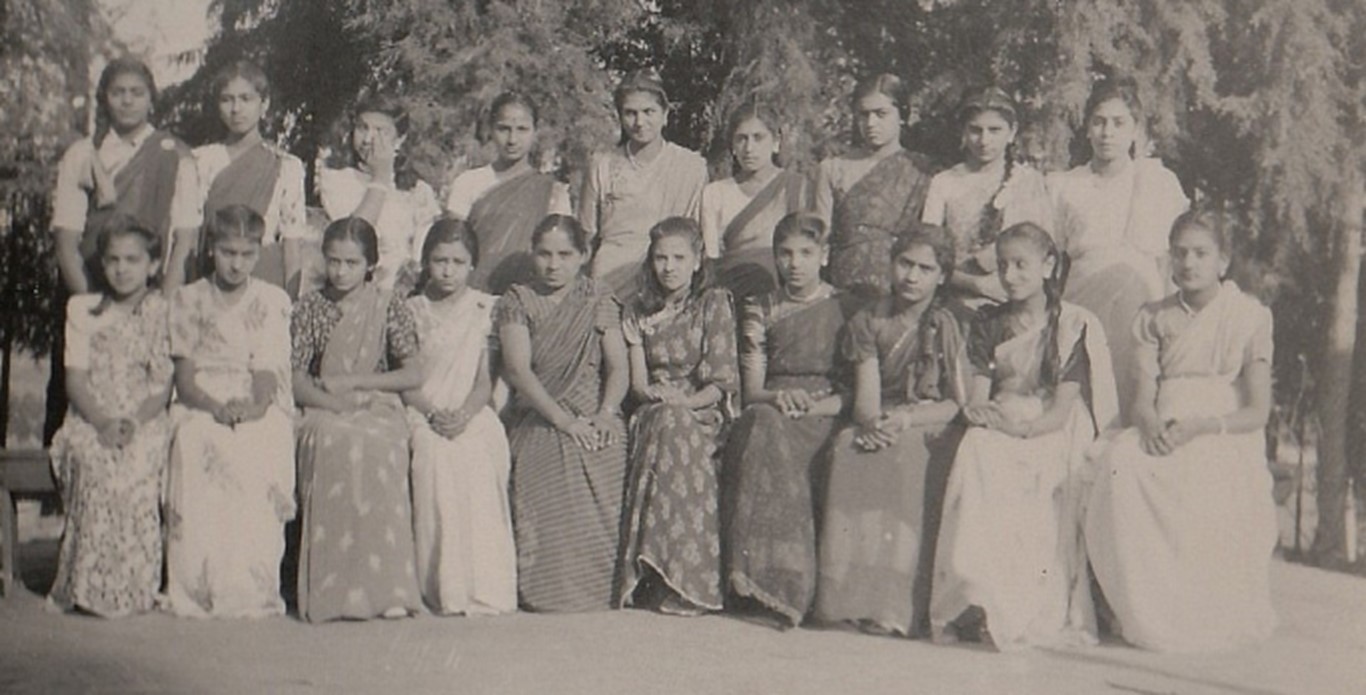
Indian Public School girl students with Vijiabenji Talawia. Photograph: Dr. Mohamed Manji collection.
~~~~~~
Indian Public School girl students with Vijiabenji Talawia. Photograph: Dr. Mohamed Manji collection.
~~~~~~
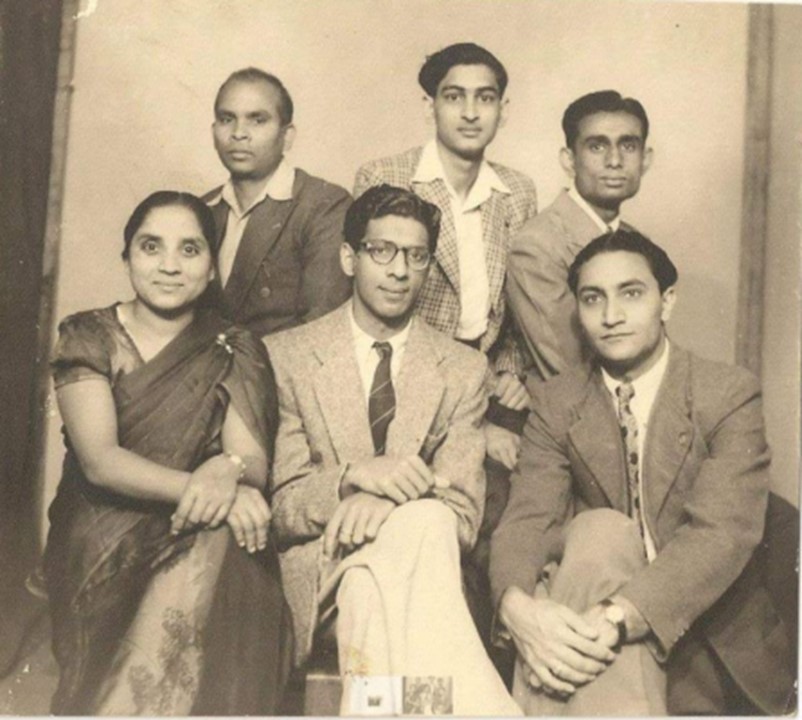
A photo from the early 1950s of the staff of the Indian Public School, Mbeya. Pictured are G. D. Talavia, Hassanali Abdallah Walji, Mrs. Vijiaben Talavia, K. R. Lohar and Abdulmalek Ali Valla. Photograph: Dr. Mohamed Manji collection.
In the late 1950s, the Ismaili Muslim community, a group of the Mbeya Indian diaspora, built the Aga Khan Primary School, which would teach up to the tenth standard. It was part of the Aga Khan Education System and was open to all races. The medium of instruction would be English; it also had facilities to teach science subjects. This educational system, built and sustained by the Indian community, not only provided quality education but also instilled a profound sense of pride and empowerment among the Indian diaspora in East Africa.
Mr. Vallimohamed Sarani (Sarani Master). Photograph: Dr. Mohamed Manji collection.
From the scanty information I obtained for the 1940s, one of the first teachers at the Indian Public School was Mr. Vallimohamed Sarani (known as Sarani Master), who initially taught in Zanzibar. Sarani Master came to East Africa in the late 1920s or early 1930s, joining his uncle in Kampala. He got married in Kampala and then shifted to Zanzibar as a teacher. His children were born in Zanzibar. He left Zanzibar during the early 1940s and started teaching in Mbeya at the Indian Public School for eight years. In 1948, he moved to Nayasaland (now Malawi) and stayed there till 1975. He retired and moved to Texas, USA, to be with his children until 1982. His final residence was in Leicester, UK, where he passed away in 1987 at the age of 84 years.
Mr. Ayub Kassammia, assistant to Sarani Master. Photograph: Dr. Mohamed Manji collection.
Another significant figure in the Indian Public School was Mr. Ayub Kassammia, the second son of the brother of Haji Yusufmia, a pioneer and successful businessman of Mbeya. After completing his studies in India in Kutch/Gujrat, Ayub returned to Mbeya. Initially, he taught at the Indian School organized by the local Indian community. The School was held in a rented house behind Haji Yusufmia’s house. After building the formal Indian Public school and hiring new teachers, Ayub left teaching. He joined the British Army in Nairobi during 2nd World War till the end of the War.
At the end of the 1940s and early 1950s, with the relocation of Sarani Master and his family to Nyasaland, Indian Public Schools hired new teachers from India. In 1949, a husband-and-wife team of Mr. G. D. Talavia and his wife, Vijiaben Talavia, joined the School. Mr Talavia was made the headmaster. The School continued with Gujarati as a medium of instruction, with lessons to teach English at the end of Standard 2 or the beginning of Standard 3.
Farewell to Zarinabenji Virji who left the Indian Public School for Dar es Salaam in 1952/53 after her marriage. Photograph: Dr. Mohamed Manji collection.
Among other teachers were Miss Zarina Virji (commonly known as Zarinabenji), who taught briefly and moved to Dar es Salaam after marrying Mr. Malek Ratancy, a well-known cricketer; Mr. Kassim Rahemtulla Lohar (Mr. K. R. Lohar); Mr. Hassanali Abdulla Walji of Mbeya (commonly addressed at that time as Hassanali Master and later as Dr. Walji); and Mr. Abdulmalek Ali Valla also of Mbeya.
In the 1940s and early 1950s, children’s schooling started in Standard One. When I joined Indian Public School in 1952, Vijiabenji (as we addressed her) was my first teacher in Standard One. Sudha, the younger daughter of the well-known medical doctor in Mbeya, Dr. Carpenter, joined me in Standard One. Other teachers were also involved in my education, especially Mr. Lohar and Hassanali Master (my father’s first cousin). My mother used to complain to him if I got mischievous or was not following her orders. Hassanali Master was an excellent teacher, especially in health science subjects, but he was also strict. We used to be frightened of him. Sudha and I were only four and a half years old when we joined Standard One, and competing with other older students in early primary School was difficult. Thus, my father always made me take extra tuition from Mr. Lohar, and his help and guidance in those early primary school days can never be forgotten.
Mr. K. R. Lohar was born in Bhuj Kutch, India. He moved to Nyasaland in April of 1950 at the suggestion of his uncle, Sarani Master, who, as I already mentioned, moved from Mbeya to Nyasaland in 1948. Mr. Lohar taught at Zumba school in Nyasaland. In 1952, he married his cousin Khulsum, Sarani Master’s daughter. She was born in Zanzibar, where her father had once taught early in his teaching career. At the advice of Sarani Master, Mr. Lohar and Khulsum moved to Mbeya to teach at the Indian Public School. They have three sons; the eldest, Rhemutulla (Rhemu), was born in 1953; Rafiq in 1955; and the youngest, Hanif, in 1962 — all in Mbeya.
Mr. Dennis H. Noronha was the head teacher at Indian Public School and then at Mbeya Aga Khan School when the school first opened in 1957. Photograph: Dr. Mohamed Manji collection.
~~~~~~
Mr. Dennis H. Noronha as Head Master with Mr. and Mrs. Talavia, Mr. K. R. Lohar, Mr. Hassanali A. Walji and teacher assistant Mr Abdulmalek Ali Valla. Photograph: Dr. Mohamed Manji collection.
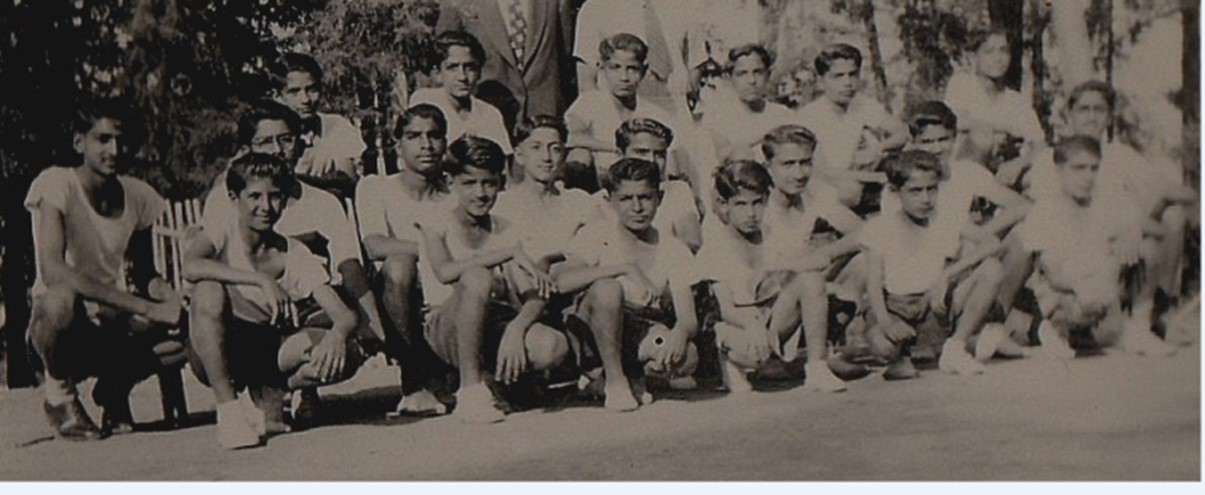
In 1953, Indian Public School received a new teacher who would become the new headmaster. His name was Mr. Dennis H. Noronha, and he was from India. His leadership and vision would end up being the catalyst for change in the Indian community of Mbeya, transforming the lives of many students. One of his main tasks was introducing English as the instruction medium. He and Mr. Hassanali Walji also introduced a physical program and sports into the school curriculum.
Physical education at Indian Public School, Mbeya with Mr. Hassanali Walji and Mr. D. H. Noronha. Photograph: Dr. Mohamed Manji collection.
~~~~~~
Physical education at the Indian Public School Mbeya. Photograph: Dr. Mohamed Manji collection.
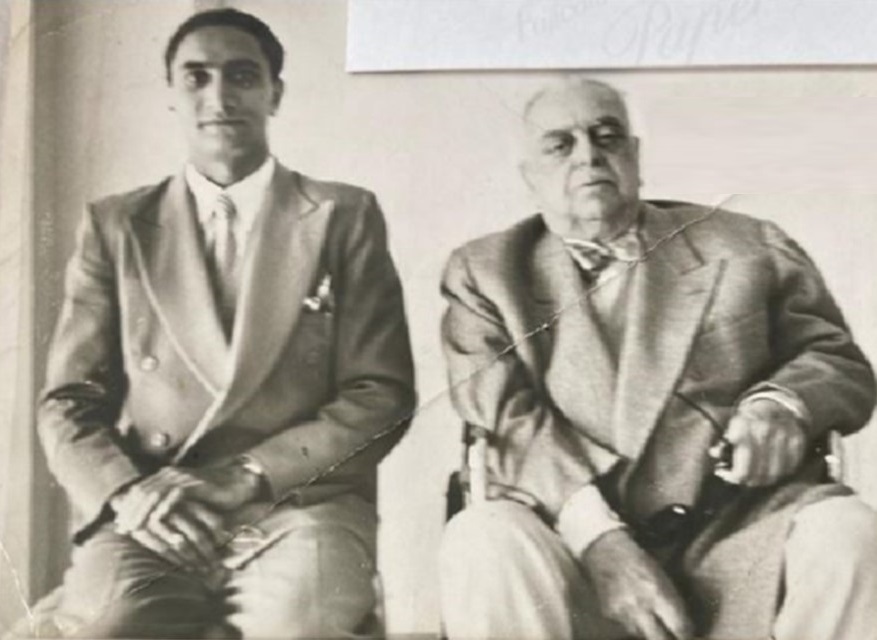
Mr. Hassanali Abdulla Walji (later known as Dr. Walji) was born in Manyoni, a small town in the Singida district of Tanganyika. He was one of the earliest teachers at the Indian Public School after completing his studies in Dar es Salaam. His main subjects were health science and physical education. Before the closure of the Indian Public Schools and the move to the new Aga Khan School, this local young man decided to go to London, England, to study physiotherapy and Chiropody (podiatry). Studying overseas at that time was a privilege, especially in Western countries. While in Europe, he also had an audience with Sir Sultan Mahomed Shah, His Highness the Aga Khan, the 48th Hereditary Ismaili Imam.
Mr. Hassanali A Walji (Dr. Walji) with Mawlana Sultan Mahomed Shah, His Highness the Aga Khan; mid-1950s. Photograph: Dr. Mohamed Manji collection.
After completing his studies in the UK, he returned to Mbeya. On his return, I still remember that Dr. Hassanali Walji, as he was now known, gave us (the whole student group and the community) a talk on his travel overseas by ship and about the process of studying overseas. At least for me, he sowed the seeds for further education overseas after my studies in Mbeya, and I always remember that talk and thank him for it.
Mbeya is a small town, and for his practice in physiotherapy and podiatry, Dr. Walji moved to Nairobi, Kenya, where he established a very successful practice. He, however, continued with his other main interest in Ismaili and Islamic studies through his extensive reading and self-studying. He was also gifted with a fantastic singing voice, and with his love for Ginans (Ismaili hymns composed by Ismaili Pirs and missionaries centuries earlier), he recited them regularly. Dr. Anil Walji, his son, an Anatomy Professor at the University of Alberta in Edmonton, inherited that from his father. Dr. Hassanali Walji also became an honorary Alwaez (missionary) in the Ismaili community and preached regularly. His sermons were very well received. It was a significant loss in 1978 when he passed away apparently from a heart attack in Nairobi, Kenya.
It may be noted that the Aga Khan Education Structure in East Africa had started as early as the end of the 19th Century; the earliest center to teach basic literacy and numeracy may have been initiated in 1895 in Bagamoyo, Tanganyika by Mawlana Sultan Mahomed Shah, Aga Khan III. In the 1940s and 1950s, under the chair of Princess Joan Aly Khan (the late mother of the present Aga Khan) and with the revised structure, more Aga Khan primary and secondary schools were established in Dar es Salaam in Tanganyika, Mombasa and Nairobi in Kenya, and Kampala in Uganda, first for girls and then for the boys. Later, co-ed schools for boys and girls were built for primary education in other East African towns and opened to all races and faiths.
One such School was constructed in Mbeya and opened in 1957 to replace the existing Indian Public School. This new School would cater to teaching from Standard One to Ten.
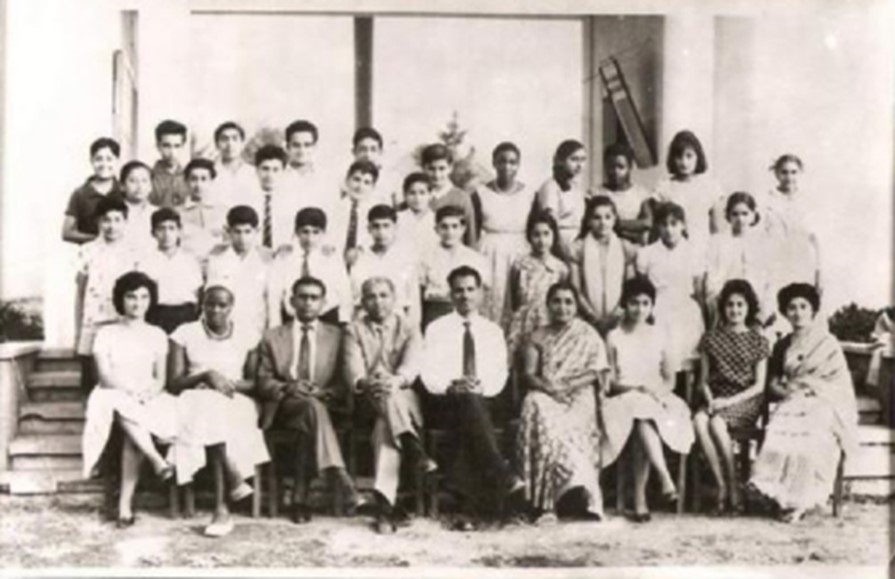
Mbeya Aga Khan School Education Committee 1957 with the teaching faculty. Photograph: Dr. Mohamed Manji collection.
Mr. Denis H. Noronha headed the Mbeya Aga Khan School. He gained quick recognition and respect among students, parents and the school committee, given his tenure as the headmaster of the Indian Public School and his kind concern for the students of this small town, his leadership abilities and his forward thinking for the student’s further education. His advice and criticism were genuine. Indian Public School was closed permanently, and all the teachers from that School moved to the new Aga Khan School. The teaching faculty consisted of Mr. K. R. Lohar, Mr. Almeida, Mr. Jagirdar, Mr. Sadrudin Merchant, Mrs. Aramita Geraldine Narohna and Mrs. Shrin Ratancy.
With the new Mbeya Aga Khan School in operation and open to all races and faiths, Mr. Noronha, as the Headmaster, managed to attract more teachers, and his teaching faculty increased; Mr. and Mrs. Philips and a second, Mr. Philips from India, joined. The two male Philips were distinguished from each other by their heights, and the students referred to them by calling them “Tall” and ‘Short” Mr. Philips. Afterward, Mr. Rawat, Mr. Demelo, and Mr. de Souza joined.
Staff, Mbeya Aga Khan School, 1958-1960. Photograph: Dr. Mohamed Manji collection.
With their hard work and dedication, this teaching faculty brought up the standard of teaching per the Aga Khan Education criteria, making it possible for the students to relocate quickly to other schools when they moved to other secondary and high schools in East Africa to continue their education beyond Grade 10.
In 1959/60, Mr. Denis Noronha retired as head teacher of the Aga Khan School. He and his teacher wife, Aramita, opened their own business, providing tuition for school subjects and accountancy courses. He became an insurance agent with an office in the Mbeya East African Airways building. In the 1960s, the Noronha family left Mbeya for good and relocated to Bangalore, India. They opened a private school there, which became quite successful and well-known. Aramita passed away in Bangalore on January 6, 1989. Mr. Noronha and his eldest daughter continued running the School there. Mr. Dennis Noronha passed away on December 7, 2008. Mr. and Mrs. Noronha’s passing was a significant loss to his immediate family and the Mbeya people, who had come to regard them as their own family.
Staff, Mbeya Aga Khan School, 1960-1962. Photograph: Dr. Mohamed Manji collection.
After Mr. Noronha left the Aga Khan School, Mr. Naidu took over the head teacher’s position. Subsequently, after his departure in 1962/63, Mr. de Souza became the head teacher. Unfortunately, just six months later, he died of an apparent heart attack. Mr. K. R. Lohar succeeded him.
Mr. de Souza, Head Teacher, Mbeya Aga Khan School, 1963. Photograph: Dr. Mohamed Manji collection.
In 1971/72, the socialist government of Tanzania nationalized all the Aga Khan Schools, and they came under the government administration. Mbeya Aga Khan School’s name was changed to Azimo School. Mr. Lohar taught there up to 1972 and left to teach at another school in Mbeya situated in the previous “European” area of Mbeya. He, with his wife Khulsum, moved to Leicester, UK, to join their sons in 1990 and for the treatment of Khulsum’s cancer. She passed away in Leicester in 1990. Mr. Lohar lived in Leicester with his son. In April of 1997, he had a stroke, and two months after his stroke, he was found to have cancer of the throat (he smoked heavily). He passed away on December 1, 1997, at the age of 67 years.
Mr. K .R. Lohar, Head Teacher, Mbeya Aga Khan School, 1964. Photograph: Dr. Mohamed Manji collection.
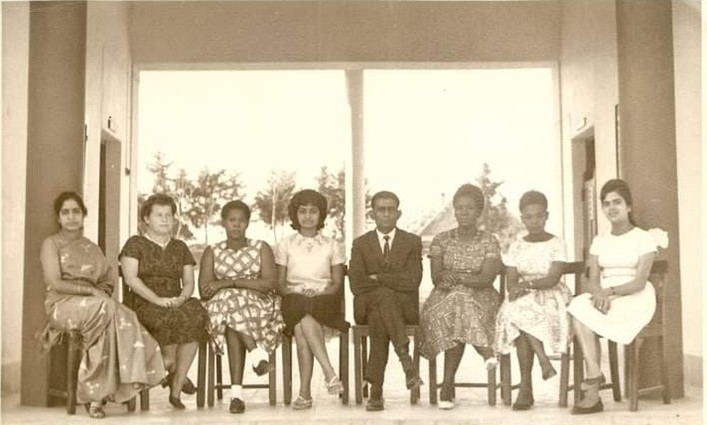
In the mid-and late 1960s, Tanzanian-trained teachers and teacher assistants joined the team. To name a few (who were from the Mbeya Indian community), they were Miss Gulshan Dharsee, Miss Nurjehan Karim Lalji, Miss Fatma Bandali, Miss Gulzar Razak Hirji, and Mr Sadrudin Ali Valla. Mr Salim Dawood, originally from Dar es Salaam, also took up a teaching position at the Mbeya Aga Khan School. He would later move to the Aga Khan Primary School in Dar es Salaam, where he taught maths. Mr. Dawood passed away in Toronto in 2019. The native African teachers also joined the team.
Local trained including African teachers at the Mbeya Aga Khan School in the mid 1960s. Photograph: Dr. Mohamed Manji collection.
~~~~~~
Local trained including African teachers at the Mbeya Aga Khan School in the mid 1960s. Photograph: Dr. Mohamed Manji collection.
The population of Mbeya Indians by the 6th decade of the 20th Century was about one thousand. Practically all the children who attended Mbeya Indian Public School and then Aga Khan School were born in the Southern Highland region of Tanganyika, of which Mbeya was the main administrative town. With this small population, Mbeya produced eight Medical doctors, one lawyer, eight registered nurses, five Chartered/Certified Accountants, four engineers, two legal secretaries, one with an Agriculture degree, and many more with college certification. This proud result of the Mbeya student’s achievement resulted from good schooling and ongoing guidance during the 1940s,1950s, and 1960s, which were done by those mentioned above, very dedicated and committed teachers of Mbeya. They were our Mbeya’s education heroes. They sparked the value and importance of education for students and society. I should state that Mr. Denis H. Noronha played a significant part in this. He brought the change in the early 50s by making English the medium of instruction, changing the curriculum to a UK one, recruiting good teaching staff, and advising the students and their parents regarding further education. He groomed the students to think far ahead. With this foundation, teachers like Mr. de Souza and Mr. K. R. Lohar, who followed him as a head teacher, continued to use the same approach and policy.
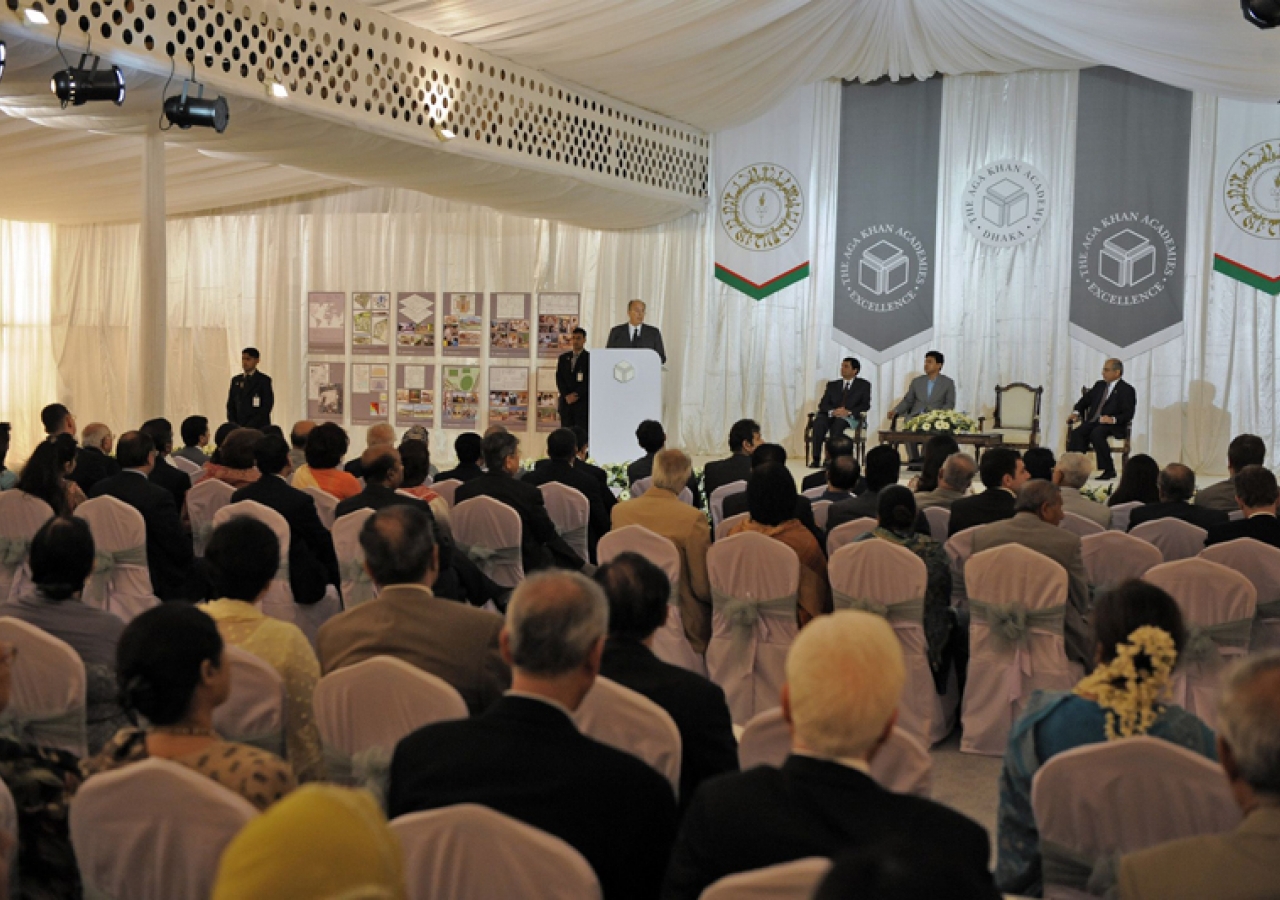
Mawlana Hazar Imam, His Highness the Aga Khan, speaking at the foundation stone laying ceremony of the Aga Khan Academy in Dhaka, Bangladesh, in May 2008. Photograph: Gary Otte/The Ismaili.
At the Foundation Laying Ceremony of the Aga Khan Academy in Dacca, Bangladesh, in 2008, His Highness the Aga Khan stated, “Ultimately, the art of teaching is a mission. Those who embark upon the journey of teaching seek to transform individuals and communities, inspired by a sense of purpose”. Secondly, in a speech at the Aga Khan University in Karachi in 2000, His Highness said, “Teaching is one of the most valued professions because it opens minds to greater self-awareness as well as to the knowledge that gives learners greater control over their destinies.”
This statement proved very true for the Mbeya students of the 1940s, 50s, & 60s when they had to emigrate to the West in the early 1970s because of the “mopping up” measures in the way of the “Acquisition of Building Act 1971” brought by the socialist government of Tanzania. Indian-owned buildings, farms, etc., were nationalized without compensation. The economic security of the Indians was jeopardized because of the Africanization of businesses and jobs. Things became difficult to live there, and thus, the Indian population left Tanzania in large numbers. The students were able to resettle in countries like Canada, the USA, the UK & Australia, and they have done well in their jobs, practices and businesses. Some of us have achieved good positions at various institutions and academic positions at multiple Universities.
On behalf of all Mbeya students and their parents, I want to thank the teachers who taught us and prepared us for the future. We students also pray for the peace of the souls of all our departed teachers.
Date posted: August 14, 2024.
____________________________
Acknowledgement: The author would like to thank Cynthia (Noronha) Mascarena, Mr. Vincent Noronha, Mr. Rhemtulla (Remu) K. R. Lohar, and Mr. Karim Nurdin Popat Kassam for their help and information for this article.
Feedback: We welcome feedback from our readers in response to Dr. Manji’s informative piece about Mbeya teachers. Please click Leave a comment or send your comment to mmerchant@simerg.com. We welcome similar pieces about your experiences studying or teaching in Ismaili educational institutions in any part of the world.
Dr. Mohamed (Mo) Fazal Manji
About the author: Dr. Mohamed Fazal Manji, MD, DMRT, DABRT, FRCPC, who is originally from Mbeya Tanzania, is a cancer specialist. He is a Consultant Radiation Oncologist at BC Cancer Agency of British Columbia, Canada, and Clinical Associate Professor, University of British Columbia. He graduated in medicine from Makerere University, Kampala, Uganda, and immigrated to Canada in 1972. He specialised in radiation cancer treatments at Princess Margaret Hospital (Cancer Center as it is called now) in Toronto. He obtained the Canadian Fellowship (FRCPC) and American Board Specialist Certification (DABRT) in Radiation Oncology. He also undertook special courses in Nuclear Medicine and Endocrinology at Harvard Medical School, Boston, USA. He became the first Canadian trained Ismaili Radiation Oncologist in Canada and probably in North America. He has been working at BC Cancer agency since 1977. He spent time abroad, working in Riyadh, Saudi Arabia to help modernize the Radiation Department at King Faisal Specialist Hospital & Research Center. He spent 12 years at this tertiary hospital for cancer and other diseases. He was also involved in the planning and development of Radiation Oncology Departments at the Aga Khan University Hospitals in Karachi and Nairobi and spent some time working at both places. He has contributed to many peer review publications, abstracts, book chapters and also lecture presentations nationally and internationally. Dr. Manji is also a recipient of 2022 Royal College of Physician & Surgeon of Canada’s M Andrew Padmos International Collaboration Award.
He is the son of Rai Fazal Manji of Mbeya Tanzania, who served as a member of Aga Khan Supreme Council of Tanganyika in 1950s and Raibanu Rehmat Fazal Manji, daughter of Alijah Mohamed Hamir who, in early 1930s, built an iconic Jamatkhana in Iringa, Tanzania, and donated to Imam Sultan Mahomed Shah unconditionally. Appointed by His Highness the Aga Khan, Dr. Manji served as the first Member for Health on the first Aga Khan Ismaili Regional Council of Ontario and Quebec in 1973 under President Riaz Jethwani.
July 11, 2024, marks a significant milestone in the history of Ismaili Muslims worldwide. It’s the 67th Imamat Day of Mawlana Hazar Imam, His Highness the Aga Khan. This day symbolizes his succession to the Divine Throne of Imamat as the 49th Ismaili Imam at the young age of 20, a pivotal moment in the continuing spiritual and material journey of the Ismaili Muslim community.
On this auspicious day, we extend our heartfelt felicitations to all our readers and Ismailis worldwide and express our humble gratitude to Mawlana Hazar Imam for his continuous blessings and guidance for his spiritual children. We also appreciate his family members for their contribution to the Institution of Imamat.
Mawlana Hazar Imam, His Highness the Aga Khan, 49th Imam of the Shia Imami Ismaili Muslims, pictured at the Diamond Jubilee Darbar in Kenya. Photo: The Ismaili.
On this blessed day, we extend our warmest wishes to all Ismailis worldwide. May this Imamat Day bring you joy, good health, prosperity, and spiritual enlightenment. Let’s find solace in the constant presence of the Imam in our lives. He wishes the best for us, both in our material and spiritual aspects, and we are always in his heart, thoughts, and prayers. As he has said, “You are all constantly in my heart, in my thoughts and in my prayers.”
The Imam’s love for his community is unwavering. As he has said, “No mountains, no river, no desert can separate the Imam from his murids” and “You must remember that Imam loves you more, much more than you can ever love him, and you must be strong in this knowledge.”
Indeed, as murids (followers) of Mawlana Hazar Imam, we must draw inspiration and strength from these messages.
The Rope of Imamat is an everlasting Rope of Guidance, Love and Affection and will stretch out for eternity; the wish and prayer of every murid of the Imam should be to hold fast to the Promised Rope and remain on the Straight Path (Sirat al-Mustaqim).
Earlier this week, Kutub Kassam’s poem and introduction to the poem Mazhar or Theophany made it abundantly clear that the Imam-of-the-Time is the Mazhar par excellence. He is the bearer of the Divine Light in the terrestrial world and the most perfect expression of the underlying divine reality.
Story continues below….please click on image for enlargement
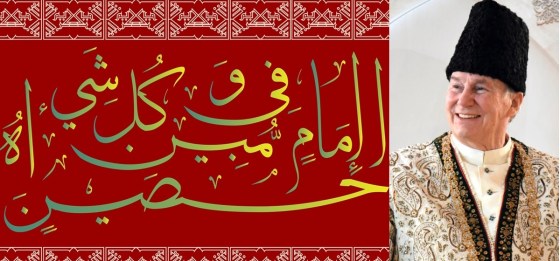
Calligraphy to commemorate the 67th Imamat Day of His Highness the Aga Khan, Mawlana Shah Karim Al Hussaini Hazar Imam. The Quranic verse “Wa Kulla Sha’in Ahsainahu fee Imamim-Mubeen” is in cursive script with the border top and bottom “Shah Karim” in eastern Kufi. Calligraphy and design by Karim Ismail, Toronto, Canada.
As a follow-up, Toronto’s Karim Ismaili has designed a beautiful Imamat Day card bearing the Quranic verse, “Wa kulla shai’in ahsainaahu feee Imaamim Mubeen” (Quran, 36:12), meaning “We have vested (the knowledge and authority of) everything in the Manifest Imam.”
This verse underscores the central role of the Imam in every Ismaili’s spiritual journey and life. Our goal should be to strengthen this belief in our hearts, minds and souls for our spiritual upliftment, happiness, and courage to face any adversity that comes our way. As the 48th Imam, Mawlana Sultan Mahomed Shah, observed, “You will have no fear in this world if you love the descendants of Muhammad and Ali.”
“The Spiritual Adam is to be identified with the divine Nur (Light) of Imamat, which is symbolised in the poem by the ‘glittering star of glory wrought and beauty spun’. The Mazhar par-excellence is the Imam who bears this Light in the terrestrial world. He is the most perfect expression of the divine hypostasis because in him the theomorphosis is fully realised and the Absolute becomes manifest to mortal eyes.”
Before and after the notion and the conception, after and before the ascent and the descent, before the exhalation and after the inhalation, in the mirror of infinity appears reflected without being effected, an oblique plane of occultation, a formless square of un-differentiated, impalpable darkness, without sense perceived nor by cognition conceived, in dreamless sleep concealed.
II
The darkness radiates a boundless halo of purest light that radiates no colour nor projects a shadow, seeming by degrees luminous and transparent, then radiant and fiery, manifesting to itself its mirrored face, dazzling bright in its own essence, observed by itself, to itself only known the conditioned fullness of the unconditioned abeyance, the circle locked with the square, the curve straining against the tangent.
III
One timeless momentum the bow arched, the string quivered; being by compulsion caught and volition seized, at once is released a speeding shaft of thought, through seven permutations whirling, thrilling the passive womb at the point of impact, irradiating around it instantaneously, an immaculate field of unity, between the centre and the circumference vibrating, from the zenith to the nadir gyrrating.
IV
In the third heavenly circuit, the primordial point generated a continuous horizontal line; crossed vertically from within without, at the intersection of possibility and necessity, there crystallised in the firmament a glittering star of glory wrought and beauty spun, unbegotten born, non-existent known, directionlike converging and dispersing effulgent beams of nine and forty prismatic rays, which hang from it by the finest threads.
~~~~~~~~
An Introduction to Mazhar
From a stylistic point of view, the poem may be regarded as an experiment in symbolic poetry. A symbol is an image or an idea with multiple levels of significance. The language of symbolism is an essential feature of Ismaili literature, where the principles of tanzil (literal interpretation) and tawil (allegorical interpretation) correspond to the zahir (exoteric) and batin (esoteric) dimensions of meaning respectively. This poem too employs a variety of symbols, ranging from the purely poetic to the geometrical and mathematical, which may be interpreted upon several planes of exoteric and esoteric significance. No single perspective, however, can possibly exhaust the totality of explicit and implicit meaning of the poem.
The title of the poem, Mazhar, which embodies the fundamental idea of the poem, may be translated into English as Epiphany or more accurately as Theophany, that is to say a manifestation of God. The poem describes such a theophanic process in the form of a symbolic cosmology or creation of the universe. This cosmic transformation, which is basically cyclic in execution, is effected through a series of trinary and septenary emanations without upsetting the primordial Unity of Being. It is by means of the dialectical tension generated between the symbols one, three and seven that the poem attempts to capture the sense of dynamic motion inherent in the Cosmogenesis.
It is impossible in this introductory note to explore the multiple levels of symbolic complexity to be discovered in the poem. It may be possible, however, to delineate the conceptual framework within which the poem may be appreciated or criticised. This framework is basically that formulated by Ismaili philosophers such as Abu Hatim ar-Razi, Abu Ya’qub al-Sijistani and Harnid’ud-din al-Kirmani centuries ago, though not entirely conforming to their cosmological schemes, for a certain degree of poetic license has been used to adapt them to the poet’s purpose. Moreover, a number of original symbols employed here have no counterparts in traditional Ismaili cosmological literature.
Part I of the poem conceives of the Absolute in its original, indivisible, undifferentiated and transcendent state of Unity, which is unknowable, ineffable, above all qualities and attributes. The Absolute has not yet initiated the Dawr al-Saar (Cycle of Epiphany), but remains concealed in the Dawral-Kashf (Cycle of Occultation). It is in Part II that the first plane of differentiation is effected with the primordial divine epiphany, the Aql-i-Kull (First Intellect), which is the cosmic rational principle. Unlike the Absolute, the Intellect can be predicated with primary attributes and a potentiality for action. It is the mirror in which the Absolute can behold its own qualities of oneness, knowledge, perfection, etc.
The Intellect is not to be regarded as inbi-‘ath (act of emanation). The identity of the Absolute and the Intellect is aptly summarised in the negative and affirmative poles of the declaration: La Ilaha illa’l-Lah. The theophanic process becomes dynamic in Part III with the imperative Amr (Word) of God: Kun (Be! ). The word is the Logos, the first creative principle, the kinetic agent of the Intellect. Its epiphanic field of activity is the passive Nafs-i-Kull (Universal Soul). Their relationship is symbolically expressed in Ismaili literature by the Quranic designations Qalam (Pen) for the Intellect and Lawh (Tablet) for the Soul. The Intellect is the Sabiq (Precursor) and the Soul its Tali (Successor).
Part IV of the poem completes the theophanic cycle in so far as the meta-cosmic plane of reality is concerned. It is in this phase that the celestial archetype of the universe and mankind is manifested which, in Ismaili terminology, bears the name of Adam Ruhani (Spiritual Adam). Though ranking third in the hierarchy of divine epiphanies, he occupies a unique position in the theophanic order, combining within himself the virtues of the Intellect and the Soul that preceded him, as well as the entire spectrum of hierocosmic epiphanies that is to follow him, corresponding to every plane of existence and order of being in the spiritual and material worlds.
Now the Spiritual Adam is to be identified with the divine Nur (Light) of Imamat, which is symbolised in the poem by the ‘glittering star of glory wrought and beauty spun’. And therefore, the Mazhar par-excellence is the Imam who bears this Light in the terrestrial world. He is the most perfect expression of the divine hypostasis because in him the theomorphosis is fully realised and the Absolute becomes manifest to mortal eyes. It then becomes clear in what manner the Imam represents the macrocosms as al-Isan al-Kabir The Great Man), the microcosmos as al-Insan al-Kamil (The Perfect Man), as well as the Qutb (axis) of the universe, without whom the world would not survive even for an instant.
Although the phases of creation, as narrated in the poem, are basically confined to the world of primal spiritual realities, by implication the theophanic process incorporates in one spontaneous sweep the material world also, right down to the contemporary historical period. This is specified in the conclusion of the poem by reference to the ‘nine and forty prismatic rays’, which identifies the Imam of the Age, Mawlana Shah Karim al-Hussaini, His Highness the Aga Khan, the forty-ninth direct descendant of Prophet Muhammad, the spiritual guide and leader of Ismailis, as the master hierophant of the divine mystery and the Mazhar of our times.
Date posted: July 8, 2024.
________________
Kutub Kassam
The poem Mazhar and its introduction have been adapted from Kutub Kassam’s original piece, which appeared in Ilm magazine, Imamat Day Issue (July 1977, pages 38-41), published by His Highness the Aga Khan Shia Imami Ismailia Association for the UK (now known as the Ismaili Tariqah and Religious Education Board or ITREB). Kutub Kassam passed away in 2019 after 40 years of dedicated service to Ismaili Institutions in Africa and the UK as a curriculum developer, editor, writer and researcher. Simerg paid a respectful tribute to Kutub Kassam and his enduring legacy in a special piece published on March 25, 2019.
“God chose Adam and Noah and the House of Abraham and the House of Imran above all beings, the seed of one another; God hears, and knows” — Qur’an, 3:33-34, translation by A. J. Arberry, see Corpus Quranfor multiple translations
A calligraphy designed by Toronto’s Karim Ismail honouring the first Shia Imam Ali, on the auspicious commemoration of Idd-e Ghadir.
On Monday, June 24, 2024, Ismaili Muslims in Canada and other parts of the world will unite to observe and celebrate Eid-e Ghadir. This momentous occasion marks the pivotal gathering at Ghadir Khumm, where Prophet Muhammad (peace be upon him and his family) designated Hazrat Ali as his successor, the first in the continuing line of Hereditary Imams.
This historical event holds immense significance in the Ismaili faith. Today, the holder of the Hereditary position is Mawlana Hazar Imam, His Highness the Aga Khan, the 49th Imam in direct succession. In this regard, the Aga Khan has affirmed “that the Ismailis are the only Shia community who, throughout history, have been led by a living, hereditary Imam in direct descent from the Prophet” — His Highness the Aga Khan, Parliament of Canada, Ottawa, February 27, 2014.
History records that on the way back to Medina after performing the final pilgrimage to Mecca, the Prophet received a revelation:
“O Messenger, deliver [to the people] what has been revealed to you from your Lord, and if you do not do so, then you will not have delivered His message” Surah al-Ma’ida (5:67)
Upon receiving this revelation, the Holy Prophet stopped at an oasis known as Ghadir Khumm. He addressed a large gathering of Muslims who had accompanied him. The Prophet proclaimed: “Man kuntu mawlahu fa aliyyun mawlahu,” meaning: “He whose Mawla I am, Ali is his Mawla.” The Prophet then prayed: “O Allah, be a friend of whoever is his friend and extend your support to those who support him.”
This event, occurring at a crucial point in Islamic history, marked the transition of leadership from the Prophet to Hazrat Ali, setting the stage for the leadership and future of the Muslim community. Thus, by declaring Hazrat Ali Mawla after him, the Prophet transferred the spiritual authority bestowed upon him by Allah to Hazrat Ali, making him — and all the Imams that follow — the Amirul Mu’minin, or Master of the Believers. In this context, ‘Mawla’ refers to a leader, protector, and guide, indicating the profound responsibility and authority bestowed upon Hazrat Ali.
Article continues below following excerpts
________________________________
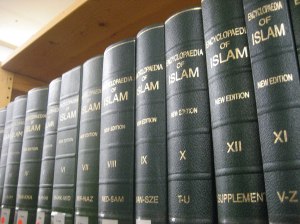
Excerpts from L. Veccia Vaglieri piece in Encyclopaedia of Islam, Second Edition
“Ghadir Khumm is famous in the history of Islam because of a sentence (or some sentences) in favour of ‘Ali which the Prophet uttered there during a discourse….Taking ‘Ali by the hand. he asked of his faithful followers whether he, Muhammad, was not closer to the Believers than they were to themselves; the crowd cried out: “It is so, O Apostle of God!”, he then declared. “He of whom I am the mawla, of him ‘Ali is also the mawla (man kuntu nawlahu fa-‘Ali mawlahu)
Photograph: Vysotsky – Own work, CC BY-SA 3.0, Wikimedia.
~~~~~~
“Most of those sources which form the basis of our knowledge of the life of the Prophet pass in silence over Muhammad’s stop at Ghadir Khumm….Consequently, the western biographers of Muhammad, whose work is based on these [Sunni] sources, make no reference to what happened at Ghadir Khumm. It is however certain that Muhammad did speak in this place and utter the famous sentence…the hadiths are so numerous and so well attested by the different isnads that it does not seem possible to reject them.” Vaglieri goes on to state that on instruction from Prophet Muhammad, Hazrat Ali received baiyat (the oath of allegiance) from the Muslims assembled there, including Umar b. al-Khattab, Islam’s second Caliph.
(Note: special access is required to read articles in the on-line edition of EI2. Vaglieri’s piece was reproduced in full in the UK Ismaili Association’s publication Ilm, December 1976, pages 28-30, with the permission of E.J. Brill, publishers of EI2.)
________________________________
Excerpts from the Preamble of the Ismaili Constitution
“In accordance with Shia doctrine, tradition, and interpretation of history, the Holy Prophet (s.a.s.) designated and appointed his cousin and son-in-law Hazrat Mawlana Ali Amiru-l-Mu’minin (a.s) to be the first Imam to continue the Ta’wīl and Ta’līm of Allah’s final message and to guide the murids, a term referring to the followers and disciples of the Imams. The proclamation also established the principle of the Imamat continuing by heredity through Hazrat Mawlana Ali (a.s) and his daughter Hazrat Bibi Fatimat-az-Zahra, Khātun-i-Jannat (a.s)”
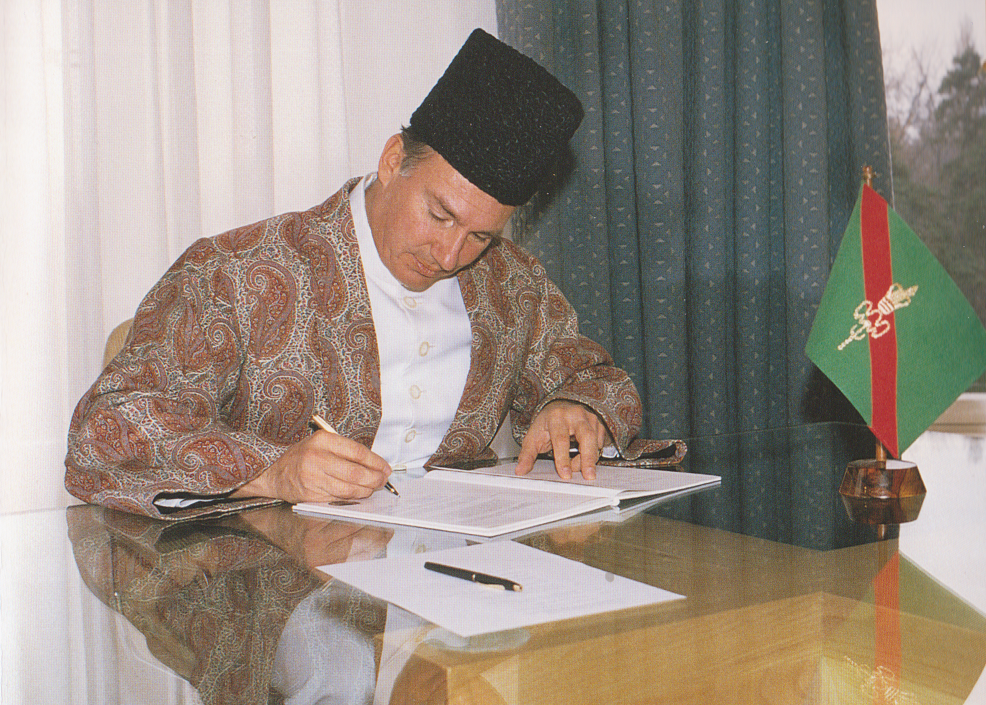
Mawlana Hazar Imam, His Highness the Aga Khan, is seen signing a new constitution for the worldwide Ismaili community on his 50th birthday, December 13, 1986. The preamble excerpts produced in this post are from this constitution.
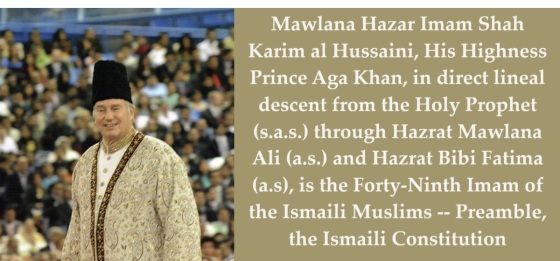
“Mawlana Hazar Imam Shah Karim al Hussaini, His Highness Prince Aga Khan, in direct lineal descent from the Holy Prophet (s.a.s.) through Hazrat Mawlana Ali (a.s.) and Hazrat Bibi Fatima (a.s), is the Forty-Ninth Imam of the Ismaili Muslims.”
________________________________
…. continued
On instruction from Prophet Muhammad, Hazrat Ali received baiyat (the oath of allegiance) from the Muslims assembled there. According to Shia traditions and sources, following the proclamation, the final verse of the Qur’an was revealed to the Prophet:
“On this day, I have perfected for you your religion, completed my favours upon you, and have chosen for you Islam as your religion.”
Eid-e Ghadir is an anniversary of profound significance to all Shia Muslims. It is also associated with the well-attested tradition that the Prophet is said to have proclaimed:
“I am leaving among you two matters of great weight (al-thaqalayn), the Book of Allah and my kindred (itrati), the People of my House (Ahl al-Bayt), and these two shall never be separated until they return to me at the Pool [of Kawthar in Paradise on the Day of Judgement]…”
The phrase ‘two matters of great weight’ refers to the Quran and the Ahl al-Bayt, emphasizing their inseparability and eternal significance in the Islamic faith.
In commemorating Eid-e Ghadir, the Ismaili community celebrates the seminal event of Ghadir Khumm, reaffirming their allegiance to the Imam of the Time as the direct lineal successor and inheritor of Hazrat Ali’s authority. The community is not just inspired, but united and driven by the following remark made during his speech in Canada’s Parliament on February 27, 2024:
“Today, the Ismailis are the only Shia community who, throughout history, have been led by a living, hereditary Imam in direct descent from the Prophet.”
Date posted: June 23, 2024.
____________________
Please click HERE for many more pieces on this website on the topic of Eid-e Ghadir.
Every year, on the 10th day of the Islamic month of Dhul-Hijjah, Muslims worldwide celebrate Eid al-Adha (also known as Eid-al-Nahr). This significant event, which this year falls on or around June 17, 2024, after the completion of the Hajj ceremonies, is rooted in a historical event. It commemorates the profound sacrifice of Prophet Ibrahim, who was willing to sacrifice his son, Prophet Ismail, as an act of obedience to Allah’s command. This act of sacrifice is what gives the festival its name. This story is narrated in the Holy Quran in surah (chapter) 37, ayats (verses) 100-112, as follows:
“My Lord, grant me [a child] from among the righteous.” (100)
So We gave him good tidings of a forbearing boy. (101)
And when he reached with him [the age of] exertion, he said, “O my son, indeed I have seen in a dream that I [must] sacrifice you, so see what you think.” He said, “O my father, do as you are commanded. You will find me, if Allah wills, of the steadfast.” (102)
And when they had both submitted and he put him down upon his forehead (103)
We called to him, “O Abraham, (104)
You have fulfilled the vision.” Indeed, We thus reward the doers of good. (105)
Indeed, this was the clear trial. (106)
And We ransomed him with a great sacrifice (107),
and We left for him [favorable mention] among later generations: (108)
“Peace upon Abraham.” (109)
Indeed, We thus reward the doers of good. (110)
Indeed, he was of Our believing servants. (111)
And We gave him good tidings of Isaac, a prophet from among the righteous. (112)
The story is a powerful demonstration of their unwavering faith and submission to Allah’s will. It is this faith and submission of Prophet Abraham and his son Prophet Ismaili that we commemorate and honour during Eid-al-Adha.
Examining the Quran further, one begins to understand and realize what Allah truly desires from us in the context of sacrifice. Allah says:
“Neither their meat nor blood reaches Allah. Rather, it is your piety that reaches Him. This is how He has subjected them to you so that you may proclaim the greatness of Allah for what He has guided you to and give good news to the good doers.” (Quran 22:37)
The above verse clearly states that what Allah considers is one’s righteousness, which is the way one practices and conducts one’s life.
Therefore, in all that one undertakes, it is essential to stay God-conscious (Taqwa) by remembering Allah in all walks of life. The Holy Quran says:
“O mankind, We have created you male and female, and We have made you into tribes and nations in order that you might come to know one another. Truly, in the sight of God, the most honoured amongst you is the most pious amongst you.” (Quran 49:13).
Our beloved Prophet and his hereditary successors, the Imams from Hazrat Ali to Mawlana Shah Karim al-Hussaini Hazar Imam, His Highness the Aga Khan, have always guided us to stay firm on Sirat-al-Mustaqim (the straight path).
They have provided us with invaluable guidance, urging us to practice Taqwa and seek spiritual advancement. This guidance, a beacon of light in the darkness, emphasizes the importance of developing an inner sense of God-consciousness, which is crucial for maintaining a righteous, honourable, respectful and fulfilling life.
In his sermon on the occasion of Eid al-Adha, 336 AH (June 21, 948 AC) at al-Mahdiyya in North Africa, the Fatimid Imam/Caliph Mawlana Mansur said:
“Pray to God most sincerely and implore Him wishfully, approaching with what He commands you to do or restrained you from.” (Walker, 2009)
Similarly, his successor, Imam Mu’izz, in his khutba (sermon) on Eid al-Adha, 341 AH (April 28, 953 AC), at al-Manṣuriyya, said:
“O people, God created you not in jest, (Quran — 23:115), nor will He overlook you without purpose. He does not impose on you a hardship in religion (Quran — 22:78), and yet He does not disregard being remembered, but rather He created you for worship, obeying Him, and He ordered you to obey His messenger. For obedience, He made fixed signs and written decrees. So draw near to God through what He commanded you to do. It is through piety that deeds are accepted and hopes are realized. Praise God for His having guided you (Quran — 22:37); thank Him for what He has given you.” (Walker, 2009)
Article continues below
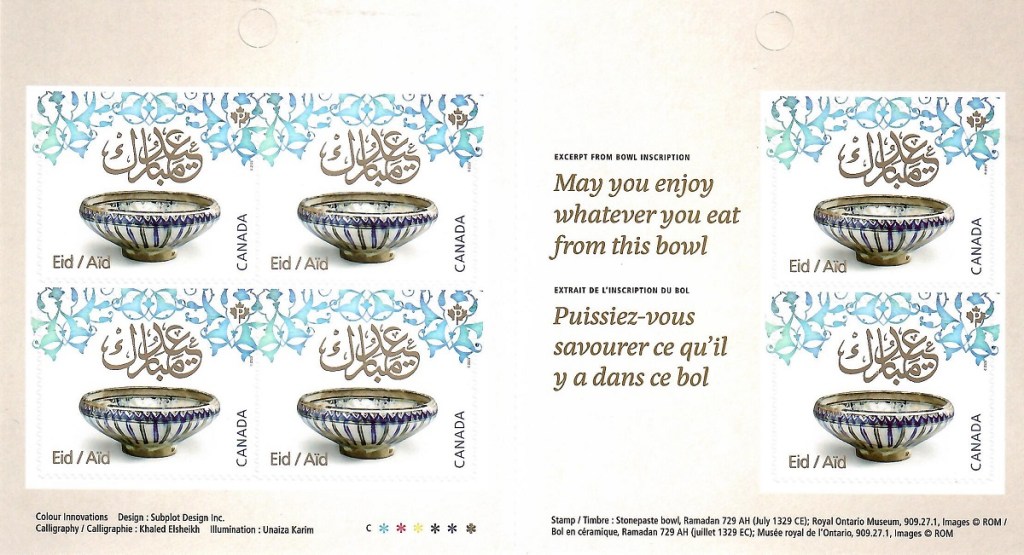
Eid Mubarak stamp issued by Canada Post in April 2023
These thoughtful words underline Islam’s fundamental principle, emphasizing the importance of obedience to God’s commands and the guidance of His messenger. Through sincere devotion and adherence to these teachings, one can attain spiritual elevation and happiness and realize the true purpose of one’s existence.
The connection between spirituality and moral consciousness is not just a personal journey, but a central theme in Islamic thought that unites us all. According to Islamic teachings, human beings are inherently endowed with a deep sense of God-consciousness, which forms the foundation of our shared moral and social responsibilities. This intrinsic awareness of right and wrong guides us in our personal lives and interactions with others, fostering a sense of community and mutual responsibility.
In a hadith (tradition), the Prophet Muhammad is reported to have said:
“Submission is public, and faith is in the heart.” Then, he pointed to his breast three times, repeating: “Fear of God (Taqwa) is here, fear of God is here.”
This profound statement highlights the intimate and internal nature of true faith. While outward acts of submission, such as rituals and observances, are visible to the public, the essence of faith lies deep within the heart, manifesting as a profound consciousness of God (Taqwa). This inner awareness shapes a person’s moral compass, guiding them toward righteousness and away from wrongdoing. This intrinsic God-consciousness forms the bedrock of ethical and social responsibilities, encouraging individuals to act with integrity, compassion, and justice in all aspects of life.
What does God’s consciousness and piety entail?
As M. Ali Lakhani eloquently articulates:
“Human beings are, according to Islam, endowed with a sense of God-consciousness (Taqwa)… In Islamic thought, the soul’s capacity for spiritual awareness is also implicit in its possession of a moral conscience, an innate sense of right and wrong (Quran 91:7-10). Both spiritual awareness and moral conscience are seen as attributes of the soul’s primordial nature. God consciousness is the foundation of moral consciousness, of which one aspect is social consciousness with its corresponding social responsibilities — of service, generosity, equity, cooperation — which are all part of the fiduciary obligations of human life.” (Lakhani, 2018)
In conclusion, we draw an excerpt from a speech made by Mawlana Hazar Imam, His Highness the Aga Khan, at the American University of Cairo upon receiving an honorary degree:
“…I think of the words of Hazrat Ali ibn Abi Talib, the first hereditary Imam of the Shia Muslims and the last of the four rightly guided Caliphs after the passing away of the Prophet (may peace be upon Him). In his teachings, Hazrat Ali emphasized that ‘No honour is like knowledge.’ And then he added that ‘No belief is like modesty and patience, no attainment is like humility, no power is like forbearance, and no support is more reliable than consultation’.
“Notice that the virtues endorsed by Hazrat Ali are qualities which subordinate the self and emphasize others – modesty, patience, humility, forbearance and consultation.” (Commencement address of His Highness the Aga Khan at the American University in Cairo, Egypt, 2006)
Through sincere devotion and adherence to these teachings mentioned by Mawlana Hazar Imam, one can attain spiritual enlightenment and realize the true purpose of one’s existence. Acts of piety and devotion to God, will act as protecting shields in our daily life and bring us closer to God.
This Eid — and throughout our lives — let us try to become more selfless and more God-conscious, performing meritorious deeds to please the Almighty and ultimately achieving the level of purity that will bring us closer to Allah. These deeds will also bring honour and respect to our lives.
Date posted: June 15, 2024.
Featured image at top of post: First Day Cover issued by Canada Post on March 27, 2024.
______________________
Shan-E-Ali Wazir Ali is a passionate Religious Education Centre Teacher and Educator from Karachi, Pakistan. He specializes in Ismaili literature, including devotional works, magazines, periodicals, articles, and books. He incorporates heritage materials into his REC Secondary Classes, fostering insightful discussions. He actively follows the work of Ismaili and AKDN institutions to stay current with their activities and the work of the Ismaili Imamat.
The preview night of Zahida Rahemtulla’s play The Wrong Bashir at Toronto’s renowned Crow’s Theatre on Tuesday, May 21, 2024, was a sell-out event. Crow’s Theatre picked up the play for its bold, ambitious and imaginative 2024-2025 season following The Wrong Bashir’s successful Vancouver showing in May 2023. The Wrong Bashir is Burnaby-born Ismaili playwright Zahida Rahemtulla’s debut play. The play runs until June 16.
Special Discounts to See The Wrong Bashir
For tickets for all shows from May 21 to June 16, 2024, please click Buy Tickets for The Wrong Bashir and use the following promotion codes, as applicable:
May 21 to May 26, 2024: General Admission Adult and Senior Tickets can be purchased 2-FOR-1. Please use promotion code WRONG241;
May 21 to June 1, 2024: General Admission Adult and Senior tickets will be discounted 25%. Please use promotion code BASHIR25; and
Throughout the entire run (May 21st-June 9th), there is also a 20% discount for groups of 8+ anytime, which can be obtained by contacting the Crow’s Theatre box office at boxoffice@crowstheatre.com or calling (647) 341-7390.
The performance on June 16 is Pay-What-You-Can.
With its heartwarming and humorous portrayal of an intergenerational, transitional moment in the life of a family and community, the play is a must-see for all Ismaili community members. The Wrong Bashir affectionately shows much humour within the worldwide Ismaili community. The play elicited ample laughs and resonated widely with Ismaili and broader audiences in Vancouver and on its debut night in Toronto.
We are truly gratified by the magnificent success new Ismaili artists and filmmakers such as Zahida Rahemtulla and Kiana Rawji, whom we featured in 2023, are achieving in the early days of their careers. Simerg values their inspiring accomplishments and extends a warm invitation to other talented Ismaili youth. This is your chance to seize the opportunity and share your original stories of success and recognition in your respective areas of endeavour with national and/or international impact. Remember, your stories are not just personal triumphs, but also an integral part of the Ismaili Muslim community’s narrative, shaping our collective identity and inspiring future generations.
Date posted: May 23, 2024. Last updated: June 4, 2024 (links added to reviews of the play, see update notice at the top of post, and play extended by a week to June 16).
Correction: In an earlier version, we had incorrectly stated May 21, 2024, as the opening night of “The Wrong Bashir.” May 21 was the preview night. The official opening took place on Friday, May 24.
________________
PLAYWRIGHT ZAHIDA RAHEMTULLA AND DIRECTOR PAOLO SANTALUCIA
Zahida Rahemtulla
Zahida Rahemtulla is a playwright and short story writer. Her debut play, The Wrong Bashir, premiered with Touchstone Theatre in Vancouver in May 2023 and makes its Toronto premiere on May 21, 2024, at the Crow’s Theatre, which has been a leading force in new play creation in the Canadian theatre landscape. Zahida currently facilitates Paragon Theatre’s East of Tarragon Project in Scarborough and is passionate about education and working on new playswith new playwrights.
~~~~~~
Paolo Santalucia
Paolo Santalucia is an award-winning actor, director and writer. He is a Soulpepper Academy graduate and has been a member of Soulpepper’s ensemble for the past ten seasons. Paolo is a co-founder and Artistic Leader of the award-winning Howland Company. Paolo also teaches classical performance with the University of Toronto’s Theatre and Drama Studies Program, and is the recipient of two Dora Mavor Moore Awards in acting, one nomination for direction, and has been shortlisted for the John Hirsch Award for Directing.
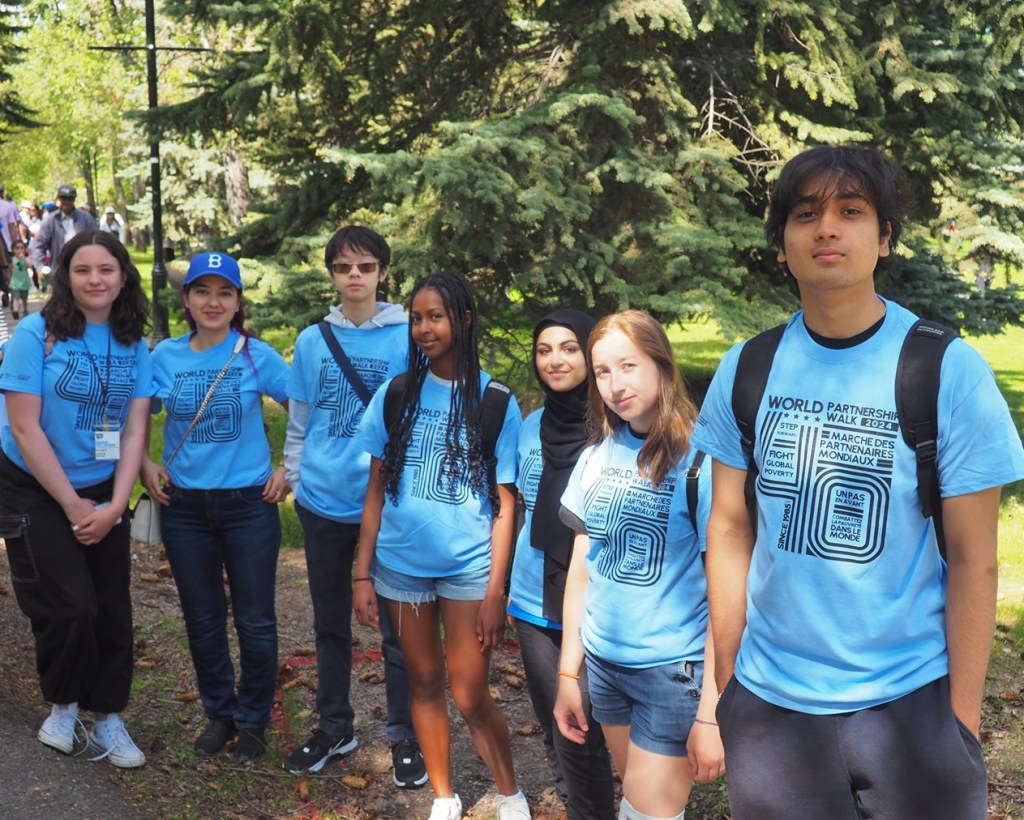
The “physical” World Partnership Walk (WPW) returned to Calgary downtown’s beautiful Prince’s Island Park after COVID-19 had turned it into a virtual event from 2020 onwards. The Walk in Edmonton was held on the grounds of the Alberta Legislature. The presence and participation of youth as walkers, volunteers, and entertainers were particularly heartwarming. The Ismaili community’s discipline and organization of the walk were truly admirable. The Walk was a special day for 11-year-old Izmir Kassam of Calgary whose goal was to collect $40,000 on the 40th anniversary of the Walk. Please see our WPW pictorial coverage HERE or click on the photo below.
Please click on photo for World Partnership Walk story.
From Running for Earthquake Victims to Acting as an Advocate for Education for Girls, Izmir Kassam Has Participated in 25 Races Since the Age of 4 and Raised Thousands of Dollars
11-year-old Izmir Kassam, a fifth-grade student in Calgary, Alberta, Canada, aims to raise $40,000 by running 40 km in honour of the 40 years of the World Partnership Walk (WPW) that is scheduled to take place on Sunday, June 2, 2024, at Calgary downtown’s beautiful Prince’s Island Park.
TThe WPW is an initiative of Aga Khan Foundation Canada (AKFC), an agency within the vast Aga Khan Development Network dedicated to improving the quality of life of those in need, mainly in Asia and Africa, irrespective of their origin, faith, or gender. The AKDN’s multifaceted development approach aims to help communities and individuals become self-reliant. In Canada, the AKFC has partnered with the Government of Canada, Canadian institutions, and individual Canadians on hundreds of programs to tackle the root causes of poverty and inequality. One of its fund raising programs, the WPW, has united Canadians of all ages across the country for 40 years to fight global poverty. The WPW is Canada’s largest public movement in support of global development.
Story continues below
Izmir Kassam running the final 10 km in 10x10km run for earthquake relief in Turkey and Syria at the Glenmore Athletic Park, Calgary, June 10, 2023. Photograph: Izmir Kassam.
While hundreds at Sunday’s Walk will be walking, Izmir will be running! Izmir’s love for running has led him to conquer various distances, from 10 km races to half marathons and even 100 km. Since starting to run at 4, Izmir has completed over 25 races. Despite the lack of distance running competitions for students of his age, he boldly races with adults, often finishing in the top 5% to 10% of runners.
“We are so glad that Izmir chose the Humanitarian Coalition for his fundraising initiative. We re all in awe of his dedication and commitment” — Catherine Dufour
When he was 8 years old, Izmir watched the withdrawal of the US from Afghanistan and the takeover by the Taliban, with graphic images of Afghans hanging onto the moving front wheels of planes taking off, making a desperate last attempt to leave a country doomed to abject poverty and total suppression of freedoms. He learnt subsequently about the ban on girls’ education that the Taliban placed immediately upon taking over the rule of Afghanistan.
Izmir, upon discovering that girls his age in Afghanistan were denied the right to education, was not just saddened but deeply empathetic. He had a newborn sister then and could not imagine her growing up without an education. The thought was unbearable. This profound empathy for the girls’ plight fueled his determination to transform his passion for running into a campaign for girls’ education in Afghanistan. That year, he completed a half marathon of 21 km, raising a significant $ 2,000 to support Canadian Women for Women in Afghanistan (CW4WAfghan). His inspiring effort was recognized in a Calgary Herald story titled Young Runner Going the Distance for Afghan Girls.
Story continues below
Eight-year-old Izmir Kassam poses for a photo at Sandy Beach Park in Calgary, SW, before his September 17, 2021, run to raise money for Canadian Women for Women in Afghanistan. Photograph: Brendan Miller/Postmedia.
~~~~~~~
Izmir Kassam with medal after finishing the 10 km race in The Calgary Servus Marathon held on May 26, 2024, at Enmax Park, Calgary. His time was 43.20 minutes. Photograph: Izmir Kassam.
In 2023, on his tenth birthday, a powerful earthquake hit Turkey and Syria. This earthquake resulted in over 50,000 deaths and over 250,000 buildings being damaged or destroyed in the region. That morning, after seeing the images of the devastation the earthquake caused, Izmir was spurred into action again! He took on the challenge of running 100 kilometres (ten runs of 10 kilometres each) to raise money via the Humanitarian Coalition. This Canadian charity unites top aid organizations in responding to global crises.
Story continues below
Izmir Kassam, shown wrapped in a Canadian Flag, with members of the Calgary Turkish community, friends, and family after the final 10 km run (out of 100 km) for earthquake relief in Turkey and Syria at the Glenmore Athletic Park, Calgary, June 10, 2023. Photograph: Izmir Kassam.
With the added support of government matching, Izmir raised $30,000, and his fundraising efforts were recognized by His Excellency Kerim Uras, the Ambassador of the Republic of Türkiye to Canada. Catherine Dufour of the organization Humanitarian Coalition commented, “We are so glad that Izmir chose the Humanitarian Coalition for his fundraising initiative. We are all in awe of his dedication and commitment.”
“Women and girls should have the opportunities and freedoms my sister and I have in Canada. No girl should grow up without an education or the freedom to be who she wants” — Izmir Kassam
The Aga Khan Development Network’s mandate is to work in challenging places where peace and stability are not always present. Infrastructure is often limited to help ensure that all women have a chance to harness their potential, have decent lives, and contribute to their communities. Izmir’s dedication to advancing this commitment is unwavering. He eloquently states women and girls should “have the opportunities and freedoms my sister and I have in Canada. No girl should grow up without an education or the freedom to be who she wants.”
Inspired also by his great aunt Mehrun Hassanali’s work with the World Partnership Walk, who was instrumental in its founding 40 years ago, Izmir decided to commemorate the WPW’s 40th anniversary by running 40 kilometres (four 10-kilometre runs).
His culminating run of the 10 final kilometres will take place on June 2 at the Calgary WPW event. He aims to complete the run within 40 minutes. The fundraising target for this 40th WPW Anniversary run is $40,000, and Izmir invites others to join him in this worthy cause.
Through this website, I invite readers to support Izmir and others like him in Calgary and around Canada, trying to raise money to support the Aga Khan Foundation’s annual World Partnership Event. In Izmir’s case, he aims to raise $40,000 to help eliminate global poverty. If 400 people donated $100 each, Izmir would reach his goal of $40,000. He also welcomes the support of other individuals to help him reach the target. Please click 2024 WORLD PARTNERSHIP WALK – IZMIR KASSAM
Story concludes below
World Partnership Walk setting. A view of Prince’s Island Park in downtown Calgary, the venue for the 40th WPW to be held Sunday, June 2, 2024. Photograph: Brenden Matthews via Wikimedia.
And to all Calgarians and visitors to Calgary, please come to the beautiful Prince’s Island Park on June 2 and watch Izmir cross the finish line. The Park is located in Calgary downtown on 4 St. and 1 Ave. S.W.
“Much like Kim’s Convenience, The Wrong Bashir offers characters familiar to and loved by their communities…and a laugh-yourself-silly evening.” — JoLedingham.ca
Zahida Rahemtulla’s play The Wrong Bashir, which ran to packed houses when it was launched a year ago in Vancouver, is premiering at Toronto’s renowned Crow’s Theatre on May 21, 2024. It will run until June 9, 2024. The Theatre picked up Zahida’s new play as part of its bold, ambitious and imaginative 2024-2025 season following The Wrong Bashir’s successful Vancouver showing. It then issued a special call for Ismaili actors based in Eastern Canada to audition for some roles. Crow’s Theatre has been home to groundbreaking and award-winning productions.
The Wrong Bashir is Burnaby-born Ismaili playwright Zahida Rahemtulla’s debut play.
The play delves into the life of Bashir Ladha, a young philosophy major who has strayed from his Ismaili Muslim roots. The story takes a hilarious turn whenBashir’s parents receive a call that their unconventional podcaster son has been chosen as the student’s Mukhisaheb, a significant role in Ismaili Jamatkhanas. They dutifully accept the role on behalf of their son. Before Bashir can argue, two official committee representatives arrive at the Ladha household. The representatives soon realize a mistake in selection, adding to the comedic chaos. The doorbell rings, and Bashir’s excited grandparents and family friend make a surprise visit, having caught wind of the news at their Jamatkhana.
With its heartwarming and humorous portrayal of an intergenerational, transitional moment in the life of a family and community, the play is a must-see for all Ismaili community members. The Wrong Bashir affectionately shows much humour within the worldwide Ismaili community. The play elicited ample laughs and resonated widely with Ismaili and broader audiences in Vancouver.
Vancouver’s world premiere featured Ismaili actors Sabrina Vellani, Shera Haji, Salim Rahemtulla, and Hussein Janmohamed. The Toronto premiere will feature Ismailis Nimet Kanji, Zaitun Esmail, and Salim Rahemtulla alongside a large cast (click The Team link on the page). Supporting sponsors for the production are Shabin and Nader Mohamed and Tazmin Merali and Nasir Noormohamed.
A scene from Zahida Rahemtulla’s The Wrong Bashir.
“The Wrong Bashir found the right audience on opening night if gales of laughter are any indication. From the curtain opener to the surprise at curtain fall, the sold-out crowd at the Firehall had a grand time. The Wrong Bashir is going to be a big hit; for some, it will be a laugh-yourself-silly evening” — Jo Ledingham, Vancouver Theatre Review.
The play is directed by award-winning Toronto director Paolo Santalucia. Crow’s Artistic Director, Chris Abraham, who was already familiar with the Ismaili community in Toronto, championed its inclusion in the 2024 season and brought it to the theatre.
Playwright Zahida says she is excited to see it premiere in Toronto, where the story has shifted from its original Vancouver setting to Toronto’s Don Mills.
Special Discounts: Purchase Tickets for The Wrong Bashir
For tickets for all shows from May 21 to June 9, 2024, please click Buy Tickets for The Wrong Bashir and use the following promotion codes, as applicable:
May 21 to May 26, 2024: General Admission Adult and Senior Tickets can be purchased 2-FOR-1. Please use promotion code WRONG241;
May 21 to June 1, 2024: General Admission Adult and Senior tickets will be discounted 25%. Please use promotion code BASHIR25; and
Throughout the entire run (May 21st-June 9th), there is also a 20% discount for groups of 8+ anytime, which can be obtained by contacting the Crow’s Theatre box office at boxoffice@crowstheatre.com or calling (647) 341-7390.
Date posted: May 13, 2024. Date updated: May 14, 2024 (added promotion codes for discounted tickets).
________________
PLAYWRIGHT ZAHIDA RAHEMTULLA AND DIRECTOR PAOLO SANTALUCIA
Zahida Rahemtulla
Zahida Rahemtulla is a playwright and short story writer. Her debut play, The Wrong Bashir, premiered with Touchstone Theatre in Vancouver in May 2023 and makes its Toronto premiere on May 21, 2024, at the Crow’s Theatre, which has been a leading force in new play creation in the Canadian theatre landscape. Zahida currently facilitates Parragon Theatre’s East of Tarragon Project in Scarborough and is passionate about education and working on new plays and with new playwrights.
~~~~~~
Paolo Santalucia
Paolo Santalucia is an award-winning actor, director and writer. He is a graduate of the Soulpepper Academy, and has been a member of Soulpepper’s ensemble for the past ten seasons. Paolo is a co-founder and Artistic Leader of the award-winning Howland Company. Paolo also teaches classical performance with the University of Toronto’s Theatre and Drama Studies Program, and is the recipient of two Dora Mavor Moore Awards in acting, one nomination for direction, and has been shortlisted for the John Hirsch Award for Directing.





































 Simerg - Insights from Around the World