Passage to East Africa Ismaili cooking

Ismaili Authors Series: UK-based Shenaz Shamji goes to her roots in Tanzania and publishes a cookbook of 250 East African Ismaili and Indian recipes that will delight food lovers and chefs worldwide

By MALIK MERCHANT

Simerg’s introduction of “Books by Ismaili Authors” continues with Shenaz Shamji’s cookbook “Passage to East Africa,” which she launched on the 87th Salgirah (birthday) of the 49th Ismaili Imam, Mawlana Shah Karim, His Highness the Aga Khan, who passed away recently on February 4, 2025, at 88. We follow the same Q/A format as our earlier presentations of books, which are listed chronologically below. We encourage Ismaili authors from around the world to participate in this series, regardless of when their books were published. See details of the series HERE and submit your responses to Simerg’s editor, Malik, at mmerchant@simerg.com.

****************

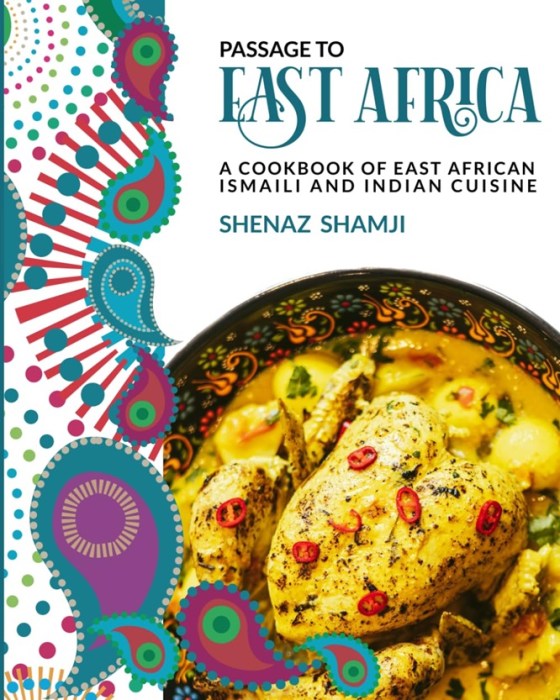
Passage to East Africa by Shenaz Shamji, Ismaili recipes from east africa
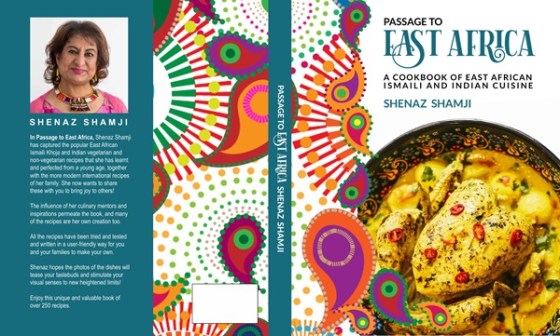
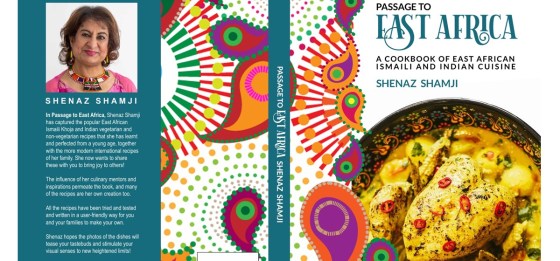
Beautiful and vibrant cover page of Shenaz Shamji’s Passage to East Africa, published independently on December 13, 2023, illustrated, 376 pages, hardback and paperback.

_________________

Passage to East Africa A Cookbook of East African Ismaili and Indian Cuisine by Shenaz Shamji

_________________

__________________

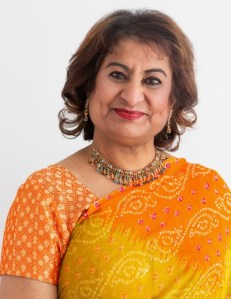
Shenaz Shamji author of Ismaili and Indian cookbook Passage to East Africa

_______________

We welcome feedback from our readers. Please click LEAVE A COMMENT. Your letter may be edited for length and brevity and is subject to moderation.

We encourage Ismaili writers to introduce their books in a similar format as has been done in the post above. Please also see the series launch article and submit your responses to Malik at mmerchant@simerg.com. All submissions will be acknowledged. If a writer has published multiple books, each book will be highlighted in a separate article, and not combined with other books into one post. All writers should include a brief profile with a portrait photo.

_______________

Links to the Ismaili Authors’ Series (in chronological sequence, oldest article first)

  1. “Justice Bertha Wilson Pushes the Boundaries of Humanity” by Shamas Nanji (featured on February 10, 2021, series start date)
  2. “Little One, You Are The Universe” by Zeni Shariff (February 25, 2021)
  3. “Memoirs of a Muhindi” by Mansoor Ladha (March 6, 2021, and see also 15 and 21 by the same author)
  4. “To Be One With God: Seven Journeys to the Meaning of Life” by Shafeen Ali (March 25, 2021)
  5. “Invisible Birthmarks” by Alnasir Rajan (April 13, 2021)
  6. “IN THE NAME OF JUSTICE – Portrait of a ‘Cowboy’ Judge” by Azmina Suleman (April 28, 2021)
  7. “RSVP Rice and Stew Very Plenty” by Nazlin Rahemtulla (May 28, 2021)
  8. “Coughdrops” by Nargis Fazal (June 12, 2021)
  9. “The Roots and the Trees” by Nizar Sultan (June 25, 2021)
  10. “Faith and Ethics: The Vision of the Ismaili Imamat” by M. Ali Lakhani (July 4, 2021)
  11. “Nairobi Days by Shelina_Shariff Zia (July 21, 2021)
  12. “Shine Brighter” by Shairoz Lakhani (December 8, 2021)
  13. “This is My Life” by Naznin Rahemtulla Hébert (February 26, 2022)
  14. “Humanizing Medicine – Making Health Tangible” by Dr. Azim Jiwani (March 9, 2022)
  15. “A Portrait in Pluralism: Aga Khan’s Shia Ismaili Muslims” by Mansoor Ladha (June 8, 2022, and see also 3 and 21 by the same author)
  16. “Malaria Memoirs: My Life Journey as a Public Health Doctor in Tanzania” by Dr Zul Premji (June 30, 2022)
  17. “Monkey Tales and Other Short Stories” by Mahmoud Hirji (September 10, 2022)
  18. “Bloom! A Story of Diversity and Understanding” by Shamim Murji (October 27, 2022)
  19. “Cooking with Mom” by Rozina Ramji (November 7, 2022)
  20. “SPARK: Journey from Success to Significance” by Azim Jamal (July 17, 2023)
  21. Off the Cuff by Mansoor Ladha (August 3, 2023, and see also 3 and 15 by the same author)
  22. Mehndi Boy by Zain Bandali (November 18, 2023)
  23. All the Russ Without the Fuss by Reeshma Haji (March 2, 2024)
  24. al-Risalah al-Bahirah (The Epistle on the Radiance) by Abu Ya’qub al-Sijistani, translated by Boustan Hirji (April 3, 2024)
  25. Namirembe Road by Salim Rahemtulla (August 3, 2024)
  26. Swim or Climb: Max’s Swimming Dilemma by Maya Shariff (October 4, 2024)
  27. Aga Khan: Bridge Between East & West by Mansoor Ladha (November 14, 2024)
  28. Passage to East Africa by Shenaz Shamji (April 3, 2025)

_______________________

Before departing this website please take a moment to review Simerg’s Table of Contents for links to hundreds of thought provoking pieces on a vast array of subjects including faith and culture, history and philosophy, and arts and letters to name a few. Also visit Simerg’s sister websites Barakah, dedicated to His Highness the Aga Khan, and Simergphotos. Simerg’s editor may be reached via email at mmerchant@simerg.com.
simerg insights Major Lakhpati

Major Lakhpati, an extraordinary and devout Ismaili volunteer of the 20th century

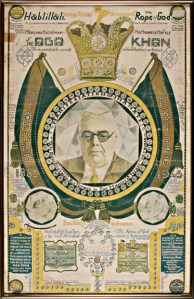
Aga Khan III painting by Ismaili volunteer Major Lakhpati
A Diamond Jubilee artwork of His Highness the Aga Khan III by Major Lakhpati

__________________

Simerg’s Series on Books by Ismaili Authors: Award-Winning Writer Mansoor Ladha Publishes “Aga Khan: Bridge Between East & West” – CBC’s Zain Velji to Moderate Calgary Book Launch, Sunday, November 17, 2024

By MALIK MERCHANT

Simerg’s introduction of “Books by Ismaili Authors” continues with Calgary-based Mansoor Ladha’s latest book “Aga Khan: Bridge between East & West.” Mansoor is being featured in the series for the fourth time, following introductions of his three previous books “A Portrait in Pluralism: Aga Khan’s Shia Ismaili Muslims,” “Memoirs of a Muhindi” and “Off the Cuff.” We follow the same Q/A format as our earlier presentations of books, which are listed chronologically below. We encourage Ismaili authors worldwide to participate in this series, regardless of when their books were published. See details of the series HERE and submit your responses to Simerg’s editor, Malik, at mmerchant@simerg.com.

****************

Simerg’s Interview with Mansoor Ladha

Mansoor Ladha on the Aga Khan
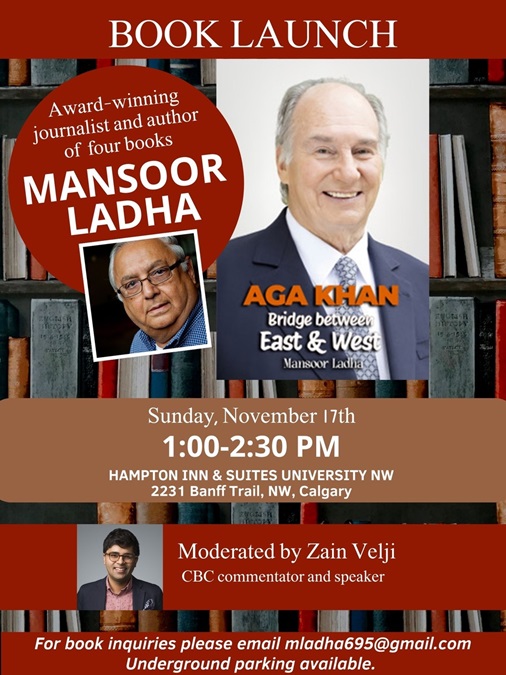
Ismaili journalist and author Mansoor Ladha will launch his new book in Calgary on Sunday, November 17, 2024. CBC’s Zain Velji will moderate the launch. Please refer to the image for details.
"Aga Khan: Bridge Betwen East & West: by Mansoor Ladha,
Cover page of “Aga Khan: Bridge Between East & West” by Mansoor Ladha, with foreword by Professor Karim H. Karim of Carleton University, published July 12, 2024, 616 pp; formats: paperback and eBook.

_______________

We welcome feedback from our readers. Please click LEAVE A COMMENT. Your letter may be edited for length and brevity and is subject to moderation.

Mansoor Ladha Ismaili author series, Simerg
Mansoor Ladha

_______________

Calling All Ismaili Authors

We encourage Ismaili writers to introduce their books in a similar format as has been done in the post above. Please also see the series Ismaili Authors Series and submit your responses to Malik at mmerchant@simerg.com. All submissions will be acknowledged. If a writer has published multiple books, each book will be highlighted in a separate article, and not combined with other books into one post. All writers should include a brief profile with a portrait photo.

We welcome feedback from our readers. Please click Leave a comment. Your letter may be edited for length and brevity, and is subject to moderation.

_______________

Links to the Ismaili Authors’ Series (in chronological sequence, oldest article first):

  1. “Justice Bertha Wilson Pushes the Boundaries of Humanity” by Shamas Nanji (featured in Simerg on February 10, 2021, series start date)
  2. “Little One, You Are The Universe” by Zeni Shariff (February 25, 2021)
  3. “Memoirs of a Muhindi” by Mansoor Ladha (March 6, 2021, and see also 15 and 21 by the same author)
  4. “To Be One With God: Seven Journeys to the Meaning of Life” by Shafeen Ali (March 25, 2021)
  5. “Invisible Birthmarks” by Alnasir Rajan (April 13, 2021)
  6. “IN THE NAME OF JUSTICE – Portrait of a ‘Cowboy’ Judge” by Azmina Suleman (April 28, 2021)
  7. “RSVP Rice and Stew Very Plenty” by Nazlin Rahemtulla (May 28, 2021)
  8. “Coughdrops” by Nargis Fazal (June 12, 2021)
  9. “The Roots and the Trees” by Nizar Sultan (June 25, 2021)
  10. “Faith and Ethics: The Vision of the Ismaili Imamat” by M. Ali Lakhani (July 4, 2021)
  11. “Nairobi Days by Shelina_Shariff Zia (July 21, 2021)
  12. “Shine Brighter” by Shairoz Lakhani (December 8, 2021)
  13. “This is My Life” by Naznin Rahemtulla Hébert (February 26, 2022)
  14. “Humanizing Medicine – Making Health Tangible” by Dr. Azim Jiwani (March 9, 2022)
  15. “A Portrait in Pluralism: Aga Khan’s Shia Ismaili Muslims” by Mansoor Ladha (June 8, 2022, and see also 3 and 21 by the same author)
  16. “Malaria Memoirs: My Life Journey as a Public Health Doctor in Tanzania” by Dr Zul Premji (June 30, 2022)
  17. “Monkey Tales and Other Short Stories” by Mahmoud Hirji (September 10, 2022)
  18. “Bloom! A Story of Diversity and Understanding” by Shamim Murji (October 27, 2022)
  19. “Cooking with Mom” by Rozina Ramji (November 7, 2022)
  20. “SPARK: Journey from Success to Significance” by Azim Jamal (July 17, 2023)
  21. Off the Cuff by Mansoor Ladha (August 3, 2023, and see also 3 and 15 by the same author)
  22. Mehndi Boy by Zain Bandali (November 18, 2023)
  23. All the Russ Without the Fuss by Reeshma Haji (March 2, 2024)
  24. al-Risalah al-Bahirah (The Epistle on the Radiance) by Abu Ya’qub al-Sijistani, translated by Boustan Hirji (April 3, 2024)
  25. Namirembe Road by Salim Rahemtulla (August 3, 2024)
  26. Swim or Climb: Max’s Swimming Dilemma by Maya Shariff (October 4, 2024)
  27. Aga Khan: Bridge Between East & West (November 14, 2024)

_______________________

Before departing this website please take a moment to review Simerg’s Table of Contents for links to hundreds of thought provoking pieces on a vast array of subjects including faith and culture, history and philosophy, and arts and letters to name a few. Also visit Simerg’s sister websites Barakah, dedicated to His Highness the Aga Khan, and Simergphotos.

Simerg’s editor may be reached via email at mmerchant@simerg.com.
Ismaili Authors Series: Teenager Maya Shariff of Dallas, Texas, Tells a Lively Story to Explain Peer Pressure – Self-published, it is in Paperback and Read-Along Formats and is a Must-Read

By MALIK MERCHANT

Simerg’s introduction of “Books by Ismaili Authors” continues with a story by 16-year-old Maya Shariff. We follow the same Q/A format as our earlier presentations of books, which are listed chronologically below. We encourage Ismaili authors worldwide to participate in this series, regardless of when their books were published. See details of the series HERE and submit your responses to Simerg’s editor, Malik, at mmerchant@simerg.com.

Simerg’s Message to Young Ismaili Muslim Writers: If a story you have presented in your school — whether in the classroom, a special event, or a newsletter — has received high marks from your teacher, please consider the opportunity to share it with a broader audience by submitting it for publication on this website, with the consent of your parents and school teacher. Maya Shariff’s submission and story below are good examples for your consideration. Note that Maya has published her book as a paperback and has a YouTube read-along presentation. Please submit your responses to the standard questions — see below — with the story to Simerg’s editor, Malik, at mmerchant@simerg.com.

****************

Swim or Climb? Max's Swimming Dilemma by Maya Shariff, with notes Mrugakshi Kulkarn
“Swim or Climb? Max’s Swimming Dilemma” by Maya Shariff, with notes Mrugakshi Kulkarni; self-published through Lulu, July 12, 2024; paperback, 20pp. See below for a read-along version on YouTube.

__________________

_______________

Ismaili story teller Maya Shariff, Books by Ismaili authors, Peer Pressure,

We encourage Ismaili writers to introduce their books in a similar format as has been done in the post above. Please also see the series launch article and submit your responses to Malik at mmerchant@simerg.com. All submissions will be acknowledged. If a writer has published multiple books, each book will be highlighted in a separate article, and not combined with other books into one post. All writers should include a brief profile with a portrait photo.

_______________

Links to the Ismaili Authors’ Series (in chronological sequence, oldest article first)

  1. “Justice Bertha Wilson Pushes the Boundaries of Humanity” by Shamas Nanji (featured in Simerg on February 10, 2021, series start date)
  2. “Little One, You Are The Universe” by Zeni Shariff (February 25, 2021)
  3. “Memoirs of a Muhindi” by Mansoor Ladha (March 6, 2021, and see also 15 and 21 by the same author)
  4. “To Be One With God: Seven Journeys to the Meaning of Life” by Shafeen Ali (March 25, 2021)
  5. “Invisible Birthmarks” by Alnasir Rajan (April 13, 2021)
  6. “IN THE NAME OF JUSTICE – Portrait of a ‘Cowboy’ Judge” by Azmina Suleman (April 28, 2021)
  7. “RSVP Rice and Stew Very Plenty” by Nazlin Rahemtulla (May 28, 2021)
  8. “Coughdrops” by Nargis Fazal (June 12, 2021)
  9. “The Roots and the Trees” by Nizar Sultan (June 25, 2021)
  10. “Faith and Ethics: The Vision of the Ismaili Imamat” by M. Ali Lakhani (July 4, 2021)
  11. “Nairobi Days by Shelina_Shariff Zia (July 21, 2021)
  12. “Shine Brighter” by Shairoz Lakhani (December 8, 2021)
  13. “This is My Life” by Naznin Rahemtulla Hébert (February 26, 2022)
  14. “Humanizing Medicine – Making Health Tangible” by Dr. Azim Jiwani (March 9, 2022)
  15. “A Portrait in Pluralism: Aga Khan’s Shia Ismaili Muslims” by Mansoor Ladha (June 8, 2022, and see also 3 and 21 by the same author)
  16. “Malaria Memoirs: My Life Journey as a Public Health Doctor in Tanzania” by Dr Zul Premji (June 30, 2022)
  17. “Monkey Tales and Other Short Stories” by Mahmoud Hirji (September 10, 2022)
  18. “Bloom! A Story of Diversity and Understanding” by Shamim Murji (October 27, 2022)
  19. “Cooking with Mom” by Rozina Ramji (November 7, 2022)
  20. “SPARK: Journey from Success to Significance” by Azim Jamal (July 17, 2023)
  21. Off the Cuff by Mansoor Ladha (August 3, 2023, and see also 3 and 15 by the same author)
  22. Mehndi Boy by Zain Bandali (November 18, 2023)
  23. All the Russ Without the Fuss by Reeshma Haji (March 2, 2024)
  24. al-Risalah al-Bahirah (The Epistle on the Radiance) by Abu Ya’qub al-Sijistani, translated by Boustan Hirji (April 3, 2024)
  25. Namirembe Road by Salim Rahemtulla (August 3, 2024).
  26. Swim or Climb: Max’s Swimming Dilemma by Maya Shariff (October 4, 2024).

_______________________

Before departing this website please take a moment to review Simerg’s Table of Contents for links to hundreds of thought provoking pieces on a vast array of subjects including faith and culture, history and philosophy, and arts and letters to name a few. Also visit Simerg’s sister websites Barakah, dedicated to His Highness the Aga Khan, and Simergphotos. Simerg’s editor may be reached via email at mmerchant@simerg.com.

Namirembe Road Ismaili author series simergs

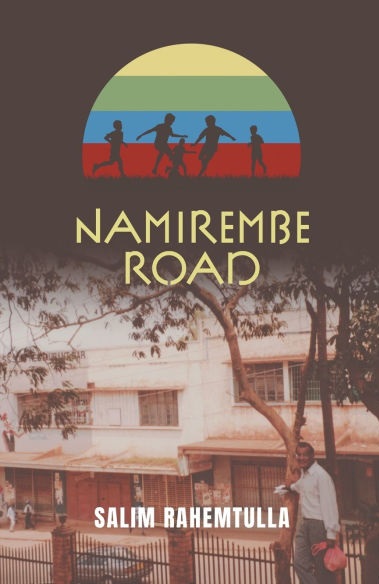
Ismaili Authors Series: “Namirembe Road” by Burnaby’s Salim Rahemtulla Centre’s Around Family and Community Life on a Street in Kampala, Uganda

By MALIK MERCHANT

Simerg’s introduction of “Books by Ismaili Authors” continues with Salim Rahemtulla’s “Namirembe Road.” We follow the same Q/A format as our earlier presentations of books, which are listed chronologically below. We encourage Ismaili authors worldwide to participate in this series, regardless of when their books were published. See details of the series HERE and submit your responses to Simerg’s editor, Malik, at mmerchant@simerg.com.

****************

Simerg Insights from around the world, Ismaili authors, Salim Rahemtulla's "Namirembe Road" published by Friesen Press
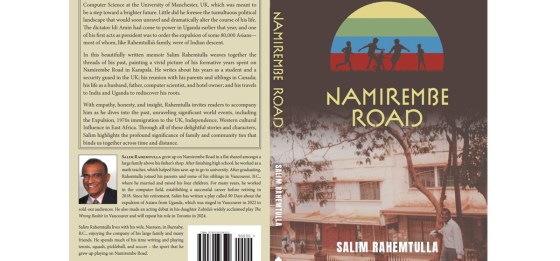
Front cover of Salim Rahemtulla’s “Namirembe Road” published by Friesen Press, June 13, 2024, hardback, paperback and eBook, 204 pp.

_______________

Salim Rahemtulla author of Namirembe Road published by Friesen Press; Ismaili author series simerg insights from around the world
Salim Rahemtulla

We encourage Ismaili writers to introduce their books in a similar format as has been done in the post above. Please also see the series launch article and submit your responses to Malik at mmerchant@simerg.com. All submissions will be acknowledged. If a writer has published multiple books, each book will be highlighted in a separate article, and not combined with other books into one post. All writers should include a brief profile with a portrait photo.

_______________

Links to the Ismaili Authors’ Series (in chronological sequence, oldest article first)

  1. “Justice Bertha Wilson Pushes the Boundaries of Humanity” by Shamas Nanji (featured in Simerg on February 10, 2021, series start date)
  2. “Little One, You Are The Universe” by Zeni Shariff (February 25, 2021)
  3. “Memoirs of a Muhindi” by Mansoor Ladha (March 6, 2021, and see also 15 and 21 by the same author)
  4. “To Be One With God: Seven Journeys to the Meaning of Life” by Shafeen Ali (March 25, 2021)
  5. “Invisible Birthmarks” by Alnasir Rajan (April 13, 2021)
  6. “IN THE NAME OF JUSTICE – Portrait of a ‘Cowboy’ Judge” by Azmina Suleman (April 28, 2021)
  7. “RSVP Rice and Stew Very Plenty” by Nazlin Rahemtulla (May 28, 2021)
  8. “Coughdrops” by Nargis Fazal (June 12, 2021)
  9. “The Roots and the Trees” by Nizar Sultan (June 25, 2021)
  10. “Faith and Ethics: The Vision of the Ismaili Imamat” by M. Ali Lakhani (July 4, 2021)
  11. “Nairobi Days by Shelina_Shariff Zia (July 21, 2021)
  12. “Shine Brighter” by Shairoz Lakhani (December 8, 2021)
  13. “This is My Life” by Naznin Rahemtulla Hébert (February 26, 2022)
  14. “Humanizing Medicine – Making Health Tangible” by Dr. Azim Jiwani (March 9, 2022)
  15. “A Portrait in Pluralism: Aga Khan’s Shia Ismaili Muslims” by Mansoor Ladha (June 8, 2022, and see also 3 and 21 by the same author)
  16. “Malaria Memoirs: My Life Journey as a Public Health Doctor in Tanzania” by Dr Zul Premji (June 30, 2022)
  17. “Monkey Tales and Other Short Stories” by Mahmoud Hirji (September 10, 2022)
  18. “Bloom! A Story of Diversity and Understanding” by Shamim Murji (October 27, 2022)
  19. “Cooking with Mom” by Rozina Ramji (November 7, 2022)
  20. “SPARK: Journey from Success to Significance” by Azim Jamal (July 17, 2023)
  21. Off the Cuff by Mansoor Ladha (August 3, 2023, and see also 3 and 15 by the same author)
  22. Mehndi Boy by Zain Bandali (November 18, 2023)
  23. All the Russ Without the Fuss by Reeshma Haji (March 2, 2024)
  24. al-Risalah al-Bahirah (The Epistle on the Radiance) by Abu Ya’qub al-Sijistani, translated by Boustan Hirji (April 3, 2024)
  25. Namirembe Road by Salim Rahemtulla (August 3, 2024).

_______________________

Before departing this website please take a moment to review Simerg’s Table of Contents for links to hundreds of thought provoking pieces on a vast array of subjects including faith and culture, history and philosophy, and arts and letters to name a few. Also visit Simerg’s sister websites Barakah, dedicated to His Highness the Aga Khan, and Simergphotos.

Simerg’s editor may be reached via email at mmerchant@simerg.com.
Ismaili Authors Series: “The Epistle on the Radiance,” a Translation by Boustan Hirji of Fatimid Philosopher Al-Sijistani’s al-Risalah al-Bahirah; the Work is Crucial for Understanding the Depth of the Ismaili Tradition

By MALIK MERCHANT

Simerg’s introduction of “Books by Ismaili Authors” continues with Boustan Hirji’s translation of Sijistani’s “Al-Risalah al Bahirah.” We follow the same Q/A format as our earlier presentations of books, which are listed chronologically below. We encourage Ismaili authors worldwide to participate in this series, regardless of when their books were published. See details of the series HERE and submit your responses to Simerg’s editor, Malik, at mmerchant@simerg.com.

****************

Dr. Boustan Hirji, Imaili author and translator of Fatimid Philosopher Sijistani's work
Dr. Boustan Hirji

_____________________________

Ismaili authors series by Simerg Insights from Around the World, Ismaili, the Aga Khan, Fatimids, Al-Sijistani, Boustan Hirji
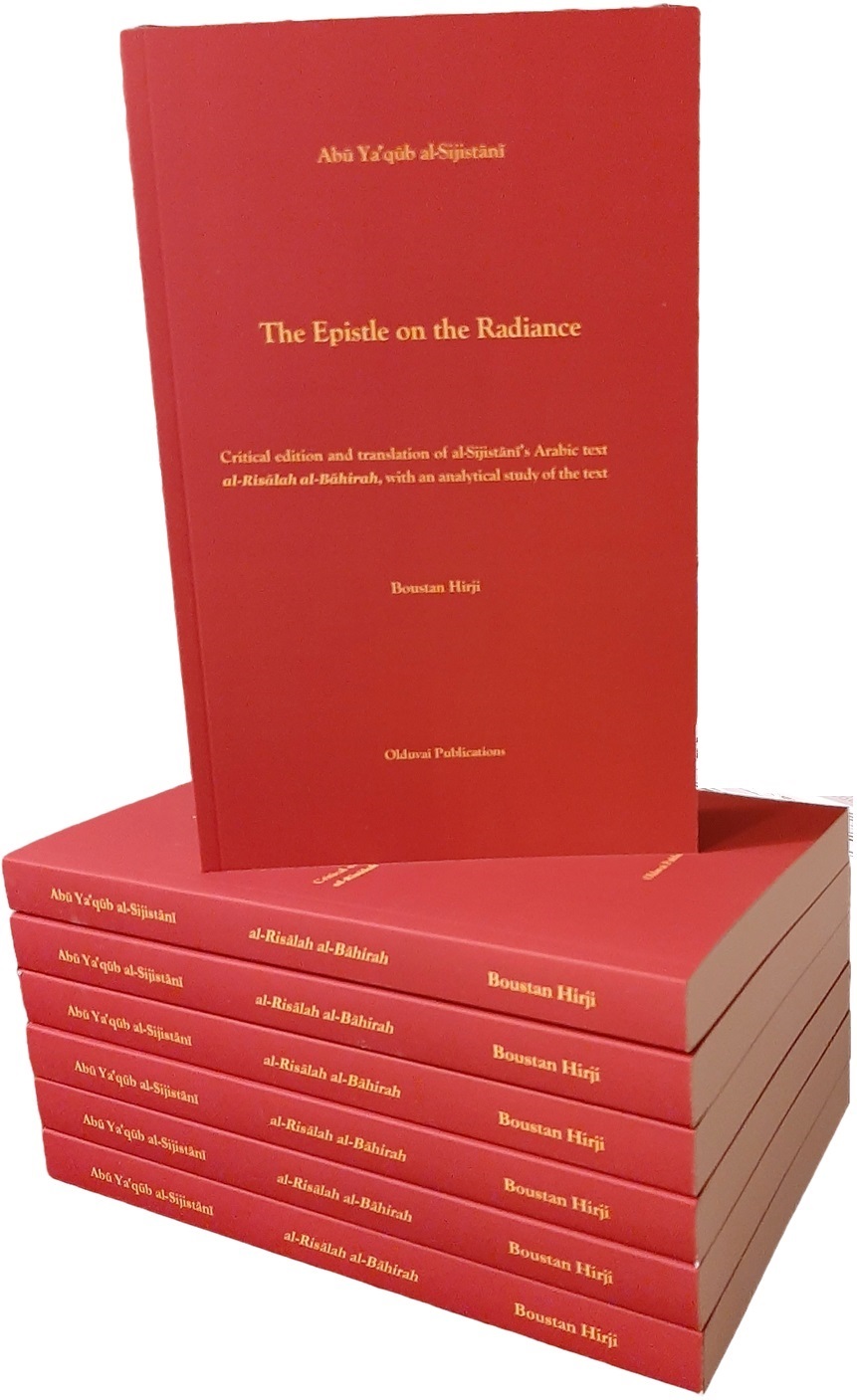
Front cover of the print edition of Boustan Hirji’s translation of Fatimid philosopher al-Sijistani’s epistle al-Risalah al-Bahirah, published by Olduvai Publications, Burnaby, British Columbia, Canada, 2024, pp. 167. Foreword by Mohamed Abualy Alibhai.
Ismaili authors series by Simerg Insights from Around the World, Ismaili, the Aga Khan, Fatimids, Al-Sijistani, Boustan Hirji
Front and back covers of the PDF edition of Boustan Hirji’s translation of Fatimid philosopher al-Sijistani’s epistle al-Risalah al-Bahirah, published by Olduvai Publications, Burnaby, British Columbia, Canada, 2024. Foreword by Mohamed Abualy Alibhai.

_______________

Dr. Boustan Hirji, Imaili author and translator of Fatimid Philosopher Sijistani's work
Dr. Boustan Hirji

We encourage Ismaili writers to introduce their books in a similar format as has been done in the post above. Please also see the series launch article and submit your responses to Malik at mmerchant@simerg.com. All submissions will be acknowledged. If a writer has published multiple books, each book will be highlighted in a separate article, and not combined with other books into one post. All writers should include a brief profile with a portrait photo.

_______________

Links to the Ismaili Authors’ Series (in chronological sequence, oldest article first)

  1. “Justice Bertha Wilson Pushes the Boundaries of Humanity” by Shamas Nanji (featured on February 10, 2021, series start date)
  2. “Little One, You Are The Universe” by Zeni Shariff (February 25, 2021)
  3. “Memoirs of a Muhindi” by Mansoor Ladha (March 6, 2021, and see also 15 and 21 by the same author)
  4. “To Be One With God: Seven Journeys to the Meaning of Life” by Shafeen Ali (March 25, 2021)
  5. “Invisible Birthmarks” by Alnasir Rajan (April 13, 2021)
  6. “IN THE NAME OF JUSTICE – Portrait of a ‘Cowboy’ Judge” by Azmina Suleman (April 28, 2021)
  7. “RSVP Rice and Stew Very Plenty” by Nazlin Rahemtulla (May 28, 2021)
  8. “Coughdrops” by Nargis Fazal (June 12, 2021)
  9. “The Roots and the Trees” by Nizar Sultan (June 25, 2021)
  10. “Faith and Ethics: The Vision of the Ismaili Imamat” by M. Ali Lakhani (July 4, 2021)
  11. “Nairobi Days by Shelina_Shariff Zia (July 21, 2021)
  12. “Shine Brighter” by Shairoz Lakhani (December 8, 2021)
  13. “This is My Life” by Naznin Rahemtulla Hébert (February 26, 2022)
  14. “Humanizing Medicine – Making Health Tangible” by Dr. Azim Jiwani (March 9, 2022)
  15. “A Portrait in Pluralism: Aga Khan’s Shia Ismaili Muslims” by Mansoor Ladha (June 8, 2022, and see also 3 and 21 by the same author)
  16. “Malaria Memoirs: My Life Journey as a Public Health Doctor in Tanzania” by Dr Zul Premji (June 30, 2022)
  17. “Monkey Tales and Other Short Stories” by Mahmoud Hirji (September 10, 2022)
  18. “Bloom! A Story of Diversity and Understanding” by Shamim Murji (October 27, 2022)
  19. “Cooking with Mom” by Rozina Ramji (November 7, 2022)
  20. “SPARK: Journey from Success to Significance” by Azim Jamal (July 17, 2023)
  21. Off the Cuff by Mansoor Ladha (August 3, 2023, and see also 3 and 15 by the same author)
  22. Mehndi Boy by Zain Bandali (November 18, 2023)
  23. All the Russ Without the Fuss by Reeshma Haji (March 2, 2024)
  24. al-Risalah al-Bahirah (The Epistle on the Radiance) by Abu Ya’qub al-Sijistani, translated by Boustan Hirji (April 3, 2024)

_______________________

Before departing this website please take a moment to review Simerg’s Table of Contents for links to hundreds of thought provoking pieces on a vast array of subjects including faith and culture, history and philosophy, and arts and letters to name a few. Also visit Simerg’s sister websites Barakah, dedicated to His Highness the Aga Khan, and Simergphotos.

Simerg’s editor may be reached via email at mmerchant@simerg.com.

Ismaili Authors Series: Reeshma Haji’s Attractive Book of Tasty Khoja Fusion Recipes is For Busy Professionals, University Students and Anyone Short on Time

By MALIK MERCHANT

Simerg’s introduction of “Books by Ismaili Authors” continues with Reeshma Haji’s “All the Russ Without the Fuss”. We follow the same Q/A format as our earlier presentations of books that are listed chronologically below. We encourage Ismaili authors from around the world to participate in this series, regardless of when their books were published. See details of the series HERE and submit your responses accordingly to Simerg’s editor, Malik, at mmerchant@simerg.com.

****************

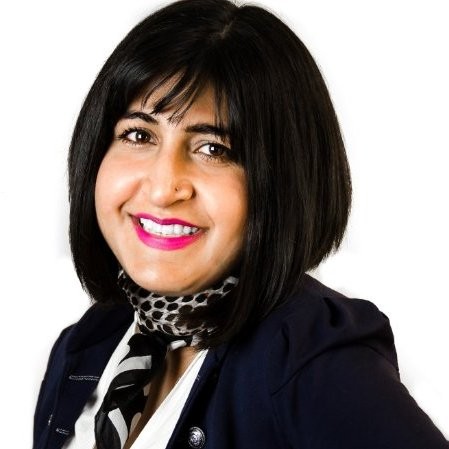
Reeshma Haji author of All the Russ Sauce without the fuss Ismaili Khoja recipes
Reeshma Haji

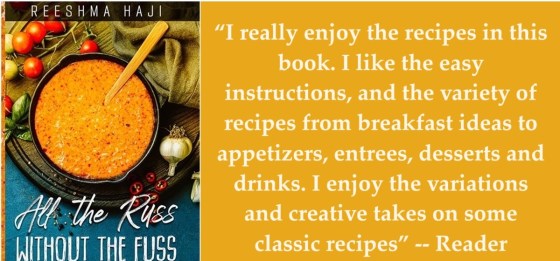
“This is a great book of Indian fusion recipes! You can make dishes with lovely Indian flavors in much less time than the traditional preparation would take. I love that Oatmeal, Shepherd’s Pie and Pizza can take on an Indian flair. There’s something for everyone because breakfast, lunch and dinner are covered. I really enjoy the recipes in this book” — Audrey, Toronto

Readers’ Feedback

A recipe page from Reeshma Haji's All the Russ Without the Fuss
A page from Reeshma Haji’s well-designed and laid out recipe book “All the Russ Without the Fuss.” Please click on image for enlargement.
Easy and time saving Ismaili khoja and east indian recipes by Reeshma Haji, books by Ismaili authors series
Front cover of Reeshma Haji’s recipe book “All the Russ Without the Fuss — Khoja Fusion Recipes for Busy Lives”, published independently, December 2023, paperback and eBook, 40 pp.

_______________

Reeshma Haji author of All the Russ Sauce without the fuss Ismaili Khoja recipes
Reeshma Haji

We welcome feedback from our readers. Please click LEAVE A COMMENT. Your letter may be edited for length and brevity and is subject to moderation.

We encourage Ismaili writers to introduce their books in a similar format as has been done in the post above. Please also see the series launch article and submit your responses to Malik at mmerchant@simerg.com. All submissions will be acknowledged. If a writer has published multiple books, each book will be highlighted in a separate article, and not combined with other books into one post. All writers should include a brief profile with a portrait photo.

_______________

Links to the Ismaili Authors’ Series (in chronological sequence, oldest article first)

  1. “Justice Bertha Wilson Pushes the Boundaries of Humanity” by Shamas Nanji (featured on February 10, 2021, series start date)
  2. “Little One, You Are The Universe” by Zeni Shariff (February 25, 2021)
  3. “Memoirs of a Muhindi” by Mansoor Ladha (March 6, 2021, and see also 15 and 21 by the same author)
  4. “To Be One With God: Seven Journeys to the Meaning of Life” by Shafeen Ali (March 25, 2021)
  5. “Invisible Birthmarks” by Alnasir Rajan (April 13, 2021)
  6. “IN THE NAME OF JUSTICE – Portrait of a ‘Cowboy’ Judge” by Azmina Suleman (April 28, 2021)
  7. “RSVP Rice and Stew Very Plenty” by Nazlin Rahemtulla (May 28, 2021)
  8. “Coughdrops” by Nargis Fazal (June 12, 2021)
  9. “The Roots and the Trees” by Nizar Sultan (June 25, 2021)
  10. “Faith and Ethics: The Vision of the Ismaili Imamat” by M. Ali Lakhani (July 4, 2021)
  11. “Nairobi Days by Shelina_Shariff Zia (July 21, 2021)
  12. “Shine Brighter” by Shairoz Lakhani (December 8, 2021)
  13. “This is My Life” by Naznin Rahemtulla Hébert (February 26, 2022)
  14. “Humanizing Medicine – Making Health Tangible” by Dr. Azim Jiwani (March 9, 2022)
  15. “A Portrait in Pluralism: Aga Khan’s Shia Ismaili Muslims” by Mansoor Ladha (June 8, 2022, and see also 3 and 21 by the same author)
  16. “Malaria Memoirs: My Life Journey as a Public Health Doctor in Tanzania” by Dr Zul Premji (June 30, 2022)
  17. “Monkey Tales and Other Short Stories” by Mahmoud Hirji (September 10, 2022)
  18. “Bloom! A Story of Diversity and Understanding” by Shamim Murji (October 27, 2022)
  19. “Cooking with Mom” by Rozina Ramji (November 7, 2022)
  20. “SPARK: Journey from Success to Significance” by Azim Jamal (July 17, 2023)
  21. Off the Cuff by Mansoor Ladha (August 3, 2023, and see also 3 and 15 by the same author)
  22. Mehndi Boy by Zain Bandali (November 18, 2023)
  23. All the Russ Without the Fuss (March 2, 2024)

_______________________

Before departing this website please take a moment to review Simerg’s Table of Contents for links to hundreds of thought provoking pieces on a vast array of subjects including faith and culture, history and philosophy, and arts and letters to name a few. Also visit Simerg’s sister websites Barakah, dedicated to His Highness the Aga Khan, and Simergphotos.

Simerg’s editor may be reached via email at mmerchant@simerg.com.

Simerg’s Series on Books by Ismaili Authors: Zain Bandali’s “Mehndi Boy” is a Beautifully Illustrated Children’s Chapter Book That Will Delight Families Across Diverse Backgrounds

By MALIK MERCHANT

Simerg’s introduction of “Books by Ismaili Authors” continues with Zain Bandali’s recently published book “Mehndi Boy”. We follow the same Q/A format as our earlier presentations of books that are listed chronologically below. We encourage Ismaili authors from around the world to participate in this series, regardless of when their books were published. See details of the series HERE and submit your responses accordingly to Simerg’s editor, Malik, at mmerchant@simerg.com.

****************

Zain Bandali Mehndi Boy
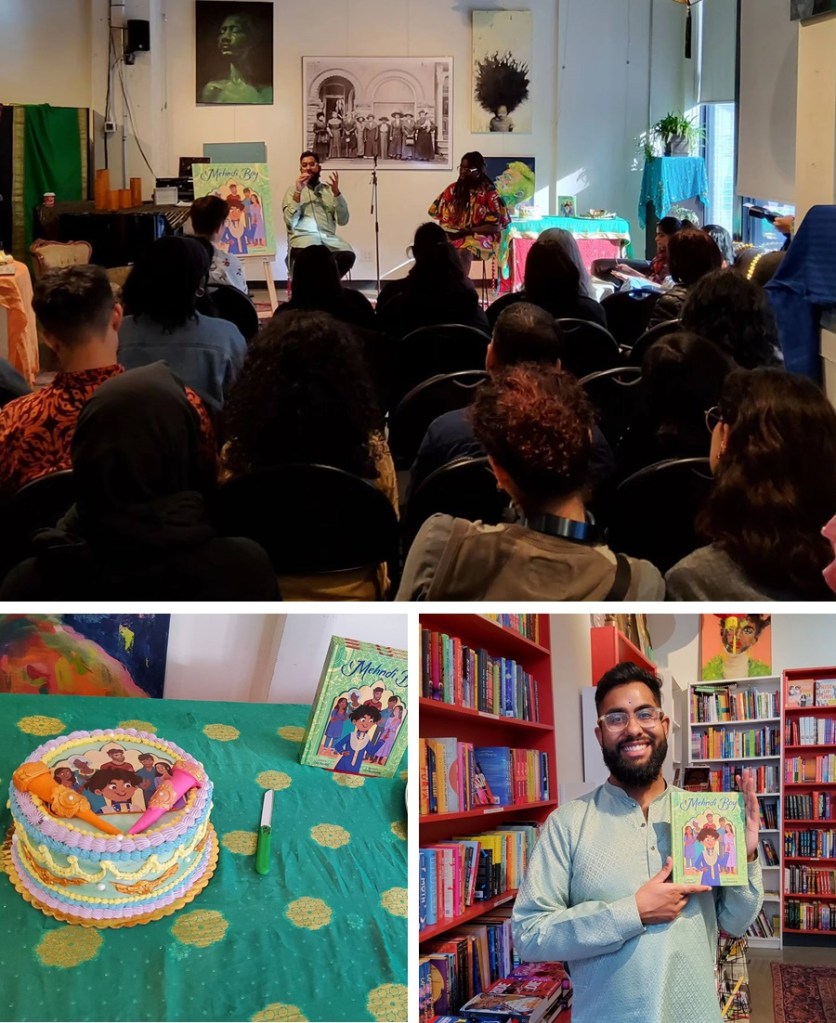
Zain Bandali and emcee Maya Homevoh speak to attendees at the Mehndi Boy launch at A Different Booklist in Toronto; Zain Bandali proudly poses with his newly published early reader chapter book Mehndi Boy; and book launch attendees enjoy Mehndi Boy inspired cake and mehndi cone party favors. Photograph: Zain Bandali.
Mehndi Boy by Zain Bandali, Ismaili author, Simerg
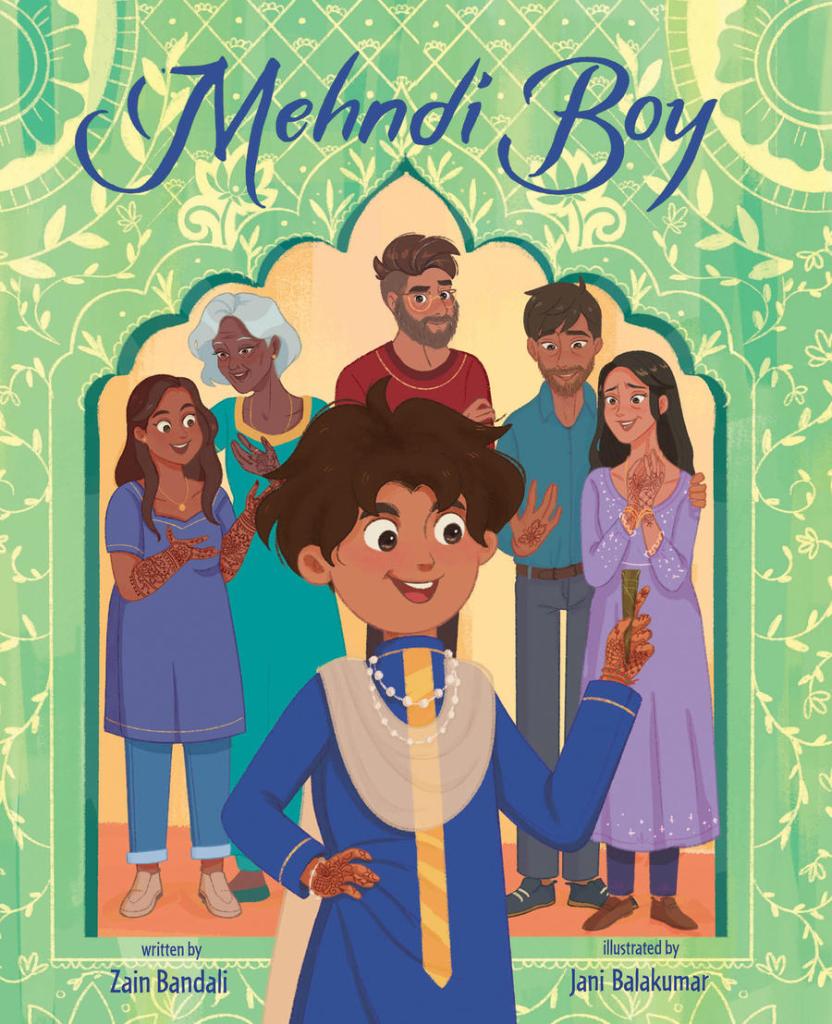
“Mehndi Boy” written by Zain Bandali, illustrations by Jani Balakumar, published by Annick Press, October 2023; 100 pages, available in hardback, softback, and Kindle.

__________________________

Mehndi Boy by Zain Bandali, Ismaili author, Simerg
Zain Bandali’s “Mehndi Boy” published October 2023, to high acclaim.

__________________________

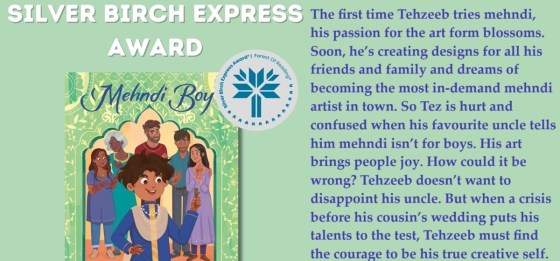
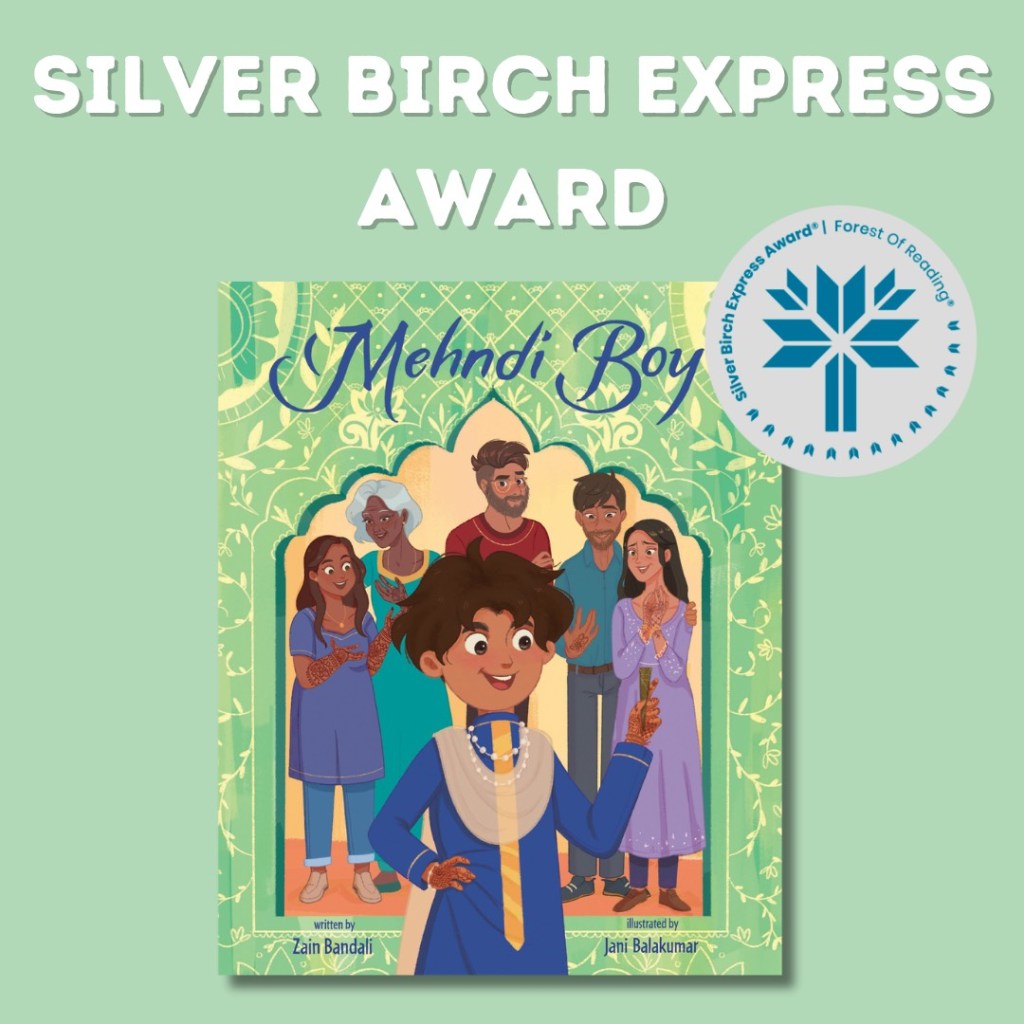
Silver Birch Express Award Mehndi Boy by Zain Bandali

_______________

A Request to all Our Readers: Please Support Zain Bandali

Zain Bandali, Ismaili author series, Simerg Mehndi Boy
Zain Bandali

We welcome feedback from our readers. Please click Leave a comment. Your letter may be edited for length and brevity and is subject to moderation.

We encourage Ismaili writers to introduce their books in a similar format as has been done in the post above. Please also see the series launch article and submit your responses to Malik at mmerchant@simerg.com. All submissions will be acknowledged. If a writer has published multiple books, each book will be highlighted in a separate article, and not combined with other books into one post. All writers should include a brief profile with a portrait photo.

_______________

Links to the Ismaili Authors’ Series (in chronological sequence, oldest article first)

  1. “Justice Bertha Wilson Pushes the Boundaries of Humanity” by Shamas Nanji (featured on February 10, 2021, series start date)
  2. “Little One, You Are The Universe” by Zeni Shariff (February 25, 2021)
  3. “Memoirs of a Muhindi” by Mansoor Ladha (March 6, 2021, and see also 15 and 21 by the same author)
  4. “To Be One With God: Seven Journeys to the Meaning of Life” by Shafeen Ali (March 25, 2021)
  5. “Invisible Birthmarks” by Alnasir Rajan (April 13, 2021)
  6. “IN THE NAME OF JUSTICE – Portrait of a ‘Cowboy’ Judge” by Azmina Suleman (April 28, 2021)
  7. “RSVP Rice and Stew Very Plenty” by Nazlin Rahemtulla (May 28, 2021)
  8. “Coughdrops” by Nargis Fazal (June 12, 2021)
  9. “The Roots and the Trees” by Nizar Sultan (June 25, 2021)
  10. “Faith and Ethics: The Vision of the Ismaili Imamat” by M. Ali Lakhani (July 4, 2021)
  11. “Nairobi Days by Shelina_Shariff Zia (July 21, 2021)
  12. “Shine Brighter” by Shairoz Lakhani (December 8, 2021)
  13. “This is My Life” by Naznin Rahemtulla Hébert (February 26, 2022)
  14. “Humanizing Medicine – Making Health Tangible” by Dr. Azim Jiwani (March 9, 2022)
  15. “A Portrait in Pluralism: Aga Khan’s Shia Ismaili Muslims” by Mansoor Ladha (June 8, 2022, and see also 3 and 21 by the same author)
  16. “Malaria Memoirs: My Life Journey as a Public Health Doctor in Tanzania” by Dr Zul Premji (June 30, 2022)
  17. “Monkey Tales and Other Short Stories” by Mahmoud Hirji (September 10, 2022)
  18. “Bloom! A Story of Diversity and Understanding” by Shamim Murji (October 27, 2022)
  19. “Cooking with Mom” by Rozina Ramji (November 7, 2022)
  20. “SPARK: Journey from Success to Significance” by Azim Jamal (July 17, 2023)
  21. Off the Cuff by Mansoor Ladha (August 3, 2023, and see also 3 and 15 by the same author)
  22. Mehndi Boy by Zain Bandali (November 18, 2023)

_______________________

Before departing this website please take a moment to review Simerg’s Table of Contents for links to hundreds of thought provoking pieces on a vast array of subjects including faith and culture, history and philosophy, and arts and letters to name a few. Also visit Simerg’s sister websites Barakah, dedicated to His Highness the Aga Khan, and Simergphotos.

Simerg’s editor may be reached via email at mmerchant@simerg.com.

Off the Cuff by Mansoor Ladha of Calgary

Simerg’s Series on Books by Ismaili Authors: Calgary Journalist Mansoor Ladha’s New Book “Off the Cuff” is a Diverse Selection of His Columns Published in Newspapers Across Canada

By MALIK MERCHANT

Simerg’s introduction of “Books by Ismaili Authors” continues with Calgary based Mansoor Ladha’s latest book “Off the Cuff.” Mansoor is being featured in the series for the third time, following introductions of his two previous books “A Portrait in Pluralism: Aga Khan’s Shia Ismaili Muslims” and “Memoirs of a Muhindi.” We follow the same Q/A format as our earlier presentations of books written by Azim Jamal (Vancouver), Rozina Ramji (Edmonton), Shamim Murji (Brampton), Mahmoud Hirji (Toronto), Zul Premji (Calgary), Azim Jiwani (Vancouver), Naznin Rahemtulla Hébert (Montreal), Shairoz Lakhani (London, UK), Shelina Shariff Zia (New York), Ali Lakhani (Vancouver), Nizar Sultan (Toronto), Nargis Fazal (Vancouver), Nazlin Rahemtulla (Vancouver), Azmina Suleman (Calgary), Alnasir Rajan (Mississauga), Shafeen Ali (USA), Mansoor Ladha (Calgary), Zeni Shariff (Toronto) and Shamas Nanji (Edmonton). We encourage Ismaili authors from around the world to participate in this series, regardless of when their books were published. See details of the series HERE and submit your responses accordingly to Simerg’s editor, Malik, at mmerchant@simerg.com.

****************

Simerg’s Interview with Mansoor Ladha

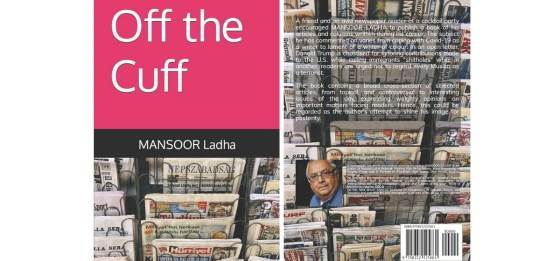
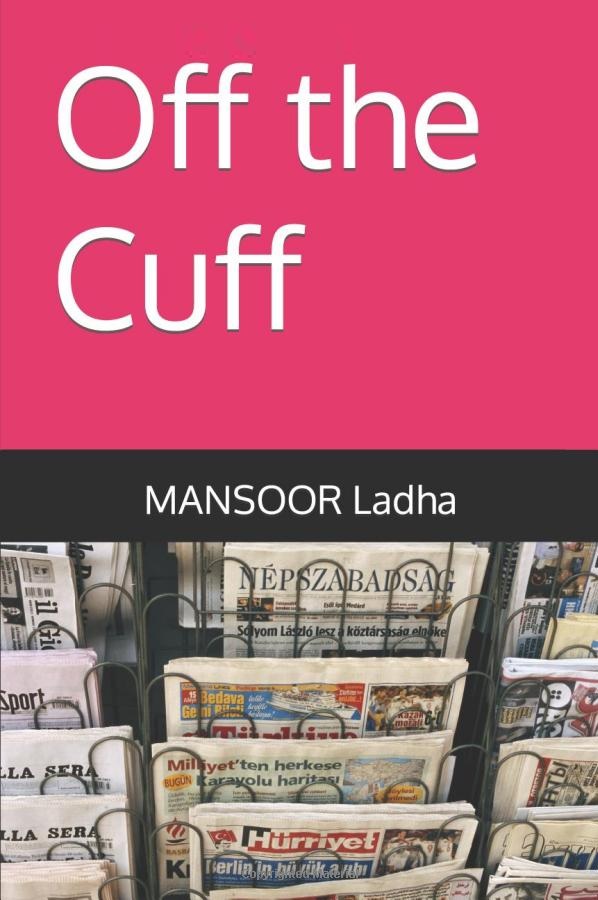
Mansoor Ladha's “Off the Cuff” published independently, December 2022, 451 pp. Available in Softcover and Kindle.
Mansoor Ladha’s “Off the Cuff” published independently, December 2022, 451 pp. Available in Softcover and Kindle.

_______________

We welcome feedback from our readers. Please click Leave a comment. Your letter may be edited for length and brevity and is subject to moderation.

Mansoor Ladha Ismaili author series, Simerg
Mansoor Ladha

_______________

Calling all Ismaili Authors

We encourage Ismaili writers to introduce their books in a similar format as has been done in the post above. Please also see the series launch article and submit your responses to Malik at mmerchant@simerg.com. All submissions will be acknowledged. If a writer has published multiple books, each book will be highlighted in a separate article, and not combined with other books into one post. All writers should include a brief profile with a portrait photo.

We welcome feedback from our readers. Please click . Your letter may be edited for length and brevity, and is subject to moderation.

_______________

Links to the Ismaili Authors’ Series (in chronological sequence, oldest article first):

  1. “Justice Bertha Wilson Pushes the Boundaries of Humanity” by Shamas Nanji (series start, February 10, 2021)
  2. “Little One, You Are The Universe” by Zeni Shariff (February 25, 2021)
  3. “Memoirs of a Muhindi” by Mansoor Ladha (March 6, 2021, and see also 15 and 21 by the same author)
  4. “To Be One With God: Seven Journeys to the Meaning of Life” by Shafeen Ali (March 25, 2021)
  5. “Invisible Birthmarks” by Alnasir Rajan (April 13, 2021)
  6. “IN THE NAME OF JUSTICE – Portrait of a ‘Cowboy’ Judge” by Azmina Suleman (April 28, 2021)
  7. “RSVP Rice and Stew Very Plenty” by Nazlin Rahemtulla (May 28, 2021)
  8. “Coughdrops” by Nargis Fazal (June 12, 2021)
  9. “The Roots and the Trees” by Nizar Sultan (June 25, 2021)
  10. “Faith and Ethics: The Vision of the Ismaili Imamat” by M. Ali Lakhani (July 4, 2021)
  11. “Nairobi Days by Shelina_Shariff Zia (July 21, 2021)
  12. “Shine Brighter” by Shairoz Lakhani (December 8, 2021)
  13. “This is My Life” by Naznin Rahemtulla Hébert (February 26, 2022)
  14. “Humanizing Medicine – Making Health Tangible” by Dr. Azim Jiwani (March 9, 2022)
  15. “A Portrait in Pluralism: Aga Khan’s Shia Ismaili Muslims” by Mansoor Ladha (June 8, 2022, and see also 3 and 21 by the same author)
  16. “Malaria Memoirs: My Life Journey as a Public Health Doctor in Tanzania” by Dr Zul Premji (June 30, 2022)
  17. “Monkey Tales and Other Short Stories” by Mahmoud Hirji (September 10, 2022)
  18. “Bloom! A Story of Diversity and Understanding” by Shamim Murji (October 27, 2022)
  19. “Cooking with Mom” by Rozina Ramji (November 7, 2022)
  20. “SPARK: Journey from Success to Significance” by Azim Jamal (July 17, 2023)
  21. Off the Cuff by Mansoor Ladha (August 3, 2023, and see also 3 and 15 by the same author)

_______________________

Before departing this website please take a moment to review Simerg’s Table of Contents for links to hundreds of thought provoking pieces on a vast array of subjects including faith and culture, history and philosophy, and arts and letters to name a few. Also visit Simerg’s sister websites Barakah, dedicated to His Highness the Aga Khan, and Simergphotos.

Simerg’s editor may be reached via email at mmerchant@simerg.com.

“Wadima” Raibanu Sikina Kanji Lalji, the Grandma of Mbeya, Tanzania

By DR. MOHAMED FAZAL MANJI, MD DMRT DABRT FRCPC

PRELUDE: Thirty years ago, Mbeya Town, situated in the Southern Highland region of Tanzania lost Raibanu Sikina Kanji Lalji. She and her husband Rai Kanji Lalji were one of the pioneers of Mbeya. She was a dedicated person not only to her Lalji Bharmal family by marriage but to all communities of the town. Being her grand nephew, I am humbled to write about her so that she is not forgotten and thus will belong to the pages of history of the Indian contribution in the development of East African countries.

It is a misconception that the people of Indian origin in East Africa are descendants of the labourers who built Kenya-Uganda railway. Almost 32,000 workers from Kutch and Punjab were involved in laying a railway line from Mombasa to Kampala. Between 1896 and 1901, 2,493 workers died and 6,454 became invalid while laying the tracks. After the completions, only about 7,000 workers chose to stay back; the rest of them returned to India.

History indicates that there were trade links between Kutch, Gujarat and African coast for centuries. Modern day migration of Indians (or Asians as they were called in East Africa) to East Africa started in early and middle part 19th century. It was estimated that the number of Indians living in Zanzibar in 1859 was around 2,000.

Before, during and after the completion of laying of railway tracks in East African countries, Indian traders, mostly in the beginning from Kutch and then Kathiawar, had migrated to establish trading posts, called “dukas” along the railway routes. There were however others who were brave enough to venture out and establish trading posts in unexplored and dangerous regions of these countries. This was to provide the needs of indigenous populations and also of German and British administrators, living in the towns where they had established administration centers called “Bomas”. One such part was Southern Highland region of German East Africa (Tanganyika) and one such family was of my great grandfather Lalji Bharmal Rana’s children and grandchildren.

Initially, the Indian settlers in East African countries were male Indians. These men came alone without their spouses, as either they felt that the move to East Africa would be temporary and short lived or would send for their wives later on, when financial means permitted. The other group was young single men.

Women, following their migration to East Africa, either to join their husbands or after becoming  brides of young single men who had gone back to get married, have played a very major and important role in the success of Indian settlement in Africa in general and East Africa in particular. They not only minded their homes and looked after the children but they were pillars of support for Indian men. They helped their husbands in the “dukas”, looked after the extended family and also helped other women in the community they were living in.

Mbeya and Tukuyu regions of the Southern Highland Province of Tanganyika was blessed with arrival in the early part of 1923 — after her marriage to Wadabapa Kanji Lalji Bharmal — of a lady, who would play a major role not only in the settlement of Lalji Bharmal family and Indian community of various backgrounds and religion but also the betterment of the general population of Mbeya.

Her name was Sikinabai Kanji Lalji — our Wadima, The Grandma of Mbeya.

Wadima Raibanu Sikina Kanji Lalji, Simerg, Ismaili history and personalities
Wadima Raibanu Sikina Kanji Lalji. Photograph: Dr. Mohamed Manji collection.

Wadima Sikina was the daughter of Hirji Rajpar Kalyan from Nagalpur, Kutch. She was a sister of five brothers who all migrated to Tanganyika. The oldest brother, Jaffer, settled in Zanzibar and the rest, Mollo, Merali, Bandali and Suleman settled in Tukuyu. Wadabapa Kanji Lalji was the second son of Lalji Bharmal and being single, immigrated first in early second decade of 20th century. His older brother, Manji, was a family man and a breadwinner for the Lalji Bharmal family, farming on their small piece of land called “Kundhi Wadi”. Thus he was not able to go first to Tanganyika. Wadabapa Kanji Lalji after succeeding in his business, returned to Kutch in 1922 to get married.

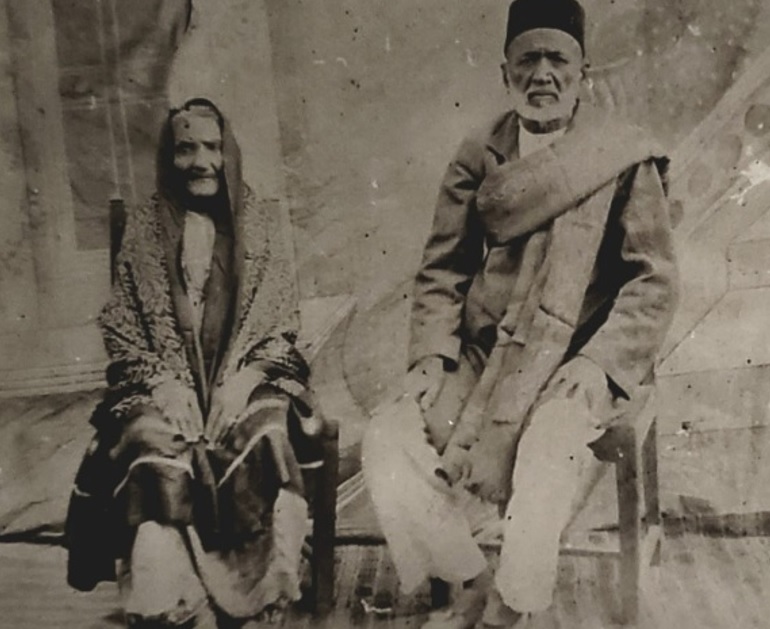
Mr & Mrs Hirji Bhaloo. Photograph. Dr, Mohamed Manji collection. Simerg Ismaili history and leaders
Wadima’s parents, Mr & Mrs Hirji Rajpar Kalyan. Photograph: Dr. Mohamed Manji collection.

The 48th Ismaili Imam, Mawlana Sir Sultan Mahomed Shah, His Highness the Aga Khan lll, had instructed the Kutch Kathiawar Ismaili Jamats to go to East Africa for economical betterment. So this newly married couple was given a big task to take some of Wadabapa’s brothers and nephews with them on their trip back to East Africa to settle them and help them to earn their living there.  At a young age of seventeen and as a newly married bride, she took this responsibility with her husband and became the “mother” of the family.

The new home of Wadima, as Mrs Sikinabai Kanji Lalji, will be addressed from now on, was in New-Langenburg (presently known as Tukuyu), a small hillside town in the Southern Highland region of Tanganyika (now known as Tanzania).This was the place the German administration, before 1st World War, had established a center called “Boma”. Mr Kanji Lalji had moved to this place from a close by village of Masoko where he had initially settled in 1911.

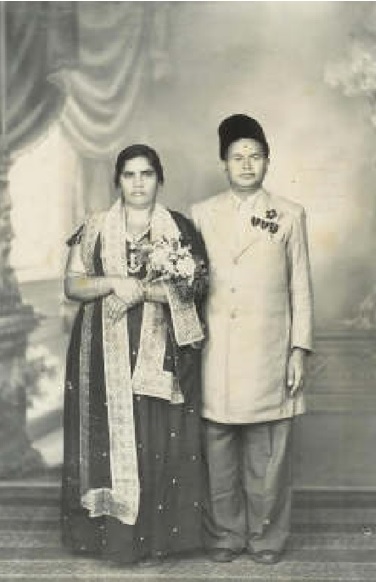
 Mr & Mrs Kanji Lalji. Photograph: Dr. Mohamed Manji collection. Ismaili leaders, Mbeya
 Mr & Mrs Kanji Lalji. Photograph: Dr. Mohamed Manji collection.

In those days, these small villages in East Africa did not have any hotels or restaurants. There were only few Indian families of different backgrounds, i.e. Hindus, Sunni Muslims and Khoja Muslims (mostly Ismailis).They thus had no choice but to look after each other in all ways of life. Any new arrival or visitor would just have to go to any “duka” of an Indian person and he and his family would be taken care of. They would be fed, housed and also would get help so to open their own “dukas” or find them employment, regardless of religious background. This was an old Sindhi, Kutchi and Khatiawadi tradition for generations, practised in India and outside India.

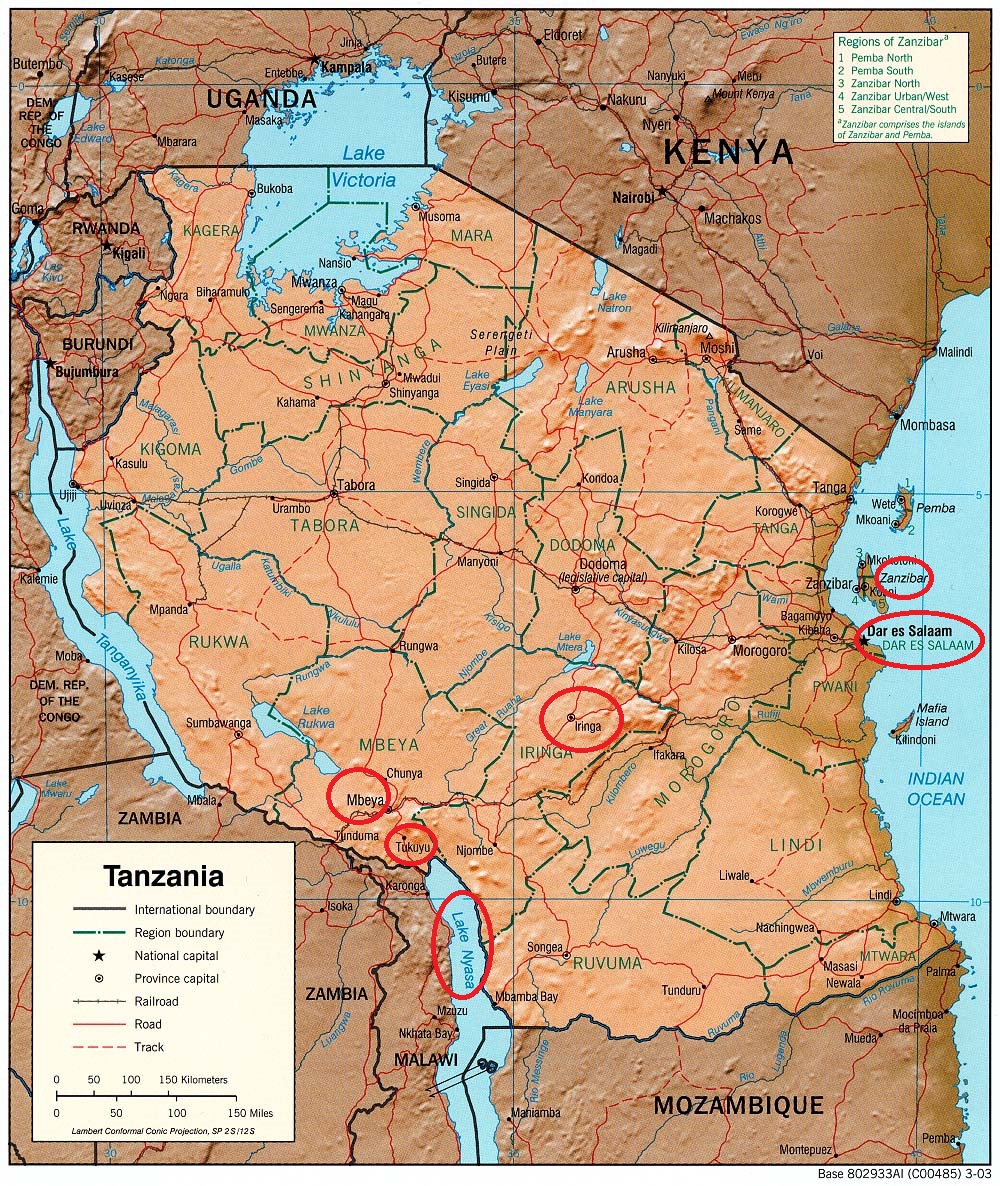
Click on map for enlargement

Tanzania map
Shaded relief map of Tanzania. Perry-Castañeda Library Map Collection, University of Texas. This is an annotated version prepared by Simerg and locations mentioned in the article have been circled in red.

As very few of the Indian man-folk had wives, Wadimaa played major role in this aspect in Tukuyu, during that time. One such example was an arrival of a Sunni Muslim family of Haji Yusufmia in Tukuyu in late 1920’s or early 1930’s; they had arrived in Tukuyu after crossing Lake Nyassa (Malawi) in a small canoe from Nyasaland. They were on their way to Mbeya region to settle. They stayed with them and Haji Yusufmia made Wadimaa  his blood sister. From then on that relationship between these two families continues to exist until the present day and has remained strong among their children and grandchildren. Haji Yusufmia became a prosperous businessman in Mbeya and a respected Muslim community leader in the Southern Highland region. He and his family were officially invited to attend the Diamond Jubilee celebration of Mawlana Sultan Mahomed Shah Aga Khan in 1946 in Dar es Salaam.

Wadima Sikinabai and Wadabapa Kanji Lalji were matriarch of the Lalji Bharmal family in the settlement of Wadabapa’s older brother Manji’s sons and daughters, his younger brothers Hussein and Karim Lalji. They helped them settle, marry and establish themselves in Tanganyika and some of them became quite successful economically.

In spite of being young, Wadima had an inborn mature quality and accepted a major role in the social aspect of the communities. She learned Swahili language and also local tribal language of Nyakyusa. As there were no doctors or official midwives, women helped each other during deliveries. She was one of the main women involved as a “midwife”. She was self-taught by observing and also from a midwifery medical book for women; she told me that she bought this book in Mumbai for 3 rupees during her first return visit to Kutch after her marriage. She also told me (being an MD myself) during our fireplace talks in her later years, while visiting Vancouver, that she still wanted to learn more. She wanted to know about new procedures involved during deliveries in the present  modern day.

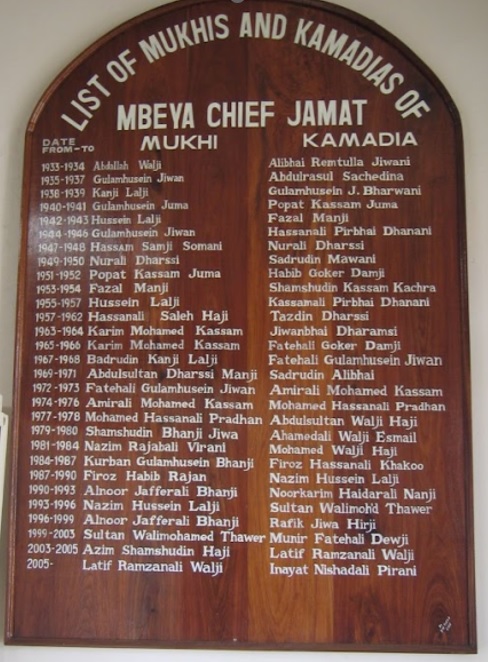
In 1935, Wadima and her family relocated to Mbeya. They became one of the pioneers of Mbeya. She continued her involvement in Mbeya community in the same way, and in some respect in more involved way. She was the main lady player in establishment of the Ismaili community of Mbeya. She, with her husband served as Mukhiani and Mukhi of Mbeya Ismaili Jamat in 1938. Their names are embedded on the plaque shown below. She also was instrumental in the establishment of other Ismaili majalis gatherings in Mbeya. In early 1950’s, as per Mawlana Sultan Mahomed Shah’s instructions, she was one of the first ladies in Mbeya, to adopt the simple western dress and gave up her Indian attire of “pacheri” and saris. She also was instrumental in getting other reluctant Ismaili ladies to do the same.

 List of Mukhis and Kamadias of Mbeya Jamat Photo: Dr Moh'd Manji collection, Simerg Ismaili history, Aga Khan community
 List of Mukhis and Kamadias of Mbeya Jamat Photograph: Dr. Mohamed Manji collection.

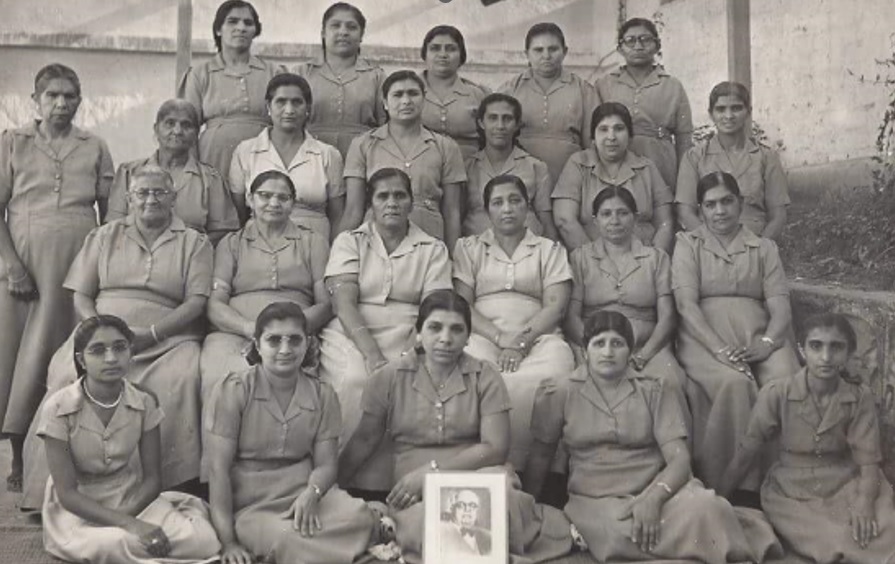
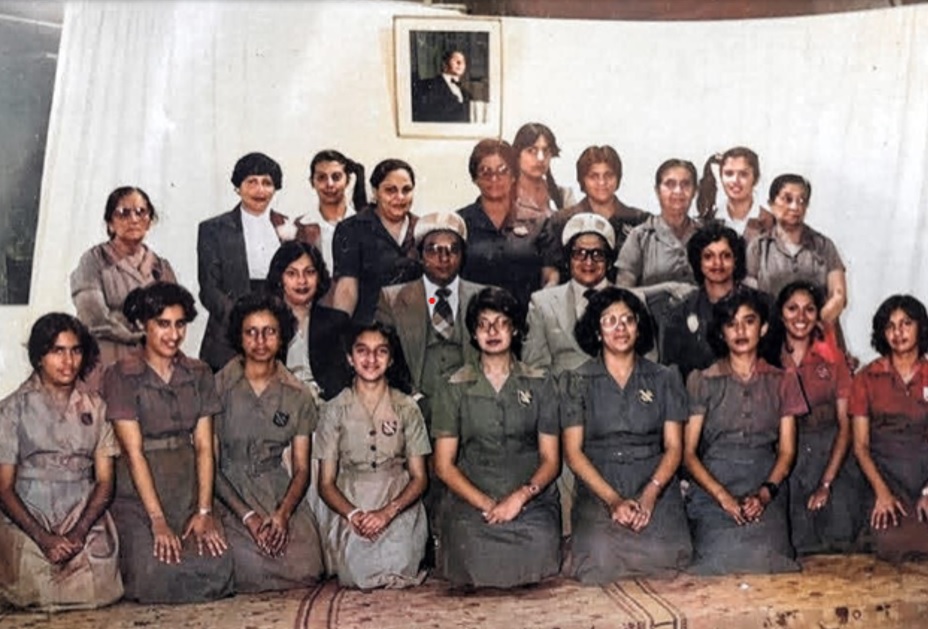
Wadima established the Ismaili Ladies Voluntary corps in Mbeya. The following pictures show her involvement over the decades. She also participated in preparing food during Ismaili functions as part of “Jaman” committee. In spite of her age, she also participated in one of the early Vancouver Partnership Walk during her visit to Vancouver, BC.


Mbeya Aga Khan Women's Voluntary Corp early 1950s. Photograph: Dr Mohamed Manji collection     
Mbeya Aga Khan Women’s Voluntary Corp early 1950s. Photograph: Dr Mohamed Manji collection.     
Mbeya Aga Khan Women's Voluntary Corp late 1950s. Photograph:: Dr Mohamed Manji collection. 
Mbeya Aga Khan Women’s Voluntary Corp late 1950s. Photograph: Dr Mohamed Manji collection.
 Mbeya Aga Khan Women's Voluntary Corp late 1980s. Photograph: Dr Moh'd Manji collection. 
Mbeya Aga Khan Women’s Voluntary Corp late 1980s. Photograph: Dr Mohamed Manji collection. 

Over the years, she earned the respect of all communities of Mbeya, whether they were of native African population or of Indian and European background and came to be known as WADIMA (Grandma). She had a persona of being confidant and in expressing authority. Families would get her involved in settlement of family, marital and financial issues of the community. After Tanganyika’s independence on December 9, 1961, local native political leader would come and greet her as she had known them since they were young. At any Indian wedding, she would be consulted and invited. I remember that my father did consult and inform her about weddings in our family.

In the late 1940’s and early 1950’s, members of the Lalji family in Mbeya would visit Wadima’s  place once or twice a week after Jamatkhana, for chit-chat. I was very young and my young cousins and young uncles would gather around  a “sigree” (charcoal heating utensil), as Mbeya at an altitude of 1,758 metres (5,500 ft) was quite a cold place. The rooms were lit by lanterns; in that period there was no electricity in Mbeya. We would listen to the elders talking about local news, news from Kutch and other family news. Wadima was  a very good storyteller. The young ones would sit with her and she would tell to us about our ancestry, about Kutch and their early hard days they went through when she came to Tanganyika and other interesting stories. This was kind of passing on to all of us, our history and informing us, who we were and where we came from. 
Her legacy is being remembered and talked about, up to now, by all Lalji Bharmal youngsters, who were sitting around the “sigree” in those early days and also the new Lalji Bharmal generations in the latter days. When we get together here in Canada and talk about Mbeya, we remember her by saying to each other that “Wadima was saying so”.
Wadima during one of her visit to Vancouver in early 1990’s fell sick. Her wish always was to be buried in the African soil. She returned to Mbeya, Tanzania, her “home”. She passed away in Mbeya, surrounded by family, at the age of 88 years, on February 8th, 1994, and she is buried in Mbeya, Tanzania  —  the place she was a part of in building. 

As I reflect on her magnificent life, I pray for the peace of her soul as well as the souls of all the departed members of my family.

Acknowledgements: I would like to first acknowledge my late Wadima Raibanu Sikina Kanji Lalji herself. She over the years provided me her history, which enabled me to pen down the above write up.  I would also like to acknowledge my father’s first cousin and Wadimaa’s son Mr Badrudin Kanji Lalji, his daughter Al-Shamsh (Shamshi) Ladha and Wadimaa’s blood bother’s son Haji Satarmia Haji Yusufmia for providing information for this write up.

Date posted: March 16, 2023.
Last updated: March 18, 2023 (names, typo corrections.)

_______________

Dr. Mohamed Manji cancer specialist special article for Simerg
Dr. Mohamed Fazal Manji

Dr Mohamed Fazal Manji, a cancer special and recipient of the 2022 Royal College of Canada M. Andrew Padmos International Collaboration Award, is originally from Mbeya, Tanzania. He is a Consultant Radiation Oncologist at BC Cancer Agency of British Columbia, Canada, and Clinical Associate Professor, University of British Columbia.He graduated in medicine from Makerere University, Kampala, Uganda and immigrated to Canada in 1972. Dr. Manji specialised in radiation cancer treatments at Princess Margaret Hospital (Cancer Center as it is called now) in Toronto. He  obtained the Canadian Fellowship (FRCPC) and American Board Specialist Certification (DABRT) in Radiation Oncology. He also undertook special courses in Nuclear Medicine and Endocrinology at Harvard Medical School, Boston USA. He became the first Canadian trained Ismaili Radiation Oncologist in Canada and probably in North America.

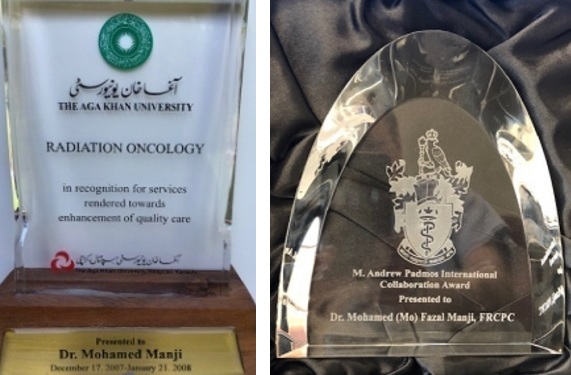
A plaque presented to Dr. Mohamed Manji for his contributions to Radiation Oncology at The Aga Khan University, commemorating his service from December 19, 2007, to January 21, 2008.
A plaque from Aga Khan University in appreciation of Dr. Manji’s services and at right Dr. Manji received the 2022 Royal College of Canada M. Andrew Padmos International Collaboration Award

He has been working at BC Cancer agency since 1977. He spent time abroad, working in Riyadh, Saudi Arabia, to help modernize the Radiation Department at King Faisal Specialist Hospital & Research Center. He spent 12 years at this tertiary hospital for cancer and other diseases. He was also involved in the planning and development of Radiation Oncology Departments at the Aga Khan University Hospitals in Karachi and Nairobi and spent some time working at both places. He has contributed to many peer review publications, abstracts, book chapters and also lecture presentations nationally and internationally. He is the son of Rai Fazal Manji of Mbeya Tanzania, who served as a member of Aga Khan Supreme Council of Tanganyika in 1950’s and Raibanu Rehmat Fazal Manji, daughter of  Alijah Mohamed Hamir who, in early 1930’s, built an iconic Jamatkhana in Iringa, Tanzania, and donated it to Imam Sultan Mahomed Shah unconditionally. Dr Manji served as first Member for Health on the first Aga Khan Ismaili Regional Council of Ontario and Quebec in 1973. He has previously contributed an informative piece on Prince Amyn Aga Khan’s visit to Toronto in 1973 on Simerg’s sister website Barakah.

_____________

Before departing this website, please take a moment to review Simerg’s Table of Contents for links to hundreds of thought-provoking pieces on a vast array of subjects including faith and culture, history and philosophy, and arts and letters to name a few. Also visit Simerg’s sister websites Barakah, dedicated to His Highness the Aga Khan, and SimergphotosThe editor may be reached via email at mmerchant@simerg.com.