Simerg is an independent initiative dedicated to Ismaili Muslims, the Aga Khan — their Hereditary Imam — and the Ismaili Imamat, and Islam in general through literary readings, photo essays and artistic expressions
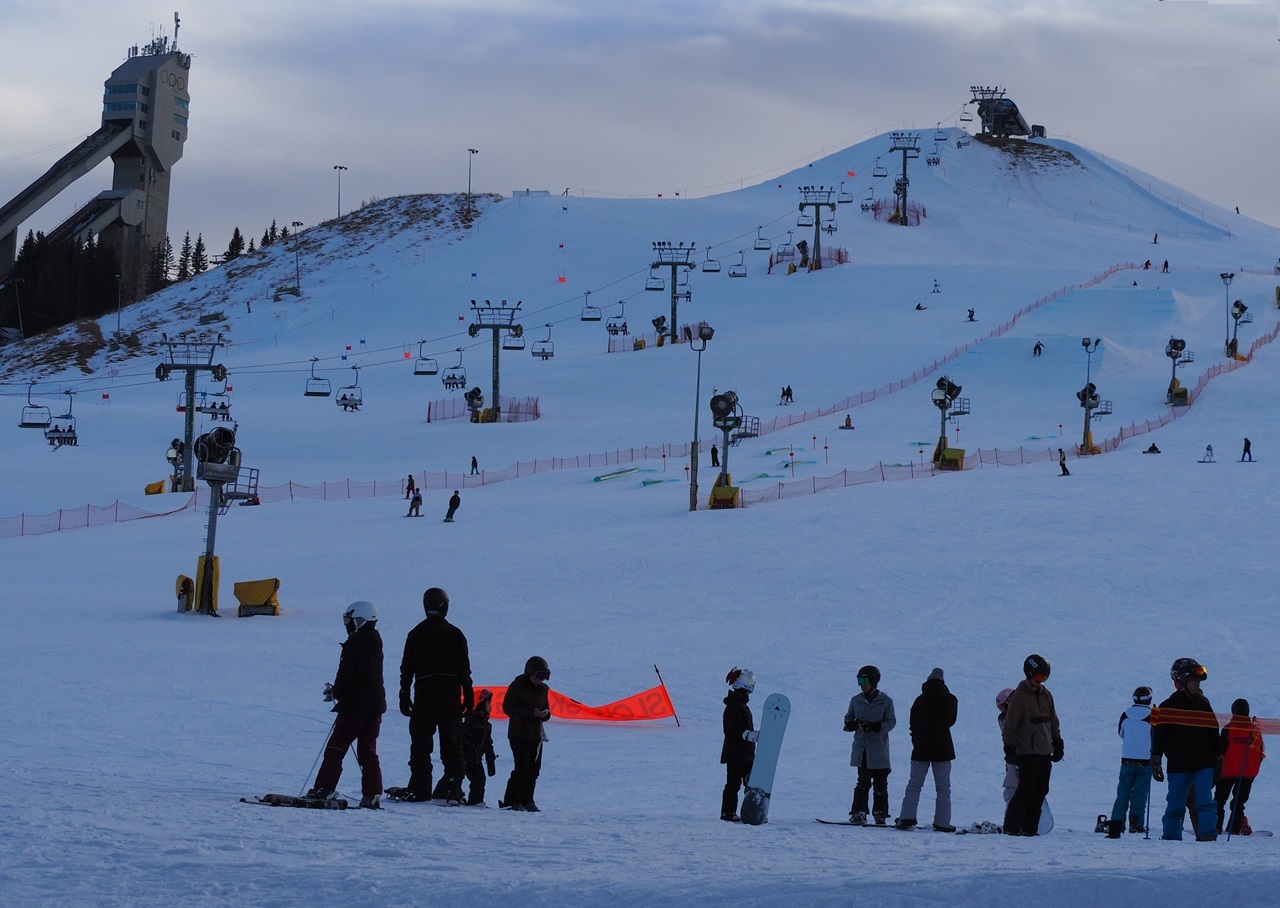
Calgary’s Olympic Park is a mere 14 km from downtown, making it a convenient and accessible destination for both tourists and locals. This unique venue hosted many winter events during the XV Olympic Games held in 1988, including bobsleigh, luge, Nordic combined, ski jumping, and freestyle skiing. On the first day of winter in Calgary, December 21, 2024, the weather was surprisingly mild, with a temperature of around 4°C (39 °F).
I was again at the Farmer’s Market West, packed with Christmas shoppers. Driving to the market, I could see the Olympic Park in all its glory as skiers descended the slopes. Everyone was at the Market to enjoy the Christmas ambiance with music, decorated shops, and fabulous food. The atmosphere was lovely as I grabbed a bag of large pomegranates and enjoyed a Montreal-style sesame seed vegetarian bagel. Sharing a large table in the market with others, one lady observed: “You don’t have to go to Banff or Lake Louise to ski; you can enjoy the Olympic Park just as much, especially when you have a family.”
As I stepped out of the Market, I once again saw the Olympic Park, and I could not help but drive to its base to take a few photographs and pick one as the photo of the day! Calgarians and visitors, please enjoy the Olympic Park during winter. Its facilities make it remarkable and an excellent spot for a day of thrilling winter activities that will excite you and your entire family. It is a great training ground for beginner skiers before they head to the slopes in Banff and Lake Louise, and it’s a perfect family outing.
I eagerly await the opening of Calgary Farmers’ Market West each Wednesday. Its sister market in the south end opens a day later. Both are open through Sunday, while Crossroads in the south opens Friday. Each market offers an enticing array of choices for consumers to shop for fresh fruits, vegetables, bread, and meats, as well as unique, one-of-a-kind spices, desserts, vitamins, and homemade artifacts. It’s a joy to visit the markets and enjoy freshly prepared meals. The west side is the newest and has plenty of seating in the centre aisle, with shops on either side.
Story continues below
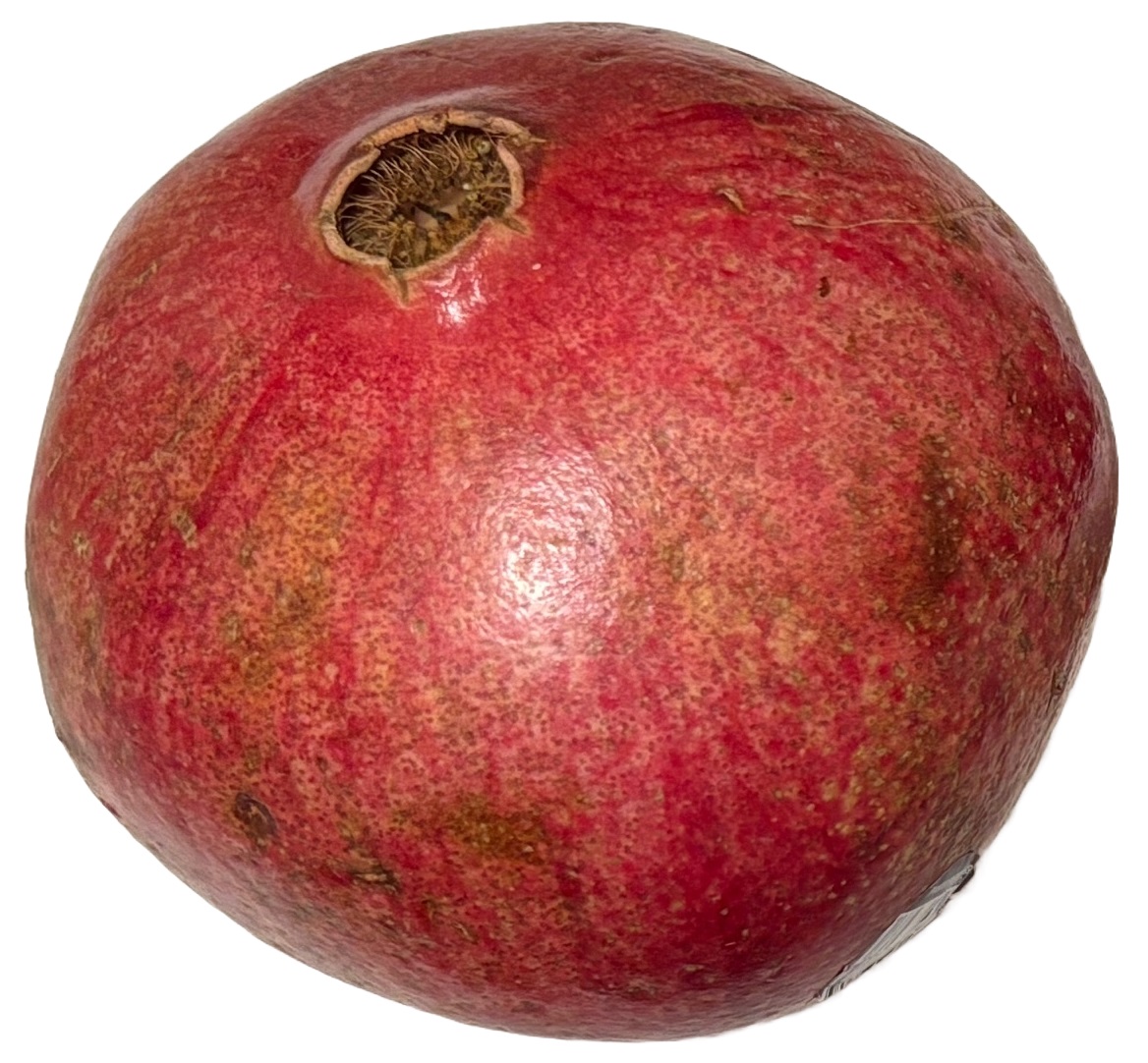
Pomegranate from Calgary Farmer Market West. Photograph: Malik Merchant.
Recently, I’ve been spotting these massive pomegranates at grocery stores, and they’re a total steal at just $2.99. On my last trip to Market West, I couldn’t resist picking up two of these large pomegranates. Now, I’m all too familiar with the struggle of cutting and separating the fruit from its inner skin. The fear of the juice squirting onto your clothes can be pretty daunting. Yes, an apron can be the answer, but I have a better solution. It’s a technique I learned from a TV program I watched almost 40 years ago in Ottawa. And I can guarantee it’s mess-free! No more worrying about stains. I’ve just cut one while wearing a new sale-priced table tennis tee shirt from the Boathouse! Who wants to look messy in the courtroom with untidy red stains on a sporty green shirt?
It is this method that has made me an ardent pomegranate fanatic. So this is what I do. On a board, I slice the pomegranate into half. I then dip the halves into a deep bowl of water at a temperature that suits you best and use my thumbs to roll away the juicy red arils from the white pith!
Story continues below
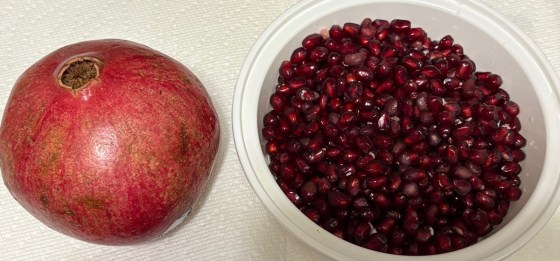
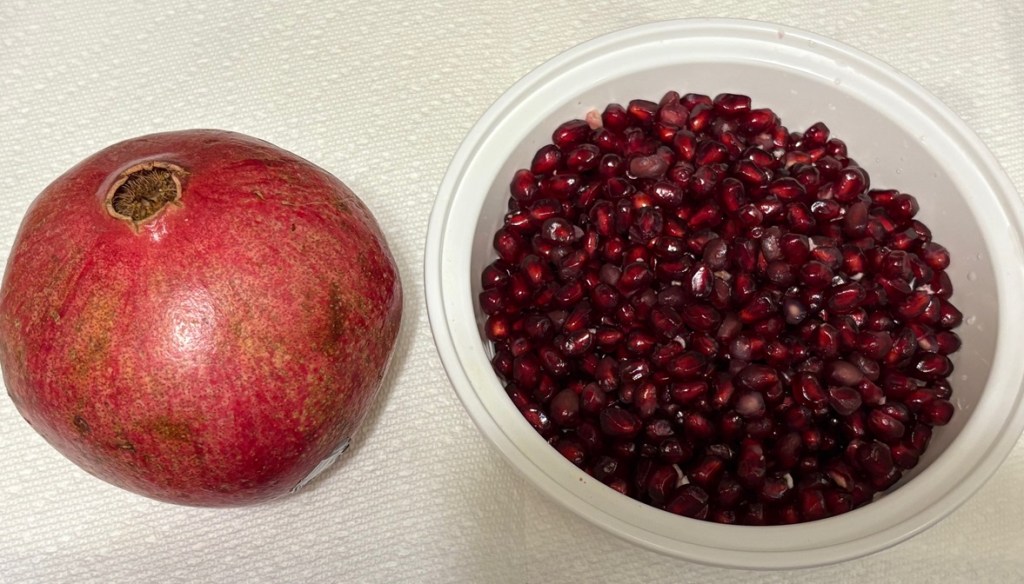
Pomegranate from Farmer’s Market West, Calgary. Photograph: Malik Merchant
I remove as much floating pith from the bowl as possible and then use a drainer to capture the fruit! The picture shows the second pomegranate I have yet to cut and the bowl from the first. I encounter shoppers who want to buy pomegranates but dread cutting them and separating the fruit from the pith, and I tell them my story! My time spent cutting the fruit was about seven minutes. The fruit was so juicy that I finished the bowl in equal time!
The pomegranate is mentioned as follows in the Qur’an, along with other fruits.
“It is He who sent down out of heaven water, and thereby We have brought forth the shoot of every plant, and then We have brought forth the green leaf of it, bringing forth from it close-compounded grain, and out of the palm-tree, from the spathe of it, dates thick-lustered, ready to the hand, and gardens of vines, olives, pomegranates, like each to each, and each unlike to each. Look upon their fruits when they fructify and ripen! Surely, in all this are signs for a people who do believe — 6:99, translated by A.J. Arberry (see Corpus Qur’an for multiple translations of the verse).
A favourite fruit used in juices and syrups, the pomegranate is a massive part of many cultures today. Appearing in the Qur’an three times, the pomegranate is often mentioned about Heaven and God’s gift to humankind. The fruit is nutritious. While its protein and fat contents are insignificant, it is naturally high in vitamin C, and potassium, low in calories and a great source of fibre. In a piece entitled “Health benefits of pomegranates extend throughout the body,” Dr. David Heber, MD, founding director of the UCLA Center for Human Nutrition, writes that pomegranate has the largest and most potent polyphenol antioxidant known. Healthline mentions 10 benefits of eating pomegranate.
So buy and eat pomegranates regularly, follow my method of cutting them, and enjoy them without creating a mess!
Date posted: December 19, 2024.
________________
If readers have their own methods of cutting pomegranates without a mess, please share them by clicking LEAVE A COMMENT.
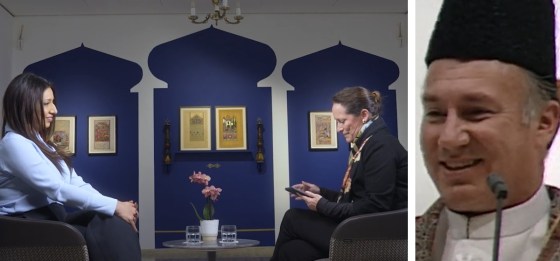
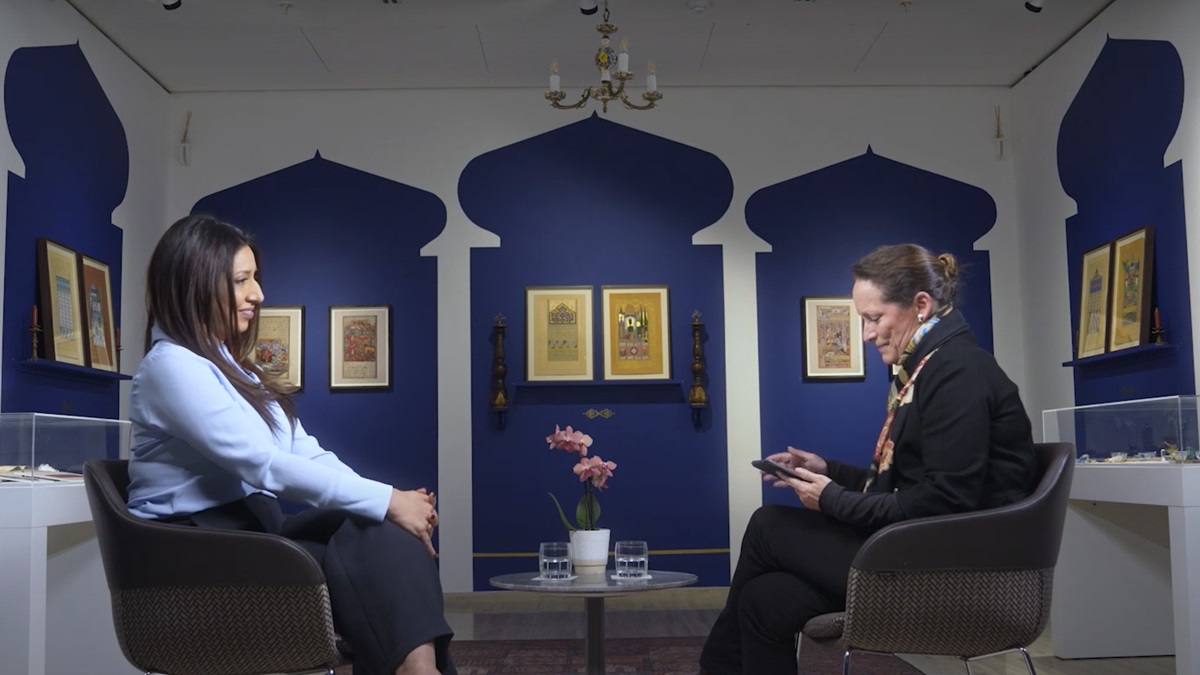
Farah Nasser, a seasoned award-winning Canadian journalist who has worked for Global News and Global National as an anchor for a decade, before leaving the network last summer, conducted a significant and enlightening interview with Princess Zahra Aga Khan, the eldest child of Mawlana Hazar Imam, His Highness the Aga Khan. The interview, held at the prestigious Aga Khan Centre in London, provided unique insight into Princess Zahra’s thoughts and perspectives.
The must-watch interview was aired on Ismaili.TV and on The Ismaili, the official website of the Ismaili Muslim community, on Friday, December 13, 2024, on the auspicious occasion of Mawlana Hazar Imam’s 88th Salgirah (birthday).
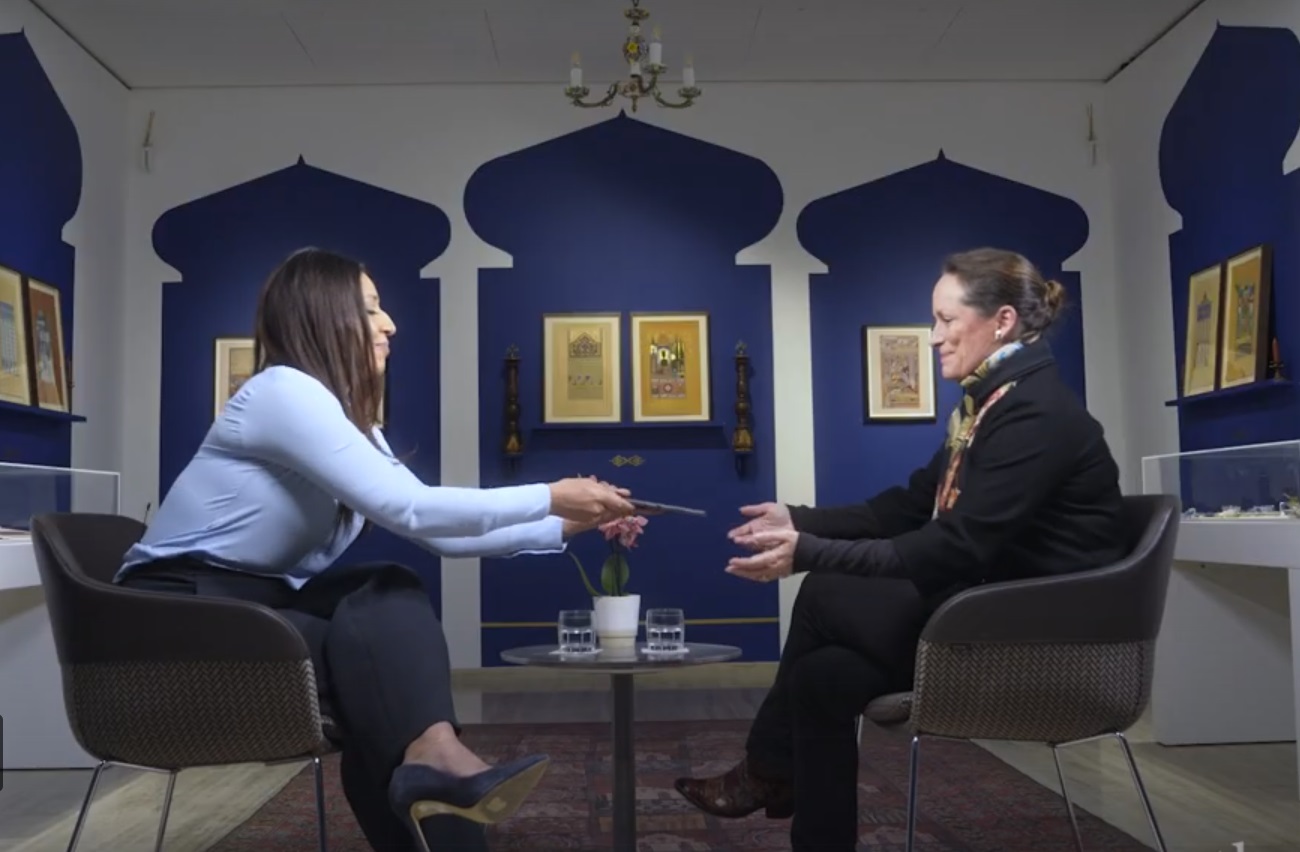
Farah Nasser hands Princess Zahra Aga Khan a Tablet, requesting that she watch a 1994 clip from a Farman delivered by Mawlana Hazar Imam to the UK Jamat gathered in London. Photograph: Still photo from interview.
~~~~~~
Princess Zahra Aga Khan watches a video clip of her father, Mawlana Hazar Imam, His Highness the Aga Khan, telling his Ismaili community in the UK in August 1992 that the Princess graduated from university with an honours degree and would be joining him to work by his side. Photograph: Still photo from interview.
At the start of the interview, Farah presented Princess Zahra with a tablet and requested that she view a clip from a rare thirty-year video dating back to 1994. The next image captures Princess Zahra engrossed in the clip, where Mawlana Hazar Imam, her father, joyfully mentions her university graduation and future work alongside him. It was a poignant moment as Princess Zahra focused on the Tablet screen, witnessing her father’s heartfelt words:
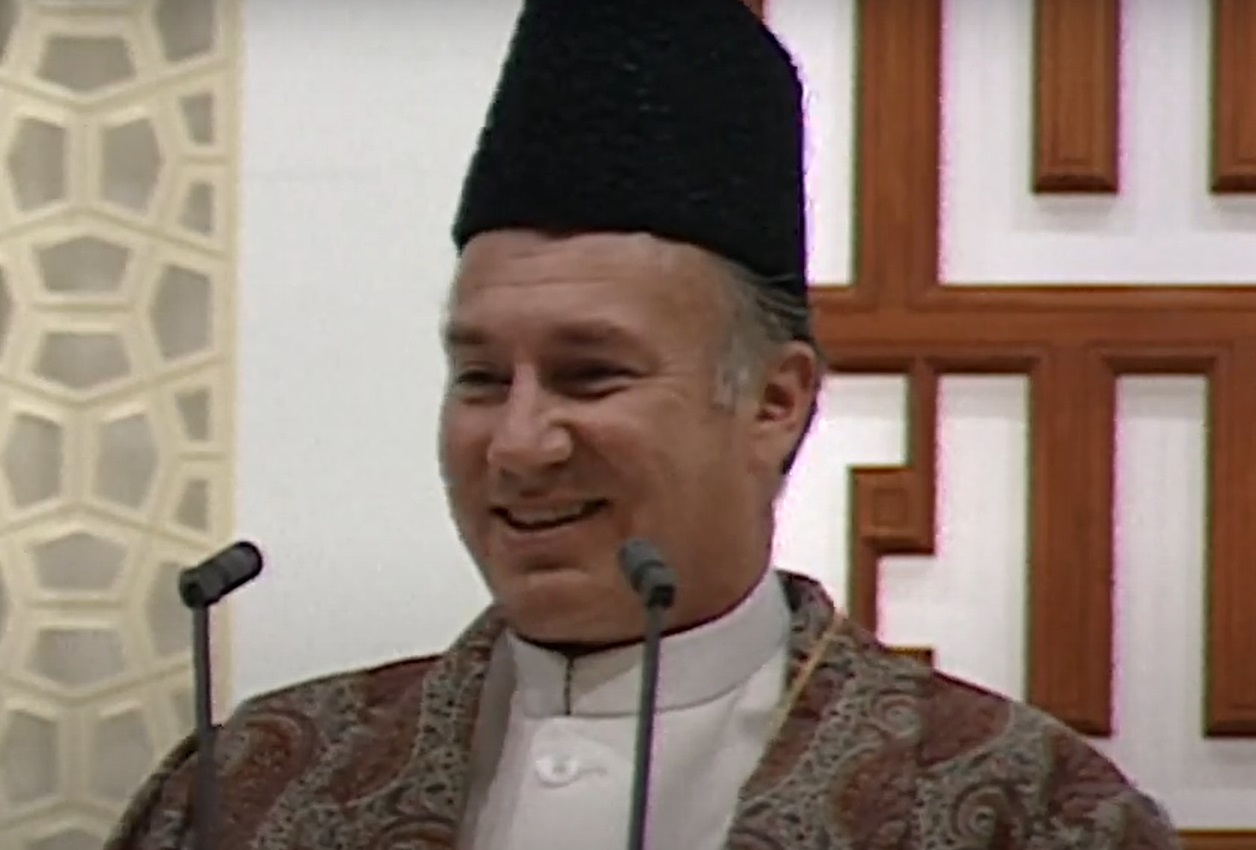
“In the past,” Mawlana Hazar Imam said, “I have not talked about my family except when my children were born or when I got married, and I thought I should tell you today that my eldest child has graduated from university…. She has received an honours degree in Development Studies. She selected that subject as she aspired to work and serve the Jamat [Ismaili community] in the developing world. And in September, she will join me to work by my side.”
The announcement was met with joy and waves of applause.
With deep happiness, Mawlana Hazar Imam, His Highness the Aga Khan, shared the news with his spiritual children gathered in London, England, in August 1994, that his daughter Princess Zahra had graduated with honours and would be joining him to work by his side. The news was met with joy and a wave of applause. Photograph: Still photo from video watched by Princess Zahra.
In the interview, Princess Zahra shares her academic journey, including her unique concentration in Development Studies. The engaging twenty-five-minute conversation concludes with Farah Nasser asking the Princess to convey the murids’ (Ismaili followers) affection and birthday wishes to Mawlana Hazar Imam. Princess Zahra assures that she will pass on the greetings, noting that he always appreciates receiving messages. She also shares that Hazar Imam requested a chocolate cake for his birthday. We now present the full YouTube interview to our readers worldwide.
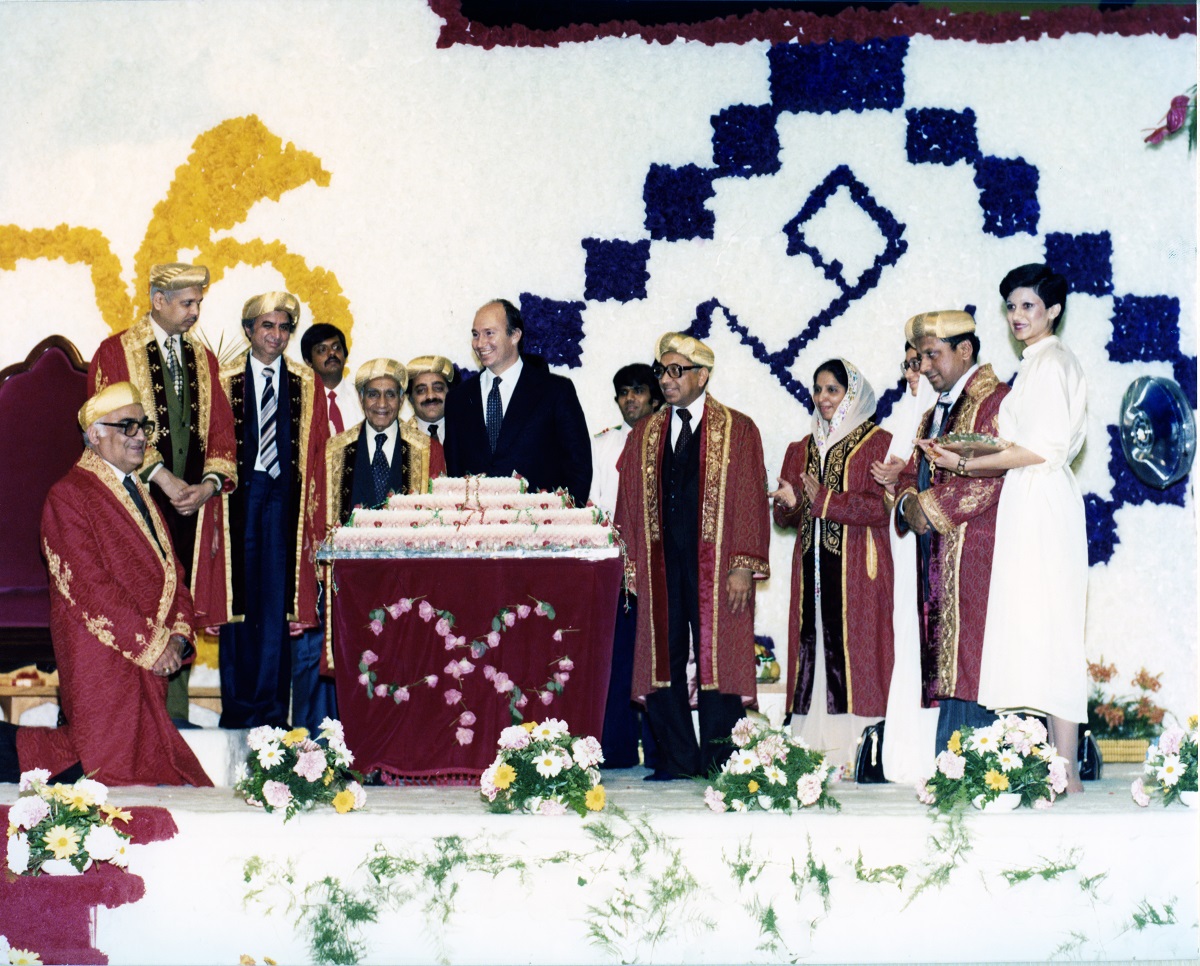
Mawlana Hazar Imam, His Highness the Aga Khan, is presented with a birthday cake at the International Centre in Toronto ahead of his birthday on December 13, during his first visit to his Ismaili Muslim followers in Canada in November 1978. Photograph: Zeenat Virani Family Collection, Vancouver.
Social media platforms are filled with unique and beautiful birthday (Salgirah) greetings, birthday cakes and artwork on the auspicious occasion of Mawlana Hazar Imam, His Highness Prince Karim Aga Khan’s 88th birthday.
Born on December 13, 1936, he became the 49th Hereditary Imam of the Shia Ismailis on July 11, 1957. At 88, Mawlana Hazar Imam is the oldest living Imam in Ismaili history, and his reign of 67 years is the second longest. His grandfather ruled for an astonishing 71 years and celebrated the Platinum Jubilee.
Story continues below
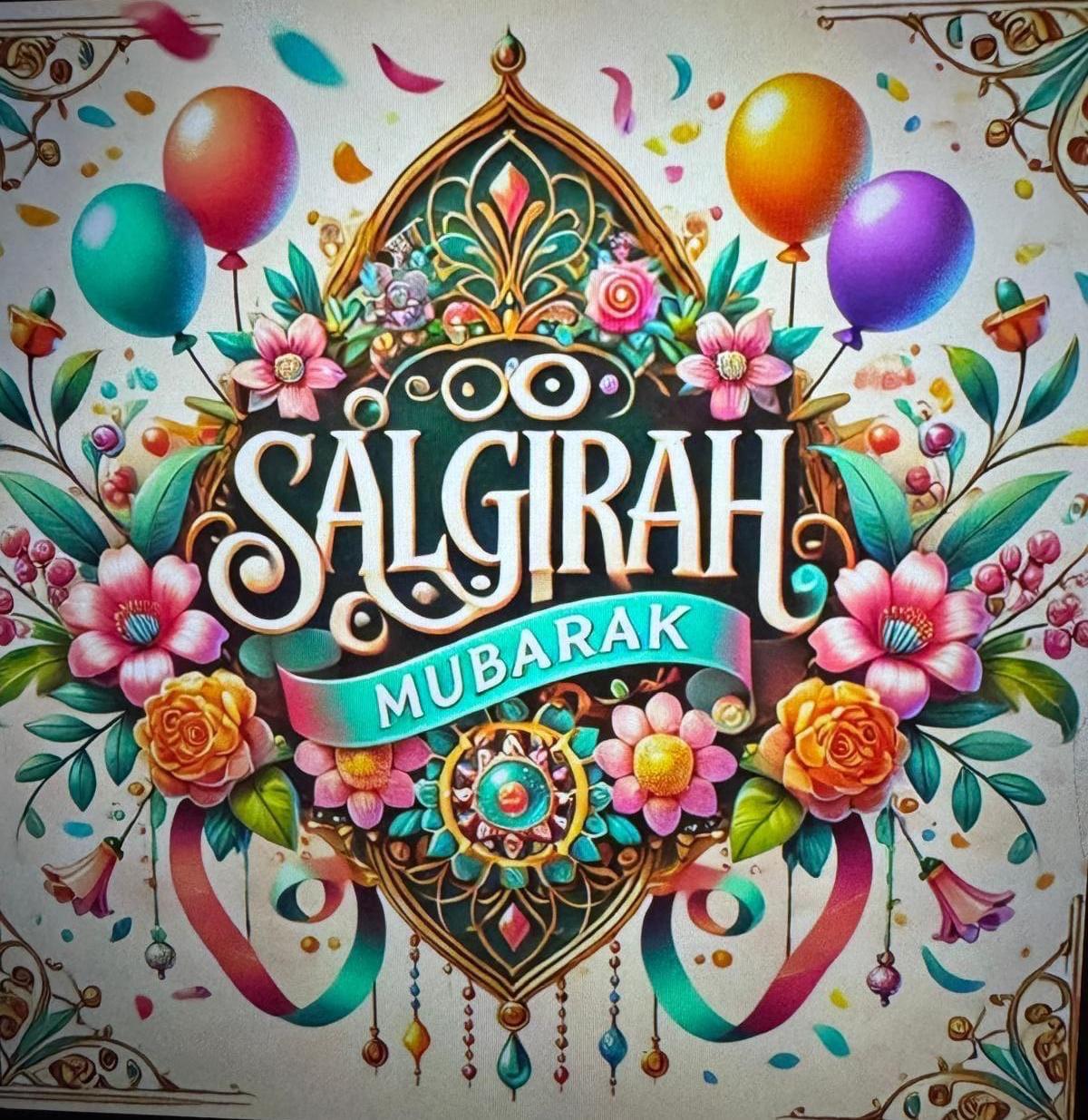
A beautiful greeting on the auspicious occasion of the birthday of Mawlana Hazar Imam, His Highness the Aga Khan. Photograph: Social Media.
~~~~~
~~~~~~
As Ismailis celebrate their Imam’s birthday, they take pride in the historical significance of his reign, which has inspired and guided the community through the years. They are also mindful of their brothers and sisters’ difficulties in conflict areas in several parts of the world. The messages embedded in several greetings reflect the problematic situation and include inspiring prayerful notes.
Artistic greeting with a poem honouring Mawlana Hazar Imam, His Highness the Aga Khan. Photograph: Social Media.
~~~~~~
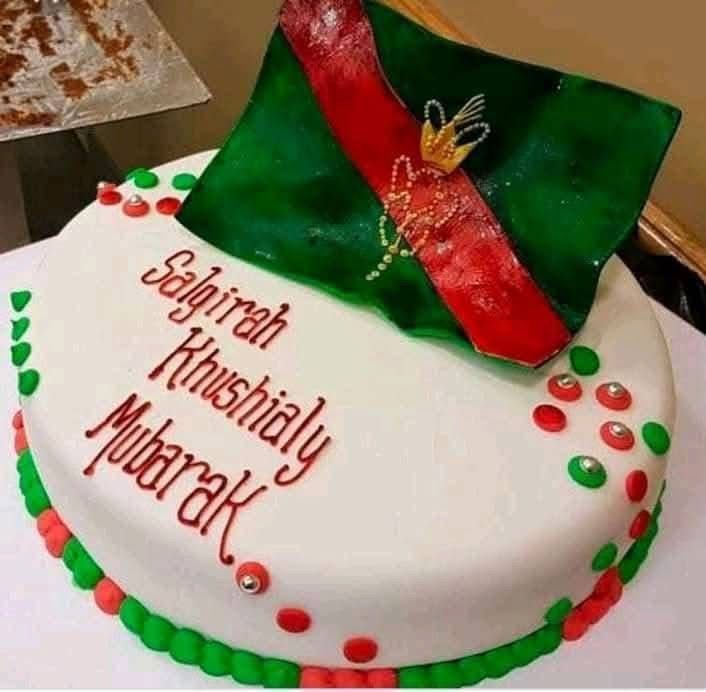
A cake celebrating the birthday of Mawlana Hazar Imam, His Highness the Aga Khan, with the red-green Ismaili flag containing the Aga Khan’s crest in the centre. Photograph: Social Media.
~~~~~~
A Swahili Song Honouring the Aga Khan on His Birthday
Swahili Song circulating on social media greeting His Highness Prince Karim Aga Khan Mawlana Hazar Imam on his birthday (Salgirah or Khushiali Mubarak) and thanking him for his guidance.
We join Ismailis worldwide in conveying our gratitude to our beloved Imam on his 88th birthday for guiding his spiritual children on the Straight Path, Blessing us and always keeping us under his loving paternal-maternal care. We pray for the happiness and mushkil ahsan — protection from difficulties — of Ismailis around the world.
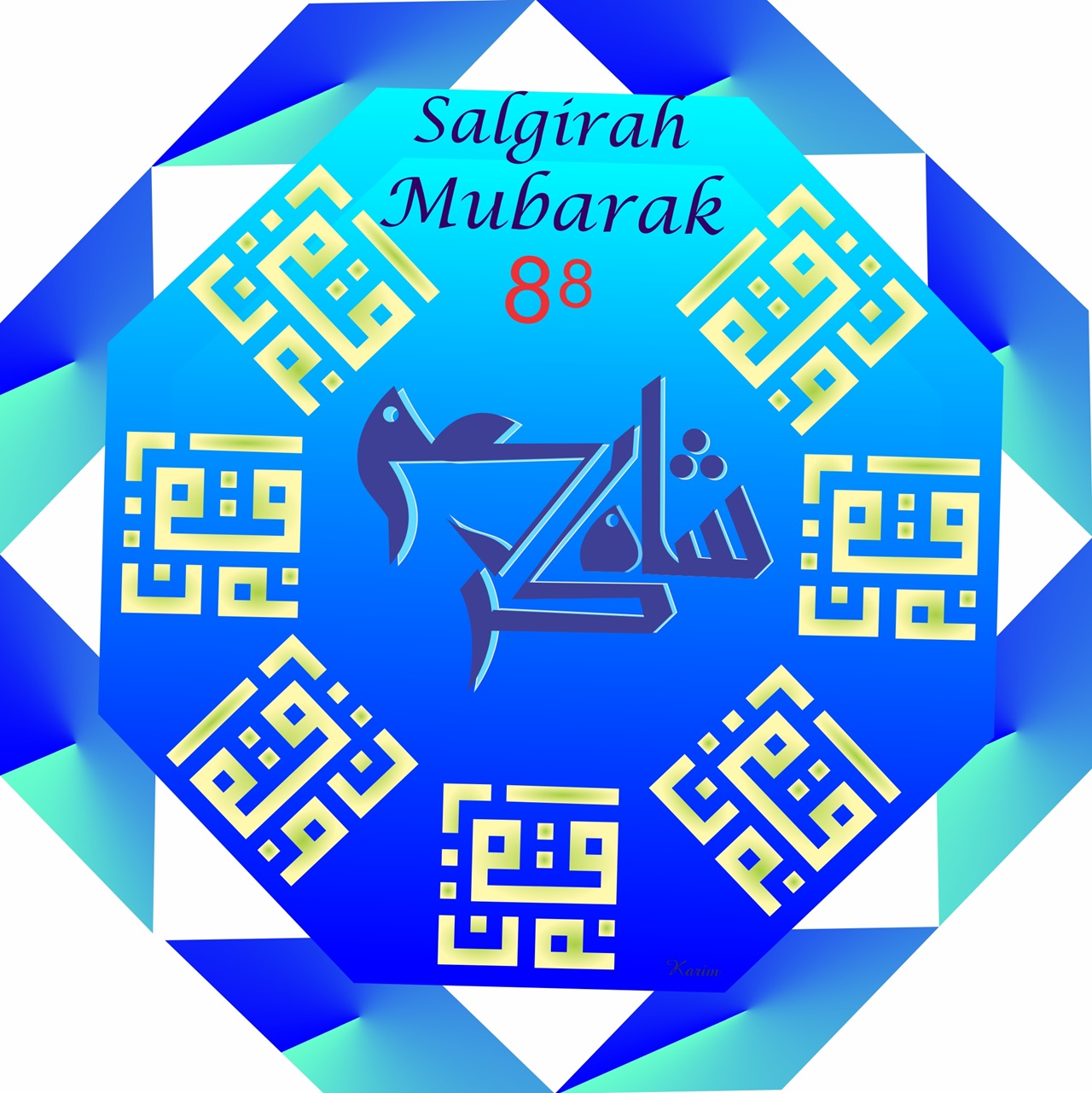
Artwork for Mawlana Hazar Imam, His Highness the Aga Khan’s 88th Salgirah (birthday). The names Shah Karim and Imam-e-Zaman (Imam-of-the-Time) are repeated in Kufi Kairouani script and Square Kufic seven times. Calligraphy amd design by Karim Ismail, Toronto.
The natural beauty and resources of our world are entrusted to us during our lifetime, and we must leave the world improved — the Aga Khan, September 1998
December 11, 2024, is International Mountain Day. As readers of this and its sister website Simergphotos are aware, I have presented awe-inspiring photographs of the Canadian Rockies, a sight to behold during my visits to Banff, Jasper and Waterton National Parks, and the Kananaskis, among other places. Growing up in Africa, I saw Kilimanjaro, Mt. Kenya and Mt Meru, but my first true love with mountains began in Salt Lake City as I watched the New Moon over the city, surrounded by the beautiful Wasatch Range in 1979/1980.
Story continues below
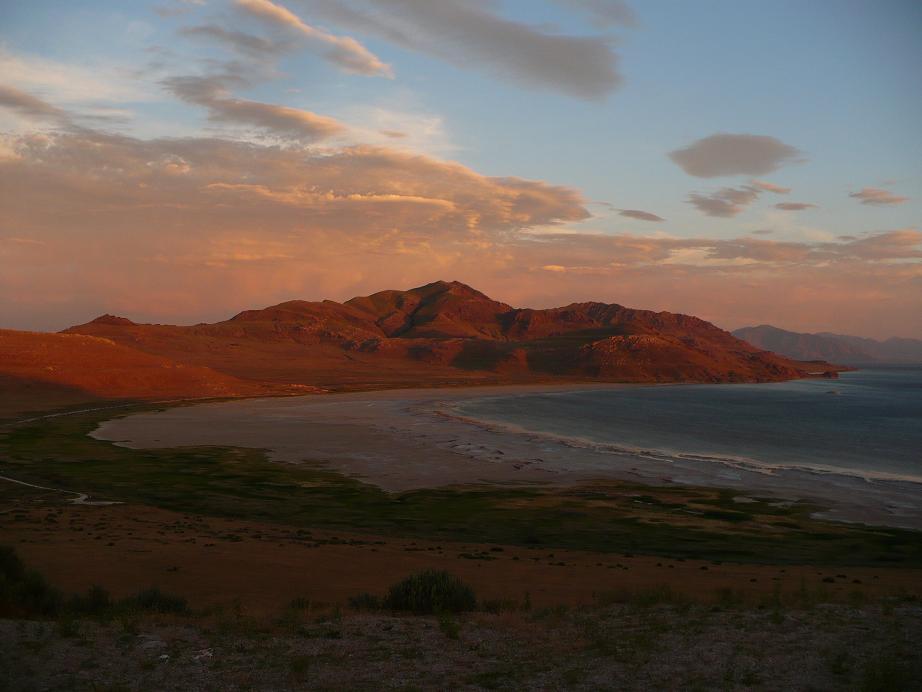
The Great Salt Lake at dusk taken from Antelope Island’s Buffalo Point lookout and picnic area, 2011. Photograph: Nurin Merchant.
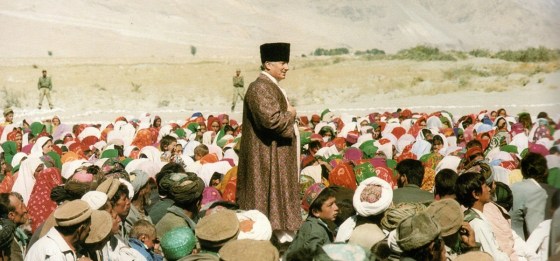
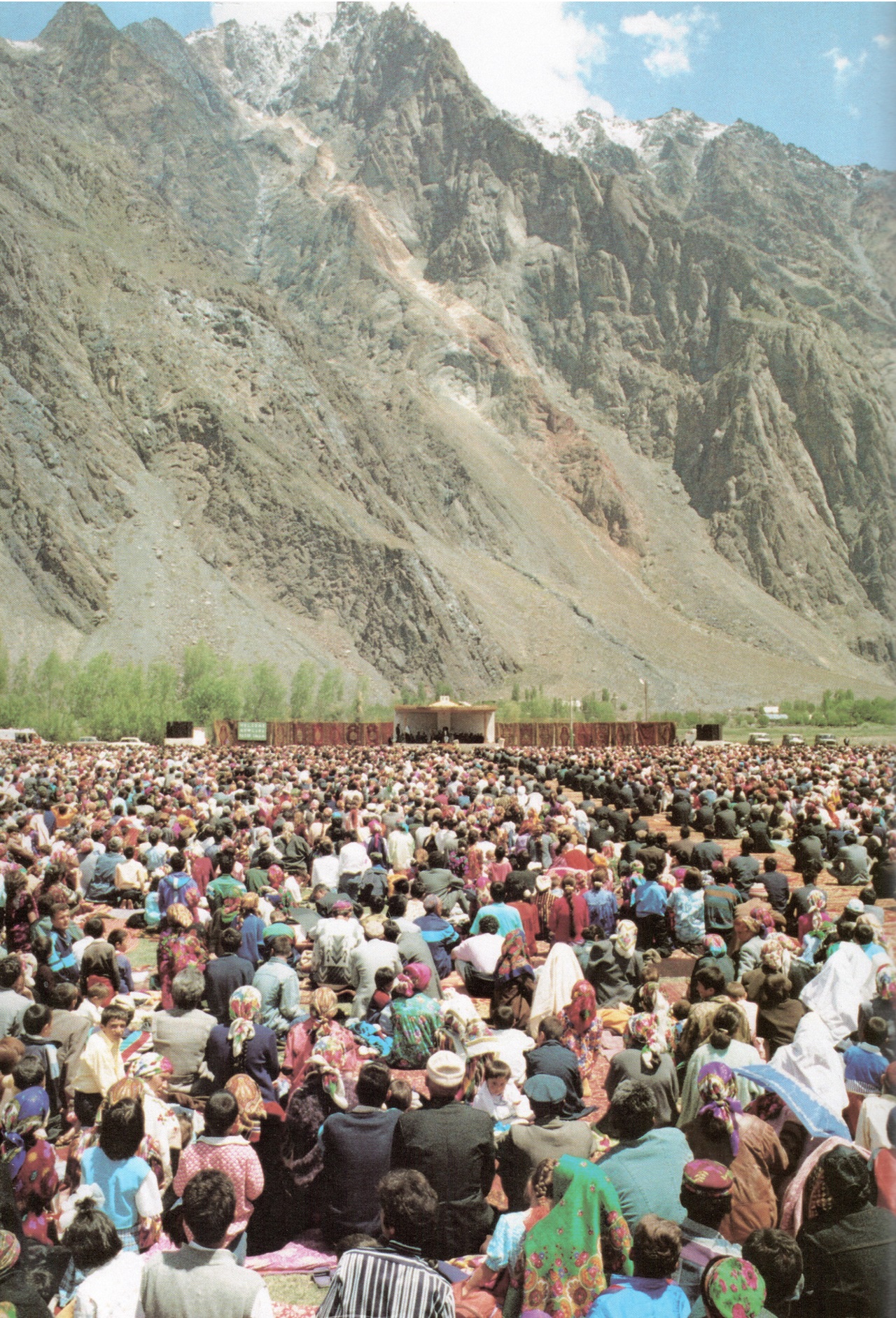
With millions of Ismail Muslims worldwide celebrating the 88th birthday — the Salgirah — of Mawlana Hazar Imam, His Highness the Aga Khan, on December 13, 2024, what mountain thoughts and pictures come to my mind on this celebratory International Mountain Day? None other than the awe-inspiring beauty of the Pamirs of Gorno-Badakhshan, where the Aga Khan, with the Pamir Range as a stunning backdrop, met with his tens of thousands of followers in 1995 and 1998.
Story continues below
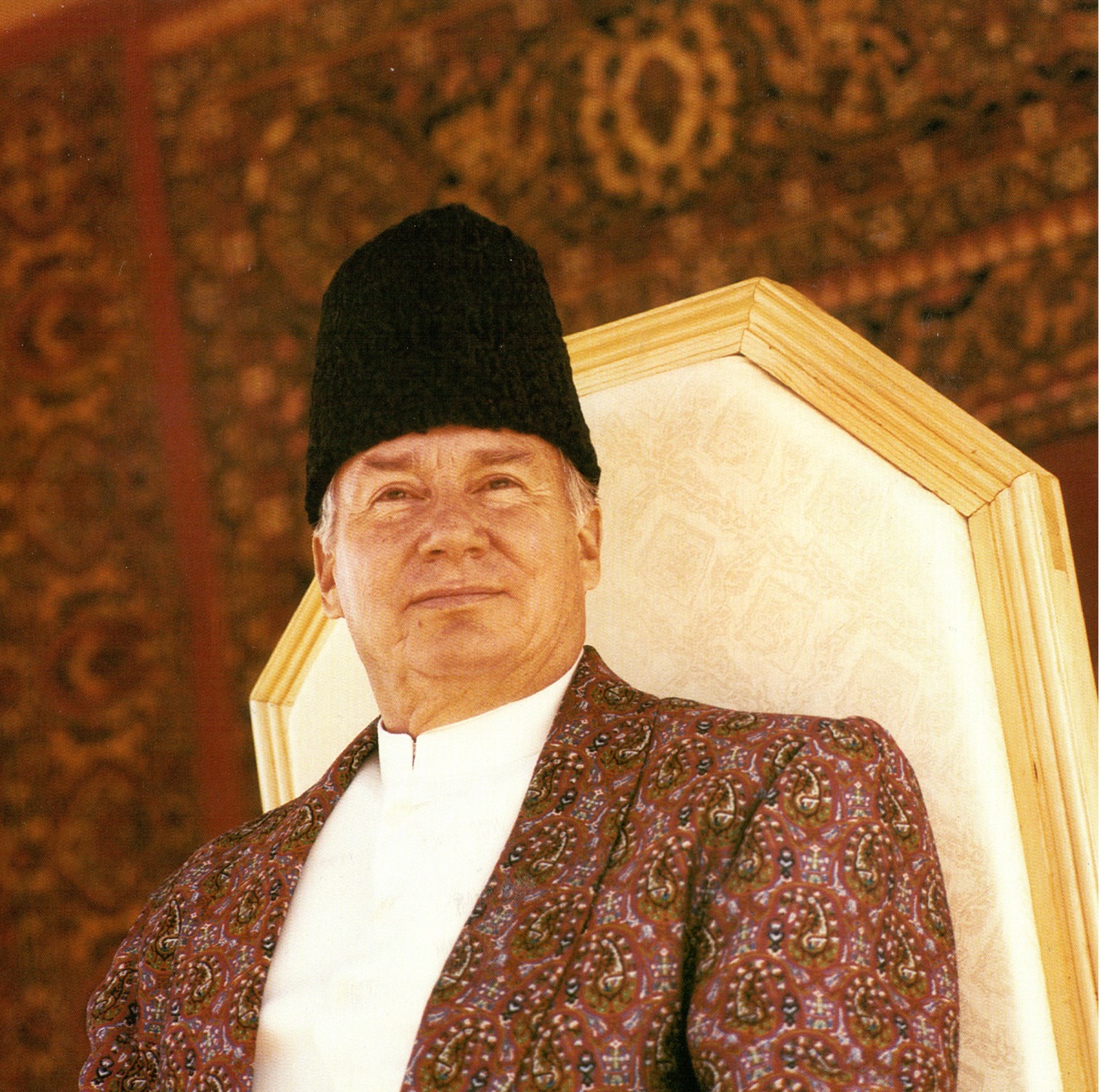
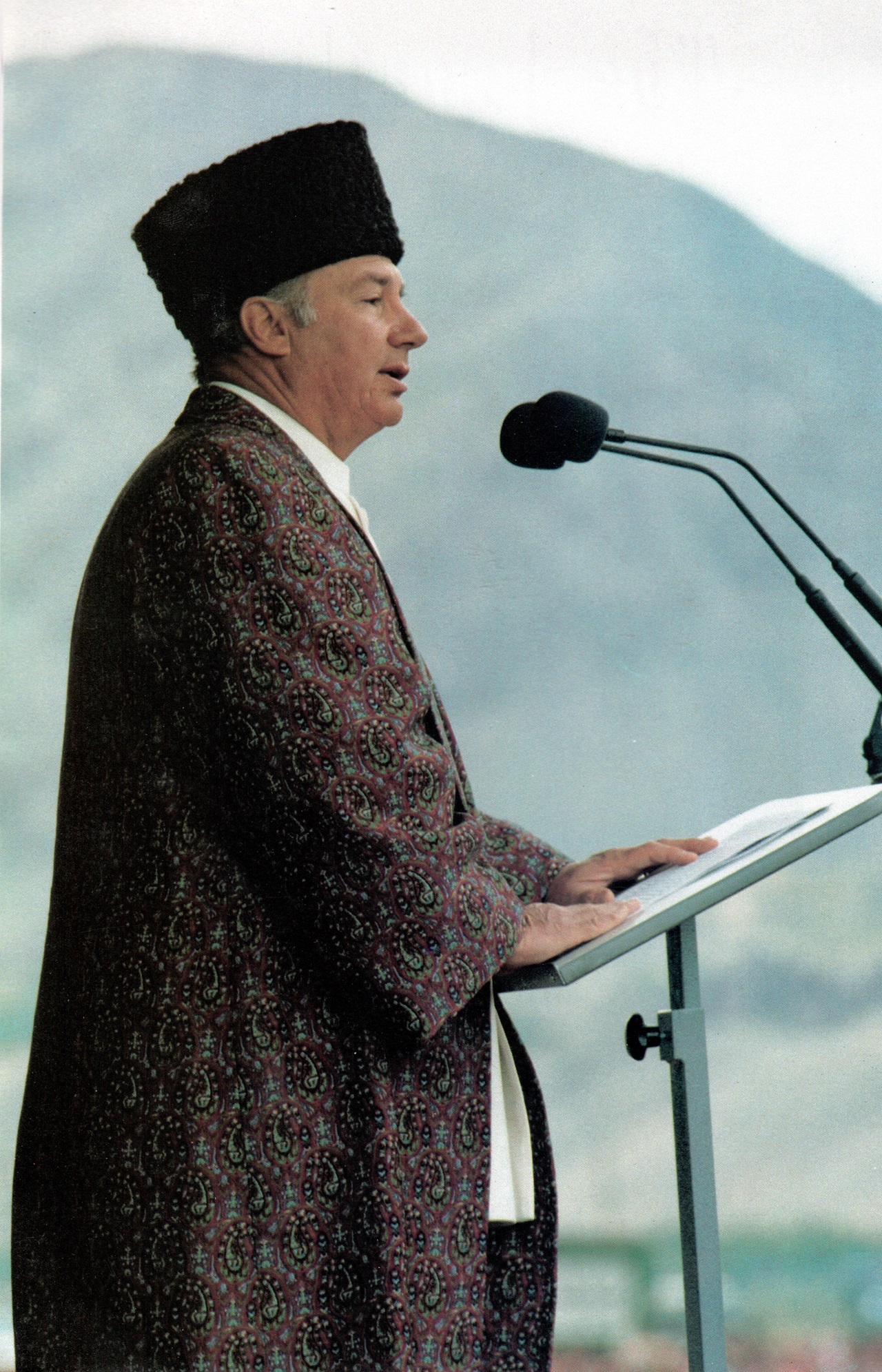
Mawlana Hazar Imam, His Highness the Aga Khan, in Gorno-Bakakhshan Autonomous Province, September 1998. Photograph: Print edition, The Ismaili, Realizing the Social Conscience of Islam, December 1998.
~~~~~~
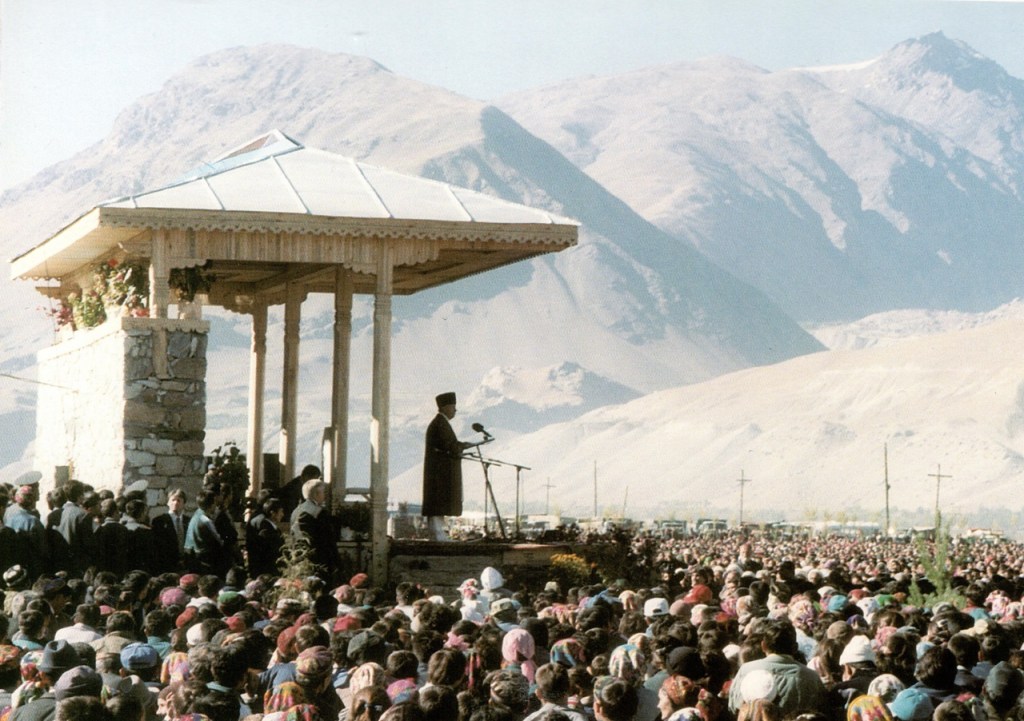
Mawlana Hazar Imam, His Highness the Aga Khan, on stage in the distance, amidst the Pamir Mountains and his followers in Gorno-Bakakhshan Autonomous Province, May 1995. Photograph: Print edition, The Ismaili, Mawlana Hazar Imam’s Visit to Central Asia, 22-31 May 1995.
~~~~~~
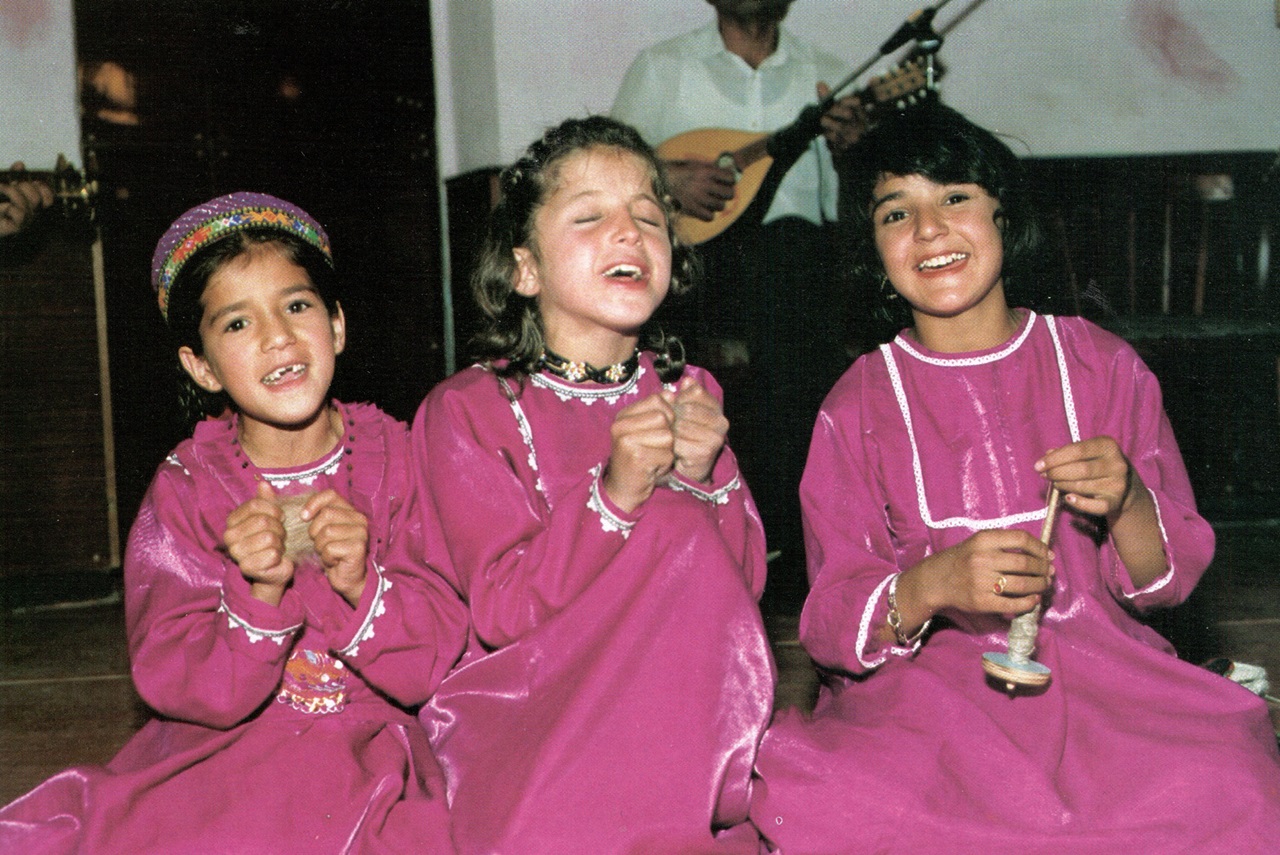
Joy in the faces of Ismaili children during Mawlana Hazar Imam His Highness the Aga Khan’s visit to Gorno-Badakhshan Autonomous Province in May 1995. Photograph:Print edition, The Ismaili, Mawlana Hazar Imam’s Visit to Central Asia, 22-31 May 1995.
In a stunning setting, surrounded by the Pamirs, the Aga Khan said:
“The Qur’an refers very often to nature as a reflection of Allah’s power of creation, and it says, look at the mountains, the rivers, the trees, the flowers, as evidence of Allah’s love for the people whom He has created. Today, I look at the environment and I say to you, I believe Allah is smiling upon you, and may His smile always be upon you” — His Highness Prince Karim Aga Khan, Gorno Badakhshan (Tajikistan), May 27, 1995.
Story continues below
Mawlana Hazar Imam, His Highness the Aga Khan, addresses his followers in a mountainous setting during his visit to Gorno-Badakhshan Autonomous Province in May 1995. Photograph: Print edition, The Ismaili, Mawlana Hazar Imam’s Visit to Central Asia, 22-31 May 1995.
The Aga Khan’s love for his followers, whom he addresses as “My Beloved Spiritual Children,” is unwavering. He has said, “No mountains, no river, no desert can separate the Imam from his murids” (2008, Paris), and “You must remember that Imam loves you more, much more than you can ever love him, and you must be strong in this knowledge” (1964, Karachi).
Story continues below
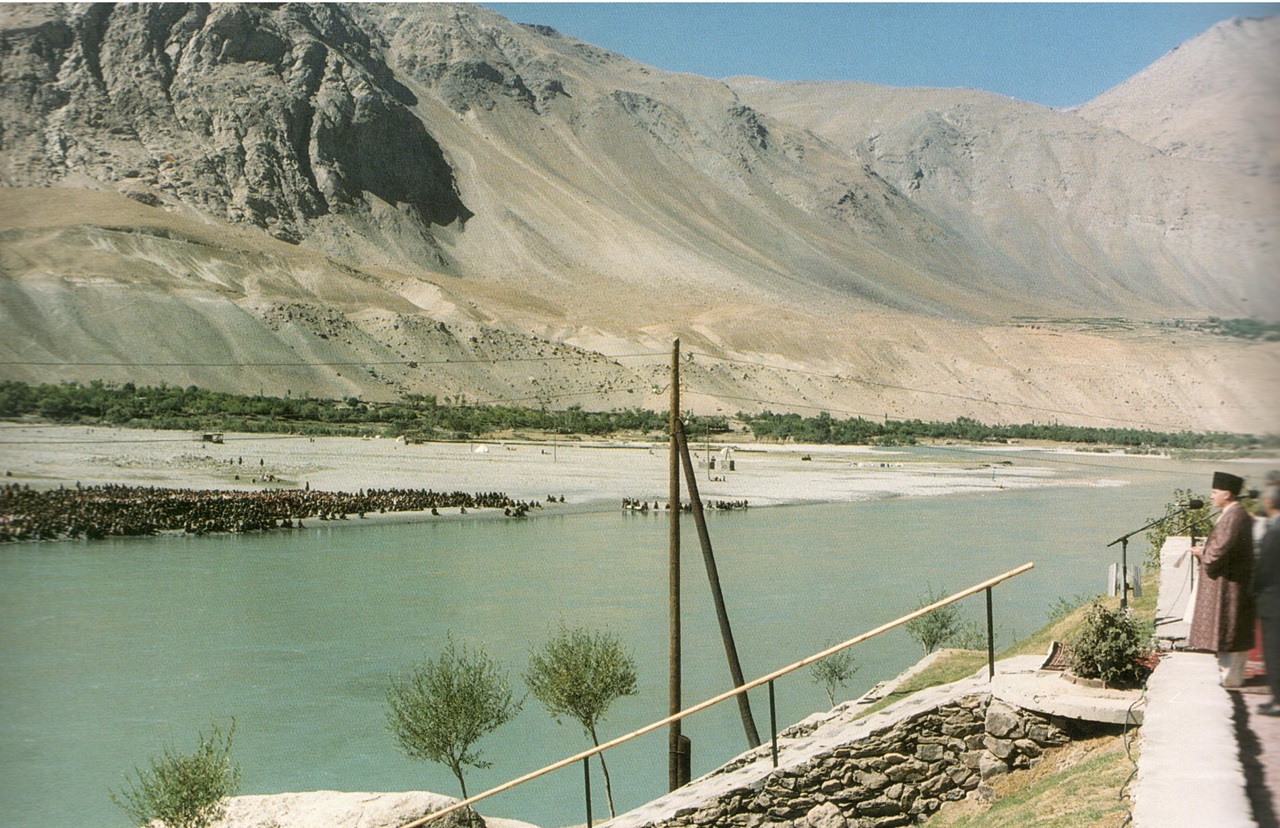
Mawlana Hazar Imam, His Highness the Aga Khan, addresses his followers in Afghanistan gathered across the Panj River from the Tajikistan side during his visit to Gorno-Badakhshan Autonomous Province in September 1998. Photograph: Print edition, The Ismaili, Realising the Social Conscience of Islam, December 1998.
~~~~~~
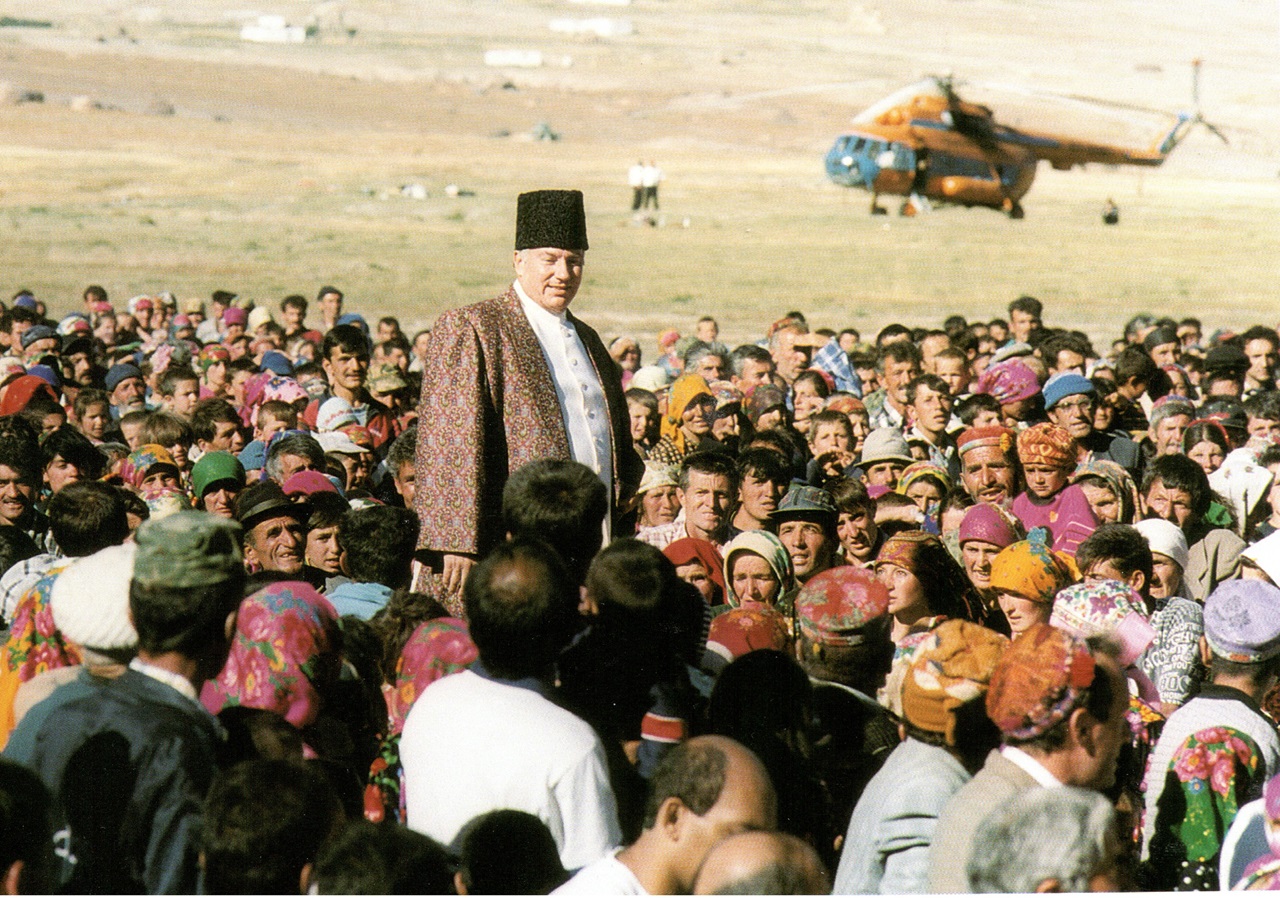
Mawlana Hazar Imam, His Highness the Aga Khan, walks through his followers during his visit to Gorno-Badakhshan Autonomous Province in September 1998. Photograph: Print edition, The Ismaili, Realizing the Social Conscience of Islam, December 1998.
On this auspicious 88th birthday of Mawlana Hazar Imam, let every Ismaili be “strong in this knowledge,” considering that each Ismaili has been designated as his dai (missionary). This role empowers us and entrusts us with great responsibility, inspiring us to carry out our duties with utmost dedication. We understand that this role comes with challenges, but these challenges make our commitment and perseverance all the more critical. Mawlana Hazar Imam bestowed this honorific historic title of the dai during his year-long visits to Ismailis worldwide during his Diamond Jubilee, which commenced on July 11, 2017.
As we bring you these delightful photographs of Mawlana Hazar Imam in mountainous settings, along with the joyous faces of his spiritual children, we convey Salgirah Mubarak to Ismailis worldwide, friends of the Ismailis, and all our readers. We wish everyone happiness, success, and fulfilment of all your wishes.
Story continues below
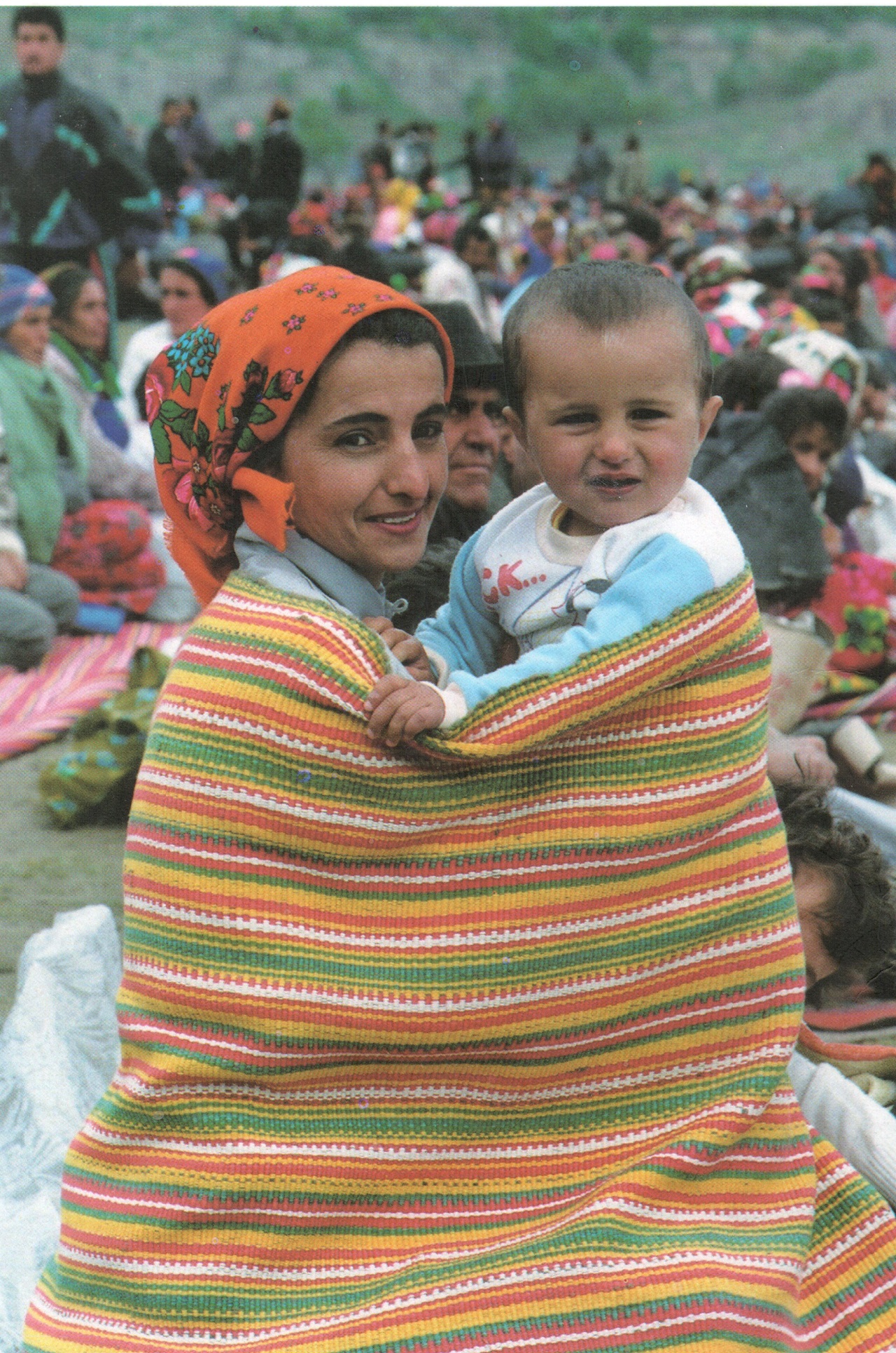
A mother with a child shows joy during Mawlana Hazar Imam His Highness the Aga Khan’s visit to Gorno-Badakhshan Autonomous Province in May 1995. Photograph: Print edition, The Ismaili, Mawlana Hazar Imam’s Visit to Central Asia, 22-31 May 1995.
~~~~~~
Mawlana Hazar Imam, His Highness the Aga Khan, addresses his followers amid stunning Pamir Mountain scenery during his visit to Gorno-Bakakhshan Autonomous Province in September 1998. Photograph: Print edition, The Ismaili, Realizing the Social Conscience of Islam, December 1998.
~~~~~~
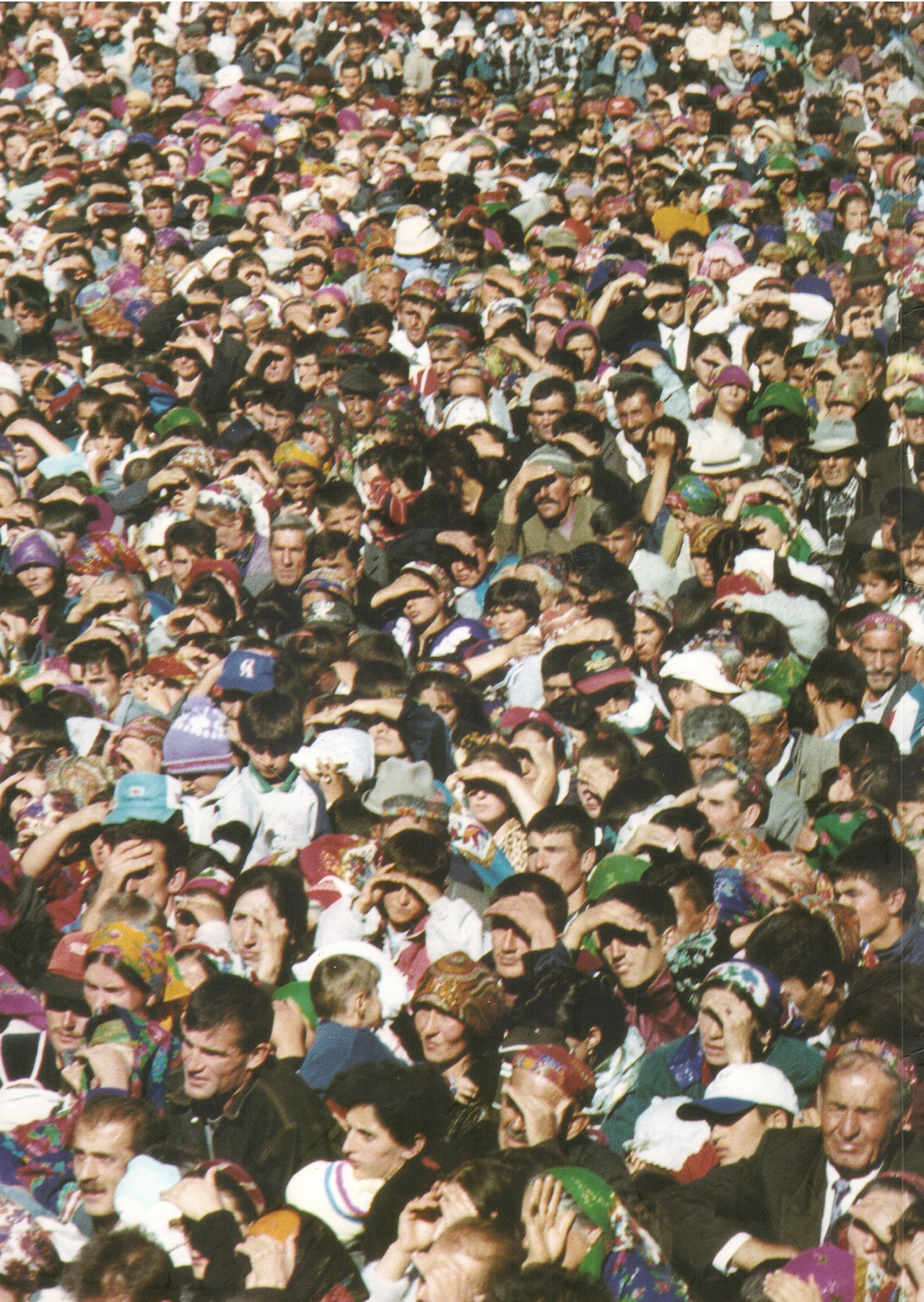
A view of the crowd as Mawlana Hazar Imam, His Highness the Aga Khan, visits his followers in Gorno-Badakhshan Autonomous Province in September 1998. Photograph: Print edition, The Ismaili, Realizing the Social Conscience of Islam, December 1998.
~~~~~~
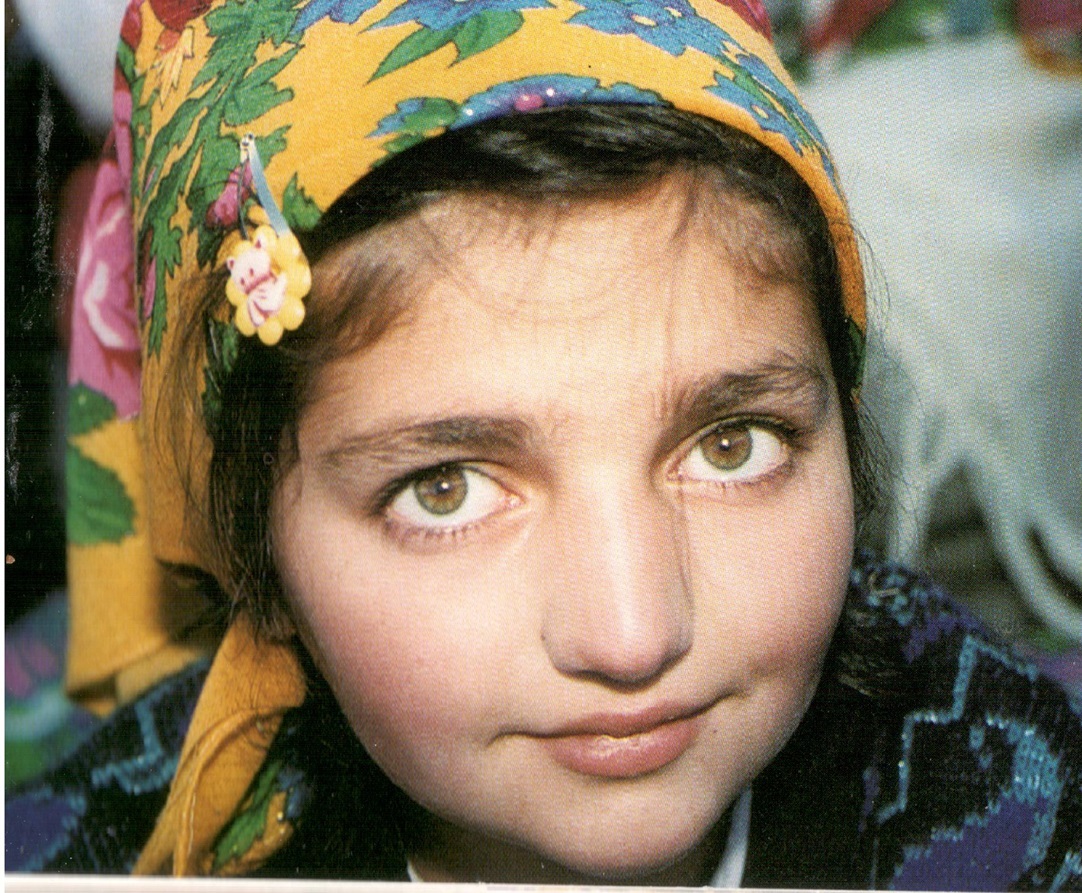
The joyful face of a young murid (follower) of Mawlana Hazar Imam His Highness the Aga Khan, during his visit to Gorno-Badakhshan Autonomous Province in September 1998. Photograph: Print edition, The Ismaili, Realising the Social Conscience of Islam, December 1998.
_______________
International Mountain Day: Champions of the Golden Valley
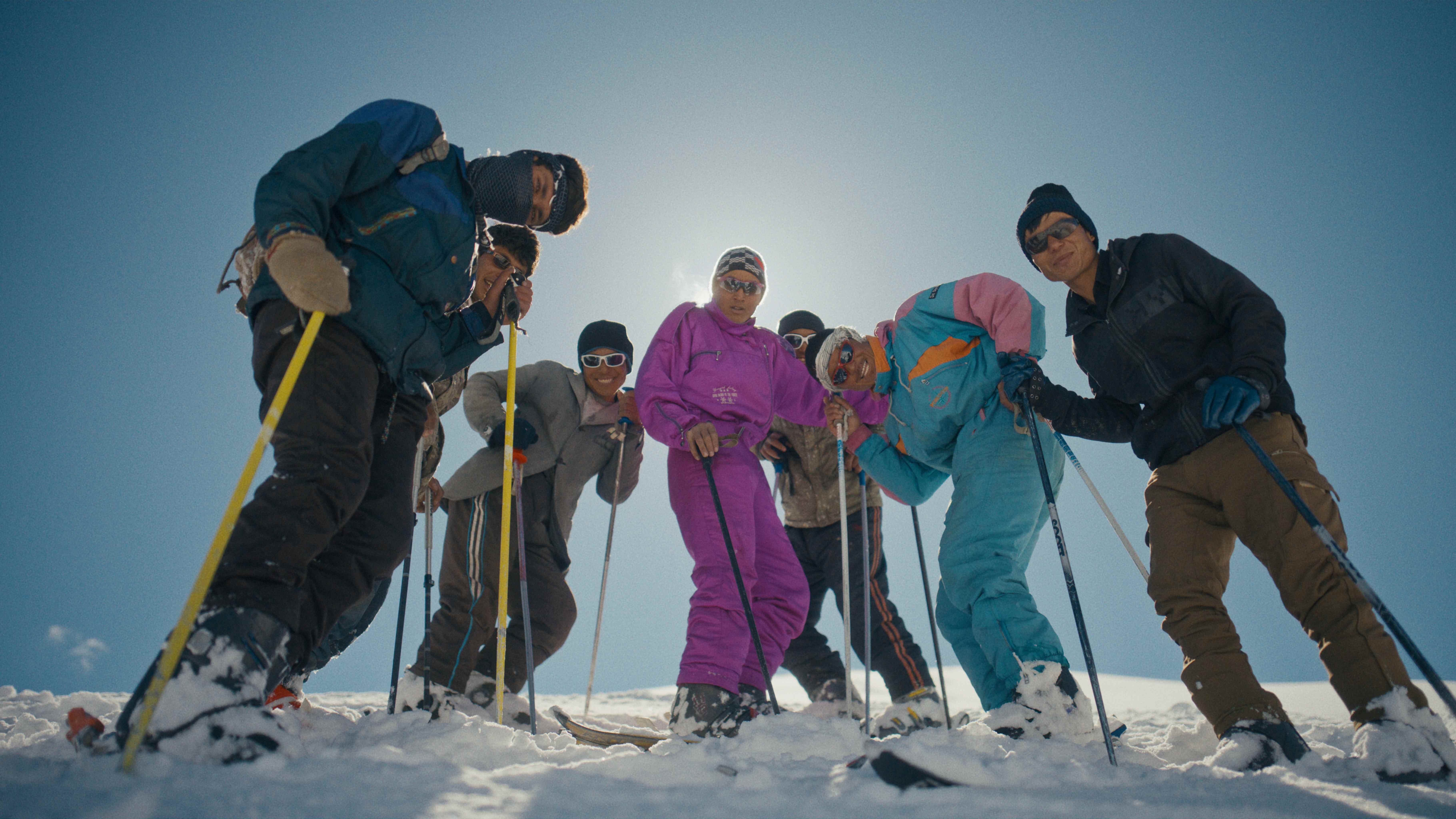
Champions of the Golden Valley. Photograph: Banff Centre.
And, on this Happy Mountain Day, I venture to Canmore, Alberta, a short distance from Calgary, to experience the Banff Film Festival’s 2024 Award-Winning Film Champions of the Golden Valley, which won the Grand Prize. Against the backdrop of Afghanistan’s remote mountains, a newfound passion for skiing brings together young athletes from rival villages. With only makeshift wooden skis and an unyielding determination, their devoted coach, Alishah Farhang, orchestrates a ski race that fosters unity and serves as a beacon of hope, transcending the hardships surrounding them. I can’t wait to share my review of this film with you all soon.
[This developing story will be updated as new information emerges about the situation of the Ismaili Muslim community in Syria. Over the past 24 hours, we have included briefs with links to full articles from The Guardian newspaper, a trusted source in London, and the Khaama Press News Agency, one of the leading news outlets reporting from Afghanistan on a 24/7 basis. This post was last updated on Tuesday, December 10, 2024, at 14:40 EST, with a Tweet from Khaama’s “X” page — Ed.]
The entire world has been stunned by the rapid political change that has taken place in Syria during the past few days. The Government of Bashar al-Assad, who has fled to Russia, was overpowered by a united assault that began with the capture of Aleppo in Syria’s North West twelve days ago. An expert I was listening to the past week predicted that the Assad regime would continue to hold power in Damascus for anywhere from a few weeks to a few months. The person was wrong, just as many were wrong about how long it would take the Taliban to gain total control in Afghanistan in 2021, a situation that bears similarity to what has transpired in Syria.
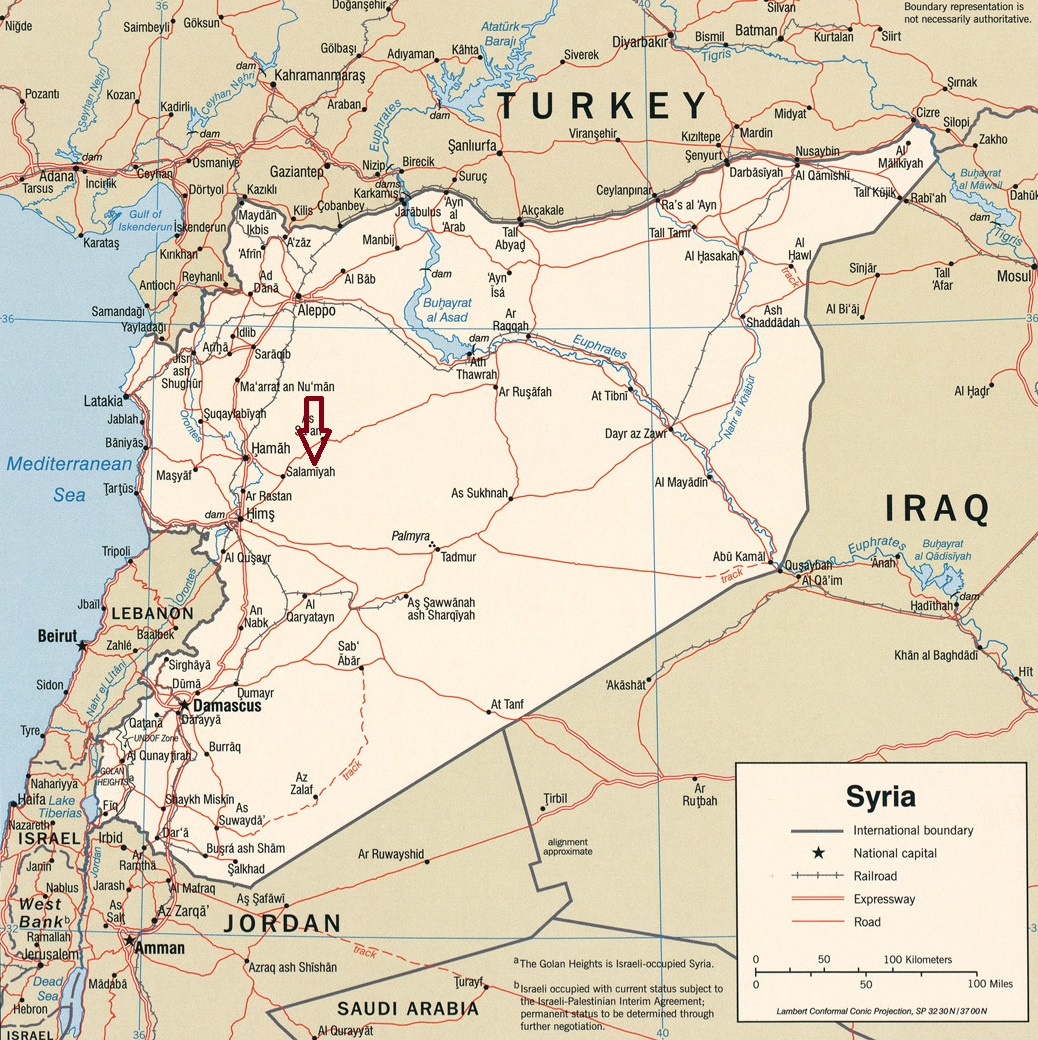
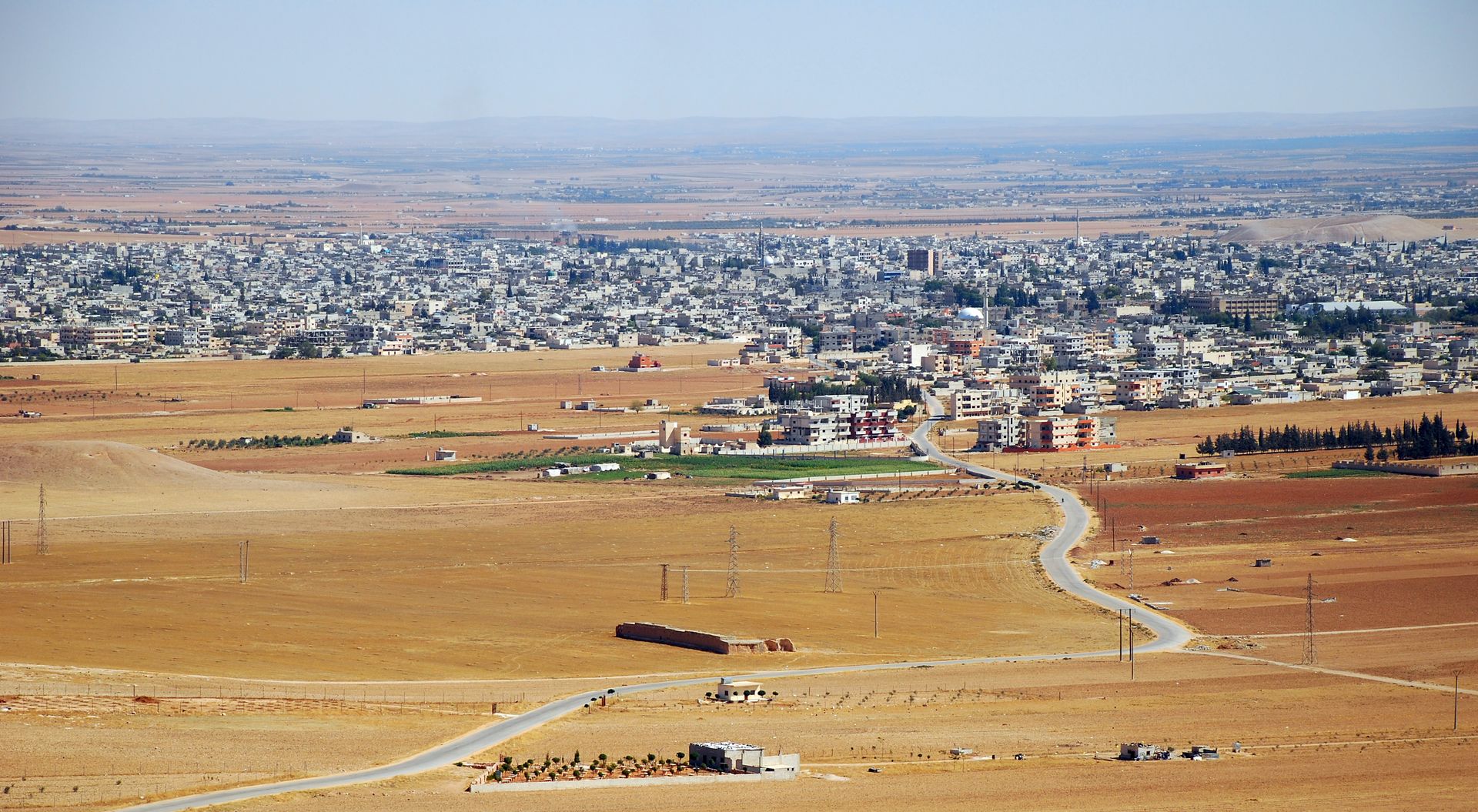
With a sizeable number of Ismailis living in Syria, primarily in Salamiyah city but also in other parts of the country, the global Ismaili community has been concerned about their safety and well-being. The Syrian Jamat is historically the oldest Ismaili Jamat in the world. The Jamat’s settlement in Syria began centuries ago, even before the Fatimid era.
Over the past week, after the insurgents assumed control of Allepo and towns and cities to the south, an online story in SYRIAHR alerted me about the situation in Salamiyah. The report said that Groups of Hayyaat Tahrir Al-Sham (HTS) entered Salamiyah city east of Hama without fighting, “where an agreement was reached with the city’s elders and representatives of the Ismaili Council.”
An official announcement from the Ismaili Jamati Institutions — see full announcement below — released on December 8 has relieved me. This announcement is of the utmost importance concerning the Ismaili situation in Syria.
However, the long-term situation in Syria remains both intriguing and concerning. A statement from HTS suggests that the era of sectarianism and tyranny has ended, and all Syrians can look forward to living in peace under proper institutional structures — watch the interview on CNN before the fall of Damascus. The interviewee, forty-two-year-old HTS leader Abu Mohammed al-Golani — real name Ahmed al-Sharaa — who spearheaded the insurgency that toppled the Syrian Government and deposed Assad with lightning speed, says he embraces pluralism and religious tolerance, offering a potential beacon of hope for the war-torn nation and a promising path towards peace.
For instance, the London Guardian reports that when Aleppo was captured, al-Golani’s HTS soldiers went door to door to reassure Christian residents they would not be harmed. They also sent a message to Kurds saying, “Diversity is a strength which we are proud of.” The Guardian also mentions that al-Golani himself is reported to have led diplomatic efforts “to win over Ismaili Shia leaders and so secure key towns for the rebels without loss.” A more detailed report about the agreement and other pertinent information appears in Afghanistan’s Khaama Press News Agency under the heading Ismaili Leadership and New Syrian Authorities Reach Agreement on Community Safet (see related Tweet, below).
According to an Associated Press piece published in the Christian Science Monitor, al-Golani, a former al-Qaeda command who cut ties with the group, is poised to chart the country’s future.
The official announcement made by the UK Aga Khan Council reads:
“The National Council wishes to inform the Jamat that the evolving situation in Syria is being monitored closely by Mawlana Hazar Imam [His Highness the Aga Khan] and the leaders of the Jamat on a daily basis.
“The safety and security of the Jamat around the world remains Mawlana Hazar Imam’s highest priority. With regard to Syria, the Jamat is safe, and our institutions are providing humanitarian support to families that require assistance. The Jamati and AKDN leadership are taking all possible steps to ensure the continued safety and security of the Jamat.
“The Jamat is requested to remain calm and united, and refrain from taking a decision in haste and cooperate with the Jamati leadership.
“Members of the Jamat have inquired about how to contribute to the humanitarian assistance effort. They are requested to contact Focus Humanitarian Assistance or the National Council.”
_______________
The announcement is reassuring for all of us outside Syria. I would like to note that the Focus Humanitarian desk is open in Jamatkhanas across Canada.
Mawlana Hazar Imam has often expressed his priorities for the Jamat. In an interview with Politique International, he said, “[The Imam’s] first concern is for the security of his followers; his second is for their freedom to practice their religion; his third is for their quality of life, as I have just mentioned. I repeat, the Imamat is an institution whose two-fold mission is to guarantee the quality of life and to interpret the faith.”
Mawlana Hazar Imam, addressing his Ismaili Muslim followers as well as non-Ismailis during his Golden Jubilee visit to Salamieh and Al-Khawabi on August 26-27, 2008, said:
“To all my spiritual children who are present here today, and to your families, wherever they may be, I give my most affectionate blessings for baraka and the resolution of whatever difficulties you may be facing. My brothers and sisters in Islam and other faiths should be assured that my deep and heartfelt prayers are with you for your peace, your unity, and for your happiness” (pages 136-138, Farman Mubarak of Mawlana Hazar Imam Shah Karim Al Hussaini Aga Khan, Golden Jubilee: 2007-2008, published by Islamic Publications Limited, 2020).
I wish to reiterate that the Imam’s blessings and prayers are for all times. Let everyone in Syria and around the world take his message to our hearts.
We wish all Syrians a peaceful future after years of turmoil. We hope all different groups will unite and seek to build a prosperous future.
Date posted: December 8, 2024. Last updated: December 10, 2024.
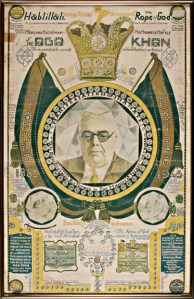
Major Lakhpati, a volunteer, poet, and writer, had been in poor health for many years. However, he clung to one cherished wish: to live to see the Diamond Jubilee of his beloved Imam, Mawlana Sultan Mahomed Shah, His Highness the Aga Khan III. This Jubilee held a profound significance in the Major’s life, and he was determined to be a part of it. His recovery was a testament to his unwavering spirit, allowing him to celebrate the Jubilee and travel to Dar es Salaam, Tanganyika (now Tanzania), for the grand celebration in March 1946.
A Diamond Jubilee artwork of His Highness the Aga Khan III by Major Lakhpati
As an artist, Lakhpati’s talent and dedication to the Imam were evident in his incredible paintings for the Imam’s Golden and Diamond Jubilees. I acquired a fine copy of Lakhpati’s Diamond Jubilee print from Ottawa’s Abdulmalek Thawer and posted it on this website after professionally scanning it (please click HERE for the story).
The Ismaili, the official website of the Ismaili community, has just published a short but inspiring YouTube video highlighting the life of Major Lakhpati, a figure of immense significance who served the Imam and the Jamat for decades. His literary, poetic and artistic contributions are genuinely inspiring, as showcased in the video. I urge a passionate research student or scholar in Ismaili history to undertake to study the Major’s life and works and publish a comprehensive biography of one of the most extraordinary Ismaili volunteers of the 20th century. Watch the following video to learn more about this remarkable individual and feel the responsibility and urgency to contribute to his legacy.
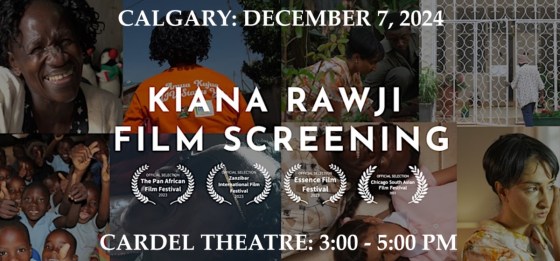
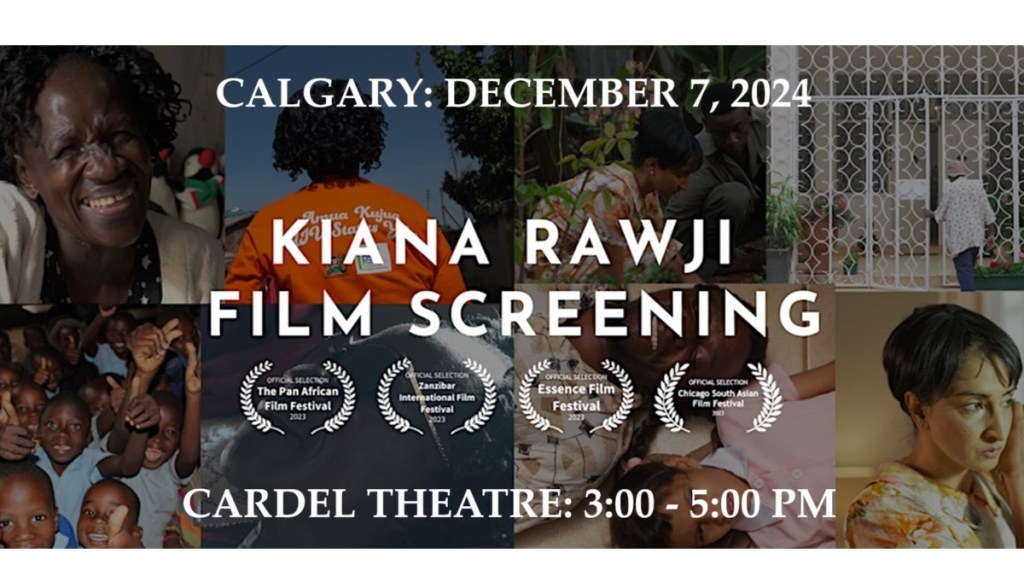
Award-winning filmmaker Kiana Rawji has returned to her hometown to screen her two highly acclaimed films at Calgary’s Cardel Theatre at 180 Quarry Park Blvd on December 7 from 3:00 to 5:00 PM. A few tickets are left, and they can be secured at https://rawjifilms.eventbrite.com.
The movies “Inside Job” and “Mama of Manyatta,” both shot in Kenya, mark an essential milestone in Kiana’s career as a passionate filmmaker. This is a unique opportunity to witness Kiana’s exceptional career in filmmaking (read our earlier post HERE). The screening will be followed by an engaging Q&A session with the filmmaker herself, making this event a significant highlight in Calgary’s 2024 calendar.
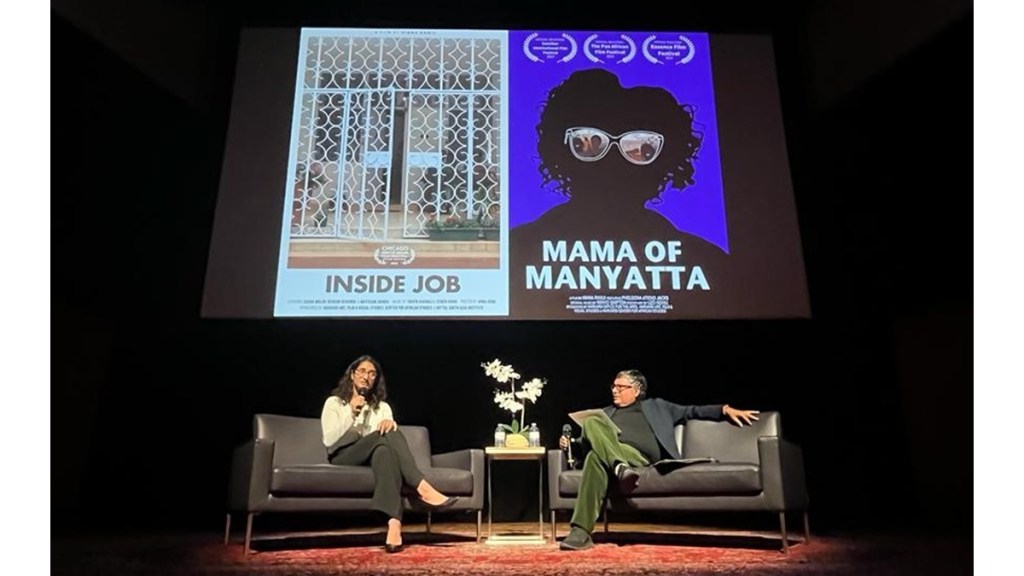
Kiana Rawji engages with the audience in the Nanji Family Foundation Auditorium at the Aga Khan Museum, Toronto, in October 2023.
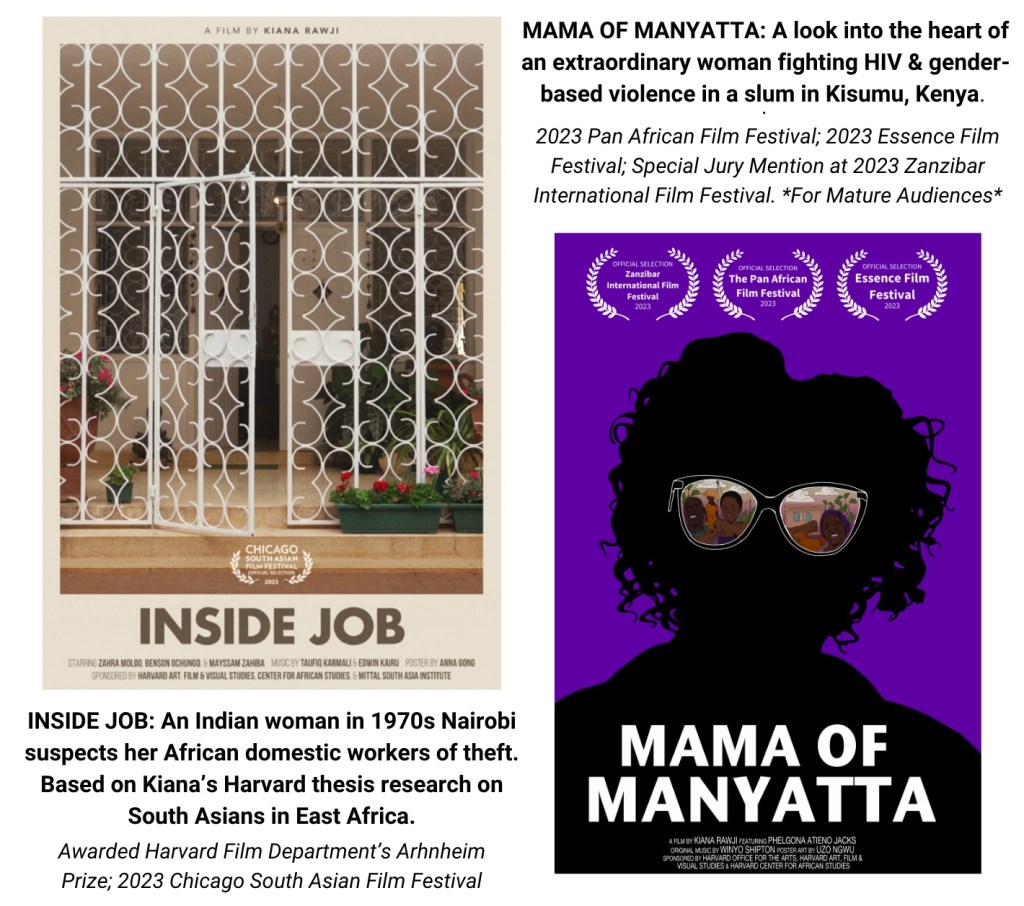
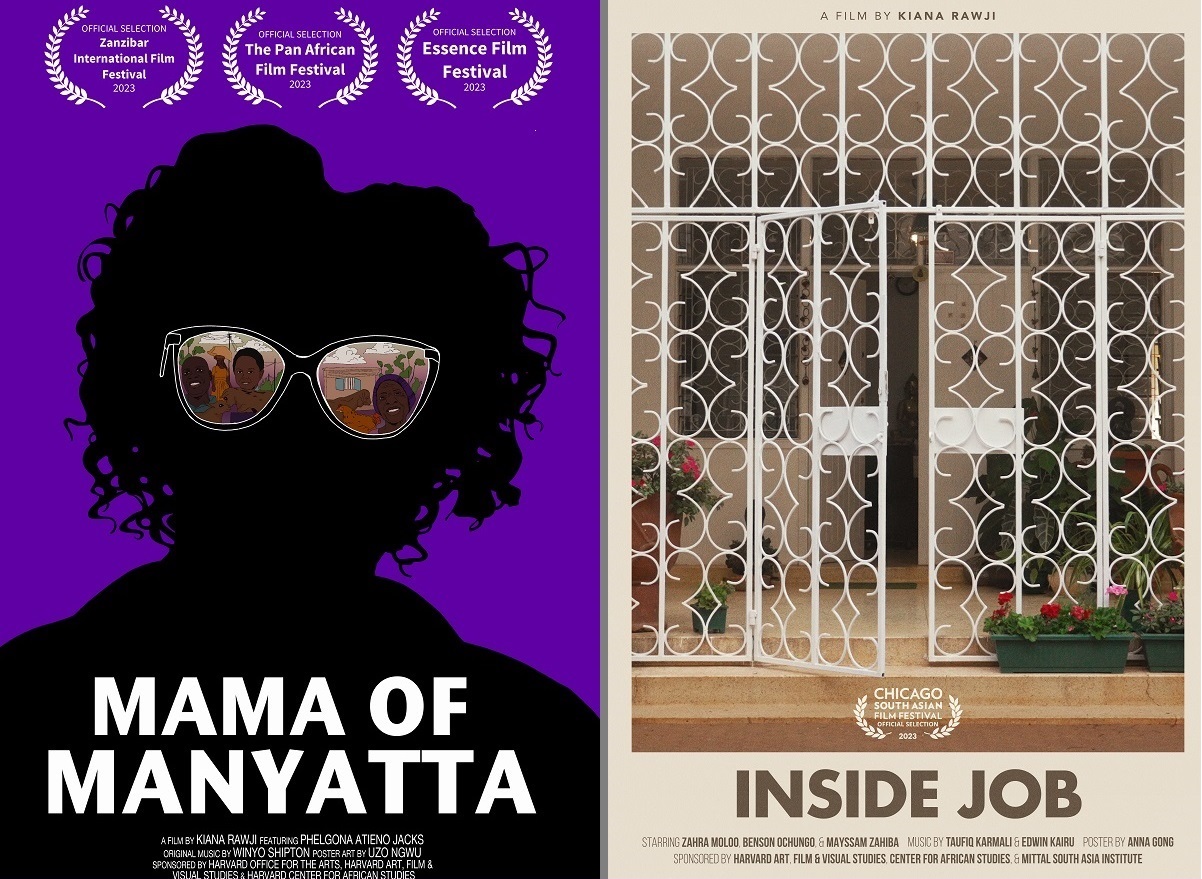
MAMA OF MANYATTA is a touching portrait of a woman fighting HIV and gender-based violence in a Kenyan slum. The film has been widely acclaimed, screening at the 2023 Pan African Film Festival, Essence Film Festival & Zanzibar International Film Festival, and receiving a Special Jury Mention.
INSIDE JOB is a fictional reconstruction of the lives of South Asians in Kenya in the 1970s. The film received the Harvard Film Department’s Arnheim Prize for most outstanding interdisciplinary project & premiered at the 2023 Chicago South Asian Film Festival.
The two films made their Canadian debut in October 2023 in the Nanji Family Foundation Auditorium at the Aga Khan Museum in Toronto to a packed and appreciative audience.
Event Summary and Tickets
What: Kiana Rawji Film Screening — Inside Job and Mama of Manyatta
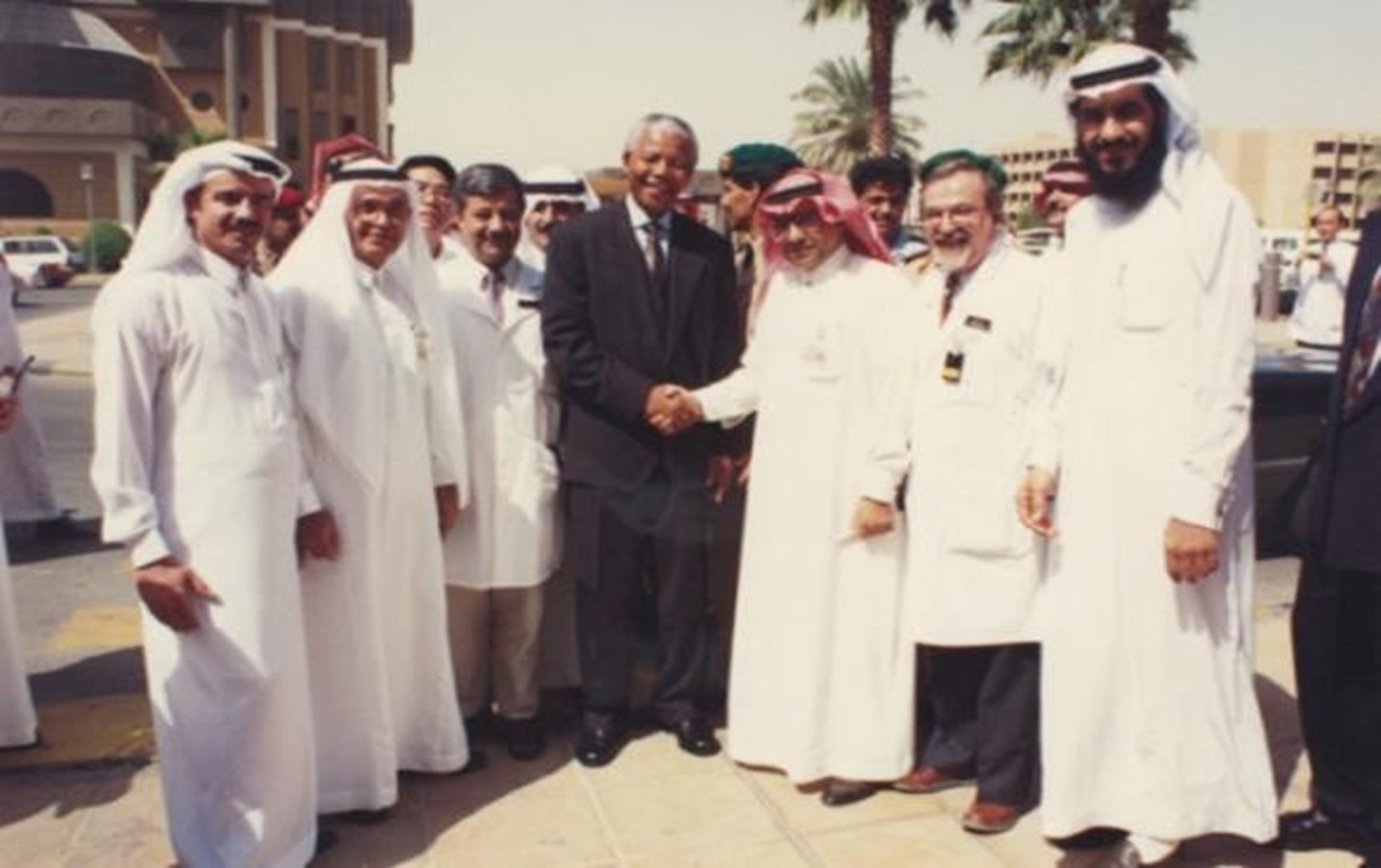
“During Nelson Mandela’s visit to the King Faisal Hospital in Riyadh, Saudi Arabia, one thing became very obvious: He chose first to shake hands with the cleaners (who were preparing for his visit) and the waiters (at the dinner reception in his honour) instead of the Royalty or high-ranking administrative personalities” — Mohamed Manji.
December 5, 2024, will mark the 11th anniversary of Nelson Rolihlahla Mandela’s death, and I would like to take this occasion to record my meeting with him in November 1994.
First, I would like to underline the pivotal role Canada played in securing the release of Nelson Mandela, who had spent 27 years in prison, including 18 years at Robben Island. His release marked the definitive end of the long, dark era of apartheid in South Africa. The former Prime Minister of Canada, Brian Mulroney (d. February 2024), vividly remembered his first phone call with Nelson Mandela on February 12, 1990, a day after his release from prison. Mandela told him:
“I am honoured by your call, as the attitude of Canada is well-known. We regard you as one of our great friends because of the solid support we have received from you and Canada over the years. When I was in jail, having friends like you in Canada gave me more joy and support than I can say. There could have been no greater tangible evidence of friendship than your concern for me and my family and the strong action you and the Government of Canada took while I was in jail to help us defend the interests of the new South Africa we want to build.”
Just four months after his release from prison, Mandela made his first trip to Canada in 1990, a journey that was not just a visit but a testament to the respect and admiration he commanded. He became the last foreign dignitary who wasn’t a head of state to address Parliament, a unique honour that underscored his global influence.
Mandela’s return to Canada in 1998 as President of the Republic of South Africa, again speaking to Parliament, further solidified his status as a revered leader.
Story continues below
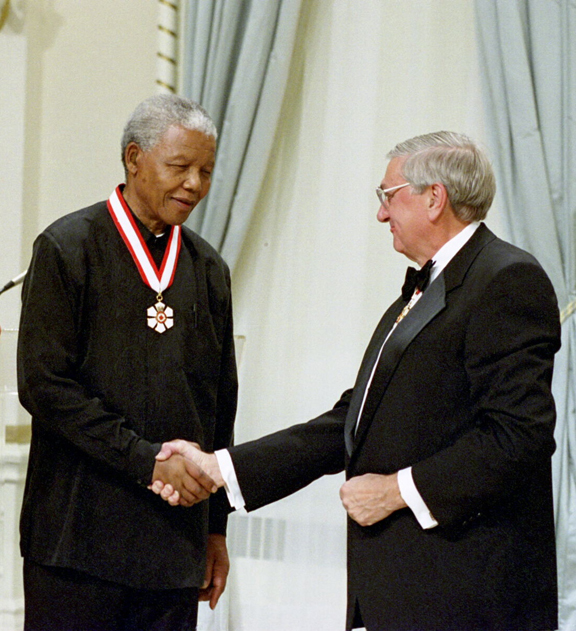
Nelson Mandela was invested as an Honorary Companion of the Order of Canada by the Late Right Honourable Roméo LeBlanc, 25th Governor General of Canada, on September 24, 1998. Photograph: Canadian Heritage/Government of Canada website.
During the visit he was invested as an Honorary Companion of the Order of Canada by the Late Right Honourable Roméo LeBlanc, 25th Governor General of Canada, on September 24, 1998. Mr. Mandela’s citation read:
“He is a universal symbol of triumph over oppression who has inspired people everywhere to work peacefully to end intolerance and injustice. A towering figure in the transition from apartheid to democracy in South Africa, he has emerged as one of this century’s greatest statesmen and humanitarians, recognized the world over for his dignity, moral strength, and integrity. His lifelong struggle for freedom, justice, and equality guarantee his presence in the history books of generations to come.”
Mandela stepped down as President of the African National Congress (ANC) in 1997 and gave his final speech to the South African Parliament on March 29, 1999, when it adjourned before the 1999 general election. He retired as President in June 1999.
Story continues below
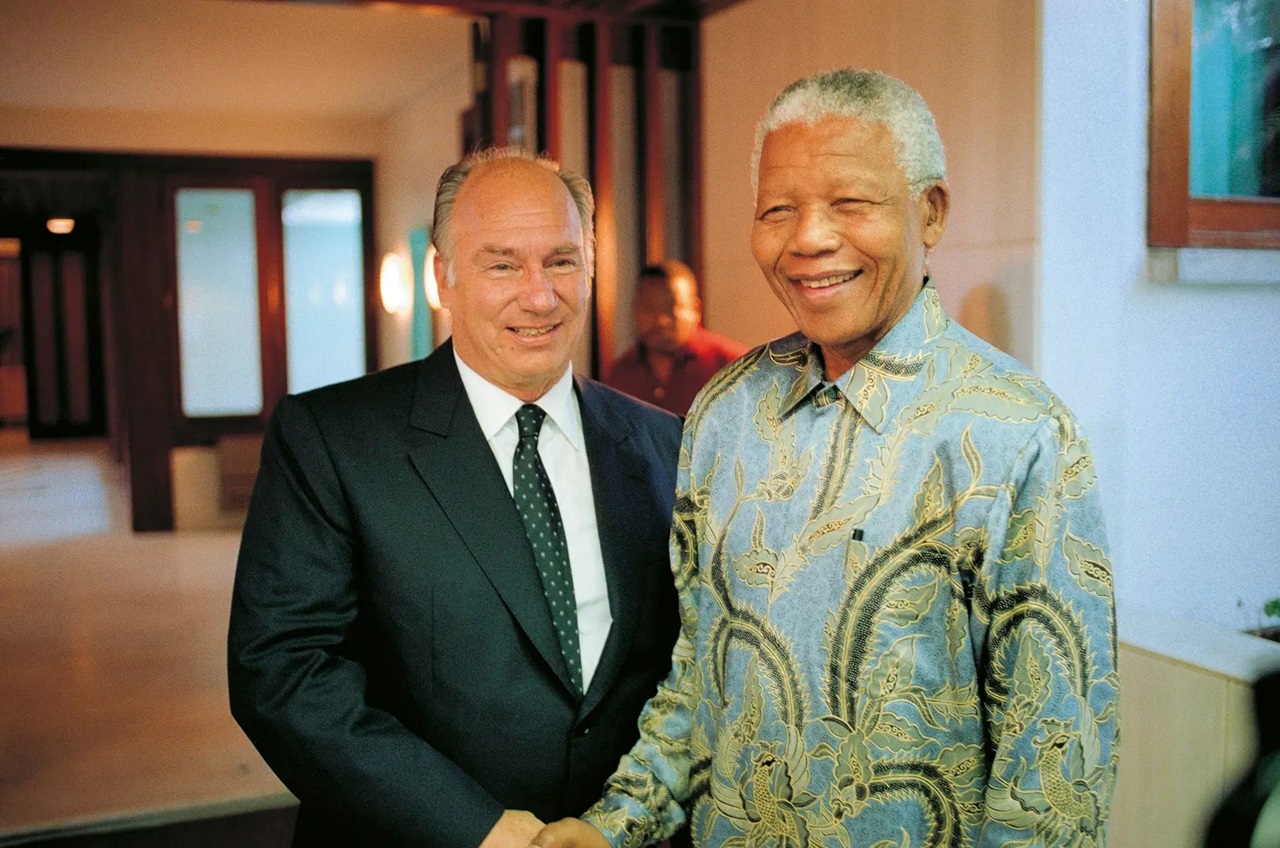
Mawlana Hazar Imam, His Highness the Aga Khan, met with South African President Nelson Mandela on August 11, 1998, in Maputo, Mozambique. Photograph: AKDN/Gary Otte.
On November 17, 2001, Nelson Mandela began a three-day visit to Canada by attending a ceremony to rename a Toronto public school after him. He and his wife, Graça Machel, later received honorary degrees from Toronto’s Ryerson University. On November 19, Canada made Nelson Mandela an honorary citizen. In the following years, he was joined as Canada’s Honorary citizen by Tenzin Gyatso, the 14th Dalai Lama, and His Highness the Aga Khan, 49th Imam of the Shia Ismaili Muslims.
Nelson Mandela died on December 5, 2013, at 95.
With tributes pouring in from around the world, then-Prime Minister Stephen Harper of Canada issued the following statement:
“With the death of Nelson Mandela, the world has lost one of its great moral leaders and statesmen. Mr. Mandela was imprisoned for 27 years by the former Government of South Africa, for his part in the struggle that would ultimately end the system of apartheid. Despite his long years of captivity, Mr. Mandela left prison with a heart closed to calls for a settling of scores. Instead, he was filled by a longing for truth and reconciliation and for an understanding between all peoples. He demonstrated that the only path forward for the nation was to reject the appeal of bitterness. His forbearance was legendary: his magnanimity spared all South Africans incalculable suffering.”
“Even after his death, Nelson Mandela has done what no one else seemingly could — bring Canada’s past and present political leadership together, in one space, for a single cause — if only for a few hours.
“Prime Minister Stephen Harper and three of his predecessors — Jean Chrétien, Brian Mulroney and Kim Campbell — sat in close quarters as they winged their way to South Africa in the elaborate front cabin of a government Airbus” [to attend Mandela’s memorial.]
On Thursday, July 17, 2014, Ottawa’s then Mayor, Jim Watson, hosted over two hundred specially invited guests at City Hall at the launch of the Nelson Mandela Square. Appropriately located across from the Human Rights monument on Elgin Street, Nelson Mandela Square stands as a testimony to the resilience of the human spirit in the face of adversity, a legacy of immense magnitude by the former President of South Africa.
My Handshake with Nelson Mandela
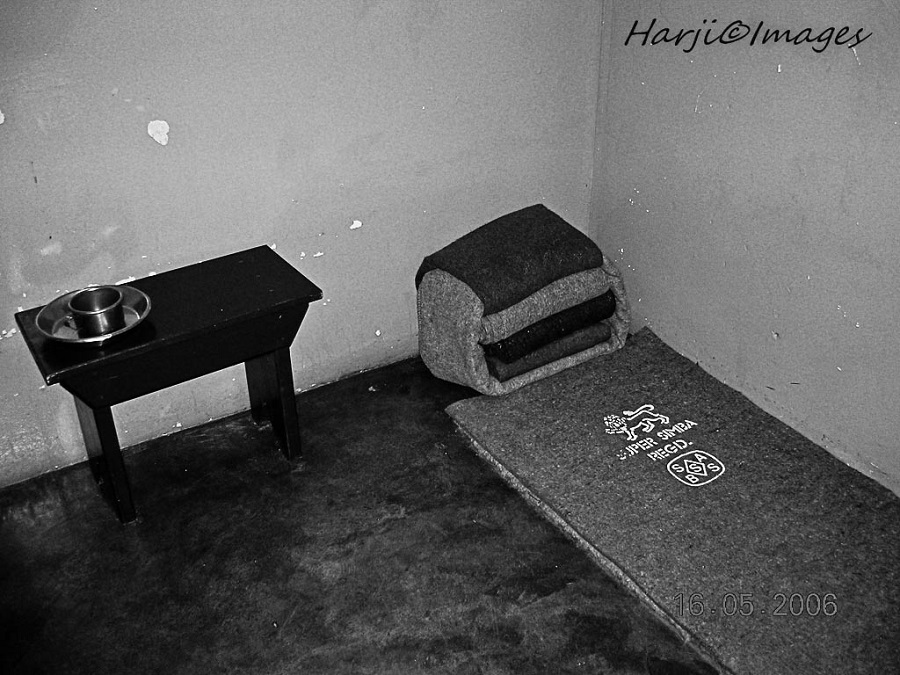
Mandela’s 8-foot square cell at Robben Island still retains the thin blanket which served as his bed. A small window overlooks the courtyard, while a makeshift bed with three grey blankets atop a sisal mat provide scant protection from the cold, bare cement floor. “I could walk the length of my cell in three paces. When I lay down, I could feel the wall with my feet, and my head grazed the concrete on the other side,” wrote Mandela. On the left is a tiny table with a metal cup and plate, and a dented ablution tin (not shown) that remains as it was decades ago. Photograph: Muslim Harji. Please see Harji’s photo piece about his visit to Robben Island HERE.
The late President was just seven months into his Presidency when I was privileged and humbled to shake unique HANDS, hands which crushed rocks in a prison quarry on an island called Robben Island in South Africa, where he was held as a prisoner for 18 years. The Hands were big, like the person himself. The handshake was firm but very comforting like a father shaking his child’s hands. These hands were of NELSON MANDELA, a prisoner who became the President of his Country, South Africa. It did not stop there, as he became a person who ended up belonging to the World.
I was working as a Consultant Radiation Oncologist at King Faisal Specialist Hospital & Research Center in Riyadh, Saudi Arabia, at that time. I was with the receiving group from King Faisal Specialist Hospital & Research Center. Upon his release from the prison. Mr Mandela visited Saudi Arabia as part of a tour of the countries in Africa and abroad.
Story continues below
President Nelson Mandela visited Saudi Arabia’s King Faisal Specialist Hospital in Riyadh in 1994. Dr Mohamed Manji is pictured 2nd from right. Photograph: Mohamed Manji collection.
During this visit to the King Faisal Hospital in Riyadh, Saudi Arabia, one thing became very obvious: He chose first to shake hands with the cleaners (who were preparing for his visit) and the waiters (at the dinner reception in his honor) instead of the Royalty or high-ranking administrative personalities. Secondly, wherever he went, his presence brought “purity” and a sense of civility. It sure was a precious visit for me.
His death eleven years ago sure was a big loss for the world. May God Bless his memory and keep him in peace.
Date posted: December 1, 2024. Last updated: December 2, 2024 (added photographs/citations)
________________
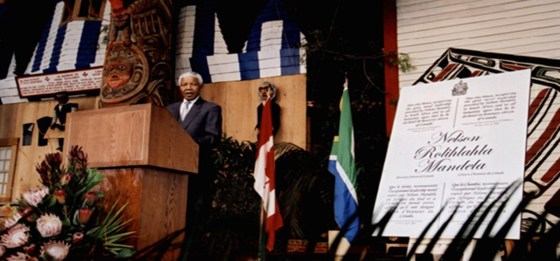
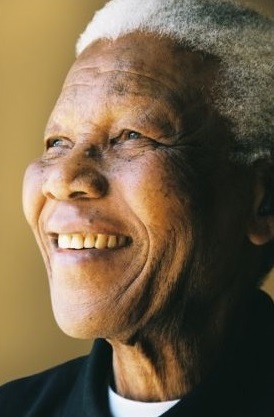
Featured image: The photograph at the top of the post is that of Nelson Mandela delivering a speech at a ceremony in 2001 at the Canadian Museum of Civilization (renamed the Canadian Museum of History in 2012), where he became an honorary citizen of Canada. Photograph: Canadian Heritage/Government of Canada website.
Dr. Mohamed Manji.
About the author: Dr. Mohamed Fazal Manji, MD, DMRT, DABRT, FRCPC, originally from Mbeya, Tanzania, is a cancer specialist. He is a Consultant Radiation Oncologist at BC Cancer Agency of British Columbia, Canada, and a Clinical Associate Professor at the University of British Columbia. Among his previous contributions to Simerg and Barakah are:
I am thrilled to inform Calgarians and readers across Alberta about an event we have all eagerly anticipated. Calgary’s own, the young award-winning filmmaker Kiana Rawji, has organized a showing of her highly acclaimed films, Mama of Manyatta and Inside Job, which made their Canadian debut to a packed audience at the Aga Khan Museum in Toronto on October 15, 2023.
Kiana Rawji
The excitement is palpable as these films, created by our very own Kiana, are set to grace our city on Saturday, December 7 at Calgary’s Cardel Theatre at 180 Quarry Park Blvd. The films mark an essential milestone in Kiana’s career as a passionate filmmaker and an exciting and unique moment in the city’s 2024 calendar.
Cardel Theatre is small and will fill up quickly, so get your tickets now at EVENTBRITE. Following the screening, Kiana will conduct an in-person Q&A.
~~~~~~
The Films
Kiana describes the making of the films in her insightful interview below.
~~~~~~
Profile: Kiana Rawji
Kiana Rawji (www.kianarawji.com) is an award-winning Calgarian filmmaker who graduated from Harvard College with a concentration in Film and History & Literature. As an Ismaili Muslim woman and daughter of East African Asian immigrants, she is drawn to stories around diasporas, pluralism, and social justice. Her TEDx talks on Islam and the Cosmopolitan Ethic have reached 150,000+ people worldwide.
Kiana’s 2021 documentary, LONG DISTANCE, about migrant workers at an Albertan meat plant, won the Grand Jury Prize for Best Alberta Short Film at the 2021 Calgary International Film Festival.
Her 2023 documentary, MAMA OF MANYATTA, has been widely acclaimed, screening at the 2023 Pan African Film Festival, Essence Film Festival & Zanzibar International Film Festival, and receiving a Special Jury Mention. This film follows an extraordinary woman fighting HIV & gender-based violence in a Kenyan slum.
Kiana’s 2023 fiction film, INSIDE JOB, has also garnered attention. It is about an Indian woman who suspects her African domestic workers of stealing jewelry in 1970s Nairobi. The film received the Harvard Film Department’s Arnheim Prize for most outstanding interdisciplinary project & premiered at the 2023 Chicago South Asian Film Festival.
In 2023, INSIDE JOB & MAMA OF MANYATTA screened at the Unseen Nairobi theater in Kenya and the Nanji Family Foundation Auditorium at the Aga Khan Museum in Toronto. The sold-out Aga Khan Museum screening opened with remarks by Dr. Zainub Verjee, an accomplished writer, critic, curator, artist, and appointee of the honourable Order of Canada. “When I previewed these works,” Dr. Verjee explained in her introductory remarks, “I was really moved by its poetry. But more importantly, what struck me was its feminist ethos.”
The screening was followed by a moderated Q&A in which Kiana discussed her films’ historical, political, and social-justice underpinnings and her aim to grapple with the consequences of power and inequality in our lives.
“The screening of Inside Job and Mama of Manyatta [at the Aga Khan Museum] on October 15, 2023, was an inspiring event which gave those in attendance an early peek into the work of a gifted filmmaker with tremendous promise who will undoubtedly continue to make a real and meaningful difference through her films” — excerpt from review by Ali N. Alibhai
In Calgary, on December 7th, in addition to sharing her impactful work — and creating awareness around the social issues with which she artistically and intellectually engages — Kiana will share insights into the rigorous research and cosmopolitan ethos that drive her work.
~~~~~~
Tickets
INSIDE JOB and MAMA OF MANYATTA will be screened at Calgary’s Cardel Theatre from 3-5pm on Saturday, December 7th, 2024.
The theatre is small and will fill up quickly, so get your tickets now at this Eventbrite link.
The screening will be followed by an in-person Q&A with Kiana.
~~~~~~~~~
Sponsor and Support Kiana Rawji
Kiana Rawji welcomes sponsors who wish to support the event in Calgary and her continued work in film. Please contact her or submit your sponsorship via an e-transfer to kianarawjifilms@gmail.com. This budding young artist will appreciate any contribution.
~~~~~~~~~
Interview
“I strive to tell stories that recognize diversity, complexity, and nuance, while connecting people through universal, human experiences. I’m especially interested in topics surrounding migration, diasporas, and identity” — Kiana Rawji
Kiana Rawji engages with the audience at the Aga Khan Museum, Toronto, in October 2023.
To acquaint our Calgary and Alberta readers with Kiana’s work and what inspires her, we present an abridged version of our interview before her films premiered in Toronto (click HERE for the full interview.)
Simerg: Can you tell us about how you got into filmmaking?
Kiana Rawji: Throughout high school, I had been interested in the intersection between storytelling and social justice, and I had pursued that through writing and public speaking. Filmmaking was always a hobby of mine growing up, but I never even considered it as an academic or career path. When I got to Harvard, I took a class called Social Justice and the Documentary Film in my first year and I was drawn to film as a provocative medium to raise awareness, evoke empathy, and elevate marginalized voices. After I made my first short film in that class, I never looked back.
At Harvard, I pursued a joint concentration because through History & Literature, I could learn about the very histories, in all their nuance and complexity, that would inform the stories I want to tell through film. Inside Job was a perfect example of that.
Simerg: Where did the idea for Inside Job come from?
Kiana: The film was largely based on my own family history — my parents and grandparents grew up in Nairobi, but before that my family traces back to Gujarat, India. I knew I wanted to make a film set in the 1970s Kenya, during a period of exacerbated racial tensions, due to the rise of ethnocentric nationalism in the region. I was particularly interested in the ways “Africans” and “Indians”/“Asians” perceived and interacted with each other. Since society was so racially segregated though, I realized the most common realm of interracial interaction and intimacy was in the household; virtually all brown households employed black domestic “servants”. What was all the more interesting was that, despite the deeply entrenched taboo that restricted social contact between brown women and black men in particular, these two types of people consistently interacted on a daily basis through the domestic labor relationship. I started to wonder how larger cultural norms and boundaries as well as political tensions were both reinforced and transcended in such close quarters.
Interview continues below
Kiana Rawji’s fs Mama of Manyatta and Inside Job will be screened at the Cardel Theatre in Calgary on Saturday, December 7, 2024. For tickets, click EVENTBRITE.
So I decided to explore that dynamic through oral history research. I interviewed many East African Asian women who lived through the 70s, as well as black African domestic workers. These interviews informed my whole script, from the subtleties of the dialogue to the core elements of the plot. I decided to focus on the theme of theft because of how much it came up in my interviews, and how symbolic it was; it was clear that both sides felt the other had stolen something from them. South Asians in East Africa felt that their own homes, along with properties, businesses, etc., were stolen from them when they were largely expelled from the region in the 70s. At the same time, native East Africans felt that “Asians” had stolen all the wealth and land in the first place. Both were stuck in a colonial system of inequality and a highly racialized socioeconomic hierarchy that lasted well beyond the colonial period.
____________
“It doesn’t take much to start. You don’t need fancy equipment or huge amounts of funding — all you need is a camera (which could be your phone) and a good story” — Kiana Rawji
____________
Simerg: What was most difficult about filming Inside Job?
Kiana: Well, the effort to make a period film in a foreign country in under a week with a budget under $10,000 was a huge challenge in itself. But I was able to find an incredible, talented cast and crew to achieve this and make it all easier.
The biggest challenge I faced was trying to get it right. I was recreating a history that I hadn’t lived through. I studied Swahili at Harvard and that helped but I don’t even speak or understand Gujarati. But the way I addressed that challenge was to consult a lot of experts.
____________
“When it comes to filmmaking around social issues, I’ve learned that stories of injustice and adversity are incomplete without the stories of resilience and endurance that invariably exist alongside them” — Kiana Rawji
____________
Simerg: As for your other film, Mama of Manyatta, how did that come about? How did you come to meet the subject, Phelgone Jacks?
Kiana: A few years before I made the film, my older sister Zahra had met Mama Phelgone through a Harvard College summer global health program that connected students with local NGOs and CBOs. Mama Phelgone worked on removing stigma around those affected by HIV/AIDS in Kisumu. After spending some time with Mama Phelgone, Zahra told me there was a story there that I had to tell. The next summer (summer 2019), when I went to Kisumu and met Phelgone myself, I instantly agreed that hers was a story that needed to be told. Her community-centered approach to creating impact was remarkable, and she, herself, was one of the most generous, compassionate, and dedicated people I have ever met.
Twenty years ago, Phelgone founded a community-based organization fighting HIV/AIDS and gender-based violence in the slum of Manyatta in Kisumu. She was a mother figure to Manyatta’s young and old; she built an Early Childhood Development Center outside her home, hosted safe-sex workshops for teenage girls, counseling sessions for women survivors, and more. Though she helped people work through immense trauma, what was most remarkable about Mama Phelgone (as she was affectionately known in Manyatta) was that she cultivated strength and joy wherever she went, through prayer, song, and dance. She was, in her own words, an “ambassador of hope.”
Rather than the all-too-common narrative of the suffering African poor, I wanted Mama of Manyatta to present a portrait of African empowerment and leadership.
Soon after I shot Mama of Manyatta in 2022, Mama Phelgone was diagnosed with metastatic cancer. She passed away in the middle of my post-production. Though I was deeply saddened, my drive to preserve a remarkable life and legacy only intensified. Through my film, I hope Phelgone’s story continues to inspire change.
____________
“I decided I didn’t want to be a filmmaker who hides behind her lens, observing, recording, then leaving. I want to be the kind who knows when to stop being a fly on the wall and start engaging — when to be a friend, not just a filmmaker. When artists get proximate to their subjects — which sometimes requires those precious interactions unmediated by a camera lens — opening their souls and immersing themselves in the lives of others, the product is more meaningful and fulfilling for everyone involved” — Kiana Rawji
____________
Simerg: What were some of the most memorable moments from the production/filming of Mama of Manyatta?
Kiana: There were so many — it was such a joy and a privilege to be included in the circle of warmth and love that Mama Phelgone radiated.
But there is one moment in particular that stuck with me. It was in the middle of a workshop on gender-based-violence; Phelgone was helping a group of women — survivors of sexual assault –prepare for upcoming post-election violence and the risk it posed to women in the community, including themselves. I remember that, when Phelgone sensed the air in the room growing heavy, she suggested a dance break.
And so they got up, they played music, they danced, they smiled, and they laughed.
Phelgone and the women beckoned for me to join them. But the filmmaker in me was so keen to capture every detail of this moment — the rhythmic body movements, the courageous smiles, the unbridled laughter. Something unexpected and beautiful could happen any second, and if my camera wasn’t rolling. But that day, I realized that sometimes you also miss things when the camera is rolling. After filming the women dancing for a few minutes, I decided to set down my camera and join them. They showed me some moves, I was awful, they laughed at me, Ilaughed at me, and it was wonderful. I went into that shoot believing in the power of the camera, but I came out of it having also learned the power of putting it down.
Simerg: What inspires you? What drives your creative process?
Kiana: My intersecting identities as a South Asian Muslim woman and child of immigrants from East Africa inform the stories I want — and need — to tell.I strive to tell stories that recognize diversity, complexity, and nuance, while connecting people through universal, human experiences. I’m especially interested in topics surrounding migration, diasporas, and identity.
My creative process is driven by compassion, curiosity and collaboration. It begins with passion and personal investment in a story, followed by detailed research and engagement with real people and real stories.
Simerg: What is your advice to aspiring filmmakers?
Kiana: It doesn’t take much to start. You don’t need fancy equipment or huge amounts of funding — all you need is a camera (which could be your phone) and a good story. There are so many resources online. I taught myself how to use film editing software and write film scripts on the Internet. It just takes initiative and passion, and if you have those two things, you’re off to the races. I always remember what my idol, Ava DuVernay, said once when giving advice to filmmakers starting out. She said something along the lines of ‘don’t wait for something precious.’ Just begin. It doesn’t need to be the perfect, most eye-grabbing, world-changing idea. Everything you make will help you learn, and you’ll only get better. Just begin by telling stories you care about.
~~~~~~~~~
Event Summary
What: Kiana Rawji Film Screening — Inside Job and Mama of Manyatta
Support and Sponsor Filmmaker: Kiana Rawji welcomes sponsors who wish to support the event in Calgary and her continued work in film. The young artist will appreciate any contribution. Please contact her or submit your sponsorship via an e-transfer to kianarawjifilms@gmail.com.
Date posted: November 26, 2024.
Correction: The featured image in the original version mistakenly highlighted November 7, 2024, as the event date. The image has been corrected to reflect the correct event date, December 7, 2024. The editor apologizes for the error.







 Simerg - Insights from Around the World