Stories of Ismaili Volunteers: At 85, Vancouver’s Rajabali Mecklai Wins Hearts by Serving the Community With Dedication and Warmth

Rajabali Mecklai served in numerous capacities as a volunteer both in Uganda and Canada for many years but he registered as a badged Ismaili volunteer over 30 years ago. His late wife, Maleksultan, was a motivating force of his volunteering activities. She passed away in Vancouver’s downtown Drake Jamatkhana at the call of prayer on Friday, August 16 1996. Rajabali’s deep affection and closeness to Maleksultan is shown by the love letters he wrote in her memory, many of which he shares with his friends and youth of the Jamat….Read more of this first piece in Simerg’s new series

Please click for article on Rajabali Mecklai, the first piece in Simerg's special series on Ismaili Volunteers from Around the World. Image: Simerg.

Please click for article on Rajabali Mecklai, the first piece in Simerg’s special series on Ismaili Volunteers from Around the World. Image: Simerg.

Please contribute your stories, see STORIES OF ISMAILI VOLUNTEERS.

Learning and Sharing Knowledge About Ismaili Jamatkhanas Through Imamat Day Greeting Cards

Introduced by Malik Merchant
Editor, www.simerg.com

The 2013 Send an Imamat Day eCard feature by The Ismaili, the official website of the worldwide Ismaili Muslim community, includes a wonderful collection of images of Ismaili Jamatkhanas, including those of the five high profile Ismaili centres.

Simerg launched The Jamatkhana series as part of its 2nd anniversary in 2011, and we are pleased to create this post, and incorporate it into the series. The images and captions shown below are taken from the Ismaili greeting card collection, and the links included with each image will take you to some excellent and informative pieces about the respective Jamatkhana at the Ismaili website.

On the auspicious occasion of the 56th Imamat Day Anniversary of the 49th Ismaili Imam, the editor of Simerg wishes Ismailis all over the world Imamat Day Mubarak, and prays for everyone’s peace, barakah and success in all walks of life, and for spiritual enlightenment under the guidance of the Imam of the Time, Noor Mawlana Sha Karim al-Hussaini Hazar Imam, His Highness the Aga Khan.

THE ISMAILI CENTRE, LONDON, UNITED KINGDOM

The Ismaili Centre, London is a multi-purpose facility established by Mawlana Hazar Imam for the Jamat’s cultural, educational, religious and social activities. Opened in 1985 by the then British Prime Minister, Margaret Thatcher, the Centre was the first in the Western world to have been built specifically to the community’s requirements. In 2010, the Ismaili Centre, London celebrated the 25th anniversary of its opening, with, amongst other events, a tea party attended by Mawlana Hazar Imam and His Royal Highness the Prince of Wales.

The Ismaili Centre, London is a multi-purpose facility established by Mawlana Hazar Imam for the Jamat’s cultural, educational, religious and social activities. Opened in 1985 by the then British Prime Minister, Margaret Thatcher, the Centre was the first in the Western world to have been built specifically to the community’s requirements. In 2010, the Ismaili Centre, London celebrated the 25th anniversary of its opening, with, amongst other events, a tea party attended by Mawlana Hazar Imam and His Royal Highness the Prince of Wales.

» Click here to learn more about the London Ismaili Centre

___________

RAWAT III JAMATKHANA, GILGIT-BALTISTAN, PAKISTAN

Part of a seismically unstable zone that is prone to earthquakes, floods, landslides and droughts, Pakistan's northern region has long been home to a signifiant Ismaili population. Several new purpose-built jamatkhana projects blend traditional building with new disaster-resistant techniques. From design and construction to finished product, the new structures offer a model to uplifit the quality of habitat throughout the region.

Part of a seismically unstable zone that is prone to earthquakes, floods, landslides and droughts, Pakistan’s northern region has long been home to a significant Ismaili population. Several new purpose-built jamatkhana projects blend traditional building with new disaster-resistant techniques. From design and construction to finished product, the new structures offer a model to uplift the quality of habitat throughout the region.

» Click here to learn more about the Rawat Jamatkhana

___________

THE ISMAILI CENTRE, DUSHANBE, TAJIKISTAN
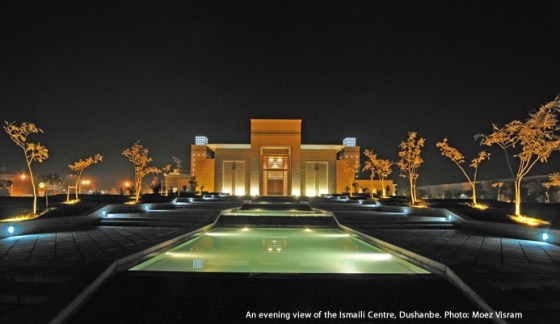
The Ismaili Centre, Dushanbe was opened on 12 October 2009 by His Excellency Emomali Rahmon, President of the Republic of Tajikistan, and Mawlana Hazar Imam. It is the first such Centre in Central Asia — a region that has been home to Ismaili Muslims for more than a thousand years. The ceremony was attended by the Mayor of Dushanbe, Mahmadsaid Ubaidulloev, senior government officials, diplomats, scholars and leaders of faith communities. Representatives of the Ismaili community from around the world were also present.

The Ismaili Centre, Dushanbe was opened on 12 October 2009 by His Excellency Emomali Rahmon, President of the Republic of Tajikistan, and Mawlana Hazar Imam. It is the first such Centre in Central Asia — a region that has been home to Ismaili Muslims for more than a thousand years. The ceremony was attended by the Mayor of Dushanbe, Mahmadsaid Ubaidulloev, senior government officials, diplomats, scholars and leaders of faith communities. Representatives of the Ismaili community from around the world were also present.

» Click here to learn more about the Dushanbe Ismaili Centre

___________

THE ISMAILI CENTRE, LISBON, PORTUGAL
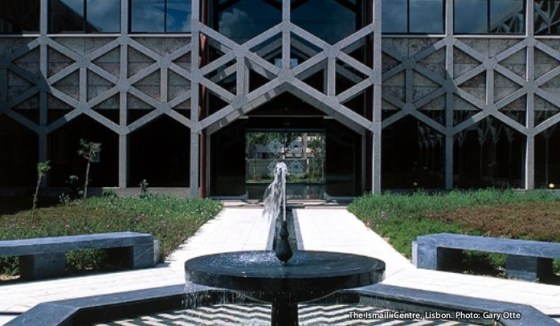
Inaugurated on 11 July 1998, the Ismaili Centre in Lisbon established, for the first time in continental Europe, a permanent place of gathering for Ismaili Muslims. The Centre's Jamatkhana is complemented by premises for the social, cultural and economic development institutions of the Aga Khan Development Network, serving people of all faiths, backgrounds and origins.

Inaugurated on 11 July 1998, the Ismaili Centre in Lisbon established, for the first time in continental Europe, a permanent place of gathering for Ismaili Muslims. The Centre’s Jamatkhana is complemented by premises for the social, cultural and economic development institutions of the Aga Khan Development Network, serving people of all faiths, backgrounds and origins.

» Click here to learn more about the Lisbon Ismaili Centre

___________

ISMAILI JAMATKHANA, LAHORE, PAKISTAN

The Ismaili presence in Punjab can be traced back at least a thousand years to Fatimid times, when Multan was a major centre for the Jamat. Nestled along Sir Sultan Mahomed Shah Aga Khan Road, the Ismaili Jamatkhana Lahore is the first modern facility to be purpose-built for the Jamat in that city. Rooted in tradition and heritage, the Jamatkhana symbolises centuries of the Jamat’s presence in the region, and its continuity in a land steeped in the many interpretations and practices of Islam.

The Ismaili presence in Punjab can be traced back at least a thousand years to Fatimid times, when Multan was a major centre for the Jamat. Nestled along Sir Sultan Mahomed Shah Aga Khan Road, the Ismaili Jamatkhana Lahore is the first modern facility to be purpose-built for the Jamat in that city. Rooted in tradition and heritage, the Jamatkhana symbolises centuries of the Jamat’s presence in the region, and its continuity in a land steeped in the many interpretations and practices of Islam.

» Click here to learn more about the Lahore Jamatkhana

___________

THE ISMAILI CENTRE, DUBAI, UNITED ARAB EMIRATES
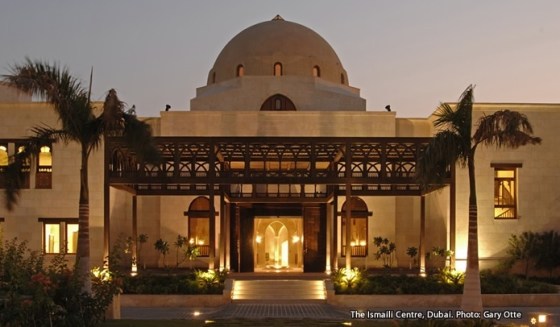
The Ismaili Centre, Dubai is a complex of creative spaces for contemplative, cultural, educational and recreational purposes, designed to encourage understanding and the sharing of wisdom from many perspectives. It was opened on 26 March 2008 as part of the commemoration of Mawlana Hazar Imam’s Golden Jubilee. The Centre draws on spiritual and intellectual roots that give it contemporary resonance. Its courtyards, gardens and watercourses, set amidst interlinking interiors, propose a harmony of tradition and timelessness.

The Ismaili Centre, Dubai is a complex of creative spaces for contemplative, cultural, educational and recreational purposes, designed to encourage understanding and the sharing of wisdom from many perspectives. It was opened on 26 March 2008 as part of the commemoration of Mawlana Hazar Imam’s Golden Jubilee. The Centre draws on spiritual and intellectual roots that give it contemporary resonance. Its courtyards, gardens and watercourses, set amidst interlinking interiors, propose a harmony of tradition and timelessness.

» Click here to learn more about the Dubai Ismaili Centre

___________

THE ISMAILI CENTRE, BURNABY, CANADA
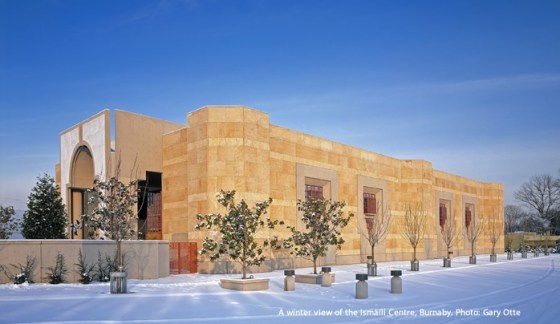
The Ismaili Centre in Burnaby, a tree-lined suburb of Greater Vancouver, is the first such centre to be purpose-built by the Ismaili Muslim community in Canada. The site was acquired in 1979, and a firm led by the well-known Vancouver architect Bruno Freschi, was commissioned to prepare the plans for the building. In August 1985, the Centre was opened by Canada’s then Prime Minister Brian Mulroney in the presence of Mawlana Hazar Imam. This year, the Centre is marking its 25th anniversary.

The Ismaili Centre in Burnaby, a tree-lined suburb of Greater Vancouver, is the first such centre to be purpose-built by the Ismaili Muslim community in Canada. The site was acquired in 1979, and a firm led by the well-known Vancouver architect Bruno Freschi, was commissioned to prepare the plans for the building. In August 1985, the Centre was opened by Canada’s then Prime Minister Brian Mulroney in the presence of Mawlana Hazar Imam. This year, the Centre is marking its 25th anniversary.

» Click here to learn more about the Burnaby Ismaili Centre

To send a personalized card, please click Send an Imamat Day eCard.

Date posted: Wednesday, July 10, 2013.

___________________

Recent posts: 56th Imamat Anniversary: Magnificent Historical Portraits of His Highness the Aga Khan, with Quotes on the Nature of Imamat and Succession.

Another version: For 56th Imamat Anniversary, Magnificent and Unique Historical Portraits of His Highness the Aga Khan

56th Imamat Anniversary: Magnificent Historical Portraits of His Highness the Aga Khan, with Quotes on the Nature of Imamat and Succession

Compiled by Malik Merchant
(Publisher-Editor, Simerg and Simergphotos)

MAWLANA HAZAR IMAM, HIS HIGHNESS THE AGA KHAN

A portrait of the new 49th Ismaili Imam taken shortly after he succeeded his late grandfather to the throne of Imamat on July 11, 1957 at the age of twenty. A framed portrait of the late 48th Imam who served the community for 72 years is seen in the background. Photo by Philippe Le Tellier/Paris Match via Getty Images. Copyright. Please click on image for full enlargement.

A portrait of the new 49th Ismaili Imam taken shortly after he succeeded his late grandfather to the throne of Imamat on July 11, 1957 at the age of twenty. A framed portrait of the late 48th Imam who served the community for 72 years is seen in the background. Photo by Philippe Le Tellier/Paris Match via Getty Images. Copyright. Please click on image for full enlargement.

THE WILL OF IMAM MAWLANA SULTAN MAHOMED SHAH, THE 48TH IMAM

“Ever since the time of my first ancestor Ali, the first Imam, that is to say over a period of thirteen hundred years it has always been the tradition of our family that each Imam chooses his successor at his absolute and unfettered discretion from amongst any of his descendants whether they be sons or remoter male issue.

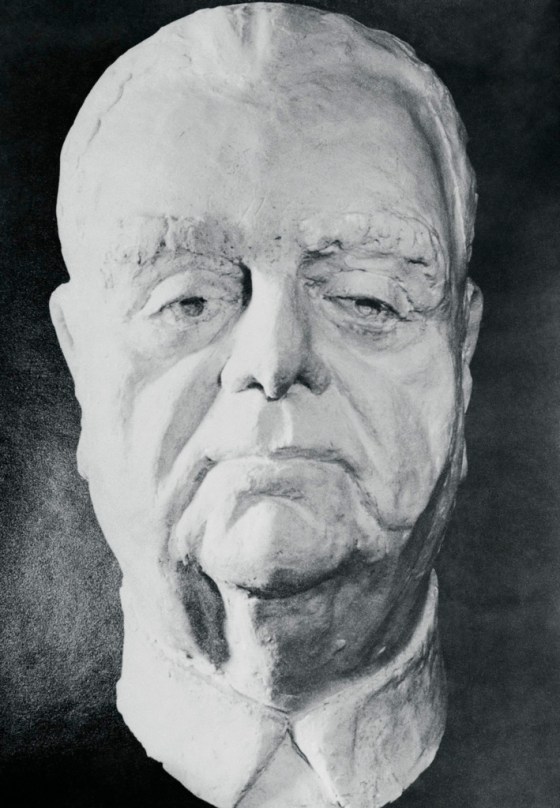
This thoughtful study of the late Aga Khan was done in clay by his late wife, the Begum Aga Khan. Image by © Bettmann/CORBIS. Please click for enlargement.

This thoughtful study of the late 48th Imam, His Highness the Aga Khan, Sir Sultan Mahomed Shah  was done in clay by his late wife, the Begum Aga Khan. Image by © Bettmann/CORBIS. Please click for enlargement.

“In view of the fundamentally altered conditions in the world in very recent years due to the great changes which have taken place including the discoveries of atomic science I am convinced that it is in the best interests of the Shia Moslem Ismailian Community that I should be succeeded by a young man who has been brought up and developed during recent years and in the midst of the new age and who brings a new outlook on life to his office as Imam.

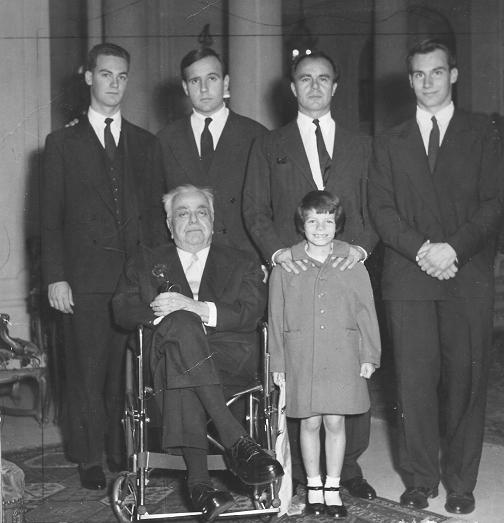
The late 48th Ismaili Imam, His Highness the Aga Khan Sir Sultan Mahomed Shah, seated on a wheelchair, is pictured with members of his family including his successor, Prince Karim Aga Khan, standing at extreme right. Photo: Zul Khoja Collection, Ottawa.

The late 48th Ismaili Imam, His Highness the Aga Khan Sir Sultan Mahomed Shah, seated on a wheelchair, is pictured with members of his family including his successor, Prince Karim Aga Khan, standing at extreme right. Photo: Zul Khoja Collection, Ottawa.

“I appoint my grandson Karim, the son of my son Aly Salomone Khan to succeed to the title of Aga Khan and to be the Imam and Pir of all my Shia Ismailian followers.”….His Highness the Aga Khan III.

SUCCESSION AND THE NATURE OF IMAMAT

Ceremonial installation of the 49th Imam in Kampala, Uganda.

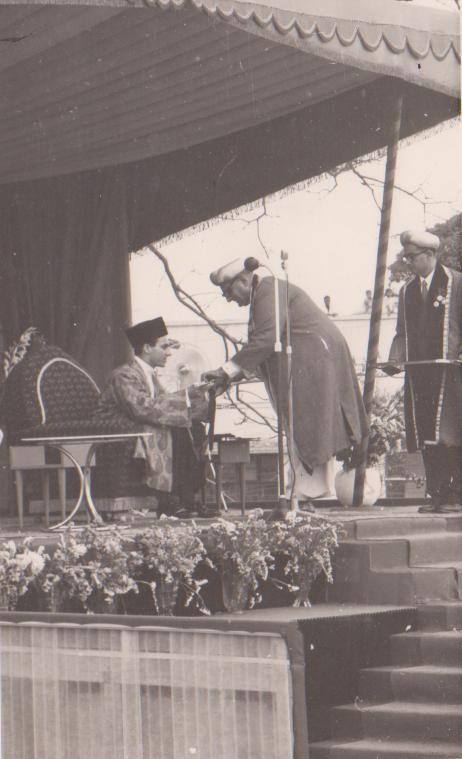
One of the several ceremonial installations of the 49th Imam that took place around the world. This photo is from the installation (Takht Nashini) that took place in Kampala, Uganda.

“…the [installation] ceremony is a public installation of the Imam. The Ismailis pay homage to the Imam and that is when you are recognised by the world at large as the Imam. Officially as soon as one Imam passes away, his successor takes on from the very minute the Imam has passed away.” — His Highness Prince Karim Aga Khan [1]

A TRIBUTE TO THE 48TH IMAM, AND THE NEW IMAM’S DEDICATION

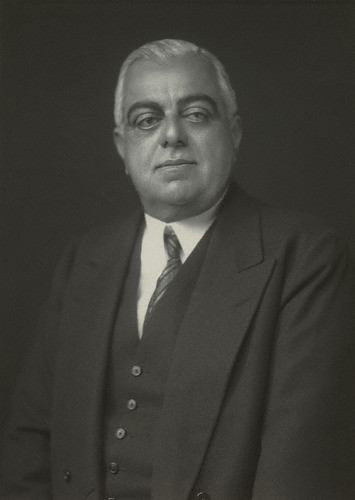
Sir Sultan Muhammad Shah, His Highness the Aga Khan (1877-1957), direct descendant of the Prophet Muhammad (s.a.s) and 48th Imam of the Shia Imami Ismaili Muslims. Photo: Copyright National Portrait Gallery, London.

Sir Sultan Muhammad Shah, His Highness the Aga Khan (1877-1957), direct descendant of the Prophet Muhammad (s.a.s) and 48th Imam of the Shia Imami Ismaili Muslims. He ruled the Ismailis for 72 years. Photo: Copyright National Portrait Gallery, London.

“My grandfather dedicated his life to the Imamat and Islam, both of which came first, and above all other considerations. While I was prepared that one day I might be designated the Aga Khan I did not expect it so soon. I follow a great man in a great responsibility and he could have given me no more appreciated honour than to bequeath me this spiritual leadership. My life, as his, will be dedicated to the service of my followers.”….His Highness the Aga Khan.

DEDICATION FULFILLED

"The closer you come the more you will see him." A digital representation of some of His Highness the Aga Khan's activities during his Imamat. Please click ofr enlargement. Copyright: Akber Kanji.

“The closer you come the more you will see him.” A pixel snapshot from a digital portrait of His Highness the Aga Khan representing some of his activities as the 49th Imam of Ismaili Muslims. Please click for enlargement. Copyright: Akber Kanji, Toronto, Canada.

 THE LOVE FOR THE IMAM OF THE TIME

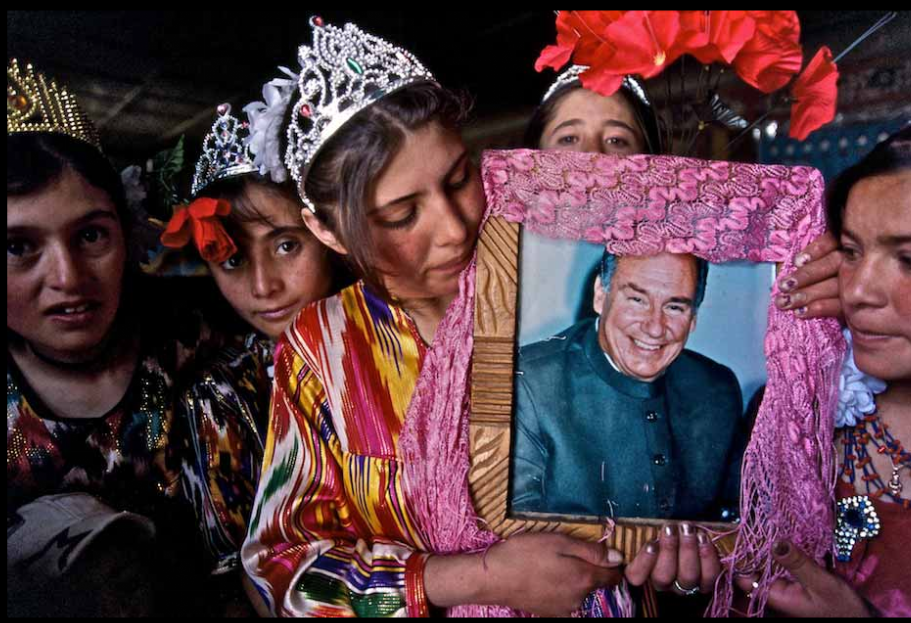
Ismaili girls in Central Asia proudly and lovingly display a decorated frame holding a photo of their beloved 49th Imam, His Highness the Aga Khan. Please click for enlargement. Photo: Matthieu Paley. Copyright.

Ismaili girls in Central Asia proudly and lovingly display a decorated frame holding a photo of their beloved 49th Imam, His Highness the Aga Khan. Please click for enlargement. Photo: Matthieu Paley. Copyright.

In all four ages,
I went about,
looking hard.
I found none
to match you, my lord.

My lord,
my heart
is fond of you. [2]

~~~

MAWLANA HAZAR IMAM, HIS HIGHNESS THE AGA KHAN

A portrait of the new 49th Ismaili Imam taken shortly after he succeeded his late grandfather to the throne of Imamat on July 11, 1957 at the age of twenty. A framed portrait of the late 48th Imam who served the community for 72 years is seen in the background. Photo by Philippe Le Tellier/Paris Match via Getty Images. Copyright. Please click on image to enlarge

A portrait of the new 49th Ismaili Imam taken shortly after he succeeded his late grandfather to the throne of Imamat on July 11, 1957 at the age of twenty. A framed portrait of the late 48th Imam who served the community for 72 years is seen in the background. Photo by Philippe Le Tellier/Paris Match via Getty Images. Copyright. Please click on image to enlarge

Date posted: Monday, July 9, 2013.

© All photos are Copyright by the respective copyright owners. Reproduction strictly prohibited without licensing agreement(s) from the copyright sources mentioned in the photo captions.

For an extra-ordinary version of this photo essay please visit our sister blog Simergphotos. Please click For 56th Imamat Anniversary, Magnificent and Unique Historical Portraits of His Highness the Aga Khan

__________

References:

[1] http://www.nanowisdoms.org/nwblog/10260/

[2] Verse 3 translation of Saiyad Imamshah’s ginan Sahebaji tun more mana bhave,  from “A Scent of Sandalwood” by Dr. Aziz Esmail

For other Imamat related readings including an explanation of the Munajat recited during Imamat Day please click on the following links:

We welcome feedback/letters from our readers. Please use the LEAVE A REPLY box which appears below. Your feedback may be edited for length and brevity, and is subject to moderation. We are unable to acknowledge unpublished letters. Please visit the Simerg Home page for links to articles posted most recently. For links to articles posted on this Web site since its launch in March 2009, please click What’s New.

For Canada Day: Photo Essay – the Celebration of Literacy and His Highness the Aga Khan’s Affinity for Canada @Simergphotos

Happy 146th Canada Day, and Looking Ahead to Two Iconic Celebrations in 2017 – Canada’s 150th Anniversary….

Map of Canada in Canadian flag colors

Canadians are already looking ahead at imaginative ways to celebrate its 150th birthday with the recent launch of 2017 Starts Now by CBC/Radio-Canada, VIA Rail Canada and Community Foundations of Canada.   It’s a national conversation to incubate, ignite and inspire ideas for how to celebrate the country’s  150th anniversary. Recently, 12 conferences took place across Canada to begin imagining and planning the historic celebrations. A PDF guide on this imaginative planning can be downloaded by clicking on 2017 Starts Now – Conversation.

and His Highness the Aga Khan’s Diamond Jubilee

Prince Karim Aga Khan Chateau De Chantilly Sponsor

A few days after Canada celebrates its 150th anniversary on July 1 2017, Ismailis around the world will be marking the Diamond Jubilee of their current Imam, Mawlana Hazar Imam Shah Karim al Hussaini, His Highness the Aga Khan. Direct descendant of the Prophet Muhammad (s.a.s.), His Highness became the 49th Imam of the Ismaili Muslims on July 11, 1957, at the age of twenty.

As part of the current 146th Canada Day 2013 celebrations and the 56th Imamat anniversary, Simergphotos, the companion photo blog of this website, presents a photo essay from Rideau Hall  with a link to a fine literary essay concerning His Highness the Aga Khan’s affinity for Canada. Please click on the image below or on The Celebration of Literacy at Rideau Hall; and His Highness the Aga Khan’s Fondness for Canada

The Maple Leaf

Map of Canada in Canadian Flag Colours. Photo: Istockphoto.com. The National Flag of Canada, also known as the Maple Leaf and l'Unifolié (French for "the one-leafed"), is a flag consisting of a red field with a white square at its centre, in the middle of which is featured a stylized, 11-pointed, red maple leaf. Adopted in 1965 to replace the Union Flag, it is the first ever specified by statute law for use as the country's national flag. Text: Wikipedia.

Map of Canada in Canadian Flag Colours. Photo: Istockphoto.com. The National Flag of Canada, also known as the Maple Leaf and l’Unifolié (French for “the one-leafed”), is a flag consisting of a red field with a white square at its centre, in the middle of which is featured a stylized, 11-pointed, red maple leaf. Adopted in 1965 to replace the Union Flag, it is the first ever specified by statute law for use as the country’s national flag. Text: Wikipedia. Please click for “Celebration of Literacy…”

His Highness the Aga Khan and the Bubonic Plague of 1897: How the Ismaili Imam’s Courage and Leadership Saved Countless Lives

Sir Sultan Muhammad Shah, His Highness the Aga Khan (1877-1957), direct descendant of the Prophet Muhammad (s.a.s) and 48th Imam of the Shia Imami Ismaili Muslims. Photo: Copyright National Portrait Gallery, London.

Sir Sultan Muhammad Shah, His Highness the Aga Khan (1877-1957), direct descendant of the Prophet Muhammad (s.a.s) and 48th Imam of the Shia Imami Ismaili Muslims. Photo: Copyright National Portrait Gallery, London.

“It was a grim period. The plague had its ugly, traditional effect on public morals. Respect for law and order slipped ominously. There were outbreaks of looting and violence….Drunkenness and immorality increased; and there was a great deal of bitter feeling against the Government for the haphazard and inefficient way in which it was tackling the crisis…..I knew that something must be done, and I knew that I must take the initiative. I was not, as I have already recounted, entirely without scientific knowledge” — His Highness the Aga Khan…Read more

A group comprising doctors, health and public officials gathered on a street in Bombay about to begin the day's work, during an outbreak of plague. Photo Credit: Wellcome Library, London. Wellcome Images. Copyright. Please click on image for excerpts by His Highness the Aga Khan

A group comprising doctors, health and public officials gathered on a street in Bombay about to begin the day’s work, during an outbreak of plague. Photo Credit: Wellcome Library, London. Wellcome Images. Copyright. Please click on image for excerpts by His Highness the Aga Khan

Ismaili Volunteers and their Stories of Service – A Special New Series for Simerg’s 4th Anniversary

By Malik Merchant

Labour for the welfare of others is the best way of improving oneself, because its results are sure and certain. If you work for yourself, you are never happy — His Highness the Aga Khan, Mawlana Sultan Mahomed Shah (1877 – 1957), March 12, 1924, Recreation Club, Mumbai, India.


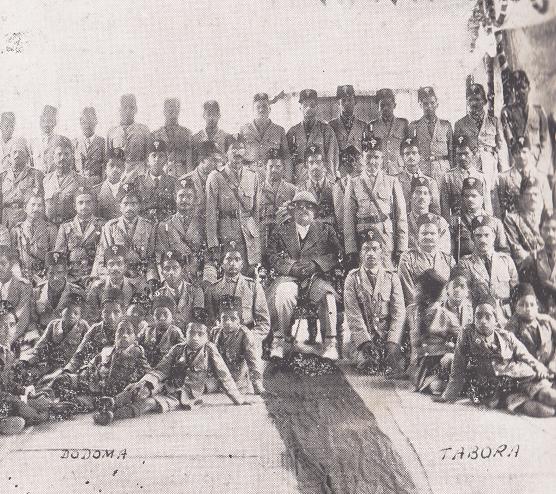
Sir Sultan Mahomed Shah Aga Khan with Ismaili volunteers and boy scouts of Dodoma (left of runner), and Tabora in Tanganyika (now Tanzania). Photo: Sadruddin Khimani Family Collection, Vancouver, Canada.

Sir Sultan Mahomed Shah Aga Khan with Ismaili volunteers and boy scouts of Dodoma (left of runner), and Tabora in Tanganyika (now Tanzania). Photo: Sadruddin Khimani Family Collection, Vancouver, Canada.

As publisher-editor of this literary website and its companion photoblog, Simergphotos, I’m always seeking out ideas to enrich the two blogs as well as looking at ways by which readers such as you can contribute meaningfully through submission of photos, stories and articles. The readers’ response has been encouraging as reflected in the number of original pieces we have published including the ones we received for our annual commemorative series such as I Wish I’d Been There (2010), The Jamatkhana (2011) and last year’s Thanking Ismaili Historical Figures

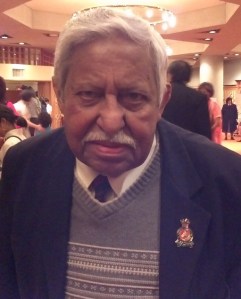
Ideas come from numerous sources, and this year’s 4th commemorative series about Ismaili volunteers was precipitated by a recent chance meeting with an impeccably dressed elderly Ismaili volunteer at the Ismaili Centre and Darkhana Jamatkhana in Burnaby.  Rajabali Mecklai who was born more than seventy years ago in Nagalama, a small Ugandan town, was standing beside his son. I was attracted by the glow on his face and the shining volunteer’s badge he was wearing on his smart navy blue volunteer’s blazer. I was impressed and inspired by the brief account Mr. Mecklai’s son, Nasir, gave of his father who was back on his feet once again as a volunteer following recovery from illness.

Rajabali Mecklai of Vancouver - the Ismaili volunteer who has inspired this series to commemorate Simerg's 4th anniversary

Rajabali Mecklai of Vancouver pictured with a volunteer’s badge at the Darkhana Jamatkhana in Burnaby. Mr. Mecklai inspired this series to commemorate Simerg’s 4th anniversary. Photo: Rajabali Mecklai Collection.

I asked the son to scan the volunteer’s badge his father was wearing, and include with it a brief profile of his dad, possibly with a few photos. So what was intended as an explanatory piece about the badge is now turning into a series about members of the Ismaili community who serve(d)  brilliantly as badged as non-badged volunteers both within and outside the  Ismaili Muslim community.

His Highness the Aga Khan has on many occasions expressed his immense admiration for the work of the volunteers, and has indicated that other communities also envy the Ismaili volunteers. He has blessed the Ismaili volunteers on numerous occasions and has used the word shabash, as his grandfather did, to praise the volunteers. In an interview with Simerg following a fascinating piece on the Delegation of the Ismaili Imamat, Maria Cook of the Ottawa Citizen mentioned a conversation she had with His Highness at the opening ceremony:

“I asked His Highness how he kept his focus and energy. He replied that he surrounded himself with people who were very good at what they do and also many dedicated volunteers. He said he was inspired every day by their efforts and devotion to excellence.” 

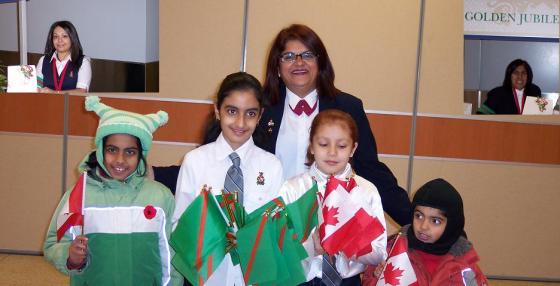
A collage of Ismaili volunteers. Centre group - Ottawa Ismaili Junior volunteers with their mentor; Two insets - part of a volunteer team serving at the Toronto Pearson International Airport during the Golden Jubilee of His Highness the Aga Khan.Photo: Malik Merchant.

A collage of Ismaili volunteers. Centre group – Ottawa Ismaili Junior volunteers with their mentor; Two insets – part of a volunteer team serving at the Toronto Pearson International Airport during the Golden Jubilee of His Highness the Aga Khan. Photo: Malik Merchant.

There are countless tales of devoted service and we would like to hear from you about Ismaili volunteers around the world who serve, simply wish to serve, without any expectation of rewards. What inspired you or the friend you know or a member in your family to join the Ismaili volunteers or serve as non-badged volunteer in Ismaili or non-institutions and groups, what challenges did the person experience during his/her services, what are the iconic and memorable events that the volunteer carries in the heart which sustains and motivates the person to carry on serving , and what are some of the inspirational moments that can be shared with others.
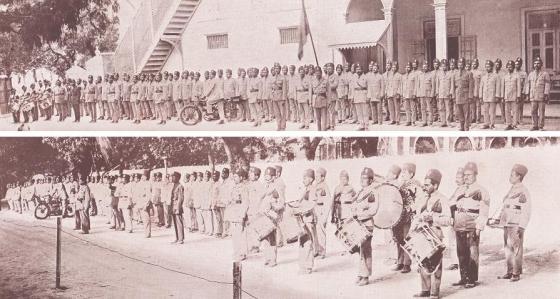
Two panoramic photos of the Ismaili Volunteer Corps of Bombay. 'The Ismaili' caption says: "....the Aga Khan's volunteer corps of Bombay are rendering yeomen service to the community. Their selfless and often thankless task consists of keeping good order and proper management on the auspicious occasions of Mawlana Hazar Imam's Blessed visits to Jamatkhanas, Hasanabad and other Ismaili Places of Bombay and suburbs. The community is grateful to these young Ismaili stalwarts who are often on duty at great personal inconvenience and even business consideration are made subordinate to the call of duty." Photo: Sadruddin Khimani Family Collection, Vancouver, Canada.

Two panoramic photos of the Ismaili Volunteer Corps of Bombay. ‘The Ismaili’ magazine in its caption said: “….the Aga Khan’s volunteer corps of Bombay are rendering yeomen service to the community. Their selfless and often thankless task consists of keeping good order and proper management on the auspicious occasions of Mawlana Hazar Imam’s Blessed visits to Jamatkhanas, Hasanabad and other Ismaili Places of Bombay and suburbs. The community is grateful to these young Ismaili stalwarts who are often on duty at great personal inconvenience and even business consideration are made subordinate to the call of duty.” Photo: Sadruddin Khimani Family Collection, Vancouver, Canada.

 
You may find it useful  to take a moment to glean from other life-experiences of volunteers on numerous volunteer websites (see selected links below).
 
Also, the story need not be confined to serving Ismaili volunteers. It might be related to a retired volunteer or of one who served exceptionally and is no longer with us, whose examples would be of benefit to others.
 
Your contribution – narrative and images –  with your full name, address and phone number should be emailed to Simerg@aol.com, subject “Simerg Volunteer Series”. We wish to hear from you, and look forward  to publishing many stories of heroism and commitment in the next few months.

Date posted: Sunday, May 26, 2013.
Date update: Sunday, August 4, 2013 (new story, link below)

The series so far:

__________

Links to a few websites which will serve as examples for your narrative for Simerg:
Stories from Australia
Stories at Volunteer match
Stories at Energize Inc
Story at Great Lakes Caring

For Victoria Day, A Small Dedication to Queen Victoria, with Quotes on Her Majesty by Ismaili Imams @Simergphotos

“Over a century ago, my grandfather, Sir Sultan Mahomed Shah Aga Khan, worked closely with Her Majesty Queen Victoria and her governments in the pursuit of common ideals. These ties were further strengthened by the strong presence of the Ismaili community – initially in places which later became Commonwealth countries, and later, here in the United Kingdom.” — His Highness Prince Karim Aga Khan….More at Simergphotos

Her majesty Queen Victoria and the members of the royal family / M.W. Ridley.  Date Published: 1877 July 14. US Library of Congress Collection

Her majesty Queen Victoria and the members of the royal family / M.W. Ridley.
Date Published: 1877 July 14. US Library of Congress Collection

His Highness the Aga Khan Delivers Keynote Address at UNESCO Conference in Hangzhou, People’s Republic of China

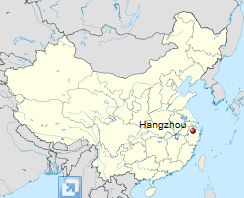
Location of Hangzhou in the People's Republic of China. Map: Wikipedia

Location of Hangzhou in the People’s Republic of China. Map: Wikipedia

“What I propose to discuss with you is how cultural heritage can itself be a “trampoline” for social and economic development, in the same way that agriculture, water resources, power supplies or transportation systems have traditionally been perceived. Even in settings of abject poverty, cultural legacies, though once dormant, can become powerful catalysts for change.” — His Highness the Aga Khan, May 15, 2013, UNESCO Conference, Hangzhou, China.

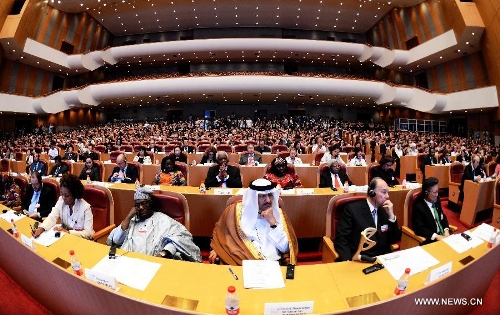
A large international delegation at the opening ceremony of the International Conference on "Culture: Key to Sustainable Development" in Hangzhou, capital of east China's Zhejiang Province, May 15, 2013. Photo: Xinhua/Xu Yu. http://www.globaltimes.cn/content/781768.shtml

A large international delegation at the opening ceremony of the International Conference on “Culture: Key to Sustainable Development” in Hangzhou, capital of east China’s Zhejiang Province, May 15, 2013. Photo: Xinhua/Xu Yu. http://www.globaltimes.cn/content/781768.shtml

“Culture is what makes us who we are, it gives us strength, and it provides answers to many of the challenges we face today,” said the Director-General of UNESCO, Irina Bokova, as her organization and China announced earlier this month an international congress on culture, which is now underway in Hangzhou, China.

Delegates attend the International Conference on "Culture: Key to Sustainable Development" in Hangzhou, capital of east China's Zhejiang Province, May 15, 2013. The three-day conference kicked off here on Wednesday, May 15, 2003. His Highness the Aga Khan is seen second from right. (Xinhua/Xu Yu)

Delegates attend the International Conference on “Culture: Key to Sustainable Development” in Hangzhou, capital of east China’s Zhejiang Province, May 15, 2013. The three-day conference kicked off here on Wednesday, May 15, 2003. His Highness the Aga Khan is seen second from right. (Xinhua/Xu Yu)

The congress which began on May 15 for 3 days has brought together some 450 policymakers, leaders from development institutions, representatives of the private sector, civil society, academia, and the arts, and is expected to provide substantive input to the discussions on the framework for the post-2015 development agenda.

“The goal is to inspire Governments, civil society, businesses and communities to harness the power of culture in addressing the world’s most pressing challenges,” UNESCO said in its brief.

His Highness the Aga Khan in addressing the congress said, “UNESCO is to be saluted for keeping the work of cultural development high on the international agenda,” His Highness was received by Her Excellency Madame Liu Yandong, Vice-Premier of the People’s Republic of China (link to press release and speech given at end of post).

His Highnes the Aga Khan, second from right, gave the keynote address at the International Conference on "Culture: Key to Sustainable Development" in Hangzhou, capital of East China's Zhejiang Province, May 15, 2013. Photo: Xinhua/Xu Yu. See http://www.globaltimes.cn/content/781768.shtml

His Highness the Aga Khan, second from right, gave the keynote address at the International Conference on “Culture: Key to Sustainable Development” in Hangzhou, capital of East China’s Zhejiang Province, May 15, 2013. Photo: Xinhua/Xu Yu. See http://www.globaltimes.cn/content/781768.shtml

During her meeting with the UNESCO chief, the Chinese Vice Premier had said that education, science and culture were high on the agenda of the new Chinese government, and explained that China aspires to “provide people with better education, better living conditions, more satisfying jobs, better medical services and a better environment for people to live in. This aspiration is closely related to what you are doing in UNESCO.”

This was underscored by His Highness the Aga Khan in his address when he said, “I also want to recognise the important work that China has been doing, in cooperation with UNESCO and through its own advances in cultural development.”

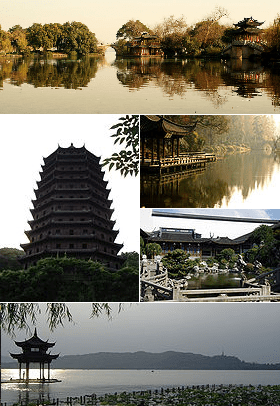
The congress host city of Hangzhou has been a significant cultural center in Chinese history. It is considered as a UNESCO Creative City for Crafts & Folk Art, and is home to the West Lake Cultural Landscape, a UNESCO World Heritage Site.

Montage of various Hangzhou images. This UNESCO Creative City for Crafts & Folk Art is home to the West Lake Cultural Landscape, a World Heritage Site. Photo: Wikipedia.

Montage of various Hangzhou images. This UNESCO Creative City for Crafts & Folk Art is home to the West Lake Cultural Landscape, a World Heritage Site. Photo: Wikipedia.

With its mist-covered hills, willow-lined banks and ancient pagodas, pavilions, gardens and ornamental trees, as well as causeways and artificial islands, Hangzhou’s idealized, classic landscapes were conceived in an effort to manifest the perfect fusion, and harmony, between man and nature. The area has inspired famous poets, scholars and artists since the 9th century.

Date posted: Wednesday, May 15, 2013.

Post compiled by Simerg.

_______________

To read press release as well as complete speech of His Highness the Aga Khan, please click AKDN – The Aga Khan Speaks at UNESCO China Conference.

Farouk Verjee, Former President of the Aga Khan Ismaili Council for Canada, Remembers Baroness Margaret Thatcher

By Malik Merchant, Editor

Recently, I had the immense pleasure of meeting and having a delightful lunch at Vancouver’s well-known Jambo Grill with (Itmadi) Farouk B.K.S. Verjee who was the President of His Highness the Aga Khan Shia Imami Ismaili Council for Canada during the 1980’s. During his term of office, he witnessed the opening of two major Ismaili Centres in the Western World, including one in his own jurisdiction in Canada, the Ismaili Jamatkhana and Centre located in Burnaby, British Columbia. He was, as Canada’s President, very much involved in every phase of the planning, construction, completion and opening of the magnificent Burnaby icon which was designed by Canadian architect Bruno Freschi.

Presidents of National Ismaili Councils around the globe are often invited to major functions and projects related to the Ismailis and the Ismaili Imamat, as community representatives for their respective countries, and Farouk Verjee was present for the historic opening of the London Ismaili Centre from which the following anecdote, with photo,  is published.

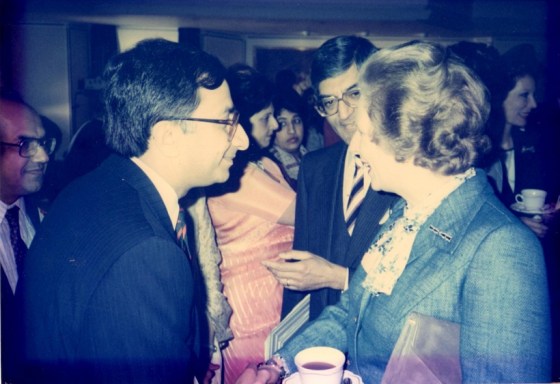
Farouk Verjee, left, with Baroness Margaret Thatcher (1925 - 2013) at the opening of the iconic Ismaili Centre in London, England, on April 24, 1985. Looking on in the centre is Anil Ishani, then President of the Ismaili Council for the UK. Photo: Farouk Verjee Collection, Vancouver, Canada.

Farouk Verjee, left, with Baroness Margaret Thatcher (1925 – 2013) at the opening of the iconic Ismaili Centre in London, England, on April 24, 1985. Looking on in the centre is Anil Ishani, then President of the Ismaili Council for the UK. Photo: Farouk Verjee Collection, Vancouver, Canada.

After being introduced to the late Baroness Margaret Thatcher by His Highness the Aga Khan, Verjee told her that the Ismaili Centre in Burnaby was nearing completion and that it would be opening in the coming summer, and he hoped she would visit it on her next visit to British Columbia. She asked,  “Which is the better building?” Farouk replied that one was a Cadillac and the other a Rolls! In a typical British fashion, the Baroness quickly responded, “I hope this one is the Rolls!.” Verjee found the Baroness to be a very amicable person.

The Ismaili Centre and Jamatkhana  in Burnaby was opened a few months later in the same year on August 23 by the then Canadian Prime Minister Brian Mulroney in the presence of His Highness, Premier Bill Bennett of the Province of British Columbia and other dignitaries including members of the Aga Khan’s family. Mawlana Hazar Imam, as His Highness is addressed by members of his community, designated the new Ismaili Jamatkhana as the Darkhana of Canada at a gathering of some 20,000 Ismailis on the same day at BC Place.

It may be of interest to note that Itmadi Farouk Verjee’s father was Kamadia of the London Jamat with Janmohamed Verjee as Mukhi. They were appointed to their positions in a talika (a written message) from Imam Sultan Mahomed Shah, His Highness the Aga Khan III (1877 – 1957), the 48th Imam of Ismaili Muslims, which is dated April 10, 1936. The newly appointed Mukhi and Kamadia were law students in the U.K. at that time. Janmohamed Verjee was the father of Amir Bhurio a well-known personality in the UK Ismaili community.

Baroness Margaret Thatcher (13 October 1925 – 8 April 2013) Performed the Opening of the First High Profile Ismaili Centre in the Western World

BARONESS MARGARET THATCHER AND HIS HIGHNESS THE AGA KHAN

JULY 2008

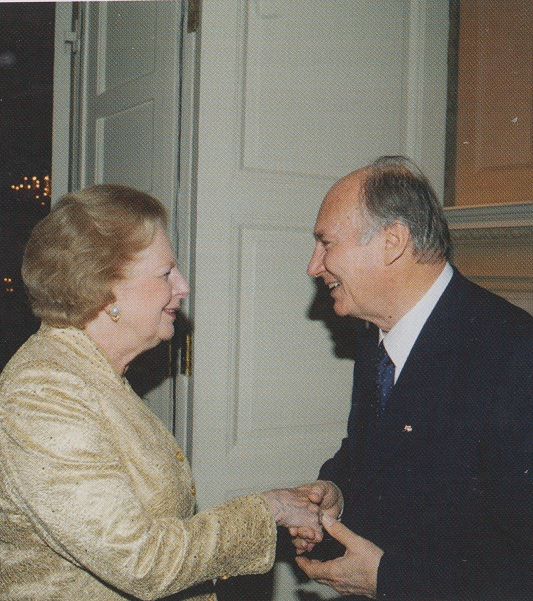
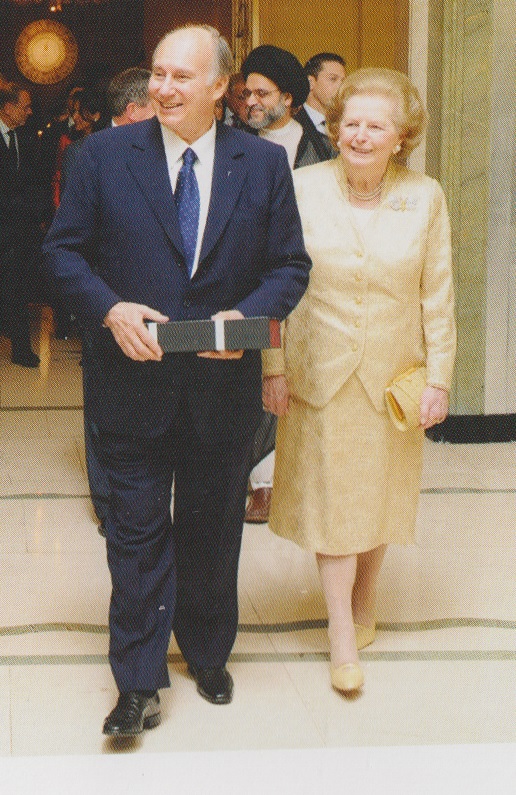
His Highness the Aga Khan, 49th Ismaili Imam and direct descendant of the Prophet Muhammad, warmly greeting Baroness Margaret Thatcher at the banquet hosted by His Highness in London on July 3, 2008 during his Golden Jubilee Celebrations. Photo: Mawlana Hazar Imam Shah Karim Al Hussani Aga Khan, Golden Jubilee Souvenir, published by Islamic Publications Limited. 2012. Copyright.

His Highness the Aga Khan, 49th Ismaili Imam and direct descendant of the Prophet Muhammad, warmly greeting Baroness Margaret Thatcher at the banquet hosted by His Highness in London on July 3, 2008 during his Golden Jubilee Celebrations. Photo: Mawlana Hazar Imam Shah Karim Al Hussaini Aga Khan, Golden Jubilee Souvenir, published by Islamic Publications Limited. 2012. Copyright.

“…In 1957, there was only one Ismaili space here for congregational prayer – and that was on leased premises! Creating places of prayer as centres for community life was fundamental to ensuring the cohesion of the community, and there are now over 40 such places. Among them, of course, a central focal point is The Ismaili Centre, located in South Kensington. Having Baroness Thatcher with us tonight is particularly significant because The Ismaili Centre was opened by her in 1985…” –His Highness the Aga Khan, London, July 3, 2008.

JULY 2008

His Highness the Aga Khan, 49th Ismaili Imam and direct descendant of the Prophet Muhammad, with Baroness Margaret Thatcher at the banquet hosted by His Highness in London on July 3, 2008 during his Golden Jubilee Celebrations. Photo: Mawlana Hazar Imam Shah Karim Al Hussaini Aga Khan, Golden Jubilee Souvenir, published by Islamic Publications Limited. 2012. Copyright.

His Highness the Aga Khan, 49th Ismaili Imam and direct descendant of the Prophet Muhammad, with Baroness Margaret Thatcher at the banquet hosted by His Highness in London on July 3, 2008 during his Golden Jubilee Celebrations. Photo: Mawlana Hazar Imam Shah Karim Al Hussaini Aga Khan, Golden Jubilee Souvenir, published by Islamic Publications Limited. 2012. Copyright.

Baroness Margaret Thatcher, who died on Monday, April 8, 2013 at the age of 87, was the  first woman to become U.K. prime minister and Britain’s only prime minister of the 20th century to win three consecutive terms. She was prime minister from May 4, 1979 until November 28, 1990. During her leadership, His Highness the Aga Khan had invited her to open the first high-profile Ismaili Centre built in the Western World.

APRIL 1985

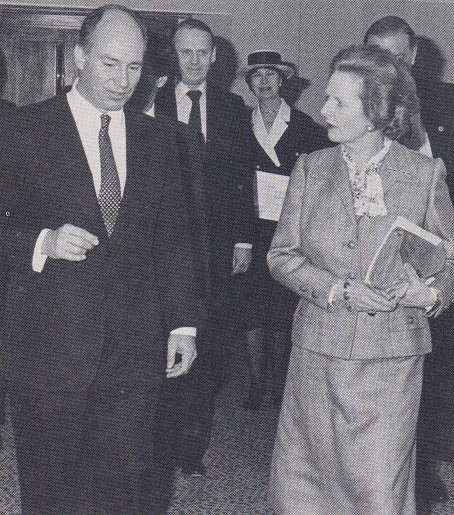
His Highness the Aga Khan and Mrs. Margaret Thatcher, the British Prime Minister, arriving at the newly constructed Ismaili Centre in London’s South Kensington which was officially opened by her on April 24, 1985. Photo: Derek Rowe, Roshni Magazine, USA.

His Highness the Aga Khan and Mrs. Margaret Thatcher, the British Prime Minister, arriving at the newly constructed Ismaili Centre in London’s South Kensington which was officially opened by her on April 24, 1985. Photo: Derek Rowe, Roshni Magazine, USA.

The following are excerpts from Baroness Thatcher’s speech made during the Centre’s opening in the presence of His Highness the Aga Khan on April 24, 1985, almost 28 years ago.

“Your Highnesses, Ladies and Gentlemen, It gives me great pleasure to be here today for the official opening of this new Ismaili Centre in London and I am most grateful to His Highness the Aga Khan for the honour he has done me in inviting me to perform the opening ceremony.

(….)

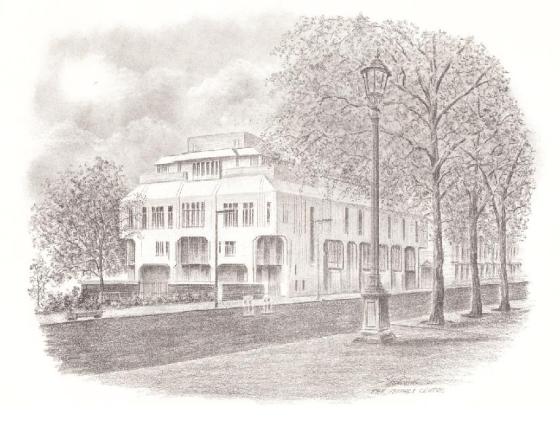
A sketch of the modern Ismaili Centre at Cromwell Gardens in South Kensingon, London, as depicted on invitation cards distributed in 1985. The Centre is the focal point of the Ismaili community in the UK  and was opened on April 24, 1985 Baroness Margaret in the presence of His Highness the Aga Khan.

A sketch of the modern Ismaili Centre located at Cromwell Gardens in South Kensingon, London, as depicted on invitation cards distributed in 1985. The Centre is the focal point of the Ismaili community in the UK and was opened on April 24, 1985 by Britain’s then prime minister Baroness Margaret Thatcher in the presence of His Highness the Aga Khan. Photo: Jehangir Merchant collection, Vancouver, Canada.

“The building of this splendid new Centre, which will provide facilities for religious observance and for social functions within the Ismaili community, must reflect a sense of stability and confidence in the future.

“Although there has been an Ismaili community in this country for very many years, I know that many members came here comparatively recently, having been uprooted from settled and successful lives in East Africa: and for them, leaving East Africa must have been a sad, deeply disturbing and in some cases, terrible experience.

“But clearly the Ismaili community who made Britain their new home triumphed over these adversities and have found here a new sense of security and belonging. This Centre is a powerful symbol of that feeling of belonging. And in return Britain, like so many other parts of the world where there are Ismaili communities, benefits from the contributions that Ismailis make to society.

“It is a very great pleasure for us to welcome you, Madam Prime Minister, and so distinguished a gathering for a ceremony which is a most significant one for the Ismaili community: significant because this is the first cultural and religious center in the Western world to have been built specifically for the community’s requirements.” — His Highness the Aga Khan, London, April 24, 1985.

APRIL 1985

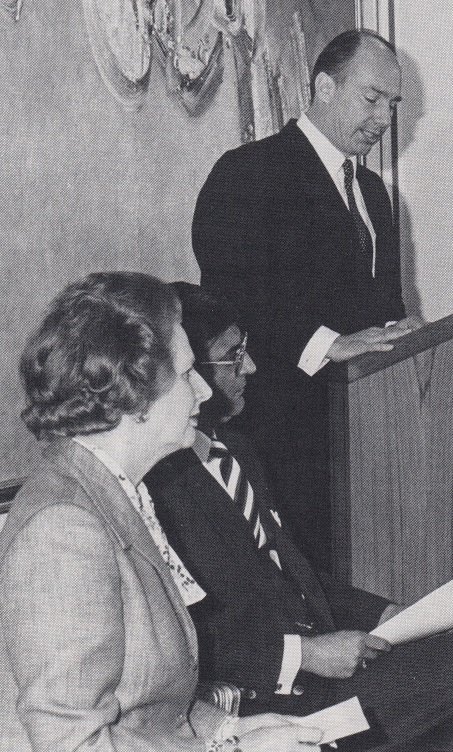
His Highness the Aga Khan speaking at the opening of the newly constructed Ismaili Centre. Seated are  Briitish Prime Minister Margaret Thatcher and the President of the UK Ismaili Council, Anil Ishani. Photo: Derek Rowe, Roshni Magazine, USA.
His Highness the Aga Khan speaking at the opening of the newly constructed Ismaili Centre. Seated are British Prime Minister Margaret Thatcher and the President of the UK Ismaili Council, Anil Ishani. Photo: Derek Rowe, Roshni Magazine, USA.
“The Ismaili community in London is self-sufficient and independent, energetic and highly talented, contributing to society in every sort of way: and at the same time its powerful sense of community, both spiritual and cultural, provides a firm and unchanging basis for living.

“This stability and coherence of the Ismaili community is a valuable example.

(….)

“Britain certainly gains in many ways from the presence of the Ismaili community here, and London itself is enhanced by the construction of the new Centre, for which we are all most grateful to His Highness the Aga Khan. It is a magnificent contribution to the architecture of London.

“It fits in easily with the other fine buildings of South Kensington, yet it has its own distinctive character too.

“It seems to encapsulate the determination of your community to integrate your citizens into the society in which we all live, while at the same time retaining their own identity and independence.

“This Centre is a most attractive and beautifully designed structure and a welcome newcomer to the Royal Borough.

“It is a splendid testament to the vitality of the Ismaili community here, and it is with great pleasure that I now formally declare the Ismaili Centre open.” — Prime Minister Margaret  Thatcher, April 24, 1985.

“We are all greatly honoured at your being with us, Madam Prime Minister. It is a source of pleasure and pride to the Ismaili community that this Center should be situated in the heart of London, and we now look forward to its becoming a valuable addition to the distinguished neighbourhood.” — His Highness the Aga Khan, April 24, 1985.

APRIL 1985

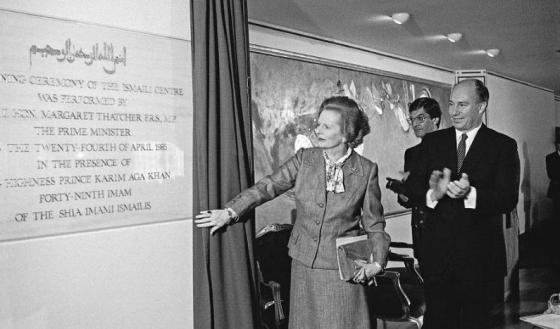
Prime Minister Margaret Thatcher unveiling the opening foundation plaque of the London Ismaili Centre in April 1985 in the presence of His Highness the Aga Khan, with President Anil Ishani of the Ismaili Council for the UK looking on. Photo: Ismaili Forum

Prime Minister Margaret Thatcher unveiling the opening foundation plaque of the London Ismaili Centre on April 24, 1985 in the presence of His Highness the Aga Khan, with President Anil Ishani of the Ismaili Council for the UK looking on. Photo: Ismaili Forum

Date posted: Monday, April 8, 2013.

__________________