Simerg is an independent initiative dedicated to Ismaili Muslims, the Aga Khan — their Hereditary Imam — and the Ismaili Imamat, and Islam in general through literary readings, photo essays and artistic expressions
Sunday, November 2, 2025, marks the 148th anniversary of the birth of Mawlana Sultan Mahomed Shah, His Highness the Aga Khan III, the 48th Imam of the Ismaili Muslims. Born on November 2, 1877, he assumed the role of Imam at the remarkably young age of seven on August 17, 1885, a fact that never fails to inspire awe.
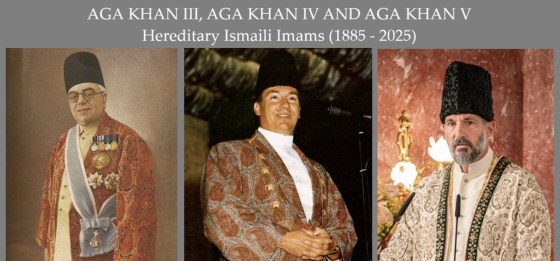
48th Ismaili Imam, Mawlana Sultan Mahomed Shah, His Late Highness Aga Khan III.
His 72-year reign was the longest in Ismaili history. He passed away on July 11, 1957, and appointed his grandson, Mawlana Shah Karim, His Highness the Aga Khan IV, as the 49th Imam.
49th Ismaili Imam, Mawlana Shah Karim Shah, His Late Highness Aga Khan IV.
Born on December 13, 1936, Mawlana Shah Karim reigned for a total of 67 years, until his passing on February 4, 2025, at the age of 88, making him the oldest Imam in Ismaili history. Together, the 48th and 49th Imams served an astonishing total of 139 years.
50th and present Ismaili Imam, Mawlana Shah Rahim Al Hussaini Hazar Imam, His Highness the Aga Khan V.
Mawlana Shah Karim’s successor is his eldest son, Mawlana Shah Rahim Al Hussaini, His Highness the Aga Khan V. Since becoming the 50th Imam earlier this year, he has visited his Ismaili communities in France, Kenya, and Uganda and is scheduled to visit them in the USA and Portugal from November 5-10 and December 1-4, 2025, respectively.
We present stories of the three Imams, which provide a comprehensive and enlightening picture of their lives and guidance to the Ismailis as well as their contributions to the world at large, in all aspects of human endeavour. The stories will ensure that you are well-informed about their legacy.
“God chose Adam and Noah and the House of Abraham and the House of Imran above all beings, the seed of one another; God hears, and knows” — Qur’an, 3:33-34, translation by A. J. Arberry, see Corpus Quran for multiple translations
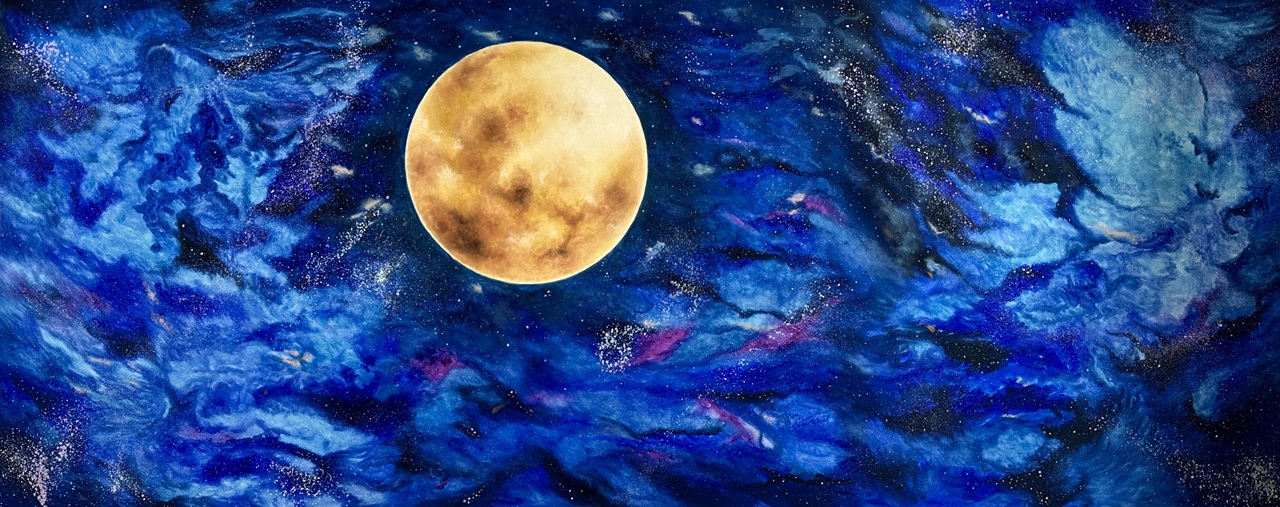
A calligraphy designed by Toronto’s Karim Ismail honouring the first Shia Imam Ali on the auspicious commemoration of Eid-e Ghadir.
On June 13, 2025, corresponding to the 16th day of the Muslim month Dhuʻl-Hijjah in the year 1446 A.H, Ismaili Muslims, united across Canada and the globe, will come together to observe and celebrate Eid-e Ghadir.
This momentous occasion, steeped in history, marks the pivotal gathering at Ghadir Khumm, where Prophet Muhammad (peace be upon him and his progeny) designated Hazrat Ali as his successor, the first in the continuing line of Hereditary Imams.
From the day our beloved Prophet Muhammad passed away on June 8, 632, and Hazrat Ali (A.S.) became the first Imam on the Divine Commandment that the Prophet had earlier received at Ghadir Khumm, there have been fifty Ismaili Imams, spanning an impressive 1393 years in human history.
The 50th Imam, His Highness Prince Rahim Aga Khan, holds a unique place in our history. He succeeded his father, Mawlana Shah Karim, His Late Highness Aga Khan IV, upon his death on February 4, 2025. Like all other Imams before him, Mawlana Shah Rahim Al Hussaini, who is now devotionally and respectfully addressed as Mawlana Hazar Imam, being the Imam-of-the-Time, will continue the vital role of guiding and developing the Ismaili community, leaving a lasting legacy that continues to shape the community’s identity and beliefs.
The historical event of Eid-e Ghadir, a pivotal moment in the Ismaili faith, holds profound significance. Today, the Ismaili community is led by the Hereditary position. Mawlana Shah Karim, His Late Highness Aga Khan IV, proudly affirmed that ‘the Ismailis are the only Shia community who, throughout history, have been guided by a living, hereditary Imam in direct descent from the Prophet’ — His Late Highness Aga Khan IV, Parliament of Canada, Ottawa, February 27, 2014.
History records that on the way back to Medina after performing the final pilgrimage to Mecca, the Prophet received a revelation:
“O Messenger, deliver [to the people] what has been revealed to you from your Lord, and if you do not do so, then you will not have delivered His message”… Quran, Surah al-Ma’ida (5:67).
Upon receiving this revelation, the Holy Prophet stopped at an oasis known as Ghadir Khumm. This oasis, located strategically along the route from Mecca to Medina, was a natural gathering point for travellers. Here, the Prophet addressed a large gathering of Muslims who had accompanied him. The Prophet proclaimed: ‘Man kuntu mawlahu fa aliyyun mawlahu,’ meaning: ‘He whose Mawla I am, Ali is his Mawla.’ The Prophet then prayed: ‘O Allah, be a friend of whoever is his friend and extend your support to those who support him.’
This event, occurring at a crucial point in Islamic history, marked the transition of leadership from the Prophet to Hazrat Ali, setting the stage for the leadership and future of the Muslim community. By declaring Hazrat Ali Mawla after him, the Prophet transferred the spiritual authority bestowed upon him by Allah to Hazrat Ali, making him — and all the Imams that follow — the Amirul Mu’minin, or Master of the Believers. This title signifies his role as a Muslim community’s leader, protector, and guide, which Hazrat Ali and all his successors have fulfilled with unwavering dedication and commitment, ensuring the community’s well-being and prosperity.
Article continues below following excerpts and photographs
________________________________
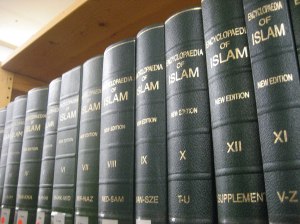
Excerpts from L. Veccia Vaglieri piece in Encyclopaedia of Islam, Second Edition
“Ghadir Khumm is famous in the history of Islam because of a sentence (or some sentences) in favour of ‘Ali which the Prophet uttered there during a discourse….Taking ‘Ali by the hand, he asked of his faithful followers whether he, Muhammad, was not closer to the Believers than they were to themselves; the crowd cried out: “It is so, O Apostle of God!”, he then declared. “He of whom I am the mawla, of him ‘Ali is also the mawla (man kuntu nawlahu fa-‘Ali mawlahu)
Photograph: Vysotsky – Own work, CC BY-SA 3.0, Wikimedia.
~~~~~~
“Most of those sources which form the basis of our knowledge of the life of the Prophet pass in silence over Muhammad’s stop at Ghadir Khumm….Consequently, the western biographers of Muhammad, whose work is based on these [Sunni] sources, make no reference to what happened at Ghadir Khumm. It is however certain that Muhammad did speak in this place and utter the famous sentence…the hadiths are so numerous and so well attested by the different isnads that it does not seem possible to reject them.” Vaglieri goes on to state that on instruction from Prophet Muhammad, Hazrat Ali received baiyat (the oath of allegiance) from the Muslims assembled there, including Umar b. al-Khattab, Islam’s second Caliph.
(Note: special access is required to read articles in the on-line edition of EI2. Vaglieri’s piece was reproduced in full in the UK Ismaili Association’s publication Ilm, December 1976, pages 28-30, with the permission of E.J. Brill, publishers of EI2.)
________________________________
Excerpts from the Pream ble of the Ismaili Constitution ordained by the 49th Ismaili Imam
“In accordance with Shia doctrine, tradition, and interpretation of history, the Holy Prophet (s.a.s.) designated and appointed his cousin and son-in-law Hazrat Mawlana Ali Amiru-l-Mu’minin (a.s) to be the first Imam to continue the Ta’wīl and Ta’līm of Allah’s final message and to guide the murids, a term referring to the followers and disciples of the Imams. The proclamation also established the principle of the Imamat continuing by heredity through Hazrat Mawlana Ali (a.s) and his daughter Hazrat Bibi Fatimat-az-Zahra, Khātun-i-Jannat (a.s)”
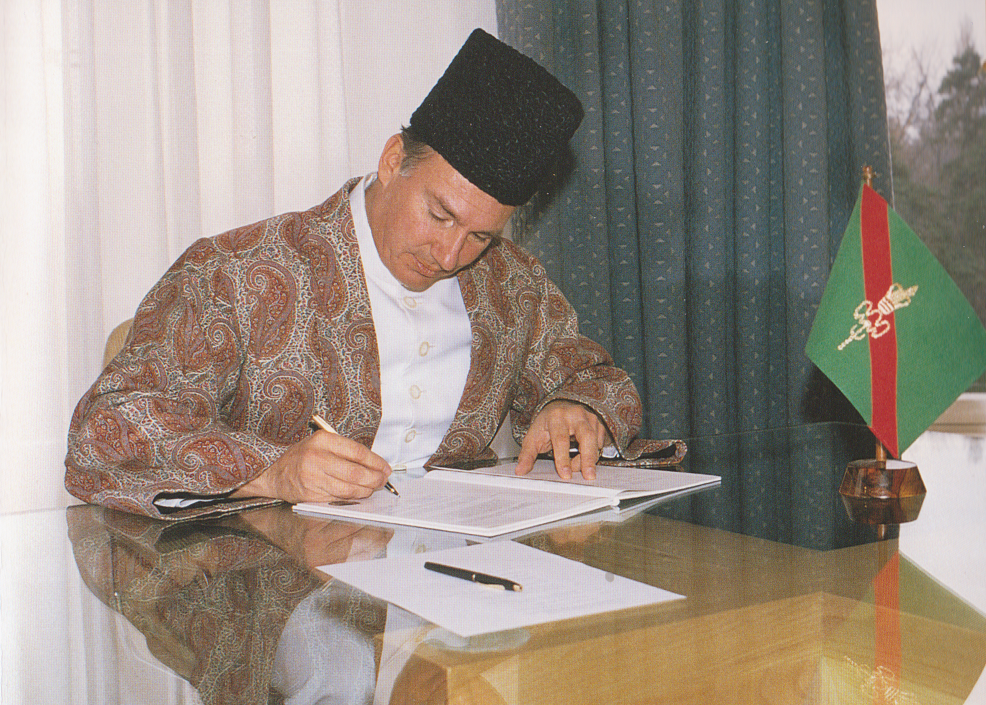
Mawlana Shah Karim, His Late Highness the Aga Khan, is seen signing a new constitution for the worldwide Ismaili community on his 50th birthday, December 13, 1986.
~~~~~~~~
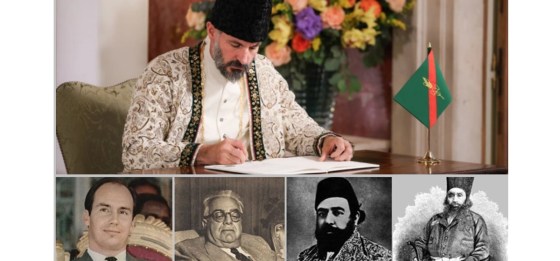
The 50th Imam, Mawlana Shah Rahim Al Hussaini Hazar Imam, signs the Ismaili Constitution under his name on February 11, 2025
Mawlana Hazar Imam, His Highness Prince Rahim Aga Khan, signs the Ismaili Constitution in his name at the Diwan of the Ismaili Imamat, the Headquarters of the Imamat in Lisbon on the historic occasion of his Takht-nishini (ceremonial installation), February 11, 2025. Photograph: Akbar Hakim / The Ismaili.
________________________________
…. continued
On the instruction from Prophet Muhammad, Hazrat Ali received baiyat (the oath of allegiance) from the Muslims assembled there. According to Shia traditions and sources, following the proclamation, the final verse of the Qur’an was revealed to the Prophet:
“On this day, I have perfected for you your religion, completed my favours upon you, and have chosen for you Islam as your religion.”
Eid-e Ghadir is an anniversary of profound significance to all Shia Muslims. It is also associated with the following well-attested tradition that the Prophet is said to have proclaimed. This tradition, which is widely accepted and recognized by the Shia community, further underscores the importance of the event and its pivotal role in shaping the future of the Muslim community:
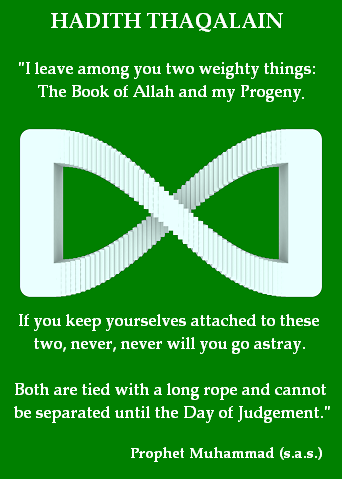
Credit: Infinity design povray.org
“I am leaving among you two matters of great weight (al-thaqalayn), the Book of Allah and my kindred (itrati), the People of my House (Ahl al-Bayt), and these two shall never be separated until they return to me at the Pool [of Kawthar in Paradise on the Day of Judgement]…”
The phrase ‘two matters of great weight’ refers to the Quran and the Ahl al-Bayt. The Quran, as the holy book of Islam, and the Ahl al-Bayt, as the Prophet’s kindred, are inseparable and hold eternal significance in the Shia Islamic tradition.
As we commemorate Eid-e Ghadir, the Ismaili community stands united, celebrating the seminal event of Ghadir Khumm. This celebration is a historical marker and a powerful reminder of our allegiance to the Imam-of-the-Time, the direct lineal successor and inheritor of Hazrat Ali’s authority.
The community is not just inspired but united and driven by the following remark made during Mawlana Shah Karim’s speech in Canada’s Parliament on February 27, 2024:
“Today, the Ismailis are the only Shia community who, throughout history, have been led by a living, hereditary Imam in direct descent from the Prophet.”
We convey our heartiest felicitations to Muslims around the world, our readers, and friends of the Muslim community on the auspicious and joyous occasion of Eid-ul Fitr. We pray for your happiness, peace, and good health. We wish you all Eid Mubarak.
On March 10, 2025, Canada Post continued its tradition by issuing a Booklet of 6 Permanent™ domestic rate stamps to commemorate the festivals of Eid al-Fitr and Eid al-Adha in March and June 2025, respectively. This is Canada Post’s seventh Eid stamp, a testament to its continuity and commitment to celebrating the country’s cultural diversity. The previous Eid stamps were issued in 2017, 2020, 2021, 2022, 2023, and 2024.
Story continues below
STAMP
~~~~~~~
STAMPS BOOKLET COVER
~~~~~~~
Eid al-Fitr signifies the end of fasting during Ramadan and will be observed on or around March 30, 2025. Eid ul-Adha will be held from June 6, 2025, to mark the Festival of Sacrifice commemorating Ibrahim’s (Abraham) willingness to sacrifice his son, Ismail, to God. The Eid ul-Adha is held at the end of the annual pilgrimage to Mecca.
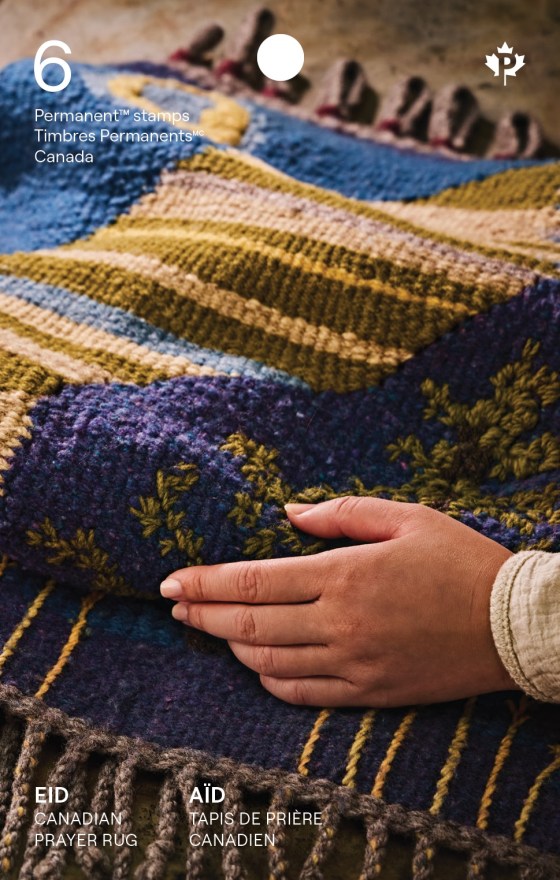
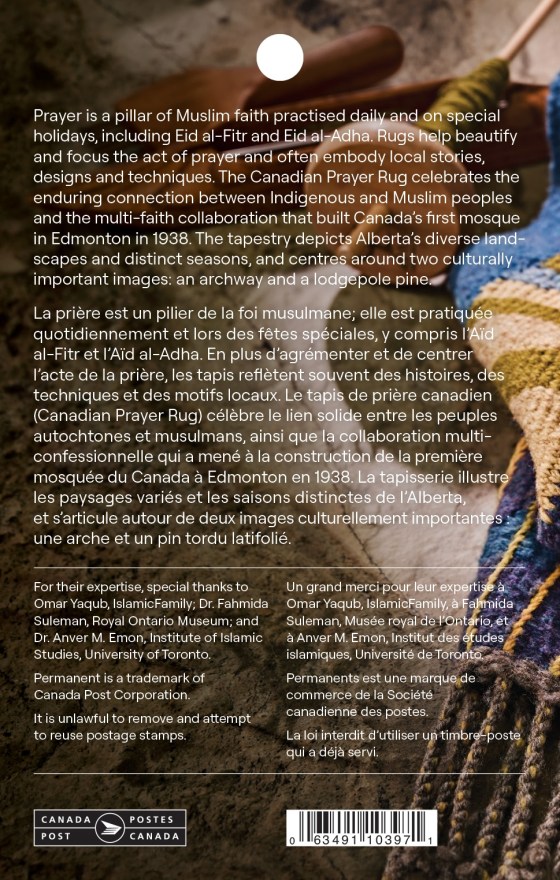
The rug’s design depicts Alberta’s diverse landscapes and distinct seasons. At its centre are an archway and a lodgepole pine — a tree that supports teepees and lodges and is reminiscent of the cypress of settler homelands.
Celebrated by Muslims all over the world — and by more than one million Muslims in Canada — both events can last several days and include communal prayers and feasts, visits with family, gift-giving, and acts of charity. In the previous two years, Simerg featured the 2023 stamp graced with a beautiful Iranian artifact and the 2024 stamp depicting the Maamoul, a melt-in-your-mouth cookie stuffed with dates and nuts.
The 2025 stamp, a unique addition to the series, features the Canadian prayer rug. This distinctive design is described on the Canada Post website as follows:
“Prayer is a pillar of Muslim faith practised several times daily and on special holidays, including Eid al-Fitr and Eid al-Adha. Rugs help beautify and focus the act of prayer and play an important part in gift giving and cultural exchange, often embodying local stories, materials, patterns and techniques.
“The Canadian Prayer Rug — a project of the charity Islamic Family — celebrates the deep and enduring connection between Indigenous and Muslim peoples and the multi-faith collaboration that built Canada’s first mosque in Edmonton in 1938. A reflection of their shared stories, it was created by Muslim weaver Noor Iqbal and Métis designer Kit Craven, based on interviews conducted by local youth with Indigenous Elders and descendants of some of Canada’s first Muslim settlers.
“The rug’s design depicts Alberta’s diverse landscapes and distinct seasons. At its centre are an archway and a lodgepole pine — a tree that supports teepees and lodges and is reminiscent of the cypress of settler homelands.”
About the design, specifications and link to purchase stamp booklets
The booklet cover and the inside and back of the booklet feature photographs of the original, handwoven Canadian Prayer Rug. The inside and back include images of some of the tools and materials that would have been used to create it.
On the inside (left to right) are a spool and hanks of yarn; bowls of logwood and black tea, red oak and willow leaves, and bark (used as dyes); and a weaving raddle.
On the back are another raddle and shuttle, as well as a spool. Also featured are a short text on the stamp subject, and credit and caption information.
Cancellation Site: Edmonton, Alberta Stamp Designer: Kristine Do Stamp Illustrator: Kit Craven Issue Date: March 10, 2025 Quantity Produced: 55,000 booklets of 6 Permanent™ stamps Product Type: Stamps
Stamps can be ordered on the Canada Post website HERE. Note: If you order four sets of booklets, each with six stamps, at CDN $7.44 per booklet, postage is free! You can use the stamp for all your first-class letters within Canada indefinitely.
A solemn and reverent gathering of great significance will occur in Ismaili Jamatkhanas all over the world on Sunday, March 16, 2025, as the Chehlum — or Chalismo in Gujarati — of Mawlana Shah Karim Al Hussaini, His Highness the Aga Khan IV, is observed. It will mark the 40th day of mourning for the late Imam, who passed away on February 4, 2025, at the age of 88.
The Imamat, a divinely ordained Institution of immense spiritual significance, has stood for 1392 years since the designation of the first Imam, Hazrat Ali (may peace be upon him), by the Prophet Muhammad (may peace be upon him and his progeny) as his successor at the famous event at Ghadir-Khumm. This historical event, whose authenticity is unquestionable, is supported by the Quranic verse, “O Apostle, deliver (to the people) what has been revealed to you from your Lord. And if you would not do so, then you have not delivered His Message…” (Qur’an 5:67), and the Prophetic tradition “He whose Mawla (Lord) I am, Ali is his Mawla.”
His Highness the Aga Khan V, Mawlana Shah Rahim, succeeded his father, Aga Khan IV, to the Imamat as the 50th Imam.
Story continues below
Mawlana Shah Karim, His Highness the Aga Khan IV.
Observing Chehlum, derived from the Farsi word “Chehelom” (40th), or Chalismo, is a deeply rooted custom spanning many religions and cultures, including Islam. In Islam, the 40-day mourning period following a death is a tradition that can be adapted to individual and family circumstances. For instance, the period can be shorter if some close family members and other loved ones attending the funeral have to return to their places of residence. This flexibility in the mourning period allows for understanding and empathy toward those who need to resume their everyday lives. However, the 40-day period of bereavement continues to be observed by members of the family living in the same town as the deceased, highlighting the deep respect and cultural significance of this tradition.
[Mawlana Shah Karim, who became the 49th Imam on July 11, 1957, upon the death of his grandfather, Mawlana Sultan Mahomed Shah Aga Khan III, made a significant request during his visit to Kenya the following month. He asked for the observance of Mawlana Sultan Mahomed Shah’s chehlum with solemnity and special prayers as was being done in London, England, in a few days, around August 21. This information is recorded in the archival notes of the editor’s late father, Jehangir Merchant.]
During the bereavement period, loved ones offer prayers and engage in deep reflection on the life of the departed. They attend Jamatkhana daily or as regularly as possible, finding comfort in the familiar rituals. Individually, they spend time reciting Qur’anic verses, Salwats, and other prayers for the deceased’s soul and their own courage and fortitude. Many find solace in reciting appropriate Qasidas and Ginans — poems and hymns — that prompt introspection on the spiritual journey and the meaning of life. Some take on special commitments in memory of the departed, a practice that encourages personal growth and reflection.
The Chalismo of Mawlana Shah Karim on March 16 is a solemn occasion. It allows us to invoke the name of Allah and remember His clemency, mercy, and grace. These divine attributes enable us to live according to the ethics of our esoteric faith. We do so under the benevolence of Mawlana Shah Karim and, now, under the unwavering spiritual guidance of our present Imam, Mawlana Shah Rahim Hazar Imam.
On the 40th day of mourning, communion and deep emotion, the Ismailis will express their shukranas, their profound gratitude to Mawlana Shah Karim Al Hussaini for his Benevolence, his Protection, and his Farmans, and for having guided the community spiritually and materially for 67 years of his Imamate.
Story continues below
The 49th Ismaili Imam, Mawlana Shah Karim, His Highness the Aga Khan IV, with his younger brother Prince Amyn, and children Princess Zahra, Prince Rahim, Prince Hussain, and Prince Aly Muhammad on Imamat Day, July 11, 2022. Photograph: The Ismaili.
Let us also extend our gratitude to the Imam’s family members for their unwavering commitment to expanding the influence of the works and institutions established worldwide during the previous Imam. Their efforts, particularly over the past three years, have kept us united as a community and strengthened our shared commitment to humanity’s well-being.
As was the wish of our 49th Imam, we will remain confident and united as “One Jamat” in its diversity, expressing solidarity, justice, tolerance, mutual respect, compassion and the sharing of Time and Knowledge. This is how we will not only escape fear in these troubled times but also face the hazards and trials of everyday life with resilience. Let us say Ameen to the Divine Will and invoke Ya Allah, the most Clement, full of Mercy.
By Allah’s Grace, let us express our Shukranas to our 50th Imam, Mawlana Shah Rahim Hazar Imam, our Protector and Lighthouse. Let us choose a spiritual life based on a quest to recognize the balanced life of din (faith) and dunya (world), and invoke Allah’s Permanence, thereby enriching our spiritual link with the Imam-of-the-Time.
Our first Imam, Mawlana Hazrat Ali, urged us to apply the following precept relentlessly:
“Respect the human being, for if he is not your brother in religion, he is your brother in humanity.”
Rest in peace, Mawlana Shah Karim Al Hussaini. We are deeply grateful for your support. We will honour your memory by working actively with courage and hope under the aegis of your son, Mawlana Shah Rahim Al Hussaini Hazar Imam, to support our sisters and brothers who live in countries in conflict. Our commitment to caring for the dignity of the elderly and fighting against extreme poverty will be a testament to our shared values under your guidance.
Story continues below
Mawlana Hazar Imam, His Highness Prince Rahim Aga Khan, addresses his spiritual children around the world in the presence of his leaders on the occasion of his Takht-nishini at the Diwan of the Ismaili Imamat. The ceremony was relayed live to Ismailis gathered in Jamatkhanas around the world; February 11, 2025. Photograph: Akbar Hakim / The Ismaili.
And, as Mawlana Shah Karim lovingly told us throughout his Imamat that he was by us all the time, whether he was physically present or not, we are reassured of this inspiring message when Mawlana Shah Rahim declared in his Takht-nishini Farman in Lisbon on February 11, 2025:
“If you have worries and concerns, turn to your Imam. Your Imam is with you. Wherever you are, your Imam is with you, and you are with the Imam.”
Date posted: March 13, 2025. Last updated: March 15, 2025.
Correction: In the original version of this post, Chehlum was misspelled as Chelhum. We apologize for the typo.
About the author: Born and raised in Madagascar, Mohez Nato left for France in the late 1960’s. After completing his PhD, he worked as a teacher-researcher in Plant Biotechnology at the University of Paris Sud XI from 1971 to 2011. Now retired, Mohez does voluntary work giving courses in French-speaking universities in countries like Burkina Faso, Lebanon, Benin, Algeria and Tunisia. He has served in the Ismaili community in numerous voluntary positions, for which he was bestowed with the title of Alijah by Mawlana Shah Karim. We invite you to read his earlier pieces, Ode to the Imam of the Present Time and Laylat al-Qadr, published in Barakah and Simerg.
__________________________
Simerg welcomes your tributes to Mawlana Shah Karim Shah, His Highness the Aga Khan IV. Please click Leave a comment. If you encounter problems, email the comments to mmerchant@simerg.com. We want to reassure you that we respect your privacy and that your published comment will never reveal your email address. For recent and older posts, please visit our Table of Contents. Please also follow us @Facebook, @X and @LinkedIn.
Part I of this post is adapted from Michael Wolfe’s excellent piece, Jesus Through a Muslim Lens. In Part II, we link to New Lines magazine for Mustafa Aykol’s well-researched and insightful piece. Aykol discusses the traditional Christian accounts of the place of Jesus’ birth in a manger or a cave, contrasting it with the Qur’anic description that Mary gave birth to Jesus under a tree. Both these pieces offer diverse and inspiring perspectives, and they underscore the importance of respecting different beliefs as Christians worldwide celebrate the birth of Jesus (peace be upon him) on December 25, 2024. We express our best wishes to our readers during this inclusive holiday season, valuing the diversity of our audience’s beliefs.
Part 1: Jesus in Islam
Selected verses from the Qur’an from Chapter 19 entitled Maryam (the Muslim name attributed to Mary) about the birth of Jesus (or Hazrat Issa as he is known in Islam). Please click on image for enlargement. Photograph: Simerg.
The miraculous birth of Jesus of Nazareth was a remarkable event. It gave rise to Christianity, the world’s largest religion, and changed the course of history. Yet something is captivating about this remarkable birth which many Christians may not be aware of: that Muslims believe in the Virgin Birth and Jesus’ miracles and that he is not just acknowledged but venerated throughout Islam, the world’s second-largest faith. This profound veneration of Jesus in Islam adds depth to the topic, particularly for those interested in religious studies.
Two events in the life of the prophet Muhammad may help explain why Muslims revere the Christian Jesus.
The first event involves an elder resident of Mecca named Waraqa bin Nawfal. This man was an early Arab Christian and an uncle of Muhammad’s wife, Khadija. We know he could read Hebrew, that he was mystical by nature, and that he attended Khadija and Muhammad’s wedding in about 595 C.E. Fifteen years later, a worried Khadija sought Waraqa out and brought her husband to him.
At the time, Muhammad was a 40-year-old respected family man. He attended this “family therapy” session in a rare state of agitation. He was frightened. He had been meditating one evening in a cave on the outskirts of town. There, while half asleep, he had experienced something so disturbing that he feared he was possessed. A voice had spoken to him.
Waraqa listened to his story, which Muslims will recognize as a description of Muhammad’s first encounter with the angel Gabriel. When it was finished, Waraqa assured him he was not possessed.
“What you have heard is the voice of the same spiritual messenger God sent to Moses. I wish I could be a young man when you become a prophet! I would like to be alive when your own people expel you.”
“Will they expel me?” Muhammad asked.
“Yes,” the old man said. “No one has ever brought his people the news you bring without meeting hostility. If I live to see the day, I will support you.”
Christians will recognize in Waraqa’s remarks an aphorism associated with Jesus: “A prophet is not without honor, save in his own country.” But that a Christian should first have verified Muhammad’s role as a prophet may come as a surprise.
The second important event concerning Islam and Christianity dates from 616, a few years after Muhammad began to preach publicly. This first attempt to reinstate the Abrahamic tradition in Mecca met (as Waraqa had warned) with violent opposition.
Perhaps the Meccans resented Muhammad’s special claim. Perhaps his message of a single, invisible, ever-present God threatened the economy of their city. A month’s ride south from the centers of power in Syria and Persia, poor remote Mecca depended on long-distance trade and on seasonal pilgrims who came there each year to honor hundreds of pagan idols, paying a tax to do so.
At any rate, Muhammad’s disruptive suggestion that “God was One” and could be found anywhere did not sit well with the businessmen of Mecca.
Many new Muslims were being tortured. Their livelihoods were threatened, their families persecuted. As matters grew worse, in 616 Muhammad sent a small band of followers across the Red Sea to seek shelter in the Christian kingdom of Axum. There, he told them, they would find a just ruler, the Negus, who could protect them. The Muslims found the Negus in his palace, somewhere in the borderland between modern Ethiopia and Eritrea.
And protect them he did, after one Muslim recited to him some lines on the Virgin Mary from the Qur’an. The Negus wept at what he heard. Between Christians and Muslims, he said, he could not make out more difference than the thickness of a twig.
These two stories underscore the support Christians gave Muhammad in times of trial. The Qur’an distils the meaning from the drama:
“Those who feel the most affection for us (who put our faith in the Qur’an), are those that say, “We are Christians,” for priests and monks live among them who are not arrogant. When they listen to what We have shown Muhammad, their eyes brim over with tears at the truth they find there….”
Even today, when a Muslim mentions Jesus’ name, you will hear it followed by the phrase “peace and blessings be upon him,” because Muslims still revere him as a prophet.
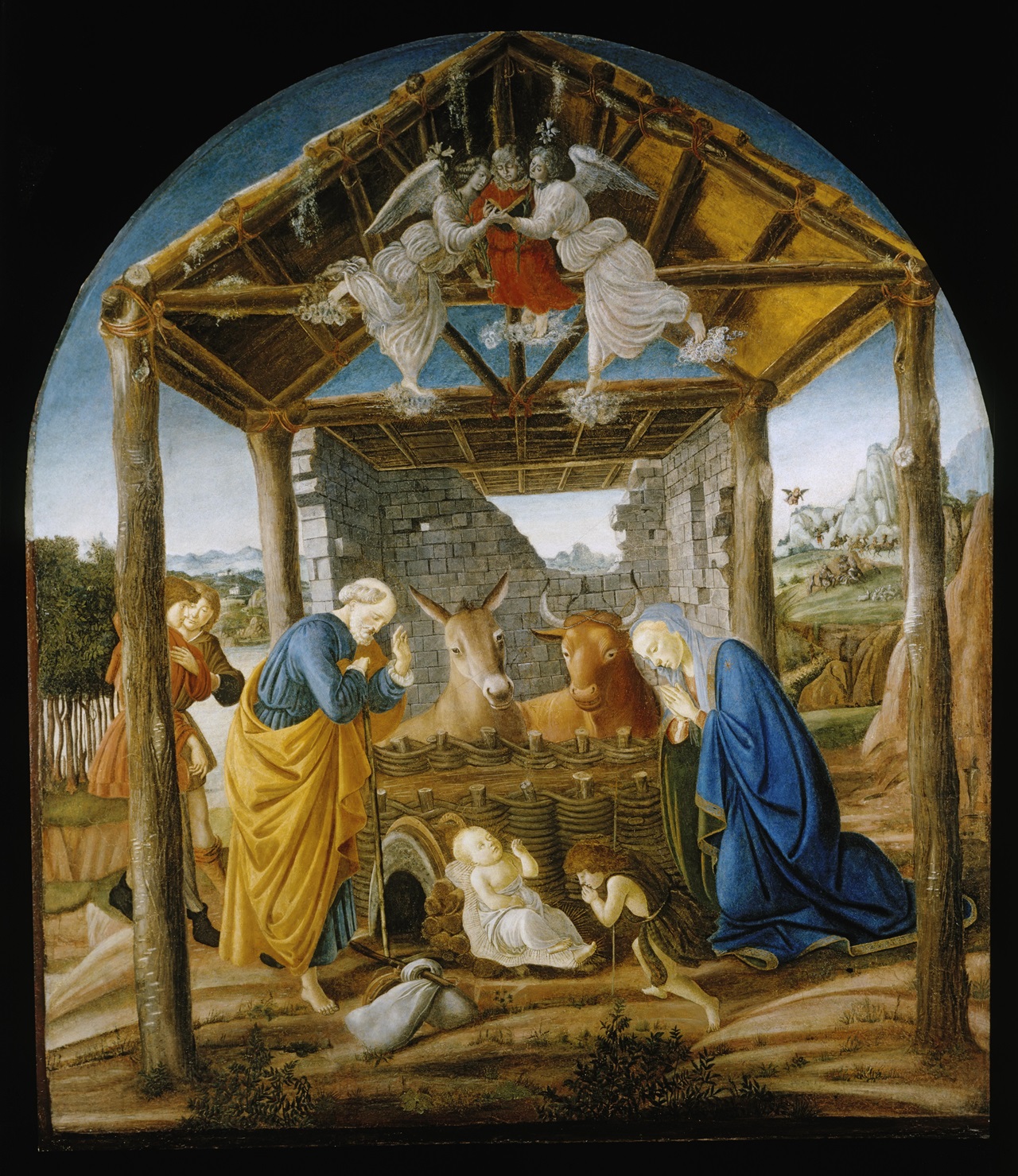
Was Jesus born in a manger or in a cave, as many Christian traditions inform us, or under a tree, as some Christian traditions, as well as the Qur’an, tell us? For example, the story in the New Testament, as narrated in the gospels of Matthew and Luke with some nuances, is well known: Jesus was born in Bethlehem. His virgin mother, Mary, according to Luke, wrapped her newborn baby in swaddling cloths and laid him in a manger. “This description,” writes Mustafa Akyol, “has defined Christian imagination for centuries, with countless works of art depicting the baby Jesus lying in a barn, surrounded by hay, sheep and cows.”
Other accounts suggest he was born in a cave within the confines of the Church of the Nativity in Bethlehem (see photograph, below), one of the oldest continuously operating churches in the world.
The Altar of the Nativity, beneath which is the fourteen-point silver star marking the traditional spot of Jesus’ birth. The star is set into the marble floor and surrounded by 15 silver lamps representing the three Christian communities: six belong to the Greek Orthodox, four to the Catholics, and five to the Armenian Apostolic. For more about the significance and history of the Church, please click Wikipedia. Photograph: Muslim Harji, Montreal.
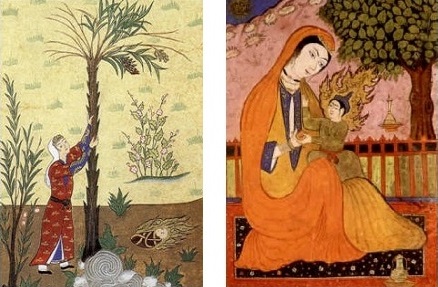
Islam, while accepting the miraculous birth of Jesus, provides a significantly different account of the Nativity. According to the Qur’an, Jesus is born not in Bethlehem but in an unspecified “distant place.” Mary is all alone while giving birth to him, and there is no one to help her. She is said to give birth under a palm tree next to a miraculous spring. Read Mustafa Aykol’s beautifully written and insightfully researched piece, Jesus’ Birth Between Islam and Christianity, published in New Lines Magazine.
Left: Mary nurtured by a palm tree in a Turkish miniature, as described in the Qur’an; right: Mary and Jesus in a Persian miniature. Images: Wikipedia.
Much of the inspiration for my paintings comes from Mawlana Hazar Imam His Highness the Aga Khan’s guidance to the Ismaili community on the importance of brotherhood, pluralism, and living a life where we “do not forsake the soul for the material world.” Indeed, I draw continued encouragement from the Imam’s guidance as an artist and in my daily life.
Take Me Away by Shafina Jaffer. Medium: Oil on canvas. Size: 200 x 80 cm (78.7 x 31.5 in). This painting was projected on the facade of Windsor Castle during the Coronation Concert honouring the Coronation of Their Majesties King Charles III and Queen Camilla, on May 7, 2023. Shafina presented the original painting to Mawlana Hazar Imam, His Highness the Aga Khan, for the auspicious occasion of Navroz, March 21, 2024. Photograph: Shafina Jaffer collection.
Last year, I curated a painting for King Charles’s coronation, and on the occasion of Navroz — the Persian New Year — on March 21, 2024, the same painting, “Take Me Away,” was gifted to Mawlana Hazar Imam, who graciously accepted it and encouraged me to pursue my talents. His message moved me, and as a show of gratitude to celebrate his 67th Imamat Day on July 11, 2024, I have embarked on a series of Mawlana Hazar Imam portrait paintings that will be presented in the coming months on this website.
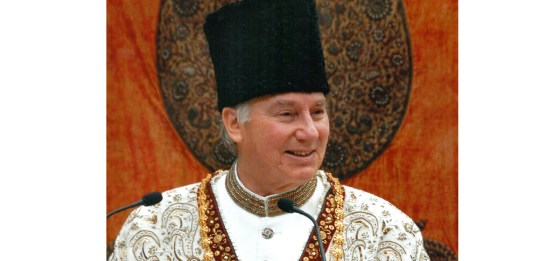
Simerg and its sister website, Barakah, share the first painting in this series that captures a very youthful Hazar Imam. When asked about my choice to depict Mawlana Hazar Imam at this age, I explain that it’s the image that has been etched in my mind growing up: a sympathetic, youthful figure radiating with light. This personal connection with the Imam drives my artistic expression and deepens my sense of gratitude.
Delving into mixed-media mediums, I use my heritage and strong affiliation with spirituality to sow the seeds of my creativity. Since completing my Graduate Diploma (Art & Design) and Master’s Degree (Painting) from the Royal College of Art, I have explored the intricacies of nature, human relationships, and spirituality within the field of art and their interrelationship.
Religion and spirituality are not just important themes in my art; they are the essence of my work, reflecting my deep exploration of faith and the human connection to the divine. My canvases are vibrant and alive, filled with a playful mix of colour, form, and texture, with natural mediums playing a pivotal role. Faith pushes me to transcend the physical and visible, uncovering what resides at the core and infusing the outer edges with life. Indeed, with such portraiture of the Imam, the lines between literal and divine interpretation are moving and profound.
Please click on image for enlargement
Mawlana Hazar Imam, His Highness the Aga Khan, by Shafina Jaffer. Medium: Oil, Gold and Charcoal; Size: 42 x 32 cm. Original photograph for painting: Gary Otte (cover page and page 121 of Depth of Field: The Aga Khan Beyond the Lens).
This portrait of the Aga Khan, painted with meticulous care and deep gratitude, captures his serene and compassionate essence. I have highlighted his gentle smile and thoughtfully intelligent eyes, conveying wisdom and kindness. The subtle use of colours and shading brings out the depth of his character and position in humanity, reflecting his profound impact as a spiritual leader and guide. One can easily see an overarching glow settled upon the canvas — reflecting his holy and elevated demeanour.
The border, crafted in real gold and liquid charcoal, symbolizes his love for nature and adds a unique, elegant touch to the piece. This artwork is a heartfelt tribute, expressing deep appreciation for the Aga Khan’s guidance and positive influence on my life and practice. It stands as a testament to the enduring respect and admiration he commands.
Upon gazing at this painting, one can forget that it is not a photograph. My brush has sought to create a three-dimensional profound effect which makes it appear that the face is emerging from the confines of the page to look into the viewer’s eyes, saying:
“Everybody makes mistakes. Never regret them; correct them. There’s no such thing as a perfect world or perfect life” — His Highness the Aga Khan.
Date posted: July 9, 2024.
_________________
Work in progress, as Ismaili artist Shafina Jaffer paints a portrait of His Highness the Aga Khan in her studio in Dar es Salaam, Tanzania. The iconic artist was invited to the residence of the US Ambassador to Tanzania on US Independence Day, July 4, 2024, to exhibit her paintings featuring African women.
“God chose Adam and Noah and the House of Abraham and the House of Imran above all beings, the seed of one another; God hears, and knows” — Qur’an, 3:33-34, translation by A. J. Arberry, see Corpus Quranfor multiple translations
A calligraphy designed by Toronto’s Karim Ismail honouring the first Shia Imam Ali, on the auspicious commemoration of Idd-e Ghadir.
On Monday, June 24, 2024, Ismaili Muslims in Canada and other parts of the world will unite to observe and celebrate Eid-e Ghadir. This momentous occasion marks the pivotal gathering at Ghadir Khumm, where Prophet Muhammad (peace be upon him and his family) designated Hazrat Ali as his successor, the first in the continuing line of Hereditary Imams.
This historical event holds immense significance in the Ismaili faith. Today, the holder of the Hereditary position is Mawlana Hazar Imam, His Highness the Aga Khan, the 49th Imam in direct succession. In this regard, the Aga Khan has affirmed “that the Ismailis are the only Shia community who, throughout history, have been led by a living, hereditary Imam in direct descent from the Prophet” — His Highness the Aga Khan, Parliament of Canada, Ottawa, February 27, 2014.
History records that on the way back to Medina after performing the final pilgrimage to Mecca, the Prophet received a revelation:
“O Messenger, deliver [to the people] what has been revealed to you from your Lord, and if you do not do so, then you will not have delivered His message” Surah al-Ma’ida (5:67)
Upon receiving this revelation, the Holy Prophet stopped at an oasis known as Ghadir Khumm. He addressed a large gathering of Muslims who had accompanied him. The Prophet proclaimed: “Man kuntu mawlahu fa aliyyun mawlahu,” meaning: “He whose Mawla I am, Ali is his Mawla.” The Prophet then prayed: “O Allah, be a friend of whoever is his friend and extend your support to those who support him.”
This event, occurring at a crucial point in Islamic history, marked the transition of leadership from the Prophet to Hazrat Ali, setting the stage for the leadership and future of the Muslim community. Thus, by declaring Hazrat Ali Mawla after him, the Prophet transferred the spiritual authority bestowed upon him by Allah to Hazrat Ali, making him — and all the Imams that follow — the Amirul Mu’minin, or Master of the Believers. In this context, ‘Mawla’ refers to a leader, protector, and guide, indicating the profound responsibility and authority bestowed upon Hazrat Ali.
Article continues below following excerpts
________________________________
Excerpts from L. Veccia Vaglieri piece in Encyclopaedia of Islam, Second Edition
“Ghadir Khumm is famous in the history of Islam because of a sentence (or some sentences) in favour of ‘Ali which the Prophet uttered there during a discourse….Taking ‘Ali by the hand. he asked of his faithful followers whether he, Muhammad, was not closer to the Believers than they were to themselves; the crowd cried out: “It is so, O Apostle of God!”, he then declared. “He of whom I am the mawla, of him ‘Ali is also the mawla (man kuntu nawlahu fa-‘Ali mawlahu)
Photograph: Vysotsky – Own work, CC BY-SA 3.0, Wikimedia.
~~~~~~
“Most of those sources which form the basis of our knowledge of the life of the Prophet pass in silence over Muhammad’s stop at Ghadir Khumm….Consequently, the western biographers of Muhammad, whose work is based on these [Sunni] sources, make no reference to what happened at Ghadir Khumm. It is however certain that Muhammad did speak in this place and utter the famous sentence…the hadiths are so numerous and so well attested by the different isnads that it does not seem possible to reject them.” Vaglieri goes on to state that on instruction from Prophet Muhammad, Hazrat Ali received baiyat (the oath of allegiance) from the Muslims assembled there, including Umar b. al-Khattab, Islam’s second Caliph.
(Note: special access is required to read articles in the on-line edition of EI2. Vaglieri’s piece was reproduced in full in the UK Ismaili Association’s publication Ilm, December 1976, pages 28-30, with the permission of E.J. Brill, publishers of EI2.)
________________________________
Excerpts from the Preamble of the Ismaili Constitution
“In accordance with Shia doctrine, tradition, and interpretation of history, the Holy Prophet (s.a.s.) designated and appointed his cousin and son-in-law Hazrat Mawlana Ali Amiru-l-Mu’minin (a.s) to be the first Imam to continue the Ta’wīl and Ta’līm of Allah’s final message and to guide the murids, a term referring to the followers and disciples of the Imams. The proclamation also established the principle of the Imamat continuing by heredity through Hazrat Mawlana Ali (a.s) and his daughter Hazrat Bibi Fatimat-az-Zahra, Khātun-i-Jannat (a.s)”
Mawlana Hazar Imam, His Highness the Aga Khan, is seen signing a new constitution for the worldwide Ismaili community on his 50th birthday, December 13, 1986. The preamble excerpts produced in this post are from this constitution.
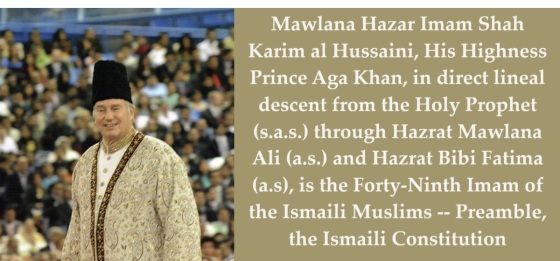
“Mawlana Hazar Imam Shah Karim al Hussaini, His Highness Prince Aga Khan, in direct lineal descent from the Holy Prophet (s.a.s.) through Hazrat Mawlana Ali (a.s.) and Hazrat Bibi Fatima (a.s), is the Forty-Ninth Imam of the Ismaili Muslims.”
________________________________
…. continued
On instruction from Prophet Muhammad, Hazrat Ali received baiyat (the oath of allegiance) from the Muslims assembled there. According to Shia traditions and sources, following the proclamation, the final verse of the Qur’an was revealed to the Prophet:
“On this day, I have perfected for you your religion, completed my favours upon you, and have chosen for you Islam as your religion.”
Eid-e Ghadir is an anniversary of profound significance to all Shia Muslims. It is also associated with the well-attested tradition that the Prophet is said to have proclaimed:
“I am leaving among you two matters of great weight (al-thaqalayn), the Book of Allah and my kindred (itrati), the People of my House (Ahl al-Bayt), and these two shall never be separated until they return to me at the Pool [of Kawthar in Paradise on the Day of Judgement]…”
The phrase ‘two matters of great weight’ refers to the Quran and the Ahl al-Bayt, emphasizing their inseparability and eternal significance in the Islamic faith.
In commemorating Eid-e Ghadir, the Ismaili community celebrates the seminal event of Ghadir Khumm, reaffirming their allegiance to the Imam of the Time as the direct lineal successor and inheritor of Hazrat Ali’s authority. The community is not just inspired, but united and driven by the following remark made during his speech in Canada’s Parliament on February 27, 2024:
“Today, the Ismailis are the only Shia community who, throughout history, have been led by a living, hereditary Imam in direct descent from the Prophet.”
Date posted: June 23, 2024.
____________________
Please click HERE for many more pieces on this website on the topic of Eid-e Ghadir.
Simerg wishes Muslims worldwide and friends of the Muslim community a very happy Eid Mubarak for 2024. We welcome Canada Post’s special Eid Stamp and First Day Cover publications for the auspicious occasion featuring images of a delicious Middle Eastern cookie — the maamoul.
We sincerely hope and pray that wars will be replaced by peace so that children everywhere, especially in war-affected zones, can experience the sweet delights that Eid offers everyone and begin to live with hope for the future. It is up to humanity to ignite the unfortunate ones with the spark of hope over a life of continuing degradation and despair.
___________________
2024 Commemorative Eid Stamp Issued by Canada Post
Canada Post’s Commemorative Eid Stamp for 2024, issued March 27. Photograph: Canada Post.Please click BUY 2024 EID STAMPS BOOKLET OF 6($5.52).
On March 27, 2024, Canada Post issued a new stamp to mark two important Islamic holidays: Eid ul-Fitr, which will be celebrated this week from April 10 after the month of Ramadhan after the sighting of the New Moon on April 9, and the upcoming Eid ul-Adha, which will be held from June 17 to mark the Festival of Sacrifice commemorating Ibrahim’s (Abraham) willingness to sacrifice his son to God. The Eid ul-Adha will be held at the end of the annual pilgrimage to Mecca.
The 2024 issue is Canada Post’s sixth Eid stamp; the others were issued in 2017, 2020, 2021, 2022 and 2023.
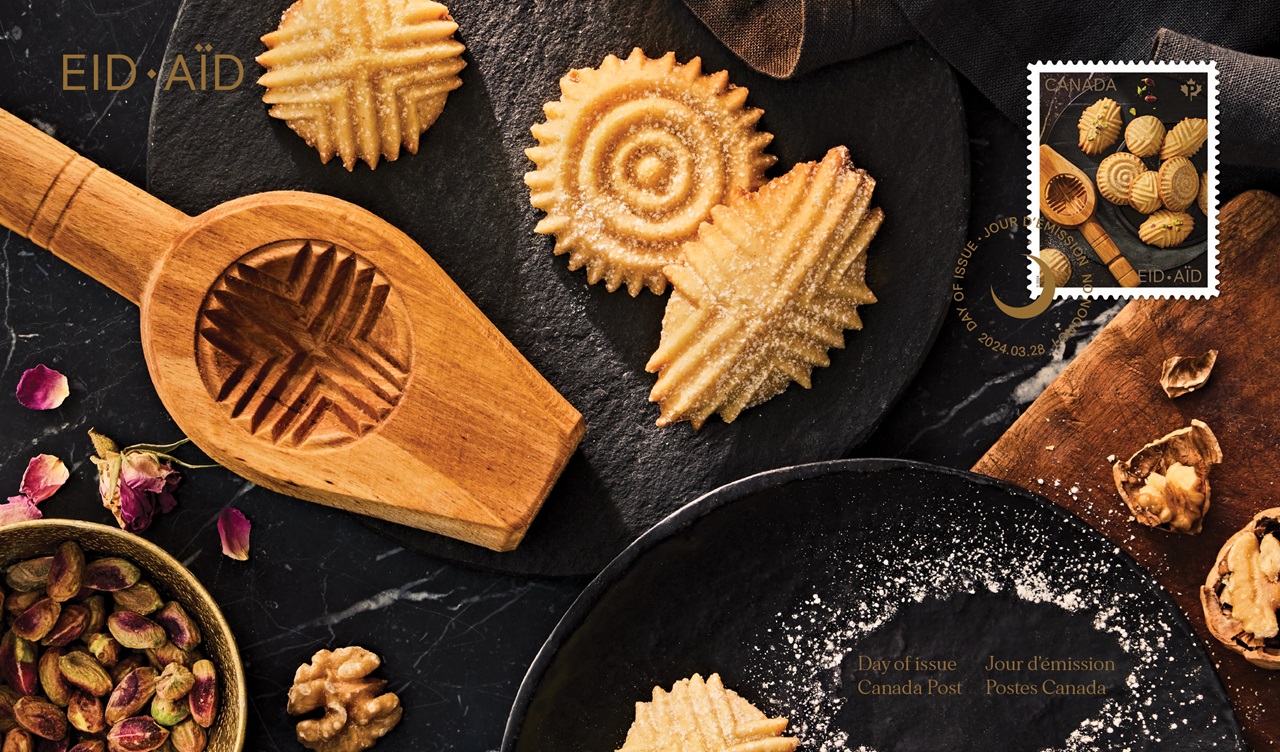
The 2024 stamp was designed by Kristine Do, photographed by Maya Visnyei, and food-styled by David Grenier. Printed by Colour Innovations, the issue includes six Permanent™ domestic rate stamps booklets and an Official First Day Cover cancelled in London, Ontario. The new stamp and collectibles are available at canadapost.ca and postal outlets across Canada.
Celebrated by more than one million Muslims in Canada, both events can last several days and include communal prayers and feasts, visits with family, gift-giving and acts of charity. The 2024 commemorative stamp features maamoul, Middle Eastern cookies, and a traditional carved wooden mould used to make them.
Melt-in-your-mouth cookies stuffed with a delicious walnut, pistachio or date filling, maamoul are a sweet staple during Eid celebrations. They are traditionally handmade from semolina and flavoured with fragrant rose or orange-blossom water and mahlab — a spice made from ground cherry pits. Before baking, the dough balls are stuffed with walnut, pistachio, or date filling and formed with specially carved wooden moulds. Early versions of maamoul can be traced back to ancient Egypt and Mesopotamia. Today, family and friends often gather before Eid ul-Fitr and Eid ul-Adha to bake the cookies together.
Story continues below
Canada Post 2024 Eid Stamp Booklet
2024 Eid booklet of six stamps issued by Canada Post on March 27, 2024. The stamps can be detached from the booklet and used to mail letters. Please click BUY 2024 EID STAMPS BOOKLET($5.52).
~~~~~~~~~
Canada Post 2024 Eid Stamp First Day Cover
2024 Eid Stamps First Day Cover issued by Canada Post on March 27, 2024. Please click BUY 2024 EID FIRST DAY COVER ($1.92).
The Eid stamp is one of several stamps Canada Post issues each year to mark annual celebrations important to Canada’s culturally diverse population – others include Diwali, Hanukkah and Christmas. To buy the stamp online, please click Buy 2024 Eid Stamps Booklet of 6. Most postal outlets do not carry Eid stamps and are not aware of their release. I recommend that you obtain them online, where postage is free if you order 5 booklets or more.
Date posted: April 8, 2024. Last updated: April 21, 2024 (typos).
Simerg’s introduction of “Books by Ismaili Authors” continues with Boustan Hirji’s translation of Sijistani’s “Al-Risalah al Bahirah.” We follow the same Q/A format as our earlier presentations of books, which are listed chronologically below. We encourage Ismaili authors worldwide to participate in this series, regardless of when their books were published. See details of the series HERE and submit your responses to Simerg’s editor, Malik, at mmerchant@simerg.com.
****************
Simerg’s Interview with Ismaili Scholar Dr. Boustan Hirji
Dr. Boustan Hirji
“Al-Risalah al Bahirah is such a profound, fathomless space of intellectual ideas and crucial for understanding the depth of the Ismaili tradition, that I would hope that it makes for interesting reading for both Ismailis and anyone curious about syncretic traditions that have an impact on our current lives and societies” — Boustan Hirji
Simerg: What is behind the name and title of the book?
Boustan Hirji: The book’s title is a translation of the title given to the treatise by al-Sijistani himself.
Simerg: Why would you want me or my family to read the book, and what will we learn from it?
Boustan: This treatise in particular makes for a very interesting reading because Sijistani writes on the subject of Resurrection from a wider perspective on the history of ideas yet stays focused on the Isma’ili point of view. He is an original thinker who draws from the Buddhist, Hindu, and Hellenistic traditions and yet is uniquely representative of the Badakshani Ismaili tradition.
Simerg: What inspired you to write the book?
Boustan: My Professor and thesis supervisor at McGill University, Dr Hermann Landolt, shared this manuscript with me when I spent some days with him and his family in Pany, Switzerland. It is a manuscript that is very dear to his heart, and I am indebted to him for introducing me to the world of Sijistani. Ever since then, Sijistani has been my constant companion, a treasure waiting to be revealed.
Interview continues below
_____________________________
Print Edition
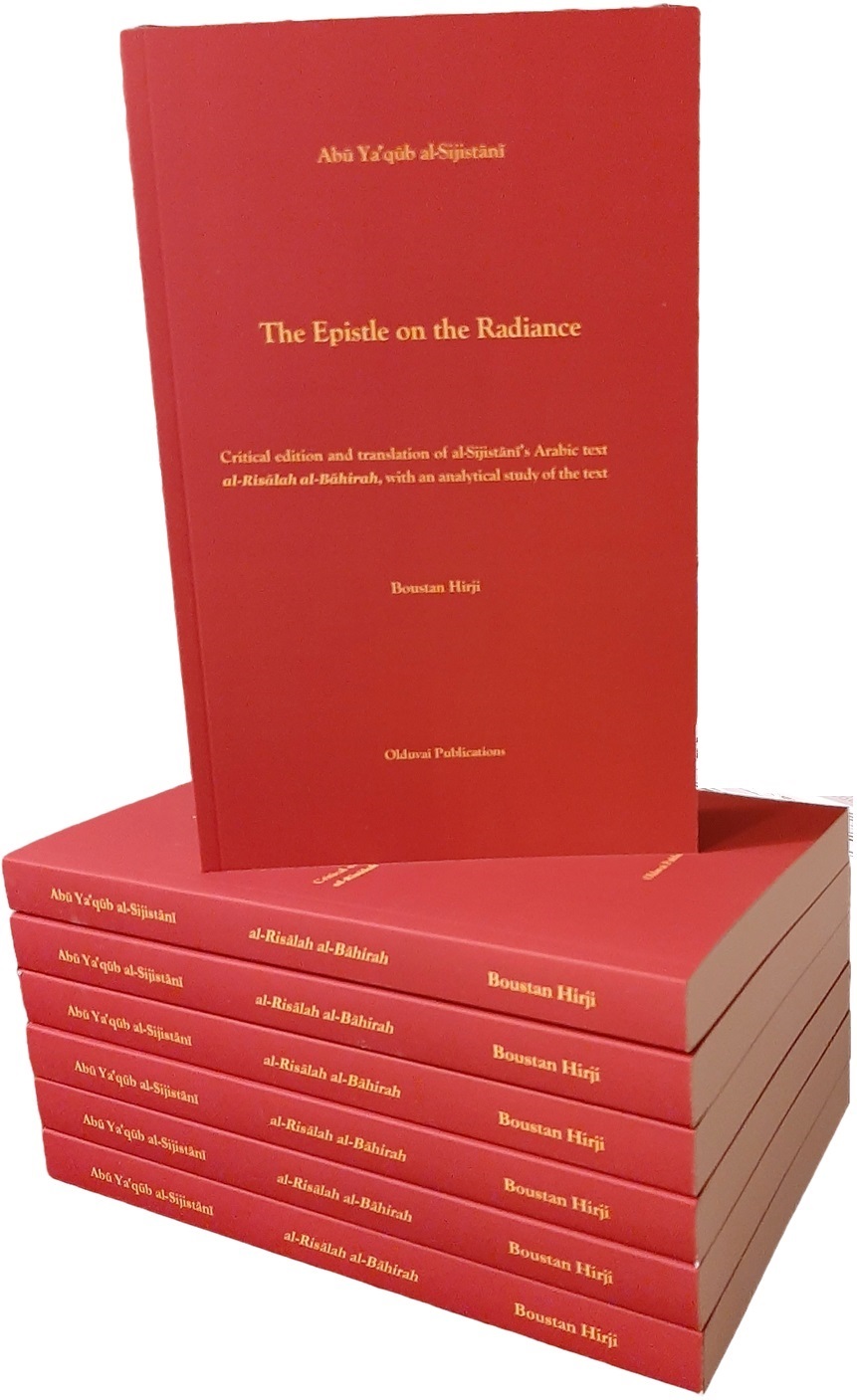
Front cover of the print edition of Boustan Hirji’s translation of Fatimid philosopher al-Sijistani’s epistle al-Risalah al-Bahirah, published by Olduvai Publications, Burnaby, British Columbia, Canada, 2024, pp. 167. Foreword by Mohamed Abualy Alibhai.
Thanks to the pioneering and lifelong studies by Paul Walker, we are becoming increasingly knowledgeable about the Fatimid daՙi and philosopher Abu Yaՙqub al-Sijistani. Based on two manuscripts, Dr. Boustan Hirji has prepared an English translation and critical edition of the Arabic text of Yaqub al-Sijistani’s al-Risalah al-Bahirah (‘The Epistle on the Radiance‘). The book is free of charge in print and PDF through an email request to olduvai.publications@gmail.com. The free distribution has been made possible by a generous donor. Kindly note that only limited copies of the print edition are available.
Electronic Edition (PDF)
Front and back covers of the PDF edition of Boustan Hirji’s translation of Fatimid philosopher al-Sijistani’s epistle al-Risalah al-Bahirah, published by Olduvai Publications, Burnaby, British Columbia, Canada, 2024. Foreword by Mohamed Abualy Alibhai.
_____________________________
Simerg: How can I purchase the book, and what are its available formats?
Boustan: The book is available in paperback and ebook (pdf) formats.
(We are pleased to inform our readers that both versions of Dr. Boustan Hirji’s book are free due to a generous donation. Please write to Dr. Mohamed Alibhai at olduvai.publications@gmail.com for more details about obtaining the book. Note that the availability of the print edition is limited — Ed.)
Simerg: How did you find a publisher for the book?
Boustan: My friend and fellow Sijistani scholar, Dr. Mohamed Alibhai, is a publisher, and he was keen to publish it. He was my editor, my Socrates, my friend and my taskmaster!
Simerg:Which was your first book, and how many have you written?
Boustan: This is my first book in the academic field of Ismaili philosophy. The first edition of the manuscript al-Risalah al Bahirah, its translation and Introduction to it was originally published by the Tehran branch of McGill University. Earlier, I had published a book on Gender stories in Syria, Egypt and Bangladesh. It is available from Amazon under the title Sands Under a Relentless Sun.
Simerg: How long did it take you to write the book — from start to finish?
Boustan: The current work has accompanied me on a long journey as I lived my tumultuous life! I kept re-reading, rethinking passages and ideas, until I agreed to have it published. Al-Risalah al Bahirah is such a profound, fathomless space of intellectual ideas and crucial for understanding the depth of the Ismaili tradition that I would hope that it makes for interesting reading for both Ismailis and anyone curious about syncretic traditions that have an impact on our current lives and societies.
Date posted: April 3, 2024.
_______________
About the Author
Dr. Boustan Hirji
Boustan Hirji was born and grew up in Bangladesh and attended the convent-run Holy Cross School and Holy Cross College until she was 18. She completed a Bachelor of Arts at St. Mary’s at Notre Dame, cum laude, majoring in Political Sociology.
Boustan obtained a Master of Theological Studies at The School of Theology (a Methodist Seminary) Boston University. Her thesis compared the Exodus and the Hijrah.
She then proceeded to join an MA-PhD programme at the Institute of Islamic Studies, McGill University. The MA was in Islamic Theology (Kalam). The PhD was in Ismaili philosophy, focusing on al-Sijistani. Her doctoral dissertation (upon which her book is based) was recommended by the external examiner, Dr. Abbas Hamdani, for the university’s Dean’s List.
Boustan Hirji was appointed to teach in the joint programme of McGill University and The Institute of Ismaili Studies in London, England in the 1980s. After this, Dr. Hirji taught in the Religious Studies department of McGill University.
She was given The Alumni Award of the Year in 2016, for Excellence in Teaching and Leadership Skills by the School of Theology, Boston University, USA.
Until she retired in 2020, she taught in the Liberal Arts Honours Programme at Dawson College, Montreal, Canada.
Calling all Ismaili Authors
We encourage Ismaili writers to introduce their books in a similar format as has been done in the post above. Please also see the series launch article and submit your responses to Malik at mmerchant@simerg.com. All submissions will be acknowledged. If a writer has published multiple books, each book will be highlighted in a separate article, and not combined with other books into one post. All writers should include a brief profile with a portrait photo.
_______________
Links to the Ismaili Authors’ Series (in chronological sequence, oldest article first)
Before departing this website please take a moment to review Simerg’s Table of Contents for links to hundreds of thought provoking pieces on a vast array of subjects including faith and culture, history and philosophy, and arts and letters to name a few. Also visit Simerg’s sister websites Barakah, dedicated to His Highness the Aga Khan, and Simergphotos.
“You and I are brothers, and you and I are from the same city, the same country; we speak the same language and share the same history” — Christian pastor
Every Ramadan, an Iraqi Christian preacher returns from the Netherlands to his hometown of Mosul. He celebrates the holy Islamic month there to promote understanding between Muslims and Christians. Voice of America’s Kawa Omer has the story, narrated by Bezhan Hamdard.
The Aga Khan on Moving Christian-Muslim Relations Forward for a Better World
“Our histories have taught us the value of dialogue, and that rarely, indeed very rarely, does anything good come out of conflict. Our world view is to engage with the problem of social exclusion in our societies and to contribute to building bridges across faiths and across nations, by linking diverse parts of the world” — the Aga Khan
“I have no doubt that for you, whose historical roots are in the Christian world, it is as painful as it is for us Muslims, with our roots in the East, to watch an increasingly deep gulf growing between significant parts of our respective worlds. We cannot stand by as passive observers letting this gulf grow wider and wider, at the cost of future generations. If we have the will, which I am certain we share, we have the historical knowledge and the ethical foundations to move our world forward, to make it a better and more hopeful place, and to put an end to the storm of hatred which appears to be building up around us.
“Our histories have taught us the value of dialogue, and that rarely, indeed very rarely, does anything good come out of conflict. Our world view is to engage with the problem of social exclusion in our societies and to contribute to building bridges across faiths and across nations, by linking diverse parts of the world.
“We are concerned, and most rightly so, that there is poverty among our respective peoples, and we cannot stand by watching this inhuman indignity become a permanent part of our societies, of our generations of today and tomorrow. We must work together to develop an arsenal of peaceful weapons to attack this plight which blights our times, and to try to make sure that those who are marginalised today can be certain that we are not blind to them, that we will not let their future generations live in the same hopeless world in which they themselves are seeking, often only in despair, to survive.” — the Aga Khan, speaking at the Protocol of Co-operation Signing Ceremony between the Ismaili Imamat and the Government of Portugal, Lisbon, Portugal, December 19, 2005 (Read full speech HERE).






















 Simerg - Insights from Around the World