
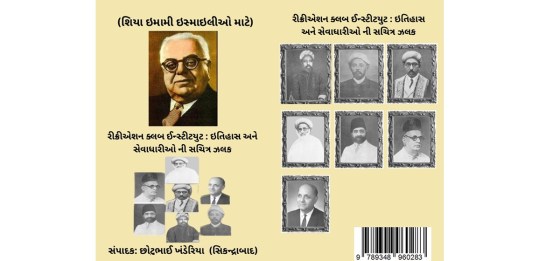
After having featured twenty-nine English books authored by Ismailis since the inception of our special series Books by Ismaili Authors in 2021, we present for the first time a Gujarati book that provides insight into an Ismaili Institution of the early 20th century, the Recreation Club. The author, Chhotubhai Khanderia, lovingly known as CNK, a native Gujarati speaker, has also made it available as a downloadable PDF file, ensuring easy access for our readers. We are pleased to feature his work in the series.
We call Ismaili authors worldwide to highlight their books in our continuing series by submitting their responses to our standard set of questions — please see details HERE. For any queries, please email Malik at mmerchant@simerg.com.
Interview with Chhotubhai Khanderia
Simerg: What constitutes your book Recreation Club Institute: History and Illustrated Glimpses of Service Holders? Why would you want me to read it, and what will we learn from it?
Chhotubhai Khanderia: My book “Recreation Club Institute: History and Illustrated Glimpses of Service Holders” is a significant contribution to the history of the Ismaili community. It chronicles its early days, from the Recreation Club to the Ismailia Association in the 1950s, which is now known as the Ismaili Tariqah and Religious Education Board (ITREB).
The Recreation Club had a glorious history that our beloved 48th Imam, Mawlana Sultan Mahomed Shah, nurtured through instruction and guidance. The book also includes glimpses of members of the Jamat who served in the institution in the early years from 1901 to 1925, and made unparalleled contributions. As many as 45 missionaries who were recorded in the pages of history during the period of the Imam have presented their illustrious service. After that, during the 68 years of the Imamat of Mawlana Shah Karim, the institution, which had been renamed as the Ismailia Association before his Imamat, made unparalleled progress that we can all be proud of. And after the promulgation of the 1986 Constitution, the institution was renamed as the Ismaili Tarqiah and Religious Education Board. Many new institutions were created, strengthening the Ismaili institutional structure and making it uniform around the world.
One of the aims of this book is to provide insights into the vast work done by missionaries. The larger aim is for the Ismaili community to become familiar with the history of the institution and to gain a deeper understanding of the services of many who served the Society.
Simerg: What is behind the name and title of the book?
CNK: The book’s title acts as a window into the illustrious history of the Institute and a bridge, connecting the Jamat to the lives of the organization’s early foundation service members. These members, such as Waris Ismail Mohammad Jafar, Huzur Wazir Ali Muhammad Rehamtullah Macklay, Mukhi Lalji Devraj, Virji Premji Parapiya, Master Hashim Bogha, Manji GulamHussain Padamshi, and Alijah Wali Muhammad Nanji Hudda, are brought to life through the book’s pages. Moreover, the book is a treasure trove for those interested in the organization’s history, as it acquaints readers with the brief biographies of 210 Ismaili missionaries, who are known today as Alwaez.
Simerg: How can I purchase this book?
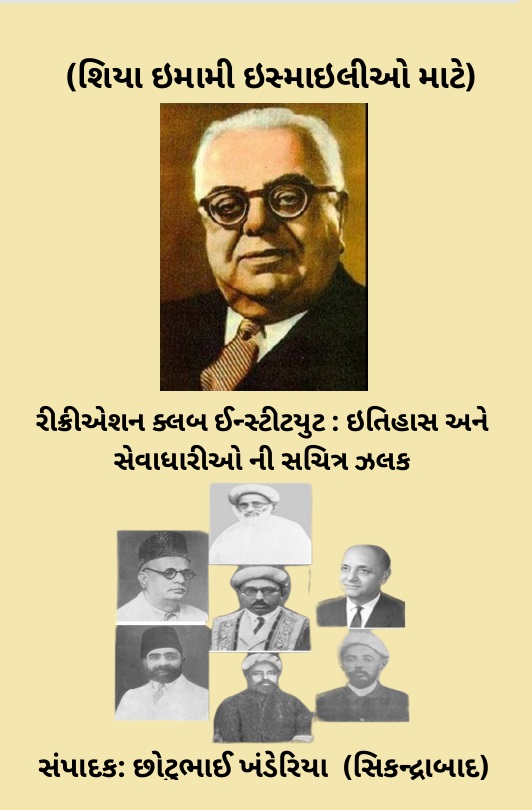
CNK: The hard copy of the book is available upon request by writing to me at cnkhanderia@gmail.com. However, I have made an electronic copy available as a PDF file, which can be downloaded HERE (or by clicking on the image above). The book is entirely self-funded and self-published by me.
Simerg: Did you hire an editor or designer, or did you do all the work yourself?
CNK: I hired a graphic designer to work on the layout and the formatting of the book.
Simerg: What inspired you to do this important work?
CNK: The practice of daw’a in the Ismaili community was pioneered centuries ago by the Ismaili Dais, Pirs and Sayyids. In later centuries, the Ismaili missionaries took on the responsibility of imparting religious and moral education to the Jamat in a unique way, under the careful guidance of the Imam-of-the-Time. Their service, which has left an indelible mark on the Ismaili community, is a significant part of our history, recorded in various books and on websites. The material that I came across encouraged me to collect, consolidate and include information about our unsung missionaries.
Story continues below
Simerg: How long did it take you to complete your monograph?
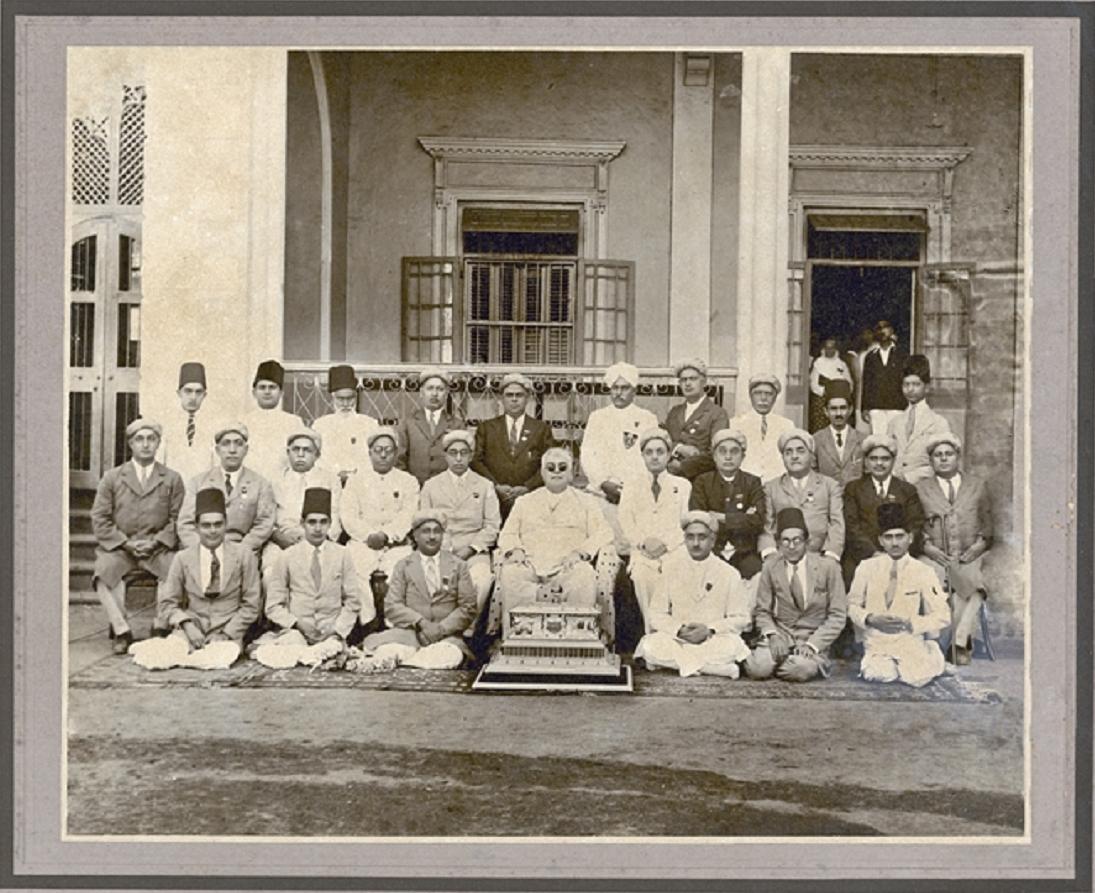
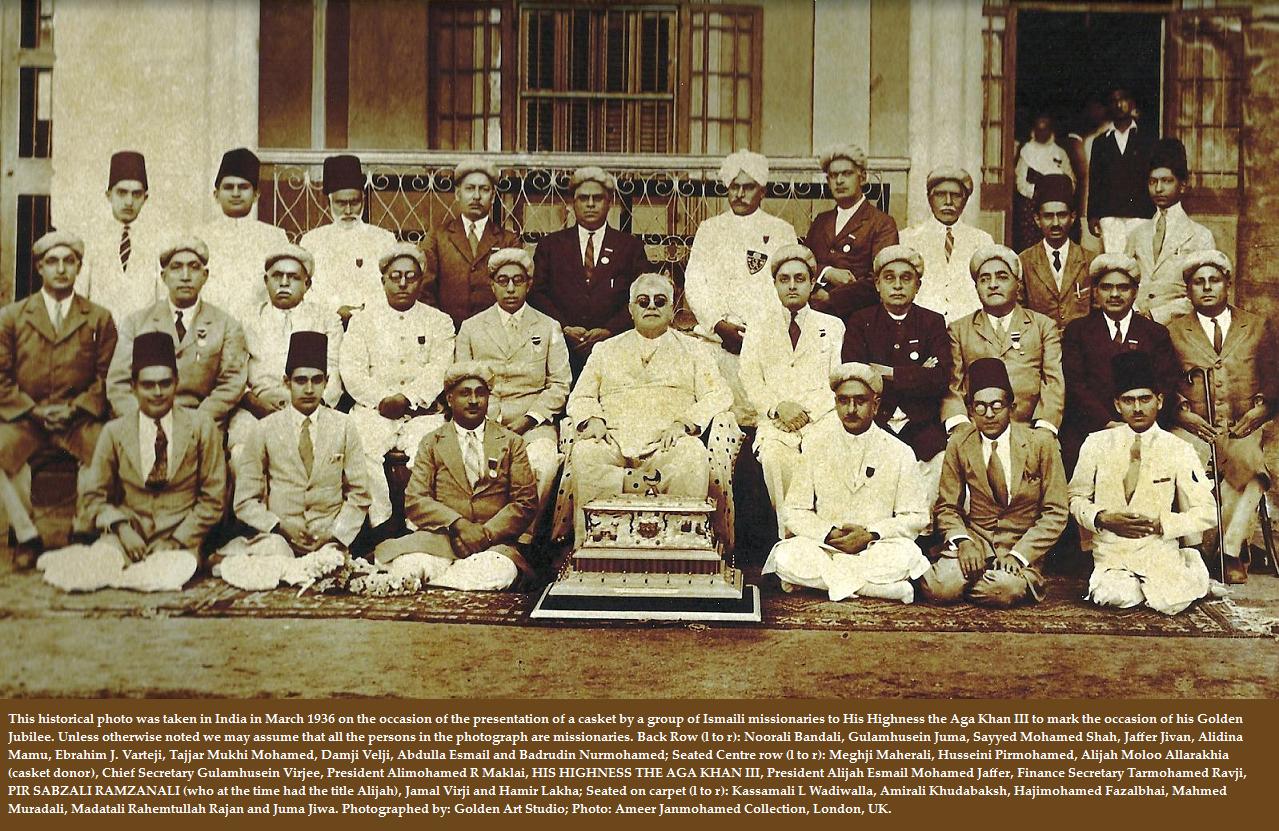
CNK: The idea to write the book came in 2021. While reading an article on Simerg, I came across a picture of Imam Sultan Mahomed Shah with the missionaries taken in 1936. In that picture, the Imam was presented with a casket in 1936 to mark his Golden Jubilee. When I curiously started searching for the history of those missionaries, I found the history of about 40 missionaries online, and I consolidated it. Then it expanded to include more missionaries who were in different regions worldwide, creating a global narrative that spans India, Pakistan, Kenya, Tanzania, Uganda, the USA, Canada, the UK, and the UAE. As the famous saying goes: ‘मैं अकेला ही चला था जानिब-ए-मंज़िल मगर, लोग साथ आते गए और कारवाँ बनता गया’ (which roughly translates as ‘I started alone towards my destination, but people kept joining me and a caravan started forming’). This journey of discovery and collaboration, which is described in the book in more detail, transformed a mere idea into a comprehensive account of missionary history. After I had gathered all the information, I passionately began to develop the book in April 2025 and completed it in three months.
Simerg: Tell us something more about your book
CNK: The cover page was specially chosen, with our beloved 48th Imam as the primary focus. He laid the foundation of the Recreation Club. The cover page also includes portraits of some prominent leaders of the Club.
This is the first edition of the book, and your feedback could shape its future. If you find errors in the factual information, please let me know, and I will incorporate the corrections in the next edition. This will ensure the accuracy of the book. Some missionary biographies are brief — one-liners in some instances. I am particularly interested in including more details about their contributions to the Jamat. I would be deeply grateful if the surviving missionaries or members of their families could send me brief profiles for inclusion in the revised edition. Finally, I wish to say that while readers may use Google to translate the PDF Gujarati book into English, I intend to make the book available in English.
Date posted: August 20, 2025.
______________

About the author: Mr. Chhotubhai Khanderia, fondly known as CNK, was born in Porbandar, Gujarat. He pursued a Diploma in Civil Engineering and began his government service in 1981, supervising the repair and maintenance of government buildings, roads, bridges, and new constructions. In the Ismaili community, he has held numerous voluntary positions since 1977, which have left a lasting impact: he has served as a secondary level religious instructor, a local board member in ITREB, a regional member in the Youth and Sports Board, a secretary in the Ismaili Council, a regional chair in the Southern Saurashtra Social Welfare Board and ITREB, and as Mukhi of Majlises (special gatherings). His services were recognized with the title of Alijah by Mawlana Shah Karim, His Late Highness Aga Khan IV. Chhotubhai currently resides in Secunderabad, India, as a retired serviceman. He can be reached at cnkhanderia@gmail.com.
~~~~~~~~~
Links to the Ismaili Authors’ Series (in chronological sequence, oldest article first)
- “Justice Bertha Wilson Pushes the Boundaries of Humanity” by Shamas Nanji (featured on February 10, 2021, series start date)
- “Little One, You Are The Universe” by Zeni Shariff (February 25, 2021)
- “Memoirs of a Muhindi” by Mansoor Ladha (March 6, 2021, and see also 15 and 21 by the same author)
- “To Be One With God: Seven Journeys to the Meaning of Life” by Shafeen Ali (March 25, 2021)
- “Invisible Birthmarks” by Alnasir Rajan (April 13, 2021)
- “IN THE NAME OF JUSTICE – Portrait of a ‘Cowboy’ Judge” by Azmina Suleman (April 28, 2021)
- “RSVP Rice and Stew Very Plenty” by Nazlin Rahemtulla (May 28, 2021)
- “Coughdrops” by Nargis Fazal (June 12, 2021)
- “The Roots and the Trees” by Nizar Sultan (June 25, 2021)
- “Faith and Ethics: The Vision of the Ismaili Imamat” by M. Ali Lakhani (July 4, 2021)
- “Nairobi Days by Shelina_Shariff Zia (July 21, 2021)
- “Shine Brighter” by Shairoz Lakhani (December 8, 2021)
- “This is My Life” by Naznin Rahemtulla Hébert (February 26, 2022)
- “Humanizing Medicine – Making Health Tangible” by Dr. Azim Jiwani (March 9, 2022)
- “A Portrait in Pluralism: Aga Khan’s Shia Ismaili Muslims” by Mansoor Ladha (June 8, 2022, and see also 3 and 21 by the same author)
- “Malaria Memoirs: My Life Journey as a Public Health Doctor in Tanzania” by Dr Zul Premji (June 30, 2022)
- “Monkey Tales and Other Short Stories” by Mahmoud Hirji (September 10, 2022)
- “Bloom! A Story of Diversity and Understanding” by Shamim Murji (October 27, 2022)
- “Cooking with Mom” by Rozina Ramji (November 7, 2022)
- “SPARK: Journey from Success to Significance” by Azim Jamal (July 17, 2023)
- “Off the Cuff” by Mansoor Ladha (August 3, 2023, and see also 3 and 15 by the same author)
- “Mehndi Boy” by Zain Bandali (November 18, 2023)
- “All the Russ Without the Fuss” by Reeshma Haji (March 2, 2024)
- “al-Risalah al-Bahirah (The Epistle on the Radiance)” by Abu Ya’qub al-Sijistani, translated by Boustan Hirji (April 3, 2024)
- “Namirembe Road” by Salim Rahemtulla (August 3, 2024)
- “Swim or Climb: Max’s Swimming Dilemma” by Maya Shariff (October 4, 2024)
- “Aga Khan: Bridge Between East & West” by Mansoor Ladha (November 14, 2024)
- “Passage to East Africa” by Shenaz Shamji (April 3, 2025)
- “No Man’s Land” by Amin Gulgee (April 22, 2025)
- “Recreation Club Institute: History and Illustrated Glimpses of Service Holders” by Chhotubhai Khanderia (August 20, 2025)
_______________________
Before departing this website please take a moment to review Simerg’s Table of Contents for links to hundreds of thought provoking pieces on a vast array of subjects including faith and culture, history and philosophy, and arts and letters to name a few. Also visit Simerg’s sister websites Barakah, dedicated to His Highness the Aga Khan, and Simergphotos. Simerg’s editor Malik Merchant may be reached via email at mmerchant@simerg.com. You can also stay updated by following Malik on Facebook, X, and LinkedIn.


 Simerg - Insights from Around the World