Simerg is an independent initiative dedicated to Ismaili Muslims, the Aga Khan — their Hereditary Imam — and the Ismaili Imamat, and Islam in general through literary readings, photo essays and artistic expressions
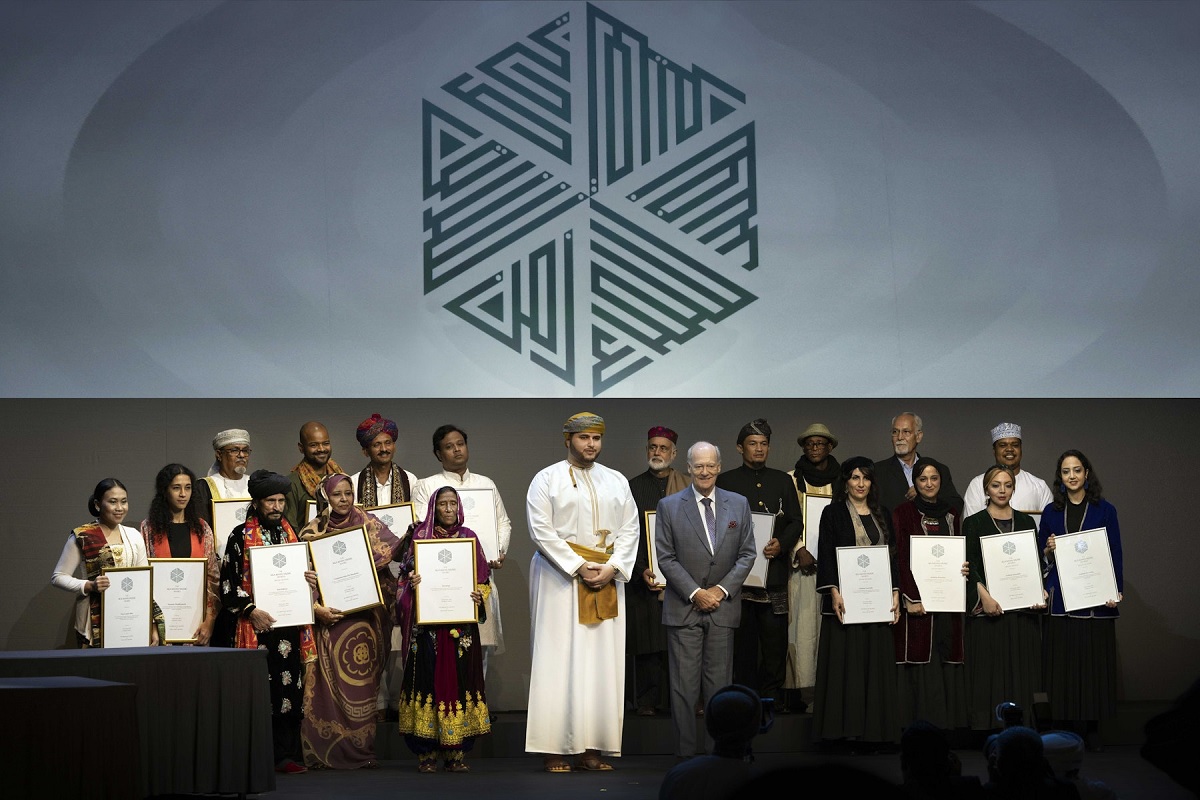
Established in 2018 by His Late Highness Prince Karim Aga Khan IV and his brother, Prince Amyn Aga Khan, the Aga Khan Music Awards (AKMA), held every three years, are under the governance of an Advisory Council, which is co-chaired by the 50th Hereditary Imam of the Ismaili Muslims, Mawlana Hazar Imam, His Highness Prince Rahim Aga Khan, and his uncle, Prince Amyn Aga Khan.
Please click on the image for the winners of the 2025 Aga Khan Music Awards.
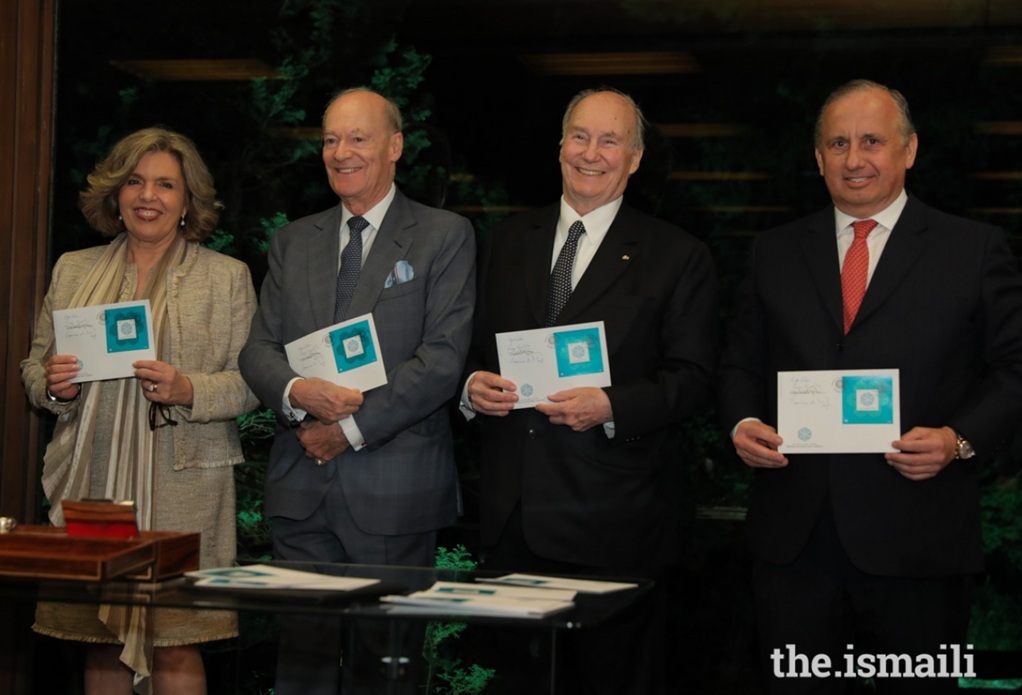
The photograph captures Mawlana Shah Karim, His Late Highness Aga Khan IV, with his brother, Prince Amyn, and Isabel Mota, President of the Calouste Gulbenkian Foundation (left), and Raul Moreira, Head of Philately at CTT (right). They are holding signed first-day covers of the commemorative stamp to celebrate the 2019 Aga Khan Music Awards. The stamps were unveiled on March 29, 2019, by Francisco Lacerda, the CEO of CTT (Portugal Post). Photograph: The Ismaili / Akbar Hakim.
~~~~~~~~
2022: MUSCAT, OMAN
Prince Amyn Aga Khan, younger brother of His Late Highness Aga Khan IV, and His Highness Sayyid Bilarab, preside over the presentation of the 2022 Aga Khan Music Awards in Muscat, Oman, October 30, 2022. Photograph: Akbar Hakim / AKDN.
2025: LONDON, ENGLAND
For the first time, the 2025 Aga Khan Music Awards are teaming up with the EFG London Jazz Festival and Southbank Centre to bring an extraordinary programme of concerts, collaborations, and award celebrations to the UK. This unique partnership is a testament to AKMA’s unwavering vision of excellence in world traditions.
For programming details over four days, November 20-23, 2025, please visit the EFG London Jazz Festival website and scroll down for more information and tickets.
The first day’s program on November 20, with two performances at 1 pm and 9 pm London time, will be held at the Ismaili Centre, London, and will be transmitted live on The Ismaili TV.
Viewers worldwide will be able to watch the live coverage as follows:
1 pm and 9 pm (London)
5am and 1pm (Vancouver);
7am and 3pm (Houston);
8am and 4pm (Toronto);
2pm and 10pm (Paris);
4pm (Nairobi); and
6pm (Karachi).
The winners will be celebrated on November 21 and 22, at London’s Southbank Centre, in an awards ceremony forming part of the four-day festival.
Date posted: November 19, 2025.
Note: A version of this post appears on Barakah, our sister website dedicated to His Highness the Aga Khan.
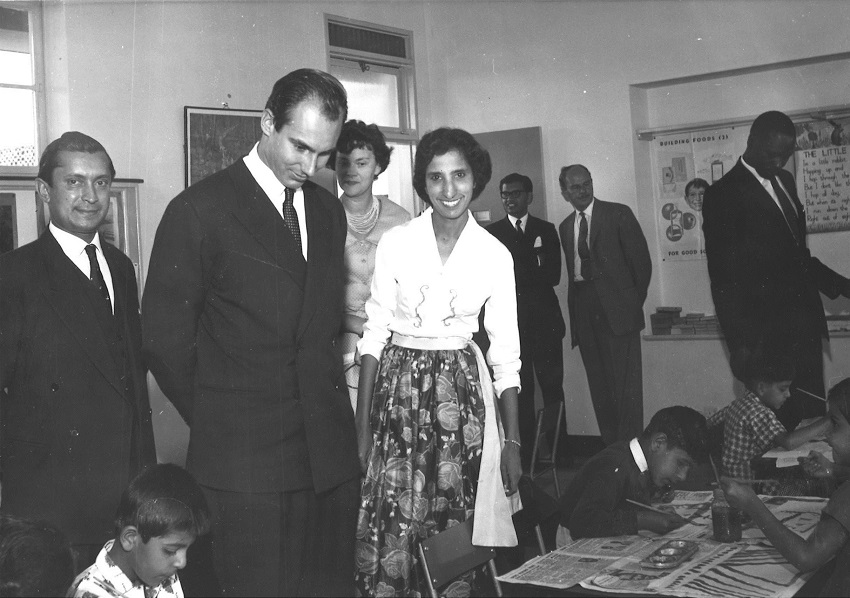
(Alijah) Mohamed Kassam of the UK was only 3 when a group photo that included his father was taken with His Late Highness Aga Khan III, the 48th Ismaili Imam. He shares the group photo and some unique pictures of the 49th Imam, Mawlana Shah Karim, His Late Highness Aga Khan IV (d. February 4, 2025), with readers of our sister website Barakah, which is dedicated to the Aga Khan. To view Kassam’s collection, please click on the photo below or HIS HIGHNESS THE AGA KHAN III AND IV PHOTOS: MOHAMED KASSAM ARCHIVES.
School teacher Shirin Kassam, sister of Mohamed Kassam, with Mawlana Shah Karim, His Late Highness Aga Khan IV, during his visit to the Aga Khan Primary School, Nairobi, Kenya, in the early 1960s. Please click on the image to view more photos.
Inna lillahi wa inna ilayhi raji’un “Surely we belong to God and to Him we return” — Holy Qur’an, 2:156
“Life is a great and noble calling, not a mean and grovelling thing to be shuffled through as best as we can but a lofty and exalted destiny.” — Mawlana Sultan Mahomed Shah, His Highness the Aga Khan III (1877-1957), 48th Ismaili Imam.
Sadrudin Hassam
A loving tribute by THE FAMILY OF HUZUR MUKHI SADRUDIN KASSAMALI HASSAM
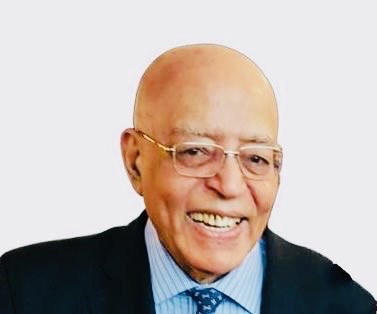
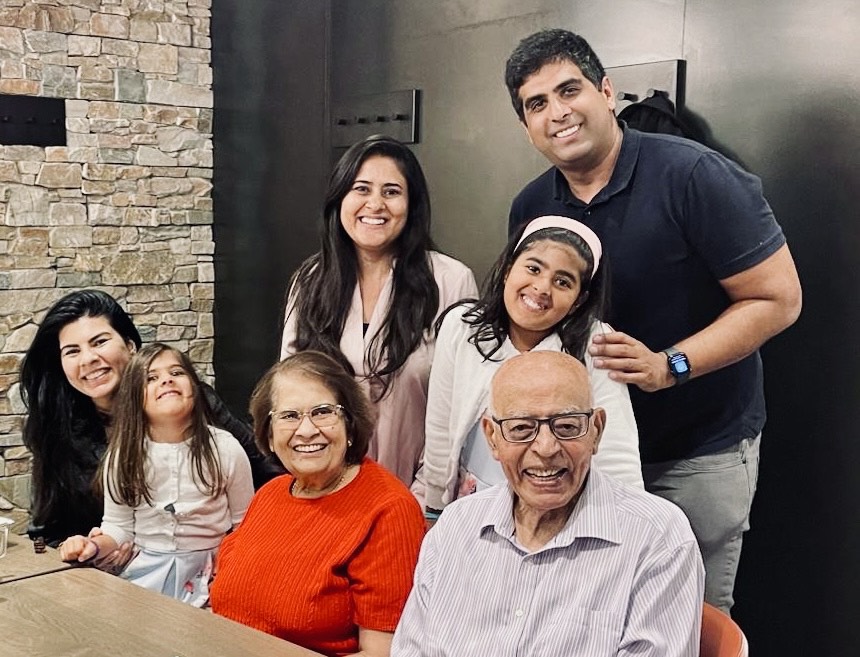
Huzur Mukhi Sadrudin Kassamali Hassam was born in Zanzibar on August 15, 1936, and passed away peacefully on December 26, 2024, at the age of 88 in the company of his loving family in London, U.K. He leaves behind his beloved wife, Huzur Mukhiani Roshan (Habiba) Hassam, his two daughters, Farah Hassam and Salima Hassam Ladha, his son-in-law, Alim Ladha, and two precious granddaughters, Sophia Noor Ladha and Alisha Noor Ladha.
Sadrudin Hassam with his family. Photograph: Sadrudin Hassam Family collection.
Sadrudin was fondly known as Mr. Hassam by his students and Sadrubhai by colleagues and others. Mr. Hassam grew up in the rich culture of Zanzibar. He showed academic achievement at school as a young boy. He went on to train as a professional teacher for two years at the Teachers Training College in Nairobi, Kenya where he graduated in 1956.
After graduating, he returned to Zanzibar, where he was the Honorary Secretary for the Aga Khan Sports Club. He also started teaching at the Aga Khan School of Zanzibar.
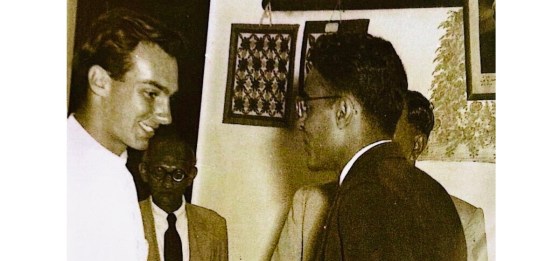
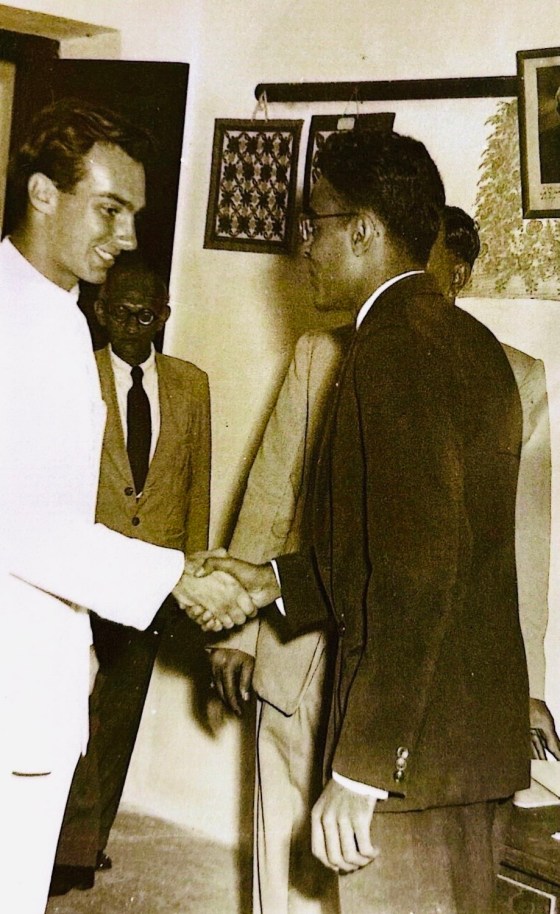
It was here that Mawlana Shah Karim Al-Hussaini Aga Khan IV (A.S.) visited his school and entered the classroom where Mr. Hassam was teaching. This very special, unexpected encounter would change the trajectory of Mr. Hassam’s professional career and life forever. Mawlana Shah Karim asked Mr. Hassam if he had furthered his studies enough, and after Mr. Hassam replied, “No Khudavind, I have not,” he was graciously offered a scholarship to study a Master of Arts (M.A.) in Islamic History at University of Edinburgh, Scotland. This inspirational moment is captured in a black and white photo where both are 21 years old and shaking hands as Mr. Hassam humbly accepts the Aga Khan scholarship.
Mawlana Shah Karim, His Highness the Aga Khan IV (d. February 4, 2025), shaking hands with Sadrudin Hassam during a school visit in Zanzibar. Photograph: Sadrudin Hassam Family collection.
This life-shaping opportunity was the catalyst for Mr. Hassam’s vast and long-spanning career as an experienced educationist. He evolved into various specialised roles and committed to honorary services within the Ismaili institutions. He served the community and his students to the best of his professional abilities with the same level of commitment, passion, gratitude, humility, and knowledge-sharing in all his work endeavours until he gracefully retired from the Institute of Ismaili Studies (IIS) in London, U.K. at the age of 84 in 2020.
He had graduated from the University of Edinburgh with an M.A. majoring in Islamic History and European History and subsidiaries in English, Latin and Philosophy. In addition to fluently speaking and writing in Kiswahili and Gujarati, he learnt French, German, Arabic, and Persian and held distinction certifications in Maths and Geography from the University of London. He also learnt to read Khojki (Sindhi) script in his early years, which would prove to be an important and unique skill in the latter years of his career at the IIS. While working towards his M.A., he simultaneously qualified in Writing and Editing with the British American School of Writing, another skill he would utilise throughout his career.
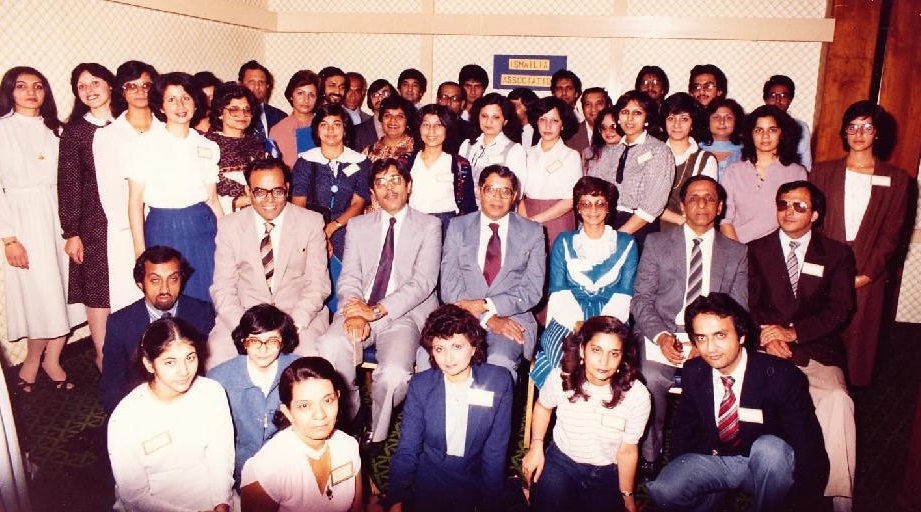
In the early years of his career, after graduating with his M.A., he taught History, English and Religious Education in secular secondary schools in Edinburgh (1965-72). He then moved back to Tanzania and taught at the Aga Khan School of Commerce and then at the Aga Khan Mzizima Secondary School, Dar-es-Salaam, where he was Head of History and subsequently Deputy Headmaster (1973-1981). Simultaneously, he was also the Religious Education Officer of the Ismaili curriculum for Ismaili students for 10 years, which also involved him conducting a number of courses on Ginans and Gujarati in the manpower training programmes in Tanzania. Additionally, he was the Honorary Secretary of the Ismailia Association for Tanzania and Honorary Secretary of the Aga Khan Sports Club for Tanzania and loved to play tennis. At the Ismailia Association for Tanzania, he trained religion teachers. He participated as an educationist in the Religious Education Conferences at Nairobi, held under the auspices of the Ismailia Association for Kenya, to plan the International Curriculum for Religious Education for the worldwide Ismailis. In his time in Tanzania worked closely with Al-waez Abu-ali Missionary and edited his materials.
In 1981, he moved with his family to London, U.K., to accept a role that would be a long-standing position as the Religious Education Officer with Ismailia Association (now known as the Ismaili Tariqah and Religious Education Board, ITREB) U.K.
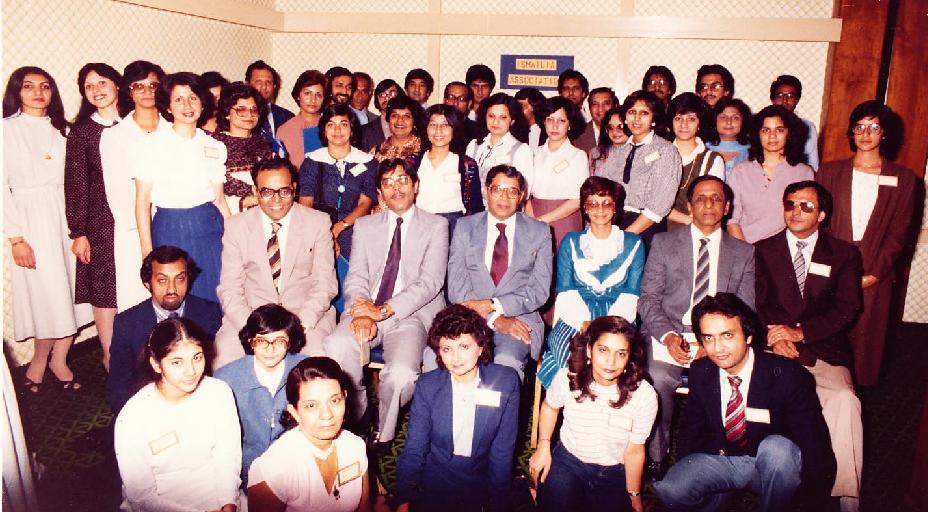
Sadrudin Hassam, seated left, during his early years in London with the Ismailia Association (ITREB) U.K. leadership, including President Dr. Aziz Kurwa (seated third from left), colleagues and Baitul Ilm teachers. Photograph: Sadrudin Hassam Family collection.
~~~~~~~
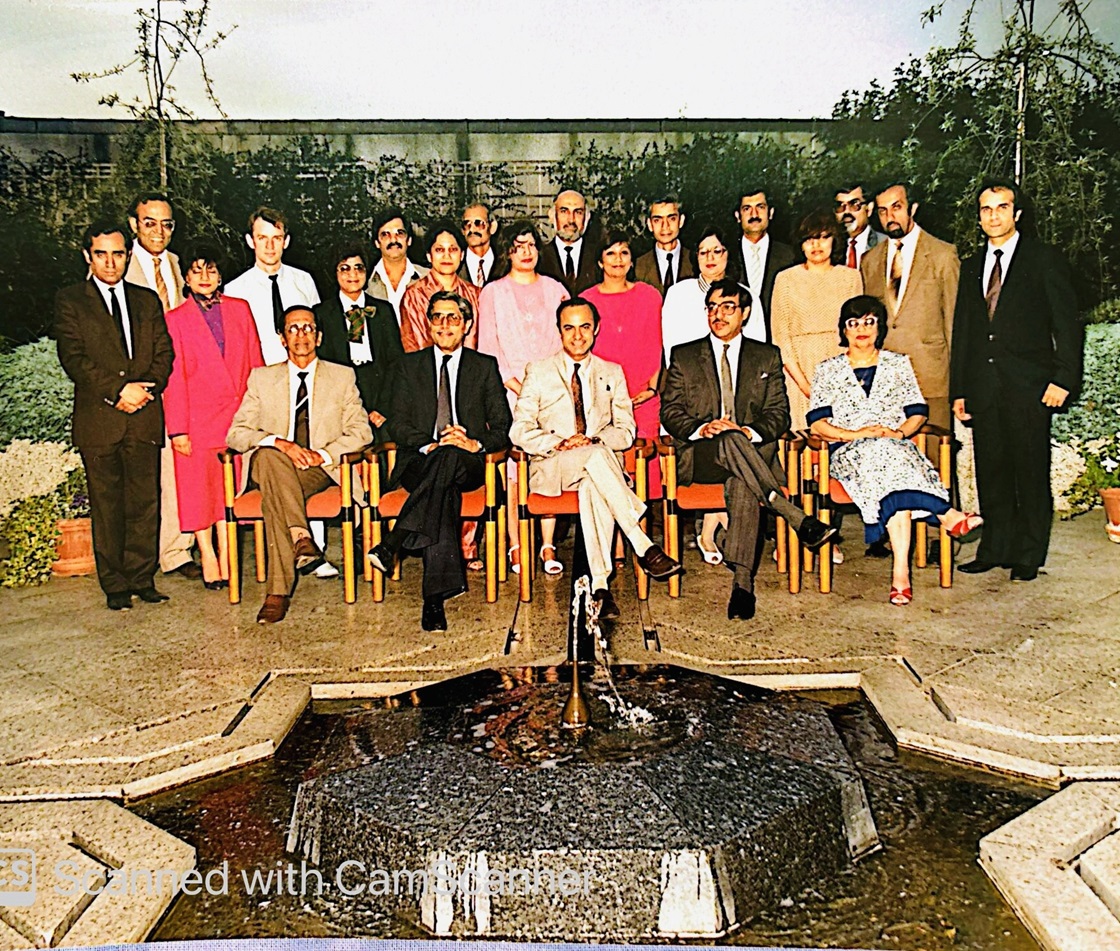
Sadrudin Hassam, standing 2nd from left, with ITREB U.K. leadership including Chairman Noordin Kasssam (seated, centre), and colleagues on the rooftop of the Ismaili Centre London. Photograph: Sadrudin Hassam Family collection.
It was at the ITREB, U.K., where he worked on a variety of projects amongst high-esteemed colleagues including Al-waez Jehangir Merchant, Al-waeza Malek Merchant, Al-waez Saddrudin Fattoum, Al-waez Bashir Ladha, Al-waez Gulam Abbas, Dr. Farouk Topan, Al-waez Faqir Muhammed Hunzai, Al-waeza Rashida Hunzai, Amin Keshawji and Aziz Khoja to name but a few.
One of his initial roles was to identify Baitul Ilm religious education locations around the U.K., set them up and oversee them. His primary duties included training volunteer teachers, especially in Ismaili History and Ginans, directing the courses for teachers and preparing instructional material for the programmes, teaching secondary students, and providing critique to draft curriculum plans and materials from IIS U.K. He also wrote articles for Al-Misbah and Ilm, which are reproduced on this website. He wrote a book on the Alamut period of Ismaili history for secondary students. Mr. Hassam directed and conducted, with the team, teacher training programmes in London, Birmingham, Leicester, Edinburgh, and Amsterdam and also, in 1985, conducted a 17-day teacher training course for the Ismailia Association of Portugal. He was invited to IIS (U.K.) to lecture to the M.A. graduates on a few festival Ginans and identify manuscripts in Khojki and other Indic scripts. He also prepared a curriculum to teach Ginans more systematically to co-relate with the curriculum for primary 4 and 5. He also conducted many short courses in Ginan and Gujarati in the manpower training programmes in U.K. and Portugal. In 1994, before Mawlana Shah Karim’s visit with the UK Jamat, he was responsible with Al-waez Mohamed Ladak for identifying from over a hundred candidates, selecting and training 26 groups to recite verses of Ginans in the presence of Mawlana Shah Karim during his mulaqat with the Jamat.
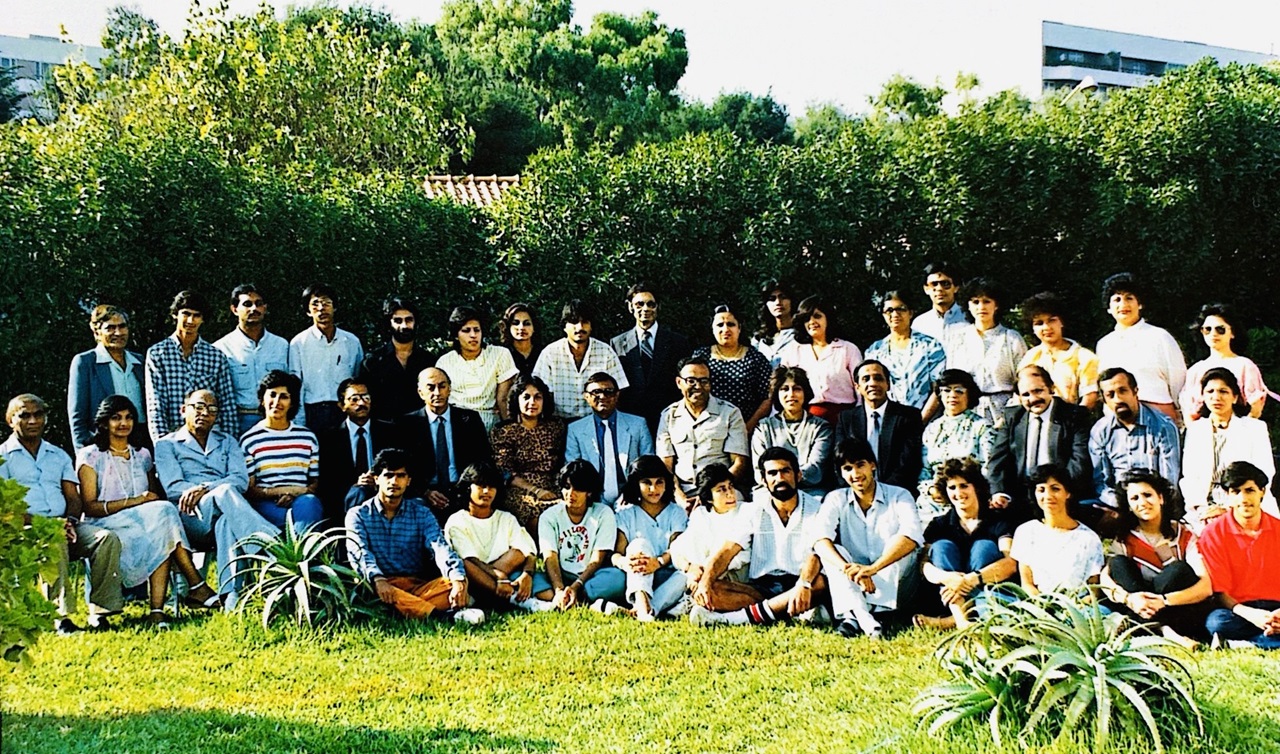
Sadrudin Hassam, 9th from left, centre row, with ITREB colleagues and students attending a special project. Photograph: Sadrudin Hassam Family collection.
~~~~~~~
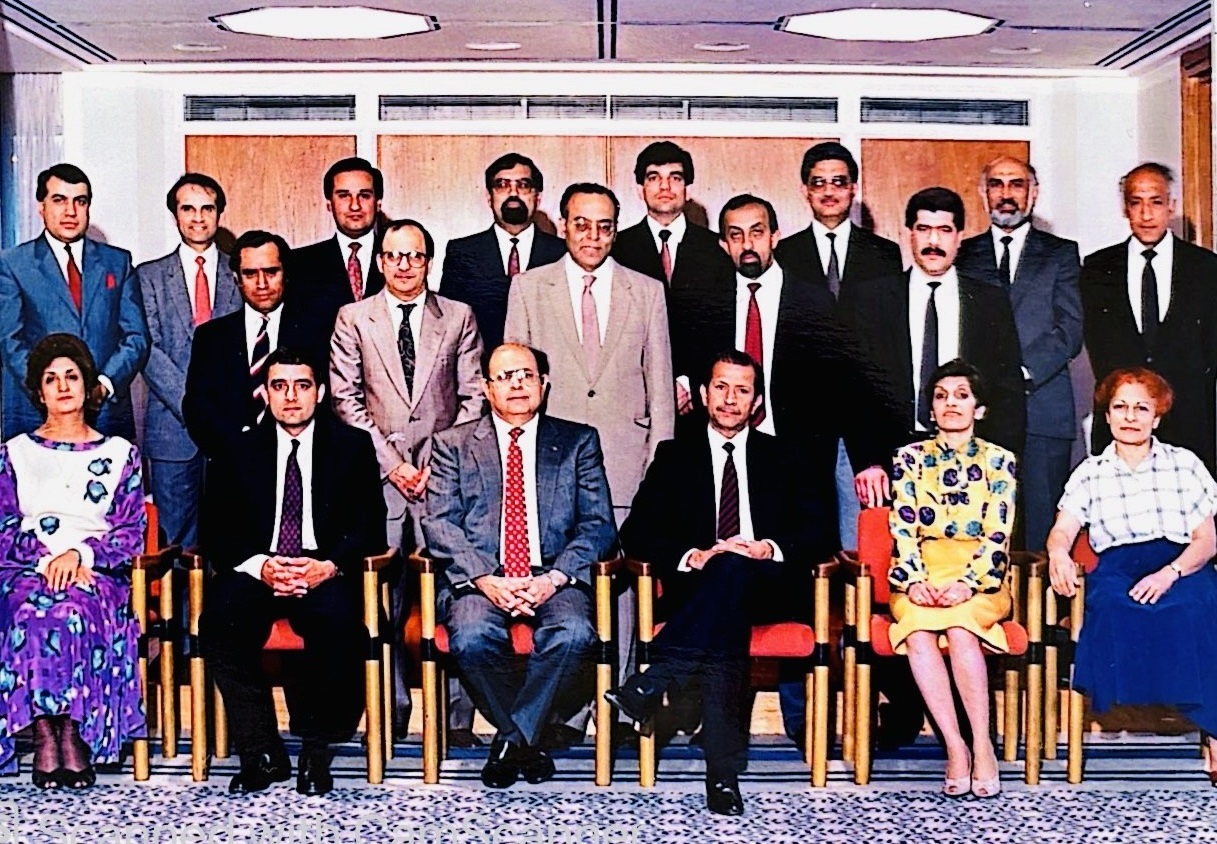
Sadrudin Hassam is standing, second row, centre, with the UK Jamati and ITREB leadership, and colleagues. Photograph: Sadrudin Hassam family collection.
In subsequent years at the IIS in London, he was involved in several research projects, which gave him access to and exposure to the Khojki and Gujarati manuscripts in the library. He worked on cataloguing various special and heritage materials in Indic languages (Gujarati, Urdu and Khojki script). His knowledge of the Indic languages and familiarity with Arabic and Persian allowed him to examine and catalogue many materials in these languages, many of which are featured through the Institute’s special collections catalogue.
He used his knowledge of Indic languages to also develop (in his spare time) reading materials for students to learn the Gujarati and Khojki languages so that students and researchers could better understand ginan literature and our cultural traditions and religious practices, which are rooted in South Asia for a large number of Ismailis. As such, students and researchers at IIS have benefited immensely from his knowledge and expertise. The IIS provided a Gujarati keyboard for him to use as it was an appropriate tool in some of his written materials. He has written a number of articles on the festival and other Ginans for Ilm and lectured on these to graduate students. These are now available online at simerg.com. He has authored ‘Ginans – Understanding and Appreciation Made Easy,’ a book based on his long teaching experience at different levels on the Ginans and the Ginanic literature. He has also authored ‘Mastering Gujarati and Khojki Scripts’ a book aiming to enable learners (for example Baitul Ilm and Ginan teachers, Waezeen, IIS alumni, GIPISH and STEP graduates who want to pursue an M.A. or Doctorate on Ginanic literature or socio-cultural aspects of Ismailis) to read fluently and understand the printed books in Gujarati and Khojki and hand-written manuscripts. He felt this to be important because studying the primary sources and languages of the Indo-Pakistan subcontinent and African countries is essential to truly understand the history and culture of these areas.
Mr. Hassam’s enriching experience and love for learning and teaching have left a lasting impact on many students and colleagues. Their fond memories, compliments of his kind, gentle nature, and heartfelt gratitude for his contributions are a testament to his service. We offer our humble shukrana for his lifetime of dedicated service to the Imam-of-the-Time and the Ismaili Jamat and its institutions. He leaves behind a rich and enduring legacy.
Date posted: March 25, 2025.
____________________
We welcome your condolences and tribute to Huzurmukhi Sadrudin Kassamali Hassam. Please click LEAVE A COMMENT
Inna lillahi wa inna ilayhi raji’un “Surely we belong to God, and to Him we return” — Holy Qur’an, 2:156
“Life is a great and noble calling, not a mean and grovelling thing to be shuffled through as best as we can but a lofty and exalted destiny.” — Mawlana Sultan Mahomed Shah, His Highness the Aga Khan III (1877-1957), 48th Ismaili Imam.
I have learned with deep sadness that Mukhi Vazir Nurdin Gulamhussein Jivraj, originally of Dar es Salaam, Tanzania, has passed away in London, UK, at the age of 92.
My memories of the Mukhi (congregation leader in Ismaili Jamatkhana) span many years. They are intertwined with the shared experiences of the UK Ismaili Muslim Jamat (community), particularly during the historic seven-day visit to London by Mawlana Hazar Imam, His Highness the Aga Khan, from September 1 to 7, 1979. This visit, which also saw the foundation laying ceremony of the Ismaili Centre London, a significant event presided over by Lord Soames in the presence of His Highness, holds a special place in our hearts.
Mawlana Hazar Imam, His Highness the Aga Khan, pictured at the Olympia Hall, London, with Mukhi Nurdin Jivraj and Kamadia Nizar Dhanani during his weeklong visit to the United Kingdom Jamat from September 1-7, 1979. Photograph: Jehangir Merchant collection.
Mukhi Nurdin Jivraj was assisted by Kamadia Nizar Dhanani, a name I had known from Dar es Salaam as a cricket player with my dad, Jehangir, on the Young Ismailis team. Our shared love for cricket was a bond that connected us. This bond was further strengthened as Kamadia Nizar played for the Aga Khan Cricket Club in London in the significant 20-20 knockout matches in 1975-76 and became the Kamadia of the London Jamatkhana.
This personal tribute to the late Mukhi Nurdin Jivraj is based on one singularly important incident during the final mulaqat (meeting) on Friday, September 7, 1979, the last day of Mawlana Hazar Imam’s visit to the UK at London’s Olympia Hall. My late mum, Mrs. Merchant (d. January 21, 2021), was on stage duty to recite the Salawat. She had an excellent memory and articulated the incident when we returned home later that evening.
As on previous days, the eagerly awaited Mawlana Hazar Imam’s daily mulaqat with the Jamat commenced with the recitation of Ginan (hymn) verses by our fellow Jamati members who were selected for the recitations by the Ismailia Association judges (the Ismailia Association is now known as the Ismaili Tariqah and Religious Education Board, ITREB).
On that particular final day, Friday, September 7, Hazar Imam began his mulaqat in the morning by performing religious ceremonies and delivering a Farman (guidance or edict) to the Jamat. A Ginan was recited during the morning mulaqat, and everyone designated for the week’s recitations had had their turn.
During the afternoon session, Hazar Imam gave a mulaqat to the volunteers in an adjoining room. He returned to the main hall to bid farewell and bless the Jamat. Of course, everyone expected him to give his final Farman to the Jamat before he left.
However, before doing so, once seated on the stage, Mawlana Hazar Imam turned to Mukhi Jivraj. He unexpectedly requested: “I want Ginan.”
Story continues below
Mawlana Hazar Imam, His Highness the Aga Khan, delivering his Farman (guidance) to the UK Ismaili community in Olympia Hall, London, during his weeklong visit from September 1-7, 1979. On stage are Mukhi Nurdin Jivraj and Kamadia Nizar Dhanani, their respective wives, and Mrs. Merchant, seated on the far left. Photograph: Jehangir Merchant collection.
Unprepared, the Mukhi was startled and didn’t know what to say. He turned to my mum, who was on the stage a few feet away, and said, “Alwaeza, Ginan.” My mum had heard Mawlana Hazar Imam’s request to the Mukhi. She reacted immediately to Mukhi’s call, walking to the front of the stage and asking a youth — Salim Champsi — seated a few metres away to recite a Ginan. Of course, my mum had known him as a good reciter, only that he had not been selected to recite a Ginan during the Jamati mulaqats. He confidently came onto the stage and beautifully recited verses from the iconic and inspiring Ginan Satgur sathe goṭhadi kije, a piece that resonates deeply with the Ismaili community (listen to the Ginan sung by the late Alwaez Shamshudin Bandali Haji HERE. You can hear the same Ginan recited by multiple singers at Ginan Central, a truly informative and educational website).
The recitation was so powerful that it left me with goosebumps and tears in my eyes throughout. The impact of those words in the Ginan was profound. When I met the reciter, Salim Champsi, some 20 years later at the Bayview Jamatkhana in Toronto, he recalled that extraordinary and joyous day and expressed his heartfelt gratitude, saying he would never forget my mum for picking him out of the crowd.
Today, befittingly, I remember this unique incident, which very few people outside my family would know, as my tribute to Mukhi Jivraj with his passing 45 years later. Reflecting on that moment, I am reminded about the importance Mawlana Hazar Imam attaches to our hundreds of years-old traditions. During an evening of Ginan recitation or concert (mehfil) held in Karachi in December 1964, he said:
“I would be surprised if ever such a big Mehfil-e-Ginan has ever been held…many times I have recommended to my spiritual children that they should remember Ginans, that they should understand the meanings of these Ginans and they should carry these meanings in their hearts. It is most important that my spiritual children…hold to this tradition which is so special, so unique and so important to my Jamat…I have been deeply happy tonight, deeply happy because I have seen the happiness in the hearts of my Jamat and this is what makes Imam happy” — Mawlana Hazar Imam, Karachi, December 16, 1964, published by the Ismailia Association for Pakistan.
Indeed, the recitation of the Ginan on September 7, 1979, filled the hearts of thousands with unbounded spiritual happiness and joy.
Of course, the entire UK Jamat will remember the late Mukhi Nurdin Jivraj. I earnestly hope someone will write a detailed tribute to him, highlighting his services to the Jamat and his and his family’s unwavering devotion to the Imam-of-the-Time over the past several decades.
Story continues below
Mawlana Hazar Imam, His Highness the Aga Khan, walks through his followers and past the Ismailia Association literature counter as he departs Olympia Hall after his audience with the Ismailis in London in September 1979. Following him are Mukhi Nurdin Jivraj, Kamadia Nizar Dhanani, and Begum Salimah with the Mukhiani and Kamadiani. Photograph: Sarfaraz Sadruddin/Ilm Magazine, December 1979.
I fondly remember Mukhi Jivraj for the above incident, which gave the Jamat an excellent and inspiring conclusion to Mawlana Hazar Imam’s and Begum Salimah’s visit to the UK Jamat. The event, as narrated by my mum, was not just inspiring, but truly extraordinary. I can never forget that particular inspirational and happy day in my life.
We express our sincerest condolences to Mukhi Nurdin Jivraj’s family, friends and the Jamats he led and served for years. We pray that his soul may rest in eternal peace. Ameen.
Date posted: January 18, 2025. Last updated: January 25, 2025 (new photo added).
___________________
Condolence messages: We invite readers to submit their condolences, memories and tributes to Mukhi Nurdin Jivraj by clicking LEAVE A COMMENT.
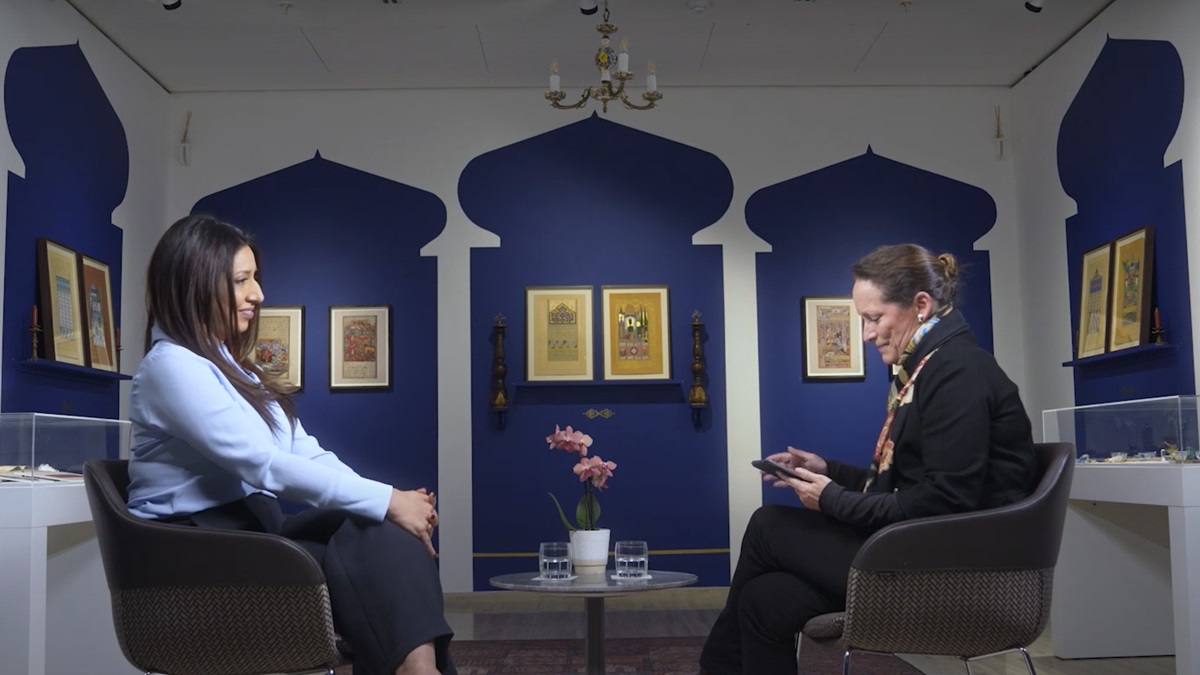
Farah Nasser, a seasoned award-winning Canadian journalist who has worked for Global News and Global National as an anchor for a decade, before leaving the network last summer, conducted a significant and enlightening interview with Princess Zahra Aga Khan, the eldest child of Mawlana Hazar Imam, His Highness the Aga Khan. The interview, held at the prestigious Aga Khan Centre in London, provided unique insight into Princess Zahra’s thoughts and perspectives.
The must-watch interview was aired on Ismaili.TV and on The Ismaili, the official website of the Ismaili Muslim community, on Friday, December 13, 2024, on the auspicious occasion of Mawlana Hazar Imam’s 88th Salgirah (birthday).
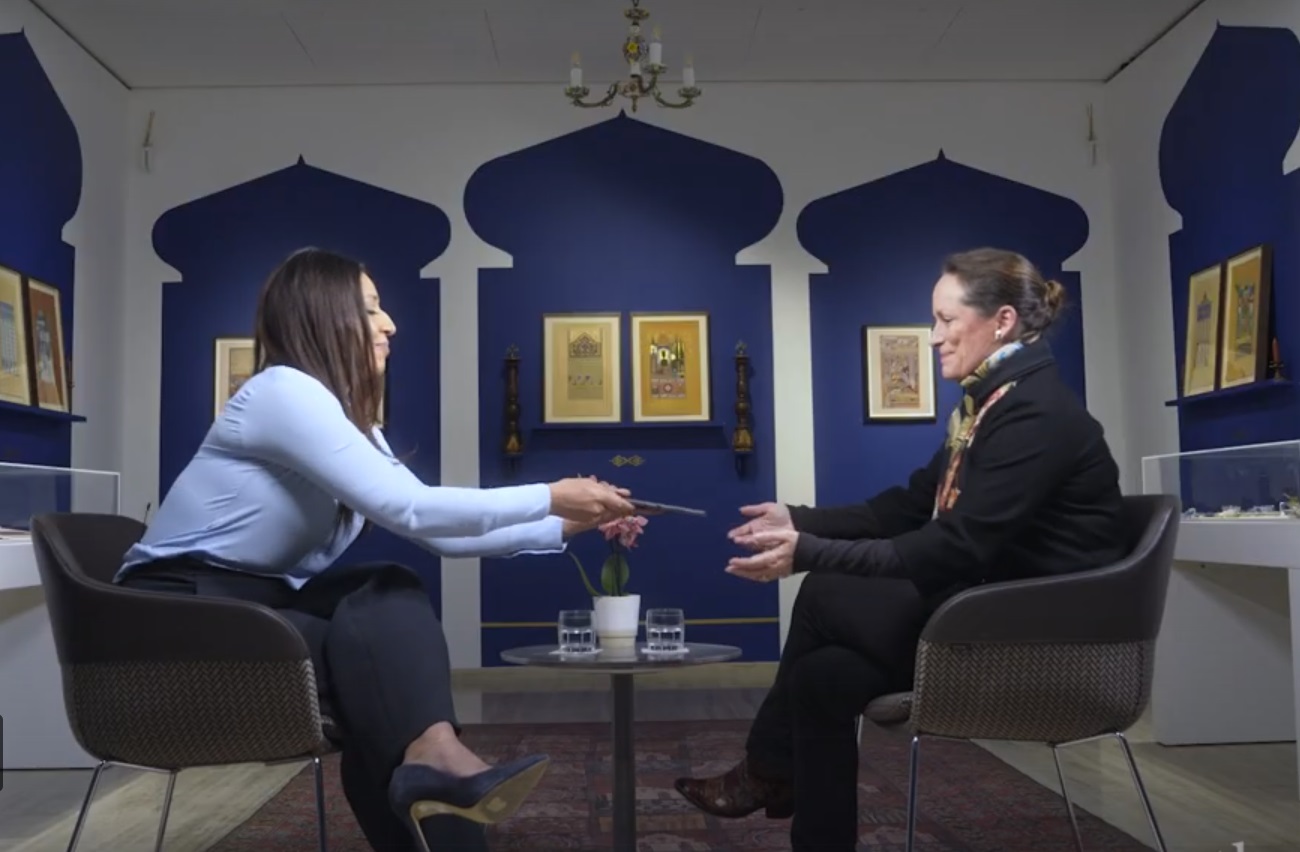
Farah Nasser hands Princess Zahra Aga Khan a Tablet, requesting that she watch a 1994 clip from a Farman delivered by Mawlana Hazar Imam to the UK Jamat gathered in London. Photograph: Still photo from interview.
~~~~~~
Princess Zahra Aga Khan watches a video clip of her father, Mawlana Hazar Imam, His Highness the Aga Khan, telling his Ismaili community in the UK in August 1992 that the Princess graduated from university with an honours degree and would be joining him to work by his side. Photograph: Still photo from interview.
At the start of the interview, Farah presented Princess Zahra with a tablet and requested that she view a clip from a rare thirty-year video dating back to 1994. The next image captures Princess Zahra engrossed in the clip, where Mawlana Hazar Imam, her father, joyfully mentions her university graduation and future work alongside him. It was a poignant moment as Princess Zahra focused on the Tablet screen, witnessing her father’s heartfelt words:
“In the past,” Mawlana Hazar Imam said, “I have not talked about my family except when my children were born or when I got married, and I thought I should tell you today that my eldest child has graduated from university…. She has received an honours degree in Development Studies. She selected that subject as she aspired to work and serve the Jamat [Ismaili community] in the developing world. And in September, she will join me to work by my side.”
The announcement was met with joy and waves of applause.
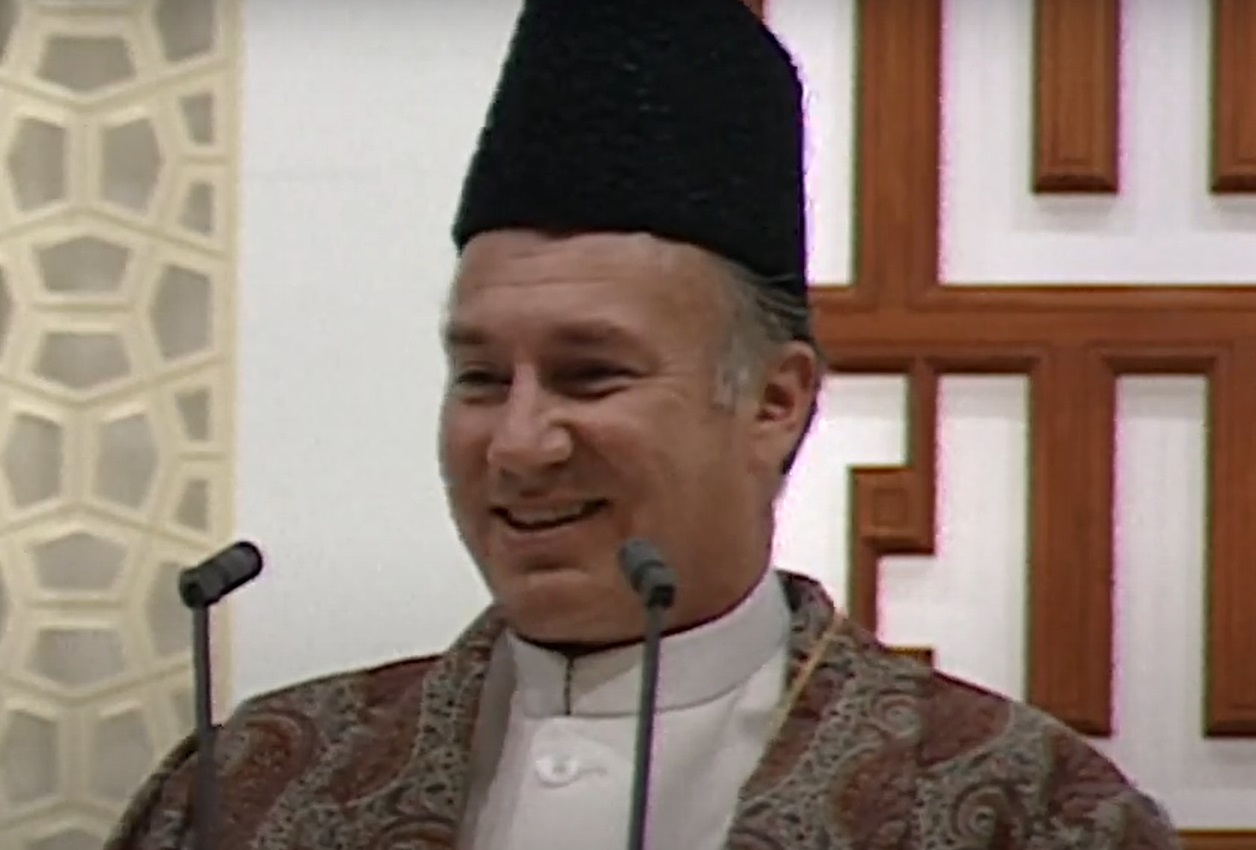
With deep happiness, Mawlana Hazar Imam, His Highness the Aga Khan, shared the news with his spiritual children gathered in London, England, in August 1994, that his daughter Princess Zahra had graduated with honours and would be joining him to work by his side. The news was met with joy and a wave of applause. Photograph: Still photo from video watched by Princess Zahra.
In the interview, Princess Zahra shares her academic journey, including her unique concentration in Development Studies. The engaging twenty-five-minute conversation concludes with Farah Nasser asking the Princess to convey the murids’ (Ismaili followers) affection and birthday wishes to Mawlana Hazar Imam. Princess Zahra assures that she will pass on the greetings, noting that he always appreciates receiving messages. She also shares that Hazar Imam requested a chocolate cake for his birthday. We now present the full YouTube interview to our readers worldwide.
“The architectural planning [of the Delegation of the Ismaili Imamat Building] has been entrusted to the capable hands of Fumihiko Maki, an architect of world standing. Maki and Associates have my enthusiastic admiration for addressing, with tact and empathy, challenges of design which are difficult and subtle. They call for translating concepts that have a context in our faith and our history, yet stride boldly and confidently ahead, into modernity; for expressing both the exoteric and the esoteric, and our awe and humility towards the mysteries of Nature, Time and beyond.” — His Highness the Aga Khan, June 2005.
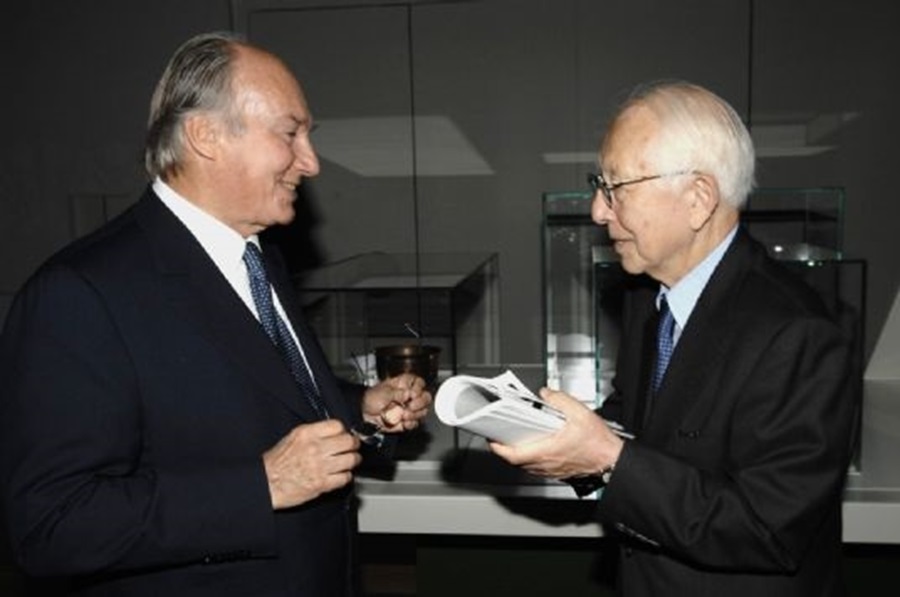
His Highness the Aga Khan with architect Fumihiko Maki at an Aga Khan Museum Exhibition held at the Louvre in 2007. The renowned Japanese architect served twice on the Master Jury of the Aga Khan Award for Architecture, and designed the Delegation of the Ismaili Imamat Building in Ottawa which was opened in December 2008 , the Aga Khan Museum in Toronto opened in September 2014., and the Aga Khan Centre in King’s Cross in London, opened in June 2018. Photo: AKDN/Gary Otte.
Reflecting back to 2005, I can’t help but feel a profound sense of loss as I note the passing of the renowned Japanese architect Fumihiko Maki on June 6, 2024, at the age of 95. His architectural firm, Maki and Associates, officially announced his demise. The news of Mr. Maki’s death reverberated across the globe, with obituaries appearing in esteemed publications such as the Washington Post, New York Times, and CNN, as well as prominent architectural websites like Architectural Record, World Architects, and Architect’s Newspaper.
The occasion in January 2005 was the award of the Vincent Scully Prize to Mawlana Hazar Imam, His Highness the Aga Khan, at the National Building Museum in Washington, D.C.
Stepping into the building, I found myself in the presence of Bruno Freschi, the architect behind the exquisite Ismaili Centre Vancouver, which had opened its doors in 1985. Just a few steps away stood Mawlana Hazar Imam, accompanied by Fumihiko Maki and Firoz Rasul, the President of the Aga Khan Council for Canada. It was a rare and profound moment, as Bruno had expressed his desire to meet both Mawlana Hazar Imam and Fumihiko Maki in person. I took the initiative and introduced Bruno to Rasul. In a later interview, Bruno shared his gratitude: “His Highness introduced me to Mr. Maki, and it was here that he again thanked me and said that the Jamatkhana (Ismaili Centre Vancouver) was indeed one of his favourite buildings. He encouraged Mr Maki to visit the building.”
Witnessing two remarkable architects with Mawlana Hazar Imam was a touching moment. The memory of that encounter is etched in my heart, a testament to the profound impact it had on me.
Buildings designed by Fumihiko Maki for His Highness the Aga Khan. Top: Delegation of the Ismaili Imamat, Ottawa (2008), and the Aga Khan Museum, Toronto (2014); bottom, Aga Khan Centre, London (2018).
We honour the renowned architect, Fumihiko Maki, by presenting links to photographs of three beautiful projects that he built for Mawlana Hazar Imam — the Delegation of the Ismaili Imamat building in Ottawa which was opened on December 9, 2008, as the Ismaili community marked the completion of Mawlana Hazar Imam’s Golden Jubilee, the Aga Khan Museum in Toronto which was opened on September 14, 2014, and the Aga Khan Centre in London which was inaugurated on June 26, 2018. We invite you to visit the links provided.
For each of these projects, Mawlana Hazar Imam made remarks on Fumihiko Maki. We publish a selection of the speech excerpts as part of Simerg’s tribute to Mr. Maki.
His Highness the Aga Khan on Fumihiko Maki’s Projects for the Ismaili Imamat
(1) The Delegation of the Ismaili Imamat Building, Sussex Drive, Ottawa
Remarks by the Aga Khan at the Foundation Ceremony of the Delegation Building, Ottawa, June 6, 2005
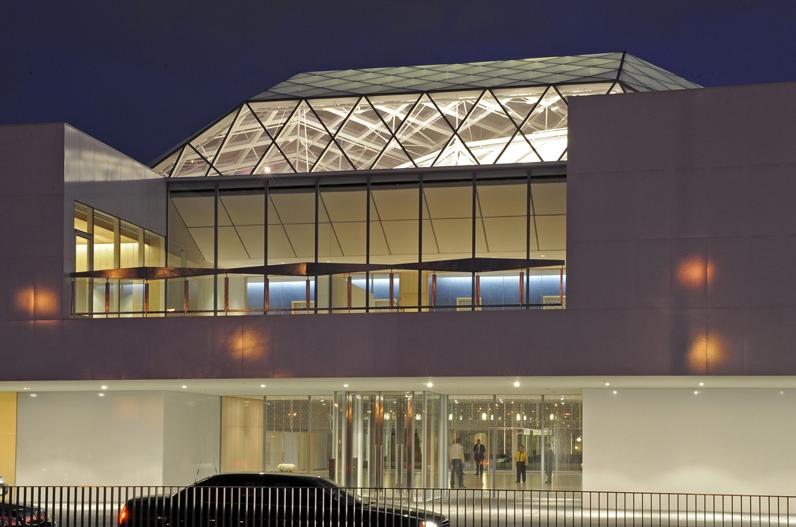
“The architectural planning [of the Delegation of the Ismaili Imamat Building] has been entrusted to the capable hands of Fumihiko Maki, an architect of world standing. Maki and Associates have my enthusiastic admiration for addressing, with tact and empathy, challenges of design which are difficult and subtle. They call for translating concepts that have a context in our faith and our history, yet stride boldly and confidently ahead, into modernity; for expressing both the exoteric and the esoteric, and our awe and humility towards the mysteries of Nature, Time and beyond. The outcome is an inter-play of multiple facets, like rock crystal. In it are platforms of pure but translucent horizontality. Light’s full spectrum comes alive and disappears as the eye moves. In Islam the divine is reflected in Nature’s creation. The building will rest on a solid linear granite podium. Above it will be a glass dome through which light will illuminate, from multiple directions, two symbolic spaces: an interior atrium and an exterior courtyard landscaped in four quarters, recalling the traditional Persian — Islamic garden, the Chahr-bagh. Nature, through the greenery of trees and flowers, will be on the site, but also in the building, just as we are sometimes able to see leaves and petals captured in rock crystal, but still visible through its unique translucency.
Remarks continue below
Exterior view, at night, of the entrance to the Delegation of the Ismaili Imamat on Sussex Drive in Ottawa, Canada. – Photo: AKDN/Gary Otte
“The building will be a metaphor for humanism and enlightenment and for the humility that comes from the constant search for answers that leads inevitably to more questions. The Delegation, with its openness and transparency, will be a symbolic seat for the Imamat’s permanent presence in Canada, and a platform for constructive exchanges that mutually broaden moral and intellectual horizons. It will be a window for the AKDN to reinforce existing, and cultivate new, partnerships with national and international agencies present in Ottawa, that share the ethic of contributing to an improved quality of life in the developing world.”
___________________________
(2) The Aga Khan Museum, Wynford Drive, Toronto
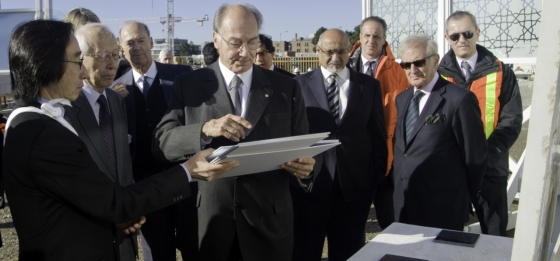
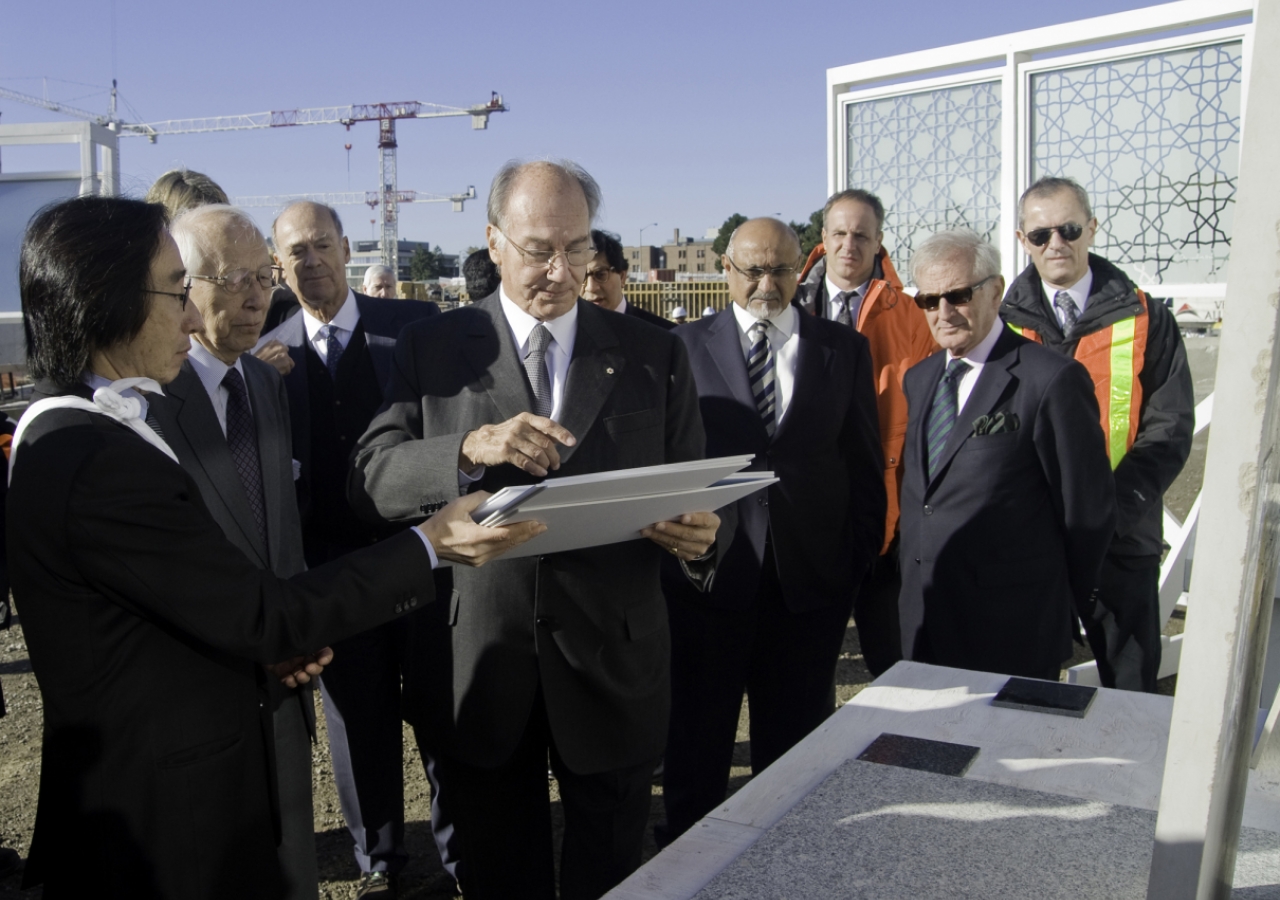
Fumihiko Maki and Gary Kamemoto of Maki & Associates review cladding stone for the Aga Khan Museum with His Highness the Aga Khan, October 2010. Photograph: The Ismaili.
(I) Remarks by the Aga Khan at the Inauguration of the Spirit and Life Exhibition, Ismaili Centre London, June 12, 2007
“What we see here today is the nucleus of the Islamic art collections of the future Aga Khan Museum in Toronto. This museum, which is being designed by the renowned Japanese architect Fumihiko Maki, is conceived as a primarily educational institution in the field of Islamic art and culture, a specific mandate that is not fulfilled so far by other North American museums. We hope and trust it will contribute to a deeper understanding among cultures — to the strengthening of true cultural pluralism — which is increasingly essential to peace, and to progress, in our world.”
~~~~~~~
(II) Remarks by the Aga Khan at the Foundation Ceremony of the Ismaili Centre, the Aga Khan Museum and their Park, Toronto, May 28, 2010,
“I should emphasise, as well, that the Museum building itself will be an important work of art — designed by the great Japanese architect Fumihiko Maki. Many of you know his superb building in Ottawa that has been the home for the Delegation of the Ismaili Imamat since 2008.
“That Delegation building was inspired by the evanescent mysteries of rock crystal. The new Toronto Museum will take as its theme the concept of light — suffusing the building from a central courtyard, through patterned glass screens. From the outside, it will glow by day and by night, lit by the sun and the moon.
Remarks continue below
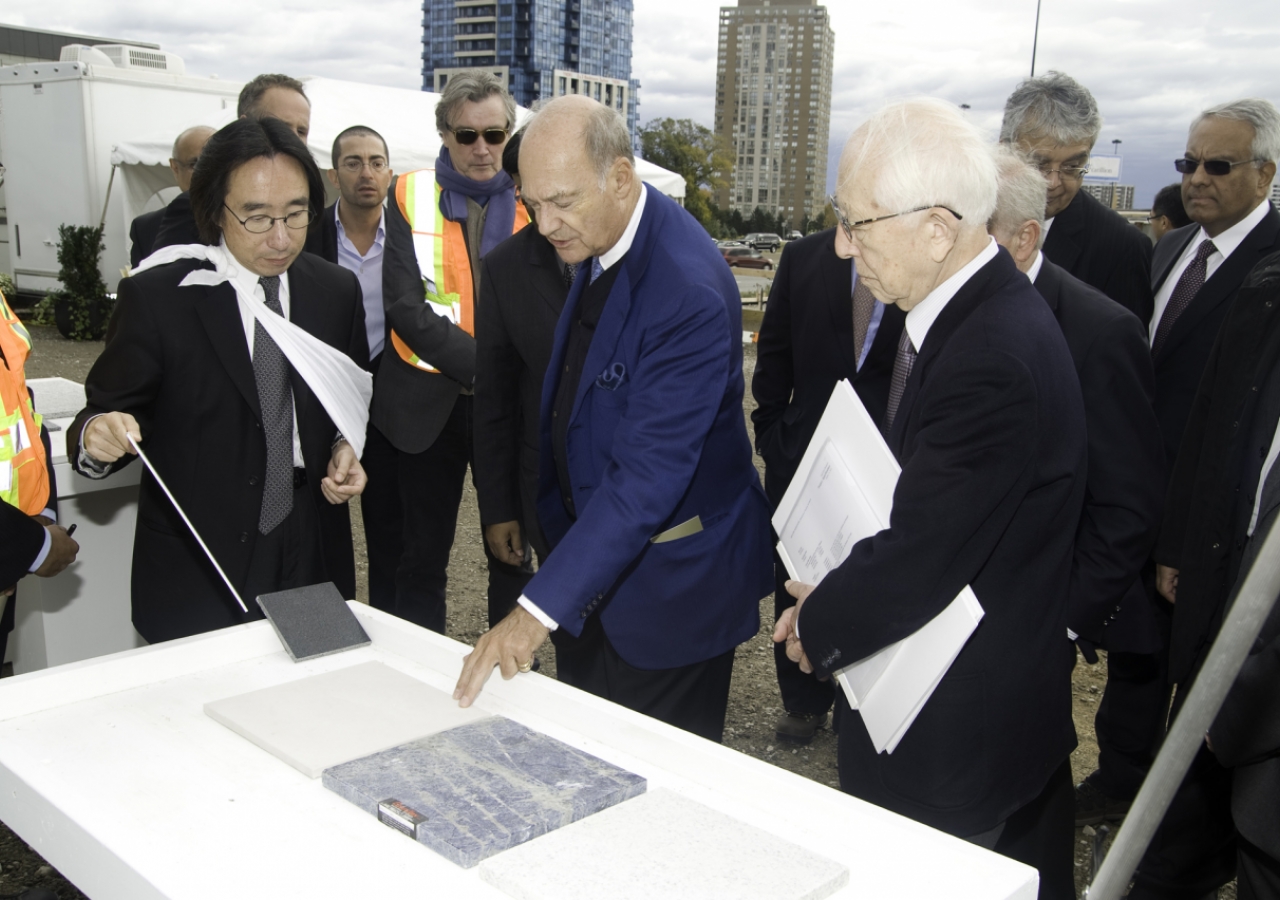
Fumihiko Maki and Gary Kamemoto of Maki & Associates review materials for the exterior finish of the Aga Khan Museum with Prince Amyn Aga Khan in October 2010. Photograph: The Ismaili.
“From the outside, it will glow by day and by night, lit by the sun and the moon. This use of light speaks to us of the Divine Light of the Creator, reflected in the glow of individual human inspiration and vibrant, transparent community. As the poet Rumi has written: “The light that lights the eye is also the light of the heart… but the light that lights the heart is the Light of God.”
~~~~~~~
(III) Remarks by the Aga Khan on the Aga Khan Museum at the Opening of the Aga Khan Museum and the Ismaili Centre, Toronto, September 12, 2014
“The fusion of tradition and modernity which this building achieves, and the blend of spiritual, educational and social objectives that it embodies, have also characterised our other Ismaili Centres — in Vancouver, London, Lisbon, Dubai, and Dushanbe. All of them were designed by architects of great international standing, and, I would emphasise, of great multi-cultural sensitivity.
Remarks continue below
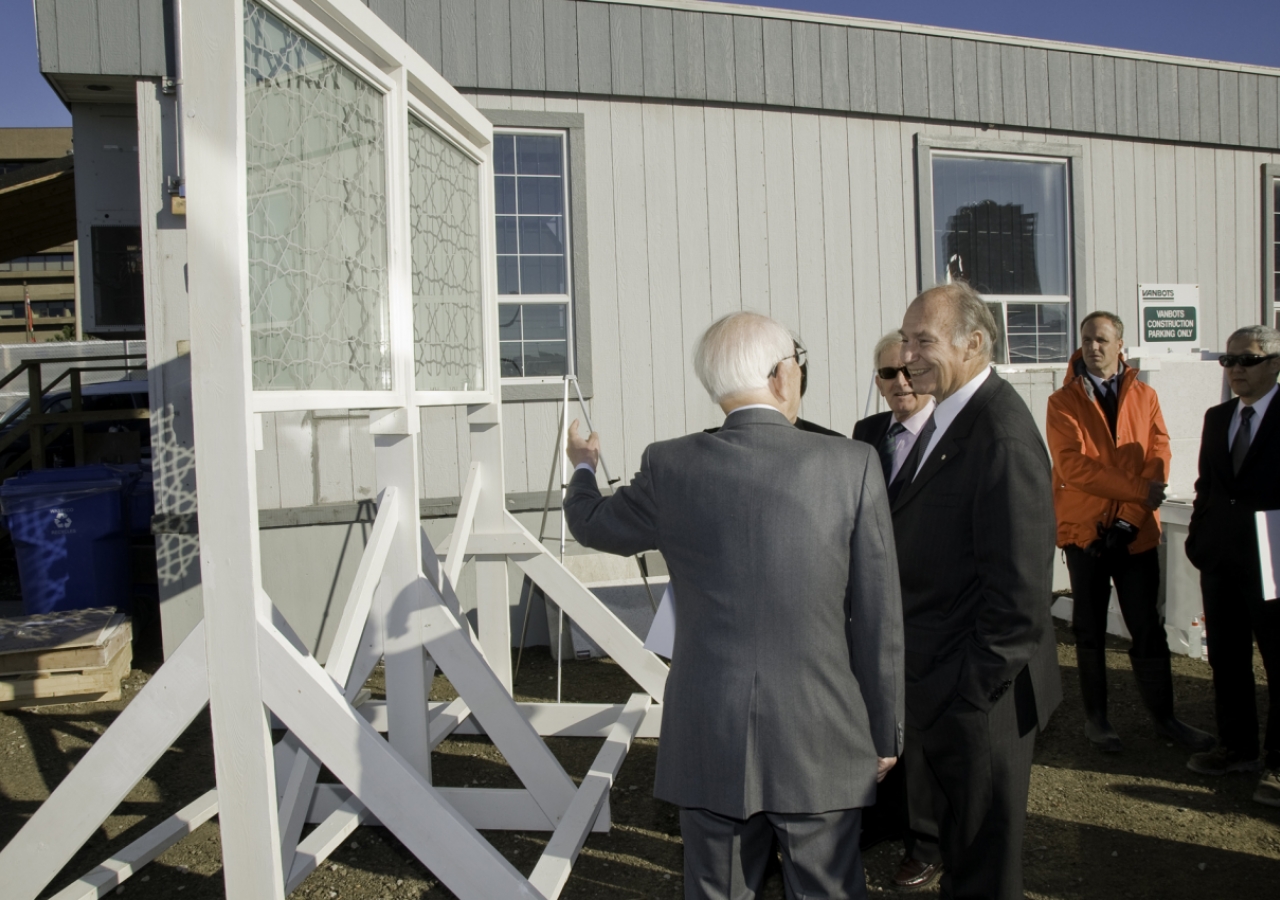
Fumihiko Maki and His Highness the Aga Khan discuss the glass finish options for the courtyard walls of the Aga Khan Museum in October 2010. Photograph: The Ismail
“Charles Correa, for example, comes from an Indian background and has also designed Hindu and Christian buildings. The architect for our Vancouver Centre 30 years ago was Bruno Freschi, whose family is of Italian background, and whose earlier work had included a Sikh place of worship. The new Aga Khan Park was designed by an architect of Lebanese heritage, Vladimir Djurovic. And the Aga Khan Museum is the work of a superb Japanese professional, Fumihiko Maki. How pleased we are that all of these fine artists are with us today.”
_____________________
The Aga Khan Centre, King’s Cross, London
“The Aga Khan Centre is the third project we have worked on with the distinguished architect Fumihiko Maki, a master of form and light” — His Highness the Aga Khan, quoted on Aga Khan Centre website
Gary Kamemoto and Professor Maki of Maki & Associates, the architects of the Aga Khan Centre, at the Aga Khan Centre Library.
Remarks by the Aga Khan at the inauguration of the Aga Khan Centre, June 5, 2018
“We celebrate today a beautiful new architectural accomplishment. This place has been shaped by many diverse influences — and among them we now welcome the rich traditions of Islamic architecture. One of those traditions – one that is appreciated by both the Islamic and the British cultures – is the special importance of the garden. We see the garden not merely as an adjunct to other constructions, but as a privileged space unto itself.
“And that is why I have emphasised, since our role began here in 2010, my own hope that the value of garden spaces should be embraced here. As we perambulate together through these spaces today, I trust that you will share my delight in seeing how that hope has been fulfilled. What we will see as we walk along are not only beautiful buildings — but also a unique series of gardens, courtyards and terraces – eight of them, in all, across our two buildings. Each one of them, moreover, has a distinctive identity: each one is inspired by a different region of the Islamic Ummah.
Remarks continue below
On Tuesday, June 26, 2018, HRH The Prince of Wales, now His Majesty King Charles, opened The Aga Khan Centre in King’s Cross in the presence of Mawlana Hazar Imam, His Highness the Aga Khan. Situated at the heart of London’s Knowledge Quarter, the Aga Khan Centre, designed by Maki and Associates, led by Fumihiko Maki, one of Japan’s most distinguished contemporary architects, provides a new home for a number of UK based organisations founded by His Highness the Aga Khan: The Institute of Ismaili Studies (IIS), the Aga Khan University Institute for the Study of Muslim Civilisations (AKU-ISMC) and the Aga Khan Foundation UK (AKF UK).
“Taken together, this winding ribbon of special spaces is an eloquent tribute to the rich diversity of the Muslim world. As we open this remarkable site, it is a privilege to salute those who have brought us to this moment. I would recognise, in particular, our fine relationship with the government of this borough, this city, and this country, as well as our rewarding partnership with the people at Argent. We are grateful, as well, for the talents of Maki and Associates, Allies and Morrison, Madison Cox and Nelson Byrd Woltz, as well as Rasheed Araeen and the late Karl Schlamminger. I would also like to thank our splendid team of staff and volunteers, including my brother Prince Amyn, who have stewarded this project to completion.”
Date posted: June 13, 2024.
_____________________
Please visit the Maki and Associates website for Professor Maki’s biography and curriculum vitae, which summarize his education, professional affiliations, and worldwide recognitions and awards.
Inna lillahi wa inna ilayhi raji’un “Surely we belong to God and to Him we return” — Holy Qur’an, 2:156.
“Life is a great and noble calling, not a mean and grovelling thing to be shuffled through as best as we can but a lofty and exalted destiny” — Mawlana Sultan Mahomed Shah, His Highness the Aga Khan III (1877-1957), 48th Imam of the Shia Imami Ismaili Muslims.
It is with deep sadness that I inform readers that Aitmadi Dr. Aziz Rajabali Kurwa of Mumbai, India, London, England, and Calgary, Canada, passed away peacefully in Calgary on Wednesday, March 13, 2024, at the age of 91. Dr. Kurwa’s wife, Aitmadibanoo Shirin Aziz Kurwa (d. December 2016), and his two brothers, Ramzan and Mohammedally, predeceased him.
Surviving Dr. Kurwa are his three children and their respective spouses, six grandchildren, and two great-grandchildren. They are daughter Khadeeja and her husband Steven Emmerson, and their two children, Adam and Daniel; daughter Laila and her husband Rahim Arstall and their two children, Nadia and Karim; and son Dr. Habib Kurwa and his wife Farzana and their two children, Khalil and Hassan. Laila’s daughter Nadia is Dr. Kurwa’s granddaughter, and with her husband Bob, they have two children, Rohan and Remi, making Dr. Kurwa a great-grandfather. Also surviving Dr. Kurwa is his younger brother, Dr. Badru Kurwa, an ophthalmologist in California.
Aitmadi Dr. Aziz Kurwa’s funeral will take place at Calgary’s South Jamatkhana on Saturday, March 16, 2024, at 11 AM. The funeral will be preceded by a dilsoji (condolences) to family members at the same Jamatkhana on Friday, March 15, after the evening ceremonies.
Article continues below
Aitmadi Dr. Aziz Rajabali Kurwa (d. March 13, 2024, aged 91)
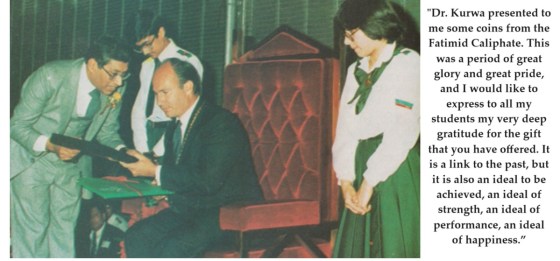
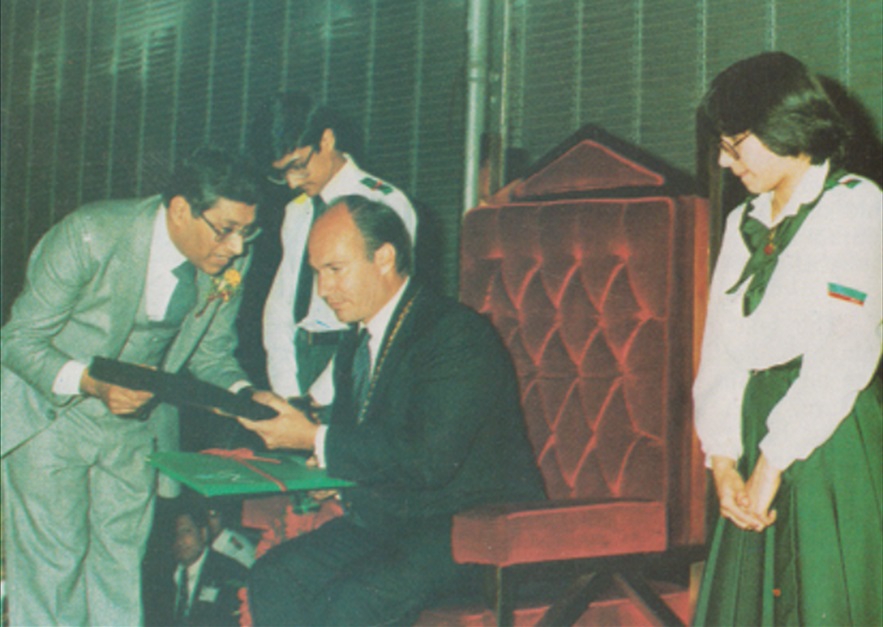
Dr. Aziz Kurwa was an exceptional and dedicated Ismaili leader who left an indelible mark on the community by pursuing excellence and implementing transformative programs and ideas in the United Kingdom. As someone who, with my late parents Alwaez Jehangir and Alwaeza Malek Merchant, served under Dr. Kurwa’s leadership as the President of the Ismailia Association for the United Kingdom (now known as the Ismaili Tariqah and Religious Education Board or ITREB), I have fond and special memories as I think of him. Still, there is one that was extraordinarily special. It is of the day in London, England, when he presented a framed set of 3 Fatimid coins to Mawlana Hazar Imam, His Highness the Aga Khan, at a student gathering in Olympia Hall during his weeklong visit in September 1979 to the Ismaili Jamat (community). Mawlana Hazar Imam looked at the gift with deep interest and admiration and responded as follows:
“Dr. Kurwa earlier, presented to me some coins from the Fatimid Caliphate. This was a period of great glory and great pride, and I would like to express to all my students my very deep gratitude for the gift that you have offered. It is a link to the past, but it is also an ideal to be achieved, an ideal of strength, an ideal of performance, an ideal of happiness.” (Excerpt from Ilm, Volume 4, Number 3).
Following the presentation, Dr. Kurwa brought the gift to the Ismaili Association’s literature counter for display for the benefit of the Jamat. This first-ever presentation of Fatimid coins to Mawlana Hazar Imam during his 22 years of Imamat from 1957 to 1979 raised the Jamat’s interest in the glory of the Fatimid Empire.
Article continues below
London, September 1979: Mawlana Hazar Imam, His Highness the Aga Khan, is seen receiving the report of the Ismailia Association’s Activity and a framed set of 3 Fatimid Gold Dinars from the President of the Association, Dr. Aziz Kurwa. The students Mukhi and Mukhiani are standing on either side in a volunteer’s uniform. Photo: Ilm magazine.
Aziz Rajabali Kurwa was born in Mumbai on December 1, 1932, and studied there until his medical graduation. He became involved with services to the Ismaili community at a very young age. As a college student, he helped revive a student society under the new name of Ismaili Students Education Society (ISES). The committee then undertook several initiatives, including organizing an arts and crafts exhibition in the city. Prince Aly Khan, who was then visiting Mumbai, very graciously accepted the committee’s invitation to inaugurate the exhibition.
Article continues below
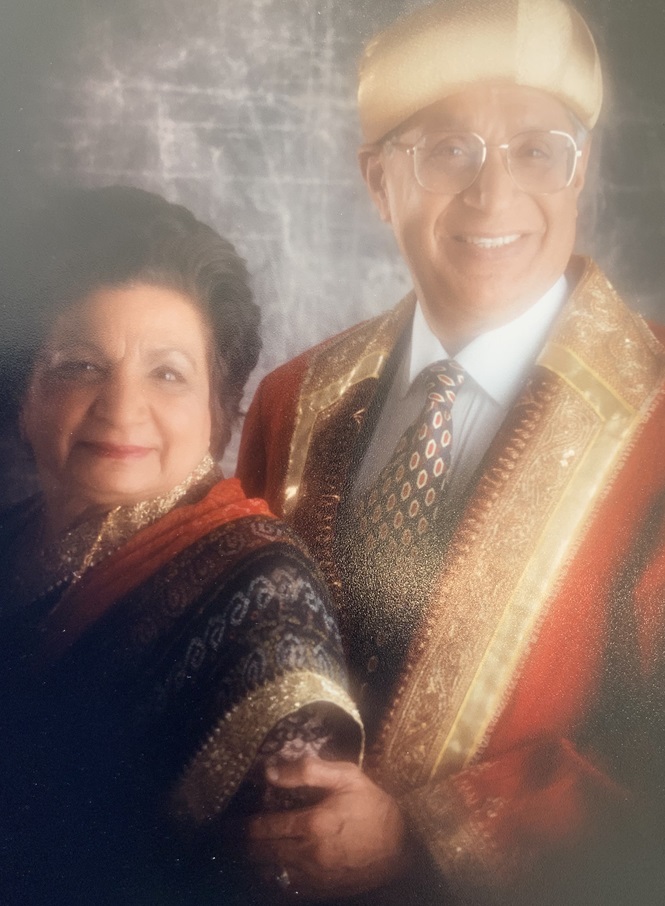
Aitmadi Aziz Kurwa and Aitmadibanoo Shirin Kurwa. Photograph: Habib Kurwa family collection.
Dr. Kurwa arrived in England in 1958. With his solid medical background from India, he went on to specialize as a dermatologist, obtaining FRCP(Edinburgh) and FRCP(London). Before Dr. Kurwa relocated to London, where he opened a dermatology clinic in the city’s famous medical district, Harley Street, he pursued his ambition of serving the Ismaili Jamat in Birmingham. He became the Mukhi (leader of the congregation) of the Jamat in 1970 and, together with his counterpart and other members of the Jamat, assisted in settling many Ismailis who arrived in the Midlands area as refugees from Uganda after their 1972 expulsion by Idi Amin.
Article continues below
Dr. Aziz Kurwa, President of the Ismaili Association for the U.K. between 1979 and 1985, is seated third from left and is pictured with the members, staff, and teachers who served under him. Photograph: Jehangir Merchant Family Collection.
When he opened his dermatology practice in London’s Harley Street, Dr. Kurwa continued to set his sights on serving the Ismaili community. He established a Jamatkhana in Purley, Surrey, and in 1979, he was appointed President of the Ismailia Association for the United Kingdom by Mawlana Hazar Imam.
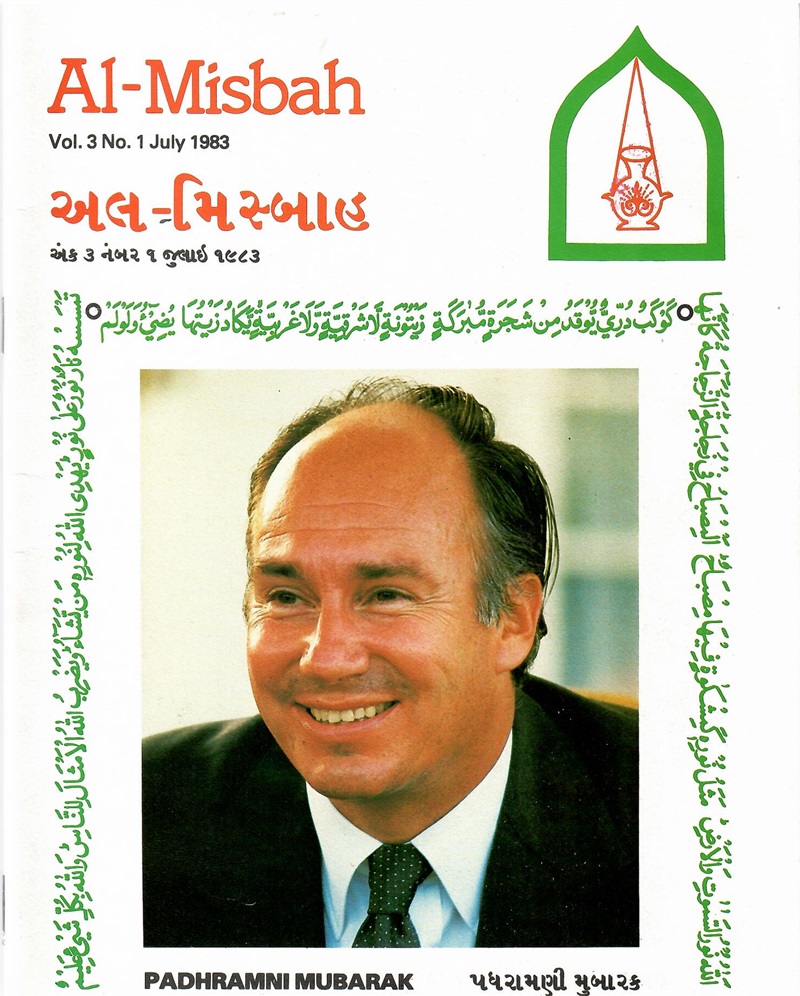
As a visionary leader, he introduced the concept of Baitul Ilm, an Ismaili religious education program for children and youth, which continues to shape the U.K. and other worldwide Ismaili communities. He also championed the distribution of high-quality religious material in cassettes to remote Jamats in the U.K. He created a bilingual religious magazine, Al-Misbah, containing easy-to-follow religious material, stories for children, and readings for the Gujarati-speaking members of the Jamat.
~~~~
Article continues below
The bi-lingual Gujarati-English Al-Misbah magazine was launched in the UK during Dr. Aziz Kurwa’s term as the President of the Ismailia Association for the UK.
His support for adult education and the growth of the literature and library portfolios further underscored his commitment to the community. Waezin (sermon) activities grew multifold throughout the U.K. as did children’s activities and participation in the Jamatkhanas. Dr. Kurwa also ensured that missionaries in the U.K. would regularly travel to the widespread European Jamats to support their religious activities and interests. The highly acclaimed Ilm magazine, established in 1975, continued to prosper with increasing circulation in the U.K. and abroad. Such was the magazine’s reputation that in 1980, the magazine’s editor, my dad Jehangir, was invited by the Aga Khan Award for Architecture to attend the first Award Ceremony in Lahore. Sadly, he was unable to go.
After completing his two terms as the President of the Ismaili Association, Mawlana Hazar Imam, in 1986, chose him to be one of the resident governors of the Institute of Ismaili Studies in London, which Dr. Kurwa proudly served until 1995.
Article continues below
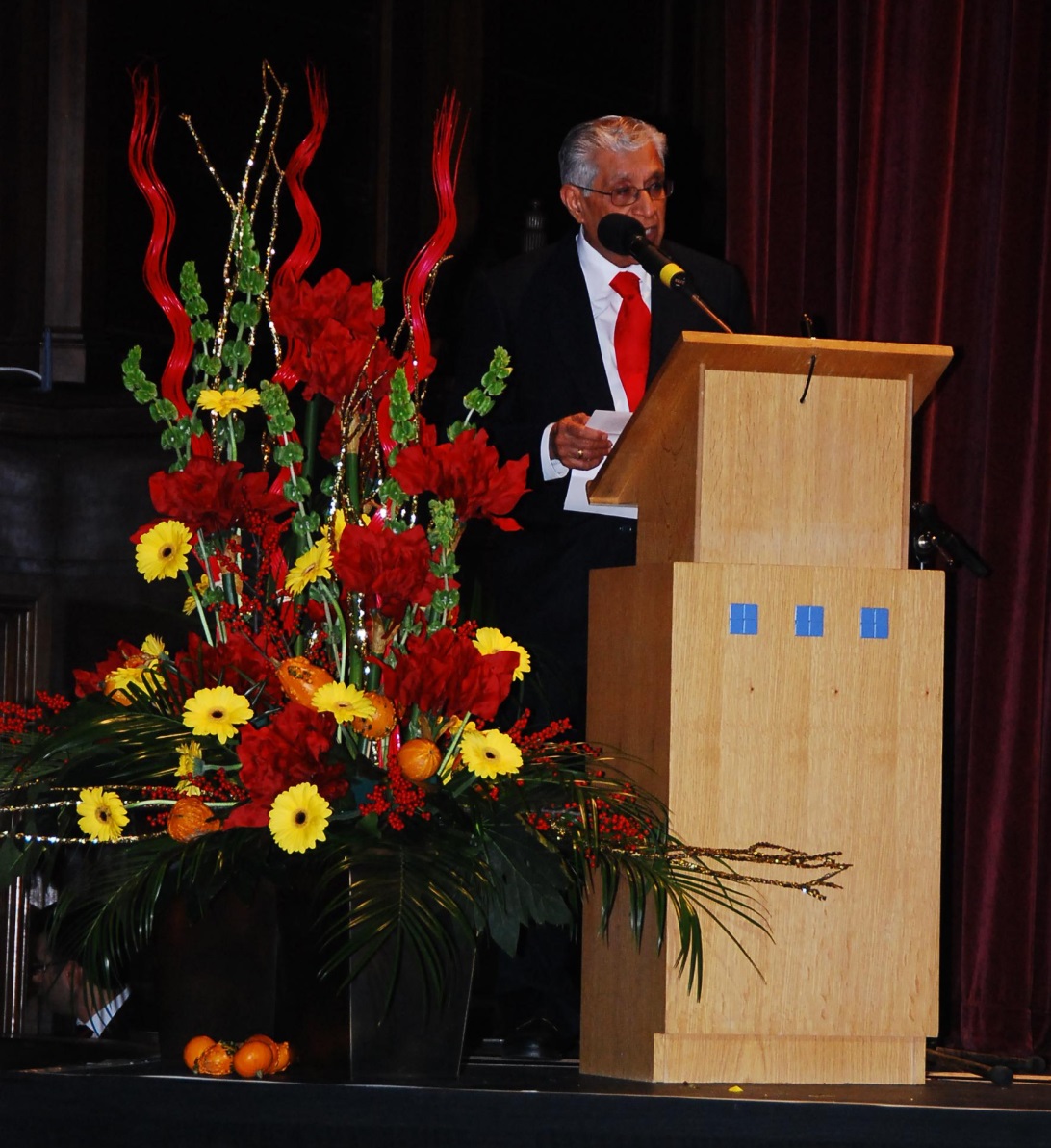
Dr. Aziz Kurwa, producer and director of “The Festival of Poetic Expressions” speaking at the event which was held by the Ismaili Council for the UK in London, Manchester and Germany to commemorate the Golden Jubilee of Mawlana Hazar Imam, His Highness the Aga Khan Aga Khan.
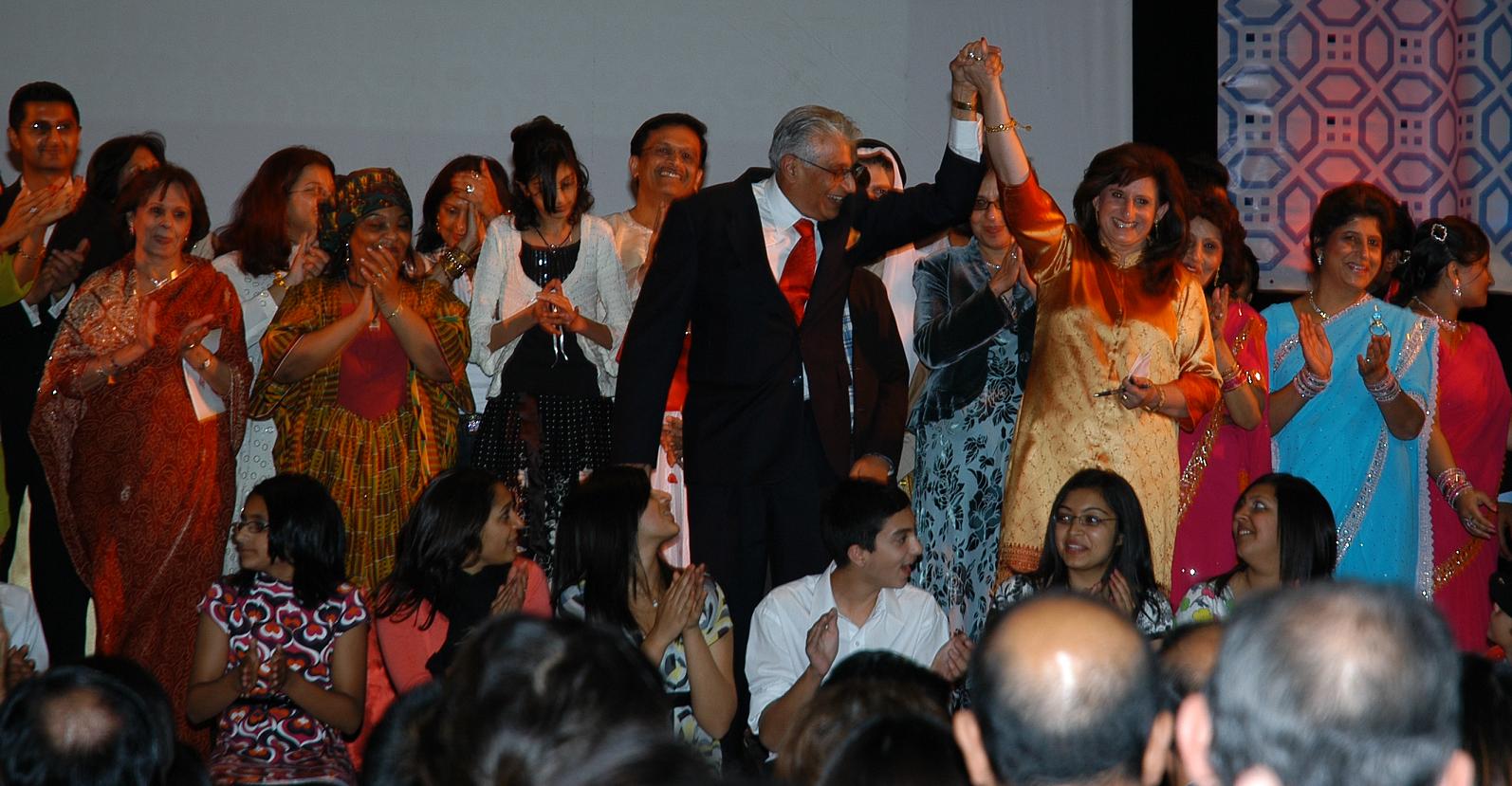
Dr. Aziz Kurwa celebrates at the conclusion of “The Festival of Poetic Expressions” which was held by the Ismaili Council for the UK in London, Manchester and Germany to commemorate the Golden Jubilee of Mawlana Hazar Imam, His Highness the Aga Khan Aga Khan.
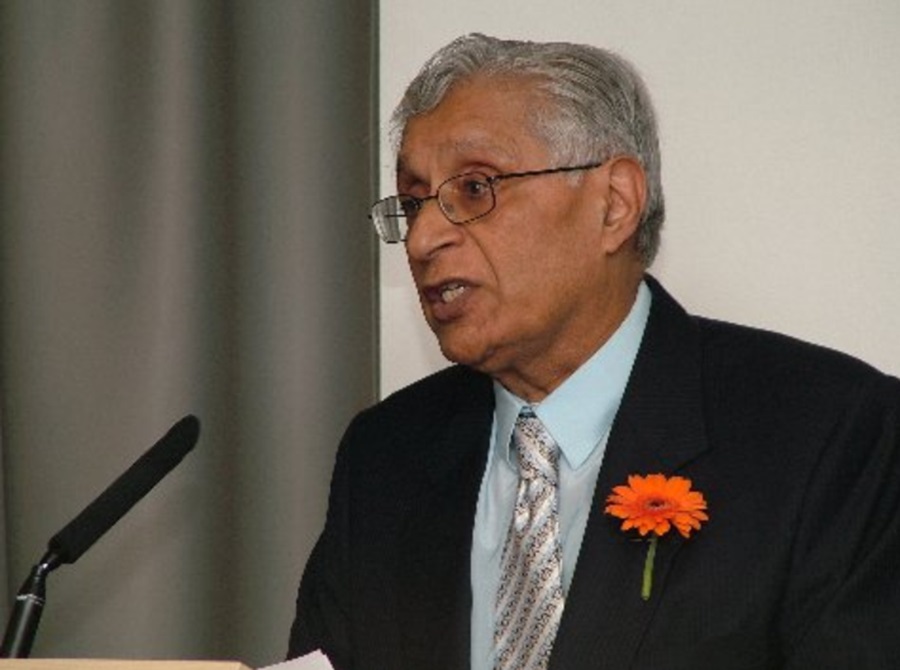
Dr. Kurwa continued relentlessly to participate in other activities within the community. He contributed in creating the Health Care Professional’s Association and reviving the Ismaili Seniors Club. His passion for the Baitul Ilm religious education program led him to organize poetry sessions for Ismaili children and seniors, the success of which led to the Festival of Poetic Expressions as a Golden Jubilee programme. The event was staged in London, Manchester and Germany. He invited Simerg to publish the poems on the website, which we proudly did. Dr. Kurwa also served as a member of the Executive Committee of The Association For The Study Of Ginans, a private initiative.
In his article on Volunteering at the Dawn of Imamat, Dr. Kurwa wrote: “In whatever position in the Jamat, in my heart, I am devoted to voluntary service, and in this article, I am making an effort to recognise that volunteer services have existed since the inception of Islam and Inshallah will continue to flourish in the Jamat as long as Imam-e-Zaman wishes it to be.”
Article concludes below
All smiles as Aitmadi Dr. Aziz Kurwa is pictured with his son Dr. Habib Kurwa and his wife Farzana and their two children Khalil and Hassan. Photograph: Habib Kurwa family collection.
Dr. Kurwa moved to Calgary, Canada, in 2017 following the demise of his beloved and wonderful wife, Aitmadibanoo Shirin Aziz Kurwa, in December 2016. He cherished the beautiful moments with his loving son, Dr. Habib Kurwa, and his family. I was honoured to visit my former president and to meet him in Jamatkhanas. My wish to see him on Thursday, March 14, 2024, at 3:30 PM never materialized. A day earlier, on March 13, Habib texted me mid-morning, “Ya Ali Madad – Dad passed away this morning.”
Allah most graciously granted Aitmadi Aziz Kurwa a peaceful, happy and healthy life — a life that was filled with service to the Ismaili community, its institutions and the Imam-of-the-Time
He was an extremely rare Ismaili leader who returned to serve the Jamat at the grassroots level in any capacity as long as it enabled him to contribute to the community’s upliftment.
Aitmadi Aziz Rajabali Kurwa was a gallant, humble leader and a devoted murid of Mawlana Hazar Imam. We pray that his soul may rest in eternal peace. Ameen. We further pray that his family may face this immense loss with great courage and fortitude.
Date posted: March 14, 2024. Last updated: March 15, 2024 (reformatting and typos.)
__________________________
We invite you to submit your condolences, memories, and tributes to Aitmadi Dr. Aziz Kurwa by completing the feedback form below or clicking Leave a comment. Should you encounter technical issues or difficulties submitting your comment, please send it via email to mmerchant@simerg.com (subject Aziz Kurwa).
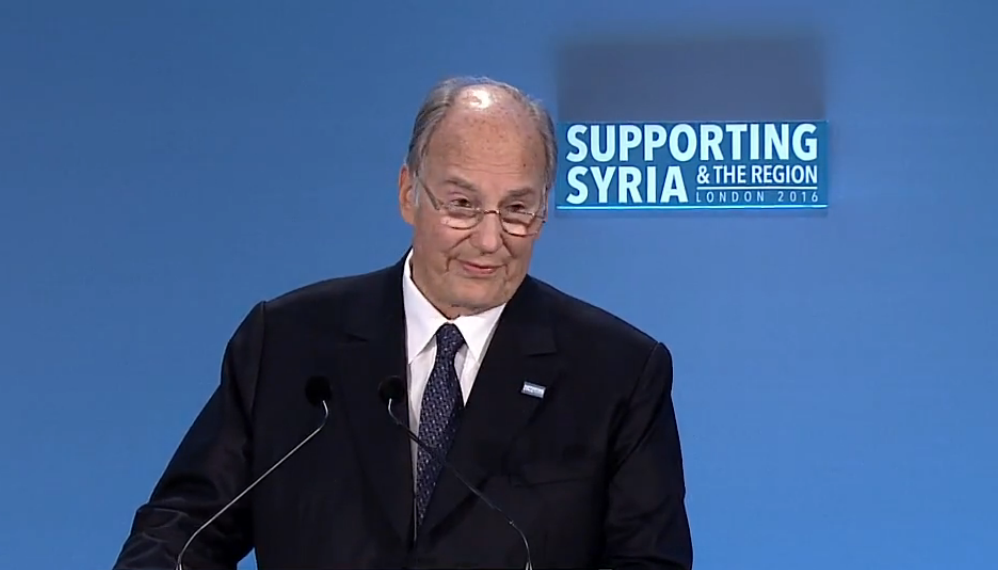
In remarks made at an International Conference under the theme “Supporting Syria and the Region Conference”, in London, England, Mawlana Hazar Imam, His Highness the Aga Khan, today called for the establishment of ‘islands of stability’ in war-ravaged Syria that could provide areas of relative safety in the midst of conflict. The conference, co-hosted by Germany, Kuwait, Norway, the United Kingdom and the United Nations. was attended by representatives from sixty countries, including 30 world leaders.
“The situation in Syria is a close to hell as we are likely to find on this earth,” said UN Secretary General Ban Ki-moon. Referring to the Geneva meeting between the Syrian Government and the opposition parties that had broken down just a day earlier, he said the talks were “undermined by the continuous lack of sufficient humanitarian access, and by a sudden increase of aerial bombings and military activities within Syria”. He urged the warring sides to “get back to the table, not to secure more gains on the battlefields”.
Deploring the devastation in war-ravaged Syria, Mawlana Hazar Imam, His Highness the Aga Khan, called for the establishment of “islands of stability” to provide areas of relative safety in the midst of conflict. The 49th Shia Ismaili Imam, pledged $200 million towards achieving peace, stability, and reconstruction in the country.
The British Prime Minister, David Cameron, said that “if ever there was a moment to take a new approach to the humanitarian crisis in Syria surely it is now,” mentioning the huge number of Syrians who “fear they have no alternative than to put their lives in the hands of evil-people smugglers in search of a future”.
The following are the transcript and video of the remarks made by His Highness the Aga Khan at the Supporting Syria and the Region Conference.
Bismillah-ir-Rahman-ir-Rahim
Co-hosts of the Conference on Supporting Syria and the Region,
Excellencies,
Ladies and gentlemen,
I thank the co-hosts for organising this much-needed initiative to deepen the understanding of, and garner international support for the peoples of Syria, Alongside all those present here today, I am deeply distressed over the indiscriminate and widespread devastation of life and property, including that of irreplaceable cultural assets which are the manifestation of Syria’s stunningly rich pluralistic history.
The Aga Khan Development Network (AKDN), which is the Ismaili Imamat’s global agency for supporting development, is fully engaged with the peace process under UN leadership, and is firmly committed to helping build a Syria that continues to respect pluralism, remains secular, and embarks on a political process led by Syrians.
AKDN’s development and humanitarian work in Syria began many years before the war. In the present situation, we have committed resources and efforts to ensure that Internally Displaced People receive humanitarian assistance, and are supported to sustain their livelihoods. We are taking two approaches:
First, we are supporting local community leaders, teachers, doctors, engineers and others to foster stability, protecting their families and their communities. We are thus building and strengthening civil society to take as much responsibility as possible for their own future.
Second, we are investing in communities, by supporting agriculture, income generation, early childhood education, schools, and hospitals. We also provide vocational training to create skills. Our goal is to sustain hope.
We aim to meet the urgent needs of the present, but where also possible to protect and strengthen the foundations for the future. We seek to create “islands of stability”, where there is public consensus, in the face of war. It is my conviction that “islands of stability” can be replicated wherever security permits. Investing in them will help prevent displacement of people and anchor communities that would otherwise flee as refugees.
Since the onset of conflict in 2011, AKDN has dedicated $50 million towards these endeavours in Syria and is now committing to increasing this investment to $200 million over the next four years. Our efforts will expand to wider areas of the country. Our goal is peace, stability, and reconstruction.







 Simerg - Insights from Around the World