Special Series: Ismaili Expressions on the Imamat — (III) Ismaili Imams on Succession, the Noor of Imamat, and Imam’s True Reality

“The Imam’s true face is to be perceived with the eyes of the heart.
He has thousands of physical habitations, but his true home is traceless;
He has had a thousand names, but all of them refer to one reality.”
33rd Ismaili Imam ‘Abd al-Salam, 15th Century

1. SUCCESSION

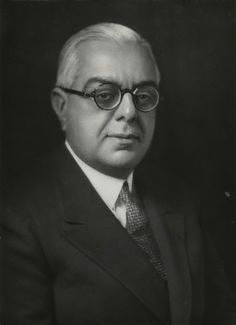
Sir Sultan Muhammad Shah, Aga Khan III. Photo Copyright National Portrait Gallery, London by Elliott & Fry photograph.

Sir Sultan Muhammad Shah, Aga Khan III. Photo Copyright National Portrait Gallery, London
by Elliott & Fry photograph.

 By Mawlana Sultan Mahomed Shah,
His Highness the Aga Khan III

“Ever since the time of my first ancestor Ali, the first Imam, that is to say over a period of thirteen hundred years it has always been the tradition of our family that each Imam chooses his successor at his absolute and unfettered discretion from amongst any of his descendants whether they be sons or remoter male issue.

“In view of the fundamentally altered conditions in the world in very recent years due to the great changes which have taken place including the discoveries of atomic science I am convinced that it is in the best interests of the Shia Moslem Ismailian Community that I should be succeeded by a young man who has been brought up and developed during recent years and in the midst of the new age and who brings a new outlook on life to his office as Imam.

“I appoint my grandson Karim, the son of my son Aly Salomone Khan to succeed to the title of Aga Khan and to be the Imam and Pir of all my Shia Ismailian followers.”

2. THE MOMENT OF SUCCESSION, THE HEREDITARY INSTITUTION AND THE NOOR OF IMAMAT

A portrait of Prince Karim Aga Khan IV during his enthronement in Geneva, Switzerland after his grandfather, His Highness the Aga Khan III, passed away on July 11, 1957. Photo by Philippe Le Tellier/Paris Match via Getty Images.

A portrait of Prince Karim Aga Khan IV during his enthronement in Geneva, Switzerland after his grandfather, His Highness the Aga Khan III, passed away on July 11, 1957. Photo by Philippe Le Tellier/Paris Match via Getty Images.

By Mawlana Shah Karim al-Hussaini Hazar Imam, His Highness the Aga Khan

“The [installation] ceremony is a public installation of the Imam. The Ismailis pay homage to the Imam and that is when you are recognised by the world at large as the Imam.

“Officially as soon as one Imam passes away, his successor takes on from the very minute the Imam has passed away .” [1]

~~~

“The Ismaili Imamat is a supra-national entity, representing the succession of Imams since the time of the Prophet….today the Ismailis are the only Shia community who, throughout history, have been led by a living, hereditary Imam in direct descent from the Prophet.

“…As the 49th Imam, I have for the past 50 years, looked after two inseparable responsibilities: overseeing the spiritual wellbeing of Ismailis, as well, at the same time, as focusing on improving their quality of life and that of the people with whom they live.” [2]

~~~

“For hundreds of years, my spiritual children have been guided by the Rope of Imamat; you have looked to the Imam of the Age for advice and help in all matters and through your Imam’s immense love and affection for his spiritual children, his Noor has indicated to you where and in which direction you must turn so as to obtain spiritual and worldly satisfaction. [3]

3. TWO 15TH CENTURY ISMAILIS IMAMS ON ZAHERI AND BATINI DIDAR, AND IMAM’S ESSENCE

(a) Imam Mustansir bi’llah

Pandiyat-i- Jawanmardi or Counsels of Chivalry is a compilation of the guidance of the 32nd Ismaili Imam, Mustansir bi’llah, who lived in the 15th century. This book contains exhortations to the faithful on the necessity of recognising and obeying the current Imam and on how to live a truly ethical life. The circumstances that led to the compilation of the work are intriguing, and are alluded to in many of the manuscripts copies as follows:

When Pir Taj al-Din passed away, a number of people from the Sindhi Ismaili Community went to the Imam. Upon arrival they pleaded: “Our Pir Taj al-Din has passed away. Now we are in need of a Pir.” The Imam then had the Counsels of Chivalry compiled and gave it to them saying: “This is your Pir. Act according to its dictates.”

In one of the chapters, the Imam enumerates the importance of both the Zaheri and Batini aspects of the Imam’s Didar. He recognizes and acknowledges the sacrificing spirit of the Jamat, in serving him and in observing religious duties.

He says:

“They (the Jamat, the community) have given up their property, and even their lives. All of them have faithfully submitted their religious dues. Others have travelled long distances through arduous conditions by land and sea, braving storms and incurring great expense.

“Some attend religious assemblies to increase their knowledge while others, without any worldly motive, perform acts of charity to benefit the poor.

“Some have acted with noble actions in the cause of faith, including special devotions, worship and especially remembrance (zikr), continually invoking the Lord throughout the night, never neglecting God for even a moment, and worshipping him out of passionate devotion.

“All believers are urged to come into the presence of the Imam and to see him with their own eyes.

“Thus, the esoteric (batini) vision, realized through pious works and the constant remembrance of God during the nightly vigil, as well as the exoteric (zaheri) vision, achieved by travelling to the Imam’s residence and beholding the gateway of God’s mercy, become the ultimate purpose of human life.

“Piety should be for the purpose of recognizing and beholding God, which is achieved through the recognition and vision of the Imam of one’s time.”

(b) Imam ‘Abd al-Salam

There is an ode of the 33rd Ismaili Imam ‘Abd al-Salam in which he says that the talisman (anything that has magical powers) that can open the treasure trove of spiritual meaning of the Holy Qur’an is the Imam. This ode is lucidly explained by Dr. Shafique Virani in his path breaking book, “The Ismailis in the Middle Ages.”

In the ode the Imam observes that the true essence of the Imam cannot be recognized with earthly, fleshly eyes, for these can only see his physical form, perishing like all else with the passage of time. His true face is to be perceived with the eyes of the heart. He has thousands of physical habitations, but his true home is traceless; he has had a thousand names, but all of them refer to one reality.

The Imam continues by saying that today he is known as ‘Abd al-Salam, but tomorrow the physical body will be gone and the name will change, yet the essence will remain in the next Imam of the lineage. Those who look at the Imam as they squint will consider him like any other human being, but as soon as the eyes of the heart perceive correctly, his true status is discovered. In form the Imams change, but in meaning and substance they are changeless. Human language cannot attain to the majesty of the Imams.

The Imam is the most precious ingredient in the supreme elixir (miraculous substance) of eternal life-red sulfur. He is not simply a pearl, but the ocean that gives birth to pearls. The existence of the Imam, who leads humankind to a recognition of God, is the very pinnacle of creation.

Date posted: July 10, 2015.

_______________

Previous posts in this special series:

References:

[1] Click http://www.nanowisdoms.org

[2] Click In a Dynamic and Stirring Address to Members of the Canadian Parliament, His Highness the Aga Khan Shares His Faith Perspectives on the Imamat, Collaboration with Canada, the Muslim World Community (the Ummah), the Nurturing of Civil Society, Early Childhood Education, Voluntary Work, and the Unity of the Human Race

[3] Farman Mubarak Pakistan Visit 1964, published by the Ismailia Association for Pakistan. Quoted also in Ilm magazine,  July 1975, Volume 1, Number 1, page 27, published by the Ismailia Association for the United Kingdom (known since 1986 as the Ismaili Tariqah and Religious Education Board or ITREB)

Note: Reading 3 compiled from The Ismailis in the Middle Ages, by Shafique N. Virani, and Pandiyat-i Jawanmardi, translated by Professor Vladimir Ivanow). Image courtesy of roseannapiter.com

To give a feedback, please click Leave a comment.

The Long-Long Awaited Book, “The Children of Time: The Aga Khan and the Ismailis” by Malise Ruthven and Gerard Wilkinson

LETTER FROM PUBLISHER

By Abdulmalik Merchant

Cover page, Children of Time - the Aga Khan and the Ismailis. originally scheduled for publication during the Golden Jubilee of His Highness the Aga Khan, is 8 years overdue.

Cover page, Children of Time – the Aga Khan and the Ismailis. originally scheduled for publication during the Golden Jubilee of His Highness the Aga Khan, is 8 years overdue.

For almost 8 years now, I have been awaiting the release of “Children of Time” which was scheduled to be published by I.B. Tauris, on the occasion of His Highness the Aga Khan’s 50th Imamat Anniversary held during  2007-2008. Tauris is the familiar publisher of many of the scholarly publications of the Institute of Ismaili Studies in London, England.

The  publisher had first announced the publication of the book with the following review, which continues to appear on its website:

“From highland peasant farmers in Central Asia to Canadian industrialists, South Asian businessmen and Europe-based scholars, the Nizari Ismailis are one of the Muslim world’s most diverse Shi’a communities. With adherents living in more than twenty-five countries in Central Asia, South Asia, the Middle East, Europe and North America, they embrace peoples of widely different ethnic and linguistic backgrounds. The spiritual leadership of this highly dynamic community has in recent generations come to be known as the ‘Aga Khan’.This book, which coincides with the fiftieth anniversary of the present Aga Khan’s succession as Imam, or spiritual leader, of the Ismailis, assesses the achievements of his ‘Imamat’ in modernising the communities’ institutions and creating one of the world’s leading development agencies, the Aga Khan Development Network. In the process the book explores how the present Harvard-educated Aga Khan has attempted to preserve and build on a religious tradition rooted in medieval theology while at the same time embracing the modern world without loss of faith or cultural identity.”

Originally, if memory serves me right, the book was going to be authored by Malise Ruthven, who is noted by the publisher as “one of the leading writers on Islam in English and is the author of ‘Islam in the World’, ‘A Fury for God: the Islamist Attack on America’, ‘Fundamentalism: A Very Short Introduction’ and several other highly praised books.” Then, Gerard Wilkinson, who has had  a  distinguished thirty-year career with the Aga Khan in Kenya, Italy and latterly with his secretariat in France, was added as the co-author.

I have been tracking the publication of this title on Amazon since it was first announced, and I have noted that the publication date has been changing ever since. As of today, I note that the Amazon gives the publication date as May 30, 2015, while the I.B. Tauris website gives the book’s release date as September 30, 2015,* with the hardback selling price of $45.00 (£24.50). The Canadian Amazon site lists one hardback copy as being available at C$58.95 but when you click on the link to purchase the book, it is listed as being temporarily out of stock. Perhaps! May 30 has passed, September 30 is 8 weeks in the distant, so it is all rather confusing!

Under the circumstances, Vali Jamal can be forgiven for the delay in publishing his long-awaited wrist-breaking 1600 page plus book “Uganda Asians: Then and Now, Here and There, We Contributed, We Contribute” which I had first announced on this website sometime in 2012, with a publication date of October 2012. It is now scheduled to be released in November of this year.

Hopefully, both the books, Children of Time by Ruthven and Uganda Asians by Jamal will be perfectly timed for autumn of this year for fantastic reading for the holiday season!

Date posted: July 8, 2015.
Date updated: July 12, 2015 (typo and revised publication date).

_________________

*I have noted as of July 12, 2015, that the September 30, 2015 publication date was removed from the book’s primary page. However the bibliographical info cites the publication date as December 18, 2015. The IB Tauris “Religion New and Recent Books 2015” catalogue mentions March 2015 as the publication date.

 We welcome your feedback. Please click Leave a comment.

Special Series: Ismaili Expressions on the Imamat — (II) The Beatific Vision of the Imam of the Time

INTRODUCED BY ABDULMALIK MERCHANT

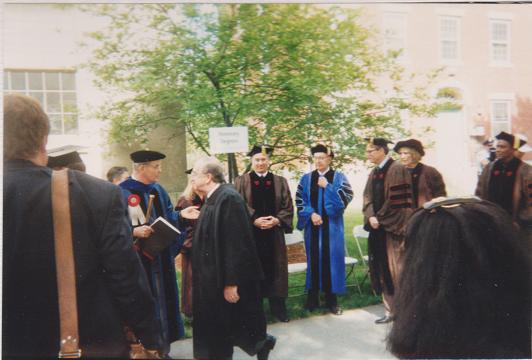
A very happy moment in my life when I visited Brown University in 1996. I snapped this picture of my beloved 49th Imam, His Highness the Aga Khan, and only realized that he was looking straight at my disposable nine dollar camera after I got the film processed in Philadelphia.  Photo by Abdulmalik Merchant

A very happy moment in my life when I travelled to Brown University from Philadelphia in 1996. I snapped this picture of my beloved 49th Imam, His Highness the Aga Khan, and only realized that he was looking straight at my camera after I got the film processed in Philadelphia a couple of days later. Photo by Abdulmalik Merchant

Every Ismaili yearns to see the Imam of the Time. It’s a dream of a lifetime. Throughout history, past and present, Ismailis have travelled far and wide to earn this special moment of grace and barakah (happiness) in their lives. Since the advent of the 20th century, the 48th Imam, Mawlana Sultan Mahomed Shah, and the current 49th Imam, Mawlana Shah Karim (His Highness the Aga Khan), have graciously travelled to lands around the world to give their beloved murids (followers) this blessed opportunity. Scientific and technological advancements have speeded up and shortened the time-gap between visits of Mawlana Hazar Imam with his jamats, though even in these situations, some jamats  such as those living in Central Asia, did not have the opportunity of a meeting with the present Imam and his predecessors for decades and centuries. What sustained their faith, sometimes under extremely difficult and extra ordinary circumstances, was their spiritual bond with the Imam of the Time.  

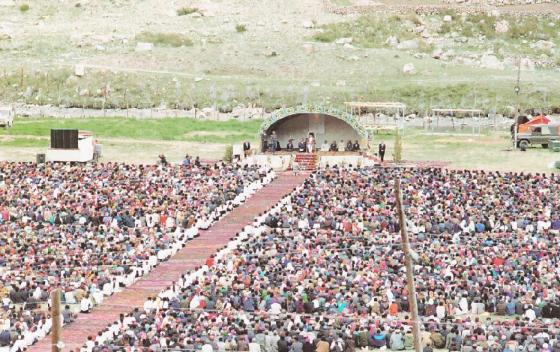
His Highness the Aga Khan pictured amongst his followers in Badakhshan in May 1995.

His Highness the Aga Khan pictured amongst his followers in Badakhshan in May 1995.

A cornerstone of Ismaili doctrines has been the principle of the Unity of Imamat, that is the  Ismaili belief and understanding that each Imam, being the bearer of the Noor (Light) of Imamat, is the same irrespective of his own age or the time he lives in. Thus in Ismaili writings, in addition to the importance of the physical didar (or glimpse) of the Imam, a strong emphasis has been laid on the followers to seek to attain the Beatific Vision of the Imam of the Time through special prayers, in addition to the ritual prayers. This idea is also conveyed in the sixth article of the Preamble of the Constitution of the Ismailis, which states:

“Historically and in accordance with Ismaili tradition, the Imam of the time is concerned with spiritual advancement as well as improvement of the quality of life of his murids. The imam’s ta‘lim lights the murid’s path to spiritual enlightenment and vision…”

The following collection  of writings from Ismaili history articulates the importance of both the  physical as well as the spiritual glimpse of the Imam of the Time. Our next reading in this short four-part series to commemorate Mawlana Hazar Imam’s 58th Imamat Day will consist of excerpts from the writings of Ismaili Imams on the subject of Imamat. This will be followed by contemporary voices on Imamat by members of the jamat.

1. An Inspiring Anecdote: Da’i Al-Mu’ayyad al-Shirazi ‘s Mulaqat  with  the 18th Ismaili Imam (or 8th Fatimid Caliph), Imam al-Mustansir Billah

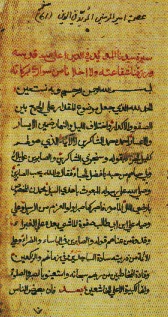
A folio from the manuscript of al-Shirazi's Sirat. Credit: The Institute of Ismaili Studies.

A folio from the manuscript of al-Shirazi’s Sirat. Credit: The Institute of Ismaili Studies.

“I was taken near the place where from I saw the bright Light of the Prophethood.  My eyes were dazzled by the Light. I shed tears of joy and felt as if I was looking at the face of the Prophet of Allah and of the Commander of the Faithful, Hazrat Ali. I prostrated myself before the one who is the fittest person to bow to. I wanted to say something, but I was awe-struck.

“I tried to speak but my tongue refused to move. People asked me to say what I wished to say. I could say nothing. The Imam said, ‘Leave him. Let his fear and awe subside’.

“After this, I rose. I took the holy hand of the Imam, placed it on my eyes and on my chest and then kissed it. I left the place with immense joy.”

The same dai,  in the following entreaty to Imam Mustansir, typifies an Ismaili’s impatience to behold the face of the Imam of one’s time, and the urgency of this beyond any possible worldly consideration. He states: 

“I swear, were you to crown me, and were you to grant me dominion over the world entire and say to me ‘Let our meeting be postponed but an hour’, I would reply: ‘O my Mawla, let us meet instead!  For your delay of but an hour has turned my hair gray’.”

2. A Pilgrim’s Experience

During the reign of the 34th Ismaili Imam Gharib Mirza, a pilgrim tracked his way to Anjudan to see the Imam on behalf of the jamats in Khurasan. The identity of the pilgrim is not very clear due to the poor quality of the manuscript but the ode to the Imam reads as follows:

“Greetings! O Emperor of the Realm of Faith and World; I come from Khurasan to behold your face. All I have is a soul imperfect, sins and transgressions galore.

“Despite such worthless goods, I long for your grace, hoping that through me you may forgive the trespasses of your servants-one and all.

“As you are the sovereign and governor of all creation, this being testified to by the Qur’an itself, your proper name has been made manifest to all the faithful.

“You are Shah Gharib and Mustansir, the inheritor of Shah Salam!”

3. Pir Sadr al-Din on the True Guide, the Beatific Vision of the Imam, and the Alchemy of Transformation from Contact with the Imam

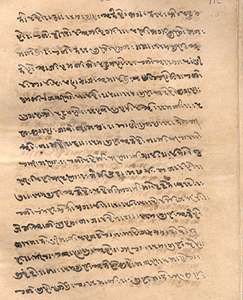
Folio of Pir Sadr al-Din's Saloko Nano at the Institute of Ismaili Studies.

Folio of Pir Sadr al-Din’s Saloko Nano at the Institute of Ismaili Studies.

The following is a translation of Pir Sadr al-Din’s ginanic compositiom “Sakhi māhā pad keri vāt koek jānere.”

“Friend! None but a few know of the exalted station. Indeed, they alone recognize it who have found the true guide.

“Friend! Within the heart, at the confluence of the three spiritual rivers, there is an imperishable light. There – a shimmering effulgence, pearls are showered.

“Friend! I completely lost consciousness of my physical self when my meditation mounted the empyrean, bursting forth.

“Friend! I beheld the place of the lofty throne, I saw the seven islands, the nine continents.

“Friend! The religious scriptures and books cannot fathom this, for there is neither day there, nor night, neither sun, nor shade.

“Friend! My Lord is not such that He can be spoken of. He is to be seen – for He is indescribable, and nameless.

“Friend! How sweet is that Lord, indescribable, nameless. Says Pir Sadr al-Din, truly, with my own eyes, I have seen Him!”

~~~~~~

And the following is a translation of a verse from Sab Ghat Sami Maaro Bharpur Betha on spiritual transformation:

“O Brother, The True Preceptor is like the philosopher’s stone and the followers are like copper.

“When the copper comes in contact with the philosopher’s stone it becomes gold.

“The followers gain spiritual enlightenment from the contact of the Imam. He is the only Glorious, O brother.”

4. Nizar Quhistani on the Imam of the Time As the Source of Salvation, and on the Continuity of Imamat

“Salvation is to be found in the Imam of the Time.

“Ever since I found the Imamate, permanently in human form, I have known no other guide than the living, everlasting Imam.

“For in his command, I have found peace in both the worlds.

“My lover appears in different forms,

“Because for each period there comes a new guidance;

“One after the other, there  follows another Qaim  Imam Ali.

“I have given up everything except that contained in the Qur’anic verse ‘offspring, one of the other’.”

Date posted: July 8, 2015.

_______________

Readings adapted from The Life and Lectures of the Grand Missionary al-Muayyad-fid-Din al-Shirazi and The Ismailis in the Middle Ages: A History of Survival, a Search for Salvation by Shafique N. Virani, Hardcover, May 3, 2007.

Feedback welcome, please click Leave a comment.

Special Series: Ismaili Expressions on the Imamat and Imam of the Time — (I) The Preamble of the Constitution of the Shia Imami Ismaili Muslims

LETTER FROM PUBLISHER

By Abdulmalik Merchant

Canada’s Confederation Day, the American Independence Day, Tanzania’s Saba Saba celebrations and the Imamat Day of His Highness the Aga Khan, all fall in the month of July.

Canada is already preparing for its 150th birthday two years hence when Ismailis around the world will, inshallah, celebrate the Diamond Jubilee of their beloved 49th Imam, whom they respectfully address as Mawlana Hazar Imam.

 A portrait of Mawlana Hazar Imam, His Highness Prince Karim Aga Khan, with a framed portrait of Mawlana Sultan Mahomed Shah in the background. Photo by Philippe Le Tellier/Paris Match via Getty Images. Copyright.

A portrait of Mawlana Hazar Imam, His Highness Prince Karim Aga Khan, with a framed portrait of Mawlana Sultan Mahomed Shah in the background. Photo by Philippe Le Tellier/Paris Match via Getty Images. Copyright.

His Highness the Aga Khan succeeded to the 49th hereditary throne of Imamat at the age of twenty by the will of his grandfather, Mawlana Sultan Mahomed Shah, His Highness the Aga Khan III, who served as the 48th Ismaili Imam for a record 71 years (August 17, 1885 – July 11, 1957).

Over the next week, Simerg will provide an insight into the principles of Imamat through short readings. We begin the series by posting the Preamble of the Ismaili Constitution, which is an introductory succinct statement giving the historical roots of the Ismaili Imamat, the principle of Imamat succession, and the permanency of the spiritual bond that exists between the Imam and his followers.

Another theme that will be explored in the coming few days through the writings of Ismaili Pirs, missionaries and philosophers is the principle of the Unity of Imamat, that is the Ismaili belief and understanding that each Imam, being the bearer of the Noor (Light) of Imamat, is the same irrespective of his own age or the time he lives in.

Finally, another aspect that will become apparent from the readings to follow is that the hereditary institution of Imamat can never become extinct. This is in accordance with the well known Muslim prophetic tradition, hadith thaqalain, which says, “I leave behind me two weighty things: The Book of Allah and my Progeny. If you keep yourselves attached to these two, never, never will you go astray. Both are tied with a long rope and cannot be separated until the Day of Judgement.”

The Preamble of the Constitution of the Shia Imami Ismaili Muslims

Please click on photo for enlargement

December 13, 1986, Geneva: On his 50th birthday, His Highness the Aga Khan is seen ordaining a new constitution for the worldwide Ismaili community.

December 13, 1986, Geneva: On his 50th birthday, His Highness the Aga Khan is seen ordaining a new constitution for the worldwide Ismaili community.

“Mawlana Hazar Imam Shah Karim al Hussaini, His Highness Prince Aga Khan, in direct lineal descent from the Holy Prophet (s.a.s.) through Hazrat Mawlana Ali (a.s.) and Hazrat Bibi Fatima (a.s), is the Forty-Ninth Imam of the Ismaili Muslims.”

BACKGROUND

In 1905, the 48th Ismaili Imam, Sir Sultan Muhammad Shah, His Highness the Aga Khan III, issued a written set of ‘Rules and Regulations’ for the Ismailis of East Africa which effectively served as their communal constitution. This constitution re-affirmed the centrality of the Imam’s authority over the affairs of his community and also articulated the distinctive religious identity of the Ismailis. This document was revised and published several times until 1954, and was made available to Ismailis and non-Ismailis alike. Similar rules were given to the Ismaili community in British India.

During the 1960’s, the 48th Imam’s grandson and successor, Mawlana Shah Karim al-Hussaini Hazar Imam, His Highness the Aga Khan IV, gave Constitutions to his followers in Africa and Pakistan in 1962, and to the Jamat in India in 1967.

A constitution review committee was then formed in the early 1980’s, and after exhaustive review, Mawlana Hazar Imam, in 1986, ordained a new Ismaili Constitution known as “The Constitution of the Shia Imami Ismaili Muslims.”

The Ismaili Constitution became applicable throughout the world, linking all Ismailis to the Imamat. His Highness did this with the belief that the Constitution would provide a strong institutional and organizational framework through which his community would be able to contribute to the harmonious development of the Muslim Ummah and of the societies in which his followers lived. He expressed confidence that the Ismaili Constitution would give a stronger integrated identity to his community, and that in abiding by it in letter and spirit, the Ismailis would achieve greater peace, unity, happiness, security and wellbeing. He futher hoped that the Constitution would become an enabling document for all his murids (followers) for an active role in institution building, for creative application of their abilities, for personal development and for intellectual and spiritual satisfaction.

The new constitution was ordained, signed and sealed by Mawlana Hazar Imam on December 13th, 1986, his fiftieth Salgirah (birthday) and thirtieth year of Imamat. The Constitution was revised by Mawlana Hazar Imam on July 11, 1998, when he completed forty one years of his spiritual leadership.

THE PREAMBLE

(A) The Shia Imami Ismaili Muslims affirm the shahādah lā ilāha illa-llāh, Muhammadur rasulu-llāh, the Tawhid therein and that the Holy Prophet Muhammad (s.a.s.) is the last and final Prophet of Allah. Islam, as revealed in the Holy Quran, is the final message of Allah to mankind, and is universal and eternal. The Holy Prophet (s.a.s.) through the divine revelation from Allah prescribed rules governing spiritual and temporal matters.

(B) In accordance with Shia doctrine, tradition, and interpretation of history, the Holy Prophet (s.a.s.) designated and appointed his cousin and son-in-law Hazrat Mawlana Ali Amiru-l-Mu’minin (a.s), to be the first Imam to continue the Ta’wīl and Ta‘līm of Allah’s final message and to guide the murids, and proclaimed that the Imamat should continue by heredity through Hazrat Mawlana Ali (a.s) and his daughter Hazrat Bibi Fatimat-az-Zahra, Khātun-i-Jannat (a.s).

(C) Succession of Imamat is by way of Nass, it being the absolute prerogative of the Imam of the time to appoint his successor from amongst any of his male descendents whether they be sons or remoter issue.

(D) The authority of the Imam in the Ismaili Tariqah is testified by Bay‘ah by the murid to the Imam which is the act of acceptance by the murid of the permanent spiritual bond between the Imam and the murid. This allegiance unites all Ismaili Muslims worldwide in their loyalty, devotion and obedience to the Imam within the Islamic concept of universal brotherhood. It is distinct from the allegiance of the individual murid to his land of abode.

(E) From the time of the Imamat of Hazrat Mawlana Ali (a.s), the Imams of the Ismaili Muslims have ruled over territories and peoples in various areas of the world at different periods of history and, in accordance with the needs of the time, have given rules of conduct and constitution in conformity with the Islamic concepts of unity, brotherhood, justice, tolerance and goodwill.

(F) Historically and in accordance with Ismaili tradition, the Imam of the time is concerned with spiritual advancement as well as improvement of the quality of life of his murids. The imam’s ta‘lim lights the murid’s path to spiritual enlightenment and vision. In temporal matters, the Imam guides the murids, and motivates them to develop their potential.

(G) Mawlana Hazar Imam Shah Karim al Hussaini, His Highness Prince Aga Khan, in direct lineal descent from the Holy Prophet (s.a.s.) through Hazrat Mawlana Ali (a.s.) and Hazrat Bibi Fatima (a.s), is the Forty-Ninth Imam of the Ismaili Muslims.

(H) By virtue of his office and in accordance with the faith and belief of the Ismaili Muslims, the Imam enjoys full authority of governance over and in respect of all religious and Jamati matters of the Ismaili Muslims.

(I) It is the desire and Hidāyat of Mawlana Hazar Imam that the constitutions presently applicable to the Ismaili Muslims in different countries be superseded and that the Ismaili Muslims worldwide be given this constitution in order better to secure their peace and unity, religious and social welfare, to foster fruitful collaboration between different peoples, to optimise the use of resources, and to enable the Ismaili Muslims to make a valid and meaningful contribution to the improvement of the quality of life of the Ummah and the societies in which they live.

Date posted: Saturday, July 4, 2015.

© Simerg.com

~~~~~~~~~~~

We welcome feedback/letters from our readers. Please click Leave a comment.  Your feedback may be edited for length and brevity, and is subject to moderation. We are unable to acknowledge unpublished letters.

Please Sign-up for blog subscription at top right of this page.

____________

References for this post:

(1) The Ismailis: An Illustrated History by Farhad Daftary and Zulfikar Hirji, published by Azimuth editions in association with The Institute of Ismaili Studies (2008).

(2) Wikipedia article on Imamah, with link to website, http://www.salmanspiritual.com/

(3) http://www.kamalzar.com, website of Alwaez Kamaluddin Muhammad and Alwaeza Zarina Kamaludin.