His Highness the Aga Khan, 49th Ismaili Imam, is a Champion of Diversity and Compassion and Inspires Millions, Says Prime Minister Justin Trudeau

His Highness the Aga Khan is greeted by Justin Trudeau as he arrives in Ottawa, Canada, to celebrate his Golden Jubilee in 2008. At that time, Mr. Trudeau was a Member of Parliament in his riding in the Province of Quebec. He won the Liberal leadership in 2011, and after winning the recent Federal Elections held in October, he was sworn in as the Prime Minister of Canada on November 4th 2015. A day earlier he visited the Delegation of the Ismaili Imamat Building on Sussex Drive in Ottawa - see photo below. Photo: The Ismaili.

His Highness the Aga Khan is greeted by Justin Trudeau as he arrives in Ottawa, Canada, to celebrate his Golden Jubilee in 2008. At that time, Mr. Trudeau was a Member of Parliament in his riding in the Province of Quebec. He won the Liberal leadership in 2011, and after winning the recent Federal Elections held in October, he was sworn in as the Prime Minister of Canada on November 4th 2015. A day earlier he visited the Delegation of the Ismaili Imamat Building on Sussex Drive in Ottawa – see photo below. Photo: The Ismaili.

The Prime Minister of Canada, the Right Honourable Justin Trudeau, issued the following statement on December 13, 2015, on the 79th birthday of His Highness Prince Karim Aga Khan:

“Today, we celebrate the birthday of His Highness the Aga Khan, the spiritual leader of the Shia Ismaili Muslims, who has dedicated his life to the promotion of peace, pluralism, and compassion around the world.

“For over fifty years, the Aga Khan has been an inspiration to millions, working tirelessly to improve the health and education of those living in some of the world’s most vulnerable countries. As a global humanitarian leader, he has worked with many partners – including Canada – to implement vital programs that advance long-term solutions to poverty, illiteracy, and disease.

Prime Minister Justin Trudeau with AKDN Representative Dr. Mahmoud Eboo (left) and the President of the Aga Khan Ismaili Council for Canada, Malik Talib, at the Delegation of the Ismaili Imamat in Ottawa on November 3, 2015, the day before he was sworn in as the Prime Minister. Photo: The Ismaili.

Prime Minister Justin Trudeau with Aga Khan Development Netork (AKDN) Representative Dr. Mahmoud Eboo (left) and the President of the Aga Khan Ismaili Council for Canada, Malik Talib, at the Delegation of the Ismaili Imamat in Ottawa on November 3, 2015, a day before he was sworn in as Prime Minister. Photo: The Ismaili.

“I have seen first-hand the Aga Khan’s commitment to the ideals of diversity and inclusion. As a nation, we are proud His Highness was granted honourary Canadian citizenship for the leadership he has shown to advance development, pluralism, and tolerance – values that are at the core of our national identity.

“The world needs champions of diversity and compassion. Today, we are delighted to thank our good friend, the Aga Khan, for all that he has done to help those in need, and wish him good health, happiness, and peace on this special day.”

__________

“Happy Birthday to the Hazar Imam” – Yasmin Rattansi, MP Don Valley E.

Marc Carisse 2005 0607 203

His Highness the Aga Khan, MP Yasmin Ratansi and External Affairs Minister Pierre Pettigrew (July 2004 – February 2006). Photo: Jean-Marc Carisse. Copyright.

“Mr. Speaker, I take this opportunity to thank the constituents of Don Valley East for re- electing me to Parliament.

“My riding is proud to house three architectural jewels of Toronto: the Aga Khan Museum, the lsmaili Centre, and the Aga Khan Park built in Canada by His Highness the Aga Khan with his own funds.

“On December 13, His Highness will be celebrating his 79th birthday. I rise today in the House to pay a special tribute to a remarkable human being. His tireless efforts in building bridges across the globe, his commitment to eradicating poverty and ignorance for millions of people, irrespective of race or religion, through the AKDN network are unparalleled.

“I was fortunate to have worked with His Highness in establishing the Global Centre for Pluralism here in Ottawa.

“Happy birthday to the Hazar Imam. May all who come in touch with him benefit from his integrity, humility, honesty, and courage to do good.”

~~~~~~~~~

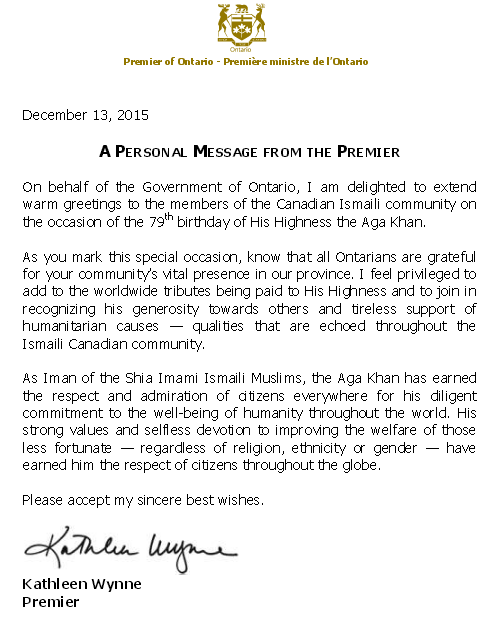
A Message and Tweets from the Premier of Ontario, Kathleen Wynne, and Arif Virani, MP Parkdale–High Park.

OLYMPUS DIGITAL CAMERA

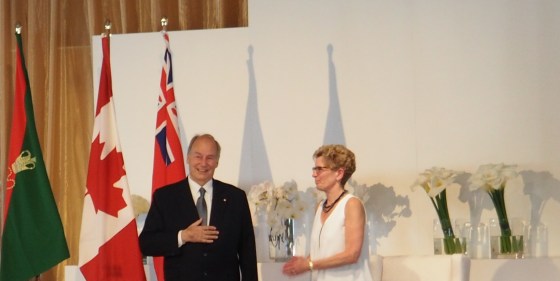
Mawlana Hazar Imam graciously accepts the standing ovation he receives after completing his speech at the opening of the Aga Khan Park in Toronto on May 25, 2015. With him is the Premier of Ontario, Kathleen Wynne. Photo: Simerg/Malik Merchant. Copyright.

Premier of Ontario Kathleen Wynne Aga Khan Message

~~~~~~~~

~~~~~~~~

….and a Tweet from the 2 Ismaili Mountaineers, Mirza Ali and Samina Baig, who conquered the “Seven Summits”, i.e. the highest mountain in each of the 7 continents

Date posted: December 13, 2015.
Last updated: December 14, 2015 (Message from Ontario Premier)

____________________

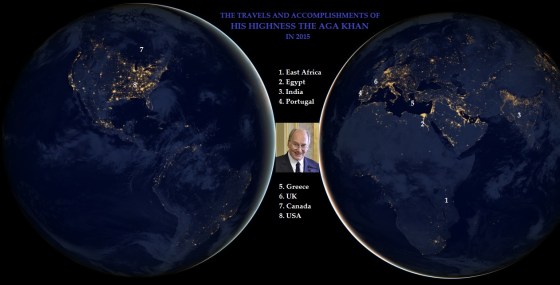
Glimpses of His Highness the Aga Khan’s Global Travels and Work in 2015

PLEASE CLICK: The 2015 Travels and Accomplishments of the Global Humanitarian and Spiritual Leader, His Highness the Aga Khan

Please click on image for the first part of a special 3-part series on His Highness the Aga Khan's Work and Travels in 2015.

Please click on image for the first part of a special 3-part series on His Highness the Aga Khan’s Work and Travels in 2015.

The Aga Khan’s “Cosmopolitan Ethic in a Fragmented World” a worthy read for all

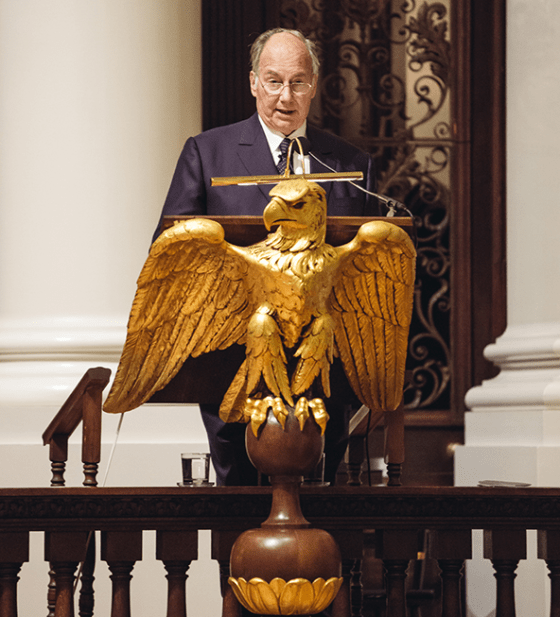
Aga Khan IV, 49th Ismaili Imam, at Harvard

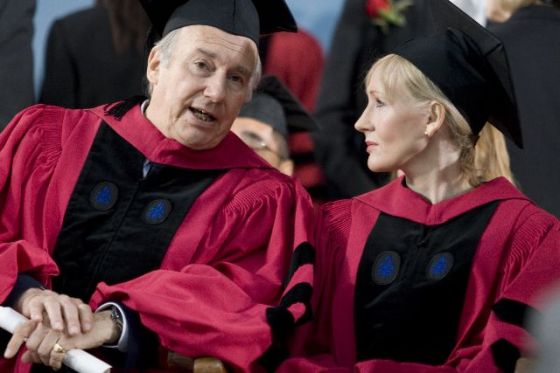
June 5, 2008: His Highness the Aga Khan received an Honorary Doctor of Laws degree from Harvard University in Cambridge, Massachusetts. He is seen speaking to fellow honorary degree recipient British author J.K. Rowling who received an honorary Doctor of Letters degree. Photo Credit: Akdn.org

His Highness the Aga Khan shared his decades long experience as the 49th hereditary Imam of Shia Ismaili Muslims in an address he delivered at Harvard University on November 12, 2015 in which he focused on building a better world through the notion of the Cosmopolitan Ethic. In an analysis of  the term and what it means to him, he also emphasized that it resonates with the world’s great ethical and religious traditions. The address that he delivered is one which every Muslim and non-Muslim should reflect on and hold true to their hearts because, as His Highness said, each one of us is born of a single soul.

The following are concluding remarks from the address, but we recommend that  readers click on http://www.akdn.org/Content/1368 to read the complete speech. Also, Simerg prepared and published a thematic version of the speech at Two Absolutely Essential Messages in His Highness the Aga Khan’s Harvard Lecture: “The Cosmopolitan Ethic” and the Timeless Truth that “Humanity is Born of a Single Soul”

THE HEART OF THE ISLAMIC MESSAGE: COMMON HUMANITY

Aga Khan Jodi Lecture Harvard

His Highness the Aga Khan spoke at Harvard on November 12, 2015 as part of the Samuel L. and Elizabeth Jodidi Lecture series, which provides for “the delivery of lectures by eminent and well-qualified persons for the promotion of tolerance, understanding and good will among nations, and the peace of the world. Photo: AKDN

“…I would emphasise that a cosmopolitan ethic is one that resonates with the world’s great ethical and religious traditions.

“A passage from the Holy Qur’an that has been central to my life is addressed to the whole of humanity. It says: “Oh Mankind, fear your Lord, who created you of a single soul, and from it created its mate, and from the pair of them scattered abroad many men and women…”

“At the very heart of the Islamic faith is a conviction that we are all born “of a single soul.” We are “spread abroad” to be sure in all of our diversity, but we share, in a most profound sense, a common humanity.

“This outlook has been central to the history of Islam. For many hundreds of years, the greatest Islamic societies were decidedly pluralistic, drawing strength from people of many religions and cultural backgrounds. My own ancestors, the Fatimid Caliphs, founded the city of Cairo, and the great Al Azhar University there, a thousand years ago in this same spirit.

“That pluralistic outlook remains a central ideal for most Muslims today. There are many, of course, some non-Muslims and some Muslims alike, who have perpetrated different impressions.

“At the same time, institutions such as those that have welcomed me here today, have eloquently addressed these misimpressions. My hope is that the voices of Islam itself will continue to remind the world of a tradition that, over so many centuries, has so often advanced pluralistic outlooks and built some of the most remarkable societies in human history.

CENTRAL LESSON FROM A PERSONAL JOURNEY OF 58 YEARS

“Let me repeat, in conclusion, that a cosmopolitan ethic is one that will honour both our common humanity and our distinctive Identities — each reinforcing the other as part of the same high moral calling.

“The central lesson of my own personal journey — over many miles and many years — is the indispensability of such an ethic in our changing world, based on the timeless truth that we are — each of us and all of us — “born of a single soul.”

Date posted: December 7, 2015.

_________________

Who is His Highness the Aga Khan? Learn more about him and the Ismailis at The Preamble Of “The Constitution of the Shia Imami Ismaili Muslims”

“ISIL does not speak for Islam” — President Barack Obama asks Americans not to define acts of terror as a war between America and Islam

Excerpts from a rare White House Oval Office address delivered by President Barack Obama on Sunday, December 6, 2015.

President Obama

“the vast majority of terrorist victims around the world are Muslim. If we’re to succeed in defeating terrorism we must enlist Muslim communities as some of our strongest allies, rather than push them away through suspicion and hate…just as it is the responsibility of Muslims around the world to root out misguided ideas that lead to radicalization, it is the responsibility of all Americans  — of every faith —  to reject discrimination”

Good evening. On Wednesday [December 2, 2015 – ed.], 14 Americans were killed as they came together to celebrate the holidays. They were taken from family and friends who loved them deeply. They were white and black; Latino and Asian; immigrants and American-born; moms and dads; daughters and sons. Each of them served their fellow citizens and all of them were part of our American family.

“I know that after so much war, many Americans are asking whether we are confronted by a cancer that has no immediate cure….we are cooperating with Muslim-majority countries —  and with our Muslim communities here at home  — to counter the vicious ideology that ISIL promotes online.”

…The victims were brutally murdered and injured by one of their coworkers and his wife…it is clear that the two of them had gone down the dark path of radicalization, embracing a perverted interpretation of Islam that calls for war against America and the West…this was an act of terrorism, designed to kill innocent people.

President Obama

As Commander-in-Chief, I have no greater responsibility than the security of the American people. As a father to two young daughters who are the most precious part of my life, I know that we see ourselves with friends and coworkers at a holiday party like the one in San Bernardino. I know we see our kids in the faces of the young people killed in Paris. And I know that after so much war, many Americans are asking whether we are confronted by a cancer that has no immediate cure.

…Since the attacks in Paris, we’ve surged intelligence-sharing with our European allies. We’re working with Turkey to seal its border with Syria. And we are cooperating with Muslim-majority countries — and with our Muslim communities here at home — to counter the vicious ideology that ISIL promotes online.

“Muslim leaders here and around the globe have…to speak out against not just acts of violence, but also those interpretations of Islam that are incompatible with the values of religious tolerance, mutual respect, and human dignity.”

….My fellow Americans….Let me now say a word about what we should not do.

…. We cannot turn against one another by letting this fight be defined as a war between America and Islam….ISIL does not speak for Islam. They are thugs and killers, part of a cult of death, and they account for a tiny fraction of more than a billion Muslims around the world — including millions of patriotic Muslim Americans who reject their hateful ideology. Moreover, the vast majority of terrorist victims around the world are Muslim. If we’re to succeed in defeating terrorism we must enlist Muslim communities as some of our strongest allies, rather than push them away through suspicion and hate.

President Obama

That does not mean denying the fact that an extremist ideology has spread within some Muslim communities. This is a real problem that Muslims must confront, without excuse. Muslim leaders here and around the globe have to continue working with us to decisively and unequivocally reject the hateful ideology that groups like ISIL and al Qaeda promote; to speak out against not just acts of violence, but also those interpretations of Islam that are incompatible with the values of religious tolerance, mutual respect, and human dignity.

“It is our responsibility to reject religious tests on who we admit into this country. It’s our responsibility to reject proposals that Muslim Americans should somehow be treated differently. Because when we travel down that road, we lose.”

But just as it is the responsibility of Muslims around the world to root out misguided ideas that lead to radicalization, it is the responsibility of all Americans — of every faith — to reject discrimination. It is our responsibility to reject religious tests on who we admit into this country. It’s our responsibility to reject proposals that Muslim Americans should somehow be treated differently. Because when we travel down that road, we lose. That kind of divisiveness, that betrayal of our values plays into the hands of groups like ISIL. Muslim Americans are our friends and our neighbors, our co-workers, our sports heroes — and, yes, they are our men and women in uniform who are willing to die in defense of our country. We have to remember that.

“…no matter who you are, or where you come from, or what you look like, or what religion you practice, you are equal in the eyes of God and equal in the eyes of the law.”

My fellow Americans, I am confident we will succeed in this mission because we are on the right side of history. We were founded upon a belief in human dignity — that no matter who you are, or where you come from, or what you look like, or what religion you practice, you are equal in the eyes of God and equal in the eyes of the law.

President Obama

Let’s not forget that freedom is more powerful than fear; that we have always met challenges — whether war or depression, natural disasters or terrorist attacks — by coming together around our common ideals as one nation, as one people. So long as we stay true to that tradition, I have no doubt America will prevail.

Thank you. God bless you, and may God bless the United States of America.

Date posted: December 7, 2015.

____________________

To watch and read the full transcript of President Obama’s speech please visit The White House.

The Nile: Its Role in the Fortunes and Misfortunes of the Fatimid Dynasty During its Rule of Egypt

BY DELIA CORTESE

Please click on image for Delia Cortese's article

Please click on this night time NASA image of the Nile for Delia Cortese’s article on the Fatimids

Please read the PDF version of this article in History Compass at the Wiley Online Library by clicking on the above image or http://onlinelibrary.wiley.com/doi/10.1111/hic3.12210/pdf.

Abstract (from History Compass): The Fatimids have been consistently studied as powerful contenders in the commercial and political control of the Mediterranean Sea. It is therefore surprising to find that only passing attention has been paid so far to the use of the Nile the Fatimids made as the ‘avenue’ through which goods from Africa and the Indian Ocean could be transported from Upper Egypt, to Cairo, then Alexandria and from there distributed to other Mediterranean ports. My argument in this paper is that the imperial aspirations of the Fatimids in Cairo and beyond were in many ways dependant on the unpredictability of the natural cycles that are characteristic of the river to this day but also on the Fatimids’ success or failure in politically and economically managing the varied social, political and trading activities that took place along the Egyptian section of the Nile valley. Beside commercial navigation, throughout the history of Egypt during the Fatimid period, the river was used for transport of people, water supply, the staging of state rituals and parades, as holiday destination for the imam-caliphs and their courts but also as a vehicle through which pilgrims form various regions of the Islamic world continued to penetrate Egypt whilst back and forth on their way to Mecca.

Read article in History Compass at the Wiley Online Library. Please click: http://onlinelibrary.wiley.com/doi/10.1111/hic3.12210/pdf.

Date posted: December 6, 2015

________________

Pomp and Celebration in Fatimid Egypt During the Flooding of the Nile

BY THE LATE JOHN FEENEY

“When the Nile reached its peak, the golden parasol was unfurled, trumpets sounded, and the caliph, mounted and clothed in sapphires and emeralds, emerged to the wonderment of his subjects…it was difficult for many spectators to catch even a brief glimpse of the passing caliph. But the very act of seeing him, it was believed, conveyed blessings upon the beholder.”
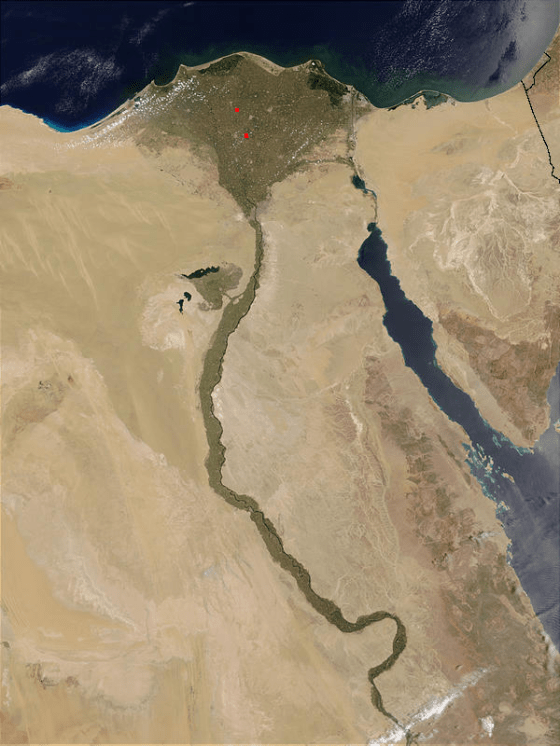
This pair of true-and false-color images from the Moderate Resolution Imaging Spectroradiometer was acquired on June 3, 2002. For thousands of years, the lower Nile valley (northern end) has been a cradle of civilization. Surrounded by deserts, the Nile river brings much—needed water to the land and people, making the valley into an oasis of agriculture and life. At its delta at the Mediterranean Sea, the Nile broadens into a large fan-shaped delta. All of Egypt’s large cities fall along the Nile, which sustains life in a region of scant rainfall. Photo Credit: Jacques Descloitres, MODIS Land Rapid Response Team, NASA/GSFC

Flowing out of a barren desert, from a source “beyond all known horizons,” the Nile had baffled the world for thousands of years. Regular as sun and moon, in the middle of burning summer, without a drop of rain in sight, when all other rivers on earth were drying up, for no apparent reason at all, the Nile rose out of its bed every year, and for three months embraced all of Egypt.

The ancient Egyptians knew when the flood would come, almost to the hour, but they never knew how much water it would bring to irrigate their fields. Egypt’s prosperity depended not only on the flood but also upon the accurate measurement of its height, for on that depended the allotment of water to its many users and the taxes they would have to pay in the coming year.

In the Middle Ages, each day during flood-time, the town crier walked the streets of Cairo announcing to the city the height of the rising Nile, although in drier years the actual height might be kept secret for fear of causing financial panic. “Twelve cubits today and the Lord is bountiful. God hath given abundance and watered the high fields,” he would say, to which a boy accompanying the crier would reply in his high-pitched voice, “Bless ye Muhammad.”

…The river having reached its anxiously awaited peak, preparations were made for the annual ‘Procession to the Nile.’ In 1047, the visiting Persian scholar Nasir Khosrau left a particularly rich description of the annual Fatimid procession celebrating the Nile’s inundation of Egypt.

For this great occasion, he wrote, the caliph [Imam al-Mustansir Billah] went personally to his treasury to select his symbolic regalia: parasol, turban, sceptre and sword. The sound of the palace band, which would accompany the procession, was so enormous that for three days before the event, massed drums and trumpets played continuously in the palace stables to accustom the animals to the noise. The job of decking out the processional route fell to the jewelers and tailors of the city, and this, too, always took three days and nights to arrange.

When the Nile reached its peak, the golden parasol was unfurled, trumpets sounded, and the caliph, “mounted and clothed in sapphires and emeralds,” emerged to the wonderment of his subjects.

Amidst clouds of incense, the procession of 10,000 men on horses moved off toward the great gate of Bab Zuwaylah, and beyond it to the flooding Nile.

From the surrounding rooftops, joining the din of drums, clashing cymbals and trumpets, “which sounded like thunder,” came choruses of the women’s ululations, “made by holding one hand under the nose and waggling the tongue in mid-scream.”

Leading the great procession were the sons and soldiers of the caliph’s princes (amirs). Then came the “amirs of the silver rods,” their symbols of office hung with little silver bells that jingled as they marched. Next came the “amirs of the collar,” two bearers of “the standards of praise,” and bearers of the symbolic inkstand and sword. Next came the mounted caliph surrounded by “men of the stirrup,” two at his horse’s bit, two at the neck, two at the stirrups, with the “commander of commanders” holding the caliph’s whip. The bearer of the golden parasol “took care to keep the caliph shaded from the sun,” while strategically placed in front of the caliph’s horse were two designated fly-swatters.

Amidst such a vast assembly of courtiers and crowd, it was difficult for many spectators to catch even a brief glimpse of the passing caliph. But the very act of seeing him, it was believed, conveyed blessings upon the beholder.
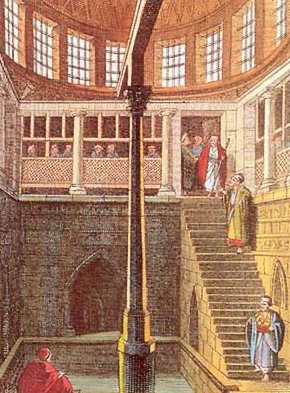
In both ancient and medieval Egyptt a nilometer was used to record how high the Nile was during the year. The nilometer was a staircase that proceeded down into the Nile with marks on it so the Egyptians knew how far the river rose. Image: TourEgypt.net

On reaching the Isle of Rhoda, the caliph dismounted, and the ceremony of anointing the Nilometer began. A mixture of saffron and mastic was handed to an official. Still in his clothes, he plunged into the flood-water and hung by his legs around the measuring column, dabbing on the perfumed mixture as readers above recited verses from the Qur’an.

The caliph went on to attend the opening of the “Canal of Egypt” (Al-Khalij al-Misri), which was kept dammed with stagnant water during the river’s winter months. At the canal, one of the caliph’s most magnificent silk tents was ready to give him protection from the summer sun. (Fatimid tents, transported on the backs of many camels, were portable palaces that took seven to nine years to make.) Amid more trumpet fanfares, the caliph thrust a spade onto the winter earthen dam and at once diggers attacked the dam with their hoes, cutting a series of narrow trenches across its surface. The impatient floodwaters quickly took over, eroding deeper channels, washing the dam completely away, and within an hour the life-giving flood reached the heart of all Cairo.

[Today] The Nile flood still comes, of course, but no one in Egypt sees it. Instead, it is contained in the immense inland sea called Lake Nasser, behind the Aswan High Dam. Here, Nile water collected year by year is led along neat narrow canals as unobtrusively as water coming out of a bathroom tap.

ISS025-E-09858

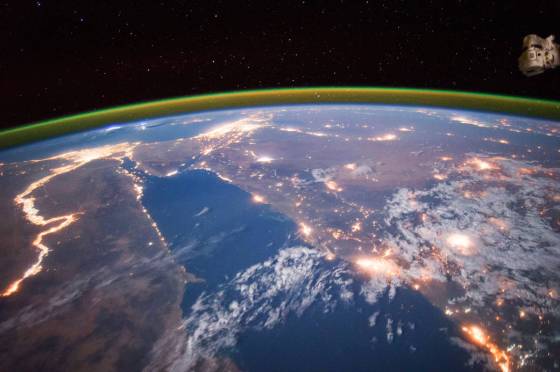
One of the fascinating aspects of viewing Earth at night is how well the lights show the distribution of people. In this view of Egypt, we see a population almost completely concentrated along the Nile Valley, just a small percentage of the country’s land area. The Nile River and its delta look like a brilliant, long-stemmed flower in this astronaut photograph of the southeastern Mediterranean Sea, as seen from the International Space Station. The Cairo metropolitan area forms a particularly bright base of the flower. The smaller cities and towns within the Nile Delta tend to be hard to see amidst the dense agricultural vegetation during the day. However, these settled areas and the connecting roads between them become clearly visible at night. Likewise, urbanized regions and infrastructure along the Nile River becomes apparent . This astronaut photograph (ISS025-E-9858) was acquired on October 28, 2010, with a Nikon D3S digital camera using a 16 mm lens, and is provided by the ISS Crew Earth Observations experiment and Image Science & Analysis Laboratory, Johnson Space Center. The image was taken by the Expedition 25 crew. The image has been cropped and enhanced to improve contrast. Lens artifacts have been removed. Credit: NASA
iss045-e-25090a

NASA astronaut Scott Kelly, recently past the halfway mark of his one-year mission to the International Space Station, photographed the Nile River during a nighttime flyover on Sept. 22, 2015. Kelly (@StationCDRKelly) wrote, “Day 179. The #Nile at night is a beautiful sight for these sore eyes. Good night from @space_station! #YearInSpace.” Image Credit: NASA

______________
John Feeney (d. 2006)

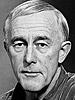
About the writer: The late New Zealand born filmmaker, photographer and writer John Feeney was among the early developers of wide-screen and large-format film techniques. For over 4 decades from 1963 onwards until his death in Wellington in 2006 at the age of 84, he divided his time between residences in Cairo and New Zealand. His piece (images excepted) is adapted from “The Last Nile Flood” which originally appeared in the May/June 2006 print edition of Saudi Aramco World, a publication to which Feeney regularly contributed for some 35 years.

_____________

Related articles on this Website:

Cairo in the Light of Nasir Khusraw’s Safarnama by Hatim Mahamid
“Riding Forth to Open the Canal” with Nasir Khusraw by Alice Hunsberger

We welcome feedback/letters from our readers.