His Highness the Aga Khan and Pope Benedict XVI: A Very Special Photo of Two Faith Leaders Meeting Each Other at the Institut De France in Paris

PREPARED AND COMPILED BY ABDULMALIK MERCHANT
(Publisher-Editor http://www.simerg.com and http://www.simergphotos.com)

As part of his famous Apostolic Journey to France in 2008, Pope Benedict XVI, on September 13, paid a visit to the “Institut De France” in Paris. The Pope, who had been elected as the 265th Pope of the Roman Catholic Church in 2005, was presented with a gold medal by the Institut, and also unveiled a plaque commemorating his visit. During his very brief remarks to the audience, the Pope expressed his gratitude to the Institut “both personally and as the successor of [Simon] Peter.”

His Highness the Aga Khan, Mawlana Hazar Imam, was also in attendance at the Institut de France as the Associate Foreign Member of the Académie des Beaux-Arts (Academy of Fine Arts), one of five learned societies within the Institut which was founded in 1795.

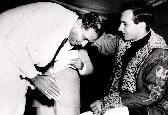
Everyone’s attention in the hall was drawn to Mawlana Hazar Imam and the Pope, with an extraordinary sense of interest and keenness, as the two faith leaders greeted each other with a handshake. Simerg is pleased to present this licensed copyright photo with permission from Getty Images.

Pope Benedict XVI is seen greeting His Highness the Aga Khan on September 13 at the Institut de France in Paris during an official visit to France in 2008. Photo: Copyright. Getty Images. Published on Simerg/Simergphotos with a Licencing arrangement with Getty Images. Fench caption: Vue plongeante du pape BENOIT XVI serrant la main de l'AGA KHAN à son arrivée sous la coupole de l'Institut de France à PARIS entouré de nombreux académiciens et autres personnalités dont Gabriel DE BROGLIE, Hélène CARRERE D'ENCAUSSE, Jean-François JARRIGE, Jean-François BACH, Arnaud D'HAUTERIVES, Michel ALBERT, Christian PONCELET président du Sénat, Jean TULARD, Alain DECAUX, Pierre-Jean REMY, Michel MOHRT, Max GALLO, le cardinal André VINGT-TROIS archevêque de Paris et le cardinal Paul POUPARD. (Photo by Philippe Petit/Paris Match via Getty Images)

Everyone’s attention is drawn to Pope Benedict XVI and His Highness the Aga Khan as they greet each other on September 13, at the Institut de France in Paris during an official visit by the Pope to France in 2008. Photo: Copyright. Getty Images. Published on Simerg/Simergphotos with a Licensing arrangement with Getty Images. Fench caption: Vue plongeante du pape BENOIT XVI serrant la main de l’AGA KHAN à son arrive sous la coupole de l’Institut de France à PARIS entouré de nombreux académiciens et autres personnalités dont Gabriel DE BROGLIE, Hélène CARRERE D’ENCAUSSE, Jean-François JARRIGE, Jean-François BACH, Arnaud D’HAUTERIVES, Michel ALBERT, Christian PONCELET président du Sénat, Jean TULARD, Alain DECAUX, Pierre-Jean REMY, Michel MOHRT, Max GALLO, le cardinal André VINGT-TROIS archevêque de Paris et le cardinal Paul POUPARD. (Photo by Philippe Petit/Paris Match via Getty Images).

In 2013, Pope Benedict dramatically resigned his position as the Head of the Catholic Church due to his deteriorating strength, advanced age and the heavy demands of being Pope, and retired at the Mater Ecclesiae, a small monastery located inside the Vatican State City. His present successor is Pope Francis I, born Jorge Mario Bergoglio.

SOME BRIEF NOTES ON THE PAPACY AND THE IMAMAT, AND SIMON PETER IN THE ROMAN CATHOLIC AND ISMAILI TRADITIONS

The Catholics adhere to the belief that the Pope is a successor of St. Peter. The succession of the pope is determined by a college of cardinals who elect the pope, while the office of the Imam of the Ismailis is a hereditary position. The Ismailis regard their 49th hereditary Imam as the direct descendant of the Prophet Muhammad (s.a.s) through Hazrat Ali (a.s.) and Hazrat Bibi Fatima (a.s.). In a speech made at the Canadian Parliament in 2014, the Aga Khan declared that “the Ismaili Imamat is a supra-national entity, representing the succession of Imams since the time of the Prophet.” And, in an interview with Politique International he said, “The religious leadership of the Ismaili Imam goes back to the origins of Shia Islam when the Prophet Muhammad appointed his son-in-law, Ali, to continue his teachings within the Muslim community. The leadership is hereditary, handed down by Ali’s descendants, and the Ismailis are the only Shia Muslims to have a living Imam, namely myself.”

In the Catholic tradition, the foundation for the office of the Pope is found primarily in Matthew, where Jesus is quoted as telling Simon Peter:

“You are ‘Rock,’ and on this rock I will build My Church and the gates of hell shall not prevail against it. And I will give unto thee the keys of the kingdom of heaven: and whatsoever thou shalt bind on earth shall be bound in heaven: and whatsoever thou shalt loose on earth shall be loosed in heaven.”

This series of successions of the Pope is known as “Apostolic Succession,” with the line of Bishops stretching back to the apostles, who lived during the time of Jesus. Simon Peter is recognized as having been the first Pope. Early Christians reserved the title of “Pope” for St. Peter’s successors.

However, in branches of Shia theology as well as Ismailism, Simon Peter’s role is seen as the direct parallel to that of Hazrat Ali as the first Imam. Ismailis along with some other Shia groups maintain that every major Prophet had a spiritual legatee (Waṣi) or successor called the Asas (foundation) who taught the inner meaning to those who had the capacity to understand it. In this regard, Adam had Seth; Noah had Shem; Moses had Aaron, and Jesus had Simon Peter. A well known sacred tradition of the Prophet Muhammad says that “Ali is to me as Aaron was to Moses,” confirming that Ali held the same level of authority as Aaron did.

Date posted: December 31, 2015.
Last updated: January 1, 2015.

_______________

We welcome your feedback, please click Leave a comment or send it to simerg@aol.com, subject: Aga Khan and Pope.  Your feedback may be edited for length and brevity, and is subject to moderation. We are unable to acknowledge unpublished letters.

The following were used as references for the compilation of this piece:

  1. Apostolic Journey to France: Greeting by the Holy Father during the visit at the Institut de France (September 13, 2008)
  2. The Popes: From St. Peter to Pope Frances by Rupert Matthews,  2014 Edition published by arrangement with Moseley Road Inc.
  3. http://www.catholic-pages.com/pope/peter.asp
  4. Peter in Islam, at Wikipedia.
  5. Comparing the Imamat and the Papacy: Some Short Notes (at Ismailignosis.com).
  6. The Delegation Decoded – An Esoteric Exegesis of the Delegation of the Isma‘ili Imamat, by Khalil Andani.
  7. Concise Encyclopedia of Islam, C. Glasse.
  8. Voices: “The Power of Wisdom” – His Highness the Aga Khan’s Interview with Politique Internationale (English translation)
  9. In a Dynamic and Stirring Address to Members of the Canadian Parliament, His Highness the Aga Khan Shares His Faith Perspectives on the Imamat, Collaboration with Canada, the Muslim World Community (the Ummah), the Nurturing of Civil Society, Early Childhood Education, Voluntary Work, and the Unity of the Human Race

Also see the following important features to learn more about the Aga Khan and the Ismaili Imamat:

in which His Highness the Aga Khan responded to Pope Benedict’s controversial remarks concerning Islam that he had made in 2006; and Special Series: Ismaili Expressions on the Imamat and Imam of the Time — (I) The Preamble of the Constitution of the Shia Imami Ismaili Muslims
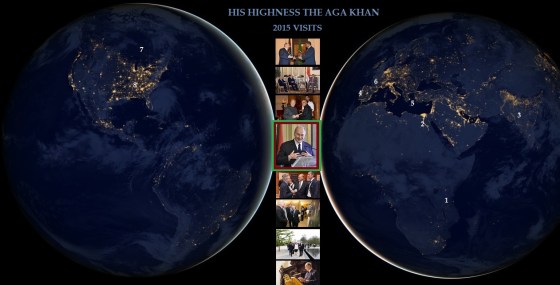
Aga Khan’s Speeches in the UK and USA Tell Marvellous Stories About Cairo’s Al-Azhar Park and Convey Profound Messages of Our Common Humanity

PLEASE CLICK: His Highness the Aga Khan’s 2015 Speeches in the UK and USA Tell Stories About the Al-Azhar Park and Convey a Profound Message of Our Common Humanity

Aga Khan Mawlana Hazar Imam 2015 VisitsPlease click on image for His Highness the Aga Khan 2015 Visits to UK and the USA

(Absolutely) Simerg’s Photos of the Day: Ottawa on December 24, 2015

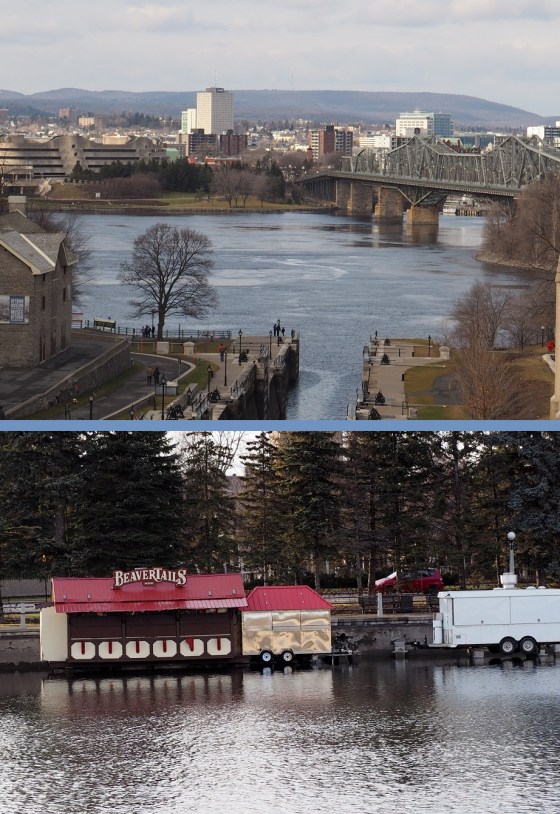
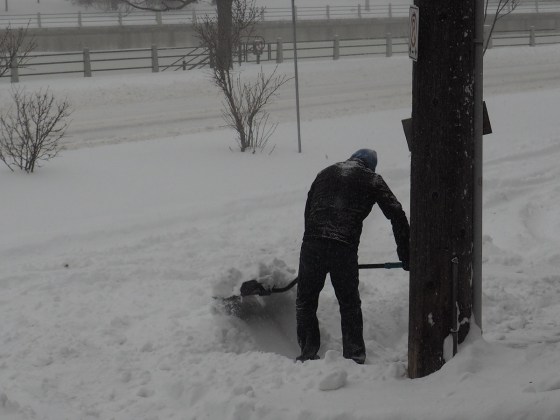
Considered the 5th coldest capital city in the world, with winter temperatures dipping to -25C and below, Ottawa’s honourable spot can be cast aside for a while with Canada’s capital seeing temperatures climbing to an amazing (+)16°C at 1:00 pm on December 24, 2015. Please click Photos of the Day: One of World’s Coldest Capitals, Ottawa eh, on Christmas Eve 2015.

 Please click on photo

Please click on image for story and more photos.

_______________

Please see our Ottawa related posts by clicking on the following:

A Marvellous Collection of Photos of His Highness the Aga Khan’s Visits to Canada, India and Greece

Editor’s note: In Part II of a special series on the 49th Ismaili Imam’s visits to numerous countries that he undertook during 2015, we cover India (April), Canada (May) and Greece (September). Please click A Marvellous Collection of Photos of His Highness the Aga Khan’s Visits to Canada, India and Greece.

Please click on photo for complete story and more pictures. Photo: Ontario Liberal Part. Copyright. Published with permission.

Please click on photo for complete story and more pictures. Photo: Ontario Liberal Part. Copyright. Published with permission.

Readings for the Mawlid of Prophet Muhammad (May Peace Be Upon Him)

Mawlid or Miladun Nabi is the observance of the birthday of the Prophet Muhammad, and is celebrated on the 12th day of Rabi’ al-awwal, the third month in the Islamic calendar. With the Islamic lunar calendar consisting of 354 days over a 12 month period, this celebration occurred earlier in 2015 during the first week in January, and will be commemorated once again on December 22 or 23.

The twelve months of the Muslim calendar and major Muslim festivals. Image by Simerg.

The twelve months of the Muslim calendar and major Muslim festivals. Image by Simerg.

To mark the Mawlid, we present you pieces by two fine writers, Michael Wolfe of the USA, who produced the highly acclaimed documentary Muhammad Legacy of the Prophet,  and Izzat Muneyb of England, who contributed to the Ta’lim curriculum developed at the Institute of Ismaili Studies in London.

As we remember our beloved Prophet, the Khatim an-Nabiyin (the seal of the Prophets) and the Al-Amin (the Trustworthy), we wish everyone a very happy and joyful Milad. The readings commence with a very pertinent message on the Prophet Muhammad by none other than His Highness the Aga Khan, the present 49th hereditary Imam of the Ismailis, who is lineally descended  from the Prophet Muhammad (s.a.s.) and Hazrat Ali (a.s.), the first Imam.

~~~~~~~~

THE HOLY PROPHET

Mawlana Hazar Imam, His Highness the Aga Khan

By His Highness the Aga Khan

I have observed in the Western world a deeply changing pattern of human relations. The anchors of moral behaviour appear to have dragged to such depths that they no longer hold firm the ship of life: what was once wrong is now simply unconventional, and for the sake of individual freedom must be tolerated. What is tolerated soon becomes accepted. Contrarily, what was once right is now viewed as outdated, old-fashioned and is often the target of ridicule.

In the face of this changing world, which was once a universe to us and is now no more than an overcrowded island, confronted with a fundamental challenge to our understanding of time, surrounded by a foreign fleet of cultural and ideological ships which have broken loose, I ask, “Do we have a clear, firm and precise understanding of what Muslim Society is to be in times to come?” And if as I believe, the answer is uncertain, where else can we search then in the Holy Qur’an, and in the example of Allah’s last and final Prophet?

There is no justification for delaying the search for the answer to this question by the Muslims of the world, because we have the knowledge that Islam is Allah’s final message, the Qur’an His final book and Muhammad His last Prophet. We are blessed that the answers drawn from these sources guarantee that neither now, nor at any time in the future will we be going astray.

The Holy Prophet’s life gives us every fundamental guideline that we require to resolve the problem as successfully as our human minds and intellects can visualise. His example of integrity, loyalty, honesty, generosity both of means and of time, his solicitude for the poor, the weak and the sick, his steadfastness in friendship, his humility in success, his magnanimity in victory, his simplicity, his wisdom in conceiving new solutions for problems which could not be solved by traditional methods, without affecting the fundamental concepts of Islam, surely all these are foundations which, correctly understood and sincerely interpreted, must enable us to conceive what should be a truly modern and dynamic Islamic Society in the years ahead….Excerpt from Presidential Address by His Highness the Aga Khan, Seerat Conference, Pakistan, 1976.

~~~~~~~~~~

HOW A MUSLIM SEES MUHAMMAD

Michael Wolfe - author, poet and producer of award winning books and documentaries. Photo and profile credit: Wikipedia.

By Michael Wolfe

A lot of non-Muslims who know something about Islam as a religious practice are nonetheless in the dark when it comes to real knowledge of Muhammad. This, despite the fact that Muhammad is the guiding, human spirit of the religion.

Muslims see Muhammad as a human being who became a prophet and yet remained human all his life. He had a special access to God’s words, but he also worked for a living, married, and had children, led his people out of oppression and died at the age of 63 with his family at his side. They see him, that is, not the way Christians view Jesus but rather in the tradition of prophets like Abraham and Moses.

Muhammad never claimed to be divine, and he never attributed supernatural powers to himself. From the age of forty until his death, his mission was simply to convey a message, contained in the Qur’an, and to illustrate its spirit in his daily life. Muhammad received the Qur’an a few verses at a time, intermittently, over this long, eventful period, and he rendered it into language people could understand. That, he said, was his only miracle. He did not defy gravity or return the dead to life. He rebuked anyone who suggested otherwise.

Muslims have no pictures to suggest what he may have looked like. Their focus is on his message, not his face. If you spend any time at all with Muslims, you soon begin to see that they know Muhammad’s words and actions and quote them frequently.

This quotable aspect of the tradition is seemingly inexhaustible, running to thousands of pages. Together with the Qur’an, they form a cannon on which Islamic Law is based. In a less formal way, these reports of what Muhammad said and did are put to use daily as a yardstick against which people measure their actions and intentions.

Just as the words of Jesus are woven into the fabric of every European language so that, believer or not, most everyone knows who to credit with phrases like “Turn the other cheek,” “the meek shall inherit the earth,” and “Render unto Caesar the things that are Caesar’s,” so too for many Muslims the words of Muhammad are on the tips of their tongues and easily recognized.

In the published collections, these reports are often grouped by category, in sections with titles like “The Book Of Knowledge,” or “The Book of Prayer.”

“The Book of Knowledge” is both instructive and occasionally wry. What better sentence to write on the black board, for instance, than “Asking good questions is half of learning.” A page or two later, the value of knowledge is summed up in these terms: “People with knowledge and those who seek it are the only two groups of any use to humanity.” While truth’s poor keepers are succinctly dismissed, as in this gem: “Three agents destroy religion: an ill-tempered scholar, a tyrannical leader, and an ignorant theologian.”

“The Book of Charity” contains this unexpected advice: “Happy are those who find fault with themselves instead of finding fault with others.”

Morality is often expressed in terms so simple they arrest you, as in this maxim: “Avoid anything that requires an excuse.” At other times, the terms are earthy and even humorous: “If people had been forbidden to make porridge of camel dung, they would do it, saying that it wouldn’t be forbidden unless there was some good in it.”

And here is Muhammad on Humility: “Strength does not lie in carrying heavy loads: a camel can do that. The essence of strength lies in taming your temper and your anger.”

These statements full of wisdom were mostly coined on the spot, in response to particular situations, by a man aware of the limits of his knowledge. He only knew, he said, what God would show him.

Here is what God showed Muhammad about prayer: “During prayer, God lifts the veils and opens the gates of the invisible, so that His servant is standing in front of Him. Prayer creates a secret connection between the one praying and the One prayed to – Prayer is a threshold at the entrance to God’s reality.”

And what does the great Hindu sage Mahatma Gandhi say about Muhammad’s words? “They are among the treasures of Mankind, not merely Muslims…. A reverent study of the sayings of the different teachers of mankind is a step in the direction of… mutual respect.”

© Copyright: Michael Wolfe.  Reproduced with the kind permission of Michael Wolfe.

~~~~~~~~

IN PRAISE OF PROPHET MUHAMMAD
(May Peace Be Upon Him)

By Izzat Muneyb

Author’s note: This song introduces us to some of the titles by which Prophet Muhammad came to be known. They are: ‘Ahmad’, ‘Mustafa’, ‘Rahmatan li’l-‘aalameen and ‘King of law laak’. The words ‘law laak’ in Arabic mean, “Were it not for…” There is a Hadith of Prophet Muhammad, where Allah speaking to His prophet, says, “Were it not for you, I would not have created the universe – law laaka lamaa khalaqtu’l-aflaaka.” [1]

N.B: The lines marked * are sung twice.

Muhammad, Muhammad,
How shall we praise you, Muhammad?*

Shall we call you Ahmad?*
He who is praised in heaven
Shall be praised here on earth.

Muhammad, Muhammad,
How shall we praise you, Muhammad?*

Shall we call you Mustafa?*
The Chosen of God on earth,
You have brought us the Qur’an.

Muhammad, Muhammad,
How shall we praise you, Muhammad?*

Shall we call you Rahmatan li’l-‘aalameen?*
God sent you as a Mercy
To the whole of creation.

Muhammad, Muhammad,
How shall we praise you, Muhammad?*

Shall we call you the ‘King of law laak’?*
Even God says He created
The universe for you.

Muhammad, Muhammad,
How shall we praise you, Muhammad?*

© Copyright: Izzat Muneyb.

Date posted: December 20, 2015.

_____________

[1] Source: Sukheel Sharif, The Jawziyyah Institute, 2006

We welcome your feedback. Please click Leave a comment.

RELATED: Please also click Nativity of the Prophet Muhammad: The Mevlud/Mawlid Tradition to read an excellent piece contributed by Omid Safi.

A Reflection on the Land Grant Ceremony of the New World Class Aga Khan University Hospital to be Built in Uganda

Partnership for Change

Aga Khan and Musoveni at the Land Grant CeremonyBY SHARIFFA KESHAVJEE

The sacred space is set
The energy is invoked
The earth’s ochre red
Makes a path through the green.
Reflected in the Ismaili and Uganda flag
The logo of the university
Radiating, rippling outwards

Our world of rapid change
Meets in Uganda to break the ground
Nakawa is chosen to propel
the University Hospital

To reach beyond its borders
The frontiers of Science
Radiation ever outwards

Decades of decay at Mulago
A new seed of hope is planted
Pioneering pluralism
In Uganda’s rich soil
Revitalizing the land
For life long learning
Radiating ever outwards

Coat of Arms Uganda, AKU Logo, Flags Uganada and Ismaili ImamatThe President and Imam’s vision
Bringing to the region
Appropriate advanced Health Care
The people can access
Here at home the very best
The youth empowered to remain
Here at home to give their best practices
Expanding ever outwards

The people rejoice with lush voices
Their partners join hands to celebrate
This great milestone laid by the red bricks
That fulfills the words of the anthem
That ever propel outwards

Aga Khan Musoveni Kampala

Salute to the President and Imam for
Their vision, their respect
For national progress
Global standards of excellence
To be in the frontier of scientific
and humanistic knowledge

The best in the world
Propelling expanding ever outward
An emblematic crown over Uganda

Date posted: December 18, 2015.

Copyright: Shariffa Keshavjee/Simerg

______________

Nakawa – an area in the city of Kampala.
Mulago – The hospital located on Mulago Hill in Kampala.

Links to stories and videos of the Land Grant Ceremony of the new Aga Khan University Teaching Hospital to be built in Uganada:

Please also visit:
http://www.theismaili.org
http://www.akdn.org
http://www.ismailimail.wordpress.com.

Also, http://www.nanowisdoms.org is an excellent resource for speeches of Mawlana Hazar Imam.

We welcome your feedback. Please click Leave a comment.

Poems “Anand” and “Intezaar” in Joyous Anticipation of the Diamond Jubilee of Mawlana Hazar Imam, His Highness the Aga Khan, on July 11, 2017

Anand

The Imam Blessing with Hand on Shoulder

BY SHARIFFA KESHAVJEE

Oft I sing Anand Anand
Lip service alone stirs
Not the heart to joy
Enshrined in us all
Is the primordial joy
Who will awaken it ?

Come ye Gardner of
The soul awaken in me
Open the door of joy
Lift the veil so I may see
The joy of perfection
In each cell the miracle

I am not so worthy
I need not strive
I live in the perfection
Of your creation
For you have laid
Your hand upon
My shoulder bowed

This Jubilee I await
To feel at depth
That resonance
That symphony
Come together in
Perfect harmony
Sat chit Anand

~~~~~~

Jubilee Intezaar

A prayer left my lip

Being asked
Is your heart jumping with joy?
My heart in reflective pause
Shed a tear of inquiry
Nay! where is joy I asked
It is in your visage?
A prayer left my lip

I asked
Is joy a heart searching seed
Is it locked in the bud of the rose
In the first ray of sunlight
In the rising companion star
Counting hues of green in nature
A prayer left my lip

I asked
Will it grow for me?
Experience a petal of the rose
The hint of morning light
A naked sight the first star
In ever surrounding verdure
A prayer left my lip

The answer came
There it ever is
In the heart of man
In every sinew and pore
In every breath
In every smiling blink

The prayer left my lip
Travelling heavenward
Ricocheting resounding
Hymnal songs of yore
It came back
To settle in my heart
Poured forth in song

In joy is enshrined
A dance of creation
A harmonious rhythm
A fine tuned fork
A Resonating universe
Is my Gods love
Is in my prayer

Life no Ponderous task
For in its joy of being
The incredible lightness
Leads moment to moment
To the Sirat of sat chit anand
The prayer left my lip
The answer is yout Jubilee

Date posted: December 15, 2015.

Copyright: Farida Keshavjee/Simerg.

__________

Sat – Truth; pure and eternal that never changes.
Chit –
Vision, knowledge.
Anand – Ecstasy, bliss, happiness.

Shariffa KeshavjeeEditor’s note:  Shariffa Keshavjee of Kenya, a regular contributor to Simerg, recently heard a tape of Mawlana Hazar Imam’s Golden Jubilee Farman that was made in Kenya in which he asked “Are your hearts jumping with joy?” Tears flowed and the intezaar of the coming Diamond Jubilee came to her mind, inspiring Shariffa to pen the two poems. The Diamond Jubilee of His Highness the Aga Khan, inshallah, will be celebrated on July 11, 2017, when he will complete 60 years as the 49th hereditary Imam of the Shia Imami Ismaili Muslims, in direct lineal descent of the Prophet Muhammad (s.a.s.) and Mawlana Ali (a.s.), the first Imam. Co-incidentally, on July 1, 2017, Canadians will begin celebrating the 150th anniversary of their country with major events, festivities and programs around the country.

Simerg welcome’s your feedback. Please click Leave a comment.

Ismaili History: The Marco Polo Myth of the Assassins

alamut14

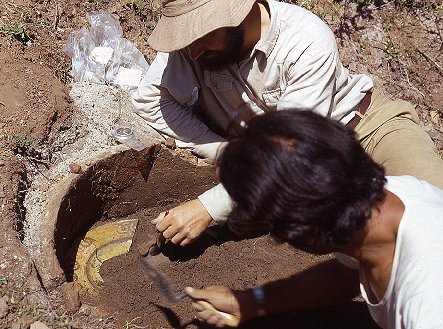
Major excavation activities have been underway for the past few years resulting in interesting archaeological discoveries. Here we see the legendary water basin which filled itself up by collecting rainwater and melting snow from channels and canals on the mountains. Photo: Muslim Harji, Montreal, PQ, Canada. © Copyright.

PULLING BACK THE SILK CURTAIN

“The Nizari [Ismailis] excelled in the fields of theology, philosophy, architecture and science, but their opponents demonized them as bloodthirsty extremist religious murderers…The returning Crusaders brought back the legend of the pothead assassins, partly because they loved to believe imaginative romantic tales of the East…In 1256, Genghis Khan’s grandson, Hulagu, destroyed the Nizali mountain castles, one at a time. Their political and military power was permanently broken (although today, some several million Nizalis still survive in some 25 countries across Asia, Africa, Europe and North America).

Timeline

Timeline by Dr. Ali M. Rajput, Birmingham, England.

“In 1273, Marco Polo visited Alamut, and brought back the story of how hashish was used to attract potential killers…After, Dante was the first to use the word “assassin” in the 19th Canto of The Inferno in his Divine Comedy. The word “assassin” remained in various European languages, right through to Dan Brown, author of the Da Vinci Code, who mentions the Assassins in his book, Angels and Demons. But there are a few reasons why the hashish-assassin myth is almost certainly wrong….If hashish is given in a large enough dose to cause unconsciousness, it will first cause nausea and hallucinations – which are usually very scary and unpleasant to the unsuspecting user.” — Excerpts from  Dr. Karl  S. Kruszelnicki’s “Hashish Assassin – Pulling Back the Silk Curtain”, broadcast on ABC Science Australia. Dr. Karl is Julius Sumner Miller Fellow, School of Physics, University of Sydney. 

alamut13

Photo: Muslim Harji, Montreal, PQ, Canada. © Copyright.

~~~~~~~~~

ETYMOLOGY

Nevertheless, the most acceptable etymology of the word assassin is the simple one: it comes from Hassan (Hassan ibn al-Sabbah) and his followers, and so had it been for centuries. The noise around the hashish version was invented in 1809, in Paris, by the French orientalist Sylvestre de Sacy, whom on July the 7th of that year, presented a lecture at the Academy of Inscriptions and Fine Letters (Académie des inscriptions et belles lettres) – part of the Institute of France – in which he retook the Marco Polo chronicle concerning drugs and this sect of murderers, and associated it with the word. Curiously his theory had great success and apparently still has…Jacques Boudet, in Les mots de l’histoire, Ed. Larousse-Bordas, Paris, 1998

~~~~~~~~~

THE TRUTH IS DIFFERENT

[…] their contemporaries in the Muslim world would call them hash-ishiyun, “hashish-smokers”; some Orientalists thought that this was the origin of the word “assassin,” which in many European languages was more terrifying yet….the truth is different. According to texts Hassan-i Sabbah liked to call his disciples Asasiyun, meaning people who are faithful to the Asās, meaning “foundation” of the faith. This is the word, misunderstood by foreign travelers, that seemed similar to “hashish” — Amin Maalouf, in Samarkand, Interlink Publishing Group, New York, 1998

~~~~~~~~~

Editor’s note: The following piece by Valerie Gonzalez has been adapted from her review of the book Eagle’s Nest – Ismaili Castles in Iran and Syria by the late Professor Peter Peter Wiley, who had spent nearly a lifetime discovering and investigating the Ismaili castles of Iran and Syria. Professor Wiley passed away on April 23, 2009, at the age 86. Valerie’s copyright piece originally appeared in REMMM (Issue 123|July 2008)  and was reproduced on this blog in full (see link below) with the kind permission of Revue des mondes musulmans et de la Méditerranée.

DECONSTRUCTION OF THE MYTH

The Rock of Alamut.

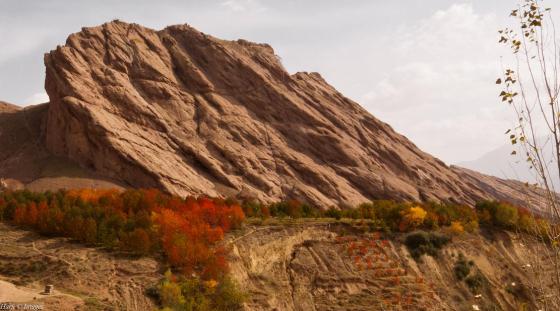
The Castle of Alamut, nested on the top of the colossal mass of granite rock, became the centre of Nizari Ismaili activity after the fall of the Fatimid Empire. It is not until you come to the foot of this colossal mass of stone that you realize the immensity and impregnability of the fortress at its summit. Photo: Muslim Harji, Montreal, PQ, Canada. © Copyright. Muslim Harji, Montreal, PQ, Canada. © Copyright.

By Valerie Gonzalez

Old myths are very difficult to deconstruct, even when historical evidence reveals the absurdity of their foundations. The infamous “assassin” legend that from the Middle Ages soils the memory of the Nizari Ismaili community is an example of this incorrigible defect of the collective consciousnesses. The image presented by both Christian and Muslim chroniclers of the Ismailis as unscrupulous terrorists is unfortunate if their sole fault lay in surviving as a distinct political and religious community within a hostile and troubled environment. The Crusaders, Sunnis and Seldjuk Turks naturally saw in this Shi’ite minority a threat to their establishment and expended great efforts in eliminating the Ismaili State from Iran and Syria. In addition to the pressures exerted by the great powers holding sway over the Middle East, in the 13th century, the Ismailis had to confront the Mongol threat which finally overwhelmed them. It is not wonder that in such a context they deployed the most efficient means of defense available to maintain not only the network of their strongholds and basis of their State, but also their faith and culture, the very sense of existence. In practice however, they were no more immoral or cruel than their contemporaries. They simply proved tremendously clever and obstinate in facing adversity and in struggling against forces vastly more powerful than their own. And it is probably for this reason that the Nizari Ismaili community were subject to demonization.

alamut09

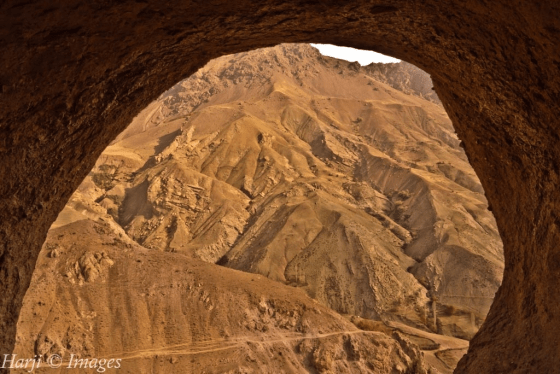
Attaining the summit at Alamut is a breath-taking and exhilarating experience. The fortress complex, one soon discovers, sits astride a dangerously narrow ledge of rock resembling the handle and blade of a knife. The above is an open passage through the mountain. Photo: Muslim Harji, Montreal, PQ, Canada. © Copyright

Much scholarship was required to unravel the dark mystery of the medieval Ismaili community. Numerous historical essays and archeological reports, among them Fahrad Daftari’s extensive works, have provided an accurate view of the Ismailis within the Islamic tradition. But assuredly the latest release on the subject, Peter Willey’s book Eagle’s Nest: Ismaili Castles in Iran and Syria, brings invaluable new insights by accurately portraying the environment in which the life and struggles of the Ismaili faithful took place. There is no question but that this book offers a convincing tool for the deconstruction of the false myths which surround the cult of the Assassins.

Far from being the addicts of hashish (the word assassin is believed widely, but incorrectly, to derive from the word hashishin) and a band of murderous brigands, the Ismailis were highly intelligent and devout Muslims serving their own Imam or spiritual leader (the present Imam is the Aga Khan) and attempting to build a new and vigorous Islamic state independent of the Seljuqs who had conquered Iran in 1038 – Peter Willey, Geographical Magazine, UK, February 1998

More than a mere treatise on the archaeology of the Ismaili castles in Iran and Syria, Willey’s book shows multiple qualities. As an academic work, it fulfills its main objective which is to present the results of a meticulous description and observation of these fortified sites. The considerable amount of information contained in the volume reflects a near life-time of research devoted to the subject. Not a single pile of stones or rubble has escaped Willey’s acute attention, or skillful restoration in clear prose of the forbidding grandeur of the Ismaili military architecture. Each remaining element of structure is analyzed and appropriately re-situated in the initial order both of the architectural organization of the building itself and of its broader setting within the coherent chain of fortresses spread over Ismaili territories. The material and documentation at the author’s disposal, including building scale, purpose, population levels and strategic importance have been patiently collected in order to present a reliable picture of the complex network of Ismaili strongholds. Maps, ground plans, photographs and even artists’ impressions and drawings complete the written work together with four appendices which include the castles’ inventory, a list of Willey’s expeditions and two catalogues of the ceramic and coin artifacts dating from the Alamut Period found at the site.

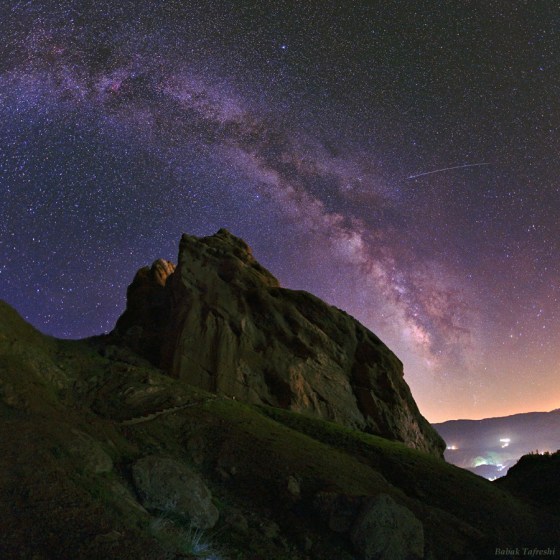
As seen on NASA's Astronomy Picture of the Day and the National Geographic News a meteor's streak and the arc of the Milky Way hang over the imposing mountain fortress of Alamut in this starry scene. Photo: Babak Tafreshi/Dreamview.net . Copyright.

As seen on NASA’s Astronomy Picture of the Day and the National Geographic News, a meteor’s streak and the arc of the Milky Way hang over the imposing mountain fortress of Alamut in this starry scene. Photo: Babak Tafreshi/Dreamview.net . Copyright.

Beyond the high quality scientific report based on the archaeological record, Eagle’s Nest offers a brilliant reconstitution of Ismaili material culture from an historical, intellectual and sociological point of view, from the 11th century through the Mongol destructions of the mid 13th century. Willey restitutes the very meaning of the architecture he studies through the history of its builders and inhabitants, pointing out the most significant events of their lifetimes and portraying the great spiritual and political leaders of the Ismaili community. Methodically and surely, Willey describes the intricate historical background of the Ismaili State in which multiple powers confronted or fought each other, including Seljuk Turks, ambitious Sunni and Shii’a rulers, Crusaders on the Mediterranean coast, to propose his own interpretation of the historical evidence. Where evidence lacks or where persistent misconceptions require redress, the author proposes and defends critical hypotheses. The historical and cultural dimension of Willey’ archaeological investigation is particularly enhanced by the presentation of certain situations and events as literary narratives, as he does in the beginning of chapter 2, “Hasan Sabbah and the Ismailis of Iran”. The passage in question relates the capture without bloodshed of the Alamut fortress under Seljuk authority and begins thus: “It was nearly noon on a hot day in the early summer of 1090. Mahdi, the lord of the castle of Alamut, was beginning to sweat a little” (p. 21). In this way, the author makes us relive the extraordinary event in a human atmosphere that is quite uncommon in scholarly works.

alamut04

A tribute to the great Ismaili dai, Hasan bin Sabbah who was responsible for establishing the Alamut state after the divisions in the Fatimid Empire led to its eventual demise. Hasan maintained that Imam Nizar and not Musteali was the rightful heir to Imam Mustansir billah, the 8th Fatimid Caliph. Photo: Muslim Harji, Montreal, PQ, Canada. © Copyright.

Willey’s sensitivity to humanistic values is perceptible throughout the book, not only through the telling of the past but also in the lively narration of the research trips themselves. First, he pays considerable attention to the actual environment of the castles he visits, their awesome natural frame and the rural or urban settings of the surroundings that are presented with delight and consideration. Although most of the time the Ismaili vestiges are ghost constructions in remote, isolated regions, they are not at all presented by Willey as still life portraits. Rather, each fortress is an element in a busy, human landscape. As an example, where appropriate Willey writes about agriculture and local conditions in the surrounding villages for fortresses located in rural areas. Also, the local population and individuals involved in Willey’s expeditions frequently are mentioned as actors in the archaeological narrative. In this way, Willey underscores the support of both his team and the local community in contributing to the success of his research. Particularly moving is his attitude toward the people who help him visit inaccessible locations under difficult conditions and various orders, especially his work partner Adrianne Woodfine. More broadly, the practical aspects of each journey, the general organization and unexpected situations and encounters are meticulously recounted so that the book offers the live texture of a human adventure together with its purely scholarly content.

It is often difficult to describe to friends the problems which the investigation of Ismaili castles present. They are built on the top of high mountains, covering the entire summit, and are normally surrounded by three defensive walls with numerous outworks. Most of the castles were destroyed by the Mongols and the ruins are dangerous and infested with snakes and scorpions on or under the stones or in the cracks of walls. The steep scree and sharp rocks are formidable, especially in the intense heat and altitude of over 2000 metres – Peter Willey, Geographical Magazine, UK, February 1998

Chapters 7 through 12 cover the various areas of the Iranian Ismaili strongholds. Willey naturally begins with the fortresses in the famous Alamut Valley of the Alborz Mountains, the fortress in which the infamous legend of the “Assassins” took place. Alamut fortress constituted the very heart of the Nizari State in Iran and was the seat of Hasan Sabbah. Alamut and its sister fortresses represented the epitome of Ismaili military science. Willey presents it with a rigorous method of sketching, measuring and enumeration of the construction’s features and structures, topography, architectural configuration, water equipment, cisterns, underground storage, garrison quarters and so on.

Alamut Potter Kilns

The pottery kilns in the valley of Andij in the Alamut valley. Some 15 kilns were discovered including good examples of contemporary ceramics. Photo: http://www.iis.ac.uk

The Alamut castle like many of the Ismaili strongholds contained facilities for religious activities and higher learning such as libraries. To support his observations, Willey quotes several times the Mongol historian, Juwayni, who witnessed the surrender of the Alamut fortress among other similar events. Although this chronicler was hostile to the Ismailis, his detailed reports offer an invaluable source of information. In particular he inspected the Alamut fortress’ interior prior to destruction and mentions, not without admiration, its remarkable facilities (p.100). Indeed, the sophistication of their architecture allowed the Ismailis to resist the fiercest attacks while ultimately succumbing to the formidable Mongol war machinery. Willey relates with great empathy for the desperate inhabitants the dramatic capture and systematic destruction of Alamut and other Ismaili strongholds. After Alamut, Willey investigates the other Iranian Ismaili castles of the regions of Qumes, Khorassan, Qohistan and in the surroundings of the Seldjuk capital Isfahan.

Willey terminates his book with a moving epilogue in which he shares a few of the thoughts, feelings and questions raised in his heart and mind by the exceptional fate of the Ismailis. He naturally mentions the remarkable endeavor of the Aga Khan’s organization for the development of both Ismaili and Islamic culture in continuation with the educational tradition of the community since the Middle Ages.

alamut03

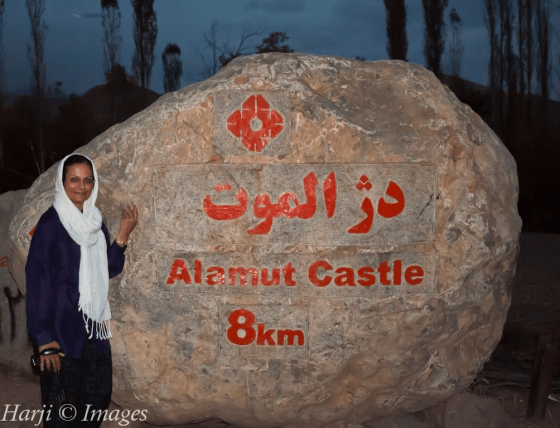
Nevin Harji stands by an official road sign when she visited Alamut with husband Muslim. Photo: Muslim Harji, Montreal, PQ, Canada. © Copyright

If, through such personal treatment, Willey hoped to clarify the historical issues surrounding Ismaili culture through the ages, he most assuredly succeeded. Eagle’s Nest unveils the extraordinary reality and humanity of the medieval Ismaili civilization, often hidden behind romantic images of remote ruins and the dark secrets contained behind crumbling walls. Finally, that Willey should communicate his deep affection for the countries he explored, particularly Iran, and the Ismaili themselves, is not the least quality of this book.

Date posted: December 14, 2015.

___________

Credits and notes:

1. The book review originally appeared in REMMM (Issue 123|July 2008) and was reproduced on this web site with the kind permission of Revue des mondes musulmans et de la Méditerranée under the title Voices: Unravelling the Dark History of the Medieval Ismaili Community

2. Eagle’s Nest: Ismaili Castles in Iran and Syria, by Peter Willey, published by I.B. Tauris, 2005, London – New York, 321 pages, hard back. Approximate prices in Canada, USA and the UK (at Chapters.ca $45.00 – $61.00; at Amazon.com $37.00 – $58.00; new at Borders.com $58.00, at Amazon.co.uk Pounds 9.95 – 21.25, note price range based on used – new book)

We welcome your feedback. Please click Leave a comment.