Ismaili Diaries: The story of Tanga’s iconic Alladin Bapu family

Preamble to this series on life in the Ismaili community: This is the second in a series of articles dealing with life in the Ismaili community from the late 19th century onwards. The first in the series was on a Rare 100 year old photo. The piece that follows has been adapted by Safder Alladina from his book “Ties of Bandhana: The Story of Alladin Bapu” which was published under his pen name Safder Giga Patney. The paperback book, see image below, is available on Amazon.

Front and back covers of "Ties of Bandhana", by Safder, Simerg article
Front and back covers of “Ties of Bandhana”, available from Amazon.

The lead in this special series is Toronto’s Zahir Dhalla, who wishes Jamati members to dig into their archives and submit electronic versions of family historical photos to Simerg@aol.com. Zahir would then be quite willing to work with families, and prepare stories for publication in Simerg or in its two sister websites, Barakah and Simergphotos.

Alladin and Prembai

Alladin Suleman Hasham Mohamad Giga Patney of Chhachhar, Kathiawar. Gujarat, India.  c1910, Ismaili Simerg
Alladin Suleman Hasham Mohamad Giga Patney of Chhachhar, Kathiawar, Gujarat, India,  c1910. He was born on Sept 9, 1851, in Pattan, India, and died on July 28, 1926 in Tanga, Tanganyika

By SAFDER ALLADINA

Alladin and Prembai owned fields and orchards in Chhachhar in Kathiavar in Gujarat. But at the end of the 19th century the area suffered a series of droughts and famines, and families were looking towards Zanzibar and the East African countries. In addition to this the British Raj, with the connivance of the Nawab of Junagadh and his officials, had imposed excessive taxes and levies. On Mawlana Sultan Mahomed Shah’s advice and support from Ismailiss who had made it good in East Africa, families were encouraged to move to East Africa.

Alladin and Prembai, with their children travelled to German East Africa in a dhow. After thirty odd days on the boat they landed at Tanga, Tanganyika. The family had relations in Moshi so they went there in bullock carts on a journey that took them fifteen days. In Moshi, Alladin and Prembai tried to farm but they were new to the climate, weather and growing conditions. After two years, they decided to return to Tanga. The railways and automobiles had arrived in the country and Alladin, with his eldest son Kassam started a shop selling tires, car parts and other hardware.

The shop was on Marketstrasse, Tanga, Deutsche Ost Afrika (German East Africa, now Tanzania), at the corner of the road that came up from the harbour. A railway line from the station cut through the southern part of the town and went down to the port taking sisal, timber and coffee to the ships anchored in the harbour. Steamboats from Europe brought cars, machinery, cloth and equipment while the dhows from India and the Gulf countries brought cloth, tiles, earthenware pottery, salt cod, carpets, spices and tea.

Kassam, Alladin’s eldest son who had a smattering of German now, was talking to the German officials to be allowed to put a petrol pump at the shop. They liked the young man dressed in long khaki pants and a solar topi in the German fashion, and who spoke German and suggested that he go to Berlin on a scholarship to become an engineer instead of pumping gasoline. Kassam’s young wife, who had a boy and a girl now, and his mother were distraught when they heard this: Hai, hai Allah! Hooñ kadi na jawa daooñ! Prembai asserted. (By God! I’ll never let him go abroad.) [1]

story continues after photo

Prembai Ibrahim Teja, c1910 Simerg Ismaili Diaries
Prembai Ibrahim Teja. She was born on June 29, 1854, in Chhachhar, India, and died on June 12, 1924 in Tanga, Tanganyika.

A couple of years later, their son Karim was identified by the German officials as suitable candidate to be sent to Berlin for further education. In 1914, a passage was booked for Hamburg on the Deutsch Ost Afrika line the Pandakoti for Karim to go to Berlin. But war broke out and the Pandakoti was bombed and sunk at Manza Bay near Tanga. Karim had to stay in Tanga and after his father died, ran the gas station on Market Street.

Eventually, Kassam got a license to sell petrol. Drums of petrol were brought to the shop front. A piston pump, operated by hand, was attached to a drum and the fuel pumped into cars and trucks and also sold in tin jerry cans. Motorcycles had now appeared in town. Alladin and Kassam found that they had to start keeping car parts and tyres for the growing automobile population in town.

The family photo, below, shows Karim and Alimohamed newly married. Trinkets of gold and bandhanis of silk were brought out for the marriages of their sons Karim and Ali Mohamed. There was now an extended family of Alladin and Prembai: three married sons and their wives and at least five to six children. Shariff and Fatehali, Kassam and Maanbai’s eldest son, were unmarried.

Shariff had a fine singing voice and was a favourite of the ladies in town. He also used to sing Ginans in the Jamatkhana. (For Shariff Alladina’s 4 Ginans, see Soundcloud, Safder, Bapaji )

story continues after photo
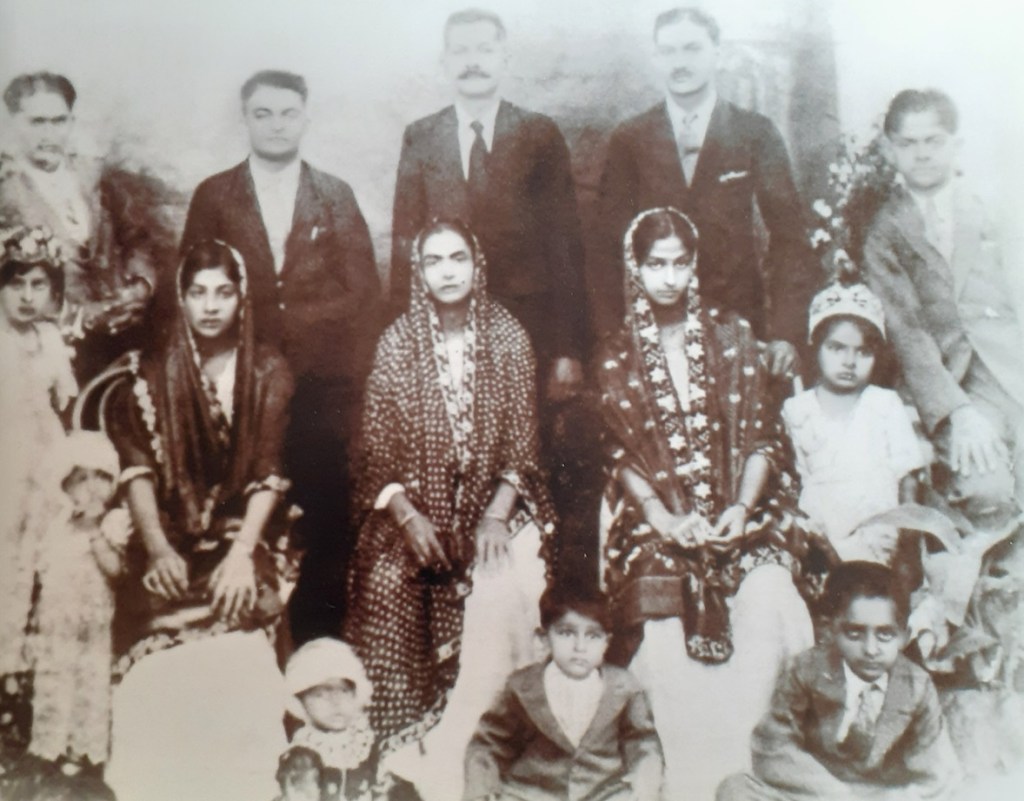
Alladin and Prembai’s family, Ismaili Simerg
Alladin and Prembai’s family, c1925, Tanga, Tanzania (then Tanganyika). Children seated on floor, l. to r : Sherbanu, Amir and Murad; Middle row, l to r: Nurbanu and Milli (2 children), Sikina, Maanbai and Kursum (ladies), Kursum (young girl); Gentlemen l. to r: Shariff, Alimohamed, Kassam, Karim and Fatehali, Kassam and Maanbai’s eldest son. See Note [2] below for more info.

In the August of 1914, there was word around that there was going to be a world war. The British were going to attack German East Africa.

That September, the Districtkommissar went in his open sided automobile to the bigger shops and businesses of the Indians and told them that they would have to leave town and find somewhere to stay until they were given permission to return to their homes. The businessmen were ordered to inform all the other Indian homes in town. Being colonial subjects of the British, the German government saw them as security risk. An Indian owned provision store and Alladin’s petrol pump were told to remain open but their families would have to leave.

story continues after photo

Alladina Bros & Shariff Service Station, Tanga Tanganyika, Simerg Ismaili
Business cum Residence Alladina Bros & Shariff Service Station, 26 Marketstrasse Tanga, German East Africa, antebellum WW I. Photo: Karim Alladin, via his youngest son Mirza, Vancouver. BC.

Alladin and Kassam stayed to keep the business open, while Prembai, and her sons with their wives and children, left by train for Muheza thirty miles inland, in the foothills of the East Usambara Mountain. They stayed with a family from Kodinar, a small town near Chhachhar, the Alladins home village.

On 14th November of 1918, Armistice was declared and the First World War had ended. On 25 November, what was German East Africa became Tanganyika and was given a Class B Mandate by the League of Nations and effectively became Tanganyika Territory of the United Kingdom. The Union Jack now flew over the Customs House, the boma of the District Commissioner, the police station and the Schule school.

Prembai died after the war and Alladin a few years later. They were buried in the Ismaili cemetery at the southern edge of the town. Maanbai became Moti Ma, the matriarch of the household, and Kassam became Mota Bapa  – Big Father of the family.

Today, the Alladin family members are dispersed around the globe in Canada, the USA, the United Kingdom and Belgium, engaged in various professions and businesses – many are still connected to the automobile business.

Date posted: July 14, 2020.

_________________
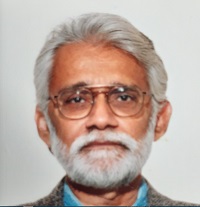
Safder Alladina

Safder Alladina has taught English as a Foreign Language in England, Japan and Portugal and English as a Second Language in England and Canada. In his 35 years of teaching, he has taught Early Years, Primary, Secondary and Adult classes; and developed and taught Teacher Education programmes at graduate and post-graduate levels at the University of North London, UK, and the University of British Columbia, BC. His research work is in Sociolinguistics. He has retired to a hobby farm in the interior of British Columbia where he does his writing under the pen name of S. Giga Patney.

_________________

The following additional details have been compiled by Zahir Dhalla, author of Ismailis in Tanga.

Alladin and Prembai’s sons started their own businesses in Tanga as follows: Kassam started an auto parts business with his sons; Karim managed the petrol station on Market Street and then went on to start as auctioneer and accountant; Alimohamad started a provision store with his brother Shariff; and Shariff went on to start as copra merchant on his own. He then went into rice milling and producing coir fibre for export.

Collectively, the Alladins became the biggest of Tanga Ismailis Big Five Clans viz. The Alladins: 60; The Hajis: 50; The Nathoos: 40; The Babuls: 30; and The Bhanji Jiwas: 30.

____________________

Notes:

[1]. Kassam and Maanbai were parents to Fateali, Milli, Sherbanu, Amir and Murad; Roshan and Sikina were sisters; all gentlemen standing were sons of Alladin and Prembai and were born in India as was Maanbai. Everyone else in the photo was born in Tanga.

[2]. Offering scholarships to young men was seen elsewhere too: Ismail Jaffer Somji, born 1901, in Bagamoyo, was offered in 1914 full scholarship for himself and elder brother Kassamali. But, as happened above, his ma refused to let them go! Zahir K. Dhalla.

_________________

We welcome feedback/letters from our readers. Please use the feedback box which appears below. If you don’t see the box please click Leave a comment . Your comment may be edited for length and brevity, and is subject to moderation. We are unable to acknowledge unpublished letters


Come Watch Afraaz Mulji perform today, July 12, at Aga Khan Museum at Noon, 1 and 3 PM

Afraaz Mulji on July 11, 2020 Aga Khan Museum
Afraaz Mulji at AKM, July 11, 2020

Sit in the Aga Khan Museum’s courtyard, sip a latter, have a biscotti, visit Prince Sadruddin Aga Khan’s collection of Islamic ceramics in the Bellerive Room, listen to performance by Afraaz Mulji and then walk through the Aga Khan Park. Enjoy July 12 at the Aga Khan Museum. Register (preferable) your visit at RESERVE TICKET. NOTE: Entrance to the Museum during the first month of reopening is Free or Pay as You Wish. For story on performance on July 11, 2020, please click A beautiful rendition of Nashid al Imamah by Afraaz Mulji at Aga Khan Museum

Date posted: July 12, 2020.

____________________

Mawlana Hazar Imam’s Talika Mubarak, and Imamat – a Hereditary Divine Institution that has spanned 1388 years from the time Prophet Muhammad (S.A.S) passed away in 632 C.E.

Introduced by MALIK MERCHANT
Publisher/editor SimergSimergphotos  and Barakah

From the day our beloved Prophet Muhammad (S.A.S.) passed away on June 8, 632, and Hazrat Ali (a.s.) became the first Imam on the Divine Commandment that the Prophet had earlier received at Ghadir Khumm, there have been forty-nine Ismaili Imams, spanning a period of 1388 years in human history.

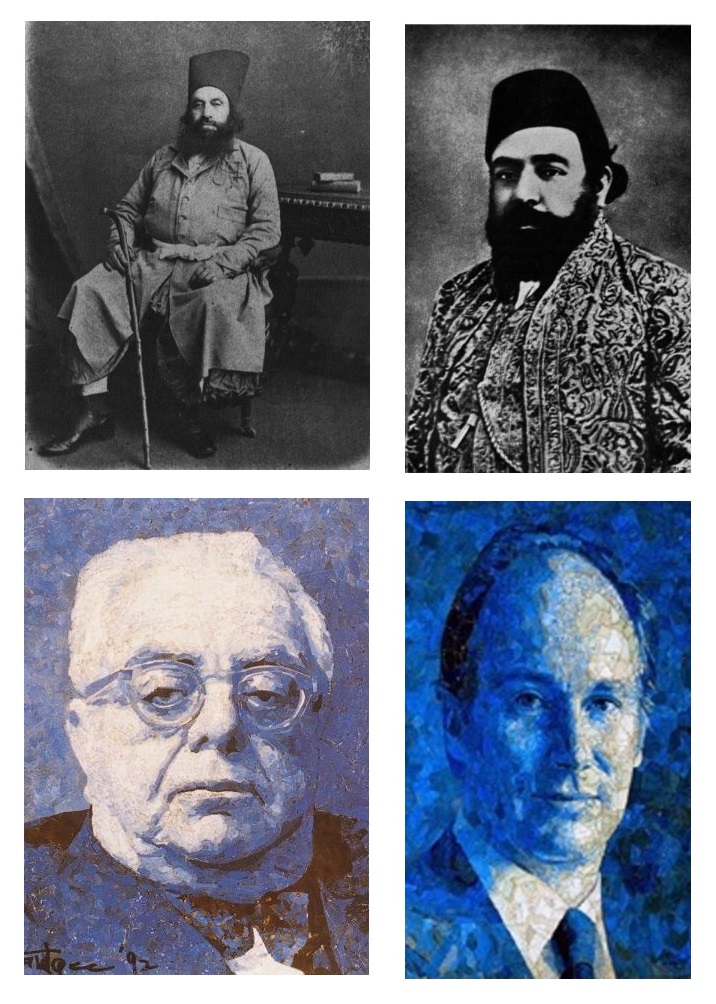
A historical collage featuring four prominent figures in Ismaili history: a seated man in traditional attire with a cane on the left, a bearded man in ornate dress on the right, and two stylized portraits of men in blue tones below.
Top: Imam Shah Hassanali Shah and Imam Shah Ali Shah; Bottom: Imam Sultan Mahomed Shah and Mawlana Sha Karim Hazar Imam ( both Gulgee lapis portraits).

Mawlana Hazar Imam and his immediate 3 predecessors have reigned the Jamat for a total of 202 years — 14.6 % of the 1388 years of Imamat to date — as follows: Mawlana Shah Karim Al Hussaini Hazar Imam (His Highness the Aga Khan IV, Imam from 1957 — 2020 and continuing, 63 years, he became the 49th Imam at the age of 20); Imam Sultan Mahomed Shah (His Highness the Aga Khan III, Imam from 1885 – 1957, 71 years, he became the 48th Imam at age 7 years), Imam Shah Ali Shah (Aga Khan II, 1881 – 1885, 4 years, he became the 47th Imam at the age of 51 years), and Imam Shah Hassanali Shah (Aga Khan I, 1817 – 1881, 64 years, he became the 46th Imam at the age of 13 years).

This 203 year period accounts for more time than does the entire Fatimid period, reigned by 8 Imams from Imam Mehdi (11th Imam to Imam Mustansir bi Allah (18th Imam)!

A green poster featuring the quote from Prophet Muhammad about the two weighty things he left behind: 'The Book of Allah and my Progeny.' The design includes an infinity symbol and highlights the importance of these teachings.
Art work Nurin Merchant, Credit: Infinity design povray.org

Some of the traditions of the Prophet Muhammad on the Imamat are follows: “I leave among you two weighty things: The Book of Allah and my Progeny. If you keep attached to these two never, never will you go astray. Both are tied with a long Rope and cannot be separated until the Day of Judgment.”

I recollect a Farman made by Mawlana Hazar Imam during his Silver Jubilee (1982) in Nairobi, Kenya, where he said that he was the 49th Imam and that there would always be Imams in the future, whether it is the space age or even beyond that! That Allah’s guidance is ever present on this earth through the manifest Imam is reaffirmed in another tradition of the Prophet that says that if the world were to remain without an Imam for one moment, the whole world with everything in it would perish instantaneously.

A Ginanic verse that correlates to the Hadith is:

Purush shan matra pag dharani na dharante,
Sansaar, chandra, suraj na dhrashtante,
Kuchh na dhrashtante,
Bhom kar, megh, dharti na aakaash bhave 

Translation:

If the Imam did not have his feet on this earth for even a moment,
then the world, moon, sun would vanish
and nothing would exist,
neither the heaven nor the earth.

On those affirmations from the Prophet Muhammad, our Ginans and Mawlana Hazar Imam, let us therefore truly rejoice that we have a living Imam and that our future generations will also continue to always live under the loving care guidance and protection of the Imam of the Time.

Let us on this auspicious 63rd Imamat Day offer our heartful thanks to Mawlana Hazar Imam for the following Talika that we have received yesterday, July 10, 2020. It was also read out to us last night by ever inspiring President of the Aga Khan Council for Canada, Ameerally Kassim-Lakha, in the weekly reflections program.

We convey Imamat Day Mubarak to our readers and Jamats around the world.

_______________________

Talika Mubarak from Mawlana Hazar Imam (English)

His Highness the Aga Khan, Mawlana Hazar Imam

My beloved spiritual children,

On the occasion of Imamat day, the 11th of July 2020, I send my warmest and most affectionate paternal maternal loving blessings to all my beloved spiritual children throughout the world.

I send my best loving blessings for the souls of all my ruhani spiritual children, and I pray that their souls may rest in eternal peace.

While the Covid-19 pandemic continues to pose a challenge globally, I have agreed to the re-opening of Jamatkhanas in areas where the health authorities allow gatherings in spaces of prayer.

As Imam-of-the-Time, I have authorised modifications to the conduct of ceremonies in our Jamatkhanas, to ensure compliance with present health and safety requirements. This matter is constantly under my review, and I will make appropriate decisions on when to return to normal practice.

It is my wish that, in attending Jamatkhana, as indeed at all other times, my Jamat should continue to exercise utmost care and rigour in observing the measures recommended by the public health authorities.

On this happy occasion, I send my most affectionate loving blessings to all my spiritual children who have submitted services and sent messages of congratulations and good wishes.

I send my most affectionate special loving blessings for mushkil-asan, good health, safety and security for all my Jamats, and the restoration of peace and stability, with best loving blessings for your spiritual happiness, worldly progress, strength of faith, and for unity in the Jamat.

Yours affectionately,

Aga Khan

___________________

Message from Mawlana Hazar Imam (French)

Aga Khan IV seated in ceremonial attire, smiling, with a decorative backdrop.

A l’occasion de l’Imamat Day, Mawlana Hazar Imam nous a gracieusement béni d’un Saint Talika pour son Jamat global qui est partagé sur le site The Ismaili.

Mes Chers Enfants Spirituels,

A l’occasion de l’Imamat day, le 11 juillet 2020, j’envoie mes plus chaleureuses et mes plus affectueuses tendres bénédictions paternelles et maternelles à tous mes enfants spirituels bien-aimés à travers le monde.

J’envoie mes meilleures bénédictions affectueuses pour les âmes de mes enfants spirituels ruhani, et prie pour que leurs âmes reposent dans la paix éternelle.

Alors que la pandémie Covid-19 continue à poser un défi au niveau mondial, j’ai donné mon accord pour la réouverture des Jamatkhanas dans les zones où les autorités sanitaires autorisent les rassemblements dans les espaces de prière.

En tant qu’Imam-du-Temps, j’ai autorisé des modifications dans la conduite des cérémonies dans nos Jamatkhanas, afin de garantir leur conformité avec les exigences actuelles en matière de santé et de sécurité. C’est un sujet que je suis constamment, et je prendrai les décisions appropriées quant au moment de revenir à une pratique normale.

C’est mon souhait qu’en venant au Jamatkhana, comme en toutes circonstances, mon Jamat continue à faire preuve du plus grand soin et de la plus grande rigueur dans le respect des mesures recommandées par les autorités de santé publique.

En cette heureuse occasion, j’envoie mes plus affectueuses tendres bénédictions à tous mes enfants spirituels qui ont soumis des services et envoyé des messages de félicitations et de bons vœux.

J’envoie mes plus affectueuses tendres bénédictions spéciales pour mushkil-asan, une bonne santé, la sûreté et la sécurité de tout mon Jamat, et le retour de la paix et de la stabilité, avec mes meilleures bénédictions affectueuses pour votre bonheur spirituel, le progrès matériel, la force de la foi, et pour l’unité dans le Jamat.

Affectueusement,

Aga Khan

___________________

Talika from Mawlana Hazar Imam (Portuguese)

Mawlana Hazar Imam seated in traditional attire, smiling warmly, with a decorative patterned backdrop.

Por ocasião do Imamat Day, Mawlana Hazar Imam graciosamente enviou um Talika Mubarak para o Jamat global e que partilhamos pelo The Ismaili.

Meus amados filhos espirituais,

Por ocasião do Imamat Day, 11 de julho de 2020, envio as minhas mais calorosas e mais afetuosas bênçãos paternais e maternais a todos os meus filhos espirituais por todo o mundo.

Envio as minhas melhores bênçãos de amor para as almas de todos os meus filhos espirituais ruhani, e oro para que as suas almas descansem em paz eterna.

Apesar da pandemia de Covid-19 continuar a representar um desafio global, concordei com a reabertura de Jamatkhanas nas áreas onde as autoridades de saúde permitem encontros em locais de oração. 

Como Imam do Tempo, autorizei modificações na realização de cerimónias nos nossos Jamatkhanas, de forma a assegurar o cumprimento dos atuais requisitos de saúde e segurança. Este assunto está constantemente sob a minha análise, e tomarei as decisões apropriadas acerca de quando se poderá regressar à prática normal.

É meu desejo que, tanto ao frequentar o Jamatkhana, como também em todos os outros momentos, o meu Jamat continue a exercer o máximo cuidado e rigor no cumprimento das medidas recomendadas pelas autoridades de saúde pública. 

Nesta feliz ocasião, envio minhas mais afetuosas bênçãos de amor a todos os meus filhos espirituais que submeteram serviços e enviaram mensagens de felicitações e votos de felicidades.

Envio minhas mais afetuosas e especiais bênçãos de amor para mushkil-asan, boa saúde, segurança e proteção, para todos os meus Jamats, e restauração da paz e estabilidade, com as melhores bênçãos de amor para a vossa felicidade espiritual, progresso material, força de fé e para união no Jamat. 

Afetuosamente

Aga Khan

___________________

Talika from Mawlana Hazar Imam (Farsi)

Mawlana Hazar Imam seated in ceremonial attire, smiling against a decorative background.
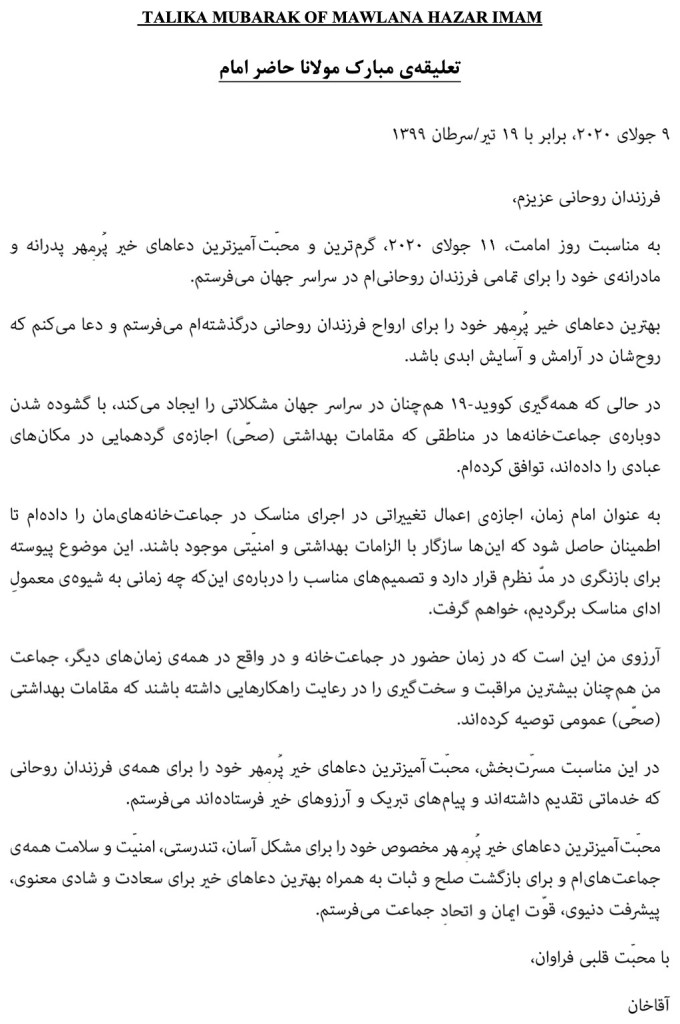
Talika Mubarak from Mawlana Hazar Imam, addressing his spiritual children on the occasion of Imamat Day, expressing affection and blessings amidst the challenges of the Covid-19 pandemic.
Talika in Farsi

___________________

Talika from Mawlana Hazar Imam (Arabic)

Mawlana Hazar Imam wearing a ceremonial outfit, seated with a decorative backdrop.
Imamat Day Talika, Aga Khan, Hazar Imam, Simerg
Talika in Arabic

___________________

Talika from Mawlana Hazar Imam (Gujarati)

A portrait of Mawlana Hazar Imam, dressed in ceremonial attire, smiling while seated against a decorative backdrop.
Imamat Day Talika, Aga Khan, Hazar Imam, Simerg
Talika in Gujarati

___________________

Talika from Mawlana Hazar Imam (Russian)

Aga Khan IV seated in traditional attire, smiling, with a decorative background.
Imamat Day Talika, Aga Khan, Hazar Imam, Simerg
Talika in Russian

_______________________

Talika from Mawlana Hazar Imam (Urdu)

Aga Khan seated in traditional attire with a decorative background.
Imamat Day Talika, Aga Khan, Hazar Imam, Simerg
Talika in Urdu

___________________

Talika from Mawlana Hazar Imam (Tajik)

Aga Khan IV, dressed in ceremonial attire, seated with a serene expression against a decorative background.
Imamat Day Talika, Aga Khan, Hazar Imam, Simerg
Talika in Tajik

___________________

Shukrana and Supplication

We submit our humble gratitude to our beloved Mawlana Hazar Imam for his blessings to the world wide Jamat on the occasion of his 63rd Imamat Day.

We submit the following supplications from verse 1 of Pir Hasan Kabirdin’s Ginan Sahebe Farman Lakhi Mokalea:

“O brother! Listen, My Lord Ali has written and sent a Farman. The beloved Lord has remembered this servant today with kindness in his heart”

Date posted: July 11, 2020.
Last updated: July 12, 2020.

Before departing this website please take a moment to review Simerg’s Table of Contents for links to hundreds of thought provoking pieces on a vast array of subjects including faith and culture, history and philosophy, and arts and letters to name a few.

CORRECTION: When the post was initially published, the Arabic translation was loaded into the Farsi Talika block, and appeared twice. The post now stands corrected, and we regret the confusion it caused.

_________________________

We welcome feedback/letters from our readers. Please use the feedback box which appears below. If you don’t see the box please click Leave a comment. Your comment may be edited for length and brevity, and is subject to moderation. We are unable to acknowledge unpublished letters
Challenges facing Deaf Ismailis around the world, and what the Jamat can do to support them

This special article for Simerg was written jointly by SALMA KHANJI, IMRAN HAKAMAILI, FARAH LADHA, RAMZAN SOMANI and SHAIZA JETHA, and edited by NURIN MERCHANT

Picture yourself sitting in Jamatkhana on a Friday evening, listening to a Ginan or Qasida. Voices of fellow Jamati members resonate within the prayer hall, as they sing along in unison or chit chat amongst themselves. Mukhisaheb’s voice can then be heard, announcing the commencement of Du’a, and subsequent prayers, ginans, readings and announcements. You listen to the words being spoken, thinking about their meaning, as your mind subconsciously perceives the tone and pitch of the presenter’s voices.

Now, picture yourself sitting in Jamatkhana on a Friday evening, unable to hear a single sound. Wanting desperately to be able to participate in and understand the prayers and ceremonies, just as your spiritual brothers and sisters do, but unable to easily do so. This is the challenge Deaf Ismailis face not only here in North America, but all around the world.

Our Deaf Ismaili brothers and sisters can be found across the globe, from small villages and towns across India, Pakistan, the Middle East, Central Asia and Africa, to larger cities across Canada, Europe, the United States, and elsewhere. Just as our Hearing brothers and sisters living in various parts of the world speak different languages, so do the Deaf murids.

However, there are only two Ismaili sign language interpreters in North America, where American Sign Language (ASL) is used and globally only seven Ismaili sign language interpreters are known.

Sign language is not an international language -– every country and language has its own form. Each one is just as beautiful, unique, and cultural as spoken languages. For example, there is a sign for “jambo” (meaning “hello” in Swahili) in East African sign languages, such as Kenyan and Tanzanian. There is also a sign for “bon appétit” (meaning “enjoy your meal” in French) in French Sign language. However, neither of these signs are used or recognized by individuals who communicate in American Sign Language, which is largely used in Canada and the United States, nor in British Sign Language, which is used throughout the United Kingdom.

story continues after photo

Ismaili Sign Interpreter
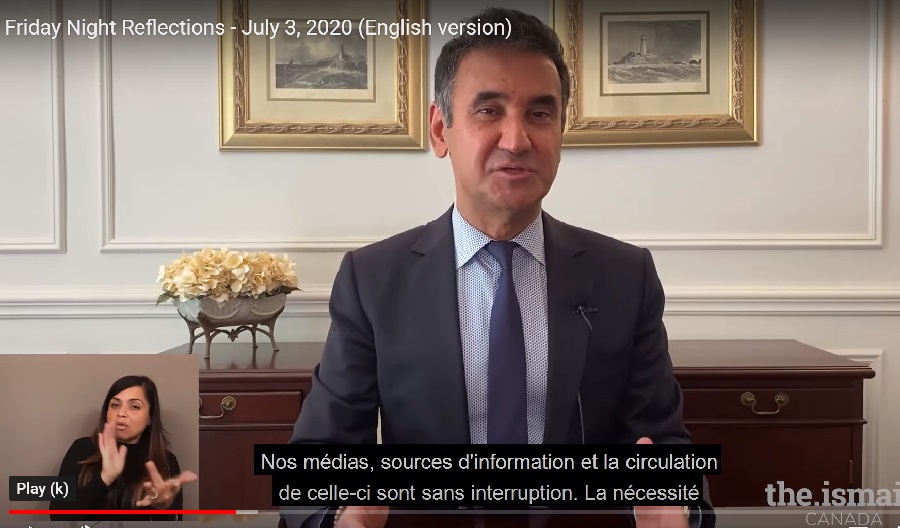
President Ameerally Kassim-Lakha of His Highness the Aga Khan Shia Imami Ismaili Council for Canada gives his weekly address to the Canadian Jamat during the Friday Night Reflections program, while Safina Heneisen, a US based sign interpreter shown at bottom left of the photo, conveys the President’s message to Deaf Ismailis. In the top featured photo, the sign interpreter conveying Mawlana Hazar Imam’s speech is Vancouver’s Farah Ladha. Both photos have been extracted from the weekly Reflections program.

Since the coronavirus pandemic, all gatherings have become virtual. It was nice to see that the Canadian institutions had recruited sign language interpreters for the Friday Night Reflections series, a weekly webinar that airs on the Ismaili Canada website every Friday. This is a step in the right direction in terms of engaging and involving the Deaf Ismaili community. But that is not all that we can do! We are One Jamat -– what more can we do to include our Deaf brothers and sisters?

When Deaf murids are asked for their thoughts, many say they want to go to Jamatkhana to participate in and learn about our rituals, our history, our traditions, and our culture. But, without the presence of someone who can interpret this information to them in sign language, they are unable to learn and participate in a way that Hearing Ismailis can, which sadly but understandably, causes many to stop coming to Jamatkhana altogether.

YOUNG DEAF ISMAILI CHILDREN

There are also many young Deaf Ismaili children within our community, who do not have access to the Ta’lim Curriculum or teachings at Bait-ul-ilm (BUI) in sign language. Parents have expressed much sadness in seeing their children being unable to participate in these teachings. If you find yourself thinking, “why don’t parents of Deaf children just teach them our faith in sign language themselves at home?”, please consider this: do you (or any parent) have the same level of knowledge as a trained Secondary Teacher Education Program (STEP) BUI teacher, or an Alwaez? Furthermore, this type of thinking does not consider the experience of attending BUI, of interacting with other Ismaili children, and of feeling like a part of the community.

Deaf children and adults experience many challenges just in the process of seeking to understand and be understood.  Imagine being in a country where you do not understand the language but still need to ask for directions. That would be a challenge.  Now imagine you are in that same country; you have learned a little bit of the language and are required to give a fluent presentation. Imagine being judged on your performance, on the errors in vocabulary choice and grammar that cause misunderstanding or confusion.  That is the challenge that Deaf children and adults face daily.

For Deaf people to have full communication access, they need communication partners that share the same language that they use.  For learning and participating fully in the BUI and in the Jamatkhana there needs to be access in sign language. This can be provided by a teacher who is proficient in sign language. If there is no teacher who is skilled with sign language, the services of a professional sign language interpreter can be used. Such professionals will have completed many years of specialized training and are able to interpret in a variety of situations from business meetings to conferences, medical appointments to classrooms, and even in Jamatkhana.

Not only are professional sign language interpreters trained in a variety of settings, they are also ethically bound to a strict code of confidentially set by their local and national associations.  Some interpreters even work internationally.

Interpreters play key roles in this process of learning and belonging. When Deaf murids receive information in sign language, they thrive in our community. By learning the meanings of Firmans and of our various prayers using sign language, they have said that they feel more connected to our faith –- not only physically to the space of Jamatkhana, but spiritually as well. We would like to share a few examples of how interpreters can be key contributors in building bridges and connections between Deaf and Hearing Jamati members.

story continues after photo

Ismailis taking the American Sign Language Class in a Jamatkhana
A group photo of students attending American Sign Language (ASL) class in a Jamatkhana. Photo credit: Farah Ladha.

EXAMPLES: THE JOY OF FEELING CONNECTED

A Deaf man in his 40s was interested in learning about mehmani that is brought to Jamatkhana, which is then sold as nandi. The question was why is it brought to Jamatkhana as a mehmani? And how its auctioned off after? The presence of an interpreter encouraged this murid to buy nandi in Jamatkhana for the first time. The custom was interpreted for the Deaf murid in sign language, including the description of the item, and the entire bidding process. When he wanted something, he would raise his hand. A Jamati member next to him informed him when his upper price limit had been reached by tapping him on the shoulder, causing him to lower his hand if the price exceeded his set amount. This not only helped him to participate in and understand the tradition of nandi, it also helped him to feel connected and interact with other Jamati members and allowed them to learn how to communicate with a Deaf murid.

Another example: For many years, a well-known Deaf murid attended Jamatkhana regularly. Every day, he would be greeted with a handshake to say hello. Nothing more was conveyed between himself and other Jamati members, as a communication barrier existed between them. One day, the Deaf murid, through a sign language interpreter, was able to present to the Jamat about his life. Audience members wept at having seen him for many years but never truly knowing him or his story. They also didn’t know that as a child, Hazar Imam had put his hand on his shoulder during a mulaqat while at the same time telling his father not to worry, his Deaf son would be ok. Nor were they aware that he had gone on to have a very successful business. His story would never have come to light if it were not for the presence of an interpreter, who facilitated the communication and understanding using sign language and the audience’s spoken language.

DIAMOND JUBILEE AND RECENT SUCCESS STORIES

A final example outlining a recent success story is one from the Diamond Jubilee. After tireless work and education about the inclusion of the Deaf Jamat, sign language interpretation was provided live for the first time for the Mulaqats in Karachi, Paris, and Lisbon, as well as across Canada and in Atlanta Georgia, USA. Over 250 Deaf murids were able to understand Hazar Imam’s Firmans for the first time.

However, there were still hundreds more that were not able to reap the benefit of the live interpretation either due to lack of professional Ismaili sign language interpreters in their area, or due to lack of education and knowledge of the presence of Deaf Ismaili murids, as well as the provision of adequate supports for them. Inshallah as more education is disseminated and awareness is raised, Deaf Ismailis will start to see a change, and more steps will be made towards their inclusion.

GOOD NEWS

The good news is that there is inclusive change happening. Gatherings for Deaf Ismailis have been organized, which have proven to be great opportunities for Deaf murids to meet and greet one another, as well as to teach, learn, and share knowledge. Watching elderly Deaf Jamati members interacting with younger members is a beautiful sight to see and reflect upon. Just as we reminisce about how our grandparents explained concepts to us in their mother tongue, when we were younger, the elder Deaf Ismailis are teaching the younger generations in their shared sign language.

Some Jamats have gone a step further and have hosted sign language 101 workshops for their members, where professional sign language instructors (some from outside of our community) come to teach basic sign language. The workshops have been very successful, and some Jamats have decided to pursue additional workshops so that they can advance their knowledge. All Jamats could host these types of workshops in order to promote communication between Deaf and Hearing murids.

EXCEPTIONAL AND INSPIRING STORIES, AND STIGMAS

In addition to allowing Hearing and Deaf Jamati members to communicate, these workshops also allow individuals with hearing loss to learn sign language and thus have seamless communication as hearing deteriorates with age. For example, there was a woman who brought her elderly mother, who was profoundly deaf in one ear and losing hearing in the other, to one of these organized workshops. Both wanted to learn sign language so that they could continue to communicate once her mom had fully lost her hearing. Both mum and daughter were very touched and emotional when they witnessed firsthand how sign language is possible to learn and assists in communication between the Hard of Hearing and the Hearing. These workshops again were facilitated by professional sign language interpreters, some from within the community and some from outside of it.

These are good news stories, yes. But negative stigmas are still attached with Deafness, mainly the myth that Deaf are unable to be educated or taught or even work to make a living. This is entirely untrue, and an example given by Habiba Teja at a woman’s gala presentation highlights this fact.

Habiba is a well-known nutritionist and was talking about her experience with improving food quality through Aga Khan University (AKU) in Pakistan and Eastern Africa. Through this endeavor, she was able to help many impoverished people find work. One example she gave was about how she learned of a young Deaf man in his 20’s who sat in his room all day and stared at a wall. She visited with him and taught him job skills by communicating with him visually by hand gesturing, and by physically showing him what to do. He was quick to learn and was able to find full time paid work. This turned his entire life around and he began earning an income. He has since gotten married and has a family of his own. The stigma associated with him being Deaf had prevented anyone from trying to support his learning; believing he couldn’t learn, no one bothered taking the time to teach him anything. Habiba’s story touched many and shattered the notions that the Deaf people are unable to be educated or work.

This is not the only stigma we need to face as a community. We need to work together as a community to squash the stigmas associated with Deafness, Blindness, and Disabilities in general. Unfortunately, these stigmas are still very prevalent in the Ismaili Community today. We need to educate ourselves and to reach out to those who feel left out in our community due to situations beyond their control. We need to inspire one another and learn from one another. And perhaps for some of you reading this, it may seem like a lot to take in. Maybe trying to learn a bit of sign language feels overwhelming. For those people, we offer this one quote from a Deaf person:

“Hearing people can learn sign language. Deaf people cannot learn to hear.”

ISMAILI DEAF WEBSITE

Try to learn even just a little bit of sign language to be able to communicate with your Deaf brothers and sisters. If you know of any Deaf Jamati members wanting to participate in activities within our community, but not being able to do so due to the reasons outlined in this article or others, encourage your local or national council to provide a professional sign language interpreter. If they are unsure about how to do this, we invite them to visit the Ismaili Deaf Website and fill out the contact form – information will then be provided to them.

The website also contains lots of information for the general public about the terminology that you have read within this article, such as Deaf, Hearing, Hard of Hearing and Deaf Blind. Furthermore, it has many articles about sign language, and about the achievements and successes of some of our Deaf Ismailis and interpreters. If you are curious about where you can learn sign language in your area, and/or how to have access to professional sign language interpreters, you can fill out the online contact form.

A FINAL NOTE FROM A DEAF ISMAILI MURID

“Without interpreters, our lives would be completely lost. We would feel helpless and struggle in our daily lives because we would not understand what is happening around the world.  We use sign language every day of our lives; a rich visual language which includes the use of facial expression, body language and gestures. Without sign language, we cannot function and participate fully in society as it is our means to communicate in all settings: educational, medical, workplace and at Jamatkhana. Sign language interpreters help us to better understand our faith and religion and in Jamatkhana especially if possible, Ismaili interpreters are so helpful to help us growing in our faith with Allah. Life is about learning and participating in a fully accessible society.”

If you are interested in learning sign language to make friends, to help one another, or to become a certified interpreter, we encourage you to contact your local Deaf and Hard of Hearing service organization as well as local colleges and universities who offer sign language courses. They will be happy to provide you with more information. Of course, you may reach out to us at the Ismaili Deaf Website, and complete the CONTACT US form

Date posted: July 7, 2020.
Last updated: July 9, 2020 (photo caption update with names of sign interpreters).

__________________

FEEDBACK FROM READERS: We welcome feedback/letters on this very important subject from Deaf Ismailis, their families and friends as well as everyone who is concerned about the difficulties Deaf people around the world face every single day of their lives. Stories of inspirational Deaf Ismailis are also welcome. Please use the feedback box which appears below (you may remain anonymous, if you wish). If you don’t see the box please click Leave a comment. Your comment may be edited for length and brevity, and is subject to moderation. We are unable to acknowledge unpublished letters. Simerg’s editor, Malik Merchant, may be reached at Simerg@aol.com. Feel free to write to him – he will only respond to verifiable individuals!

Before departing this website please take a moment to review Simerg’s Table of Contents for links to hundreds of thought provoking pieces on a vast array of subjects including faith and culture, history and philosophy, and arts and letters to name a few.

____________________

AbdulMohamed and Sakina

An extraordinary short film on the first Ismaili settlement in Europe – Sí, es España!

Introduced by MALIK MERCHANT
Publisher/editor SimergSimergphotos  and Barakah

My Spanish cousins, Yasmin and Shamsah, recently reminded me to watch a special program on Ismaili TV which among other things portrayed their grandfather’s arrival in Spain in 1914, and how he raised a beautiful family that has now lived in Spain for more than 106 years!

The 20-minute Spanish historical segment of the program is presented in the Youtube link below, and we sincerely thank the Aga Khan Development Network’s communication department for arranging to send us the clip. It will familiarize our viewers about an important phase in the Ismaili settlement in Europe, a narrative that been missing when discussing recent Ismaili migrations to Europe.

My aunt Sakina, who is 93, introduces the film with great insight, wisdom and passion, and one quickly realizes her immense faith and love for Mawlana Hazar Imam, His Highness the Aga Khan.

story continues after video link

Youtube Video on Jamat in Spain

As the story goes, Sakina aunty accompanied her father, Ashad Ali Haji, to India in 1947. The trip lasted 3 months and during this time she met my father Jehangir’s older brother, Abdulmahomed, whom she would marry 3 years later. They would spend the next 10 years in India, mainly in Calcutta.

The couple then lived in London, England, until the mid 1960’s before settling down with their four children — Abdulsultan Yasmin, Gulammahomed and Shamsah — in Madrid.

While in London, Abdulmahomed uncle served as Kamadiasaheb and Mukhisaheb of the Jamat during the early 1960’s. He and my father both passed away six months apart, less than 3 years ago. Apparently, because they used different surnames, many Jamati members do not know the family link — my uncle used the surname Allibhoy Mahomed and my father used Merchant. Their father manufactured leather goods and traded as a leather merchant, and I suspect that’s how I have Merchant as my surname.

story continues after photo

Abdulmahomed and Jehangir
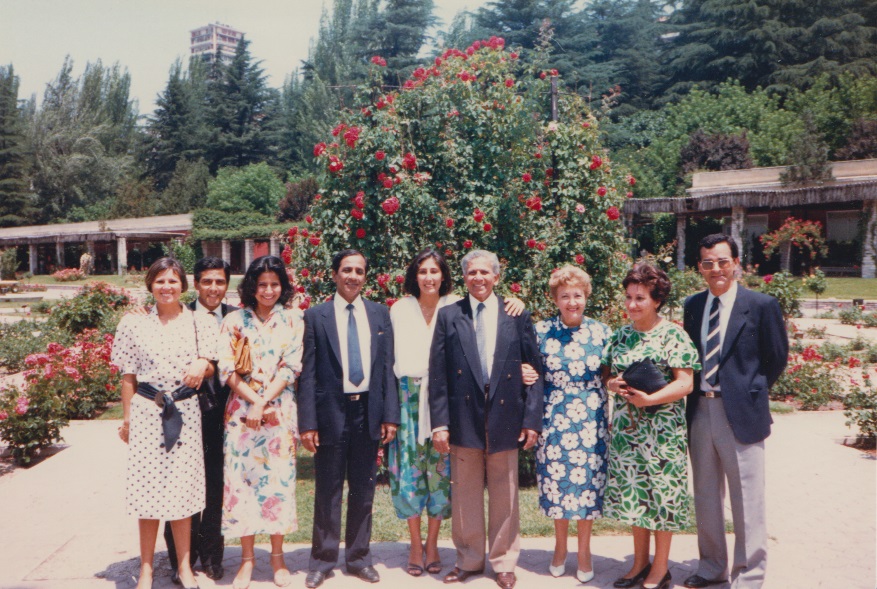
Photo taken in Madrid at wedding of Gulammahomed (missing in photo). From left to right: Maria Jose, Abdulsultan, Yasmin, Jehangir Alibhai Merchant, Shamsah, Abdulmahomed Allibhoy Mahomed, Sakina, Gulbanu and Felipe. Photo: Jehangir Merchant Family Collection.

Over the past 43 years, I have had the privilege of meeting Abdulmahomed uncle, Sakina aunty, and my four cousins as well as their families several times. Our most recent get together was in Lisbon in July 2018, during Mawlana Hazar Imam’s Diamond Jubilee visit. Abdulmahomed uncle is buried in Lisbon, and we all went to his burial site to pay homage to him and pray for his soul. He is seen in the film, walking by his beloved wife of more than 70 years, Sakina (see featured photo at top of this post).

Sakina aunty has a photographic memory, whereby she can recount with precise detail every important incident from the 1940’s onwards. Once she starts telling stories, you want keep on hearing. She accompanied her father and siblings to a number of mulaqats with Mawlana Sultan Mahomed Shah. This blessing of mulaqats continued after Mawlana Shah Karim Hazar Imam succeeded to the throne of Imamat in 1957. Incidents from the mulaqats are in themselves deeply touching, and some that were articulated to me related to the continuity of the Imamat from Hazrat Ali, and attested to the fact that the Imams are bearers of the same Noor (Light). The Spanish Jamat exhibition that was held in Lisbon 4 years ago included some rare photographs of those mulaqats.

Hopefully, Sakinas aunty’s rich and detailed accounts of memorable moments will be captured by her family members in the coming months, and we sincerely hope that other families around the world have started documenting stories of their parents and grandparents, before they leave this earth. The younger generation can draw immense wisdom from the faith of their forefathers.

The Jamat in Spain has grown to several hundred in the past 30 years, and live in different cities, and the film highlights this. If you visit Spain, please obtain the contact information of my aunt and her family as well as other Mukhisahebs or institutional representatives in Spain from the Ismaili council in your jurisdiction. Note that due to Covid-19, Jamatkhanas in Spain may be closed, as is the case in many other parts of the world. Gradual reopening of Jamatkhanas is taking place, as in Portugal.

Youtube Video on Jamat in Spain

Watch this amazing Youtube presentation by The Ismaili.

Date posted: July 5, 2020.
Last updated: July 6, 2020 (clarity to story as per feedback).

Before departing this website please take a moment to review Simerg’s Table of Contents for links to hundreds of thought provoking pieces on a vast array of subjects including faith and culture, history and philosophy, and arts and letters to name a few.

_____________________

We welcome feedback/letters from our readers. Please use the feedback box which appears below. If you don’t see the box please click Leave a comment . Your comment may be edited for length and brevity, and is subject to moderation. We are unable to acknowledge unpublished letters.

Simerg’s Merchant

Malik Merchant is the editor of Simerg (2009), Barakah (2017) and Simergphotos (2012). A former IT consultant, he now dedicates his time to small family projects and other passionate endeavours such as the publication of this website. He is the eldest son of the Late Alwaez Jehangir Merchant (1928-2018) and Alwaeza Maleksultan Merchant, who both served Ismaili Jamati institutions together for several decades in professional and honorary capacities. His daughter, Nurin Merchant, is a veterinarian based in Ottawa. Malik may be contacted at Simerg@aol.com.

Photos and Story: The Reopening of the Aga Khan Museum

The Aga Khan Museum, closed since March 13, 2020, reopened after more than 100 days. Malik Merchant was present for the opening and shares his experience with story and photos…..MORE ON SIMERGPHOTOS

Glimpses Aga Khan Museum Reopening Simerg and Barakah
Sanctuary, a current exhibition running at the reopened Aga Khan Museum. Please click on image for reopening story and photos. Photo: Malik Merchant /Simerg.

Date posted: July 4, 2020.

___________________

Recollecting a beautiful Canada Day moment in Winnipeg, and the Aga Khan’s message of 1978 that inspired thousands to make Canada their permanent home

By MALIK MERCHANT
Publisher/editor SimergSimergphotos  and Barakah (2017)

July 1, 2017 was 150th anniversary of Canada’s founding. I had planned to be in Ottawa for the greatest Canada Day celebration in the country. However, my 45000 km road trip that began in Vancouver was delayed, and I arrived in Winnipeg on June 30th after having driven 2600 kms (including the detours I had taken to see sites in Alberta and Saskatchewan)! Ottawa was a further 2200 kms away, and the forecast there called for rainy weather.

Winnipeg was basking in sunshine when I woke up! At the hotel, I had learned about Winnipeg’s 11 year old tradition of forming a living Canadian flag in various parts of the city. For the 150th anniversary, the largest living Maple Leaf formation was going to be at the city’s downtown intersection at Portage Avenue and Main Street.

Canada Day Living Maple Leaf in Winnipeg Simerg
Canada’s Largest Living Maple Leaf formed with the participation of thousands of individuals in Winnipeg on July 1, 2017, to celebrate the country’s 150th birthday. Photo: Downtown Winnipeg Biz.

2,500 red T-shirts were handed out at 8:30 AM, and Canadians of all backgrounds were asked to position themselves in the square. Nigerian born Ismaila Alfa, host of Up To Speed on CBC Radio One in Winnipeg, led the sea of reds through a couple of practice sessions to get everything right. Then, he asked the crowd to look up at the camera hosted in a high rise office tower for two photos — the first with a smile and the second one with the cheerful singing of “Canada” . This was a truly memorable moment for me as I have never witnessed anything like this before, and have only attended Canada Day Celebrations in Ottawa! I share the photographs from that happy day 3 years later, while we are all stuck at home watching the 153rd Canada Day virtually due to Covid-19.

Canada Day Living Maple Leaf in Winnipeg Simerg
Canada’s Largest Living Maple Leaf formed with the participation of thousands of individuals in Winnipeg on July 1, 2017, to celebrate the country’s 150th birthday. Photo: Downtown Winnipeg Biz.

As an Ismaili Muslim, my first impressions of Canada were formed in November 1978 when I travelled to Toronto from the UK for Mawlana Hazar Imam’s, His Highness the Aga Khan, first ever visit to his newly settled Ismaili followers. When he repeatedly called on the Ismailis in Canada to “Make Canada your home” I reflected on that message and decided to make Canada my home some 2 years later.

A group of men in suits standing together in a formal setting, with wooden paneling and indigenous art in the background.
This unique and historical photo signed by the late Canadian Prime Minister, Pierre Trudeau, was taken in the Prime Minister’s Office during Mawlana Hazar Imam’s Silver Jubilee visit to Canada in April 1983. (l to r) – Hon. Secretary Farouk Verjee (Aga Khan Council for Canada), Mr. Gerry Wilkinson (His Highness the Aga Khan’s Secretariat, Aiglemont, France), Hon. Secretary Mohamed Manji (Aga Khan Ontario Council), President Amirali Rhemtulla (Aga Khan Grants Council), Mawlana Hazar Imam, Prime Minister Pierre Trudeau, Prince Amyn Muhammad Aga Khan, President Mehboob Dhanani (Aga Khan Ontario Council) and President Zulficar Lalji (Aga Khan Council for Canada). The full signature line note from the Prime Minister read: To Farouk with the best of Memories. Trudeau. 1983. Photo: Farouk Verjee Collection, Vancouver.

Mawlana Hazar Imam’s profound affinity and respect for Canada has been explained in a very thoughtful piece by Mohib Ebrahim. I urge everyone to read it. I take a number of quotations from Mohib’s article which reflect the Imam’s confidence in Canada as a force of good:

“Canada [is] an international power who takes her responsibilities seriously and whose policies have never in her history been tainted by the cruder forms of colonialism, racialism or isolationism.” — Diplomatic Banquet, Toronto, November 1978.

“Successful experience with democracy, civil society and pluralism are the national genius of Canada of which much of the developing world is in dire need.” — Ottawa, June 2005

“[A]s you continue your search for the best constitutional solution to your future, … let me emphasise that Canada remains for the rest of the world an enviable haven. A haven of peace, and of immense natural beauty and wealth. The wealth I speak of, is not merely its natural resources but the peoples of Canada, steeped in your tradition of tolerance, generosity and compassion in alleviating human suffering and respect for diversity of thought and culture.” — Diplomatic Corps Banquet Toronto, August 1992.

On this 153rd anniversary marking the birth of Canada, my 89 year old beautiful mother Maleksultan and my lovely daughter Nurin join me in wishing all Canadians and everyone living in this great country a very Happy Canada Day.

Ismaili Muslim is appointed as the new Lieutenant Governor of Alberta

We are particularly proud and joyous that Prime Minister Justin Trudeau announced yesterday, June 30, the appointment of Salma Lakhani, a proud Ismaili Muslim, as the new Lieutenant Governor of Alberta. Ms. Lakhani will be the first Muslim Lieutenant Governor in Canadian history.

A close-up portrait of a middle-aged South Asian woman with shoulder-length brown hair, wearing a warm smile and red lipstick.
Salma Lakhani

A long time resident of Edmonton, Ms. Lakhani has dedicated her life to helping people in need and those who face obstacles to success in our society. Through her work to advance education, health care, women’s empowerment, human rights, and support for new immigrants, she continues to be a champion of diversity, pluralism, and inclusion.

Born in Uganda, her home country from which her family was expelled in 1972, Ms. Lakhani completed an honours degree in Clinical Biochemistry at the University of Manchester. She moved to Edmonton with her husband, Dr. Zaheer Lakhani, in 1977. The couple has two daughters. I recollect Dr. Zaheer as the Aga Khan Council Chairman for Edmonton during the early 1980’s. He mingled with everyone in the Jamat, and as a leader consulted with Jamati members regularly. He was always supported by his wife Salma during his term.

The Ismaili, the official website of the Ismaili community, has published a special article about her appointment.

We congratulate Ms. Lakhani and her family on her appointment, and wish her happiness and success in the role she will play for all Albertans.

As we all celebrate Canada Day, we sincerely hope that this great nation of 37.6 millions people will come out even stronger from the Covid-19 pandemic that we are living through today with the rest of humanity.

Date posted: July 1, 2020.

Before departing this website please take a moment to review Simerg’s Table of Contents for links to hundreds of thought provoking pieces on a vast array of subjects including faith and culture, history and philosophy, and arts and letters to name a few.

____________________

We welcome feedback/letters from our readers. Please use the feedback box which appears below. If you don’t see the box please click Leave a comment. Your comment may be edited for length and brevity, and is subject to moderation. We are unable to acknowledge unpublished letters.

A man in a suit and a woman in a light blue blazer smile together in a warmly lit setting.
Malik with his mother Maleksultan
Merchant at the Vancouver Ismaili
Centre.

Malik Merchant is the editor of Simerg (2009), Barakah (2017) and Simergphotos (2012). A former IT consultant, he now dedicates his time to small family projects and the publication his websites. He is the eldest son of the Late Alwaez Jehangir Merchant (1928-2018) and Alwaeza Maleksultan Merchant, who both served Ismaili Jamati institutions together for several decades in professional and honorary capacities. His daughter, Nurin Merchant, is a veterinarian based in Ottawa. Malik may be contacted at Simerg@aol.com.

__________________