Simerg is an independent initiative dedicated to Ismaili Muslims, the Aga Khan — their Hereditary Imam — and the Ismaili Imamat, and Islam in general through literary readings, photo essays and artistic expressions
Chez Mahmadi, a renowned sanctuary in Nairobi, Kenya, graciously invited two Ismaili artists, Nimira Shariff and Shamim Subzali, to exhibit a collection that uniquely depicted a theme anchored on Sufism — the mystical aspect of Islam. Despite being separated by the winds of time and space, living oceans apart, these two artists embarked on a collaborative journey that transcended physical distance. They displayed their noteworthy pieces from their respective collections of artwork, each showcasing a unique style of inspiration and talent, all under the singular theme of Sufism. Chez Mahmadi, the serene host that showcased the beautiful exhibition from February 1 – 23, 2025, is a multifunctional space that champions an aura designed to inspire, connect, and nurture one’s mind in unison with the soul.
In a story featured in the Asian Weekly, Tanya Vas noted that the exhibition was a harmonious blend of art and atmosphere, each element resonating with the Sufi theme. She described the art pieces as having vibrant hues and swirling patterns, which seemed to breathe, vividly bringing to life the spiritual essence of Sufism.
Artist Nimira Shariff noted the differences in their artistic styles yet emphasized how their works complemented each other. Shamim Subzali shared the joy they found in working with the Sufi theme. The artists are thrilled to showcase a collection of their exhibition work in Simerg, which warmly welcomes and encourages Ismaili artists worldwide to showcase a selection of their works in our continuing series on Ismaili Artistic Expressions.
ARTWORK BY NIMIRA SHARIFF
Nimira Shariff
Nimira Shariff is inspired by pursuing a lifelong passion for ‘Art,’ validating that which is authentic or allegorical at the heart of a given scene. This is evident as she displays her talent stimulated by the inner beauty within her environment and the inner being she yearns for. Using watercolours, Nimira finds harmony in depicting animals, birds, flowers, landscapes, whirling dervishes, and silhouettes of African women. In addition, she has dabbled meticulously using Oils and Pastels. The medium she applied for the Chez Mahmadi Sufi Art Exhibition was Acrylic. This exhibit engrossed her to plough further into ‘The World of Sufism’, exemplifying her passion and the cornerstone of her disposition, illustrating that ‘no literature is enough for her to dwell in.’
Shamim Subzali has nurtured her skill by creating impressive pieces of artwork. She favours the formation of portraitures yet continues to explore various art themes, as is demonstrated in this specific Sufi art works. Some of her other creations encompass animals, landscapes, whirling dervishes, life drawings, still life, seascapes, and portraits, drawing inspiration from impressionists. At the Chez Mahmadi exhibit, Shamim harnessed the use of Oils, Pastels, and Watercolours. She continues to excel by experimenting with various other mediums and techniques, such as charcoal and pencil. Shamim’s artful approach is a testament to her talent as she states ‘the learning curve is ever evolving, and never diminishes’. Her ongoing artistic journey is an inspiration to all. Discover the intriguing wonders of an enchanting journey by reading Shamim Subzali’s BIO.
“BROTHERHOOD” by Shamim Subzali.
~~~~~~~~~~
“PRAISE” by Shamim Subzali.
~~~~~~~~~~
“SAMA BROTHERHOOD” by Shamim Subzali.
~~~~~~~~~~
“TOTAL SUBMISSION” by Shamim Subzali.
Date posted: March 31, 2025. Last updated: April 1, 2025 (inserted links).
_______________________
“DAD” (Al-Karim Jaffer), acrylic painting by son Faizaan Jaffer.
About the contributor: Al-Karim Jaffer, the youngest of four siblings, was born in Burundi and has travelled extensively, having resided in the Democratic Republic of Congo (DRC), the UK, and the USA. Presently, he lives in Vancouver, B.C., where he cherishes his family and community. As a proud father of two outstanding young men, his commitment to their well-being and the well-being of his community is unwavering. He is ready to serve with outright dedication and passion. Volunteerism has consistently been the tenet of his being. Life has taken him on a spiritual search path by composing allegorical poetry inspired by faith, the environment, and nature photography.
The editor invites Ismaili artists to submit a selection of their paintings and other works of art for publication in Simerg. Please submit images of no more than 8 objects in Jpeg (1280 x 940) and your profile to the editor, Malik, at mmerchant@simerg.com.
We convey our heartiest felicitations to Muslims around the world, our readers, and friends of the Muslim community on the auspicious and joyous occasion of Eid-ul Fitr. We pray for your happiness, peace, and good health. We wish you all Eid Mubarak.
On March 10, 2025, Canada Post continued its tradition by issuing a Booklet of 6 Permanent™ domestic rate stamps to commemorate the festivals of Eid al-Fitr and Eid al-Adha in March and June 2025, respectively. This is Canada Post’s seventh Eid stamp, a testament to its continuity and commitment to celebrating the country’s cultural diversity. The previous Eid stamps were issued in 2017, 2020, 2021, 2022, 2023, and 2024.
Story continues below
STAMP
~~~~~~~
STAMPS BOOKLET COVER
~~~~~~~
Eid al-Fitr signifies the end of fasting during Ramadan and will be observed on or around March 30, 2025. Eid ul-Adha will be held from June 6, 2025, to mark the Festival of Sacrifice commemorating Ibrahim’s (Abraham) willingness to sacrifice his son, Ismail, to God. The Eid ul-Adha is held at the end of the annual pilgrimage to Mecca.
The rug’s design depicts Alberta’s diverse landscapes and distinct seasons. At its centre are an archway and a lodgepole pine — a tree that supports teepees and lodges and is reminiscent of the cypress of settler homelands.
Celebrated by Muslims all over the world — and by more than one million Muslims in Canada — both events can last several days and include communal prayers and feasts, visits with family, gift-giving, and acts of charity. In the previous two years, Simerg featured the 2023 stamp graced with a beautiful Iranian artifact and the 2024 stamp depicting the Maamoul, a melt-in-your-mouth cookie stuffed with dates and nuts.
The 2025 stamp, a unique addition to the series, features the Canadian prayer rug. This distinctive design is described on the Canada Post website as follows:
“Prayer is a pillar of Muslim faith practised several times daily and on special holidays, including Eid al-Fitr and Eid al-Adha. Rugs help beautify and focus the act of prayer and play an important part in gift giving and cultural exchange, often embodying local stories, materials, patterns and techniques.
“The Canadian Prayer Rug — a project of the charity Islamic Family — celebrates the deep and enduring connection between Indigenous and Muslim peoples and the multi-faith collaboration that built Canada’s first mosque in Edmonton in 1938. A reflection of their shared stories, it was created by Muslim weaver Noor Iqbal and Métis designer Kit Craven, based on interviews conducted by local youth with Indigenous Elders and descendants of some of Canada’s first Muslim settlers.
“The rug’s design depicts Alberta’s diverse landscapes and distinct seasons. At its centre are an archway and a lodgepole pine — a tree that supports teepees and lodges and is reminiscent of the cypress of settler homelands.”
About the design, specifications and link to purchase stamp booklets
The booklet cover and the inside and back of the booklet feature photographs of the original, handwoven Canadian Prayer Rug. The inside and back include images of some of the tools and materials that would have been used to create it.
On the inside (left to right) are a spool and hanks of yarn; bowls of logwood and black tea, red oak and willow leaves, and bark (used as dyes); and a weaving raddle.
On the back are another raddle and shuttle, as well as a spool. Also featured are a short text on the stamp subject, and credit and caption information.
Cancellation Site: Edmonton, Alberta Stamp Designer: Kristine Do Stamp Illustrator: Kit Craven Issue Date: March 10, 2025 Quantity Produced: 55,000 booklets of 6 Permanent™ stamps Product Type: Stamps
Stamps can be ordered on the Canada Post website HERE. Note: If you order four sets of booklets, each with six stamps, at CDN $7.44 per booklet, postage is free! You can use the stamp for all your first-class letters within Canada indefinitely.
Inna lillahi wa inna ilayhi raji’un “Surely we belong to God and to Him we return” — Holy Qur’an, 2:156
“Life is a great and noble calling, not a mean and grovelling thing to be shuffled through as best as we can but a lofty and exalted destiny.” — Mawlana Sultan Mahomed Shah, His Highness the Aga Khan III (1877-1957), 48th Ismaili Imam.
Sadrudin Hassam
A loving tribute by THE FAMILY OF HUZUR MUKHI SADRUDIN KASSAMALI HASSAM
Huzur Mukhi Sadrudin Kassamali Hassam was born in Zanzibar on August 15, 1936, and passed away peacefully on December 26, 2024, at the age of 88 in the company of his loving family in London, U.K. He leaves behind his beloved wife, Huzur Mukhiani Roshan (Habiba) Hassam, his two daughters, Farah Hassam and Salima Hassam Ladha, his son-in-law, Alim Ladha, and two precious granddaughters, Sophia Noor Ladha and Alisha Noor Ladha.
Sadrudin Hassam with his family. Photograph: Sadrudin Hassam Family collection.
Sadrudin was fondly known as Mr. Hassam by his students and Sadrubhai by colleagues and others. Mr. Hassam grew up in the rich culture of Zanzibar. He showed academic achievement at school as a young boy. He went on to train as a professional teacher for two years at the Teachers Training College in Nairobi, Kenya where he graduated in 1956.
After graduating, he returned to Zanzibar, where he was the Honorary Secretary for the Aga Khan Sports Club. He also started teaching at the Aga Khan School of Zanzibar.
It was here that Mawlana Shah Karim Al-Hussaini Aga Khan IV (A.S.) visited his school and entered the classroom where Mr. Hassam was teaching. This very special, unexpected encounter would change the trajectory of Mr. Hassam’s professional career and life forever. Mawlana Shah Karim asked Mr. Hassam if he had furthered his studies enough, and after Mr. Hassam replied, “No Khudavind, I have not,” he was graciously offered a scholarship to study a Master of Arts (M.A.) in Islamic History at University of Edinburgh, Scotland. This inspirational moment is captured in a black and white photo where both are 21 years old and shaking hands as Mr. Hassam humbly accepts the Aga Khan scholarship.
Mawlana Shah Karim, His Highness the Aga Khan IV (d. February 4, 2025), shaking hands with Sadrudin Hassam during a school visit in Zanzibar. Photograph: Sadrudin Hassam Family collection.
This life-shaping opportunity was the catalyst for Mr. Hassam’s vast and long-spanning career as an experienced educationist. He evolved into various specialised roles and committed to honorary services within the Ismaili institutions. He served the community and his students to the best of his professional abilities with the same level of commitment, passion, gratitude, humility, and knowledge-sharing in all his work endeavours until he gracefully retired from the Institute of Ismaili Studies (IIS) in London, U.K. at the age of 84 in 2020.
He had graduated from the University of Edinburgh with an M.A. majoring in Islamic History and European History and subsidiaries in English, Latin and Philosophy. In addition to fluently speaking and writing in Kiswahili and Gujarati, he learnt French, German, Arabic, and Persian and held distinction certifications in Maths and Geography from the University of London. He also learnt to read Khojki (Sindhi) script in his early years, which would prove to be an important and unique skill in the latter years of his career at the IIS. While working towards his M.A., he simultaneously qualified in Writing and Editing with the British American School of Writing, another skill he would utilise throughout his career.
In the early years of his career, after graduating with his M.A., he taught History, English and Religious Education in secular secondary schools in Edinburgh (1965-72). He then moved back to Tanzania and taught at the Aga Khan School of Commerce and then at the Aga Khan Mzizima Secondary School, Dar-es-Salaam, where he was Head of History and subsequently Deputy Headmaster (1973-1981). Simultaneously, he was also the Religious Education Officer of the Ismaili curriculum for Ismaili students for 10 years, which also involved him conducting a number of courses on Ginans and Gujarati in the manpower training programmes in Tanzania. Additionally, he was the Honorary Secretary of the Ismailia Association for Tanzania and Honorary Secretary of the Aga Khan Sports Club for Tanzania and loved to play tennis. At the Ismailia Association for Tanzania, he trained religion teachers. He participated as an educationist in the Religious Education Conferences at Nairobi, held under the auspices of the Ismailia Association for Kenya, to plan the International Curriculum for Religious Education for the worldwide Ismailis. In his time in Tanzania worked closely with Al-waez Abu-ali Missionary and edited his materials.
In 1981, he moved with his family to London, U.K., to accept a role that would be a long-standing position as the Religious Education Officer with Ismailia Association (now known as the Ismaili Tariqah and Religious Education Board, ITREB) U.K.
Sadrudin Hassam, seated left, during his early years in London with the Ismailia Association (ITREB) U.K. leadership, including President Dr. Aziz Kurwa (seated third from left), colleagues and Baitul Ilm teachers. Photograph: Sadrudin Hassam Family collection.
~~~~~~~
Sadrudin Hassam, standing 2nd from left, with ITREB U.K. leadership including Chairman Noordin Kasssam (seated, centre), and colleagues on the rooftop of the Ismaili Centre London. Photograph: Sadrudin Hassam Family collection.
It was at the ITREB, U.K., where he worked on a variety of projects amongst high-esteemed colleagues including Al-waez Jehangir Merchant, Al-waeza Malek Merchant, Al-waez Saddrudin Fattoum, Al-waez Bashir Ladha, Al-waez Gulam Abbas, Dr. Farouk Topan, Al-waez Faqir Muhammed Hunzai, Al-waeza Rashida Hunzai, Amin Keshawji and Aziz Khoja to name but a few.
One of his initial roles was to identify Baitul Ilm religious education locations around the U.K., set them up and oversee them. His primary duties included training volunteer teachers, especially in Ismaili History and Ginans, directing the courses for teachers and preparing instructional material for the programmes, teaching secondary students, and providing critique to draft curriculum plans and materials from IIS U.K. He also wrote articles for Al-Misbah and Ilm, which are reproduced on this website. He wrote a book on the Alamut period of Ismaili history for secondary students. Mr. Hassam directed and conducted, with the team, teacher training programmes in London, Birmingham, Leicester, Edinburgh, and Amsterdam and also, in 1985, conducted a 17-day teacher training course for the Ismailia Association of Portugal. He was invited to IIS (U.K.) to lecture to the M.A. graduates on a few festival Ginans and identify manuscripts in Khojki and other Indic scripts. He also prepared a curriculum to teach Ginans more systematically to co-relate with the curriculum for primary 4 and 5. He also conducted many short courses in Ginan and Gujarati in the manpower training programmes in U.K. and Portugal. In 1994, before Mawlana Shah Karim’s visit with the UK Jamat, he was responsible with Al-waez Mohamed Ladak for identifying from over a hundred candidates, selecting and training 26 groups to recite verses of Ginans in the presence of Mawlana Shah Karim during his mulaqat with the Jamat.
Sadrudin Hassam, 9th from left, centre row, with ITREB colleagues and students attending a special project. Photograph: Sadrudin Hassam Family collection.
~~~~~~~
Sadrudin Hassam is standing, second row, centre, with the UK Jamati and ITREB leadership, and colleagues. Photograph: Sadrudin Hassam family collection.
In subsequent years at the IIS in London, he was involved in several research projects, which gave him access to and exposure to the Khojki and Gujarati manuscripts in the library. He worked on cataloguing various special and heritage materials in Indic languages (Gujarati, Urdu and Khojki script). His knowledge of the Indic languages and familiarity with Arabic and Persian allowed him to examine and catalogue many materials in these languages, many of which are featured through the Institute’s special collections catalogue.
He used his knowledge of Indic languages to also develop (in his spare time) reading materials for students to learn the Gujarati and Khojki languages so that students and researchers could better understand ginan literature and our cultural traditions and religious practices, which are rooted in South Asia for a large number of Ismailis. As such, students and researchers at IIS have benefited immensely from his knowledge and expertise. The IIS provided a Gujarati keyboard for him to use as it was an appropriate tool in some of his written materials. He has written a number of articles on the festival and other Ginans for Ilm and lectured on these to graduate students. These are now available online at simerg.com. He has authored ‘Ginans – Understanding and Appreciation Made Easy,’ a book based on his long teaching experience at different levels on the Ginans and the Ginanic literature. He has also authored ‘Mastering Gujarati and Khojki Scripts’ a book aiming to enable learners (for example Baitul Ilm and Ginan teachers, Waezeen, IIS alumni, GIPISH and STEP graduates who want to pursue an M.A. or Doctorate on Ginanic literature or socio-cultural aspects of Ismailis) to read fluently and understand the printed books in Gujarati and Khojki and hand-written manuscripts. He felt this to be important because studying the primary sources and languages of the Indo-Pakistan subcontinent and African countries is essential to truly understand the history and culture of these areas.
Mr. Hassam’s enriching experience and love for learning and teaching have left a lasting impact on many students and colleagues. Their fond memories, compliments of his kind, gentle nature, and heartfelt gratitude for his contributions are a testament to his service. We offer our humble shukrana for his lifetime of dedicated service to the Imam-of-the-Time and the Ismaili Jamat and its institutions. He leaves behind a rich and enduring legacy.
Date posted: March 25, 2025.
____________________
We welcome your condolences and tribute to Huzurmukhi Sadrudin Kassamali Hassam. Please click LEAVE A COMMENT
[DEATH ANNOUNCEMENT: I announce with deep sadness that Farah Tejani passed away in Vancouver on December 17, 2025. We have posted a special tribute to this excellent and creative writer. Please read the tribute, and generously pen your condolences/tributes to her by clicking HERE— Malik Merchant, Editor]
Ya Mawlana Shah Rahim Al Hussaini, Please accept my devoted allegiance, You possess the Nur, the light of Ali, For this there could be no greater credence.
And so it is with my greatest respect, My sincere trust, my genuine need, For your Blessed Sacred Guidance, I remain your loyal Murid.
I am moved by the powerful words, You embraced us with in your very first Farman, We were saddened by the loss of your father; It was dark, but you became the Dawn.
Your Light continues to guide us, Through your Love, Experience and Wisdom, This is the beauty of our faith as Ismailis, For we all know the origin where it is from.
I was in awe while watching the entire Takht-nishini, How seamlessly the ceremony took place. All the formalities were completed with insignia presented, And Behold there was your serene and loving face.
Ya Mawla, you have worked alongside your father For years and your wealth of experience is vast; The very moment you spoke your chosen words, Your Light and Truth was amassed.
When Mawlana Shah Karim passed away, All I could feel was tragic regret, And then Hazar Imam, you stepped in, And the stage for the world was set.
Salwaats will wash to you like waves from the shore, As you bless us with your Holy Noorani Deedar, I can barely contain my excitement and heart-filled joy, As I am certain you will travel near and far;
You will follow your father’s footsteps with pride, But with a vision and certainty that is all your own, For now you are Our Present Living Imam, And your unbroken Imamat is world known.
I take your guidance seriously, with all the specific areas you addressed, For it is with over 1400 years of such unbroken guidance From our Imams that we have all come to be our best.
I would not be in Canada if not by the vision of your father, And the love and wisdom he has shown, With the help of Pierre Trudeau, many Ismailis from East Africa, In the time of exodus came to know Canada as their home.
Millions and millions of Ismailis everywhere, Owe our lives to the Imams-of-the-Time who have passed, Their steadfast diligent service to us all, Are incredulous legacies that will surely last.
We offer our loyalty and commitment to you, Ya Hazar Imam, May Allah shower you with His Holy Grace, May you and the entire family be blessed With Good Health and may you never have setbacks to face.
The Nur shines through your eyes, Hazar Imam, You are a chosen fortress and blessing; GodSpeed, Nothing touches me more than how you said in your Farman To “come to you” in our time of need.
The global jamat will be begging for your time, I marvel at your glory, Spring is here, it is time for rebirth, So I bless your journey as you write our new story.
Ameen.
Date posted: March 21, 2025. Last updated: December 19, 2025 (death of Farah Tejani, please read TRIBUTE)
__________________
Farah Tejani
About the author: Farah Tejani is a creative writer based in Vancouver. She graduated with her Bachelor of Arts (B.A.) in English Literature and Master of Fine Arts (M.F.A.) in Creative Writing from the University of British Columbia in May of 1997. She earned top Honors for her Thesis on Short Fiction. Farah then published a collection of short stories by Trafford called “Make Your Own Chai, Mama’s Boy!” — ten short stories dealing with different dilemmas South Asians face. Her works, characterized by humour and poignancy, often explore cultural identity, family dynamics, and the immigrant experience. Farah also wrote and co-directed her stage play, “Safeway Samosas,” which won “The Best of Brave New Playwrights Award” in July 1995. Her short story “Too Hot” won third place in the “Canada-Wide Best Short Fiction Award” and was read at The Vancouver Writers Festival. She has contributed poems and stories for Simerg and its sister website, Barakah, since 2020. We invite our readers to read some of Farah’s poems by clicking on Elastic Embrace;The Fragrance of Spring, “In Mawlana Hazar Imam’s Eyes,” and her story Mr. Sneaky Peeky and the Two Red-Tailed Monkeys.
______________
Simerg welcomes your feedback. Your thoughts and opinions are important to us. Please click LEAVE A COMMENT. If you encounter problems, email the comments to mmerchant@simerg.com with the subject “Farah poem.” We want to reassure you that we respect your privacy and that your published comment will never reveal your email address. For recent and older posts, please visit our Table of Contents. Please also follow us @Facebook, @X , and @LinkedIn.
Malik Merchant scours printed Ismaili magazines dating back many decades, personal and family archives, contributions from readers around the world and the official websites of the Ismaili community for Barakah’s impressive collection of 250+ pictures highlighting the life of the 49th Ismaili Imam, Mawlana Shah Karim Al Hussaini His Highness the Aga Khan IV, who died on February 4, 2025. This is Part 1 and just the tip of the iceberg of his story and contributions that would take years and volumes to complete.
A solemn and reverent gathering of great significance will occur in Ismaili Jamatkhanas all over the world on Sunday, March 16, 2025, as the Chehlum — or Chalismo in Gujarati — of Mawlana Shah Karim Al Hussaini, His Highness the Aga Khan IV, is observed. It will mark the 40th day of mourning for the late Imam, who passed away on February 4, 2025, at the age of 88.
The Imamat, a divinely ordained Institution of immense spiritual significance, has stood for 1392 years since the designation of the first Imam, Hazrat Ali (may peace be upon him), by the Prophet Muhammad (may peace be upon him and his progeny) as his successor at the famous event at Ghadir-Khumm. This historical event, whose authenticity is unquestionable, is supported by the Quranic verse, “O Apostle, deliver (to the people) what has been revealed to you from your Lord. And if you would not do so, then you have not delivered His Message…” (Qur’an 5:67), and the Prophetic tradition “He whose Mawla (Lord) I am, Ali is his Mawla.”
His Highness the Aga Khan V, Mawlana Shah Rahim, succeeded his father, Aga Khan IV, to the Imamat as the 50th Imam.
Story continues below
Mawlana Shah Karim, His Highness the Aga Khan IV.
Observing Chehlum, derived from the Farsi word “Chehelom” (40th), or Chalismo, is a deeply rooted custom spanning many religions and cultures, including Islam. In Islam, the 40-day mourning period following a death is a tradition that can be adapted to individual and family circumstances. For instance, the period can be shorter if some close family members and other loved ones attending the funeral have to return to their places of residence. This flexibility in the mourning period allows for understanding and empathy toward those who need to resume their everyday lives. However, the 40-day period of bereavement continues to be observed by members of the family living in the same town as the deceased, highlighting the deep respect and cultural significance of this tradition.
[Mawlana Shah Karim, who became the 49th Imam on July 11, 1957, upon the death of his grandfather, Mawlana Sultan Mahomed Shah Aga Khan III, made a significant request during his visit to Kenya the following month. He asked for the observance of Mawlana Sultan Mahomed Shah’s chehlum with solemnity and special prayers as was being done in London, England, in a few days, around August 21. This information is recorded in the archival notes of the editor’s late father, Jehangir Merchant.]
During the bereavement period, loved ones offer prayers and engage in deep reflection on the life of the departed. They attend Jamatkhana daily or as regularly as possible, finding comfort in the familiar rituals. Individually, they spend time reciting Qur’anic verses, Salwats, and other prayers for the deceased’s soul and their own courage and fortitude. Many find solace in reciting appropriate Qasidas and Ginans — poems and hymns — that prompt introspection on the spiritual journey and the meaning of life. Some take on special commitments in memory of the departed, a practice that encourages personal growth and reflection.
The Chalismo of Mawlana Shah Karim on March 16 is a solemn occasion. It allows us to invoke the name of Allah and remember His clemency, mercy, and grace. These divine attributes enable us to live according to the ethics of our esoteric faith. We do so under the benevolence of Mawlana Shah Karim and, now, under the unwavering spiritual guidance of our present Imam, Mawlana Shah Rahim Hazar Imam.
On the 40th day of mourning, communion and deep emotion, the Ismailis will express their shukranas, their profound gratitude to Mawlana Shah Karim Al Hussaini for his Benevolence, his Protection, and his Farmans, and for having guided the community spiritually and materially for 67 years of his Imamate.
Story continues below
The 49th Ismaili Imam, Mawlana Shah Karim, His Highness the Aga Khan IV, with his younger brother Prince Amyn, and children Princess Zahra, Prince Rahim, Prince Hussain, and Prince Aly Muhammad on Imamat Day, July 11, 2022. Photograph: The Ismaili.
Let us also extend our gratitude to the Imam’s family members for their unwavering commitment to expanding the influence of the works and institutions established worldwide during the previous Imam. Their efforts, particularly over the past three years, have kept us united as a community and strengthened our shared commitment to humanity’s well-being.
As was the wish of our 49th Imam, we will remain confident and united as “One Jamat” in its diversity, expressing solidarity, justice, tolerance, mutual respect, compassion and the sharing of Time and Knowledge. This is how we will not only escape fear in these troubled times but also face the hazards and trials of everyday life with resilience. Let us say Ameen to the Divine Will and invoke Ya Allah, the most Clement, full of Mercy.
By Allah’s Grace, let us express our Shukranas to our 50th Imam, Mawlana Shah Rahim Hazar Imam, our Protector and Lighthouse. Let us choose a spiritual life based on a quest to recognize the balanced life of din (faith) and dunya (world), and invoke Allah’s Permanence, thereby enriching our spiritual link with the Imam-of-the-Time.
Our first Imam, Mawlana Hazrat Ali, urged us to apply the following precept relentlessly:
“Respect the human being, for if he is not your brother in religion, he is your brother in humanity.”
Rest in peace, Mawlana Shah Karim Al Hussaini. We are deeply grateful for your support. We will honour your memory by working actively with courage and hope under the aegis of your son, Mawlana Shah Rahim Al Hussaini Hazar Imam, to support our sisters and brothers who live in countries in conflict. Our commitment to caring for the dignity of the elderly and fighting against extreme poverty will be a testament to our shared values under your guidance.
Story continues below
Mawlana Hazar Imam, His Highness Prince Rahim Aga Khan, addresses his spiritual children around the world in the presence of his leaders on the occasion of his Takht-nishini at the Diwan of the Ismaili Imamat. The ceremony was relayed live to Ismailis gathered in Jamatkhanas around the world; February 11, 2025. Photograph: Akbar Hakim / The Ismaili.
And, as Mawlana Shah Karim lovingly told us throughout his Imamat that he was by us all the time, whether he was physically present or not, we are reassured of this inspiring message when Mawlana Shah Rahim declared in his Takht-nishini Farman in Lisbon on February 11, 2025:
“If you have worries and concerns, turn to your Imam. Your Imam is with you. Wherever you are, your Imam is with you, and you are with the Imam.”
Date posted: March 13, 2025. Last updated: March 15, 2025.
Correction: In the original version of this post, Chehlum was misspelled as Chelhum. We apologize for the typo.
About the author: Born and raised in Madagascar, Mohez Nato left for France in the late 1960’s. After completing his PhD, he worked as a teacher-researcher in Plant Biotechnology at the University of Paris Sud XI from 1971 to 2011. Now retired, Mohez does voluntary work giving courses in French-speaking universities in countries like Burkina Faso, Lebanon, Benin, Algeria and Tunisia. He has served in the Ismaili community in numerous voluntary positions, for which he was bestowed with the title of Alijah by Mawlana Shah Karim. We invite you to read his earlier pieces, Ode to the Imam of the Present Time and Laylat al-Qadr, published in Barakah and Simerg.
__________________________
Simerg welcomes your tributes to Mawlana Shah Karim Shah, His Highness the Aga Khan IV. Please click Leave a comment. If you encounter problems, email the comments to mmerchant@simerg.com. We want to reassure you that we respect your privacy and that your published comment will never reveal your email address. For recent and older posts, please visit our Table of Contents. Please also follow us @Facebook, @X and @LinkedIn.
Monday, January 21st, 1998, is etched in my memory and will remain with me always. The British Museum had organised a special evening ceremony for the opening of the exhibition of Islamic and Indian paintings from the collection of Prince and Princess Sadruddin Aga Khan titled Princes, Poets and Paladins.
On this occasion, our 49th Imam, Mawlana Shah Karim Shah, his younger brother Prince Amyn, and other members of Mawlana Shah Karim’s family were also present. At the time, I was Senior Librarian at The Institute of Ismaili Studies (IIS), London.
Mawlana Shah Karim, His Highness the Aga Khan IV, with his younger brother Prince Amyn, at the opening ceremony of Prince and Princess Sadruddin Aga Khan’s major exhibition on miniature paintings at the British Museum, London; January 21, 1998. Photograph: Dr Fahmida Suleman collection.
During the evening, Fahmida Suleman, who was on a joint curatorial internship at the IIS Library and the British Museum and had assisted the curator at the British Museum, Dr Sheila Canby, with various aspects of the exhibition, had mentioned about her wish to meet the Imam. As I had spoken to Mawlana Shah Karim earlier that evening, I thought it appropriate to introduce Fahmida to the Imam. We approached the Imam, who was in conversation with Prince Amyn and his family members, with a sense of both nervousness and excitement. The Imam was most gracious and pleased to meet Fahmida, and of her involvement with the curatorial aspects of the exhibition. [Today, Dr Fahmida Suleman is the Senior Curator of the Islamic World collections at the Royal Ontario Museum, Toronto.]
The front cover of the catalogue of Prince and Princess Sadruddin Aga Khan’s collection of Islamic paintings exhibited at the British Museum between January 22 to April 12, 1998, and later at other museums worldwide. The catalogue was prepared by Sheila Canby.
Having, in late 1997, rejoined the IIS Library with the task of expanding its Ismaili collections, I had been thinking of developing a proposal for a ‘Museum of Ismaili Heritage’ and felt it would be worth seeking the Imam’s views on this. Responding to the idea during my meeting with him at the British Museum, Mawlana Shah Karim stressed that the Imam’s immediate priority was to assist and safeguard Ismaili communities in different parts of the world that were experiencing severe hardship and difficulties. However, the Imam did not consider the idea not worthy of attention, emphasizing that if a proposal was developed, it should have both a very strong, solid foundation and a long-term vision; all too often, the Imam remarked, proposals lacked one or the other. These words of Mawlana Shah Karim remained with me as I made my way to The Ismaili Centre, South Kensington; it was Lailat-ul-qadr, and during the rest of the night, I reflected upon the Imam’s words.
January 22, 1998: Mawlana Shah Karim, His Highness the Aga Khan IV, Visits the Institute of Ismaili Studies
Mawlana Shah Karim, His Highness the Aga Khan IV, being introduced by Dr. Duncan Haldane to Alnoor Merchant, author of this piece, and other library staff on his visit to the Institute of Ismaili Studies (IIS) Library, January 22, 1998. Photograph: (Late) Sadruddin Verjee.
~~~~~~~~
Dr. Duncan Haldane, left, shows Mawlana Shah Karim, His Highness the Aga Khan IV, a collection of manuscripts, coins and other rare artifacts at the IIS Library. Looking on are Dr. Aziz Esmail, Mr. Zauhar Meghji, Dr. Shafik Sachedina, and Alnoor Merchant; January 22, 1998. Photograph: (Late) Sadruddin Verjee.
~~~~~~~~
Mawlana Shah Karim, His Highness the Aga Khan IV (in conversation) with Dr. Duncan Haldane, and library staff: Alnoor Merchant, Khadija Lalani, Fahmida Suleman and Luisa Zenobi at the IIS Library; January 22, 1998. Photograph: (Late) Sadruddin Verjee.
Tuesday, January 22nd, 1998 was also a very important and special day. The Imam was coming to the new premises of the Institute of Ismaili Studies at Grosvenor Gardens, Victoria, for the annual Board meeting. During a break, Mawlana Shah Karim visited the Library, and viewed a selection of rare documents and manuscripts, photographs, coins and seals. After viewing the exhibits, the Imam graciously accepted to write a message for the Library:
Story continues below
Mawlana Shah Karim, His Highness the Aga Khan IV, writes a message during his visit to the Library of The Institute of Ismaili Studies, London; January 22, 1998. Photograph: (Late) Sadruddin Verjee.
~~~~~~~~
Mawlana Shah Karim His Highness the Aga Khan’s message, which he is seen writing in the previous photograph, during his visit to the library of the Institute of Ismaili Studies; January 22, 1998.
Text of Mawlana Shah Karim’s message
“It is an inspiring moment to visit this library at such an important time in its history: from a small and frail past it is now growing into an historical and intellectual force — may this continue successfully. Aga Khan. 22nd January 1998.”
The previous evening’s remarks and the message of the Imam reverberated in my mind for several days. I shared my thoughts about the notion of a museum with Dr Duncan Haldane, the Head of the Library. Subsequently, over several months, we worked together on developing a proposal, and, in the autumn of 1998, submitted a document titled The Institute of Ismaili Studies Library: Towards a Museum of Ismaili Heritage to the Director’s office.
In December 1998, Dr. Shafik Sachedina, Governor at the IIS, requested that a condensed, shorter version of the proposal be prepared; subsequently a 12-page document was sent to Dr. Sachedina for submission to Mawlana Shah Karim.
A few weeks later, in early 1999, Dr. Sachedina informed us that the Imam had approved the proposal, guiding that it should not be limited to Ismaili heritage, but that it encompass all the arts of the Islamic world.
Story continues below
Bifolium from the Blue Qur’an acquired by Mawlana Shah Karim, His Highness the Aga Khan, in April 1999 for the future Aga Khan Museum.
~~~~~~~~
Fatimid biconical bead acquired by Mawlana Shah Karim, His Highness the Aga Khan, in April 1999 for the future Aga Khan Museum. Photograph: The website of the Aga Khan Museum.
~~~~~~~~
The Aga Khan Museum, 77 Wynford Drive, Toronto, was inaugurated on September 12, 2014 by His Highness Prince Karim Aga Khan (d. February 4, 2025) and Canadian Prime Minister Stephen Harper. Photograph: Malik Merchant / Simerg.
With the acquisition of a bifolium from the Blue Qur’an, and a biconical bead from the Fatimid period — both from the collection of Rasool and Neema Verjee of Toronto, Canada — thus began the unique journey towards a museum of Islamic art that, fifteen years later, with Mawlana Shah Karim’s inspiration, guidance, commitment and support, culminated in the inauguration of the Aga Khan Museum, Toronto, on September 12, 2014.
On a personal level, over the past decades, Mawlana Shah Karim has been my lighthouse, inspiring and guiding me in my work for the Imam-of-the-Time and the Imamat. And the words of our beloved 50th Imam, Mawlana Shah Rahim, on the occasion of his Takht-nishini in Lisbon on February 11, 2025, “…your Imam is with you, and you are with the Imam…” are beacons of light that continue to guide and inspire me.
Date posted: March 9, 2025.
Note: A version of this post appears on our sister website, Barakah, which is dedicated to His Highness the Aga Khan.
_________________
About the author: Alnoor Jehangir Merchant is a librarian, curator and independent researcher based in London. Between 1987 and 2012 – a period extending nearly twenty-five years – Alnoor was instrumental in developing the collections of the Library of The Institute of Ismaili Studies (IIS), London, acquiring and cataloguing materials – rare books, manuscripts, documents, coins – relating to all aspects of Ismaili studies; these are now part of the Ismaili Special Collections Unit (ISCU). Alnoor served as Head of the IIS Library from 2009 to 2012.
Besides his extensive experience in Library operations, Alnoor played a significant role, over nearly two decades, in the acquisition of artefacts and manuscripts for the Ismaili Imamat, a majority of which are presently housed at the Aga Khan Museum, Toronto.
Over the past decade, with his wide-ranging knowledge and understanding of Islamic studies and the cultures of Islam, Alnoor has advised museums, libraries and private individuals on artworks, manuscripts, rare books and coins relating to the Islamic world. Besides his research interests on various aspects of Ismaili history and material culture, Alnoor continues to be involved with work for the Ismaili Imamat and its institutions.
________________________
Simerg welcomes your tributes to Mawlana Shah Karim Shah, His Highness the Aga Khan IV. Please click LEAVE A COMMENT.
If you encounter problems, email the comments to Malik Merchant at mmerchant@simerg.com. We want to reassure you that we respect your privacy and that your published comment will never reveal your email address. For recent and older posts, please visit our HOME PAGE.
Over twenty years ago I, a Christian, began a journey to learn about my Muslim neighbours.
Throughout this process of learning, there was one individual — arguably the most impactful world leader without a country of his own — who, as a Muslim, taught me more about being a good Christian than I ever would have expected. In his humble, earnest way, he used his influence to be a powerful force for good, not just for those whom he lived his entire life to guide and protect but for all the rest of us as well.
The Aga Khan and Ismaili Muslims
This quietly powerful, beautiful soul is, of course, the 49th Hereditary Imam of Nizari Ismaili Muslims, Mawlana Shah Karim Al Hussaini, His Highness the Aga Khan. He passed away in Lisbon, Portugal, on February 4, 2025, at the age of 88, thus becoming the longest-lived Imam in the 1400-year history of the Shia Imami Ismaili Muslims, whose first Imam was Ali, the cousin and son-in-law of Muhammad.
Mawlana Hazar Imam (our Lord, the Imam of the Time), as Ismailis address their reigning Imam, was their protector and guide for 67 years, filled with parental love for all his followers around the world, a profoundly inspiring world leader — but for me, a Christian, he was my hero.
A life-size depiction of Mawlana Shah Karim, His Highness the Aga Khan, (d. February 4, 2025, aged 88) exhibited at the Canadian Museum for Human Rights in Winnipeg, Manitoba. The exhibit appears with depictions of other Honorary Canadian Citizens on a floor dedicated to “Turning Points of Humanity.” Photograph (of the exhibit taken July 2017): Malik Merchant / Barakah.
In his guidance to the world Nizari community living in more than 35 countries, with over 200,000 having made their homes in North America over the past fifty years, he not only spoke to immediate worldly concerns but encouraged his followers to show compassion and understanding; to volunteer, educate, and be educated; to support and empower women, and those who historically have little voice; to be good citizens of whatever country around the world they might find themselves in; and to be powerful examples of pure charity to everyone encountered. Prince Karim’s support of Nizari Ismailis was without bounds, and his charity and caring towards the world at large were without measure.
Shortly after his grandfather’s passing and his installation as the 49th Imam on July 11, 1957, Prince Karim delivered Takht-nishini (ceremonial installation) addresses internationally in Africa and South Asia — messages immediately impactful for their time and still profoundly relevant today.
He spoke to the promise of electronic education and cheaply distributed power, admonishing them to make wholesome use of these advancements while maintaining their faith.
“The most significant thing about the atomic age is the new and unbounded sources of energy which are released for the use of mankind. In Europe and America today, power stations are springing up which need no coal, nor oil, nor water power to run them. They feed themselves. This is close to the secret of perpetual motion. In my life time, it is almost certain that such atomic power stations will be exported, very likely to countries like Tanganyika. From them will flow the energy which will create new towns, railways, factories and all the foundations of modern industrial progress — Dar-es-Salaam, October 19, 1957 [1].
“The years of development and change which lie ahead are certain to throw up many new problems. We should not be afraid of these. You will surely surmount them if you stand by your faith and meet your difficulties in the spirit of humility and tolerance that your religion demands of us. This is especially important for the younger generations who will have to carry the future on their shoulders” — Nairobi, October 22, 1957 [1].
“The faith by which we live is the only sure guarantee that our problems will be surmounted. The younger people among you must be especially aware of this. Only the faith of your fathers will enable you to live in peace.” — Dar-es-Salaam, October 19, 1957 [1].
He talked about the need to find our spiritual center and work together as we navigate rapidly evolving technological landscapes.
“Never before in the history of man has there been such an age of technological progress… It is most important for the future of this country that the various races face these changes together” — Nairobi, October 22, 1957 [1].
Mawlana Shah Karim, His Highness the Aga Khan, at his Takht-nishini, in Nairobi, Kenya, 1957. Photograph: 25 Years in Pictures, Volume 1, Islamic Publications, 1983, London.
He spoke on contests of skill where every participant does their best and succeeds; that competition and respect are not mutually exclusive.
“You must work together with mutual forbearance and with respect for each other. Only thus shall we achieve the harmony and happiness which is necessary for the true advancement of our faith.” — Kampala, October 25, 1957 [1].
He declared that technological success and community development are tools to benefit everyone.
“As a community, our Faith will always preserve our special identity, but there should be nothing exclusive in what you do…There is no reason why our traditions and our faith should stop us from moving with our times, nor in fact why we should not lead our fellowmen to new spheres of knowledge and learning.” — Karach, January 23, 1958 [1].
He spoke to the power that compassion, understanding, and service have within a spiritually powerful minority community.
“With humility, tolerance, and respect for each other, by honest work and straight dealings, you will earn the true friendship of you fellows… By the way you conduct your daily lives, by the compassion you show your fellow men and women, and above all by your faith in God — you will ultimately be judged” — Bombay, March 11, 1958 [1].
Through living his own life, he transformed mine!
O mankind, indeed We have created you from male and female and made you peoples and tribes that you may know one another. Indeed, the most noble of you in the sight of Allah is the most righteous of you — Surah Al-Hujurat (49:13).
For me, Prince Karim Al-Hussani, Aga Khan IV, will always stand as a unique global figure, an exemplary world leader who effortlessly combined his spiritual role as the 49th hereditary Imam of the Nizari Ismaili Muslims with his transformative contributions to education, culture, and development.
A sign etched on a mountain to welcome Mawlana Shah Karim, His Highness the Aga Khan to Pasu in the Hunza region of Gilgit-Baltistan, Pakistan; November 1987. Photo: Faqir Ullah Khan.
~~~~~~~~
In a setting of spectacular natural beauty, Mawlana Shah Karim, His Highness the Aga Khan addresses Ismailis and non-Ismaili Muslims in Ishkashim during his first historic visit to Badakhshan in Tajikistan; May 27, 1995. Photograph: The Ismaili.
Remarkable Aspects of Leadership
For a period longer than my lifetime he led a community of millions across the world, guided by the principles of Islam while expanding his work to improve the quality of life for countless individuals, regardless of their faith or background. This perspective — anchored in faith but outward-facing and inclusive — defined his leadership and shaped his vision for a more compassionate and interconnected world.
Central to this vision was a unique worldview he termed “empathic pluralism,” the idea that humanity’s differences should be viewed not as sources of division but as opportunities for mutual enrichment. In one of his most profound observations, Prince Karim stated, “The world needs an architecture of generosity, one that speaks to a global ethic of respect and compassion.” [2] More than the design of physical structures, this “architecture” extended to encompass the systems, institutions, and relationships forming the very foundations of human society.
Cultures across the globe are grappling with complex challenges: rising inequality, deepening cultural divides, and the rapid erosion of both natural and cultural heritage. Though diverse in nature, these crises share a common thread — they require responses prioritizing empathy, resilience, and cooperation. Prince Karim’s work provided a blueprint for addressing these issues, tempering spiritual guidance with practical, sustainable solutions which strengthen communities and foster understanding.
Indeed, Allah orders justice and good conduct and giving to relatives and forbids immorality and bad conduct and oppression. He admonishes you that perhaps you will be reminded –Surah An-Nahl (16:90).
In my eyes, the most remarkable aspect of his leadership was his ability to bridge faith and reason. As a spiritual leader, he inspired millions of Ismailis through teachings emphasizing ethical conduct, introspection, and commitment to social welfare. Yet his initiatives extend far beyond his community, addressing universal concerns and building institutions that continue to serve as models of inclusivity and excellence. Whether funding hospitals and schools in remote areas or revitalizing cultural landmarks that hold meaning for widely diverse communities, his efforts reflected a holistic understanding of humanity’s shared destiny.
He continuously emphasized that understanding one’s heritage and connecting with cultural expressions — through art, music, and architecture — strengthens both individuals and communities alike. The Aga Khan Museum in Toronto perfectly documents this commitment and understanding.
A view of the Aga Khan Museum during the annual Toronto Open Doors event, May 27, 2023. Photograph: Malik Merchant/Barakah.
~~~~~~~~~
Treasures at the Aga Khan Museum Toronto. From the upper floor, one can see permanent and loaned exhibits, such as the Wagner Garden Carpet, Burrell Collection, Glasgow, Scotland. Photograph: Malik Merchant / Simerg.
The exhibits housed within its walls celebrate the artistic and intellectual contributions of Muslim civilizations spanning the globe, providing a space where visitors from all walks of life can explore and appreciate our shared human history. Reflecting on this purpose, he noted that such sites are “places where people from every background can experience the wisdom and beauty of Muslim cultures.” [2] A world standard of contemporary museology and conservatorship, the entire project underscores his broader vision of cultural dialogue as catalyst for empathy and mutual respect.
This showcase of international art was not conceived for just one group or community, but for the world. The Prince’s philosophy of unceasing kindness, consideration, and thoughtfulness is evident across his wide range of initiatives in architecture, spirituality, education, and philanthropy internationally. Together, they form a cohesive vision seeking tirelessly to heal divisions and inspire a deeper sense of global solidarity.
Pluralistic Vision for Architecture
Allah is the Light of the heavens and the earth. The example of His light is like a niche within which is a lamp…Surah An-Nur (24:35)
This vision for the world becomes particularly vivid when considering his contributions to physical architecture. For Prince Karim, architecture was far more than the design of buildings; it is a profound expression of values and aspirations. His belief that “architecture is a bridge to cultural dialogue” [1] emphasizes the transformative potential of thoughtfully designed spaces. In his view, architecture nurtures empathy, fosters inclusion, and celebrates diversity — all of which are essential to a world where only pluralistic solutions can truly resolve complex problems.
As he once said, “The spaces we build must reflect the diversity of those who occupy them and encourage coexistence. Architecture is a bridge to cultural dialogue.” [2] This perspective guided his work in architecture and urban development for decades, shaping physical environments of social harmony and cultural diversity.
The Humayun Tomb, the resting place of the second Mughal emperor and a precursor to the Taj Mahal, forms a backdrop in this picture taken during the inauguration ceremony on September 18, 2013 which was attended by the Chief Guest, the Prime Minister of India, Dr Manmohan Singh, Mawlana Shah Karim, His Highness the Aga Khan, the Minister of Culture, Chandresh Kumari Katoch, Chairman Ratan Tata of the Sir Dorabji Tata Trust and Prince Hussain Aga Khan. Photograph: Prime Minister’s Office (GODL-India), GODL-India , via Wikimedia Commons.
Through the Aga Khan Trust for Culture (AKTC), he spearheaded projects that restored significant landmarks while revitalizing the surrounding communities. In places like Islamic Cairo and the historic cities of Northern Pakistan, these initiatives preserve cultural heritage and serve as catalysts for social and economic development. These efforts are grounded in his conviction that “cultural preservation is as essential to a people’s spirit as food is to their bodies.” [2] By linking preservation with community engagement, Prince Karim demonstrated how architecture can simultaneously honour the past and empower the future.
Recognizing the urgent need for environmentally sensitive design, the projects he supported often integrated green technologies and sustainable practices. In urban spaces, this might mean prioritizing water conservation, using locally sourced materials, or creating public parks that enhance both environmental and social well-being. These initiatives addressed the practical demands of a changing climate and reflected his broader belief in stewardship and responsibility toward future generations.
There shall be no compulsion in [acceptance of] the religion. The right course has become clear from the wrong — Surah Al-Baqarah (2:256)
Underlying all these efforts was his commitment to pluralism. The Aga Khan IV consistently emphasized architecture should celebrate diversity, stating, “Architecture that embraces diversity creates not only beautiful spaces but also peaceful communities.” [2] For him, the physical environment is a reflection of society’s values — or should be — and inclusive design serves as a powerful tool for promoting understanding and coexistence. His architectural projects, whether cultural museums, educational institutions, or restored historic sites, embody this principle, offering spaces where people from all walks of life are given space to come together in mutual respect.
Architecture, in Prince Karim’s view, is not merely about creating physical spaces but about shaping environments which inspire understanding and cooperation. This principle of building for the future extends naturally into his approach to education, where cultivating minds and hearts becomes the foundation for fostering ethical leadership and global citizenship.
Education and Knowledge
Say, ‘Are those who know equal to those who do not know?’ — Surah Az-Zumar (39:9)
For Prince Karim, education was not merely about imparting knowledge but about cultivating minds and hearts to create effective and nurturing leaders in our rapidly evolving world. Education should be holistic, fostering intellectual curiosity, ethical reasoning, and cultural awareness. He observed, “An education that emphasizes both the mind and the heart…will empower young people to create positive change.” [3] Education should be a transformative force capable of addressing global challenges while enriching individual lives and inspiring future leaders.
President Chissano of Mozambique and Princess Zahra Aga Khan look on as Mawlana Shah Karim, His Highness the Aga Khan, addresses dignitaries at the foundation laying ceremony of the Aga Khan Academy Maputo on June 25, 2004. Photograph: The Ismaili USA, December 13, 2004.
~~~~~~~~
Mozambique’s President Filipe Nyusi and Portugal’s President Marcelo Rebelo de Sousa unveil the inaugural plaque of the Aga Khan Academy Maputo, as Prince Rahim, who succeeded as the 50th Imam on February 4, 2025, looks on. Photograph: Akbar Hakim/IPL
The Aga Khan Academies are a network of schools located in diverse cultural settings, each committed to nurturing future leaders who value pluralism and social responsibility. These schools emphasize a rigorous academic curriculum alongside lessons in ethical leadership, preparing students not only to excel in their chosen fields but also to contribute meaningfully to society at large. Reflecting on this mission, he remarked, “Education should be an opening of the mind to the rich diversity of human experience” [3], underscoring his belief in the power of education to build bridges across cultural and intellectual divides.
The University of Central Asia Naryn campus in the Kyrgyz Republic lies on the banks of the Naryn River, surrounded by the Tien Shan mountain range. Photograph: AKDN.
Another cornerstone of Prince Karim’s educational vision was his focus on post-colonial societies, where the legacies of imperialism include painfully fractured identities and profoundly limited opportunities. Through initiatives like the University of Central Asia and the Aga Khan University, he sought to address these challenges by creating institutions which blend global standards with local relevance. These universities prioritize research and teaching directly tied to the needs of the communities they serve, fostering a sense of agency and self-determination.
Education should not only elevate individuals but also empower entire communities, particularly in a world where globalization often threatens to homogenize identities. By integrating cultural literacy into educational frameworks, Prince Karim fostered a sense of pride and belonging while encouraging cross-cultural empathy.
Read in the name of your Lord who created. Created man from a clinging substance. Read, and your Lord is the most Generous — Who taught by the pen — Taught man that which he knew not — Surah Al-Alaq (96:1-5).
His vision for education also extended to global ethics. In a time of increasing polarization and ethical dilemmas posed by technological and social change, he called for education systems worldwide to prioritize moral reasoning and empathy. His institutions place a strong emphasis on teaching integrity, respect for diversity, and responsibility toward others, reflecting his understanding that intellectual achievements are hollow without a foundation of ethical principles.
The Prince’s educational institutions and initiatives actively work to increase access to education for women and marginalized groups, and recognize that equitable education is a prerequisite for truly sustainable development. These efforts echo his broader belief in the transformative potential of empowering all individuals, regardless of gender or socioeconomic background.
The transformative power of education lies not only in the knowledge it imparts but also in its ability to nurture creativity and cultural pride. These values resonated deeply with Prince Karim’s work devoted to supporting the arts, where he championed the preservation of heritage alongside present innovation, bridging the past and present.
Empathic Pluralism in the Arts
God is beautiful and loves beauty — Hadith Qudsi, Prophet Muhammad, Saheeh Muslim
The arts are a universal language — a means of expressing the human spirit and fostering understanding across cultures. Throughout his leadership, the Aga Khan championed the preservation and celebration of artistic traditions while encouraging contemporary forms of expression resonating with modern audiences. The arts are an integral part of human development, a tool for cultural dialogue and empathy — as he stated: “Art is a universal language that has the power to build bridges where words cannot.”
Mawlana Shah Karim, His Highness the Aga Khan, meeting musicians from the Kyrgyz Republic. The troupe was brought to the Smithsonian Folklife Festival held in Washington, DC, in 2002 by the Aga Khan Trust for Culture. Photograph: AKDN/Zahur Ramji
The Aga Khan Music Initiative is one of the most compelling examples of his vision. Through this initiative traditional music from Central and South Asia, the Middle East, and North Africa is preserved and revitalized, ensuring that these rich cultural legacies are passed down to future generations. The initiative goes far beyond preservation; it supports innovation as the initiative encourages collaborations between traditional and contemporary artists. This dynamic approach ensures that these traditions remain relevant in a changing world, inspiring new audiences and fostering a deeper appreciation of cultural diversity.
Stamps issued by the Sultanate of Oman to commemorate the Aga Khan Award for Architecture and the Aga Khan Music Awards, October 2022.
More than just a repository of objects, the Aga Khan Museum mentioned earlier is a space where visitors actively explore the shared history and interconnectedness of humanity. Through its exhibits, performances, and educational programs, the museum brings the relevance of art forward into the contemporary space — while encouraging dialogue and a dynamic exchange of ideas with other cultures. The Aga Khan described the museum as “a place where art and history come together to foster mutual understanding.” [2] This ethos of inclusivity underscores every one of the Prince’s artistic initiatives, all designed to invite reflection and inspire respect for diversity.
He who created seven heavens in layers. You do not see in the creation of the Most Merciful any inconsistency…Surah Al-Mulk (67:3-4).
Secretary of State Madeleine Albright and President Bill Clinton with Mawlana Shah Karim, His Highness the Aga Khan, at the first White House conference on culture and diplomacy convened by President and Mrs. Clinton on November 28th, 2000. The Aga Khan was among the distinguished panelists invited to advise the president and secretary of state on the role of culture in foreign policy. Photograph: Official White House Photo.
Arts are essential to resilience. Prince Karim often spoke about the role of cultural expressions in providing communities with a sense of identity and continuity, particularly in times of upheaval. When traditions are preserved and celebrated they serve as anchors, helping individuals and communities alike to navigate change. This perspective is particularly relevant in a globalized world where many traditional practices face the risk of extinction. In the Prince’s eyes, the arts are not merely luxuries or entertainment but vital elements of human survival and flourishing.
While his efforts often focused on Muslim cultures, they were never exclusive. In encouraging artistic dialogue across traditions, he demonstrated that the arts have a unique ability to transcend boundaries and bring people together. Whether it is musical collaboration between Central Asian and Western artists or museum exhibits juxtaposing Islamic and European art, his initiatives remind us of the shared threads connecting all of humanity.
Philanthropy, Social Impact, and Community Resilience
Whoever saves one [life] – it is as if he had saved mankind entirely — Surah Al-Ma’idah (5:32)
Prince Karim’s commitment to fostering pluralism and preserving cultural heritage is inseparable from his broader vision of social impact. His work in philanthropy demonstrated the same principles of empathy and inclusivity that shaped his approach to education, architecture, and the arts. While the arts nurture the soul and build bridges of understanding, philanthropy addresses the practical realities of building stronger, more resilient communities. For Prince Karim these endeavors are complementary, working together as a holistic strategy to uplift humanity.
One of the defining characteristics of the Aga Khan’s philanthropy was its emphasis on long-term sustainability. Standing apart from traditional charity models, the focus is instead on enabling communities to achieve self-reliance.
He said, “True philanthropy is about empowering people to help themselves.” [4] This guiding principle underpins the work of the Aga Khan Development Network (AKDN), a sprawling network of institutions and programs addressing everything from health and education to economic development and environmental sustainability.
(Late) Kofi Annan, former UN Secretary-General, presents the Champion for Global Change Award to Mawlana Shah Karim, His Highness the Aga Khan, at a special gala dinner held in New York on October 18, 2017. Photo: The Ismaili/Akbar Hakim/Mairaj Manji.
The AKDN’s work is vast in scope but deeply localized in its execution, tailoring each initiative to the specific needs of the communities it serves. In regions recovering from conflict or grappling with systemic poverty, the AKDN projects create opportunities for employment, education, and healthcare, while also investing in infrastructure supporting long-term growth. This strategy is evident in the AKDN’s investments in East Africa, Central Asia, and South Asia, where initiatives not only dramatically improved living conditions but also strengthened social cohesion.
Healthcare is a cornerstone of his philanthropic mission. Hospitals and clinics established under the AKDN are recognized worldwide for their excellence and accessibility, often serving marginalized populations who might otherwise lack any access to quality care. These institutions reflected his belief that health is a fundamental human right and a prerequisite for broader societal progress. By combining world-class medical care with community outreach and preventative programs, these initiatives continue to improve both individual and collective well-being.
Mawlana Shah Karim, His Highness the Aga Khan, during one of his visits to the site of the Al-Azhar Park, in Cairo.
~~~~~~~
In the 1980’s the Aga Khan turned his attention to a site in Cairo, where garbage had been dumped for more than 500 years and was nearly 25 feet deep. After more than 15 years of work masterminded by his Trust for Culture, his vision has transformed the derelict site into a sequence of formal gardens filled with groves of fruit and flowering trees, fountains and an artificial lake studded with a modern lakeside café and a central allee of royal palms lines a path that has views of Islamic Cairo’s minarets and domes. Atop the dump site sit three new sunken reservoirs that provide invisible succor and a children’s playground and other special features. Shown in the image are: the 1992 park site, Al Darassa municipal dump (top left); on going work in shaping the Al-Azhar Park site in 1999 (top right); and the completed Al-Azhar Park which was inaugurated in 2005. Photos: Aga Khan Trust for Culture via Archnet.
~~~~~~~~~~
Mawlana Shah Karim, His Highness the Aga Khan, welcomes Prince Charles, The Prince of Wales, and The Duchess of Cornwall to Al-Azhar Park in 2006 at the beginning of their official 2-week to Egypt, Saudi Arabia and India. Photo: AKDN/Gary Otte.
The AKDN’s philanthropy also emphasized the importance of resilience in the face of environmental and economic challenges. Projects restoring cultural landmarks, such as the restoration of Humayun’s Tomb in India or the Al-Azhar Park in Cairo, served multiple purposes: preserving heritage while creating jobs and revitalizing urban spaces. These initiatives exemplify the Prince’s view that cultural and economic development are deeply interconnected, and both are essential for sustainable progress.
Underlying all of these efforts is the principle of pluralism. The Aga Khan consistently argued diversity is a strength, not a weakness, and his philanthropic projects reflected this belief. Whether promoting cross-cultural dialogue through the arts or fostering inclusive growth through development initiatives, his work embodied a profound respect for the unique contributions of every community. He noted, “Pluralism is not simply a concept but a necessity for peace.” [5] A perspective particularly relevant in a world where divisions often seem to outweigh connections.
Universal Values: Connecting Vision with Broader Global Concerns
And of His signs is the creation of the heavens and the earth and the diversity of your languages and your colors. Indeed, in that are signs for those of knowledge — Surah Ar-Rum (30:22)
While deeply rooted in the traditions of the Ismaili Muslim community, Prince Karim’s vision spoke to universal values that resonate across cultural, religious, and national boundaries. His emphasis on pluralism, empathy, and resilience reflected a profound understanding of the interconnected challenges facing humanity. From addressing social inequalities to fostering environmental stewardship, his work transcended the particulars of any one community, offering lessons and solutions relevant to the world at large.
Mawlana Shah Karim, His Highness the Aga Khan, and Norway’s Minister for International Development, Ms. Hilde F. Johnson, sign a Memorandum of Understanding between the AKDN and the Government of Norway, to enhance collaboration on development issues and programmes in Africa, Central and South Asia; April 6, 2005, Oslo, Norway. Photograph: AKDN / Gary Otte.
Righteousness is not that you turn your faces toward the east or the west, but [true] righteousness is [in] one who believes in Allah, the Last Day, the angels, the Book, and the prophets…Surah Al-Baqarah (2:177)
Dr. Friedemann Greiner, Director and Chairman of the Jury (left), presents the Tolerance Award 2006 to Mawlana Shah Karim, His Highness the Aga Khan, as the then-German Minister of Foreign Affairs Dr Frank-Walter Steinmeier (right) looks on; May 2006. Photograph: AKDN/Zahur Ramji.
One of the most compelling aspects of Prince Karim’s vision was his ability to bridge the material and the spiritual. While his work often addressed practical needs — such as healthcare, education, and infrastructure — it was deeply informed by both ethical and spiritual considerations. He argued that “faith should be a source of hope, not division,” a sentiment highlighting the potential of religious values to inspire positive change in a fractured world. His leadership exemplified this philosophy, demonstrating how faith can be a unifying force transcending differences and fostering shared purpose.
His belief that “education should be an opening of the mind to the rich diversity of human experience” [3] underscored his commitment to fostering global citizens who are both informed and compassionate.
Ultimately, the Aga Khan’s vision was about creating a world where differences are seen as opportunities for enrichment rather than barriers to progress. His initiatives offered a model for addressing some of the most pressing issues of our time, from inequality and cultural polarization to environmental degradation. By combining empathy, practicality, and a deep respect for humanity’s shared heritage, he demonstrated that it is possible to build a future both inclusive and sustainable.
His universal values continue to offer a beacon of hope for a world in search of unity and resilience.
Inspiring Ethical Leadership and Global Solidarity
So by mercy from Allah, [O Muhammad], you were lenient with them. And if you had been rude [in speech] and harsh in heart, they would have disbanded from about you — Surah Al-Imran (3:159)
Synergos Founder and Chairperson Peggy Dulany presenting the David Rockefeller Bridging Leadership Award to Mawlana Shah Karim, His Highness the Aga Khan in London on October 22, 2012. Photo: AKDN/JMB Photographic Ltd
Prince Karim’s life and work reflect a rare combination of visionary leadership and grounded pragmatism. As a spiritual leader, he inspired his followers with values rooted in compassion, justice, and the pursuit of knowledge. As a global leader, he applied these principles to initiatives which address head-on the most immediate and pressing challenges of our time, offering solutions resonating far beyond his immediate community. This dual role positioned him as a bridge between spiritual ideals and worldly realities, demonstrating that leadership rooted in ethical principles can foster solidarity and resilience on a global scale.
He repeatedly emphasized that leaders must strive to understand and address the needs of those they serve, saying, “Leadership is not about power but about responsibility.” [3] In prioritizing service over authority, the Prince modelled leadership that seeks to empower rather than dominate, fostering collaboration and mutual respect.
Mawlana Shah Karim, His Highness the Aga Khan, receives the inaugural Adrienne Clarkson Prize for Global Citizenship in Toronto, Canada, on September 21, 2016. The prize recognises an individual who has, through thought and dialogue, encouraged approaches and strategies that strive to remove barriers, change attitudes, and reinforce the principles of tolerance and respect. Photo: AKDN/Lisa Sakulensky.
His emphasis on solidarity is evidenced in his approach to global challenges. Prince Karim recognized that issues such as inequality, environmental degradation, and cultural polarization cannot be addressed in isolation. Instead, they require collective action and a willingness to transcend narrow interests for the greater good. He argued that “our survival depends on collaboration, not competition” [2], a sentiment underscoring his commitment to fostering partnerships and alliances across sectors and borders.
Prince Karim Al-Hussaini’s leadership inspired individuals to take personal responsibility for creating positive change. Through his speeches, writings, and projects, he tirelessly encouraged people to reflect on their own roles as stewards of their communities and the planet. By emphasizing that small, collective actions can lead to significant impact, he inspired a path forward that is both practical and hopeful.
Mawlana Shah Karim, His Highness the Aga Khan, is presented the World Monument Fund’s Hadrian Award on October 25, 1996 by David Rockefeller. In the keynote speech at the presentation ceremony, Cyrus Vance, former US Secretary of State, noted Aga Khan’s lifelong labour in improving the lives of Islamic peoples worldwide and his commitment to preserving and renewing societies. Photograph: The Ismaili Canada, July 1997, print edition.
The contributions of this singular individual, an Olympic skier who chose to study and help his friends rather than live frivolously, offer profound lessons for individuals and institutions alike. As we reflect on his enduring legacy, it becomes clear that his vision was not just a roadmap for his community but a source of inspiration for all the world.
Then shall the King say unto them on his right hand, Come, ye blessed of my Father, inherit the kingdom prepared for you from the foundation of the world: for I was an hungred, and ye gave me meat: I was thirsty, and ye gave me drink: I was a stranger, and ye took me in: naked, and ye clothed me: I was sick, and ye visited me: I was in prison, and ye came unto me.
Then shall the righteous answer him, saying, Lord, when saw we thee an hungred, and fed thee? or thirsty, and gave thee drink? When saw we thee a stranger, and took thee in? or naked, and clothed thee? Or when saw we thee sick, or in prison, and came unto thee?
And the King shall answer and say unto them, Verily I say unto you, Inasmuch as ye have done it unto one of the least of these my brethren, ye have done it unto me — Matthew 25:34-40, KJV
So race to [all that is] good.Surah Al-Baqarah (2:148)
Through his initiatives in architecture, the arts, education, and development, he demonstrated that honoring the past need not come at the expense of embracing the future. Instead, he showed that these forces can complement and support one another, creating solutions both innovative and deeply rooted in cultural and ethical values. His projects, from the Aga Khan Museum to the revitalization of historic urban centers around the world, serve as living testaments to this philosophy, embodying a balance urgently needed in today’s world.
His legacy continues to remind us of the strength which comes from embracing differences and seeking common ground. Whether through volunteering, fostering cross-cultural understanding, or advocating for sustainability, his vision continues to offer pathways for meaningful contribution.
I am a Christian, and the late Prince Karim Al-Hussaini, Aga Khan IV, was Muslim. We come from different backgrounds and world views, but we are both Children of the Book. I have quoted from one of my most favorite books in the world, the Illustrious Qur’an, and my perspective is shaped in large part by another which I was introduced to first, the Holy Bible. As a Christian, I have looked to the Aga Khan and his works as encouragement — inspiring me in my own demonstrations of compassion, empathy, and caring.
This Muslim has managed to make me a better Christian.
Prince Karim once remarked, “To be an architect of a better world requires both compassion and courage.” [2] These words are the essence of his leadership. His life’s work will continue to serve as a powerful reminder that unity is not only possible but is absolutely essential — and that by working together with empathy and integrity, we will create a brighter future for all.
A version of this post appears on our sister website Barakah, which is dedicated to His Highness the Aga Khan
______________________
About the author: Andrew Kosorok is an artist, educator, and bridge-builder. An art glass designer, sculptor, and university instructor, he is also a pluralist chaplain and a writer. Andrew examines the Christian/Muslim interface looking for opportunities to use art and the creative process to deepen friendships, encourage exploration, and build community. He writes: “Art is the language which communicates outside of words — it allows us to embrace our similarities and celebrate those wonderful elements which make each of us unique. At the heart of every faith tradition is the knowledge we are all intentionally made different by a wisely governing Creator; understanding these differences is a fundamental part of building a wonderful future for humanity.” Andrew is the author of the books 99 Names: A Christian’s Exploration of the Names of God from the Qur’an and United Design Principles in Islamic Architecture During Safavid Era in Kerman City: A perspective to Gestalt laws (with Drs. Mina Safizadeh and Fatemeh Khozael), as well as a growing series of books exploring world views and regional folklore.
______________________
Simerg welcomes your tributes to Mawlana Shah Karim Shah, His Highness the Aga Khan. Please click Leave a comment If you encounter problems, email the comments to mmerchant@simerg.com. We want to reassure you that we respect your privacy and that your published comment will never reveal your email address. For recent and older posts, please visit our HOME PAGE.
On the 4th of February 2025, news spread quickly about the passing of Karim al-Hussaini, the fourth Aga Khan and 49th Imam of the Shi’a Ismaili Muslims. For over 67 years, His Highness Prince Karim Aga Khan had occupied the singular office of guide, spiritual leader and interpreter of the Qur’an for millions of Ismailis from around the world living in more than 35 countries. In practical terms, this meant not only looking after the spiritual well-being of his community but also investing in improving their quality and standard of life regardless of where they lived.
Karim Aga Khan was designated as Imam by his grandfather, Sir Sultan Mahomed Shah, upon his passing in 1957 while still an undergraduate at Harvard University. His grandfather, in turn, inherited the more-than-one-thousand-year office of Imamat in successive generations from his lineal ancestor, Ali b. Abi Talib, the first Shi‘a Imam and the cousin and son-in-law of the Prophet Muhammad through his beloved daughter Fatima.
From a world of unravelling empires to a fragile global order of nation-states nearly seven decades later, Karim Aga Khan, the direct lineal descendant of Islam’s final prophet, stewarded his community through times of economic insecurity, political uncertainty and technological change. He saw how the ravages of war, instability and climate change impacted the lives of his community as well as their livelihoods. He witnessed large movements of Ismailis from rural to urban centres over this period, and their migration and displacement from Asia and Africa to Europe and the Americas. He took a keen interest in the settlement of Ismailis in their newfound homes and shepherded them where he could, from states of uncertainty and crisis to stations of hope and opportunity.
Mawlana Shah Karim Shah, His Highness the Aga Khan, walks through his followers during his Diamond Jubilee visit to Garamchashma, Lower Chitral, Pakistan, 2017. Photograph: The Ismaili / Amirali Rimjee
These winds of change and demographic shifts often left Ismailis facing novel challenges, difficult choices and new horizons. Many looked to their Imam for guidance in finding ways to apply the spirit and ethics of Islam to the unfamiliar realities of their lives. And it was often with his keen sense of understanding, concern and dedication that Aga Khan IV was able to anticipate change. And with his prescient wisdom, he prepared his communities throughout the world for what was likely to come. He anchored them in the values and practices of their faith. He reminded them of their role as engaged citizens and their responsibility to each other as members of a human family. He urged them to seek the best education, to utilize it in the service of others and to use the intellect endowed to them by their creator ethically and responsibly.
The Ismaili Imam also took it upon himself to emphasize the mandate of his office to help others in need beyond the Ismaili community. Through the creation of strong institutions and through acts of quiet diplomacy and humanitarian action, Aga Khan IV made a lasting impact on his followers, global leaders of all persuasions, changemakers and the world at large — possibly more than any other spiritual leader of his generation. Through strong civil and governmental partnerships and by creating spaces for dialogue and discourse, the Aga Khan modelled those behaviours in his own work and through his own words so that those he came in contact with left from their exchanges inspired, touched and changed, often making attempts to enact his vision in their own lives. The most far-reaching of these institutions is the Aga Khan Development Network, which continues to operate in more than 30 countries around the world with agencies dedicated to eradicating poverty, uplifting economic activity, providing educational opportunities and increasing tourism, to name just a few.
The unbroken link of the Ismaili Imamat goes back to the time of the Prophet Muhammad and Hazrat Ali. The collage represents the 46th through 49th Ismaili Imams, known by the honorific title of Aga Khan, which was first bestowed on the 46th Ismaili Imam Hassan Ali Shah, top left, in the 19th century. All in all, Aga Khan I, II, III and IV collectively were Imams of the Ismaili community for an impressive 207 years, more than 1/7th of the total period of forty-nine Imams in Ismaili history. Imam Hassan Ali Shah’s successors in the collage are (top right) 47th Imam, Shah Aly Shah, Aga Khan II; (bottom left) 48th Imam Sultan Mahomed Shah, and Imam Shah Karim Shah.
At 88 years old, Aga Khan IV had been the longest-living Ismaili Imam on record. In fact, the tenure of the Aga Khan’s immediate ancestors has been unmatched in history. Shah Karim’s predecessor, Sultan Mahomed Shah, Aga Khan III, had led the Ismailis through an Imamat period lasting nearly 72 years, the longest of any Imam. The first Aga Khan was Imam for 64 years. All in all, Aga Khan I, II, III and IV collectively were Imams of the Ismaili community for 207 years, more than 1/7th of the total period of forty-nine Imams in Ismaili history.
While many Imams have lived through periods of change and transition, none more than Imams Sultan Mahomed Shah and Karim al-Hussaini, Aga Khan III and IV. Their realities have been characterized by a world in constant flux and change. Aga Khan III was born into the world of empires in 1877 and left the same world at a time of their dismantling.
Aga Khan IV, born in 1936, saw the rise of independence struggles and the eventual emergence of nation-states and then observed many of them through periods of fragility, stability and crisis yet again. These crises were the result of both the strengthening and weakening of democratic institutions, changes in power politics such as the start and end of the Cold War, as well as the disproportional actions and rhetoric of individual leaders, many who long overstayed their mandates as heads-of-state.
Through all this, the Imam made the safety, development and success of his murids (adherents) in tens of countries around the world his priority. Despite their various geographies, cultures and political contexts, the Imam navigated the complexities of their worlds to improve their lives, to better their futures and to infuse them with a generational hope. With and through this experience, emerged a capacity, knowledge and ability to also help others — often the most destitute and dejected in society. And not just in countries and regions where Ismailis lived, but in varying contexts and localities around the world where it was most needed.
Like his predecessors, Aga Khan IV’s impact may only be more fully known decades and generations from now with the hindsight and perspective that time and history provides. However, the following is a very humble, and impoverished attempt, to try and document some of the lasting legacy that his Imamat has bequeathed upon the Ismaili community, the Muslim ummah and the world-at-large.
Laying the Foundation
In his first year as 49th Imam of the Ismaili Muslims, which began in the middle of 1957, many of his broader interests which would become part of his life’s work and passions became apparent. Through the events that filled that year from his Takht-nishini ceremonies, to laying the foundation stones of Jamatkhanas, opening mosques, meeting his jamats around the world, and enabling institutions that were concerned with the welfare of his community and the communities in which they lived.
The Ismaili Flag among several other decorative pieces fly across the grounds of the Takht-nishini (ceremonial installation) ceremony of Mawlana Shah Karim Shah, His Highness the Aga Khan, in Dar es Salaam in October 1957. Photograph: The Ismaili.
The late Imam was able to devote the attention and care to these areas without abandoning his final year of education at Harvard. For the next nearly seven decades, his early interests unfolded further and were deepened. To these were added his appreciation for the arts of the Muslim world, with a particular emphasis on architecture and the built environment. Together, many became hallmarks of Karim Aga Khan’s Imamat. The care and concern for his jamat’s material and spiritual well-being centred him. But it did not prevent him from also laying a path forward for others. These included the most marginalized and vulnerable populations in society, whether from amongst the Muslim ummah or elsewhere. For Aga Khan IV was acutely aware that the injection of hope and promise of a better life, through tangible action, would catapult them and their families away from previous generations of poverty. For the Imam, no one should be devoid of dignity, and for those whose dignity had been stripped, he saw it as his mission to restore it, for each person on the earth, each member of the human family, was ennobled as God’s creation.
Princess Salimah and Ismaili leaders look on as Mawlana Shah Karim Shah, His Highness the Aga Khan, lays the foundation for a new Jamatkhana in Methan Village, Sidhpur, India, January 22, 1978. Photograph: Nazarali K. Momin/Akbarali K. Momin collection, Sugar Land, Texas, USA.
In fact, the Imam’s far-sightedness and ability to reach into the future allowed him a vision of a better world: one in which humanity valued its responsibility and understood the importance of interdependence; one where intelligentsia and the common person were more conversant with the contributions and cultures of the ummah, one where an ummah was more aware and confident of its potential; and a stronger, more united and capable jamat (community of Ismaili believers) more readily aware of its history, traditions and diversity.
The following section highlights a number of areas in which Aga Khan IV made significant contributions in his role as Imam of the Ismailis. These include stewardship of the global Ismaili community, the strengthening of social governance instruments and establishment and expanse of Jamatkhanas as important hubs of community amongst the global community. It also includes instituting the Seat of the Ismaili Imamat. A second part will situate the wider work of the Ismaili Imamat through the Aga Khan Development Network, his efforts to dispel stereotypes of Islam and create opportunities to educate wider audiences about Muslim civilization’s contribution and heritage. It will also cover the Imam’s poignant discourses on the value of pluralism and cosmopolitanism.
Jamatkhanas
Under the Imamat of his grandfather, Sutan Mahomed Shah, the role and importance of the Jamatkhana in the lives of Ismaili murids had increased significantly. From modest buildings to architectural heralds of the community’s presence, the Jamatkhana served the religious, educational and administrative needs of the community in varying parts of the world. While the Jamatkhana had a presence in the lives of Ismailis of South Asian ancestry where it originated, other worship spaces and sites for gathering fulfilled those needs for Ismailis of other backgrounds in many parts of the world. While Jamatkhanas were introduced to Ismailis in different parts of the world as contact increased between Sultan Mahomed Shah and his dispersed community, it was during the Imamat of Aga Khan IV that we see a significant increase in the number of Jamatkhanas and in their locations.
Upanga Jamatkhana, Dar es Salaam, Tanzania, was built on the site of the Takht-nishini of Mawlana Shah Karim Shah, His Highness the Aga Khan.
During his Imamat, Aga Khan IV continued to heavily invest in the building of permanent structures that served the needs of his community right across the globe. While some were modest in stature, others were ambitious in their scope and architecture. Regardless of their size, their function remained the same. They were hubs for the community, and as such the Jamatkhana brought Ismailis together, from Iran to America, to pray, to learn and to socialize. There was no doubt that it was the Jamatkhana that integrated and reintegrated the community and continued to define and redefine it.
With increasing migration and displacement, Ismailis, more than ever, established themselves in unfamiliar urban centres and in new countries where communities had not existed in significant numbers before. When it was clear that Ismailis would become integral to the fabric of a neighbourhood, a city or a country, a Jamatkhana took on the twin burdens of being ambassador for Islam as well as its Ismaili community through its architecture and its role in broader civic life.
Hundreds of Jamatkhanas were built during the Imamat of Shah Karim. A number of these took shape in countries like Afghanistan and Tajikistan whose Jamatkhana tradition had been severed or interrupted or where the political situation or lack of contact of community with the Imam had prevented it.
Methan Jamatkhana, India. The foundation — see photograph above — was laid by Mawlana Shah Karim Shah, His Highness the Aga Khan, on January 22, 1978, and the Jamatkhana was opened on April 26th, 1987. Photograph: Nazarali K. Momin collection, Sugar Land, Texas, USA.
As Karim Aga Khan forged stronger and more regular ties with disparate communities during his Imamat, it was the Jamatkhana that kept the community together, anchored their faith and provided a vehicle for communal institutions to share announcements and programmes and to reiterate the community’s longstanding values. The Jamatkhana, in many cases, provided comfort, solace and even shelter during times of war, political change and uncertainty. It could be a community centre, a meeting ground, a place to socialize and be educated in addition to being a place to pray and express one’s faith through the religion’s practices and ceremonies.
Ismaili Centres
Other Jamatkhanas were built in the newly adopted countries of the jamat’s settlement. Such was the story of the first Ismaili Centres opened in London and Burnaby, Canada respectively. The Ismaili Centres envisioned the Jamatkhana as an integral part of a larger architectural jewel, which, in addition to serving the needs of the jamat in its religious, educational and administrative capacities also provided a conduit and site to engage with wider publics — whether government, civil society, the Muslim ummah or people of other faiths.
A sketch of the Ismaili Centre London, located in South Kensington. It was inaugurated by British Prime Minister Margaret Thatcher in the presence of Mawlana Shah Karim Shah, His Highness the Aga Khan, on April 24, 1985.
The architecture of these buildings were envisioned to be distinctive, to invite conversation about Islam and to provide a platform for the Ismaili community to engage with wider society by hosting events, programs and conversations with wider societies. This was in stark contrast to the ways in which many viewed the Jamatkhana as a space of privacy for the jamat to conduct its own rituals and observances. It was in this apparent contradiction — that of the invitation the building provided and a tradition of reticence of the community — in which the re-envisioning of the Jamatkhana, and the Ismaili Centre in particular took shape.
At the time of Aga Khan IV’s death, six Ismaili Centres had been completed in five different countries where the jamat lived and one was near completion in another. The United Kingdom (UK), Portugal and Tajikistan each had one in their nation’s capitals. The United Arab Emirates’ Ismaili Centre was located in its economic heart, Dubai. And the Canadian cities of Vancouver and Toronto had Ismaili Centres, one in the far west of the country and the other in the nation’s most populated city. Houston, the city with the largest Ismaili population in the United States had an Ismaili Centre nearly completed and once opened, would be the largest in terms of area.
Artistic rendering of the Ismaili Center Houston. It will serve as a Jamatkhana for the Ismaili community to come together for prayers, spiritual search, contemplation, and an ambassadorial cultural center. It is near completion and is expected to be opened later in 2025. IMAGE: IMARA HOUSTON INC. / IPL
While the UK had seen a settled Ismaili population for decades before the opening of its Ismaili Centre in 1985, the building gave the community a prominence and impact that they had never had before. Located amongst the hallowed stones of London’s museum district in the heart of the city, was now a Muslim institution of prominence. Less than a decade earlier, a purpose-built mosque of significant size opened in the city’s Regent’s Park, serving the needs of Muslims who lived and worked in the city. While both were built by international architectural firms of note, the Jamatkhana was the first purpose-built institution in London serving the expressed needs of a Shi‘a Muslim community. Its location on a prominent plot meant that it was viewed by passers-by on a daily basis.
Mawlana Shah Karim Shah, His Highness the Aga Khan, welcomed the Prince of Wales — now His Majesty King Charles III, to the Ismaili Centre London on July 12, 2007 to view the Spirit and Life Exhibition showcasing the beauty, diversity and rich legacy of Islamic Art. Many of these artifacts are now on display at the Aga Khan Museum in Toronto.
The timing was conspicuous. Barely six years after the events of the Iranian Revolution and the transfer of power from the country’s then-Shah to Ayatollah Khomeini, the conception of a prominent Shi‘a Muslim space likely alarmed some given the stereotypes and fervour associated with Iran’s religio-political regime. Aga Khan IV saw it as an opportunity to educate the broader public about Islam and its Muslim civilizations, the ummah’s diversity and the Shi‘a faith of his own community not only by way of theological means, but also through Islam’s cultural heritage, its built environment and the values he aspired and championed for his community. The Ismaili Centre London embedded this vision in a very public way and not only in its architecture and mandate. It even included a public gallery in its early years hosting exhibitions focused on the cultures and arts of the Muslim world.
It was the vision of Aga Khan IV, with a generational outlook, that facilitated a double-move. To provide an architectural face of Islam for the West and a permanent structure of beauty that showcased the artistic traditions of Islam was only part of it. The building also announced to his own community its civic and religious value. It effectively instructed them to consider to plant their roots much deeper and wider than they already had. It also gave them a sense of pride and a place of physical beauty by which to express and internalize their faith and values.
The Ismaili Centre TorontoJamatkhana dome at twilight. Photograph: The Ismaili.
~~~~~~~
The Ismaili Jamatkhana prayer hall within the Ismaili Centre Toronto which was inaugurated on September 12, 2014, by Mawlana Shah Karim Shah, His Highness the Aga Khan, and Canadian Prime Minister Stephen Harper. Photograph: The Ismaili.
Likewise Canada also saw the opening of its first Ismaili Centre and purpose-built Jamatkhana in 1985, later that same year. Located in a suburb of Vancouver, the Burnaby Ismaili Centre was not as prominently located as its London sibling. In fact, to allay any fears that the space’s Muslim “identity” and purpose might cause alarm in the neighbourhood, a concession was made to sink the building and surround it with shrubbery so it couldn’t be as easily noticed from the major thoroughfare that passed by it.
Despite the steadfast stereotypes of Islam and Muslims that were still in circulation at the time, the building did go ahead and was ultimately opened by then-Canadian Prime Minister Brian Mulroney, in the same way that Margaret Thatcher opened the London Ismaili Centre in Aga IV’s presence. The profile that these two buildings received validated the Aga Khan’s commitment to the countries in which his communities were living, to his vision of sharing Islam through its heritage and culture — in this case architecture — and to create a space for his own community that they could be proud of for decades and generations.
Jamatkhanas — large and small — continued to be built during the tenure of Aga Khan IV and connected members of each local community. Jamatkhanas also provided a space for the community to gather when they were travelling outside their home communities. It helped to facilitate a comradery, a sense of community and pride as Ismailis from around the world came in closer contact with each other. The importance of the Jamatkhana in the life of the community cannot and should not be underestimated. In addition to their role as the site for the spiritual and religious aspects of the jamat’s expression, their integration into the fabric of every part of the community — from its social and educational dimensions to its interface with members of other communities — has been remarkable.
Social Governance
Continuing the legacy of his grandfather, Aga Khan IV continued to embolden the administrative institutions who were tasked with the responsibility of looking after each jamat. These institutions, known as councils and peopled by appointed volunteers were given the mandate and responsibility to provide the necessary guidance, programs and supports to the Ismaili community. Each council effectively represented a jamat, a localized community, with its own needs and priorities. The council included a range of committees, boards and portfolios that would look after the social, religious, health, and educational needs of the community and oftentimes many others.
In addition to supporting the various Ismaili communities and becoming vehicles to enact, interpret and apply the Imam’s guidance, councils also developed human resource capacity, professionalized volunteers and gave the community an important responsibility — a mandate to look after its own. The giving of one’s time and expertise as a volunteer on the council was ultimately seen as a way to both serve the Imam and to serve the community. Being appointed a member of the council was understood as a privilege rather than a burden; although it came with a significant obligation, and often blessing.
Over time the councils became more complex in their scope and remits. In addition to social governance, they also took on the role of being conduits to communicate and enact the Imam’s wishes for his jamats. And through their reach, they were able to ensure the Imam’s concerns could be addressed and acted upon so that all members of his community regardless of their family background, economic lot or social status could reap the benefits and opportunities made available by the council’s work.
Aga Khan IV in his tenure expanded the councils to include jamats outside South Asia and its diasporic communities. As it became increasingly clear that it was the independent nation-state that would become the primary configuration of the new world order, council structures began to align with the countries that the communities were citizens of, often with councils preserved at regional and local levels, for ease of administration, communication and understanding the diverse needs and realities of Ismailis in different localities. It was from this vision that councils provided the necessary knowledge of the daily ground realities to the Imam while he provided the insight and wisdom to address the jamat’s concerns.
Ismaili council leaders from around the world representing their countries at the inauguration of Mawlana Shah Karim Shah His Highness the Aga Khan’s Diamond Jubilee in Aiglemont, France, July 11, 2017. Photograph: The Ismaili.
As new realities emerged and countries such as Bangladesh and Tajikistan gained independence, they too would eventually adopt administrative institutions like the councils. And as Ismailis migrated to different countries in Europe and to North America and Australia along with different regions in Africa and Asia, councils in their own rights emerged in these regions as well. By the time of Shah Karim’s death, every Ismaili community of size was represented by a Council with the exception of China.
During his Imamat, council leadership of Central Asia, Iran, Syria, the America, the Middle East, South Asia and Africa mingled with each other. This provided umpteen and regular opportunities to learn from each other, and as importantly, to work together and support each other. This was further trampolined through the use of contemporary technologies to meet and interact.
However, it wasn’t enough to simply establish councils, they had to be equipped with skilled volunteers who had the capacity and know-how in a range of knowledge-areas and fields. Collectively, they also had to have a sympathetic understand of the diverse economic, educational, health-related and aspirational needs of their communities. And so the next step was to professionalize the institutions, their structures and mandates so they could survive change as well as encourage excellence in every field of human endeavour and reiterate that the purpose of education was not just self-serving but could benefit others.
This emphasis on education had far-reaching effects on the the Ismaili community leading to the emergence of exceptional leaders, thinkers and influencers in almost every field and industry where the jamat lived. This emphasis facilitated men and women gaining access to knowledge as well as helping Ismailis to extend their education even further — whether formally or informally — past a single degree or diploma. Whether through war or in times of strive, this worldview facilitated a view of education as something whose benefit was for the common good — and whose reach could change families, communities and nations — a vision put in place by Aga Khan IV himself.
Mawlana Shah Karim Shah, His Highness the Aga Khan smiles broadly as he greets students during a visit to the Aga Khan Primary School in Nairobi, Kenya, in 1966. Photograph: Juby Sprake Collection, Vancouver, Canada.
~~~~~~~~~
Always a mentor to his younger spiritual children, Mawlana Shah Karim Shah, His Highness the Aga Khan, keenly watches as a student tackles an art assignment during his visit to the Aga Khan Primary School in the early 1960s. Photograph: Late Mrs. Jean Kirk Family Collection. Credit: Daughter, Allison Wallace, Australia.
While each council worked at its own pace, it was often emboldened with assistance from members of the Ismaili community from different parts of the world. In time, Ismailis served communities outside their own and helped to strengthen the collective jamat across borders. They also volunteered and worked in the portfolios of the Aga Khan Development Network or other institutions of the Ismaili Imamat.
By professionalizing their remits and widening their mandates, in time the councils became important tools to serve the Ismaili communities’ various needs in its diverse contexts. By delivering programmes and providing knowledge and guidance to the jamats in fields as diverse as health, economics, social welfare, religious education, youth issues, seniors’ concerns and technology, values formation, jamats guided by their councils were able to turn their knowledge outwards and provide counsel and programming geared at external audiences. Much of this was due in part with the parallel process of education and professionalization happening within the Ismaili community in the countries in which they lived. As the Council’s constituent membership could draw upon strong volunteer resources, its recipients were the ultimate beneficiaries of those programs.
Mawlana Shah Karim Shah, His Highness the Aga Khan, drew volunteers from all professions and walks of life to implement programs for the Ismaili community. Photograph: The Ismaili.
And as councils began to draw upon best practices and aid each other across borders, the community’s own capacity and ability to serve also improved. The councils drew upon the good will, time and expertise of tens of thousands of volunteers spanning 22 countries or jurisdictions where the jamats were of significant numbers.
In time, where there was need for oversight and consistency, international bodies were formed. These included organizations such as the International Conciliation and Arbitration Board which offered mediation and dispute resolution services and value-based alternatives to costly court battles. It also included the Leaders International Forum, a consultative body made partly of Council Presidents from the various jurisdictions. Global Encounters, the most recent international body is dedicated to youth experiences and includes international events ranging from camps, heritage tours, sports tournaments and art showcases.
A Global Constitution and Framework for Ismaili Muslims
By 1986, the time had come to develop an international framework by which to articulate the purpose and value of the institutions as well as the relationship of the Ismaili Imam and Imamat to the jamat. This framework took the shape of a global constitution which governed Ismailis around the world, spelled out the various institutions at various levels, outlined their commitment to their countries-of-citizenship and residence while at the same time carving a space for their allegiance to the Ismaili Imam-of-the-Time and his successors. Before this period, disparate rules and regulations dealing with everything from personal law to religious matters operated independently in various jamats.
Mawlana Shah Karim Shah, His Highness the Aga Khan, is seen ordaining a new constitution for the worldwide Ismaili Muslim community on the auspicious occasion of his 50th birthday on December 13, 1986.
The scope and reach of the global constitutional instrument should not be underestimated. For the first time, there was a framework — theological, legal, administrative — global in scope, but local in practice that articulated the subjecthood and status of Ismaili Muslims wherever they lived.
The preamble of this constitution, a single page, attempted to give shape to their sentiments, attachments and belief to the Ismaili Imam-of-the-Time as well as the hereditary office of Imamat — the most distinctive feature of the Ismaili community. Over time, the tone and tenor of the preamble became the de facto language by which an Ismaili was and would be defined. In many ways it provided an outward articulation — in legal terms — of an inward commitment and relationship of the Ismaili adherent to his faith as a Shi‘a Muslim and adherence to the Ismaili path within it centred on Allah, the Prophet and the hereditary living Imam.
In doing so, the constitution also provided a legal and administrative framework to the national and regional bodies in which the jamat lived. It situated every Ismaili’s unambiguous status as a citizen of the countries in which they live while revealing their Shi’a Muslim faith outlining their religious and spiritual relationship to their Imam and their religious tenets.
In 1998, an updated version with a number of revisions was promulgated. These revisions primarily reflected the changing nature of the administrative complexity of the institutions of the Ismaili community including the introduction of new council jurisdictions, new programs and institutions.
Mawlana Hazar Imam, His Highness Prince Rahim Aga Khan, signs the Ismaili Constitution in his name at the Diwan of the Ismaili Imamat, the Headquarters of the Imamat in Lisbon on the historic occasion of his Takht-nishini (ceremonial installation), February 11, 2025. Photograph: Akbar Hakim / The Ismaili.
On February 11, 2025, Aga Khan IV’s successor and present Imam of the Ismailis, Shah Rahim al-Hussaini updated the constitutional framework with a further revision reflecting the changing landscape of the world, his community and more recent developments and institutional changes — including situating the most far-reaching of The Diwan or Seat of the Ismaili Imamat.
The Diwan of the Ismaili Imamat
While Geneva was the base of the Aga Khan Development Network, Aga Khan IV spent most of his life headquartered in France where his Secretariat was also located. Following in the footsteps of his grandfather and previous Imam, France seemed to offer the right conditions and was also conducive to a major stable for training and breeding horses, a familial and personal passion of Karim Aga Khan. From 1977 to 2018, Aiglemont or Eagle Mountain, a reference to the post-Fatimid stronghold of Alamut, located just outside Paris in Gouvieux served as the seat. In 2015, a landmark agreement was signed by the Government of Portugal and the Ismaili Imam, for the establishment of a new headquarters for the Imamat and its work.
The agreement formally recognized and gave status to the Ismaili Imamat as a hereditary and long-standing Muslim institution of leadership at whose helm was the Imam-of-the-Time. Previous to the Seat, the Government of Portugal had recognized a Delegation, or representative office of the Imamat and the Aga Khan Development Network (AKDN). A Delegation was also recognized and established in Canada in the same year — 2008.
With its formal recognition as a legal personality, the Ismaili Imamat was now able to engage with countries and other organizations through treaties, agreements and memoranda. It was able to send and receive diplomats and delegates in a similar way to that of the Holy See of the Catholic Church. And as a legal entity, it could now have representatives in the same way the British Monarchy has various royals deputed by its Head, representing the interests of the institution. Previously, many of these agreements were made through the Aga Khan Development Network. On July 11, 2018, this became a further reality with the formal establishment of the Seat of the Ismaili Imamat in Lisbon. Since that time, the Seat has hosted special guests, envoys, and national delegations and has also been able to send representatives elsewhere.
Mawlana Shah Karim Shah, His Highness the Aga Khan, ordains the instrument to designate the Henrique de Mendonça Palace as the Seat of the Ismaili Imamat on July 11, 2018. Mawlana Shah Karim then declared that the Seat be known as the “Diwan of the Ismaili Imamat.” Photograph: The Ismaili/Zahur Ramji.
Through the recognition of this Muslim institution of moral leadership and spiritual authority by a sovereign state and affording it the diplomatic privileges that other sovereign states and international organizations, the Ismaili Imamat can now formalize and entrench its work globally in ways that it hasn’t been able to. While the Seat of the Ismaili Imamat has been previously acknowledged by the Ismaili community over its more than 1425-year history, this is the first time where it is recognized legally in its own right by others — not as a caliphate or through the work of subsidiary organizations such as the AKDN or even via the personal work and efforts of an individual Ismaili Imam.
Academic Studies of Ismailism and Religious Education within the Ismaili Community
During the Aga Khan Case of 1866, the history and lineage of the Ismaili community was presented to the courts using the work, research and writing of European scholars. These works were crucial to the courts’ understanding of the Khojas, as belonging to a larger community-of-believers tracing their allegiance to a lineage of Shi‘a Ismaili Imams. While the research was monumental for its time, it was not without inaccuracies nor devoid of orientalist readings of the Muslim other. The research and its presentation, in keeping with its time, also privileged Arabic and Persian texts, separating it from the lived experiences of communities such as the Khojas. In doing so, it unwittingly both generated and drew upon biases and understandings of Islam and Ismailism — which did not always coincide with the articulation of Shi‘ism and Satpanth — Ismailism’s South Asian expression — in British India.
Mawlana Shah Karim Shah, His Highness the Aga Khan, addresses the new Institute of Ismaili Studies graduates in a joint program with the University of London Institute of Education during his Silver Jubilee visit to the UK in July 1983. Photograph: Ismaili Forum, December 1983.
To address this, a number of research institutions, libraries and committees were set up under the patronage of Sultan Mahomed Shah, the 48th Ismaili Imam. Scholars, both Muslim and non-Muslim, were employed by a number of these institutions including the likes of Wladimir Ivanow, Jawad al-Muscati and others. Their research went on to inform Ismaili understandings of its own heritage and history and set the stage for The Institute of Ismaili Studies (IIS), established in 1977 by Aga Khan IV. Almost half a century later, the IIS has produced two generations of Ismaili Muslim scholars, academics, teachers and other resources through its various diploma and degree programmes. These individuals, have in turn, contributed to the programmes, religious education and efforts of the council and self-understanding and knowledge that Ismailis have of their own intellectual and spiritual traditions in more than two dozen countries around the world. In addition, the largest collection of materials related to Ismaili Studies and related fields, covering all periods of its history, is housed at the IIS’ library in London including a significant collection of manuscripts, objects, photographs, oral histories and other primary materials.
Professor Azim Nanji and Dr Farhad Daftary of the IIS present Mawlana Shah Karim Shah, His Highness the Aga Khan, with a copy of The Ismailis: An Illustrated History on July 4, 2008, during his Golden Jubilee visit to the United Kingdom. Photograph: Gary Otte.
~~~~~~~
Mawlana Shah Karim Shah, His Highness the Aga Khan, viewing the five IIS publications specially commissioned in commemoration of the Golden Jubilee of his accession to the Imamat with Professor Azim Nanji, the former director of the Institute of Ismaili Studies, looking on. Photograph: The Institute of Ismaili Studies.
The IIS has also commissioned and supported hundreds of academic studies of Ismailism, Shi‘a Studies, Qur’anic studies and related fields. Many of these studies have been published as monographs, edited volumes and short studies. In addition, the IIS has sponsored and contributed to hundreds of conferences. Its broader research agenda has given both a voice and weight to Ismaili Studies, and arguably, even established it as a discipline of study. While the first decades of the IIS focused on unearthing the history, literature and doctrines of Ismailism — more recent studies have started to bring to light additional historical periods, the lives of communities from various regions, contemporary issues and Islam’s built environment. The IIS has also supported and continues to expend energy on enlivening the diversity and vibrancy of the rich interpretive communities that make up the Muslim ummah.
Mawlana Shah Karim, His Highness the Aga Khan, views the Talim series curriculum while visiting the Institute of Ismaili Studies as Dr. Aziz Esmail, right, the then-dean of the IIS, looks on. Photograph: The Institute of Ismaili Studies.
Beyond its academic agenda, the IIS has prepared a global curriculum of educational materials for Ismaili children and youth, available in 10 languages, as well as supporting educational materials for adults. This curriculum, intimately guided by Aga Khan IV, standardizes the content for the global Ismaili community and helps to provide a consistent language and articulation of key concepts and ideas. It is founded on a civilizational approach to understanding Islam and provides frameworks beyond the theological to help understand the history, experiences and doctrinal development and its Ismaili expression throughout time and across history
Central to the delivery of the curriculum, at least in its secondary component, was the professional training of a cadre of teachers from around the world who would return to their home countries to teach the curriculum. Drawing upon educational best practices, creative pedagogies and contemporary approaches to learning, these teachers are part of a vision in which content is not only instilled amongst students, but is done so through a philosophy of education that also privileges critical inquiry and thinking skills, core values of the community and an appreciation of its history and diversity.
Mawlana Shah Karim Shah, His Highness the Aga Khan, in conversation with (L. to R.) Lord Ahmad, Mayor Sadiq Khan, HRH The Prince of Wales, and Head Librarian of the Aga Khan Library, Dr. Walid Ghali, during the opening of the Aga Khan Centre; June 26, 2018. Photograph: The Ismaili/Shyrose Bhanji.
The result will likely be generations of Ismaili students — across the world — given access to a sophisticated approach to Islam and Ismailism whose secondary education is of a quality and substance comparable to other religious communities — and even to the secular school system. The fruits of these efforts remain to be seen. What we have seen so far suggests a much more engaged approach to religious life, a posture of critical enquiry and curiosity and a facility to better understand the values and faith of a revealed and practiced Islam and Ismailism throughout the globe.
Date posted: March 3, 2025.
NEXT: In Part 2, Rizwan Mawani will explore some of Aga Khan IV’s contributions beyond his own community through the work of the Aga Khan Development Network, the importance he placed on knowing the foundations and diversity of Islam, engagements with others in the Muslim ummah, and his wider contributions to deepening understandings of pluralism and cosmopolitanism.
____________
About the author: Rizwan Mawani has a background in Anthropology and Religious Studies and is the author of Beyond the Mosque: Diverse Places of Muslim Worship (I. B. Tauris in association with The Institute of Ismaili Studies, 2019). Rizwan has written for a wide variety of audiences, and his work has appeared in academic publications and encyclopedias, as well as in the Wall Street Journal and The Huffington Post. He has also previously contributed a piece to this website titled The Aga Khans, the Ismaili Imamat and the British Crown. Rizwan was previously the Website Content Editor and Research Coordinator in the Department of Constituency Studies at the Institute of Ismaili Studies. His current research focuses on the past two centuries of global Ismaili history, focusing on the Jamatkhana and its development during that period.
_______________________
Simerg welcomes your tributes to Mawlana Shah Karim Shah, His Highness the Aga Khan. Please click LEAVE A COMMENT. If you encounter problems, email the comments to mmerchant@simerg.com. We want to reassure you that we respect your privacy and that your published comment will never reveal your email address.

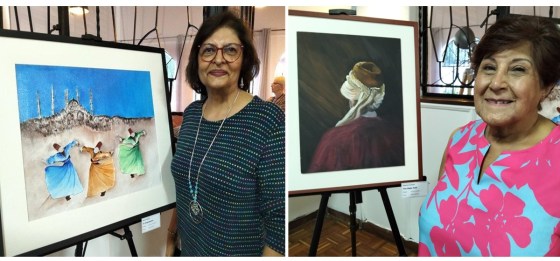


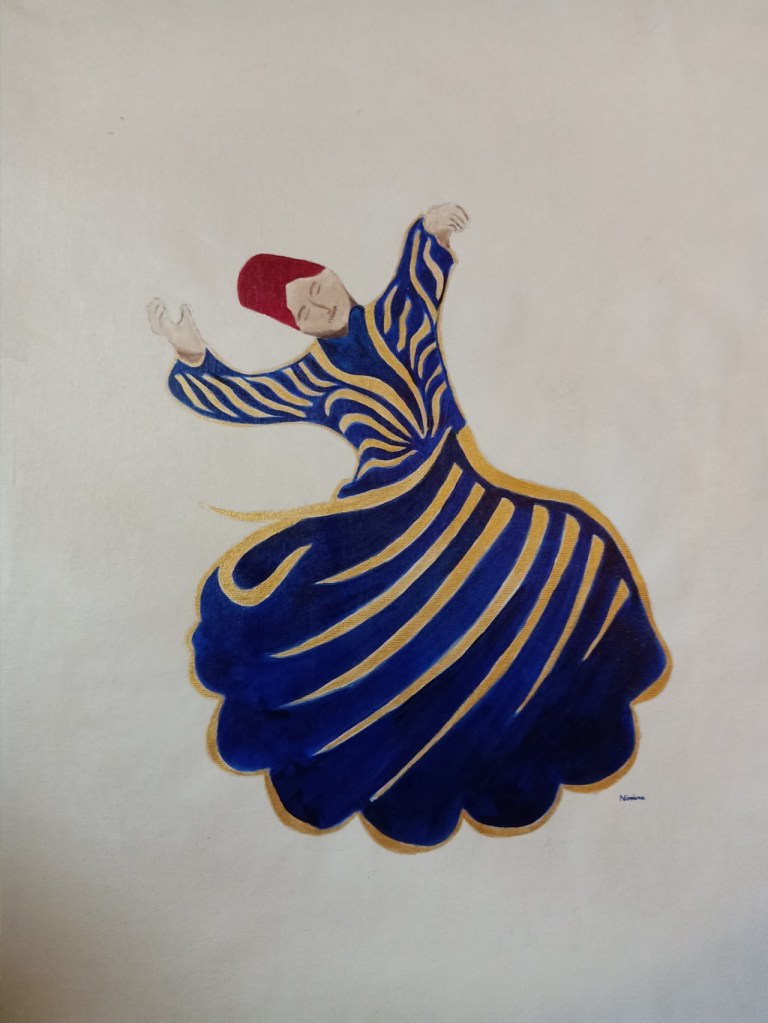



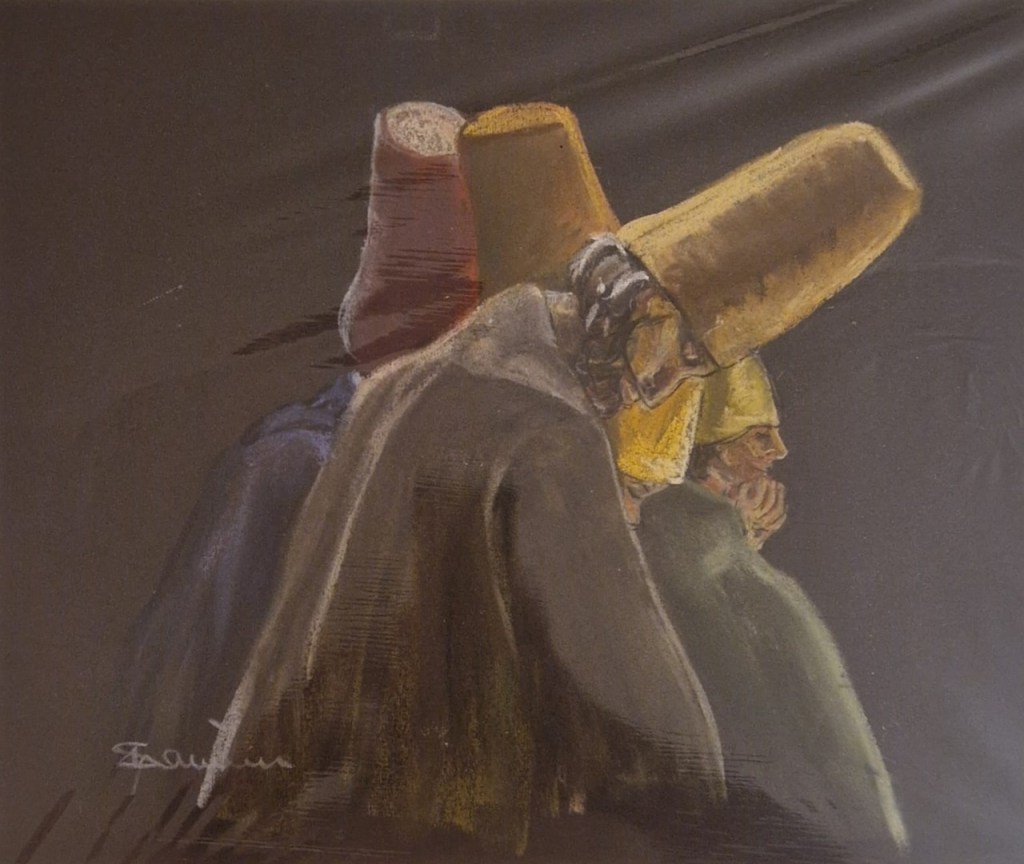
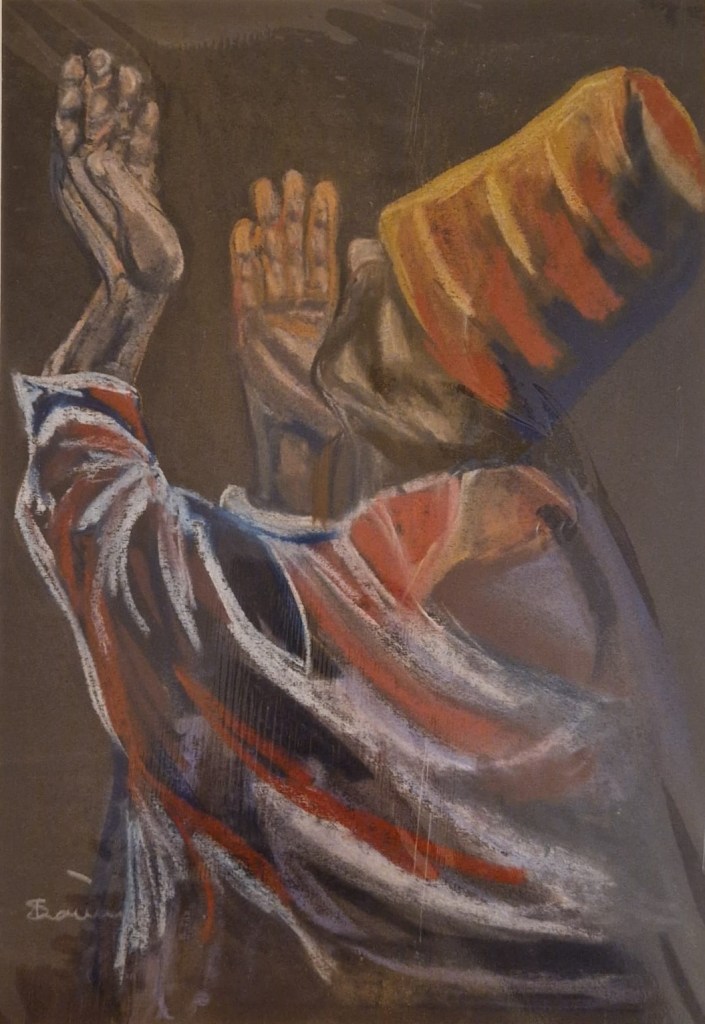
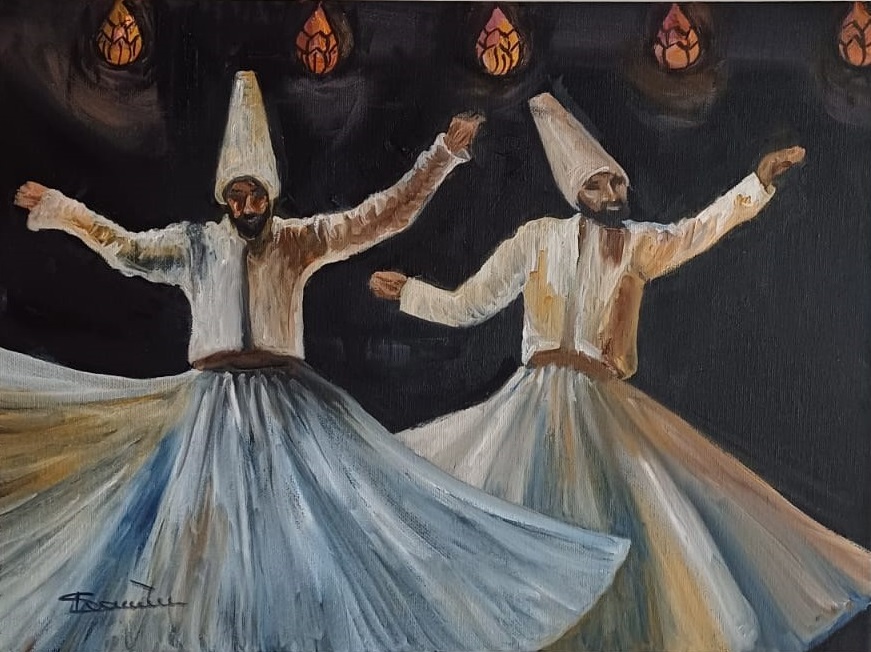





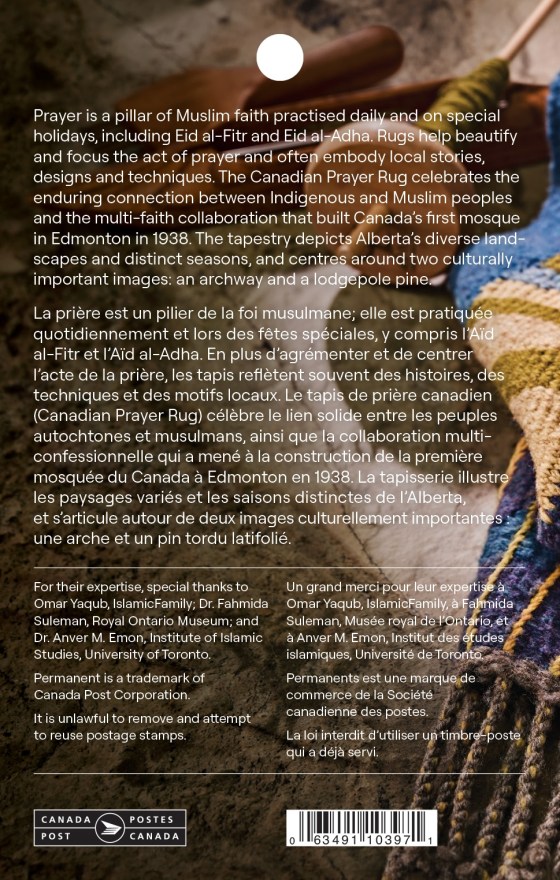



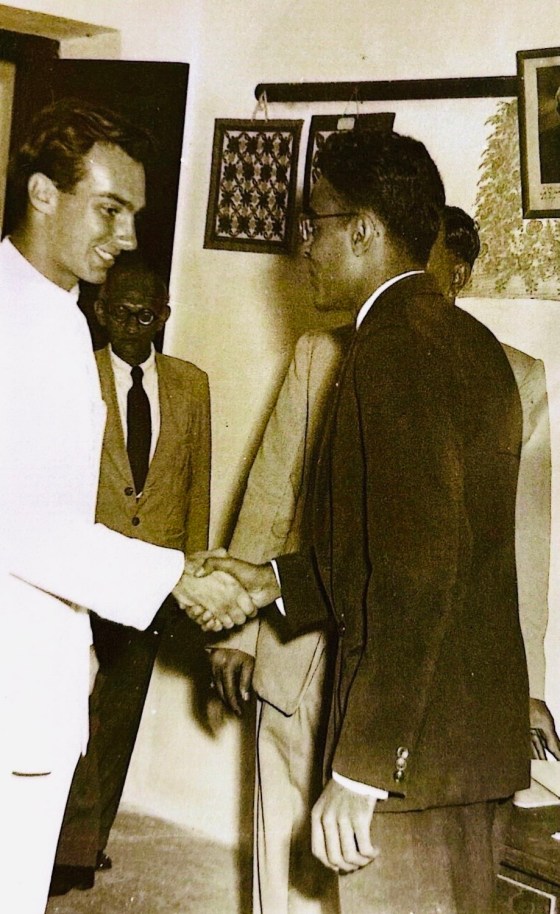
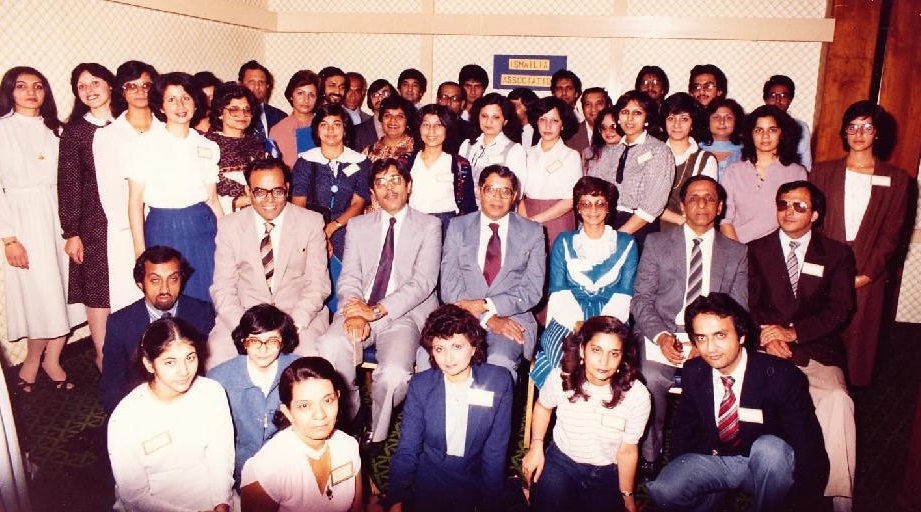
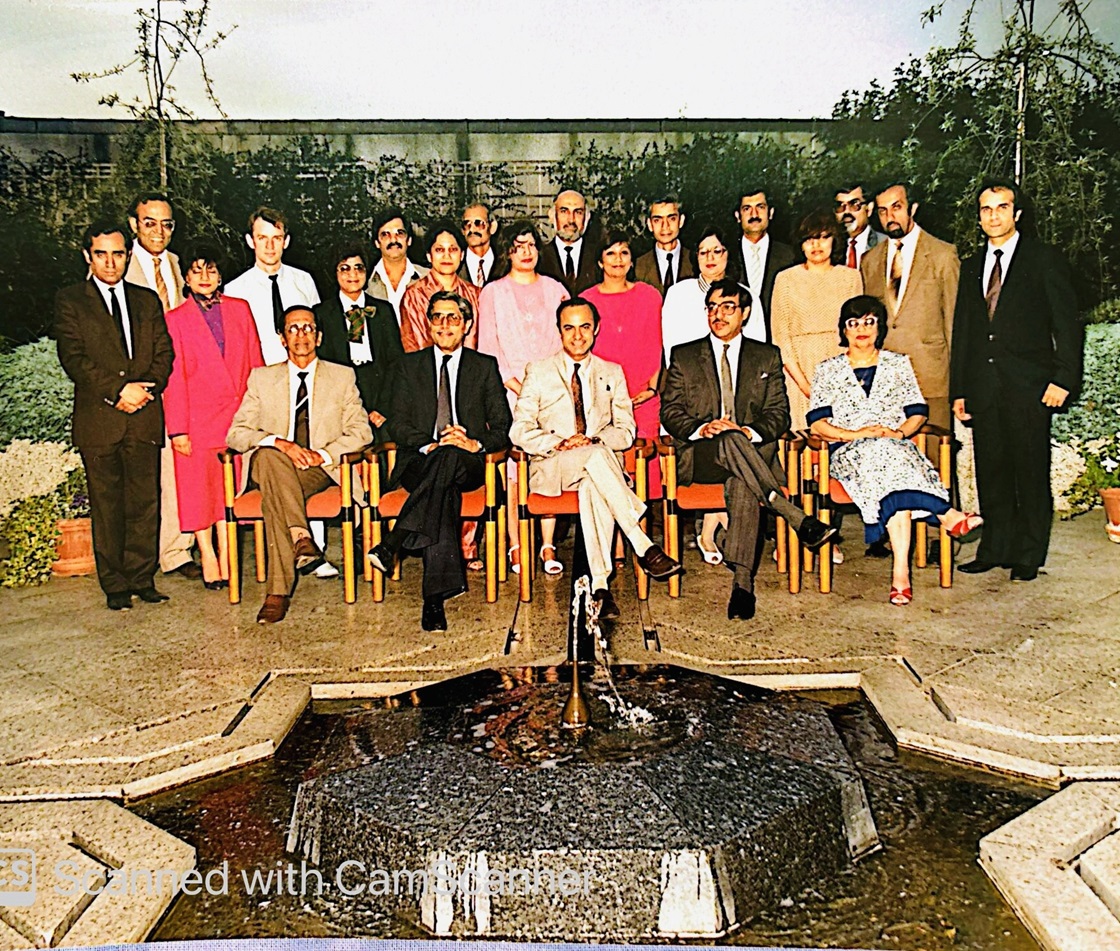
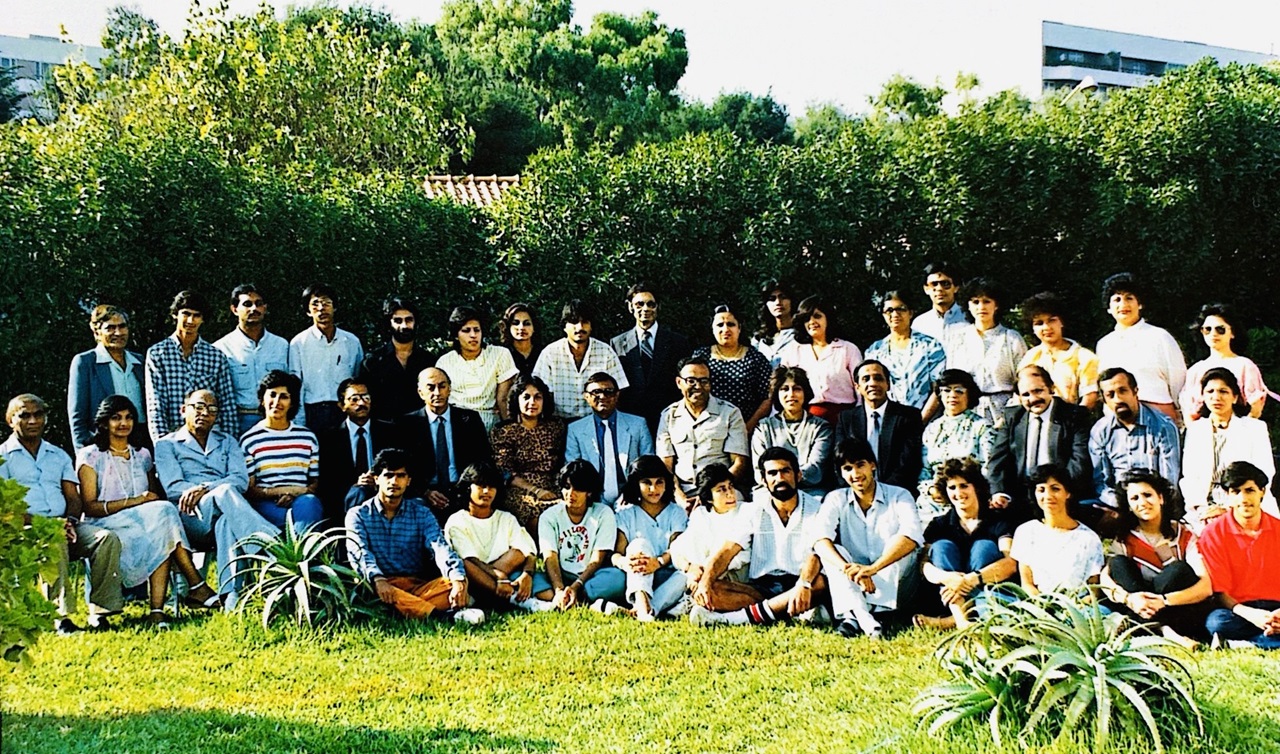
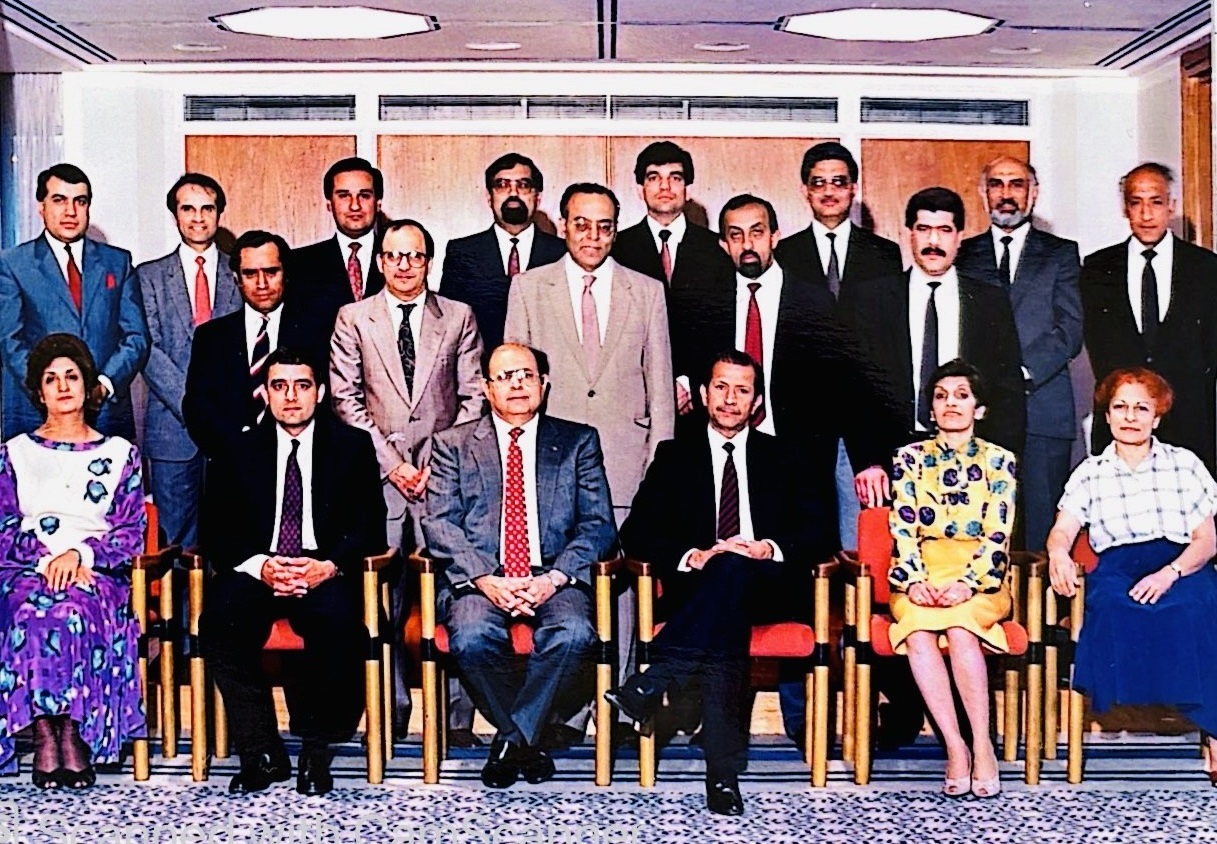
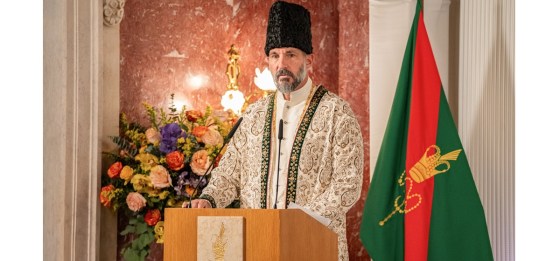

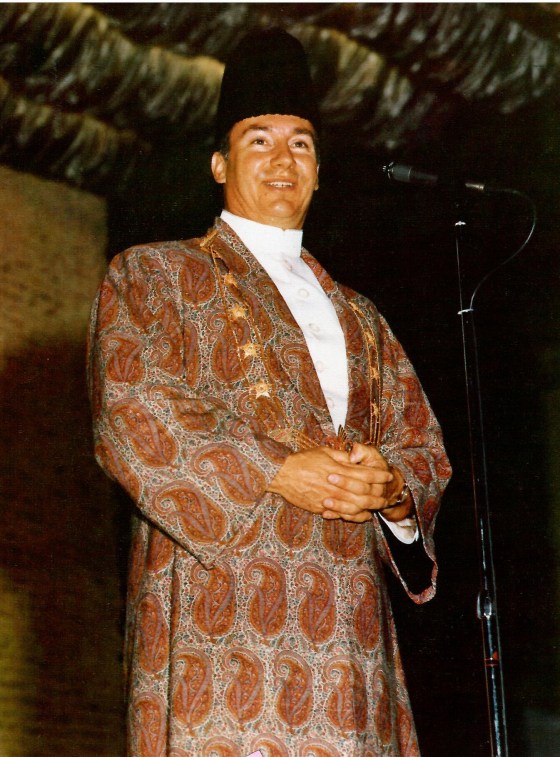
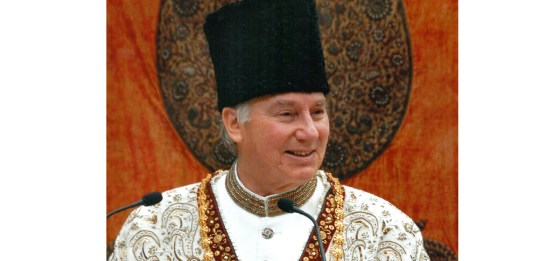





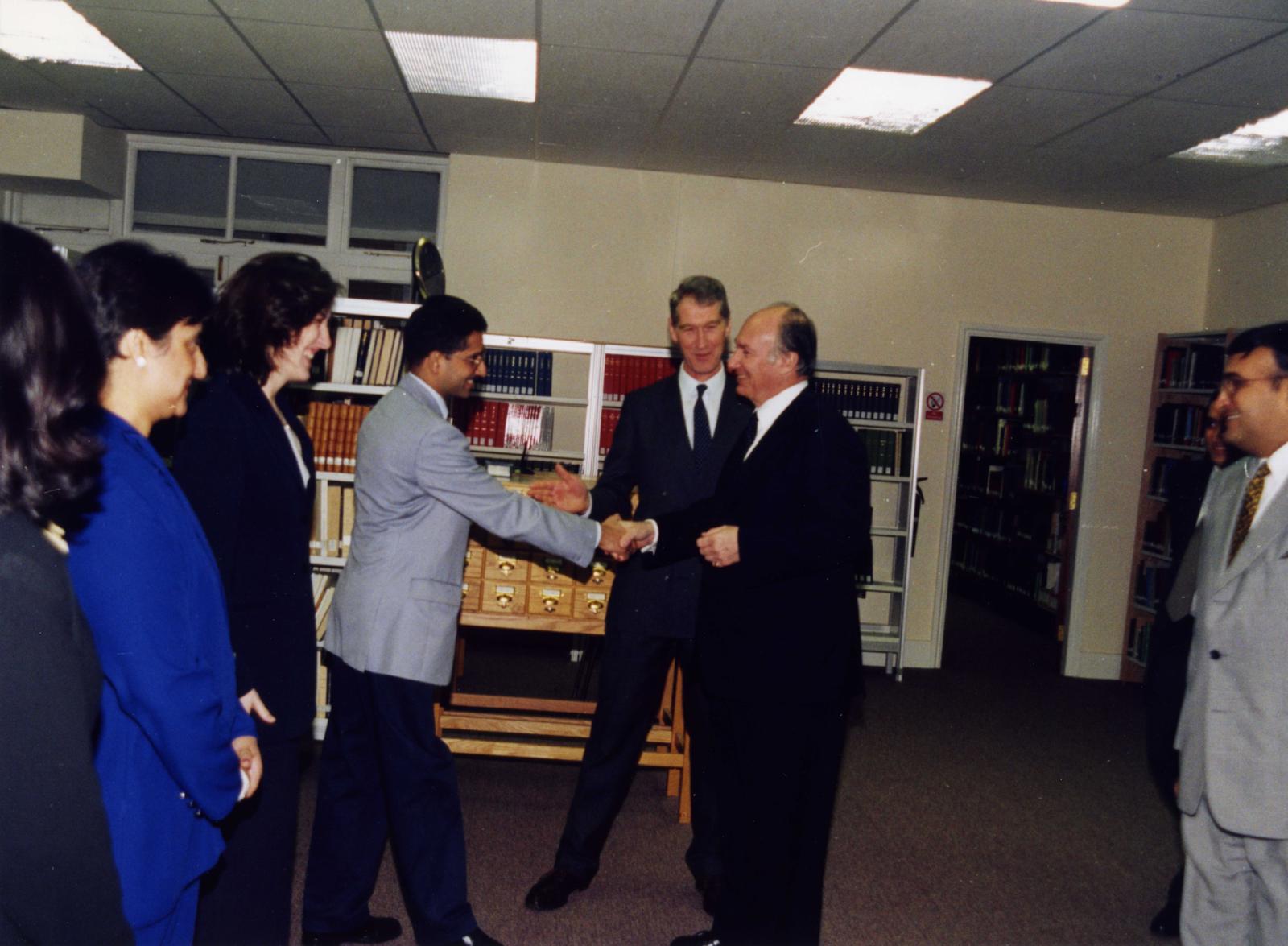
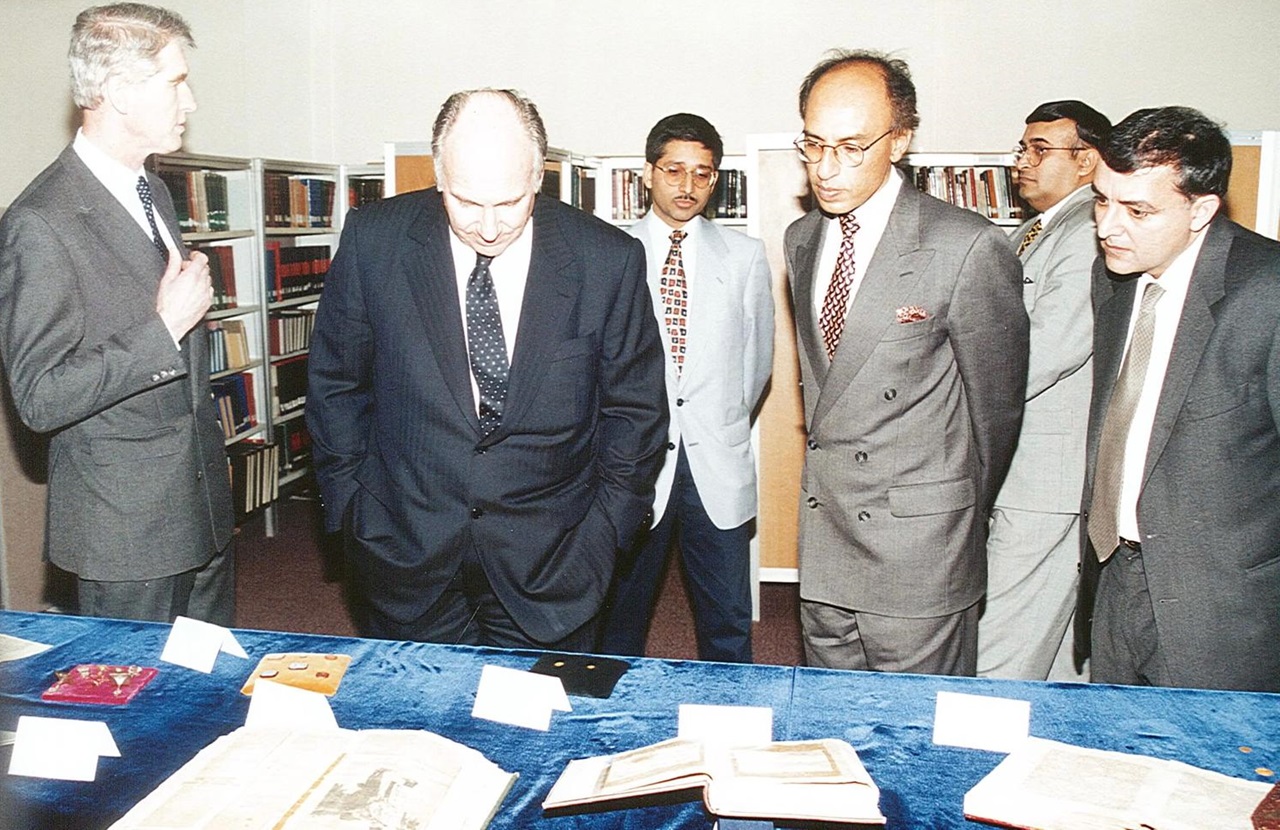


![Fatimid biconical bead acquired by Mawlana Shah Karim in April 1999 for the future Aga Khan Museum. [Image from AKM website.]](https://barakahweb.wordpress.com/wp-content/uploads/2025/03/fatimid-biconical-bead-aga-khan-museum.jpg?w=723)
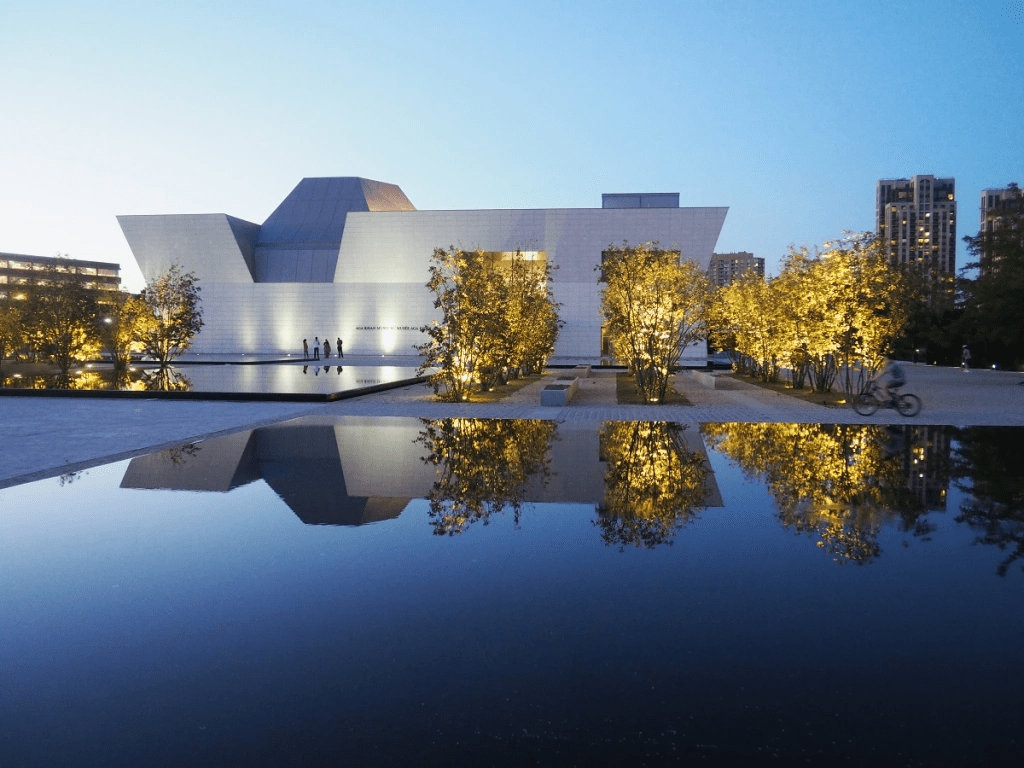




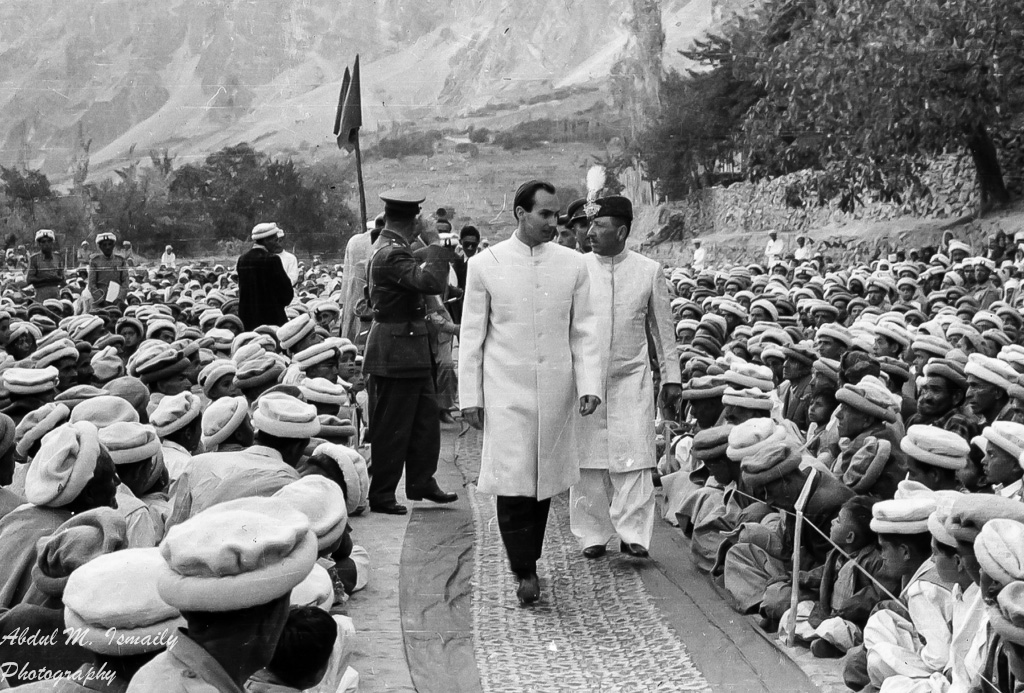


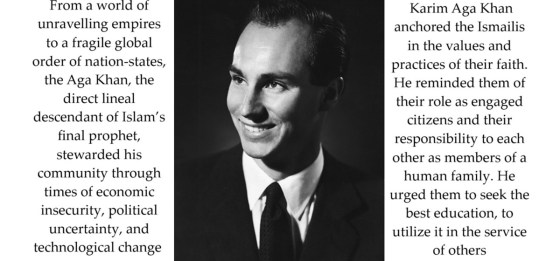

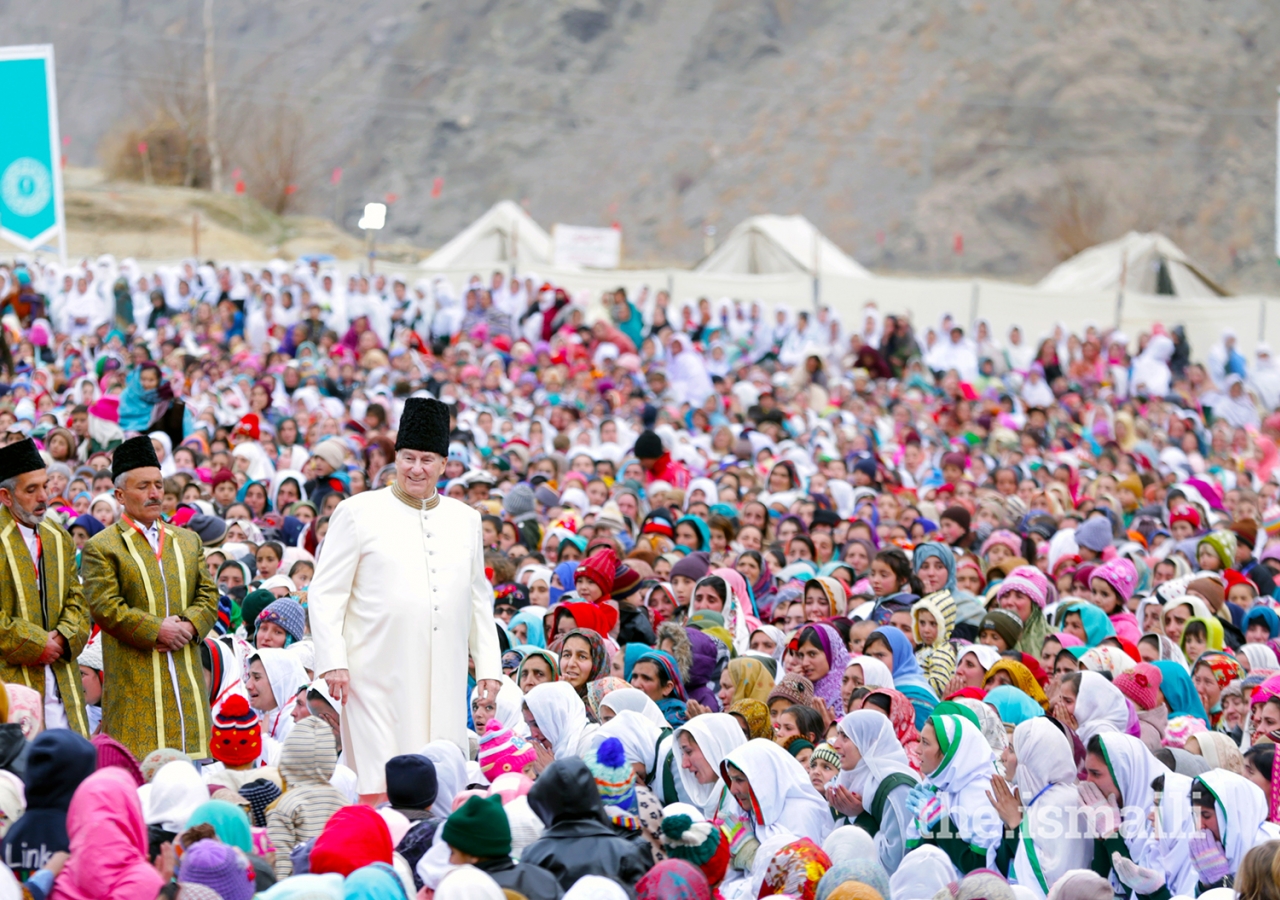




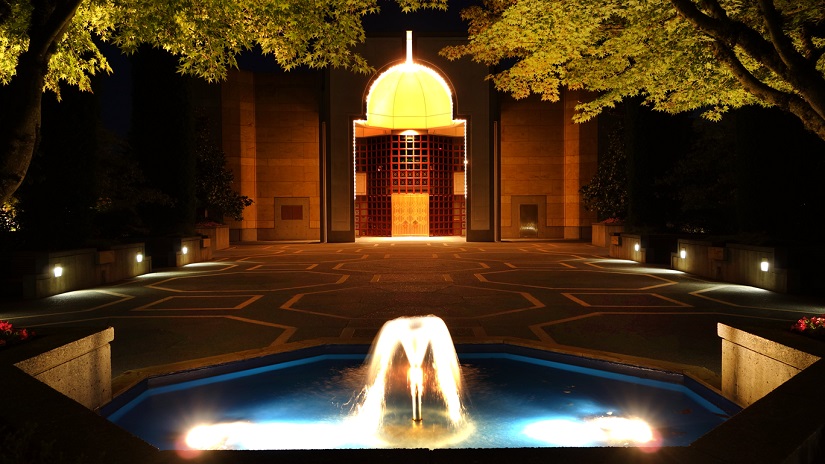



 Simerg - Insights from Around the World