Simerg is an independent initiative dedicated to Ismaili Muslims, the Aga Khan — their Hereditary Imam — and the Ismaili Imamat, and Islam in general through literary readings, photo essays and artistic expressions
Author Archives: Malik Merchant, Editor
Founding publisher and editor of www.barakah.com, www.simerg.com and www.simergphotos.com.
As Prince Irfan Aga Khan celebrates his 6th birthday on April 11, 2021, we adapt a previously published piece that also explains the meaning of his name and the name of his younger brother Prince Sinan Aga Khan…..MORE
___________________________
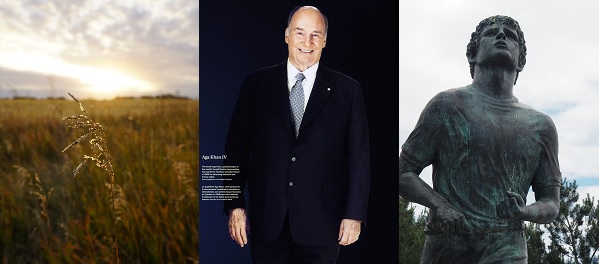
Canadian Prairies, Aga Khan depiction at Winnipeg Museum, and Terry Fox Memorial. Please click on image for photos and story.
Nurin Merchant braves a 4,500 km road trip from Vancouver to Ottawa in the year of the Covid-19 pandemic. At the 3,300 km, mark she and her mom reach the iconic memorial to Canadian cancer hero Terry Fox, overlooking Lake Superior. As ever, she is ready with her camera and comes up with a diverse collection of photos of the memorial and some beautiful Canadian landscape. She is also reminded of Mawlana Hazar Imam His Highness the Aga Khan’s quote on life and includes it in her piece with a unique depiction of Hazar Imam at a Canadian Museum….MORE
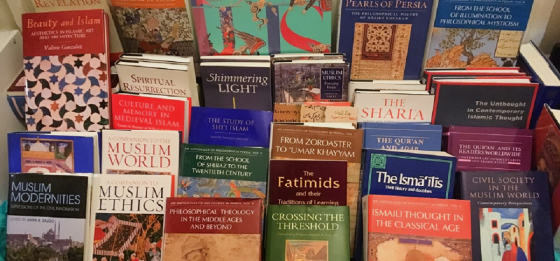
This matter has been on my mind for 12 months, and this piece was prepared some 3 months ago. I have now decided to post it after patiently waiting for Jamati institutions, and specifically ITREB, to provide an absolutely essential service to the Jamat — availability of Farman books, important objects (eg. tasbihs) as well as Dua recordings with meanings, and copies of the Qur’an.
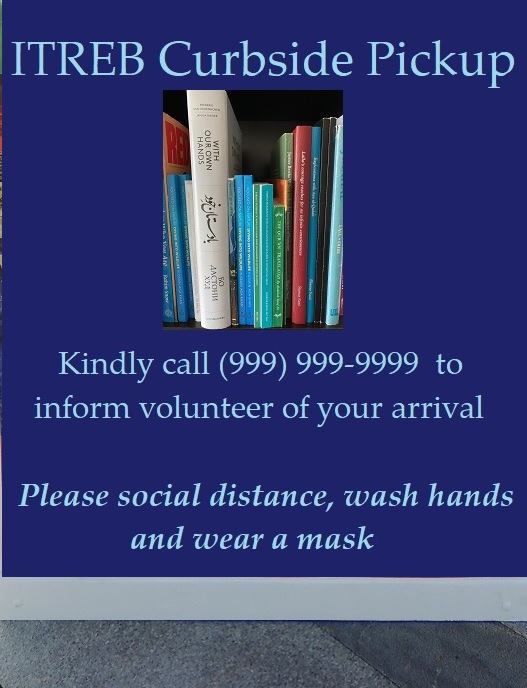
If booksellers and communities can arrange for curbside pickup, the best volunteers in the world can offer this service to the Jamat. Image — imaginary but all is doable — Malik Merchant/Simerg.
Millions of Americans and Canadians turn to Public Broadcasting Service (PBS) Newshour every evening for solid and reliable reporting, insightful analysis as well as highly informative interviews that are conducted by the network’s team of outstanding reporters. PBS and its member stations across the USA lay claim to being “America’s largest classroom, the nation’s largest stage for the arts and a trusted window to the world.”
For some time now the Newshour program, which is anchored by Judy Woodruff, has been running special regular episodes under the banner “CANVAS, PBS’s Newshour art hub.” In a broadcast in late December, PBS reporter Amna Nawaz turned her attention to two American booksellers for their look at the year in books and the public response to books during the Covid-19 year of isolation and pain (read article).
Janet Webster Jones of Source Booksellers in Detroit told Nawaz, “We have been so busy…. that we can hardly answer the phone. We have had a very busy, busy season. We have been frantically doing our fulfillment orders, as well as greeting people by twos and threes as they come to the store.” Ann Patchett co-owner of Parnassus Books in Nashville added, “People have stepped up to help us out, ordering books online, ordering curbside. We have been running books out to people’s car. And now we’re letting a few people into the store at a time. We take everybody’s temperature. Everybody wears masks, hand sanitizer. And people have been really kind and compliant and supportive. It’s been a very heartwarming Christmastime.”
Thus, as we abide by social distancing guidelines to stay home, books suddenly have become more vital than ever! It is interesting to note that all across North America many religious organizations as well as bookstores have facilitated curbside pick-ups or ramped up their online platforms to service members of their communities (read article).
Shortly after the first shutdown of Jamatkhanas in mid-March (2020), following provincial or federal restrictions recommendations, I had proposed to the national leadership of ITREB (Ismaili Tariqah and Religious Education Board) to facilitate curbside pickup of a selection of books and objects that are close to the heart of Jamat. I had personally offered my assistance to volunteer curbside pickup at the Ismaili Centre in Toronto. Remember, that after more than 40 years of waiting, the Jamat was finally presented with a 2-volume set of Farman books sometime in the middle of January 2020. By the time of Jamatkhana closures in mid March (2020), thousands had already acquired their copies of the Farman books. Yet there were an equal number who never acquired the set. Those who missed the opportunity during the 6-8 week between January and March would have hardly thought that the Jamatkhanas would remain closed for such a lengthy period, or that they would open with limited capacity. I was told that an online order processing system was being seriously considered to fulfill an important and vital need for the Jamat. It hasn’t materialized. I quote, “Do not let time pass….once it has passed it has gone forever.” (Mawlana Hazar Imam, India, 1973).
In addition to the Farman books, Jamati members would want Tasbihs, Mawlana Hazar Imam’s photographs, Du’a and Ginan books and audios, copies of the Holy Qur’an as well as a few other texts from the Institute of Ismaili Studies that are within the grasp of the Jamat’s understanding (Eagle’s Nest?). The pandemic would have provided the opportunity for the Jamat of all ages to begin to become more literary oriented at home. Also, parents would have been able to spend some time teaching their children to recite Du’a properly, and to request them to learn the meaning of the Du’a (“How many amongst you can tell me what the word qul is?” — Mawlana Hazar Imam, Atlanta March 17, 2018. One hand went up!). Memorization by phrases would be excellent, for starters.
Indigo (Chapters-Indigo), the largest bookseller chain in Canada, offering curbside pick-up and even in-store purchase when provinces were not in total shutdown.
Yes, the curbside pickup would have required devotion of time by Jamati members and volunteers of a few hours every week, say at parking lots of selected Jamatkhanas across Canada or in large spaces within the Jamatkhana premises. But where there is a will there is a way, just as our institutions and volunteers around the world organized food and water distributions for their respective communities, Ismailis and non-Ismailis alike, during the pandemic. Their efforts were highly appreciated in the communities they served.
The sad part is that once Jamatkhanas re-opened in Canada last summer with limited capacity, the literature counters continued to remain closed. Social distancing could have been instituted at Jamatkhana literature counters or at appropriate larger areas (such as social halls) during this window that was available. Curbside pick-up should have been facilitated for those unable to attend Jamatkhanas. The summertime window closed! Autumn once saw Jamatkhana closures due to the rise in Covid-19 cases.
Then, last month we saw the re-opening of some Jamatkhanas in Ontario, which are now once again closed down, as of the week of April 5th due to lockdown measures. So when windows of opportunities are available, however brief, we have to take advantage of them. And friends can purchase for their family members who might not attend Jamatkhanas for sometime.
In addition, an online shop should be strongly considered where authenticated Jamati members, who are in the Jamati data base, may be able to order books and then do curbside collections at selected hours. This is not rocket science, just as registration for Jamatkhana attendance is not. If other communities and institutions can take appropriate measures to serve their constituents with energy and some creativity, there is no reason why we can’t equal their enthusiasm, with the best volunteers in the world we have.
Can we be prepared for such eventualities, as well as opportunities that come our way, and not let time pass without being aware that once it has passed, it has gone forever?
Date posted: April 9, 2021.
_____________________
We welcome feedback from our readers. Please complete the LEAVE A REPLY form below or click Leave a comment. Your letter may be edited for length and brevity, and is subject to moderation.
Before departing this website please take a moment to review Simerg’s Table of Contents for links to hundreds of thought provoking pieces on a vast array of subjects including faith and culture, history and philosophy, and arts and letters to name a few. Also visit Simerg’s sister websites Barakah, dedicated to His Highness the Aga Khan, and Simergphotos.
The Chief Justice of Canada, His Excellency the Right Honourable Richard Wagner, P.C., is currently serving as the administrator of the Government of Canada until such a time as the next governor general is installed. His message on the death of His Royal Highness The Duke of Edinburgh was released by him on Friday April 9, 2021, and is reproduced after the following photo.
In this rare photo, Her Majesty Queen Elizabeth is seen presiding at the 13 October 1957 Privy Council meeting, with Prince Philip, and Canadian Prime Minister John Diefenbaker and Governor General Vincent Massey. At right is Secretary of State for Canada Ellen Fairclough, the first woman ever to serve in the Canadian Cabinet. Fairclough was active in the United Empire Loyalists’ Association of Canada and was a member of Hamilton Branch. Photo: University of Saskatchewan.
Message from Richard Wagner Administrator of the Government of Canada
OTTAWA—Throughout his long life, His Royal Highness The Duke of Edinburgh devoted himself to the people of the Commonwealth and of Canada. He stood by Her Majesty The Queen for more than six decades, a constant and reassuring presence. He valued community, duty and service. He believed in wildlife conservation, volunteerism and supporting young people. A tireless world traveller, he showed that Canada held a special place in his heart by visiting this country more than any other.
The Duke of Edinburgh leaves a legacy that has touched so many, especially the hundreds of thousands of young participants in the Duke of Edinburgh Awards program. This program, which he established in Canada more than 50 years ago, has celebrated and encouraged service and excellence among young people across the country and around the world. His Royal Highness understood we must offer the next generations opportunities to succeed, and he believed in the power of youth to change the world for the better.
As a sign of our enduring respect, His Royal Highness was made the very first Extraordinary Companion of the Order of Canada in 2013, a fitting tribute for an extraordinary man. He was also invested as Commander of the Order of Military Merit, an honour that speaks directly to his own military past and his commitment to our women and men in uniform.
His Royal Highness devoted his life to his family and to fulfilling his unique role in our constitutional monarchy. Whether speaking with young Canadians about their hopes and dreams, presenting colours and meeting troops at military bases and events, or representing the Crown at state occasions, Prince Philip constantly showed his commitment to Canada. He was a great friend of this country and he will be dearly missed. On behalf of all Canadians, I offer my deepest condolences to the members of the Royal Family.
______________________
Statement by The Prime Minister, Justin Trudeau, on the passing of His Royal Highness The Duke of Edinburgh
“It was with deep sadness that I learned of the passing of The Duke of Edinburgh.
“A man of great service to others – first as a decorated naval officer and later as a dedicated leader in the areas of community engagement and philanthropy – the Duke always sought out the best in people and challenged them to strive for greater heights.
“Prince Philip maintained a special relationship with the Canadian Armed Forces and over the years became Colonel‑in‑Chief of six Canadian units. In 2011, he was named honorary general of the Canadian Army and the Royal Canadian Air Force, as well as honorary admiral of the Royal Canadian Navy.
“The global program that bears his title – the Duke of Edinburgh’s Award – has helped empower millions of young people from all backgrounds to realize their greatest potential, and is but one example of his contributions to the social fabric of this country and the world. He was also the patron of more than forty organizations in Canada, including the Canadian Aeronautics and Space Institute and the Outward Bound Trust. During his last visit to Canada in April 2013, the Duke was named the first-ever Extraordinary Companion of the Order of Canada by the Governor General of Canada.
“Prince Philip was a man of great purpose and conviction, who was motivated by a sense of duty to others. He will be fondly remembered as a constant in the life of our Queen – a lifelong companion who was always at her side offering unfailing support as she carried out her duties.
“A family has lost a beloved husband, father, grandfather, and great grandfather. The thoughts of Canadians are with Queen Elizabeth II and the members of the Royal Family as they mourn such a significant loss.”
The Ismaili community would like to offer its sincerest condolences to Her Majesty The Queen and the Royal Family on the sad news of the passing of His Royal Highness The Prince Philip, Duke of Edinburgh.
______________________
Golden Jubilee: Mawlana Hazar Imam at Buckingham Palace
His Highness the Aga Khan received the title “His Highness” from Britain’s Queen Elizabeth II on July 26th 1957. Here he is pictured with Her Majesty the Queen and His Royal Highness Prince Philip when the Queen hosted a dinner at Buckingham Palace to mark the Ismaili Imam’s Golden Jubilee and to acknowledge the close relationship he and his family have had over generations with the British Monarchy and the UK. Photo Credit: Akdn.org
His Highness the Aga Khan presents his brother Prince Amyn and his son Prince Rahim to Her Majesty the Queen and His Royal Highness The Duke of Edinburgh, who welcomed them to Buckingham Palace during the Golden Jubilee of His Highness. Photo: AKDN/Gary Otte
______________
Diamond Jubilee: Mawlana Hazar Imam at Windsor Castle
Her Majesty the Queen in conversation with Mawlana Hazar Imam, His Highness the Aga Khan, at Windsor Castle on March 8, 2018 at a dinner hosted by her to mark his Diamond Jubilee. Prince Philip was absent as he had withdrawn from public engagements. Mawlana Hazar Imam was accompanied by members of his family — his brother Prince Amyn Aga Khan, his daughter Princess Zahra Aga Khan, his eldest son Prince Rahim Aga Khan, Prince Rahim’s wife Princess Salwa, and the Aga Khan’s younger sons, Prince Hussain Aga Khan and Prince Aly Muhammad Aga Khan. The event acknowledged historic linkages between the Ismaili Imamat and the British Monarchy and longstanding connections between the Ismaili Community, the institutions of the Aga Khan Development Network and the United Kingdom. Photo: AKDN/Gary Otte.
Her Majesty the Queen, Her Royal Highness the Duchess of Cornwall and Princess Zahra Aga Khan share a light moment at a dinner hosted by Her Majesty at Windsor Castle on March 8, 2018 in honour of Mawlana Hazar Imam, His Highness the Aga Khan. Photo: AKDN / Gary Otte
We welcome readers’ condolences and respects on the passing of Prince Philip, the Duke of Edinburgh. Please complete the feedback form below or click on Leave a comment
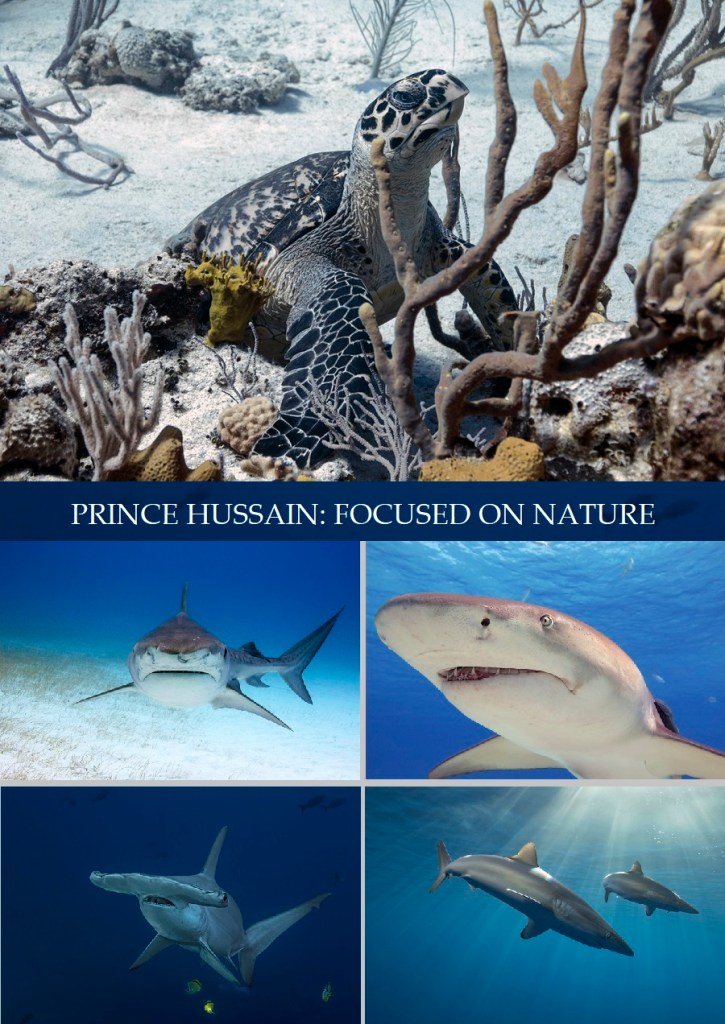
I stayed with her [Hawksbill Turtle] for an hour; she let me closer and closer in. By the end of the dive she was eating 60 centimeters from my leg — Prince Hussain Aga Khan….READ MORE
Shiraz Bandali of Edmonton, Canada, passed away at the age of 56. A passionate photographer, he captured “DOORS” during a family trip to Morocco, Portugal and Spain, and shared them with Simergphotos. We pay a tribute to Shiraz through his beautiful collection. Please click DOORS or on the image below.
“DOORS” by Shiraz Bandali. Please click on image to see collection.
No creature is there crawling on the earth, no bird flying with its wings, but they are nations like unto yourselves. We have neglected nothing in the Book; then to their Lord they shall be mustered. — Holy Quran, 6:38 (Translation by A.J. Arberry)
The birds, you will recall [in Attar’s great poem, the Conference of the Birds] in huge quantities went in search of the Simurgh, the ideal and perfect king. After many tribulations, thirty of them do reach the end of the journey and come to the gate of the Supreme Majesty. The Chamberlain tests them and then opens the door and they sit on the masnad, the seat of the Majesty and Glory — His Highness the Aga Khan, Lahore, Pakistan October 23, 1980 (read speech)
The sounds of birds chirping at Aga Khan Park thrills and brings joy to Malik Merchant, and he takes the following short video which also takes you around the front section of the Aga Khan Park with views of the Ismaili Jamatkhana and the Aga Khan Museum. After watching the video presentation, please visit Simergphotos for great photo essays.
Note: See correction notes at bottom of this page.
(1) At the end of the video, I have referred to the Ismaili Jamatkhana dome as the dome of the Ismaili Centre. The Headquarters Ismaili Jamatkhana is an extension of the Ismaili Centre Toronto but also part of it. The Jamatkhana is a unique building in its own right. My commentary should have therefore referred to the dome as that of the Ismaili Jamatkhana, as it did in the earlier part of the video.
(2). The Green and Red flag used by Ismailis for decades was once upon a time referred to as “MY FLAG.” This is no longer in usage, officially at least. I have however mistakenly referred to it as the “Flag of the Ismaili Imamat” in the video report as well as in many other articles and photos on this and other sister websites. The flag without the monogram or crest (taj) of the Ismaili Imamat should simply be referred to as “The Ismaili Flag” as mentioned in the Ismaili Constitution. The flag inscribed with the monogram is only used during Mawlana Hazar Imam’s visits, at official signing agreements where he is present, on his planes, and at the Delegation of the Ismaili Imamat Building in Ottawa. The Ismaili Flag on Wynford Drive does not include the crest but is replaced with a flag bearing the crest whenever Mawlana Hazar Imam visits the site; it is then referred to as the Ismaili Imamat Flag.
Date posted: March 31, 2021.
_______________________
We welcome feedback from our readers. Please complete the LEAVE A REPLY form below or click Leave a comment. Your letter may be edited for length and brevity, and is subject to moderation.
Before departing this website please take a moment to review Simerg’s Table of Contents for links to hundreds of thought provoking pieces on a vast array of subjects including faith and culture, history and philosophy, and arts and letters to name a few. Also visit Simerg’s sister websites Barakah, dedicated to His Highness the Aga Khan, and Simergphotos.
Many parks are littered with objects such as styrofoam containers, cigarette butts, plastic bags and other material that spoil the enjoyment of visiting the natural habitat. Malik Merchant visits the Aga Khan Park on Wynford Drive in Toronto, and reports on similar objects left behind by visitors that are not worthy of the beautiful park built by His Highness the Aga Khan. He has chosen the photos in the report as Photo of the Dayto bring attention to visitors who are indifferent to the notion that a park with its gardens offers rejuvenation to its visitors. Please read Malik’s ARTICLE.
Iron fence where objects left behind by visitors including Pizza boxes, plastic bottles and bags from Aga Khan Park end up on a windy day. Please click on image for more photos and story. Photo: Malik Merchant/Simerg.
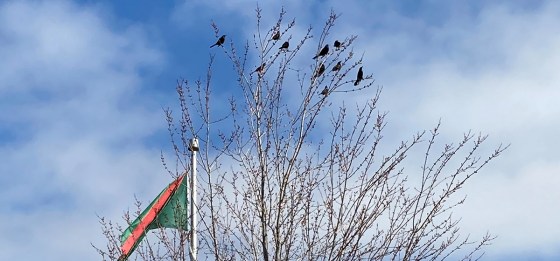
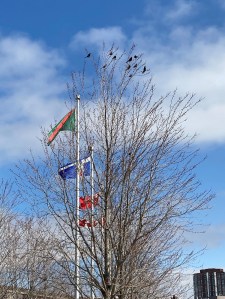
At least twice a week, starting Saturday March 27, 2021, our sister website Simergphotos will publish a photo — or photos — of the day that we think our readers will find interesting and even inspiring. Our focus will be on photos related to the work and projects of the Ismaili Imamat and the Ismaili community, in any part of the world, as well as nature and people photos. Please see our featured photos for March 27, 2021 by clicking BIRDS VYING ISMAILI IMAMAT FLAG POLE POSITION
Editor’s note: Simerg does not generally publish or encourage anonymous articles on any of its websites but in this particular case we have decided to protect the author’s identity, as it concerns a health matter. The editor has verified the content of the article, and wishes to assure readers that the facts that are noted by the author are correct. Any oversight or error is unintentional and is deeply regretted.
Ontario began rolling out the Oxford-AstraZeneca Covid-19 vaccine in select pharmacies and doctor offices across the province to people over the age of 60 on Monday, March 22, 2021. Yesterday, a mass vaccination clinic was opened in Thorncliffe Park at the the East York Town Centre on Overlea Blvd, and I decided to visit the location. It was jam packed with cars as hundreds of seniors who qualify under Phase One showed up to get the Oxford-AstraZeneca vaccine, after registering through the website of Michael Garron Hospital. I did not qualify under the Phase 1 criteria and would have to wait my turn at East York Town Centre and other mass vaccination sites.
However, another avenue had opened up to acquire the vaccine in Toronto, and that was through one of the designated pharmacies. There was one near the place where I stay that was offering the AstraZeneca vaccine. As I began completing the registration form, I wondered whether my responses to questions concerning my health, for example whether I had a chronic health condition, would disqualify me from getting the AstraZeneca vaccine. I completed the form and submitted it, hoping for the best.
I then followed my application with a phone call to the pharmacist offering the vaccine, and informed the pharmacist about my Autoimmune Hepatitis condition or AIH (this occurs when your body’s infection-fighting system, or the immune system, attacks your liver cells and causes permanent and irreversible liver damage. In acute cases, the liver may heal itself as a regenerating organ).
The cause of AIH has not yet been determined but from what I am learning more and more people, including very young people, are acquiring AIH. The pharmacist had a long list of autoimmune conditions that would still qualify individuals getting AstraZeneca vaccine, but AIH was not among the ones listed. He declined my request, based on the guidelines he had in front of him and suggested that I should go with Pfizer-BioNTech when it became available to me. However the eligibility criteria meant that I would have to wait for a few to several weeks based on the phase 2 or 3 roll-out.
On the weekend of Navroz, Mawlana Hazar Imam, His Highness the Aga Khan, in his Talika or written message to the Ismailis, clearly stated that “my Jamat should not give credence to any misinformation regarding the vaccination process, and comparisons between the different officially sanctioned vaccines that are now available.” He also said, “I recommend that all my murids should accept to be vaccinated in accordance with the directives of their respective health authorities as soon as the vaccines are offered — as indeed I have done already.”
In view of Canada’s approval of AstraZeneca vaccine, I then met my local doctor, as my pharmacist had declined the vaccine to me because of my AIH condition. My doctor was convinced from the research that she had carried out that I was perfectly OK to get the AstraZeneca vaccine. I even read out what Mawlana Hazar Imam had said, and she agreed with him. She said she would be writing to the pharmacist to give me the vaccine, but recommended I also speak to my hepatologist.
Earlier that morning I had actually called and left a message with the offices of the liver clinic, AIH section, at the Toronto General Hospital concerning AstraZeneca. Some hours later I got a phone call from the liver clinic encouraging me to take AstraZeneca when it was made available to me. I was also provided with a link to a letter the liver clinic had issued on its website (read LETTER). Subsequently my doctor forwarded an email to the pharmacist requesting the AstraZeneca vaccine to me.
There had been a cancellation, and I willingly took up the spot that was offered to me on the following day. When I arrived at the pharmacy, I was asked a few questions including any chronic condition. I also read the list of autoimmune diseases at the reception table that qualified for the vaccine. Of course, AIH was not on the list, but the pharmacist had already received my doctor’s approval for the AstraZeneca jab. There was a little bit of a wait but the jab that I got on my left arm took less than 3 seconds to administer. I was asked to hang around in the pharmacy for 15 minutes, in case of any reaction. I was then provided with a letter, as a kind of a receipt, in which I noted that the vaccine was listed as COVISHIELD, which is another name used by AstraZeneca. I reminded myself about adhering to the guidelines about social distancing, washing hands and wearing a mask, even though I had been vaccinated.
I did not know how long a wait it would be for the Pfizer-BioNTech or Moderna vacciness, and am glad I went for the AstraZeneca shot after my reluctance for several days. Mawlana Hazar Imam’s Talika with precise guidelines was the determining factor. The Government of Canada had already sanctioned AstraZeneca but, until I read the Talika, there was doubt in my mind over getting the vaccine.
For individuals facing autoimmune hepatitis or other serious liver issues, please be advised that the liver clinic at the Toronto General Hospital recommends that you get vaccinated. I conclude this piece with the following 5 important points from their document (and this applies to Pfizer-BioNTech, Moderna as well as AstraZeneca Covid-19 vaccines):
• Having liver disease does not increase your risk of experiencing a side effect; • The medications you take for your liver disease, including any immunosuppression [Prednisone, Azathioprine — author], should not be a reason to decline a vaccine, but may have a small effect on how well the vaccine protects you; • People with liver disease, especially cirrhosis and possibly fatty liver, are at higher risk of getting very sick if they get COVID-19 infection, making it even more important to be vaccinated and be protected; • The vaccines are over 90% protective against symptomatic COVID-19; and • The vaccines have been studied in people with liver disease with no safety concerns identified.
I once again remind readers of Mawlana Hazar Imam’s messages: “…..my Jamat should not give credence to any misinformation regarding the vaccination process, and comparisons between the different officially sanctioned vaccines that are now available”, and “I recommend that all my murids should accept to be vaccinated in accordance with the directives of their respective health authorities as soon as the vaccines are offered — as indeed I have done already.”
Date posted: March 25, 2021.
____________________
Have you had your Covid-19 vaccine shot? Tell us how you feel? Are you still reluctant about being vaccinated for Covid-19? We welcome your feedback. Please complete the feedback form below or click on Leave a comment.
Simerg’s series entitled “Books by Ismaili Authors” continues with USA based Shafeen Ali’s acclaimed book “To be One with God: Seven Journeys to the Meaning of Life,” in the same Q/A format as our recent presentations of books written by Mansoor Ladha, Zeni Shariff and Shamas Nanji. We encourage Ismaili authors to participate in this series, regardless of when their books were published. See details of the series HERE and submit your responses to the editor of Simerg, Malik, at Simerg@aol.com.
****************
Simerg: What is behind the naming of the title of the book?
Shafeen Ali: Imam Sultan Mahomed Shah’s following quote was my inspiration: “A man must be at one with God. … how we stand this instant and every instant toward Him matters to us more than anything else in the universe. That is the fundamental question:- Are you in harmony with God? If you are – you are happy.” [1]
Simerg: Why would you want me or my family members to read the book, and what will we all learn from it?
Ali: It is my aspiration that anyone who sincerely gives themselves to this book will find oneness with God, for a moment, if not a lifetime. This has been the experience of many of the book’s reviewers. I myself read the book when I feel despair or distant from God.
Simerg: What inspired you to write the book?
Ali: I had been married for 18 months and happy materially. But one evening, late at night, I was awakened with a feeling that I was not fulfilling my purpose in life. That night began an inner search which reached one milestone in the publishing of this book, six years later.
Article continues below
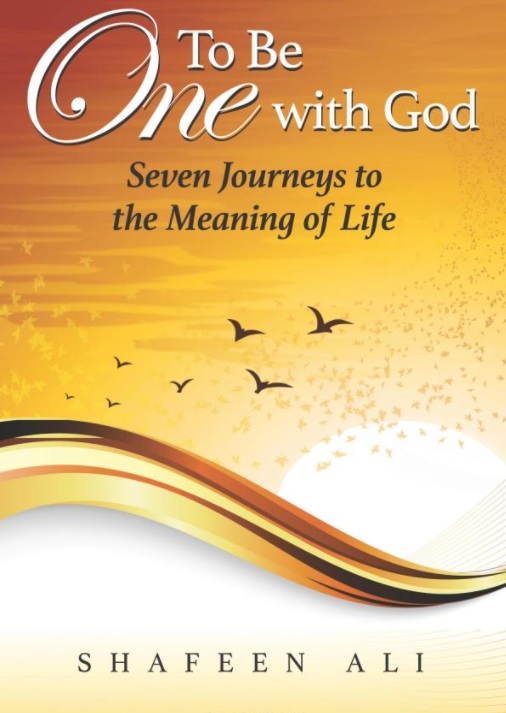
Cover of “To Be One with God: Seven Journeys to the Meaning of Life” by Shafeen Ali, 254 pp, available in paperback and digital formats.
Simerg: How can I purchase the book and what are its available formats?
Ali: The book is available in Paperback and Digital formats (epub, kindle, etc.). One can find all the different channels to buy the book as well as preview sample readings from each of the seven journeys on my website home page at: https://shafeenali.com/. [Readers will appreciate the options Shafeen has provided on his website; please visit it. To purchase the book at Amazon please click Paperback/Digital — Ed.]
“it will be very difficult to put this book down as you will keep expecting something more meaningful and deeper to unravel”
“… appealed to my heart and soul and provided me with an unforgettably transformational experience“
Review quotes from the author’s website
Simerg: How did you find a publisher for the book?
Ali: I published the book myself through Createspace (currently Kindle Direct Publishing for Amazon, paperback and kindle ebooks) and Smashwords (for other ebook formats).
Simerg: Did you hire an editor, an illustrator or did you do all the work by yourself?
Ali: My book cover designer was Shaila Abdullah (please see her website My House of Design), an award winning Ismaili Muslim designer and author, and my editors were two other Ismaili Muslim sisters, Rozi Banani and Sonia Nur Mohammed (email scholastic.sessions@gmail.com).
Simerg: Which was your first book and how many have you written?
Ali: This has been my only book. I have aspirations to develop more means, including books, for people to be one with God. I have recently published a 3-Part Mini Video Series on Realizing the Inner Imam For One Humanity on my website and on Youtube.
Simerg: How long did it take you to write To Be One With God — from start to finish and to begin marketing it?
Ali: Active research, writing, editing, and publishing took around 2 years including building a website on my own to market the book. It has now been 4 years since the book was published.
Simerg: Tell us something more about the book.
Ali: This book explores seven different journeys for man to seek oneness with God, all inspired by the inner being of the author, his “Inner Imam.” While on these journeys, readers will encounter many voices: man, God, teachers of God, and the author himself. The purpose of these voices is to harmonize the reader’s understanding and experiences of oneness with God. The teachers of God include Shri Rama, Shri Krishna, Jesus Christ, Moshe Rabbeinu, Gautama Buddha, Muhammad Rasulullah, Shri Hanuman, and the great philosopher Socrates, all of whom witnessed these journeys unfold in their own lives.
Date posted: March 25, 2021.
_______________________
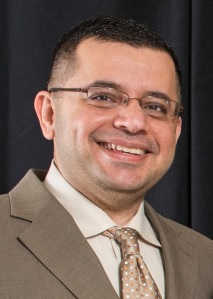
Shafeen Ali
Shafeen Ali is a Shia Ismaili Muslim who has been a faith-based teacher and speaker for the last 10+ years. He has delivered more than 150 presentations and workshops throughout the world on faith and religious education. Shafeen also has a Masters in Business Administration and has spent more than 13 years managing and executing business and technology projects and teams in the United States. The source of strength and guidance in Shafeen’s life has always been the spirit of God within, his Inner Imam. Through his book, To Be One with God: Seven Journeys to the Meaning of Life, Shafeen is externalizing that innermost part of him with the hope and prayer that this spirit will provide strength and guidance to others just as it has done for him.
We encourage Ismaili writers to introduce their books in a similar format as Shafeen Ali, Mansoor Ladha, Zeni Shariff and Shamas Nanji have done in their respective interviews. Please also see the series launch article and submit your responses to Malik at Simerg@aol.com. All submissions will be acknowledged. If a writer has published multiple books, each book will be highlighted in a separate article, and not combined with other books into one post. All writers should include a brief profile with a portrait photo. The Ismaili Authors’ Series so far (in chronological sequence, oldest article first):
We welcome feedback from our readers. Please complete the LEAVE A REPLY form below or click Leave a comment. Your letter may be edited for length and brevity, and is subject to moderation.
Before departing this website please take a moment to review Simerg’s Table of Contents for links to hundreds of thought provoking pieces on a vast array of subjects including faith and culture, history and philosophy, and arts and letters to name a few. Also visit Simerg’s sister websites Barakah, dedicated to His Highness the Aga Khan, and Simergphotos.