Simerg is an independent initiative dedicated to Ismaili Muslims, the Aga Khan — their Hereditary Imam — and the Ismaili Imamat, and Islam in general through literary readings, photo essays and artistic expressions
Carpentry is traditionally considered a man’s job in Pakistan, but a few brave women are changing that mindset, from carving unique wooden utensils to building an entire house. In two short films, VOA and BBC Urdu Services spoke to several women who wanted to hammer home the point that not only are women integral to their community and the economy, they can also build things as well as men.
Video 1: Women Carpenters in Pakistan by VOA Urdu Service
“Carpentry is considered a man’s work in Pakistan and women are often discouraged from doing it. Wherever women go, they face issues that affect their honour, religion, culture, and social norms. However, when they step out and do something in order to take care of their family, then they realize that their honour, religion, culture and everything is still in place” — Excerpt from the video below, which has been reproduced from the VOA website. Bezhan Hamdard narrates the report in English.
The Institute of Ismaili Studies (IIS) in London, England, was established by Mawlana Hazar Imam, His Highness the Aga Khan, the 49th Hereditary Imam of the Ismaili Muslims, on December 13, 1977. For more than 45 years, the IIS has sought to promote scholarship and learning on Islam in historical and contemporary contexts and contributed to a better understanding of Islam’s relationship with other societies and faiths.
The Institute has also dedicated a significant amount of time and resources to studying the history of the Ismaili branch of Islam in all its aspects, including its intellectual, scientific, artistic and commercial activities. The Ismaili Imams ruled over vast territories such as the Fatimid Empire in North Africa and Egypt and the Nizari Ismaili state of Iran and Syria during the Alamut period. Under the Fatimid rule, the Ismailis created one of the world’s oldest learning seats, the Al-Azhar University in Cairo; today, the university is a major Sunni institution.
The IIS’s research and publications, led by both Ismaili and non-Ismaili scholars, have had a profound impact over the past 30 years. They have fundamentally reshaped the perception of Ismailis, who, for centuries, were primarily understood through the lens of works by medieval heresiographers and polemicists, who were generally hostile towards Shias and particularly the Ismailis.
Story continues below
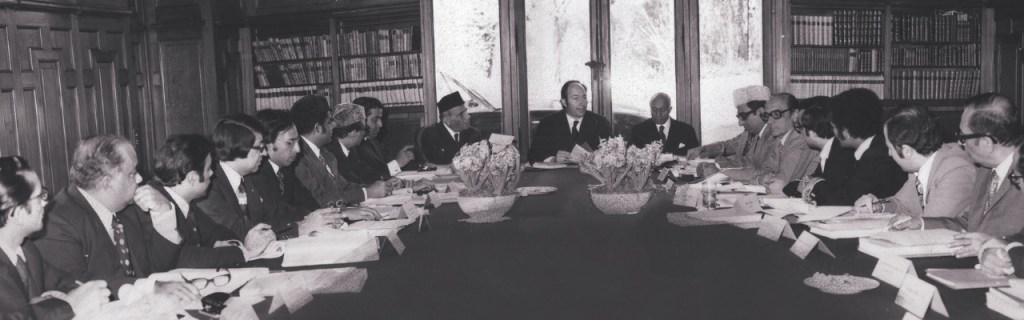
Mawlana Hazar Imam, His Highness the Aga Khan, met with leaders of the Ismailia Association and Ismaili scholars in April 1975 in Paris. A decision was taken at the world conference to establish the Institute of Ismaili Studies. Photo: Ilm magazine, October 1975.
Aside from research papers, scholarly publications and participation in essential conferences worldwide, the IIS has conducted significant programmes such as the Waezeen and Teacher Education Programme (WTEP), the advanced curriculum-planning programme with the University of London’s Institute of Education, the joint IIS-McGill University programme, the Graduate Programme in Islamic Studies and Islamic Humanities (GPISH), and the Secondary Teacher Education Programme (STEP). Some eight hundred individuals have graduated from IIS’s educational programmes since the Institute began receiving postgraduate students in 1980.
Story continues below
Professor Zayn Kassam, the current director of the Institute of Ismaili Studies, presents the inaugural IIS Alumni Recognition Award to Professor Karim H. Karim during the IIS’s 2024 graduation ceremony, March 23, 2024, at the Ismaili Centre in London. Photograph: Farid Daya.
Several IIS alumni have made remarkable achievements in different parts of the world. On March 23, 2024, the IIS had its first ever Alumni Recognition Award at the Ismaili Centre in London, UK, during its 2024 graduation ceremony.
The Award celebrates those who have demonstrated a career of exceptional service and leadership. A panel of senior management and academics from the AKDN and IIS reviewed the nominations for the Award and selected Professsor Karim H. Karim as the recipient of the First Award based on the following primary criteria:
Professional or Academic Accomplishment: Achieved a high degree of prominence and leadership in their respective field, which may or may not be directly relevant to the work of the IIS.
Contributions to Community Service: Distinguished service to their professional or faith community.
Professor Zayn Kassam, the Institute’s current director, presented the inaugural Award to Professor Karim.
~~~~~~~~
Citation Honouring Karim H. Karim on Being the First Recipient of the IIS’s Alumni Recognition Award
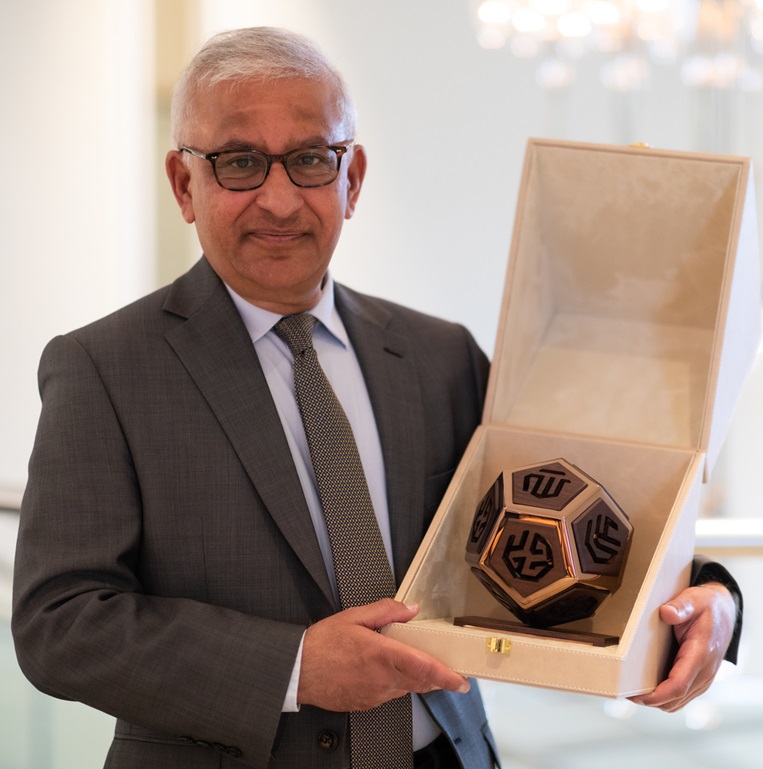
Professor Karim H. Karim holding the first Alumni Recognition Award that was presented to him by the Institute of Ismaili Studies on March 23, 2024, at the Ismaili Centre London. The sculpture was designed by Mohammed Adra (AKDN Geneva) and is inspired by (Late) Karl Schlamminger’s Hepta Globe sculpture, which is placed at the entrance of the Aga Khan Centre in London. Photograph: The Institute of Ismaili Studies via Karim H. Karim.
The citation for the award read as follows:
“Professor Karim has an extensive record of over three decades of scholarship, service, and leadership. His designation as Chancellor’s Professor is the highest honour given by Carleton University for scholarship of outstanding merit with substantial international impact, research leadership and continued active participation in the development of research excellence. Professor Karim has a worldwide reputation as a leading scholar of media representations of Muslims and diasporic communications. He has had visiting appointments at Harvard, Aga Khan, and Simon Fraser universities. Professor Karim has delivered keynote addresses in several countries and his critically acclaimed publications are cited widely. He was the inaugural winner of the Robinson Book Prize and has received media coverage in six continents.
“Dr. Karim has served as Director of Carleton’s renowned School of Journalism and Communication and its Centre for the Study of Islam, respectively. He was also the Institute of Ismaili Studies’ first alumnus to lead it in a directorial capacity. He spearheaded founding initiatives on Accessibility to Digitized Collections and the Canadian Race Relations Foundation as a Senior Policy Officer in the Canadian Government, which endowed him with awards for exceptional public service and for fostering collaboration between ethno-religious communities.
“Karim has an extensive record of international service to academic, community, government, and civil society institutions, including Aga Khan University (Kenya) and Central Asian University; AKDN Higher Education Forum; Canadian Parliamentary Committees and government boards; and Ismaili community organizations (Kenya, USA, and Canada). He has also held an International Ismaili Studies Conference at Carleton University; founded a prize for research in Ismaili Studies’ understudied aspects; and has been a mentor and external Ph.D. examiner for IIS alumni.”
We take this opportunity to congratulate Professor Karim on his accomplishments over the past several decades and on receiving the First Alumni Recognition Award from the Institute of Ismaili Studies. We are proud to have published several of his pieces on our websites (follow the links below).
Below are excerpts from his acceptance speech upon receiving the IIS’s inaugural Alumni Recognition Award.
“Let the Truth Infuse Your Words”
Professor Karim H Karim delivering his remarks on March 23, 2024, at the Ismaili Centre in London upon being presented Inaugural Alumni Recognition from the Institute of Ismaili Studies. Photograph: Institute of Ismaili Studies via Karim H. Karim.
By KARIM H. HARIM March 23, 2024, Ismaili Centre, London
Bismillahir-Rahmanir-Rahim.
I would like to thank the Institute of Ismaili Studies for selecting me as the recipient of its inaugural Alumni Recognition Award. This is a profound honour, which takes me back 40 years when I was a student at the IIS. This beautiful building, the Ismaili Centre London, was under construction at that time.
Congratulations to all the GPISH and STEP students who have graduated today. You carry enormous potential and promise. Allow me to speak about an event in my life that underlined the long-term impact that an individual can have. I attended the funeral of Professor Amin Amershi, a mathematician, two weeks ago in Vancouver. He taught me one class as a guest lecturer in a religious class in Nairobi, when I was 12 years old. It was a singular experience that opened my mind and sparked my imagination because his explanations had the ring of truth. I have found it remarkable that I continue to think about his ideas some 55 years later. You, too, have the potential of a long-lasting impact that will span decades and range as far into the future as the 22nd century. Let the truth infuse your words.
As you may know, our tradition adopted the name “Ismaili” in the early 20th century. Prior to that it was called Da’wat al-Haqq — which means Invitation to Truth, Summons to Truth, or Mission of Truth. In India, the Pirs named it Satpanth — Path of Truth or the True Path. Our aspiration is to have truth manifest our worldview and actions. It underpins our ethical outlook.
We are thrown many challenges throughout our lives. We face success, failure, joy, and frustration. The organizations that we work for pressure us to get the job done and we are often tempted to take shortcuts in order to fulfill expectations. But this is where critical thinking, which you have discussed extensively in your studies, becomes pertinent. How does one balance the imperative to get the job done, on the one hand, and remain ethical, on the other? His Highness the Aga Khan, Mowlana Hazar Imam, instructed the community’s leaders at a gathering in the United States in 1986, that “we will ask the hard questions.” Fulfilling your tasks ethically is one of the hard issues that you will face constantly in your careers.
Let the truth infuse your words, your music, your art, and your actions as you go ahead to fulfill your potential and promise.
Date posted: April 17, 2024.
______________
Featured image at top of post: Professor Zayn Kassam, the current director of the Institute of Ismaili Studies, presents the inauguralIISAlumni Recognition Award to Professor Karim H. Karim during the IIS’s 2024 graduation ceremony, March 23, 2024, at the Ismaili Centre in London. Photograph: Farid Daya.
The following are links to articles by Karim H. Karim published in Simerg and its sister websites:
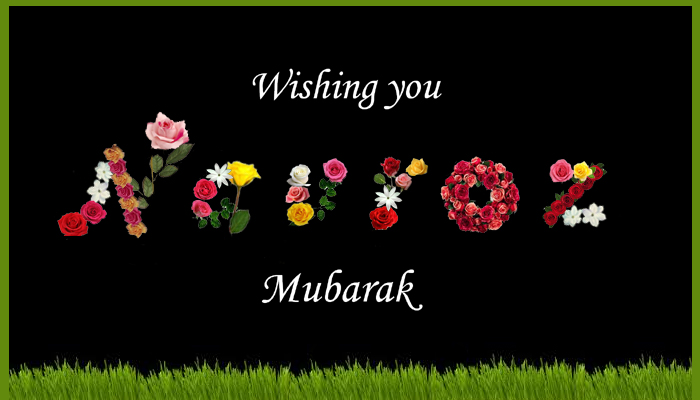
Conceived and created by Dr. Nurin Merchant, this Navroz greeting incorporates the rose and jasmine flowers which are extremely popular in Iran during the celebration of Navroz. The base of the picture shows shoots of wheat grass signifying robust evergreen health throughout the year.
Abstract: The auspicious occasion of Navroz generates immense happiness and makes our hearts jump with joy as we receive blessings from Mawlana Hazar Imam together with roji and Ab-e-Shifa and recite the traditionally Ginan Navroz na din Sohamna. This post includes two beautiful recitations of the Ginan by Shamshudin Bandali Haji (full Ginan) and Mumtaz Bhulji (selected verses) followed by an explanation by Sadruddin Hassam. In the Ginan, Sayyid Fatehali Shah relates the combined experience of the zahiri deedar (exoteric or physical glimpse or meeting) that he was granted by the 45th Ismaili Imam, Shah Khalilullah (peace be on him), and the inner joy of contentment and ecstasy that he experienced with the bestowal of Noorani (spiritual or esoteric) grace.
Navroz Ginan recitation by Shamshu Bandali Haji
Recitation of Navroz Ginan by Late Shamshudin Bandali Haji. In his opening remark, the reciter mistakenly attributes the Ginan to Pir Shamsh. The clarification about the composer is provided in the article below.
_______________________
Navroz Ginan recitation of selected verses by Mumtaz Bhulji
Recitation of selected verses of Navroz Ginan by Mumtaz Bhulji
An attempt is made in this article to give an interpretation of the devotional Ginan Navroz na din Sohamna, which is recited by Ismaili Jamats in many parts of the world on the occasion of the celebration of the Persian New Year which falls on March 21st. In this ginan the composer, Sayyid Fatehali Shah, relates the combined experience of the zahiri deedar (exoteric or physical glimpse or meeting) that he was granted by the 45th Ismaili Imam, Shah Khalilullah (peace be on him), and the inner joy of contentment and ecstasy that he experienced with the bestowal of Noorani (spiritual or esoteric) grace. At the same time, he gently persuades the mu’min (a believer) to always strive for esoteric understanding as well as to develop a lasting spiritual relationship with the Imam of the Time. It may be noted that in Shia Imami Ismaili theology each Imam is the bearer of the same Divine Light (Noor). The Divine Institution of Imamat has its origins in the first Shia Imam, Hazrat Ali (peace be on him), who was declared as the successor to Prophet Muhammad (may peace be upon him) at the famous historical event at Ghadir-e-Khumm.
As the composer has to narrate the exoteric experience as well as the ineffable esoteric relationship, the ginanic diction that he uses has to resort to the traditional and familiar imagery and symbolic expressions in order to convey his message. The words, the imagery and the symbolic expressions, however, blend beautifully in this ginan. This beauty, unfortunately, cannot be recreated in this prosaic interpretation. Nor can we go into the prosody of the ginan.
In this reading we shall first address a common held misunderstanding about the identity of the composer. We shall then make an attempt to describe the exoteric experience of the composer’s meeting with the Imam, as so wonderfully narrated in the ginan, and finally we shall examine and interpret some of the key words and expressions to convey the ineffable spiritual experience as well as the composer’s gentle persuasion to the mu’mins. One hopes that this brief reading will heighten the reader’s appreciation and understanding of this ginan.
~~~~~~~
A clarification about the composer and the period of composition
The composition of this ginan is sometimes wrongly attributed to Pir Shams al-Din who lived more than four centuries before the actual composer of this ginan, Sayyid Fatehali Shah. This mistake may have arisen because of the pen-name he has used in the second line of the last verse which reads:
Bhane Shamsi tamme sambhro rookhi.
It was a normal practice for the composer to mention his own name in the concluding verses of the ginan. But Shamsi here does not refer to Pir Shams al-Din – rather it was the pen-name of Sayyid Fatehali Shah.
He, like a number of other Sayyids, who did the work of da’wa (propagation and teaching) in India, may have been a descendant of Pir Hassan Kabirdin. Sayyid Fatehali Shah himself preached among the communities in Sind. He eventually died there and was buried near Jerruk which is south of Hyderabad in Pakistan.
The first two lines in verse seven give us the clues as to the period when this ginan was composed as well as validate the real name of the composer. These lines read:
Eji gaddh Chakwa ne kille Shah Khalilullah ramme Tiyaan Fatehali ne mayya karine bolaawiyya
Shah Khalilullah here refers to the forty-fifth Ismaili Imam, whose Imamat was from 1780 to 1817 A.C. He lived in Iran in the town of Mahallat, which is located approximately 362 kilometers from Tehran. The town is situated on the slope of a mountain. Mahallat is also amongst the most ancient residential areas in Iran and was an important base of the Ismailis; hence the many references to the 46th and 47th Imams (Aga Khan I and II) as Aga Khan Mahallati. Sayyids and murids of the Imam from various parts used to come to Mahallat to pay their respects. This ginan is therefore fairly recent, having been composed either towards the end of eighteenth century or early in the nineteenth century.
It appears that like many other murids, Sayyid Fatehali Shah travelled from Sind to Iran to meet Hazrat Imam Shah Khalilullah.
On arriving in Mahallat on the day of Navroz, he learns that the Imam has gone to the woods on a hunting expedition. The Sayyid naturally feels disappointed that having come all the way, he did not have the opportunity for the deedar. This feeling of sadness is lamented in the first stanza of the ginan. Despite this, there is an undercurrent of inner hope at the prospect of having the deedar by the mercy of the Imam.
The pangs of separation from the beloved and the yearning for reunion are a recurrent theme in Ismaili ginans and also in Sufi mystical poetry. In this ginan, there is the lament of this separation, but in keeping with the traditional ginanic function, there is also gentle persuasion and hope of spiritual union.
We shall now examine how Sayyid Fatehali Shah relates his zaheri deedar of the Imam and how this blends with his esoteric experience.
~~~~~~~
The meeting with the Imam of the Time in the woods and at the fort
In the following four verses (1, 2, 3 and 7), Sayyid Shamsi relates his quest for the Master which leads to his meeting with Imam Shah Khalilullah. The meetings (deedar) fulfilled his intense yearning.
Transliteration:
Eji Navroz na din sohamna, Shah Ali Qayam shikaar ramwa vann gaya, Sevak na mann thaya oodassi, Praan Ali charne rahiya…..1
Interpretive Translation and Explanation
On a beautiful day of Navroz, Imam-e-Zaman had gone to the woods to hunt. (I) His murid (disciple) became sad at heart (for missing my Master), as my soul was yearning to be at the feet of the Imam. (An expression of respect and – obedience to the Imam)….1
Navruz (Navroz – Gujrati variation) is a Persian word meaning ‘New Year’s Day’ (twenty-first March). This is the first day of spring, hence the day is beautiful (sohamna). Shah Ali Qayam refers to Imam-e-Zaman (Imam of the Time) because Noor-e-Imama is everpresent (qayam). Shikaar ramwa gaya means ‘went hunting’ and vann means ‘woods.’ Sevak is ‘one who is ready to serve or obey,’ in this case a ‘disciple’ or a ‘murid.’ Praan means ‘inner life’ or ‘soul.’
VERSE 2
Transliteration
Eji Shah Qayam preete jo chint baandhi Nar ne preete amme vann gaya Eva vann sohamna Nar Qayam ditha, Dela dai devanta rahiya …..2
Interpretive Translation and Explanation
Impatient because of my ardent and deep loving desire to meet the Imam, I also went into the woods, which in the presence of the Imam unfolded like heavenly gates looking angelically beautiful….2
The expression preete jo chint baandhi literally means ‘with love when (one) focuses on the remembrance (dhikr).’ Dela dai devanta rahiya is an idiomatic expression implying ‘the unveiling of angelic (devanta) beauty with the opening of gates (dela).’ When the murid (devotee) searches inwards for the murshid (master), spiritual insight keeps on unveiling the gates with ever-increasing beauty.
VERSE 3
Transliteration
Eji bhalu thayu Saahebe soomat aali, Shah Ali Qayam saathe ramwa amme vann gaya. Anant aasha poori amaari Shah dil bhaave gamya….3
Interpretive Translation and Explanation
It was a blessing that the Master inspired in me the wisdom so that I went into the woods. My intense yearning was fulfilled because true bliss had blossomed in my heart…..3
Saahebe soomat aali means ‘the Master inspired in me the wisdom.’ Anant asha poori amaari means ‘my intense yearning (for deedar, both zahiri and batini) was fulfilled.’
VERSE 7
Transliteration
Eji gaddh Chakwa ne kille Shah Khalilullah ramme, Tiyaan Fatehaline mayya kari ne bolaawiya, Anant aasha poori amaari Neet Ali Noore oothiya….7
Interpretive Translation and Explanation
Shah Khalilullah, pleasantly relaxing at the fortress in Chakwa, graciously summoned me (Fatehali) in his presence; then with the constant overflowing of His Noor, fulfilled my many ardent wishes (for spiritual growth)….7
The expression Neet Ali Noore oothiya implies ‘the mystical experience of the overflowing of the Noorani Deedar of Ali (The Imam Eternal) which was granted (to him).’
~~~~~~~
The inner search and experience
In the remaining four verses (4, 5, 6 and 8 ) of the ginan, Sayyid Shamsi, touches upon his own inner yearnings and gently persuades the listener to seek out the spiritual vision through the love and grace of the spiritual lord.
VERSE 4
Transliteration
Eji hette Alisu hirakh baandho, Avichal ranga Sahebse girahiya, Evi chint baandhi Nar Qayam saathe, Sat bhandaar motiye bhariya….4
Interpretive Translation and Explanation
Be joyfully bound in the love of Ali And attain the unfading spiritual color (the state of bliss) from the Master; When my mind was bound to the Ever-Living Lord in contemplation Reality adorned (the Soul) with priceless treasure of (Noorani) pearls….4
Avichal ranga Sahebse girahiya means ‘the permanent state of bliss from the Lord’ and refers to the nafs-i-mutmainna or ‘the contented self’ (Holy Qur’an, 89:27). It is a state of mind which is serene because the self has understood the Reality. The verse of the Holy Qur’an reads: But ah! thou soul at peace! (translated M. Pickthall).
VERSE 5
Transliteration
Eji amme Saheb saathe sahel kidha, Riddh siddhaj paamiya, Ek mann ginan je saambhre Aa jeev tena odhariya….5
Interpretive Translation and Explanation
I (Fatehali) relished the spiritual journey with the Master (the Imam), and (as a result) I was blessed with spiritual elevation and gnosis (spiritual insight). He who listens to the Ginans attentively (and strives for the contemplative knowledge), his soul finds the path to salvation….5
Here the Sayyid implies that a mu’min should strive for the batini deedar (spiritual reality of the Imam). One may achieve this with the blessing of the Imam.
VERSE 6
Transliteration
Eji jeev jiyaare joogat paame, Praan popey ramm rahiya, Agar chandan prem rasiya, Hette hans sarowar zeeliya…..6
Interpretive Translation and Explanation
When the self understands reality, the soul blends beautifully like a flower and experiences musk and sandalwood-like fragrance. The self floats in ecstasy of love as a swan swims in a lake….6
This verse contains symbolic expressions and imagery to convey the ineffable serenity and the inner joy of the fortunate one who has been graced with the the batini (esoteric) experience. The life of such a person becomes beautiful like a flower.
The fragrance of musk (agar) and sandalwood (chandan) symbolizes good behavior of the gifted one through speech and good deeds.
The swan (hans) represents the soul that is pure. Through esoteric and ecstatic experiences it remains liberated and is in abiding love for the beloved.
VERSE 8
Transliteration
Eji bhai re moman tamey bhaave araadho, Bhane Shamsi tamey saambhro rookhi, Saaheb na goon nahi wisaare, Tena praan nahi thashe dookhi….8
Interpretive Translation and Explanation
O momin brothers! With deep affection remember the Lord. Take heed and listen to what Shamsi says: “They who do not forget the batin of the Imam (realizable through Imam’s grace), their souls will never ever be miserable or unhappy”…..8
Sayyid Shamsi gently reminds his momin brothers (rookhi) always to remember the Lord with affection. Here, rookhi is probably the intimate form of the word rikhisar which is used in the ginans to refer to mu’min brothers. The word has been used thus to rhyme with the last word of the stanza dookhi (miserable).
The last two lines are to remind us not to forget the batin of the Imam but to strive towards it through regular prayers. Those who carry out these responsibilities with dedication and devotion can never be unhappy whatever the worldly life might impose upon them. Thus the souls of the true mu’mins will always be at peace within themselves, knowing that they are under the protection and guidance of a living manifest Imam.
“Remember the Day when we will summon all human beings with their Imam. …” – The Holy Qur’an 17:71
From the above discourse, we can see why the ginan is appropriate for the occasion of Navroz, which marks the commencement of a new year. The glorious transformation of nature in spring reminds us of the creative power of Allah, who continually showers His bounties for us. Thus, the festival of Navroz should effect a spiritual renewal in each one of us. It should inspire greater love for Imam-e-Zaman as is enjoined upon us by Allah and our beloved Prophet Muhammad (may peace be upon him).
This Navroz ginan by Sayyid Fatehali Shah reminds us of our spiritual obligations for continuous search for enlightenment through the Ta’alim (teachings and guidance) of the Imam of the time.
Date posted: March 19, 2020. Last updated: March 20, 2024 (reformatting.)
_____________________
Before departing this website please take a moment to review Simerg’s Table of Contents for links to hundreds of thought provoking pieces on a vast array of subjects including faith and culture, history and philosophy, and arts and letters to name a few.
The piece on Navroz included this post has been adapted by Simerg from the original article, “Eji Navroz Na Din Sohamna – An Interpretation,” by Sadrudin K. Hassam, which appeared in Ilm, Volume 9, Number 2, (March 1985).
Editor’s note: On November 12, 2023, a day after the publication of the article “A Legacy of Lost Heritage” below, Simerg received a communique from ITREB in Karachi, via an Ismaili institutional leader, providing further details on the extent of the damage to the Ismaili institution’s Central library located in Karachi. According to the communique, the damage was more limited than initially thought and reported in our piece. In particular, the more than 200 manuscripts are completely safe because of protective measures taken to ensure their safekeeping. The Gujarati and Khojki-language magazines were previously moved to a different location within the library and were also saved. While a significant number of other materials in the library were damaged due to heat, smoke and water, rather than completely destroyed, they may be recoverable to some degree.
Simerg sincerely hopes that the majority of important objects and documents in the ITREB library remain in their original state and that those that were damaged are recoverable. We also hope that proper fire safety rules are in place to avoid such incidents from taking place in the library as well as Ismaili institutional buildings, especially the older ones, around the world. As noted in a UNESCO Study, the cost of restoring documents and books damaged in a library fire is substantially greater than what would be spent to store the materials under the best fire protection conditions.
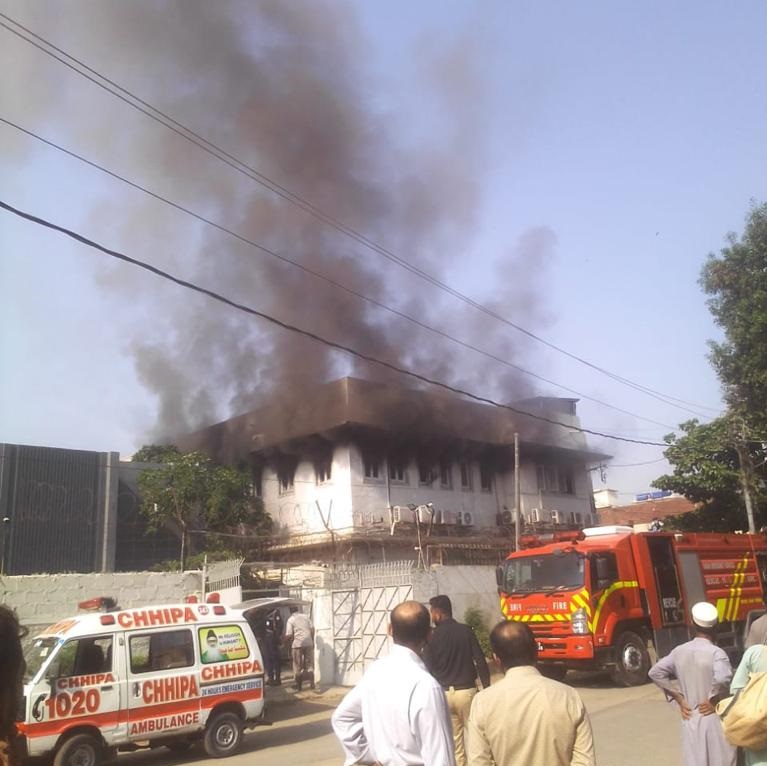
On the morning of November 2nd, 2023, at 9:15am local time, the National ITREB (Ismaili Tariqah and Religious Education Board) building for Pakistan located in the Garden East district of Karachi caught on fire. Fortunately, no one was hurt in the blaze. However, it quickly became apparent there would be another casualty.
Story continues below; click on images for enlargements
Smoke billows from a fire on November 2, 2023, at the ITREB building in Karachi, Pakistan, housing an important library collection of tens of thousands of printed materials, photographs, memorabilia, audiovisual materials, and manuscripts.
Located within the building was an important library housing tens of thousands of printed materials, photographs, memorabilia, audiovisual materials and manuscripts. The fire destroyed much of the collection. What wasn’t burnt or singed by the fire was then subject to water damage as firetrucks attempted to extinguish the blaze which was fed by the thousands of pages of flammable material in the building.
In the context of the Central ITREB Library located in Karachi, the local history, writing and output of the Khoja Jamats in particular, and more broadly of the Jamats of the Indian Subcontinent and to a lesser extent Eastern Africa and Northern Pakistan were preserved in the portion of the collection that focused on the contemporary period. In this post, I have included some gems of materials that I was able to capture on some of my journeys as an homage to the library and its role in my own archival research and being able to cobble together a social and religious history of the Ismailis.
Story continues below
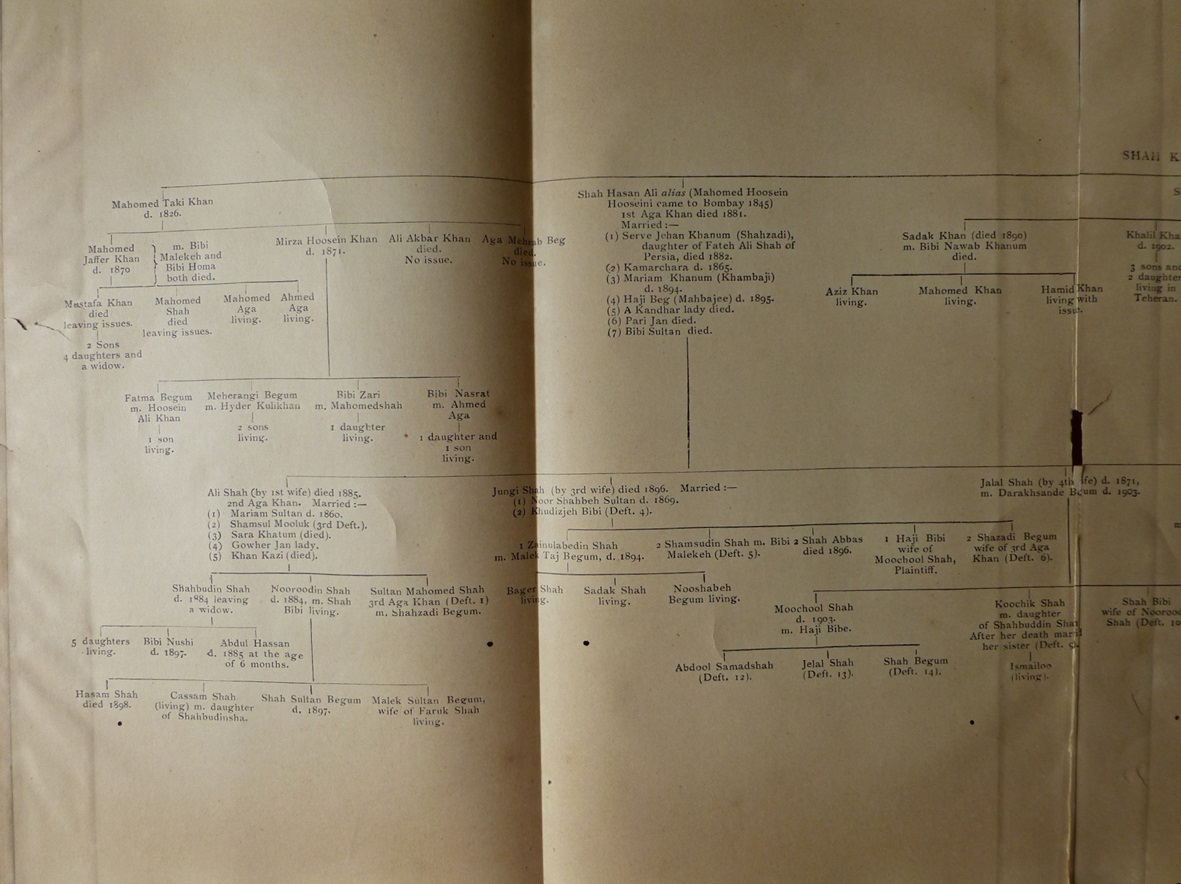
One section of the foldout outlining the family tree of the 46th Imam, Shah Hasan Ali Shah (d. 1881), that formed part of book of the judgement made by Justice Russell who proceeded over what became known colloquially as the Haji Bibi Case. In this section of the family tree, some of Imam Hasan Ali Shah’s siblings, wives, children, and their relations are listed. The case lasted from February 3, 1908 to August 7, 1908 and until that point was the longest ever trial in Bombay’s High Court.
~~~~~~
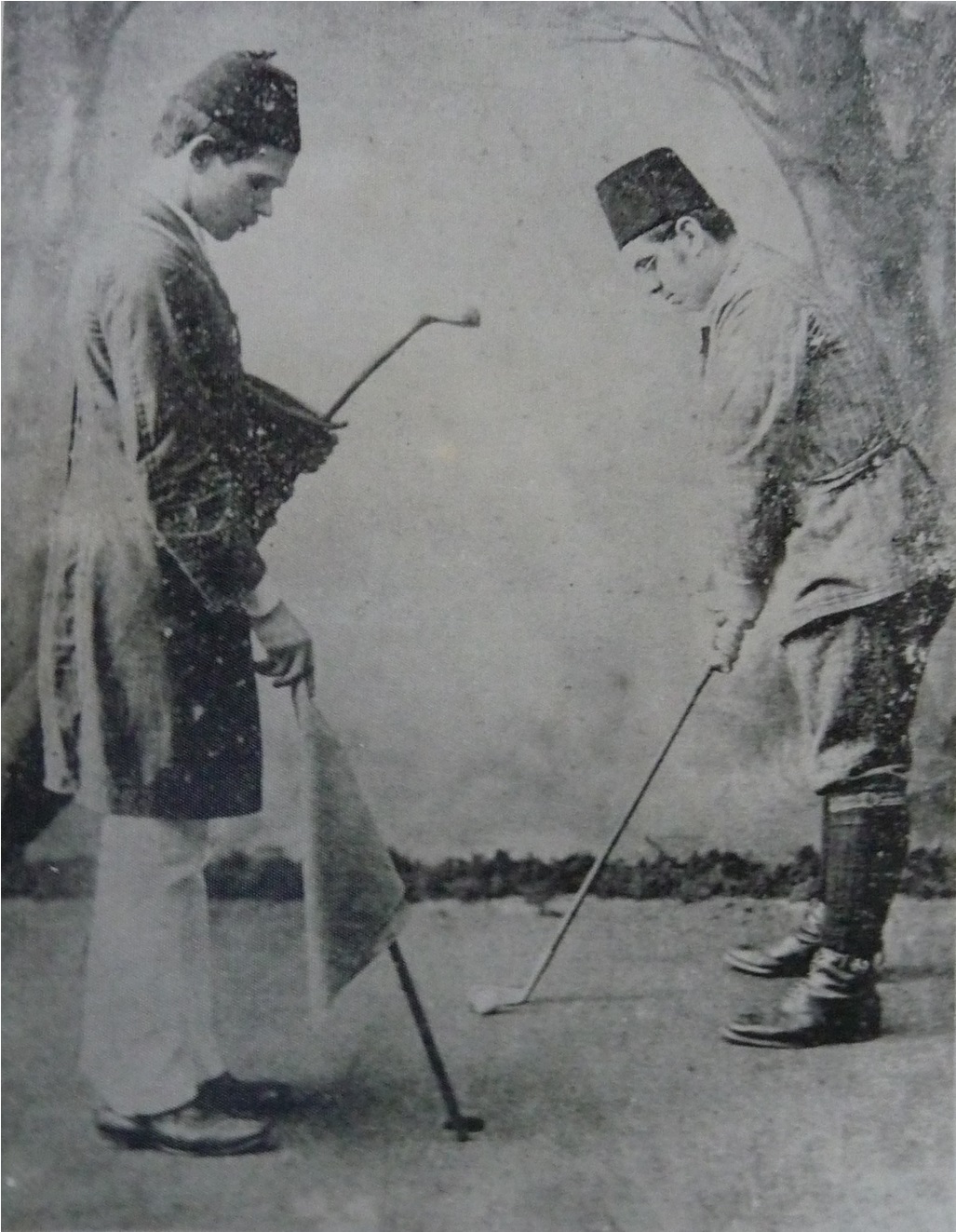
Photograph of Imam Sultan Mahomed Shah, His Highness the Aga Khan, playing golf in his youth.
~~~~~~
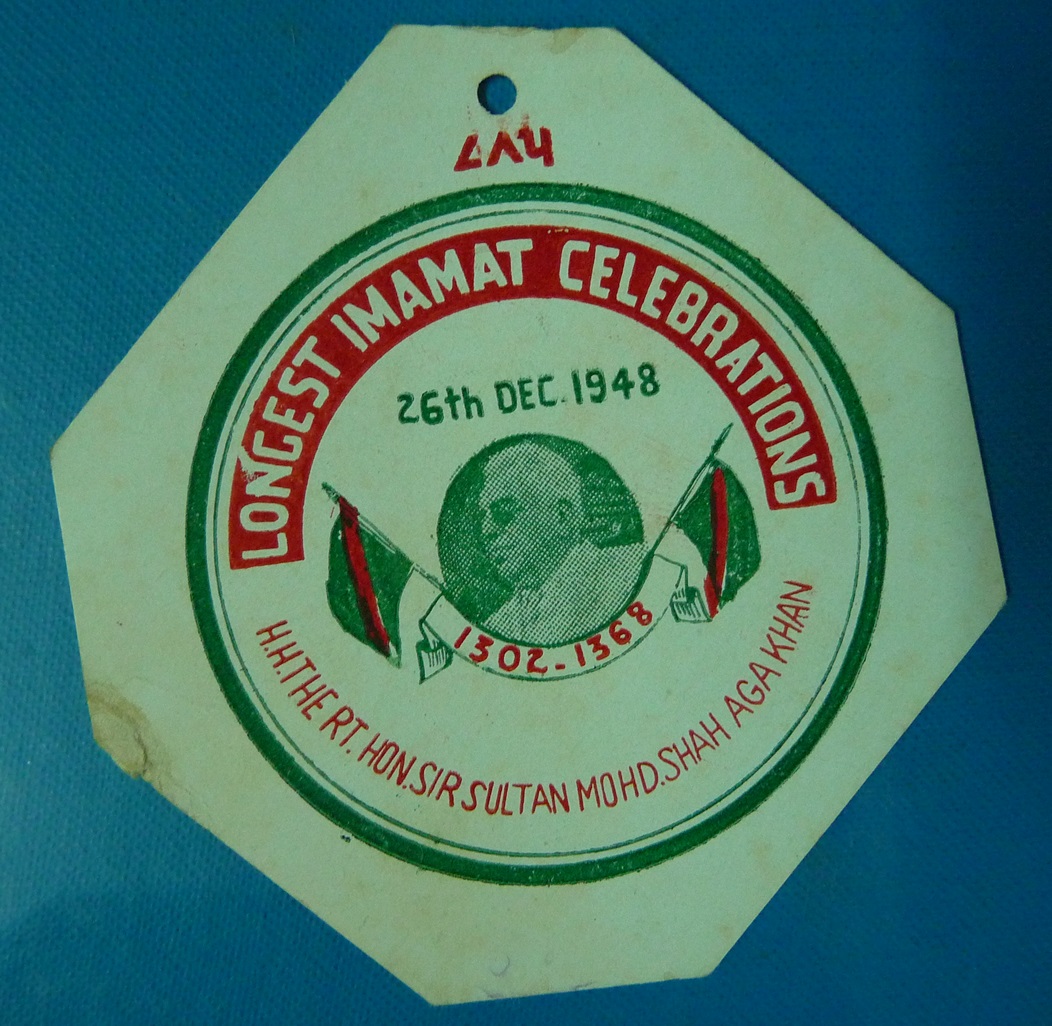
Souvenir produced to mark the occasion of the milestone reached by Imam Sultan Mahomed of the longest-ever Imamat in 1948 after surpassing 63 years as Imam of the Ismailis at the age of 71 years. The 48th Imam died nine years later on July 11, 1957, at the age of 79 having been the Imam for 71 years. He became the Imam in August 1885 at the age of 7.
While assessing the full extent of the damage is still an ongoing process, a number of items were able to be saved including a unique collection of Khojki manuscripts which were housed in fire retardant boxes. When I first heard about the tragedy the next day, I was devastated to learn of the loss of such a treasure trove of materials so important to better understanding the history of the Ismaili community. I had had the opportunity to consult the library on several occasions during my visit to Karachi over the years, including on my last visit in 2013. I was amazed from my first visit in 2006 at the breadth and richness of the collection and easily lost myself for hours and days within the library perusing its shelves, flipping through the pages of its meticulously organized items and often feeling a sense of delight at a personal discovery of a publication or image I was unaware of or that shed important light on a question I’d been pondering.
Story continues below
A picture of the first Muslim Baronet in British India, Sir Karimbhoy Ibrahim published in one of the earlier Ismaili periodical publications, Ismaili Sitaro in July 1910.
~~~~~~
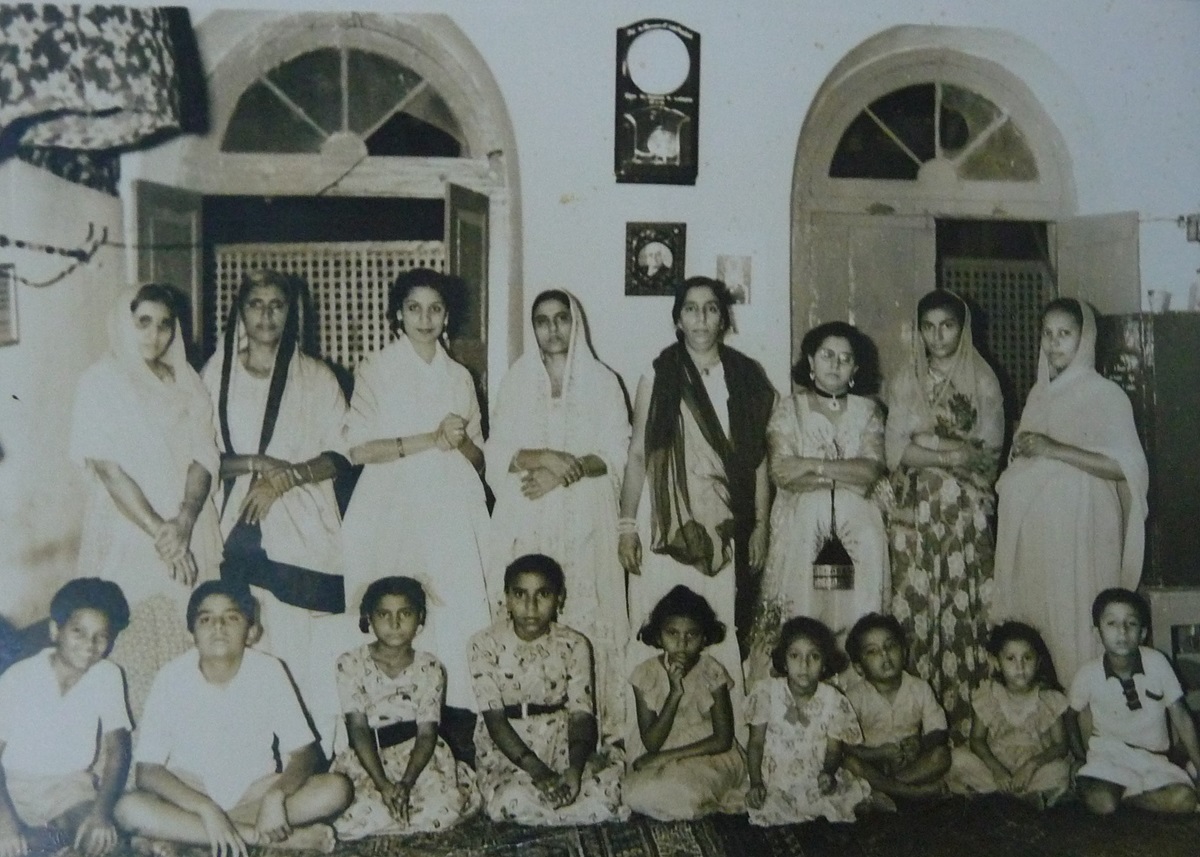
Photograph of women and children of the Ismaili Jamat in Aden, Yemen.
~~~~~~
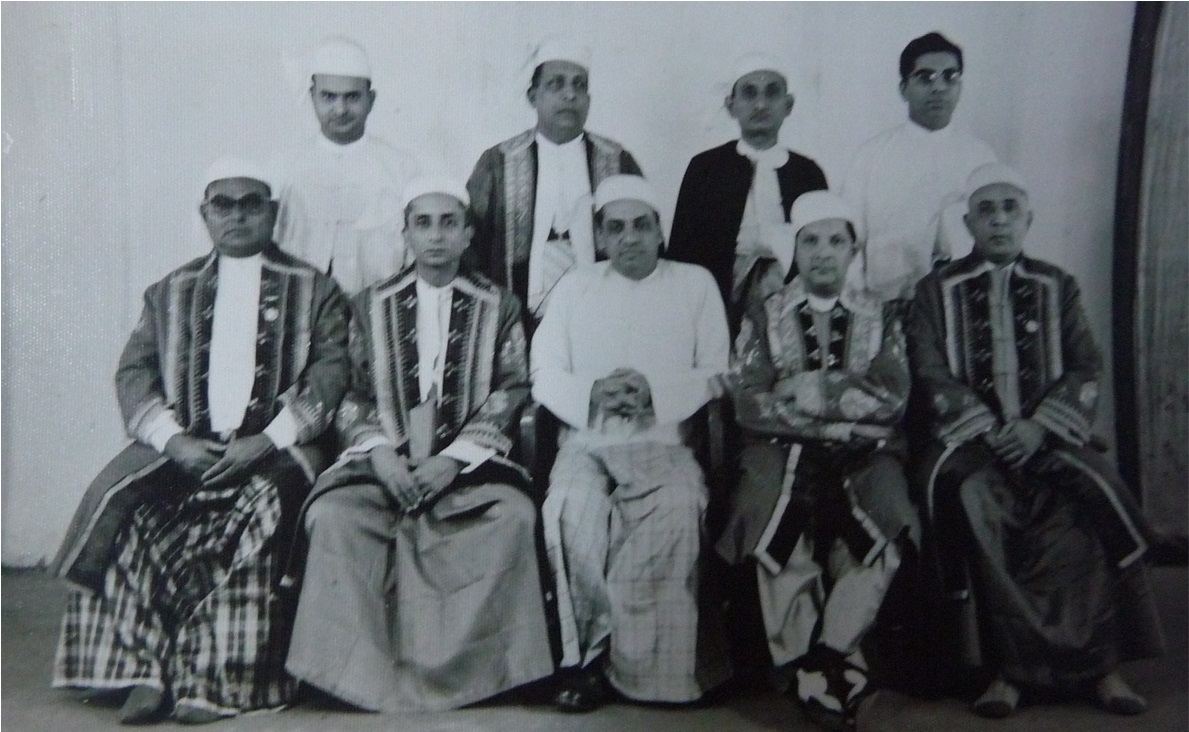
Photograph of members of the Ismaili Supreme Council, Burma 1958.
My own research interests were in the printed collection of the library in English and Gujarati including the photographic documentation of the community in the Indian Subcontinent and around the world. I had taken the opportunity to photograph umpteen works so that I could consult them in more detail and at my leisure once I returned to my home and now I realize the singular importance of those acts of documenting the legacy of the production of individual Ismailis and of Ismaili communities and institutions around the world. Much of ITREB’s Central Library collection owes a debt to Ismailis in Karachi, Pakistan, and around the world who donated materials including photographs as well as the library’s role in actively obtaining and safeguarding those materials.
Story continues below
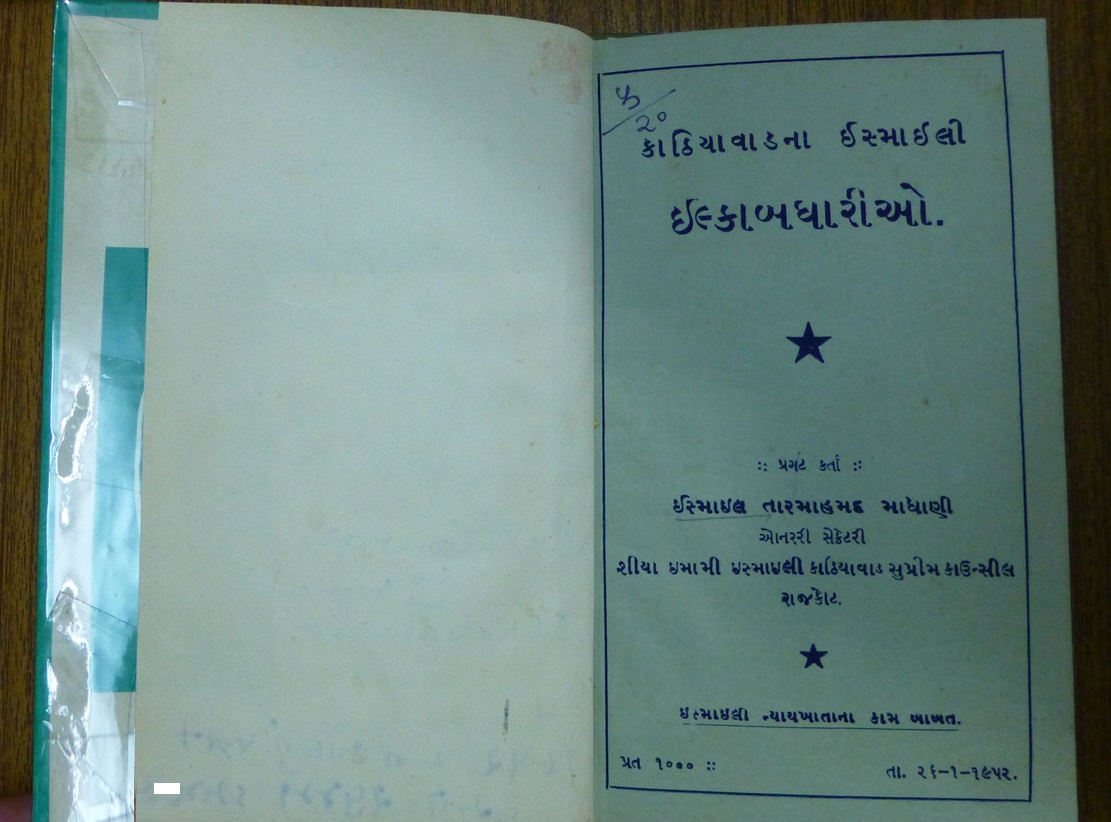
Cover page of the Kathiawadana Ismaili Ilkabadhara’o, Ismaili Census of Kathiawar published by Ismail Tarmahmad Madhani, Honorary Secretary of the Imami Ismaili Kathiawar Supreme Council Rajkot, 1952.
The Importance of Local Libraries
Since the establishment of The Institute of Ismaili Studies in London in 1977, a central repository of the community has been under development and many familial, local, institutional and national collections have been kindly donated to the IIS for safekeeping, preservation, digitization with the larger mandate of providing resources for research. However, before that, the guardians of these materials were often personal collectors, families and smaller institutions such as The Ismaili Society and Ismailia Associations, the predecessors of the now-ITREBs as well as local Jamatkhana libraries. In fact, it was because of these collections, not necessarily large-scale libraries, that scholars such as Wladimir Ivanow, Husayn Hamdani, Asaf Fyzee, Jawad Muscati and many now celebrated Nizari Ismaili authors, scholars, khalifas and waezeen of current and previous generations were able to make breakthroughs in their understanding of the Ismaili past and had source materials for their research.
Story continues below
The cover page of the Constitution of the Ismailia Association of West Pakistan from 1950.
~~~~~~
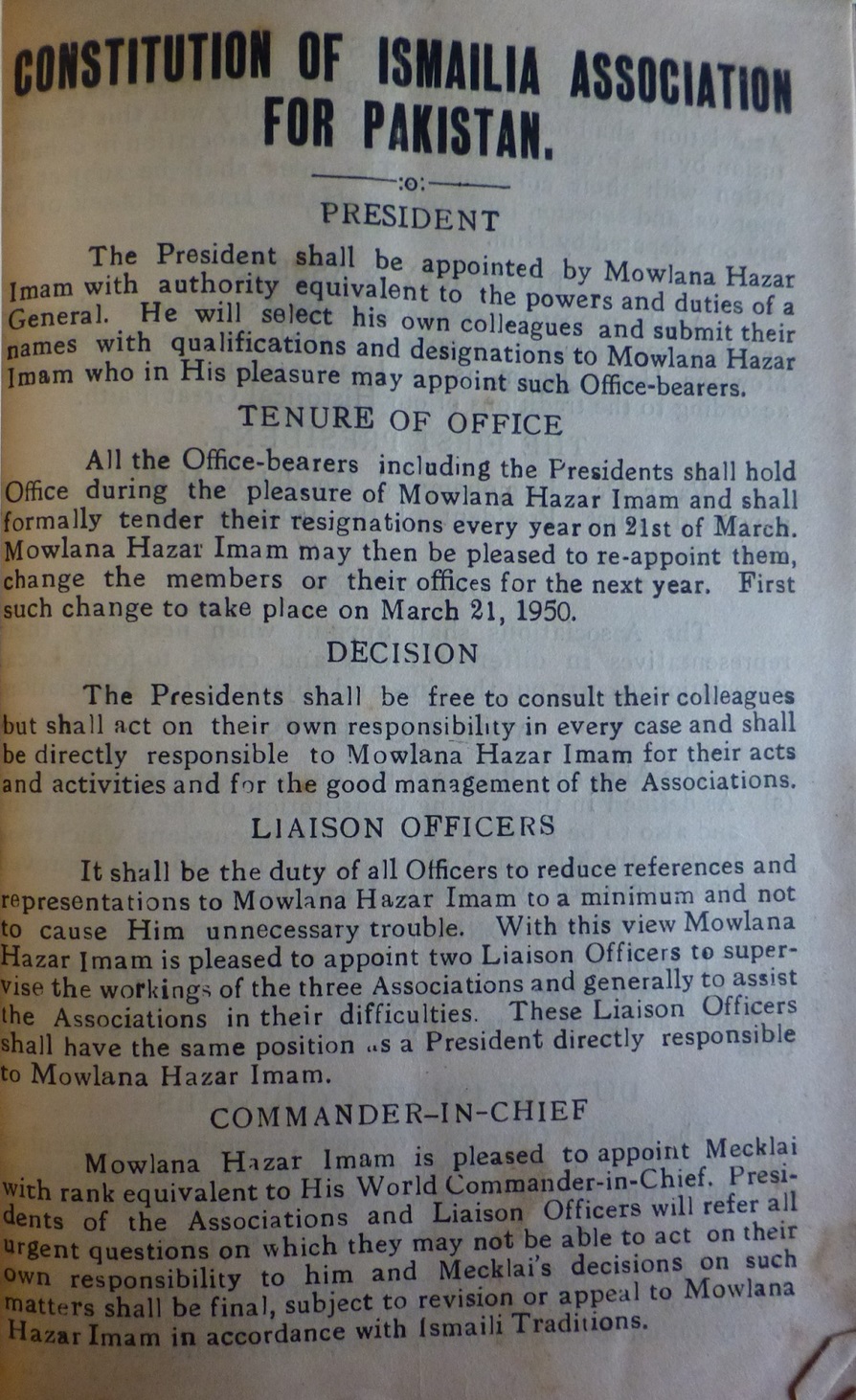
The opening page of the Constitution of the Ismaili Association of West Pakistan from 1950 outlining the system, structure, and rules that were to be abided by for members of the Ismailia Association of West Pakistan (in contrast to the jurisdiction of East Pakistan, which eventually became Bangladesh).
The importance of these regional libraries, especially for local researchers, cannot be underestimated. Throughout my travels over the past 25 years to areas where Ismailis live or once lived, its has often been the works preserved in individual homes, in smaller institutional collections and in local and regional Jamatkhana libraries that have provided some of the most unique documents and witnesses to history; and it is through them that have come the greatest insights and breakthroughs. Large institutional collections such as those of national libraries or of learned societies have become more accessible as they digitize their collections, but it is our debt to local institutions that cannot be underestimated.
Story continues below
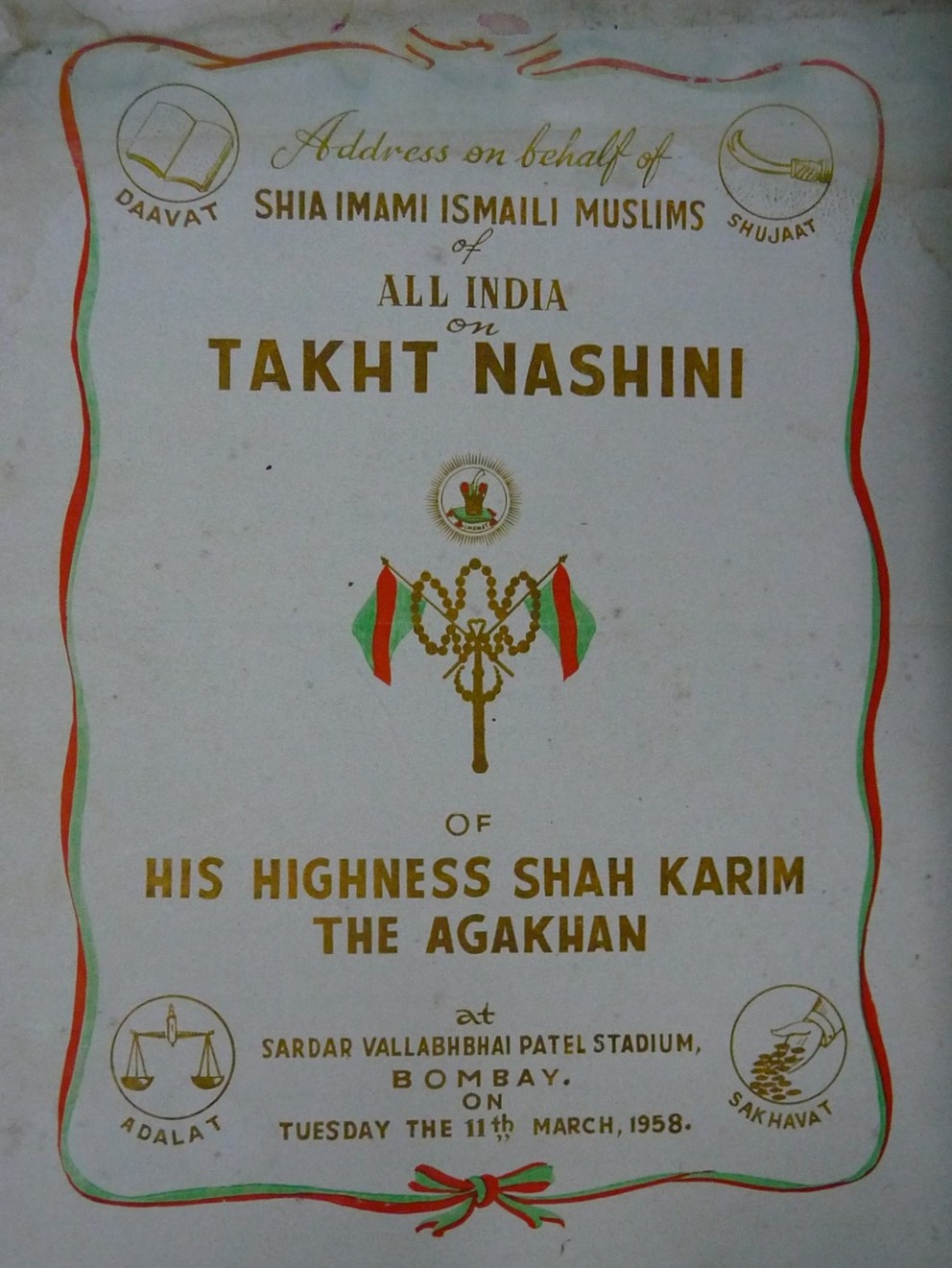
Cover of the Souvenir of Mawlana Hazar Imam’s Takht Nashini (accession ceremony to the office of Imamat) in Bombay in 1958.
~~~~~~
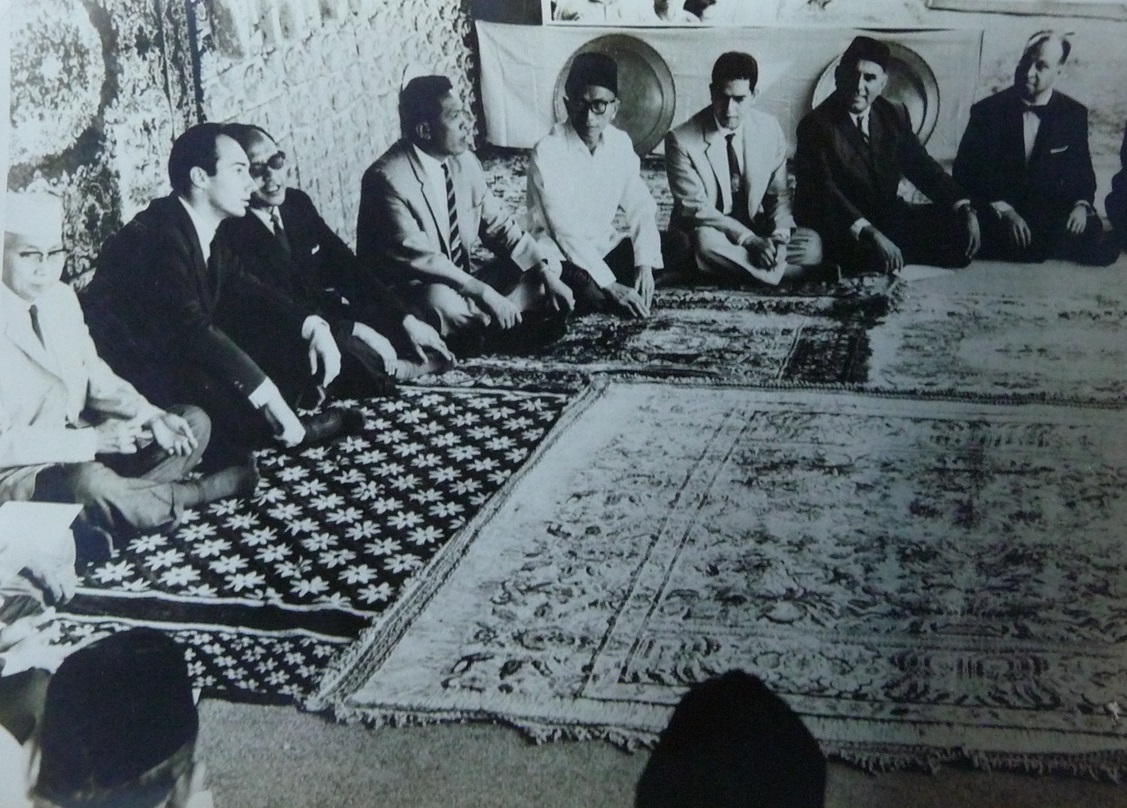
Mawlana Hazar Imam at a meeting with the leadership of Mindanao University and Kalimul Islam Colleges, Philippines during his visit in 1963. The information on the back of the photo reads: “Kamilul Islam Colleges Convocation Function in Honour of H.R.H. Prince Karim Aga Khan. The Aga Khan is seen sitting in the Philippine Native style flanked by Dr. Antonio Isidro, President of Mindanao State University on his right and Honourable Ahmed Domocao Alanto President of Colleges on his left. In the picture also are seen Mr. Amirali Fancy on his extreme left (back to camera) and Captain Amirali Currim second from the right, both wearing Philippine caps, who accompanied H.R.H on Philippine tour as his ministers”.
~~~~~~
Local institutions, including Jamatkhanas, throughout the world have often preserved innumerable documents, manuscripts, published works, photographs and even newspaper cuttings which shed light on one of the least understood and most complex periods of Ismaili history — the last few hundred years. As Jamats in local environments fell under the dominion of various empires and rulers, and later national governments, local histories become increasingly important for understanding how Ismaili communities have come to be where they are today.
Story continues below
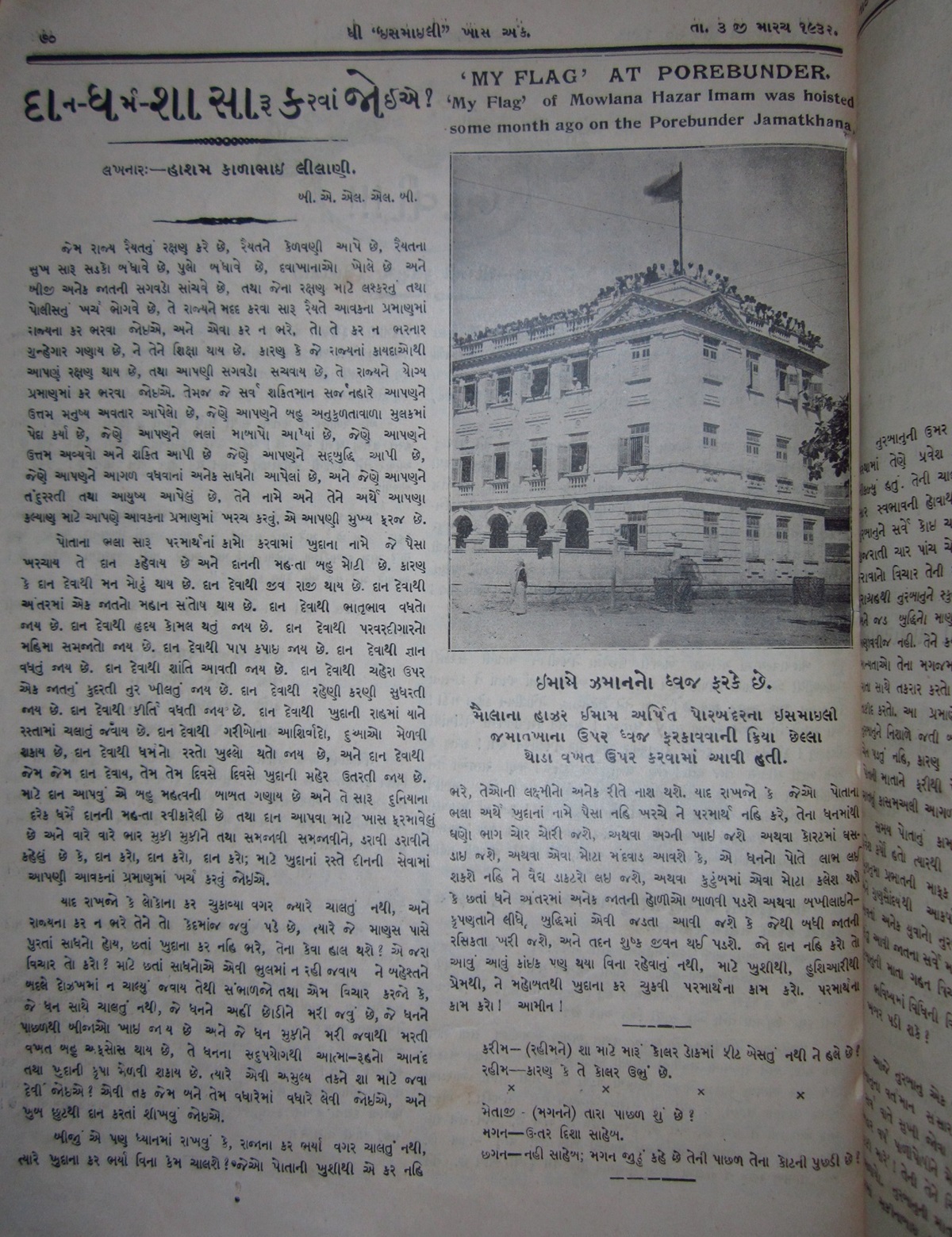
A page from The Ismaili magazine, March 3rd, 1932 edition showing a photograph of the newly raised “My Flag” at Porbander Jamatkhana.
Furthermore, since the early 1980s as part of the global processes of standardization and institutionalization, the focus of important publications such as local Ismaili magazines have shifted the majority of their spotlights to the Imam, his family and the work of Imamat institutions where previously the magazines also included much more detail, output on the production and development of Ismaili communities through the lens of the local and told from the ground-up. While there has been many things gained in the centralization of the Ismaili magazines, one of the most notable losses has been the capturing of stories of the ground realities, literary output, reflections of individual Ismailis and the vibrancy and details of the local development of Ismaili communities.
Story continues below
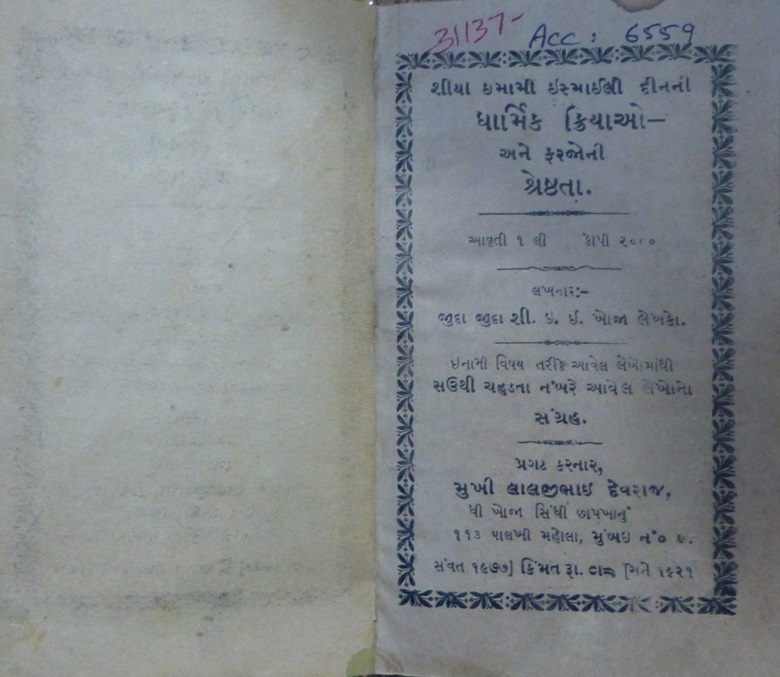
The cover of a text on religious ceremonies by Mukhi Laljibhai Devraj published by a Sindhi press in Mumbai in 1921.
~~~~~~
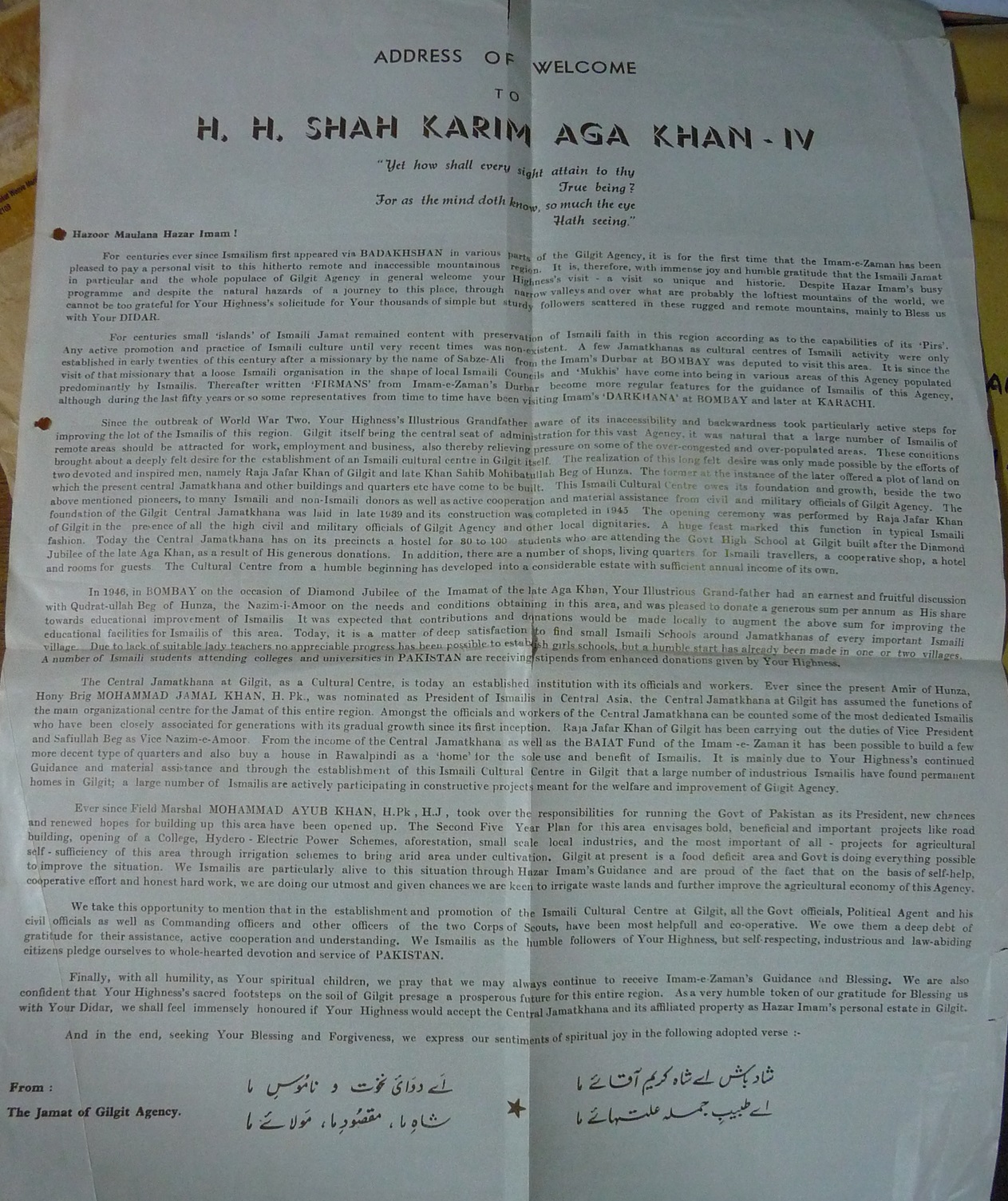
Address of Welcome offered to Mawlana Shah Karim Hazar Imam, His Highness the Aga Khan, on the occasion of his first visit to the Gilgit Agency in October 1960.
~~~~~~
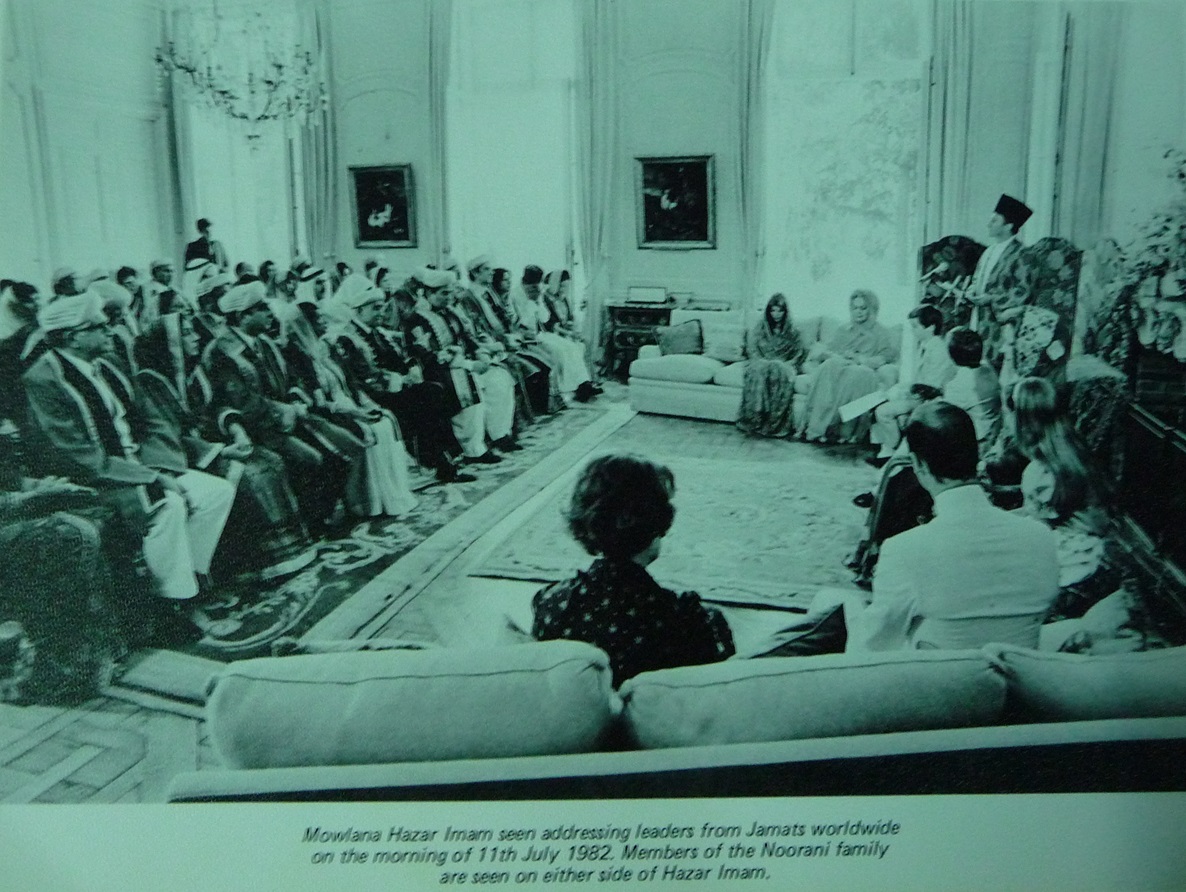
Mawlana Hazar Imam, His Highness the Aga Khan, addressing leaders of the global Jamat in the presence of his family on July 11, 1982, the occasion of his Silver Jubilee as the 49th Imam of the Ismaili Muslims.
I wrote this short piece with the hopes that it would be an homage or memorial of sorts to the Central ITREB Library Pakistan and to encourage families and small institutions to safeguard their collections for the benefit of the community in the service of documenting its past. We must also remember that just as important, however, is to preserve the present for future generations.
Date posted: November 11, 2023. Last updated: November 13, 2023 (see editor’s note at top of page).
__________________
About the author: Rizwan Mawani has a background in Anthropology and Religious Studies and is the author of Beyond the Mosque: Diverse Places of Muslim Worship (I. B. Tauris in association with The Institute of Ismaili Studies, 2019). Rizwan has written for a wide variety of audiences and his work has appeared in academic publications, encyclopedias as well as the Wall Street Journal and The Huffington Post. Rizwan was previously Website Content Editor and Research Coordinator in the Department of Constituency Studies at The Institute of Ismaili Studies. His current research focuses on the past two centuries of global Ismaili history with a focus on the Jamatkhana and its development during that period.
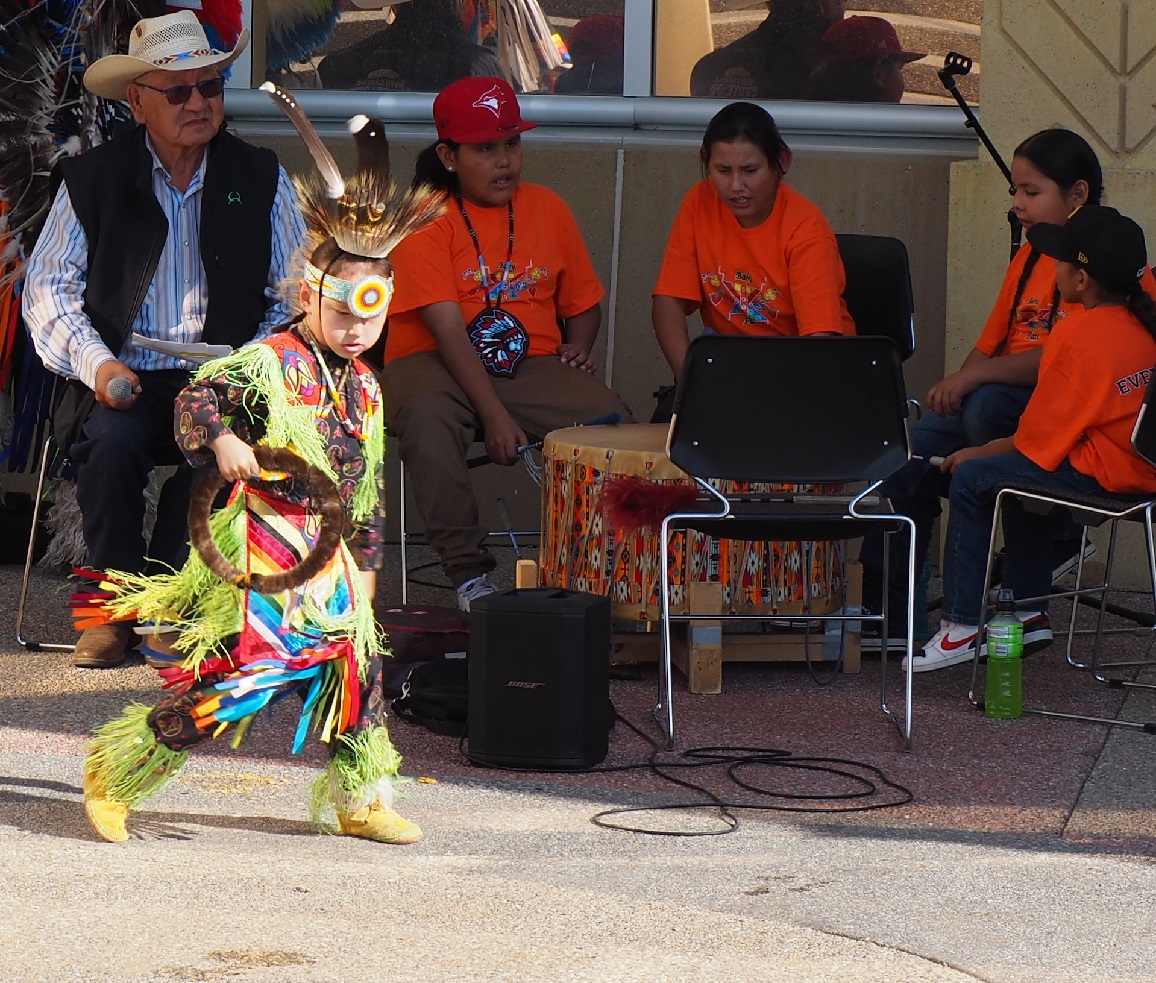
On Friday, September 22, 2023, Blackfoot Crossing, the Historic Site of the signing of Treat No. 7, held a special commemoration event to celebrate the 146th year of the signing with traditional activities that included drum beating and dancing by the children and youth of The Siksika People — also known as The Blackfoot. Malik Merchant drove down to the stunning site overlooking the Bow River. While he enjoyed the traditional activities as well as a BBQ lunch — all free on Commemoration Day — he was impressed and inspired by the exhibits in the beautifully curated museum dedicated to showcasing the history and culture of The Blackfoot.
Story continues below
A traditional dance performance by a young child to the tune of traditional drum beating by children and youth of the Siksika Nation. Please click on image for full report and more photographs.
~~~~~~~
A view of the valley and Bow River from Blackfoot Crossing’s lookout point. Please click on photo for full report and more photographs.
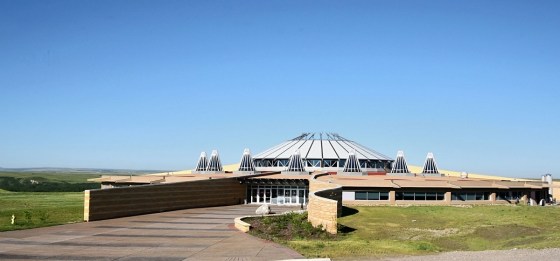
The Historical Park is just over an hours drive from Calgary and one cannot fail to admire and be impressed by the central building’s architecture that has tipis and tipi shaped structures incorporated into its design. The centre includes a cafeteria, a gift shop, a beautiful little theatre as well as an amphitheatre. The lookout point is 300 metres from the building and there is also a paved trail leading to see tipi tents and other interesting features of the area. Please click HERE or on the images below to view Malik’s full report and photographs. Also click Blackfoot Crossing Historical Park Website for more information about the unique heritage site. Plan a day to visit and learn about the history and culture of the Siksika First Nations People as well as to enjoy the beautiful natural surroundings and easy trails for the entire family.
~~~~~~~
A view of Blackfoot Crossings beautiful museum dedicated to the Siksika First Nations. Please click on photo for full report and more photographs.
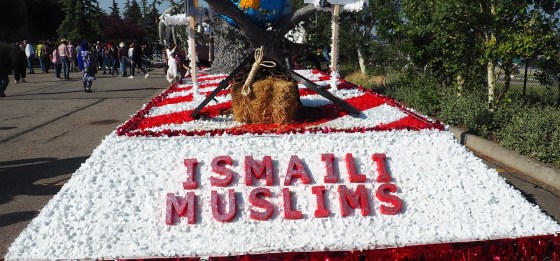
Today, in this post, I honour Calgary city’s police force by providing a photo of some of the police officers that were on duty for the annual Ismaili Muslim Stampede Breakfast. Yes it is “THE TOP” breakfast event in Calgary during the Stampede. On Saturday July 8, 2023, the breakfast even brought the political heavyweights in Canada — from the Prime Minister of Canada to the Premier of Alberta to the Leader of the Official Opposition of Canada — to the grounds of the Ismaili Muslim Headquarters Jamatkhana for a superb breakfast consisting of the East African dish, bharazi! Malik Merchant knew about the bharazi, the pancakes, and the chai but the sirens that he heard as he reached closer to the grounds were not of those of fire brigades and ambulances…but that of the Prime Minister’s motorcade! Please see his story and photographs.
External link(s) to story after photo
The Ismaili Muslim community’s self-discipline creates a stress free environment for everyone including police officers. They are seen at the annual stampede breakfast held in Calgary on Saturday, July 8, 2023. Please click om image for story and more photographs.
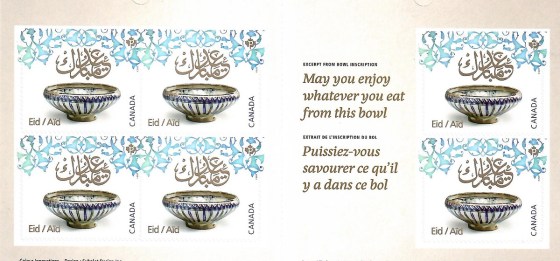
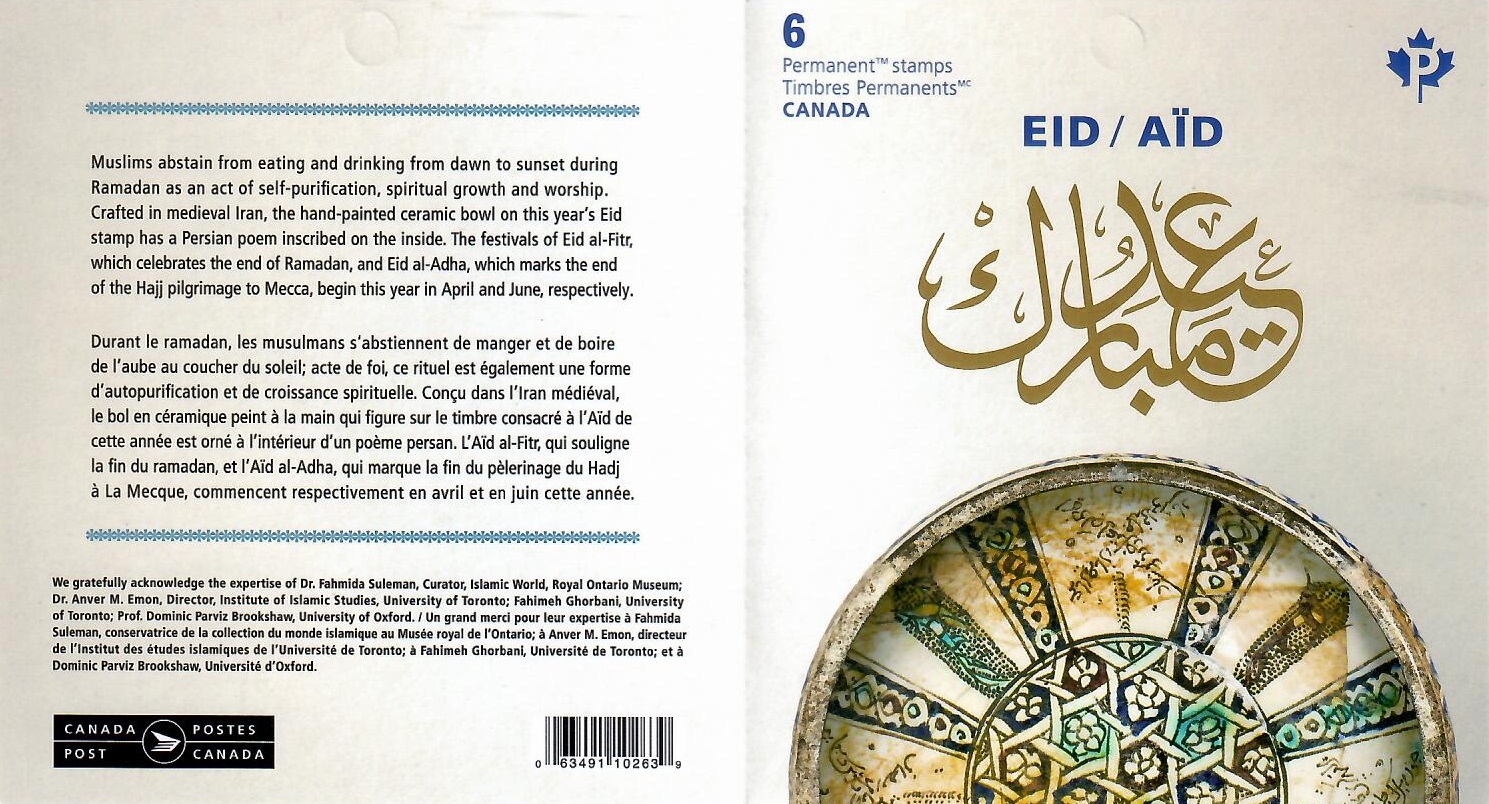
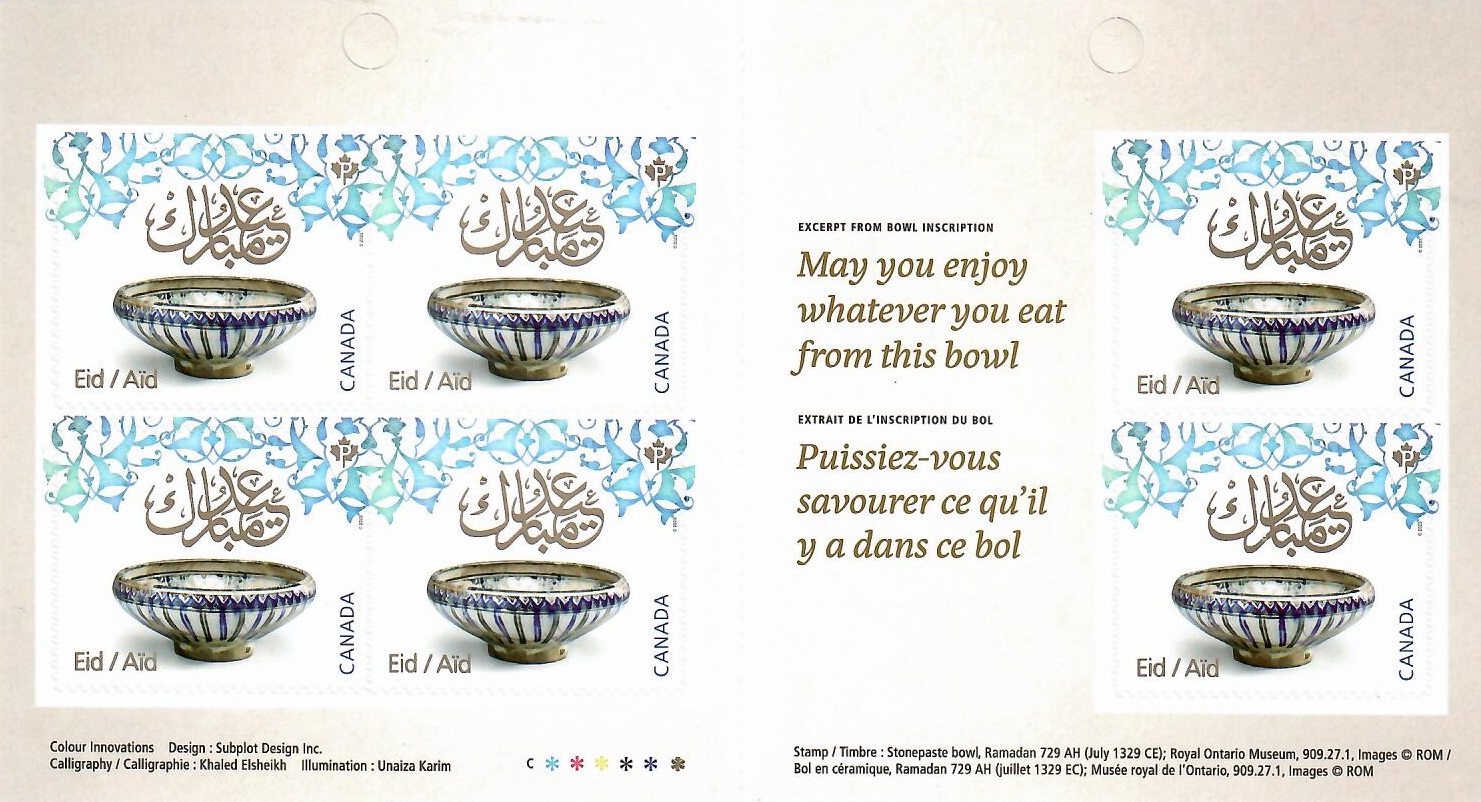
On April 3, 2023, Canada Post issued a special stamp to commemorate two Muslim Eid Festivals: The Eid al-Fitr which was celebrated on April 21 at the completion of the month of Ramadhan and the upcoming Eid al-Adha which will be held between June 26 to July 1 to mark the Festival of Sacrifice that is held at the end of the annual pilgrimage to Mecca.
Story continues below
Front (at right) and back of booklet of Eid stamps issued by Canada Post on April 3, 2023 to commemorate Eid al-Fitr and Eid al-Adha. Booklet size, opened as shown above, appx. 190 cms x 105 cms. Please click on image for enlargement.
In our special post announcing the Eid stamps, we had recommended to our readers that they should obtain the stamp from postal outlets in drug stores such as Shoppers Drug, at actual Canada Post offices or order them on-line. As I soon found out, in Calgary as well as during my visit to Toronto, none of the retail postal outlets or post offices that I visited sold the stamp separately or even stocked the booklets of 6 stamps (each booklet is priced at $5.52). I placed an on-line order for 6 booklets that arrived by mail within a couple of days. Any order that amounts to $25.00 or more is shipped free within Canada, with tracking.
Story continues below
Eid stamps as presented by Canada Post in special booklet issued on April 3, 2023. The stamps can be detached from the booklet and used to mail letters. Booklet size, opened as shown above, appx. 190 cms x 105 cms. Please click on image for enlargement.
The six stamps inside the booklet can be used to cover the cost of standard letter shipping within Canada — it may be noted that the stamp is of permanent value which means that even if the cost of mailing a 1st class standard letter (less than 30 gms) within Canada goes up, you can use the stamp without having to pay extra. The stamps will be a pleasant surprise to recipients of your letters at home as well as abroad, a great item for collectors of Islamic stamps, a personal keepsake or to give it as a gift that will be appreciated and cherished for years.
I am delighted to present the outside and inside images of the stamp booklet. You may order the booklet(s) by clicking on Purchase Eid Stamps at Canada Post. Remember postage is free for orders $25.00 and higher — and you may combine the booklet orders with purchases of other items available on-line. For single or multiple booklet purchases totalling less than $25.00, there is a shipping charge of $4.99 (all prices quoted in CAD $.)
Date posted: June 10, 2023. Last updated: June 11, 2023 (added note on shipping charge.)
“Rugs from West Asia — primarily from Iran, Turkey, and the Caucasus — are likely among the most beautiful objects ever created by humans. Perhaps it is the play of light on the piled surface, the richness of the colors from the natural plant and insect dyes, or the compositions integrating the multilayered patterns. The personal experience of beholding a beautiful rug enchants each of us in our own way” — Paul Ramsey, quoted in Don’t Miss This Local Exhibition posted in www.5280.com
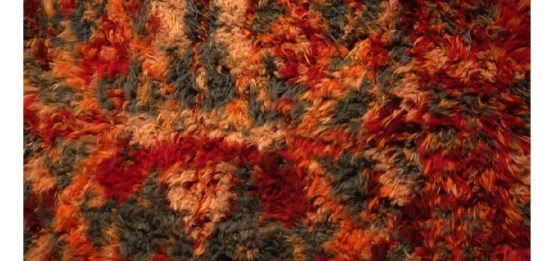
Featured image at top of post: A view of a gorgeous thick piled Turkish yata which served as portable bedding in the 19th century. Image clipped from VOA video (watch video below.)
With more than 40 objects on display, the exhibition Rugged Beauty: Antique Carpets from Western Asia which runs at the Denver Art Museum until May 28, 2023, opens a window into the artistic and utilitarian innovations of weavers, domestic consumption, and the cross-cultural exchanges between present-day Turkey, Iran, and the Caucasus (Armenia, Azerbaijan, and Georgia) from the 1500s to the 1900s.
The stories in Rugged Beauty showcase the living traditions of western Asia, a vast and culturally rich region of the world. Each of the objects on displaywere made by hand, predominantly dyed by hand, and hand-woven using the knotted-pile weaving technique. Though the individual identities of the makers are mostly unknown, the rugs’ designs of rich colors, intricate patterns, and complex symbols reveal a deep history of trade, diplomacy, and foreign relationships.
Centuries-old weavings from the Caucasus, Iran and Turkey show the individual stories and intertwined histories of the region in a museum exhibit in the Western U.S. state of Colorado. If you are in Denver or surrounding areas, try and visit this beautiful display of magnificent rugs. The museum notes on its website that entry to the exhibition is included in general admission, which is free for everyone 18 and under every day, as well as museum members.
~~~~~~~~~~
WATCH VIDEO: Antique Rugs From Caucasus, Iran, Turkey Reflect History in Patterns
Centuries-old weavings from the Caucasus, Iran and Turkey show the individual stories and intertwined histories of the region in a museum exhibit in the Western U.S. state of Colorado
REVIEW SIMERG’S TABLE OF CONTENTS AND VISIT ITS SISTER WEBSITES
Before departing this website, please take a moment to review Simerg’s Table of Contents for links to hundreds of thought-provoking pieces on a vast array of subjects including faith and culture, history and philosophy, and arts and letters to name a few. Also visit Simerg’s sister websites Barakah, dedicated to His Highness the Aga Khan, and Simergphotos. The editor may be reached via email at mmerchant@simerg.com.
“Oleg Grabar has done more to define the field of Islamic art and architecture than almost anyone else alive. The questions he has asked, the hypotheses he has proposed and the theories he has developed, over a career that now spans more than six decades, have shaped and defined the way we understand the Islamic world’s rich architectural heritage” — Chairman’s Award Citation, Aga Khan Award for Architecture Ceremony, November 2010, Qatar
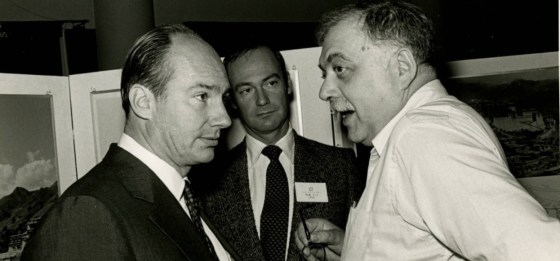
January 8, 2023, the date of this post, marks exactly 12 years since the passing of Professor Oleg Grabar at the age of 81. Simerg’s sister website, Barakah, presents 3 rare photographs connecting the late Harvard and Princeton scholar with His Highness the Aga Khan and the Aga Khan Award for Architecture (AKAA ) as well as includes the full citation of the honour that was bestowed on Grabar by the Aga Khan during the presentation ceremony of the world’s biggest architecture prize on November 24, 2010 — READ MORE
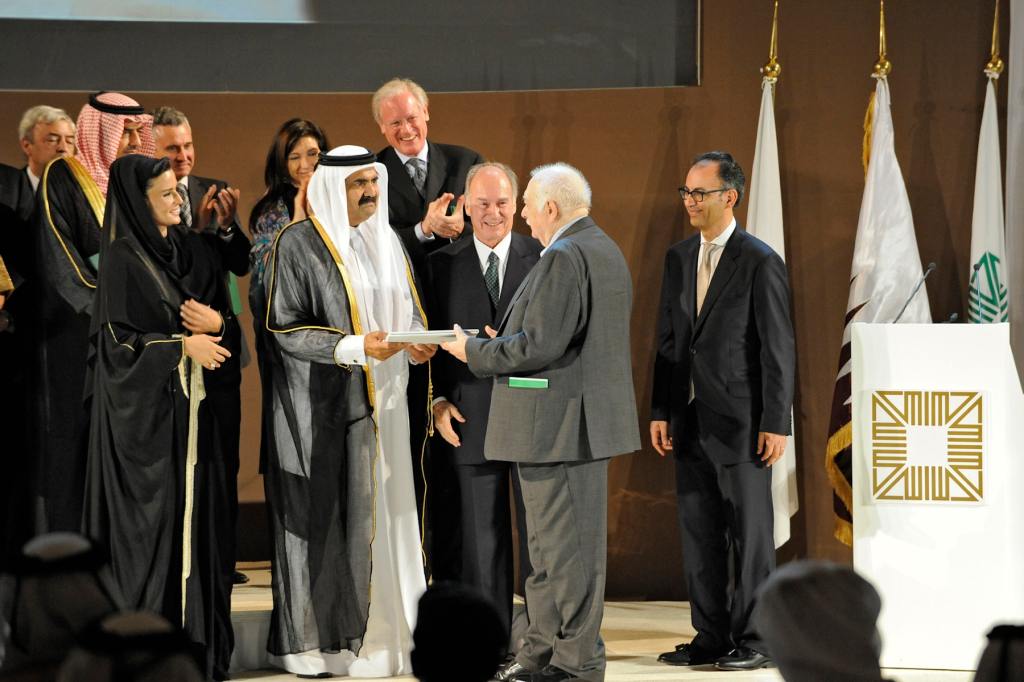
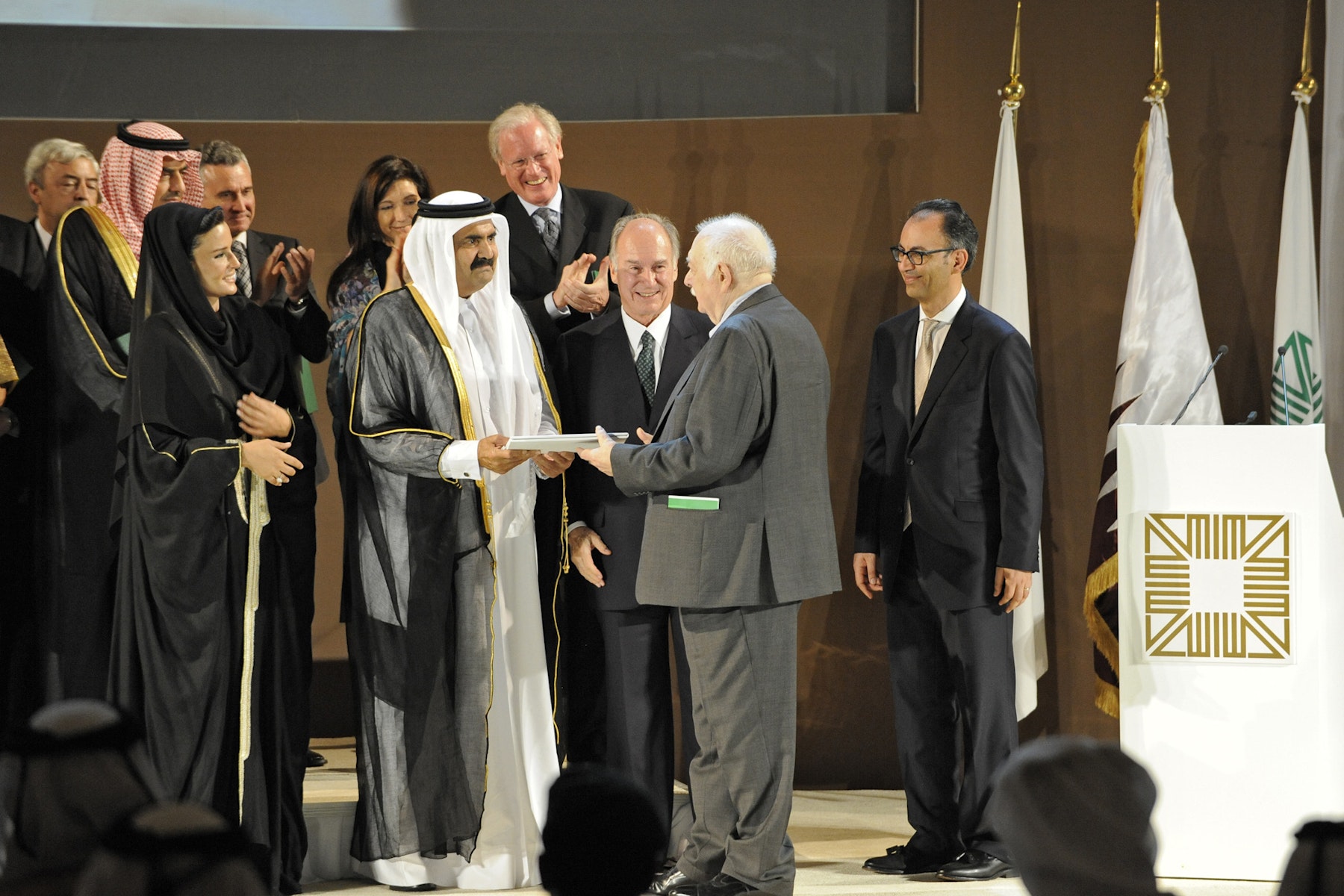
His Highness Sheikh Hamad bin Khalifa Al Thani, the then Emir of Qatar, presents a certificate to Professor Oleg Grabar who was awarded the Chairman’s Award in recognition of his lifetime contribution to the field of Islamic art and architecture, as Her Highness Sheikha Moza bint Nasser and His Highness the Aga Khan look on. The Award ceremony took place in Qatar November 24, 2010. Photograph: AKDN/Gary Otte. Please click on photo for Citation and more photographs.
REVIEW SIMERG’S TABLE OF CONTENTS AND VISIT ITS SISTER WEBSITES
Before departing this website, please take a moment to review Simerg’s Table of Contents for links to hundreds of thought-provoking pieces on a vast array of subjects including faith and culture, history and philosophy, and arts and letters to name a few. Also visit Simerg’s sister websites Barakah, dedicated to His Highness the Aga Khan, and Simergphotos. The editor may be reached via email at mmerchant@simerg.com.
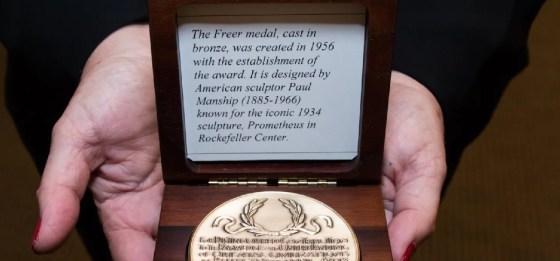
The National Museum of Asian Art has announced its 2023 recipients of the Freer Medal, a lifetime achievement award that honors individuals who have substantially contributed to the understanding of the arts of Asia throughout their career. This year, the institution’s centennial, the honor will go to Vidya Dehejia, the Barbara Stoler Miller Professor Emerita of Indian and South Asian Art at Columbia University, and Gülru Necipoğlu, the Aga Khan Professor and Director of the Aga Khan Program for Islamic Architecture at Harvard University’s History of Art and Architecture Department. They will be honored for their lifetime work in South Asian art and arts of the Islamic world, respectively. The medal will be presented to Dehejia April 28 and to Necipoğlu Oct. 27.
Named after the museum’s founder, Charles Lang Freer, the Freer Medal has been awarded 14 times since its inception in 1956. This is the first time that a scholar of South Asian and another of Middle Eastern descent will receive the award. Only two other women have previously received the Freer Medal: It was awarded to Dame Jessica Rawson, professor of Chinese art and archaeology at the University of Oxford, in 2017 and to Stella Kramrisch, Czech art historian and leading specialist on South Asian art, in 1985.
“The Freer Medal is an important way in which our museum encourages and exemplifies excellence in Asian art scholarship,” said Chase F. Robinson, Dame Jillian Sackler Director of the Arthur M. Sackler Gallery and Freer Gallery of Art, the National Museum of Asian Art. “We are pleased to recognize the enormous contributions that these scholars have made to their fields. It is long overdue that women of Middle Eastern and Asian heritages receive the Freer Medal. The museum congratulates Vidya Dehejia and Gülru Necipoğlu on this award during the landmark occasion of our centennial.”
About Gülru Necipoğlu
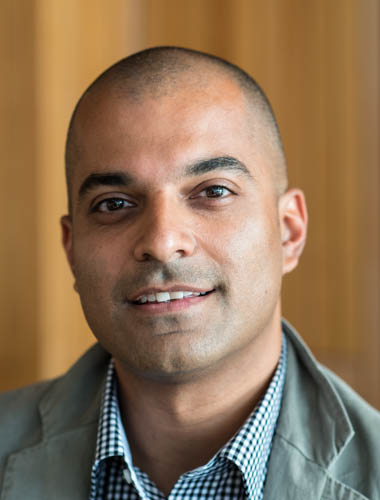
Gülru Necipoğlu. Photograph: Via National Museum of Asian Art
Necipoğlu earned her doctorate from Harvard University in 1986 and has served there as the Aga Khan Professor and Director of the Aga Khan Program for Islamic Architecture since 1993. She holds a Bachelor of Arts from Wesleyan University and a Master of Arts from Harvard University. Necipoğlu specializes in the arts and architecture of the pre-modern Islamic lands, with a focus on the Mediterranean world and the cross-cultural and artistic exchanges between the Ottoman, Safavid and Mughal empires in the 16th and 17th centuries. Grounded in rigorous archival research, her multi-disciplinary studies have addressed the aesthetic interconnections of Byzantium and Renaissance Europe, pre-modern architectural practices and the role and function of ornament in the Islamic world and beyond, offering new and highly original perspectives on the arts and architecture of the region. Throughout her illustrious career, Necipoğlu has also trained and mentored numerous students, who have continued to transform the field.
Since 1993, Necipoğlu has also served as editor of Muqarnas: An Annual on the Visual Cultures of the Islamic World and its supplements, the pre-eminent publication in the field, which has transformed the study of the arts and architecture of the Islamic world. Her own publications comprise studies in monumental architecture to intricate designs on portable objects and have changed the understanding of the arts of the Islamic world. They include Architecture, Ceremonial and Power: The Topkapı Palace (1991), The Topkapı Scroll–Geometry and Ornament in Islamic Architecture (1995), The Age of Sinan: Architectural Culture in the Ottoman Empire (2005, 2011), Treasures of Knowledge: An Inventory of the Ottoman Palace Library (1502/3–1503/4) (2 vols, 2019, coeditors Cemal Kafadar and Cornell H. Fleischer), The Arts of Ornamental Geometry: A Persian Compendium on Similar and Complementary Interlocking Figures (2017), A Companion to Islamic Art and Architecture, in the Wiley-Blackwell Companions to Art History (coeditor F. Barry Flood, 2017) and Histories of Ornament: From Global to Local (coeditor Alina Payne, 2016).
In recognition of her distinguished scholarly career, Necipoğlu is an elected member of the British Academy, the American Philosophical Society, the American Academy of Arts and Sciences and the Centro Internazionale di Studi di Architettura Andrea Palladio in Vicenza, Italy.
_____________
Oleg Grabar: One of 14 Previous Recipients of the Freer Medal , was Instrumental in Founding Harvard’s Aga Khan Program for Islamic Architecture
The following piece about Oleg Grabar includes material from a memorial meeting held by Harvard’s Faculty of Arts and Sciences on May 1, 2012. Co-incidentally, we are publishing this piece almost 12 years to the day of Grabar’s death on January 8, 2011.
Oleg Grabar. Photograph: Archnet
Among the fourteen previous recipients of the Freer Medal is Professor Oleg Grabar (1929-2011), who received the eleventh presentation of the medal on April 5, 2001. A special award booklet dedicated to Professor Grabar was published and can be downloaded by clicking HERE.
On November 24, 2010, at the Aga Khan Award for Architecture ceremony held in Qatar, His Highness the Aga Khan presented the Chairman’s Award to Professor Oleg Grabar in recognition of his lifetime contribution to the field of Islamic art and architecture. Less than two months later, on January 8, 2011, Oleg Grabar passed away at his home in Princeton, New Jersey, at the age of eighty-one.
Professor Grabar was recognized by the Islamic art and architecture community as one of the field’s most influential and insightful scholars. He was professor emeritus of the School of Historical Studies at the Institute for Advanced Study, and Aga Khan Professor, Emeritus, at Harvard University.
Professor Grabar, who taught in the Harvard Department of Fine Arts (now History of Art and Architecture) for twenty-one years (1969–1990), was instrumental in founding Harvard’s Aga Khan Program for Islamic Architecture. There are few, if any, Islamicists who have not profited from the scholarly contributions of this extraordinary man, who was larger-than-life. He was the first Aga Khan Professor of Islamic Art at Harvard (1980–1990) — a position now held as mentioned in the previous section above by Gülru Necipoğlu — and subsequently joined the faculty of the Institute for Advanced Study in Princeton, where he remained active in research and publication until his second retirement in 1998, and over the following thirteen years as well. Grabar’s continuing post-retirement intellectual productivity and capacity to inspire were officially recognized when he received His Highness the Aga Khan’s Chairman’s Award in Doha, Qatar, in 2010.
Please click on photo for enlargement
His Highness Sheikh Hamad bin Khalifa Al Thani, the then Emir of Qatar, presents a certificate to Professor Oleg Grabar who was awarded the Chairman’s Award in recognition of his lifetime contribution to the field of Islamic art and architecture, as Her Highness Sheikha Moza bint Nasser and His Highness the Aga Khan look on. The Award ceremony took place in Qatar November 24, 2010. Photograph: AKDN/Gary Otte.
Date posted: January 6, 2023.
__________________
REVIEW SIMERG’S TABLE OF CONTENTS AND VISIT ITS SISTER WEBSITES
Before departing this website, please take a moment to review Simerg’s Table of Contents for links to hundreds of thought-provoking pieces on a vast array of subjects including faith and culture, history and philosophy, and arts and letters to name a few. Also visit Simerg’s sister websites Barakah, dedicated to His Highness the Aga Khan, and Simergphotos. The editor may be reached via email at mmerchant@simerg.com.











 Simerg - Insights from Around the World