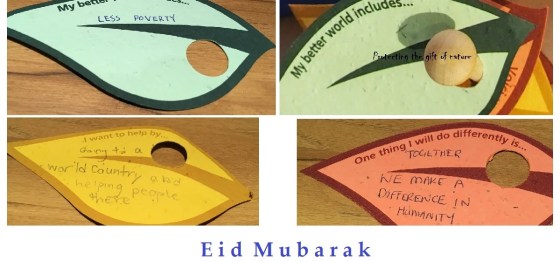
The Faith and Loyalty of Prophet Ibrahim (A.S.) and the Courage of His Son, Prophet Ismail (A.S.): Verses from the Qur’an, Poem and a Heart Warming Story for Eid al-Adha; Plus an Invitation to the Free Calgary Stampede/Eid Breakfast

Introduced by MALIK MERCHANT

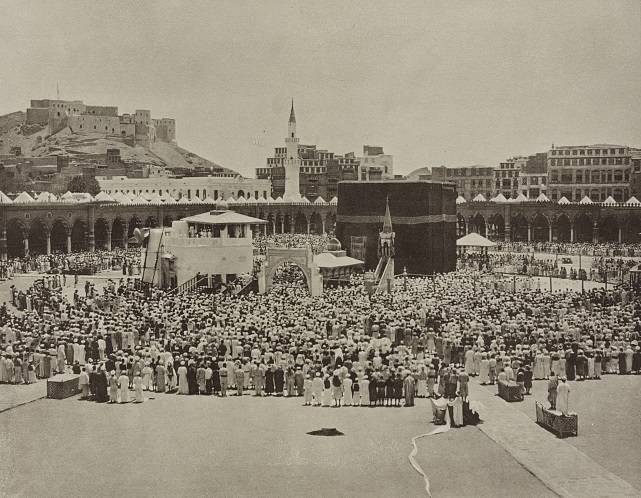
Eid al-Adha is celebrated around the Muslim world on the 10th day of the twelfth month of  ‘DhuI-Hijjah, after the culmination of the annual pilgrimage to Mecca (see historical photo, below). This year (2022) the Eid will be celebrated by the Canadian Ismaili Muslim community on Saturday, July 9. Numerous Muslim Mosques in Canada have also announced that the Eid al-Adha Namaz prayer will be offered on July 9. In Calgary, Canada, the Eid al-Adha prayers at the Ismaili Headquarters Jamatkhana will be followed by a special free Calgary Stampede/Eid al-Adha breakfast starting at 11 AM (see details HERE).
Hajj historical photo library of congress simerg
Between 1909 and 1919. Muslim Pilgrims at the Kaaba in holy city of Mecca. Photo: US Library of Congress.

In addition to the Eid, Ismailis around the world will gather in their Jamatkhanas on Monday, July 11, to celebrate the 65th Imamat Day of Mawlana Hazar Imam, His Highness the Aga Khan, who succeeded to the 49th hereditary throne of Imamat at the age of twenty by the will of his grandfather, Mawlana Sultan Mahomed Shah, His Highness the Aga Khan III. The reign of the 48th Imam was a record in Ismaili history, lasting 71 years from August 17, 1885, when he was only 7 years old, until he died on July 11, 1957 at the age of 79.

Later during the week of July 11, on or around Saturday July 16, Ismailis along with other Shia Muslims will be observing Eid-e Ghadir, an event that took place during the return journey of the Prophet Muhammad (S.A.S.) from the annual pilgrimage to Mecca when he designated Hazrat Ali (A.S.) to succeed him as the first Imam.

Simerg and its sister websites will carry special features related to these important historic events. For Eid al-Adha, we have Qur’anic verses as well as a poem and a beautiful story by Farah Tejani, whose creative writing has been widely appreciated by our readers.

We convey our heartiest felicitations to all our readers and friends on the occasion of Eid al-Adha and offer our prayers for the fulfilment of all your wishes, for good health as well as for barakah and success in your endeavours.

_________________

The Qur’an on the Sacrifice

He said, ‘I am going to my Lord; He will guide me. (99)
My Lord, give me one of the righteous.’ (100)
Then We gave him the good tidings of a prudent boy; (101)
and when he had reached the age of running with him, he said, ‘My son, I see in a dream that I shall sacrifice thee; consider, what thinkest thou?’ He said, ‘My father, do as thou art bidden; thou shalt find me, God willing, one of the steadfast.’ (102)
When they had surrendered, and he flung him upon his brow, (103)
We called unto him, ‘Abraham, (104)
thou hast confirmed the vision; even so We recompense the good-doers. (105)
This is indeed the manifest trial.’ (106)
And We ransomed him with a mighty sacrifice, (107)
and left for him among the later folk (108
‘Peace be upon Abraham!’ (109)
(Holy Qur’an, 37:99-109, translation by A.J. Arberry (click Corpus Quran for multiple translations.)

~~~~~~~~~~~

The Great Sacrifice

By FARAH TEJANI

Omnipotent and Merciful is He,
Allah knows what is best,
At certain times He chooses
To put us through certain tests

He observes our response
To His Rightful Command,
And on this He Judges,
Just exactly where we stand.

It is not meant to be easy,
What would be the purpose,
So we are challenged in truth,
Our response to Him defines us.

Reflect and recall a time when,
We chose not to obey His Laws,
He being of course, All-Forgiving,
No doubt, forgave us our flaws.

But what is to be said,
Of Hazrat Ibrahim, The One,
On the day he was commanded,
To take the life of his own son!

Put yourself in his place,
Could you do the same,
Take the life of who you hold most dear,
The ultimate sacrifice in Allah’s name.

Eid al-Adha celebrates Ibrahim’s loyalty,
To The Great and Loving Wise One,
Though surely riddled with fear and pain,
He placed Ismail, his most precious son,

In front of him, and said a prayer,
In the Name of Allah, Lord of All Things,
He swang the knife and opened his eyes,
And “Oh, But what Mercy God Brings.”

In the place of his very own son’s head
A miraculous goat’s head had fallen,
Allah rewarded Ibrahim’s obedience,
Without even a moment of stalling.

Try to imagine the emotions he went through,
Ibrahim was elated and held Ismail near,
Most Merciful is Our Most Gracious Creator,
Humbled by Allah’s Grace he held back a tear.

Abraham would we if we could,
Be as loyal as you are to Allah’s Laws,
You stand as a testimony of Great Faith,
Without even a moment to pause.

Let it be our endeavour, to faithfully honor,
The Words from Above they are in our best interest,
Take a moment to reflect this Eid al-Adha,
And we, too, will surely be at our best.

~~~~~~~

Elizabeth the Ladybug and the Lonely Rose

Ladybug. Photo: DM (dmott9) on Flickr

By FARAH TEJANI

Elizabeth the ladybug prided herself on being a very adventurous and curious little insect. Oh, life was simply so magnificent and extraordinary, and she remembered to thank God every single second. There was so much to learn and do, and this day was a very special day. Somehow inside she knew this was going to be a day she would never forget.

There was just something about the way the sun burst out of the sky just like a clown out of a wind-up music box. Today was just after a summer rain which made a double rainbow in the clouds. Elizabeth’s grandpa used to say that this meant there was a pot of gold at the end, but Elizabeth was not interested in gold today. Her grandfather always told her, “Always remember, Lizzie,” because that is what her family called her, “There are always many, many more important things in this world than gold.”

When Elizabeth was very young, her mother asked her, “Lizzie, honey, if you could do anything you want, what would you like to do more than anything in this world?” and Elizabeth kicked her little black foot in the blades of grass, “I don’t know…anything?” “Yes,” her mother smiled, not having a clue what her daughter would say. “I guess I would like to get to know everybody in the whole wide world!” 

“Oh my!” she exclaimed, “This world is a pretty big place, and how would such a little ladybug like you do that?”

Elizabeth looked at her very seriously, “That’s easy. One at a time!”

Her mother laughed and gave her daughter a big hug! She knew if any ladybug could do it, Lizzie would! She would fly as far as her little wings would take her. There was nothing more fun than making new friends. And Lizzie had lots of them.

And this day was special. Elizabeth was on a mission to make a new friend at her favorite park in Richmond, British Columbia. Slowly she made small steps which gave her more time to see more things. Her mother used to tell her, “Lizzie, remember not to run through life too quickly; you might miss out on the good stuff…which was true indeed. So there were times when she would use her wings, but times when she would take slow meticulous steps and enjoy it like a hot cup of chocolate when it’s snowing.

Swan. Photo: Malik Merchant

Minoru Park was so special because it had squirrels and rabbits and ducks and swans and all types of plants and flowers. Elizabeth had many friends here already but today she was on a special mission to meet a new friend she just knew needed her help. You know how you just know things sometimes?…Yeah, like that.

Elizabeth passed all the friends she knew already because she was so tiny, and it was hard for them to see her. So she made her way across the step bridge and smiled at the mating swans which were making a heart shape with their necks. CLICK. She took a photo with her mind because she didn’t have a camera. This is how you make memories. Elizabeth had taken many photos in her mind. Sunsets, spider webs, flowers, squirrels, rabbits, frogs, butterflies and especially family. Photos that she could remember whenever she wanted to.

Suddenly, Elizabeth smelled a beautiful fragrance coming from the flowers on the other side of the bridge.  She tiptoed on the dew on the grass so as not to disturb them and watched in wonder as they went about their day.

She was quite surprised to find some yellow sunlit dandelions doing the tango and dancing in the breeze. They were not aware that she was nearby and so they just laughed and giggled and enjoyed the warmth on their petals. Elizabeth called up from below, “Hey, my name is Elizabeth…do you want to be my friend?” But they were not able to hear her, so she just kept going, sure she would find that special friend.

Tulips. Photo: Nurin Merchant

 And then Elizabeth went to the next bush and she couldn’t believe what she saw! Believe it or not Elizabeth saw some tulips holding briefcases, pens and pencils and charts and diagrams! They seemed to be talking and holding some kind of very important business meeting. Just like humans! “Oh, if only humans only knew what animals and nature do when they are asleep or not paying attention!” Elizabeth decided it was probably best not to disturb them. She carried on her very important adventure.

Elizabeth went a bit further and came across some lilacs singing in a choir! A choir! Oh, they sure sounded as pretty as they looked. It was the end of summer and they were already practicing Christmas carols. Elizabeth sat and listened to their songs for a bit. She was quite amazed at how gifted and talented they were. Elizabeth was going to stop and ask if she could sing with them, but she was determined to make a new friend today, and this would just delay her.

Elizabeth went a little further to a bush with no flowers, just bulbs that had not bloomed just yet. But there right in front of her lying in the grass was a single long stem rose that had been plucked and thrown away! This rose did not look happy just drying up and withering in the sun.

Wilting rose. Photo: Rashida Tejani for Farah's story Elizabeth
Wilting rose. Photo: Rashida Tejani

“Are you okay?” Elizabeth asked her sincerely.

 No answer.

 Elizabeth asked again and moved closer in case she couldn’t hear her. 

“Hey, my name is Elizabeth…do you want to be my friend?”

But there was no response. 

Elizabeth began to worry and she tried again, really anxious on becoming this rose’s friend… she just knew this was the special reason for today’s adventure and she was not going to give up.

“Excuse me, can you hear me? Are you okay? I would like to be your friend.”

Suddenly a small soft voice uttered very slowly and with much effort, “Oh, can’t you see? There’s no time for friends. Can’t you see that a human has plucked me from my bush and cast me to the ground. I was up there in my bush and I was the first one to bloom, so some human thought I was pretty and smelled me and then just decided to throw me away like an old newspaper that has already been read!”

Elizabeth knew this was her special friend and she knew she would do anything to help her.

“What do you mean?” Elizabeth was genuinely concerned. “How can I help you?”

“Put me back in my rose bush with my friends!”

Elizabeth  knew she had to do something.

“Just like you need the plants and the dew on grass I need water and the sun and the soil to LIVE!” The rose craned her neck up with much effort to look Elizabeth in the eyes. “The sun is so hot and blazing on me that I am drying up and withering away! I don’t have too many words left but I hope you will hear me and share this message. I wish human beings would be more careful. LIVE AND LET LIVE!” 

With one of her thorns she pointed at the puddle just next to them.

“You look like a very brave, strong and determined little lady bug. I have faith in you, my new friend. Do you have the strength to roll my stem in there, just so I can live just a little bit longer?”

Elizabeth had tears in her eyes, and looked sadly at the dying rose. But she was so happy she called her her new friend. “I know I can!” She knew there was a reason for her going on her adventure.

And with that, Elizabeth dug her heels in the ground and rolled the end of the flower’s stem into the puddle that she was so happy was there.    

“LIVE AND LIVE!” The rose was fading now. With whatever strength she could gather from the water in the puddle she managed to say some very important things!  

“Don’t put lions in cages, don’t put elephants in cages, don’t put gorillas and monkeys in cages, don’t put killer whales and dolphins in aquariums, don’t put fish and snakes and lizards in tanks…and for God’s sake don’t pluck flowers because they are pretty and they smell nice! LIVE AND LET LIVE! We last a lot longer in the bush and animals last a lot longer in their natural habitat!”

Ladybug. Photo: DM (dmott9) on Flickr

Elizabeth flew up to her petals and closed her eyelids and with that the rose slowly faded away leaving three or four dried red rose petals that looked like tears. Elizabeth took a very sad but meaningful snapshot in her mind and felt very sad that she only had this friend for a matter of minutes. But she was grateful for the lesson that would last a lifetime!

Tears were flowing from her eyes as she sat with the rose while the sun was setting in the distance. She had never thought about how important life was. No one had ever tried to take hers except for that young girl on the farm who put her under a glass where she was held prisoner for hours, but fortunately one of the adults used the glass to get some orange juice and she managed to get away. God knows what the young child would have done with her if the grown up didn’t come in time!

Elizabeth did not even know the rose’s name. “LIVE AND LET LIVE” indeed. Elizabeth said a small prayer of gratitude to God. “Thank you, for this GIFT OF LIFE YOU HAVE GIVEN ME, MY GIFT BACK TO YOU IS WHAT I DO WITH IT.” Amen.

Date posted: July 08, 2022.

_______________________

Farah Tejani creative writer Vancouver
Farah Tejani

Farah Tejani is a creative writer based in Vancouver. She is currently working on childrens’ stories and a collection of poetry called “Elastic Embrace.” She has been contributing poems and stories for Simerg and its sister website Barakah for the past year. We invite our readers to read some of Farah’s poems by clicking on  Elastic Embrace; The Fragrance of Spring; and “In Mawlana Hazar Imam’s Eyes”. In addition to Elizabeth the Ladybug and the Lonely Rose, children will also love another story by Farah called Mr. Sneaky Peeky and the Two Red-Tailed Monkeys.

We welcome feedback from our readers. Please complete the LEAVE A REPLY form. Your letter may be edited for length and brevity, and is subject to moderation.

_______________

Before departing this website please take a moment to review Simerg’s Table of Contents for links to hundreds of thought provoking pieces on a vast array of subjects including faith and culture, history and philosophy, and arts and letters to name a few. Also visit Simerg’s sister websites Barakah, dedicated to His Highness the Aga Khan, and Simergphotos.

Simerg’s Special Series on Books by Ismaili Authors: “Malaria Memoirs: My Life Journey as a Public Health Doctor in Tanzania” by Dr Zul Premji of Calgary is a Compelling Story of Honesty, Hard Work, Humility and Determination

By MALIK MERCHANT
Publisher/Editor SimergBarakah and Simergphotos

Simerg’s series entitled “Books by Ismaili Authors” continues with Calgary based Zul Premji’s recent book “Malaria Memoirs: My Life Journey as a Public Health Doctor in Tanzania.” We follow the same Q/A format as our earlier presentations of books written by Azim Jiwani (Vancouver), Naznin Rahemtulla Hébert (Montreal), Shairoz Lakhani (London, UK), Shelina Shariff Zia (New York), Ali Lakhani (Vancouver), Nizar Sultan (Toronto), Nargis Fazal (Vancouver), Nazlin Rahemtulla (Vancouver), Azmina Suleman (Calgary), Alnasir Rajan (Mississauga), Shafeen Ali (USA), Mansoor Ladha (Calgary), Zeni Shariff (Toronto) and Shamas Nanji (Edmonton). We encourage Ismaili authors from around the world to participate in this series, regardless of when their books were published. See details of the series HERE and submit your responses accordingly to Simerg’s editor, Malik, at mmerchant@simerg.com.

****************

“This memoir is a rags-to-riches tale full of material on human frailty…It anchors Zul as a superb storyteller…Candid, Honest and Stimulating” — Wafaie Fawzi, Richard Saltonstall Professor of Population Sciences, Harvard University

****************

Simerg’s Interview with Dr Zul Premji

Simerg: What is behind the naming of the title of the book?

Zul Premji: The title of my book Malaria Memoirs reflects my life story from birth to retirement. For almost forty years of my professional career, I devoted my life to control malaria in Tanzania; thus my life story is intertwined with malaria in Tanzania. I believe many migrants from Africa who have settled in Europe and North American would have suffered from malaria illness in their childhood while in Africa. This book gives them the nostalgic experience of such malaria episodes and perhaps may provide some insights into malaria as a disease and a public health threat. Through this book the generation that migrated will be able to relay their stories about mosquitoes, mosquito coils, the bitter pills and bed nets to the next generation.

Simerg: Why would you want me or my family members to read the book, and what will we all learn from it?

Premji: This book is a tale of hard work, honesty, determination, failures and success. It is a humble story of a poor family and how one of the siblings becomes a Professor at the Medical School in Dar es Salaam. For the younger generation, it is a proof of concept that hard work, honesty and determination is needed to become meritocratic and achieve success in life. To many of my students, this will be an inspirational story of how teaching combined with research can be the most satisfying and effective career path. The book is also for those who are aspiring health related careers to think beyond clinical medicine like surgery, cardiology etc. and think the impact one can make in Public Health, infectious diseases, role of social sciences in disease control and overall research to prevent and minimize human suffering. This is a book that echoes, first, positive thinking in the midst of poverty, disease and suffering and, second, that there are no short cuts to success. 

Simerg: What inspired you to write Malaria Memoirs?

Premji: Upon retirement and relocating to Calgary, Canada, I started to reflect on the work I did at Muhimbili University of Health and Allied Sciences in Dar es Salaam. I realized through research how we were able to lower the malaria prevalence. In the process, I built a strong bond with my students and research team, hence this motivated me to write how all of this was done. The result was my biography. Another reason was the constant curiosity my grandchildren exhibited; they wanted to know everything about life in Tanzania, about my work and how I ended up being a medical doctor. The short clips of my stories have contributed to this book.

Article continues below

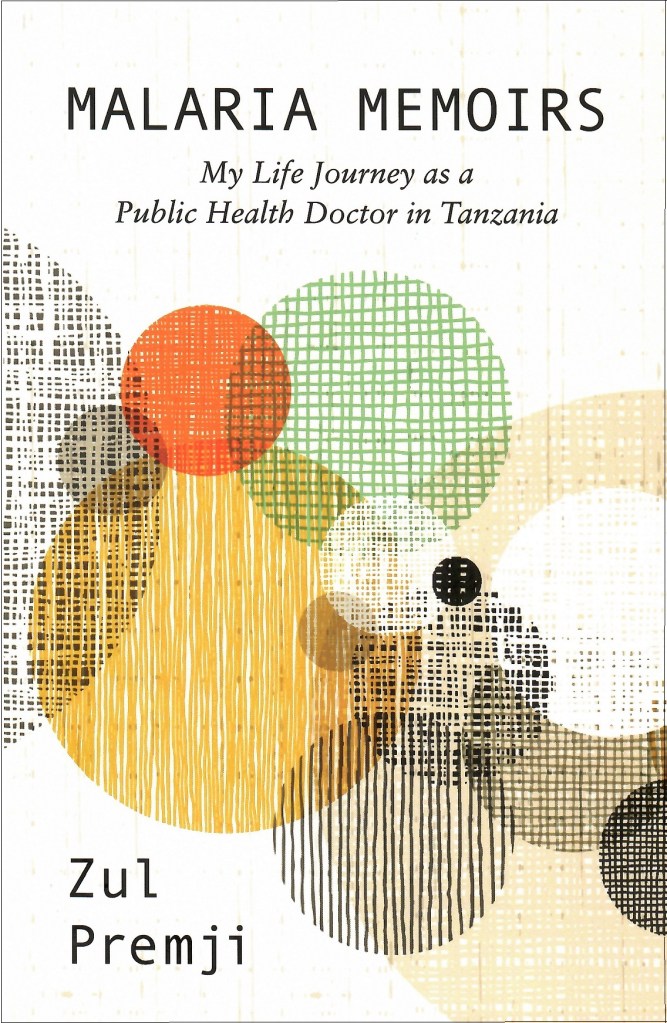
Malaria Memoirs by Zul Premji Ismaili author series Simerg
Cover page of Zul Premji’s book “Malaria Memoirs: My Life Journey as a Public Health Doctor in Tanzania.” Paperback, published by Mawenzi House, Toronto, 2021, 144 pp.

Simerg: How can I purchase the book and what are its available formats?

Premji: The book is available in softcover and e-books, e.g., Kindle, Nook, Apple Books, Google Books. It is widely available directly from the publisher, Mawenzi House, Amazon Canada, Amazon USA and Chapters/Indigo.

Intentionally, the book is not of several hundred pages and is devoid of irrelevant details but the main relevant messages are clearly illustrated. In this era of screens and fast flashy digital clips, reading culture is fast becoming historical. Keeping this in mind, one can easily read this book overnight and feel the author’s pulse.

Simerg: How did you find a publisher for the book?

Premji: I had no clue of how to find a publisher for my book especially in Canada, because malaria cannot be an attractive topic in the cold Canada where there is no malaria. However, through a mutual friend I got connected to the Toronto based Mawenzi House.

~~~~~~~~~

EXCERPTS FROM REVIEWS

“Tremendously interesting and entertaining. Prof Zul’s Malaria Memoirs is a truly Tanzanian story to which the average person can relate” — Billy Ngasala, Professor, Muhimbili University Hospital, Dar es Salaam

He speaks with the authority of someone who has met with success. With prose that’s well paced and matter-of-fact, Malaria Memoirs reads like an intimate conversation with a friend, someone who has lived a dedicated life full of achievements and is ready to share — in Compelling People – The Malaria Guru, from rags to research, review by Rachel Gerry, Literary Review of Canada, November 2021

~~~~~~~~~

Simerg: Did you hire an editor, an illustrator or did you do all the work by yourself?

Premji: I wrote the first draft on my own and later the publisher did a wonderful job in editing my initial draft.

Simerg: How long did it take you to write Malaria Memoirs from start to finish and to begin marketing it?

Premji: I think the whole process of writing, editing, printing and distribution took about two years.

Simerg: Would you like to offer further thoughts about your book?

Premji: The book is based on three phases of my life, the early phase in Morogoro, Tanga and my secondary education at a mission school in the south part of Tanzania. The second phase is how through sheer hard work and commitment I pursued medical career and the last phase is my professional life, spent mostly in research and teaching medical students. After retirement, I worked for only three years as Chair of Pathology at the Aga Khan University Hospital in Nairobi and my not so pleasant experiences and observations are clearly explained and the needed remedial actions.

Date posted: June 30, 2022.

_______________

Author Malaria Memoirs, Ismaili author series in Simerg
Dr. Zul Premji

Zul Premji was born in Iringa, Tanzania, and attended school in two towns before obtaining his medical degree from Muhimbili University of Health and Allied Sciences, Dar es Salaam. He later took an MSc in Medical Parasitology from London School of Hygiene and Tropical Medicine, a Diploma in Tropical Medicine from the Royal College of Physicians in London, and a doctorate in Infectious Diseases from Karolinska, Sweden. His specialization included clinical trials, antimalarial drug resistance and malaria case management. Over a career of more than forty years, he has held numerous academic positions in Tanzania, and has been an advisor to National Malaria Control. He now lives in Calgary, Alberta.

We welcome feedback from our readers. Please complete the LEAVE A REPLY form below or click LEAVE A COMMENT. Your letter may be edited for length and brevity, and is subject to moderation.

Calling all Ismaili Authors

We encourage Ismaili writers to introduce their books in a similar format as has been done in the post above. Please also see the series launch article and submit your responses to Malik at mmerchant@simerg.com. All submissions will be acknowledged. If a writer has published multiple books, each book will be highlighted in a separate article, and not combined with other books into one post. All writers should include a brief profile with a portrait photo.

The Ismaili Authors’ Series so far (in chronological sequence, oldest article first):

  1. “Justice Bertha Wilson Pushes the Boundaries of Humanity” by Shamas Nanji (series start, February 10, 2021)
  2. “Little One, You Are The Universe” by Zeni Shariff (February 25, 2021)
  3. “Memoirs of a Muhindi” by Mansoor Ladha (March 6, 2021, and see also 15, below, by the same author)
  4. “To Be One With God: Seven Journeys to the Meaning of Life” by Shafeen Ali (March 25, 2021)
  5. “Invisible Birthmarks” by Alnasir Rajan (April 13, 2021)
  6. “IN THE NAME OF JUSTICE – Portrait of a ‘Cowboy’ Judge” by Azmina Suleman (April 28, 2021)
  7. “RSVP Rice and Stew Very Plenty” by Nazlin Rahemtulla (May 28, 2021)
  8. “Coughdrops” by Nargis Fazal (June 12, 2021)
  9. “The Roots and the Trees” by Nizar Sultan (June 25, 2021)
  10. “Faith and Ethics: The Vision of the Ismaili Imamat” by M. Ali Lakhani (July 4, 2021)
  11. “Nairobi Days by Shelina_Shariff Zia (July 21, 2021)
  12. “Shine Brighter” by Shairoz Lakhani (December 8, 2021).
  13. “This is My Life” by Naznin Rahemtulla Hébert (February 26, 2022)
  14. “Humanizing Medicine – Making Health Tangible” by Dr. Azim Jiwani (March 9, 2022)
  15. “A Portrait in Pluralism: Aga Khan’s Shia Ismaili Muslims” by Mansoor Ladha (June 8, 2022, and see also 3, above, by the same author)
  16. “Malaria Memoirs: My Life Journey as a Public Health Doctor in Tanzania” by Dr Zul Premji (June 30, 2022)

_______________________

Before departing this website please take a moment to review Simerg’s Table of Contents for links to hundreds of thought provoking pieces on a vast array of subjects including faith and culture, history and philosophy, and arts and letters to name a few. Also visit Simerg’s sister websites Barakah, dedicated to His Highness the Aga Khan, and Simergphotos.
The editor may be reached via email at mmerchant@simerg.com.

Mansoor Ladha A Portrait in Pluralism - Aga Khan's Shia Ismaili Muslims Ismaili authors series by Simerg

Simerg’s Special Series on Books by Ismaili Authors: “A Portrait in Pluralism: Aga Khan’s Shia Ismaili Muslims” by Mansoor Ladha of Calgary

By MALIK MERCHANT
Publisher/Editor SimergBarakah and Simergphotos

Simerg’s series entitled “Books by Ismaili Authors” continues with Calgary based Mansoor Ladha’s book “A Portrait in Pluralim: Aga Khan’s Shia Ismaili Muslims.” Mansoor is being featured in the series for the second time, following our interview with him on March 6, 2021 on his more recent work, the highly acclaimed “Memoirs of a Muhindi” that was published in 2017. We follow the same Q/A format as our earlier presentations of books written by Azim Jiwani (Vancouver), Naznin Rahemtulla Hébert (Montreal), Shairoz Lakhani (London, UK), Shelina Shariff Zia (New York), Ali Lakhani (Vancouver), Nizar Sultan (Toronto), Nargis Fazal (Vancouver), Nazlin Rahemtulla (Vancouver), Azmina Suleman (Calgary), Alnasir Rajan (Mississauga), Shafeen Ali (USA), Mansoor Ladha (Calgary), Zeni Shariff (Toronto) and Shamas Nanji (Edmonton). We encourage Ismaili authors from around the world to participate in this series, regardless of when their books were published. See details of the series HERE and submit your responses accordingly to Simerg’s editor, Malik, at mmerchant@simerg.com.

****************

Simerg’s Interview with Mansoor Ladha

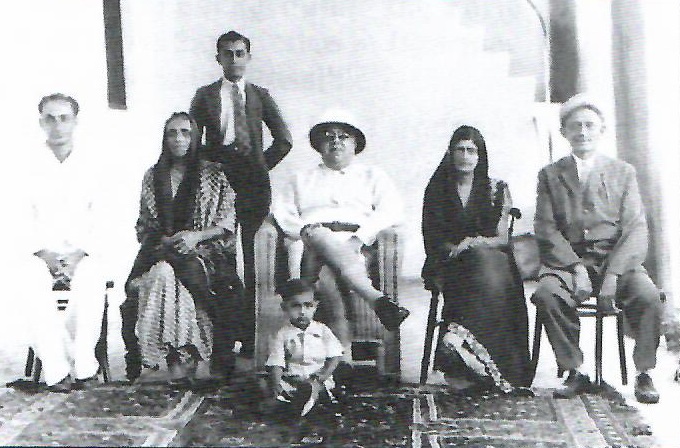
Mancoor Ladha and family with His Highness the Aga Khan III, Simerg Ismaili author series.
A memorable family photograph with the 48th Ismaili Imam, Mawlana Sultan Mahomed Shah, His Highness the Aga Khan III (d. July 11, 1957) from the dedication page of Mansoor Ladha’s book “A Portrait in Pluralim: Aga Khan’s Shia Ismaili Muslims.” Ladha dedicated the book to his parents (Zera and Hassanali Ebrahim Ladha) and grandparents (Count and Countess Ebrahim Ladha), and mentions that his family’s record of service to the Ismaili Imamat started with his grandfather Count Ebrahim Ladha of Zanzibar, who devoted several years of service to the Imam-of-the-Time. Seated (from left): Late Kamadia Hassanali E. Ladha, Late Countess Jenabai Ebrahim Ladha, MAWLANA SULTAN MAHOMED SHAH, Late Kamadiani Zera Hassanali E. Ladha, and Count Ebrahim Ladha. Standing is Kassamali Ebrahim Ladha. Seated in front of the 48th Imam is the author, Mansoor Ladha, when he was two year old. Photo: Mansoor Ladha Collection.

Simerg: What is behind the naming of the title of the book?

Mansoor Ladha: “A Portrait in Pluralism: Aga Khan’s Shia Ismaili Muslims” was published to coincide with the Golden Jubilee of Mawlana Hazar Imam, His Highness the Aga Khan. By the time of his Golden Jubilee celebrated during 2007-08, Ismailis had been established in Canada for more than 30 years, but Canadians had many sincere and honest questions about who we were, where we came from and so on. Thus, in the book I have attempted to answer these questions and give additional information about Mawlana Hazar Imam’s Canadian projects and his philosophy on pluralism. In addition to that, I was able to interview some Uganda refugees who settled in Canada starting in the autumn of 1972 after being forced to flee from their homeland by Idi Amin. I also talked to Canadian officials who were responsible for processing refugees in Kampala. The book is a portrayal of the Ismaili community.

I may note however that at the end of his Golden Jubilee Mawlana Hazar Imam established and opened with Prime Minister Stephen Harper the Delegation of the Ismaili Imamat Building in Ottawa, and over the past decade we have seen the opening of the Aga Khan Museum, the Ismaili Centre and the Aga Khan Park, all in Toronto, the Global Centre for Pluralism in Ottawa and the beautiful Aga Khan Gardens in Edmonton.

Simerg: Why would you want me or my family members to read the book, and what will we all learn from it?

Ladha: A Portrait in Pluralism and my more recent second book, Memoirs of a Muhindi: Fleeing East Africa for the West that you interviewed me on in March 2021, contain historical events affecting the Ismaili community. The book provides history, background, culture as well as success stories of Canadian Ismailis. Hence, they should be compulsory reading not only for adults but especially for the younger generation who didn’t experience what their parents went through. It’s important to educate our youngsters about our past. In this regard, I find it appropriate to quote a paragraph from Dr. Nizar Motani’s review of the Memoirs of a Muhindi:

“Besides being a valuable addition to one’s own library, it would be a suitable gift for your colleagues and neighbours who often ask the diasporic muhindis: “What is your nationality?” But they actually are curious about your country of origin, why you are not black if you came from Africa, and reasons for being in “their” countries.”

Simerg: What inspired you to write A Portrait in Pluralism?

Ladha: A couple of major events had taken place at the beginning of this century. In 2001, there was the 9/11 attack on the World Trade Centre in New York. Then some years later we saw the publication of a series of cartoons of Prophet Muhammad in Denmark. Both events created a lot of controversies and incorrectly presented Muslims in a very negative manner. These two events and other negative depictions about Muslims provided me with an opportunity to particularly highlight the Ismaili Muslims, who through the guidance of their Imam, the Aga Khan, were quietly revolutionizing the world and improving the lives of people all around the world by establishing schools, hospitals, universities, factories, and power through AKDN (Aga Khan Development Network). This was also a time when Ismailis were celebrating Mawlana Hazar Imam’s Golden Jubilee and hence I was proud that the book was published as a Golden Jubilee Edition, becoming a collector’s item.

Article continues below

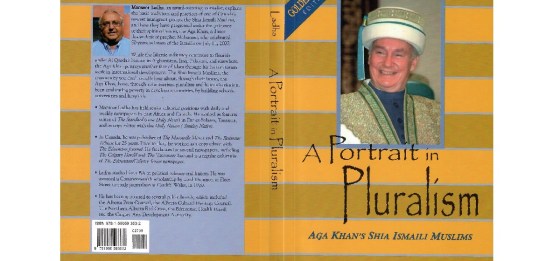
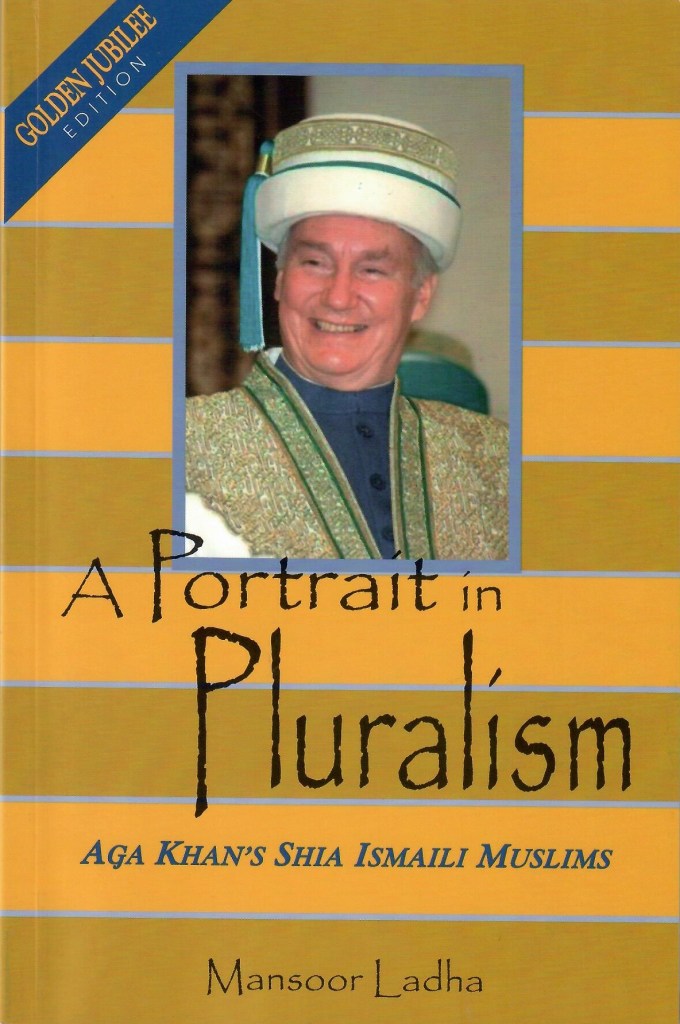
A Portrait in Pluralism, Aga Khan's Shia Ismaili Muslims, by Mansoor Ladha, journalist, Simerg Ismaili author series
Cover page of Mansoor Ladha’s book “A Portrait in Pluralism: Aga Khan’s Shia Ismaili Muslims.” Published by Detselig Enterprises Ltd., Calgary, 2008, 238 pp., limited availability at Amazon and (signed) copies directly from the author.

Simerg: How can I purchase the book and what are its available formats?

Ladha: The book is now a rare item, but readers may be able to acquire a new or used copy at Amazon.com as well as at affiliated Amazon stores around the world. I have very limited copies still available, and will be pleased to mail out signed copies at a special price (plus postage and packaging). Please write to me at mlpublish@shaw.ca.

Simerg: How did you find a publisher for the book?

Ladha:  Writing a book is an enormous project but publishing it is a mammoth undertaking. Most book publishers will not accept any submissions from an author unless the query and proposal come through a literary agent. It is very difficult to get a literary agent interested in your submission. There are authors whose submissions have been rejected by 20 literary agents, which is not considered to be unusual. I researched for publishers who would accept individual submissions and was fortunate to get Detselig Enterprises based in Calgary to publish A Portrait in Pluralism. The University of Regina Press published the second book Memoirs of a Muhindi

Those authors who have not been successful to get their books published through a traditional publisher can resort to getting their books published by self-publishing companies, such as Amazon, Friesen etc. You do not have to pay anything if your book is published by traditional publishers and the author gets a portion of the revenue while one must pay the entire cost of publishing when self-publishing.

Simerg: Did you hire an editor, an illustrator or did you do all the work by yourself?

Ladha: Once a publishing company accepts your manuscript, it is contracted to provide all editorial services, including an editor and graphic designer. The editor would suggest some revisions/alterations and seek your approval until the final document is ready. The designer would suggest a couple of book covers for your approval. I was fortunate in that as a copy editor on daily newspapers, my job involved editing stories written by reporters. Hence, this background helped me to send a clean, edited submission to publishers.

Simerg: Which was your first book and how many have you written?

Ladha: My first book, Portrait in Pluralism: Aga Khan’s Shia Ismaili Muslims, is the subject of this interview. It was published in 2009. Then approximately ten years later I got my second work Memoirs of a Muhindi: Fleeing East Africa for the West published by University of Regina. I was also among a group of journalists and scholars invited to contribute a chapter in a book called “The Story that Brought Me Here” published by Brindle & Glass.

May I also note that I have just finished another non-fiction and a novel — my first novel — that I plan to publish sometime in 2022.

Simerg: How long did it take you to write Portrait of Pluralism — from start to finish and to begin marketing it?

Ladha:  As a writer, one must be disciplined and follow a regular writing schedule. I try to write every day but take breaks in between to revitalize. You also must revise what you have written. There is no set time to finish the manuscript.

Marketing is another major problem for writers. Your traditional publisher will provide some help in sending the book to bookstores, arranging interviews with the media, and sending out review copies to newspapers, but the main responsibility of promoting the book lies with the author. I held book launches in various parts of the country at my expense, and I also ended up selling my own books. Often Ismaili stores in Calgary will keep my books for sale. Indeed, I have sold more books on my own than the publisher, who has a staff assigned to promote their publications.

Simerg: Would you like to offer further thoughts about your work?

Ladha: With regard to A Portrait in Pluralism, I was deeply touched to hear from Dr. David Zaborac of Iowa who sent me a personal note. He said:

“I have got a lot of reflections after reading A Portrait in Pluralism – Aga Khan’s Shia Ismaili Muslims. I feel I was greatly educated by my reading. Muslims were an alien world, not just to me, but also to many people whom I shared your story with. It was inwardly comforting to discover that a religion I once felt was extremist, was not necessarily so. The humanism displayed by the Ismailis is astounding. The way the Ismailis meld theology and sociology is inspiring. Most comforting of all was how it dawned on me how similar the goals of the Ismailis and my branch of Christianity are…helping fellow man, creating a better world, involvement with community life, etc.”

Comments such as this should make all Ismailis very proud and I feel all the members of the Jamat can play their own individual part by articulating our ethics and values to Canadians and the world at large.

Date posted: June 8, 2022.

_______________

Mansoor Ladha Ismaili author series, Simerg
Mansoor Ladha

Mansoor Ladha has held senior editorial positions as a copy editor in Canada (Edmonton Journal & Calgary Herald), features editor (The Standard in Dar es Salaam, Tanzania), copy editor (Daily Nation, Nairobi, Kenya) and was the only owner/publisher of colour of a mainstream English newspaper in Canada for 25 years. Since retiring, he has been travelling around the world as a travel writer on assignments and has published travel features in leading Canadian newspapers and magazines. He has numerous awards to his credit including being a Citizen of the Year in the Town of Morinville, Alberta; Silver Quill Award by the Alberta Weekly Newspapers for distinguished service to newspapers as well as Canada’s Caring Canadian Award for “outstanding and selfless contribution to your community and Canada” by the Governor General of Canada. He has most recently completed another non-fiction book and a novel, both of which are scheduled to be published in 2022. Ladha was also contributor to Simerg’s highly acclaimed series I Wish I’d Been There with a remarkable piece His Name is Jawhar. He was among the first of the Ismaili journalists to have ever interviewed Mawlana Hazar Imam; please click to read Ismaili Journalist Mansoor Ladha’s Precious Moments with Mawlana Hazar Imam, His Highness the Aga Khan.

We welcome feedback from our readers. Please complete the LEAVE A REPLY form below or click LEAVE A COMMENT. Your letter may be edited for length and brevity, and is subject to moderation.

Calling all Ismaili Authors

We encourage Ismaili writers to introduce their books in a similar format as has been done in the post above. Please also see the series launch article and submit your responses to Malik at mmerchant@simerg.com. All submissions will be acknowledged. If a writer has published multiple books, each book will be highlighted in a separate article, and not combined with other books into one post. All writers should include a brief profile with a portrait photo.

The Ismaili Authors’ Series so far (in chronological sequence, oldest article first):

  1. “Justice Bertha Wilson Pushes the Boundaries of Humanity” by Shamas Nanji (series start, February 10, 2021)
  2. “Little One, You Are The Universe” by Zeni Shariff (February 25, 2021)
  3. “Memoirs of a Muhindi” by Mansoor Ladha (March 6, 2021, and see also 15, below, by the same author)
  4. “To Be One With God: Seven Journeys to the Meaning of Life” by Shafeen Ali (March 25, 2021)
  5. “Invisible Birthmarks” by Alnasir Rajan (April 13, 2021)
  6. “IN THE NAME OF JUSTICE – Portrait of a ‘Cowboy’ Judge” by Azmina Suleman (April 28, 2021)
  7. “RSVP Rice and Stew Very Plenty” by Nazlin Rahemtulla (May 28, 2021)
  8. “Coughdrops” by Nargis Fazal (June 12, 2021)
  9. “The Roots and the Trees” by Nizar Sultan (June 25, 2021)
  10. “Faith and Ethics: The Vision of the Ismaili Imamat” by M. Ali Lakhani (July 4, 2021)
  11. “Nairobi Days by Shelina_Shariff Zia (July 21, 2021)
  12. “Shine Brighter” by Shairoz Lakhani (December 8, 2021).
  13. “This is My Life” by Naznin Rahemtulla Hébert (February 26, 2022)
  14. “Humanizing Medicine – Making Health Tangible” by Dr. Azim Jiwani (March 9, 2022)
  15. “A Portrait in Pluralism: Aga Khan’s Shia Ismaili Muslims” by Mansoor Ladha (June 8, 2022, and see also 3, above, by the same author)

_______________________

Before departing this website please take a moment to review Simerg’s Table of Contents for links to hundreds of thought provoking pieces on a vast array of subjects including faith and culture, history and philosophy, and arts and letters to name a few. Also visit Simerg’s sister websites Barakah, dedicated to His Highness the Aga Khan, and Simergphotos.

The editor may be reached via email at mmerchant@simerg.com.

Memories of a Ugandan Refugee: Ismaili Lawyer and Leader Jalal Jaffer Pens His Encounters of Hope from Kampala to Vancouver

________________________________________________________

Memories of a Ugandan Refugee: Encounters of Hope from Kampala to Vancouver by Jalal Jaffer, Q.C.
316 pp. FriesenPress
US$ 29.99 (Hardback), US$ 19.99 (Paperback) and US$ 6.99 (eBook) as listed at FriesenPress; also available in all formats at Amazon.ca, and as a Kobo eBook at Indigo.ca (CDN $7.99).

________________________________________________________

(We acknowledge, with thanks, the permission of the author Jalal Jaffer to reproduce the following foreword to his book — Ed.)

Foreword to “Memories of a Ugandan Refugee”

By FAROUK MITHA

“For Canadian Ismaili Muslim readers, Jalal has performed an invaluable service by writing this autobiography. It is an eyewitness account of how Ismaili communities established roots and built institutions from 1970s onward. Much of this historical record will soon be lost if it is not preserved. In this light, Jalal’s autobiography will become an important reference work when the history of Canadian Ismaili Muslims is written”

It is 1965 and Jalal Jaffer is on an airplane for the first time. He is flying from Kampala to London, to begin his University studies, and while airborne, he movingly describes his oscillating emotions:

“I stared out of the small window as the plane took off, anxious but not fearful, watching the flickers of light diminishing as the plane climbed higher above the clouds… I was leaving behind a world that I knew, a world of family and friends, a world that had nurtured me, and now entering a new world that I knew little about, a world without family, a world in which I would have to find new friends, a world in which I would live on my own…  However, I did not have the slightest doubt about my purpose in pursuing higher education in London. I had an absolute obligation to help support my family and to take care of their financial needs. It was critical that I studied hard, completed my education and came back home. My family needed me… Besides, the financial support through the Imam’s [Ismaili Community] bursary program undoubtedly imposed additional expectations that I was obligated to fulfill. After completing my education, I would not only support my family, but also give back to the Jamat the benefit of my knowledge, my experience and wisdom.”

Human stories of departures and arrivals are not new, yet this vividly rendered autobiography carries the reader along with Jalal on a momentous, unpredictable journey across continents with unforgettable lessons in the art of living. Jalal captures not only the journey of an individual, but through the arc of his dramatic life he offers rich insights into the life/worlds of Ugandan South Asian communities, particularly communities who have been shaped by multiple migrations and experiences of statelessness. The above, prescient passage contains in a compressed way salient themes running through this autobiography, namely, tensions negotiated by Jalal between individual aspirations and demands of family duties; between emotional uncertainties accompanying experiences of cultural change and intellectual excitement accompanying experiences of cultural discovery; and perhaps most poignantly, between the struggle to nurture deep faith commitments for his inner life as an individual Ismaili Muslim and yet to equally nurture his commitments for a public life of active community service and to the legal profession in Canada.

“What has stayed with me indelibly after reading this book, is Jalal’s passionate voice. It is the voice of a passionate optimist, rooted in love for his faith traditions and for his spiritual guide, Hazar Imam, the 49th Imam of the Ismaili Muslim community”

Memoirs of a Ugandan Refugee Jalal Jaffer Ismaili author
“Memories of a Ugandan Refugee” by Jalal Jaffer, 316 pp., FriesenPress, First Edition 2022.

I have known Jalal for almost three decades and in many ways see him as an exemplary mentor for the generation of Ismaili Muslims who, like me, migrated to Canada as teenagers in the early 1970s. For me the most enduring lessons from his life story reside in his example of self-belief and in his tireless curiosity. Jalal’s steely determination is palpable on almost every page, whether recounting his courageous response to a tragic, freak accident while playing at a neighborhood construction site in Kampala at the age of 6, which led to permanent disfigurement of his left arm; or when recounting how he and his wife, Shamshad, literally escaped out of Uganda in 1972, dodging one military checkpoint after another on the road to Entebbe airport, and finally departing with only two suitcases and fifty British pounds each; or when recounting that after several dead-end job opportunities in Toronto, he hunkers down and completes a law degree at UBC and is called to the Bar in 1978, while, remarkably, at the same time working as a full-time realtor in Vancouver and devoting most evenings serving voluntarily as a senior community leader for recently arrived Ismaili communities across Canada. These and many other continuing transitions in Jalal’s life are narrated in these pages. Fast forward to 2016, and the fact that he is awarded the title of Q.C. (Queen’s Counsel) by the Government of BC for his record of professional integrity and exceptional service as a lawyer – is a telling marker of how far Jalal has travelled by dint of hard work and as a selfless leader.    

For Canadian Ismaili Muslim readers, Jalal has performed an invaluable service by writing this autobiography. It is an eyewitness account of how Ismaili communities established roots and built institutions from 1970s onward. Much of this historical record will soon be lost if it is not preserved. In this light, Jalal’s autobiography will become an important reference work when the history of Canadian Ismaili Muslims is written. In several chapters, there is significant archival material presented, excerpted from newspapers and his journal entries. Indeed, this autobiography makes an important contribution to the emerging archive of post-World War II, non-European migration into Canada.

What has stayed with me indelibly after reading this book, is Jalal’s passionate voice. It is the voice of a passionate optimist, rooted in love for his faith traditions and for his spiritual guide, Hazar Imam, the 49th Imam of the Ismaili Muslim community. Equally, it is the voice of a passionate family man, whose love for his wife, two sons and extended family is an abiding source of his happiness. This passionate voice comes across immediately in the many poems included in this book — poems written by Jalal across different stages of his life. By my lights, these four lines convey the kernel of Jalal’s life-affirming outlook:

We are not a wave
Only a tiny part
Of the mighty sea.
Indeed, we are the sea!

__________________

A Review of Memories of a Ugandan Refugee

Cover of the book 'Memories of a Ugandan Refugee: Encounters of Hope from Kampala to Vancouver' by Jalal Jaffer, featuring the author's name, a descriptive subtitle, and a stylized background.

By ROBERT WILCOX SWEET

“Memories of a Ugandan Refugee” is quite simply a delight: rarely have I so enjoyed — or so benefitted from — a book. Anyone wishing to learn more about the Ismailis — that most magnificent and inspiring people — the expulsion of Asians from Uganda, and the great challenges emigrants face (particularly those who have had everything — their country, their community, their home and possessions, their job — taken from them), should read Jalal’s wonderful book. 

Why in particular I found his book so fascinating: most of what Jalal and his wife, Shamshad, went through is quite beyond my experience — and even my imagination. What also struck me — indeed, amazed me — is Jalal’s great bonhomie, his great good nature in the face of difficulties under which most of us would simply wilt. (How inspirational that is! My difficulties seem — and are — so very small in comparison.) To arrive penniless in a new country and achieve the success he has achieved, is little short of miraculous. (And yet, what does he do the moment he arrives in Canada?  He begins to give to, to help, others.) 

The German historian Christian Meier wrote that Julius Caesar “viewed difficulties simply as tasks.”  So, too, does Jalal. Better: Jalal views difficulties simply as adventures! The greatest compliment I can pay “Memories of a Ugandan Refugee” is that it is unique: I have never read another book quite like it.  I am exceedingly grateful to Jalal for having written this book, for having taught and entertained me. (On entertained: Jalal has the most delightful writing style, unfailingly cheerful and witty — almost effervescent — no matter the situation he is describing.) I so wish I belonged to a book group: how I would love discussing this book with my fellow readers!

(For more reviews of Jalal Jaffer’s book as well as his profile, please visit his website by clicking HERE — Ed.)

Date posted: May 16, 2022.
Last updated: May 17, 2022 (added book review by Robert Wilcox Sweet)

___________________

Farouk Mitha, Ismaili scholar, Simerg
Farouk Mitha

Dr. Farouk Mitha, author of the foreword to “Memories of a Ugandan Refugee” reproduced above, is a lecturer and Research Affiliate in the Faculty of Education at University of Victoria, Canada. He is currently the Academic Director for the Postgraduate Research Fellowship Programme at Institute of Ismaili Studies. He has published in the area of medieval Islamic thought and on teaching Shakespeare, as well as on Canadian literature and Iranian cinema. His book, Al-Ghazali and the Ismailis: A Debate on Reason and Authority in Medieval Islam was published by I.B Tauris in 2001.

____________________

Robert Wilcox Sweet, author of the review, studied history and literature at Oxford University as an English Speaking Scholar, and Arabic and history in Syria as a Fulbright Scholar; he holds two master’s degrees. He is Senior Philanthropic Advisor to Aga Khan University and the author of ” Life Fighting: Why We Must Sometimes Fight, and How to Do So Well.”

___________________

Before departing this website please take a moment to review Simerg’s Table of Contents for links to hundreds of thought provoking pieces on a vast array of subjects including faith and culture, history and philosophy, and arts and letters to name a few. Also visit Simerg’s sister websites Barakah, dedicated to His Highness the Aga Khan, and Simergphotos. Simerg’s editor Malik may be reached at mmerchant@simerg.com.
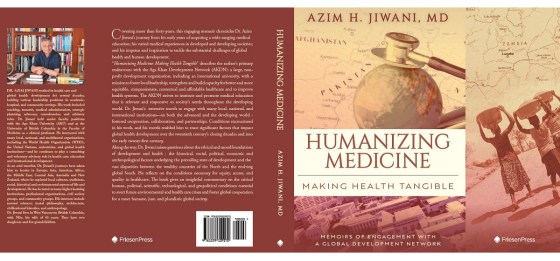
Simerg’s Special Series on Books by Ismaili Authors: “Humanizing Medicine: Making Health Tangible” by Dr. Azim H. Jiwani of Vancouver

By MALIK MERCHANT
Publisher/Editor SimergBarakah and Simergphotos

Simerg’s series entitled “Books by Ismaili Authors” continues with Vancouver based Dr. Azim H. Jiwani’s book “Humanizing Medicine: Making Health Tangible (Memoirs of Engagement with a Global Development Network).” We follow the same Q/A format as our earlier presentations of books written by Naznin Rahemtulla Hébert, Shairoz Lakhani, Shelina Shariff Zia, Ali Lakhani, Nizar Sultan, Nargis Fazal, Nazlin Rahemtulla, Azmina Suleman, Alnasir Rajan, Shafeen Ali, Mansoor Ladha, Zeni Shariff and Shamas Nanji. We invite Ismaili authors around the world to participate in this series, regardless of when their books were published. See details of the series HERE and submit your responses to Simerg’s editor, Malik, at mmerchant@simerg.com.

****************

THE PROCEEDS FROM THE SALE OF DR. JIWANI’S BOOK “HUMANIZING MEDICINE” WILL SUPPORT THE PATIENT WELFARE PROGRAM OF AGA KHAN HOSPITALS FOR NEEDY PATIENTS

Simerg’s Interview with Dr. Azim Jiwani

Simerg: What is behind the naming of the title of the book? 

Azim H. Jiwani: I think readers will perceive levels of meaning embodied by the title. Each reader will draw meaning from the title after reading the book since it can have multiple interpretations. This reflection on implications is what I intended.

Today, many people perceive medicine and health care as cold, selective, fragmented and profit and technology-driven. It seems to lack the human touch, warmth, and empathy. Hence, many, particularly in the developing world, feel a lack of “tangibility” of competent, contextual, compassionate and affordable health care available to them. The health status of large segments of populations in many parts of the world is not improving, and gains in some instances are reversing. Never have so many had such broad and advanced access to sophisticated care, but never have so many been denied access to even basic health care.

Simerg: Why would you want me or my family members to read the book, and what will we all learn from it?

Azim: Rarely in recent times has the world found itself gripped in conditions that pose substantial existential threats to lifeforms on earth, destabilize societies, impact health, quality of life, economic and cultural survival, and engender greater inequality and divisions between and within countries and regions.

The ideal of health is a state of complete physical, mental, and social well-being envisioned by the WHO, not just the absence of disease. Hence, health is composite of a myriad of determinants, all constantly in a state of flux. This utopian state of health is unlikely to be achieved, but one can reimagine global health and its foundations and moral imperatives.

The recent onset of the Covid-19 global pandemic and the accelerating but belatedly acknowledged climate crisis and its devastating effects on human health have laid bare the historical, political, policy, and institutional deficiencies in health systems worldwide. The vast disparities in availability, accessibility and affordability, quality and equity are glaring in parts of the world, especially when comparing low-income countries of the global South to rich and industrialized countries of the North. This void is more apparent when healthcare systems worldwide are under tremendous stress. During the current pandemic, many in developing countries are denied access to even primary and essential care due to myriad reasons – a dearth of human and material resources, drugs, vaccines, deficits in health policies and local and geopolitical tensions.

I think one thing readers will learn is the complexity and challenges of the development process. The book traces efforts of large non-profit global development organizations — the Aga Khan University and agencies of the Aga Khan Development Network — mainly in the domains of education, healthcare, institutional capacity-building and the empowerment of civil societies. It underscores the mission to anticipate and respond to foreseeable effects of unaddressed inequalities, the poverty, program and leadership deficits in some of the most challenging regions of the developing world. It endeavours to enhance institutional capacities, establish collaborative networks, and promote best practices and international standards of excellence.

Simerg: What inspired you to write the book?

Azim: I had the good fortune of engaging with the early development of Aga Khan University and the Aga Khan Health Services internationally and its programs in medical education and fostering affordable, ethical and quality health care since the early 1980s.

I held various leadership roles in academic, administrative, clinical and planning positions in several major organizations within and outside the AKU and interacted with some outstanding leaders and thinkers. Early in my medical career, I developed an interest in the global arms race’s health, social and economic impacts, particularly on developing countries. This interest and other public health and justice questions led to a life-changing meeting with Prince Sadrudin Aga Khan at his chateau in Geneva in 1983. I was deeply inspired by his efforts and roles to foster a more just and equitable world.

As narrated in the book, the impetus and inspiration essentially derived from our faith’s essential ethical and moral foundations, as articulated by Hazar Imam in his numerous utterances. The lockdown periods of 2020/2021 finally induced me to chronicle almost four decades of engagement in aspects of medical education, global health, development, marginalization, and comment on historical imprints on development and questions of justice and human dignity. It was impressed upon me that the experience and skills I acquired over decades of engagement in global health and medical education were too valuable to be wasted. My friends and colleagues strongly encouraged me to chronicle my observations of the times and places, ideals and realities of just and compassionate societies and my wide-ranging engagements.

Article continues below

Ismaili authors Series by Simerg Front cover of Dr Azim H. Jiwani's book "Humanizing Medicine: Making Health Tangible", Friesen Press
Front cover of Dr Azim H. Jiwani’s book “Humanizing Medicine: Making Health Tangible”, 300 pp., Friesen Press, August 2021.

Simerg: How can I purchase the book and what are its available formats?

Azim: The book is available in hardcover, softcover and e-books, e.g., Kindle, Nook, Apple Books, Google Books. It is widely available directly from the publisher FriesenPress and Amazon, Chapters/Indigo in Canada, Barnes & Noble in the U.S. and many other retail outlets. It is also available in many countries like the U.K., Australia, Europe and India.

Simerg: How did you find a publisher for the book?

Azim: As I was writing, I received many unsolicited offers to publish the book, mainly from the U.S. and Canada. I ignored these until towards the end of the initial draft. I decided to pick a large, established and reputable Canadian publisher, as I was aware of some of the books published by them. They were expensive but of high quality. The publisher FriesenPress partners with a large American publishing and printing house called Ingram; hence the book is printed in the U.S., the U.K. and Australia.

Simerg: Did you hire an editor, an illustrator or did you do all the work by yourself?

Azim: Basically, the publisher provided the editorial services, printing and distribution, but I selected the photographs and illustration with the kind permission of the AKU and the United Nations. Not being very tech-savvy, I needed some technical help from friends for this.

Simerg: How long did it take you to write Humanizing Medicine from start to finish and to begin marketing it?

Azim: I think the whole process of writing, editing, printing and distribution took about eighteen months of hard work since I could only focus on the book a few hours a day. The book was published in the Autumn of 2021 and launched in Washington, D.C., about three months ago.

Simerg: Tell us something more about your book.

Azim: The book interweaves three stands. Since it is essentially written from a personal perspective, it tells a unique story spanning almost five decades. It intertwines this strand with the efforts and the ethos of the AKU/AKDN in empowering civil society, human development and equity, the global conditions over the last century, and the historical and national and regional evolutions in health care and development. It includes many short anecdotes and vignettes set in various world locales, from Morocco to Cambodia, illustrating many of the points. I hope that the book provides a longitudinal perspective of global challenges and their relevance in today’s uncertain and trying times. I believe it could be informative and inspiring to professionals and volunteers who seek to broaden their careers and horizons through engagements globally in an interconnected world.

I should inform you that all proceeds from the global sale of this book are donated through the Aga Khan Foundation (AKF) to support the Patient Welfare Programs of the Aga Khan hospitals to care for needy patients.

Date posted: March 9, 2022.

_______________

We welcome feedback from our readers. Please complete the LEAVE A REPLY form below or click Leave a comment. Your letter may be edited for length and brevity, and is subject to moderation.

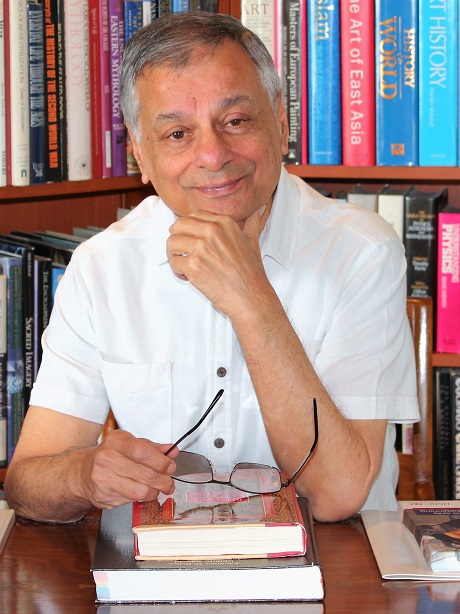
Ismaili author Dr. Azim Jiwani Humanizing Medicine Simerg special series
Dr. Azim Jiwani

Dr. Azim Jiwani worked in health care and global health development for several decades, holding various leadership positions in academic, hospital, and community settings. His work included teaching, research, medical administration, strategic planning, advocacy, consultancies, and advisory roles. Dr. Jiwani held senior faculty positions with the Aga Khan University (AKU) and at the University of British Columbia in the Faculty of Medicine as a clinical professor. He interacted with many local, national, and multilateral organizations, including the World Health Organization (WHO), the United Nations, universities, and global health institutions-and he continues to play a consulting and voluntary advisory role in health care, education and international development.

As an avid traveller, Dr. Jiwani’s journeys have taken him to locales in Europe, Asia, Americas, Africa, the Middle East, Central Asia, Australia and New Zealand, where he explored local cultures, traditions, social, historical and environmental aspects of life and development. He has lectured at many higher learning institutions, professional organizations, civil society groups, and community groups. His interests include natural sciences, moral philosophy, architecture, civilizational histories, and anthropology. Dr. Jiwani lives in West Vancouver, British Columbia, with Nilu, his wife of 45 years. They have two daughters and five grandchildren.

Calling all Ismaili Authors

We encourage Ismaili writers to introduce their books in a similar format as has been done in the post above. Please also see the series launch article and submit your responses to Malik at mmerchant@simerg.com. All submissions will be acknowledged. If a writer has published multiple books, each book will be highlighted in a separate article, and not combined with other books into one post. All writers should include a brief profile with a portrait photo.

The Ismaili Authors’ Series so far (in chronological sequence, oldest article first):

  1. “Justice Bertha Wilson Pushes the Boundaries of Humanity” by Shamas Nanji (series start, February 10, 2021)
  2. “Little One, You Are The Universe” by Zeni Shariff (February 25, 2021)
  3. “Memoirs of a Muhindi” by Mansoor Ladha (March 6, 2021)
  4. “To Be One With God: Seven Journeys to the Meaning of Life” by Shafeen Ali (March 25, 2021)
  5. “Invisible Birthmarks” by Alnasir Rajan (April 13, 2021)
  6. “IN THE NAME OF JUSTICE – Portrait of a ‘Cowboy’ Judge” by Azmina Suleman (April 28, 2021)
  7. “RSVP Rice and Stew Very Plenty” by Nazlin Rahemtulla (May 28, 2021)
  8. “Coughdrops” by Nargis Fazal (June 12, 2021)
  9. “The Roots and the Trees” by Nizar Sultan (June 25, 2021)
  10. “Faith and Ethics: The Vision of the Ismaili Imamat” by M. Ali Lakhani (July 4, 2021)
  11. “Nairobi Days by Shelina_Shariff Zia (July 21, 2021)
  12. “Shine Brighter” by Shairoz Lakhani (December 8, 2021).
  13. “This is My Life” by Naznin Rahemtulla Hébert (February 26, 2022)
  14. “Humanizing Medicine – Making Health Tangible” by Dr. Azim Jiwani (March 9, 2022)

_______________________

Before departing this website please take a moment to review Simerg’s Table of Contents for links to hundreds of thought provoking pieces on a vast array of subjects including faith and culture, history and philosophy, and arts and letters to name a few. Also visit Simerg’s sister websites Barakah, dedicated to His Highness the Aga Khan, and Simergphotos.
The editor may be reached via email at mmerchant@simerg.com.

Simerg’s Special Series on Books by Ismaili Authors: “This is My Life” by Naznin Rahemtulla Hébert of Montreal, Canada – A Must Read Book About an Ismaili Family’s Life in 3 Continents

By MALIK MERCHANT
Publisher/Editor SimergBarakah and Simergphotos

Simerg’s series entitled “Books by Ismaili Authors” continues with Montreal based health care professional Naznin Rahemtulla Hébert’s biographical work “This is My Life.” We follow the same Q/A format as our earlier presentations of books written by Shairoz Lakhani, Shelina Shariff Zia, Ali Lakhani, Nizar Sultan, Nargis Fazal, Nazlin Rahemtulla, Azmina Suleman, Alnasir Rajan, Shafeen Ali, Mansoor Ladha, Zeni Shariff and Shamas Nanji. We invite Ismaili authors around the world to participate in this series, regardless of when their books were published. See details of the series HERE and submit your responses to Simerg’s editor, Malik, at mmerchant@barakah.com.

****************

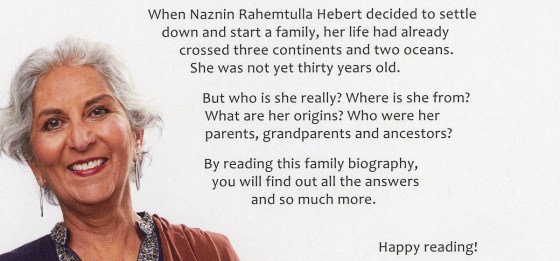
“By reading this book, you will cry, you will laugh, you will be surprised, and you will travel the world with me. I can guarantee that everybody will relate to some parts of the book” — Naznin Rahemtulla Hébert

Click on photos for enlargement

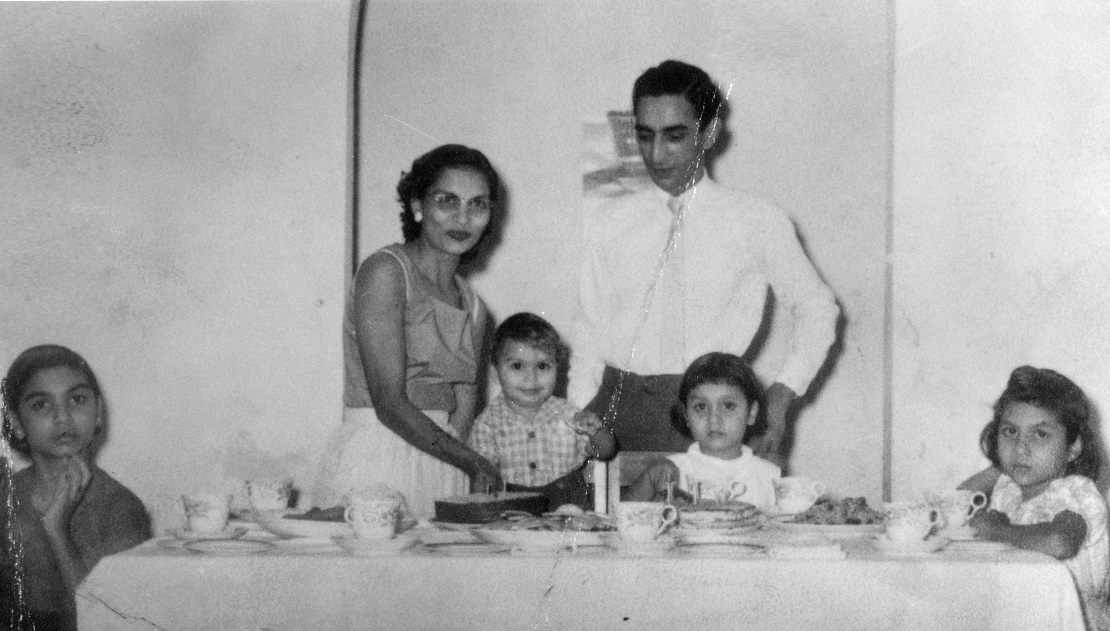
Naznin Rahemtulla author of This is My Life with her family. Simerg series on Ismaili authors
Naznin, author of “This is My Life” is seated on right in this family picture with her parents Zera (d. 1973) and Kamrudin (d. 2013), and siblings Ferial (left), Aziz and Azmina. Photo: Naznin Rahemtulla Hébert Family Collection

Simerg: What is behind the naming of the title of the book? 

Naznin Rahemtulla Hébert: The title of my book “This is My Life” is my family biography. It is about my journey from East Africa to the UK and now in Canada. It is the most precious inheritance I can leave for my children and grandchildren.

Simerg: Why would you want me or my family members to read the book, and what will we all learn from it?

Naznin: To know where we are going, we must first need to know where we came from. I think by reading my book, readers will appreciate the sacrifices and the treacherous journey our ancestors made for a better life for their families and about the pioneers who paved their way. They will also learn about the journey and passion of one person which may perhaps inspire them to relate their own journey. Everybody has a story to tell.

Simerg: What inspired you to write the book?

Naznin: The pandemic of the year 2020. When the pandemic hit the world and brought it to a standstill it made me reflect on a couple of things: (1) The fragility of life and (2) a meaningful project to occupy my time and my mind. That is when I made the decision to document my journey and dedicate it to my children and grandchildren so that one day when they grow up and want to know who their nanima (grandmother) really was, it will all be there on paper.

Article continues below

This is My Life by Naznin Rahemtulla He, Ismaili author
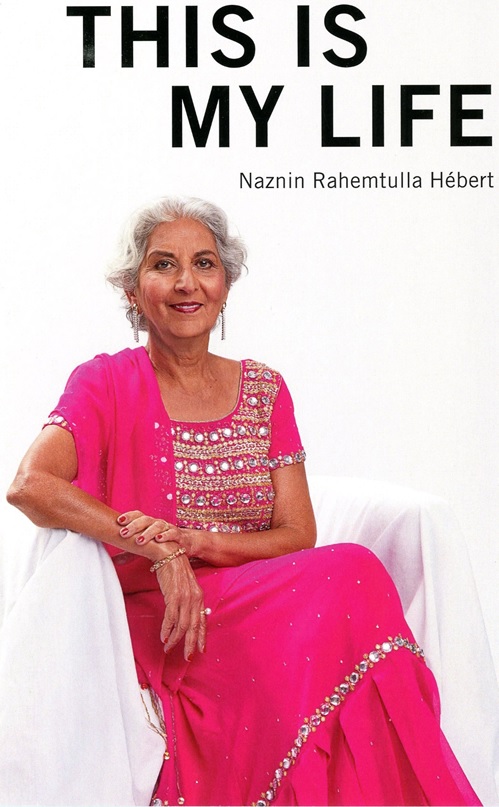
Front cover of Naznin Rahemtulla Hébert’s family biography “This is My Life.” 301 pp., self published, October 2021. Click on image for enlarged version.

Simerg: How can I purchase the book and what are its available formats?

Naznin: Readers may order the book by sending me an email at nazninh@gmail.com or visiting my Facebook page. The cost of the book is $ CDN 10.00 plus shipping, to any part of the world. Interested readers should contact me with their addresses and I will let them know the exact cost of the book, including shipping charges. The book is in soft cover, 301 pages long and was published in October 2021.

Simerg: How did you find a publisher for the book?

Naznin: I do not have a publisher. It was self-published.

Simerg: Did you hire an editor, an illustrator or did you do all the work by yourself?

Naznin: I had neither an editor nor an illustrator. I wrote it myself and self edited it. Luckily, I had a good collection of photos. I then sent my manuscript and the selected photos that I wanted to add to an infographiste who formatted it with my input. The whole document was then sent to the printers.

Simerg: How long did it take you to write This is My Life from start to finish and to begin marketing it?

Naznin: Twenty months. Before writing the book, I researched my ancestral history from the elderly members of the family since both my parents had passed on.

Article continues below

Aga Khan Council Tanga Tanzania, Ismaili authors, Simerg, Naznin Rahemtulla
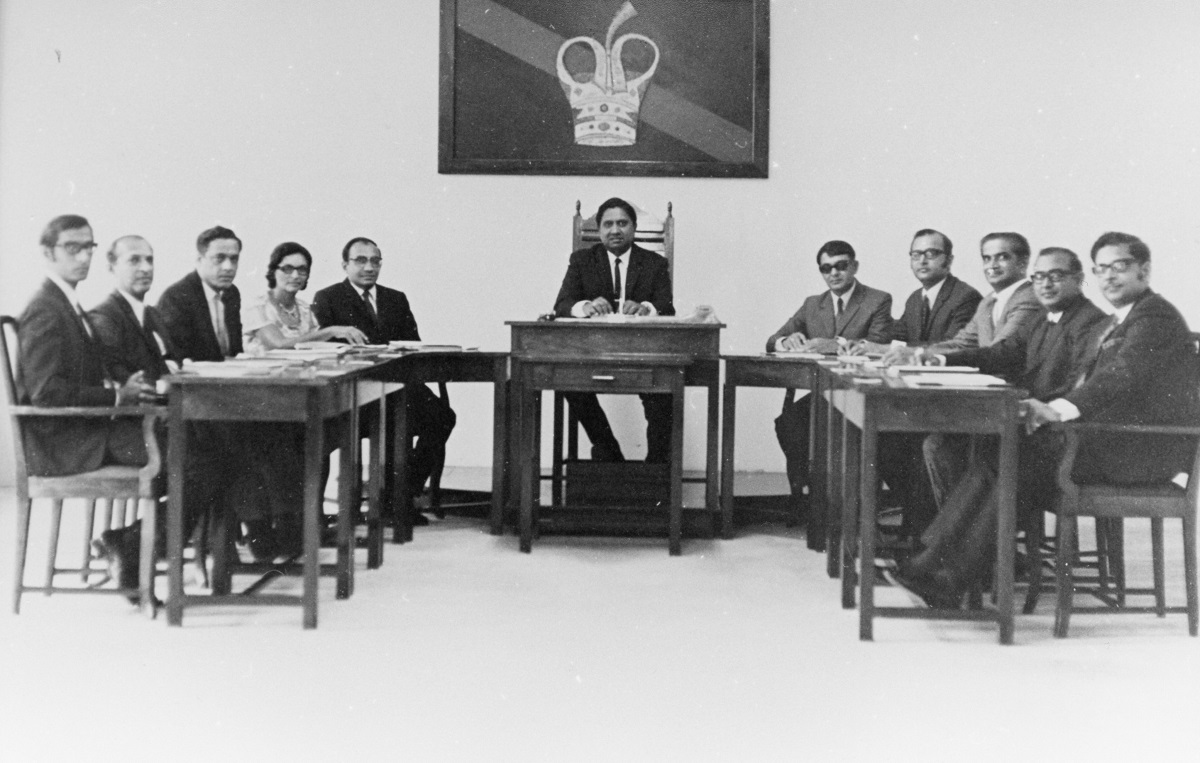
Zera Rahemtulla, seated 4th from left, the only lady member in the Aga Khan Council for Tanga, Tanzania (then Tanganyika) in a group photo with Ismaili leaders taken in Tanga Jamatkhana’s Council Chambers. The beautiful Taj (crest) of Mawlana Hazar Imam, His Highness the Aga Khan, overlayed on the Ismaili Flag, forms a backdrop in this historical photo from the 1950’s. Photo: Naznin Rahemtulla Hebert Family Collection.

Simerg: Tell us something more about your book.

Naznin: In this book you will find a comprehensive glossary and 200 photos. The book is full of joy, discovery, and many heartwarming moments. By reading this book, you will cry, you will laugh, you will be surprised, and you will travel the world with me. I can guarantee that everybody will relate to some parts of the book. I might also add that my mom, Zera Rahemtulla, was the inspiration behind the book. Although she had a short lifespan of only 47 years, she put everything into her life and accomplished a lot. She was a business woman in East Africa in the 1950’s and also very much involved with the Ismaili community. She was the only woman member of the Aga Khan Council in Tanga among 10 men, and also served as the chairperson of the Ismaili Women’s Association. All this while raising and lovingly looking after her 4 children. I am hoping that you will enjoy reading this book as much as I did, writing it.

Date posted: February 26, 2022.

_______________________

Naznin Rahemtulla this is my life Ismaili author series
Naznin Hébert Rahemtulla

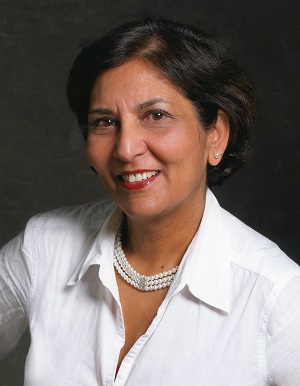
Born in Mogadishu, Somalia, Naznin Rahemtulla moved to Tanga, Tanzania, when she was only one year old. After completing her schooling in Tanga, she went to the UK to pursue a career in nursing and midwifery. She then settled in Montreal, Canada in the mid 1970’s and has worked as a health care professional for more than 35 years. In her role she has been fortunate to witness joy in the faces of new parents, as they bring the miracle of new life into the world.

During her long career, Naznin went on to became an International Board-Certified Lactation Consultant (IBCLC), one of the first ones in Quebec, and was responsible for founding the Lactation Consultant’s Association, the first Breastfeeding Clinic in Quebec and a peer support group. In the area of public heath, she has trained health care professionals in her region in breastfeeding as well has contributed as an evaluator for the Baby Friendly Certification with the Ministry of Health and Social Services.

Within the Ismaili community she has been a Mukhiani (congregational leader), a member of the Aga Khan Health Board as well as served in the funeral committee (referred to as the Mayat and Ghusal committee) where her responsibilities included giving courage and help to grieving family members who had lost their loved ones. She now finds joy from her partner in life, her 3 children as well as 5 grandchildren. The vibrant city of Montreal has been perfect for her for over 45 years. As a result of her settlement in Canada, she was able to assist her family to join her in Canada, and while in Montreal, she learnt a new language. The city also hosted the Olympic Games in 1976, shortly after arrival in 1975.

_______________

We welcome feedback from our readers. Please complete the LEAVE A REPLY form below or click Leave a comment. Your letter may be edited for length and brevity, and is subject to moderation.

Calling all Ismaili Authors

We encourage Ismaili writers to introduce their books in a similar format as has been done in the post above. Please also see the series launch article and submit your responses to Malik at Simerg@aol.com. All submissions will be acknowledged. If a writer has published multiple books, each book will be highlighted in a separate article, and not combined with other books into one post. All writers should include a brief profile with a portrait photo.

The Ismaili Authors’ Series so far (in chronological sequence, oldest article first):

  1. “Justice Bertha Wilson Pushes the Boundaries of Humanity” by Shamas Nanji (series start, February 10, 2021)
  2. “Little One, You Are The Universe” by Zeni Shariff (February 25, 2021)
  3. “Memoirs of a Muhindi” by Mansoor Ladha (March 6, 2021)
  4. “To Be One With God: Seven Journeys to the Meaning of Life” by Shafeen Ali (March 25, 2021)
  5. “Invisible Birthmarks” by Alnasir Rajan (April 13, 2021)
  6. “IN THE NAME OF JUSTICE – Portrait of a ‘Cowboy’ Judge” by Azmina Suleman (April 28, 2021)
  7. “RSVP Rice and Stew Very Plenty” by Nazlin Rahemtulla (May 28, 2021)
  8. “Coughdrops” by Nargis Fazal (June 12, 2021)
  9. “The Roots and the Trees” by Nizar Sultan (June 25, 2021)
  10. “Faith and Ethics: The Vision of the Ismaili Imamat” by M. Ali Lakhani (July 4, 2021)
  11. “Nairobi Days by Shelina_Shariff Zia (July 21, 2021)
  12. “Shine Brighter” by Shairoz Lakhani (December 8, 2021).
  13. “This is My Life” by Naznin Rahemtulla Hébert (February 26, 2022)

_______________________

Before departing this website please take a moment to review Simerg’s Table of Contents for links to hundreds of thought provoking pieces on a vast array of subjects including faith and culture, history and philosophy, and arts and letters to name a few. Also visit Simerg’s sister websites Barakah, dedicated to His Highness the Aga Khan, and Simergphotos.
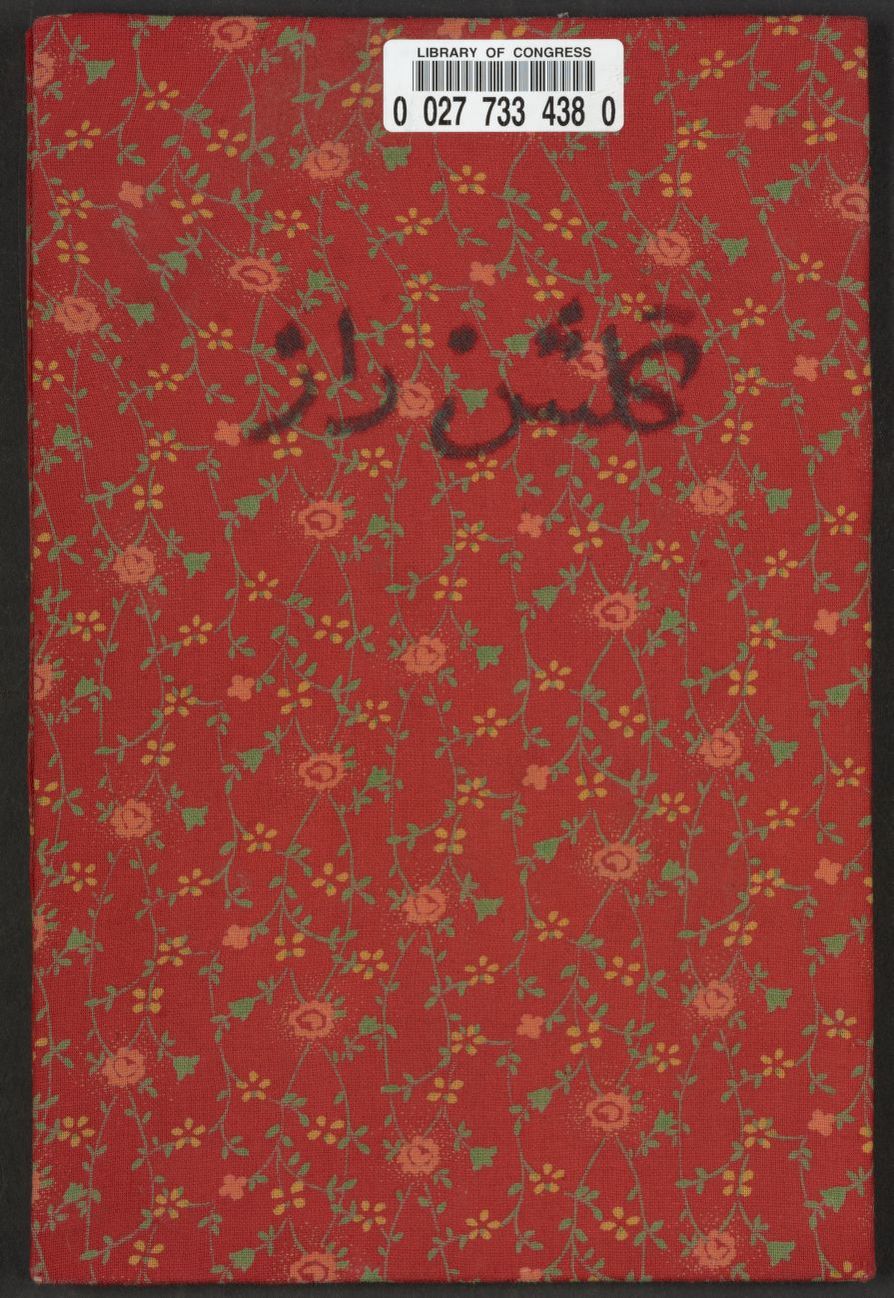
Gulshan-i rāz or The Garden of Mystery: A Rare 20th Century Ismaili Work at the US Library of Congress; Downloadable

Article reproduced and adapted from the website of the US LIBRARY OF CONGRESS (LOC)

Gulshan-i rāz (The garden of mystery) is a 20th century text on the Nizari Ismaʻili belief system, written by Nadir Shah Kayani (circa 1897 – circa 1971), a leader of the Ismaʻili community in Afghanistan.

Article continues below

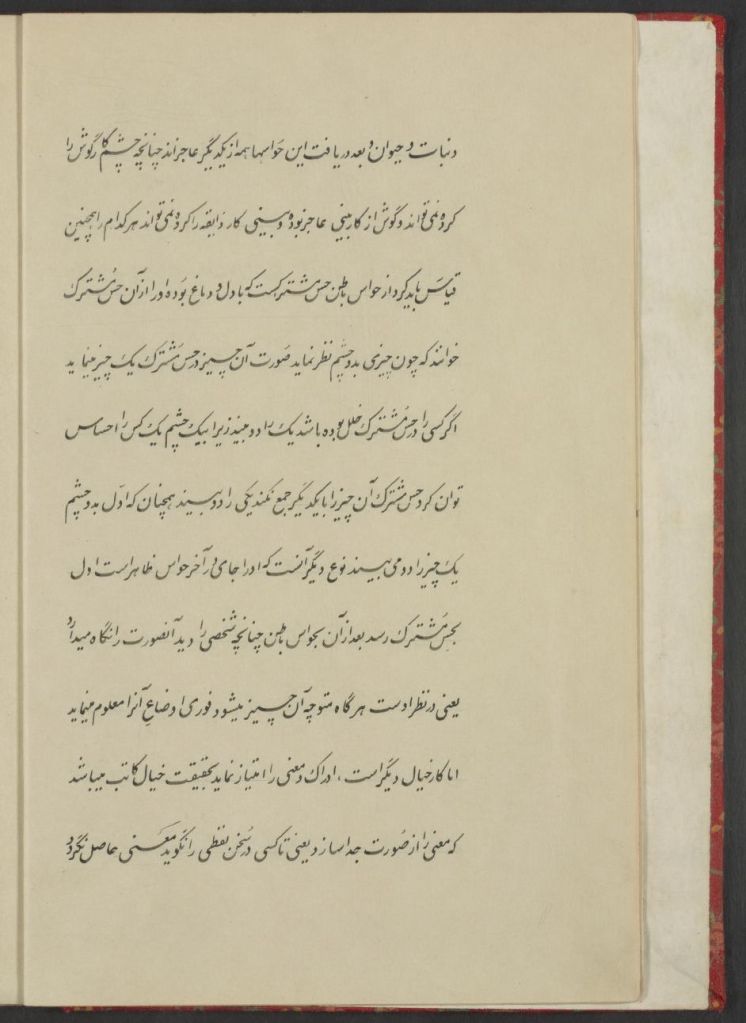
Ismaili work Gulshan-i rāz, Library of Congress LOC, Simerg
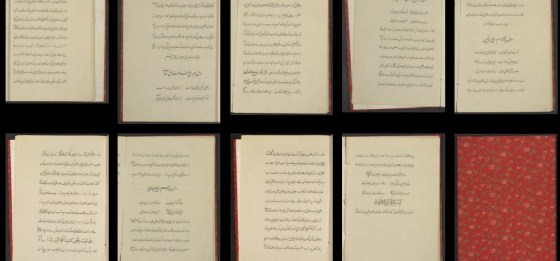
Page 1 of 42 of the Ismaili work Gulshan-i rāz. Photo: LOC.

The title of this work deliberately echoes a celebrated Ismaʻili book of verse of the same name composed by Mahmud Shabistari in 1317. Nadir Shah’s work is organized in 14 sections, each of which discusses a philosophical or religious topic such as nafs (the soul) or namaz (prayer). The first section, on tafakkur (the faculty of thought), is written as a commentary on a verse from the original Gulshan-i rāz.

Article continues below, click image to download PDF

Ismaili work Gulshan i Raz at LOC, Simerg
Page 12 of 42 of the Ismaili work Gulshan-i rāz. Photo: LOC; please click on image to download the work in PDF format.

Much remains to be discovered about the Ismaʻili community of Afghanistan during this period. What is known is that Nadir Shah belonged to a family of Ismaʻili leaders based in the Kayan valley in northern Afghanistan. He was a prolific author who wrote both poetry and philosophical texts. The present work is a manuscript, most likely produced in Afghanistan.

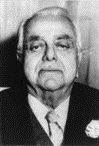
Aga Khan III, Library of Congress LOC, Simerg
Aga Khan III. Photo: LOC.

Kayani’s leadership of the Ismaʻili community coincided with the reign of the 48th Ismaili Imam, Mawlana Sultan Mahomed Shah, His Highness the Aga Khan III (1877-1957; Imam from 1885-1957).

The script is nastaʻliq, written in black ink, 11 lines to the page, on a light-cream paper. The “third” in the title probably refers to Shabistari’s original work as the first Gulshan-i rāz. The identity of the second Gulshan-i rāz is not clear; it could be a reference to the well-known commentary by Shams al-Din Lahiji, written in 1472-73.

Please download Nadir Shah’s work in PDF format by clicking HERE.

Summary of Work

Contributor Names: Kiyānī, Nādir Shāh.
Created/Published: Between 1900 and 1999?
Notes: Manuscript; Nastalīq script; 11 lines in written area 21.5 x 14 cm; Paper is light cream; black ink; Probably written in Afghanistan; Also available in digital form (PDF and JPEG, click HERE for PDF); In Persian; Acquired for LC only.

Date posted: January 18, 2022.

(Read the article at source by clicking HERE)

_________________

Before leaving this website please take a moment to visit Simerg’s Table of Contents for links to hundreds of thought provoking pieces on a vast array of subjects including faith and culture, history and philosophy, and arts and letters to name a few. Also, visit Simerg’s sister websites Barakah, dedicated to His Highness the Aga Khan, and Simergphotos.

The Greatest Gift also known as The Season’s Upon Us

By FARAH TEJANI

Winter winds whispering through the near naked trees,
The Season is upon us, feel that crisp familiar breeze.
With no two snowflakes alike, they settle on our faces,
Melting on eyelashes and leaving no traces…

A white blanket of fresh snow falls all around,
Like in a snow globe it always astounds;
We run out to greet it throwing our hands in the air,
So effortlessly it falls and with wonder we share

With loved ones we gather making snow angels and snowmen.
Year after year, we never tire, we do it again and again.
The fresh snow makes everything feel sacred and new,
Our own Winter Wonderland is the spectacle we view.

So gather together as the New Year draws near,
It is a time for resolutions and to make them sincere,
Take note with GRATITUDE, God is blessing you with more time,
Blessed is life’s journey, to waste even a day is a crime.

With this new snowfall, it’s time to clean all the slates,
Forgiveness is Powerful, it can open any gate,
Bear no grudges, this is of no use to you,
It is just more baggage to carry, and it is truthfully undue.

We are granted just this one gift to live here and now,
What you do with this gift is to God what you vow.
Every day when your eyes open, before turning the coffee pot on,
Look in your heart and thank God that you are not gone.

Every single day is a present to be opened with joy,
And doing God’s WORK is a meaningful and righteous employ.
Forget all the spending, the best present you can give,
Is TO LOVE UNCONDITIONALLY FOR AS LONG AS YOU LIVE.

Copyright © Farah Tejani

Date posted: Dec 23, 2021.

___________________

Farah Tejani Ismaili poet and writer
Farah Tejani

Farah Tejani is a creative writer based in Vancouver. She is currently working on Childrens’ stories and a collection of poetry called “Elastic Embrace.” She has been contributing poems and stories for Simerg and its sister website Barakah for the past year. We invite our readers to read some of Farah’s poems by clicking on  Elastic Embrace; The Fragrance of Spring; and The Great Sacrifice. Children will particularly love her heart warming stories Mr. Sneaky Peeky and the Two Red-Tailed Monkeys and Elizabeth the Ladybug and the Lonely Rose.

We welcome feedback from our readers. Please complete the LEAVE A REPLY form below or click Leave a comment. Your letter may be edited for length and brevity, and is subject to moderation.

Before departing this website please take a moment to review Simerg’s Table of Contents for links to hundreds of thought provoking pieces on a vast array of subjects including faith and culture, history and philosophy, and arts and letters to name a few. Also visit Simerg’s sister websites Barakah, dedicated to His Highness the Aga Khan, and Simergphotos.

Ismaili author series shine brighter by Shairoz Lakhani, Simerg Ismaili author series.

Simerg’s Special Series on Books by Ismaili Authors: “Shine Brighter” by Shairoz Lakhani of London, England

By MALIK MERCHANT
Publisher/Editor SimergBarakah and Simergphotos

Simerg’s series entitled “Books by Ismaili Authors” continues with UK teacher and writer Shairoz Lakhani’s book “Shine Brighter”. We follow the same Q/A format as our presentations of books written by Shelina Shariff Zia, Ali Lakhani, Nizar Sultan, Nargis Fazal, Nazlin Rahemtulla, Azmina Suleman, Alnasir Rajan, Shafeen Ali, Mansoor Ladha, Zeni Shariff and Shamas Nanji. We invite Ismaili authors around the world to participate in this series, regardless of when their books were published. See details of the series HERE and submit your responses to Simerg’s editor, Malik, at Simerg@aol.com.

****************

Simerg: What is behind the naming of the title of the book? 

Shairoz Lakhani: “Shine Brighter” is the title of my book. We all originate from one source; we are born with a soul when we come into the physical world. It is important while we are in this physical world to learn the lessons life is giving us. As we learn these lessons — and with Allah’s blessings –we all “Shine Brighter.”

Simerg: Why would you want me or my family members to read the book, and what will we all learn from it?

Shairoz: Shine Brighter is a children’s book with 6 stories that teach children and adults the simple but important values we need in our life. For example some of the stories I have written relate to the importance of peace and joy in life, that sharing is fun, and that we should be positive in life.

Simerg: What inspired you to write the book?

Shairoz: I have been a volunteer teacher for over 10 years and I really enjoy teaching children. Thus, I have been inspired to write stories that will help the children grow with good values. I have noted in my life that many of my ideas come after I have meditated. So this spiritual aspect of my life has inspired me in my work. I would note that Mawlana Hazar Imam talks about good values and ethics, and I also draw my inspiration from him.

Article continues below

Shine Brighter by Shairoz Lakhani
Front cover of Shairoz Lakhani’s story book for children “Shine Brighter.” 40 pp., Balboa Press, May 2018. Click on image for enlarged version.

Simerg: How can I purchase the book and what are its available formats?

Shairoz: I have my own website where Shine Brighter’s price is reduced from £14.99 to £9.99 plus £1 postage. The book is available in bookstores and may also be ordered through Amazon websites; for example Amazon.com, Amazon Canada, Amazon UK etc. It is also available as a Kindle edition. I will be happy to sign the book when the book is purchased from me, or if it is brought to me if it was purchased somewhere else.

Simerg: How did you find a publisher for the book?

Shairoz: I did a lot of research and found there were some who were taking manuscripts and some were not.

Simerg: Did you hire an editor, an illustrator or did you do all the work by yourself?

Shairoz: Yes, I have an excellent animator artist. He has done many animations for the cartoon Mr Bean.

Simerg: How long did it take you to write Shine Brighter — from start to finish and to begin marketing it?

Shairoz: It took me about 6-10 months.

Simerg: Tell us something more about your book.

Shairoz: As I have already noted, Shine Brighter is a compilation of 6 stories. There are animal characters in the stories. Children can easily relate to the amazing characters. Each story has valuable lessons that children (and adults) can learn and relate to experiences in their lives.

Date posted: December 8, 2021.

[Parents may wish to buy Shairoz’s beautiful book as a gift for their children or their friends for the auspicious occasion of Mawlana Hazar Imam’s 85th birthday or for the coming holiday season. Please visit her website, www.shairozlakhani.com, to place an order. She will send you a signed copy — Ed.]

_______________________

Ismaili author series Shairoz Lakhani Simerg
Shairoz Lakhani

Shairoz has served as a Baitul Ilm (BUI) teacher with the Ismaili Tariqah and Religious Education Board for the UK (ITREB) for close to 15 years, and has taught across London, Leicester and France. Her ambition in religious education teaching started at the young age of 17 in Leicester, and she along with other teachers specifically taught nursery students on Friday evenings in Leicester.

On a day-to-day basis, Shairoz describes herself as “an author and a mum.” In 2019, she launched her first children’s book called “Shine Brighter.” She notes that the book can equally be a good read for the older age group and even parents who are working towards embedding and nurturing good values in their children.

“Shine Brighter” is all about life lessons — it is about trust, being true to yourself, nurturing friendship and brotherhood as well as helping each other and making the world a happy place for everyone. Shairoz believes these core values are incredibly important in today’s world.

Shairoz uses stories as a tool to invite a dialogue between children, parents and the wider community. She believes stories provide the best medium to share knowledge and wisdom with children. Her book is not just for Ismaili Muslim children. She wants to reach out to the children globally to collectively make the world prosperous for everyone.

___________________

We welcome feedback from our readers. Please complete the LEAVE A REPLY form below or click Leave a comment. Your letter may be edited for length and brevity, and is subject to moderation.

Calling all Ismaili Authors

We encourage Ismaili writers to introduce their books in a similar format as has been done in the post above. Please also see the series launch article and submit your responses to Malik at Simerg@aol.com. All submissions will be acknowledged. If a writer has published multiple books, each book will be highlighted in a separate article, and not combined with other books into one post. All writers should include a brief profile with a portrait photo.

The Ismaili Authors’ Series so far (in chronological sequence, oldest article first):

  1. “Justice Bertha Wilson Pushes the Boundaries of Humanity” by Shamas Nanji (series start, February 10, 2021)
  2. “Little One, You Are The Universe” by Zeni Shariff (February 25, 2021)
  3. “Memoirs of a Muhindi” by Mansoor Ladha (March 6, 2021)
  4. “To Be One With God: Seven Journeys to the Meaning of Life” by Shafeen Ali (March 25, 2021)
  5. “Invisible Birthmarks” by Alnasir Rajan (April 13, 2021)
  6. “IN THE NAME OF JUSTICE – Portrait of a ‘Cowboy’ Judge” by Azmina Suleman (April 28, 2021)
  7. “RSVP Rice and Stew Very Plenty” by Nazlin Rahemtulla (May 28, 2021)
  8. “Coughdrops” by Nargis Fazal (June 12, 2021)
  9. “The Roots and the Trees” by Nizar Sultan (June 25, 2021)
  10. “Faith and Ethics: The Vision of the Ismaili Imamat” by M. Ali Lakhani (July 4, 2021)
  11. “Nairobi Days by Shelina_Shariff Zia (July 21, 2021)
  12. “Shine Brighter” by Shairoz Lakhani (December 8, 2021).

_______________________

Before departing this website please take a moment to review Simerg’s Table of Contents for links to hundreds of thought provoking pieces on a vast array of subjects including faith and culture, history and philosophy, and arts and letters to name a few. Also visit Simerg’s sister websites Barakah, dedicated to His Highness the Aga Khan, and Simergphotos.
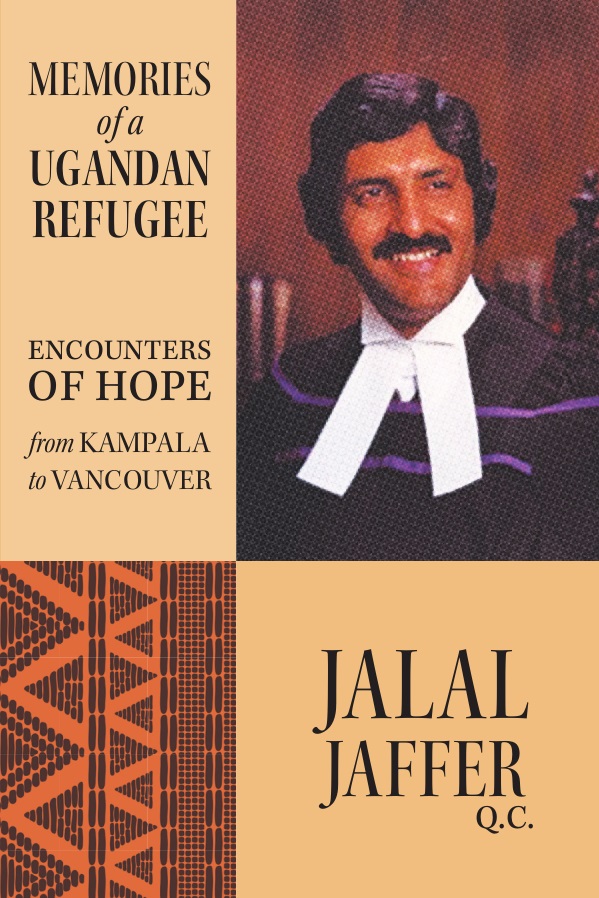
Dare to Dream

By FARAH TEJANI

Dare to dream and soar the skies,
Without ever questioning or wondering why;
Life is the canvas and you are the brush,
With so many hues, there is no need to rush.

Discover your gifts and leave no stone unturned,
It’s your time to claim all that you have yearned;
Travel the world, give birth to a precious child,
Dig deep into your soul and let your spirit run wild.

Photograph, sing, write, fly,
Sculpt, dig, explore on high;
Have lunch on the moon or have tea with the Queen
Don’t be left wondering wonder what you could have been.

This world is for living in and living in now,
Those who lose sight will always wonder “how.”
Time stops for no one, so play your best game,
With so many days, make no two the same.

And be prepared for those who will tell you you can’t,
For it is these same people you will truly enchant.
Many are jealous of the gifts we possess,
But it is WITHIN US ALL to find true success

So challenge yourself, there is no time to compete,
To compare yourself to others is quite simply effete.
You’re God’s gifted child, He has plans for you,
So dare to dream, it is time for your debut!

You are the butterfly asleep in the Cocoon,
You must wait for your time, lest it be too soon.
And when the time is right you will no doubt emerge,
With uniquely painted wings and upwards you will surge.

Date posted: November 8, 2021.

___________

Farah Tejani creative writer Vancouver
Farah Tejani

Farah Tejani is a creative writer based in Vancouver. She is currently working on Childrens’ stories and a collection of poetry called “Elastic Embrace.” She has been contributing poems and stories for Simerg and its sister website Barakah for the past year. We invite our readers to read some of Farah’s poems by clicking on The Fragrance of SpringElastic Embrace; and The Great Sacrifice. Children will particularly love her heart warming stories Mr. Sneaky Peeky and the Two Red-Tailed Monkeys and Elizabeth the Ladybug and the Lonely Rose.

Simerg welcomes your feedback. Please complete the LEAVE A REPLY form below or click Leave a comment . Your letter may be edited for length and brevity, and is subject to moderation.

Before departing this website please take a moment to review Simerg’s Table of Contents  for links to hundreds of thought provoking pieces on a vast array of subjects including faith and culture, history and philosophy, and arts and letters to name a few. Please also visit Simerg’s sister websites Barakah and Simergphotos.