Surrender and Realization: Imam Ali on the conditions for true religious understanding

Hazrat Ali Calligraphy by Karim Ismail
Calligraphy by Toronto’s Karim Ismail to commemorate the birth anniversary of Hazrat Ali on February 3, 2023 (13th Rajab)

[EDITOR’S NOTE: Like all Shia Muslims across the world, the Shia Imami Ismailis will be observing with deep reverence the birth anniversary of Hazrat Ali (peace be upon him) on or around Friday February 3, 2023 (13th day of Rajab — the 7th month in the Muslim calendar.) This insightful essay by Professor James W. Morris was first published on this website in 2010, with his permission. We now present it in a greatly improved format with larger fonts and better spacing. The piece is Copyright © James W. Morris.]

By JAMES WINSTON MORRIS

“Do not seek to know the Truth (al-Haqq) according to other people. Rather first come to know the Truth — and only then will you recognize Its people.” — Imam ‘Alī Ibn Abī Tālib [1]

One of the most striking characteristics about those surviving oral traditions that have come down to us from the earliest periods of each of the world-religions — as with the Gospels, the earliest Buddhist teachings, or the Prophetic hadith — is the distinctive directness, simplicity, and extreme concision of those original oral teachings. It is as though everything else that follows is only a kind of endlessly extended commentary on those few simple words. Certainly this is true of many of the surviving sayings attributed to ‘Ali ibn Abi Talib (d. 40/660) — including the short, but highly memorable passage that is the subject of this study, which has inspired repeated commentaries and elaborate theological and even dramatic interpretations down through the centuries. [2]

The wider significance of this particular passage is that it illustrates so perfectly Ali’s emblematic role as the fountainhead of virtually all the esoteric traditions of Islamic spirituality, both among the many branches of Shiite Islam (which revere him as their first Imam) and throughout the even more numerous Sufi paths, where his name is almost always included as the initial transmitter of the Prophetic baraka in each order’s chain of transmission. That central initiatic role is beautifully summarized in the famous Prophetic saying:

‘I am the City of (divine) knowing, and Ali is its doorway.’ 

And perhaps the most important literary vehicle in the wider transmission of Ali’s teachings, since it has been equally revered by both Sunni and Shiite audiences down to our own time, is the Nahj al-Balāgha (‘Pathway of Eloquence’), a wide-ranging collection of various sermons, letters, and wise sayings attributed to Ali, that was assembled several centuries later by the famous scholar and poet al-Sharíf al-Rādí (d. 406/1016). [3]

The famous saying of Ali placed as the epigraph for this study, with which al-Ghazālí begins his own spiritual autobiography, highlights the indispensable — if somewhat paradoxical — starting point for any well-grounded discussion of religious and spiritual understanding. For all problems of inter-religious understanding — and perhaps even more important, of that initial ‘intra-religious’ understanding on which all further dialogue depends — necessarily come back to this fundamental question: What is the ultimate divine Reality (al-Haqq), and how we can come to know and properly conform to what It requires of us (‘the Right’, which in Arabic is also an inseparable dimension of the divine Haqq)? Almost all the extensive sermons and teachings of the Nahj al-Balāgha are devoted to one or another of the equally essential dimensions of this question — to that ongoing interaction between our purified actions and intentions (‘amal), and our maturing spiritual understanding (‘ilm), which together constitute each person’s uniquely individual, spiralling process of spiritual realization (tahqíq).

Now one of the most important keys to approaching this primordial question in the Nahj al-Balāgha is the famous passage (translated in full in the Appendix at the end of this study) describing Ali’s intimate advice to one of his closest companions and disciples, Kumayl ibn Ziyād al-Nakhā’ī. [4] The difficulty and intrinsic dangers of that unique lesson are emphasized already in its dramatic setting.  Kumayl, who recounts the story, stresses the great pains Ali takes to assure his privacy and solitude, leading his disciple out to the cemetery beyond the city wall of Kufa: that is, to the symbolic home of those who — like those rare true Knowers of God described in the rest of Ali’s saying — are spiritually already at once ‘alone with God’ and ‘dead to this world.’ In addition, the wider historical setting at that particular moment in time — so full of religious intrigues, claims, betrayals, and prolonged bloody civil wars among the triumphant Arabs — only highlights the profound wealth of concrete earthly experience which underlies the Imam’s conclusions and intimate teachings summarized in this saying.

No other text of the Nahj al-Balāgha is so pointedly set in the same kind of strictest privacy and intimacy. As a result, this famous testament to Kumayl constitutes the indispensable link between the more public, relatively exoteric teachings of the Nahj al-Balāgha and the wealth of more intimate, often esoteric spiritual teachings of  Ali that were eventually preserved — at first orally, and eventually often in writing — in both Shiite and Sufi Islamic traditions.

The contents of  Ali’s lesson to Kumayl are all presented as a clarification of his opening statement that:

There are three sorts of people (with regard to Religion, al-Dīn). A divinely inspired Knower (‘ālim rabbānī); the person who is seeking (that true spiritual) Knowing (muta‘allim) along the path of salvation; and the riffraff and rabble, the followers of every screaming voice, those who bend with every wind, who have not sought to be illuminated by the Light of (divine) Knowing and who have not had recourse to a solid support.

In the remainder of his lesson, Imam Ali goes on to explain some of the basic conditions for these three radically different levels of (and potentials for) true religious understanding. Each of his points here — as throughout the Nahj al-Balāgha — is of course profoundly rooted in the central teachings of the Qur’an. However here we can only summarize his most essential observations in the simplest possible terms.

First, and most importantly, it is human Hearts (the Qur’anic qalb al-insān) that are the locus of true spiritual ‘Knowing’ (‘ilm) and of our awareness of God and Truth: that is, it is not simply our mind or intellect or passion. Hence the decisive practical importance, throughout the Nahj al-Balāgha, of Ali’s constant stress on the purification of our hearts, through inner surrender to the divine Will (taslīm), as the underlying spiritual purpose of the many divine commandments. Divine, inspired ‘Knowing,’ however it is outwardly acquired, can only be perceived as such by the Heart that has been ‘polished,’ emptied of this world’s distractions and attachments, and thereby opened up to the full significance and reality of the divine Word — and to the further rights and obligations (another dimension of the Arabic al-Haqq) flowing from that opening.

Second, the practically indispensable key to this human potential for religious Knowing is the real existence and efforts of a limited number of divinely guided individuals — again, not of particular books, rituals, doctrines or worldly institutions, none of which are even mentioned in this intimate, highly personal lesson.  Ali refers here to those very special human doorways to true religious understanding by several profoundly significant Qur’anic expressions: the ‘divine Knowers’; the ‘Friends of God’ (awliyā’ Allāh); God’s ‘Proofs’ or ‘Clear Signs’ on Earth (hujja, bayyina); God’s ‘True Servants’ (‘ibād Allāh); and finally as God’s true earthly ‘stand-ins’ or ‘Stewards’ (khalīfat Allāh).

The Imam tells us several other very important things in his description of these true ‘Friends of God:’

  • They are always present on earth, ‘whether openly or in secret.’ [5]
  • They are directly inspired by the divine ‘Spirit of Certainty’ (rūh al-yaqīn).
  • Therefore they pre-eminently possess true spiritual Insight (haqīqat al-basīra) into the deeper spiritual realities underlying earthly events and experiences, into the actual meanings of the infinite divine ‘Signs’ constituting our existence.
  • Their spiritual task and mission on earth is to pass on this divine Knowing to those properly qualified souls who are truly ready for and receptive to their divinely inspired teachings.

In contrast to these particular points of Alī’s teaching here, it is surely essential to recall all those manifold dimensions of what we ordinarily, unthinkingly call or presume to be ‘religion’ which in fact are not central to the particular divine mission of these inspired individuals as it is described in this lesson.

Third, Ali describes the divine ‘Knowing’ that can be conveyed uniquely by these specially missioned individuals as having the following qualities:

  • It is the ‘Dīn (true Religion/true Justice) by which God is truly worshipped and served.’
  • It is the indispensable key to realising what the Qur’an constantly describes as our ultimate human purpose: i.e., to transforming the mortal biped or ‘human-animal’ (bashar) into the theomorphic, truly human being (insān), who alone can freely follow and truly obey God (the inner state of itā‘a), eventually becoming a pure manifestation of the divine Will.
  • Their divinely inspired Knowing is the true ‘Judge’ or Criterion for rightly perceiving and employing all the illusory possessions (māl) of this world .

Fourth, the ‘true Seekers’ (muta‘allimūn) of that divine Knowing have at least the following basic pre-requisites, each of which distinguishes them from the large majority of ordinary souls (al-nās). One might therefore say that each of these following five points mentioned by Ali here is in itself an essential pre-condition for acquiring true religious understanding:

  • Those true religious Seekers have a rare natural spiritual capacity to recognize, absorb, and actualize the inspired teachings of the Friends of God.
  • They know that they need the indispensable guidance of God’s Friends (the awliyā’), and therefore actively seek it out.  That is to say, they actually realize that they are spiritually ‘ignorant’ and needy.
  • They are willing and able to submit to the guidance of those divine Knowers and Bearers of Truth, especially with regard to acknowledging the true, ultimate aims of this inspired spiritual Knowing.  In other words, they have the indispensable humility to recognize their inner ignorance and to overcome the central spiritual obstacle of pride.
  • They have the practical insight and active spiritual perspicacity (basīra) to ‘see though’ the ongoing divine ‘private lessons’, the most essential divine ‘Signs’ (āyāt) of each soul’s life.  (This particular point is one that  Ali especially stresses throughout all the sermons and teachings of the Nahj al-Balāgha.)
  • They are not secretly governed by their desires for power and domination, qualities which  Ali stresses (along with pride) as the particular psychic passions most likely to trip up the otherwise apt potential spiritual seekers of this group.

Finally, the rest of humanity are clearly — indeed even vehemently — said to lack, for the time being, the above-mentioned prerequisites for realized spiritual learning and illumination, because of the current domination of their hearts by their psychic passions of the nafs: for power, pleasure, possessions, and the attractions ‘this lower world’ (al-dunyā) in general. In this particular context,  Ali does not openly clarify whether or not ‘purification’ of our hearts from such worldly passions is in itself the only obstacle to deeper spiritual and religious realization, or whether some individuals are simply born with dramatically greater, relatively unique spiritual capacities and potential. However, his recurrent and insistent practical stress on the ethically purifying dimensions of Islamic ritual and devotional practice throughout much of the rest of the Nahj al-Balāgha is a strong indication that revealed prescriptions for religious teaching and practice can and should be understood as well as an indispensable preparatory discipline that can be used to move at least some individuals toward the receptive inner state of these true ‘seekers.’

Now the practical consequences of all of  Ali’s observations briefly enumerated here are quite visible in the particular structure and emphases of almost all his longer sermons and discourses throughout the Nahj al-Balāgha. To put it in the simplest possible form, each longer text in that work typically stresses the dual religious dimensions of both taslīm (‘surrender’) and tahqīq (‘realization’). [6] That is, almost all of Imam Ali’s teachings are directed at the same time toward both (1) the essential purification of our own will — i.e., the discovery and gradual distillation of the true human/divine irāda from the endless promptings of our domineering ego-self or nafs — through true inner conformity and surrender (taslīm) to the authentic divine commandments; and (2) the subsequent stage of more active ‘realization’ (tahqīq) of the divinely inspired teachings that can only come about when an individual has developed enough humility and inner awareness of their spiritual ignorance to recognize their unavoidable need for a divine Guide and Knower, along with the many other essential qualities of the ‘seeker on the path of salvation’ that have just been summarized above.  From this perspective, all of the Nahj al-Balāgha constitutes an extended, lifelong example of the sort of essential spiritual teaching and guidance (ta‘līm) alluded to here in Ali’s private advice to his close disciple.

In conclusion, we cannot help but notice that Ali’s remarks to Kumayl ibn Ziyād here provide a radical contrast to many prevailing modern-day assumptions about ‘religious understanding’ and religious teaching, whether our focus happens to be on ‘inter-’ or ‘intra-’religious concerns. Here I can mention only a few of the most salient points of contrast between popular contemporary conceptions of inter-religious understanding and Ali’s own teachings on this subject, without entering into a more detailed discussion of the deeper philosophic underpinnings and presuppositions on either side.

To begin with, the primary focus of most modern attempts at inter-religious understanding is either intellectual and theological, where formal doctrines and religious symbols are concerned; or else on ‘social ethics,’ where certain historically accumulated external practical precepts and rituals of two religious traditions are being compared. In either case, the particular comparison (or ‘understanding’) of the religious traditions concerned is typically carried out in an external, reductive social, historical or political way that supposedly reveals the ‘real,’ common meanings and functions of the religious phenomena in question. In this widespread approach, the aims of those particular practical or theological dimensions of a given religion are usually reduced, explicitly or implicitly, to a given, presumably familiar and universally accessible set of historical, this-worldly (dunyawī) social, political, or even psychic ends.

What is key in each such case, of course, is the reductive, socio-political emphasis and assumptions shared by virtually all such modern approaches. Now no rational observer would deny that every historical religion does indeed ‘function’ in such ways in this world — in ways that are in fact so poignantly illustrated by the endless ‘religious’ polemics, strife, and open civil warfare of early Islamic history during Ali’s own lifetime, seminal events that are recorded in such thorough detail throughout the Nahj al-Balāgha. But modern writers unfortunately too often tend to ignore the equally obvious limits of such reductive forms of interpretation and understanding: what is it, one might ask all the same, that also differentiates, for example, a genuine Sufi tarīqa from a social club, real spiritual guidance from psychotherapy, or transformative spiritual music (dhikr and samā‘ in their primordial sense) from any other concert performance?

In dramatic contrast to such popular contemporary approaches to ‘religious understanding’, Ali’s remarks in this passage focus on radically different, spiritually distinctive and difficultly attainable — but nonetheless fundamental — aspects of religious life and understanding, whatever the particular historical traditions in question:

First, for Ali, true inter-religious understanding — at any of the three levels he distinguishes here — is always between individuals, growing out of each soul’s individual encounter with the ‘other’ and their common spiritual reality and relationship with al-Haqq (God, Reality, and Truth). From this perspective, therefore, true religious understanding is always the ultimate fruit of a sort of ‘tri-alogue’ — not a worldly dialogue — in which both the human parties, the Knower and the properly prepared disciple, share and gradually discover their common divine Ground of reality and true being.

Secondly, the possibilities of religious understanding (again whether inter- or intra-religious) are essentially limited above all by the intrinsic barrier of the specific spiritual capacities, shortcomings and level of realization of each individual. As in the familiar imagery of so many hadith and later Islamic writings, souls here are indeed revealed as mirrors, who can only see in the ‘other’ — whether that be a religious phenomenon or anything else — their own reflection.  Therefore the basharic ‘rabble’ of whom  Ali speaks so painfully here — whatever their particular religion or historical situation — are necessarily and unavoidably in the position so aptly described in Rumi’s famous tale of the blind men and the elephant.

Thirdly, for Ali, even the first beginnings of our approach to a true, immediate awareness of God and the divine Religion (dīn) are necessarily grounded above all in humility, in an awareness of one’s own essential spiritual ignorance and limitations — and therefore not in the acquisition of some further external form of knowledge, ritual, or belief. In other words, the greatest, primordial obstacle to any serious religious understanding — as Socrates and so many other inspired teachers have repeatedly reminded us down through the ages — is our own ‘compound ignorance’ (jahl murakkab), our own illusion that we truly ‘know’ so much that we in fact only believe or imagine.

Finally, if  Ali teaches us — as this story itself so dramatically illustrates — that the keys to the deepest and most profound forms of religious understanding are to be found in seeking out God’s true ‘Knowers’ and Guides and our own intimate spiritual relation to them, then the corresponding area of human religious life and experience most likely to lead to genuine inter-religious understanding is that of our particular individual devotional life and prayer, of each soul’s unique, ongoing inner relationship with its Guide and source of Light, in what has traditionally been termed ‘practical spirituality’ (‘irfān-i ‘amalī). Not surprisingly, this domain of our personal spiritual experience and practice, where God is so obviously and unavoidably the ultimate ‘Actor’ and Creator, in reality exhibits an extraordinary phenomenological similarity across all external historical and credal boundaries and socio-political divisions….

These brief reflections on some of the central teachings of the Nahj al-Balāgha cannot help but remind us of one of the most remarkable Qur’anic verses on the subject of humankind’s recurrent religious misunderstandings and their ultimate resolution in and by the Truly Real (al-Haqq). Not surprisingly, this verse also serves well as a remarkable symbolic allusion to the strife-torn historical events and conflicts among the early Muslims, those critical, paradigmatic ‘tests’ (fitan) that are so vividly illustrated and evoked throughout the remainder of the Nahj al-Balāgha — and which continue to recur, with such poignancy, in our own and every age.

The verse in question (al-Baqara, 2:213) begins with the reminder that ‘all people were one religious community,’ but then:

God sent prophets bearing good news and warning, and He revealed through them the Scripture with Truth (Haqq), so that He might judge among the people concerning that about which they differed. And only those differed concerning It to whom (the Scripture) was brought, after the Clear Proofs came to them, out of strife and rebellion among themselves. But then God guided those who had faith to the Truth about which they had differed, through His permission. For God guides whoever He wishes to a Straight Path!

____________

Appendix: Ali’s Speech to Kumayl ibn Ziyād al-Nakhā’ī [7]

Kumayl ibn Ziyād said: The Commander of the Faithful — Peace be upon him! — took my hand and brought me out to the cemetery (beyond the city walls).  So when he had entered the desert he let out a great sigh, and then he said:

O Kumayl ibn Ziyād, these Hearts are containers: the best of them is the one that holds the most. So remember well what I am going to say to you!

The people are (divided into) three groups: a lordly (divinely inspired) Knower [8]; one seeking Knowing along the path of salvation; and the riffraff and rabble, the followers of every screaming voice, those who bend with every wind, who have not sought to be illuminated by the Light of Knowing and who have not had recourse to a solid Support.

O Kumayl, Knowing is better than possessions: Knowing protects you, but you must guard possessions.  Possessions are diminished as they’re spent, but Knowing multiplies (or ‘purifies’) as it is shared. But whoever makes the possessions disappears as they do!

O Kumayl ibn Ziyād, the awareness/recognition (ma‘rifa) of Knowing is a Religion (dīn) by which (God) is worshipped and served: through it the truly human being (insān) acquires willing obedience (to God) during their life (here), and a beautiful, wonderful state after their passing away. For Knowing is the Judge, and possessions are what is adjudged!

O Kumayl, those who accumulate possessions have perished, even while they are still alive.  But the Knowers endure for all eternity: their particular-instances [9] are lost, but their likenesses are found in the Hearts. O what Knowledge abounding there is right here! — and he pointed with his hand to his breast [10] — if only I could reach those who are its (rightful) bearers.

True, I’ve reached a quick-learner who couldn’t be trusted with It, who would seek to use the instrument of Religion for this world — who would try to use God’s blessings to dominate His (true) servants and His proofs to overcome His Friends. [11] Or someone submissive to the bearers of the divine Truth (al-Haqq), but without any true Insight (basīra) into Its twists and curves, whose Heart is consumed by doubt at the first onset of some difficulty.  But alas, neither this one nor that (can truly bear the Truth)! Or someone greedy for pleasures, easily led by their passions? Or someone engrossed in acquiring and accumulating (worldly possessions)? Those two are not among the guardians [12] of Religion in any respect — the closest semblance to that sort are the grazing cattle! Thus Knowing dies with the death of those who bear it.

Yet indeed, O my God, the world is never without one upholding the Evidence [13] for God, either outwardly and known to all, or secretly and in obscurity, [14] so that God’s Evidences and His illuminating-manifestations may not come to nought. But how many are these, and where are they!?

By God, these (true Knowers) are the fewest in number, but the greatest of all in their rank with God!  Through them God preserves His Evidences and His Illuminating-manifestations, so that these (Knowers) may entrust them to their (true) peers and sow them in the Hearts of those like them. Through (those Knowers) Knowing penetrates to the inner reality of true Insight (haqīqat al-basīra). They are in touch with the Spirit of Certainty (rūh al-yaqīn). They make clear what the lovers of comfort had obscured. They are at home with what distresses the ignorant. And their bodies keep company with this world, while their spirits are connected to the Loftiest Station.

Those are the ones who are (truly) God’s Stewards [15] on the earth, who are calling (the people) to His Religion. Oh, how I long to see them! Go on now, Kumayl, if you want.


[1] A well-known saying commonly attributed to Imam ‘Alī Ibn Abī Tālib, quoted here as it is cited by al-Ghazālī at the beginning of his famous spiritual autobiography, the Munqidh min al-Dalāl.

[2] Many of these same points were later developed by the famous religious author Ghazālí (Abū Hāmid al-Ghazālī) in the influential closing section of his Mīzān al-‘Amal (‘The Scale of [Right] Action’). Already a century before the actual collection of Nahj al-Balāgha, this same story of Ali and Kumayl provided the architectonic framework for a highly creative dramatic reworking of these spiritual lessons in Ja‘far ibn Mansūr’s Kitāb al-‘Alim wa’l-ghulām (see our translation and Arabic edition, The Master and the Disciple: An Early Islamic Spiritual Dialogue, London, I. B. Tauris, 2001).

[3] To give some idea of the ongoing popular importance and relative familiarity of that text even today, one finds beautifully calligraphed Arabic proverbs and epigrams drawn from the Nahj al-Balāgha on the walls of homes in every part of the Muslim world, framed for sale in suqs and bazaars, and even being sold as postcards. Even more tellingly, the owners (or sellers) of that calligraphy will often explain that this or that saying is simply ‘a hadith’.

[4] Saying number 147 in the final section of short maxims, corresponding to pages 600-601 in the complete English translation by Sayed Ali Reza (Peak of Eloquence, NY, 1978). (Details on the Arabic text in the Appendix below.)

[5] It is perhaps important to note that this last qualification (sirran, ‘secretly’) can be understood to refer not simply to the outward modesty and relative social and historical ‘invisibility’ of the vast majority of the true ‘Friends of God’ — a point also strongly emphasised in the famous Prophetic hadith about the qualities of the walí — but also to their ongoing spiritual presence, actions and effects, even more visible and widespread long after their bodily sojourn on earth, which is of course central to the manifest spiritual role of the prophets and ‘Friends’ (awliyā’ Allâh) throughout every authentic religious tradition.

[6] See the more adequate discussion of this key polyvalent term in our Introduction to Orientations: Islamic Thought in a World Civilisation (London, Archetype, 2004).

[7] This particular well-known passage from Nahj al-Balāgha, the famous later compilation (by al-Sharīf al-Rādī, 359/970-406/1016) of the many letters, teachings, sermons and proverbs attributed to Alī ibn Abī Tālib, is also included in almost identical form in a number of earlier extant Shiite works, in both the Imami and the Ismaili traditions. The text translated here is from a popular Beirut edition of Nahj al-Balāgha (Dār al-Andalus, 1980), pp. 593-595, numbered 147 in the long later section of ‘Wise Sayings’ (hikam). The setting of this particular lesson is apparently outside the new Arab settlement of Kufa (on the edge of the desert in southern Iraq), during one of the drawn-out, bloody civil wars that divided the nascent Muslim community throughout the period of Ali’s official Imamate.

[8] ‘Alim rabbānī: ‘Knower’ here is used in the strong and inclusive Qur’anic sense, to refer to profound, God-given spiritual Knowing (‘ilm). The qualifier recalls the Qur’anic term rabbānīyūn and apparently is related both to the Arabic root referring to God as ‘Lord’ (rabb, hence ‘divine’ or ‘god-like’), and to another Arabic root referring to spiritual teaching and education in the very broadest sense (r-b-y). The latter meaning is emphasized at Qur’ān 3:79, which probably underlies the special usage here: …Be rabbānīyūn through your teaching the Book and through your studying (It).

[9] A‘yān (pl. of ‘ayn): that is, their individual, temporal earthly manifestation, as opposed to their ‘images’ or ‘likenesses’ (amthāl, or ‘symbols’) in the Hearts of other human individuals after them. Here we can see how Alí’s perspective parallels — and at the same time embodies — the Qur’anic understanding of the relationship between the archetypal divine ‘Names’ (which ultimately constitute this Knowing) and their infinitely re-created individual manifestations.

[10] Here, as in the Qur’an, the term ‘breast’ or ‘chest’ (sadr) is virtually synonymous with the ‘Heart’ (qalb) as the locus of all true perception, selfhood, etc.

[11] Awliyā Allāh: see the Qur’anic use of this key term (10:62).

[12] Or ‘shepherds’, ‘pastors’: ru‘āt.

[13] Or ‘Proof’ (al-Hujja) — but in the sense of the indisputable living human Manifestation, not any sort of logical or rhetorical ‘argument’; this is another central Qur’anic concept (4:165, 6:149) frequently alluded to in other teachings of Imam Ali in the Nahj al-Balāgha. The Qur’anic expression bayyināt (‘Illuminating-manifestations’) used several times in the immediately following passage seems to refer to the same key spiritual figures in this context.

[14] Literally, ‘in fear’ (used in the Qur’an, for example, of the young Moses fleeing Egypt for Midian) and ‘submerged’ (by the power of earthly tyranny).

[15] This famous Qur’anic phrase (khalīfat Allāh) is variously applied to prophets (Adam, at 2:30; David, at 38:27) and to ‘you-all’ (= all of humanity), at 6:165, 10:14 and 73; 35:39; 27:62; etc.  Within a short time after the death of the Prophet — and certainly by the time of this story — it had taken on a highly charged and disputed political significance in the long and violent decades of protracted civil wars over the worldly leadership of the nascent Arab-Muslim political community.

Date posted: January 30, 2023.

__________________

James Morris, Islamic Studies Professor, Institute of Ismaili Studies, essay on Imam Ali, Simerg

About the writer: Dr. James Morris is Professor of Islamic Studies at Boston University’s Theology department and Islamic Civilization and Societies program. Prior to that he held the Sharjah Chair of Islamic Studies at the University of Exeter in the United Kingdom. He has also taught at Princeton University, Oberlin College, Temple University, and the Institute of Ismaili Studies in Paris and London. He has served as visiting professor at the Ecole Pratique des Hautes Etudes (Paris), University of Malaya, and University of Sarajevo, and he lectures and gives workshops widely throughout Europe and the Muslim world. Professor Morris serves on numerous international editorial, consulting, and examining boards in his fields. Professor Morris‘ interests in Islamic thought and religious studies date from his BA work at the University of Chicago. After further studies in Morocco, Egypt and France, he completed his PhD work at Harvard University and did advanced research at the Academy of Islamic Philosophy in Tehran.

Professor Morris is a prolific author, having written dozens of journal articles along with thirteen books, including most recently, The Reflective Heart: Discovering Spiritual Intelligence in Ibn Arabī’s Meccan Illuminations’; Orientations: Islamic Thought in a World Civilization; and The Master and the Disciple: An Early Islamic Spiritual Dialogue. He has often interviewed on current issues for the BBC and international journals and newspapers dealing with the Middle East. 

______________

REVIEW SIMERG’S TABLE OF CONTENTS AND VISIT ITS SISTER WEBSITES

Before departing this website, please take a moment to review Simerg’s Table of Contents for links to hundreds of thought-provoking pieces on a vast array of subjects including faith and culture, history and philosophy, and arts and letters to name a few. Also visit Simerg’s sister websites Barakah, dedicated to His Highness the Aga Khan, and SimergphotosThe editor may be reached via email at mmerchant@simerg.com.

___________________
Hazrat Ali Calligraphy by Karim Ismail
Calligraphy by Toronto’s Karim Ismail to on the birth anniversary of Hazrat Ali. Please click on image for reading.

Maleksultan and Jehangir Merchant’s Contribution to the IIS: Cataloguing Khojki Manuscripts and Gujarati Translation of Farhad Daftary’s Short History of the Ismailis

By MALIK MERCHANT

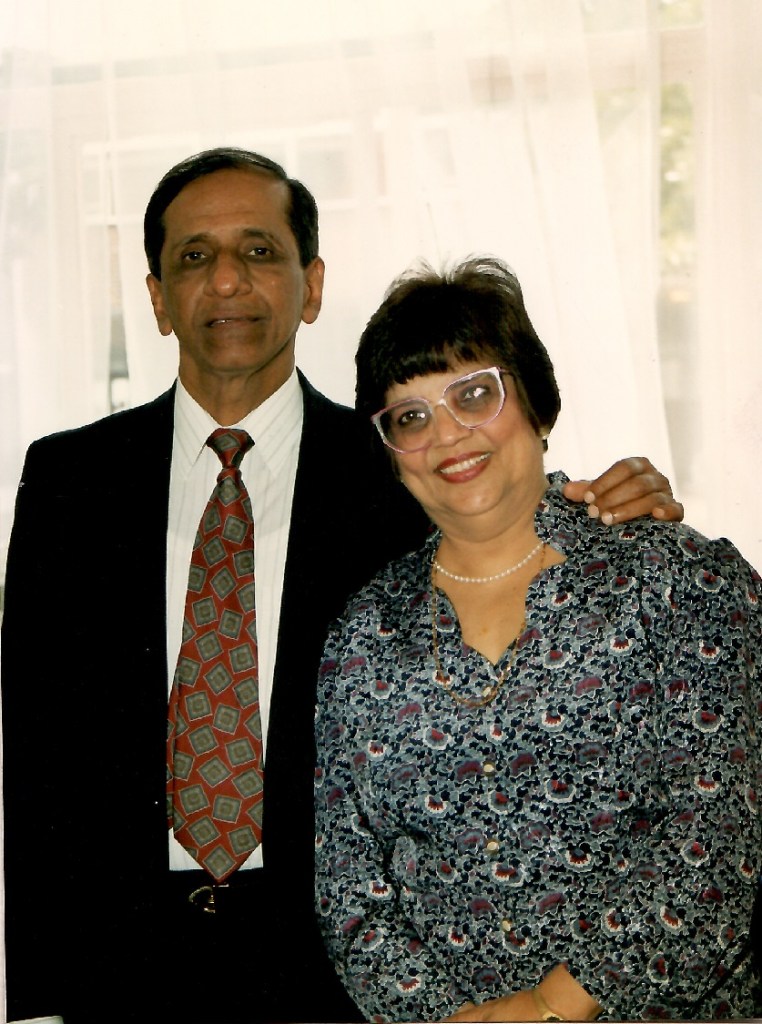
January 21, 2023, marks the 2nd anniversary of the death of my beloved mother, “Mrs. Merchant“. She and my late dad, Jehangir, who passed away in May 2018, worked hand in hand for over 60 years in the service of the Ismaili community, its institutions and the Imam-of-the-Time, Mawlana Shah Karim al Hussaini Hazar Imam, His Highness the Aga Khan. In their service, they also contributed to the work of the Institute of Ismaili Studies (IIS.)

My mum could read the Khojki script, and she and my dad undertook the task of cataloguing the Khojki manuscripts at the IIS. As the manuscripts had been transferred onto microfiche, the IIS provided my parents with a microfiche reader which enabled them to catalogue the manuscripts.

mr and mrs merchant
Photograph: Tribute album prepared by the BUI students of London, England, on the retirement of Mr. and Mrs. Merchant. Photo: Jehangir Merchant Family Collection.

On January 20, Simerg’s sister website produced a piece about the honour that was given to Dr. Farhad Daftary on January 18, 2023, for his devoted services to the Institute of Ismaili Studies, which he joined in 1988.

Prince Rahim Aga Khan was present at the event and expressed everyone’s gratitude to Dr. Daftary for his lifetime of work to the field of Ismaili studies. During his long tenure at the IIS, Dr. Daftary authored or edited 23 books and oversaw the publication of 150 books as well as contributed countless articles in scholarly journals and encyclopedias.

Most recently, in 2020, Dr. Daftary published a much anticipated volume entitled The Ismaili Imams: A Biographical History. The much sought book, unfortunately, has been a hard find at literature counters in Calgary and in other parts of Canada. I think very little effort has been made to restock the title, as I get a blank stare from literature counter members when I ask about the availability of the book and when they are expected to receive more stock! Perhaps, this important book is out of print and if that be the case then the IIS should certainly reprint it. This is one work that the Jamat had waited for more than 40 years since the IIS was established on December 13, 1977.

However, of all the books that Daftary published over the past 30 years, there is one that will always remain his seminal contribution to Ismaili studies. Entitled The Ismalis: Their History and Doctrines, the first edition was published in the early 1990’s and the 2nd edition came out in 2007. The voluminous 800 page book was more suited to scholars, researchers and keen readers of history. A few years later, in 1998, Dr. Daftary published a shorter version of the volume under the title A Short History of the Ismailis. Translations were done in numerous European languages.

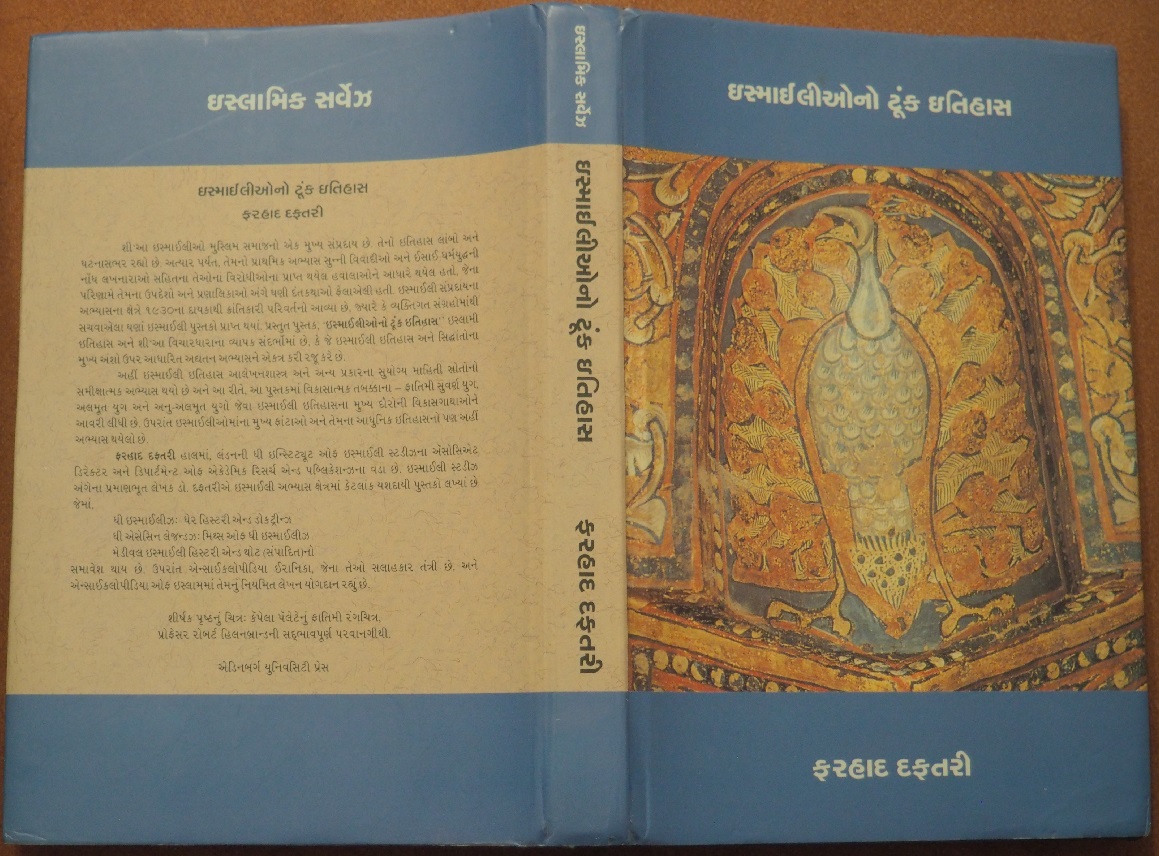
Cover image of a book titled 'ઈસમૈલીયાનો ઈતિહાસ' (History of Ismailis) featuring intricate decorative patterns and a peacock illustration.
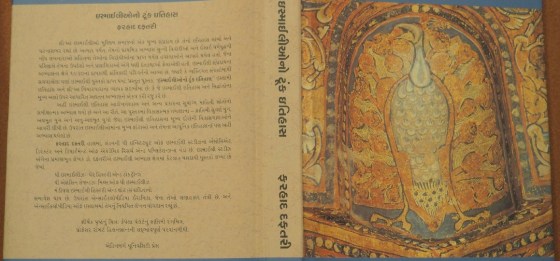
Front and back cover flap of the Gujarati translation of Dr. Farhad Daftary’s work A Short History of the Ismailis. The translation was done under the title Ismailiono Toonk Itihas by Ismaili missionaries Jehangir Merchant and Sultanali Mohamed.

My dad was approached and whole heartedly accepted the challenge to do the Gujarati translation of the work. His Gujarati was very good but he was a very humble man. He sought the help of his missionary colleague Sultanali Mohamed to assist him and improve the translation even further.

Until the commencement of this project, my dad had looked after himself well physically. Such was his stamina that my daughter, Nurin, who went to visit him before he began the translation told me that during her morning walks with her grandad, he would outpace her leaving her metres behind. All this physical activity that he had conducted for years, came to a standstill once he undertook the Gujarati translation. He devoted day and night to the translation. He wanted the translation to be as perfect as possible and ensure that it adhered to Dr. Daftary’s style of writing. It wasn’t easy but he did it sincerely and from the bottom of his heart.

A senior gentleman wearing glasses and a suit, smiling while posing in front of a concrete background.
Missionary Sultanali Mohamed (1927-2020), co-translator with Jehangir Merchant of Farhad Daftary’s Short History of the Ismailis.

Sultanali missionary and my mum were very closely involved in the translation. The book went to India for printing and my dad insisted that he should see the proofs before the book was published.

What a shock when the proofs came back! The translation had been altered in many parts of the book and mistakes had been introduced. He decided to withdraw his name as the translator if the book was to be published in its sub-standard revised form without his approval He was deeply hurt, and responded to Dr. Daftary citing examples of the alterations that had been made in many parts of the book that were not acceptable to him. Moreover, numerous errors had been introduced. He found it hard to understand why the changes were made. He and Sultanali would have accepted the proof if it was better than the translation they had submitted for publication.

Dr. Daftary respectfully requested my dad to do the needful to bring the translation to its original form. My dad spent the next several weeks and reworked on the proofs that he had been provided. Throughout his dedicated time, he would have in front of him Gujarati-English dictionaries to ensure the best possible translation. He and my mum were thorough in all the services they rendered to Jamati institutions which they had begun in the early 1950’s after qualifying as missionaries and religious education teachers. Their first professional job was as teachers in Lourenço Marques (now Maputo), Mozambique.

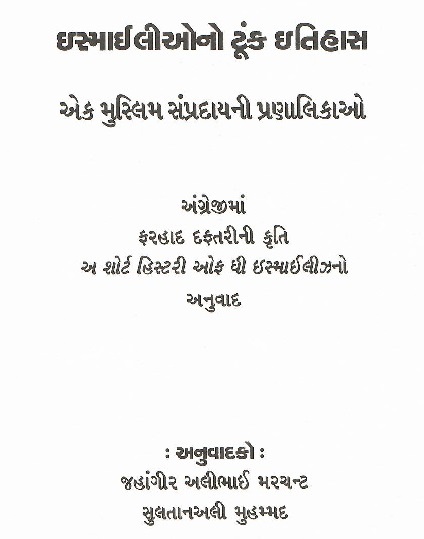
Finally, after weeks of additional hard work, my dad and Sultanali’s translation was published and I have published, above, an image of the cover of the book. It doesn’t carry their names on the cover flap. However, they are listed in the inside title page of the book, shown below.

A cropped image of the inside title page of the Gujarati translation of Dr. Farhad Daftary's book A Short History of the Ismailis. The names of translators, Jehangir Alibhai Merchant and Sultanali Mohamed, appear on the last two lines of the page. Simerg
A cropped image of the inside title page of the Gujarati translation of Dr. Farhad Daftary’s book A Short History of the Ismailis. The names of translators, Jehangir Alibhai Merchant and Sultanali Mohamed, appear on the last two lines of the page.

I vividly recollect his dedication to Dr. Daftary’s book. Even I was ignored during my visits to Vancouver. Such was his love and dedication during his service to institutions. We were their “secondary children”, their students always receiving the highest priority but we accepted that throughout our lives. They sought and did everything for our education and to raise us to be good murids of Mawlana Hazar Imam.

On this day, we as a family pray for the rest of their souls in eternal peace. Their contribution to the Jamat was sincere. They worked hard for Jamati institutions and did the very best to set the best possible standards for themselves and their students. My mum is still fondly remembered by her students for the number of times she would call them when they had recitation duties in Jamatkhana — whether it was delivering prayers, ginans, waeze’s (sermons) or any other literary or religious recital. She wanted to ensure they were well prepared and fully ready for their recitations.

My parents had aspirations for their children and grandchildren as well as the youth of the Jamat, and I sincerely hope that we are able to fulfill their hopes and expectations of being good Ismaili Muslims, following its ethics and maintaining our devotion and love for Mawlana Hazar Imam.

Date posted: January 20, 2023.
Last updated: January 21, 2023 (see correction note below.)

Correction: An earlier version of the post stated that Mrs. Merchant was involved in the transliteration of titles of Khojki manuscripts at the IIS. She was actually involved in cataloguing the manuscripts with her husband, Jehangir. The oversight is regretted and the post has been revised.

____________________________

REVIEW SIMERG’S TABLE OF CONTENTS AND VISIT ITS SISTER WEBSITES

Before departing this website, please take a moment to review Simerg’s Table of Contents for links to hundreds of thought-provoking pieces on a vast array of subjects including faith and culture, history and philosophy, and arts and letters to name a few. Also visit Simerg’s sister websites Barakah, dedicated to His Highness the Aga Khan, and SimergphotosThe editor may be reached via email at mmerchant@simerg.com.

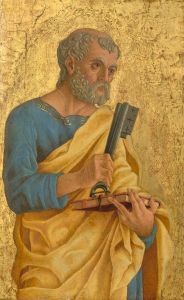
The Aga Khan, Pope Benedict XVI, the Ismaili Imamat, the Papacy and Simon (St.) Peter

Aga Khan, Pope Benedict, Papacy, Ismaili Imamat and Simon Peter
Simon Peter. Click on image to read article

As part of his famous Apostolic Journey to France in 2008, Pope Benedict XVI — who died on December 31, 2022 — paid a visit to the “Institut De France” in Paris where he was presented with a gold medal by the Institut. Pope Benedict also unveiled a plaque commemorating his visit. During his very brief remarks to the audience, the Pope expressed his gratitude to the Institut “both personally and as the successor of [Simon] Peter.” The Aga Khan met the Late Pope, with everyone’s attention drawn to their handshake…Over the past 15 years, there has been an increased collaboration between Catholic institutions and the work of the Ismaili Imamat, through the Aga Khan Development Network…The Catholics adhere to the belief that the Pope is a successor of St. Peter. The succession of the Pope is determined by a college of cardinals who elect the Pope, while the office of the Imam of the Ismailis is a hereditary position.  — READ MORE

Date posted: January 1, 2023.

__________________________

REVIEW SIMERG’S TABLE OF CONTENTS AND VISIT ITS SISTER WEBSITES

Before departing this website, please take a moment to review Simerg’s Table of Contents for links to hundreds of thought-provoking pieces on a vast array of subjects including faith and culture, history and philosophy, and arts and letters to name a few. Also visit Simerg’s sister websites Barakah, dedicated to His Highness the Aga Khan, and SimergphotosThe editor may be reached via email at mmerchant@simerg.com.

Demystifying the Rich Ismaili Tradition of Ginans: Carleton University’s Esteemed Scholar Karim H. Karim to Give Keynote Lecture Organized by the Association for the Study of Ginans, Saturday, December 17, 2022 via Zoom

Introduced by MALIK MERCHANT

[Note: The event has ended. A link to a recording of the presentation will be provided when it becomes available; please read background article below — Ed.]

The rich and beautiful tradition of Ginans (Hymns, contemplative or reflective knowledge), sometimes referred to as poetry, that was introduced into the Indian subcontinent by Ismaili dais (missionaries) such as Pirs Satgur Noor, Shams, Sadardin helped gain new converts as well as sustain the faith of their subsequent generations for hundreds of years. The hope and promise given by the Pirs in their compositions that their hereditary spiritual master — the Imam who was at the time based in Iran — would one day make his appearance in the subcontinent (jampu dip) was realized several centuries later with the arrival of the 46th Imam, Mawlana Shah Hassanali Shah, Aga Khan I, in the 19th century.

Memorized and sung in Ismaili homes and religious gatherings, the Ginans remained the most powerful tool for keeping the faith alive. Today, in the western world, the tradition continues to thrive with Ginans being recited by Ismaili children as young as 5 or 6. With the arrival of thousands of Ismailis from the Middle East and Central Asia over the past 30 years, it is inspiring to note that they too have adopted the Ginanic tradition, just as Ismailis, whose origins are in South Asia have adopted the tradition of reciting Qasidas composed in Arabic and Farsi by eminent Ismaili figures and dais such Nasir Khusraw and Shams Tabriz.

Karim H Karim Carleton University, Association for the Study of Ginans, News, Announcement
Karim H Karim

However, how well are Ginans and their meanings understood by the new generation of Ismailis? Why is there so much confusion surrounding the Hindu element in Ginans? For that matter, are Ginans essentially Hindu in nature? And what about the solid Islamic concepts of the Unity of God (Tawhid) and Muslim ethics of compassion, honesty, forgiveness that are enshrined in the Ginans? The Prophet Muhammad himself is featured in many Ginans. Hopefully, Karim H. Karim, will seek to enlighten his audience on Saturday December 17 in his talk entitled “Are Ginans Islamic or Hindu?”

The term Satpanth (true path) was introduced by Ismaili Pirs in their compositions. In his brief synopsis about his lecture, Karim H. Karim notes:

“Satpanth’s core beliefs are founded on Shia Islamic concepts. Its ginans articulate Ismaili principles in Indic languages, music, and symbols. Like other pluralist traditions in India, Satpanth has drawn from mythological and cosmological knowledge that is integral to South Asian spirituality. Ginans flourish at the religious cross-roads of the sub-continent, the Middle East and Central Asia. This liminal space is rich and dynamic: it is integrative of traditions and worldviews, generative of art and thought, and nourishing of spirituality. It is a site of the human quest for truth that narrow notions about religion cannot confine.”

Simerg hopes that all its readers — Ismaili Muslims, non-Ismaili Muslims as well as people of other faiths — will participate in Dr. Karim’s Zoom presentation that will take place as follows:

Zoom connection: https://tinyurl.com/2sru2w7j
Zoom  ID : 9150118939, Passcode: asg22
Broadcast Date: Saturday, December 17, 2022.
Broadcast times in various parts of the world:
India (Mumbai): 9:30 PM;
Pakistan: 9:00 PM;
East Africa: 7:00 PM;
Syria: 12:00 PM (Noon)
Dubai: 1:00 PM;
UK, Portugal (GMT): 4:00 PM;
France, Spain etc.: 5:00 PM; and
North America: EST (Toronto, Atlanta, New York etc.): 11:00 AM; CST (Chicago, Houston etc): 10:00 AM; MST (Calgary, Denver etc.): 9:00 AM; PST (Vancouver, Los Angeles etc.): 8:00 AM.

Readers in other worldwide cities in the Middle East, Central and South Asia, the Far East well as Australia and New Zealand, should calibrate their time according to the GMT time of 4:00 PM (16:00 hours, Saturday December 17, 2022).

Date posted: December 16, 2022.
Last updated: December 17, 2022.

_______________________

FEEDBACK

Simerg welcomes your feedback. Please click on Leave a comment. Your letter may be edited for length and brevity, and is subject to moderation.

REVIEW SIMERG’S TABLE OF CONTENTS AND VISIT ITS SISTER WEBSITES

Before departing this website, please take a moment to review Simerg’s Table of Contents for links to hundreds of thought-provoking pieces on a vast array of subjects including faith and culture, history and philosophy, and arts and letters to name a few. Also visit Simerg’s sister websites Barakah, dedicated to His Highness the Aga Khan, and SimergphotosThe editor may be reached via email at mmerchant@simerg.com.

Coverage of the Aga Khan Music Awards Held in Muscat, Oman, on October 29-30, 2022

The Aga Khan Music Awards was established in 2018 under the patronage of Mawlana Hazar Imam, His Highness the Aga Khan, 49th Hereditary Imam of the Shia Imami Ismaili Muslims. At the inaugural award ceremony that was held from March 29-31, 2019, in Lisbon, Portugal, His Highness made the following observation:

Music can be a strong cultural anchor, deepening a sense of community, identity and heritage, while simultaneously reaching out in powerful ways to people of different backgrounds. I know that in some parts of the world the words “Muslim” and “music” are not often linked together in the public mind. But they should be. The cultural heritage of Islam has long embraced musical language as an elemental expression of human spirituality — His Highness the Aga Khan

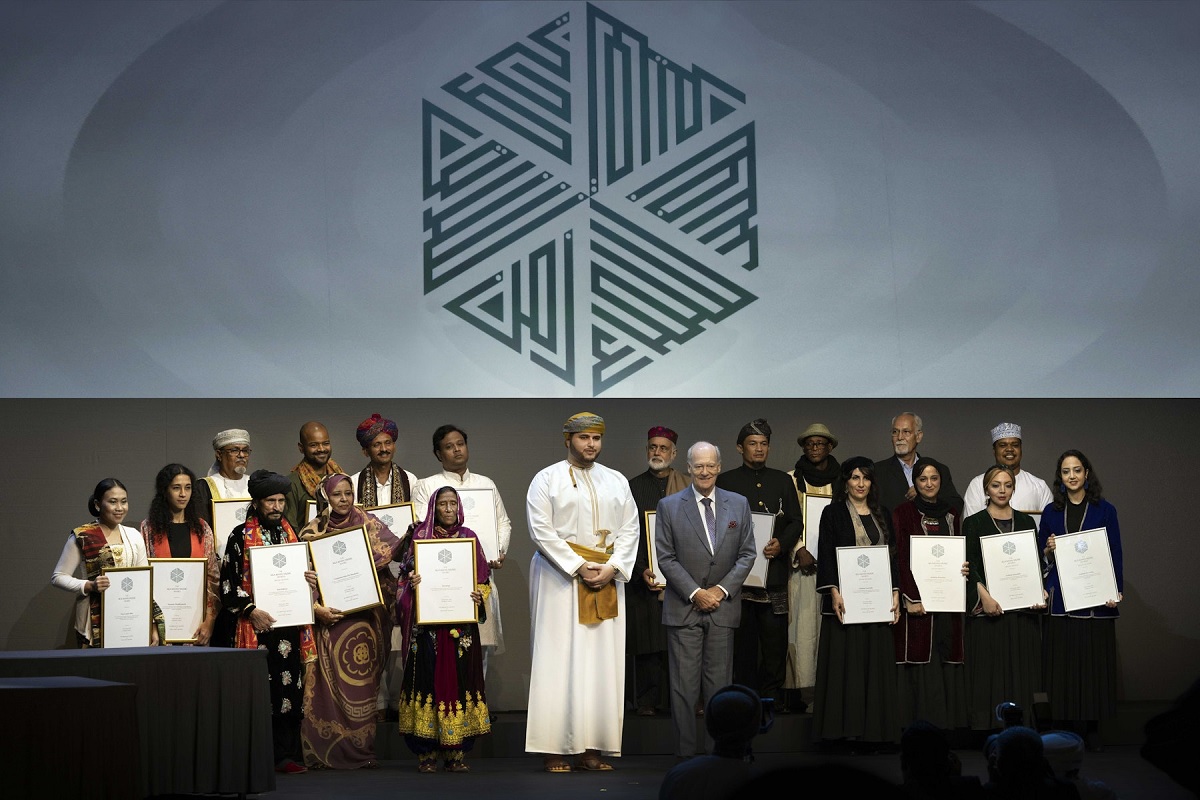
The second award ceremony has just concluded in Muscat, Oman, with presentations made to 15 Laureates from diverse countries from around the world (see photograph, below). Our sister website, Barakah, has a comprehensive report of the two-day event held from October 29 to 30, 2022. Please click HERE or on the image below for reports and photographs.

Group of award recipients at the Aga Khan Music Awards ceremony in Muscat, Oman, with a decorative logo in the background.
Prince Amyn Aga Khan, younger brother of His Highness the Aga Khan, and His Highness Sayyid Bilarab, presided over the presentation of the 2022 Aga Khan Music Awards in Muscat, Oman, on October 30, 2022. In the background, the six triangles that form the Aga Khan Music Awards logo are each a stylization of a word rendered in Kufic script, designed in collaboration with master calligrapher Samir Sayegh. Starting bottom right and going clockwise, Samaa’ (Listening), Zaman (Time), Sharq (East/Orient), Wahi (Inspiration), Taa’leem (Teaching) and Nafas (Breath/Soul). Photograph: Akbar Hakim/AKDN. Please click on image for a comprehensive report on the Aga Khan Music Awards presentation ceremony.

Date posted: October 31, 2022.

______________

Before departing this website please take a moment to review Simerg’s Table of Contents for links to hundreds of thought-provoking pieces on a vast array of subjects including faith and culture, history and philosophy, and arts and letters to name a few. Also visit Simerg’s sister websites Barakah, dedicated to His Highness the Aga Khan, and Simergphotos. The editor may be reached via email at mmerchant@simerg.com.

The Aga Khans, the Hereditary Imamat and the British Monarchy: A 150 Year Relationship of Respect, Cooperation and Friendship; Plus Rare Photos Featuring Prince of Wales, now King Charles III, with the Present 49th Ismaili Imam

[The original version of this piece by Rizwan Mawani was published on Simerg’s sister website Barakah. This reformatted version includes a number of licensed photographs of Mawlana Hazar Imam, His Highness the Aga Khan, with Prince Charles that were not part of the Barakah article. We have also included excerpts from speeches made by Prince Charles at events where Mawlana Hazar Imam was also present, prior to the Prince of Wales becoming King Charles III upon the death of his mother, Her Majesty Queen Elizabeth II, on September 8, 2022 — Ed.]

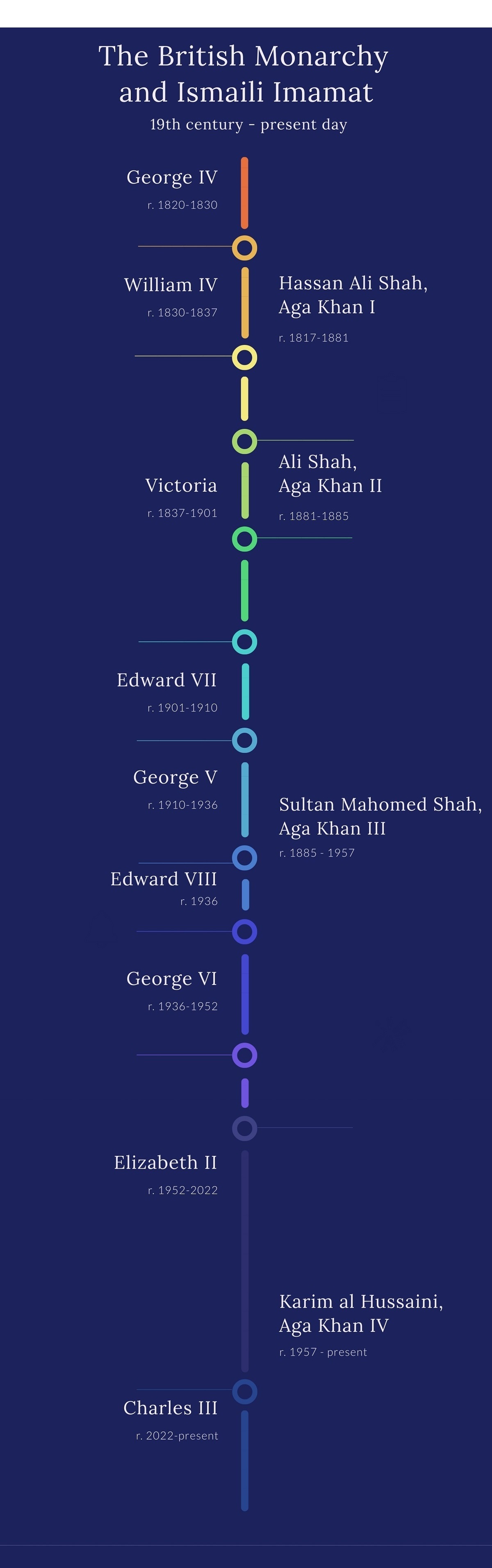
The British Monarchy and the Ismaili Imamat – 19th Century to present day. Chart: © Rizwan Mawani. King Charles III Aga Khan, Simerg
The British Monarchy and the Ismaili Imamat – 19th Century to present day. Chart: © Rizwan Mawani. Please click on image for enlargement.

By RIZWAN MAWANI

In advance of Queen Victoria’s Golden Jubilee commemorations in January 1887, a 10-year-old Imam Sultan Mahomed Shah (1877-1957), accompanied by his uncle Aga Jungi Shah (d. 1896) addressed the jamat at Bombay’s Darkhana in Persian. His private secretary, Kurrim Khan, translated the speech for the jamat in their native tongue and its English translation was published in the local newspaper. The reign of the sovereign was commemorated across the Empire and a decade earlier, in the same year that Imam Sultan Mahomed Shah was born in Karachi, the Queen was also proclaimed the Empress of India further cementing her relationship to the Subcontinent and its people.

Article continues below

Aga Khan III with members of his family, Barakah
Imam Sultan Mahomed Shah as a young boy (seated holding a book) with members of his family. His uncle, Aga Jungi Shah, the son of Imam Hassan Ali Shah and the brother of Imam Aga Ali Shah, is likely the person with the cane. Photograph: “H.R.H. Prince Aga Khan’s visit to Iran 1951,” published by the Ismailia Association for Pakistan.

The young Aga Khan III began his speech: “I have great pleasure to inform you, all members of the jamat in and out of Bombay, that her Most Gracious Majesty the Queen Empress of India’s subjects are about to show their loyalty in celebrating the Jubilee year of the reign of her Majesty…”

Article continues below

Chromolithograph of Queen Victoria in state robes with the crown, sceptre and cushion, symbols of her reign.
Chromolithograph of Queen Victoria in state robes with the crown, sceptre and cushion, symbols of her reign. ©The Trustees of the British Museum, released as CC BY_NC_SA 4.0. Reproduced from Wikipedia.

~~~~~~

In his heartfelt oration, the Imam spoke of his gratitude to the Crown. For under its rule, his community was able to practice its faith in relative peace and of the long-standing tradition of the Khoja Ismailis to offer their thanksgiving for this privilege. He continued: “On reference to your prayer books you will find that loyalty to rulers is directed from the foundation of your faith by one of my ancestors, Islam Shah, who instructed Pir Sadr al-Din, the great missionary to the Khojas to teach them to pray daily, ‘God preserve the Raj of the reigning king and grant prosperity to his subjects.’ There are also traditions from his Holiness the Prophet Muhammad to the same effect.”

“I further suppose,” he said, “that many of you present here this morning will remember that my grandfather, Sarkar Aga [Khan I, Imam Hassan Ali Shah], preached in this Jamatkhana to a large assembly of the jamat on the same subject to which I am this day drawing your special attention. I allude to the occasion when public prayer throughout Her Majesty’s dominions was offered up for the recovery of His Royal Highness the Prince of Wales from a dangerous illness, and that my grandfather said that he knew of many traditions of his Holiness the Prophet Muhammad, to the effect that it is necessary for all to pray for the safety of the reigning king under whose protection they were living…”

Article continues below

Aga Khan and the British Crown, Barakah, Rizwan Mawani
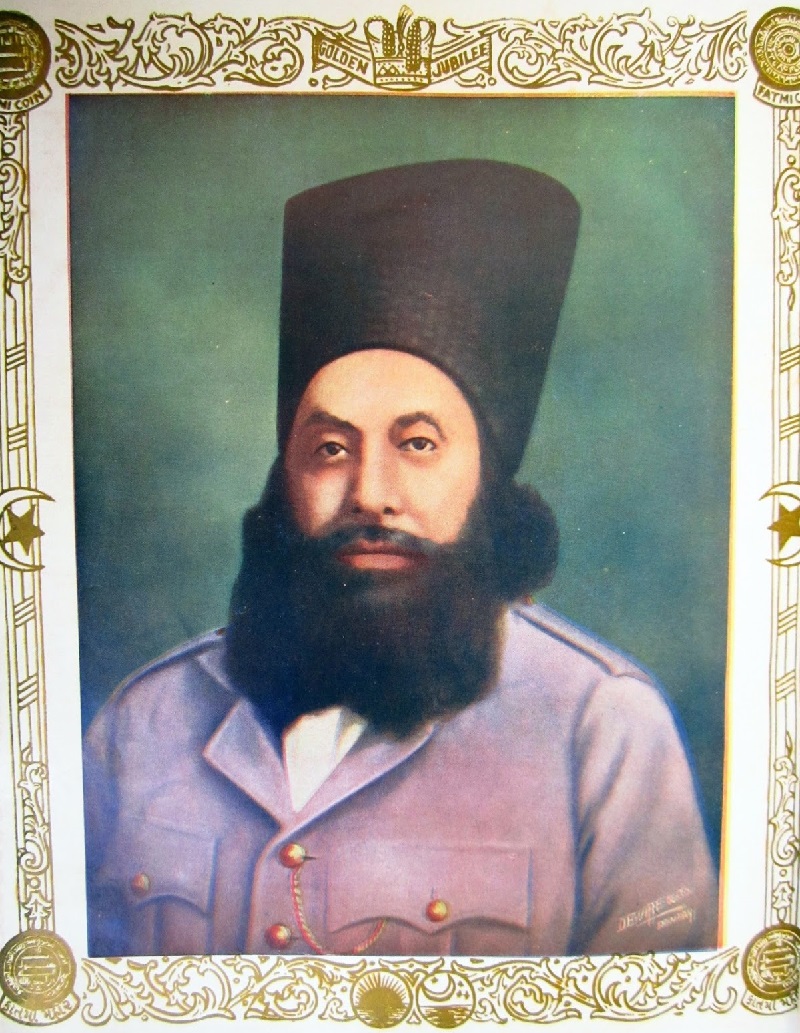
Painted photograph of Imam Hassan Ali Shah, Aga Khan I (1804–1881). Photograph: The Ismaili Bombay 1936, Golden Jubilee Number.

In this speech, the 48th Imam of the Nizari Ismailis alluded to the relationship of respect that his predecessor, Aga Khan I had with the monarchy, and in hindsight one that would, as we now know, be fostered and strengthened in the coming generations. The Ismaili Imamat, from its early days, has forged relationships with the leadership of international bodies, heads-of-state and religious representatives promoting peace, cooperation and hope. This happened at the state level at times when the Imams also were political rulers. In more recent generations, Ismaili Imams have been concertedly working towards improving the lives of some of the world’s most impoverished and at-risk populations, alongside the betterment of the global Ismaili community through these diplomatic relationships.

The Ismaili Imamat and the British Monarchy share a number of features. They are institutions anchored in history and tradition, both reaching back over a millennium, and yet through their holders-of-office engage with and respond to the challenges of the modern world. They are entrenched in an ethic of service and exemplify this through their many global endeavours aimed at reaching populations regardless of creed or background, despite being associated with Islam and Christianity respectively. Furthermore, they are guided and informed by a duty and responsibility inherent to the position.

The relationship between the Imams and the Queens and Kings of England began to take shape once Imam Hassanali Shah, Aga Khan I, left his native Persia and found himself in the territories under the rule of the British. The aftermath of a political power struggle in the Qajar ruling family, propelled the 46th Ismaili Imam to leave his native home — and the home of at least 25 Ismaili Imams before him. Before settling in Bombay in 1845, the Imam spent time in Afghanistan and Sindh, where he and his retinue rendered his services to the British Crown. In gratitude, Queen Victoria honoured the Aga Khan with the hereditary title of His Highness.

While Imam Hassanali Shah never traveled to London — the metropole and centre of the British Empire — nor spoke English, he was instrumental in forging an important relationship between two long-standing institutions that continues to this day. He regularly corresponded and visited with senior representatives of the monarchy in India, including a number of Viceroys. When the Duke of Edinburgh and Prince of Wales, the future King Edward VII, visited India in 1875, they visited Aga Khan I at his home, an honour usually only afforded to ruling princes within the Empire. The two leaders also bonded over their love of horses and this common interest and passion drew the two figures, and those of their descendants closer together.

Article continues below

The SS Laos. The ocean liner taken by Mawlana Sultan Mahomed Shah Aga Khan III on his first trip to Europe in 1898. Barakah, Rizwan Mawani, News
The SS Laos. The ocean liner taken by Mawlana Sultan Mahomed Shah on his first trip to Europe in 1898.

It was not until the time of Imam Sultan Mahomed Shah that an Ismaili Imam would meet a British sovereign for the first time. In February 1898, Imam Sultan Mahomed Shah left Bombay for Europe on the French Ocean Liner, the Messageries Maritimes SS Laos. [2] On the same trip, he visited London where he had an audience with Queen Victoria at Windsor Castle and also with Edward VII, the future King of England, who became a close friend. In May of that year, as part of her birthday honours, the Queen conferred on the Ismaili Imam the title of Knight Commander of the Indian Empire (KCIE) for his valuable service in British India during times of riot, famine and plague. [3] A year earlier he worked with Professor Haffkine in developing an inoculation for the plague. In doing so, he helped break down barriers and fears about inoculation and establishing hospitals for the various communities in India to battle the disease.

Article continues below

Aga Khan III sporting his decorations and honours from the British Government, Barakah
Imam Sultan Mahomed Shah, Aga Khan III, sporting his decorations and honours from the British Monarchy. Photograph: The Ismaili Bombay. Birthday Number, 1932. Thursday 3rd March 1932 (25th Shawwal 1350/Mana Vad II Samvat 1988).

Until Queen Elizabeth II surpassed the milestone, Victoria was the longest reigning British monarch and the longest reigning queen in world history. She died in 1902 and was succeeded by her son, Edward VII. Imam Sultan Mahomed Shah was personally invited to attend the coronation of the new King Emperor and Queen Empress Alexandra. He was further honoured as a personal guest of the royal couple and visited Buckingham Palace and York House outside the formality of the official ceremonies taking place. [4] As a memento of the occasion, the King and Queen sent him two large photos with royal signatures as a souvenir of his visit to England.

Article continues below

Aga Khan and the British Crown Simerg and Barakah
Imam Sultan Mahomed Shah in Garten Robes in London for the Coronation of King George VI, 1936. Photograph: Life Magazine, September 27, 1937 (also republished in Ismaili magazines)

In 1906, before he was King, George V came to India. During his tour, he visited Aligarh University, an institution which Imam Sultan Mahomed Shah was instrumental in establishing with the intent to provide equal opportunities for quality education for Muslims of the Empire. The King was impressed with both the cause and vision of the fledgling institution, and he eulogized the university on his return to England at London’s Guildhall. To return his admiration, Imam Sultan Mahomed Shah set on the process of naming the Academy of Sciences at the school after the then-Prince of Wales. [6]

In May 1910, news reached India of the King Emperor’s death. Imam Sultan Muhammad Shah sent a telegram from Paris as did his mother, Lady Aly Shah, from Mahableshwar relaying the news to the jamat. As with monarchs past, the Jamat conveyed their condolences on behalf of the Ismaili community to the Royal Family and the new King. [7] The Imam, in addition to his condolences sent a wreath comprised of over a thousand lilies. [8] Imam Sultan Mahomed Shah attended the funeral at St. George’s Chapel in Windsor and was only one of three people representing India and its princes.

By this time, the Ismaili Imam had become an important figure not only within the British Empire, but also on the world stage. In addition to holding the office of the Ismaili Imam, he was now also representing and providing a voice for the concerns and priorities of a significant proportion of the world’s Muslim population and in particular was an advocate for their educational uplift. In his role as honorary president of a newly formed body whose seeds were sown at the Muhammadan Educational Conference a quarter-century earlier, he was a champion for the opportunities of Muslims across the Empire.

In the first decade of the new century, there had been an increasing volume in the sentiments against Empire and Empirical rule in various corners of the world. It is likely for this reason that the Reuter’s Agency interviewed Imam Sultan Mahomed Shah on the role and values of the monarchy in the changing world: “Speaking first for myself personally, secondly as president of the All-India Moslem League, representing seventy million Moslems; and thirdly on this question on behalf of all Indians, I gladly pay a tribute to King Edward and to his successor.” In the interview, Sultan Mahomed Shah spoke about the relationships that Britain’s Kings and Queens had with Indians, their values and their service. He also reflected upon the visits of India’s ruling princes to England and the Crown’s regal visits to India. He noted the complexities of rule and that varied sentiments did exist in some quarters and yet noted, “[t]he Thone is the only object in the Empire which unites us with white British fellow-subjects — a common centre of loyalty and love.” [9]

At the time of King George’s ascension to the throne, one half of the world’s Muslim population was still governed by the British monarchy. [10] Many states in which Ismaili Muslims lived were also under British governance, rule or influence. This remained the case for significant parts of the 20th century even as members of the community migrated and relocated from their ancestral lands. These countries where the community’s residence intersected with British rule included the now independent states of Afghanistan (1919), Australia (1901-1986), Bahrain (1971), Canada (1867-1982), Egypt (1922), India (1947), Iraq (1932), Kenya (1963), Kuwait (1961), Malaysia (1957), Myanmar/Burma, New Zealand (1948-1986), Pakistan (1947), Qatar (1971), South Africa (1910-1961), Sri Lanka (1948), Tanzania (1961), Uganda (1962), United Arab Emirates (1971), Yemen (1967), and of course the United Kingdom.

Article continues below

Aga Khan, the Ismaili Imamat and the British Crown
King George V and Aga Khan III at the Armstice Day Memorial Service in London. Photograph: Souvenir of The All-Africa Celebrations of the Diamond Jubilee of Hazar Imam, His Highness the Rt. Hon Sir Sultan Muhammad Shah Aga Khan, 1946.

In June 1911, Imam Sultan Mahomed Shah was invited as a guest of the nation to attend the coronation of King Edward. On this occasion he also requested from the King a Charter for the Muslim university at Aligarh alongside other champions of Muslim education including the Begum of Bhopal. Later that year, the Aga Khan was decorated with the Star of India from the King during the Coronation Darbar. In 1916, he was further honoured with the status of Chief of the Bombay Presidency for Life which was accompanied by an 11-gun salute, a mark of respect and admiration for his service. From 1914 onwards during his trips to London, the Imam regularly lunched with the King and Queen and also had the opportunity to further their social bonds at Ascot and other racecourses.

In January 1936, due to the illness, and later death, of King George V, Imam Sultan Mahomed Shah muted his own Golden Jubilee commemorations in Bombay and cancelled commemorations in other cities where Ismailis lived. The deep respect and depth of the sentiments of the Imamat to the British Monarchy echoed throughout the Jamat as a result of this gesture.

In 1937, Mawlana Sultan Mahomed Shah attended the coronation of King George VI, father of Queen Elizabeth II, at Westminster Abbey. In his long illustrious career as Imam, Sultan Mahomed Shah was offered 5 titles by 4 different British monarchs: the Knight Commander of the Order of the Indian Empire, KCIE by Queen Victoria, Knight Grand Commander of the Order of the Indian Empire, GCIE by King Edward VII, Knight Grand Commander of the Order of the Star of India, GCSI and Knight Grand Cross of the Royal Victorian Order, GCVO by King George V and Knight Grand Cross of the Order of St. Michael and St George, GCMG by Queen Elizabeth II.

Upon Imam Sultan Mahomed Shah’s death in July 1957, Queen Elizabeth wrote a personal note of sympathy to Mata Salamat Om Habibeh, the Imam’s widow. It read:

“It is with deep sorry that I have learned of the death of His Highness, the Aga Khan. I and my predecessors on the Throne have for many years enjoyed the loyalty and devotion of His Highness, and we have been pleased to welcome him on many pleasant occasions when he has visited Britain.” [11]

Article continues below

Memoirs of Aga Khan French edition Barakah and Simerg
A portrait of Mawlana Sultan Mahomed Shah, His Highness the Aga Khan, and Mata Salamat Begum Om Habibeh Aga Khan, in the French edition of the Memoirs of Aga Khan.

Two weeks after the succession of the new Imam, Prince Karim Aga Khan in 1957, Queen Elizabeth bestowed the title of His Highness upon him in the tradition of her predecessors. Although the British Empire had irreparably eroded into an emerging world of nation-states, the reinvestment of the title underscored the continued importance of the Imam on the world stage. Aga Khan IV was to demonstrate over the decades of his Imamat, the office and institution he represented was able to transcend political and geographical ties in a constantly evolving world. This enviable position allowed him to play a unique role in the Muslim world and on the global stage. This was in addition to his transnational community, whose many members continued to live in the independent countries once part of British dominions.

While in the Western world, colonialism was simply an ideology, subjects who experienced this rule first-hand often had very mixed and sometimes devastating experiences. Despite this, one of the greatest legacies of Queen Elizabeth will be the creation of the Commonwealth and the facilitation of the various movements towards independence throughout Asia and Africa. Like the Imamat, the British monarch also was responsible for stewarding and bringing together diverse groups of people under a common cause.

In May 2002, Mawlana Hazar Imam joined ambassadors from Commonwealth nations as well as the United States and France to honour the Queen as part of her Golden Jubilee celebrations. Recognizing the shared history and traditions of these countries and the strength of diplomatic lineages that had been forged, His Highness the Aga Khan remarked, “This event serves to acknowledge the Commonwealth’s importance in maintaining good relations among countries through both good and less good times in their shared history.” He continued, “The event honours the personal attention that Her Majesty the Queen has accorded to that history and the admirable manner in which she has exercised, and continues to exercise, the challenging role of Head of the Commonwealth.” The culmination to her Golden Jubilee celebrations and the crown of this event was the “All the Queen’s Horses” event, the largest of its kind in the world.

In 2020, Mawlana Hazar Imam attended the Annual Commonwealth Service at Westminster Abbey on special invitation by the Queen. He is currently the Vice-President of the Commonwealth Society which was under the patronage of the Queen until her death with the now-Queen Consort Camilla as its Vice Patron. In March 2022, Prince Rahim Aga Khan, the eldest son of the Ismaili Imam, attended the Commonwealth Day service at Westminster Abbey at the Queen’s invitation, representing Mawlana Hazar Imam. In Prince Rahim’s capacity as Vice-President Designate, he led the Loyal Societies and met with Charles, then Prince of Wales, who represented Her Majesty at the service as well as Their Royal Highnesses the Duke and Duchess of Cambridge. This year’s service had marked the beginning of the Queen’s Platinum Jubilee.

Article continues below

Commonwealth service to mark Platinum Jubilee of Queen Elizabeth II
A section of page 3 of The Commonwealth Service held at Westminster Abbey on Monday March 14, 2022, at which Prince Rahim Aga Khan represented Mawlana Hazar Imam, His Highness the Aga Khan. Please click image to view the complete PDF file of the service.

The Queen, or her representative, were often seen along Mawlana Hazar Imam at events of mutual importance and international significance. These included independence events of a number of countries which were previously under British rule and where the Imam had communal representation or followers. At one of these occasions, on December 12, 1963, the Duke of Edinburgh and Mawlana Hazar Imam were both present in Nairobi, Kenya, to witness and participate in the handover of the instruments of independence to Prime Minister Jomo Kenyatta. Representatives of 78 countries were in attendance along with those from the Vatican and the United Nations.

Like his predecessor, the Imam also received honours from the British Monarchy. In 2004, the Imam received the title of Knight Commander of the British Empire (KBE) from Queen Elizabeth II.

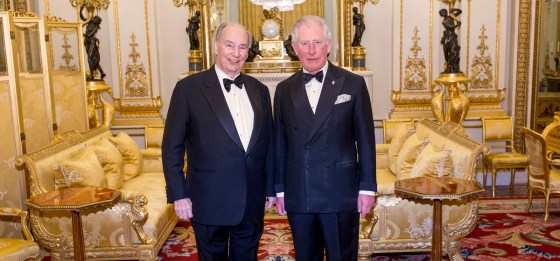
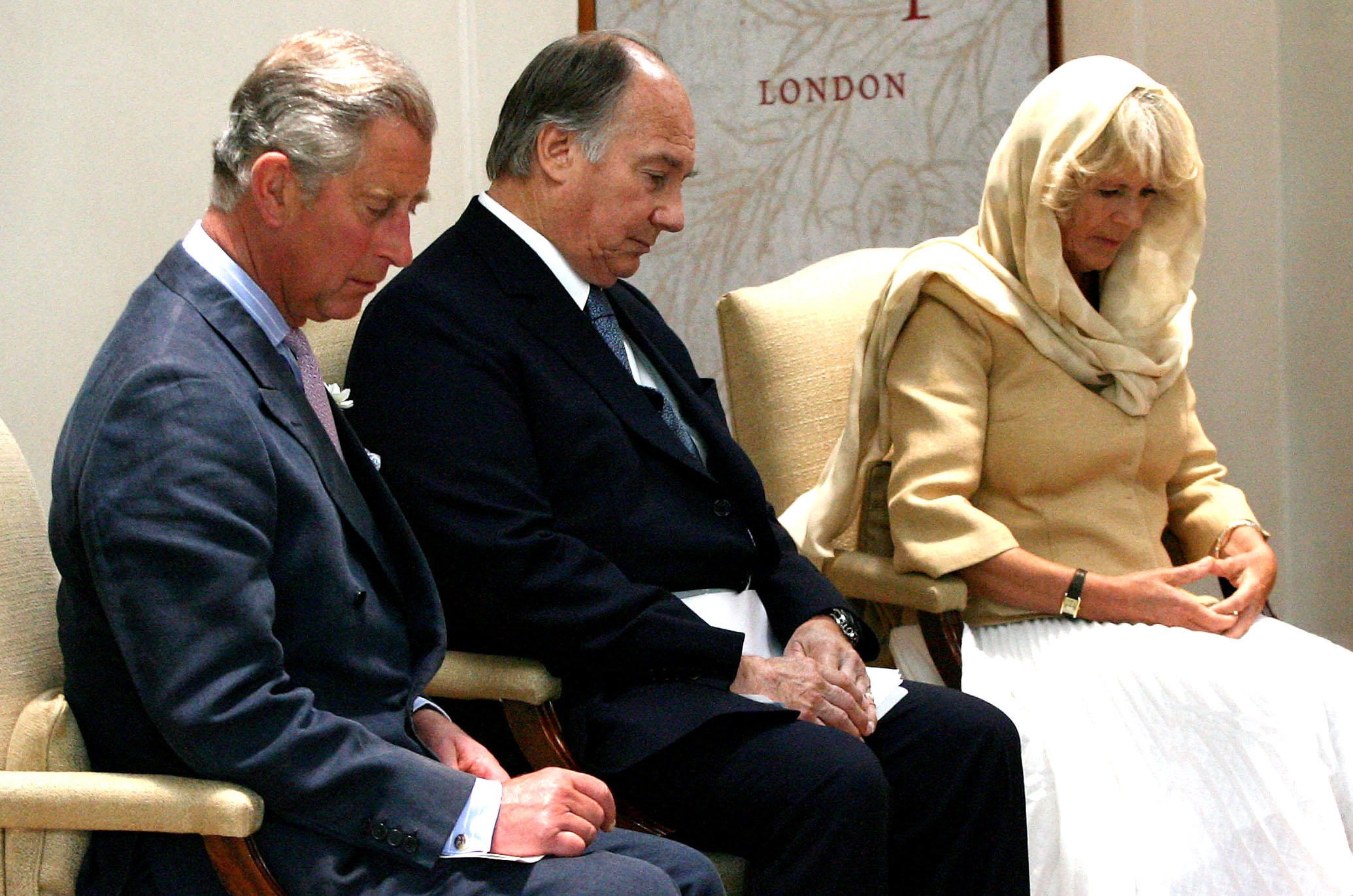
Mawlana Hazar Imam also had warm and friendly relations with the current King Charles III. They shared common interests and a commitment to bettering the world around them and met publicly on numerous occasions while Charles was still Prince of Wales. Their respect extended to each other’s responsibilities and many of these meetings allowed them to better understand the breadth and scope of each other’s work and how it improved the wellbeing of its beneficiaries. Aga Khan IV welcomed the then-Prince Charles to Al-Azhar Park in Egypt’s capital, Cairo in March 2006 and hosted him later that year in Pakistan as they toured development projects in the South Asian country.

Article continues below after special photo section

____________________

Special Presentation: His Highness the Aga Khan and King Charles III – An Album of Photographs and Speech Excerpts from the Last 30 Years

[IMPORTANT NOTE: A number of images in this section are reproduced under a licensing arrangement with Alamy photos, and may not be reproduced without Alamy’s written permission — Ed.]

OCTOBER 1993: Prince Charles and His Highness Aga Khan at Oxford Centre for Islamic Studies

“I believe wholeheartedly that the links between these two worlds matter more today than ever before, because the degree of misunderstanding between the Islamic and Western worlds remains dangerously high, and because the need for the two to live and work together in our increasingly interdependent world has never been greater….

“It is odd, in many ways, that misunderstandings between Islam and the West should persist. For that which binds our two worlds together is so much more powerful than that which divides us. Muslims, Christians — and Jews — are all ‘peoples of the Book’. Islam and Christianity share a common monotheistic vision: a belief in one divine God, in the transience of our earthly life, in our accountability for our actions, and in the assurance of life to come.

“We share many key values in common: respect for knowledge, for justice, compassion towards the poor and underprivileged, the importance of family life, respect for parents. ‘Honour thy father and thy mother’ is a Quranic precept too. Our history has been closely bound up together” — Excerpts from speech Islam and the West by Prince Charles, Oxford Centre for Islamic Studies, October 27, 1993

Aga Khan and the Bitish Crown, Simerg and Barakah, King Charles speech Islam and the west
Mawlana Hazar Imam, His Highness the Aga Khan, with Prince Charles and the Director of the Oxford Centre for Islamic Studies, Dr. Farham Nizami, at a lecture presented by Prince Charles on “Islam and the West” at Oxford’s Sheldonian Theatre on October 27, 1993. Photograph: The Ismaili, Canada, March 1994.

~~~~~~

NOVEMBER 1993: Prince Charles and His Highness the Aga Khan at the University of Wales

The Aga Khan and the British Crown, Simerg
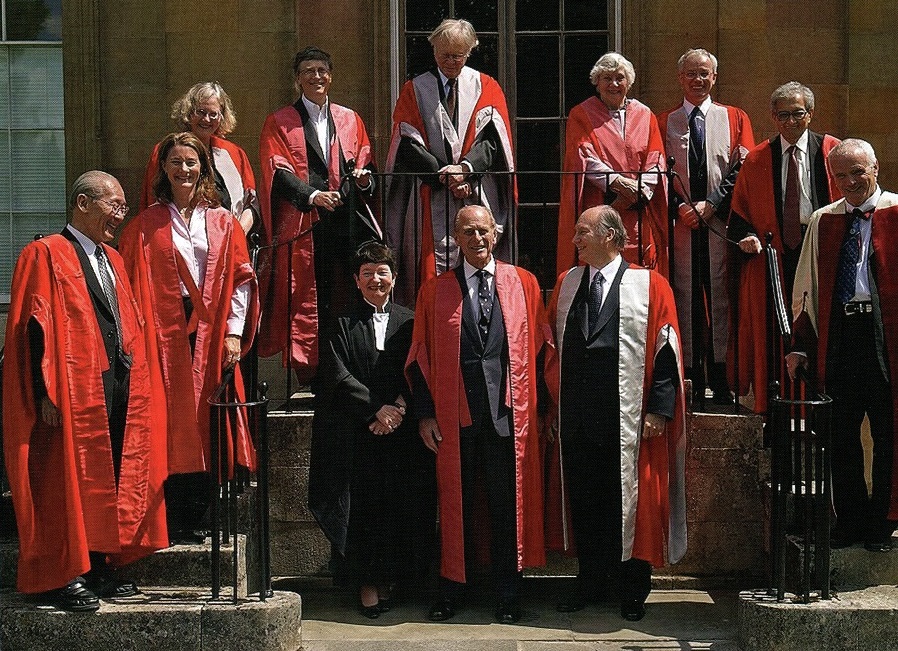
Mawlana Hazar Imam, His Highness the Aga Khan, Prince Charles, Chancellor of the University of Wales, and other members of the Chancellor’s procession “doff” their caps following the award of the honorary degree of the Doctor of Laws (LL. D) to Mawlana Hazar Imam on the occasion of the 100th anniversary of the foundation of the University of Wales, November 30, 1993. Photograph: The Ismaili Canada, March 1994.

~~~~~~

The Aga Khan and the British Crown, Simerg
Mawlana Hazar Imam, His Highness the Aga Khan, in conversation with Prince Charles as President Mary Robinson of Ireland signs the Visitors’ Book at a banquet held on November 30, 1993 at the Cardiff City Hall honouring recipients of Honorary Degrees earlier during the day on the occasion of the 100th anniversary of the foundation of the University of Wales. Photograph: The Ismaili Canada, March 1994.

~~~~~~

DECEMBER 1997: Prince Charles and His Highness the Aga Khan at Asia Society in London

Aga Khan and Charles at Asia House to celebrate 50th anniversary of independence Pakistan and India, Ismaili Imamat and British Crown
Mawlana Hazar Imam, His Highness the Aga Khan, greets Prince Charles at a special banquet hosted in July 1997 by the Asia Society to celebrate the 50th anniversary of the independence of India and Pakistan. Photograph: The Ismaili Canada, December 1997.

~~~~~~

MARCH 2006: Prince Charles and His Highness the Aga Khan at Al Azhar Park, Cairo

Aga Khan and King Charles III Al Azhar Park, Barakah
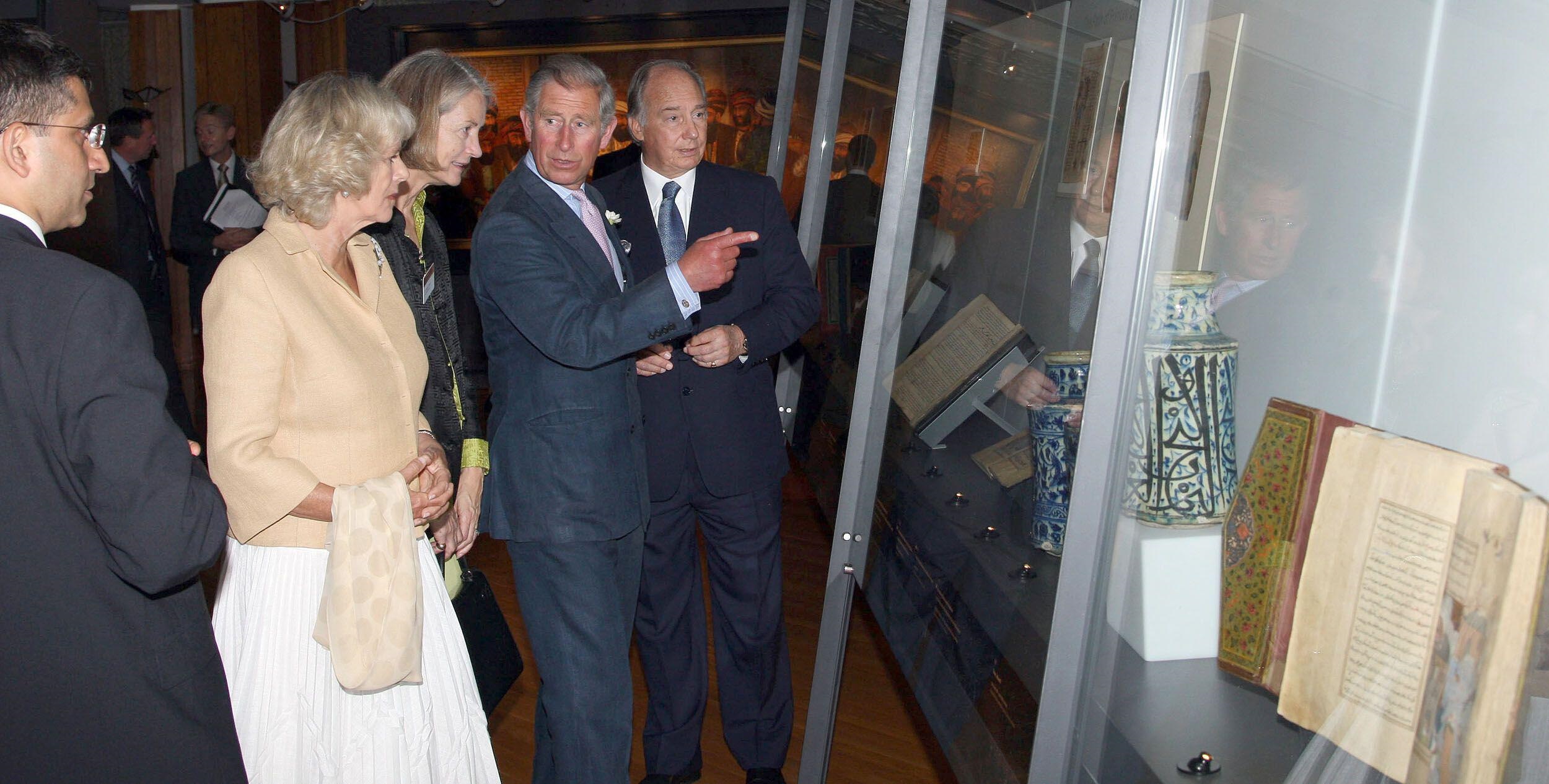
Mawlana Hazar Imam, His Highness the Aga Khan, welcomes HRH The Prince of Wales (now King Charless III) and The Duchess of Cornwall (now Queen Consort) to Al-Azhar Park in March 2006 at the beginning of their official 2-week to Egypt, Saudi Arabia and India. Photograph: AKDN/Gary Otte.

~~~~~~

NOVEMBER 2006: Prince Charles and His Highness the Aga Khan in Northern Pakistan

Prince Charles and Mawlana Hazar Imam, His Highness the Aga Khan visit a mountain village near Skardu in Northern Pakistan on November 3, 2006.
Prince Charles and Mawlana Hazar Imam, His Highness the Aga Khan visit a mountain village near Skardu in Northern Pakistan on November 3, 2006. The Prince of Wales and the Duchess of Cornwall were hosted by Mawlana Hazar Imam on a tour of development projects in the Northern Areas of Pakistan. The Royal visitors viewed restoration work undertaken by the Aga Khan Trust for Culture in the traditional settlement of Altit, in the Hunza Valley of Pakistan, and also visited the “organic village” of Nansoq, where a programme supported by the Aga Khan Foundation is designed to demonstrate the viability of organic agricultural production. Photograph: © Anwar Hussein/EMPICS Entertainment via Alamy. Please click on photo for enlargement.

“….. if I may say so, [the Ismaili Imamat] is that same leadership and vision which has enabled the Aga Khan Development Network to grow into an organization of international importance, addressing development needs in some thirty-five countries around the World, bridging boundaries of race and religion. My darling wife and I were privileged to see some of this work, towards the end of last year [November 2006], in Altit and Nansoq villages in Northern Pakistan — in fact I was devastated when I had to leave behind the gift I was given, in Altit: a very beautifully shampooed Yak! I got a crate to bring it back, and actually I think a Yak is the only rare breed I haven’t got” — Prince Charles’ reference to the yak (see photo below) was made during his speech at the opening of the Spirit and Life Exhibition on July 12, 2007, at the Ismaili Centre London. Please read the full speech HERE

The Prince of Wales, the Duchess of Cornwall and Mawlana Hazar Imam, His Highness the Aga Khan (right) admire a yak, during a walking tour of Altit Mountain village in northern Pakistan.
The Prince of Wales, the Duchess of Cornwall and Mawlana Hazar Imam, His Highness the Aga Khan (right) admire a yak, during a walking tour of Altit Mountain village in northern Pakistan. The Prince and the Duchess were hosted by Mawlana Hazar Imam, on a tour of development projects in the Northern Areas of Pakistan. The Royal visitors viewed restoration work undertaken by the Aga Khan Trust for Culture in the traditional settlement of Altit, in the Hunza Valley of Pakistan, and also visited the “organic village” of Nansoq, where a programme supported by the Aga Khan Foundation is designed to demonstrate the viability of organic agricultural production. Photograph: © Alamy. Please click on photo for enlargement.

~~~~~~

JULY 2007: Prince Charles and His Highness the Aga Khan at the Opening of Spirit and Life Exhibition, Ismaili Centre, London

Prince Charles (L), Mawlana Hazar Imam, His Highness the Aga Khan, and Duchess of Cornwall bow their heads as they listen to an Islamic prayer at the opening of the Spirit and Life Exhibition at the Ismaili Centre London on July 12, 2007.
Prince Charles (L), Mawlana Hazar Imam, His Highness the Aga Khan, and Duchess of Cornwall bow their heads as they listen to an Islamic prayer at the opening of the Spirit and Life Exhibition at the Ismaili Centre London on July 12, 2007. The exhibition showcased the beauty, diversity and rich legacy of Islamic Art, and was launched as His Highness the Aga Khan commenced his Golden Jubilee Year. Photograph: © Alamy. Please click on photo for enlargement.

“Your Highness, Ladies and Gentlemen. I cannot tell you what a pleasure it is for my wife and I to join you this afternoon in celebrating the Fiftieth Anniversary of His Highness the Aga Khan’s succession to the Imamat. It is, if I may say so, London’s great good fortune that His Highness has chosen to open his Golden Jubilee celebrations with the ‘Spirit and Life’ Exhibition which my wife and I have just seen – we had to drag ourselves away from it! I understand that this is the first time these masterpieces of Islamic art have been seen in London. They are of quite exceptional historical importance and beauty. But, perhaps still more importantly, they also convey the clearest possible message about the close ties between the Abrahamic Faiths. For example, the magnificent Eleventh Century Canon of Medicine, which originated in Iran, was equally indispensable to Western scholars for the better part of five hundred years.” — Excerpt from speech made by Prince Charles at the opening of the Spirit and Life Exhibition on July 12, 2007. Please read the full speech HERE.

Prince Charles, Prince of Wales and Camilla, Duchess of Cornwall , attend the opening of the Islamic Art Exhibition hosted by Mawlana Hazar Imam, His Highness the Aga Khan (R) Aga Khan, at the Ismaili Centre in London on July 12, 2007, with co-curators Alnoor Merchant (L) and Sheila Canby (C) providing highlights of the artefacts
Prince Charles, Prince of Wales and Camilla, Duchess of Cornwall , attend the opening of the Spirit and Life Exhibition hosted by Mawlana Hazar Imam, His Highness the Aga Khan (R), at the Ismaili Centre in London on July 12, 2007, with co-curators Alnoor Merchant (L) and Sheila Canby (C) accompanying the party to provide details of the artefacts. The exhibition showcased the beauty, diversity and rich legacy of Islamic Art. Photo: © Alamy. Please click on photo for enlargement.

~~~~~~

NOVEMBER 2010: Prince Charles and His Highness the Aga Khan at the Ismaili Centre London on its 25th Anniversary

Mawlana Hazar Imam, His Highness the Aga Khan, receives Prince Charles at the Ismaili Centre, London, on November 18, 2010, to commemorate its 25th anniversary
Mawlana Hazar Imam, His Highness the Aga Khan, receives Prince Charles at the Ismaili Centre, London, on November 18, 2010, to commemorate its 25th anniversary. Photograph: © Alamy. Please click on photo for enlargement.

~~~~~~

JUNE 2018: Prince Charles and His Highness the Aga Khan at the Opening of the Aga Khan Centre, London

“Your Highness, the extraordinary work that you have done throughout your lifetime, in the service of humanity and in the name of Islam, is as remarkable as it is invaluable. For that, you are owed the greatest debt of gratitude and I did just want to take this opportunity to thank you on behalf of us all, if I may.

“It is clear to me that in holding dear the values of humility, honour, magnanimity and hospitality, the Ismaili Community takes its inspiration from you, Your Highness, and from your extraordinary ‘Greatness of Soul’.” — Prince Charles, Aga Khan Centre Opening, June 26, 2018. Please read the full speech HERE

On Tuesday, June 26, 2018, HRH The Prince of Wales opened The Aga Khan Centre in King’s Cross in the presence of Mawlana Hazar Imam. Situated at the heart of London’s Knowledge Quarter, the Aga Khan Centre, designed by Maki and Associates, led by Fumihiko Maki, one of Japan’s most distinguished contemporary architects, provides a new home for a number of UK based organisations founded by His Highness the Aga Khan: The Institute of Ismaili Studies (IIS), the Aga Khan University Institute for the Study of Muslim Civilisations (AKU-ISMC) and the Aga Khan Foundation UK (AKF UK).
On Tuesday, June 26, 2018, King Charles III (then The Prince of Wales opened) The Aga Khan Centre in King’s Cross in the presence of Mawlana Hazar Imam. Situated at the heart of London’s Knowledge Quarter, the Aga Khan Centre, designed by Maki and Associates, led by Fumihiko Maki, one of Japan’s most distinguished contemporary architects, provides a new home for a number of UK based organisations founded by His Highness the Aga Khan: The Institute of Ismaili Studies (IIS), the Aga Khan University Institute for the Study of Muslim Civilisations (AKU-ISMC) and the Aga Khan Foundation UK (AKF UK).
Aga Khan and the British Monarchy, Prince Charles now King Charless III at Aga Khan Centre inauguration Barakah dedicated to Hazar Imam
Prince Charles and Mawlana Hazar Imam, His Highness the Aga Khan, discuss the features of the Garden of Life at the new Aga Khan Centre in London with garden designer Madison Coxon during the inauguration of the Centre on June 26, 2018. Photograph: AKDN/Nayyir Damani.

In similarly inspiring this Centre, you have set it on a path to serve the world with great distinction, just as Your Highness has yourself done throughout your remarkable life. My wife and I have been fortunate enough to see just what an inspiration you are to your community when we accompanied you to Altit years ago. Never will we forget that occasion nor, for that matter, the magnificently shampoo-ed bull yak with which I was presented and which, very sadly, I was unable to transport back to Highgrove to graze in my Islamic Garden! — Prince Charles, Aga Khan Centre Opening, June 26, 2018. Please read the full speech HERE.

~~~~~~

MARCH 2019: Prince Charles and His Highness the Aga Khan at Buckingham Palace

 Prince Charles named Mawlana Hazar Imam, His Highness the Aga Khan, as Global Founding Patron of The Prince’s Trust’s work. They are pictured at a dinner at Buckingham Palace on March 12, 2019.
Prince Charles named Mawlana Hazar Imam, His Highness the Aga Khan, as Global Founding Patron of The Prince’s Trust’s work. They are pictured at a dinner at Buckingham Palace on March 12, 2019. Photograph: Ian Jones/AKDN.

____________________

Rizwan Mawani’s article continues here

During the Imam’s Golden Jubilee, Mawlana Hazar Imam welcomed the Prince of Wales to the Ismaili Centre London on July 12, 2007, to view the Spirit and Life Exhibition showcasing the beauty, diversity and rich legacy of Islamic Art. Many of these artifacts are now on display at the Aga Khan Museum in Toronto. In June 2018, Prince Charles opened the Aga Khan Centre in London in the presence of Mawlana Hazar Imam. The Aga Khan Centre is the current home of the Aga Khan University’s Institute for the Study of Muslim Civilization, The Institute of Ismaili Studies as well as a research library and residences for students. In 2019, Mawlana Hazar Imam was appointed as a Global Founding Partner of the Prince’s Trust UK, then under the patronage of the future King Charles. There have been other occasions when the current King, His Majesty Charles III, as well as members of his family met or honoured Mawlana Hazar Imam that illustrate the bond between the Ismaili Imamat and the British Monarchy.

Article continues below

The Aga Khan and the British Crown, Princess Anne University of London, Barakah
Mawlana Hazar Imam, His Highness the Aga Khan, is conferred an Honorary Degree of Doctor of Literature in Education at the University of London by Princess Anne, Chancellor of the University, on October 12, 1989. Photograph: UK Ismaili Newsletter, November/December 1989.

~~~~~~

Doctor of Divinity degree to Aga Khan at Cambridge who is pictured with the Duke of Edinburgh; Barakah and Simerg
On June 12, 2009, the University of Cambridge, conferred Mawlana Hazar Imam, His Highness the Aga Khan with a Doctor of Divinity, the first Muslim ever to have received this degree. The Late Duke of Edinburgh was the Chancellor of the University and he is seen in the front row with Mawana Hazar Imam and the University’s Vice Chancellor Professor Alison Richard. Also in the photograph are other Honorary degree recipients. Photograph: University of Cambridge via The Ismaili Canada, December 2009.

The relationship between the Imamat and the British Monarchy has also extended to members of each of the institutions’ families and their representatives. A result of their mutual interests and common dedication to the service of humanity has also meant celebrating milestones and achievements in addition to co-operation on programmes and projects.

Article continues below

Lady Aly Shah Aga Khan, Barakah
Lady Aly Shah, mother of Imam Sultan Mahomed Shah.

Aga Khan II’s wife and mother of Imam Sultan Mahomed Shah, Shamsul Muluk, more commonly known as Lady Aly Shah, was an important contributor to welfare projects throughout the British Empire. She was a champion for women’s rights, a skilled fundraiser and a force of change for both the Ismaili community as well as for Muslim women in India. For many years she was president of the influential Mohammedan Purdah Ladies Committee which held its first major conference in 1911. As part of this work, she formed strong relationships with a number of the wives of the Viceroys, or Governors-General of India, including Lady Willingdon. For her dedication and service to humanity, she was honoured with the title of the Imperial Order of the Crown of India, membership which is normally reserved for Queens, ruling princesses and the Vicerenes. For the occasion, she travelled to London at the age of 86 where she was personally invested by King George V.

On the occasion of the funeral and Committal Ceremony of Her Majesty Queen Elizabeth on September 19, 2022, Mawlana Hazar Imam was represented by his son Prince Rahim at the service. Members of the Imam’s family were also present during a dinner hosted by Queen Elizabeth at Buckingham Palace on the occasion of Aga Khan IV’s Golden Jubilee in 2008 and at Windsor Castle in 2018 for his Diamond Jubilee.

Likewise, Prince William and the Duchess of Cambridge, Kate Middleton, met with Mawlana Hazar Imam at the Aga Khan Centre in London on October 2, 2019, for an event that preceded their tour of Pakistan later that month.

Article concludes below

His Highness the Aga Khan together with Her Majesty the Queen and His Royal Highness The Duke of Edinburgh, Prince Philip, during a dinner hosted in honour of His Highness the Aga Khan at Buckingham Palace to commemorate his Golden Jubilee, London, 7 July 2008. Photograph: AKDN / Gary Otte
Mawlana Hazar imam, His Highness the Aga Khan, together with Her Majesty Queen Elizabeth II and His Royal Highness The Duke of Edinburgh, Prince Philip, during a dinner hosted in honour of His Highness the Aga Khan at Buckingham Palace to commemorate his Golden Jubilee, London, July 7, 2008. Photograph: AKDN/Gary Otte

~~~~~~

Aga Khan Golden Jubilee at Buckingham Palace
Mawlana Hazar Imam, His Highness the Aga Khan, presents his second son, Prince Hussain, to Her Majesty the Queen. His brother, Prince Amyn, and his oldest son Prince Rahim prepare to be greeted by His Royal Highness The Duke of Edinburgh and the Duchess of Cornwall, as Princess Yasmin, his sister, looks on. Photo: AKDN/Gary Otte.

~~~~~~

Court Circular

March 8

Buckingham Palace

8th March, 2018

The Queen gave a Dinner Party for The Aga Khan at Windsor Castle this evening to mark His Highness’s Diamond Jubilee at which The Prince of Wales and The Duchess of Cornwall, The Duke of York, The Princess Royal and Vice Admiral Sir Tim Laurence, and Members of The Aga Khan’s Family were present.

The Duke of Edinburgh this morning received Mr Martin Palmer (Secretary General, Alliance of Religions and Conservation).

The Prince of Wales, on behalf of The Queen, held an Investiture at Buckingham Palace this morning.

[Note: The Court Circular is the official record of royal engagements and appears daily in the London Times — Ed.]

~~~~~~ 

The Aga Khan and the British Monarchy, Queen Elizabeth II Diamond Jubilee at Windsor Castle Barakah
Her Majesty Queen Elizabeth II in conversation with Mawlana Hazar Imam, His Highness the Aga Khan, at a dinner hosted on March 8, 2018 by Her Majesty at Windsor Castle on the occasion of his Diamond Jubilee. Photo: AKDN/Gary Otte.

~~~~~~

Aga Khan and the British Crown Prince William
Mawlana Hazar Imam, His Highness the Aga Khan, welcomes Prince William and the Duchess of Cambridge at the Aga Khan Centre in London on October 2, 2019. Photo: The Ismaili/Anya Campbell

The article has shown that the relationship of the Ismaili Imamat and the British Monarchy blossomed beginning in the 19th century. Through many monarchs and 4 Ismaili Imams, beginning with Aga Khan I, we have outlined their relationship of respect, cooperation and friendship over the last 150 years from Queen Victoria to King Charles. This relationship is illustrated in the chart shown above at the beginning of this article.

Date posted: October 6, 2022.
Last updated: October 7, 2022.

___________________

ABOUT THE AUTHOR

Rizwan Mawani The Aga Khans, the Imamat and the British Crown, Barakah and Simerg, Queen Elizabth II, King Charles III
Rizwan Mawani

Rizwan Mawani has a background in Anthropology and Religious Studies and is the author of Beyond the Mosque: Diverse Places of Muslim Worship (I. B. Tauris in association with The Institute of Ismaili Studies, 2019). Rizwan has written for a wide variety of audiences and his work has appeared in academic publications, encyclopedias as well as the Wall Street Journal and The Huffington Post. Rizwan was previously Website Content Editor and Research Coordinator in the Department of Constituency Studies at The Institute of Ismaili Studies. His current research focuses on the past two centuries of global Ismaili history with a focus on the jamatkhana and its development during that period.

FEEDBACK

Simerg welcomes your feedback. Your email will not be shown, and you may choose to remain anonymous. Please click LEAVE A COMMENT. Your letter may be edited for length and brevity and is subject to moderation.

REVIEW SIMERG’S TABLE OF CONTENTS AND VISIT ITS SISTER WEBSITES

Before departing this website please take a moment to visit Simerg’s Table of Contents for links to almost 2000 pieces published since the website was created in 2009. Also visit Simerg’s two sister websites Barakah, dedicated to His Highness the Aga Khan, and Simergphotos. Barakah’s editor may be reached at mmerchant@simerg.com.

Malik may be followed @Facebook and @Twitter.

___________________

NOTES

[1] The Times of India, January 24, 1887, p. 7
[2] The Times of India, February 19, 1898, p. 5
[3] The Times of India, May 23, 1898, p. 4
[4] The Times of India, July 7, 1902, p. 6
[5] The Times of India, June 3, 1903, p. 5
[6] The Times of India, May 14, 1910, p. 9
[7] The Times of India, May 9, 1910, p. 5
[8] Rand Daily Mail (Johannesburg), May 16, 1910, p. 7
[9] The Times of India, May 28, 1910, p. 10
[10] The Times of India¸ May 30, 1910, p. 6
[11] Times of India, July 13, 1957.

There is No One Islamic Interpretation on Ethics of Abortion, but the Belief in God’s Mercy and Compassion is a Crucial Part of any Consideration

By ZAHRA AYUBI, Dartmouth College

As a scholar of Islamic ethics, I’m often asked, “What does Islam say about abortion?” — a question that has become even more salient since the U.S. Supreme Court reversed 50 years of constitutional protection for the right to get an abortion in the Dobbs v. Jackson Women’s Health Organization ruling on June 24, 2022.

This question really needs to be reframed, because it implies a singular view. Islam isn’t monolithic, and there is no single Islamic attitude about abortion. The answer to the question depends on what kinds of Islamic sources, scriptural, legal or ethical, are applied to this contemporary issue by people of varying levels of authority, expertise or religious observance.

Muslims have had a long-standing, rich relationship with science, and specifically, the practice of medicine. This has yielded multiple interpretations of right and wrong when it comes to the body, including ideas about and practices surrounding pregnancy.

Islamic frameworks for thinking about abortion

The typical framing of the question of whether abortion ought to be legal hinges upon American Christian debates about when life begins. Muslims who get abortions don’t always ask “when does life begin?” to ascertain Islamic positions on the matter. Rather, as my research in the Abortion and Religion project and forthcoming book “Women as Humans” has found, Muslims who get abortions generally consider under what circumstances abortion would be permitted in the Islamic tradition.

Further, the Quranic verses and hadith – recorded sayings of the Prophet Muhammad — are not about abortion per se, nor the moment when life begins or whether abortion is akin to taking a life. Instead, they are descriptions for people to reflect on God’s miracle of what happens in the womb, or rahm in Arabic, which is part of God’s mercy and compassion.

It is often a deeply theological discussion about human actions in context of God’s will, omnipotence and omniscience when it comes to life and death. The dialogue often yields answers that are specific to the person’s cosmic and religious beliefs about God’s nature and mercy and their circumstances in the abortion decision-making process.

Many contemporary Muslim jurists and bioethicists point to specific verses in the Quran as well as hadiths with descriptions of the stages of human gestation that are mapped onto the pregnancy timeline in the contemporary abortion debate. The often-cited Quranic verses are 23:12-14: “And indeed We created humankind from an essence of clay. Then We placed him as a sperm-drop in a resting place firm; then We created the sperm-drop into a clinging substance, then We created the clinging substance into an embryonic lump, then We created from the embryonic lump bones, then We clothed the bones with flesh, then We produced it as another creation. So blessed is God, the best of creators.”

Then there is the hadith in which Prophet Muhammad describes what happens in the womb: “The human being is brought together in the mother’s womb for forty days in the form of a drop of fluid, and then becomes a clot of thick blood for a similar period, and then a piece of flesh for a similar period. … Then the soul is breathed into him. …”

These scriptural traditions divide the pregnancy timeline into stages. Muslim jurists consider the 120-day mark of ensoulment (40 days x 3 stages), when God is believed to blow life into the fetus, as the point at which the fetus becomes a legal entity with financial rights. The fetus is believed to have inheritance rights; it can leave an inheritance to its siblings or other kin if it dies, or provide its parents with blood money in the event of a violent action against the mother.

While reference to the scriptural tradition might be enough for many Muslims, some might look to the Muslim legal tradition for precedence. Premodern jurists’ inquiries into stage of pregnancy were mainly to settle questions such as what inheritance laws might come into effect in the event of fetal death. They weren’t asking when life begins to settle abortion questions. And even as they touched on the question of legal personhood of a fetus, they ruled on a case-by-case basis rather than through blanket pronouncements.

Contemporary jurisprudence

Most Muslim jurists and bioethicists today argue that abortion before 120 days of pregnancy is permissible on certain grounds and after this term in cases of mortal danger to the mother. When it comes to abortion, the Islamic legal principle of preservation of life is universally interpreted to mean the mother’s life. Other grounds for abortion vary depending on school of thought but include health concerns for mother or fetus and sometimes include unintended pregnancy, depending on the circumstances of how the pregnancy came about.

Since maternal health can be a nebulous category, acceptance of mental health reasons for abortion may depend on whether people take mental health itself seriously. Concerns might include the mental capacity of a mother to care for herself or a child, or potential suicidal thoughts that put the mother’s life at risk.

Financial affordability is generally frowned upon as a reason for abortion because God is seen as provider, but still accepted in some schools of thought, as the tradition generally promotes mercy above else.

Regardless of contemporary jurists’ positions on the subject, however, Muslims who pursue abortion often do so based on their broad Islamic understanding of God’s compassion rather than in consultation with religious authorities who might act as gatekeepers.

American Muslims post-Dobbs

Part of Islamic discourse’s nuance about abortion is the result of a long relationship between medicine and Islamic thought. For American Muslims, that history is overshadowed by the U.S. Supreme Court upholding the heavy dominance and influence of one Christian view as the only American view on abortion.

There is often a global assumption, which is held by many Muslims as well, that Muslim rules about gender and women’s rights are stricter than dominant Christian American ones. There have been many problematic comparisons of the Dobbs decision and Sharia. Some have called it “Christian Sharia” to characterize the ruling and abortion bans nationwide as religious, yet in doing so they draw on anti-Muslim sentiment and stereotypes of Islam as uniquely gender oppressive.

When American Muslims themselves mirror evangelical Christian views on abortion, however, it may be a form of virtue signaling or out of ignorance of Muslims’ rich historical relationship with medicine.

Even in so-called religiously conservative Muslim countries, such as Saudi Arabia and Iran, laws on abortion are much more liberal than in U.S. states banning abortion. Legally, not only is the life of the mother always prioritized, but because the idea that ensoulment occurs at 120 days is taken seriously, abortion before that point may, and often does, take place in a variety of circumstances such as rape, serial births, mental health issues, untimeliness of pregnancy, etc.

Many American Muslims are speaking in support of the right to abortion. Organizations such as the American Muslim Bar Association, Heart to Grow and Muslim Advocates have issued statements about abortion in Islam and published information on American Muslims’ rights to abortion. The one prevailing commonality among these and diverging Islamic views on abortion is the Islamic concept of God’s mercy and compassion.

Date posted: August 28, 2022.

__________________________

Source of article and author

This article is republished from The Conversation under a Creative Commons license. To read Zahra Ayubi’s article at source, please click The Conversation – Original Article.

Zahra Ayubi,
Zahra Ayubi

About the write: Zahra Ayubi is a scholar of women and gender in premodern and modern Islamic ethics.  She specializes in feminist philosophy of Islam and has published on gendered concepts of ethics, justice, and religious authority, and on Muslim feminist thought and American Muslim women’s experiences. Her first book, Gendered Morality: Classical Islamic Ethics of the Self, Family, and Society (Columbia, 2019) rethinks the tradition of Islamic philosophical ethics from a feminist critical perspective. Developing a lens for a feminist philosophy of Islam, Ayubi analyzes constructions of masculinity, femininity, and gender relations in classic works of philosophical ethics by Abu Hamid Muhammad al-Ghazali, Nasir-ad Din Tusi, and Jalal ad-Din Davani. She interrogates how these thinkers conceive of the ethical human being as an elite male within a hierarchical cosmology built on the exclusion of women and nonelites. She calls for a philosophical turn in the study of gender in Islam based on resources for gender equality that are unlocked by feminist engagement with the Islamic ethical tradition.

FEEDBACK

Simerg invites ethicists, bioethicists as well as scholars within the Ismaili Muslim community to respond to this piece or submit their articles on the subject of abortion in Islam. We also invite our readers to provide their thoughtful feedback on Zahra Ayubi’s piece by clicking on Leave a comment. Please cite specific material from Ismaili Muslim and other related Islamic traditions that may be relevant to the subject.

Simerg’s editor Malik Merchant may be reached via email at mmerchant@simerg.com.

The Aga Khan as a Junior at Harvard: “My College Room Mate Rules 10 Million”

His Highness the Aga Khan, 49th Imam of Ismaili Muslims graduated from Harvard University in 1959. History. Photograph: © Hank Walker/Time & Life Pictures/Getty Images. Please click on photo for article by John Fell Stevenson.

By John Fell Stevenson

“Karim impressed me when first we met as freshmen because he had a purpose — he wanted to help people. It wasn’t adolescent sentimentality or showing off: he meant it; and he has meant it ever since….I was able to observe K’s study habits at close quarters. He worked hard, was almost always the last to bed and first to rise. When he was assigned a paper, we would seldom see him except when he rushed into the living room to get more books. I took one course with K that year and I must confess that I came to rely heavily on his excellent notes” — READ MORE

Date posted: August 5, 2022.

__________________

Please See Our Table of Contents and Visit Simerg’s Two Sister Websites

Before departing this website please take a moment to review Simerg’s Table of Contents for links to hundreds of thought provoking pieces on a vast array of subjects including faith and culture, history and philosophy, and arts and letters to name a few. Also visit Simerg’s sister websites Barakah, dedicated to His Highness the Aga Khan, and Simergphotos for beautiful photographs on diverse themes including nature and culture.

Simerg’s editor Malik Merchant may be reached via email at mmerchant@simerg.com.

Momentous Day for Ismaili Mountaineer Samina Baig As She Scales K2 — “The Savage Mountain” — with 4 Other Muslim Female Climbers; 5 More Ismailis in Team Also Reach Summit

“We are extremely proud to announce that Samina Baig, with her strong Pakistani team, successfully summited the world’s most fascinating and dangerous mountain known as the savage mountain” — Statement by Samina Baig’s Team

Introduced by MALIK MERCHANT
Publisher/Editor BarakahSimerg and Simergphotos

Rahim and Zahra Aga Khan with Ismaili mountaineers
Mountaineer-siblings Samina and Mirza Ali Baig present a memento to Princess Zahra and Prince Rahim at an institutional dinner hosted by the Ismaili Council for Pakistan during their visit to Pakistan in May 2016. Photograph: Rahil Imtiaz Ali/The Ismaili

Just over nine years ago, on May 19, 2013, at precisely 7:40 am, Samina Baig became the first Pakistani woman to reach the peak of the world`s highest mountain, Everest, and proudly place on it the flag of Pakistan as well as that of the Ismaili community. She spent 10 minutes on the summit as her mentor, trainer and proud older brother, Mirza Ali Baig, watched her unique accomplishment from a few hundred metres away, not wishing to scale the peak until a later date, to give the singular honour of the summit’s ascent to his beloved sister. Samina and Mirza then granted Simerg an exclusive interview which can be read HERE.

Samina Baig Mt Mckinley Alaska Simerg
Mirza Ali and his sister Samina Baig hoist the Ismaili Flag after reaching the summit of North America’s highest mountain, Mt. McKinley, in Alaska, on June 28, 2014. Photo: Malik Mirza/Samina Baig.

Samina’s accomplishments over the years have been many, and we have just learned that today, Friday July 22, 2022, Samina has scaled K2. Here are excerpts from a report by Ayaz Gul of the Voice of America (VOA).

Female Climbers From Pakistan, Iran Make History by Scaling K2

A woman wearing a cap holds a trophy with the logo of Voice of America, smiling at the camera.
Voice of America’s Urdu channel carried a dispatch about Samina Baig and her brother, Mirza Ali in a news segment in 2011 after she had climber a 6300m peak near Hunza in Northern Pakistan, which was then was named after her. Photo: Samina Baig’s Facebook page.

By AYAZ GUL
(Voice of America, July 22, 2022)

[Note: The photographs accompanying this post are from Simerg’s archives and other external sources that are credited, and are not part of the latest VOA report by Ayaz Gul; his full report may be read on the VOA website HERE. The following are excerpts from Gul’s report – Ed.].

The first female climbers from Pakistan and Iran on Friday reached the top of K2, the world’s second-highest peak, at 8,611 meters [28,251.31 ft] above sea level known as the “savage mountain.”

Two Pakistanis, Samina Baig and Naila Kiyani, Iranian Afsaneh Hesamifard, Lebanese-Arab Nelly Attar and Bangladeshi Wasifa Nazreen, were among the five women who achieved the milestone, said a spokesman for the Alpine Club of Pakistan.

“They are also the first Muslim mountaineers to have scaled K2,” Karrar Haidri told VOA.

Baig and Hesamifard have already summited the world’s highest peak, Mount Everest, in Nepal.

“We are extremely proud to announce that Samina Baig, with her strong Pakistani team, successfully summited the world’s most fascinating and dangerous mountain known as the savage mountain,” Baig’s team said in a statement.

“Grateful and blessed that K2 allowed her to stand atop this incredible mountain.”

Pakistani government officials and foreign diplomatic missions, including the U.S. embassy, in Islamabad took to Twitter to congratulate the Pakistani women climbers for setting foot on the world’s second-highest mountain.

“A momentous day and achievement for Pakistani women!” the U.S. embassy said.

K2 has gained its reputation as the savage mountain among international climbers. It has one of the deadliest records, with most climbers dying on the way down. Only a few hundred have successfully reached its summit, while Everest has been scaled more than 9,000 times. The rocky mountain is also known as the deadliest of the five highest peaks in the world because about one person dies on K2 for every four who reach the summit.

While the sheerness of the slopes and overall exposure create a technically challenging climb, mountaineers say weather is always “the great opponent” on K2 year-round.

Pakistan hosts five of the 14 highest peaks on Earth, including K2; eight others are in Nepal, including Everest, and one along the border of Nepal and the Tibetan region of China.

________________

K2
K2 North Ridge. Photograph: Kuno Lechner, Wikipedia, CC BY-SA 3.0

Gari Khan writes from Pakistan:

Along with Samina Baig, 5 other Ismailis were also part of her team that completed the climb on Friday, July 22, 2022 at 7:42 AM. The complete list of Ismailis, all from Shimsal (Hunza), is as follows:

  1. Samina Baig
  2. Eid Muhammad
  3. Bulbul Karim
  4. Ahmed Baig
  5. Rizwan Dad
  6. Waqar Ali

The seventh person in the team, Hussain Sadparda, is from Skardu and not an Ismaili.

Shimsal: Village located in Gojal Tehsil of Hunza District, in the Gilgit–Baltistan region of Pakistan. It lies at an altitude of 3,100 m above sea level and is the highest settlement in the district; Skardu: City located in Gilgit−Baltistan, Pakistan, and serves as the capital of Skardu District and the Baltistan Division. Skardu is situated at an elevation of nearly 2,500 metres in the Skardu Valley, at the confluence of the Indus and Shigar Rivers (in formation from Wikipedia).

___________________
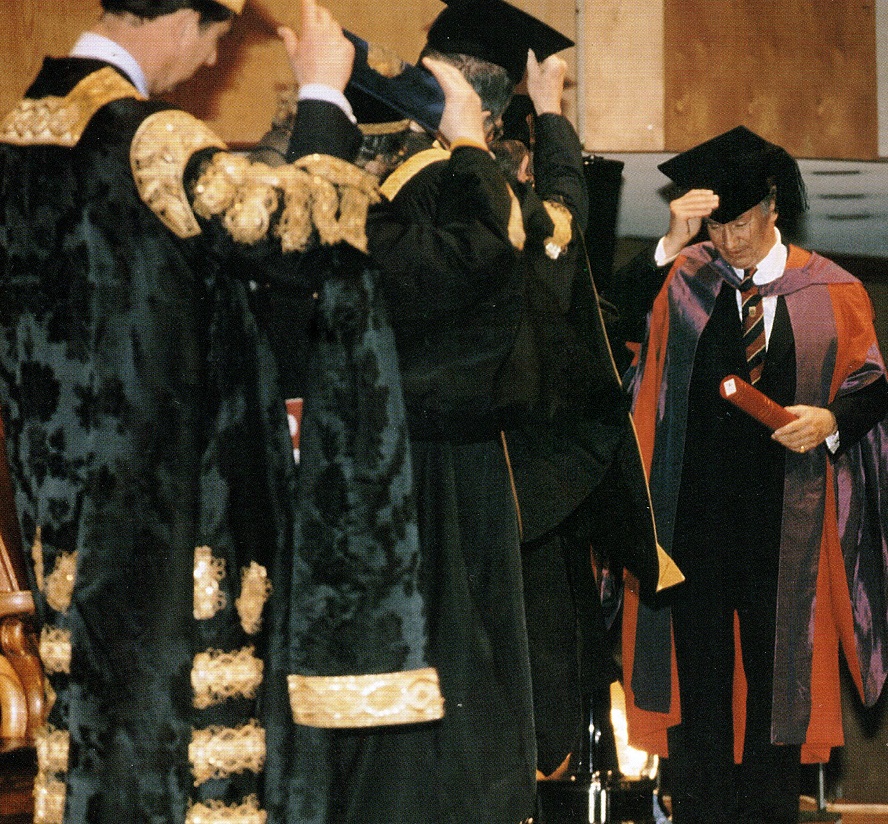
Breathtaking Video: K2 – The World’s Most Dangerous Mountain | Eddie Bauer

“K2 is a savage mountain that tries to kill you.” That is how climber George Bell described the infamous peak after the first American expedition in 1953–forever giving the mountain its nickname–The Savage Mountain. Sixty-six years later, Eddie Bauer mountain guides Adrian Ballinger and Carla Perez aim to summit the 8611-meter peak and join a community of explorers fewer in number than those who have been to outer space. Even more incredible, they both will attempt the feat without the use of supplemental oxygen. Every step of the way the team faces hazardous conditions, terrifying setbacks, and crushing misfortunes. But as Ballinger puts it, “I’ll go until the mountain tells me I can’t go anymore.”

Date posted: July 22, 2022.
Last updated: July 23, 2022 (new information from Gari Khan, and video added)

______________________

REVIEW SIMERG’S TABLE OF CONTENTS AND VISIT ITS SISTER WEBSITES

Before departing this website please take a moment to review Simerg’s Table of Contents for links to hundreds of thought provoking pieces on a vast array of subjects including faith and culture, history and philosophy, and arts and letters to name a few. Also visit Simerg’s sister websites Barakah, dedicated to His Highness the Aga Khan, and Simergphotos. Reach the editor, Malik, at mmerchant@simerg.com

Two Must-Watch Short Videos: Why is Ghadir Khumm in Arabia Important; and Why Do Ismailis Address their Imam, His Highness the Aga Khan, as Khudavind

[This post includes material from The.Ismaili, the official website of the Ismaili community – Ed. ]

Map and Video: Ghadir Khumm

According to Shia belief, by declaring Hazrat Ali as Mawla after him at Ghadir Khumm, the Prophet Muhammad (peace be upon him and his family) transferred his own spiritual authority bestowed upon him by Allah to Hazrat Ali, making him — and all the Imams that follow — the Amirul Mu’minin, or Master of the Believers. Please see map for location of Ghadir Khumm and watch the short video on the importance of Ghadir Khumm.

Click on map for enlargement

Saudi Arabia Map with location of Ghadir Khumm where the Prophet appointed Ali as his successor
Political map of Saudi Arabia and surrounding countries. The approximate location of Ghadir Khumm near the modern day town of Ragibh (known in the past as Al-Juhfah) has been highlighted in red. Driving distances: Mecca to Ghadir Khumm (location where Prophet Muhammad appointed Hazrat Ali as his successor) appx. 208 Kms; and distance from Ghadir Khumm to Medina, appx. 300 kms. Credit: Map adapted by Simerg from the Perry-Castañeda Library Map Collection, University of Texas Libraries.

~~~~~~~~~~

__________________

Video: Khudavind

The Persian word khudavind or khudawand means, “a king, prince, lord, master; or man of great authority.” Many Persian and Central Asian empires used this term throughout history to refer to people of high standing, including, at times, the sultan (ruler), wazir, government officials, and patrons. The Ismaili Imams lived in Persia (modern-day Iran) from the 12th to the 19th centuries. During this period, the community adopted the term khudawand to refer to the Imam. Its meaning is similar to the Arabic term mawla, which also means “master” or “lord.” (for more see the.Ismaili).

Date posted: July 18, 2022.

Related:

________________________

REVIEW SIMERG’S TABLE OF CONTENTS AND VISIT ITS SISTER WEBSITES

Before departing this website please take a moment to review Simerg’s Table of Contents for links to hundreds of thought provoking pieces on a vast array of subjects including faith and culture, history and philosophy, and arts and letters to name a few. Also visit Simerg’s sister websites Barakah, dedicated to His Highness the Aga Khan, and Simergphotos. Reach the editor, Malik, at mmerchant@simerg.com