@Simergphotos: The Silk Road Through the Lens of Muslim Harji and the Smithsonian Folklife Festival

Simergphotos presents An Anthology of the Silk Road Through the Lens of Muslim Harji and Smithsonian’s Folklife Festival with magnificent photos taken by Harji during his recent visits to the iconic Silk Road cities of Samarkand and Bokhara in Uzbekistan. Then the post steps back in time and brings you wonderful memories from the Smithsonian Institution’s Annual Folklife Festival held in Washington D.C. in 2002, which was entirely dedicated to one single subject: The Silk Road. The post contains photos from the opening day, which was attended by His Highness the Aga Khan, as well as an excellent thematic anthology covering many aspects of the exciting Silk Road!…More at Simergphotos.

Please click on image for Silk Roads Photo Essay.

Please click on image for Silk Roads Photo Essay.

PLEASE CLICK: An Anthology of the Silk Road Through the Lens of Muslim Harji and Smithsonian’s Folklife Festival

Mawlana Hazar Imam at the Silk Roads Festival in Washington D.C. IN 2002. Please click for more photos.

Mawlana Hazar Imam at the Silk Roads Festival in Washington D.C. IN 2002. Please click for more photos.

@Simergphotos – An Ismaili Wedding in Badakhshan Through the Lens of Muslim Harji

Muslim and Nevin Harji have just returned from a remarkable trip to Badakhshan, which is located in one of the most remote corners of the earth, in the midst of the magnificent Pamir mountains. The Harjis were fortunate to be invited to an Ismaili wedding in the small village of Namadgut (near Ishkashim). The whole village consisting of forty Ismaili families was involved in the preparation and celebration of the wedding. We continue our special series on Badakhshan with this special photo essay An Ismaili Wedding in the Pamirs Through My Lens by Muslim Harji.  

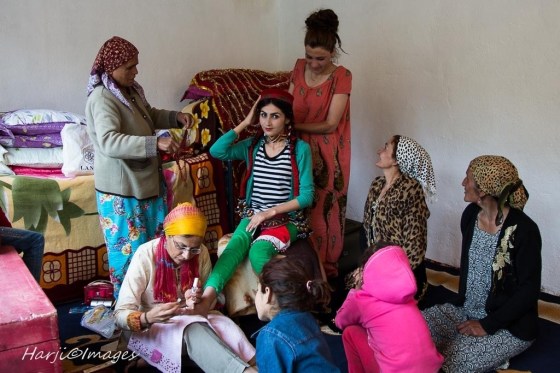
A bride-to-be is pampered with a manicure and pedicure before her wedding in a small village in the Pamirs.   Please click on image for Muslim Harji's photo essay.

A bride-to-be is pampered with a manicure and pedicure before her wedding in a small village in the Pamirs. Please click on image for Muslim Harji’s photo essay.


Visions of Badakhshan on Simerg

Letter from Publisher
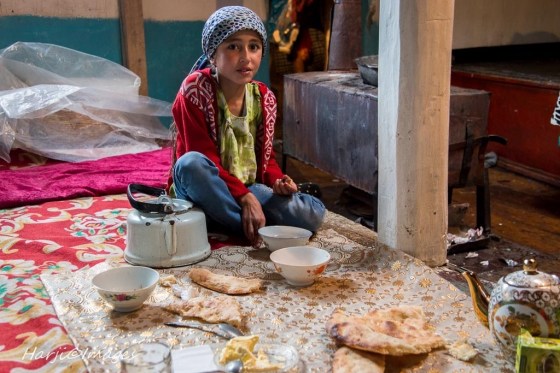
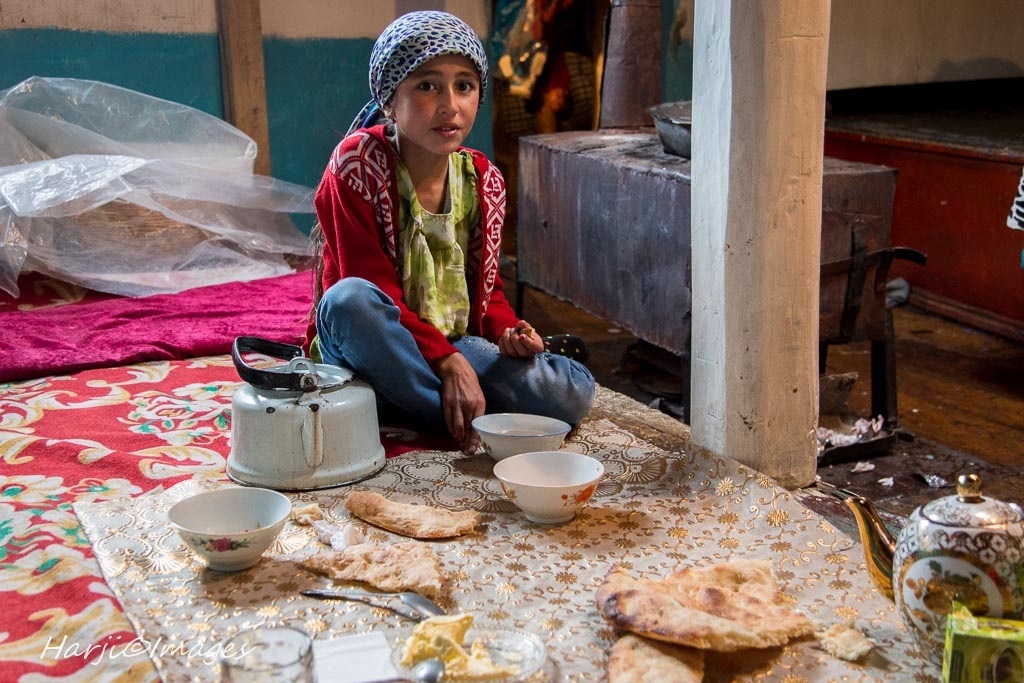
Muslim Harji's portrait of an Ismaili girl in the Wakhan Corridor of Badakhshan. She is seen Little Suranoor having breakfast before getting ready for school in the Village of Namadgut.

Muslim Harji’s portrait of an Ismaili girl in the Wakhan Corridor of Badakhshan. Little Suranoor is seen having her breakfast before getting ready for school in the Village of Namadgut.

By Abdulmalik Merchant

When my parents visited me in Voorhees, New Jersey, during the spring of 1995, we would together walk to the main library twice a week. The short walk passed by scenic ponds and streams. There was a scary component to it though — encounters with scattered groups of unfriendly geese.

Once in the library, our focus was to read the Sunday newspapers from nearby cities that made their way into the magazine and newspaper section by Monday.

During one such visit, my dad found himself staring at the Baltimore Sun’s wonderful two page spread of Mawlana Hazar Imam’s first historic visit to Tajikistan, that had taken place a few days earlier. The June 4, 1995, story gave a moving account of the visit by the paper’s correspondent Kathy Lally. It was obvious that she was well acquainted with the Ismailis, and also understood the emotions of the Ismaili people, who had greeted their Imam for the first time in centuries. To my delight, an on-line version of the report did become available, and I reproduced it on Simerg, with the Sun’s permission, some 5 years ago under the title A Western Correspondent’s Account of the Aga Khan’s Historic First Visit to His Followers in Gorno-Badakhshan.
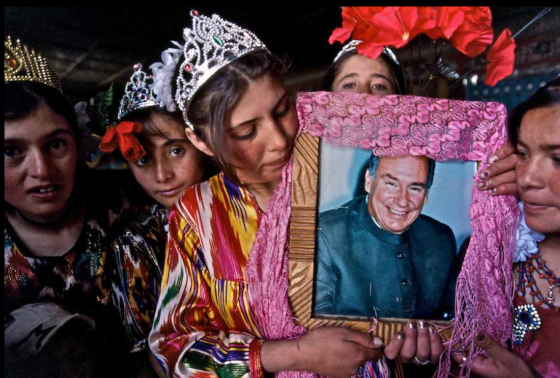
The photo was taken during Didar (Invitation) – a celebration that takes place on 28th of May every year to commemorate the anniversary of the Aga Khan’s visit to the village in the 1990s. During the celebrations the villagers dress up, dance outdoors to the accordion and drums and sing ginane (religious songs), which tell of him being their Noor (light). The photograph was taken as these girls, dressed in bright atlas silk fabric with crowns on their heads, were going out to dance. Photo: Matthieu Paley. Copyright.

The photo was taken during Didar (Invitation) – a celebration that takes place on 28th of May every year to commemorate the anniversary of the Aga Khan’s visit to the village in the 1990s. During the celebrations the villagers dress up, dance outdoors to the accordion and drums and sing ginane (religious songs), which tell of him being their Noor (light). The photograph was taken as these girls, dressed in bright atlas silk fabric with crowns on their heads, were going out to dance. Photo: Matthieu Paley. Copyright.

Two decades are not long in the life of a community, and for each of these past twenty years, since Mawlana Hazar Imam’s first visit in May 1995, the Ismaili community of Gorno-Badakhshan has commemorated the historic visit with a celebration known as “Didar” (a Glimpse, of the Imam) or “Noor” (the Light, that the Imam represents). The happiness of this annual event was captured by world-renowned photographer Matthieu Paley in the picture above where Ismaili girls are proudly displaying a framed decorated photo of their beloved Imam.

Subsequently, in addition to many other Badakhshan pieces, we published Ismaili Portraits From Tajikistan, by Khorog’s most distinguished and beloved ‘foreign’ permanent resident, Dr. Ali Rajput of Birmingham, England who in his personal capacity has served the jamat in Badakhshan in numerous ways.

Another piece that we were fortunate to publish was a personal account from Gulnor Saratbekova entitled  “Shukr Mawlo, Shukr Mawlo” – When Hope is All You Have Left, describing the dangerous and nervous state of affairs during the prolonged period of civil strife and unrest in Tajikistan in the early 1990’s. Her gratitude, shukr, in this piece is of course to Mawlana Hazar Imam who through the work of his Imamat institutions averted a serious famine that the jamat and other countrymen faced during the Civil War. I would strongly recommend that readers visit the links mentioned for some historical memories.

…..AND NOW MUSLIM HARJI’S SUPERB BADAKHSHAN SERIES
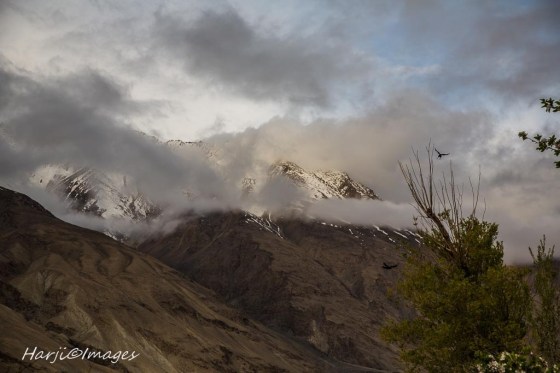
Scenic Badakhshan. Please click on photo for an incredible collection of photos of Badakhshan. Photo: Muslim Harji.

Scenic Badakhshan. Please click on photo for an incredible collection of photos of Badakhshan. Photo: Muslim Harji.

Now, Simerg is happy to present a photographic series dedicated to Badakhshan and Central Asia by none other than Canadian photographer Muslim Harji of Montreal. While he admires and cherishes the memories of the beautiful landscapes of Badakhshan that he captured with his lens, what he has come away most from this visit is the hospitality and warmth of the Ismaili people of Badakhshan. Harji’s incredible photo essays about his journeys to Jerusalem, Dubai, Iran, Turkey, South and South East Asia, have been seen by thousands on this blog, and we are delighted to add this new one to Simerg’s superb photo collection. Please click The Ismailis of Badakhshan Through My Lens by Muslim Harji.

With Tajikistan and Badakhshan now more accessible than ever before, and with so many exciting Imamat projects underway in that part of the world, we hope that Harji’s story will inspire the professional and youth of the jamat to visit this remote and beautiful region. By the way, there is an incredible array of well-organized professional tours to the region that are led by highly experienced non-Jamati operators in North America and Europe.

Coming Soon: Priceless Memories of Badakhshan Through the Lens of Muslim Harji

LETTER FROM PUBLISHER

Simerg's Merchant

By Abdulmalik Merchant

Muslim Harji, a regular contributor to this website and its sister blog, Simergphotos, says that his recent visit to Central Asia with his wife Nevin was the best trip of his life, surpassing the jouney he had made to Iran some time ago. His visit to Badakhshan, in particular, has resulted in a perfect blend of  photos which capture the region’s extraordinary landscapes as well as the wonderful spirit of the Ismailis, who have inhabited the Pamirs for centuries.

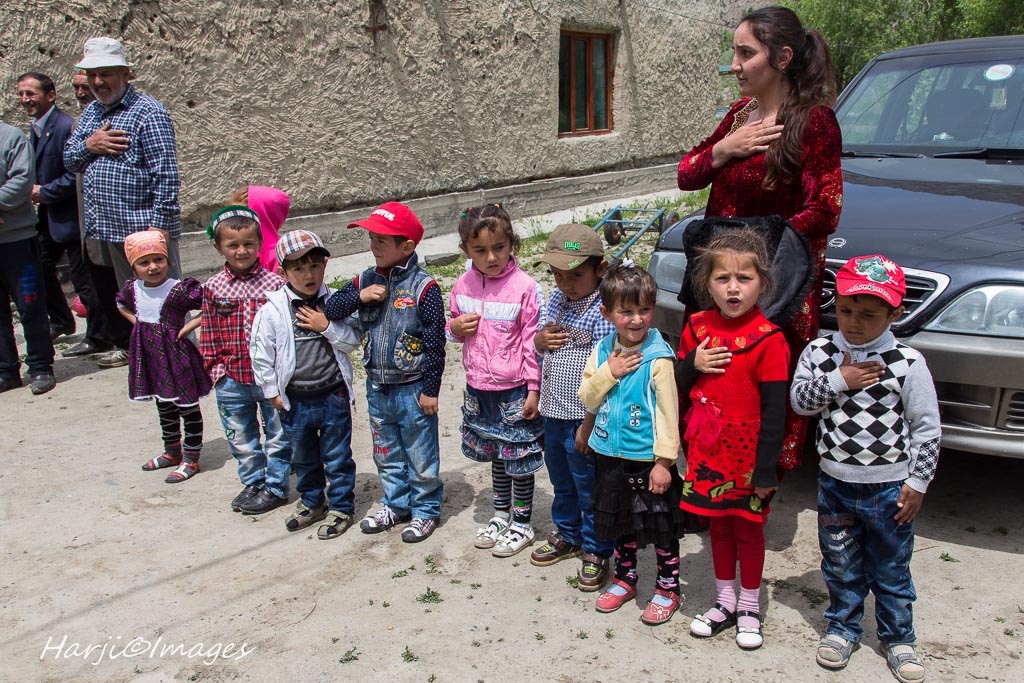
Upon arriving at the village of Rushan, we were greeted by children singing the

Upon arriving at the village of Rushan, we were greeted by children singing the “Khushamudin song” — a welcome song. We were then escorted into the home of the Ismaili village elder. Photo: Muslim Harji. Copyright.

The inspiring life moments that Muslim and Nevin experienced in Badakhshan will be treasured by them for their entire lives, because the “priceless memories will never come again.”

While we prepare Harji’s Badakhshan photo essay for publication later this week, we invite you to review Through the Lens of Muslim Harji, a page specifically dedicated to Muslim. It gives the links to his pieces published on Simerg/Simergphotos.

Muslim has established himself as a powerful photographer. The hundreds of complimentary letters that readers have submitted in response to his photo essays as well as the many thousands who have visited Simerg to view his photographs bear a true testimony to Harji’s extraordinary talents with his lens.

We look forward to continuing the remarkable friendship that we have forged with Muslim Harji, and thank him for his support.

____________

Update June 13, 2015: Please see Muslim Harji’s piece via The Ismailis of Badakhshan Through the Lens of Muslim Harji

Two Great Safaris in the USA: Yellowstone and Badlands National Parks

Please click on photo(s) for enlargement

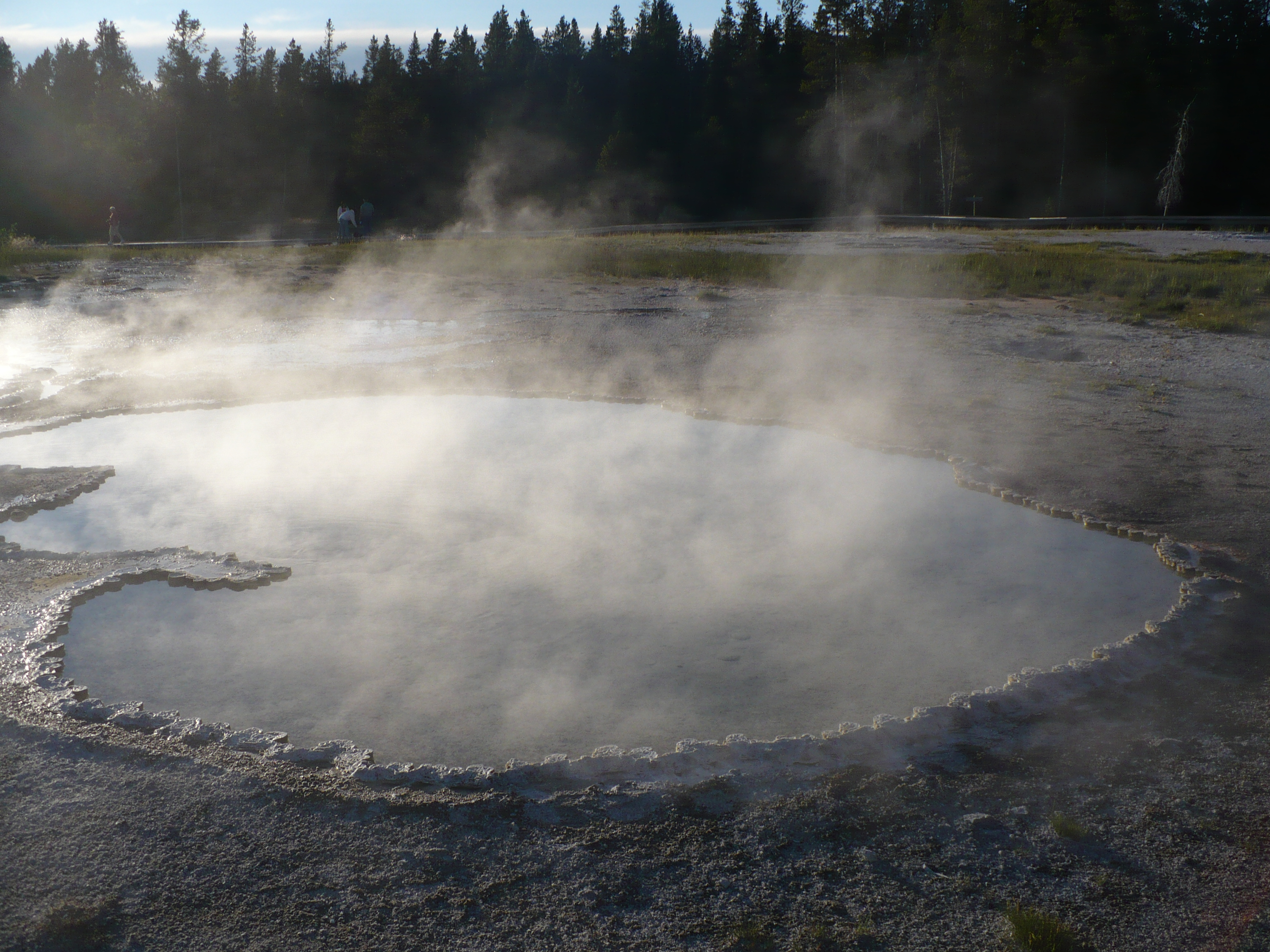
Heart Spring received its name because of the heart-like shape of the crater. It is 8x13 feet and has a depth of 16 feet.  Heart Spring has had temperature fluctuations from 150-202°F. This wide range of temperature has allowed microbial growth to form varicolored patterns. This spring is typical of many of Yellowstone's thermal springs. Nearly 10,000 thermal features exist in Yellowstone and many are alkaline hot springs similar to Heart Spring in size and appearance. One feature which distinguishes each is the bright, colorful cyanobacteria and algae which grow along the edge of run-off channels. Each spring has its unique pattern. Photo: Nurin Merchant. Copyright.

Yellowstone’s Heart Spring received its name because of the heart-like shape of the crater. It is 8×13 feet and has a depth of 16 feet. Heart Spring has had temperature fluctuations from 150-202°F. This wide range of temperature has allowed microbial growth to form varicolored patterns. This spring is typical of many of Yellowstone’s thermal springs. Nearly 10,000 thermal features exist in Yellowstone National Park and many are alkaline hot springs similar to Heart Spring in size and appearance. One feature which distinguishes each is the bright, colorful cyanobacteria and algae which grow along the edge of run-off channels. Each spring has its unique pattern. Photo: Nurin Merchant. Copyright.

For individuals and families who are planning on a road trip in the USA during the coming summer, Simerg recommends 2 trips that will live in your memories forever. If there is one national park that my daughter and I would absolutely recommend for its diversity and God gifted natural wonders, then it has to be Yellowstone. Canyons, geysers, rivers, wildlife…and much more…all come together in this vast and exciting natural space. It may be noted that Yellowstone’s majestic neighbour, the Grand Teton National Park, is also worth a visit. It is dominated by stirring mountain peaks and exciting wild life.

A magnificent view of the Tetons with the moose in the foreground. Photo: Nurin Merchant. Copyright.

A moose crosses a pond in the Grand Teton National Park where towering peaks dominate the landscape for miles. Photo: Nurin Merchant. Copyright.

Your safari to both Yellowstone and Grand Teton will be fun-filled, as well as educational and exciting. If you take your children with you, young and old alike, they will build an enormous appreciation, respect and love for nature, inspired by the natural phenomenon that they will witness at Yellowstone. Both the national parks offer excellent accommodation and great food!

Further to the east in the Dakotas, another National Park, the Badlands, is worth a visit, with  a suggested two-day trip to the Needle’s Highway, Rushmore Memorial and the Crazy Horse Memorial. You will be fascinated by the Park’s natural wonders and the astonishing memorials built with human ingenuity.

Badlands National Park, South Dakota. Photo: Malik Merchant using Canon Pwershot A200.

Badlands National Park, South Dakota. Photo: Malik Merchant using Canon Pwershot A200.

The following links provide comprehensive information and breathtaking pictures of the Yellowstone, Grand Teton and Badlands National Parks, and also include coverage of my visits to cities and towns which were either part of my itinerary or simply appeared on-route.

Date posted: Saturday, April 25, 2015.

__________________