The Straight Path and the Disabled: Hope in the Voiceless Community

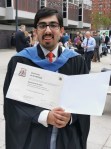
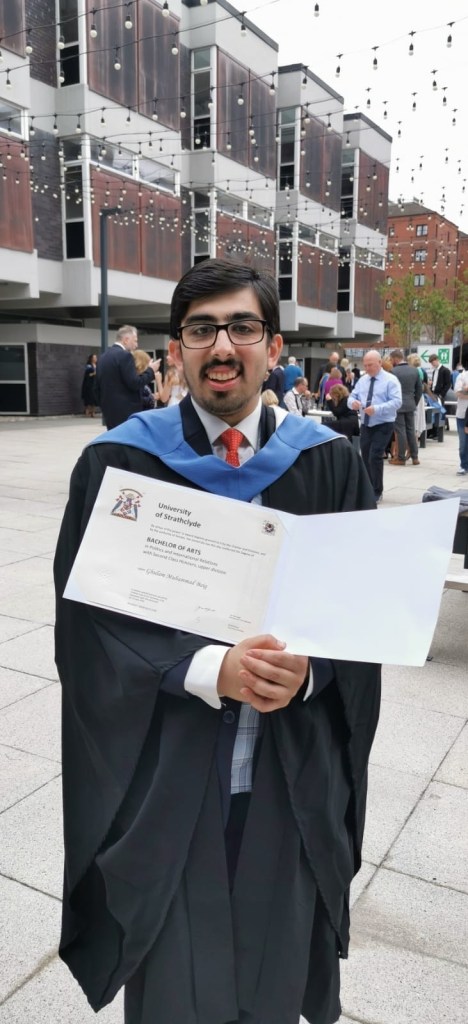
Ghulam Muhammad Baig with his degree in Politics and International Relations University of Strathclyde
Ghulam Baig

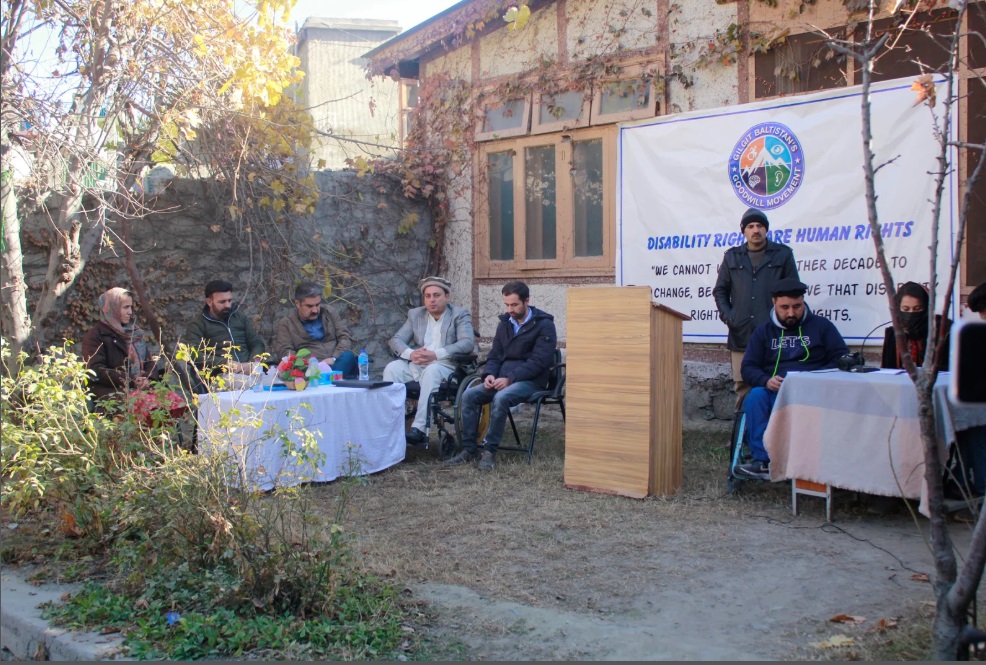
A group of individuals seated in a garden area, with a banner in the background emphasizing disability rights and human rights. The setting includes chairs and a podium, surrounded by foliage, suggesting a community meeting or discussion.

~~~~~~

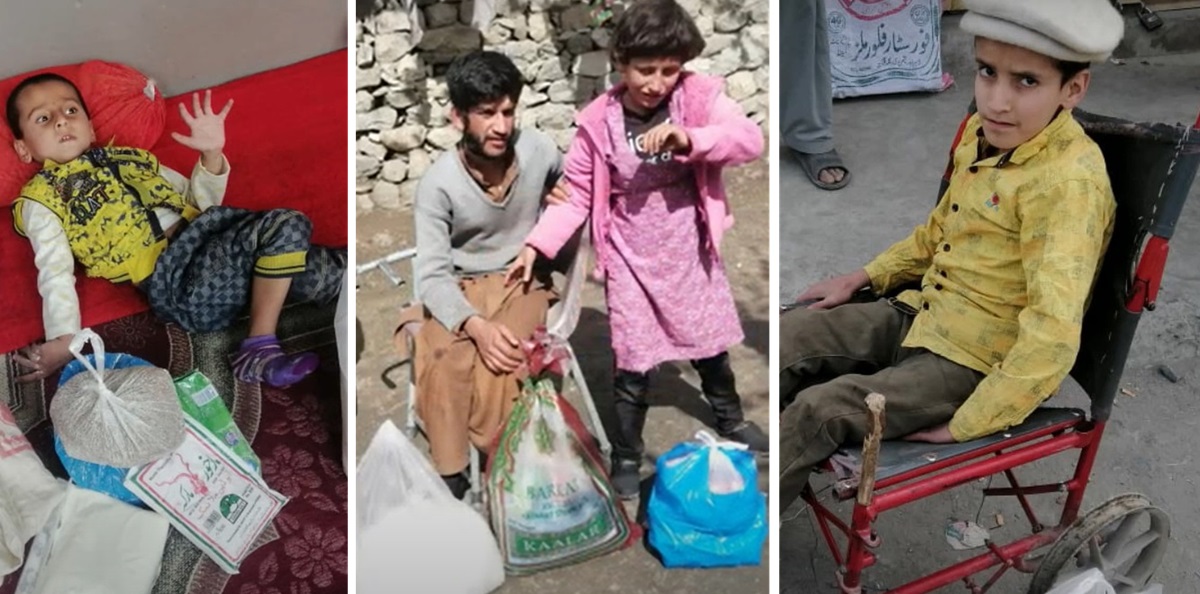
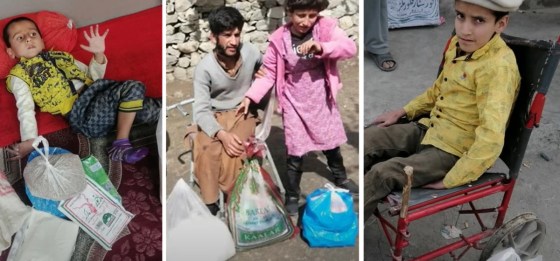
A collage featuring three images: a young child lying on a sofa with bags of items, two individuals sitting together with bags on the ground, and another child sitting in a wheelchair, emphasizing the challenges faced by disabled and vulnerable children.

~~~~~~

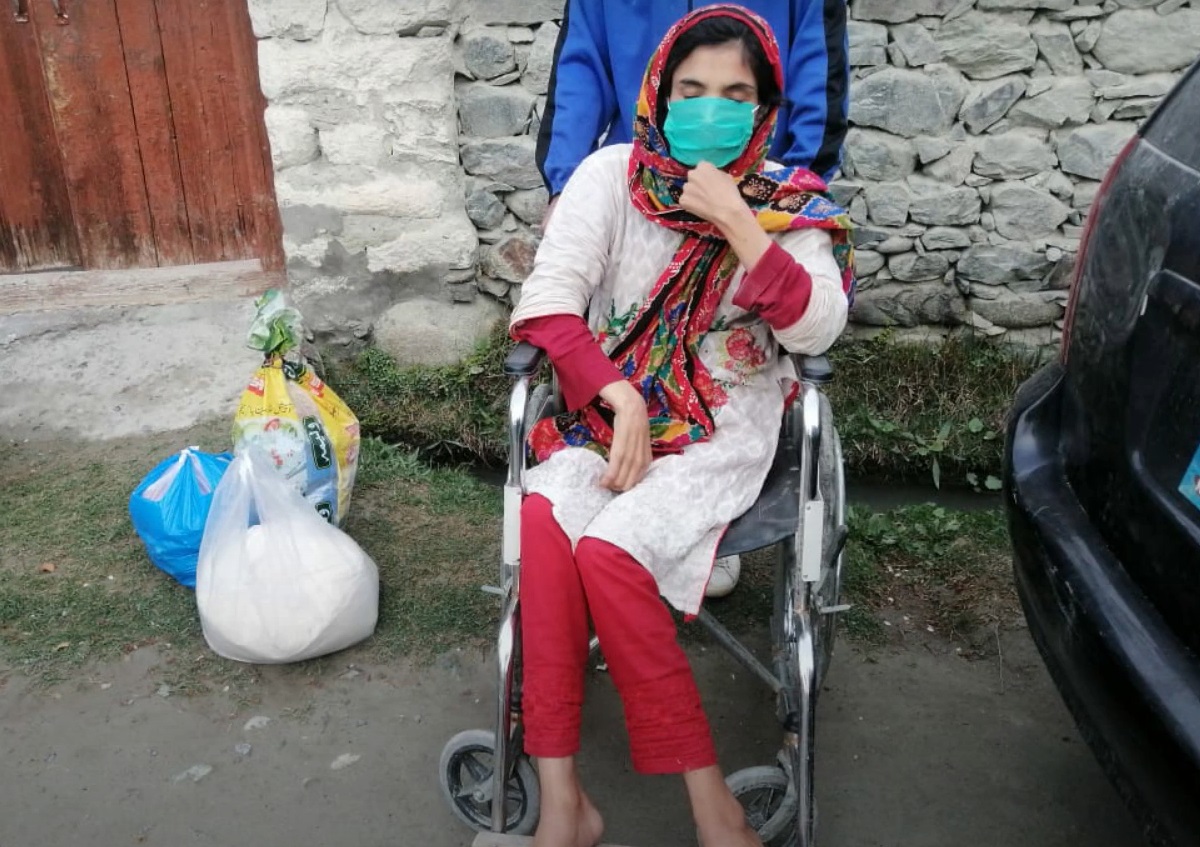
A woman in a wheelchair wearing a protective mask sits outdoors with bags of supplies nearby, showcasing the efforts for support and inclusion for disabled individuals.

~~~~~~

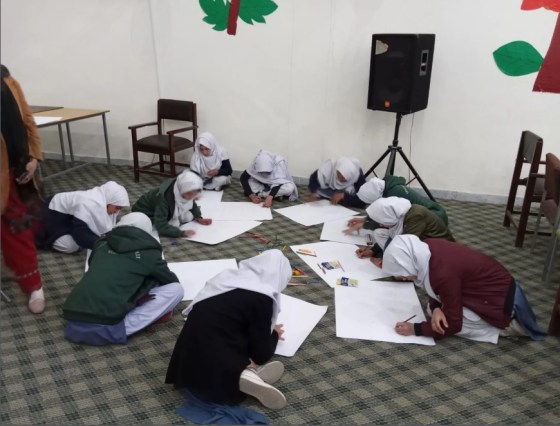
A group of children in school uniforms sitting on the floor, engaged in an art activity while drawing and coloring on large sheets of paper.

_______________________________________________

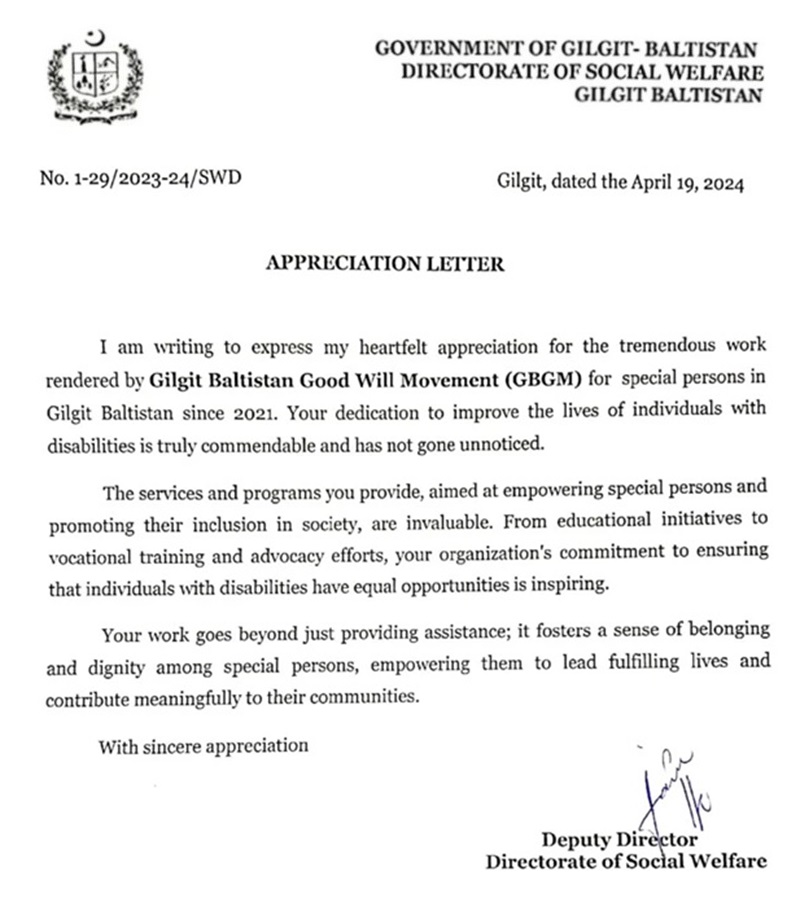
A formal appreciation letter from the Government of Gilgit-Baltistan's Directorate of Social Welfare to the Gilgit Baltistan Good Will Movement, highlighting their efforts for individuals with disabilities.

_______________________________________________

________________

Ghulam Baig CEO of Gilgit Baltistan's Goodwill Movement
Ghulam Baig with his honours degree certificate

977 years ago, in March 1046, a dream took Ismaili poet Nasir Khusraw on a 19,000 km journey – read Rachael Kohn’s interview with Alice Hunsberger on the poet and watch video

Editor’s note: Rachael Kohn, a broadcaster, author, and speaker on religion and spirituality, conducted an interview with Alice Hunsberger on her former Australian program, “The Ark”, on the occasion of the millennium birth anniversary of Nasir Khusraw. A shorter version of the interview was prepared and presented by Mashal Ali (acting as Rachael) and Nurin Merchant (acting as Alice) at a literary night event hosted in Ottawa to celebrate the Golden Jubilee of His Highness the Aga Khan. Their presentation is produced below with the kind consent of Ms. Kohn. It is followed by a brief History Pod video presentation on Nasir Khusraw and his travelogue Safarnama.

~~~~~~

Hello, this is “The Ark”, and I am Rachael Kohn.

A thousand years ago a Persian poet defied the conventions of the day. His name was Nasir Khusraw, an Ismaili Muslim, a branch of Shi’a Islam.

Instead of lavishing praise on the sultan or his horse, he praised learning and spiritual purity. For example he beautifully wrote:

The world is a deep ocean
Its water is time.
Your body is like a shell, Your soul the pearl.
If you wish to have the value of a pearl,
Raise up the pearl of your soul with learning.

Rachael Kohn: Unlike Rumi or Omar Khayyam, Nasir Khusraw isn’t well-known in the West. Yet! But New Yorker Alice Hunsberger may change that, with her book on his life and work. She was particularly interested in how different Khusraw’s poetry was at the time.

Alice, when one thinks about the period, the Persian poet that comes to mind is Omar Khayyam who was almost a contemporary of Khusraw, I guess he was about a generation later. Now he is much more well known in the West; how would you compare Omar Khayyam and Khusraw?

Alice Hunsberger: Yes, Omar Khayyam is best known because of the wonderful and inspired translation a century and a half ago by Edward Fitzgerald, and one of the tricks to becoming well-known, is finding a good translator.

Right now for example, Omar Khayyam is best known as a poet to the West but in the East he was primarily known as a brilliant mathematician and astronomer. Nasir Khusraw on the other hand is one of the best, highest ranking poets in the Persian speaking world.

Nasir Khusraw really is not a love poet, so you will not find mystical expressions of love. What he calls for is the use of intellect in religion in one’s life; and in contrast to Omar Khayyam, who was, we could say, cynical toward religious people.

Rachael Kohn: Well, Khusraw himself was something of a religious seeker. He seems to have even read about other religions as well as philosophy. What faction or what tradition of Islam did he align himself with?

Alice Hunsberger: He was very well educated and did look at lots of different religions. At some point in his life, he had a spiritual awakening, and in one place he tells it as a dream, and in another its a more journey-like kind of story.

He finally found the truth and the peace in faith that he was seeking in the Ismaili faith, that is a branch of the Shi’ites. He believes that what God sent down is the external, and that the internal meaning is what needs to be brought out and that needs an Imam, an interpreter.

ARTICLE CONTINUES BELOW

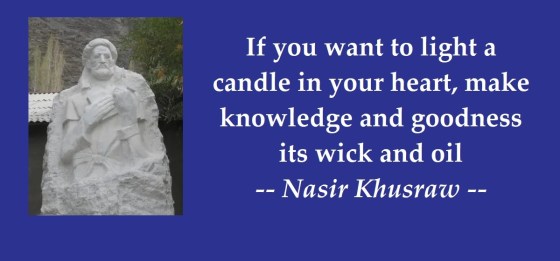
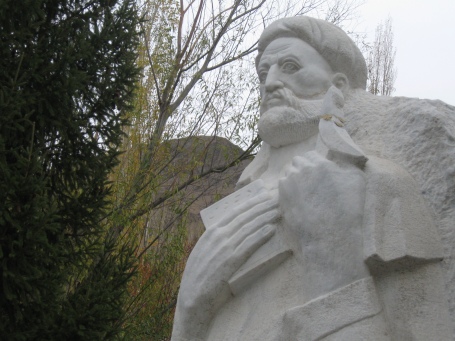
A statue of the famous Ismaili philosopher, poet and missionary Nasir Khusraw in Badakhshan.

Rachael Kohn: Well, Nasir Khushraw, I think was referred to as ‘the real wisdom of the East’; how did he earn that accolade?

Alice Hunsberger: Well I would think that would refer to this inner wisdom which beyond the scientific knowledge, beyond external religious practices, there’s an inner truth that underlies the teachings. This is what he was preaching. So we have to get to the inner truth.

Rachael Kohn: What sort of personality or character comes through in his writing?

Alice Hunsberger: When you read his works you feel right away, ‘Here’s a strong person, a strong, definite individual’. You feel him in many emotions; he opens up some of his poems with sadness, other ones he begins with beautiful springtime visions of trees and flowers so that you see a person in all his complexity.

Rachael Kohn: Is there a strong ethical sense that comes through in his poetry? Is he a critic, a sharp observer of the religious life around?

Alice Hunsberger: Absolutely. As a member, as a leading intellectual of the Ismaili faith, he came under the criticism and enmity of the other schools of the Sunnis and others, so he used his pen very forcefully to defend the faith and to defend his actions.

Rachael Kohn: Alice, are Nasir Khusraw’s poems used today as an inspiration for progressive thought in Islam?

Alice Hunsberger: I think so. I haven’t been back to Iran for a while but they’re having conferences about him now and, even though he is from another branch of Shi’ism, they certainly respect his ethics and his strong personality.

Rachael Kohn: Well Nasir Khusraw ended his days rather sadly, exiled. Why was he exiled?

Alice Hunsberger: After his journey which he undertook as a result of the spiritual awakening, he stayed in Cairo because it was a very powerful Ismaili seat; for about 200 years there was an Ismaili caliph in Cairo, and so he studied there. He left to become a preacher back in his homeland of Khurasan and converted many people.

His success brought enmity and danger to his life, so he fled into a region of Badakhshan where he lived out his life under the protection of a local prince and he wrote much of his sad poetry of his exile from there. Here is a short verse of one of these poems:

But it doesn’t matter where we are,
Sometimes we’re in bad places;
But no-one values a ruby less for coming out of dirty soil
And no-one criticises roses for coming out of manure.
So we all are like a ruby and like a rose.
We need to blossom and shine wherever we are.

Rachael Kohn: Wise words a thousand years ago and today. That was Alice Hunsberger speaking about the poetry of Nasir Khusraw, who’s been the subject of celebrations by Ismaili communities around the world.

_____________

YouTube Video

Date posted: March 5, 2023.
Last updated: March 25, 2023.

___________

Before departing this website, please take a moment to review Simerg’s Table of Contents for links to hundreds of thought-provoking pieces on a vast array of subjects including faith and culture, history and philosophy, and arts and letters to name a few. Also visit Simerg’s sister websites Barakah, dedicated to His Highness the Aga Khan, and SimergphotosThe editor may be reached via email at mmerchant@simerg.com.

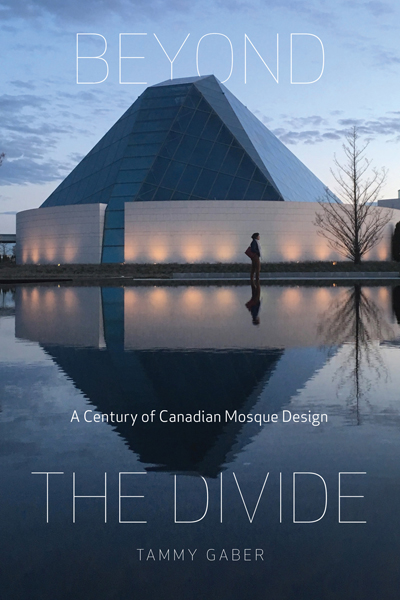
Cover page, Dr. Tammy Gaber's beautiful new book "Beyond the Divide: A Century of Canadian Mosque Design", Hardcover, pp. 304 with 306 photos and 135 drawings, colour throughout, February 2022, pub. McGill-Queen's University Press, simerg

Simerg in Conversation with Dr. Tammy Gaber, Author of a Stunning and Insightful New Book on Canadian Mosques Over the Past Century

We recently read Professor Tammy Gaber’s new book “Beyond the Divide: A Century of Canadian Mosque Design” and found it to be beautiful and impressive — its design brings together pictures, text, and architectural drawings in a clean and easy-to-read layout. Her analysis covers a lot of ground, quite literally. Simerg presented a few questions to Dr. Gaber about her book, with the focus on women’s presence and participation in mosques. She kindly obliged and we are pleased to present the following interview which was conducted via email.

Simerg: You write that your investigation began two decades ago. Please tell our readers a little about your journey, intellectually in that time and geographically across Canada.

DR. GABER: In my acknowledgements I was hinting at the fact that my research on mosques began with my Bachelor of Architecture thesis (at University of Waterloo completed in 1999) for which I designed a mosque in Canada. It was a struggle to find information on the subject and to approach the design as critically as I had any other building type in my education. I was also hinting at my Masters (Cairo University, 2004) in which I examined qualities of design of ‘Western’ mosques and my PhD (Cairo University 2007) in which I examined the historical roots, development and contemporary impact of women’s spaces in mosques. This specific project, the examination of mosques in Canada began in 2015 with a SSHRC (Social Sciences and Humanities Research Council) funded grant.

Simerg: Beyond your studies at these important institutions in Canada and Egypt, how far and wide have you travelled as designer, educator and author of a truly beautiful book.

DR. GABER: I travelled to 53 cities to see 90 mosques in the space of 2.5 years while I was full-time teaching — so all travel took place during holidays or study weeks and were focused on the examination of mosque spaces. A large number of the mosques I studied were in converted buildings, some of which used to be other places of worship. As an architecture educator I am very interested in excellent architecture and when I could I would visit other buildings I did.

Simerg: The title Beyond the Divide speaks of an existential search for a more equitable presence for women in mosques. Their points of view are central to this endeavor. You use a captivating term room sometimes with a view. As an architect you classify mosques into those with no view, with a partial view, and with a full view. An astonishing 46% of mosques you studied had no view for women and only 15% had a full view, and the colour coding you use in the architectural drawings illustrates the stark divisions with clarity. 

DR. GABER: It was important for me to relay the architectural facts about women’s spaces in mosques with data on the proportion, location, materials and recurrent patterns so that the issue would become very clear.

Simerg: You write about the Ka’ba in Mecca as exhibiting equal access. Men and women have prayed there without separation for 14 centuries and continue to do so. And yet, in the Canadian mosques you have studied, the allocation of spaces is tending towards more separation. Indeed, mosques with equal access have become gendered spaces with women allocated about a third only of the built spaces. Often, the spaces are of inferior quality. Edmonton’s Al-Rashid Mosque began as an equitable space. Not any more. Others like the Sudbury mosque have resisted this change to gendered spaces. The Ismaili jamatkhanas are full view and divided equally by default. 

Article continues below

Dr. Tammy Gaber''s beautiful new book "Beyond the Divide: A Century of Canadian Mosque Design, Interview with Simerg
Cover page, Dr. Tammy Gaber’s beautiful new book “Beyond the Divide: A Century of Canadian Mosque Design”, Hardcover, pp. 304 with 306 photos and 135 drawings, colour throughout, February 2022, pub. McGill-Queen’s University Press.

DR. GABER: My apologies, but I am tempted to reiterate all of chapter 7 [of the book] here.  It was important for me to relay the architectural facts and that architecture has agency and affects behaviour in both positive and negative ways: spaces that do not welcome women lead to less attendance by women; spaces that welcome women equally not only leads to more attendance but more participation in all aspects of the communities use of the spaces and sustained attendance over generations. Additionally there is a disjunction between women’s ability to use spaces of the mosque and other public spaces like schools or shops — this becomes an accessibility issue. 

Simerg: Mimar Sinan from the 16th century is generally spoken of the glowing terms. Yet you uncover this divide in his architecture. His students follow with similar designs. Please explain how this inequity built into stone has become a “tradition” with vocal defenders.

DR. GABER: Mimar Sinan’s mosques borrowed and greatly developed structural forms and ideas inherited from Byzantine architecture (for example Hagia Sophia). It was common in Byzantine architecture to include a designated women’s balcony in the church space. That practice was abandoned in subsequent periods of church architecture but was adopted again, centuries later, by Ottoman mosque architecture including Sinan’s works. The impact of this introduction was very far reaching: during the Ottoman empire hundreds of mosques were constructed across vast geographies placing in stone designated spaces for women that were much smaller in proportions (height and floor area) and made common the cultural adoption that this was the ‘norm’.

Simerg: Apparently, it is new immigrants to Canada from many different countries who are not so accommodating of equitable spaces for women and are pushing for regressive changes.  Are the critiques of Zarqa Nawaz and others fostering  better counter conversations?

DR. GABER: The spaces for women in the Canadian mosque is an unfolding conversation as users (and mosque governance) modify spaces over time. Additions or subtractions to spaces are a result of these conversations. Zarqa Nawaz’s film, book, and publications have brought attention to this matter which is important. During the exhibition of this research in 2017 at the Noor Cultural Centre many people spoke to me how surprised they were at the range and quality of women’s spaces in mosques. My hope is that by demonstrating the architectural facts of the breadth of mosque spaces in Canada and the impact these spaces have that there can be further conversations.

Simerg: Coast to coast is the term often used when speaking of Canada. However, the third coast, in the extreme north, has two mosques. There is one in Iqaluit (Nunavut) and another in Inuvik (North West Territories) delightfully named Midnight Sun Mosque. Having the North Pole as your neighbour brings its own challenges. Apart from the cold at the extreme latitudes, there are the orientation of the qiblah and fasting in Ramadan. Please could you tell us more.

DR. GABER: I like this phrasing of a ‘third coast’, you are very right! It was incredible to travel to Iqaluit and Inuvik and to meet the communities who created the mosques in each of these northern cities. There are many challenges associated with location and its impact on fasting and prayer — I have outlined in detail in chapter 6 the facts relating to the calculations and the conversations that are influx with respect to adaptation.

Simerg: You write about the disjunction between users and designers. In what areas do you hope your book will contribute to bridging the divide? Can this happen without women in the governance structures of the mosques?

DR. GABER: It is my hope that the survey in my book will demonstrate the inspiring possibilities of architecture to users, governance and architects  – and that the agency of each (users, governance and architects) is important and amplified when in dialogue.

Date posted: March 23, 2022.

__________________

Purchasing the Book

Dr. Tammy Baker's beautiful new book "Beyond the Divide: A Century of Canadian Mosque Design, Interview with Simerg

Tammy Gaber’s “Beyond the Divide: A Century of Canadian Mosque Design” is available for on-line purchase at the publisher’s website McGill-Queen’s University Press (it has more details about the book including its table of contents) as well as Indigo, Amazon, and Barnes and Nobles among other on-line booksellers.

______________

About Dr. Tammy Gaber

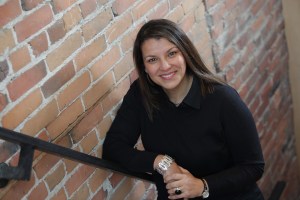
Tammy Gaber, Laurentian University, author of Beyond the Divide: A Century of Canadian Mosque Design, interview with Simerg Malik Merchant
Dr. Tammy Gaber

Dr. Tammy Gaber is Director and an Associate Professor at Laurentian University’s McEwen School of Architecture (MSoA), where she teaches architecture design and theory courses. Dr. Gaber joined MSoA as founding faculty in 2013 and previously taught at University of Waterloo, American University in Cairo and the British University in Egypt.  Dr. Gaber completed a SSHRC funded research project which led to her book Beyond the Divide: A Century of Canadian Mosque Design and has published on gender and architecture with a chapter in the forthcoming Global Encyclopedia of Women in Architecture  (Bloomsbury press). Dr. Gaber has also published chapters on vernacular and regional architecture in Habitat: Vernacular Architecture for a Changing Planet (Thames and Hudson) and Diversity and Design: Perspectives from the Non-Western World (Fairchild Publishing), and has two chapters in The Religious Architecture of Islam (in 2 volumes; 2021, Brepol Publishing). In 2019 Dr. Gaber won the Women Who Inspire Award from the Canadian Council of Muslim Women and in 2020 she was awarded Laurentian University’s Teaching Excellence Award for a Full-time professor.  During her 2020-2021 academic sabbatical Dr. Gaber  completed a two-month academic residency in Finland for her research on Alvar Aalto in the fall of 2020 and was an invited scholar at the Centre for Theological Inquiry at Princeton University for the 2020-2021 academic year.

Salma Lakhani, Alberta’s First Muslim Lieutenant Governor, Speaks to Canadian Geographic on Building a More Inclusive Canada

IMPORTANT ANNOUNCEMENT: As Simerg completes its 13 years of continuous publication, we launch a special series profiling Ismaili leaders of distinction over the past 125 years. The series will be dedicated to Ismaili institutional leaders as well as individuals who have achieved distinction and recognition working outside the Ismaili community, yet continuing to support the work of the Ismaili Imamat through its Jamati institutions and the Aga Khan Development Network and its agencies. We welcome articles from all over the world for this new initiative. Please write in confidence to the editor at mmerchant@barakah.com.

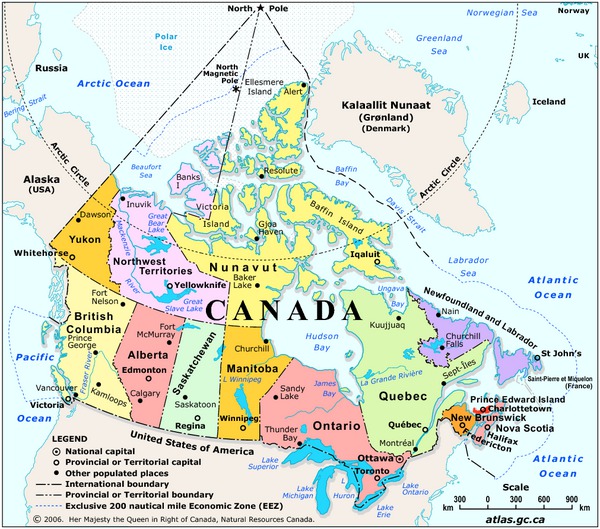
Map of Canada
Map of Canada, world’s 2nd largest country (9,984,670 sq kms, 6.1% of world landmass) after Russia (17,098,242 sq kms, 11% of world landmass). The map represents Canada’s Political Divisions, and shows boundaries, capitals, selected place names, selected drainage and names, the Arctic Circle and adjacent foreign areas. Photo: Natural Resources Canada.

Introduced by MALIK MERCHANT
Publisher/Editor SimergSimergphotos and Barakah

My first home in Canada was in Edmonton. I left London, England, in late December 1980, with the blessings of my mother, Malek (“Mrs. Merchant”), and arrived several hours later to my new home in the thick of winter. It was a clear day, and from the plane I only saw snow as it flew over Canada to my destination. My dad, who had arrived in the city a few days earlier from London to give talks on science and faith as well as other religious topics at the invitation of the local Ismaili Tariqah and Religious Education Board or ITREB (then known as the Ismailia Association) was there to receive me.

Malik Merchant with Jehangir and Malek Merchant, Simerg
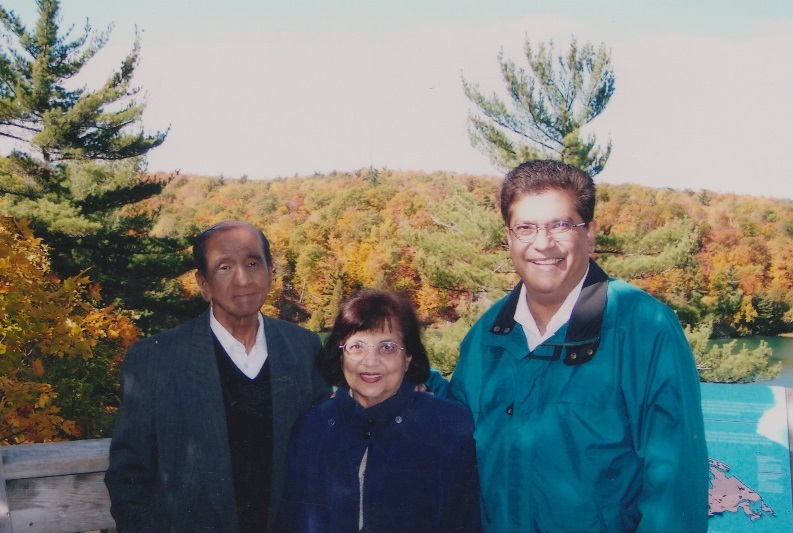
The editor of Simerg, Barakah and Simergphotos, Malik Merchant, is pictured with his beloved late parents, Jehangir (d. May 2018) and Malek Merchant (d. January 2021), at the Gatineau Park in the Canada’s National Capital Region during their visit to Ottawa in 2007. Photo: Jehangir Merchant Family Collection.

That weeklong presence of my beloved dad was inspirational, and filled me with immense courage during my first phase of settling down in a new country. Earlier during the year, I had successfully completed an IT assignment in Salt Lake City, Utah.

Edmonton was my home for just under 3 years, before my consulting firm, Cognos, relocated me to Ottawa, Ontario, in late 1983, due to branch closure. I am happy to say that, as of January 2022, Alberta has once again become my home. It will give me an opportunity to reconnect with my boyhood friends, the Jamat as well as many friends with whom I played sports in the past. The Jamat has grown significantly, and the opportunity of seeing thousands of Ismaili faces from Afghanistan excites me.

During my time in Edmonton in the early 1980’s, Dr. Zaheer Lakhani, was the Chairman of the Aga Khan Edmonton Council (or the Administrative Committee, as it was then known, I think), and I came to know him as an open-minded leader who reached out to the Jamat seeking out their suggestions, opinions and ideas. I have not met Zaheer for almost 40 years now, but I was extremely pleased to learn about his wife Salma’s appointment as the 19th Lieutenant Governor of Alberta.

Story continues below

Dr. Zaheer Lakhani accompanies his wife, Her Honour Salma Lakhani AOE, at her Lt. Gov of Alberta installation ceremony, Simerg and Malik Merchant; Al Karim Walli twitter photo
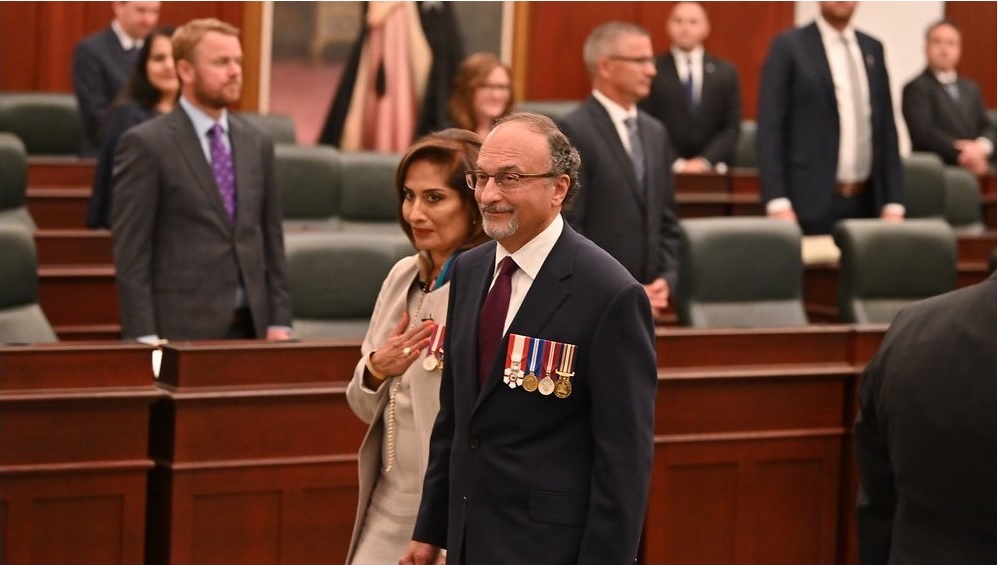
Dr. Zaheer Lakhani accompanies his wife Salma Lakhani at her installation ceremony as the Lieutenant Governor of Alberta on August 26, 2020. Photo: Via Al-Karim Walli’s Twitter page.

Salma’s appointment was announced on June 30, 2020 by Prime Minister Justin Trudeau. She became the first-ever Muslim to hold the ceremonial position in Canadian history. In a written statement on her appointment the Prime Minister said: “Ms. Lakhani is devoted to supporting people in her community, from new immigrants and young people, to women and families. As Lieutenant Governor of Alberta, I know she will serve the people of her province and our country well, and continue to be a source of inspiration for all Canadians.”

Profile of Honourable Salama Lakhani

The following biographical sketch of Honourable Salma Lakhani has been compiled from the websites of the Prime Minister of Canada and the Government of Alberta. Readers may also wish to access the website of the Lieutenant Governor of Alberta to read more about Honourable Salma Lakhani.

Lieutenant Governor Lakhani tours new Stanley A. Milner Downtown Branch of the Edmonton Public Library
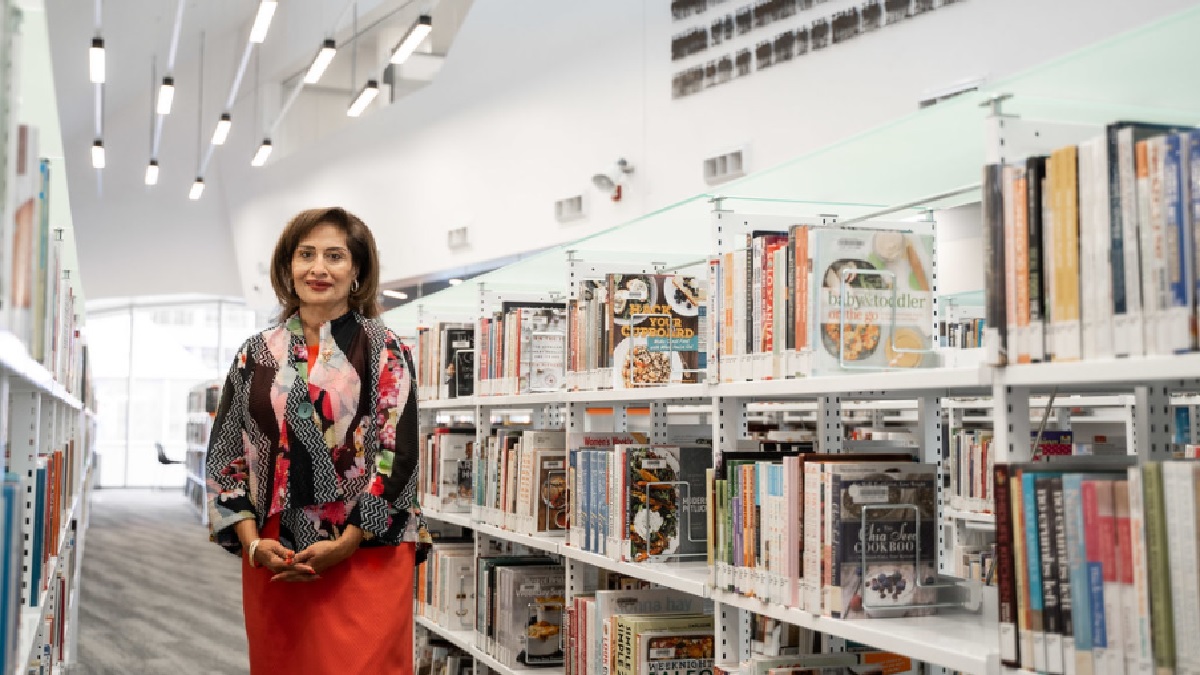
Lieutenant Governor Salma Lakhani is seen touring the new Stanley A. Milner Downtown Branch of the Edmonton Public Library, September 13, 2021. Photo: The Office of the Lieutenant Governor of Alberta.

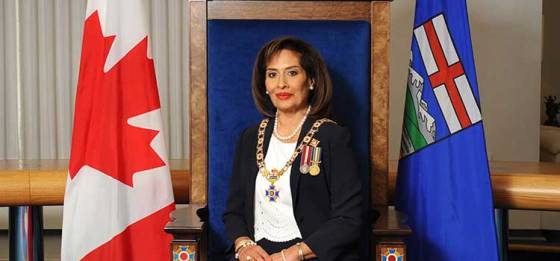
Salma Lakhani is a long-time resident of Edmonton, and a distinguished community advocate with a passion for education, health care, human rights, and support for new immigrants. A proud Ismaili Muslim, her longstanding service as a community leader and volunteer has been guided by her deep commitment to the values of pluralism and inclusion and her dedication to championing those who face barriers in life. Salma inherited her devotion to giving back from her parents, Abdul and Malek Rajabali, who were active members of the Ismaili community.

Salma was born and raised in Kampala, Uganda. A keen student with a deep seeded love of education, Salma attended the Aga Khan School in Kampala before pursuing post-secondary studies at the University of Manchester in England. Her life took an unforeseen and dramatic turn during a summer visit home to Kampala in 1972, when it was announced that the country’s entire Asian minority population was to be expelled. Salma’s parents pressed her to return immediately to England, travelling on her Ugandan passport. Within three months, her family would be stripped of virtually everything and she would be stranded in England with no funds to continue her education and no valid passport.

She had become a stateless person. Salma had two saving graces that sustained through this challenging time. First, she had the love and support of her fellow exile and future husband, Zaheer Lakhani. The couple also learned that their tuition would be covered by the British government, allowing Salma to complete her Honours degree in Clinical Biochemistry and Zaheer to graduate in Medicine from the University of Leeds. The couple married in Leeds in 1977. That year, the University of Alberta accepted Zaheer’s application to continue his postgraduate studies in Edmonton and the Lakhanis began writing a new chapter in Canada.

Dr. Lakhani went on to establish himself as a cardiologist while Salma helped to manage his practice and operated a business focused on early childhood education, which developed out of her innate affinity for teaching. She also began looking for opportunities to give back and to help those in need to thrive.

Story continues below

Salma Lakhani tours Aga Khan Gardens
Her Honour Salma Lakhani (centre of photo) toured the Aga Khan Garden at the University of Alberta Botanic Garden located near Devon, Alberta, on September 23, 2020. She was joined by Minister of Culture, Multiculturalism and Status of Women Leela Aheer and University of Alberta Chancellor Peggy Garritty. Photo: The Office of the Lieutenant Governor of Alberta.

Salma was one of the first mentors in NorQuest College’s Youth in Transition program, providing valuable guidance for students with English as a second language. She was a founding member of the College’s 1000Women: A Million Possibilities movement, and served on its advisory committee for ten years. In addition she also shared her skills, energy and passion for service with the Lois Hole Hospital for Women, Kids Kottage, Sorrentino’s Compassion House, the Alberta Cancer Board, the Zebra Foundation and Aga Khan Foundation Canada. She received the NorQuest College Honorary Diploma in Community Services Leadership in 2019. In recognition of her services to the community and civil society, Ms. Lakhani was awarded the Alberta Centennial Medal in 2005 and the Queen Elizabeth II Diamond Jubilee Medal in 2012.

Upon her installation as Alberta’s vice-regal representative, she became a member of the Alberta Order of Excellence and Chancellor of the Order. Her Honour is Vice-Prior of the St. John Council for Alberta and a Dame of the Order of St. John. She received an Honourary Doctor of Laws degree from the University of Alberta in 2021. Their Honours Salama and Zaheer Lakhani make their home in Edmonton. Their family includes daughter Safia Lakhani, daughter Soraya Lakhani and son-in-law Zain Velji.

The Honourable Salama Lakhani’s Interview with Canadian Geographic

In August 2021, one year into her term as Lieutenant Governor, the Canadian Geographic magazine, which is dedicated to uncovering and communicating the stories about Canadian people, places, frontiers and issues (past and present) spoke with the Honourable Salma Lakhani. In the interview with Kate Helmore she reflected on her journey, and her hopes for her province and country. Please read the full interview on the Canadian Geographic website by clicking HERE or on the photo below.

“…after the discovery of the mass graves at Kamloops Indian Residential School, I had a meeting with a First Nations Elder, Roy Lewis. And he said to me that while this is extremely sad for all Indigenous people, and it’s sad for all Canadians, it is an amazing opportunity to learn and to understand. This is where I hope to be able to play a role” — Honourable Salma Lakhani in interview with Canadian Geographic magazine

the Honourable Salma Lakhani, Lieutenant Governor of Alberta, Canadian Geographical, Simerg, Malik Merchant
Her Honour, the Honourable Salma Lakhani, Lieutenant Governor of Alberta. Photo: The Office of the Lieutenant Governor of Alberta. Please click on photo for Canadian Geographic interview

Date posted: February 7, 2022.

________________

Simerg welcomes your feedback. Please complete the LEAVE A REPLY form below or click on Leave a comment. Your letter may be edited for length and brevity, and is subject to moderation.

Before leaving this website please take a moment to visit Simerg’s Table of Contents for links to hundreds of thought provoking pieces on a vast array of subjects including faith and culture, history and philosophy, and arts and letters to name a few. Also, visit Simerg’s sister websites Barakah, dedicated to His Highness the Aga Khan, and Simergphotos.

Simerg’s editor, Malik, may be reached at mmerchant@barakah.com.

Simerg Presents “With Our Own Hands” – a Highly Acclaimed Book from the Pamirs of Afghanistan and Tajikistan

Those of us reading this book several thousand miles away from the Pamir Mountains cannot fail to be moved by the celebration of human diversity and dignity. I hope this book will act as a spur to other such works, and to the preservation and celebration of other such ancient cultures, wherever they are in the world HRH The Prince of Wales in Foreword to “With Our Own Hands”

~~~~~~~~

In size, rigor and thoughtfulness this book has become a touching piece of art — Geerdt Magiels, Vrije Universiteit Brussel

With Our Own Hands Food and Life in Pamir Mountains
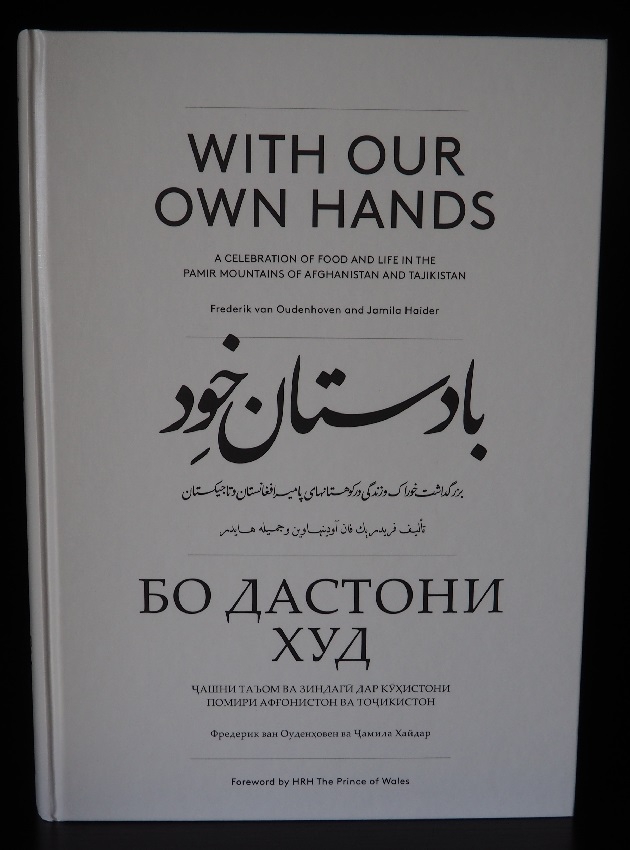
Front cover of “WITH OUR OWN HANDS” by Frederik van Oudenhoven and Jamila Haider, 688 pp, illustrated with beautiful photos.

In the Ismaili faith, the relationship between us human beings and the places we inhabit is deeply interwoven. It is important for people who, like the Pamiris, live in places that are isolated, in which each small piece of land must be used in the best way possible. If God created us, it is believed, He also created the things around us that are necessary for us to have a healthy life excerpt from “With Our Own Hands”

Purchasing the Book: At the current time “With Our Own Hands – A Celebration of Food and Life in the Pamir Mountains of Afghanistan and Tajikistan” is available for sale only in Toronto. The price of the book is CDN $100.00 including home delivery or pickup from a convenient location in North York, close to the Aga Khan Museum on Wynford Drive. Our stock of this book is limited; as of November 14, 2021, only five copies are available, all brand-new in plastic-wrapped cover. Please write to Malik Merchant at simerg@aol.com or drop us a line in the feedback form below with your contact info if you are interested in acquiring this book (we won’t publish your feedback).

Worthy Addition: “With Our Own Hands” will be a worthy edition to your home library or serve as a great coffee table book by virtue of its visual quality, as well as its faithful and superb portrayal of the food, culture and traditions of the beautiful people of the Pamirs.

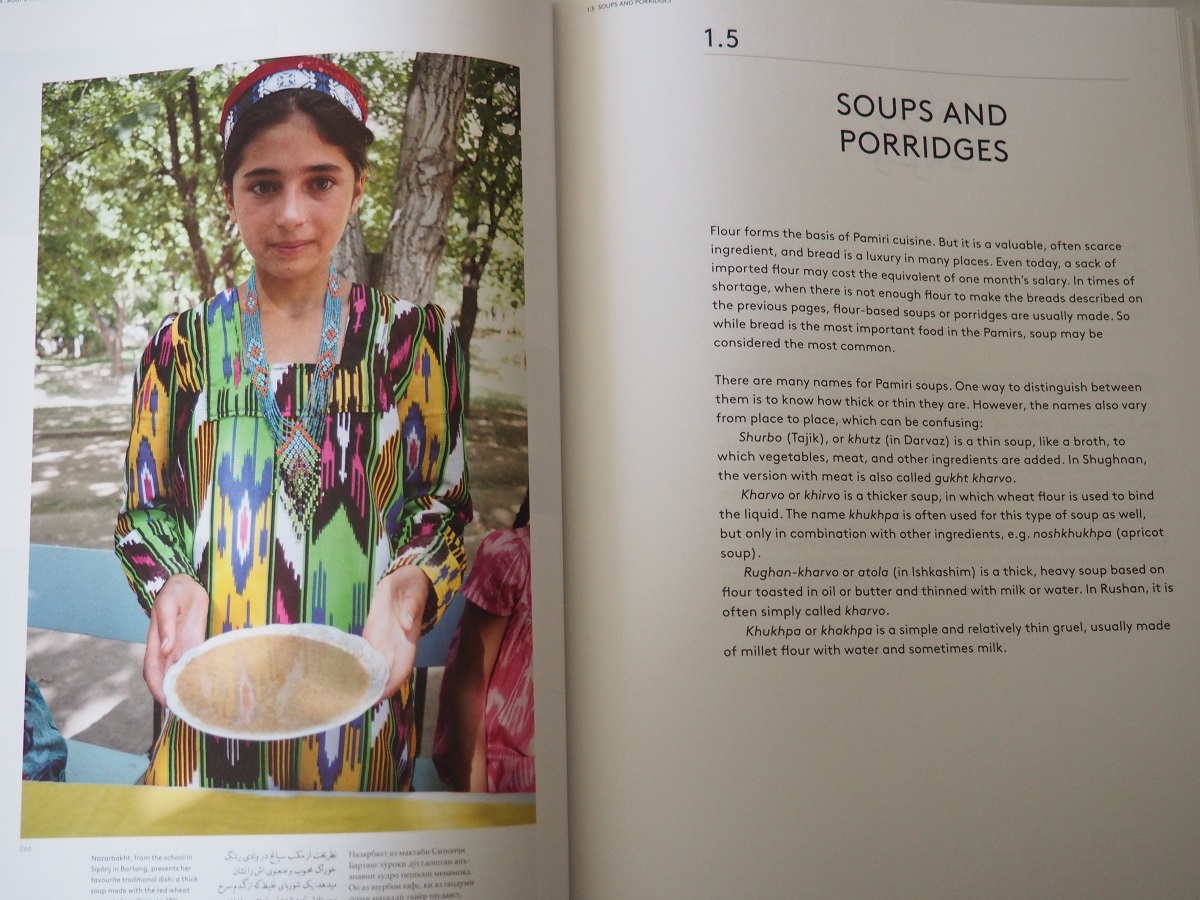
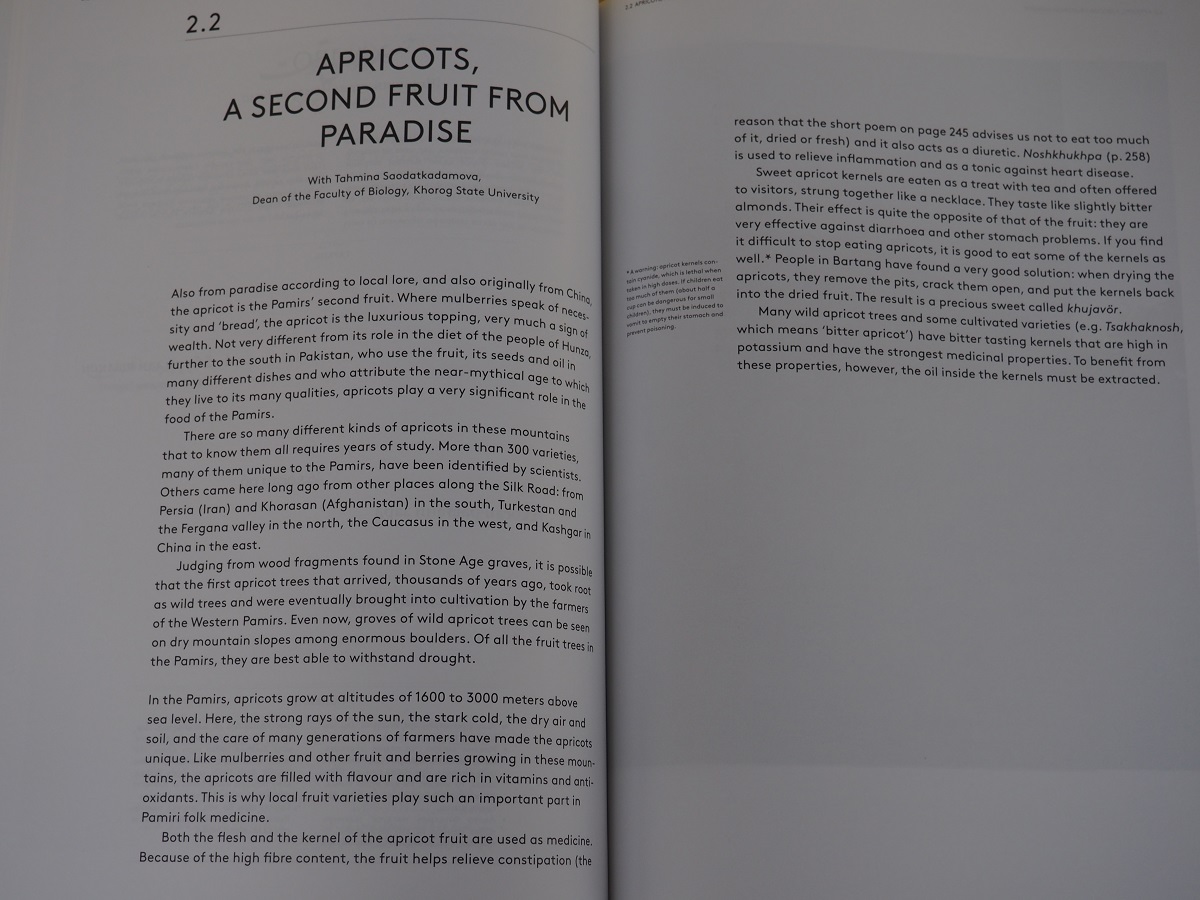
A 2-page spread from the 688 page book “WITH OUR OWN HANDS

Background: A book that began as a simple 30 page recipe book to fulfill a promise to a grandmother has grown to a magnificent volume of 688 pages telling the cultural and agricultural history of the Afghan and Tajik Pamirs, one of the world’s least known and most isolated civilizations. Through the lens of local recipes, essays and stories, and accompanied by the work of three award-winning photographs, “With Our Own Hands” describes Pamiri food and its origins, people’s daily lives, their struggle and celebrations. Simerg carried a special feature story on the making of the book as well as a review of the book by Shariffa Keshavjee shortly after she received the softcover edition of the volume from Simerg.

As I read and re-read the book, I feel that the earth itself compressed to make a safe haven for these very special people who truly live in harmony with mother earth. Similar to the way the animals live in the Ngorongoro Crater — Shariffa Keshavejee

A 2-page spread from the 688 page book “WITH OUR OWN HANDS

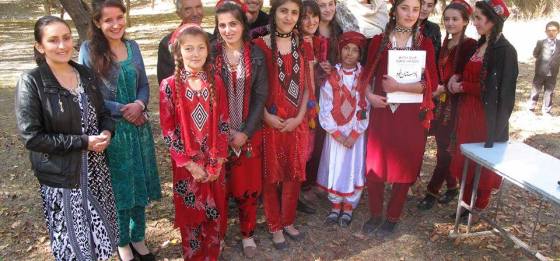
The authors ensured that each of the 1800 communities of the Pamirs received a copy of “With Our Own Hands.” In the featured photo shown at the top of this post, schoolgirls in the Bartang valley are standing with a copy of the book. The authors have noted that they were received time and time again with the warmest hospitality one could ever imagine when they travelled to remote communities with the book.

_____________________

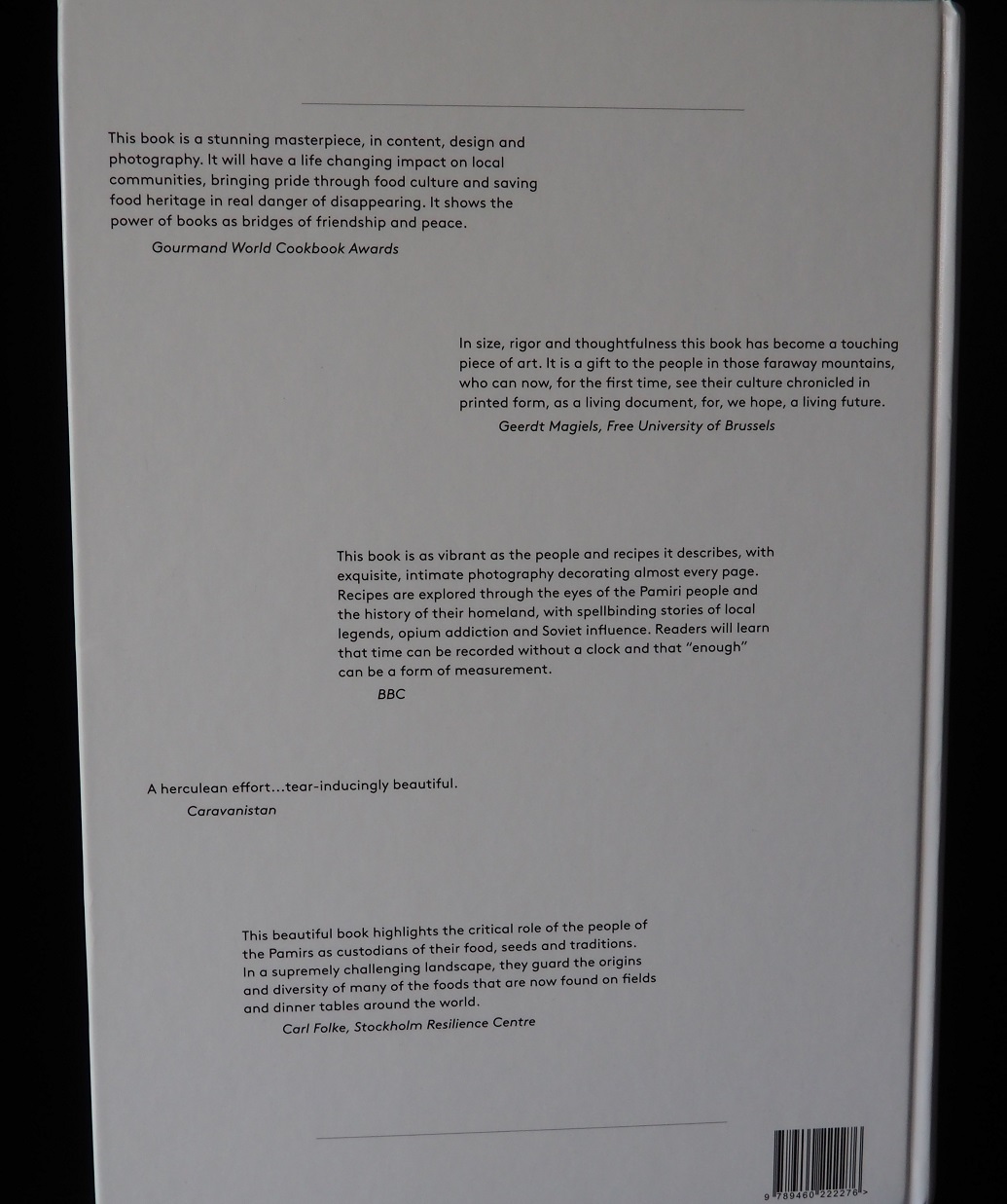
ACCOLADES FOR “WITH OUR OWN HANDS”
(See Image of Back Cover, below)

“This…may be one of the most beautiful books I have ever read..!” — Frénk van der Linden.

People touch the book and stroke it, and it is as if there is no distance between them and the pages…it’s very touching to see – Facebook comment

Back cover of “WITH OUR OWN HANDS” by Frederik Van Oudenhoven and Jamila Haider, Hardback Edition, 688 pages, illustrated.

Purchasing the book: Limited copies are available for sale in Toronto, Canada. Please write to Malik Merchant at simerg@aol.com or drop us a line in the feedback form below with your contact info if you are interested in acquiring this book (we won’t publish your feedback). Price is CDN $100.00, including delivery in Toronto or if you prefer you may pick up the book from a convenient location near the Aga Khan Museum on Wynford Drive.

Date posted: November 13, 2021.
Last updated: November 14, 2021.

_______________

Simerg welcomes your feedback. Please complete the LEAVE A REPLY form below or click Leave a comment.

If you are interested in acquiring “With Our Own Hands” please complete the same feedback form (we won’t publish your information) with your contact imformation.

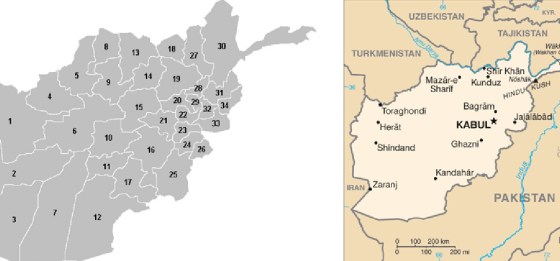
Provincial Map of Afghanistan

August 27, 2021: Anxious Ismaili Couple in New Mexico, USA, Await News About their Extended Family Members in Afghanistan

Prepared and Compiled by MALIK MERCHANT
(Publisher-Editor, BarakahSimerg and Simergphotos)

Albuquerque doctor Sharmin Dharas and her husband, Shams Mehri, are desperately waiting to hear whether more than 100 extended family members — some of whom worked for Americans in Kabul — will be among those flown to safety as the deadline for Americans and some Afghans to leave by August 31, 2021 quickly approaches…. READ FULL STORY IN THE SANTA FE NEW MEXICAN.

Also, please click on the following links for posts published on this website, Simerg, on the situation in Afghanistan:

[1]. Letter from Afghanistan (1);

[2]. Aga Khan Development Network’s Commitment to Afghanistan and Its People; and Overview of AKDN’s Work in the Country for the Last 25 Years;

[3]. To the Women of Afghanistan: Let Your Story and that of Bibi Khadijah (a.s.) Be a Powerful Trampoline of Progress for the People of Afghanistan and Around the Muslim World;

[4]. Flowers – with Love – for the Children, Girls, Sisters and Mothers of Afghanistan;

[5]. Ismaili Institutions Says Majority of Jamati Members in Afghanistan Safe and Continuing with Normal Life; and

[6]. Ismailis in Afghanistan Asked to Stay Home and not Panic.

Date posted: August 27, 2021.

____________________________

We welcome feedback from our readers. Please complete the LEAVE A REPLY form below or click Leave a comment. Your letter may be edited for length and brevity, and is subject to moderation.

Caption for featured image of maps of Afghanistan and its provinces at top of post:

Afghanistan is divided into 34 provinces. The provinces of Afghanistan are the primary administrative divisions. Each province encompasses a number of districts or usually over 1,000 villages. Population (2020 estimate): 32,890,171; Largest city Kabul (capital), population 4.6 million. At left, Provincial map of Afghanistan. Key (alphabetical order): Badakhshan (30); Badghis (4); Baghlan (19); Balkh (13), Bamyan (15), Daykundi (10), Farah (2), Faryab (5); Ghazni (16); Ghor (6), Helmand (7); Herat (1); Jowzjan (8); Kabul (22), Kandahar (12); Kapisa (29); Khost (26); Kunar (34); Kunduz (18); Laghman (32); Logar (23); Nangarhar (33); Nimruz (3); Nuristan (31); Paktia (24); Paktika (25); Panjshir (28); Parwan (20); Samangan (14); Sar-e Pol (9); Takhar (27); Uruzgan (11); Maidan Wardak (21); and Zabul (17).

Map Credits: Provincial map (left): Joshbaumgartner via Wikepedia, Public Domain. Map of Afghanistan with key cities (right): Perry-Castañeda Library Map Collection, University of Texas.

Story and Photos: Mansoor Ladha’s Memorable Moments with Mawlana Hazar Imam, His Highness the Aga Khan

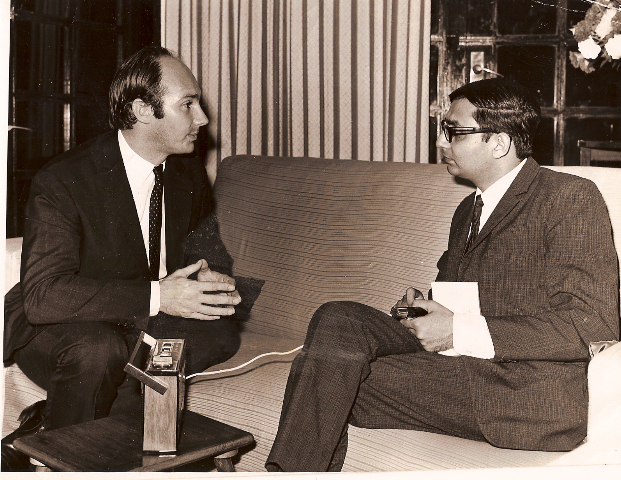
Calgary based Mansoor Ladha, a veteran award winning Ismaili journalist and author of two acclaimed books, was a features editor with the Tanzanian English daily, The Standard (renamed later to Daily News), and interviewed Mawlana Hazar Imam, His Highness the Aga Khan, in 1970. Later, after he migrated to Canada, Mansoor became the Administrative Committee Chairman of the Ismaili community in Edmonton, and received Mawlana Hazar Imam during his first visit to Canada in 1978. Please read Mansoor’s story about his wonderful opportunities on Simerg’s sister web site Barakah which is dedicated to Mawlana Hazar Imam, members of his family and the Ismaili Imamat. Please click HERE or on image below to read the full post.

Mansoor Ladha with His Highness the Aga Khan
1970: Mansoor Ladha interviewing His Highness the Aga Khan for Tanzania’s daily, The Standard (now Daily News). Photo: Adarsh Nayar/The Standard/Mansoor Ladha Collection. Please click on image for story and photos.

Date posted: May 8, 2021.

_________________

Before departing this website please take a moment to review Simerg’s Table of Contents for links to hundreds of thought provoking pieces on a vast array of subjects including faith and culture, history and philosophy, and arts and letters to name a few. Also visit Simerg’s sister websites Barakah, dedicated to His Highness the Aga Khan, and Simergphotos.

The Guardian on Wikipedia at 20: Last Gasp of an Internet Vision, or a Beacon to a Better Future?

The naysayers said the user-written encyclopedia would never work. Now it boasts 55m articles and 1.7bn visitors a month…..READ MORE AT THE GUARDIAN

Wikipedia Logo
Wikipedia logo. Attribution-ShareAlike 3.0 Unported (CC BY-SA 3.0). Please click on image to read article at The Guardian

Date posted: January 15, 2021.

___________________

We welcome feedback from our readers. Please complete the LEAVE A REPLY form below or click Leave a comment. Your letter may be edited for length and brevity, and is subject to moderation.

Before departing this website please take a moment to review Simerg’s Table of Contents for links to hundreds of thought provoking pieces on a vast array of subjects including faith and culture, history and philosophy, and arts and letters to name a few.

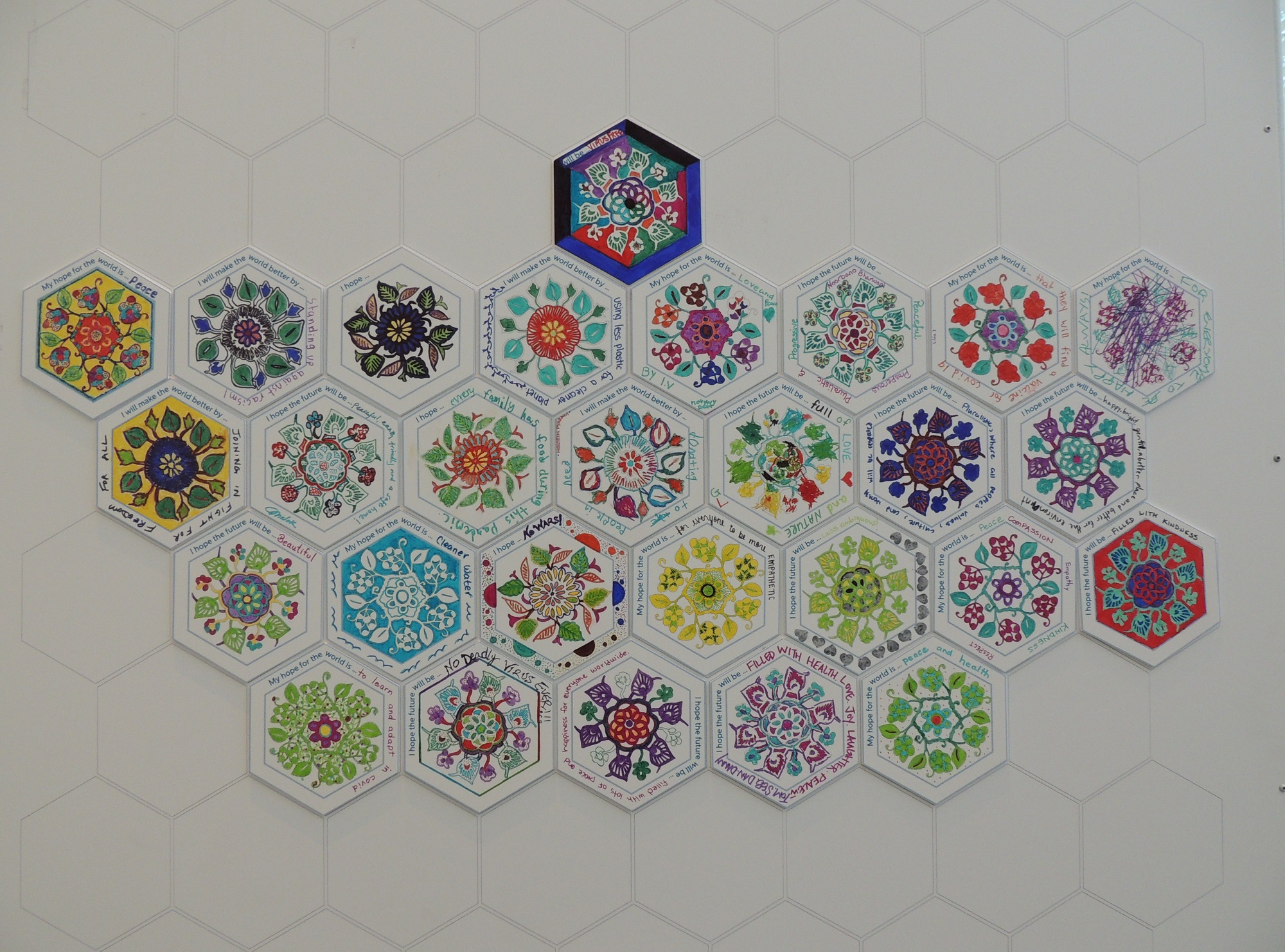
At Aga Khan Museum, young and old alike share messages of hope for 2021 and beyond: No deadly virus, cleaner water, happiness and freedom for all, unity, no wars, vaccine for Covid-19, and more

MALIK MERCHANT
Publisher/Editor  SimergphotosBarakah and Simerg

Please click on images for enlargement

Messages of Hope at Aga Khan Museum Wall Simerg
Aga Khan Museum portraits of resilience, togetherness and hope: Photo: Malik Merchant /Simergphotos. Please click on image for enlargement.

Before its latest shutdown due to provincial regulations, Toronto’s Aga Khan Museum gave visitors an interesting opportunity to pen their heartfelt wishes on one of several beautiful pre-designed tiles available at the museum bookstore, and post them onto a large panel prominently placed by the beautiful courtyard. The theme of the project was “Blossom Together Community Tile Wall.”

Community wall messages of hope Aga Khan Museum Simerg Malik Merchant
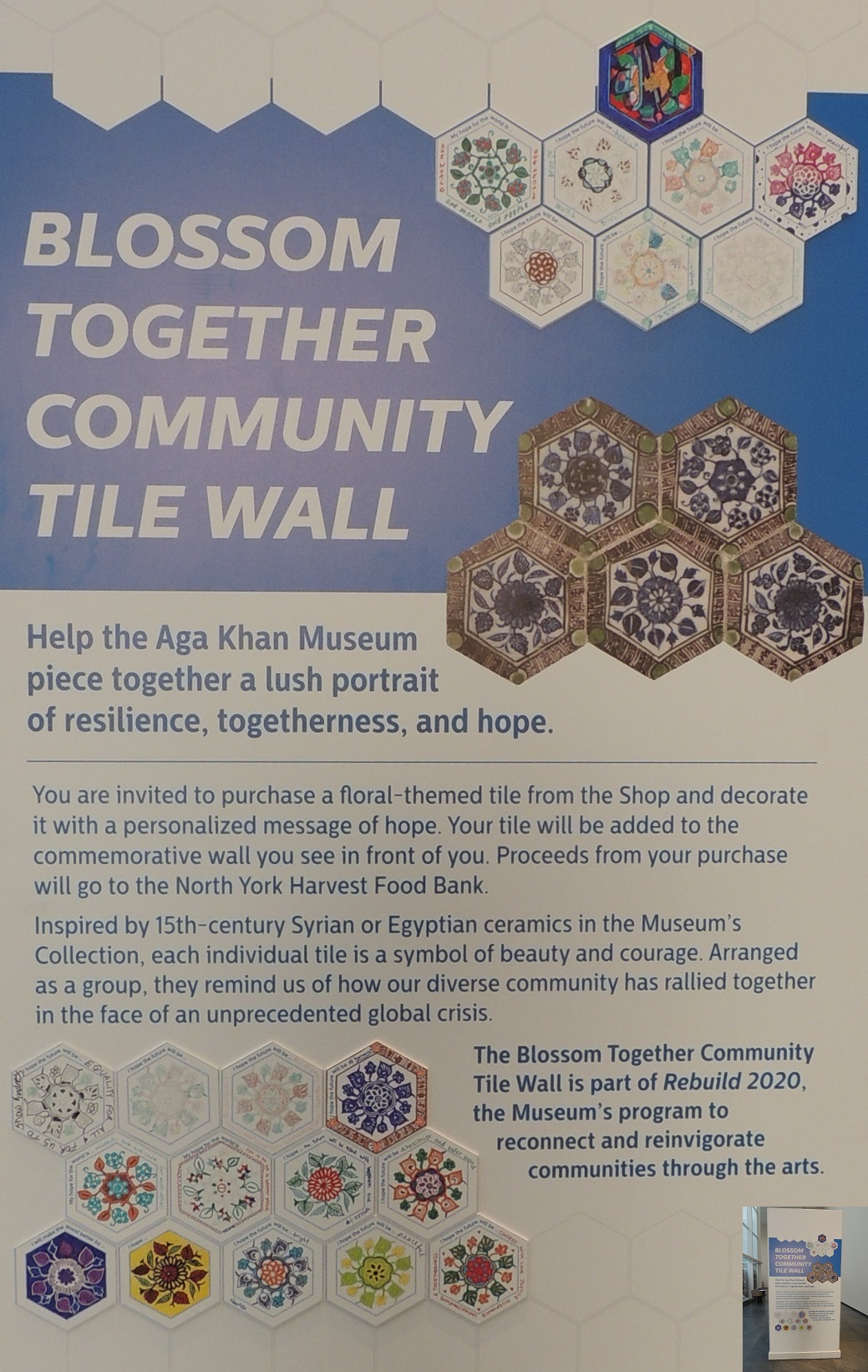
Section of panel (see inset, bottom right) highlighting purpose of the community wall. Photo: Malik Merchant / Simergphotos.

The cards contained the following themes that visitors could write about: “I hope the future will be …”; “I will make the world better by …”; “I hope ….“; and “My hope for the world is …” Here is a selection of images that I was able to capture. As I glanced at the tiles, I was encouraged by the wishes of hope that I read, several of which related to the current pandemic. It is with these feelings of the young and old alike who expressed themselves on the museum wall that we enter 2021, with the hope that new Covid-19 vaccines which have been developed will become game changers in bringing the pandemic under control.

Messages of Hope Aga Khan Museum
Aga Khan Museum portraits of resilience, togetherness and hope: Photo: Malik Merchant /Simergphotos. Please click on image for enlargement.

We wish all our readers a happy new year.

Date posted: January 1, 2021.
Last updated: January 2. 2021 (minor centre image change, thumbnail inset added)

_____________________

This post has been adapted from the original version first published on December 31, 2020 at Simergphotos.

We welcome feedback from our readers. Please complete the LEAVE A REPLY form below or click Leave a comment. Your letter may be edited for length and brevity, and is subject to moderation.

_____________________________

Come Watch Afraaz Mulji perform today, July 12, at Aga Khan Museum at Noon, 1 and 3 PM

Afraaz Mulji on July 11, 2020 Aga Khan Museum
Afraaz Mulji at AKM, July 11, 2020

Sit in the Aga Khan Museum’s courtyard, sip a latter, have a biscotti, visit Prince Sadruddin Aga Khan’s collection of Islamic ceramics in the Bellerive Room, listen to performance by Afraaz Mulji and then walk through the Aga Khan Park. Enjoy July 12 at the Aga Khan Museum. Register (preferable) your visit at RESERVE TICKET. NOTE: Entrance to the Museum during the first month of reopening is Free or Pay as You Wish. For story on performance on July 11, 2020, please click A beautiful rendition of Nashid al Imamah by Afraaz Mulji at Aga Khan Museum

Date posted: July 12, 2020.

____________________