Simerg is an independent initiative dedicated to Ismaili Muslims, the Aga Khan — their Hereditary Imam — and the Ismaili Imamat, and Islam in general through literary readings, photo essays and artistic expressions
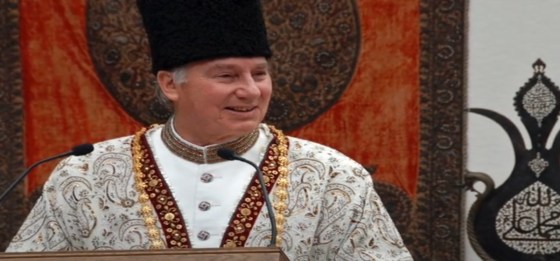
In his Talika (written message) to his Ismaili Muslim followers, His Highness the Aga Khan, the 49th Hereditary Imam of the Ismaili Muslims and direct descendant of the Prophet Muhammad (may peace be upon him and his family), mentioned that his family members at his request had assumed additional responsibilities to assist him in important areas of his work. The Aga Khan’s younger brother, Prince Amyn, his eldest child, Princess Zahra, and his three sons, Prince Rahim, Prince Hussain and Prince Aly Muhammad, have responded magnificently to the Imam’s call, showing a united front in their efforts.
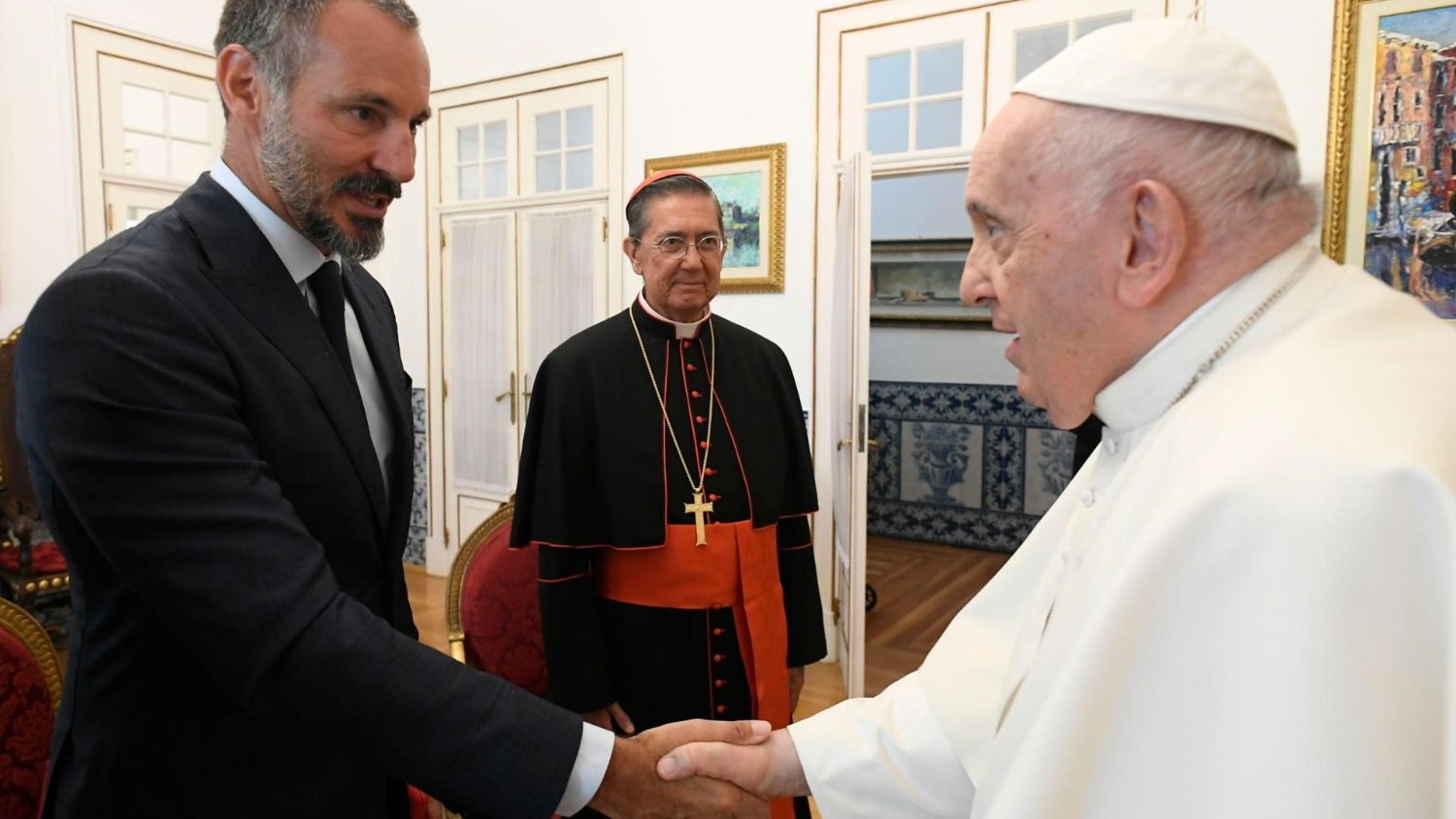
Pope Francis warmly greeted Prince Rahim Aga Khan during their private audience in Lisbon, Portugal, on August 4, 2023. The Pope was visiting Lisbon for World Youth Day. Photograph: Vatican News. Please click on the image for Prince Rahim’s articles.
They have travelled worldwide to review the work of the Ismaili Imamat and attended significant events related to the expansion and development of ongoing and new projects. Prince Rahim, a graduate of Brown University, celebrated his 53rd birthday on October 12, 2024, and he is arguably perhaps the busiest among all family members. Our sister website highlights 53 years of his life through a two-part series. Please read Prince Rahim Aga Khan (1971-2021) and Prince Rahim Aga Khan (2022-2024).
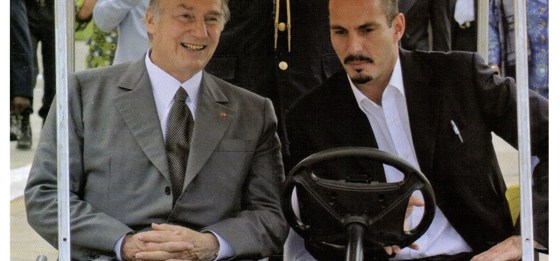
Featured photo at the top of post: Prince Rahim, in the company of his father, His Highness the Aga Khan, visited an Aga Khan Development Network (AKDN) project in Abidjan, Ivory Coast, in 2008.
Date posted: October 12, 2024. Last updated: October 22, 2024.
Simerg’s introduction of “Books by Ismaili Authors” continues with a story by 16-year-old Maya Shariff. We follow the same Q/A format as our earlier presentations of books, which are listed chronologically below. We encourage Ismaili authors worldwide to participate in this series, regardless of when their books were published. See details of the series HERE and submit your responses to Simerg’s editor, Malik, at mmerchant@simerg.com.
Simerg’s Message to Young Ismaili Muslim Writers: If a story you have presented in your school — whether in the classroom, a special event, or a newsletter — has received high marks from your teacher, please consider the opportunity to share it with a broader audience by submitting it for publication on this website, with the consent of your parents and school teacher. Maya Shariff’s submission and story below are good examples for your consideration. Note that Maya has published her book as a paperback and has a YouTube read-along presentation. Please submit your responses to the standard questions — see below — with the story to Simerg’s editor, Malik, at mmerchant@simerg.com.
****************
I want to bring awareness to peer pressure and the importance of being able to express yourself from a very young age. My goal is to try to bring awareness to kids about what peer pressure is in hopes that when they are being pressured to do anything they are uncomfortable doing, that they able to voice their feelings and are not afraid to do so — Maya Shariff, Dallas, Texas.
Simerg: What is behind the name and title of the book?
Maya Shariff: The title of my book is “Swim or Climb? Max’s Swimming Dilemma.” The Character in the book has a choice of either doing what he loves to do, which is climbing, or choosing what his friends want him to do so he can fit in like the rest of the kids.
Simerg: Why would you want me or my family to read the book, and what will we learn from it?
Maya: From my research before I started this project I found by talking with many parents, children, and teachers, that peer pressure begins at a very young age. There is a stigma that peer pressure only happens in middle and high school. However, it happens at a very young age when kids are not aware that they are pressuring someone to do something of their liking and the other person may not know how to properly respond and stand up for themselves. Reading this book will give an example of peer pressure at a young age and show children how to stand up to it and be confident in themselves.
Simerg: What inspired you to write the book?
Maya: I want to bring awareness to this topic of peer pressure and the importance of being able to express yourself from a very young age. From my experience as someone who was peer pressured and from conversing with younger kids under the age of 10, peer pressure starts at an age as young as kindergarten. My goal is to try to bring awareness to kids about what peer pressure is in hopes that when they are being pressured to do anything they are uncomfortable doing, that they are able to voice their feelings and are not afraid to do so.
Interview continues below
Paperback Edition of Maya’s Book
“Swim or Climb? Max’s Swimming Dilemma” by Maya Shariff, with notes Mrugakshi Kulkarni; self-published through Lulu, July 12, 2024; paperback, 20pp. See below for a read-along version on YouTube.
__________________
YouTube Read-Along Presentation By Maya Shariff
_____________________________
Simerg: How can I purchase the book, and what are its available formats?
Maya: You can purchase the book’s paperback edition through the Lulu website; all proceeds from the sale go to the Girl Scouts Organization. I also have a read-along audiobook version on YouTube for kids that you can watch above.
Simerg: Did you hire an editor or an illustrator, or did you do all the work by yourself?
Maya: This is a self-published book through Lulu. My IB English teacher approved all the content, and I wrote and hand-drew my illustrations.
Simerg:Which was your first book, and how many have you written?
Maya: This is my first self-published book.
Simerg: How long did it take you to write the book — from start to finish?
Maya: Writing the book and content approval took about a month. Illustrations took 6 months. This book is not to be marketed as it’s a Gold Award Project. Having the book on this website will create a greater awareness of this issue to young children, and the activities at the end of the book will assist the kids in comprehension and understanding of the topic “peer pressure.”
Simerg: Tell us something more about your book (and its primary character).
Maya: Max and Jack come across an ad in the local newspaper for a swimming competition. They meet a girl named Crystal who loves to swim. Max feels pressured to learn how to swim to fit in. Will Max be influenced by Crystal’s behavior? Or will he resist being peer pressured? I, therefore, invite you to join in the reading of “Swim or Climb? Max’s Swimming Dilemma,” as we discover an example of peer pressure.
Date posted: October 4, 2024.
_______________
About the Author
Maya Sharif, a sixteen-year-old high school student at Plano East Senior High School in Plano, near Dallas, Texas, is a Girl Scout Cadette with Troop #167. Her passion project, Peer Pressure, reflects her commitment to making a difference. Her book, “Swim or Climb? Max’s Swimming Dilemma”, is a powerful tool in raising awareness about peer pressure at young ages, helping children understand its implications and learn to resist it. Maya’s future is bright, with aspirations to pursue a career in the healthcare sector. In her free time, she enjoys running track, binge-watching Netflix, and spending time with her family. She lives in Dallas.
Calling all Ismaili Authors
We encourage Ismaili writers to introduce their books in a similar format as has been done in the post above. Please also see the series launch article and submit your responses to Malik at mmerchant@simerg.com. All submissions will be acknowledged. If a writer has published multiple books, each book will be highlighted in a separate article, and not combined with other books into one post. All writers should include a brief profile with a portrait photo.
_______________
Links to the Ismaili Authors’ Series (in chronological sequence, oldest article first)
Before departing this website please take a moment to review Simerg’s Table of Contents for links to hundreds of thought provoking pieces on a vast array of subjects including faith and culture, history and philosophy, and arts and letters to name a few. Also visit Simerg’s sister websites Barakah, dedicated to His Highness the Aga Khan, and Simergphotos. Simerg’s editor may be reached via email at mmerchant@simerg.com.
I chanced upon this excellent article by Professor Karim through shear serendipity, while explaining to my daughter about obstacle courses. She had just gone through a 10K run at the International Raceway in Mechanicsville, Maryland, which included rock climbing, and scaling a tall wall. I conveyed to her that I had done all that stuff, and then some, in the 23 days I had spent at the Outward-bound Mountain School, Loitokitok in the early 1970’s. It was then, thanks to Google maps, that I was able to revisit the sprawling compound of well-manicured lawns, that sits close to the base of the indomitable Mt Kilimanjaro.
The exhilarating experience one gets during the preparation and climb to the “roof of Africa”, which is, euphemistically, what Mt Kilimanjaro is, remains ingrained in every participant who has undertaken this task.
Like Prof Karim, I arrived on the scene, as an18-year old, raw in every sense, post ordinary level high school, but with the hope and vibrant energy and curiosity of a kid let loose in a candy store. Thanks to our indefatigable Geography teacher at Kigezi College, Butobere, in Kabale, Uganda, Mr. Richard White, I had had the benefit of climbing a few medium tall mountains, such as the 12,000-foot Mt Sabinyo, an extinct volcano in south-western Uganda, but, this had neither given me the preparation, nor the resilience required to attack and conquer the deceptively gentle giant.
I had been lucky enough to be the only kid among ten applicants, who had successfully passed both the doctor’s physical and endurance tests. I would later join a group of other students from Uganda, that included a former classmate of mine, who later became Prime Minister of Uganda. Mr John Patrick Amama Mbabazi was Uganda’s Prime Minister from 2011 to 2014.
Arriving at Loitokitok near the foot of Mt Kilimanjaro in early December 1971, most of us were young and naive, experiencing life away from our home environment for the first time. We became part of the larger group of students drawn from the other two East African countries (Kenya & Tanzania) at the time, in all, constituting perhaps, 200 in number. I can recall a few students like Job, from Alliance High School in Nairobi, who was in my team. There were others from Sitarehe High School, whose names have since faded from my lousy memory. The instructors were mostly Kenyan and Tanzanian military officers, since this facility was used as training ground for those countries’ military personnel.
Although the training during the first two weeks was extremely rigorous, including such activities as a daily 2-kilometer run, rock-climbing, ziplines, and scaling high walls, we were all told to keep our eyes on the prize, the ascent to the top of the giant yonder, which we could see clearly from the campus. We also got baptism by fire, like the day I was pushed into the freezing swimming pool by one of the instructors, early in the morning, only to turn around and throw a tire tied to a rope at me, after gulping a few mouthfuls. That incident alone inspired me to learn how to swim long afterwards. We even participated in a marathon run, that meandered through parts of the Masai Mara, teaming with our four-legged neighbors. When that time for the climb finally arrived, we were given the mountain gear we needed, (so we thought), and we embarked on the challenge, beginning with the “solo night”. Each one of us was assigned a bushy area, which was your turf, on which to build shelter and prepare a meal for the night. With the minimum 3 match sticks given to you, it required a lot of dexterity and perseverance to get that fire going. I was luckier than Prof Karim, in that I managed to kindle the fire and make dinner. Not everyone was that successful in that act. Not having a hot meal on that severely cold night condemned one to begin the 5 am climb on empty, the first cardinal sin for a mountaineer. The night itself was interspersed with false alarms from kids who got scared out of their wits, after hearing, or simply imagining they heard noises of approaching animals.
Story continues below
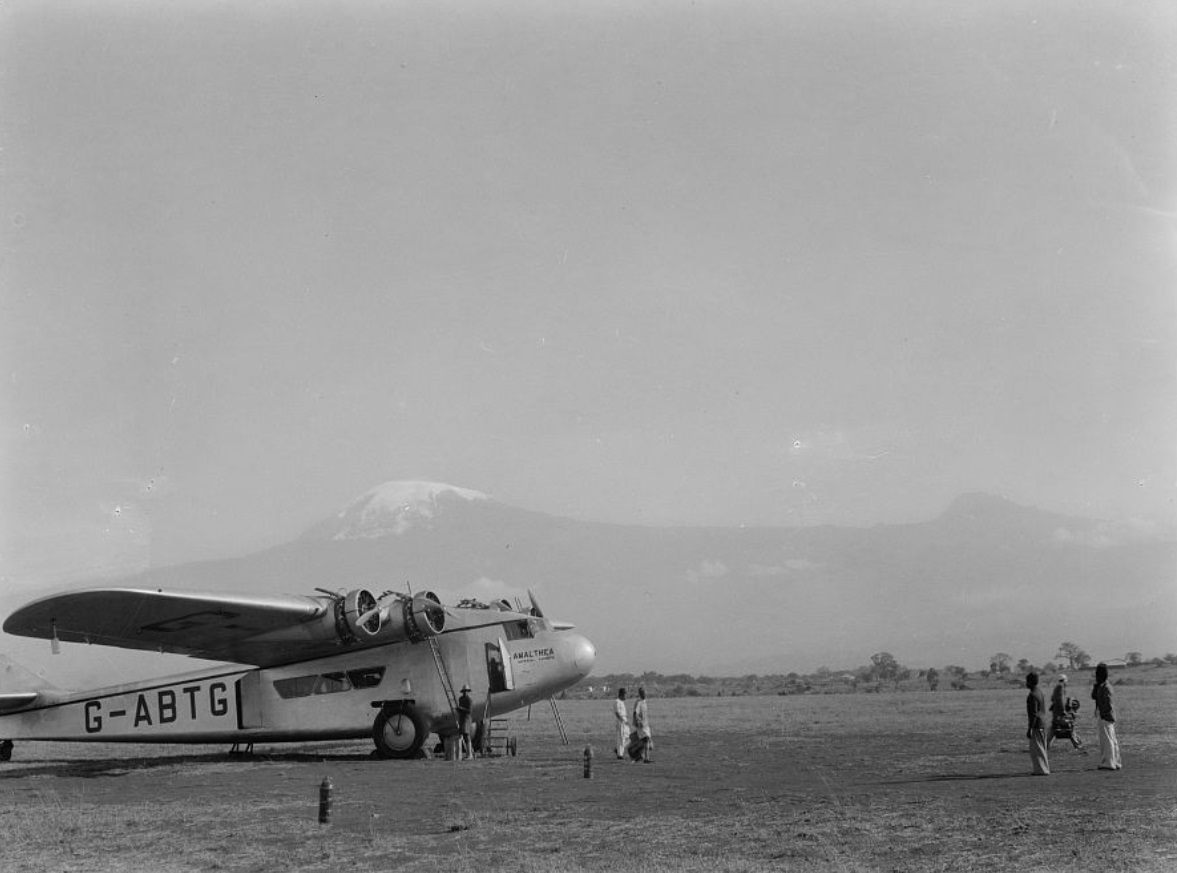
Snow-capped Kibo peak of Kilimanjaro at left with the Mawenzi peak at right, pictured in 1936 from a landing ground near Moshi, Tanzania (then Tanganyika). The plane was en route to Arusha. Photograph: Matson (G. Eric and Edith) Photograph Collection, US Library of Congress.
~~~~~~~
We started around 5 am in the morning, with the goal of reaching Mawenzi peak by late afternoon, to give us sufficient time to rest and reboot for the final destination to the roof. However, along the way, a number of kids suffered mountain sickness that pushed one almost into delirium, as the oxygen in the atmosphere got thinner. But that put extra loads on the backs of those who still had a semblance of normalcy, thereby slowing the pace altogether. But finally, we made it to Mawenzi peak, after experiencing a dusting of snow, which added a layer of misery to our already debilitated bodies. We crowded ourselves into round tin huts for the night, in groups of 10 per hut. The body heat generated by crowding helped in ameliorating the severe weather conditions experienced on top of the mountain, unless of course your sleeping bag was in direct contact with the metal, in which case you shivered all night. I still consider it one of the coldest nights I have ever experienced.
At around 2 O’clock, we were awakened to get ready to embark on the journey to the ultimate prize, getting to Kibo peak. We scrambled to boil water for tea, which we needed during those frigid temperatures. In the process, we learned that water boils at much lower temperatures at high altitudes, to a point where you could dip your finger into hot water without getting it scalded. Later, as I attended Makerere University in Kampala, Uganda, I found myself narrating this experience to a bunch of students at Kitante High School, where I moonlighted as a physics teacher. Walking north along the saddle between Mawenzi and Kibo, we formed a single file and followed our instructors. Once the sun came out, the bright rays blinded us as they reflected on the layer of ice and snow that blanketed the top of the mountain, which was a much thicker icecap then than exists today.
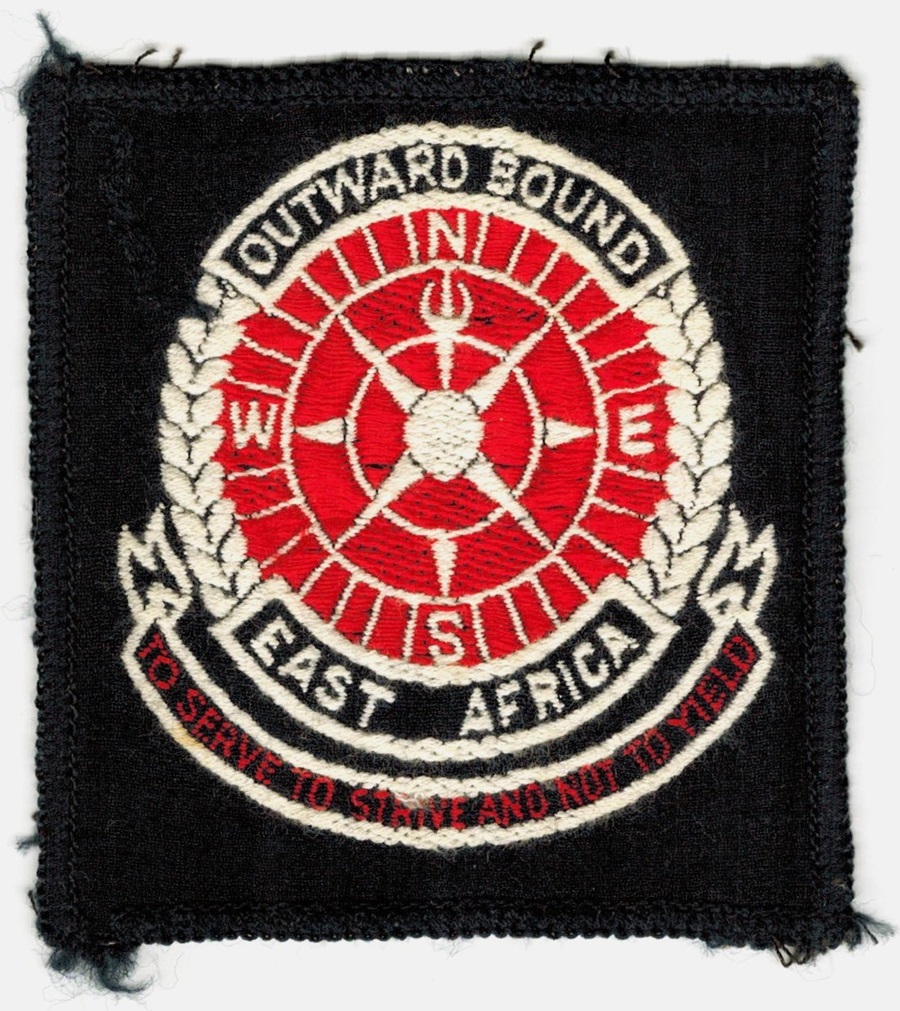
Still, we soldiered on seemingly getting closer towards Kibo, which looked deceptively close and yet perpetually elusive. By this time, our bodies were numb with the blistering cold air, and our feet swollen from stepping in the wet slit combination of ice and the snow dusting that had fallen overnight. The layers of clothing we had carried with us, including hand gloves, and balaclavas for the heads were no doubt proving inadequate for the climatic conditions most of us had ever faced. No wonder the Chaga had called the mountain “Kileme”, that which defeats. At about 10 am, we met the group which had approached the climb from the north and headed to Kibo directly. Our instructors and theirs went into some brief dialogue we were not privy to, and when they emerged, they announced, much to our chagrin, that we would all turn around and embark on our descent. There were many protests among us, but the instructors squashed all that, military-style, attempting to convince us that we had achieved our overall objective of fulfilling the school’s mantra of, “To Serve, to Strive, and never to Yield”, although our group never reached Kibo peak. I remain unpersuaded to this day.
Story continues below
Outward Bound badge with the motto “To Serve to Strive and Not to Yield”. Photograph: Karim H. Karim collection.
It took us the rest of the day to descend the gentle giant, because those of us who still had some stamina left, were burdened with helping the unfortunate ones whose lungs could not suck in enough oxygen to keep them moving on their own (including the former PM). That evening, exhausted as we were, there were ceremonies at the Outward-Bound Mountain School, to mark the closure of Course 127. The following morning, we said our goodbyes to the friends we had made, and headed back to our domiciles, armed with the irreplaceable satisfaction of one who has accomplished what once appeared to be Mission Impossible.
Climbing Mt Kilimanjaro will forever remain one of my greatest achievements, a story I am proud to tell anyone willing to listen.
Thank you, Prof Karim, for sharing your heart-warming experience with us, and rekindling a smoldering fire.
Date posted: September 25, 2024.
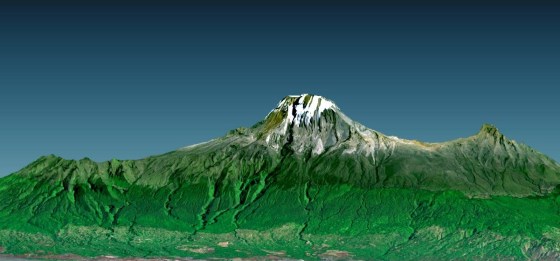
Featured image at the top of post: The 3-D perspective view of Mount Kilimanjaro was generated using topographic data from the Shuttle Radar Topography Mission (SRTM), a Landsat 7 satellite image, and a false sky. The topographic expression is vertically exaggerated two times. Landsat has been providing visible and infrared views of the Earth since 1972. Date Acquired: February 21, 2000 (Landsat 7).
__________________
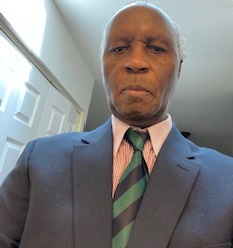
About the author: Nick Ngazoire Nteireho was born in Rukungiri District, Western Uganda. He obtained a bachelor’s degree in economics from Makerere University’s Institute of Statistics and Applied Economics. Escaping Uganda during the turmoil of Idi Amin’s brutal regime, he settled in Washington DC, pursued graduate degrees at George Washington and American Universities in Washington DC, USA, followed by a long career at the World Bank in Washington DC, where he worked on economic research involving models and forecasting. He later joined Fairfax County’s Department of Tax Administration, where he worked as a Senior Commercial Real Estate Appraiser for a decade.
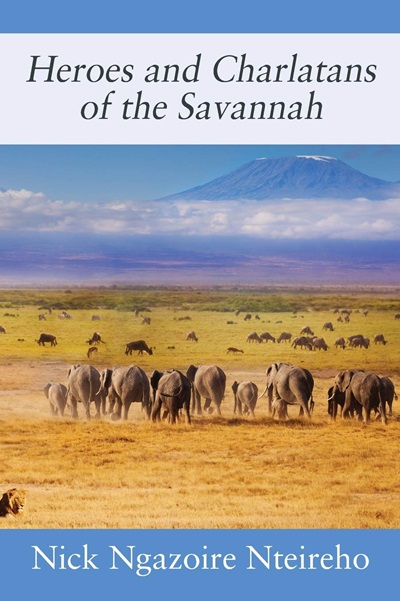
He has published three books. His latest, titled “Heroes and Charlatans of the Savannah”, traces the Genesis of Sub-Sahara African countries Independence, and is available on Amazon as a paperback and Kindle editions.
Nick Nteireho lives in Fairfax County, Virginia, with his wife with whom they have two adult children.
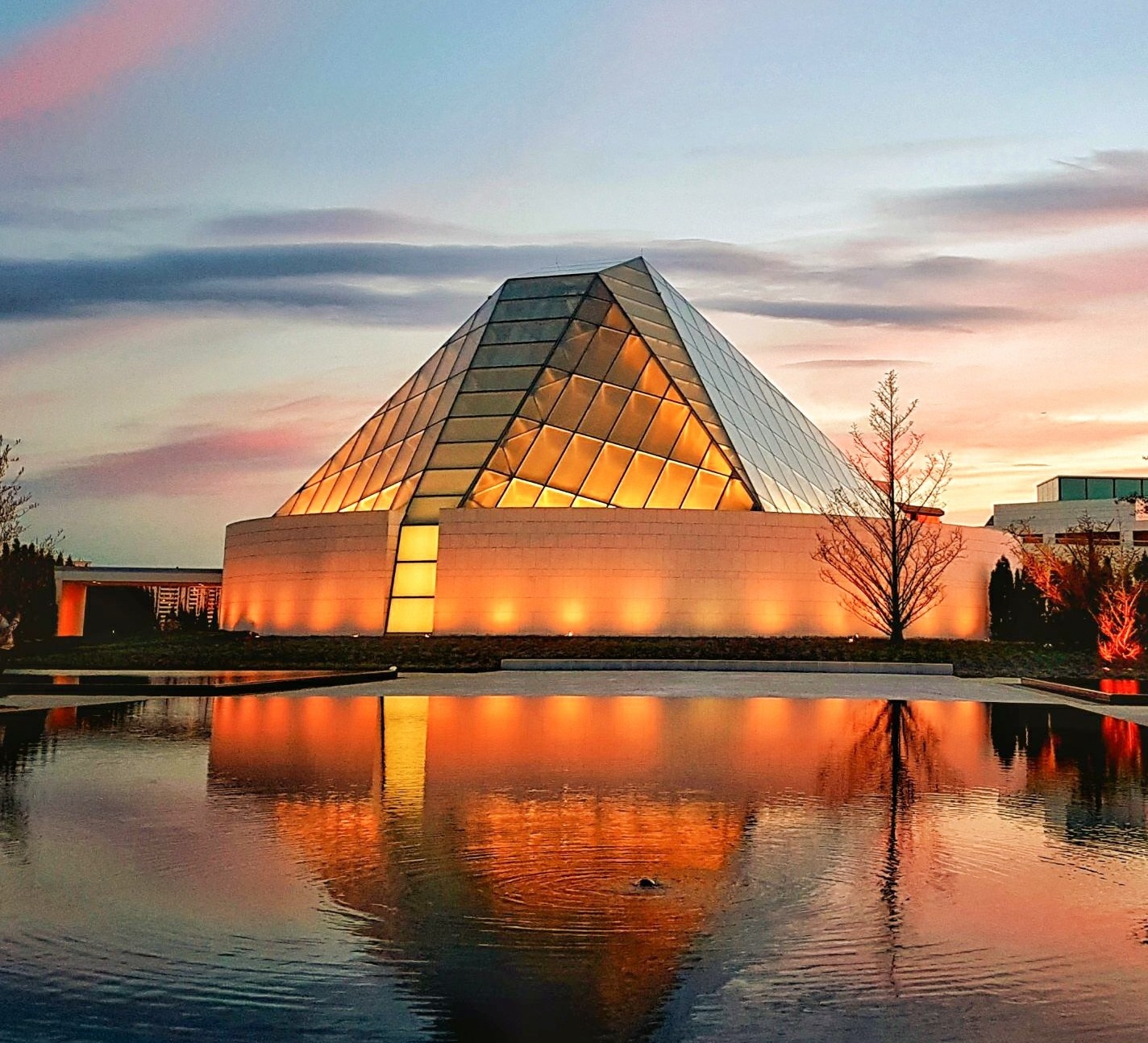
The Jamatkhana Dome, Ismaili Centre Toronto, 49 Wynford Drive. Photograph: The Ismaili.Please click on the image for the Centre’s 10th anniversary pictorial essay.
Since their inauguration by former Canadian Prime Minister Stephen Harper and His Highness the Aga Khan in mid-September 2014, the Ismaili Centre Toronto and the Aga Khan Museum have become among the most beloved buildings explored by the public during the Doors Open Toronto held every May. The buildings, with their mission to promote cultural understanding, have consistently attracted thousands of visitors for their incredible artistic and architectural features and the rich collection of artifacts housed in the Museum. The Ismaili Centre’s domed Jamatkhana, a unique architectural marvel, is a sight to behold. Its remarkable features, under which Ismaili Muslims congregate for prayers daily, make it one of the most distinctive buildings in the country. Watching the building from the Don Valley Parkway when the dome is lit at night is a truly breathtaking experience.
As the buildings celebrate their 10th anniversary, we present two posts that will give our readers a glimpse of these fascinating projects. Please click on THE ISMAILI CENTRE and THE AGA KHAN MUSEUM.
Did you know that you can book a one-hour free tour of the Ismaili Centre (77 Wynford Drive, Toronto) online? This is a fantastic opportunity to delve into the architectural and cultural wonders of this unique building. Please click HERE to get more details about an Ismaili Centre tour. If a window is not available, please send an email to tours.toronto@iicanada.net. For information on visiting the Aga Khan Museum (77 Wynford Drive, Toronto), please go to http://agakhanmuseum.org.
Plan your visit today and experience these iconic buildings’ cultural and architectural wonders.
The Aga Khan Museum, 77 Wynford Drive, Toronto. Photograph: Malik Merchant/Simerg. Please click on the image for the Museum’s 10th anniversary pictorial essay.
We were so humbled to honour Princess Zahra, and it was an inspiration to hear about the many projects in healthcare and education that she and the Aga Khan Development Network have spearheaded globally. Through her work, Princess Zahra is building hope and trust in a world where both are greatly needed — Bonna Kol, President of Asia Society Texas Center. READ MORE
As Princess Zahra Aga Khan, eldest child of His Highness the Aga Khan, 49th Hereditary Imam of the Ismaili Muslims, celebrates her 54th birthday on September 18, we present pictorial highlights of her life from 1970 to 2024. Please read MORE.
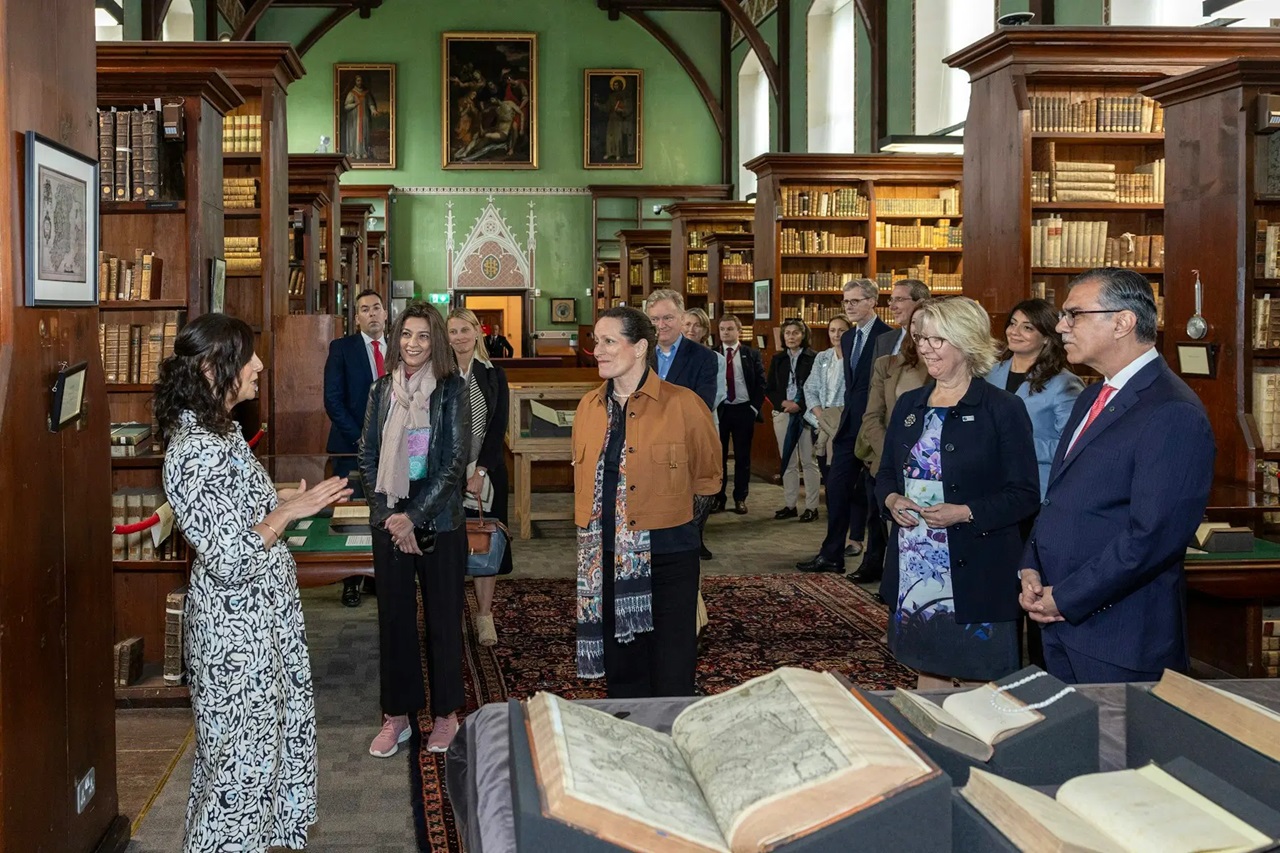
Princess Zahra Aga Khan (centre) gets a tour of Ireland’s Maynooth University while signing a Memorandum of Understanding between the University and Aga Khan University. This first-of-its-kind partnership between AKU and an Irish university will promote collaboration in research, student and staff mobility, and knowledge exchange in mutual expertise and development areas. Photograph: Maynooth University via AKDN.
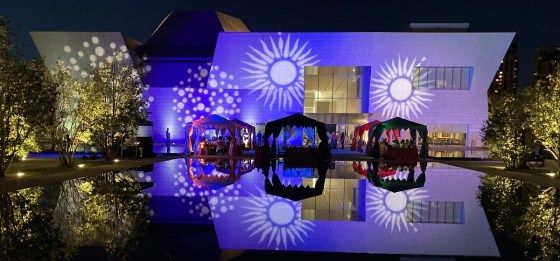
On May 28, 2010, Prime Minister Stephen Harper and His Highness the Aga Khan, the 49th Hereditary Imam of the Ismaili Muslims, performed the foundation ceremony of three projects: the Aga Khan Museum, the Ismaili Centre Toronto, and their Park. Just over four years later, on September 12, 2014, the Prime Minister and His Highness inaugurated the two iconic buildings — the Park was inaugurated in the spring of 2015 — which have become an intrinsic part of Toronto’s cultural landscape. These buildings, with their unparalleled architectural and artistic wonders, have captivated the hearts of thousands during the Toronto Doors Open, inspiring them to appreciate the beauty and creativity that went into their design. Click HERE or on the photo below for stories and photographs of this unique cultural landmark in Canada’s largest city.
The Aga Khan Museum, Wynford Drive, Toronto. The Ismaili Centre Toronto is directly across from the Museum, with the Aga Khan Park dividing the two iconic buildings built by His Highness the Aga Khan. Please click on the image for the story and photographs.
_______________________
The 10th anniversary of the Aga Khan Museum coincides with the 87th birthday of Prince Amyn Aga Khan, younger brother of His Highness the Aga Khan. We honour the Prince through a special post. Please click HERE or on the photo below
“The doors of goodness are many: enjoining good, forbidding evil, removing harm from the road, listening to the deaf, leading the blind, guiding one to the object of his need, hurrying with the strength of one’s legs to one in sorrow who is asking for help, and supporting the feeble with the strength of one’s arms.” And the Aga Khan has accepted this tradition of the Prophet Muhammad as a personal job description…Many prophets of the Bible recorded their prophetic lineage, just as Matthew and Luke in the New Testament stressed Jesus’s ancestry. In similar vein, His Highness the Aga Khan, is the 49th Imam directly descended from the Prophet Muhammad — Please click NOT ALL HEROES WEAR CAPES BY ANDREW KOSOROK.
~~~~~~~~~~~~
“We are receiving you here officially and not just as a friend because you are an important leader of the Muslim religion…What we admire in you is that you have been able to integrate a modern outlook with religion so that religion has been allowed its true role which is not merely to provide an all-embracing explanation of the universe but also to furnish the fundamental solutions of the problems which life poses us.” —Please click LEOPOLD SENGHOR’S TRIBUTE TO THE AGA KHAN.
In 1954, at the invitation of the Mir of Hunza, a revered figure in the region, Mishal Husain’s grandfather, Shahid Hamid, made a journey to the northern reaches of Pakistan. He wrote: “Hunza is situated among a congress of great mountains, a concentration of lofty peaks, many of them unnamed, where the greatest folding of the Earth’s surface is to be found.”
Guided and inspired by her grandfather’s travelogue “Karakoram Hunza: The Land of Just Enough,” Mishal Husain, a BBC journalist and presenter of the ‘Today’ programme, embarked on a personal journey with her family, following in her grandfather’s footsteps. Precisely 70 years after her grandfather’s, she shares her unique experience in the Financial Times of London travel section. Please click Mishal Husain: Recreating my grandparents’ epic journey into remotest Pakistan.
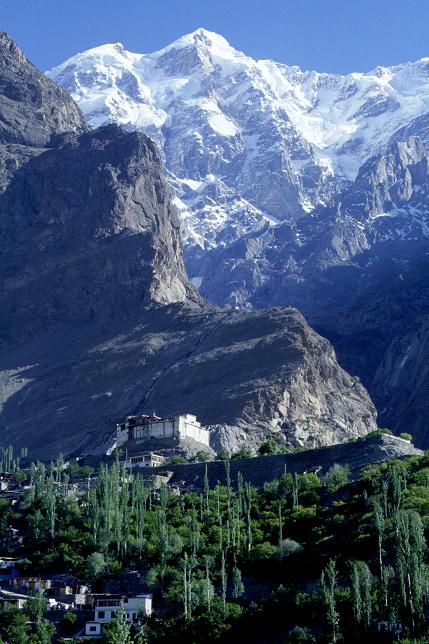
In her piece, Mishal notes: “I reached Hunza after dark and walked through a small bazaar to our hotel, the Serena Altit Fort Residence — the first of three heritage properties we’d visit. All have been restored through projects led by the Aga Khan Fund for Economic Development, and being able to stay in such places allows the visitor to appreciate the history of the region’s people and their craftsmanship alongside its natural beauty.” Please click FT Travel: Mishal Husain in Hunza.
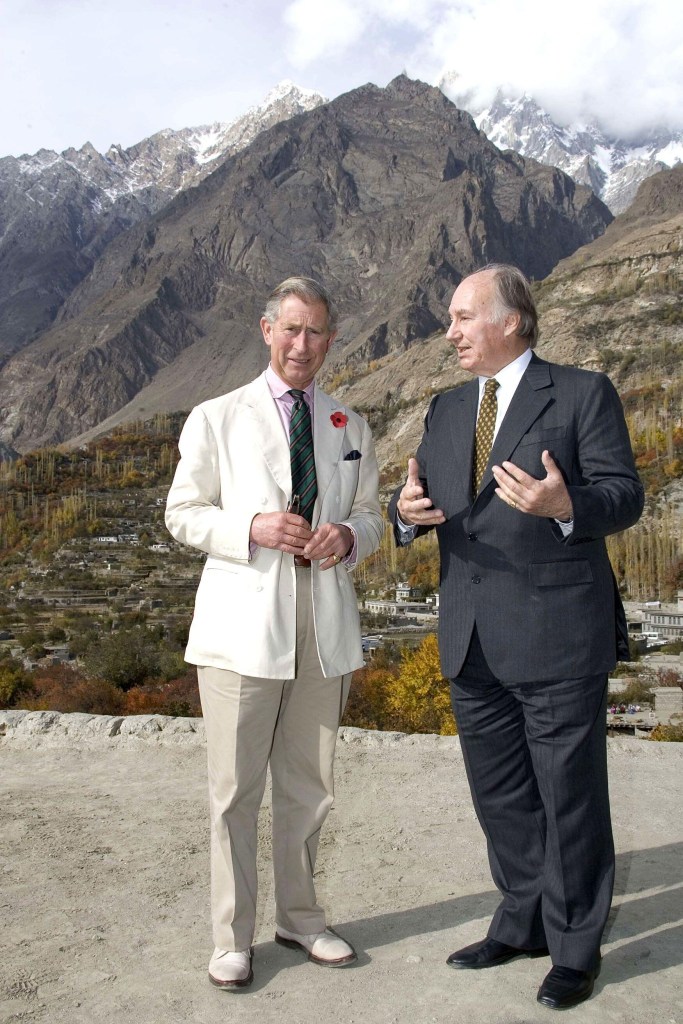
Credits: The featured image at the top of the post is from Mishal Husain’s piece in the Financial Times. The two photos in the body of this post were published on this website earlier; they relate to some of the places Mishal visited in Hunza.
“The love of the Imam knows no physical boundaries. No mountain, no river, no desert, can stop the love of the Imam for his Jamat [community] worldwide” — Mawlana Hazar Imam, His Highness the Aga Khan, 49th Hereditary Imam of Ismaili Muslims (please watch video, below)
From Prophet Muhammad’s declaration at Ghadir-e-Khumm, after his farewell pilgrimage to Mecca, appointing his son-in-law Ali as his successor to the present 49th Hereditary Imam of the Ismailis, we invite our readers to watch the following video to learn about the Ismaili Imamat. Each Imam, from the past to the present, has been a Guiding Light to his followers, a source of inspiration and guidance through their changing times and circumstances. We present this video as two Aga Khan projects in Canada, the Aga Khan Museum and the Ismaili Centre in Toronto, are about to celebrate their tenth anniversary in mid-September. The most recent project, the beautiful Aga Khan Garden near Edmonton, is part of the University of Alberta Botanic Garden and will soon mark its 6th anniversary in mid-October.
It was heartening to read Kef Noorani’s table tennis success story, which is currently featured as the main story on The Ismaili, the official website of the Ismaili Muslim community. It immediately brought back fond memories of another fantastic Ismaili table tennis player, Faazil Kassam, who qualified to represent Canada in the 2004 Athens Olympic Games. While Kef’s introduction to the game began in his parent’s car garage, with his father coaching him, Faazil’s introduction took place in the social hall of the previous Ottawa Jamatkhana on 991 Carling Avenue, with his father Nashir coaching him. The community’s recognition of Faazil’s Olympic qualification, which I initiated with the Ismaili leadership, was a significant milestone. Ottawa’s then Mukhisaheb Nazib Charania was highly supportive, ensuring that an announcement was made in the Jamatkhana, followed by a fantastic send-off for Faazil in the Jamatkhana social hall.
Upon his return from the Athens games, where Faazil and his doubles player lost to former Swedish champions, his parents, Nashir and mother Shaida (now deceased), organized a fantastic homecoming event at their Ottawa home. We watched his doubles match with great excitement and, of course, disappointment that he did not proceed further. We were each given a souvenir table tennis bat signed by Faazil. He then pursued a medical career in ophthalmology.
Story continues below
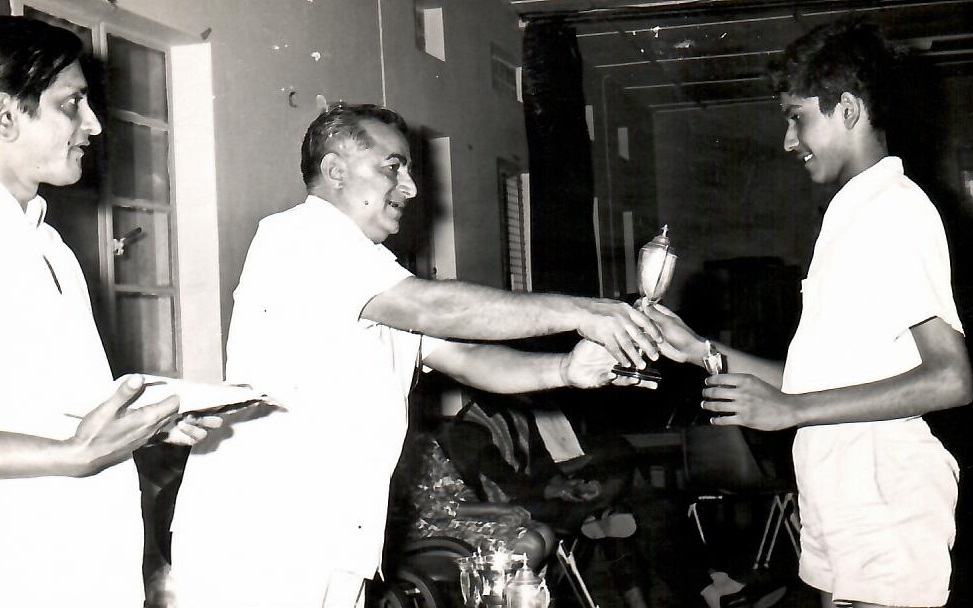
I was introduced to the game in the mid 1960s in the home of our ground-floor neighbour, Abdulbhai, at Islamabad Flats on United Nations Road. He owned the famous Vega Radio store on Morogoro Road in Dar es Salaam. One day, while visiting his home, I saw his children, Alnoor and Shanawaz, playing table tennis on their large dining room table. I took up the game and was beating both of them within weeks at their own game. My subsequent success in Dar es Salaam was when I shockingly upset the top two seeds in the semi-final and final of the Aga Khan Table Tennis Junior Under 17 championship. It was inspired by the training I received from (Late) Mohammed Amersi (Kanji), who was the best table tennis player in Tanzania. Also a great badminton player, Mohammed would first come to my table at the Aga Khan Club in Dar es Salaam, located behind my secondary school, Shaaban Robert, and intentionally allow me to win games against him to encourage me. His coaching to me and his younger brother, Salim Kanji, who is now in Toronto, nearly led us to a shocking win in a men’s doubles match against top seeds Priyakant Patel and Subash Bharadia in the Dar es Salaam Open held at the Indian Gymkhana. I remember I had forgotten my mandatory coloured polo shirt at home and wore my regular white shirt for the game, to which Subash fiercely objected — and wanted a default win — before Priyakant stepped in and asked his partner to calm down!
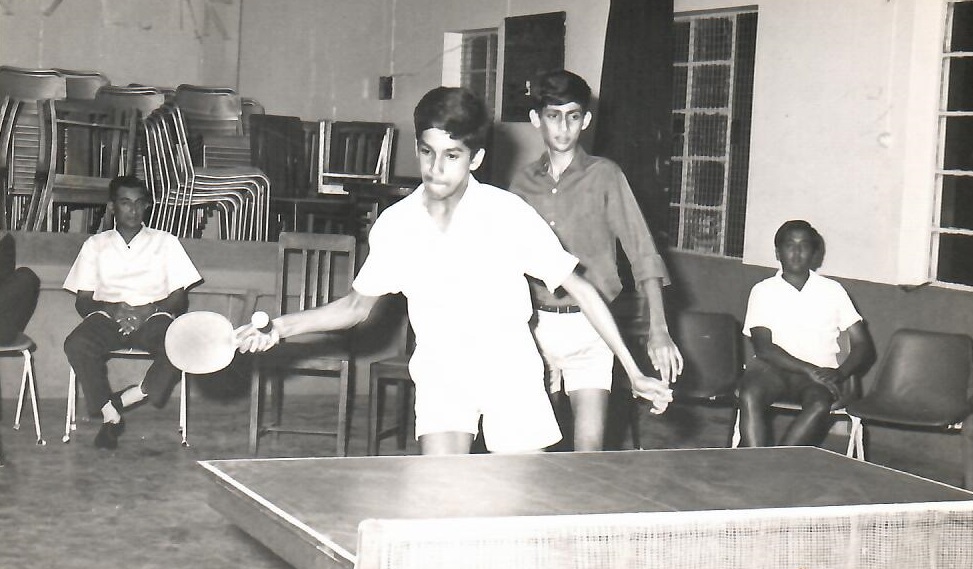
Malik Merchant, with his doubles partner Salim Kanji, smashes a forehand return in a double’s match against Priyakant Patel and Subash Baradia, at the Indian Gymkhana’s 1969 open table tennis tournament in Dar es Salaam, Tanzania. Photograph: Malik Merchant collection.
~~~~~
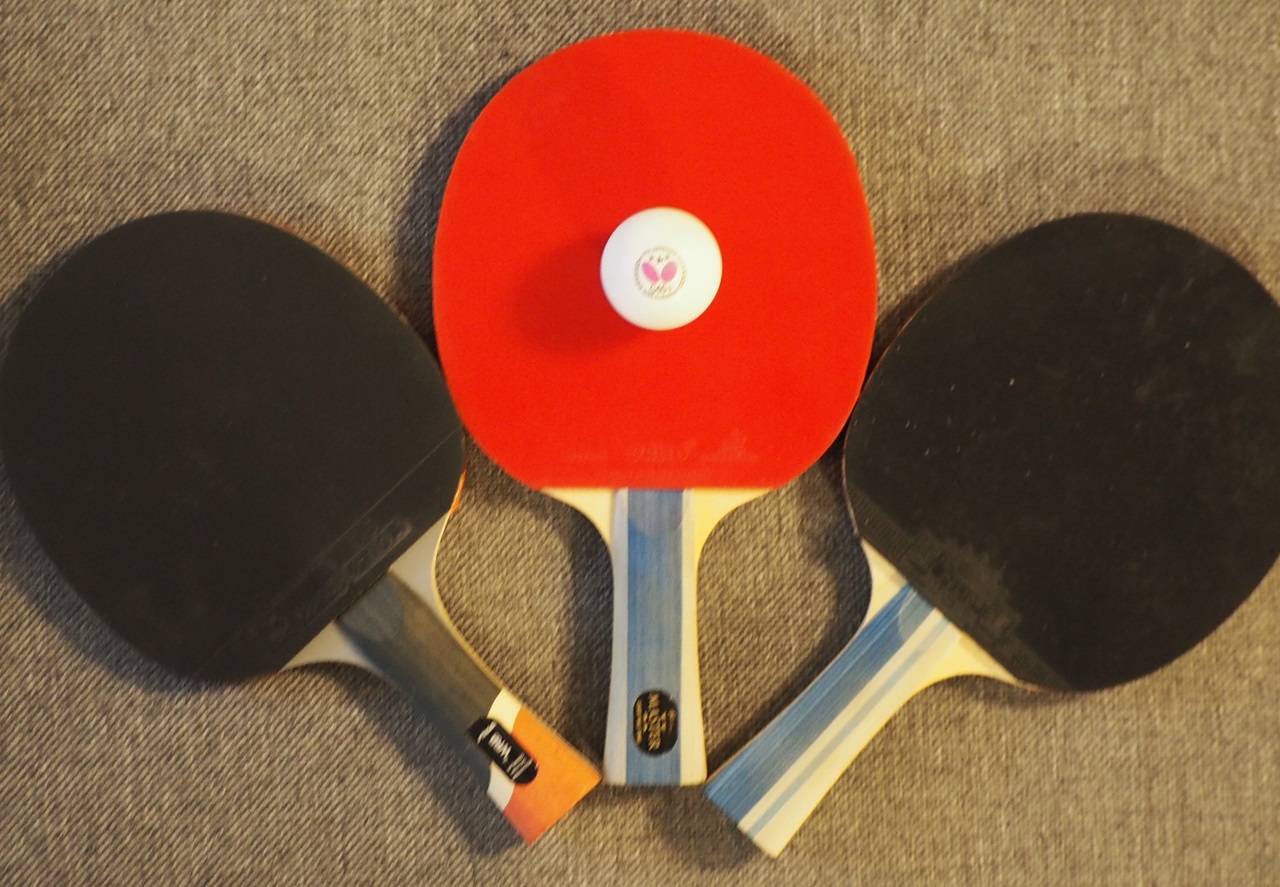
Malik Merchant’s current collection of table tennis bats that he uses in Calgary (Stiga, left, and two Palio bats, Master, centre, and Legend). Photograph: Malik Merchant collection.
~~~~~
Malik Merchant proudly collects his trophy from “Mama” at the Indian Gymkhana for winning the Aga Khan Club Juniors Singles under 17 Table Tennis tournament a few months earlier. The tournament took place at the Aga Khan Gymkhana in Dar es Slaam in 1969. Photograph: Malik Merchant collection.
In the early 1970s in London, UK, I represented my North London Polytechnic in the inter college/university league.
With table tennis, my cricket batting improved dramatically. Bowlers were quick to note my fast reaction times. I saw the ball like a football, after leaving the bowler’s arms. However, no one could have excited me in London more than my friend Aziz Jetha, who defeated seeded players in the earlier rounds of the Fulham Broadway tournament before knocking out a strongly favoured and top-seeded Nigerian player. Jetha’s incredible defensive game, with sudden bursts of attacking play, was genuinely frustrating to the Nigerian and others he played earlier. As one my best table tennis friends, I lost 70% of all the matches I played with Aziz, whether at 5 Palace Gate or at the Imperial College’s table tennis room, where we would meet after Jamatkhana. In between my time in the UK and Canada, I was in Salt Lake City, Utah, where my doubles partner and I lost very narrowly in the city’s open finals in 1980.
Coming to Canada, Habiba Thawer and I won the mixed double for Ottawa in the Ismaili Games in the mid-1980s. My drawback over the decades I played the game was a weak backhand due to the wrong grip of the bat, which no one noted and corrected since my teenage years. I knew about this all along but only recently corrected my grip in Calgary. I have seen a significant improvement in my backhand game, even at my current retirement age! COVID-19 prevented my regular participation at the local CUSTTA table tennis club. The club has some fantastic players, but no one could match Faazil Kassam when he was at the top.
Table tennis is a quick-paced game, and the Chinese won all 5 individual and team gold medals at the recent Paris Olympics. Some of the rallies I watched were absolutely incredible. Homes with basements should have table tennis tables where children can start this beautiful sport, which will help them in other sports, including skiing, ice hockey, basketball and baseball, which require fast reactions and responses. I remember being frustrated with the Blue Jays batters some years ago. I even wrote a letter to the club asking their batters to play table tennis regularly to improve their batting. That’s not a joke! It had helped me in my cricket batting.
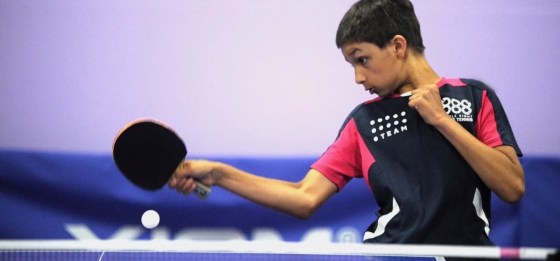
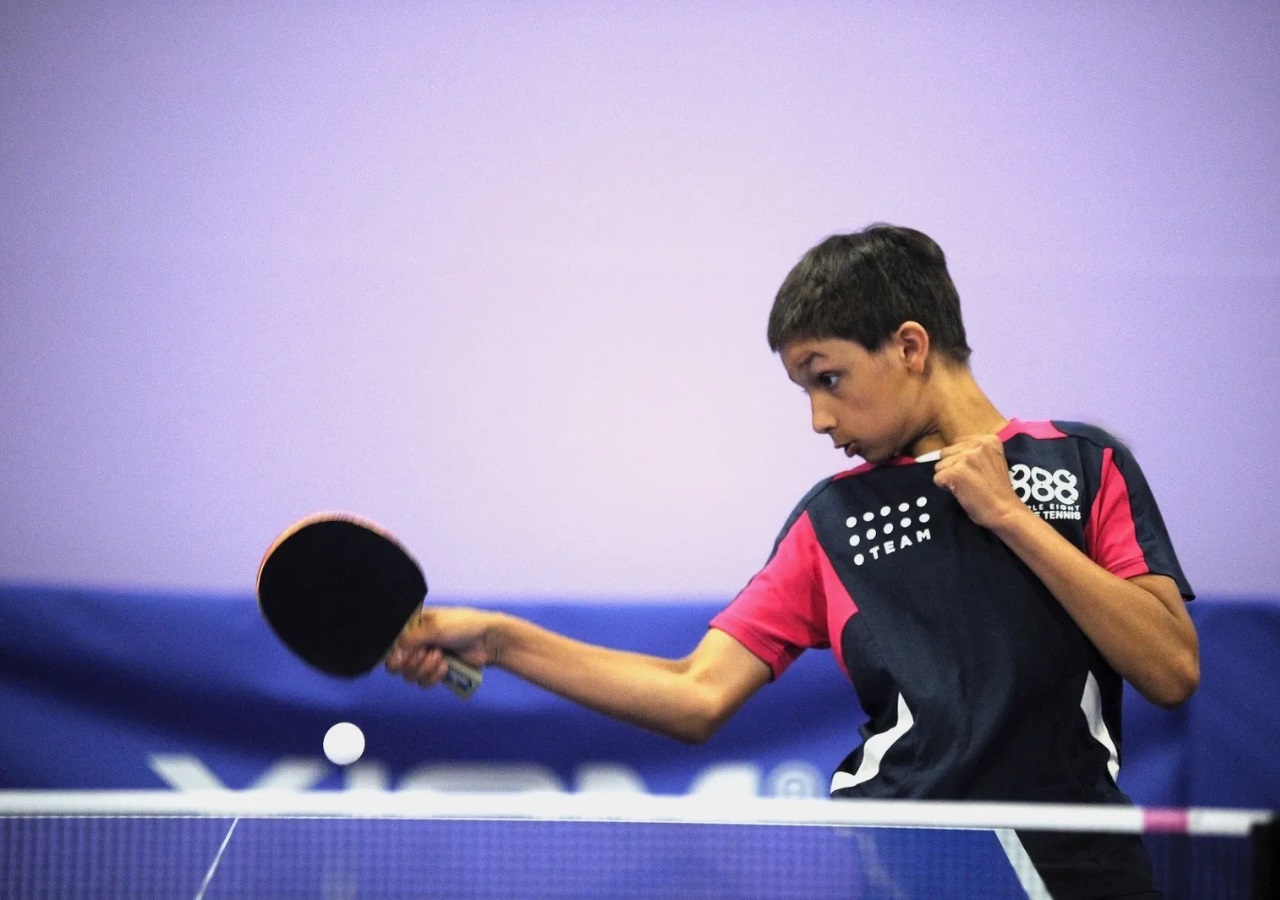
Ismaili boy Kef Noorani of California has dreams of making the US Men’s National Team and competing in the Olympics. Photograph: The Ismaili.
Kef Noorani’s inspiring story in The Ismaili reflects his keen interest and recent achievements, and offers a glimpse into his promising future. As he continues to develop and participate on the world stage at the Junior Level, I sincerely hope that he will qualify to represent the USA in the World Table Tennis Championships and the next Olympic Games, which will be held in his home state, California, in Los Angeles, in 2028. The members of the Ismaili community across North America and worldwide can’t help but feel a sense of anticipation and excitement for what’s to come for Kef Noorani.
Date posted: August 27, 2024. Last updated: August 28, 2024 (typos.)








 Simerg - Insights from Around the World