Simerg is an independent initiative dedicated to Ismaili Muslims, the Aga Khan — their Hereditary Imam — and the Ismaili Imamat, and Islam in general through literary readings, photo essays and artistic expressions
At long last, literature counters in Jamatkhanas across Canada have received Dr. Farhad Daftary’s “The Ismaili Imams: A Biographical History” in larger quantities than what was available in 2021-2022 at the height of COVID-19. That inventory sold out quickly, and the new inventory has reached several Jamatkhanas around the country. We request families to visit the literature counters at their respective Jamatkhanas before the book is sold out. Simerg has collaborated with the Ismaili Tariqah and Religious Education Board (ITREB) for Canada to facilitate the sale and distribution of the The Ismaili Imams by mail to Ismailis in Canada who live remotely or who do not have easy access to Jamatkhana literature counters. The book will be sold at the same price as at literature counters, but postage, packing and shipping costs will be added.
How to Purchase The Ismaili Imams: A Biographical History from Simerg
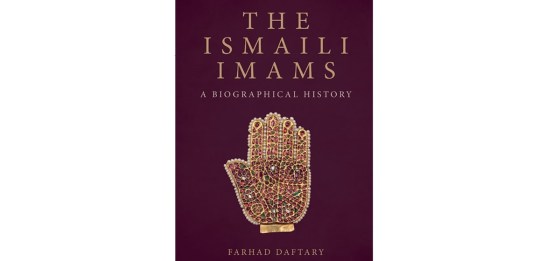
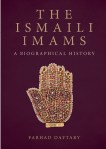
Cover page of The Ismaili Imams: A Biographical History by Farhad Daftary, Hardback, 260 pp., published October 2020, I.B.Tauris in association with the Institute of Ismaili Studies.
Ismaili individuals and families who live remotely or who do not have access to the book at their own Jamatkhana literature counters are advised to order Ismaili Imams through Simerg’s offer before the book is completely sold out.
The book will be sold at the same price as at Ismaili Jamatkhana literature counters across Canada. However, postage, package and handling charges of C$25.00 will be added to the book’s COST PRICE of C$23.00, for a total price of C$48.00. Note that each shipment will be sent via Canada Post’s expedited parcel post. A tracking number will be provided to track the shipment.
To inquire if the book is still available, and to order/reserve the book, please write to Malik Merchant of Simerg, Barakah and Simergphotos at mmerchant@simerg.com. Please provide your full name, phone number and address where you can be reached. Simerg will contact you within 24 hours to verify your address and provide you with payment information. Please note that payments will only be accepted via Interac E-transfer or by cheque. The book will be shipped out within 24 hours upon receipt of the payment.
Each individual/family will be able to order a maximum of 2 copies, as Simerg’s stock is limited.
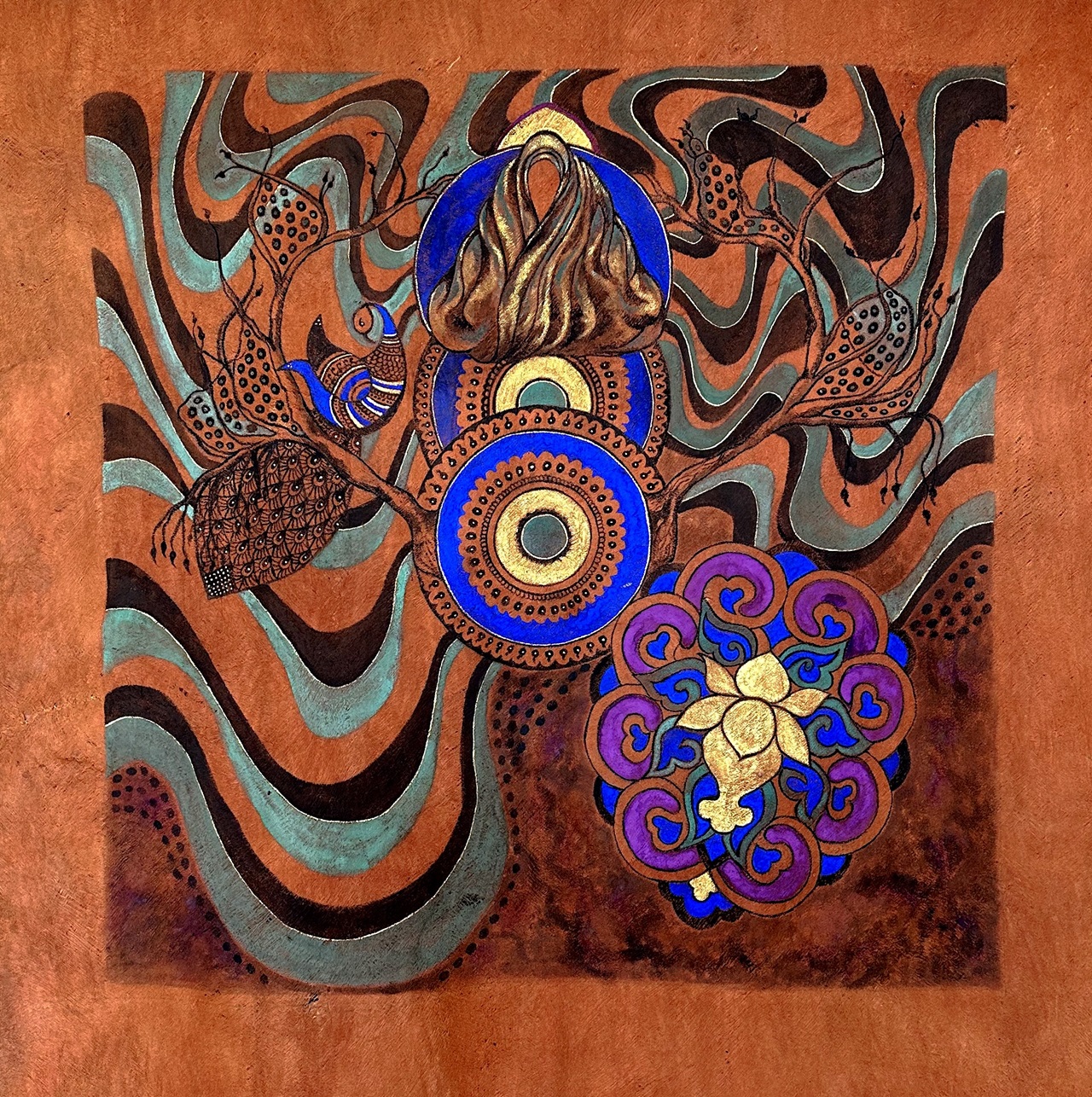
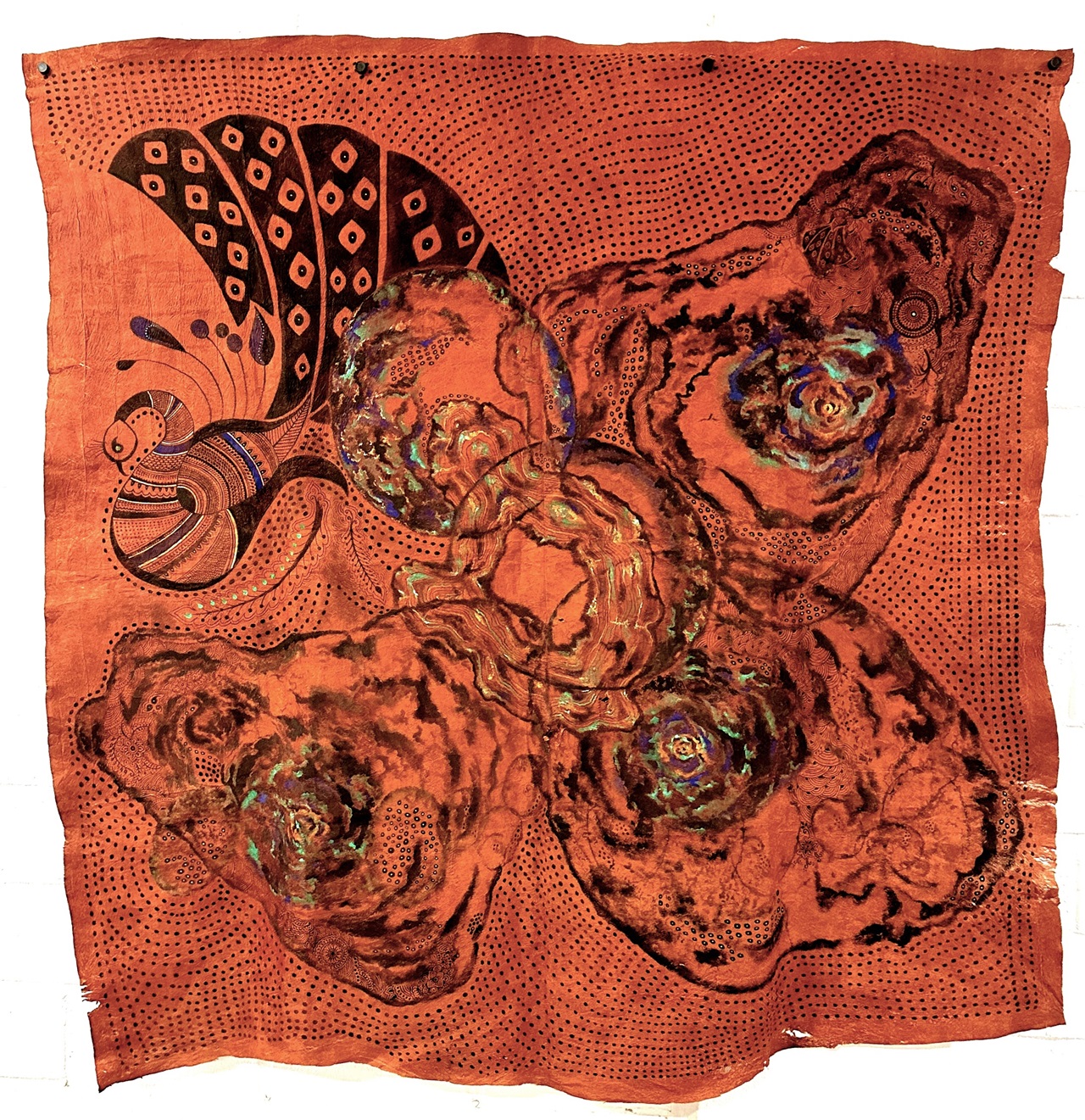
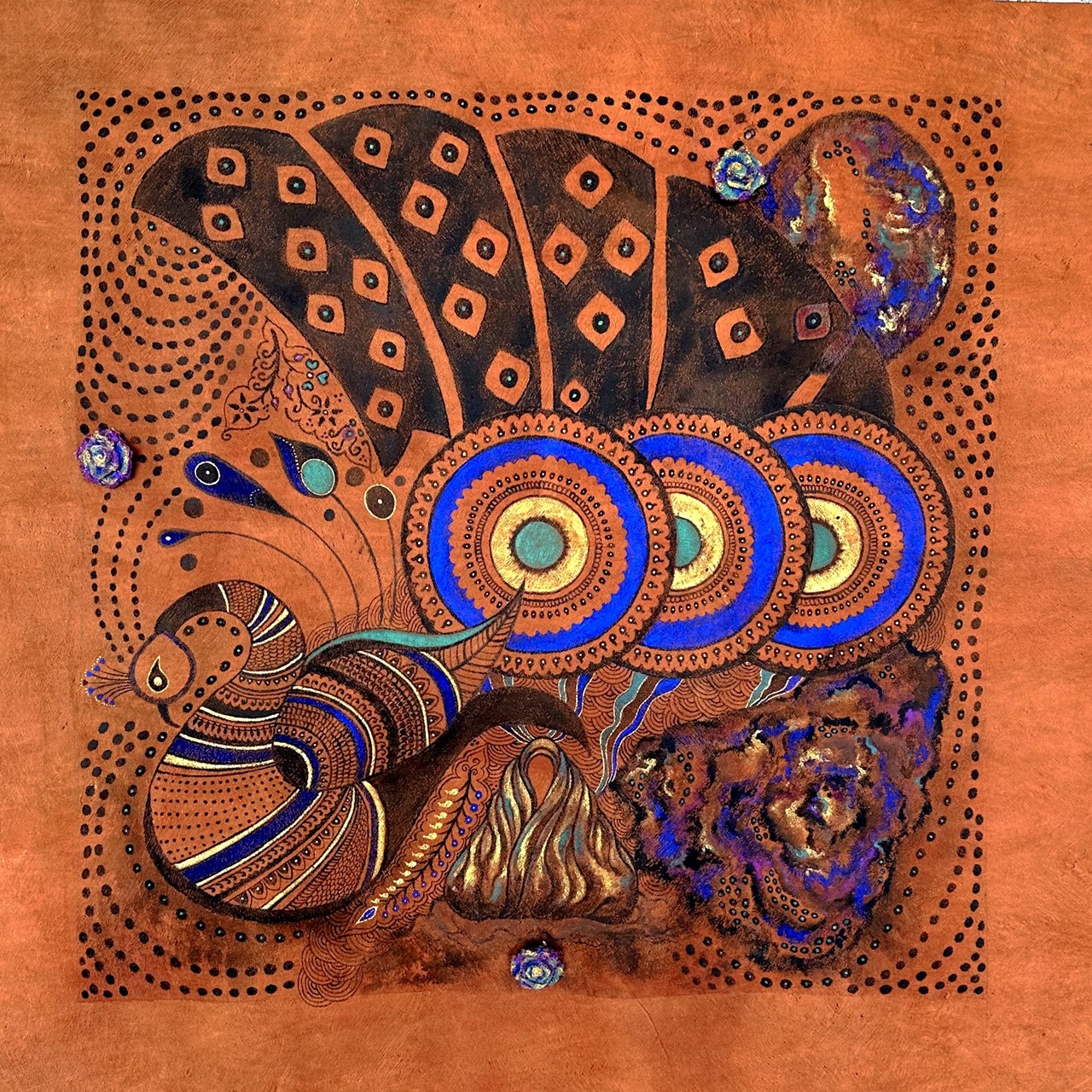
Simerg is pleased to present a selection of artwork by Shafina Jaffer, whose painting entitled Take Me Away was projected onto the facade of Windsor Castle at the Coronation Concert held outside Windsor Castle on May 7, 2023, in celebration of the coronation of King Charles III and Queen Camilla. We sincerely thank Aniza Meghani of London, England, for introducing us to Shafina and her magnificent artwork. The following profile of Shafina is based on the material that was submitted by her for this post. We have learned that the artist is hosting a special art session on Friday, February 23, 2024, at the Upanga Jamatkhana Social Hall in Dar es Salaam, Tanzania, to set the tone for the Aga Khan Youth and Sports Board’s special Navroz Art Fiesta.
Ismaili artist Shafina Jaffer in her hand-painted bark cloth sari. Photograph: Shafina Jaffer collection.
Shafina Jaffer is an Ismaili spiritual contemporary artist born in Dar es Salaam, Tanzania, and raised in Karachi and Dubai. She received her education in the UK, graduating from the prestigious Royal College of Art in Fine Art.
In 2023, her painting was selected for the Coronation Concert of Their Majesties King Charles and Queen Camilla as a backdrop for the Romeo & Juliet play performance. She was invited to attend the event as a VIP guest, witnessing her work titled Take Me Away projected onto the facade of Windsor Castle and witnessed live by millions of people across the world.
Shafina has exhibited in many art shows internationally and the world-renowned galleries of Saatchi Gallery in London, Zeitz Mocca in Cape Town, the Venice Biennale and London Art Fair. Most recently, she was invited to exhibit at the National Gallery in Dar es Salaam, Tanzania, representing the Ismaili community on the 75th Anniversary of the Indian Republic Day to celebrate the Indian-Tanzanian shared history of culture. Her painting, The Temptation (see below), painted on tree bark, with natural mineral pigments received praise from the Minister of Tourism and the Indian High Commission.
Please click on images for enlargements
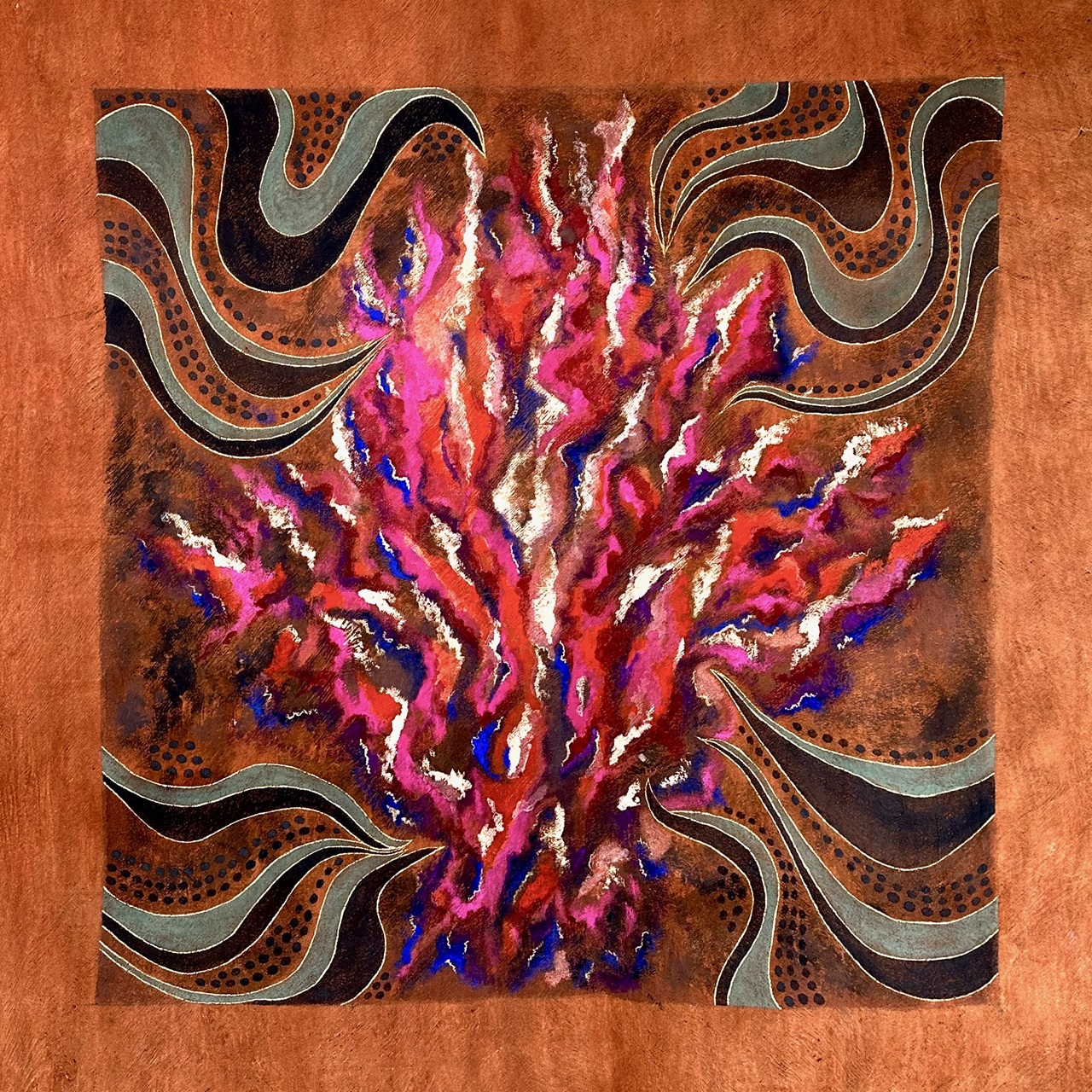
Flames of Creation in the Garden of Eden by Shafina Jaffer. Medium: Bark cloth, natural pigments: 22K Gold, cow bone pigment, malachite crystal, Majorelle blue, charcoal, rose madder, Masaai hair pigment, Tanzanian clay. Size: 80 x 80cm (31.4 x 31.4in). Photograph: Shafina Jaffer collection.
~~~~~~~
Take Me Away by Shafina Jaffer. Medium: Oil on canvas. Size: 200 x 80 cm (78.7 x 31.5 in). This painting was projected on the facade of Windsor Castle during the Coronation Concert honouring the Coronation of Their Majesties King Charles III and Queen Camilla, on May 7, 2023. Photograph: Shafina Jaffer collection.
~~~~~~~
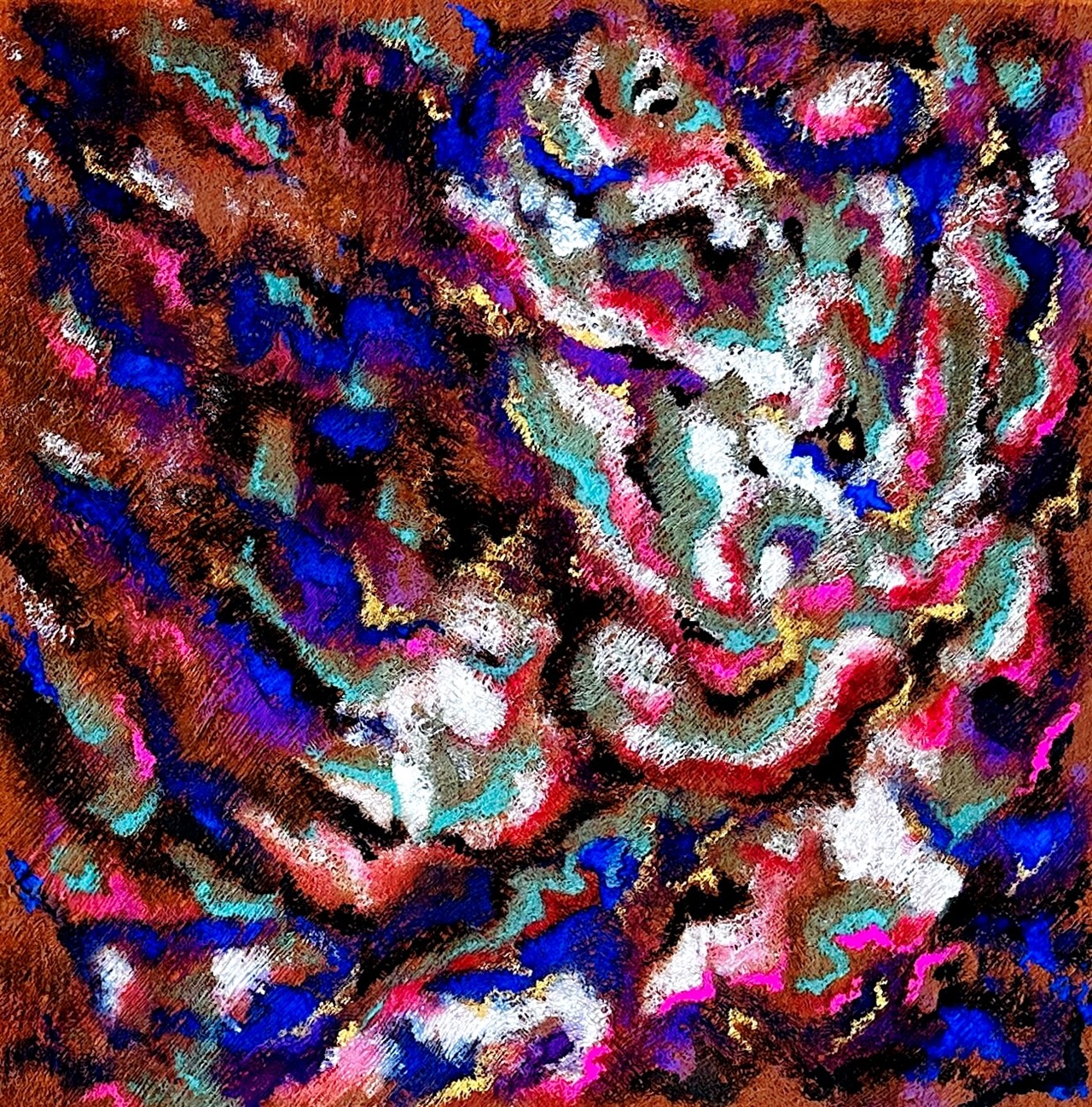
Voices of Creation, by Shafina Jaffer. Medium: Bark cloth, natural pigments: 22K Gold, cow bone pigment, malachite crystal, Majorelle blue, charcoal, Masaai hair pigment, rose madder, spinnel black, zinc white, Tanzanian clay. Size 40 x 40 cm ( 31.5 x 31.5in). Photograph: Shafina Jaffer collection.
Shafina’s art is unique, for she is the first one to create a genre of art where Indian and African art synthesize to deliver a unique visual dance that combines Indian traditions of miniature painting with African natural mediums and design. She also creates large installations using recycled plastic bottles to draw attention to plastic waste, recycling, and environmental mindfulness. These have been featured extensively in the media and news in Tanzania.
Shafina navigates the realm of abstract art, seamlessly weaving together elements of religion, spirituality, natural mediums, ontology, and a profound exploration of the divine to convey a powerful message of heightened morality, spiritual awareness, and the meaning of life. Her artistic journey is a tapestry of inspiration drawn from her multicultural background, where the interplay of diverse influences shapes her unique artistic identity.
~~~~~~~
Creating Eden by Shafina Jaffer. Medium: Bark cloth, natural pigments: 22K Gold, cow bone pigment, malachite crystal, Majorelle blue, charcoal, Masaai hair pigment, Tanzanian clay. Size: 80 x 80 cm (31.5 x 31.5 in).
~~~~~~~
Creation of Eden by Shafina Jaffer. Medium: Bark cloth natural pigments: 22K Gold, cow bone pigment, malachite crystal, Majorelle blue, charcoal, Masaai hair pigment, Tanzanian clay. Size: 200 x 200 cm (78.7 x 78.7 in). Photograph: Shafina Jaffer collection.
Born into a family that celebrated both Eastern and Western traditions, Shafina was exposed to a rich tapestry of beliefs and practices, laying the foundation for her transcendent art. At the core of her work is exploring abstract art as a vehicle for expressing the ineffable and transcendent aspects of human existence. Her canvases are vibrant playgrounds of colour, form, and texture, inviting viewers into a world where the boundaries of conventional representation dissolve, leaving room for interpretation and personal introspection.
Religion and spirituality are recurring themes in her art, reflecting her deep exploration of faith and the human connection to the divine. Through her abstract interpretations, she delves into the universal quest for meaning and purpose, exploring the intersection of different religious traditions and spiritual philosophies. Her works serve as visual meditations, encouraging viewers to contemplate the shared threads that bind humanity’s spiritual journey.
Shafina Jaffer poses beside her framed painting, The Temptation, that was on display at the National Art Gallery in Dar es Salaam for the 75th Anniversary of the Indian Republic Day. Medium: Dark cloth, natural pigments: 22K Gold, cow bone pigment, malachite crystal, Majorelle blue, charcoal, rose madder, Masaai hair pigment, Tanzanian clay. Size: 250 x 100cm (98.4 x 39.3 in). Photograph: Shafina Jaffer collection.
Natural mediums play a pivotal role in her artistic process. She embraces the inherent beauty and symbolism found in organic materials, utilising them to create textures that evoke a connection to the natural world. Bark, leaves, and earthy pigments become integral elements in her compositions, fostering a harmonious relationship between the earthly and the divine. This intentional use of natural mediums adds depth to her works, serving as a metaphor for the interconnectedness of all life.
Ontology, the study of being and existence, becomes a philosophical undercurrent in her art. Her abstract expressions delve into questions of existence, identity, and the nature of reality. Through the interplay of forms and colours, she invites viewers to search within themselves for the profundity of life. Each brushstroke becomes a philosophical inquiry, prompting introspection on the profound questions that define the human experience.
Manifestation of Eden, by Shafina Jaffer. Medium: Bark cloth, natural pigments: 22K Gold, cow bone pigment, malachite crystal, Majorelle blue, Masaai hair pigment, Tanzanian clay. Size: 80 x 80 cm (31.5 x 31.5 in). Photograph: Shafina Jaffer collection.
God, in its various manifestations and interpretations across cultures, becomes a central motif in her art. Her abstract compositions serve as visual prayers, transcending the boundaries of religious dogma and inviting viewers to connect with a higher consciousness. Her art becomes a vessel for the divine, a bridge between the earthly and the spiritual, fostering a sense of reverence and awe.
In essence, Shafina Jaffer’s art is a testament to the transformative power of creativity and spirituality. Her abstract expressions serve as a catalyst for introspection, inviting viewers to embark on a journey of self-discovery and heightened moral awareness. Through the marriage of abstract art, religion, spirituality, natural mediums, ontology, and a profound exploration of the divine, she offers a visual sanctuary where the meaning of life unfolds in every brushstroke and colour palette.
Date posted: February 19, 2024.
_________________
Simerg welcomes feedback from readers. Please click on LEAVE A COMMENT. You may remain anonymous if you wish. Your email is required for comment submission, but it will never be displayed.
What arguably should have been among the first publications to be published by the Institute of Ismaili Studies (IIS) in London was ultimately published in October 2020, 43 years after its founding on December 13, 1977. The book, The Ismaili Imams: A Biographical History, has now reached literature counters in Ismaili Jamatkhanas across Canada in larger quantities than the first stock that arrived in the midst of Covid-19, when the book quickly sold out. The long awaited book, in my humble opinion, should find a place in every Ismaili home and should be read by the youth and professionals in the Jamat.
Simerg is pleased to collaborate with the Ismaili Tariqah and Religious Education Board (ITREB) for Canada to facilitate the sale and distribution of the The Ismaili Imams by mail to Ismailis in Canada who live remotely or who do not have easy access to Jamatkhana literature counters. The book will be sold at the same price as at literature counters, but postage, packing and shipping costs will be added. See details below.
Article continues below
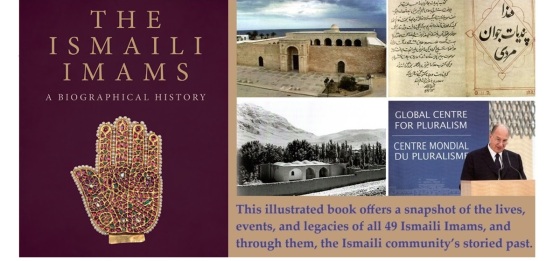
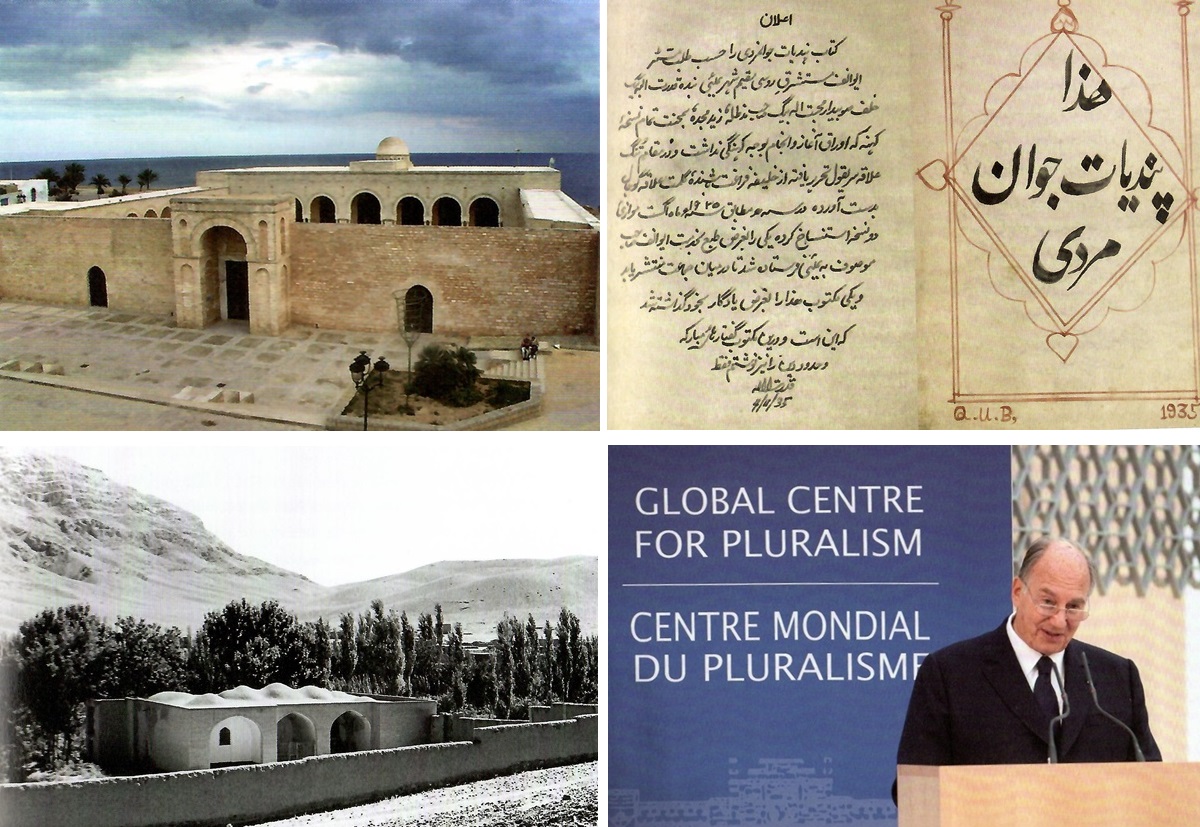
Top left: Great Mosque of Mahdiyya; top right: Title page and opening page of a manuscript of the Pandiyat-i javanmardi, a collection of the sermons of Imam Mustansir bi’llah; bottom left: Restored mausoleum of Imam Shah Nizar in Kahak; and Mawlana Hazar Imam, His Highness the Aga Khan, delivering a speech at the Global Centre for Pluralism, Ottawa. All Illustrations: The Ismaili Imams: A Biographical History.
The Ismaili Imams: A Biographical History has been authored by Farhad Daftary, a pre-eminent authority on Ismaili Studies, and author and editor of dozens of books and articles on Ismaili history and literature. Dr Daftary, who joined the IIS in 1988, became the head of its Department of Academic Research and Publications, and went on to become its co-director upon the departure of Dr Azim Nanji. Daftary finally stepped down from his management roles in 2022, and was succeeded as IIS director by Professor Zayn Kassam in January 2023.
On January 18, 2023, Dr Daftary was honoured in the presence of Prince Rahim at a special reception held in London. During the event, Prince Rahim announced that Mawlana Hazar Imam, His Highness the Aga Khan, had decided to acknowledge Dr Daftary’s contributions to the Institute by attaching his name to PhD Scholarships awarded by IIS. Prince Rahim also recognized Dr Daftary’s central role not only as a leader, but as the IIS’s most respected and productive scholar and author.
___________________
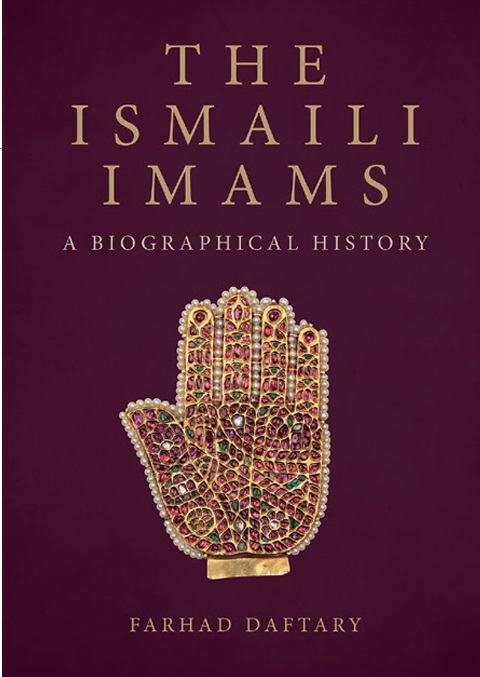
Cover page of The Ismaili Imams: A Biographical History by Farhad Daftary, Hardback, 260 pp., published October 2020, I.B.Tauris in association with the Institute of Ismaili Studies.
The Ismaili Imams is the first collection of biographies of all the Ismaili Imams, from the seminal Imams of early Shi’i Islam, through to those of the first ‘period of concealment’ when their public identities remained hidden, to the Imam-caliphs of the illustrious Fatimid dynasty, and those of the Alamut period, up to the Aga Khans of the modern period. The Ismaili Imams draws from the rich scholarship of the developing field of Ismaili Studies, providing a simple and clear resource for both the Ismailis themselves and for general readers, ensuring accessibility for all. This extensively illustrated book offers a snapshot of the lives, events, and legacies of all 49 Ismaili Imams, and through them, the Ismaili community’s storied past.
___________________
The 260 page richly illustrated hardback volume features the 49 Ismaili Imams through the following nine sections: 1.The Ismaili Imamat in History; 2.The Early Imams (from Hazrat ‘Ali to Imam Muhammad b. Isma’il); 3.The Concealed Imams (Imam Wafi Ahmad to Imam Radi al-Din ‘Abd Allah); 4.The Early Fatimid Imam-Caliphs (from Imam al-Mahdi to Imam Nizar); 5.The Imams at Alamut (from Imam al-Hadi to Imam Rukn al-Din Khurshah); 6.The Early Imams after Alamut (Imam Shams al-Din Muhammad to Imam Muhammad b. Islam Shah); 7.The Imam of the Anjudan Period (Imam Mustansir bi’llah to Imam Khalil Allah ‘Ali); 8.The Imams in the Eighteenth Century (Imam Shah Nizar to Imam Shah Khalil Allah); and 9.The Imams in the Modern Age (Imam Shah Hasan ‘Ali Shah, Aga Khan I, to Mawlana Shah Karim al-Husayni, Aga Khan IV). The book ends with a four page glossary, select bibliography, and an index. The full contents page is available on the IIS website HERE.
How to Purchase The Ismaili Imams: A Biographical History from Simerg
SOLD OUT: We do not have any more copies of the book in stock. Please check the availability of Ismaili Imams at the Jamatkhana literature counters in your respective countries, or buy it from Amazon.ca or Amazon.com.
Simerg is pleased to facilitate the distribution of The Ismaili Imams: A Biographical History in conjunction with ITREB Canada, to Ismaili addresses in Canada. Ismaili individuals and families who live remotely or who do not have access to the book at their own Jamatkhana literature counters, should take advantage of this offer before the book is completely sold out.
The book will be sold at the same cost price as at Ismaili Jamatkhana literature counters across Canada. However, postage, package and handling charges amounting to a total of C$25.00 will be added to the book’s COST PRICE of C$23.00, for a total payment price of C$48.00. Note that each shipment will be nicely packaged and sent via Canada Post’s expedited parcel post. A tracking number will be provided to track the shipment.
To order/reserve the book, please write to Malik Merchant of Simerg, Barakah and Simergphotos at mmerchant@simerg.com. Please provide your full name, phone number and address where you can be reached. Simerg will contact you within 48 hours to verify your address and provide you with payment details. Please note that payments will only be accepted via Interac E-transfer or by cheque. The book will be shipped out immediately upon receipt of the payment.
Each individual/family will be able to order a maximum of 2 copies.
Over the past 14 years, Simerg has had the privilege and honour to support Prince Hussain Aga Khan’s books such as Animal Voyage, Diving Into Wildlife and The Living Sea. We are happy to collaborate with ITREB Canada in this new endeavour and look forward to serving members of the Ismaili community in this joint initiative. Ismaili readers should note that the book is available for purchase through online booksellers like Amazon, albeit at a higher price.
Date posted: February 17, 2024. Last updated: August 16, 2025.
____________________
Have you read The Ismaili Imams? We want to hear from you. Please submit your feedback on the book by clicking on LEAVE A COMMENT.
Inna lillahi wa inna ilayhi raji’un “Surely we belong to God and to Him we return” — Holy Qur’an, 2:156
“Life is a great and noble calling, not a mean and grovelling thing to be shuffled through as best as we can but a lofty and exalted destiny” — Mawlana Sultan Mahomed Shah, His Highness the Aga Khan III (1877-1957), 48th Imam of the Shia Imami Ismaili Muslims.
Update, February 17, 2024: Funeral ceremony for Zawahir Moir will take place at North London Jamatkhana, Saturday February 17, 2024; Fateha will be recited at 10:45 AM. Samar and Zyarat ceremonies at North London Jamatkhana.
It is with heartfelt sadness to inform readers that Huzur Mukhiani Zawahir Moir, one of the most distinguished and pioneering scholars of Ismaili Ginans (Hymns), passed away in London, United Kingdom, on February 9, 2024, at the age of 90.
Born in Karachi in 1933, Zawahir Noorally (as she was known before marriage) grew up with a passion for Ginans from an early age. After completing her early education, Zawahir completed her first Master’s degree in Islamic history from Karachi University in 1958. Subsequently, she was awarded a scholarship by Mawlana Shah Karim al-Hussaini Hazar Imam, His Highness the Aga Khan, to continue her studies in London, and thus became the first Ismaili from Pakistan to undertake Islamic studies abroad. For four years (1960-64), Zawahir pursued a second M.A. at the School of Oriental and African Studies (SOAS), University of London, completing her research on the modern period of Ismaili history, focusing on the Imamat of Aga Khan I, Mawlana Shah Hasan Ali Shah.
She returned to Pakistan and joined the Ismailia Association (now the Ismaili Tariqah and Religious Education Board), where she was a Research Associate for nearly 15 years. Ismaili readers in the early 1970’s would especially remember Zawahir for contributing to the Ismailia Association for Pakistan’s 1973 publication Great Ismaili Heroes, a 160 page booklet, highlighting the lives of 33 Ismaili historical figures spanning 1000 years.
In 1979, Zawahir moved permanently to London, where a year later she married Martin Moir, then archivist and deputy director of the India Office Library and Records. In 1982, she joined the academic faculty of The Institute of Ismaili Studies, where she worked for three years.
Article continues below
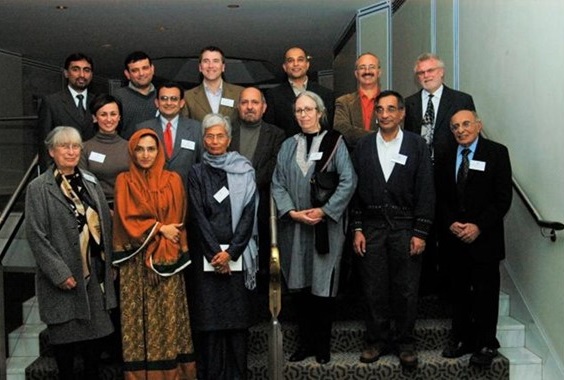
Participants at the Devotional Expressions of South Asian Muslims conference organized by The Institute of Ismaili Studies and held at The Ismaili Centre, London, in November 2006. Zawahir Moir is in the front row, third from the left. Photograph: The Institute of Ismaili Studies
Within the field of Ismaili studies, Zawahir’s interests were much kindled by one of the foremost modern authorities on Ismailism, Wladimir Ivanow (1886-1970), with whom she had been in constant correspondence since 1958, and whom she met during a visit to Iran in 1966. During her sojourn at the Ismailia Association, in 1975, Zawahir participated in an international conference of Ismaili leaders and scholars — a conference that led to the establishment of The Institute of Ismaili Studies in London. Also, while at the Ismailia Association, Zawahir prepared a catalogue of the collection of Khojki manuscripts that had been collected from the Ismaili communities in Punjab and Sind, and which represented the largest known corpus of Satpanth Ismaili literature. She continued working on this collection when it was transferred to The Institute of Ismaili Studies, London, painstakingly cataloguing the manuscripts over a period of three years. Although this catalogue remains unpublished, it has been an invaluable source for scholars.
Article continues below
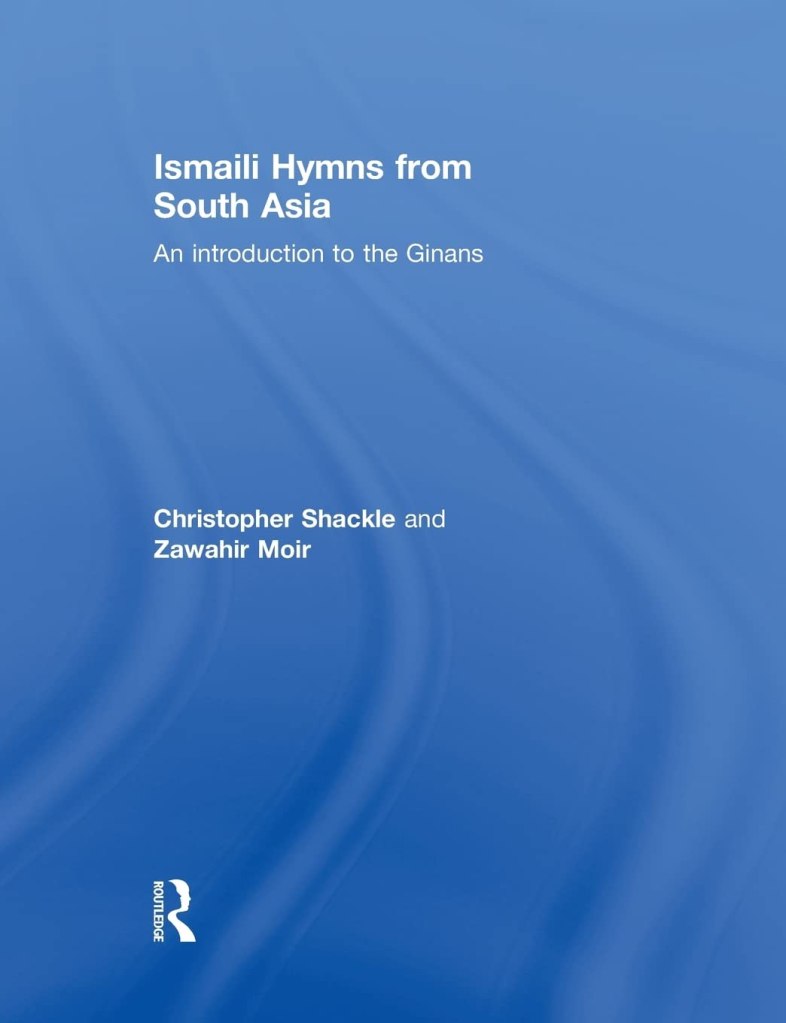
Ismaili Hymns from South Asia by Christopher Shackle and Zawahir Moir, Routledge, See Amazon for formats
For over thirty years, since the mid-1980s, Zawahir collaborated closely with scholars working in the field of South Asian literatures and cultures. In 1992, she co-authored with Christopher Shackle Ismaili hymns from South Asia: An introduction to the Ginans, and continued to present papers on various aspects of Satpanth Ismailism and Ginanic literature, as well as encouraging and inspiring students to this field of Ismaili studies.
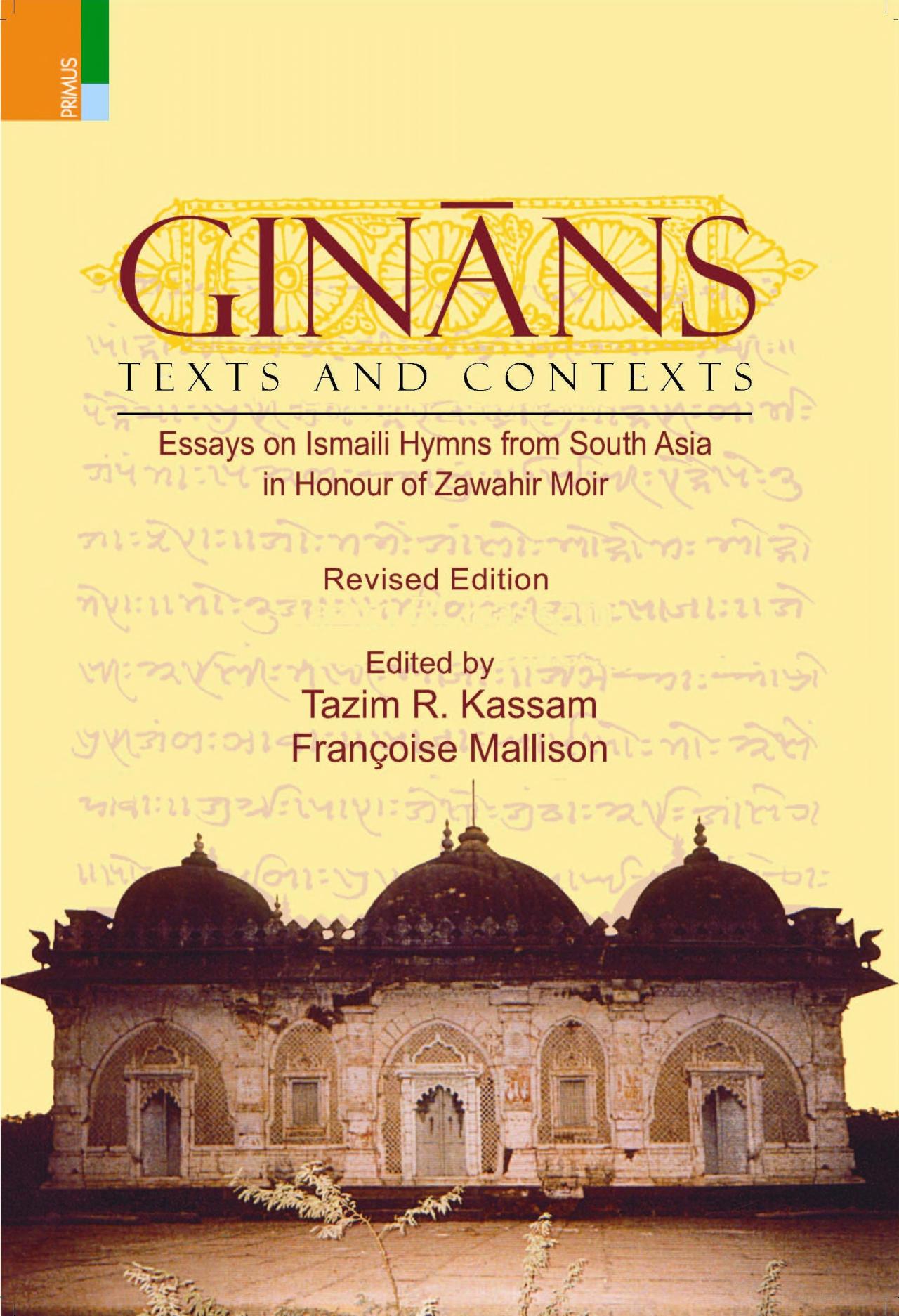
In the foreword to the collection of essays presented in her honour, Christopher Shackle writes: “The passing of years has encouraged an ever greater regard for her unique combination of personal and professional qualities. Beneath a delightful self-deprecation, she possesses the extraordinary devotion to her subject characteristic of the best private scholars, which is both the envy and the shame of those of us who cannot avoid the compromises of professional academic employment. To the extraordinarily wide and deep knowledge of the Ginans she first gained through family inheritance, she has added a remarkably sustained programme of subsequent study, especially of the historical aspects of the Ginans and of their complex manuscript record….She has continued with this personal programme to develop with a wonderfully youthful willingness to explore new avenues and lines of inquiry….Even though at times she had had to face serious discouragement and adversity,……her enthusiasm for the study of the Ginans has never been dimmed.”
Article continues below
Ginans Texts and Contexts: Essays on Ismaili Hymns from South Asia in Honour of Zawahir Moir
Zawahir Moir’s passing has certainly dimmed the study of the Ginans. However, her encouragement, enthusiasm and commitment to the study of the Ginans, it is hoped, will be an inextinguishable candle guiding the way for researchers and students.
As Professor Ali Asani of Harvard University himself noted, “Many of the seeds of my scholarship on Ginan literature were planted by the pioneering work of Zawahir Moir and I shall always be grateful to her for her encouragement early in my career.”
Date posted: February 13, 2024. Last updated: February 17, 2024.
_____________________
We invite you to submit your condolences, memories and tributes to Zawahir Moir by completing the feedback form below or by clicking on LEAVE A COMMENT. Should you encounter technical issues or difficulties in submitting your comment, please submit it via email to mmerchant@simerg.com (subject Zawahir Moir).
IMPORTANT NOTE: Simerg invites Ismaili families to submit obituaries and tributes to deceased members of their families, whether they passed away recently or in the past. Please review PASSINGS on how to prepare and submit your tribute.
Vertigo attacks were the scarriest moments in my life. They started sometime in the mid 1990s and in the course of the next 15 years, I had about 6 to 8, the worst ones being after my return to Ottawa in early 2000, because I was all by myself. When you are alone, the feeling is that of helplessness, and it gives you the scarry thought that the world spinning around you may result in death or a serious injury. Even the slightest rolling movement triggers imbalance, and trying to rise from the bed or floor is even more challenging and frightening. The routine standard treatment of lying at the edge of the bed and performing specific manouevres worked for me but it took 2 or 3 days before the vertigo eventually faded and I became less panick-stricken. During some attacks, I simply lived through the vertigo until it went away on its own. And then, one day, on a very bad day of a positional vertigo attack, I came across a very short video (3:35 minutes) by University of Colarado’s Dr. Carol Foster. Her explanation on what causes vertigo, along with the recommended one to two minute exercise got rid of my problem on the same day. I did the exercise twice within a 15 minute timeframe. I have not had a vertigo attack since 2010. That’s 14 years! I thanked Dr. Foster and asked her if the exercise should be done daily and she answered, “no”; only when the vertigo was active.
Please watch her video below. Some individuals may not be able to perform this simple exercise because they have issues bending or resting their knees on the floor. I strongly suggest you give it your best try, and I think your problem may just VANISH, like magic, as it did for me. Have someone close to you if you feel afraid; call on a friend or your neighbour to encourage you if you don’t have a family member around. If my vertigo returns, I will perform the magical movements once again! NOTE: You do this exercise only when you experience the vertigo, and not when you are symptom free!
Dr. Foster was also featured on a CBS program aired in Colorado following the publication of her book Overcoming Positional Vertigo. However, I would first take the time to watch her YouTube presentation. Thank you Dr. Carol Foster for your incredible work! Please share the video with others experiencing vertigo.
The month of Rajab, 7th in the Islamic calendar, marks two important anniversaries — the birth of the first Shia Imam and Islam’s 4th Caliph, Hazrat Ali (may peace be upon him), on the 13th of Rajab (which was observed on January 24, 2024), and the Shab-i-Miʿrāj on the 26th of Rajab commemorating the blessed night when Prophet Muhammad (peace be upon him and his progeny) ascended to the heavens. The Mi’raj of the Prophet Muhammad will be observed by Ismaili Muslims in Canada and several other countries around the world on Wednesday, February 7, 2024.
Mi’raj is an Arabic word which literally means a ‘ladder’ and refers to an experience in the life of Prophet Muhammad which took place during the night. Thus, sometimes it is referred to as the ‘night journey’ of the Prophet. The first verse of Surah al-Isra (The Night Journey) in the Holy Qur’an says:
“Glory be to Him, who carried His servant by night from the Holy Mosque to the Further Mosque the precincts of which We have blessed, that We might show him some of Our signs. He is the All-hearing, the All-seeing.” — 17:1, translated by A.J. Arberry, see Corpus Qur’an for multiple translations.
Article continues below
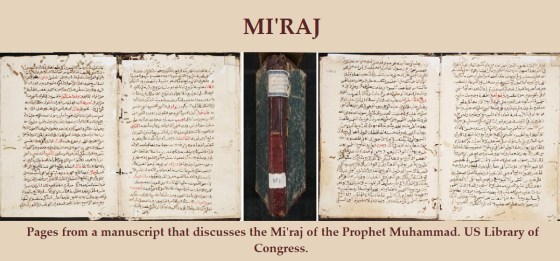
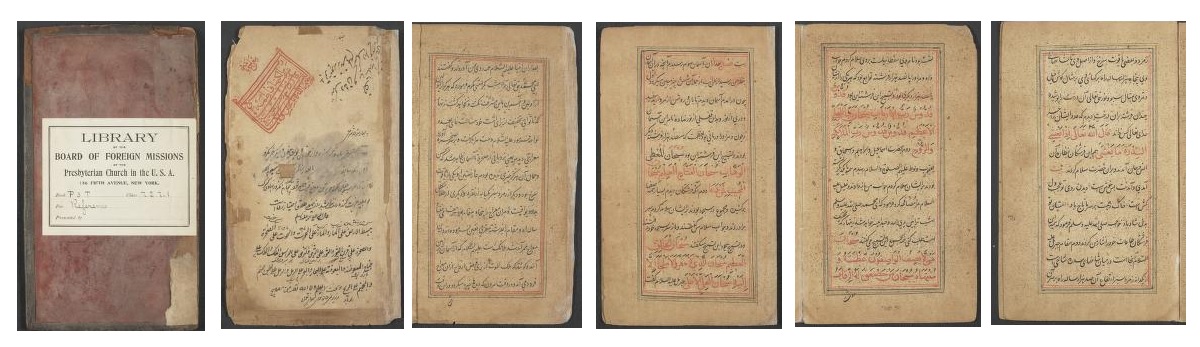
Six images from a total of 408 from an unidentified Persian treatise on the Miʻrāj and several other topics from the Hadith (traditions) of the Prophet Muhammad. Image: US Library of Congress. For more details please click https://www.loc.gov/item/2016397783/
~~~~~~
Fragment from page 7 of the Bustan of Sadi. The last two lines of poetry on this page extol the Prophet’s miraculous ascension to the heavens (mi’raj): One night he sat (on his flying steed Buraq) and passed through the heavens. / In majesty and grandeur, he exceeded the angels. / So impulsive, he urged (his steed) into the plain of closeness (to God) / While Gabriel remained behind him at the Lote Tree (of the Limit). Image: Wikipedia.
Among Sufis and other Islamic esoteric traditions, such as those practiced by Ismaili Muslims, Mi’raj is considered the highest point of spiritual perfection an individual can attain through religion and the practice of faith. Believers long to experience a Mi’raj, just as the Prophet experienced it. The Shia Ismailis seek out this spiritual elevation under the guidance of the Imam-of-the-Time, presently Mawlana Shah Karim Al-Hussaini Hazar Imam, His Highness the Aga Khan, who leads his followers to self-awareness, spiritual insight and elevation. This is clearly noted in the Preamble of the Ismaili Constitutionin paragraph (F), which reads:
“Historically and in accordance with Ismaili tradition, the Imam of the time is concerned with spiritual advancement as well as improvement of the quality of life of his murids. The Imam’s ta‘lim lights the murid’s path to spiritual enlightenment and vision. In temporal matters, the Imam guides the murids, and motivates them to develop their potential.”
His Highness the Aga Khan is the 49th Hereditary Imam, directly descended from Hazrat Ali, whose remarkable teachings have come down to us through the preservation of his sermons and teachings which are recorded in works such as Nahj al-Balaghah. Close to the heart of the Ismaili Muslims are poems of the Imam Ali known as Kalam-i Mawla that have been rendered into Hindi. The verses speak about the conduct, behaviour and action of man during his sojourn on earth (please read Farouk Topan’s excellent piece Kalam-i-Mawla)
We are pleased to provide a recitation of verses from the Kalam of Hazrat Ali that focus on ethics, spirituality and the Mi’raj of the Prophet Muhammad. The verses are recited by Alnoor Saleh and have been downloaded from the MUST VISIT website Ginans Central, which is maintained by Karim Tharani of the University of Saskatchewan.
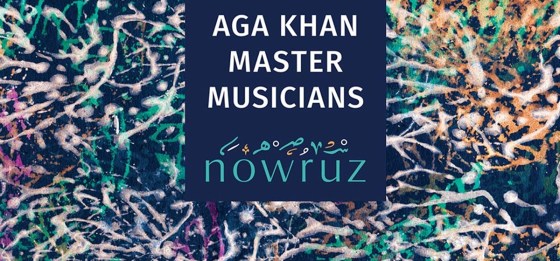
The website Worldmusiccentral reports that the Aga Khan Master Musicians (AKMM) formed in 2013 by the Aga Khan Music Programme is dominating the world music charts in Europe through their debut album Nowruz. The website goes on to list the top 20 selections for the month of February.
The producer of the album, Smithsonian Folk Ways Recording, says that “In Nowruz, the Aga Khan Master Musicians draw on music from Central Asia, China, the Middle East, and North Africa to create a strikingly original body of work where living musical traditions meet and meld. Acclaimed virtuosos on their respective instruments, the six members of AKMM deftly blend pipa, qanun, dutar, viola d’amore, saxophone, and a panoply of percussion into a soulful new musical language that comes alive in these eloquent performances.”
Story continues below
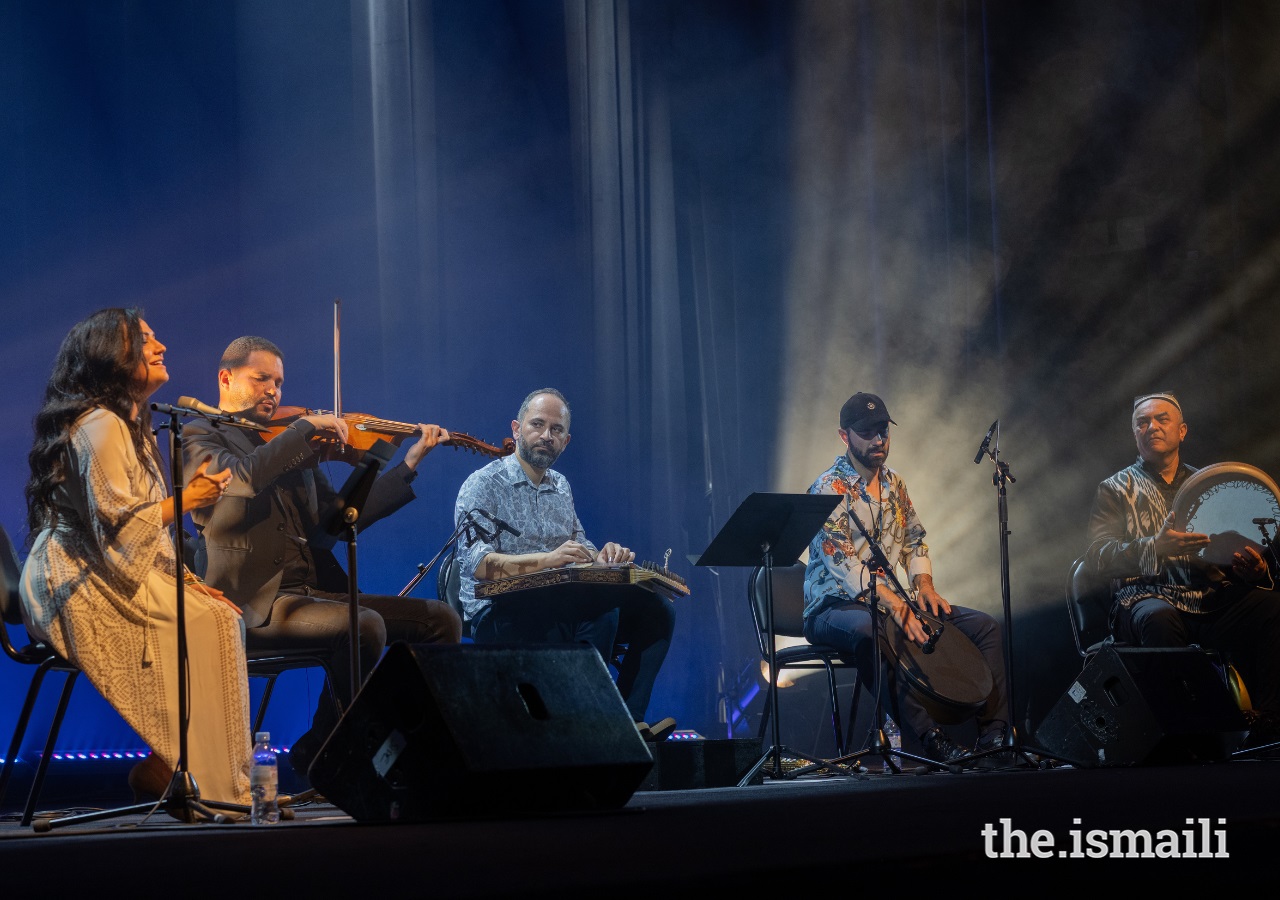
Aga Khan Master Musicians performing a mesmerizing selection of compositions at the L’Institut du Monde Arabe on October 18, 2023, in the presence of Prince Amyn Mohamed Aga Khan, younger brother of Mawlana Hazar Imam, His Highness the Aga Khan. Photograph: AKDN/Thomas Wibaux.
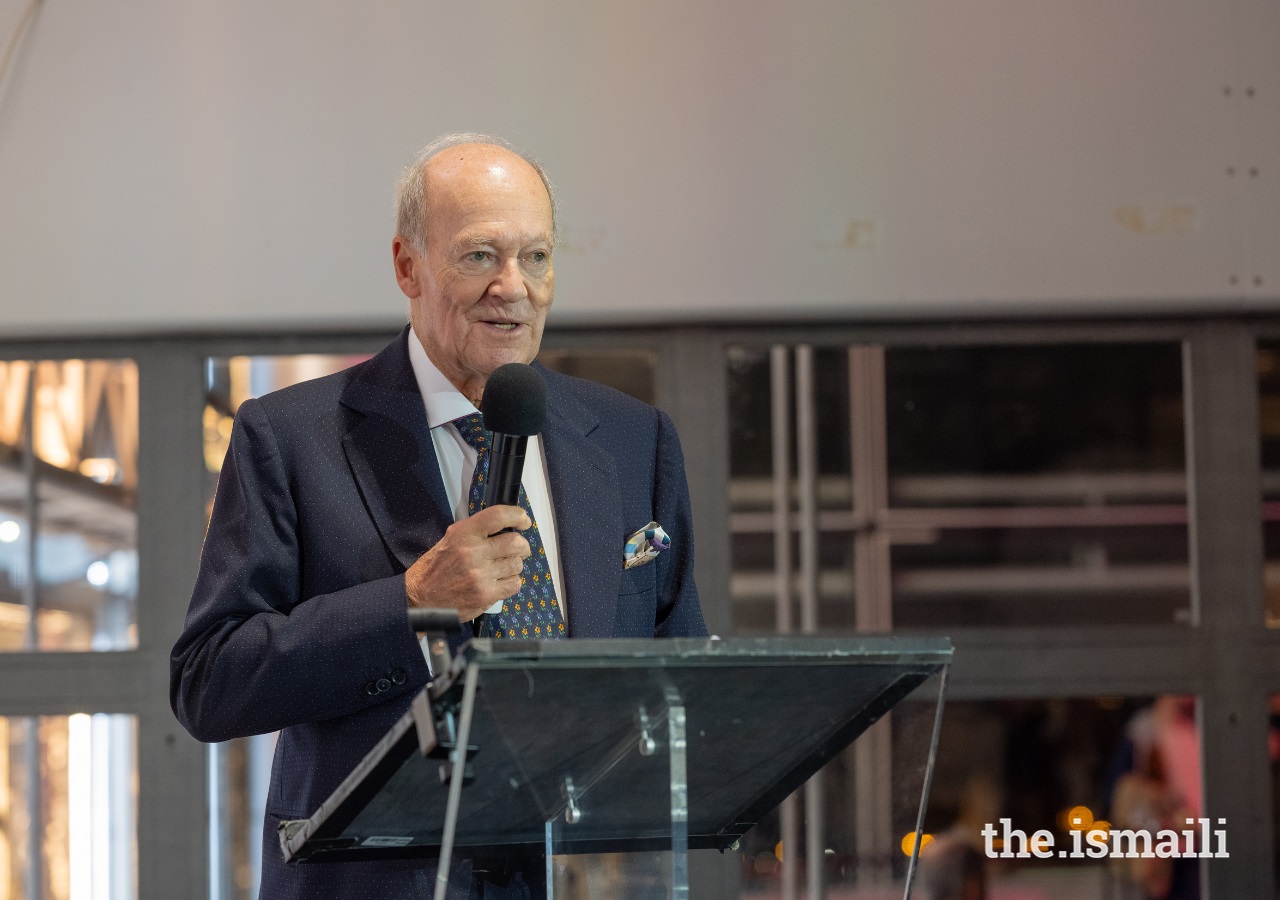
Prince Amyn Mohamed Aga Khan, younger brother of Mawlana Hazar Imam, His Highness the Aga Khan, delivers remarks at a post-concert reception at L’Institut du Monde Arabe on October 18, 2023.Photograph: AKDN/Thomas Wibaux.
PURCHASE (DOWNLOAD) THE NOWRUZ ALBUM PIECES AT US$0.99 EACH
Aside from the album’s namesake piece, Nowruz, the album consists of 11 other pieces such as Tashkent, Madad, Autum Flowers and Leaves, Ili and Jul Dance. Readers may listen to sample recordings on the Smithsonian Folk Ways website, and download each complete piece at US$0.99.
The University of Alberta’s 80 acre Botanic Garden in Parkland County near Edmonton, consists of cultural gardens, nature spaces, and other special collections. Having visited the Botanic Garden during spring, summer, and autumn, Malik Merchant decided to embrace the Botanic Garden’s call to visit the garden in winter. He spent hours walking around the Aga Khan and Japanese Gardens as well as the beautiful greenhouse rooms on Sunday, December 28, 2024. Please click HERE or on the photo below for Malik’s report and photographs.
The Talar buiding, Aga Khan Garden, January 28, 2024. Please click on image to view Malik Merchant’s beautiful photographs.
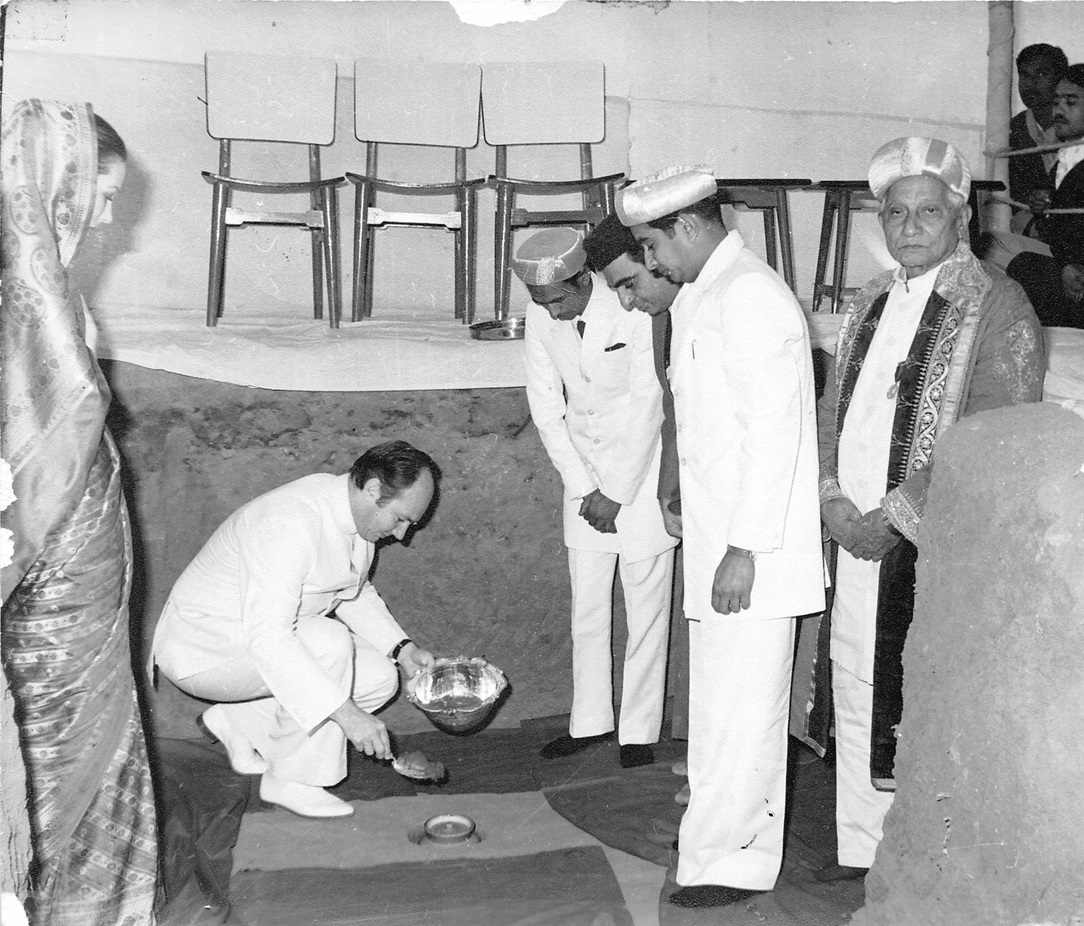
Nazar Kasamali Momin of Houston, Texas, went through his family archives, and came across a very rare collection of photos of His Highness the Aga Khan’s visit to the small village of Methan, in Sidhpur, India. It appears that the 1978 visit did not receive much media coverage, and even the Ismaili world is unaware about the historical visit. We are pleased to present a selection of photographs from Momin’s collection, along with his report of the visit. His piece appears on our sister website, Barakah, which is dedicated to the Aga Khan, the 49th Hereditary Imam of the Ismaili Muslims. Please click The Aga Khan in Methan.
The Aga Khan at the foundation for a new Jamatkhana for the Ismaili Muslim community in Methan, India. Please click on photograph for full story and more photos.
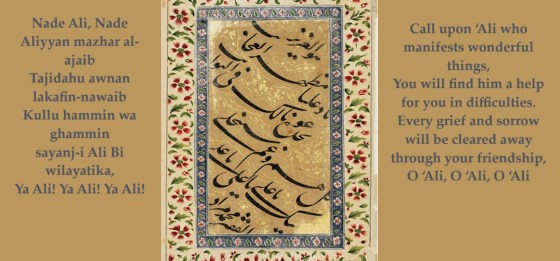
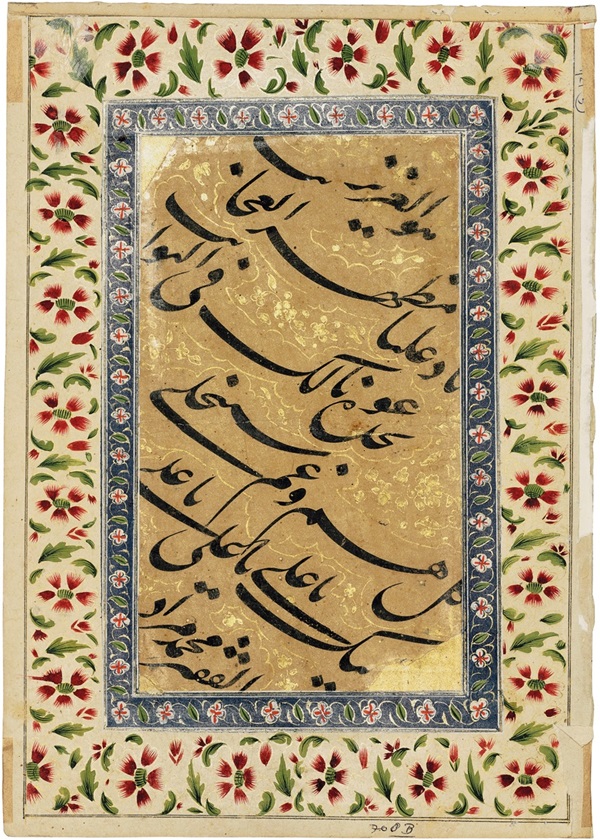
As Shia Ismaili Muslims in Canada and around the world commemorate the birth anniversary of their first Imam, Hazrat Ali, our sister website, Barakah, presents a a special post about a Mughal panel that was presented to His Highness the Aga Khan on the auspicious occasion of his 87th birthday, December 13, 2023. The panel bears an invocation to Imam Ali, from whom the Aga Khan is directly descended. Please click NAD-E ‘ALI to read more about the significance of this “wonderful” and “special” artistic work from the 16/17th century.








 Simerg - Insights from Around the World